Feeling uncertain about what to expect in your upcoming interview? We’ve got you covered! This blog highlights the most important Fabric Stretching and Handling interview questions and provides actionable advice to help you stand out as the ideal candidate. Let’s pave the way for your success.
Questions Asked in Fabric Stretching and Handling Interview
Q 1. Explain the different methods of fabric stretching.
Fabric stretching methods depend heavily on the fabric type, desired outcome, and available equipment. Generally, stretching can be achieved through mechanical means, or through the application of moisture and heat.
- Mechanical Stretching: This involves using specialized machinery like tenter frames or stretching frames. These machines apply controlled tension to the fabric in both warp (lengthwise) and weft (crosswise) directions. Think of it like gently pulling a rubber band in two directions simultaneously. The degree of stretch is precisely controlled by adjusting the machine’s settings.
- Relaxation Stretching: This method involves moistening the fabric (sometimes with the aid of heat), allowing it to relax and then carefully stretching it to a desired dimension before drying. It’s like stretching a wet t-shirt – it’s more malleable and yields more readily than when dry. This is commonly used with woven fabrics that exhibit some degree of shrinkage after washing.
- Manual Stretching: For smaller projects or specialized applications, manual stretching is possible. This usually involves careful pulling and manipulation of the fabric to achieve the desired stretch. However, this is less precise than mechanical methods and is prone to inconsistencies.
The choice of method significantly affects the final fabric quality and characteristics. For instance, mechanical stretching offers greater precision and consistency for large-scale production, while relaxation stretching is better suited for fabrics prone to shrinkage or needing a more gentle approach.
Q 2. Describe the importance of proper fabric handling techniques.
Proper fabric handling is paramount to prevent damage and maintain quality throughout the entire production process. Improper handling can lead to stretching inconsistencies, tears, wrinkles, and other defects.
- Preventing Abrasion: Fabrics should be handled gently to avoid abrasion against rough surfaces or sharp objects. Imagine rubbing your favorite silk scarf against sandpaper – it’s a recipe for disaster! Using soft surfaces and avoiding sharp bends are crucial.
- Maintaining Cleanliness: Keeping the fabric clean and free from debris prevents staining and fiber damage. Dirt and foreign objects can cause snags, weakening the fabric’s structure.
- Avoiding Excessive Tension: Applying excessive force during handling or stretching can easily cause breakage or distort the fabric’s structure. Think of it like pulling too hard on a piece of yarn – it will snap!
- Appropriate Storage: Proper storage prevents creasing and damage. Fabrics should be stored flat or rolled loosely on tubes to avoid stressing the material.
By implementing proper handling techniques, we can ensure the fabric’s integrity, maintain its original properties, and reduce waste from damage during manufacturing.
Q 3. What are the common causes of fabric damage during stretching?
Fabric damage during stretching can stem from various issues, many linked to improper handling or equipment malfunction.
- Excessive Tension: Applying excessive tension beyond the fabric’s elastic limit leads to tearing or permanent deformation. It’s similar to overstretching a rubber band until it breaks.
- Uneven Tension: Uneven tension across the fabric causes distortion, wrinkles, and inconsistent stretching. Think of pulling a sheet unevenly – it becomes misshapen.
- Improper Machine Settings: Incorrect settings on stretching machinery (e.g., temperature, speed, tension) can lead to damage. This is analogous to using the wrong settings on a sewing machine – it impacts the stitch quality.
- Fabric Defects: Pre-existing fabric defects like weak points or imperfections can exacerbate stretching damage. These are like knots in a piece of yarn that make it prone to breakage.
- Contamination: Foreign objects or debris can cause snags, tears, and other forms of damage during the stretching process.
Addressing these causes requires meticulous attention to detail, regular equipment maintenance, and careful quality control throughout the process.
Q 4. How do you identify different fabric types and their stretching properties?
Identifying fabric types and their stretching properties requires a combination of visual inspection, tactile assessment, and sometimes laboratory testing.
- Visual Inspection: Observe the fabric’s weave structure, fiber type (e.g., cotton, silk, polyester), and any surface treatments. The weave structure gives clues to its elasticity, while the fiber type influences its strength and stretch properties.
- Tactile Assessment: Feel the fabric’s drape, texture, and hand. A stretchy fabric will feel pliable and give easily when pulled, whereas a rigid fabric will resist stretching.
- Laboratory Testing: For precise measurements, tensile strength and elongation tests provide quantitative data on the fabric’s stretching capabilities. These tests involve applying controlled tension to a fabric sample and measuring its response.
Experience plays a key role in fabric identification. Over time, one develops a feel for different fabrics and their behavior under stress. This expertise allows for quick assessment and appropriate selection of stretching methods.
Q 5. Explain the relationship between fabric tension and quality.
Fabric tension is directly related to the final quality of the stretched fabric. The ideal tension ensures the fabric is stretched evenly, maintaining its integrity without causing damage.
- Insufficient Tension: Leads to uneven stretching, wrinkles, and a poor final product. Think of a loosely woven sweater – it lacks shape and doesn’t hold its form.
- Optimal Tension: Creates a uniform stretch, enhancing the fabric’s drape and appearance. The result is a consistently shaped product that meets the desired specifications.
- Excessive Tension: Causes damage such as tearing, breaking of fibers, and permanent distortion. This is like stretching a piece of string too far – it breaks.
Controlling tension requires precise equipment calibration and experienced operators who can recognize subtle variations in fabric behavior. Monitoring tension throughout the stretching process is essential to maintaining quality.
Q 6. Describe your experience with different stretching equipment.
My experience encompasses a variety of stretching equipment, ranging from simple manual stretching tables to sophisticated computer-controlled tenter frames.
- Manual Stretching Tables: Used for smaller batches and specialized fabrics requiring a gentler approach. They offer good control for individual pieces, but are less efficient for large-scale production.
- Tenter Frames: These are advanced machines that apply controlled tension to the fabric in both warp and weft directions. They are programmable, allowing for precise control over stretching parameters. I have extensive experience with various tenter frame models, including those with advanced features like automatic fabric guiding and tension control systems.
- Stretching Frames: Simpler than tenter frames, these machines primarily focus on stretching in one direction. They are useful for specific applications, like pre-stretching before weaving or finishing.
The selection of equipment depends on factors such as fabric type, batch size, and required precision. My expertise lies in optimizing the use of each type of equipment to achieve consistent results and prevent fabric damage.
Q 7. How do you ensure consistent fabric stretching across a large batch?
Maintaining consistent fabric stretching across a large batch requires a meticulous and systematic approach.
- Careful Pre-Inspection: Inspecting the entire batch of fabric before stretching helps identify any variations in the material, such as thickness or weave density. This allows for adjustment of stretching parameters to account for any inconsistencies.
- Precise Machine Calibration: Regular calibration of stretching machinery ensures consistent tension and temperature settings throughout the process. This is akin to regularly calibrating a weighing scale to ensure accurate measurements.
- Consistent Operating Procedures: Standardized operating procedures, meticulously followed by trained personnel, ensure consistency in fabric handling, loading, and monitoring during the stretching process.
- Regular Quality Control Checks: Throughout the process, random samples should be inspected to verify that the stretching is uniform and meets quality standards. Any deviations from the norm should be addressed immediately to prevent large-scale problems.
- Data Logging and Analysis: Recording and analyzing data from the stretching process helps identify patterns and potential issues. This allows for ongoing improvement and optimization of the process.
By combining these strategies, we can ensure high-quality, consistent stretching across large fabric batches, minimizing waste and maximizing efficiency.
Q 8. What quality control measures do you use during fabric stretching?
Quality control during fabric stretching is paramount to ensuring consistent product quality. We employ a multi-stage approach, starting even before the stretching process begins. First, we meticulously inspect the incoming fabric rolls for any pre-existing flaws – this includes checking for weaving inconsistencies, discoloration, and damage. Then, during the stretching process itself, we monitor tension levels precisely using digital gauges and regularly check fabric alignment to prevent skewing. We use calibrated stretching machines to maintain consistent tension across the entire width of the fabric, avoiding localized over-stretching or under-stretching. Finally, post-stretching, we conduct a thorough visual inspection, checking for any puckering, wrinkles, or other irregularities. We also perform dimensional checks to verify that the fabric meets the specified stretch percentages. Any rejected fabric is documented and segregated for appropriate disposition.
Q 9. How do you handle fabric with unique stretching requirements?
Handling fabrics with unique stretching requirements demands a flexible and adaptable approach. Different fabrics, such as delicate silks or highly elastic performance fabrics, have vastly different tolerances and stretching behaviors. For instance, delicate silks require gentler stretching techniques, potentially using lower tensions and specialized equipment to avoid damage. High-stretch performance fabrics, on the other hand, may require higher tensions and precise control to achieve the desired elasticity without compromising their integrity. We achieve this adaptability through a combination of customized stretching programs on our machines, careful selection of appropriate tension levels, and precise monitoring of the stretching process to avoid over-stretching or tearing. For example, if we are working with a new type of fabric, we will conduct small-scale test stretches to determine the optimal parameters before proceeding with large-scale production.
Q 10. Describe your experience with troubleshooting stretching issues.
Troubleshooting stretching issues is a regular part of my work. One common problem is uneven stretching, often caused by inconsistent tension or machine malfunction. We systematically address this by first checking the machine’s calibration, ensuring the rollers are properly aligned, and verifying the tension settings are accurate. If the problem persists, we examine the fabric itself for potential causes, such as inconsistent yarn density or inherent fabric flaws. Another issue is fabric damage – tears or breaks – which can result from excessive tension or knots in the fabric. To resolve this, we review the stretching parameters and conduct a thorough inspection of the fabric roll before stretching commences. In one instance, we discovered a consistent breaking point in a particular area of the fabric roll, which turned out to be a manufacturer defect. Careful record-keeping and methodical troubleshooting are crucial for pinpointing the root cause and implementing effective solutions.
Q 11. What are the safety precautions you take while handling and stretching fabrics?
Safety is always our top priority. We maintain a clean and organized work area to minimize tripping hazards. We use appropriate personal protective equipment (PPE), including safety glasses to protect against flying debris, and gloves to prevent skin irritation from chemicals or rough fabrics. Regular maintenance checks of the stretching equipment are conducted to ensure smooth operation and prevent unexpected malfunctions. We follow strict lockout/tagout procedures when performing maintenance or repairs on the equipment to prevent accidental activation. Furthermore, we are trained in the safe handling of heavy fabric rolls, using appropriate lifting techniques and equipment to avoid strain injuries. Regular safety training and refresher courses are mandatory for all personnel involved in the fabric stretching process.
Q 12. How do you maintain the quality of the stretching equipment?
Maintaining the quality of our stretching equipment is critical for consistent results and safety. We implement a rigorous preventive maintenance schedule, including regular lubrication of moving parts, cleaning of rollers, and calibration of tension gauges. We keep detailed records of all maintenance activities. We also conduct regular inspections to identify any signs of wear or damage and address them promptly. For example, we replace worn rollers promptly to prevent uneven tension distribution. This proactive approach minimizes downtime, extends equipment lifespan, and ensures consistently accurate stretching results. In addition, we invest in regular operator training to ensure they understand proper equipment usage and maintenance procedures.
Q 13. Explain the process of inspecting stretched fabric for defects.
Inspecting stretched fabric for defects is a thorough process requiring a keen eye for detail. We systematically inspect the fabric for several key characteristics, using both visual and tactile methods. We check for weaving imperfections, such as missed stitches or slubs. We look for any signs of damage like tears, snags, or holes. We carefully examine the fabric for color inconsistencies and any signs of discoloration. We also check the uniformity of the stretch across the entire fabric width. This detailed inspection is crucial for maintaining our high standards of quality. Any defects identified are meticulously documented and the affected fabric is appropriately segregated for disposal or rework.
Q 14. How do you document your work related to fabric stretching?
Documentation is an essential part of our fabric stretching process. We maintain detailed records of each stretching operation, including the fabric type, lot number, stretching parameters (tension levels, time, temperature if applicable), and the date and time of the process. We also document any quality control checks performed, including the results of inspections, and any defects identified. Any deviations from standard procedures or adjustments made during the process are carefully noted. This detailed documentation provides a comprehensive audit trail for quality control and troubleshooting purposes. We use a combination of digital records and physical logs to ensure data security and accessibility.
Q 15. How do you adapt your stretching techniques to different fabric weights?
Adapting stretching techniques to different fabric weights is crucial for achieving the desired results without damaging the material. Lighter fabrics, like silk or chiffon, require a gentler approach, often using lower tension and more gradual stretching. Think of it like stretching a delicate flower – you need to be careful not to tear the petals. Heavier fabrics, such as denim or canvas, can withstand higher tension and more aggressive stretching methods. Imagine stretching a strong rubber band – you can apply considerably more force. The key is to understand the fabric’s drape and tensile strength. I always begin by conducting a small-scale test on a sample piece to determine the optimal tension and stretching direction. This prevents larger-scale damage during the main stretching process.
For instance, I might use a low-tension hand-stretching method for delicate silks, while heavier fabrics might benefit from the controlled tension provided by a mechanical stretching frame. The type of machinery, the tension settings, and even the speed of the stretching process are all meticulously adjusted to match the fabric’s weight and properties.
Career Expert Tips:
- Ace those interviews! Prepare effectively by reviewing the Top 50 Most Common Interview Questions on ResumeGemini.
- Navigate your job search with confidence! Explore a wide range of Career Tips on ResumeGemini. Learn about common challenges and recommendations to overcome them.
- Craft the perfect resume! Master the Art of Resume Writing with ResumeGemini’s guide. Showcase your unique qualifications and achievements effectively.
- Don’t miss out on holiday savings! Build your dream resume with ResumeGemini’s ATS optimized templates.
Q 16. What are the common challenges in fabric stretching, and how do you overcome them?
Common challenges in fabric stretching include uneven stretching, fabric breakage, and shrinkage after stretching. Uneven stretching can lead to distortions in the final product. This is often due to inconsistencies in tension application or variations in the fabric itself. To overcome this, I meticulously check for consistent tension across the entire fabric during the stretching process, employing visual inspection and sometimes using specialized measuring tools to ensure uniform distribution.
Fabric breakage is a serious concern, especially with delicate materials. This is typically caused by excessive tension or flaws in the fabric’s structure. Prevention involves carefully assessing the fabric’s strength before stretching, using lower tension for weaker fabrics, and carefully inspecting the material for any defects before initiating the stretching process. Shrinkage after stretching can be attributed to improper handling or the use of unsuitable stretching methods. Addressing this involves careful selection of stretching techniques appropriate for the fiber content and pre-treating the fabric to reduce the chances of post-stretching shrinkage. Accurate record-keeping of the stretching parameters and proper post-stretching handling are also vital.
Q 17. Describe your experience with different types of textile machinery used in stretching.
My experience encompasses a wide range of textile machinery used in fabric stretching. I’ve worked extensively with both manual and automated systems. Manual systems, like simple stretching frames, are useful for smaller batches or delicate fabrics where precise control is paramount. They allow for hands-on adjustments and immediate feedback, ensuring the fabric is handled with care. However, they are time-consuming for large-scale production.
Automated systems, such as computer-controlled stretching machines, offer greater efficiency and consistency for large-scale projects. These machines allow for precise control over tension, speed, and the stretching direction, minimizing human error. I have expertise in using different types of stretching frames, including those specifically designed for knitted fabrics, woven fabrics, and different fabric weights. I am also familiar with the use of specialized software to control and monitor the stretching process within automated systems, ensuring optimal results are achieved.
Q 18. How do you calculate the optimal stretching percentage for a given fabric?
Calculating the optimal stretching percentage for a given fabric is not a simple formula, as it depends on several factors. These include the fabric’s composition (natural vs. synthetic fibers), construction (knit vs. woven), desired final dimensions, and the acceptable level of deformation. There isn’t a universal formula; rather, it’s an iterative process that often involves experimentation.
I typically begin with a small-scale test on a sample of the fabric. I systematically stretch the sample at different percentages and then assess the results. This involves measuring the fabric’s dimensional stability, evaluating its texture, and looking for any signs of stress or damage. The optimal percentage is the one that achieves the desired dimensions without compromising the fabric’s integrity or appearance. This data is carefully recorded and used to inform the stretching parameters for the larger production batch. It’s a process of refinement, involving careful observation, data analysis, and adjustment.
Q 19. What is the importance of understanding fabric composition before stretching?
Understanding fabric composition before stretching is absolutely critical. Different fibers react differently to stretching. Natural fibers, like cotton or wool, tend to be more elastic and forgiving, but can also be prone to shrinkage or damage if overstretched. Synthetic fibers, like nylon or polyester, generally exhibit greater strength and elasticity. However, excessive stretching can cause permanent deformation or even breakage.
For example, a cotton fabric might tolerate a higher percentage of stretching than a delicate silk fabric. Furthermore, the presence of blends or finishes can also significantly influence the fabric’s response to stretching. Understanding the fiber content allows me to select the appropriate stretching technique, control the applied tension, and predict the fabric’s behavior during and after the stretching process. Failing to do so could result in irreparable damage to the fabric, rendering it unusable.
Q 20. How do you ensure that the stretched fabric meets the required specifications?
Ensuring the stretched fabric meets the required specifications involves a multi-stage quality control process. First, I start with meticulous planning, where I define the desired dimensions, tolerance levels, and quality standards. This is done before the stretching begins, outlining the acceptable range of variation. During the stretching process, I closely monitor tension, speed, and the fabric’s response, making adjustments as needed to maintain consistency.
Post-stretching, a rigorous inspection process is undertaken. This involves precise measurements to verify that the fabric dimensions fall within the predetermined tolerance limits. I also visually inspect the fabric for any signs of damage, unevenness, or defects. Depending on the application, additional tests, such as tensile strength testing, may be performed to verify the fabric’s integrity. This rigorous approach ensures that the stretched fabric consistently meets the required quality and specification standards.
Q 21. Describe your experience with automated fabric stretching systems.
My experience with automated fabric stretching systems is extensive. I’ve worked with a variety of systems, from relatively simple computer-controlled machines to highly sophisticated integrated systems that incorporate automated material handling and quality control features. These systems significantly enhance efficiency and consistency, especially in large-scale production environments. The ability to program specific stretching parameters ensures repeatability and reduces the likelihood of human error. This allows for precision in stretching percentages, minimizing waste and maximizing yield.
Moreover, automated systems often include integrated monitoring and control features. Sensors detect changes in fabric tension and make real-time adjustments to ensure even stretching across the entire piece. Data logging capabilities provide detailed records of each stretching operation, which are invaluable for quality control, analysis and process optimization. The integration of these systems with other stages of the production process can further streamline workflow and enhance overall productivity. For example, a system might automatically feed the stretched fabric into a cutting or sewing machine, thus reducing handling and minimizing the chances of errors.
Q 22. How do you minimize fabric waste during the stretching process?
Minimizing fabric waste during stretching is crucial for both economic and environmental reasons. It requires a multi-pronged approach combining careful planning, precise execution, and efficient technology.
Precise Cutting and Planning: Before stretching, we use advanced software to optimize cutting patterns, minimizing remnant fabric. This involves nesting patterns efficiently to reduce the amount of material used.
Consistent Stretching Parameters: Maintaining consistent tension, temperature, and humidity throughout the stretching process ensures uniform elongation and prevents uneven stretching that could lead to unusable sections. We regularly calibrate our equipment to maintain accuracy.
Defect Detection and Sorting: Employing advanced inspection technologies like automated optical inspection systems allows us to identify defects early on, minimizing the amount of fabric wasted on flawed pieces. This means we can sort out unusable fabric before stretching, saving time and resources.
Repurposing Remnants: Even with optimal planning, some remnants are inevitable. We implement strategies to repurpose these scraps. This could involve using them for smaller projects, creating sample pieces, or sending them to recycling facilities that specialize in textile reuse.
For example, we recently implemented a new nesting software that reduced our fabric waste by 12% in a single quarter. This was a significant improvement and highlighted the effectiveness of investing in advanced technologies.
Q 23. Explain the role of humidity and temperature in fabric stretching.
Humidity and temperature play a vital role in fabric stretching, significantly impacting the final outcome. Think of it like kneading dough – you need the right conditions for optimal results.
Humidity: High humidity adds moisture to the fabric fibers, making them more pliable and less prone to breaking during stretching. This is especially important for natural fibers like cotton and linen which are sensitive to dryness. Too little humidity can lead to brittle fibers and breakage.
Temperature: Temperature affects the elasticity of the fabric. A slightly elevated temperature can increase fiber mobility, promoting smoother stretching. However, excessive heat can damage the fibers, causing shrinkage or weakening. Each fabric type has an optimal temperature range.
We meticulously monitor and control both temperature and humidity in our stretching environment using specialized climate-controlled rooms. For instance, for a delicate silk fabric, we might maintain a temperature of 22°C and 60% humidity, while a more robust cotton might be stretched at 25°C and 55% humidity.
Q 24. How do you handle complaints or discrepancies regarding the stretching process?
Handling complaints or discrepancies requires a systematic approach focused on investigation, communication, and resolution.
Thorough Investigation: I begin by carefully reviewing the complaint, examining the affected fabric, and analyzing the stretching process parameters recorded during the production run. This could involve checking temperature logs, humidity readings, and the tension applied.
Data Analysis: We use statistical process control charts to identify any deviations from established norms. This helps pinpoint the source of the discrepancy, whether it’s a machine malfunction, inconsistent material properties, or human error.
Communication: Clear and timely communication is crucial. I directly address the concerns of the client, explaining the findings of my investigation and outlining the proposed solution. I maintain transparent communication throughout the resolution process.
Corrective Action: Depending on the root cause, corrective action may involve recalibrating equipment, adjusting stretching parameters, retraining personnel, or even replacing defective materials. We implement preventative measures to avoid similar issues in the future.
Follow-Up: Following the resolution, I follow up with the client to ensure they are satisfied and to monitor for any recurrence of the problem.
For instance, we once had a complaint about uneven stretching on a batch of linen. Our investigation revealed a faulty sensor in the tension control system. After replacing the sensor and recalibrating the equipment, the problem was resolved, and we implemented a preventative maintenance schedule to avoid similar issues.
Q 25. What are the key performance indicators you use to measure the effectiveness of fabric stretching?
Key performance indicators (KPIs) are vital for measuring the effectiveness of our fabric stretching process. We focus on metrics that directly reflect quality, efficiency, and waste reduction.
Stretch Percentage Accuracy: This measures how closely the actual stretch percentage aligns with the target percentage specified by the client. Inconsistent stretch percentages lead to quality issues and waste.
Fabric Waste Percentage: This tracks the percentage of fabric lost due to defects, cutting inefficiencies, or other factors. Lower percentages indicate better efficiency and resource management.
Production Time: This measures the time it takes to stretch a given quantity of fabric. Shorter production times indicate higher efficiency and productivity.
Defect Rate: This represents the number of defective pieces produced per unit of fabric stretched. A low defect rate indicates high quality and fewer rejections.
Machine Uptime: This tracks the percentage of time the stretching machines are operational, excluding downtime due to maintenance or repairs. High uptime equates to increased production capacity and efficiency.
We regularly monitor these KPIs using data analytics software, identifying trends and implementing improvements to optimize our processes.
Q 26. Describe a time when you had to resolve a significant issue related to fabric stretching.
We experienced a significant issue with a new high-speed stretching machine. Initially, it caused excessive friction, resulting in fabric damage and increased defect rates. This was a major setback because it threatened to disrupt our production schedule and jeopardize client orders.
To resolve this, we formed a cross-functional team composed of engineers, technicians, and production supervisors. We analyzed the machine’s operation data, examined fabric samples, and carefully studied the machine’s specifications. We discovered that the machine’s rollers were misaligned, leading to uneven pressure distribution and excessive friction.
The solution involved realigning the rollers, adjusting the tension settings, and modifying the lubrication system. We also implemented a more rigorous testing procedure before introducing new machines. This comprehensive approach not only fixed the immediate problem but also prevented similar issues in the future. The incident emphasized the importance of rigorous testing, thorough problem analysis, and a collaborative approach to troubleshooting.
Q 27. How do you stay updated with the latest advancements in fabric stretching techniques?
Staying current in the dynamic field of fabric stretching requires a multifaceted approach.
Industry Publications and Journals: I regularly read trade publications and journals that focus on textile technology and manufacturing processes. This keeps me informed about new materials, equipment, and techniques.
Industry Conferences and Trade Shows: Attending industry conferences and trade shows allows me to network with other professionals, learn about the latest innovations, and see new equipment in action.
Online Resources and Webinars: I utilize online resources, webinars, and professional development courses to enhance my knowledge base and explore emerging trends in fabric stretching and handling.
Collaboration and Networking: I actively participate in professional organizations and maintain relationships with industry peers and experts, exchanging ideas and best practices.
For example, I recently participated in a webinar on the application of AI in automated fabric inspection, which has given me valuable insights into new technologies that can enhance efficiency and reduce waste in our stretching processes.
Q 28. What are your salary expectations for this role?
My salary expectations for this role are in the range of $85,000 to $105,000 per year, depending on the full details of the compensation package and the specific responsibilities of the position. This expectation is based on my experience, skills, and proven track record of success in optimizing fabric stretching processes and minimizing waste.
Key Topics to Learn for Fabric Stretching and Handling Interview
- Fabric Properties and Characteristics: Understanding fiber types, yarn structures, and their impact on stretch and recovery.
- Stretching Techniques and Methods: Mastering various stretching techniques used in different fabric types and applications, including mechanical and manual methods. Consider the implications of different tension levels and rates.
- Fabric Handling Best Practices: Safe and efficient handling procedures to minimize damage and maintain fabric quality throughout the process. This includes understanding proper storage and transportation.
- Quality Control and Inspection: Identifying defects related to stretching and handling, implementing quality control measures, and troubleshooting issues.
- Equipment Operation and Maintenance: Familiarity with relevant machinery used in fabric stretching and handling, including basic maintenance and troubleshooting procedures.
- Health and Safety Regulations: Understanding and adhering to safety protocols and regulations related to fabric handling and machinery operation.
- Production Processes and Efficiency: Optimizing fabric stretching and handling processes to improve efficiency and minimize waste.
- Problem-Solving and Decision-Making: Analyzing challenges encountered during stretching and handling, identifying root causes, and implementing effective solutions.
Next Steps
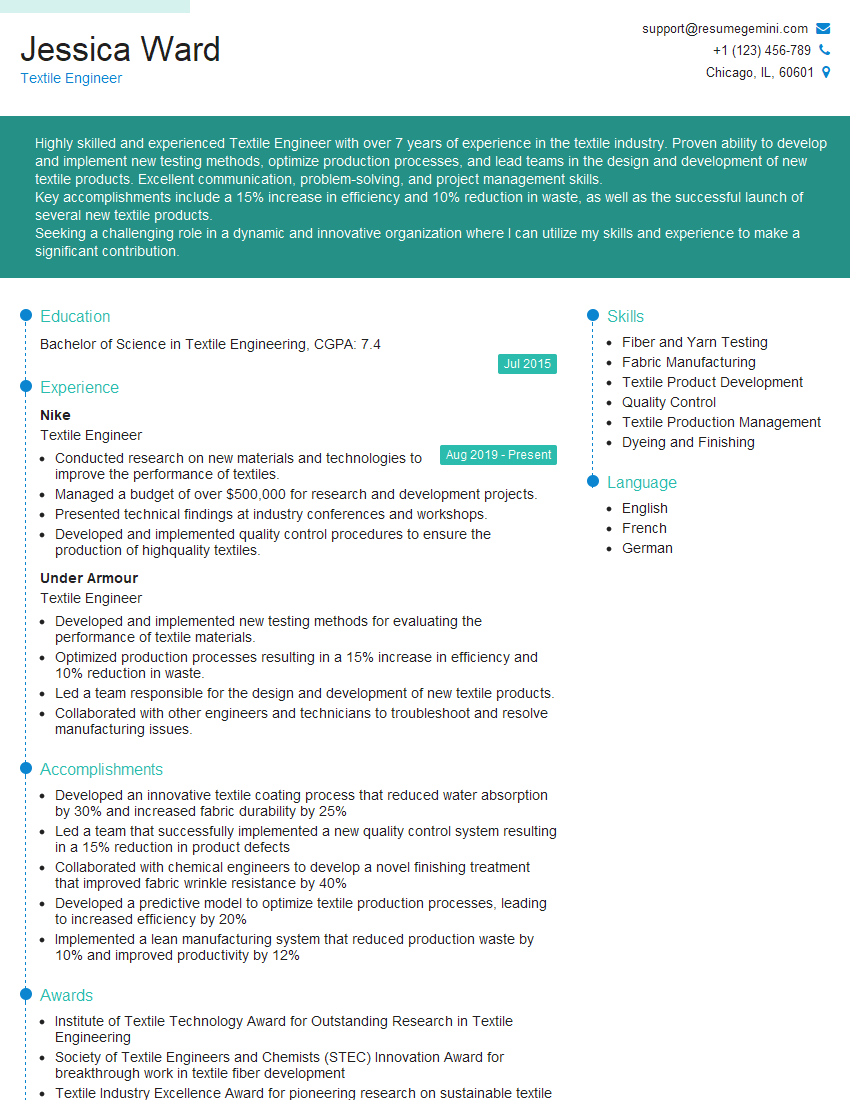
Mastering fabric stretching and handling is crucial for career advancement in the textile industry, opening doors to specialized roles and higher earning potential. A well-crafted resume is your key to unlocking these opportunities. Make sure your resume is ATS-friendly to maximize your chances of getting noticed by recruiters. ResumeGemini is a valuable resource to help you build a professional and impactful resume that highlights your skills and experience in fabric stretching and handling. We offer examples of resumes tailored specifically to this field to provide you with a strong template to start with.

Explore more articles
Users Rating of Our Blogs
Share Your Experience
We value your feedback! Please rate our content and share your thoughts (optional).
What Readers Say About Our Blog
Very informative content, great job.
good