The right preparation can turn an interview into an opportunity to showcase your expertise. This guide to Facial Prosthetic and Make-Up Effects interview questions is your ultimate resource, providing key insights and tips to help you ace your responses and stand out as a top candidate.
Questions Asked in Facial Prosthetic and Make-Up Effects Interview
Q 1. Describe your experience with silicone-based prosthetic application.
Silicone is my preferred material for prosthetic application due to its versatility, durability, and lifelike appearance. My experience encompasses a wide range of applications, from subtle scar simulations to elaborate creature features. The process typically begins with preparing the skin – cleansing thoroughly and applying a medical-grade adhesive to ensure proper adhesion and prevent irritation. I then carefully position and blend the prosthetic, using specialized tools like spatulas and brushes. Finally, I use makeup to seamlessly integrate the prosthetic with the surrounding skin, paying close attention to detail like shading, highlighting, and texture to create a realistic effect. For example, on a recent project involving a burn victim simulation, I used a thin, translucent silicone prosthetic and meticulously blended it with a custom-mixed color palette to achieve a natural, believable result. The key is layering; multiple thin layers of silicone are more comfortable and look more natural than a single thick layer.
Q 2. Explain the process of creating a life cast.
Creating a life cast is the foundational step in many prosthetic creation processes. It involves meticulously capturing the three-dimensional form of a specific area of the body. First, the area to be cast (e.g., face, hand) is thoroughly cleaned. Then, we apply a layer of petroleum jelly to protect the skin from irritation. Alginate, a seaweed-based material, is then carefully mixed to the manufacturer’s instructions and applied quickly and smoothly over the prepared skin. Alginate sets relatively rapidly, creating a mold of the area. Once set, the mold is carefully removed, ensuring it doesn’t tear or distort. This alginate mold is then used to create a positive cast, typically by pouring plaster of Paris or a similar material into the mold. After the plaster sets and dries completely, the alginate is removed, leaving a highly detailed three-dimensional replica of the original area. This positive cast forms the base for the subsequent prosthetic creation – essentially a perfect 3D blueprint for the final product.
Q 3. What are the different types of prosthetic materials and their applications?
Prosthetic materials vary widely, each with unique properties affecting their application.
- Silicone: The most commonly used material due to its flexibility, durability, and realistic appearance. It’s ideal for a wide range of applications, from subtle scars to complex character pieces.
- Foam Latex: A less expensive and easier-to-use option, but less durable and less lifelike than silicone. Often used for simpler prosthetics or those requiring quick turnaround times.
- Gelatin: Used for temporary prosthetics, especially in theater or film requiring fast changes. It’s easily manipulated but not very durable.
- Wax: Useful for sculpting preliminary models or adding fine detail to a finished prosthetic, due to its malleability.
Q 4. How do you blend prosthetics seamlessly with skin tones?
Seamless blending is paramount. The process involves several stages. First, I carefully match the prosthetic’s color to the client’s skin tone using a selection of high-quality makeup. This might require mixing multiple shades to achieve a perfect match. Second, I apply the prosthetic, carefully blending the edges using specialized blending agents to create a smooth transition. Third, I utilize shading and highlighting techniques to mimic the natural shadows and contours of the skin, making the prosthetic appear to cast and receive light just as real skin would. Finally, I use airbrushing to add subtle variations in color and texture, creating a very natural, almost invisible transition. The goal is to create a convincingly realistic effect that is undetectable to the naked eye.
Q 5. Describe your experience with airbrushing techniques for makeup effects.
Airbrushing is an invaluable tool for achieving subtle gradations of color and texture in makeup effects. I employ this technique to create realistic bruising, aging effects, and to blend prosthetics seamlessly. I use a variety of airbrushes with different nozzle sizes, depending on the desired level of detail. For example, a smaller nozzle is useful for fine details like freckles and wrinkles, while a larger nozzle is better suited for broader applications like overall skin tone adjustments. The key is to use thin, even coats, allowing each layer to dry before applying the next to avoid unwanted build-up or streaking. I use various specialized airbrush makeup palettes and techniques to achieve different results; a light, controlled application provides natural and lifelike effects.
Q 6. How do you address skin sensitivities or allergies when applying prosthetics?
Skin sensitivities and allergies are always a primary concern. Before applying any prosthetic or makeup, I thoroughly discuss any allergies or sensitivities with the client. I always use hypoallergenic products, and perform a patch test 24-48 hours prior to the application to check for any adverse reactions. If a reaction occurs, I adjust my materials and techniques accordingly, possibly choosing alternative hypoallergenic materials or adjusting the adhesive. I always prioritize the client’s safety and comfort.
Q 7. Explain your process for sculpting a character prosthetic.
Sculpting a character prosthetic is a multi-stage process starting with a life cast or a 3D model. I typically begin by creating an armature – a supporting structure – often made of wire or foil, which gives the basic shape of the prosthetic. I then add layers of clay or wax, sculpting the desired features and details. The level of detail depends entirely on the character’s design – a subtle scar needs far less detail than a fantastical creature prosthetic. Once the sculpt is complete, I make a mold, often using silicone rubber, and use this mold to create the prosthetic using the chosen material (silicone, foam latex, etc.). The final steps include refining the edges, adding details with paint, and applying any hair or other textures needed to complete the character’s design. For instance, when creating a prosthetic for a fantasy creature, I carefully considered the textures and shapes of natural and artificial materials for inspiration; the end result is a combination of sculpting and creative material choices to create believability.
Q 8. How do you create realistic wounds and scars using makeup effects?
Creating realistic wounds and scars with makeup involves a multi-step process that blends artistry with technical skill. We begin by understanding the desired wound type – a fresh laceration, a deep burn, an old scar – as each requires different techniques and materials.
For a fresh laceration, we might use a combination of silicone-based products to create depth and texture. We’ll use a flesh-toned base, then strategically apply darker shades to simulate bruising and shadowing. A thin layer of translucent silicone can add a glossy effect, mimicking the wetness of a new wound. Finally, adding a bit of red or dark brown liquid latex can give the wound a more realistic, bloody appearance.
Creating an old scar, conversely, demands a subtler approach. We’ll start with a slightly darker foundation makeup, and then meticulously apply a scar makeup using a palette of browns, reds, and purples to simulate the discolored and slightly sunken appearance of the scar tissue. The key here is subtle blending and layering to create a believable texture and depth. In both cases, proper blending is crucial for seamless integration with the surrounding skin. We use various tools such as sponges, brushes, and even airbrushes for precise application and to create various texture levels.
Q 9. What are the different types of adhesives used for prosthetics?
The choice of adhesive for prosthetic application depends heavily on factors like the size and type of prosthetic, skin sensitivity, and the duration of wear. We commonly use several types:
- Pros-Aide: A popular and reliable adhesive known for its strong hold and relative ease of removal with adhesive remover. It’s suitable for most prosthetic applications.
- Mastix: A stronger, more durable adhesive perfect for larger prosthetics or applications requiring extended wear. It requires a specific remover and is slightly more difficult to apply cleanly.
- Spirit Gum: A quick-setting, relatively less sticky adhesive often used for smaller pieces or temporary applications. It can be gentler on sensitive skin but is less durable.
- Medical Adhesives: In certain scenarios, particularly in medical applications, we may utilize medical-grade adhesives, which are designed for longer wear and better skin compatibility.
Selecting the right adhesive requires careful consideration of the project’s specifics. We often conduct skin tests beforehand to rule out allergic reactions.
Q 10. Describe your experience with mold making and casting techniques.
Mold making and casting are fundamental skills in facial prosthetics. My experience spans various techniques, from traditional alginate molding to more advanced silicone-based methods.
Alginate molding is a tried-and-true method used for creating a negative mold of a subject’s face or body part. The alginate is a seaweed-based material that sets quickly, offering a detailed impression. Once the alginate mold is created, it’s used to create a positive cast, often using plaster or dental stone. This positive cast serves as the foundation for the creation of a prosthetic appliance.
For more intricate details and durability, silicone molding techniques are preferred. These techniques allow for the creation of reusable molds that can produce high-quality, highly detailed prosthetics. For casting the prosthetics themselves, we utilize materials like foam latex, silicone, or gelatin, depending on the desired properties of the finished prosthetic.
I’ve worked extensively with various materials and techniques, optimizing my approach based on project requirements, material properties, and budget constraints. This includes using techniques for creating multi-part molds for complex prosthetics.
Q 11. How do you maintain hygiene and sanitation standards during prosthetic application?
Maintaining hygiene and sanitation is paramount in prosthetic application, particularly to prevent infection and ensure the safety and comfort of the subject.
Before any application, thorough handwashing and the use of sanitized tools are a must. We use disposable gloves and regularly sterilize our tools using alcohol wipes or an autoclave if available. The skin of the subject needs to be cleansed carefully to remove any dirt, oil, or makeup. We often use alcohol prep pads or a mild antiseptic to prepare the skin.
During the application, we maintain a sterile environment as much as possible, avoiding unnecessary touching or contamination. After removal, both the prosthetic and the subject’s skin should be cleaned and disinfected. Proper disposal of used materials is also crucial to prevent cross-contamination. These practices are essential to provide a safe and hygienic service, always complying with relevant health and safety regulations.
Q 12. Explain the difference between foam latex and silicone prosthetics.
Foam latex and silicone are both popular materials for prosthetic construction, but they have distinct characteristics:
- Foam Latex: A relatively inexpensive and easy-to-work-with material, foam latex offers good detail and flexibility. However, it is less durable than silicone and can tear more easily. It’s ideal for one-time use or less demanding applications.
- Silicone: More expensive and requiring more specialized skills to work with, silicone offers superior durability, longevity, and finer detail. It is more resistant to tearing and can withstand repeated applications. Silicone prosthetics offer a higher level of realism and are preferred for longer-term projects and more demanding applications.
The choice between them often depends on budget, lifespan requirements, and the level of detail needed for the prosthetic.
Q 13. How do you repair damaged prosthetics?
Repairing damaged prosthetics depends greatly on the extent and nature of the damage. Minor tears or surface scratches can often be repaired using silicone adhesives or specialized patching compounds. For larger tears or more significant damage, more intricate repair techniques may be required. These might include using additional layers of silicone or latex to rebuild the affected area, blending carefully to match the surrounding texture and color.
In some cases, rebuilding or completely recasting parts of the prosthetic may be necessary. Before undertaking any repairs, it is crucial to thoroughly clean and prepare the damaged area. This ensures a strong and lasting repair. Accurate color matching is also crucial for a seamless finish.
Q 14. Describe your experience with digital sculpting and 3D printing in prosthetics.
Digital sculpting and 3D printing have revolutionized prosthetic creation. I’ve incorporated these technologies extensively in my work. Digital sculpting software allows for precise creation and manipulation of complex prosthetic designs, offering unparalleled control over form and detail. This is particularly beneficial when creating highly customized prosthetics or those requiring intricate details.
Once the design is finalized, 3D printing allows for rapid prototyping and production of the prosthetic base. The process allows for highly accurate reproduction of the digital model, minimizing the need for extensive hand-sculpting. This not only speeds up the production process but also ensures consistency and accuracy, improving the final quality of the prosthetic.
While traditional techniques remain vital, 3D printing and digital sculpting have become invaluable tools, allowing for a more efficient and precise workflow in creating realistic and intricate prosthetics. I regularly use this combination to refine details and ensure perfect fit.
Q 15. How do you manage time effectively during a fast-paced shoot?
Time management on a fast-paced shoot is crucial. It’s like orchestrating a symphony – every instrument (artist) needs to be in sync. My approach involves meticulous pre-planning. This begins with a thorough read-through of the script and a detailed discussion with the director and makeup supervisor to understand the specific requirements for each scene and character. I then create a prioritized shot list, allocating time for each makeup application, considering complexity and potential delays. I also utilize a colour-coded schedule, visually mapping out the day’s workload, allowing for quick reference and adjustments. Finally, I empower my team by assigning roles and responsibilities clearly, ensuring everyone understands their tasks and the overall timeline. Flexibility is paramount; if unexpected issues arise, we reassess the schedule and prioritize based on the urgency of each shot.
Career Expert Tips:
- Ace those interviews! Prepare effectively by reviewing the Top 50 Most Common Interview Questions on ResumeGemini.
- Navigate your job search with confidence! Explore a wide range of Career Tips on ResumeGemini. Learn about common challenges and recommendations to overcome them.
- Craft the perfect resume! Master the Art of Resume Writing with ResumeGemini’s guide. Showcase your unique qualifications and achievements effectively.
- Don’t miss out on holiday savings! Build your dream resume with ResumeGemini’s ATS optimized templates.
Q 16. What software programs are you proficient in for digital makeup effects?
Proficiency in digital makeup effects software is essential for modern makeup artistry. My skillset includes Adobe Photoshop, which I use extensively for digital painting, compositing, and retouching. I’m also comfortable with Mari, a powerful 3D painting application perfect for creating high-resolution textures for digital prosthetics. For 3D modelling and animation of prosthetics, I have experience with ZBrush and Blender, though I typically collaborate with a dedicated 3D artist for complex projects. The key is adaptability; I’m always learning and open to mastering new software to keep my skills current and relevant to the ever-evolving industry demands.
Q 17. Explain your understanding of color theory in relation to makeup effects.
Color theory is the cornerstone of effective makeup effects. Understanding the color wheel—primary, secondary, and tertiary colors—is vital for creating realistic and believable results. For instance, knowing complementary colors (e.g., blue and orange) allows me to strategically enhance or neutralize certain areas. For a wound, using a cool-toned blue-purple shadow near the edges can simulate bruising and shadow, while a warmer orange-yellow closer to the center simulates swelling. Similarly, understanding warm and cool undertones in skin helps me to create lifelike prosthetics that seamlessly blend with the actor’s natural complexion. Accurate color matching is crucial to avoid the prosthetic looking unnatural and ‘painted-on’. This requires paying attention to the lighting and overall color palette of the scene.
Q 18. How do you work collaboratively with other members of the makeup team?
Collaboration is key. I believe in fostering a positive and supportive environment where everyone feels valued. Clear communication is paramount. Before starting a project, I discuss the vision with my team – artists, assistants, hair stylists – to ensure alignment and avoid any conflicting approaches. I delegate tasks based on each team member’s strengths and expertise. Open feedback is encouraged, fostering continuous improvement and learning within the team. This collaborative approach avoids bottlenecks and ensures we meet deadlines efficiently and effectively, maintaining a high standard of quality throughout the process.
Q 19. Describe a challenging prosthetic application project and how you overcame it.
One challenging project involved creating a full-body prosthetic for a burn victim. The complexity lay in achieving realistic skin texture, discoloration, and scarring across a large surface area. The initial challenge was achieving the right balance between detail and comfort for the actor. To overcome this, we employed a multi-layered approach using silicone prosthetics with varying thicknesses and flexibility. We used airbrushing and hand painting techniques to create the hyper-realistic skin texture and scar patterns. Another hurdle was seamlessly blending the prosthetic to the actor’s neck and limbs without creating visible seams. We achieved this using careful blending techniques and strategically placed hair to camouflage the edges. The project required extensive trial and error, patience, and collaboration, proving the value of meticulous planning and adaptable problem-solving.
Q 20. What are your preferred methods for blending and shading prosthetics?
Blending and shading prosthetics is an art form. My preferred method involves a combination of techniques. For initial blending, I use silicone-based adhesives and blending agents to create a smooth transition between the prosthetic and the actor’s skin. Then, I employ airbrushing with various shades of makeup to create depth and dimension. I often use stippling and layering techniques with sponges and brushes to apply and blend color, mimicking the subtle variations of natural skin. Final shading is often achieved using a combination of powder and cream makeup to set the look and create realistic shadow and highlight. Precision and attention to detail are crucial for a natural and believable result, avoiding harsh lines and ensuring a smooth, realistic appearance.
Q 21. How do you ensure the longevity of prosthetics during long shoots?
Maintaining the longevity of prosthetics during long shoots involves a combination of preparation and careful handling. Proper application using high-quality adhesives is crucial. Furthermore, using setting powders and sprays helps to prevent smudging and maintain the integrity of the prosthetic’s details. I also regularly check the prosthetic for any damage or signs of wear throughout the shoot, making any necessary repairs promptly. Using silicone-based products often provides a longer-lasting result. And to protect it from environmental factors, I recommend applying skin-safe sealant whenever possible. Regular cleaning with appropriate solvents helps to remove any makeup and debris, prolonging the lifespan of the prosthetic. Finally, careful storage between takes, using appropriate containers to protect the prosthetics from damage, is also critical.
Q 22. What safety measures do you employ when handling prosthetic materials and adhesives?
Safety is paramount when working with prosthetic materials and adhesives. My approach is multi-layered, starting with proper ventilation. Many prosthetic materials and adhesives release volatile organic compounds (VOCs), so a well-ventilated workspace is crucial. I always wear appropriate personal protective equipment (PPE), including gloves (nitrile or latex depending on the material), eye protection, and a respirator, particularly when working with solvents or potentially irritating powders like silicone fillers.
Secondly, I meticulously follow the manufacturer’s instructions for each product. This includes understanding the specific hazards associated with each material and adhering to the recommended application and disposal methods. For example, some adhesives require specific skin preparation to prevent irritation or allergic reactions. I always perform a patch test 24 hours prior to full application whenever possible. Finally, I maintain a clean and organized workspace to prevent accidental spills or exposure. Proper waste disposal is critical; I carefully segregate materials according to local regulations.
Q 23. Explain your experience with creating hair and fiber pieces for prosthetics.
Creating realistic hair and fiber pieces requires meticulous attention to detail. My process typically begins with selecting the appropriate fiber type—human hair, synthetic fiber, or a blend—depending on the desired look and the character’s specifications. I then carefully hand-knot or weave the fibers onto a lace or silicone base, ensuring a natural hairline and density. For example, creating a balding cap might involve using varying lengths and textures of fiber to mimic receding hairlines and thinning patches, while a full wig requires a denser, more uniform application.
Advanced techniques involve pre-bleaching or dying the fibers to achieve specific colors and then using specialized tools and adhesives to secure them flawlessly to the prosthetic itself. This often involves creating multiple layers of fibers to achieve depth and realism. I also consider the direction of hair growth, using layering to create a natural look and avoid a ‘wig-like’ appearance. The final step is often sculpting the hair using heat styling tools to achieve the desired hairstyle.
Q 24. How do you adapt your techniques to different skin types and ethnicities?
Adapting techniques to different skin types and ethnicities is fundamental to creating believable prosthetics. Skin tone, texture, and underlying pigmentation vary significantly across individuals. I address this by using a range of silicone-based materials and pigments that offer flexibility in matching complexions accurately.
For example, creating a prosthetic for someone with darker skin requires a different approach compared to someone with lighter skin. I might use a darker base silicone and blend several shades of pigment to achieve the precise tone and depth. The texture is equally important; the techniques for blending and applying the prosthetic to match skin texture must be adjusted for different skin types. Someone with textured skin, for instance, might need a prosthetic with a slightly textured surface to achieve a seamless blend. I have experience working with individuals of various ethnicities and use high-quality reference materials and color charts to achieve realistic results.
Q 25. Describe your experience with applying prosthetics on actors with facial hair.
Applying prosthetics to actors with facial hair requires a strategic approach. The key is to prepare the skin and hair adequately before applying the prosthetic. This often involves carefully trimming or shaping the existing facial hair to create a smooth base. In some cases, temporary hair removal techniques may be used, but only after carefully considering the actor’s comfort level and potential sensitivity. I usually prefer to carefully blend the facial hair within the prosthetic, creating a natural integration.
For example, if the prosthetic covers a portion of a beard, I might incorporate the existing beard hair into the prosthetic itself by carefully weaving it in. Alternatively, if the prosthetic must completely cover the hair, I carefully select the best adhesive and application techniques to avoid irritation or lifting. The choice of adhesive is vital here, as some may damage the underlying hair follicle. Communication with the actor is key throughout the process.
Q 26. How do you address potential issues with prosthetic movement and articulation?
Addressing prosthetic movement and articulation is vital for creating realistic and comfortable pieces. Rigid prosthetics can restrict movement and be uncomfortable for the actor, so I employ several strategies. One common method is to incorporate thin layers of flexible silicone or other elastic materials within the prosthetic’s design. This allows for a degree of movement with the underlying facial muscles.
Another strategy is using strategically placed seams or articulation points within the prosthetic. These points can allow for greater movement and flexibility in areas like the mouth or eyebrows. I also employ techniques to reduce tension and create more comfortable edges where the prosthetic meets the skin. For example, using a thin layer of medical-grade adhesive can create a better seal while allowing for some flexibility. Careful consideration of the prosthetic’s size and placement is also important; a smaller prosthetic covering a limited area will naturally have more flexibility.
Q 27. What are your skills in creating aging and injury effects?
Creating aging and injury effects is a specialty of mine. Aging effects often involve a combination of techniques. I might use silicone prosthetics to create wrinkles, sagging skin, and age spots, carefully sculpting the pieces to mimic the natural process of aging. Airbrushing techniques and pigments are essential for creating realistic coloring and texturing, matching the underlying skin tones and creating believable discoloration or shadowing for wrinkles.
For injury effects, the approach varies significantly depending on the desired injury. I use silicone, foam latex, and other materials to sculpt wounds, lacerations, and burns, paying close attention to accurate anatomical detail and realistic texturing. I use a range of techniques such as airbrushing, painting, and sculpting to create accurate color and depth, including blood effects and tissue discoloration. I also incorporate techniques like stippling and blending to mimic natural skin imperfections and create a convincing three-dimensional effect.
Q 28. Explain your understanding of health and safety regulations regarding prosthetic materials.
Understanding health and safety regulations concerning prosthetic materials is crucial. I am fully aware of OSHA (Occupational Safety and Health Administration) guidelines regarding the handling and disposal of hazardous materials, including those used in prosthetics. This includes proper ventilation, PPE usage, and the safe handling of adhesives, solvents, and pigments.
I also stay updated on the latest regulations regarding the use of specific materials, including those containing latex or other potential allergens. Proper labeling and storage of materials are crucial, ensuring they are kept in appropriate containers and away from incompatible substances. I am knowledgeable about the proper disposal methods for all waste materials, adhering to both local and national environmental regulations. Moreover, I ensure that any materials used in creating prosthetics are biocompatible and safe for use on human skin, prioritizing the health and safety of the individuals I work with.
Key Topics to Learn for Your Facial Prosthetic and Make-Up Effects Interview
Ace your interview by mastering these key areas. Remember, practical application and problem-solving skills are just as important as theoretical knowledge!
- Material Science & Application: Understanding the properties of various prosthetic materials (silicone, foam latex, etc.), their application techniques, and limitations. Consider how you’d choose the right material for a specific effect.
- Mold Making & Casting: Thorough knowledge of mold making processes (alginate, plaster, etc.) and casting techniques for creating accurate and durable prosthetics. Be ready to discuss troubleshooting common issues.
- Prosthetic Application & Blending: Mastering techniques for seamlessly applying and blending prosthetics to achieve a natural and realistic look. Discuss different adhesive types and application methods.
- Makeup Application & Airbrushing: Demonstrate your proficiency in applying makeup to enhance or alter features, including advanced techniques like airbrushing for seamless transitions.
- Color Theory & Matching: A strong understanding of color theory and its application in matching skin tones and creating realistic effects. Be prepared to discuss color correction techniques.
- Character Design & Conceptualization: Discuss your ability to interpret character designs and translate them into realistic prosthetic and makeup effects. Showcase your creative problem-solving skills.
- Hygiene & Safety Protocols: Demonstrate your knowledge of safe and hygienic practices in the application of prosthetics and makeup. This is crucial in a professional setting.
- Special Effects Techniques: Explore advanced techniques like wound creation, aging effects, creature design, and other specialized skills relevant to your desired role.
Next Steps: Launch Your Career in Facial Prosthetic and Make-Up Effects
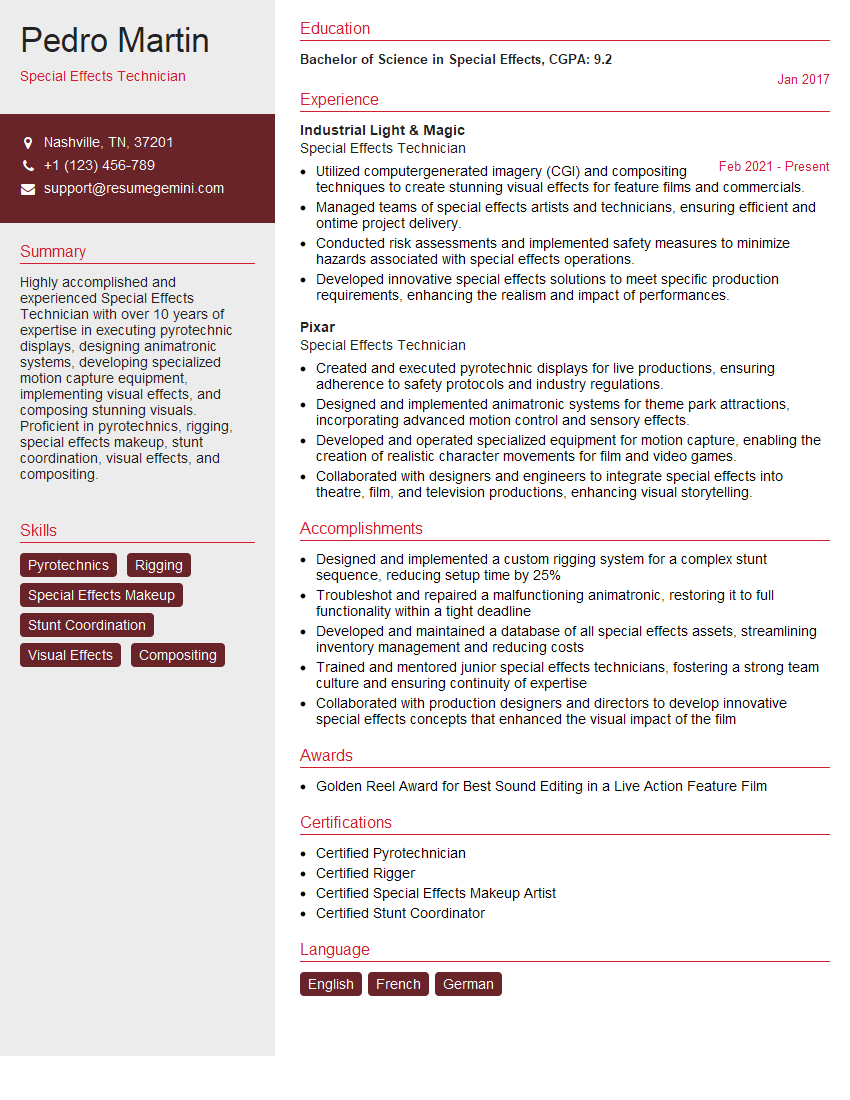
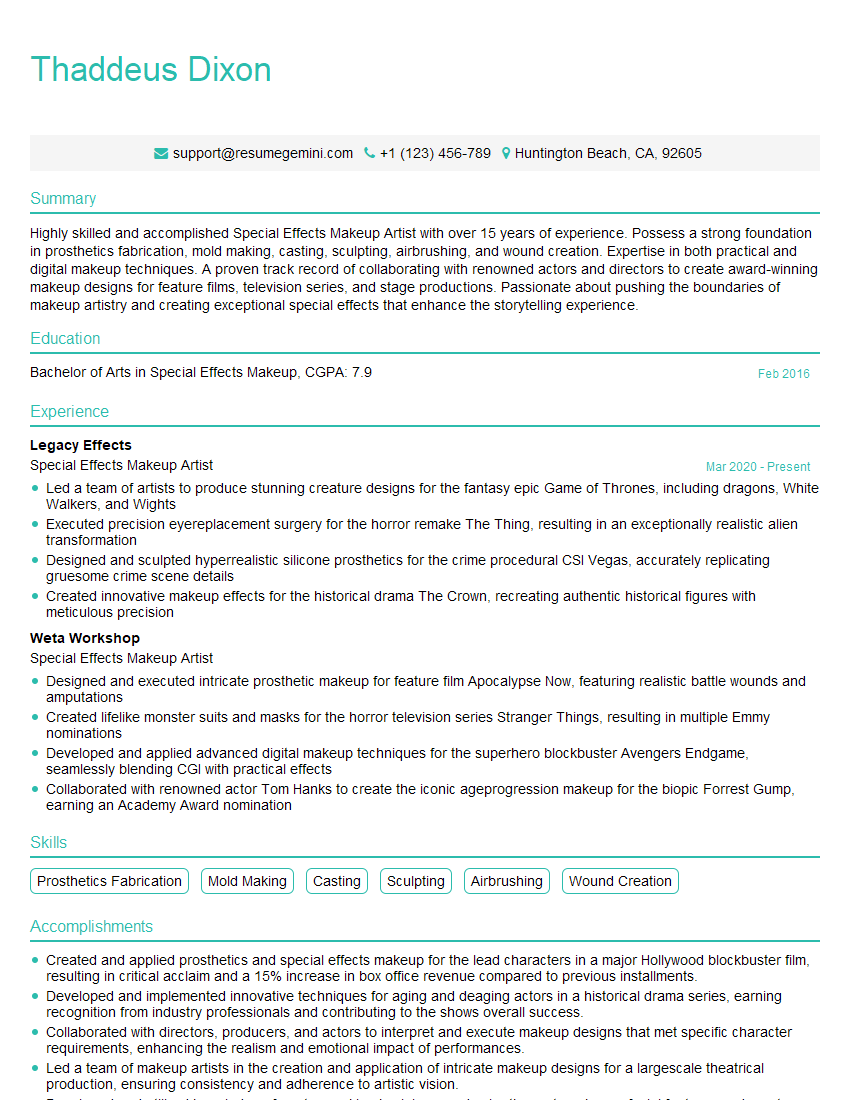
Mastering these skills will open doors to exciting opportunities in film, television, theater, and beyond. To maximize your job prospects, creating a strong, ATS-friendly resume is essential. ResumeGemini is a trusted resource that can help you build a professional resume that truly showcases your skills and experience. We offer examples of resumes tailored specifically for Facial Prosthetic and Make-Up Effects professionals – check them out to see how you can present yourself in the best possible light!
Explore more articles
Users Rating of Our Blogs
Share Your Experience
We value your feedback! Please rate our content and share your thoughts (optional).
What Readers Say About Our Blog
good