Every successful interview starts with knowing what to expect. In this blog, we’ll take you through the top Failure Mode and Effect Analysis (FMEA) interview questions, breaking them down with expert tips to help you deliver impactful answers. Step into your next interview fully prepared and ready to succeed.
Questions Asked in Failure Mode and Effect Analysis (FMEA) Interview
Q 1. Describe the steps involved in conducting a FMEA.
Conducting a Failure Mode and Effects Analysis (FMEA) is a systematic process to identify potential failures in a system or process, analyze their effects, and recommend actions to mitigate risks. It’s like a proactive ‘what if’ exercise, preventing problems before they happen. Here are the steps:
- Planning and Team Formation: Define the scope of the FMEA (which system or process is being analyzed), assemble a cross-functional team with diverse expertise, and establish the FMEA goals.
- System Description: Clearly define the system or process under analysis, including its functions and interactions with other systems. Think of this as drawing a detailed blueprint of the ‘machine’ you’re investigating.
- Function Analysis: Break down the system into its individual functions and sub-functions. For example, in a coffee machine, functions might include heating water, brewing coffee, and dispensing the beverage.
- Failure Modes Identification: Brainstorm potential failure modes for each function. This is where you consider what could go wrong at each step. For our coffee machine, a failure mode could be the heating element failing to reach temperature.
- Effect Analysis: Analyze the effects of each failure mode on the system and the customer. How would the failure affect the coffee machine’s performance? For example, the heating element failure might result in weak coffee or no coffee at all.
- Severity (S) Rating: Assign a severity rating to each failure mode. This reflects the seriousness of the effect on the customer or system. A common scale is 1-10, with 10 being catastrophic.
- Occurrence (O) Rating: Estimate the likelihood of each failure mode occurring. Again, using a 1-10 scale, 10 being extremely likely.
- Detection (D) Rating: Assess the likelihood of detecting the failure mode before it impacts the customer. A 10 means there’s no chance of detecting it before a failure happens.
- Risk Priority Number (RPN) Calculation: Calculate the RPN for each failure mode by multiplying the S, O, and D ratings (RPN = S x O x D). A higher RPN indicates a higher risk.
- Action Plan and Recommendations: Develop a plan to reduce the risk associated with high RPN values. This may involve design changes, process improvements, or enhanced testing procedures.
- FMEA Review and Follow-up: Regularly review the FMEA to ensure its accuracy and effectiveness. This might involve checking the effectiveness of the implemented corrective actions and updating the FMEA when changes occur.
Using this systematic approach, we can proactively manage risks and avoid costly mistakes.
Q 2. What is the difference between a Design FMEA (DFMEA) and a Process FMEA (PFMEA)?
Both DFMEA and PFMEA are crucial tools in risk management, but they focus on different aspects:
- Design FMEA (DFMEA): This is conducted during the design phase of a product or process. It identifies potential failure modes in the design itself. Think of it as evaluating the design’s blueprint before building the actual product. The focus is on preventing failures by improving the design.
- Process FMEA (PFMEA): This is conducted after the design is finalized, focusing on potential failures in the manufacturing or operational process. Imagine it as checking the factory line’s efficiency to ensure the product is manufactured without faults. The focus is on preventing failures during the manufacturing process.
In essence, a DFMEA prevents failures ‘by design’, while a PFMEA prevents failures ‘by process’. A product can have a great design (a strong DFMEA), but still fail due to a poor manufacturing process (a weak PFMEA).
Q 3. Explain the concept of Risk Priority Number (RPN) and how it’s calculated.
The Risk Priority Number (RPN) is a simple but effective way to prioritize potential failures in an FMEA. It’s a numerical representation of the overall risk associated with each failure mode. A higher RPN signifies a higher risk requiring more urgent attention.
It’s calculated by multiplying three key factors:
- Severity (S): How severe are the consequences if this failure occurs? (1-10 scale)
- Occurrence (O): How likely is this failure to occur? (1-10 scale)
- Detection (D): How likely is it that this failure will be detected before it reaches the customer? (1-10 scale)
The formula is: RPN = S x O x D
For example, if a failure has a Severity of 8, an Occurrence of 3, and a Detection of 5, its RPN would be 120 (8 x 3 x 5 = 120).
Q 4. How do you prioritize actions in an FMEA based on RPN values?
Prioritizing actions in an FMEA based on RPN values is straightforward: you focus on the failures with the highest RPNs first. These represent the most critical risks. However, it’s not always black and white.
Here’s a practical approach:
- Identify High RPNs: List all failure modes in descending order of RPN.
- Consider Context: While high RPNs indicate high risks, consider the broader context. A failure with a slightly lower RPN but potentially catastrophic consequences might warrant earlier attention.
- Resource Allocation: Prioritize actions based on available resources and feasibility. Some high-RPN failures might require significant investment to mitigate, while others might be easily addressed with simple process improvements.
- Develop Action Plans: For each high-RPN failure, develop a detailed action plan that includes specific actions, responsibilities, timelines, and resource requirements.
- Regular Review: Regularly review the FMEA and the effectiveness of implemented actions. The RPN values might change as corrective actions are put in place.
Think of it like a hospital triage system – the patients with the most critical injuries get immediate attention, even if others are also injured.
Q 5. What are some common failure modes you’ve encountered in your experience?
In my experience, common failure modes span across various industries. Some recurring examples include:
- Component Failure: Mechanical parts wearing out, electronic components malfunctioning (e.g., a motor failing in a washing machine, a capacitor failing in a circuit board).
- Process Errors: Mistakes during manufacturing, assembly, or operation leading to defects or malfunction (e.g., incorrect welding, incorrect calibration of equipment).
- Human Error: Incorrect operation, maintenance oversight, or lack of training (e.g., a user misusing a product, a technician failing to perform routine maintenance).
- Software Bugs: Errors in software code leading to unexpected behaviour or crashes (e.g., a software glitch causing a system to freeze).
- Material Degradation: Deterioration of materials due to environmental factors such as corrosion, oxidation, or fatigue (e.g., rust on a car body, plastic becoming brittle).
The specific failure modes will depend heavily on the system or process being analyzed.
Q 6. How do you handle disagreements among team members during an FMEA session?
Disagreements are inevitable in FMEA sessions, as they often involve subjective judgments (severity, occurrence, detection). Here’s how to handle them effectively:
- Facilitation: A skilled facilitator is crucial for guiding discussions and ensuring everyone’s voice is heard. The facilitator helps to focus the discussion on objective data and evidence.
- Data-Driven Approach: Encourage the team to base their ratings on data, historical records, or relevant standards. This helps to move away from opinions and towards a more objective assessment.
- Consensus Building: Facilitate a discussion to understand the different perspectives and find common ground. It’s about reaching a mutually agreeable rating, not necessarily everyone agreeing 100%. Compromise is key.
- Documentation: Document any disagreements and the rationale behind the final rating. This creates transparency and provides context for future reviews.
- Escalation: If a disagreement cannot be resolved within the team, escalate it to a higher authority for review and decision-making.
Remember, the goal isn’t to eliminate disagreements, but to manage them constructively to reach the most accurate and useful FMEA.
Q 7. Explain the importance of documenting FMEA findings.
Documenting FMEA findings is critical for several reasons:
- Risk Management: A well-documented FMEA serves as a living document that tracks risks, mitigation strategies, and their effectiveness. This allows for proactive risk management and prevents recurrence of past failures.
- Communication: It ensures everyone involved (design, manufacturing, quality, etc.) has a shared understanding of potential failures and the actions planned to mitigate them.
- Auditing and Compliance: A documented FMEA is often required for regulatory compliance and can be used during audits to demonstrate the organization’s commitment to product safety and quality.
- Continuous Improvement: Regular review and updates of the FMEA enable continuous improvement efforts by monitoring the effectiveness of implemented actions and identifying new potential failure modes.
- Legal Protection: In case of product liability claims, a well-documented FMEA can demonstrate that the organization took reasonable steps to identify and mitigate risks.
Think of it as an insurance policy – it doesn’t guarantee against all issues, but it significantly reduces the risk and provides a record of the precautions taken.
Q 8. What are some common mitigation strategies used to reduce risk in FMEA?
Mitigation strategies in FMEA aim to reduce the risk associated with potential failure modes. These strategies focus on either preventing the failure from occurring, reducing its severity if it does occur, or increasing the likelihood of detecting it before it impacts the customer. Common approaches include:
- Design changes: This could involve selecting more robust materials, improving component tolerances, or redesigning a system to eliminate a single point of failure. For example, if a pump frequently fails due to overheating, a mitigation strategy might be to incorporate a more efficient cooling system or a thermal cutoff switch.
- Process improvements: Better manufacturing processes, stricter quality control checks, and improved operator training can reduce the occurrence of failures. Think of implementing a more rigorous inspection protocol for a critical weld in a manufacturing process.
- Redundancy: Adding backup systems or components increases the system’s resilience. A classic example is a backup power generator to ensure continuous operation in case of a power outage.
- Warning systems: Implementing sensors, alarms, or indicators can provide early warning of potential failures, allowing for timely intervention. This could be as simple as a low-oil pressure indicator light in a car engine.
- Operator training and procedures: Well-trained operators are less likely to introduce errors, and clear procedures can minimize human error. Comprehensive training on proper machine operation and preventative maintenance schedules fall under this category.
The choice of mitigation strategy depends heavily on the specific failure mode, its severity, and the cost-benefit analysis of implementing the chosen strategy.
Q 9. How do you incorporate customer feedback into an FMEA?
Customer feedback is crucial for a robust FMEA. It provides real-world insights into how the product or process is performing and identifies failure modes that may not have been considered during the initial design phase. Incorporating customer feedback involves several steps:
- Gathering feedback: This can involve customer surveys, product reviews, warranty claims analysis, and direct customer communication through various channels like support calls or social media.
- Analyzing feedback for failure patterns: Once gathered, the feedback should be systematically analyzed to identify recurring issues or complaints that point to potential failure modes. For example, multiple customer complaints about a specific product feature malfunctioning should raise a red flag, prompting a review of that feature’s design and processes.
- Updating the FMEA: Identified failure modes from customer feedback should be added to the FMEA, and the severity, occurrence, and detection ratings should be adjusted based on the frequency and impact of these issues. New mitigation strategies might also be necessary.
- Tracking effectiveness: After implementing changes based on customer feedback, it is important to track their effectiveness and ensure they resolve the issues reported by customers.
Remember, actively soliciting and analyzing customer feedback is essential for creating a living, adaptive FMEA that truly reflects real-world performance.
Q 10. Describe your experience with FMEA software tools.
I have extensive experience using various FMEA software tools, including both standalone applications and those integrated into broader quality management systems. I’m proficient with tools like Minitab, ReliaSoft Weibull++, and some specialized software offered by enterprise resource planning (ERP) systems. These tools significantly enhance the FMEA process by:
- Automating calculations: Software automatically calculates the Risk Priority Number (RPN) based on Severity, Occurrence, and Detection ratings, saving time and reducing the possibility of manual calculation errors.
- Centralized data management: All FMEA data is stored centrally, making it easier to access, update, and share across teams.
- Collaboration features: Many tools facilitate collaboration, enabling team members to contribute to the FMEA simultaneously.
- Reporting and visualization: They provide tools to generate professional reports and visualizations, making it easier to communicate the FMEA findings to stakeholders.
My experience extends to both creating new FMEAs from scratch and using these tools to maintain and update existing ones, ensuring that they remain relevant and accurate.
Q 11. How do you ensure the accuracy and completeness of an FMEA?
Ensuring accuracy and completeness in an FMEA requires a structured and rigorous approach. Key steps include:
- Clearly defined scope: The FMEA should clearly define the system, subsystem, or process under analysis, setting boundaries to avoid scope creep.
- Cross-functional team: Involving experts from various disciplines (engineering, manufacturing, quality, operations, etc.) ensures a holistic view of potential failure modes.
- Structured brainstorming: Employing structured brainstorming techniques like the ‘5 Whys’ to identify root causes helps to uncover even subtle failure modes.
- Data-driven assessment: Utilize historical data, reliability data, and industry best practices to inform the assessment of Severity, Occurrence, and Detection. Avoid relying purely on assumptions.
- Regular review and updates: An FMEA is a living document. It should be regularly reviewed and updated to reflect changes in design, processes, or customer feedback.
- Validation and verification: Implement verification activities to validate the assumptions made within the FMEA. For example, a simulation or prototype testing can help validate the likelihood of occurrence for a particular failure mode.
By following this approach, the accuracy and completeness of the FMEA can be significantly improved, resulting in a more effective risk management strategy.
Q 12. How would you determine the severity of a potential failure mode?
Severity in FMEA refers to the impact of a failure mode on the customer or the overall system. It’s typically assessed on a numerical scale (e.g., 1-10), where 1 represents a minor impact and 10 represents a catastrophic impact. To determine severity, consider:
- Safety: Does the failure pose a safety risk to personnel or the environment?
- Functionality: Does the failure lead to complete system failure or only minor degradation in performance?
- Cost: What are the financial implications of the failure (repair costs, warranty claims, lost production)?
- Reputation: How would the failure impact the company’s reputation or brand image?
For example, a failure mode resulting in a product recall with potential injuries would receive a high severity rating (e.g., 9 or 10), while a minor cosmetic defect might receive a low rating (e.g., 1 or 2).
Q 13. How would you determine the occurrence of a potential failure mode?
Occurrence in FMEA represents the likelihood of a particular failure mode happening. This is also typically rated on a numerical scale (e.g., 1-10), with 1 being very unlikely and 10 being almost certain. To determine the occurrence, consider:
- Historical data: Review past performance data on similar systems or components. How often has this failure mode occurred previously?
- Process capability: How capable is the manufacturing or operational process at preventing this failure?
- Environmental factors: Are there environmental conditions that might increase the likelihood of the failure?
- Component reliability: What is the inherent reliability of the components involved?
For example, a failure mode that has historically occurred frequently might receive a high occurrence rating (e.g., 7 or 8), while a failure that has never been observed might receive a low rating (e.g., 1 or 2).
Q 14. How would you determine the detection of a potential failure mode?
Detection in FMEA refers to the likelihood that a failure mode will be detected before it reaches the customer. This is also rated on a numerical scale (e.g., 1-10), where 1 means the failure is almost certain to be detected before reaching the customer, and 10 means it’s highly unlikely to be detected. Factors to consider when determining the detection rate include:
- Testing methods: Are there effective testing methods in place to detect this failure mode?
- Inspection procedures: How thorough are the inspection procedures during manufacturing or operation?
- Monitoring systems: Are there any monitoring systems or warning indicators in place?
- Built-in safeguards: Does the system incorporate any safeguards that could prevent or mitigate the effects of the failure mode?
A failure mode easily detectable by routine testing would have a low detection rating (e.g., 1 or 2), while one that is only detectable after the product reaches the customer would have a high rating (e.g., 8, 9, or 10).
Q 15. What are the limitations of using an RPN for risk prioritization?
The Risk Priority Number (RPN), calculated as the product of Severity, Occurrence, and Detection, is a widely used metric in FMEA for prioritizing risks. However, relying solely on RPN has limitations:
- Subjectivity: The assigned Severity, Occurrence, and Detection ratings are often subjective and can vary significantly between individuals. Two teams performing the same FMEA might arrive at vastly different RPNs.
- Linearity Assumption: RPN assumes a linear relationship between the three factors. A small increase in Severity might have a disproportionately larger impact than a similar increase in Occurrence or Detection.
- Ignoring Interactions: RPN doesn’t inherently account for interactions between failure modes. Two seemingly low-risk failures might combine to cause a catastrophic event.
- Limited Actionability: A high RPN merely indicates a high-risk area, it doesn’t necessarily guide the selection of the most effective mitigation strategy. Two high-RPN failures might require different approaches.
- Lack of Context: The absolute value of the RPN lacks context; an RPN of 100 might be high for one system but low for another.
To address these limitations, consider using more sophisticated risk matrices, incorporating qualitative assessments alongside the RPN, and focusing on the underlying causes of failure rather than solely on the RPN value.
Career Expert Tips:
- Ace those interviews! Prepare effectively by reviewing the Top 50 Most Common Interview Questions on ResumeGemini.
- Navigate your job search with confidence! Explore a wide range of Career Tips on ResumeGemini. Learn about common challenges and recommendations to overcome them.
- Craft the perfect resume! Master the Art of Resume Writing with ResumeGemini’s guide. Showcase your unique qualifications and achievements effectively.
- Don’t miss out on holiday savings! Build your dream resume with ResumeGemini’s ATS optimized templates.
Q 16. How do you update and maintain an FMEA after implementation?
Maintaining an FMEA after implementation is crucial for its ongoing effectiveness. This involves a structured process:
- Regular Reviews: Schedule periodic reviews (e.g., annually or after significant design changes) to assess the ongoing validity of the FMEA.
- Process Monitoring: Implement monitoring systems to track the occurrence of identified failure modes and the effectiveness of implemented controls.
- Data Collection and Analysis: Gather data on actual failures, near misses, and corrective actions. This data informs updates to the FMEA.
- Update FMEA: Based on the review and data analysis, update the Severity, Occurrence, and Detection ratings, and revise controls as needed. This might involve adding new failure modes or removing obsolete ones.
- Communication and Training: Keep all relevant personnel informed of FMEA updates and provide necessary training.
- Documentation: Meticulously document all changes, reviews, and data collected to maintain a complete and auditable record.
Imagine a manufacturing process for a medical device. Regular FMEA reviews, coupled with data from quality control checks, would help identify potential weaknesses in the sterilization procedure or component failures, allowing for timely corrective actions to prevent harmful consequences.
Q 17. Describe a situation where an FMEA prevented a significant problem.
During the development of a new aircraft braking system, our team conducted a thorough FMEA. We identified a potential failure mode: hydraulic line rupture due to vibration fatigue in a specific high-stress area. The initial RPN was high, highlighting the significant risk. We implemented several mitigating controls, including modifying the hydraulic line material, adding vibration dampeners, and implementing more robust testing procedures. This proactive approach prevented a potential catastrophic failure during flight testing, which could have resulted in major injuries or aircraft loss. The meticulous FMEA process directly prevented a serious accident.
Q 18. How do you ensure that your FMEA is aligned with company objectives?
Aligning your FMEA with company objectives is vital for its effectiveness. This can be achieved by:
- Defining Scope Based on Objectives: Clearly define the FMEA’s scope based on the overarching company objectives. For example, if the primary objective is reducing production costs, then the FMEA should prioritize failure modes that directly impact production efficiency.
- Selecting Relevant Metrics: Choose Severity, Occurrence, and Detection metrics that are directly linked to the company’s key performance indicators (KPIs).
- Resource Allocation: Allocate resources for implementing corrective actions based on their alignment with company strategic goals. High-priority failures that directly impact revenue or customer satisfaction should receive priority.
- Regular Review and Alignment: Regularly review the FMEA to ensure it’s still aligned with evolving company objectives. Changes in market conditions or strategic priorities might necessitate modifications to the FMEA.
For instance, if the company objective is to improve customer satisfaction, the FMEA for a product should focus on failure modes that directly affect the product’s usability, reliability, and overall customer experience.
Q 19. What are some examples of potential failure modes in [specific industry/product]?
Let’s consider the automotive industry and specifically the electric power steering (EPS) system in a car:
- Failure Mode: Motor failure – the EPS motor might fail due to overheating, short circuit, or bearing wear.
- Failure Mode: Sensor malfunction – the angle sensor or torque sensor might provide inaccurate readings, leading to erratic steering behavior.
- Failure Mode: Software glitch – a software error could cause the EPS system to malfunction or shut down unexpectedly.
- Failure Mode: Power loss – a power failure could render the EPS system inoperable, making steering difficult.
- Failure Mode: Wiring harness failure – damage to the wiring harness could cause intermittent or complete failure of the system.
These examples highlight critical areas needing attention during the FMEA process for the EPS system. Each failure mode would be analyzed for its severity, occurrence, and detection, leading to the development and implementation of appropriate mitigating actions.
Q 20. What is the difference between a single-point failure and a common-mode failure?
Both single-point failures and common-mode failures represent significant risks, but they differ in their nature:
- Single-Point Failure: This occurs when the failure of a single component causes the entire system to fail. Think of a bridge supported by a single critical cable – if that cable fails, the entire bridge collapses. The system’s robustness depends entirely on the reliability of that single component.
- Common-Mode Failure: This happens when multiple components fail simultaneously due to a shared, underlying cause. For instance, a fire in a server room could lead to the simultaneous failure of many servers, not because of individual component failures, but due to a common environmental factor. Redundancy within the system is often ineffective against common-mode failures.
In short, single-point failure focuses on the failure of a single element, while common-mode failure highlights the simultaneous failure of multiple elements due to a shared cause. Both need to be addressed in a comprehensive FMEA.
Q 21. How does FMEA relate to other quality management tools, such as 5 Whys or fishbone diagrams?
FMEA complements other quality management tools by providing a structured approach to identify, analyze, and mitigate risks:
- 5 Whys: FMEA identifies potential failure modes, while the 5 Whys helps to drill down to the root causes of those failures. The 5 Whys can be used to delve deeper into the “why” behind the occurrence of a failure mode identified during the FMEA.
- Fishbone Diagrams (Ishikawa Diagrams): These diagrams help visually map out potential causes of a failure mode. FMEA can be used in conjunction with fishbone diagrams to identify and analyze potential causes for each failure mode in a more organized manner.
- Fault Tree Analysis (FTA): FTA analyzes the combination of events that lead to a specific top-level event (system failure). FMEA complements FTA by providing a broader picture of potential failure modes and their potential causes. FTA can be used in conjunction with FMEA to conduct a more in-depth failure analysis.
By using these tools together, organizations can develop a more comprehensive understanding of potential risks and implement more effective mitigation strategies.
Q 22. Explain the concept of ‘root cause analysis’ within the context of an FMEA.
Root cause analysis (RCA) within an FMEA is crucial for identifying the fundamental reason behind a potential failure mode, going beyond merely identifying symptoms. It’s about digging deep to understand why a failure might occur, not just that it might occur. This helps in developing effective corrective actions that prevent the failure from happening again.
For example, imagine a car’s brake system failing. A simple FMEA might identify ‘brake failure’ as a potential failure mode. However, RCA would delve deeper: Is the failure due to faulty brake pads, a leak in the brake fluid line, a malfunctioning master cylinder, or perhaps a design flaw? RCA techniques like the ‘5 Whys’ or fishbone diagrams can be employed to systematically uncover the root cause. Only by addressing the root cause can we develop a truly effective preventative action – simply replacing brake pads if the root cause is a faulty master cylinder will only provide a temporary solution.
In an FMEA, the root cause analysis informs the selection of appropriate corrective actions and helps prioritize which failure modes need the most attention. A robust RCA process leads to more effective and lasting solutions, improving the overall effectiveness of the FMEA process.
Q 23. How do you communicate FMEA results effectively to stakeholders?
Communicating FMEA results effectively requires tailoring the message to the audience. For technical stakeholders, a detailed report with all failure modes, severity, occurrence, and detection ratings, along with proposed corrective actions and their justifications, is necessary. Visual aids like charts and graphs summarizing risk priorities are highly beneficial. For senior management, a concise summary focusing on high-priority risks and overall project risk level is more appropriate. The key is to highlight the potential impact of failures and demonstrate the value of the proposed corrective actions.
I typically use a combination of methods: formal reports, presentations with visuals, and interactive workshops. Using a risk priority number (RPN) calculation, I can focus discussions on the most critical failures. I also ensure the language used is clear and avoids excessive technical jargon. Finally, active listening and addressing stakeholder concerns are critical for building consensus and securing buy-in for proposed corrective actions. For example, in a recent project, I presented a concise executive summary highlighting the top 3 risks along with associated cost estimates for mitigation, which made the financial implications very clear.
Q 24. How do you handle situations where potential failure modes are unknown or difficult to predict?
When facing unknown or difficult-to-predict failure modes, a proactive approach is crucial. This involves brainstorming sessions with diverse teams including engineers, operators, and even end-users to generate a wide range of possibilities. Techniques such as HAZOP (Hazard and Operability Study) or fault tree analysis can help systematically identify potential failures. Furthermore, relying on historical data from similar systems or products, conducting thorough literature reviews, and consulting with industry experts can provide valuable insights.
It’s important to acknowledge the inherent uncertainties and include a contingency plan for addressing unforeseen failures. This might involve incorporating robust design features, implementing redundant systems, or establishing a proactive monitoring program. Regular FMEA reviews and updates are essential to account for new information or changes in the system or environment.
For instance, during a project involving a novel medical device, we used a combination of HAZOP and expert interviews to identify potential failure modes relating to the complex software control system. This allowed us to integrate robust safeguards early in the design phase.
Q 25. Describe your experience using FMEA to improve product reliability.
In my previous role, I led the FMEA process for a new line of industrial robots. By systematically analyzing potential failure modes in each component and subsystem, we identified several critical areas for improvement. This included weaknesses in the robot’s power supply, potential for software glitches, and susceptibility to environmental factors. Using the RPN, we prioritized the most critical risks and implemented design changes, such as improved thermal management for the power supply, robust error handling in the software, and enhanced sealing to protect against dust and moisture.
Post-implementation, we tracked failure rates and conducted post-launch reviews. We observed a significant reduction in reported failures, particularly those related to the power supply and software. This directly resulted in increased product reliability, reduced warranty claims, and enhanced customer satisfaction. The FMEA process provided a structured framework for continuous improvement, allowing us to iteratively refine the robot design and manufacturing processes.
Q 26. What is your experience with FMEA in a regulated industry?
I have extensive experience with FMEA in the medical device industry, which is a highly regulated environment. This involved adhering to strict guidelines and documentation requirements, such as those defined by FDA regulations (21 CFR Part 820). My experience includes conducting FMEAs for both design and process aspects of medical devices, ensuring compliance with regulatory requirements throughout the entire product lifecycle. This involved meticulous documentation, traceability of actions, and rigorous validation of the effectiveness of implemented corrective actions.
The rigor required in a regulated industry enhances the quality of the FMEA, ensuring a more comprehensive and accurate risk assessment. For example, we conducted a design FMEA for a new implantable device, meticulously documenting every potential failure mode and following a rigorous process for risk assessment and mitigation, ultimately resulting in a design with significantly reduced risks.
Q 27. How do you validate the effectiveness of implemented corrective actions?
Validating the effectiveness of corrective actions is a critical step to ensure the FMEA process is truly improving product reliability. This involves monitoring and measuring key performance indicators (KPIs) related to the identified failure modes. This could involve tracking failure rates, defect rates, or customer complaints. The specific KPIs will depend on the nature of the failure mode and the implemented corrective action.
Methods for validation include: reviewing post-implementation failure data, conducting tests to verify the effectiveness of the corrective actions, and analyzing customer feedback. Changes in the RPN following the implementation of corrective actions can also indicate effectiveness. It’s important to establish baseline data before implementing corrective actions to allow for comparison and measurement of improvement. Regular reviews of the FMEA, including the effectiveness of past corrective actions, are vital for continuous improvement.
For example, after implementing a software update to address a critical failure mode in a medical device, we tracked the number of reported incidents and found a significant decrease, demonstrating the effectiveness of the update.
Q 28. What are some emerging trends or best practices in FMEA?
Several emerging trends are shaping the future of FMEA. One significant trend is the integration of FMEA with other risk management tools and techniques, creating a more holistic approach. This includes combining FMEA with system-level modeling and simulation to assess the impact of failures more accurately. Another trend is the increasing use of software tools to automate and streamline the FMEA process, enabling faster analysis and better collaboration among teams. These tools can also facilitate better data management and tracking of corrective actions.
Best practices include incorporating data analytics into the FMEA process, employing techniques like predictive analytics to identify potential future failure modes and proactively mitigate risks. There’s also a growing emphasis on using FMEA collaboratively across the entire value chain, from design and development through to manufacturing and distribution, ensuring a more comprehensive risk assessment and mitigation strategy. A focus on building a culture of proactive risk management, where FMEA is integrated into daily operations, is key to its long-term success.
Key Topics to Learn for Failure Mode and Effect Analysis (FMEA) Interview
- Understanding FMEA Fundamentals: Defining FMEA, its purpose, and the different types (e.g., system, design, process FMEA).
- The FMEA Process: Mastering the steps involved – planning, identifying potential failure modes, analyzing their effects, severity, occurrence, and detection, and developing recommended actions.
- Risk Priority Number (RPN) Calculation and Interpretation: Understanding how RPN is calculated and used to prioritize actions for risk mitigation. Practice calculating RPN and interpreting the results.
- Practical Application in Various Industries: Explore case studies and examples of FMEA application in different sectors (e.g., automotive, aerospace, healthcare) to understand its versatility.
- FMEA Tools and Techniques: Familiarize yourself with tools used in FMEA, such as fault tree analysis (FTA) and fishbone diagrams.
- Effective Communication of FMEA Results: Learn how to clearly and concisely present FMEA findings and recommendations to both technical and non-technical audiences.
- Software and Tools for FMEA: Gain familiarity with common FMEA software and understand how they aid in the process.
- Continuous Improvement and FMEA Updates: Understanding the iterative nature of FMEA and how it contributes to continuous improvement processes.
Next Steps
Mastering Failure Mode and Effect Analysis (FMEA) significantly enhances your value to any organization that prioritizes quality, safety, and reliability. A strong understanding of FMEA opens doors to exciting career opportunities in various engineering and management roles. To maximize your job prospects, it’s crucial to present your skills effectively. Creating an ATS-friendly resume is key to getting your application noticed by recruiters. ResumeGemini is a trusted resource to help you build a professional and impactful resume that highlights your FMEA expertise. Examples of resumes tailored to Failure Mode and Effect Analysis (FMEA) are available to guide you in crafting your own compelling application.
Operations Manager Resume Sample
Product Manager Resume Sample
Director of Quality Resume Sample
Quality Assurance Manager Resume Sample
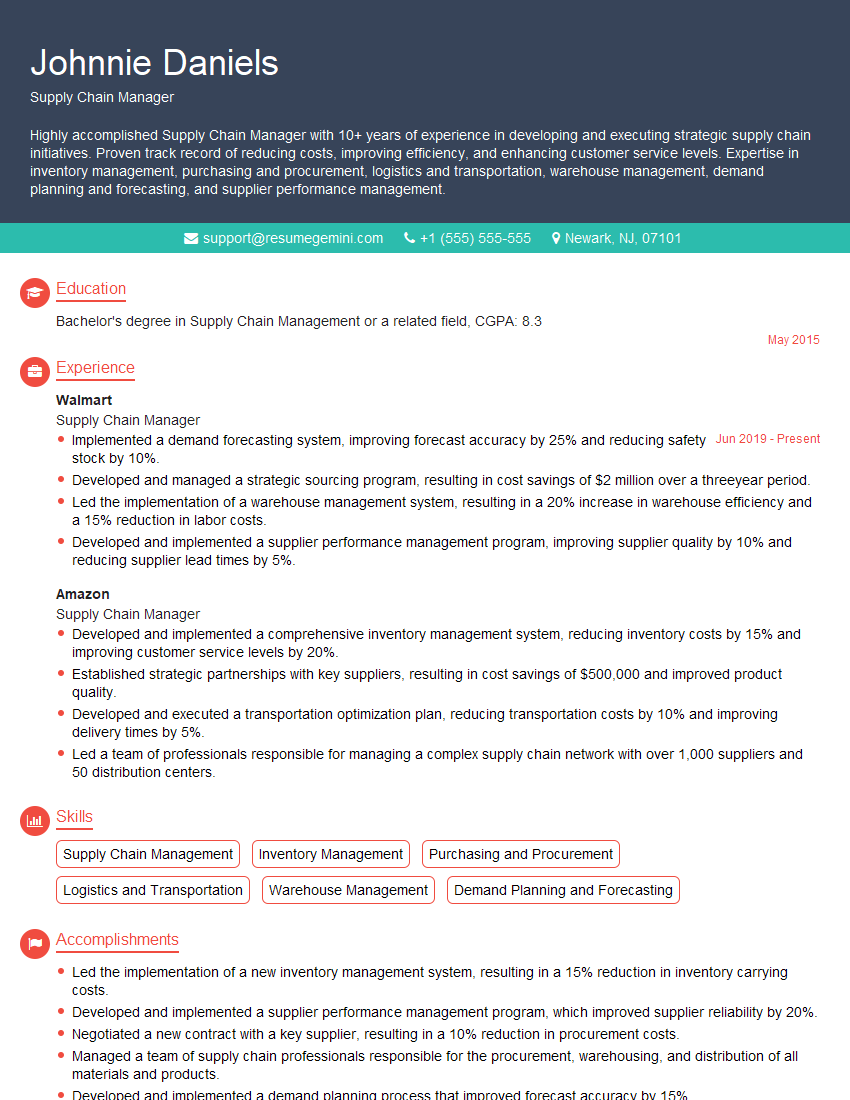
Supply Chain Manager Resume Sample
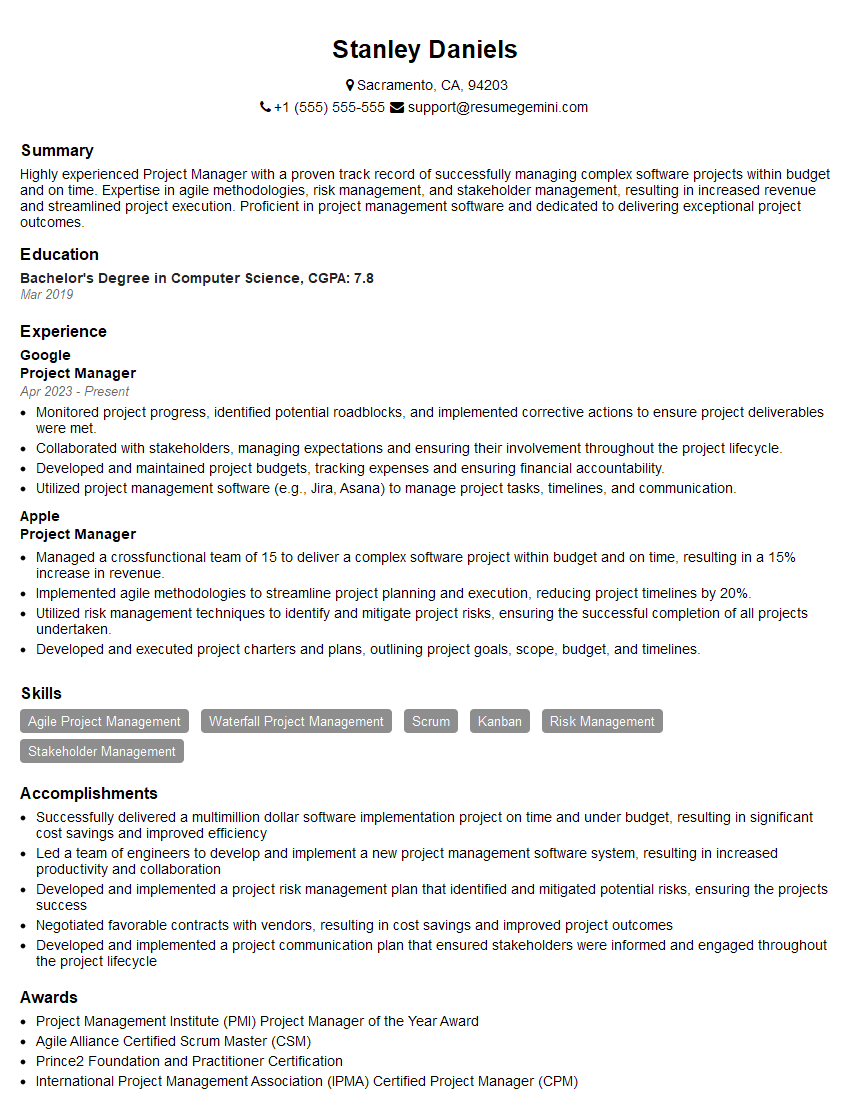
Project Manager Resume Sample
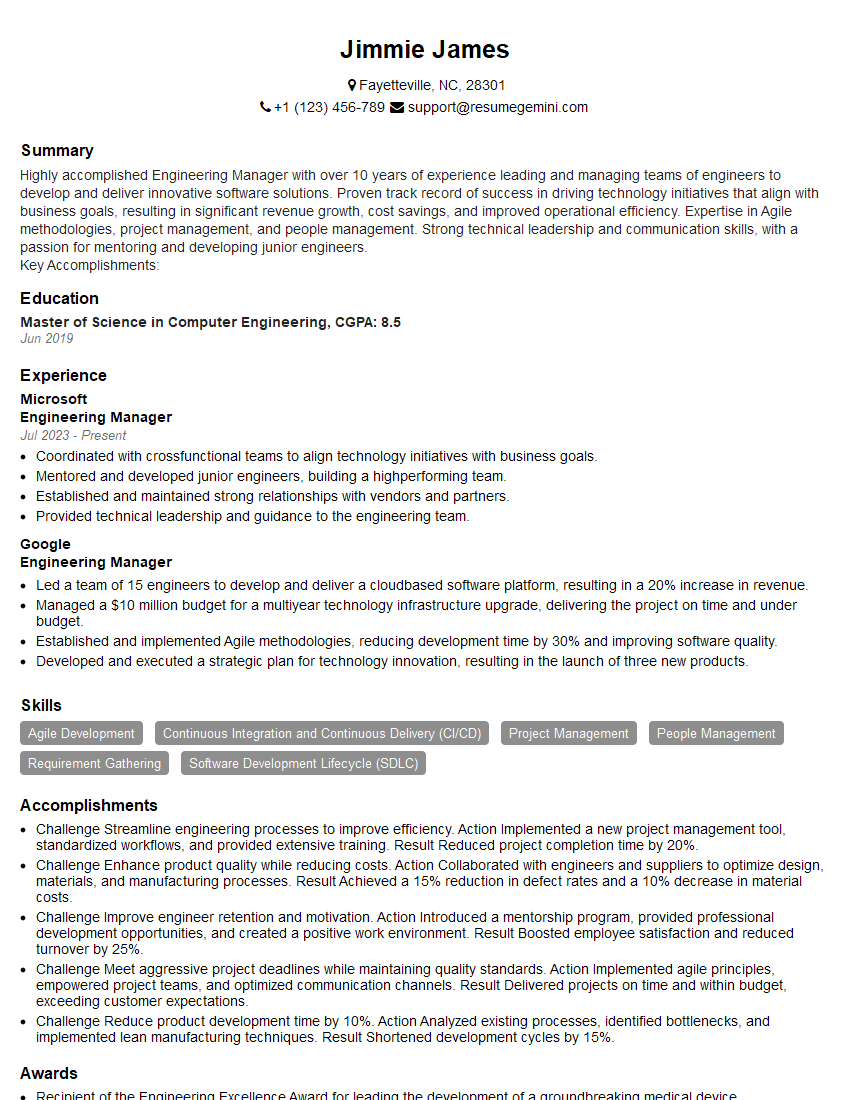
Engineering Manager Resume Sample
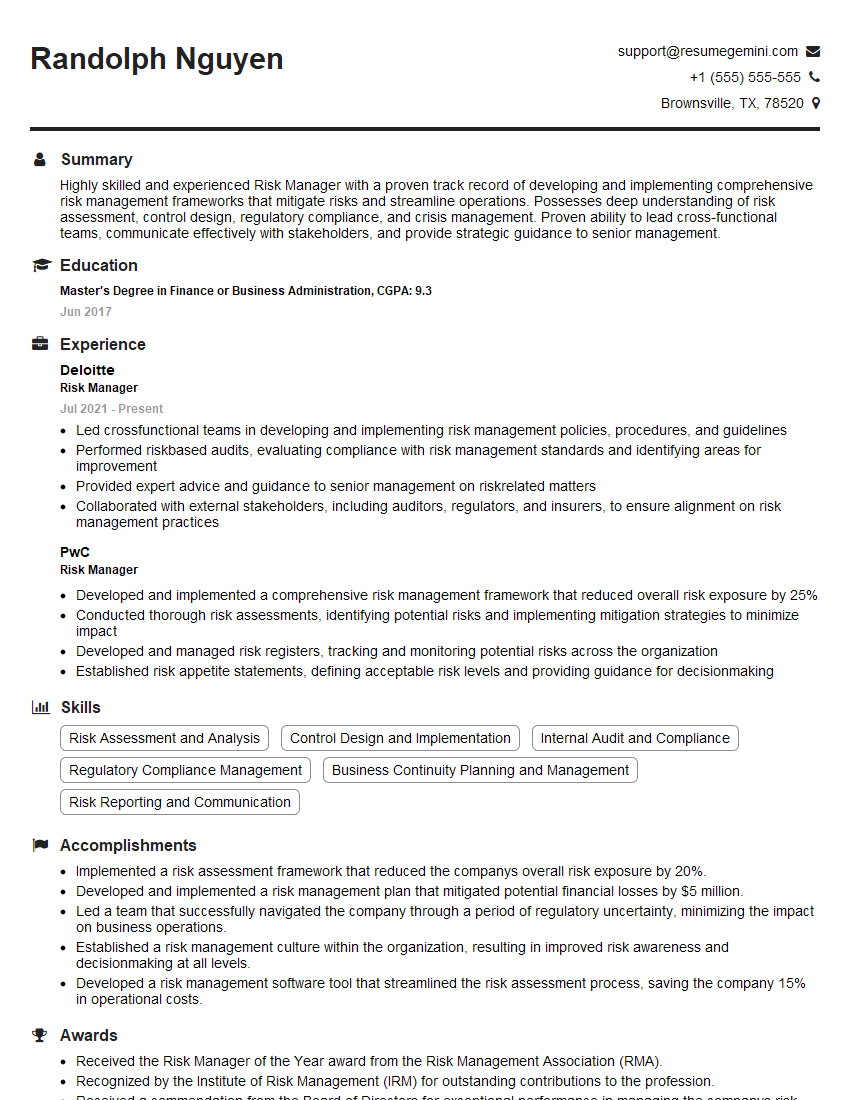
Risk Manager Resume Sample
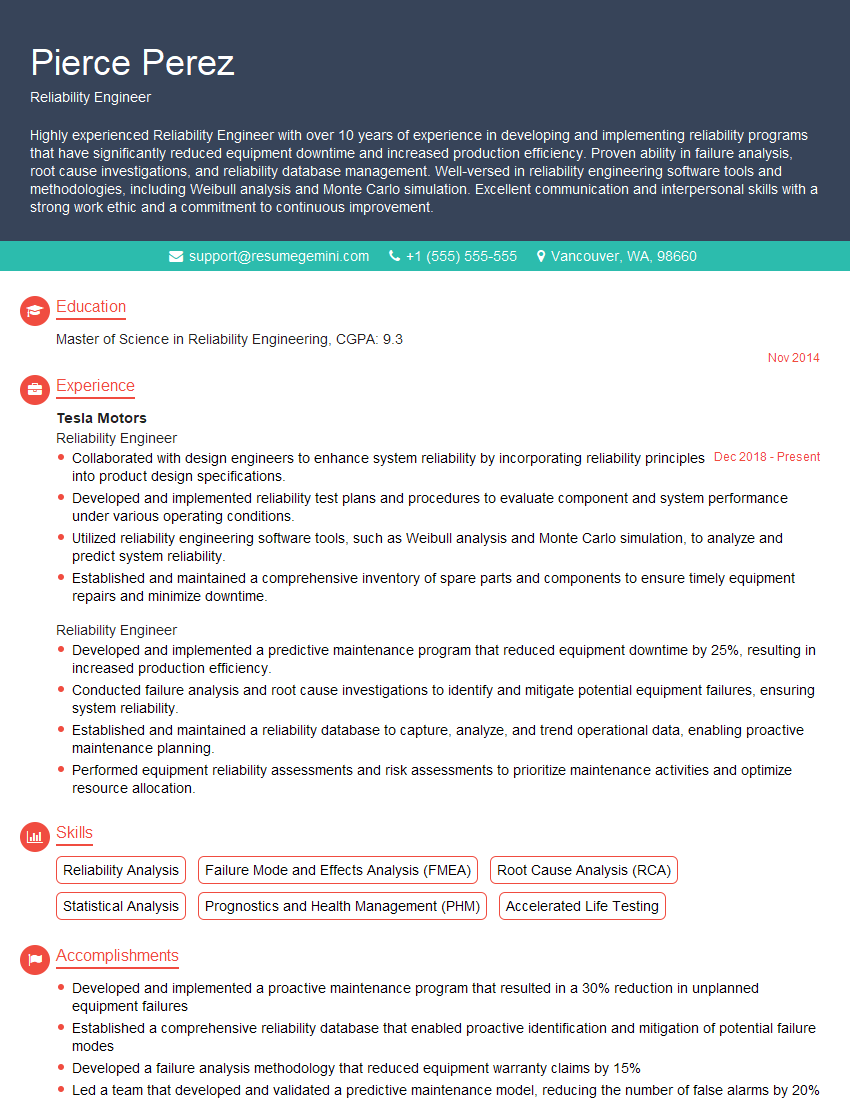
Reliability Engineer Resume Sample
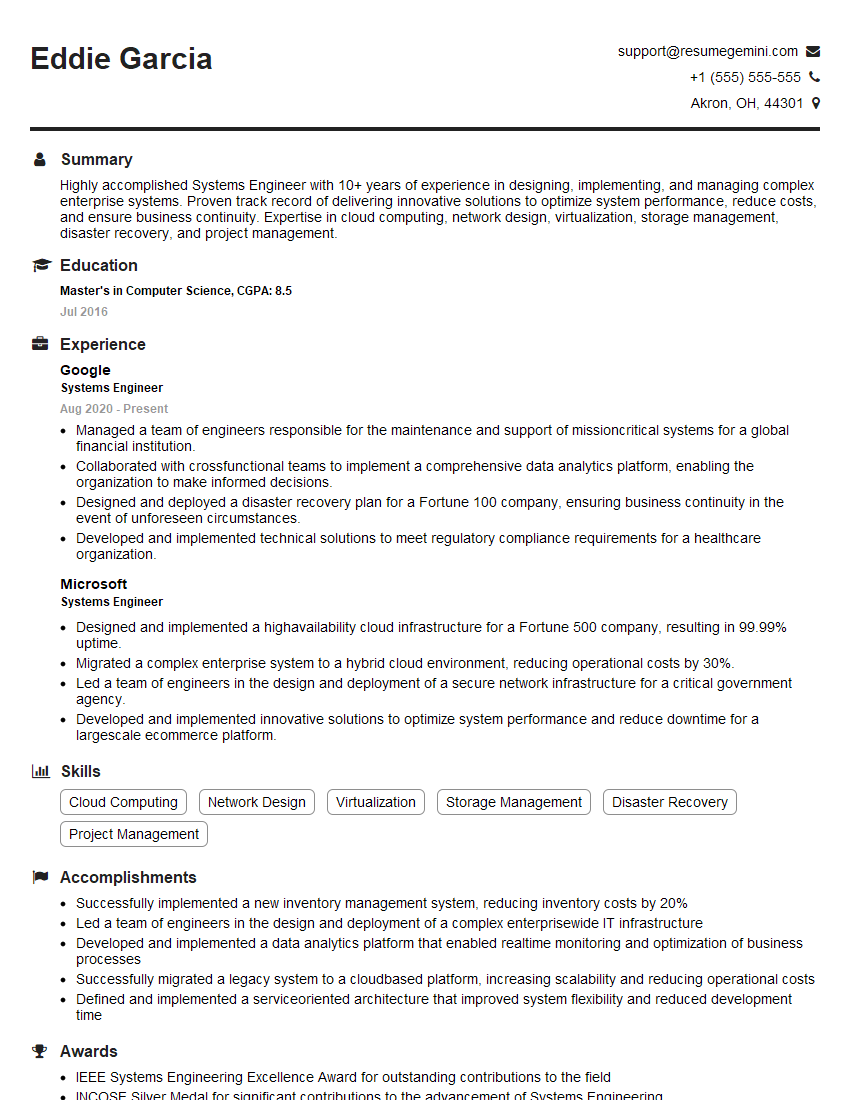
Systems Engineer Resume Sample
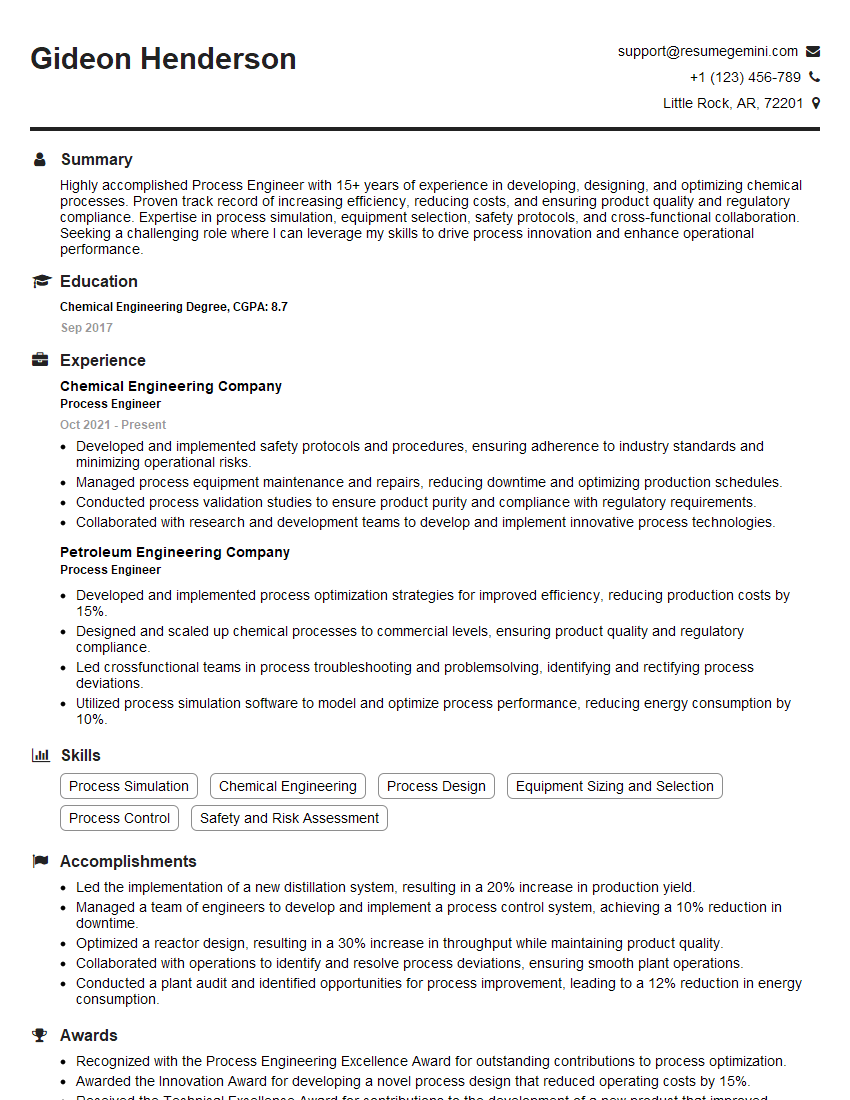
Process Engineer Resume Sample
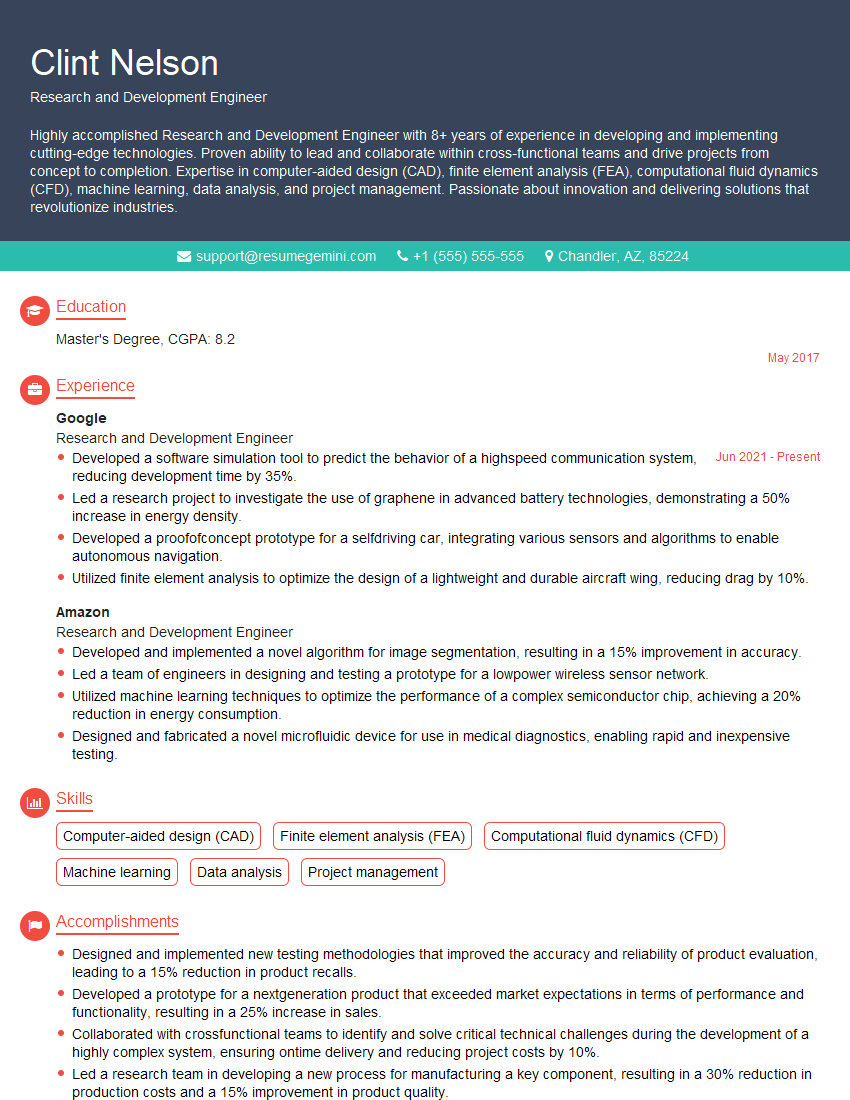
Research and Development Engineer Resume Sample
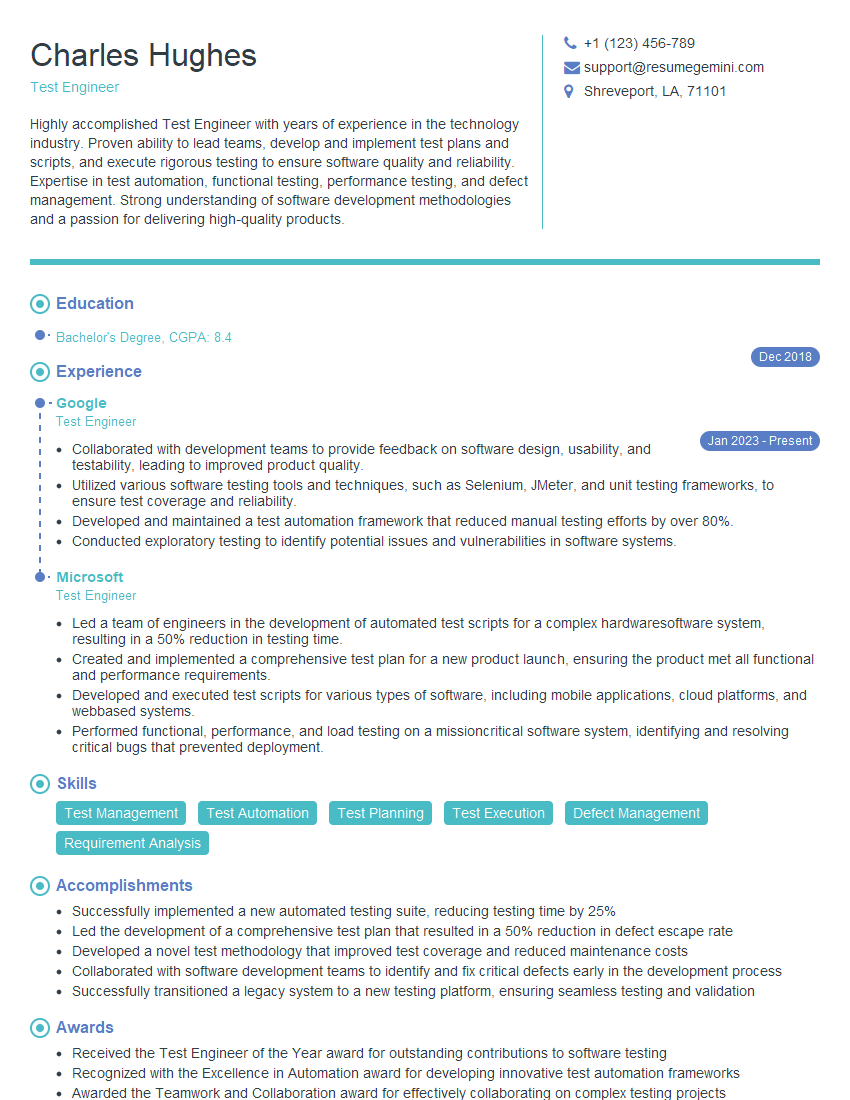
Test Engineer Resume Sample
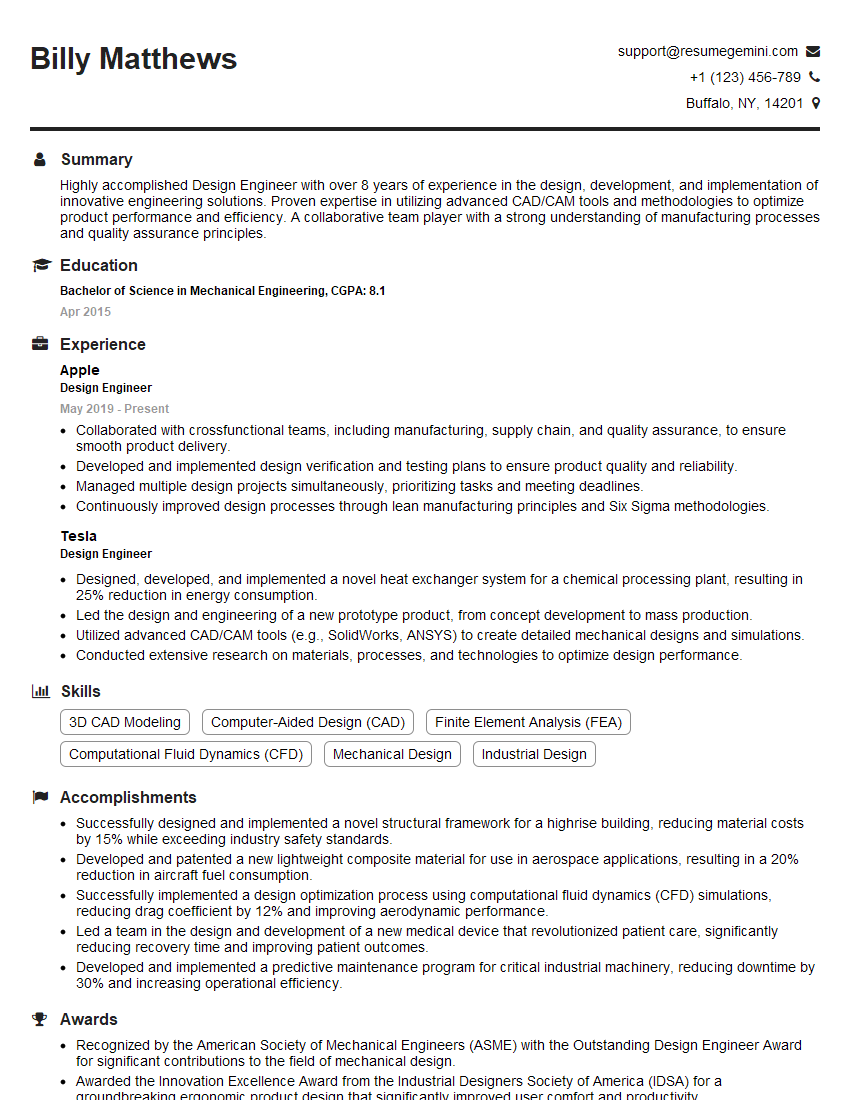
Design Engineer Resume Sample
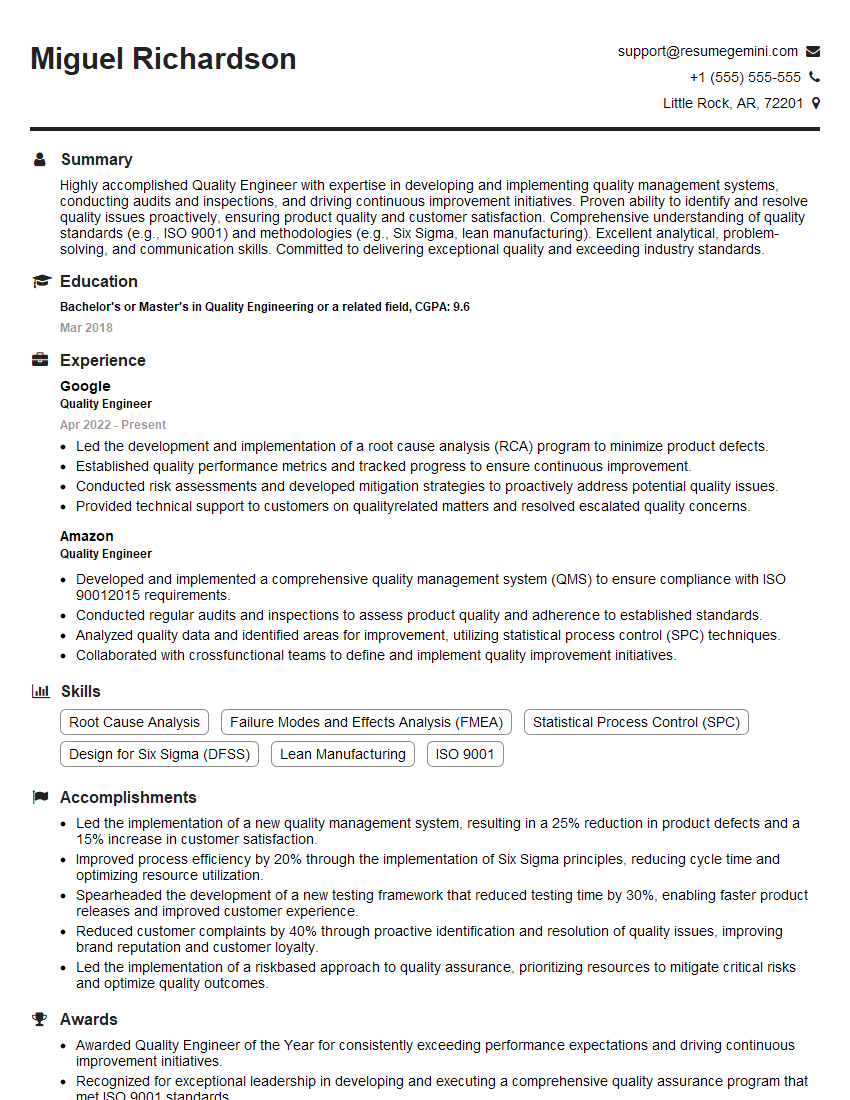
Quality Engineer Resume Sample
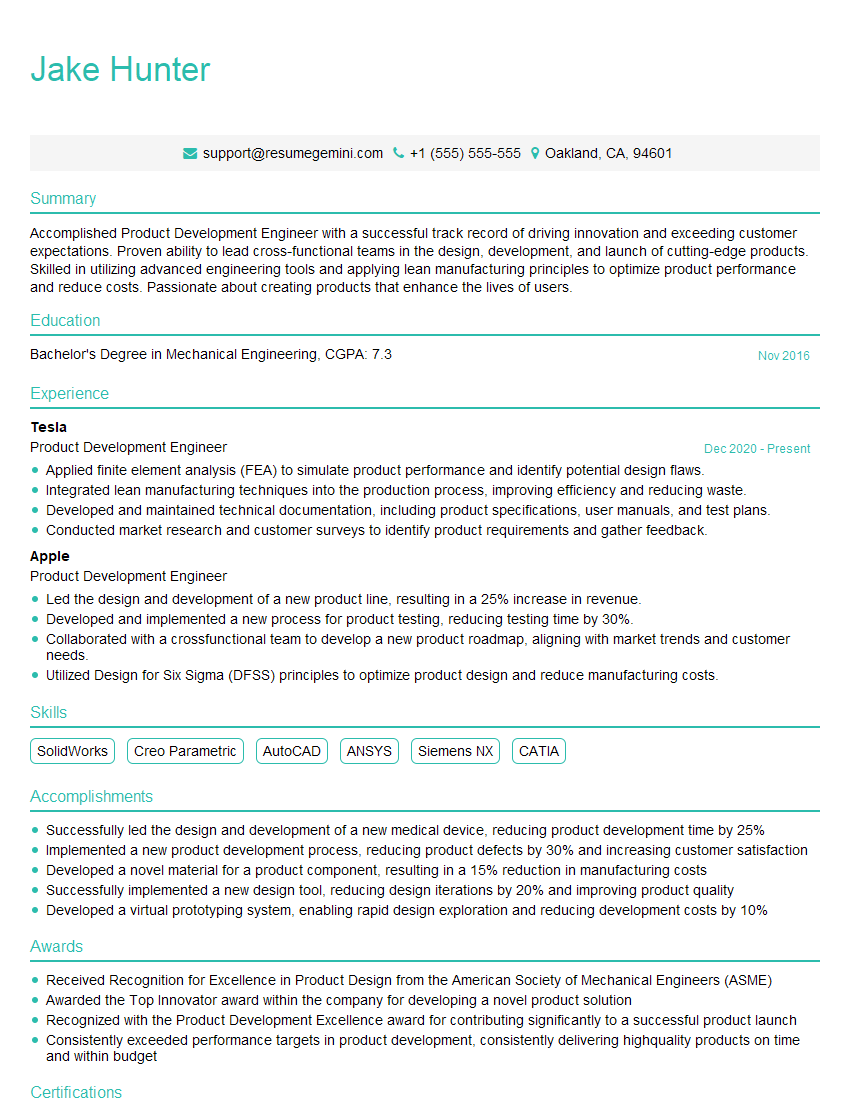
Product Development Engineer Resume Sample
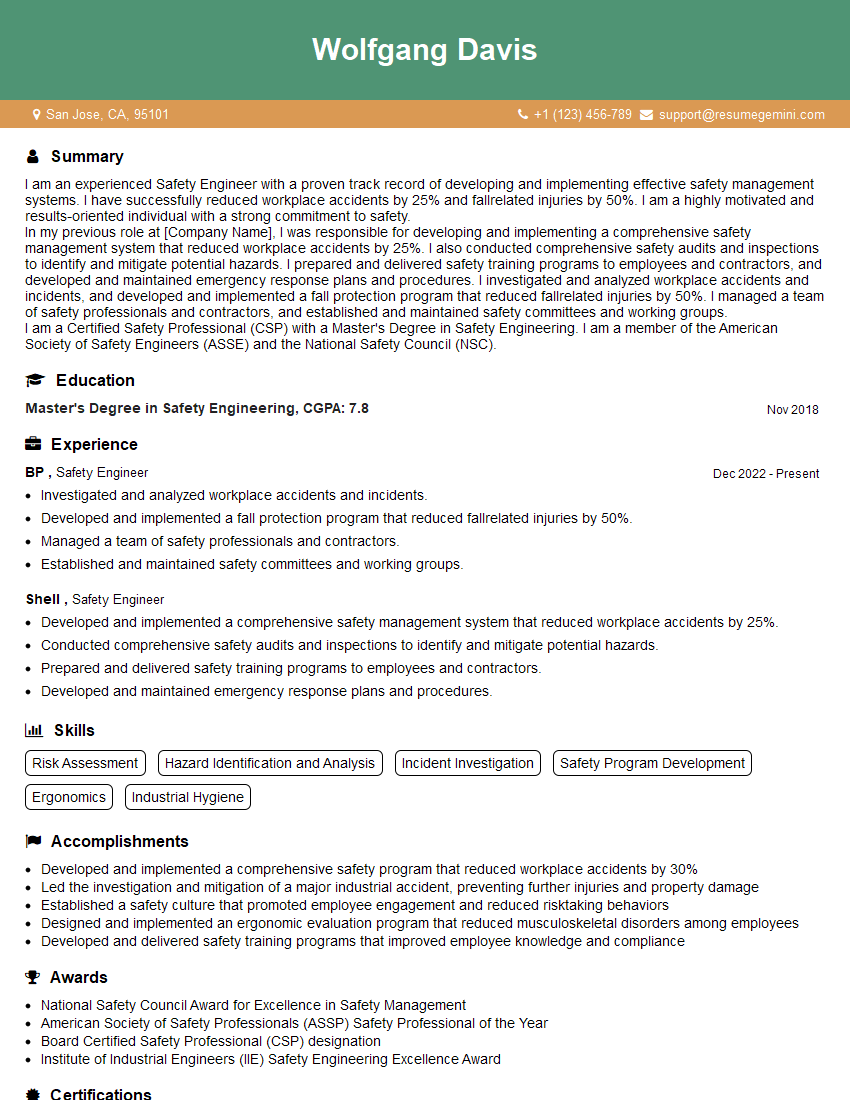
Safety Engineer Resume Sample
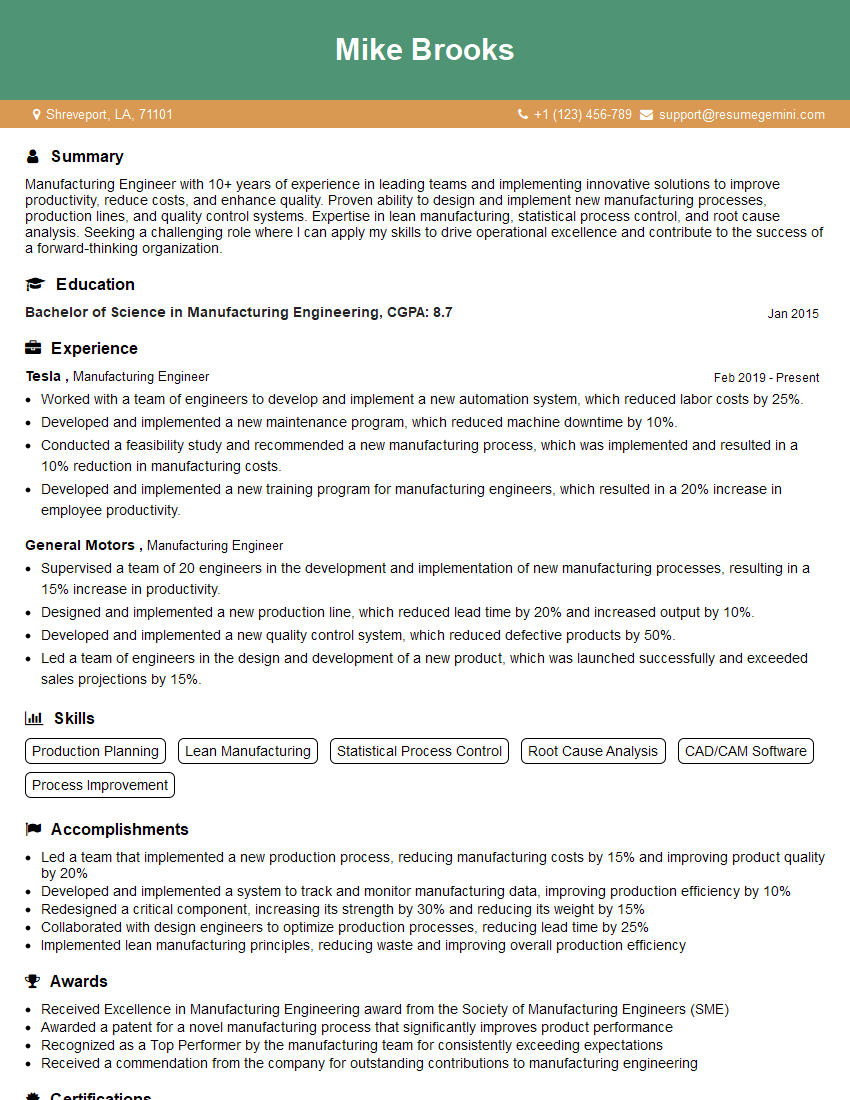
Manufacturing Engineer Resume Sample
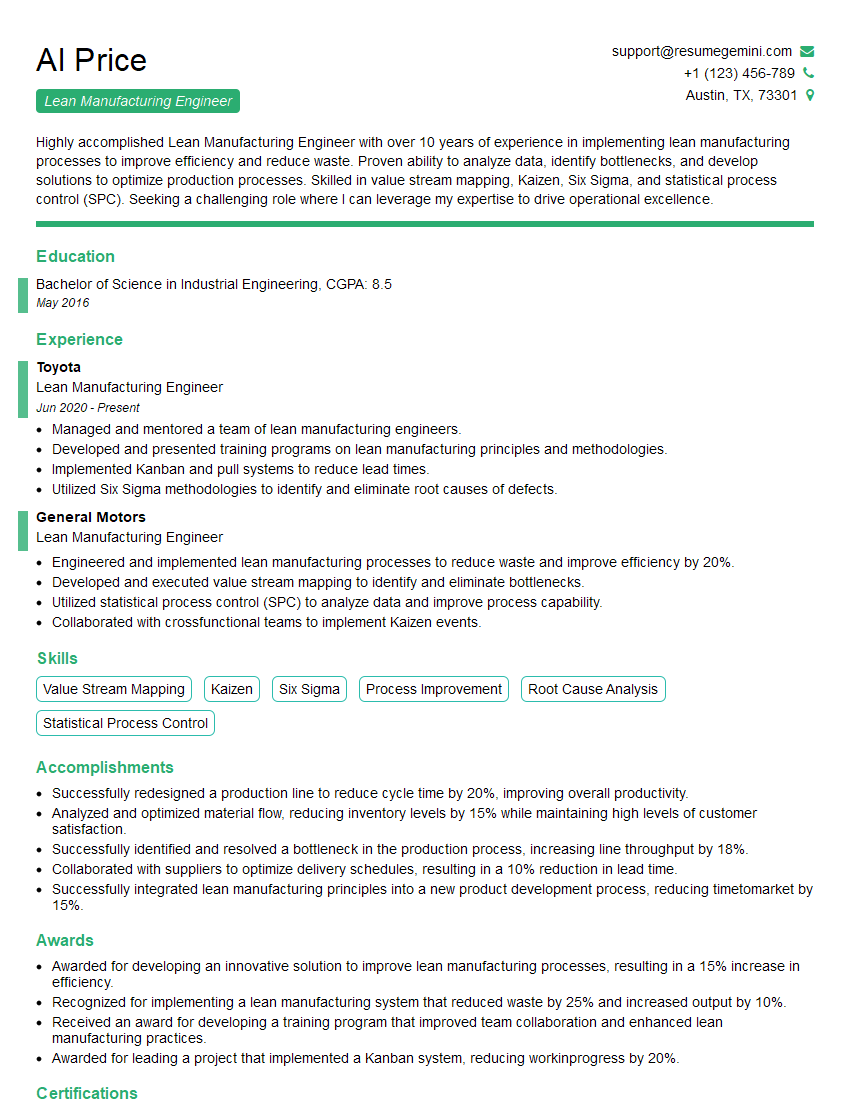
Lean Manufacturing Engineer Resume Sample
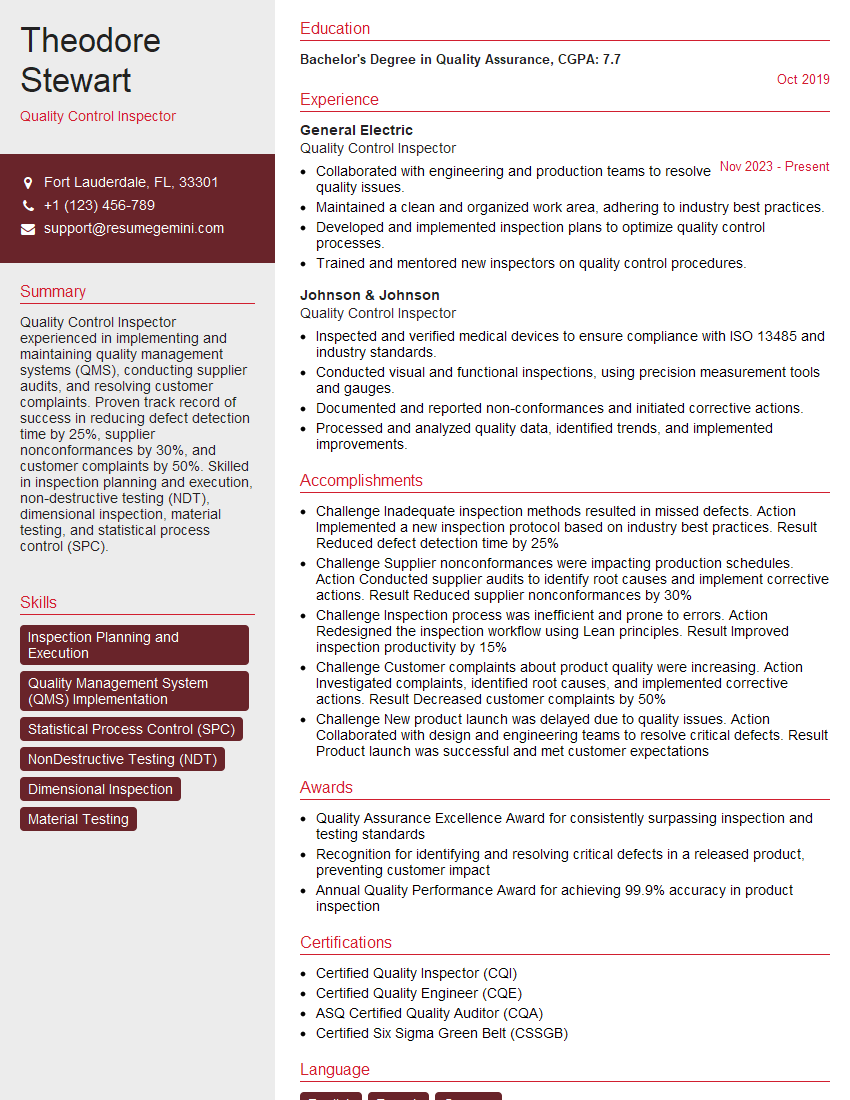
Quality Control Inspector Resume Sample
- Operations Manager
- Product Manager
- Director of Quality
- Quality Assurance Manager
- Supply Chain Manager
- Project Manager
- Engineering Manager
- Risk Manager
- Reliability Engineer
- Systems Engineer
- Process Engineer
- Research and Development Engineer
- Test Engineer
- Design Engineer
- Quality Engineer
- Product Development Engineer
- Safety Engineer
- Manufacturing Engineer
- Lean Manufacturing Engineer
- Quality Control Inspector
Explore more articles
Users Rating of Our Blogs
Share Your Experience
We value your feedback! Please rate our content and share your thoughts (optional).
What Readers Say About Our Blog
Very informative content, great job.
good