The right preparation can turn an interview into an opportunity to showcase your expertise. This guide to Familiar with Global Positioning Systems (GPS) interview questions is your ultimate resource, providing key insights and tips to help you ace your responses and stand out as a top candidate.
Questions Asked in Familiar with Global Positioning Systems (GPS) Interview
Q 1. Explain the basic principles of GPS technology.
GPS, or Global Positioning System, relies on a constellation of satellites orbiting Earth. These satellites transmit precise timing signals. A GPS receiver, like the one in your smartphone, receives these signals from multiple satellites simultaneously. By measuring the time it takes for these signals to reach the receiver, the device can calculate the distance to each satellite. Using this information, along with the known positions of the satellites, sophisticated algorithms pinpoint the receiver’s location through triangulation. Think of it like a spiderweb: the satellites are the points, and the distances are the lengths of the threads. The intersection of those threads is your location.
In simpler terms, imagine three friends standing at known points. You call each one and ask how long it takes their voice to reach you. Based on the time differences (which represent distances), you can determine your location relative to your friends. GPS does something similar, but with much higher accuracy and using radio signals from space instead of voice calls.
Q 2. Describe the different types of GPS errors and how they can be mitigated.
GPS accuracy can be affected by several error sources. Atmospheric delays, caused by the signals slowing down as they pass through the ionosphere and troposphere, are significant. Multipath errors occur when signals bounce off buildings or other objects before reaching the receiver, causing inaccurate distance measurements. Satellite clock errors stem from slight inaccuracies in the atomic clocks onboard the satellites. Receiver noise represents random errors introduced by the receiver’s electronics. Finally, ephemeris errors relate to the slight inaccuracies in the satellite’s known position.
Mitigation strategies include using more sophisticated signal processing techniques, employing differential GPS (DGPS) or other augmentation systems, implementing error models to compensate for atmospheric delays, and using high-quality receivers. For instance, DGPS uses a reference station with a known location to correct for many of the systematic errors.
Q 3. What are the different GPS signal frequencies and their uses?
GPS satellites primarily transmit signals on two frequencies: L1 (1575.42 MHz) and L2 (1227.60 MHz). L1 carries the primary navigation signal, which is used for most positioning applications. L2 is used to correct for ionospheric delays, improving overall accuracy. The newer GPS III satellites also transmit on the L5 frequency (1176.45 MHz), which is designed to be less susceptible to interference and multipath errors, offering even greater accuracy and reliability, especially in challenging environments.
Different frequencies are used because different atmospheric layers affect the signals differently at various frequencies. This allows for more precise corrections to be made, leading to improved position accuracy.
Q 4. How does GPS work in urban canyons or dense foliage?
Urban canyons and dense foliage significantly impact GPS performance. Tall buildings block direct line-of-sight to the satellites, leading to signal attenuation (weakening) and multipath errors (signals bouncing off structures). Similarly, dense tree cover can obstruct signals, reducing the number of visible satellites and leading to weaker signals. In such environments, the receiver may struggle to acquire enough satellite signals for accurate positioning, resulting in reduced accuracy or complete signal loss.
Techniques to mitigate these issues include using advanced signal processing algorithms to filter out multipath errors, integrating other positioning technologies such as inertial measurement units (IMUs) to provide supplemental position data during signal outages, and using receivers with highly sensitive antennas designed to capture weak signals.
Q 5. Explain the concept of Differential GPS (DGPS).
Differential GPS (DGPS) enhances the accuracy of GPS by using a reference station with a precisely known location. This station receives the same GPS signals as the user’s receiver. By comparing the differences between the known location of the reference station and the position calculated from the received GPS signals, corrections are calculated and transmitted to the user’s receiver. These corrections account for many of the systematic errors in the GPS signals, like atmospheric delays, resulting in a significant improvement in accuracy, usually to within a meter or less.
Imagine a map with slight inaccuracies. The reference station knows the *exact* location of a specific landmark. By comparing the GPS position of that landmark to its actual position, it corrects the map’s inaccuracies and helps to pinpoint the user’s location much more precisely.
Q 6. What is the difference between GPS and GLONASS?
GPS (United States) and GLONASS (Russia) are both global navigation satellite systems, offering similar functionality—providing precise positioning, navigation, and timing information worldwide. Both consist of constellations of satellites transmitting signals that can be received by ground-based receivers. However, they differ in their satellite constellation configurations, signal structures, and frequency bands used. GLONASS, for instance, historically had a different orbital configuration than GPS. While both now offer similar accuracy levels, the specific signal characteristics, and their susceptibility to different error sources can vary. The choice often depends on regional coverage needs and access to specific augmentation systems.
Think of them as two different brands of cars; both get you to your destination, but they might have different features and handling.
Q 7. Describe the process of GPS data acquisition and processing.
GPS data acquisition starts with the receiver searching for and tracking signals from multiple satellites. It then measures the time it takes for each signal to arrive, calculating the pseudo-range (distance) to each satellite. The receiver also measures the Doppler shift of the signals to estimate its velocity.
Data processing involves applying sophisticated algorithms to determine the receiver’s three-dimensional coordinates (latitude, longitude, altitude) and velocity. These algorithms solve a set of equations based on the pseudo-ranges, the known satellite positions (ephemeris data), and the satellite clock corrections. Several error sources are modeled and compensated for during processing, such as atmospheric delays and satellite clock errors. The resulting position is then outputted to the user. The complexity of this processing can vary depending on the receiver’s capabilities and the level of accuracy desired.
The process is continuous. The receiver constantly tracks satellites and updates its position estimate as new signals are received.
Q 8. How does GPS contribute to precision agriculture?
GPS revolutionizes precision agriculture by providing farmers with accurate location data for optimizing various farming operations. Imagine needing to apply fertilizer precisely to a specific field section, avoiding overlaps and wasted resources. GPS enables this through GPS-guided machinery.
- Variable Rate Technology (VRT): GPS allows tractors and other equipment to adjust the application rate of inputs (fertilizer, seeds, pesticides) based on real-time location and soil conditions. Sensors on the equipment relay data about the soil, and GPS ensures the correct amount of input is delivered to the precise location, minimizing waste and maximizing efficiency. For example, a field might have varying nutrient levels; VRT guided by GPS would apply more fertilizer to nutrient-deficient areas and less to areas that already have sufficient nutrients.
- Automated Steering: GPS-guided steering systems maintain the equipment on a pre-programmed path, reducing overlaps and ensuring complete coverage. This leads to improved efficiency in planting, spraying, and harvesting, reducing fuel consumption and labor costs.
- Yield Mapping: GPS helps create yield maps by recording the yield at specific locations within a field. This data can be used to identify high- and low-yielding areas, allowing farmers to tailor their practices for optimal productivity in subsequent seasons. This assists in data-driven decision-making for future planting.
In essence, GPS transforms farming from a largely guesswork-based practice to a precise, data-driven operation, significantly improving resource management and profitability.
Q 9. Explain the concept of GPS time synchronization.
GPS time synchronization is critical because the accuracy of GPS positioning relies on knowing the precise time of signal transmission from each satellite. Imagine trying to pinpoint a location using only the distance from three landmarks – you’d have multiple potential locations. Time is the fourth dimension needed to resolve this ambiguity.
Each GPS satellite carries an extremely accurate atomic clock. The receiver, whether in a smartphone or a high-precision GPS device, receives signals from multiple satellites simultaneously. By comparing the arrival times of these signals, the receiver can calculate the distance to each satellite. The system then uses a process called trilateration (or, more accurately, multilateration with more than three satellites) to pinpoint the receiver’s location. To do this precisely, the clocks on the receiver and the satellites need to be precisely synchronized.
These clocks are not perfectly synchronized initially, so corrections are calculated and broadcast. The accuracy of the synchronization is paramount: a small error in time leads to a significant error in positioning.
Q 10. What are some applications of GPS in autonomous vehicles?
Autonomous vehicles heavily rely on GPS for localization and navigation. Think of a self-driving car – it needs to know exactly where it is on the road, and where it needs to go. GPS provides the foundation for this.
- Localization: GPS provides the initial position and continuous tracking of the vehicle. This ensures the vehicle knows its position within the environment.
- Navigation: By combining GPS data with map data and sensor inputs (like cameras and lidar), the autonomous system can plan and execute a route.
- Path Planning: GPS data feeds into algorithms that create optimal routes, considering traffic, road conditions, and other factors.
- Obstacle Avoidance: While not directly reliant on GPS, GPS provides a crucial context for the vehicle’s position relative to obstacles and the overall environment. The vehicle uses this GPS data in conjunction with other sensors to ensure safe navigation.
GPS, however, is just one part of the puzzle. Autonomous vehicles usually combine GPS with other technologies like Inertial Measurement Units (IMUs) and mapping systems for redundancy and improved accuracy, especially in urban environments where GPS signals might be weak or obstructed.
Q 11. How does GPS work in maritime navigation?
GPS plays a vital role in maritime navigation, providing ships with precise location data for safe and efficient voyages. Imagine a massive cargo ship navigating through a busy strait; accurate positioning is crucial for collision avoidance.
GPS receivers onboard ships are used for:
- Position Determination: GPS provides the ship’s latitude and longitude, enabling precise tracking of its position.
- Navigation Planning: GPS data is integrated into Electronic Chart Display and Information Systems (ECDIS) to plot courses, calculate estimated times of arrival (ETAs), and monitor progress. It allows for efficient route planning, especially in complex waterways.
- Collision Avoidance: Accurate position information from GPS is crucial for detecting and avoiding collisions with other vessels, structures, and hazards. This helps ensure safe and efficient passage in crowded shipping lanes.
- Search and Rescue (SAR): GPS aids in pinpointing the location of vessels in distress, assisting search and rescue efforts.
While GPS is widely used, maritime navigation often employs redundant systems, such as Differential GPS (DGPS) or other satellite-based augmentation systems to improve accuracy and reliability in critical situations.
Q 12. What are some challenges in GPS signal integrity?
GPS signal integrity faces several challenges that can affect the accuracy and reliability of location data. These challenges can range from atmospheric interference to intentional signal disruption.
- Atmospheric Effects: The ionosphere and troposphere can affect the speed and path of GPS signals, causing errors in position calculations. These effects are mitigated by modelling and correction techniques.
- Multipath Errors: Signals can bounce off buildings, hills, and other surfaces before reaching the receiver. This can lead to errors in distance measurements and inaccurate positioning.
- Obstructions: Tall buildings, dense foliage, and even tunnels can block GPS signals, resulting in signal loss or weak reception. Urban canyons, for example, present a significant challenge.
- Receiver Noise: Internal noise within the GPS receiver itself can affect the quality of the signal processing and introduce errors.
- Satellite Geometry: The relative positions of the satellites in the sky (the geometry) can affect the accuracy of the position fix. A poor geometry means weaker positioning accuracy.
Mitigation strategies include using differential GPS (DGPS), using multiple receivers, employing signal processing techniques to filter out noise, and utilizing augmentation systems to correct for atmospheric delays.
Q 13. Discuss the role of GPS in aviation.
GPS plays a critical role in various aspects of aviation, from navigation to approach and landing. Imagine the precision needed to guide an airliner safely to its destination – GPS is indispensable.
- Navigation: GPS provides pilots with continuous position information, enabling precise navigation over long distances and in all weather conditions.
- Approach and Landing: GPS-based systems, such as the Wide Area Augmentation System (WAAS) and the European Geostationary Navigation Overlay Service (EGNOS), provide improved accuracy for approaches in challenging weather, helping pilots land safely even in low visibility.
- Air Traffic Management (ATM): GPS contributes to air traffic management by providing accurate tracking of aircraft positions, facilitating safe separation between aircraft.
- Flight Planning: GPS data helps in creating efficient flight plans, considering weather patterns and other factors to minimize fuel consumption and flight time.
GPS is increasingly integrated with other navigation systems to provide redundancy and enhance safety in all phases of flight. However, like in other applications, challenges of signal integrity remain, particularly in areas with signal blockage or atmospheric interference.
Q 14. Explain the concept of GPS spoofing and jamming.
GPS spoofing and jamming are malicious attacks that compromise the integrity and reliability of GPS signals. Imagine someone manipulating a self-driving car’s GPS to cause it to veer off course – that’s the danger of these attacks.
GPS Spoofing: This involves transmitting false GPS signals to mislead a receiver about its actual location. A spoofer sends signals that mimic genuine satellite signals, but with incorrect positional information. This can trick a GPS receiver into believing it is somewhere it is not.
GPS Jamming: This involves broadcasting powerful signals on the same frequencies as GPS signals to overwhelm the receiver and prevent it from receiving authentic signals. The effect is to deny the receiver any GPS signal.
Both spoofing and jamming pose serious threats to various applications relying on GPS, including navigation, transportation, and critical infrastructure. Mitigation techniques involve using signal authentication methods, employing anti-jamming technologies, and implementing redundancy and verification mechanisms.
Q 15. Describe the various GPS receiver architectures.
GPS receiver architectures vary significantly depending on the application and required performance. They can be broadly categorized into several types:
- Single-channel receivers: These are the simplest and least expensive, processing signals from one satellite at a time. They’re suitable for basic navigation but offer relatively low accuracy and slow acquisition times. Think of older car navigation systems.
- Multi-channel receivers: These simultaneously track signals from multiple satellites, significantly improving accuracy and acquisition speed. Most modern handheld GPS devices and many in-vehicle systems use multi-channel receivers. The more channels, the faster and more accurate the position fix.
- Differential GPS (DGPS) receivers: These improve accuracy by using a known, fixed reference station to correct for errors in the GPS signals. This greatly enhances precision, making DGPS vital in surveying and precision agriculture.
- Real-Time Kinematic (RTK) GPS receivers: RTK provides centimeter-level accuracy by utilizing two receivers – one at a known base station and one at the rover location. They exchange data to eliminate errors, essential for highly precise surveying and construction.
- Wide Area Augmentation System (WAAS) and other augmentation systems: WAAS and similar systems (like EGNOS in Europe) improve GPS accuracy by broadcasting correction signals to enhance the precision of civilian GPS signals. These are crucial for applications needing better accuracy than standard GPS can provide.
The choice of architecture depends on the balance between cost, accuracy, and the application’s specific needs. For example, a hiker might use a multi-channel handheld receiver, while a surveyor would opt for an RTK system.
Career Expert Tips:
- Ace those interviews! Prepare effectively by reviewing the Top 50 Most Common Interview Questions on ResumeGemini.
- Navigate your job search with confidence! Explore a wide range of Career Tips on ResumeGemini. Learn about common challenges and recommendations to overcome them.
- Craft the perfect resume! Master the Art of Resume Writing with ResumeGemini’s guide. Showcase your unique qualifications and achievements effectively.
- Don’t miss out on holiday savings! Build your dream resume with ResumeGemini’s ATS optimized templates.
Q 16. How does GPS contribute to fleet management?
GPS is revolutionizing fleet management by providing real-time location tracking of vehicles and assets. This allows businesses to:
- Optimize routes and scheduling: GPS data helps determine the most efficient routes, reducing fuel consumption and travel time. Imagine a delivery company using GPS to dynamically reroute drivers to avoid traffic congestion.
- Improve driver safety and behavior: GPS can monitor driver speed, idling time, and harsh braking/acceleration events. This data can be used to provide feedback to drivers and improve overall safety, leading to lower insurance premiums.
- Enhance asset management: Tracking the location and status of equipment (e.g., delivery trucks, construction machinery) prevents theft and ensures efficient utilization. For instance, a construction company can pinpoint the location of expensive tools at all times.
- Improve customer service: Real-time location updates allow businesses to provide accurate estimated times of arrival (ETAs) to customers, improving transparency and satisfaction.
- Reduce operational costs: Optimizing routes, improving driver behavior, and enhancing asset management lead to significant cost savings.
Fleet management software integrates GPS data with other information to provide a comprehensive view of operations, enabling data-driven decision-making.
Q 17. What are some real-world applications of GPS tracking?
GPS tracking has found applications across numerous sectors. Here are just a few:
- Navigation: From car navigation systems to hiking apps, GPS helps us find our way around.
- Transportation and logistics: Tracking shipments, optimizing delivery routes, managing fleets (as discussed previously).
- Asset tracking: Locating valuable items, preventing theft, and managing inventory.
- Personal safety: GPS trackers in personal devices (smartphones, fitness trackers) can help in emergencies.
- Sports and fitness: Monitoring workout routes, tracking performance metrics.
- Wildlife tracking: Studying animal migration patterns and behaviors.
- Agriculture: Precision farming, optimizing irrigation and fertilization.
- Surveying and mapping (detailed below): Creating accurate maps and land surveys.
- Emergency response (discussed below): Locating emergency responders and victims.
The pervasive nature of GPS technology continues to fuel innovation and the development of new applications.
Q 18. Explain the importance of GPS in emergency response.
GPS plays a critical role in emergency response by enabling quick and efficient location of emergency personnel and those in need. This translates to:
- Faster response times: Emergency responders (police, fire, ambulance) can quickly locate the scene of an accident or incident, significantly reducing response time.
- Improved coordination: GPS allows dispatchers to monitor the location of multiple responders, optimizing their deployment and coordination.
- Precise location of victims: In search and rescue operations, GPS helps pinpoint the location of stranded or injured individuals, even in remote areas.
- Enhanced safety for responders: GPS tracking ensures the safety of responders by providing awareness of their location and surrounding environment.
In scenarios like natural disasters, where communication infrastructure might be damaged, GPS-enabled devices become even more crucial for communication and rescue efforts. The accuracy and reliability of GPS are essential for saving lives and minimizing damage in emergencies.
Q 19. Discuss the accuracy levels achievable with different GPS technologies.
GPS accuracy varies significantly depending on the technology used and environmental factors. Here’s a comparison:
- Standard GPS: Typically provides accuracy in the range of 4.9 to 16.4 feet (1.5 to 5 meters). This accuracy can be affected by atmospheric conditions, multipath errors (signals reflecting off buildings), and obstructions.
- DGPS: Improves accuracy to within 1 to 3 feet (0.3 to 1 meter). The improvement comes from correcting for systematic errors using a known reference station.
- RTK GPS: Achieves centimeter-level accuracy (1 to 10 centimeters). This high precision is essential for precise surveying, construction, and mapping.
- WAAS/EGNOS: Increases accuracy compared to standard GPS, often achieving accuracy within 3 feet (1 meter) or better. These augmentations help improve accuracy even in challenging environments.
It’s important to remember that accuracy can be influenced by factors such as satellite geometry (PDOP – Position Dilution of Precision), atmospheric conditions (ionospheric and tropospheric delays), and multipath effects. Understanding these limitations is key to interpreting GPS data correctly.
Q 20. How do GPS satellites maintain their orbits?
GPS satellites maintain their precise orbits through a combination of factors:
- Initial launch into precise orbits: Satellites are launched with extreme precision to reach their designated orbital slots.
- Onboard propulsion systems: Small thrusters on each satellite are used for minor course corrections, maintaining the precise altitude and inclination needed for optimal global coverage.
- Ground control stations: A network of ground stations constantly monitors the satellites’ positions and health. They send commands to adjust the satellites’ orbits as needed. These stations also track the clocks on the satellites to correct any minor drifts.
- Orbital mechanics: The satellites are placed in a specific type of orbit (Medium Earth Orbit) that requires minimal fuel to maintain. The Earth’s gravity is the primary force keeping the satellites in their paths.
This complex interplay of technological systems and natural forces ensures the continued precise functioning of the GPS constellation.
Q 21. Describe the use of GPS in surveying and mapping.
GPS has revolutionized surveying and mapping by providing a cost-effective and efficient method for determining precise coordinates. Its applications include:
- Creating accurate maps: GPS data is used to establish the precise location of points on the Earth’s surface, forming the foundation for topographic maps, cadastral maps, and other geographical information systems (GIS) data.
- Land surveying: GPS is used to define property boundaries, establish benchmarks, and create detailed surveys of land parcels. RTK GPS systems are commonly used due to their high accuracy.
- Construction and engineering: GPS is utilized to guide machinery, establish precise elevations, and monitor construction progress. High-accuracy GPS is crucial in ensuring accurate alignment and positioning of structures.
- Geographic Information Systems (GIS): GPS data forms the spatial component of GIS databases, allowing for the integration of location-based information.
- Environmental monitoring: GPS is used to track changes in the environment, such as deforestation, glacier movement, and coastline changes.
The integration of GPS with other technologies, such as inertial navigation systems, enhances the accuracy and functionality of surveying and mapping applications, leading to more efficient and precise spatial data acquisition.
Q 22. Explain the concept of pseudo-random noise (PRN) codes.
Pseudo-random noise (PRN) codes are unique sequences of binary digits (0s and 1s) that are used to identify individual GPS satellites. Think of them as each satellite’s unique ‘fingerprint’. Each satellite transmits its own PRN code, allowing GPS receivers to distinguish the signals from different satellites. These codes are designed to appear random, but they are actually generated using deterministic algorithms, making them reproducible and predictable for both the satellite and the receiver. This allows the receiver to correlate the received signal with the known PRN code, determining the time delay and ultimately the satellite’s location.
Imagine a crowded stadium. Each person (satellite) has a unique whistle (PRN code). Although all whistles sound similar, the receiver (your ear) can distinguish the different whistles to determine who is calling out.
The PRN codes are essential for signal acquisition and tracking. The receiver searches for the unique PRN code of each satellite, confirming which signal is from each satellite. This is crucial for accurately calculating the receiver’s position.
Q 23. How does atmospheric refraction affect GPS signals?
Atmospheric refraction significantly impacts GPS signals. The Earth’s atmosphere, particularly the ionosphere and troposphere, bends the GPS signals as they travel through it. This bending, or refraction, causes a delay in the signal’s arrival time at the receiver. The ionosphere, an electrically charged layer, causes significant signal delays that vary depending on the frequency and the ionospheric conditions. The troposphere, the lower layer of the atmosphere, also causes delays, though generally smaller and more predictable than those from the ionosphere.
Imagine throwing a ball through water; its path is slightly bent due to the density difference. Similarly, GPS signals experience a change in direction and speed while passing through the atmosphere.
GPS receivers use sophisticated models and corrections to mitigate the effects of atmospheric refraction. These corrections often involve using multiple frequencies, enabling the receiver to calculate and compensate for the ionospheric delay. Tropospheric delays are typically modeled using meteorological data. Without accounting for refraction, significant errors in position accuracy could result.
Q 24. What are the different types of GPS antennas?
GPS antennas come in various types, each designed for specific applications and performance requirements. Some common types include:
- Patch Antennas: These are compact, planar antennas often used in handheld devices due to their small size and ease of integration.
- Helical Antennas: These antennas provide circular polarization, improving signal reception, especially in environments with multipath effects (signals bouncing off buildings or other surfaces).
- Microstrip Antennas: Similar to patch antennas, these are miniaturized antennas commonly integrated into GPS modules.
- Choke Ring Antennas: These are designed to reject ground reflections, improving accuracy in challenging environments.
- GPS L1/L2/L5 Antennas: Antennas designed to receive specific GPS frequencies (L1, L2, and L5) to enhance the accuracy and robustness of the signal reception.
The choice of antenna depends on factors like the application (e.g., handheld device, vehicle, aircraft), required accuracy, and environmental conditions. For instance, a high-precision surveying application might require a choke ring antenna, while a car navigation system may use a smaller, simpler patch antenna.
Q 25. Explain the concept of GPS ephemeris and almanac data.
Ephemeris and almanac data are crucial pieces of information that GPS receivers need to calculate their position. Ephemeris data provides precise orbital information for each satellite, specifying its position in space at a given time. Think of it as a very detailed timetable for each satellite’s movement. Almanac data, on the other hand, is a less precise but more concise overview of the satellite orbits; it’s a simplified version of the ephemeris. It’s used by the receiver to acquire the signals and initially estimate the satellite positions.
Imagine a train schedule (almanac): it gives you a general idea of the train’s location at certain times. But for precise timing, you’d need the train’s GPS tracking data (ephemeris) showing the exact coordinates and speed.
The receiver uses the almanac data to find the satellites in view and acquire their signals. Once the signals are acquired, the receiver uses the more accurate ephemeris data to calculate the exact position of each satellite and thus determine its own location.
Q 26. Discuss the benefits and limitations of using GPS.
GPS offers numerous benefits, but it also has limitations. The advantages include its global coverage, high accuracy (with augmentation systems), relatively low cost, and ease of use. It’s revolutionized navigation, surveying, mapping, and many other industries.
However, GPS is susceptible to several limitations: signal blockage by buildings or foliage, multipath errors (signals bouncing off surfaces), atmospheric effects (ionospheric and tropospheric delays), intentional or unintentional interference, and limitations in accuracy due to various factors such as satellite geometry and clock errors.
For example, using GPS in a dense urban canyon might be highly problematic due to signal blockage, whereas in an open field, high accuracy is attainable.
Q 27. Describe the future trends in GPS technology.
Future trends in GPS technology focus on improving accuracy, reliability, and availability. This includes the development of new signals and frequencies (e.g., modernized GPS signals like L5), the use of advanced signal processing techniques, and the integration with other navigation systems such as Galileo, GLONASS, and BeiDou to form a robust multi-constellation system. Moreover, we see advancements in augmentation systems that improve the accuracy of GPS by correcting for atmospheric effects and other errors.
Another significant trend is the integration of GPS with other technologies, such as inertial navigation systems and cellular networks, to provide more reliable and accurate positioning in challenging environments. The development of smaller, more energy-efficient GPS receivers is also crucial for expanding their applications across various devices.
Q 28. What are your experiences with specific GPS software and hardware?
During my career, I’ve extensively worked with various GPS software and hardware. On the software side, I’ve utilized post-processing software such as RTKLIB for precise point positioning (PPP), and various GIS software packages like ArcGIS for integrating GPS data into spatial analyses. I’ve also worked with proprietary software for integrating GPS data into various navigation and tracking systems.
In terms of hardware, I have experience working with different types of GPS receivers, from high-precision geodetic receivers used in surveying to low-cost handheld receivers for general navigation purposes. My expertise encompasses the calibration, testing and troubleshooting of these receivers and understanding their limitations depending on their applications. I’ve used receivers from various manufacturers, allowing me to appreciate the different technologies and their advantages.
For example, in a recent project involving precise agricultural mapping, we used a high-accuracy RTK GPS receiver coupled with a robust post-processing software to achieve centimeter-level accuracy for field boundary mapping.
Key Topics to Learn for a Global Positioning Systems (GPS) Interview
- GPS Fundamentals: Understanding the basic principles of GPS technology, including satellite constellations, signal transmission, and triangulation.
- GPS Accuracy and Error Sources: Analyzing factors affecting GPS accuracy, such as atmospheric conditions, multipath errors, and satellite geometry. Explore techniques for mitigating these errors.
- GPS Receivers and Data Processing: Familiarize yourself with different types of GPS receivers, their capabilities, and the processes involved in receiving and processing GPS data. This includes understanding data formats like NMEA.
- Practical Applications of GPS: Explore diverse applications such as navigation, surveying, precision agriculture, asset tracking, and location-based services. Be ready to discuss specific examples and their technical requirements.
- Differential GPS (DGPS) and other Enhancement Techniques: Understand how techniques like DGPS and RTK-GPS improve accuracy and their applications in high-precision scenarios.
- GPS Data Integration and Mapping: Learn about integrating GPS data with Geographic Information Systems (GIS) and other mapping software. Discuss data visualization and analysis techniques.
- Problem-Solving in GPS Applications: Prepare to discuss scenarios involving GPS signal loss, data interpretation challenges, and solutions to overcome them. Demonstrate your analytical and troubleshooting skills.
Next Steps
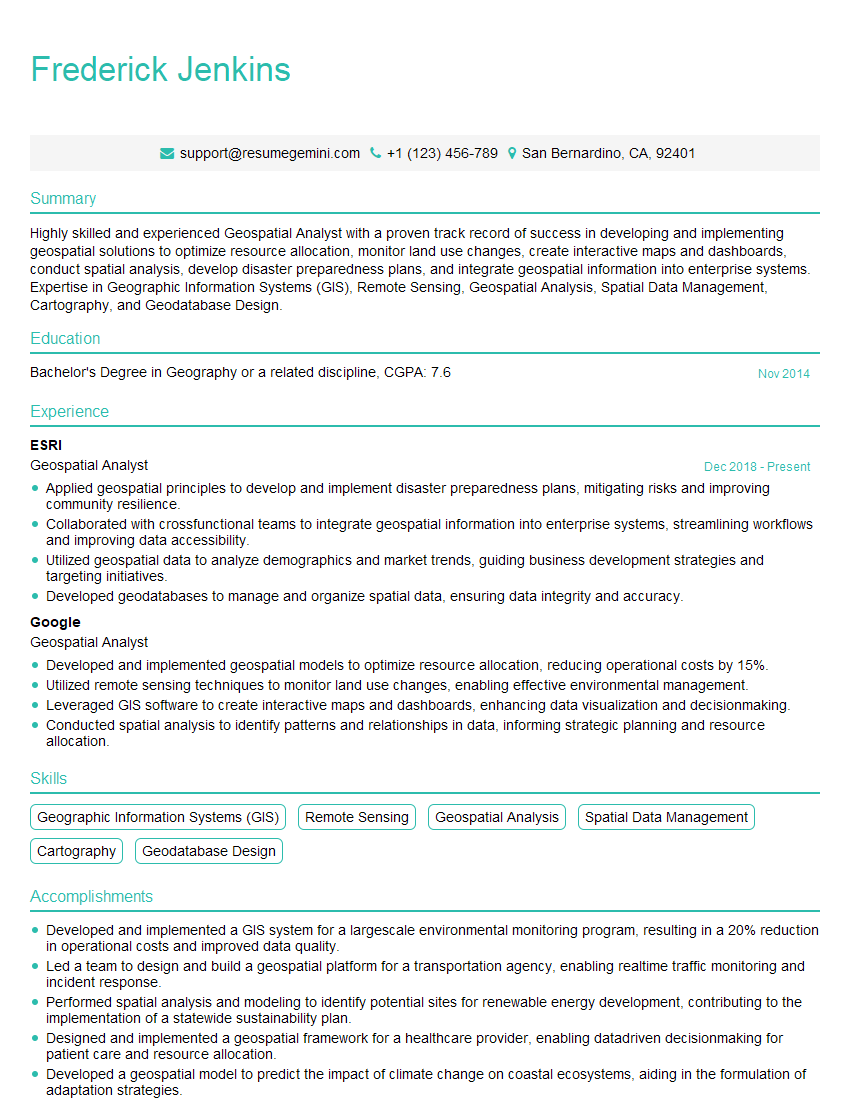
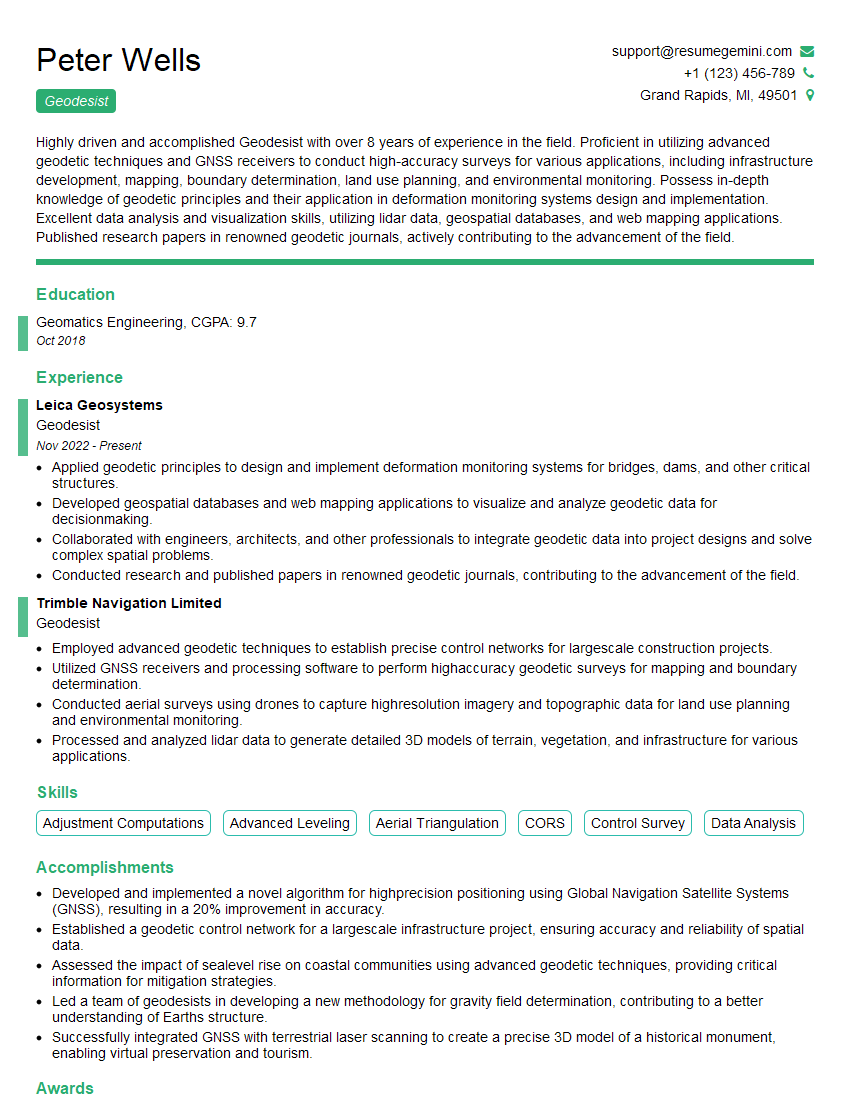
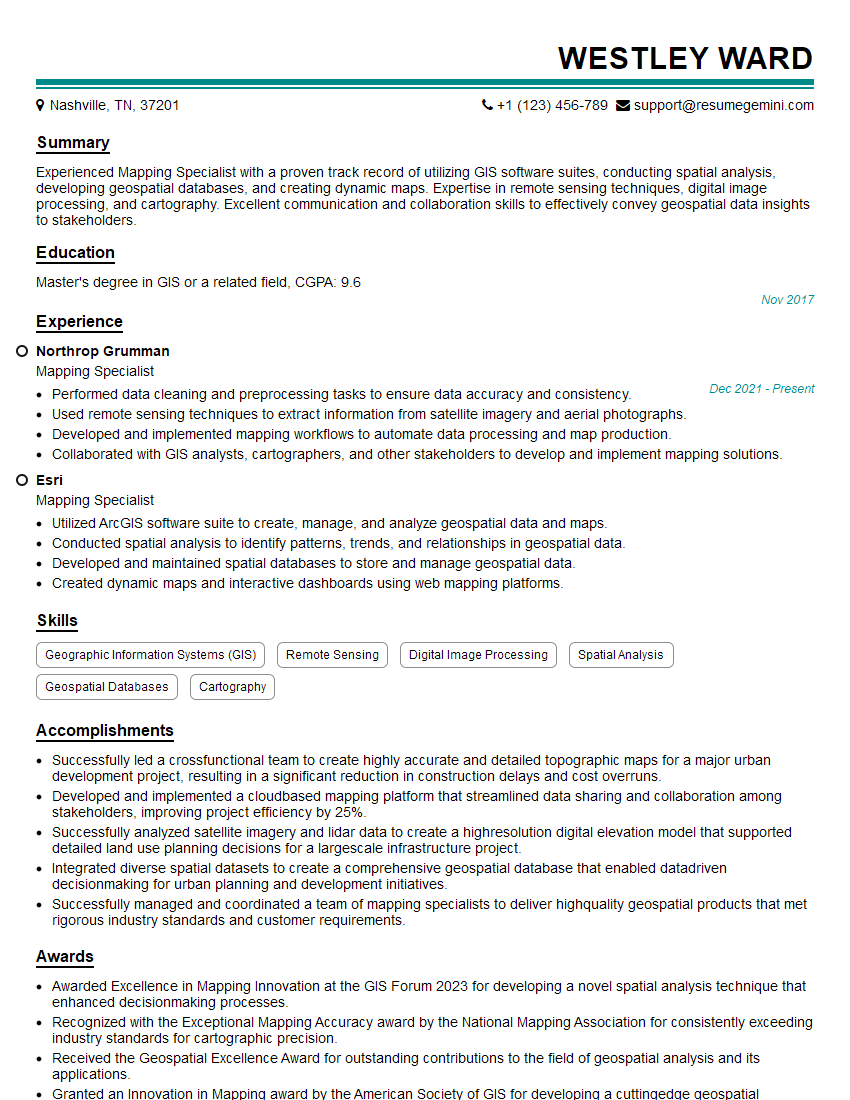
Mastering GPS technology opens doors to exciting career opportunities in various high-growth sectors. A strong understanding of GPS principles and applications is highly valued by employers. To maximize your job prospects, creating an ATS-friendly resume is crucial. ResumeGemini can help you build a professional and impactful resume tailored to highlight your GPS expertise. We provide examples of resumes specifically designed for candidates with GPS knowledge to give you a head start. Let ResumeGemini help you craft a resume that showcases your skills and secures your dream job.




Explore more articles
Users Rating of Our Blogs
Share Your Experience
We value your feedback! Please rate our content and share your thoughts (optional).
What Readers Say About Our Blog
Very informative content, great job.
good