Cracking a skill-specific interview, like one for Familiar with surveying techniques and equipment, requires understanding the nuances of the role. In this blog, we present the questions you’re most likely to encounter, along with insights into how to answer them effectively. Let’s ensure you’re ready to make a strong impression.
Questions Asked in Familiar with surveying techniques and equipment Interview
Q 1. Explain the difference between plane surveying and geodetic surveying.
The key difference between plane surveying and geodetic surveying lies in how they handle the Earth’s curvature. Plane surveying assumes the Earth is flat within the survey area, a simplification valid for smaller areas where the Earth’s curvature is negligible. Geodetic surveying, on the other hand, explicitly accounts for the Earth’s curvature, using an ellipsoidal model of the Earth’s shape. This is crucial for larger areas, such as national mapping projects or large-scale infrastructure development. Imagine trying to build a straight railway line across a large country – ignoring the Earth’s curvature would lead to significant errors.
Plane Surveying: Suitable for smaller projects where distances are relatively short. Calculations are simpler, utilizing Cartesian coordinates. Examples include land surveying for a small residential development or creating a topographic map of a local park.
Geodetic Surveying: Essential for large-scale projects where the Earth’s curvature is significant. Utilizes geodetic coordinates (latitude, longitude, and ellipsoidal height). Examples include establishing control points for national mapping or surveying large infrastructure projects like pipelines or highways that span significant distances.
Q 2. Describe your experience with various surveying instruments (e.g., total stations, GPS receivers, levels).
Throughout my career, I’ve extensively used various surveying instruments, mastering their operation and understanding their limitations. My experience encompasses:
- Total Stations: I’m proficient in using total stations for precise distance, angle, and elevation measurements. I have experience with different brands, such as Leica and Trimble, and am comfortable with various data collection techniques, including robotic surveying and conventional methods. For instance, I recently used a Leica TS16 total station to accurately set out the foundations for a large commercial building, ensuring perfect alignment and minimizing potential construction delays.
- GPS Receivers: I’m skilled in using both static and kinematic GPS techniques for precise positioning. I’ve worked with both single-frequency and dual-frequency receivers, understanding the trade-offs in accuracy and cost. A project I’m particularly proud of involved using RTK-GPS to create a highly accurate digital terrain model for a highway construction project, reducing the need for extensive ground surveys.
- Levels: I’m proficient in using automatic and digital levels for precise leveling and height determination. I understand the importance of proper instrument setup and procedures to minimize errors. I’ve utilized levels in numerous projects, from establishing benchmarks for construction to creating detailed contour maps for land development.
Q 3. How do you ensure accuracy in your surveying measurements?
Ensuring accuracy is paramount in surveying. My approach involves a multi-pronged strategy:
- Instrument Calibration: Regular calibration of all instruments is crucial. I always ensure that my equipment is calibrated to the manufacturer’s specifications and checked before each project to identify and rectify any potential instrumental errors.
- Proper Procedures: I meticulously follow established surveying procedures, employing appropriate techniques for each task. For example, using multiple setups and observations to reduce random errors when using a total station.
- Redundant Measurements: I always take redundant measurements and employ quality control checks to identify and correct outliers or inconsistencies in the data. This allows me to detect and eliminate gross errors.
- Data Processing and Analysis: I use sophisticated software to process and analyze the collected data, identifying and mitigating systematic errors through least-squares adjustment techniques. This ensures the final results are accurate and reliable.
- Environmental Considerations: I’m very aware of how environmental factors such as temperature and atmospheric pressure can affect the accuracy of measurements and I take these into account and make appropriate corrections where necessary.
Q 4. What are the common sources of error in surveying, and how do you mitigate them?
Many factors can introduce errors into surveying measurements. Common sources include:
- Instrumental Errors: These are errors caused by imperfections in the instruments themselves, such as miscalibration or faulty components. Regular calibration and maintenance minimize this.
- Natural Errors: Environmental factors like temperature, atmospheric pressure, and refraction can affect measurements. Corrections based on environmental conditions are crucial for accuracy.
- Personal Errors: Human errors, such as misreading instruments or incorrect data recording, are always a possibility. Double-checking measurements and using clear, standardized recording methods help reduce this.
- Systematic Errors: These are consistent and predictable errors that follow a pattern. Examples include instrument misalignment or a consistently wrong reading due to a faulty component. Careful instrument handling and calibration address this.
- Random Errors: These errors are unpredictable and vary randomly. Statistical methods like least squares adjustment help to minimize the impact of random errors.
Mitigation Strategies: I address these errors through careful planning, precise procedures, redundant measurements, instrument calibration, and rigorous data processing and analysis. Moreover, I always document all procedures and measurements meticulously, enabling a thorough review and analysis of any potential errors.
Q 5. Explain the process of setting out a building using surveying techniques.
Setting out a building involves transferring the design information from the architectural and engineering drawings to the ground. This is a critical step to ensure the building is constructed according to the plan. The process typically involves these steps:
- Establish Control Network: First, a precise control network is established using techniques like GPS or traversing, creating a framework of accurately positioned points around the site. These control points serve as reference points for all subsequent measurements.
- Transfer Coordinates: The building’s design coordinates are then transformed into real-world coordinates referenced to the established control network. This is done using appropriate coordinate transformation methods.
- Set Out Main Points: Using instruments like total stations or GPS, the main structural points of the building, such as corners and column locations, are marked on the ground. This involves precise measurements and careful checking.
- Establish Benchmarks: Permanent benchmarks are established to maintain vertical control throughout the construction process. Levels are used to determine accurate elevations.
- Check and Verify: Regular checks and verifications are performed throughout the set-out process to ensure accuracy and detect any potential discrepancies. This often involves independent measurements and comparison with design drawings.
This process guarantees the building’s foundation is accurately positioned, preventing costly errors during construction. For example, incorrect placement could lead to structural problems or necessitate expensive modifications during construction.
Q 6. How do you perform a traverse survey?
A traverse survey involves establishing a network of interconnected points (stations) by measuring the distances and angles between them. This creates a polygon or chain of polygons. It’s commonly used to determine the location and coordinates of points over a larger area. The process typically follows these steps:
- Reconnaissance: A preliminary site visit to plan the optimal route and station locations, considering visibility and accessibility.
- Establish Control Points: Starting from a known point or creating a new one using high-precision methods (like GPS), the surveyor establishes control points to fix the position of the traverse.
- Measurement of Angles and Distances: Using a total station or other appropriate instrument, distances and angles are accurately measured between each consecutive pair of stations. Angles are usually measured multiple times and averaged to improve accuracy.
- Traverse Computation: After data collection, the measured angles and distances are used to compute the coordinates of each station using coordinate geometry principles and appropriate adjustments to account for potential errors. This often involves least-squares adjustment to minimize the effect of random and systematic errors.
- Error Detection and Analysis: Checking for discrepancies and ensuring the traverse closes. The accuracy of the traverse is evaluated using various statistical measures, and adjustments are made as needed. Significant errors may necessitate re-measurement or the detection of errors during the computation process.
- Final Coordinates: Once the traverse is balanced, the precise coordinates of all stations are determined, providing accurate positional information for the surveyed area.
Traverse surveys are valuable for mapping property boundaries, creating topographic maps, and establishing control points for other surveying activities.
Q 7. Describe your experience with different coordinate systems (e.g., UTM, State Plane).
My experience includes working with various coordinate systems, understanding their applications, transformations, and limitations. I’m proficient in:
- UTM (Universal Transverse Mercator): This is a widely used Cartesian coordinate system projecting the Earth’s surface onto a series of transverse Mercator cylinders. I’ve used UTM extensively for mapping and construction projects, appreciating its simplicity and relative accuracy over smaller regions.
- State Plane Coordinate Systems: These are a set of planar coordinate systems tailored for each state or region within a country, minimizing distortion within the state boundaries. I’ve used these extensively in projects requiring high accuracy within a specific state, reducing the errors associated with projecting large areas onto a flat surface.
- Geographic Coordinate Systems (Latitude and Longitude): I understand how these are expressed in degrees, minutes, and seconds, based on the Earth’s ellipsoidal model. This forms the basis of many other coordinate systems and is essential in global positioning applications. I frequently use these systems when dealing with global positioning data and working with different maps and datasets.
I am adept at transforming coordinates between these systems, utilizing appropriate software and mathematical transformations. Understanding these transformations is critical for integrating data from various sources and ensuring consistency across different projects. For instance, I recently converted UTM coordinates to State Plane coordinates to seamlessly integrate survey data with existing state-level infrastructure maps.
Q 8. How do you process and analyze survey data?
Processing and analyzing survey data involves a multi-step procedure that begins in the field and ends with a deliverable that meets the project’s objectives. It’s like baking a cake – you need the right ingredients (data), the right tools (software), and the right recipe (methodology) to get a perfect result.
1. Data Collection Review: First, I meticulously review the raw data collected from various instruments like Total Stations, GPS receivers, or Leveling instruments. This involves checking for outliers, identifying potential errors (e.g., instrument malfunction, human error), and ensuring data completeness.
2. Data Processing: This stage utilizes specialized software to transform raw field measurements into usable coordinates. This may involve coordinate transformations, georeferencing, and applying corrections for atmospheric conditions (in GPS surveying). For instance, I’d use least squares adjustment techniques to ensure the consistency and accuracy of the data.
3. Data Analysis: This is where I interpret the processed data to extract meaningful information relevant to the project’s purpose. This could include calculating areas, volumes, determining elevations, creating contour lines, or analyzing property boundaries. Visualizations, like maps and 3D models, are crucial for effective communication of the results.
4. Quality Control: Throughout the process, rigorous quality control is vital. This involves comparing results with known data points, performing independent checks, and analyzing statistical measures of accuracy (e.g., standard deviation, root mean square error). Discrepancies trigger further investigation and refinement.
5. Report Generation: Finally, I compile a comprehensive report summarizing the findings, including maps, tables, and detailed descriptions, adhering to relevant standards and client requirements. This could be a simple boundary survey drawing or a comprehensive topographic map.
Q 9. What software are you proficient in for surveying data processing and analysis (e.g., AutoCAD Civil 3D, ArcGIS)?
My expertise spans several industry-standard surveying software packages. I’m highly proficient in AutoCAD Civil 3D, which I utilize extensively for creating detailed design drawings, performing earthworks calculations, and generating surface models. I’m also adept at ArcGIS, leveraging its spatial analysis capabilities to handle large datasets, perform geoprocessing tasks, and generate thematic maps. In addition, I have experience with other software packages like MicroStation, Trimble Business Center, and Leica Geo Office, giving me a versatile skillset to tackle diverse surveying challenges. My experience with these programs enables me to efficiently manage, process, and analyze data, resulting in high-quality deliverables for various projects.
Q 10. Explain your understanding of surveying benchmarks and their importance.
Surveying benchmarks are permanent, precisely located points of known elevation or coordinate position. Think of them as the foundation of a survey network. Their importance stems from their use as reference points for all subsequent measurements. Without them, every survey would become an isolated measurement with no connection to any other survey, significantly impacting accuracy and consistency.
Imagine constructing a building without a solid foundation – it would be unstable and unreliable. Similarly, a survey without established benchmarks lacks a stable reference framework. Benchmarks allow surveyors to control and check the accuracy of their work over time and across different projects. They are crucial for monitoring land movement, infrastructure deformation, and for ensuring the longevity and integrity of survey data. Examples include established points on buildings, monuments, or even natural features, meticulously documented with precise coordinates and elevations.
Q 11. How do you handle discrepancies in survey data?
Discrepancies in survey data are inevitable, and handling them effectively is crucial for accuracy. My approach involves a systematic process of investigation and resolution.
- Identify the Discrepancy: The first step is pinpointing the discrepancy. This might involve comparing different measurements or cross-referencing data with existing records.
- Analyze the Potential Causes: I systematically explore potential causes, which could include errors in field measurements, data entry mistakes, instrument malfunction, or even environmental factors (e.g., atmospheric refraction). Understanding the source is crucial for effective resolution.
- Investigate and Verify: Further field checks are frequently required. Re-measuring critical points, double-checking calculations, and verifying instrument calibration are essential steps in my methodology.
- Reconcile or Adjust: Depending on the nature and severity of the discrepancy, I might either reconcile conflicting data by prioritizing reliable measurements or apply adjustments using statistical methods (like least squares adjustment) to achieve consistency.
- Document Findings: Any significant discrepancies and their resolution are fully documented within project reports, ensuring transparency and maintaining a comprehensive audit trail.
For example, if I encounter a discrepancy in boundary survey data, I might revisit the site, re-measure critical boundary points, and compare them to historical data. If the discrepancy remains, I will involve legal professionals to resolve potential boundary disputes.
Q 12. Describe your experience with different types of surveying projects (e.g., boundary surveys, topographic surveys).
My experience encompasses a diverse range of surveying projects, demonstrating adaptability and proficiency in various techniques.
- Boundary Surveys: I’ve conducted numerous boundary surveys to establish or redefine property lines, often involving research of deeds, historical maps, and on-site investigation of physical evidence like fences or markers. This requires meticulous attention to detail and a solid understanding of legal aspects related to property ownership.
- Topographic Surveys: I possess considerable experience in topographic surveys, utilizing various instruments to create detailed maps representing the earth’s surface features, including elevation, contours, and features such as buildings and vegetation. These are frequently used in construction planning and engineering design.
- Construction Surveys: I have also worked on many construction surveys that involve setting out construction points, monitoring progress, and ensuring structures are aligned and built according to specifications. This requires coordination with construction teams and the ability to work efficiently under pressure.
- Route Surveys: I’ve been involved in route surveys for road, pipeline, or railway projects, which necessitate collecting data along a linear path to determine grades, alignments, and earthworks quantities.
Each project demands a unique approach, and I tailor my techniques and equipment selection accordingly, prioritizing accuracy, efficiency, and client satisfaction.
Q 13. What safety procedures do you follow on a surveying site?
Safety is paramount on any surveying site. My adherence to safety procedures is unwavering and forms an integral part of my work ethic.
- Site Assessment: Before commencing work, a thorough assessment of the site is conducted to identify potential hazards such as uneven terrain, overhead power lines, or traffic risks.
- Personal Protective Equipment (PPE): Appropriate PPE is mandatory, including safety vests, hard hats, safety glasses, and appropriate footwear. Specific PPE is adjusted based on the tasks being performed and the environment.
- Safe Operating Procedures: I strictly follow safe operating procedures for all surveying equipment, ensuring proper setup, handling, and maintenance to prevent accidents or injuries.
- Awareness of Surroundings: Maintaining awareness of the surroundings, including traffic, equipment operation, and potential environmental hazards, is crucial to prevent accidents. I often work with a team, and clear communication is paramount.
- Emergency Procedures: Emergency procedures, including communication protocols and first aid procedures, are well understood and readily available on site. I ensure the team knows how to handle emergencies.
For instance, when working near roads, I implement traffic control measures and ensure team members maintain a safe distance from moving vehicles. Similarly, when using lasers, I follow strict eye protection guidelines.
Q 14. Explain your understanding of legal aspects related to surveying (e.g., property boundaries, easements).
A thorough understanding of legal aspects is essential for surveyors, as our work often directly impacts property rights and legal boundaries. I have a strong grasp of legal principles related to surveying.
- Property Boundaries: I understand the legal definitions of property boundaries, the importance of accurate boundary demarcation, and the legal implications of boundary disputes. This involves interpreting legal descriptions in deeds and plats, researching historical records, and applying legal principles to resolve boundary conflicts.
- Easements: I’m familiar with various types of easements (e.g., right-of-way easements, utility easements) and their implications for property ownership and land use. Accurate identification and mapping of easements are critical aspects of my work to prevent future legal complications.
- Adverse Possession: I’m aware of the legal doctrine of adverse possession and its potential impact on property boundaries. This involves understanding the requirements for claiming title to land through adverse possession.
- Land Titles and Deeds: I’m proficient in interpreting land titles and deeds, identifying key information relevant to property boundaries, and understanding the implications of various legal instruments. This involves understanding different types of land ownership.
I approach every project with a strong awareness of legal implications, ensuring compliance with all relevant regulations and laws. When necessary, I collaborate with legal professionals to ensure the proper resolution of any legal issues.
Q 15. How do you ensure the accuracy and integrity of survey data?
Ensuring the accuracy and integrity of survey data is paramount. It’s like building a house – a shaky foundation leads to a shaky structure. We achieve this through a multi-pronged approach focusing on meticulous fieldwork, robust data processing, and quality control checks at every stage.
Calibration and Maintenance: All equipment, from total stations to GPS receivers, needs regular calibration and maintenance to ensure optimal performance. Think of it like tuning up your car – regular servicing prevents problems down the line. I meticulously maintain my equipment logs and ensure calibration certificates are up-to-date.
Redundancy and Cross-checking: We employ techniques like redundant measurements – taking multiple readings of the same point – and comparing results from different instruments or methods. This helps identify and eliminate gross errors. It’s like having two separate sets of blueprints – if they match, you’re more confident in the design.
Data Processing and Analysis: Sophisticated software packages are used to process raw data, accounting for atmospheric conditions, instrument biases, and other potential error sources. We use rigorous quality control checks to identify and rectify outliers. Imagine editing a photo – we’re removing the ‘noise’ to get a clear picture.
Field Procedures: Following standardized procedures, clear communication within the survey team, and meticulous record-keeping are crucial. This ensures consistency and minimizes the risk of human error. This is like a well-choreographed dance routine – each step is carefully planned and executed.
Career Expert Tips:
- Ace those interviews! Prepare effectively by reviewing the Top 50 Most Common Interview Questions on ResumeGemini.
- Navigate your job search with confidence! Explore a wide range of Career Tips on ResumeGemini. Learn about common challenges and recommendations to overcome them.
- Craft the perfect resume! Master the Art of Resume Writing with ResumeGemini’s guide. Showcase your unique qualifications and achievements effectively.
- Don’t miss out on holiday savings! Build your dream resume with ResumeGemini’s ATS optimized templates.
Q 16. What is your experience with GPS surveying techniques and RTK positioning?
I have extensive experience with GPS surveying techniques, specifically Real-Time Kinematic (RTK) positioning. RTK utilizes carrier-phase measurements from multiple satellites to achieve centimeter-level accuracy in real time. It’s a game-changer for many applications.
In my previous role, I used RTK GPS extensively for various projects including boundary surveys, topographic surveys and construction layout. I’m proficient in operating various RTK receivers and post-processing software. For instance, I’ve successfully utilized RTK GPS for establishing control points for a large-scale highway project, achieving high accuracy in a challenging terrain.
My expertise extends to understanding the nuances of different satellite constellations (GPS, GLONASS, Galileo) and mitigating the effects of atmospheric delays and multipath errors – critical factors affecting accuracy. I regularly perform quality checks by comparing GPS-derived coordinates with those obtained using conventional methods, ensuring reliable and accurate data.
Q 17. Describe your experience with data collection using total stations.
Total stations are my workhorse for many surveying tasks. I’m highly proficient in using them for various applications including traversing, detail surveying, and setting out construction points. My experience encompasses all aspects, from instrument setup and calibration to data collection and processing.
I’m adept at performing different types of measurements with a total station, including distance, angle, and height measurements. I’ve worked with various models and understand the different functionalities, such as robotic total stations which streamline workflows significantly. For example, I recently used a robotic total station to efficiently survey a large building site, capturing details quickly and accurately even in challenging conditions.
Data collection using total stations involves understanding the importance of proper instrument orientation, precise targeting, and careful recording of observations. I always double-check readings and apply appropriate corrections to ensure the accuracy of the acquired data. Data is immediately downloaded and checked for any anomalies. It’s like playing a precision instrument – the process needs careful attention to detail.
Q 18. How do you calculate area and volume from survey data?
Calculating areas and volumes from survey data is a fundamental aspect of surveying. We typically use coordinate geometry methods or planimeter techniques depending on the complexity of the data. Coordinate geometry methods are particularly useful when working with digital terrain models (DTMs).
Area Calculation: For polygon areas (like land parcels), the most common method involves using the coordinates of the vertices. We often use the trapezoidal rule or other numerical integration techniques for irregularly shaped areas. For example, a simple area calculation using coordinates (x,y) can be done with the formula: Area = 0.5 * | Σ[(xi * yi+1) - (xi+1 * yi)] | where ‘i’ indexes the vertices.
Volume Calculation: Volume calculations, especially for earthworks, often involve cross-sectional area calculations. The data might be from topographic surveys using contour lines or 3D point clouds. We might use the prismoidal formula or numerical integration methods (like Simpson’s rule) to calculate the volume of earth to be moved. The accuracy of the volume calculation directly impacts cost estimation in construction projects. The choice of method depends heavily on the data quality and the required level of accuracy.
Q 19. Explain your understanding of leveling techniques.
Leveling is a surveying technique used to determine the relative elevations of points. It’s crucial for establishing benchmarks, creating contour maps, and setting grades in construction. Think of it as finding the height differences between points on a terrain, akin to measuring the slope of a hill.
The process typically involves setting up a leveling instrument (like an automatic level or a digital level), taking readings from a leveling staff held at various points, and calculating height differences. Key concepts include backsights (readings on established points) and foresights (readings on points whose elevations are to be determined). The difference between backsights and foresights provides the height difference between points. Careful attention is paid to instrument stability and staff reading precision.
We often use different types of leveling depending on the project. For example, for precise work like creating a contour map, we may use precise leveling techniques like reciprocal leveling to minimize errors caused by earth curvature and atmospheric refraction.
Q 20. Describe your experience with different types of leveling instruments.
I’ve worked with various leveling instruments, each with its strengths and weaknesses. The choice of instrument depends on the project requirements and desired accuracy.
Automatic Levels: These are common for most leveling tasks. They automatically compensate for small tilts, making them quicker and easier to use than older, manual levels. They’re ideal for routine leveling projects where high precision isn’t strictly required.
Digital Levels: These record readings electronically, streamlining data collection and reducing potential errors from manual recording. They’re often used for large-scale projects where efficiency is crucial. They can improve the speed and efficiency of the project.
Precise Levels: These are high-precision instruments used for demanding applications, where the highest accuracy is necessary. They often feature more sophisticated compensation mechanisms and are used for projects like establishing geodetic benchmarks.
Hand Levels: These are simple, lightweight instruments, used for quick, approximate leveling, suitable for preliminary site assessments or rough estimations.
Q 21. How do you perform a closed-loop traverse?
A closed-loop traverse is a surveying technique where a series of connected lines forms a closed loop, returning to the starting point. This creates a redundancy check that is vital in verifying the accuracy of the survey.
The process involves measuring the horizontal angles and distances between points. After completing the loop, the computed coordinates of the starting point should match the original coordinates. Any discrepancy is an indication of error, which needs investigation. The misclosure is distributed across the traverse using different methods like the Bowditch rule (compass rule) or transit rule, depending on the precision of the survey and the distribution of errors.
Performing a closed-loop traverse is a rigorous process requiring precise measurements and calculations. It’s a powerful technique to detect and correct errors during the fieldwork itself and ensures the integrity of the final survey results. The degree of misclosure tolerance depends on the survey specifications and the accuracy of the equipment used.
Q 22. What is your understanding of control surveys?
Control surveys are the foundation of any larger surveying project. They establish a network of precisely located points, called control points, which serve as a reference framework for all subsequent measurements. Think of it like building a house – you need a solid foundation before you can build the walls. These points are highly accurate and provide the basis for checking the accuracy of other measurements taken during the project.
These control points can be established using various techniques, including GPS (Global Positioning System), total stations (electronic theodolites combined with distance meters), and traditional triangulation methods. The accuracy required for control surveys varies greatly depending on the project’s scale and purpose. For example, a large-scale engineering project might require centimeter-level accuracy, whereas a smaller topographic survey might tolerate millimeter-level errors.
Establishing a control network involves meticulous planning and execution, including careful selection of control point locations, rigorous measurement techniques, and robust data processing to ensure the high accuracy of all related survey data. The control network serves as a means to check for errors and inconsistencies as the project develops.
Q 23. Describe your experience with photogrammetry or LiDAR data processing.
I have extensive experience processing both photogrammetry and LiDAR data. Photogrammetry involves creating 3D models from overlapping photographs, while LiDAR uses laser pulses to measure distances and create point cloud data. Both techniques produce vast amounts of data which requires specialized software and strong analytical skills for processing.
My experience includes using software like Pix4D and Agisoft Metashape for photogrammetry. This involves tasks such as image orientation, point cloud generation, mesh creation, and texture mapping. I’m also proficient in processing LiDAR data using software like LAStools and ArcGIS. This often involves filtering, classifying, and geo-referencing the point cloud to create detailed digital terrain models (DTMs) or digital surface models (DSMs).
One project involved creating a highly accurate 3D model of a historical building using photogrammetry. The challenges included dealing with varying lighting conditions, complex geometry, and the need to achieve a high level of detail. I overcame these challenges through careful image planning, advanced processing techniques, and thorough quality control checks.
Q 24. How do you manage a survey crew?
Managing a survey crew requires strong leadership, communication, and organizational skills. My approach centers around clear communication of project goals and expectations. This is followed by providing the crew with the necessary training and equipment while fostering a collaborative and safe work environment. I emphasize teamwork and problem-solving, encouraging open communication to address any challenges or concerns promptly.
Before any fieldwork, I conduct thorough briefings that include safety procedures, task assignments, and expected timelines. Daily check-ins ensure everyone is on track, and any issues are addressed immediately. I also ensure the crew is equipped with the proper tools and understands the importance of quality control. Furthermore, regular feedback sessions and training opportunities allow crew members to improve their skills and stay updated on industry best practices.
Ultimately, a successful survey depends on a well-managed and motivated team. My emphasis is on building trust and creating a supportive atmosphere that facilitates efficient and accurate work.
Q 25. What are your strengths and weaknesses as a surveyor?
My strengths lie in my meticulous attention to detail, my proficiency in various surveying techniques and software, and my ability to manage and motivate teams effectively. I am also a strong problem-solver, able to adapt to challenging situations and find creative solutions. I am comfortable working both independently and collaboratively, always ensuring the highest standards of accuracy and quality in my work.
As for weaknesses, I sometimes struggle with delegating tasks, preferring to handle things myself to ensure they are completed to my exacting standards. However, I am actively working on improving this area by consciously delegating more responsibilities and trusting my team members’ abilities.
Q 26. Describe a challenging surveying project you have worked on and how you overcame the challenges.
One challenging project involved surveying a steep, heavily wooded hillside for a proposed pipeline route. The terrain made access difficult, and the dense vegetation obstructed visibility. The traditional methods would have been highly inefficient and inaccurate.
To overcome these challenges, I employed a combination of LiDAR surveying to capture a high-resolution 3D point cloud of the area and a robotic total station for detailed ground control. This allowed us to create accurate maps of the terrain despite the difficult conditions. We also used drones for aerial photography, which complemented the LiDAR data and improved overall accuracy. Careful planning, the use of appropriate technology, and rigorous data processing ensured we successfully completed the project while adhering to the strict accuracy requirements.
Q 27. How do you stay up-to-date with the latest surveying technologies and techniques?
Staying current in surveying is crucial. I regularly attend industry conferences and workshops, participate in online courses and webinars, and read professional journals and publications. I also actively engage in online professional communities, participating in discussions and learning from the experiences of other surveyors.
Keeping up with new software releases and understanding their applications is equally important. I regularly dedicate time to learning and experimenting with new software and techniques to improve my efficiency and accuracy. This commitment to continuous learning allows me to stay ahead of the curve in this rapidly evolving field.
Q 28. What are your salary expectations?
My salary expectations are commensurate with my experience and skills, and are in line with the industry standards for a surveyor with my qualifications and years of experience. I am open to discussing a competitive compensation package based on the specific requirements and responsibilities of the position.
Key Topics to Learn for Familiar with Surveying Techniques and Equipment Interview
- Fundamental Surveying Principles: Understanding concepts like distance measurement, leveling, angular measurement, and coordinate systems. Consider the theoretical basis of these techniques and their limitations.
- Total Station Operation and Data Processing: Gain proficiency in using total stations, including data collection, instrument setup, and post-processing techniques. Practice real-world scenarios like traversing and detail surveys.
- GPS/GNSS Surveying: Learn the principles of satellite-based positioning, different GNSS systems (GPS, GLONASS, Galileo), and data processing methods. Understand the concepts of accuracy and precision in GPS surveying.
- Leveling and Height Determination: Master various leveling techniques (e.g., differential leveling, trigonometric leveling) and understand sources of error and their mitigation. Practice calculating elevations and creating level networks.
- Survey Data Analysis and Adjustment: Familiarize yourself with methods for analyzing survey data, identifying and correcting errors, and performing least squares adjustments to improve accuracy. Understanding error propagation is crucial.
- Common Surveying Equipment: Beyond total stations and GPS, gain familiarity with the operation and application of other equipment such as theodolites, levels, EDM instruments, and data collectors. Understand their limitations and appropriate applications.
- Survey Design and Planning: Develop an understanding of planning a survey, including site reconnaissance, choosing appropriate methods and equipment, and considering potential challenges and risks.
- Health and Safety in Surveying: Familiarize yourself with relevant safety regulations and procedures for working in various field conditions.
- Legal Aspects of Surveying: Understand basic legal and ethical considerations related to land surveying and boundary determination.
- Problem-Solving and Troubleshooting: Practice identifying and resolving common problems encountered during surveying fieldwork, such as instrument malfunction or unexpected site conditions. Develop your ability to think critically and find solutions.
Next Steps
Mastering surveying techniques and equipment is essential for career advancement in this field, opening doors to more challenging and rewarding roles. A strong resume is crucial for showcasing your skills and experience to potential employers. Building an ATS-friendly resume increases your chances of getting your application noticed. ResumeGemini is a trusted resource to help you craft a professional and impactful resume that highlights your expertise in surveying. Examples of resumes tailored to showcasing proficiency in surveying techniques and equipment are available to help you get started.
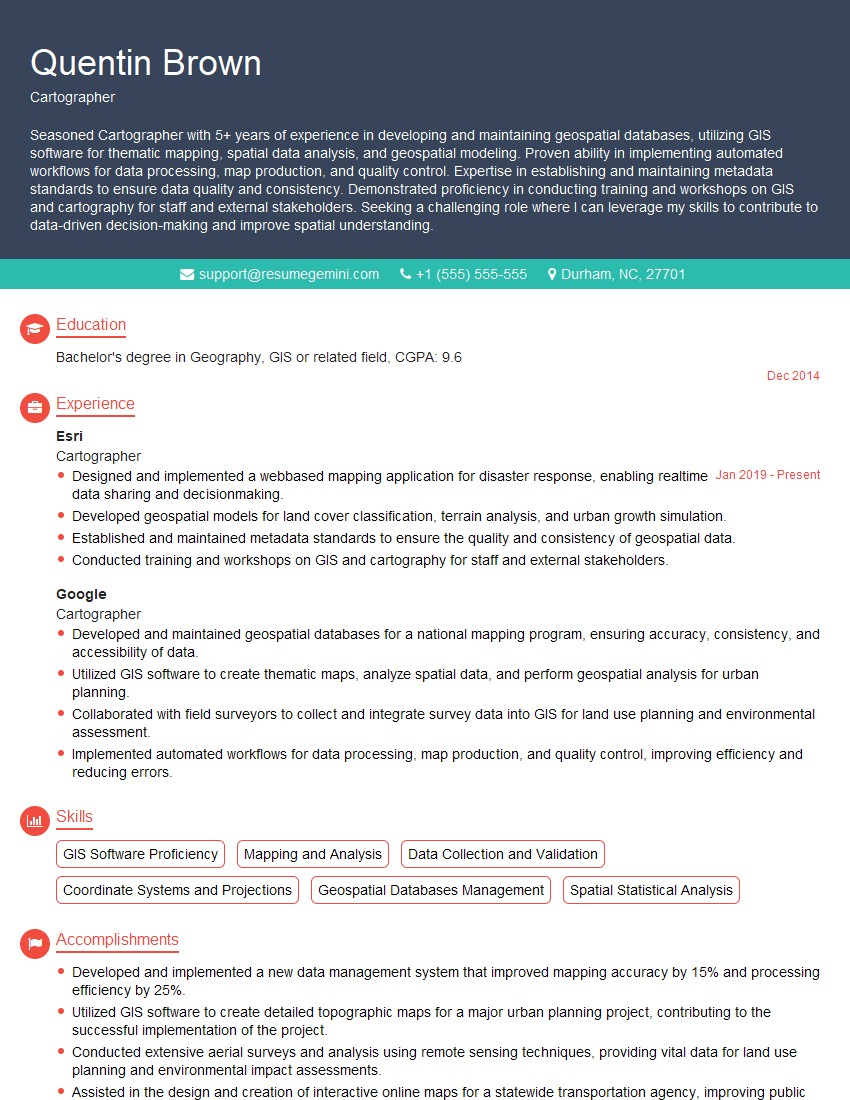
Cartographer Resume Sample
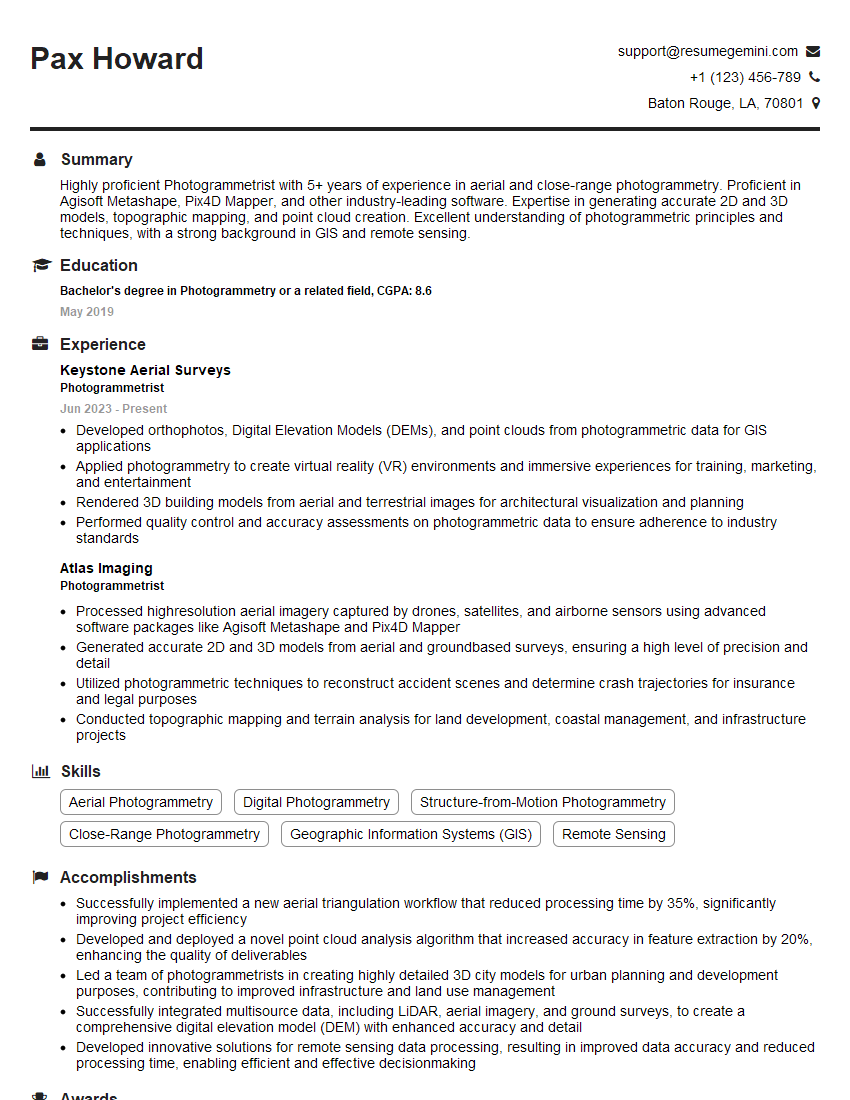
Photogrammetrist Resume Sample
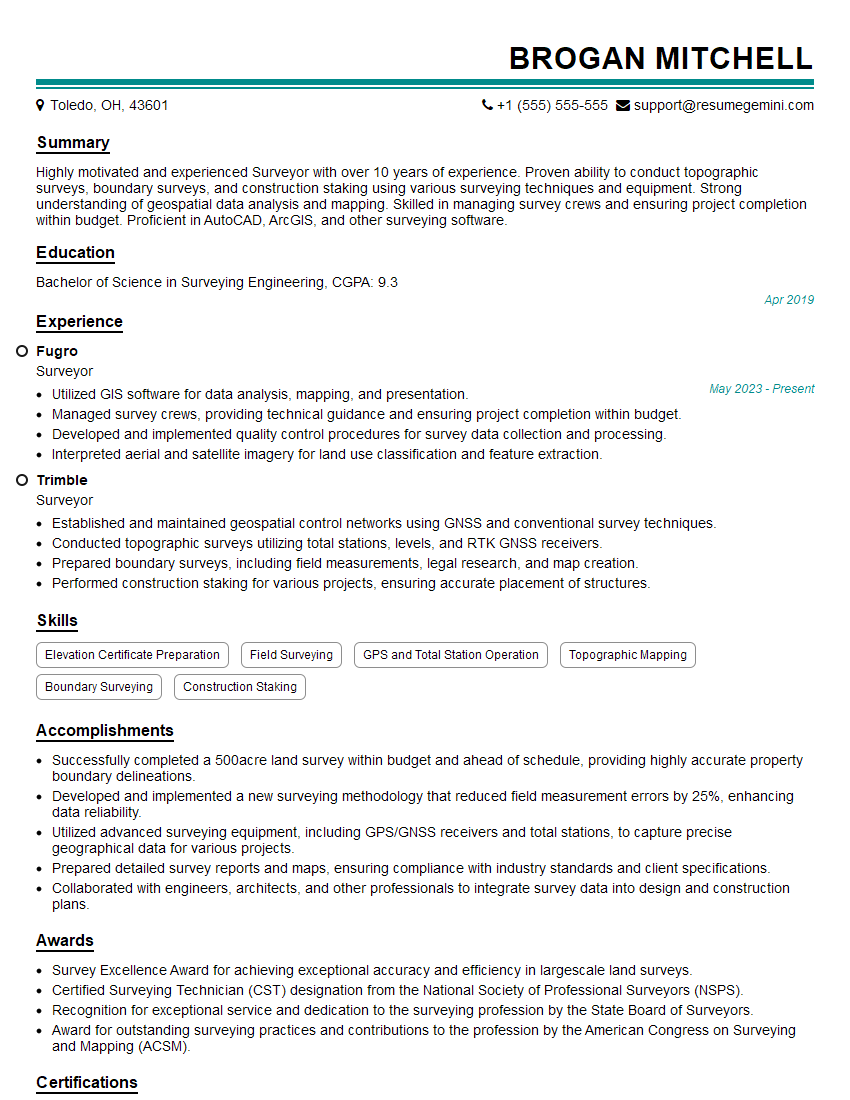
Surveyor Resume Sample
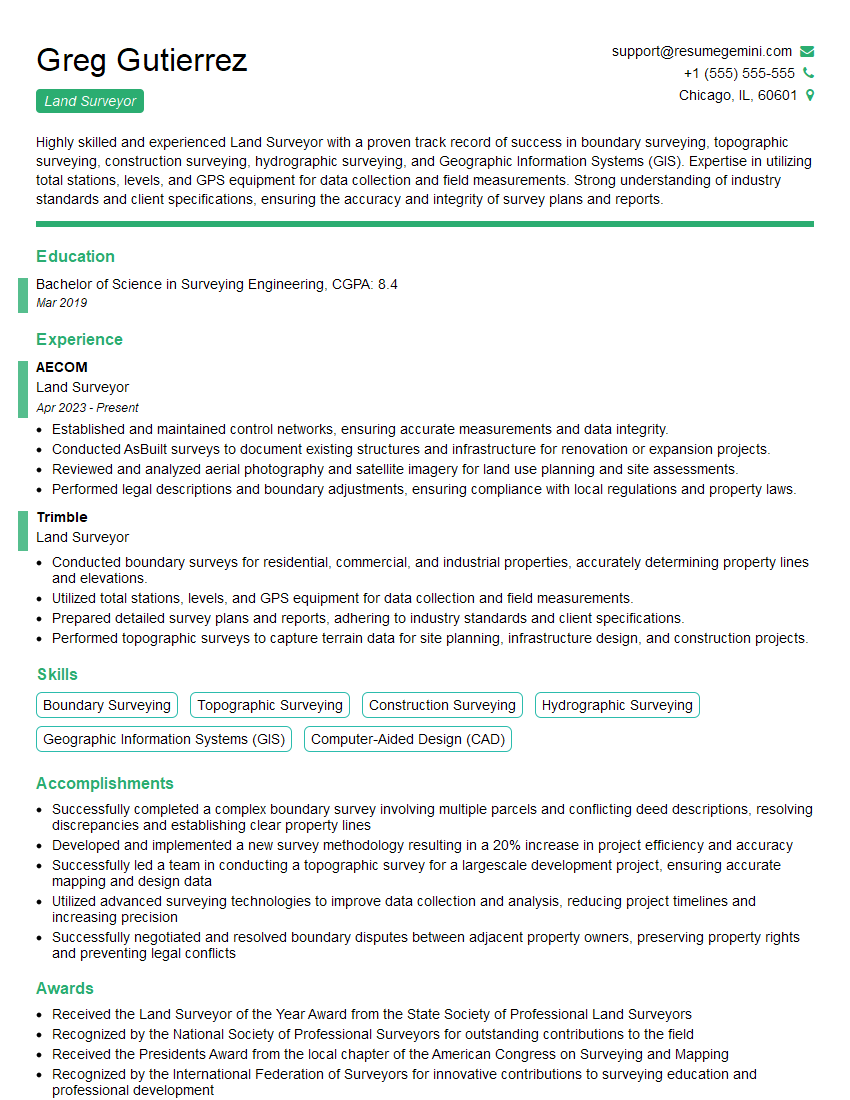
Land Surveyor Resume Sample

Mine Surveyor Resume Sample

Project Surveyor Resume Sample

Survey Manager Resume Sample
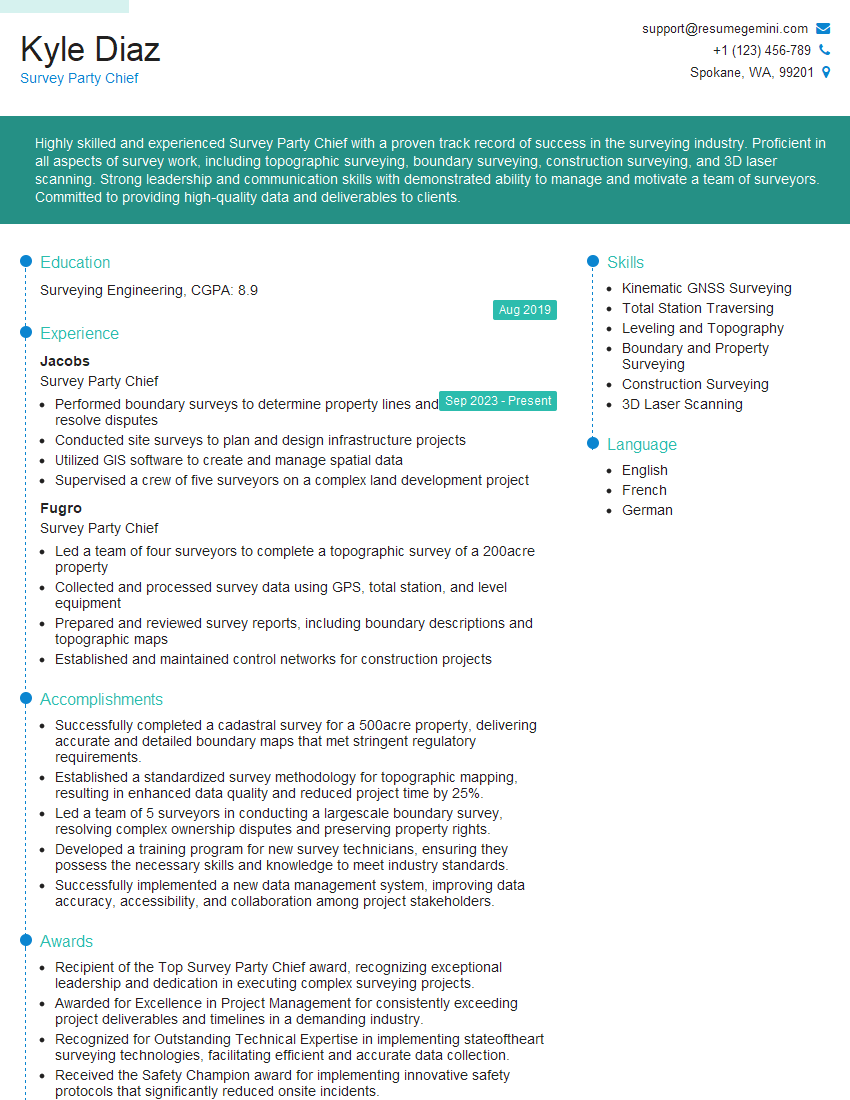
Survey Party Chief Resume Sample
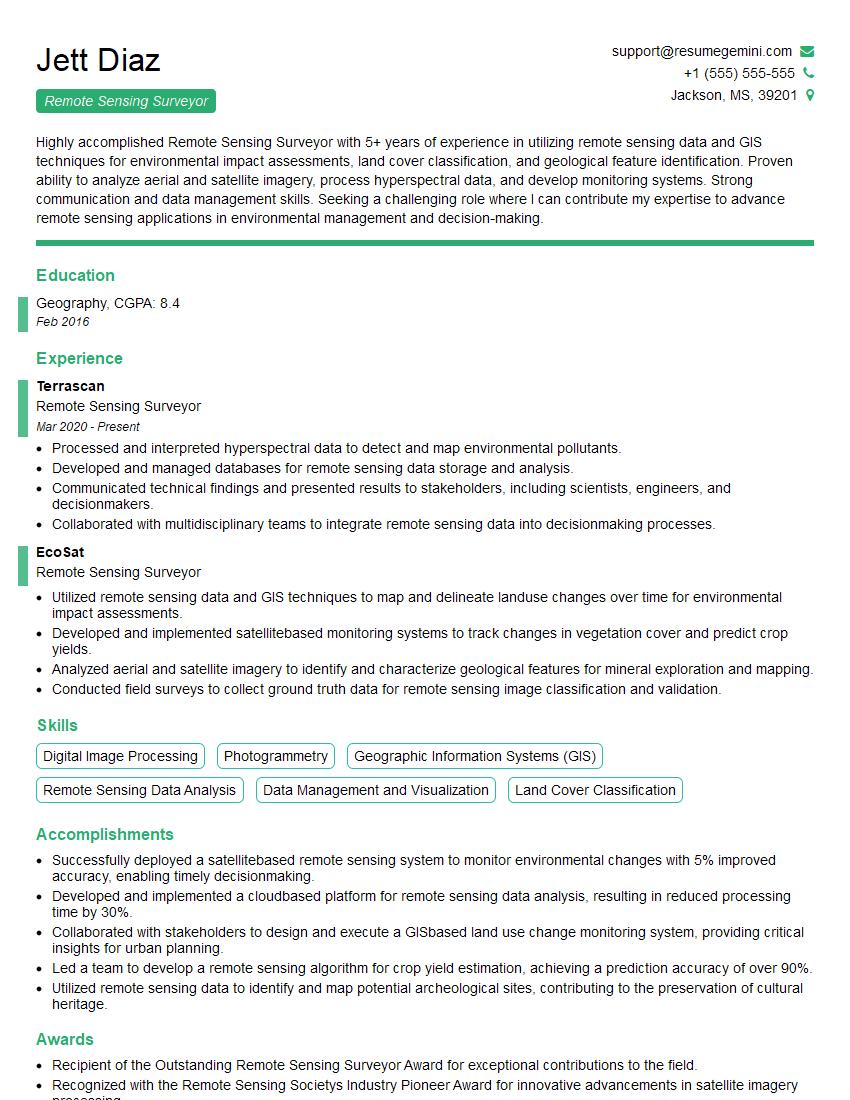
Remote Sensing Surveyor Resume Sample
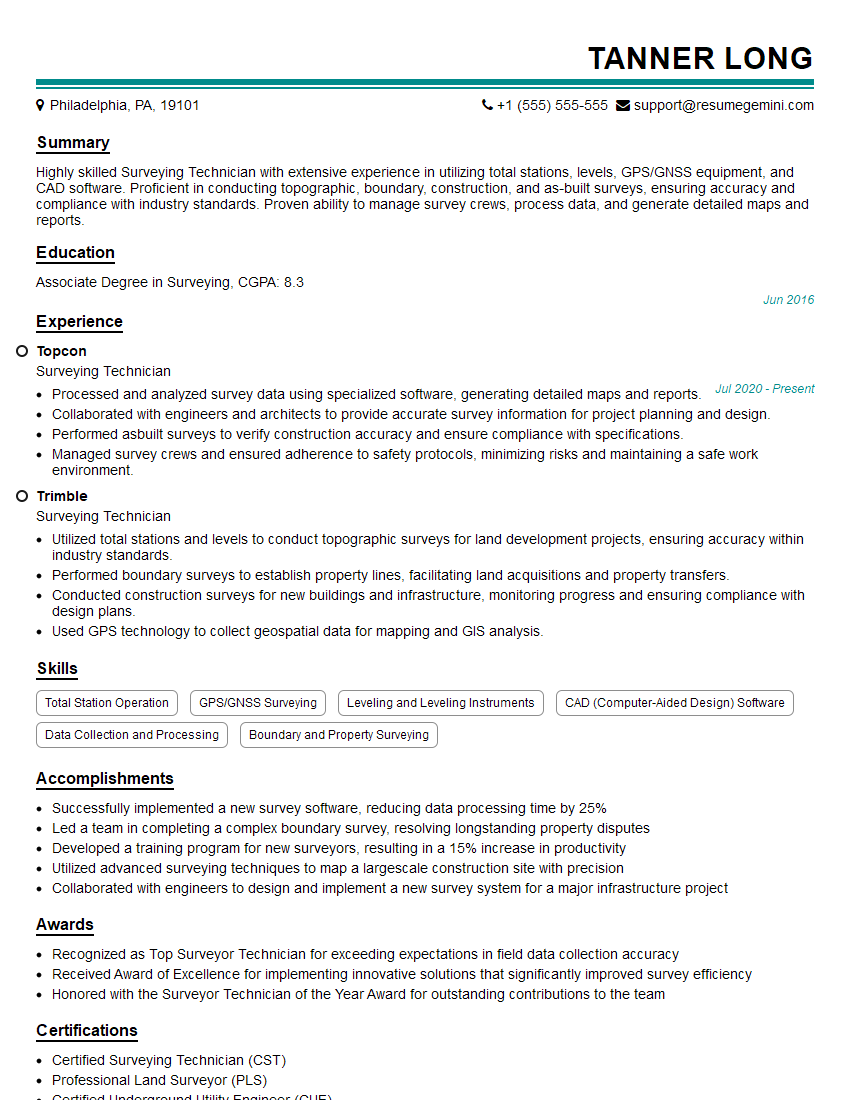
Surveying Technician Resume Sample
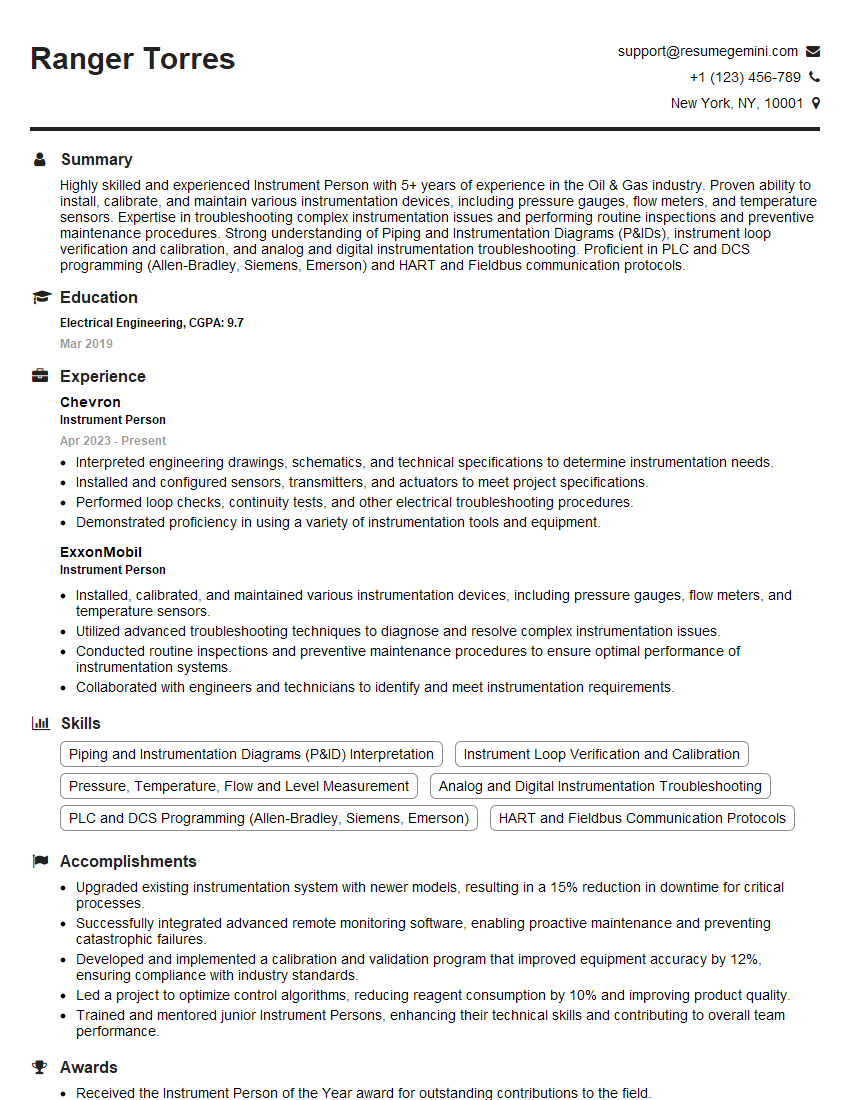
Instrument Person Resume Sample
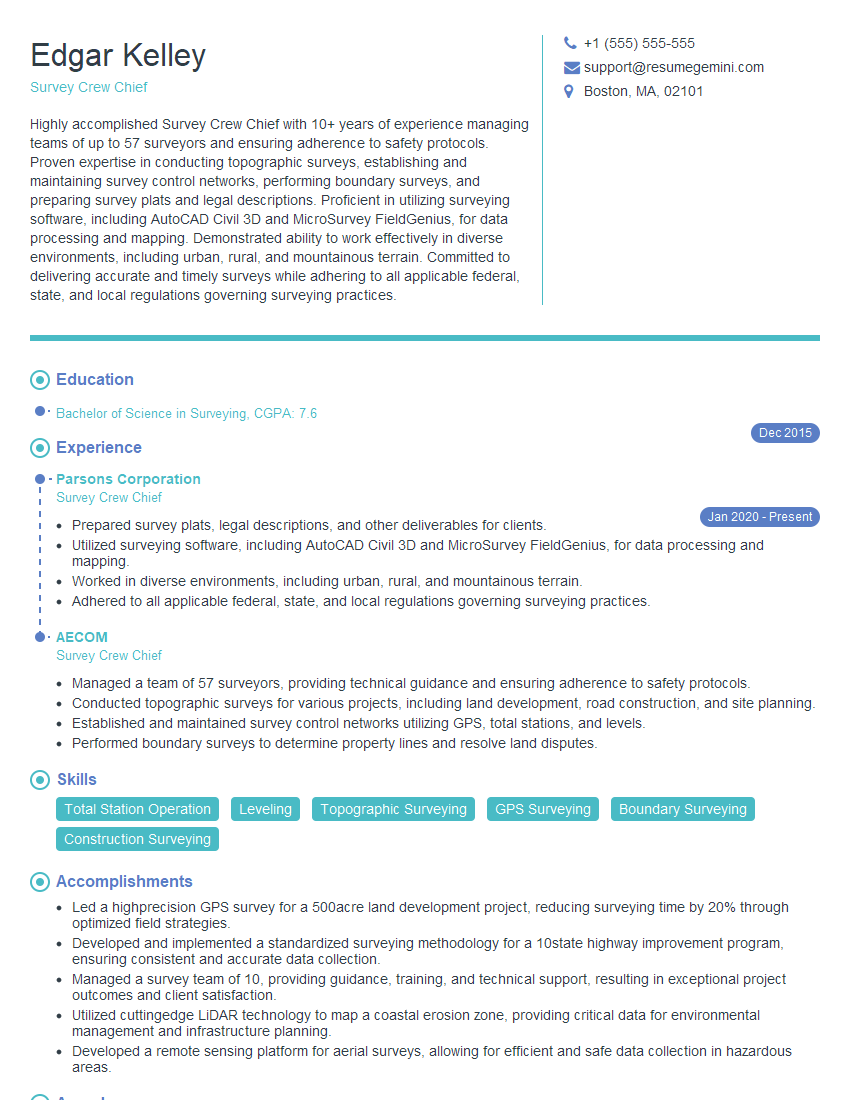
Survey Crew Chief Resume Sample
Explore more articles
Users Rating of Our Blogs
Share Your Experience
We value your feedback! Please rate our content and share your thoughts (optional).
What Readers Say About Our Blog
Very informative content, great job.
good