Interviews are more than just a Q&A session—they’re a chance to prove your worth. This blog dives into essential Familiarity with Civil Engineering Construction Practices interview questions and expert tips to help you align your answers with what hiring managers are looking for. Start preparing to shine!
Questions Asked in Familiarity with Civil Engineering Construction Practices Interview
Q 1. Describe your experience with different construction methods (e.g., design-bid-build, design-build, CM at risk).
My experience spans across various construction delivery methods, each with its own strengths and weaknesses. Design-Bid-Build, the most traditional approach, involves separate design and construction phases. The owner hires a designer, the design is completed, and then it’s put out to bid to different contractors. This method is straightforward but can lead to potential conflicts between the designer and contractor due to differing interpretations of the design. I’ve overseen several projects using this method, focusing on thorough review of bid documents and proactive communication to minimize disputes.
Design-Build, conversely, merges the design and construction phases under a single entity. This streamlines the process, improves communication, and fosters a collaborative environment, often resulting in faster project completion and better cost control. I’ve been involved in several high-rise projects delivered through this method, where the integrated approach proved crucial in managing complex design and construction challenges.
Finally, Construction Management at Risk (CM at Risk) employs a construction manager who takes on financial responsibility for the project’s performance. The CM participates early in the design process, offering valuable input and managing the overall project execution. This approach offers a good balance between control and risk allocation, allowing for proactive problem-solving and improved cost management. On a recent large-scale infrastructure project, I successfully implemented CM at Risk, leading to significant cost savings through early risk identification and mitigation.
Q 2. Explain your understanding of construction scheduling and critical path analysis.
Construction scheduling is the process of creating a detailed plan that outlines all project tasks, their durations, and their dependencies. Critical Path Analysis (CPA) is a crucial part of this, identifying the longest sequence of tasks that determines the shortest possible project duration. Any delay on the critical path directly impacts the overall project timeline.
I utilize software like Primavera P6 to develop and manage project schedules. A typical CPA involves defining tasks, sequencing them based on their dependencies (e.g., foundation work must precede framing), estimating durations, and then utilizing the software to calculate the critical path. This allows us to focus resources on tasks within the critical path and proactively address potential delays. For instance, on a recent bridge project, the CPA highlighted the need to expedite the pier construction as it was on the critical path. By strategically allocating resources, we managed to avoid significant delays.
Q 3. How do you manage risks and potential delays on a construction project?
Risk management is crucial for successful project delivery. My approach involves a proactive, multi-stage process. Firstly, we identify potential risks, including weather delays, material shortages, labor disputes, and design changes. Then, we assess the likelihood and impact of each risk. Next, we develop mitigation strategies. This may involve contingency planning (e.g., having alternative material suppliers), using risk-sharing contracts, or incorporating buffers into the schedule.
Regular monitoring and communication are key. We track progress against the schedule, identify emerging risks, and adapt our strategies as needed. This includes holding regular project meetings, employing robust reporting systems, and fostering a culture of open communication between all stakeholders. For example, on a recent highway project, we anticipated potential rainfall delays. By preemptively securing additional drainage equipment and developing a revised schedule that factored in potential weather disruptions, we successfully minimized the impact of unexpected rainfall.
Q 4. What are your experiences with quality control and assurance on construction sites?
Quality control and assurance are paramount. Quality control focuses on inspecting and testing materials and workmanship to ensure they meet specifications. Quality assurance involves proactively implementing procedures and systems to prevent defects from occurring in the first place. I ensure that both aspects are integrated throughout the project lifecycle.
This involves establishing clear quality standards, documenting procedures, implementing regular inspections and testing, and promptly addressing any identified non-conformances. We utilize checklists, quality control plans, and utilize third-party inspection services when necessary to ensure impartiality and objectivity. For instance, on a high-rise building project, our rigorous quality control procedures, including regular concrete testing and weld inspections, helped us achieve exceptionally high standards and avoid costly rework.
Q 5. How familiar are you with different types of construction contracts (e.g., lump sum, unit price, cost-plus)?
I’m experienced with several contract types. Lump sum contracts specify a fixed price for the entire project. This simplifies budgeting and risk allocation for the owner but requires detailed design upfront. Unit price contracts define the cost per unit of work (e.g., cubic yard of concrete). This is suitable for projects with variable quantities. Cost-plus contracts involve reimbursing the contractor for actual costs plus a predetermined fee or percentage. This offers flexibility but requires more rigorous cost control.
The choice of contract type depends on the project’s complexity, the owner’s risk tolerance, and the level of design detail available at the outset. I have successfully used each contract type on various projects, selecting the most appropriate based on a thorough risk assessment and stakeholder needs. For example, a lump-sum contract was best suited for a smaller, well-defined renovation project, while a cost-plus contract was more appropriate for a complex research facility where design changes were anticipated.
Q 6. Describe your experience with reading and interpreting construction drawings and specifications.
Reading and interpreting construction drawings and specifications is fundamental to my work. I’m proficient in understanding various types of drawings, including architectural, structural, mechanical, electrical, and plumbing (MEP) drawings. I can extract information on dimensions, materials, details, and construction sequences from these drawings.
My process involves a systematic review, starting with the overall project plan and then carefully examining detailed drawings and specifications. I cross-reference different drawings to ensure consistency and identify any potential conflicts or ambiguities. I use my understanding of construction practices to visualize the building process and anticipate potential challenges. For example, I once identified a potential clash between the HVAC ductwork and structural elements by carefully reviewing the relevant drawings, preventing delays and costly rework during the construction phase.
Q 7. Explain your understanding of building codes and regulations.
I have a strong understanding of building codes and regulations. My knowledge encompasses national, state, and local codes, including the International Building Code (IBC) and accessibility standards (ADA). I’m aware of the implications of these codes on design and construction, including structural integrity, fire safety, accessibility, and environmental sustainability.
I ensure compliance by reviewing designs, specifications, and construction practices against relevant codes. This includes regular site inspections and working closely with code officials to address any concerns or obtain necessary approvals. Staying updated on code changes and attending relevant training courses is crucial to maintain compliance. For example, during a recent project, my familiarity with updated energy efficiency codes enabled us to incorporate sustainable design elements, leading to cost savings and improved environmental performance.
Q 8. How do you handle conflicts or disagreements among different stakeholders on a project?
Handling stakeholder conflicts requires a proactive and collaborative approach. My strategy centers around open communication, active listening, and a focus on finding mutually beneficial solutions. I begin by scheduling a meeting with all involved parties, ensuring a neutral environment conducive to productive dialogue. Each stakeholder is given the opportunity to express their concerns and perspectives without interruption. Once all viewpoints are understood, I facilitate a discussion to identify the root causes of the conflict. This often involves identifying misinterpretations, unmet expectations, or differing priorities. Then, I work with the stakeholders to brainstorm potential solutions, focusing on options that address everyone’s needs as much as possible. This might involve compromise, negotiation, or even mediation if necessary. Finally, we collaboratively develop a clear action plan outlining responsibilities and timelines for implementing the chosen solution. Regular follow-up meetings are scheduled to monitor progress and address any emerging issues. For example, on a recent highway project, a disagreement arose between the contractor and the local residents regarding noise pollution during night shifts. Through facilitated discussions, we agreed on implementing noise reduction measures and adjusting work schedules to minimize disruptions, leading to a satisfactory outcome for all involved.
Q 9. What is your experience with safety procedures and regulations on construction sites?
Safety is paramount on any construction site. My experience encompasses a thorough understanding and strict adherence to OSHA regulations and other relevant safety standards. This includes implementing comprehensive safety plans, conducting regular safety inspections, and providing mandatory safety training to all workers. I emphasize the use of Personal Protective Equipment (PPE), such as hard hats, safety glasses, and high-visibility vests, and ensure that all equipment is properly maintained and inspected before use. I’m also proficient in hazard identification and risk assessment, proactively identifying potential dangers and implementing preventative measures. For instance, I’ve developed and implemented site-specific safety plans incorporating measures such as fall protection systems, trench safety protocols, and lockout/tagout procedures for machinery. Furthermore, I actively foster a safety-conscious culture on site by encouraging workers to report hazards, participate in safety meetings, and follow safety procedures without exception. A strong safety record is not just a matter of compliance but reflects a commitment to the well-being of every individual on the project.
Q 10. How do you manage and track project budgets and costs?
Effective budget management is crucial for successful project delivery. My approach involves a multi-stage process starting with detailed cost estimation at the pre-construction phase. This includes breaking down the project into individual work packages, estimating material costs, labor costs, equipment costs, and contingency funds. I utilize various software tools, like Primavera P6 and MS Project, to create detailed budgets and track expenses. Throughout the project lifecycle, I meticulously monitor actual costs against the budgeted amounts, identifying any variances early on. Regular cost reporting and analysis are conducted to pinpoint areas where cost overruns occur, allowing for timely corrective actions. Value engineering techniques are implemented to identify opportunities for cost savings without compromising quality. For example, by substituting certain materials or construction methods, we were able to save considerable costs on a recent commercial building project without affecting the structural integrity or aesthetic appeal of the building. Transparency is key; regular budget updates are shared with clients and stakeholders to ensure everyone is informed and aligned.
Q 11. Describe your experience with subcontractor management.
Subcontractor management is a critical aspect of construction project management. My experience involves carefully selecting qualified subcontractors based on their experience, reputation, and financial stability. Before awarding contracts, I thoroughly review their qualifications, insurance coverage, and safety records. Clear and concise contracts are negotiated, outlining scope of work, payment schedules, and deadlines. Regular communication and progress meetings are conducted with subcontractors to ensure that work is proceeding as planned and to address any issues promptly. I also use performance monitoring systems to track their progress against the agreed-upon timelines and budgets. This might include reviewing their daily work reports, conducting site inspections, and verifying quality of work. Addressing issues swiftly and fairly, and fostering a strong working relationship based on trust and mutual respect, are crucial for successful subcontractor management. On a recent high-rise building project, by proactively addressing potential conflicts with subcontractors through clear communication and collaborative problem-solving, we avoided costly delays and maintained project timelines.
Q 12. How familiar are you with different types of soil and their properties?
Understanding soil properties is fundamental to successful civil engineering projects. My familiarity extends to various soil types, including clays, silts, sands, and gravels. I understand their physical characteristics such as grain size distribution, plasticity, permeability, and shear strength. These properties significantly influence foundation design, earthwork calculations, and overall structural stability. I’m proficient in using soil testing data to determine the appropriate foundation type, and I understand the implications of different soil conditions on construction methods. For example, expansive clays require special foundation designs to mitigate potential settlement issues, while highly permeable sands may necessitate dewatering measures during excavation. I utilize tools like the Unified Soil Classification System (USCS) to categorize soils and interpret geotechnical reports to make informed engineering decisions. My experience includes working with various soil conditions, from dense gravels to highly compressible organic soils, adapting my approach to each specific site’s unique characteristics.
Q 13. Explain your understanding of earthwork calculations and estimations.
Earthwork calculations and estimations are essential for accurate project planning and cost control. This involves determining the volume of earth to be excavated, filled, or moved. I utilize various methods, including cross-sectioning and volume computations using the average-end-area method, prismoidal formula, or cut-and-fill calculations using computer software like AutoCAD Civil 3D or specialized earthwork estimation programs. Accurate estimations require detailed site surveys and topographic data. Understanding cut and fill slopes, compaction factors, and swell factors are also crucial for precise volume calculations. For example, when estimating earthwork for a road project, I consider factors like the desired road profile, embankment slopes, and the volume of material required for compaction. I’m meticulous in incorporating appropriate contingency factors to account for unexpected site conditions or variations in material properties. Accurate earthwork calculations are critical for avoiding cost overruns and scheduling delays.
Q 14. What is your experience with concrete placement and quality control?
Concrete placement and quality control are vital for ensuring the durability and structural integrity of concrete structures. My experience encompasses all aspects of the process, from concrete mix design to final curing. I oversee the selection of appropriate concrete mixes based on the project requirements and environmental conditions. This involves specifying the cement content, aggregate type and gradation, water-cement ratio, and admixtures. I ensure proper concrete delivery, placement, and consolidation techniques are employed to prevent segregation and achieve the desired strength and workability. Rigorous quality control measures are implemented, including testing for slump, compressive strength, and air content at various stages. Curing procedures are carefully monitored to ensure proper hydration and minimize cracking. We employ non-destructive testing methods where necessary to assess the concrete’s integrity. For instance, on a recent bridge project, I meticulously monitored the concrete placement, ensuring proper vibration and consolidation to avoid honeycombing and achieve the desired strength. Maintaining high-quality concrete is fundamental to project success and longevity.
Q 15. Describe your knowledge of different types of foundations.
Foundation selection is crucial for a structure’s stability and longevity. The choice depends on factors like soil conditions, building load, and budget. Different foundation types cater to various needs.
- Shallow Foundations: These are used when the soil is strong enough to support the structure’s weight. Examples include:
- Spread Footings: Individual footings under columns or walls, like those supporting a small house.
- Strip Footings: Continuous footings under load-bearing walls, often seen in basements.
- Mat Foundations (Raft Foundations): A large concrete slab supporting the entire structure, ideal for weak soil conditions or heavy loads.
- Deep Foundations: These transfer loads to stronger soil layers deeper underground, used when shallow foundations aren’t feasible. Examples include:
- Pile Foundations: Vertical piles driven into the ground to transfer loads, common in high-rise buildings and areas with soft soil.
- Caissons: Large diameter, hollow cylindrical structures filled with concrete, used in water or soft ground conditions.
- Pier Foundations: Similar to piles but larger and often used for heavy structures like bridges.
In my experience, selecting the right foundation involves detailed geotechnical investigation, including soil testing and analysis. For example, I once worked on a project where initial plans called for a shallow foundation. However, after extensive soil testing revealed poor bearing capacity, we transitioned to pile foundations, significantly improving the project’s long-term stability and safety.
Career Expert Tips:
- Ace those interviews! Prepare effectively by reviewing the Top 50 Most Common Interview Questions on ResumeGemini.
- Navigate your job search with confidence! Explore a wide range of Career Tips on ResumeGemini. Learn about common challenges and recommendations to overcome them.
- Craft the perfect resume! Master the Art of Resume Writing with ResumeGemini’s guide. Showcase your unique qualifications and achievements effectively.
- Don’t miss out on holiday savings! Build your dream resume with ResumeGemini’s ATS optimized templates.
Q 16. How familiar are you with different types of structural steel and their applications?
Structural steel selection is crucial for ensuring structural integrity and meeting project requirements. Different steel grades possess varying strength, ductility, and weldability characteristics.
- Mild Steel (A36): This is a common, cost-effective grade used for general structural applications, offering good weldability and ductility.
- High-Strength Low-Alloy (HSLA) Steels: These offer higher strength compared to mild steel with improved weldability, allowing for lighter and more efficient structures. They are commonly used in bridges and tall buildings.
- Weathering Steel (Corten Steel): This steel develops a protective rust layer, reducing the need for painting and maintenance. It’s often used in outdoor structures like bridges and cladding.
- Stainless Steel: Known for its corrosion resistance, stainless steel is preferred in environments with high humidity or exposure to chemicals. Applications include facades and specific components needing durability.
Understanding the properties of each grade is essential. For instance, I was involved in a project where using HSLA steel allowed for significant weight reduction in the structural framing, saving on material costs and transportation. The selection also took into account weldability and the required strength based on structural analysis.
Q 17. Explain your understanding of surveying techniques and equipment.
Surveying is the foundation of any construction project, accurately defining the site’s boundaries and topography. It’s performed using various techniques and equipment to ensure precise measurements.
- Total Stations: These electronic instruments measure angles and distances, providing highly accurate data for setting out points and creating topographic surveys. They are incredibly versatile and efficient.
- GPS (Global Positioning System): GPS receivers utilize satellite signals to determine coordinates, providing accurate positioning for large-scale projects or where precise ground control points are established.
- Leveling: This involves determining elevations using a level and leveling rod, essential for establishing benchmarks and creating contour maps.
- Traditional Surveying Methods: Methods like using theodolites, tapes, and levels are still employed, particularly for smaller projects or where electronic equipment might be unavailable or impractical.
Data collected through surveying is crucial for creating detailed drawings and models. In one project, precise surveying was crucial for aligning the foundations of a large industrial plant accurately, avoiding costly corrections later on. Errors in surveying can lead to significant issues, so quality control is paramount.
Q 18. How do you ensure compliance with environmental regulations during construction?
Environmental compliance is crucial, avoiding penalties and protecting ecosystems. This involves understanding and adhering to relevant regulations.
- Permitting and Approvals: Obtaining necessary environmental permits before commencing construction ensures compliance from the outset. This might include permits for air emissions, water discharge, and waste management.
- Waste Management: Implementing robust waste management plans, segregating materials for recycling, and properly disposing of hazardous waste is key to minimizing environmental impact.
- Erosion and Sediment Control: Implementing measures to prevent soil erosion, such as silt fences and sediment basins, safeguards water quality during and after construction.
- Protection of Natural Resources: Avoiding damage to trees, wetlands, and other natural resources is critical, potentially requiring mitigation strategies or relocation of construction activities.
- Air Quality Monitoring: Monitoring air quality during operations, especially for projects involving demolition or heavy equipment, ensures compliance with emission standards.
For example, on a recent project near a protected wetland, we implemented a comprehensive erosion control plan including temporary barriers and a sediment pond. Regular monitoring and documentation ensured compliance and minimized the risk of environmental damage. Ignoring these regulations can result in significant fines and project delays.
Q 19. What is your experience with using project management software?
Project management software is indispensable for efficient construction management. I’m proficient in several platforms, including Primavera P6, Microsoft Project, and Autodesk BIM 360.
- Scheduling and Planning: Creating and managing project schedules, allocating resources, and tracking progress are core functionalities.
- Cost Control: Tracking budgets, monitoring expenditures, and managing cost variances are essential for project financial health.
- Document Management: Centralized storage and access to project documents, drawings, and communication records facilitate efficient collaboration.
- Risk Management: Identifying and mitigating potential risks ensures project success and minimizes disruptions.
- Reporting and Analysis: Generating reports and dashboards for project stakeholders, facilitating informed decision-making.
In a past project using Primavera P6, I successfully implemented a critical path method (CPM) schedule, allowing us to identify and address potential bottlenecks proactively, ultimately delivering the project ahead of schedule.
Q 20. How do you handle change orders and revisions during a project?
Change orders and revisions are inevitable in construction. Handling them effectively requires a structured approach.
- Formal Documentation: All changes must be formally documented, including descriptions, impact assessments, and cost implications.
- Impact Analysis: Thoroughly assess the impact of each change on the schedule, budget, and overall project scope.
- Negotiation and Agreement: Negotiate with stakeholders to reach agreement on the revised scope and associated costs.
- Contractual Compliance: Ensure all changes adhere to contractual agreements and avoid disputes.
- Update Plans and Documents: Reflect the changes in project plans, drawings, and specifications accordingly.
I once managed a situation where a design change impacted the structural system. By rigorously documenting the change, analyzing its impact, and working with the client and design team, we managed to incorporate the revision smoothly without significant cost or schedule overruns.
Q 21. Describe your experience with document control and management.
Effective document control and management is critical for successful construction projects. This involves systematic organization, version control, and easy access to relevant information.
- Centralized Repository: Using a central repository (either physical or digital) for storing all project documentation ensures easy access and version control.
- Version Control: Using version control systems prevents confusion and ensures all stakeholders work with the most up-to-date documents.
- Document Numbering and Indexing: A clear and consistent document numbering and indexing system ensures efficient retrieval and reduces searching time.
- Access Control: Restricting access to documents based on roles and responsibilities ensures confidentiality and prevents unauthorized modifications.
- Regular Audits: Conducting regular audits to verify the completeness and accuracy of documents and to identify gaps.
In a large-scale project, I implemented a cloud-based document management system that improved collaboration, version control, and accessibility for all project team members, significantly streamlining the process and reducing errors.
Q 22. Explain your understanding of project closeout procedures.
Project closeout is the final phase of a construction project, encompassing a comprehensive process to ensure all aspects are finalized correctly and efficiently. It’s not just about handing over the keys; it involves meticulous documentation, financial reconciliation, and ensuring client satisfaction.
- Final Inspections: Thoroughly inspecting the completed project to identify and rectify any outstanding defects or discrepancies. This often involves multiple parties, including the client, architect, and various subcontractors.
- As-Built Drawings: Updating the original design drawings to reflect any changes or modifications made during construction. These are crucial for future maintenance and renovations.
- Documentation: Compiling and organizing all project-related documents, including contracts, permits, inspections reports, warranties, and payment records. This ensures a comprehensive audit trail.
- Financial Closure: Settling all outstanding invoices, ensuring all payments are received and dispersed correctly, and finalizing the project budget. This may involve lien waivers from subcontractors to protect the owner from future claims.
- Handover: Formally transferring the completed project to the client, including operating manuals, maintenance schedules, and warranty information. A comprehensive training session might be involved.
- Project Review: Conducting a post-project review to analyze what went well, what could be improved, and lessons learned for future projects. This often includes identifying areas of efficiency and cost savings.
For example, on a recent high-rise project, a meticulous closeout process ensured that we avoided costly delays associated with outstanding change orders and successfully handed over the building to the client within the agreed-upon timeframe and budget.
Q 23. How do you ensure the timely procurement of materials?
Timely material procurement is crucial for maintaining project schedules and preventing costly delays. My strategy involves a multi-faceted approach:
- Long-Lead Items Identification: Identifying materials with extended lead times early in the project planning phase allows for early ordering and mitigation of potential delays.
- Vendor Selection and Relationship Management: Selecting reliable vendors with a proven track record of timely delivery and quality control. Building strong relationships with key vendors is essential for ensuring priority service and resolving any potential issues quickly.
- Material Tracking and Monitoring: Using a robust system for tracking material orders from placement to delivery. This may involve utilizing project management software with features for purchase orders, inventory, and delivery tracking.
- Just-in-Time Delivery: Coordinating deliveries to minimize on-site storage needs and reduce the risk of material damage or theft. This requires precise scheduling and communication with vendors and the construction team.
- Contingency Planning: Developing a contingency plan to address potential material shortages or delays, including having backup suppliers or alternative materials available.
For instance, on a recent highway project, we anticipated potential steel shortages by proactively ordering materials six months in advance and establishing backup suppliers, preventing a significant schedule disruption.
Q 24. What are your strategies for effective communication on a construction site?
Effective communication on a construction site is paramount for safety, productivity, and project success. I employ several strategies to ensure clear and consistent communication:
- Daily Huddles: Conducting daily briefings involving all key personnel to discuss progress, challenges, and upcoming tasks. This fosters collaboration and immediate problem-solving.
- Regular Meetings: Scheduling more formal weekly or bi-weekly meetings to review progress against the schedule, address outstanding issues, and plan upcoming activities. This ensures everyone is on the same page.
- Communication Channels: Utilizing various communication methods, such as email, project management software, and on-site notice boards, to disseminate information efficiently. Selecting the appropriate channel for different types of communication is critical.
- Documentation: Maintaining detailed records of communications, including meeting minutes, emails, and project updates. This provides a transparent and readily-accessible record of all project-related information.
- Conflict Resolution: Establishing a clear process for addressing conflicts or disagreements that may arise on-site. Prompt and fair conflict resolution is key for team cohesion and productivity.
In one instance, using a combination of daily huddles and a dedicated project management software platform, we successfully mitigated communication breakdowns on a complex renovation project, ensuring everyone had access to the most up-to-date information and resulting in a smooth and efficient project delivery.
Q 25. Describe a time you had to solve a complex problem on a construction project.
During the construction of a large-scale water treatment plant, we encountered a significant setback: unexpectedly high groundwater levels caused significant delays and threatened the project timeline and budget. This was a complex problem demanding a multifaceted solution.
We initially implemented a temporary dewatering system, but it proved inadequate. The solution required a collaborative effort, involving the geotechnical engineer, the construction team, and the client. We developed a comprehensive plan that incorporated several strategies:
- Detailed Site Investigation: A more thorough geotechnical investigation helped us understand the subsurface conditions and the extent of the problem.
- Design Modifications: The design of the plant’s foundation had to be modified to accommodate the higher groundwater levels. This involved significant design changes and required approvals from regulatory agencies.
- Advanced Dewatering System: We implemented a more robust dewatering system, which included deep wells and a larger pumping capacity. This required additional time and resources but proved effective.
- Risk Management: We incorporated the additional costs and time associated with these changes into the project schedule and budget, and communicated those changes transparently to the client.
Through proactive problem-solving, collaborative teamwork, and effective communication, we were able to overcome this significant challenge and successfully deliver the project within acceptable parameters.
Q 26. How do you monitor and control construction progress?
Monitoring and controlling construction progress is essential for ensuring projects are completed on time and within budget. This involves a combination of methods:
- Scheduling: Developing a detailed project schedule that breaks down the project into smaller tasks, with assigned timelines and resources. Using critical path analysis helps identify tasks that are critical to the overall schedule.
- Progress Tracking: Regularly monitoring progress against the schedule, identifying any deviations, and taking corrective action as needed. This often involves using project management software and reporting tools.
- Cost Control: Tracking actual costs against the budget, identifying any overruns, and implementing measures to bring costs back on track. This includes regular cost reporting and variance analysis.
- Quality Control: Implementing a quality control system to ensure that all work is performed to the required standards. This involves regular inspections, testing, and documentation.
- Earned Value Management (EVM): Utilizing EVM techniques to assess project performance in terms of schedule, cost, and scope. EVM provides a comprehensive picture of project health.
- Progress Meetings: Holding regular progress meetings with the project team and stakeholders to review progress, identify issues, and develop solutions.
For example, on a recent bridge construction project, by leveraging project management software and conducting weekly progress meetings, we were able to quickly identify and address a potential delay related to the delivery of structural steel, ensuring project completion within the agreed-upon timeframe.
Q 27. Explain your understanding of value engineering.
Value engineering is a systematic method for analyzing project designs and processes to identify opportunities for cost reduction without compromising quality or functionality. It’s about maximizing value, not just minimizing cost.
The process typically involves:
- Identifying Cost Drivers: Analyzing the project’s design and construction methods to pinpoint areas where costs are high.
- Brainstorming Alternatives: Generating creative alternatives to the existing design or construction methods, considering different materials, techniques, or specifications.
- Evaluating Alternatives: Assessing the cost, schedule, and quality implications of each alternative, considering factors like lifecycle costs and long-term maintenance.
- Implementing Cost-Effective Solutions: Selecting and implementing the most cost-effective alternative while ensuring that it meets the required quality standards.
For instance, on a building project, we were able to significantly reduce the project’s overall cost by substituting a more expensive type of concrete with a high-performance alternative that met all structural requirements, resulting in substantial savings without compromising structural integrity or the project timeline.
Q 28. Describe your experience with LEED or other sustainability certifications.
I have significant experience with LEED (Leadership in Energy and Environmental Design) certification and other sustainability certifications. My experience encompasses various aspects of sustainable building practices, from design to construction and commissioning.
- LEED Certification Processes: I’m familiar with the LEED rating system, including the various certification levels and the documentation requirements for achieving certification. I understand the points systems and requirements for different LEED categories like energy efficiency, water conservation, and sustainable materials.
- Sustainable Material Selection: I have experience selecting sustainable building materials with low environmental impact, such as recycled content materials, locally sourced materials, and materials with high recycled content.
- Energy-Efficient Design and Construction: I’m adept at incorporating energy-efficient design principles during the construction phase, including high-performance building envelopes, energy-efficient lighting and HVAC systems, and renewable energy sources.
- Waste Management: I have practical experience implementing waste management strategies to minimize waste generation and maximize recycling and reuse of construction materials.
- Construction Site Sustainability: I understand the principles of sustainable construction site practices, including pollution control, water conservation, and protection of natural resources.
On a recent project, we successfully achieved LEED Gold certification by implementing several sustainable strategies, including using recycled materials, employing energy-efficient HVAC systems, and implementing a robust waste management program. This demonstrated a commitment to environmental responsibility and enhanced the project’s value.
Key Topics to Learn for Familiarity with Civil Engineering Construction Practices Interview
- Construction Planning & Scheduling: Understanding project timelines, critical path analysis, and resource allocation. Practical application includes analyzing Gantt charts and identifying potential delays.
- Site Safety & Regulations: Knowledge of OSHA regulations, safety protocols, and risk management. Practical application involves describing experience with safety inspections and incident reporting.
- Earthwork & Excavation: Familiarity with soil mechanics, grading, and excavation techniques. Practical application includes discussing experience with site preparation and earthmoving equipment.
- Concrete Construction: Understanding concrete mix design, formwork, and curing processes. Practical application involves describing experience with quality control and concrete placement.
- Structural Steel Fabrication & Erection: Knowledge of steel detailing, connections, and erection methods. Practical application includes discussing experience with steel structures and relevant safety procedures.
- Quality Control & Assurance: Understanding quality control procedures, documentation, and inspection techniques. Practical application involves describing experience with ensuring project compliance with specifications.
- Project Cost Management: Familiarity with budgeting, cost tracking, and cost control strategies. Practical application includes discussing experience with cost estimation and variance analysis.
- Construction Surveying & Measurement: Understanding surveying techniques, level setting, and quantity take-offs. Practical application involves describing experience with site measurements and data collection.
- Sustainable Construction Practices: Knowledge of environmentally friendly materials and construction methods. Practical application includes discussing experience with LEED or similar green building initiatives.
- Problem-Solving & Troubleshooting: Ability to identify and resolve construction challenges efficiently and effectively. Practical application includes describing experience with overcoming unforeseen issues on past projects.
Next Steps
Mastering civil engineering construction practices is crucial for career advancement, opening doors to leadership roles and higher earning potential. A well-crafted resume is your key to unlocking these opportunities. An ATS-friendly resume, optimized for applicant tracking systems, significantly increases your chances of getting noticed by recruiters. To create a compelling and effective resume that highlights your expertise in civil engineering construction, we highly recommend using ResumeGemini. ResumeGemini provides the tools and resources you need to build a professional resume, and we offer examples of resumes tailored to highlight familiarity with civil engineering construction practices. Take the next step toward your dream career today!
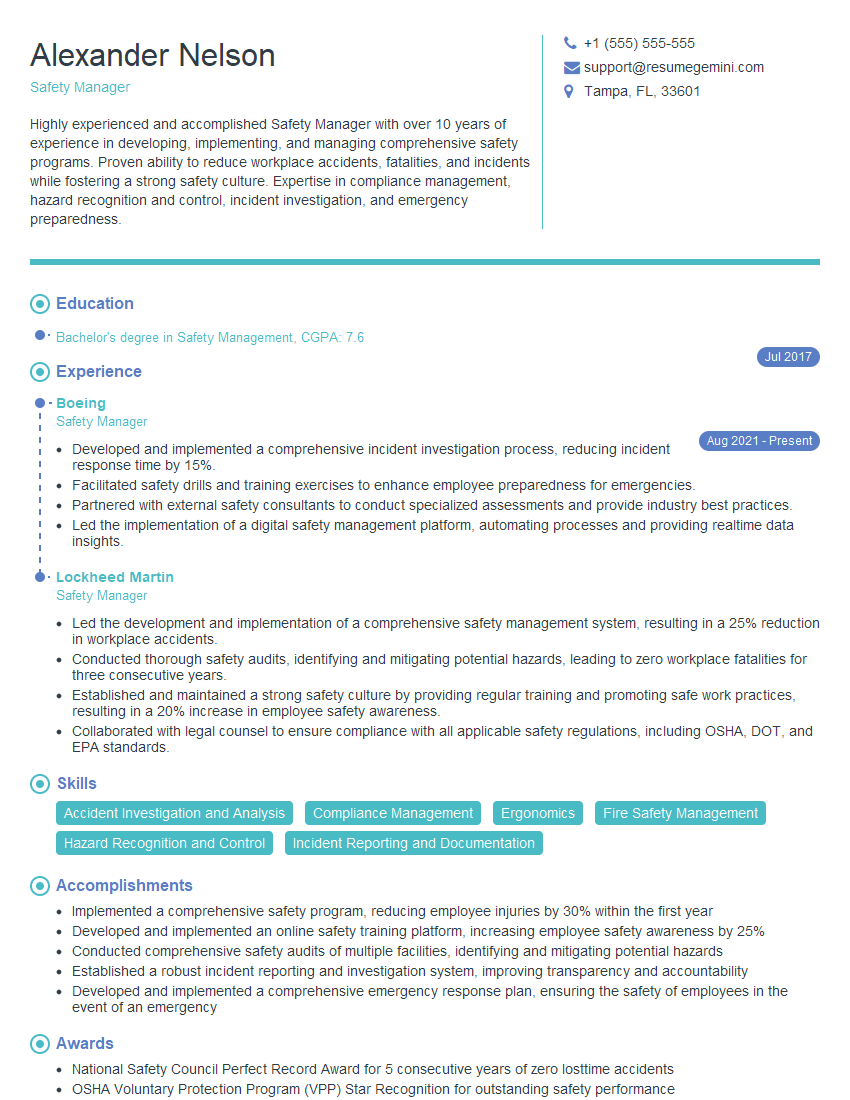
Safety Manager Resume Sample
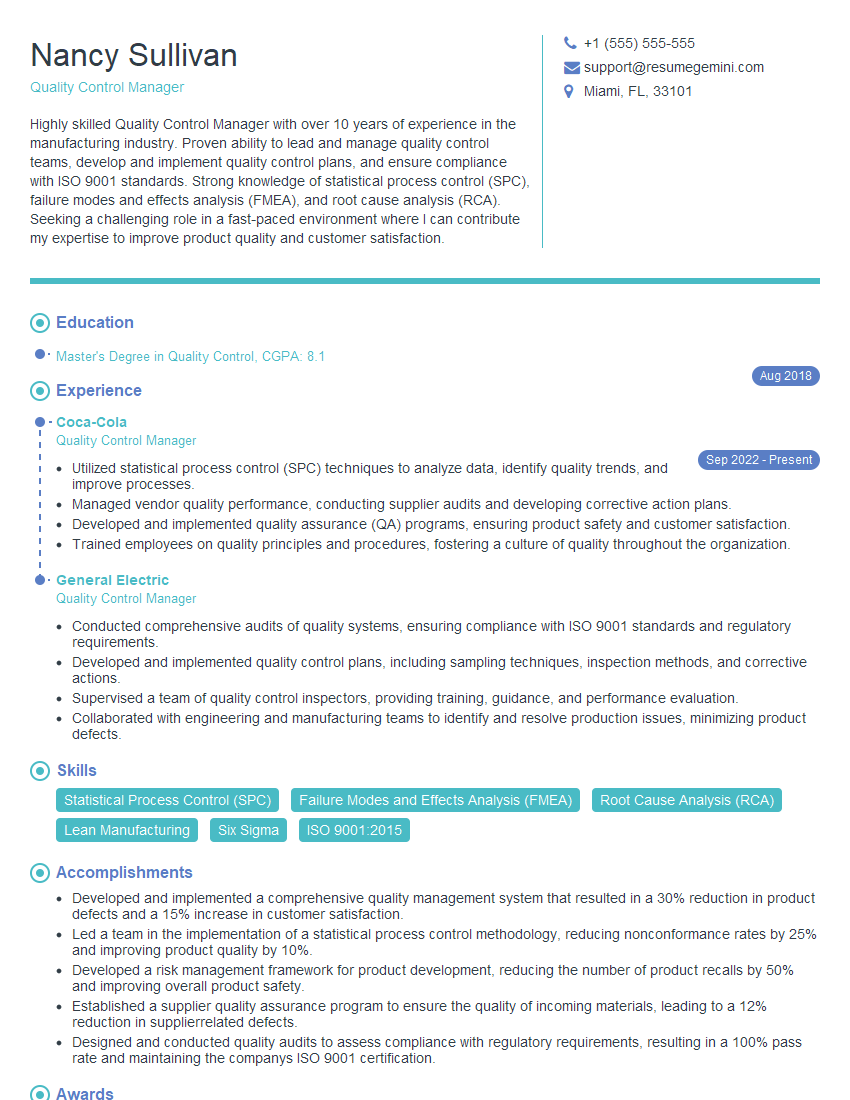
Quality Control Manager Resume Sample
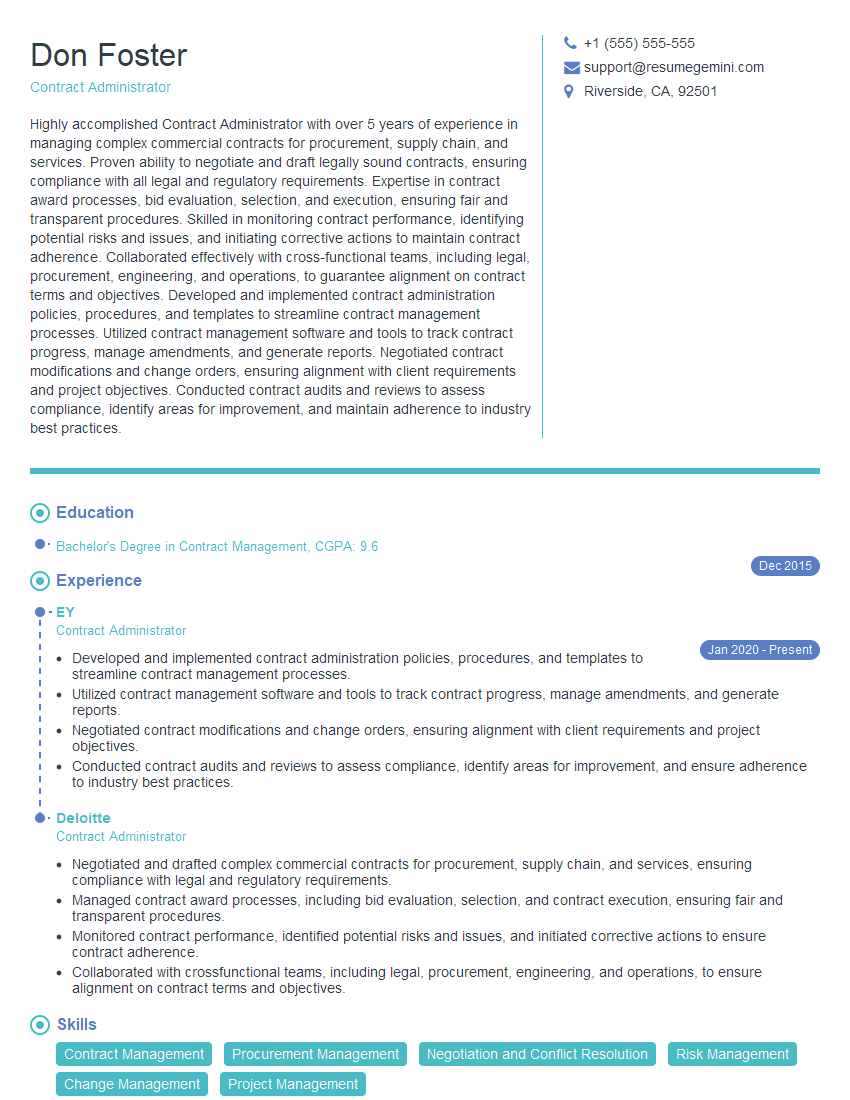
Contract Administrator Resume Sample
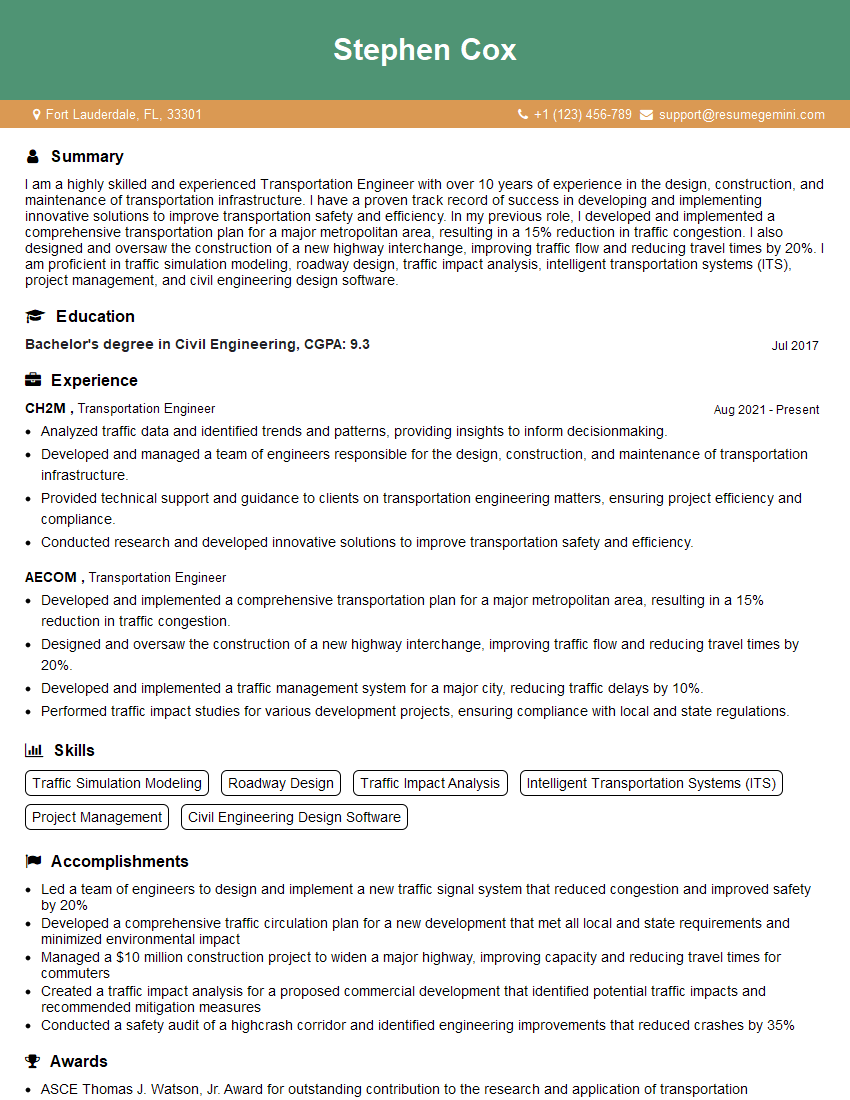
Transportation Engineer Resume Sample
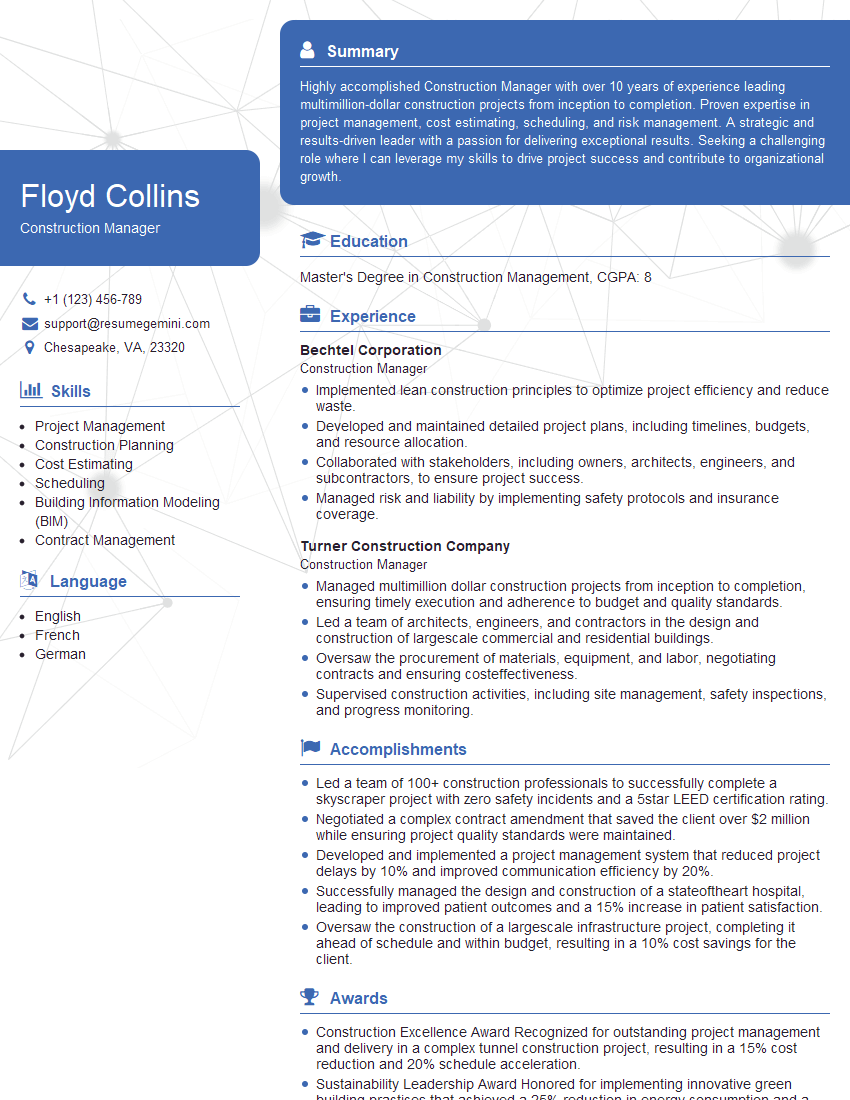
Construction Manager Resume Sample

Construction Superintendent Resume Sample

Project Manager Resume Sample

Project Engineer Resume Sample
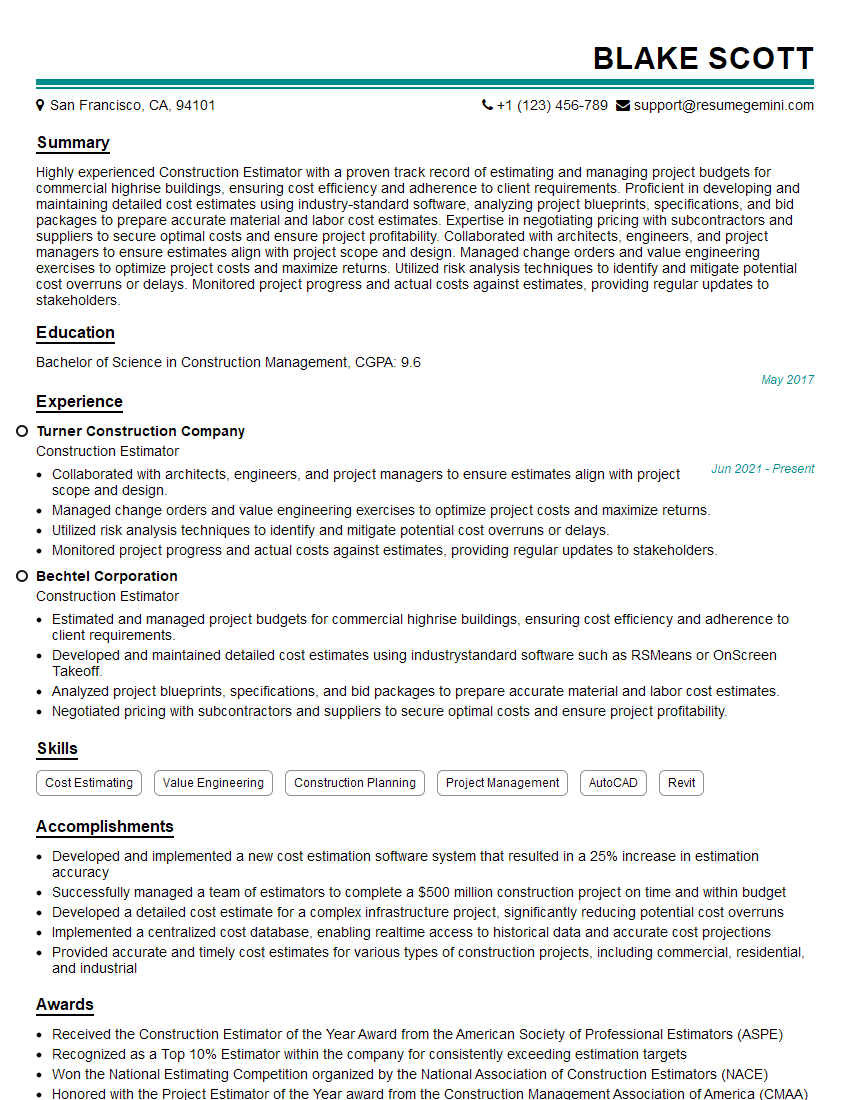
Construction Estimator Resume Sample
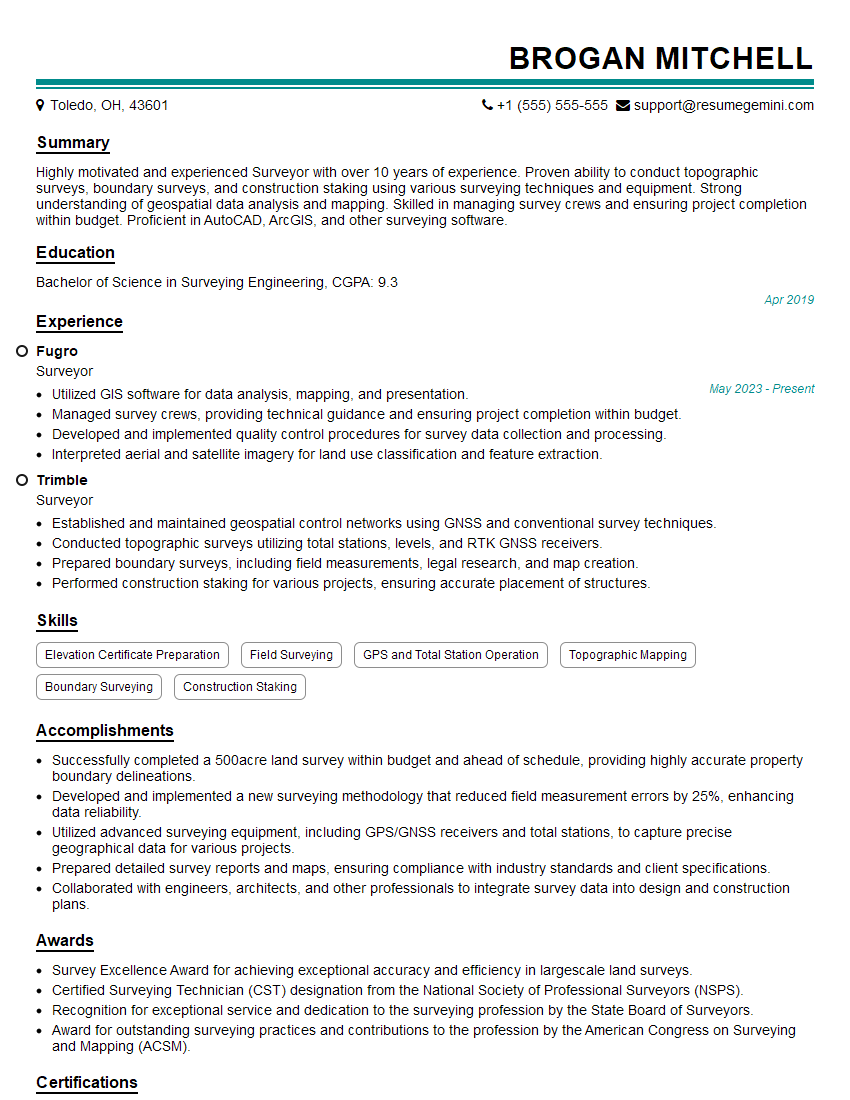
Surveyor Resume Sample
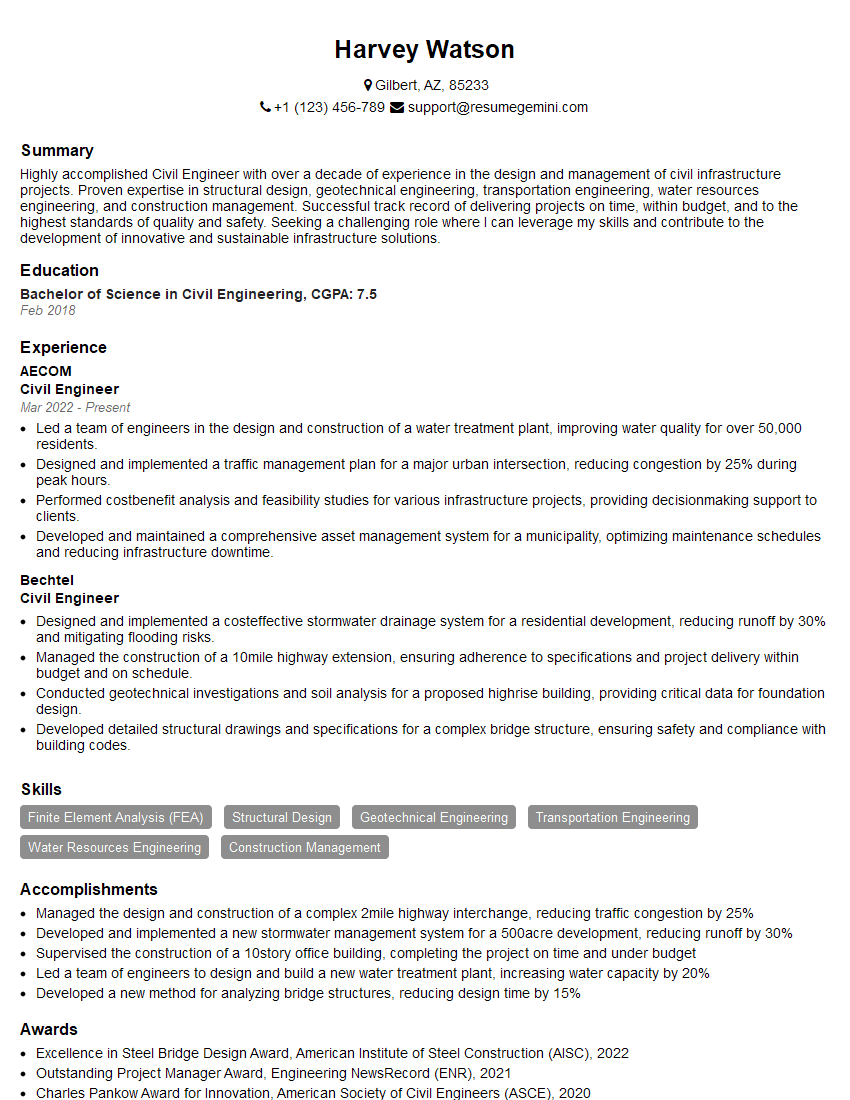
Civil Engineer Resume Sample
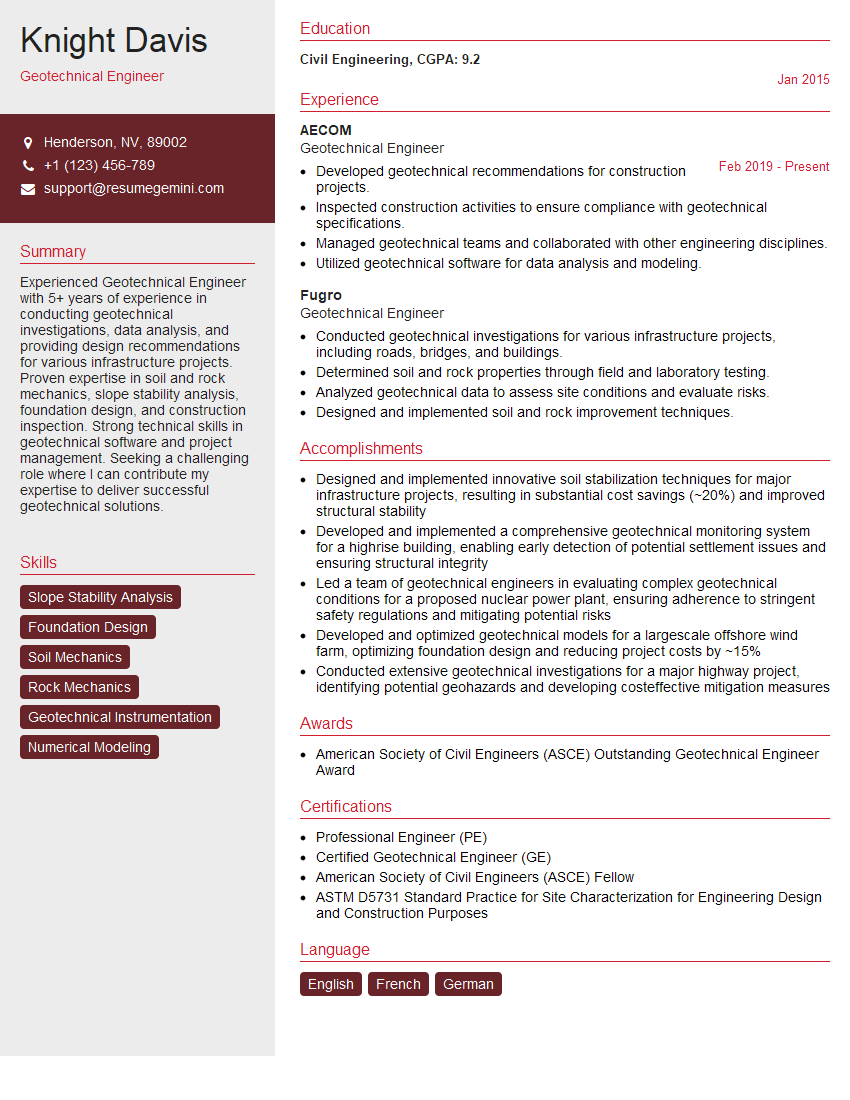
Geotechnical Engineer Resume Sample
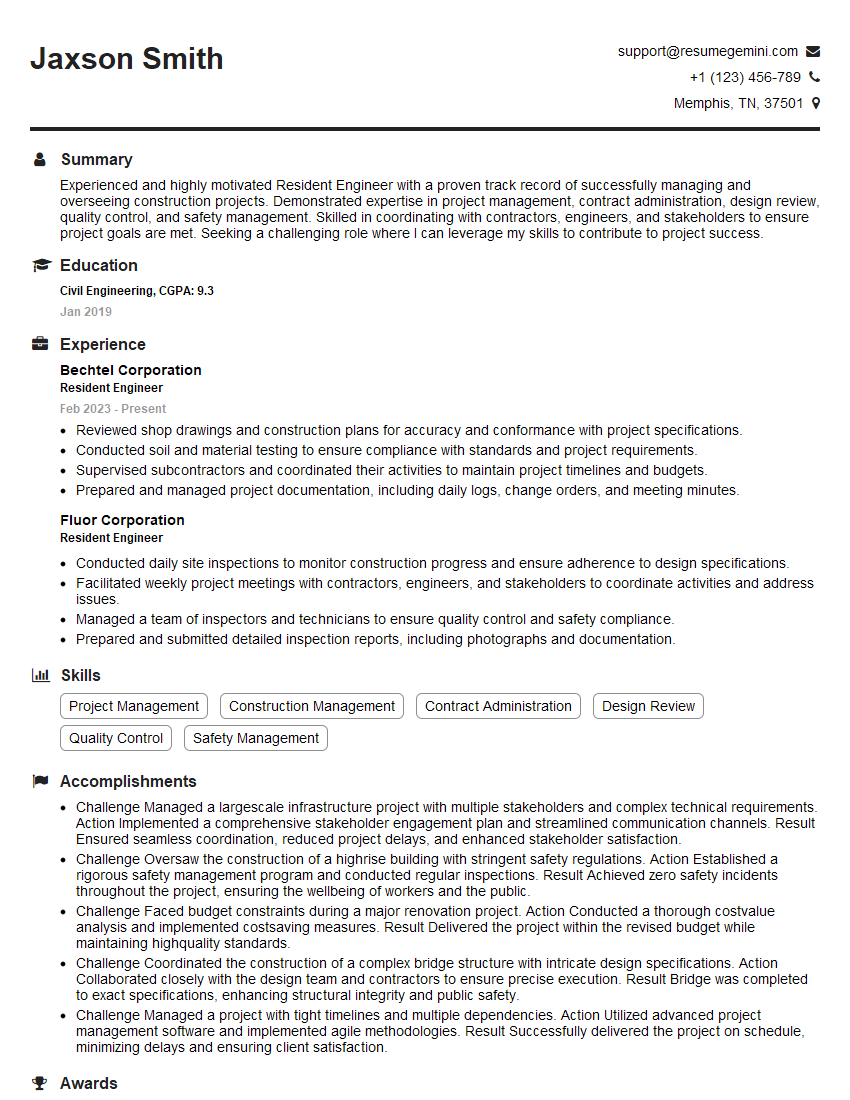
Resident Engineer Resume Sample
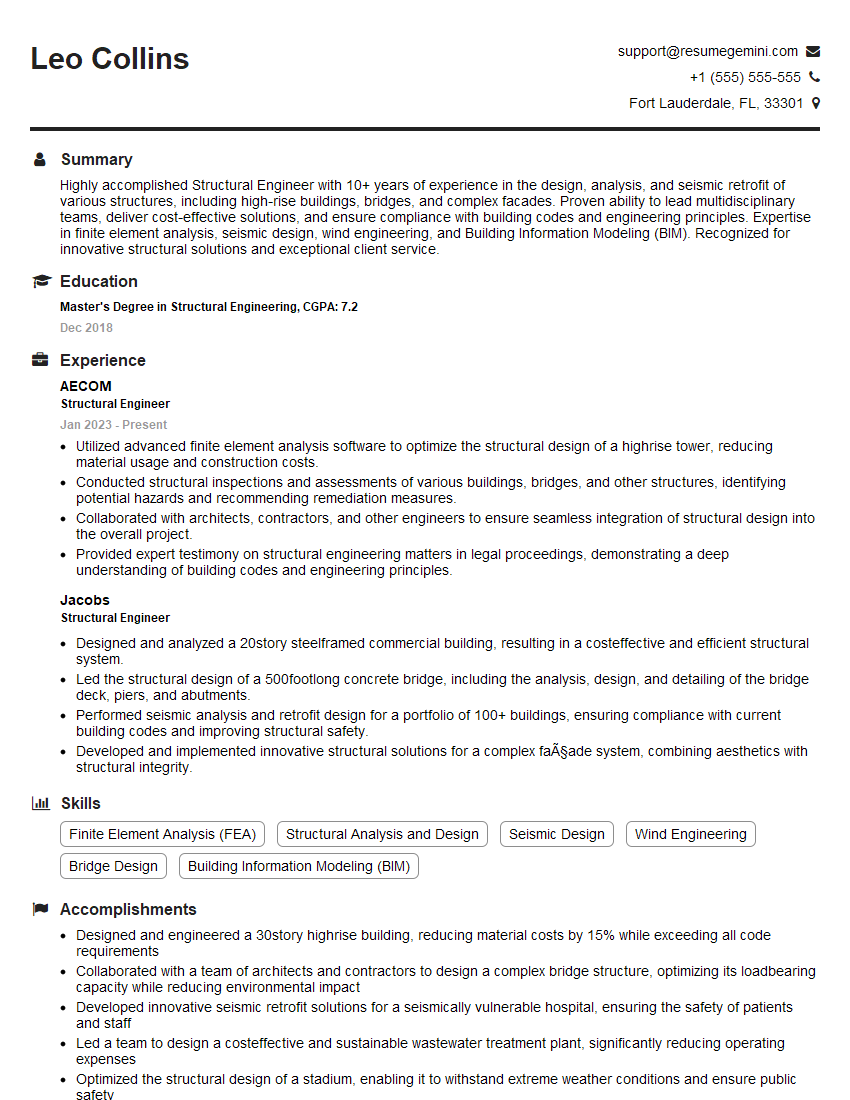
Structural Engineer Resume Sample
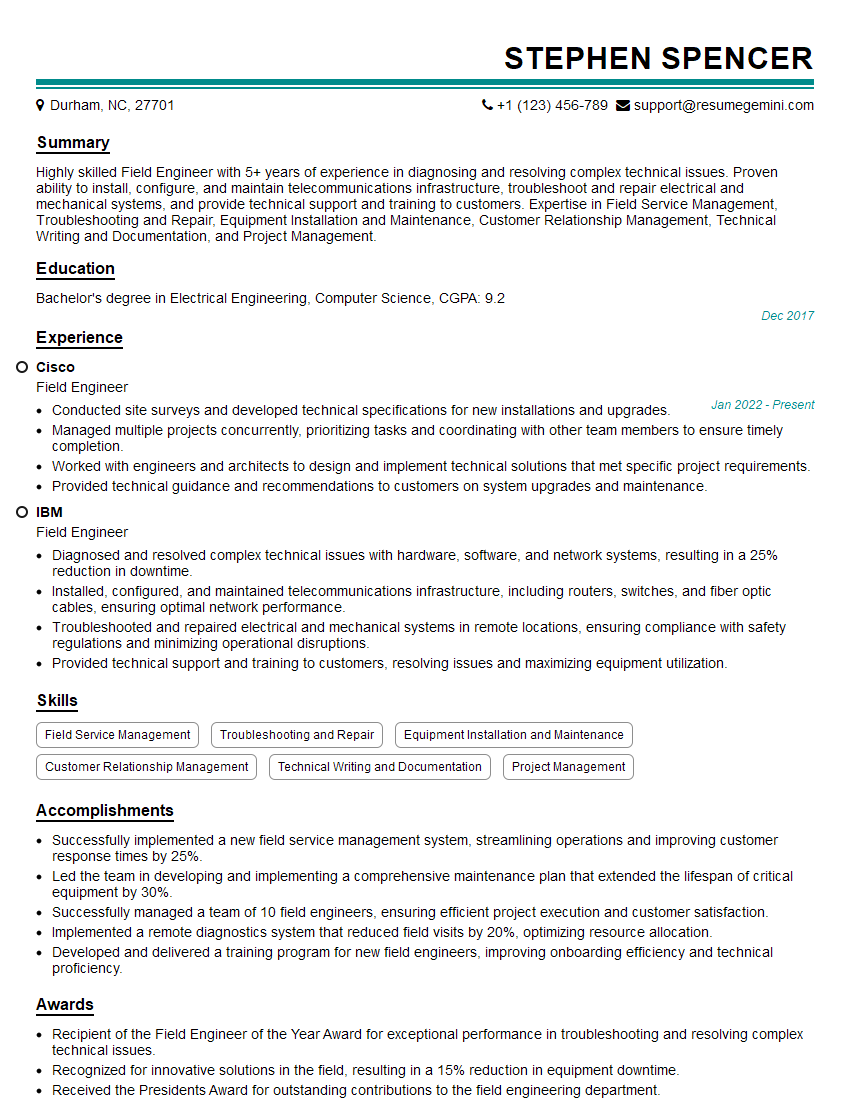
Field Engineer Resume Sample
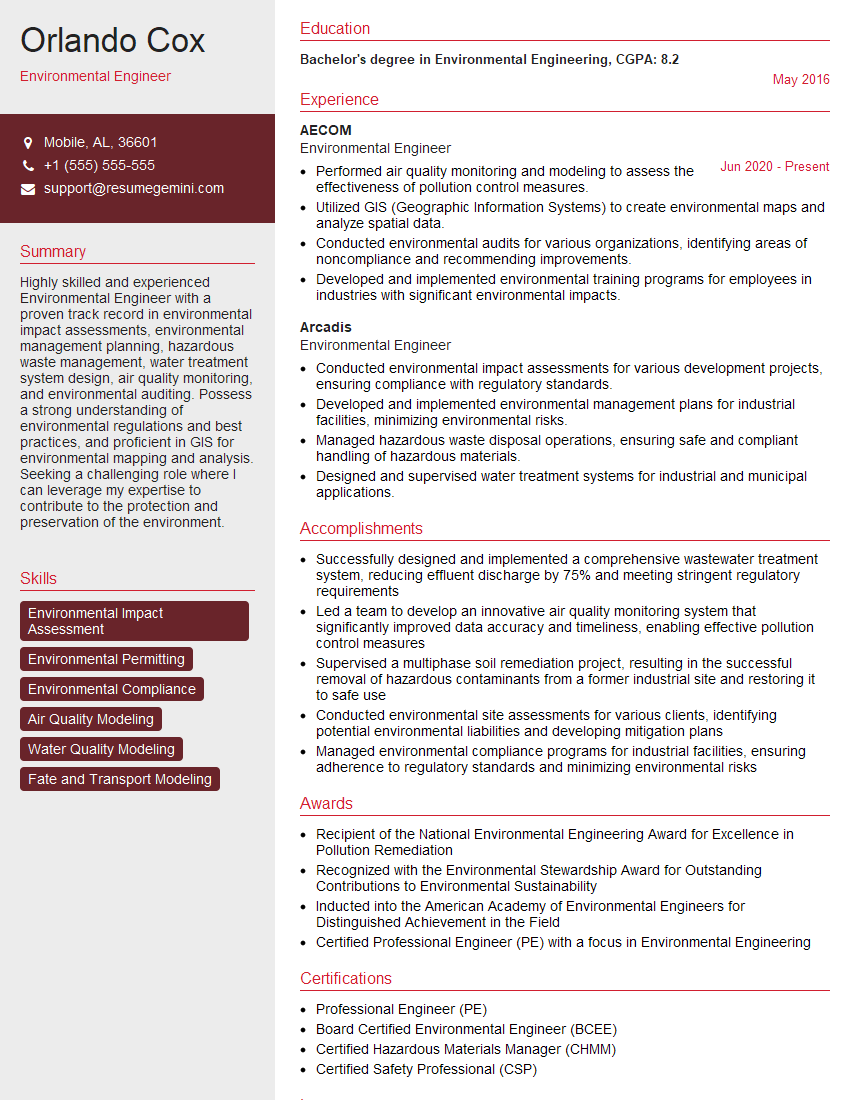
Environmental Engineer Resume Sample
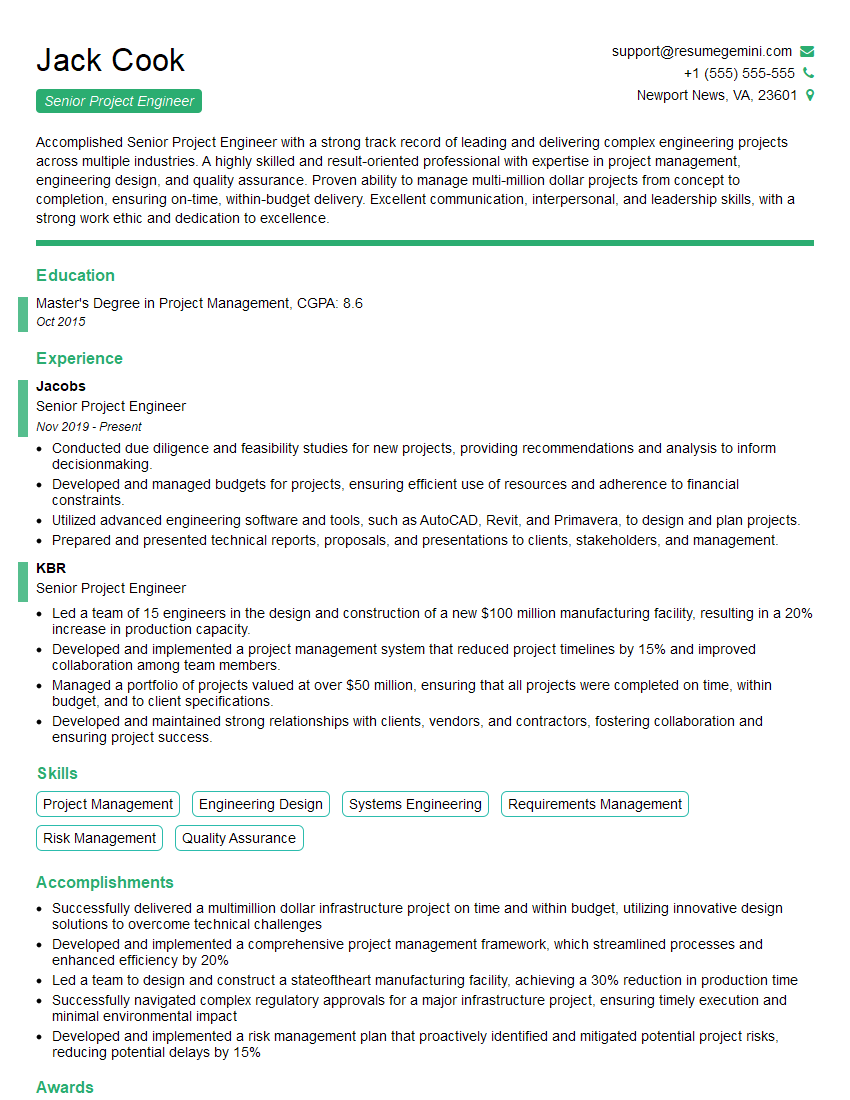
Senior Project Engineer Resume Sample
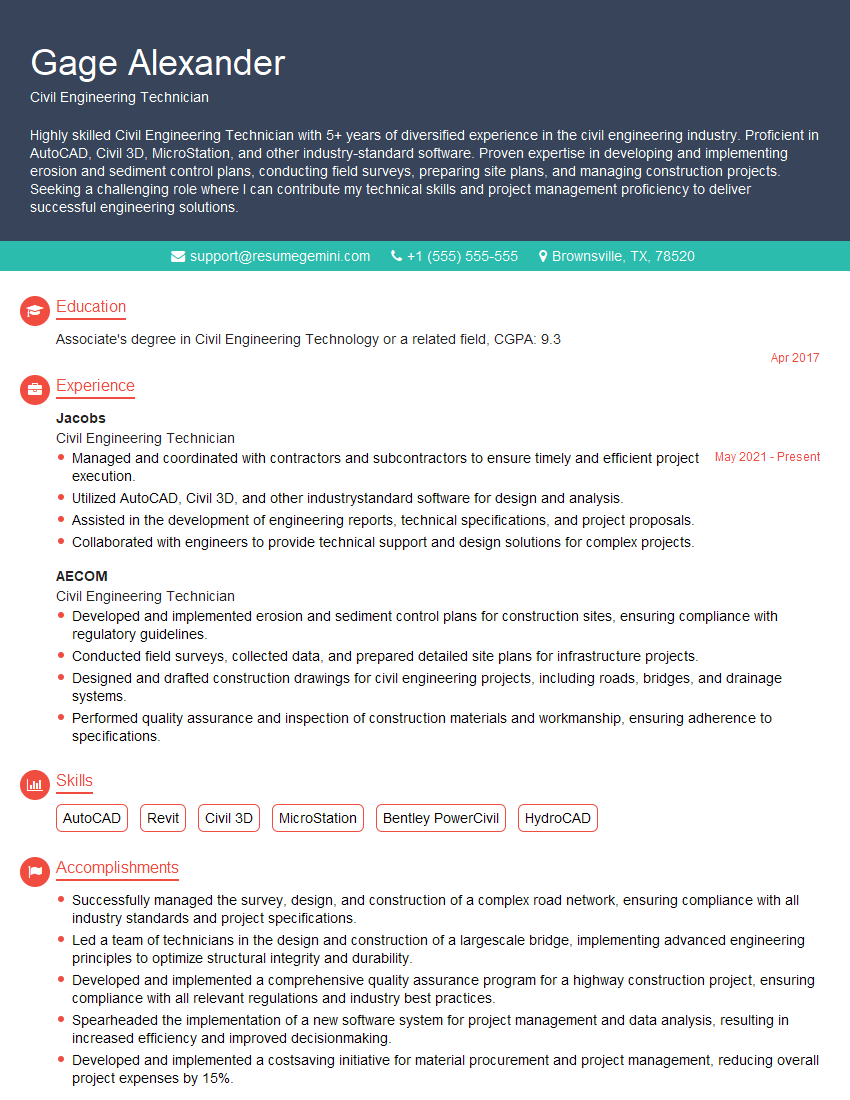
Civil Engineering Technician Resume Sample
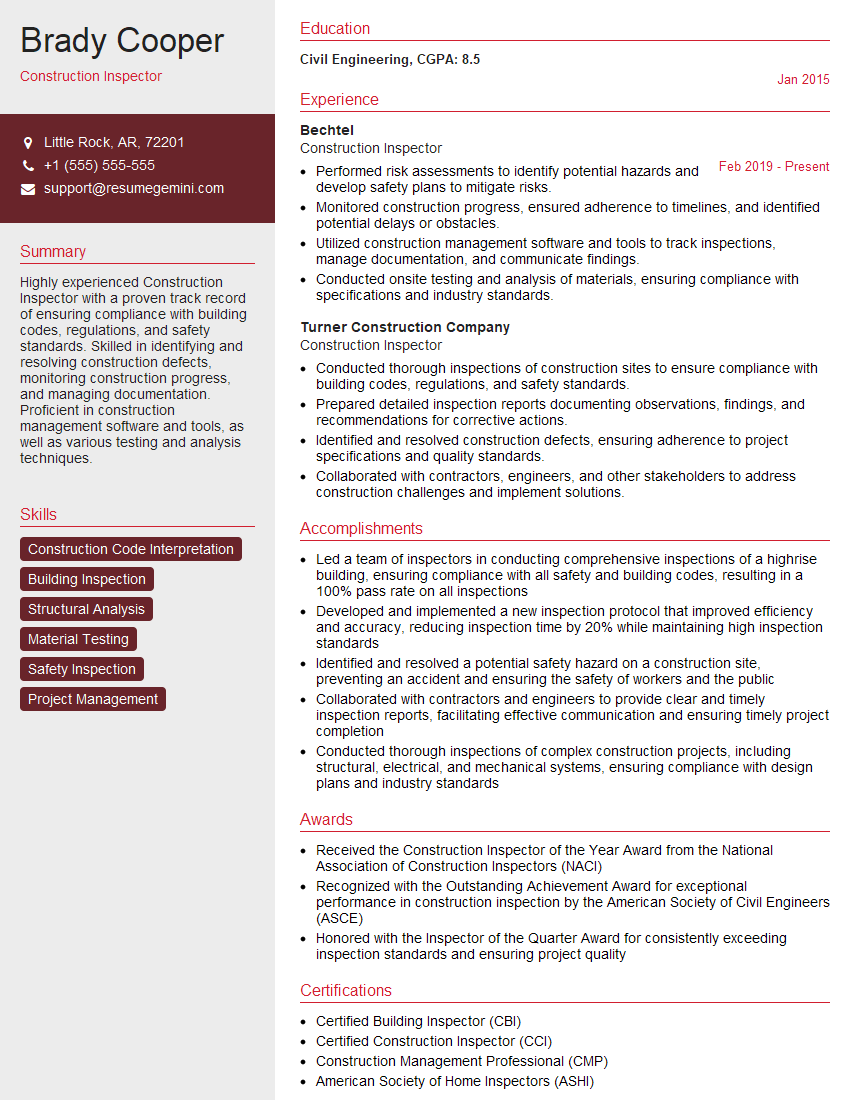
Construction Inspector Resume Sample
- Safety Manager
- Quality Control Manager
- Contract Administrator
- Transportation Engineer
- Construction Manager
- Construction Superintendent
- Project Manager
- Project Engineer
- Construction Estimator
- Surveyor
- Civil Engineer
- Geotechnical Engineer
- Resident Engineer
- Structural Engineer
- Field Engineer
- Environmental Engineer
- Senior Project Engineer
- Civil Engineering Technician
- Construction Inspector
Explore more articles
Users Rating of Our Blogs
Share Your Experience
We value your feedback! Please rate our content and share your thoughts (optional).
What Readers Say About Our Blog
Very informative content, great job.
good