Interviews are opportunities to demonstrate your expertise, and this guide is here to help you shine. Explore the essential Familiarity with Steel Processing Techniques interview questions that employers frequently ask, paired with strategies for crafting responses that set you apart from the competition.
Questions Asked in Familiarity with Steel Processing Techniques Interview
Q 1. Explain the basic principles of steelmaking.
Steelmaking fundamentally involves refining iron, typically from iron ore, into steel. This process focuses on reducing the carbon content and removing impurities like silicon, manganese, phosphorus, and sulfur. Think of it like baking a cake – you start with raw ingredients (iron ore) and through careful processes, you remove undesirable elements and refine it to achieve your desired outcome (steel). The basic principles revolve around:
- Reduction of iron oxides: Iron ore, primarily iron oxides (Fe2O3, Fe3O4), is reduced to metallic iron using a reducing agent, typically coke (carbon) in a blast furnace. This high-temperature reaction removes oxygen from the iron oxides.
- Impurity removal: The resulting molten iron (pig iron) still contains significant impurities. These are removed in a secondary refining process, such as the basic oxygen furnace (BOF) or electric arc furnace (EAF), through oxidation and slag formation.
- Alloying: Desired elements are added to the molten steel to achieve specific properties – strength, ductility, corrosion resistance, etc. This is crucial for tailoring steel to various applications.
For example, in a BOF, oxygen is blown into the molten iron, oxidizing the impurities which then react with fluxes (like lime) to form a slag that floats on top and is removed. The precise control of temperature, oxygen flow, and alloy additions is vital to producing steel with consistent quality.
Q 2. Describe the different types of steel and their applications.
Steel is categorized in many ways, but two key distinctions are carbon content and alloying elements. Different types of steel cater to specific needs.
- Carbon Steels: These are primarily iron and carbon. Low-carbon steel (mild steel) is relatively soft and ductile, used in car bodies and pipes. Medium-carbon steel is stronger and harder, suitable for railway tracks. High-carbon steel is very hard and strong, found in tools and springs.
- Alloy Steels: These contain significant amounts of alloying elements that improve specific properties. Stainless steels, containing chromium and nickel, are highly resistant to corrosion, used in cutlery and medical implants. Tool steels, with elements like tungsten and molybdenum, possess high hardness and wear resistance, utilized in cutting tools. High-strength low-alloy (HSLA) steels offer a good balance of strength and weldability, used in construction.
Consider a skyscraper: its structural steel might be HSLA steel for high strength, while its cladding might be stainless steel for weather resistance. The choice of steel depends entirely on the application’s requirements.
Q 3. What are the key stages in the steel production process?
Steel production is a multi-stage process. It begins with iron ore extraction and preparation and continues through various stages of refinement and processing.
- Iron Ore Extraction and Preparation: This involves mining, crushing, and concentrating iron ore to increase its iron content.
- Ironmaking (Blast Furnace): Iron ore, coke, and limestone are charged into a blast furnace where hot air is blown in. Iron oxides are reduced to molten pig iron, which is tapped from the furnace.
- Steelmaking (Secondary Refining): Pig iron undergoes further refinement to reduce carbon content and remove impurities. Common processes include the basic oxygen furnace (BOF), electric arc furnace (EAF), or other specialized techniques.
- Casting: Molten steel is solidified into semi-finished products like slabs, blooms, or billets.
- Rolling: These semi-finished products are shaped into final products through hot or cold rolling processes.
- Finishing: Final steps involve cutting, straightening, surface treatment, and inspection.
Each stage is crucial for quality control and ensuring the steel meets the specifications for its intended use. For instance, an error in the steelmaking stage can lead to inconsistent properties and potentially catastrophic failures in the final product.
Q 4. Explain the role of alloying elements in steel.
Alloying elements are added to steel to modify its properties, making it suitable for various applications. These elements dissolve in the iron matrix, affecting its microstructure and ultimately its mechanical behavior.
- Carbon (C): Increases strength and hardness but reduces ductility. It is the primary alloying element in carbon steels.
- Chromium (Cr): Improves corrosion resistance, hardness, and wear resistance (stainless steels).
- Nickel (Ni): Enhances toughness, strength, and corrosion resistance (stainless steels, nickel alloys).
- Manganese (Mn): Improves strength, hardness, and weldability.
- Molybdenum (Mo): Enhances high-temperature strength and creep resistance (high-speed steels).
- Tungsten (W): Increases hardness and wear resistance, particularly at high temperatures (high-speed steels).
Imagine trying to build a bridge. If you only use mild steel, it may not be strong enough to support the weight. By adding elements like molybdenum, you create high-strength steel capable of withstanding enormous stress and maintaining its integrity over time.
Q 5. Describe different steel rolling processes (e.g., hot rolling, cold rolling).
Steel rolling is a crucial process for shaping steel into various forms. The choice between hot and cold rolling depends on the desired properties and the type of steel.
- Hot Rolling: Steel is rolled at temperatures above its recrystallization temperature. This allows for significant deformation with less force, making it suitable for large-scale shaping. It also refines the grain structure, improving mechanical properties. However, it can result in scale formation on the surface requiring further processing.
- Cold Rolling: Steel is rolled at room temperature or below its recrystallization temperature. This results in increased strength, improved surface finish, and tighter tolerances. However, it requires more energy and may induce work hardening, potentially making it less ductile.
Hot rolling might be used to create wide steel sheets for car bodies, whereas cold rolling might be used to produce thin, precise sheets for electronics. Each process offers unique advantages, and the choice is often a balance between cost, required properties, and dimensional accuracy.
Q 6. What are the common defects found in steel and how are they detected?
Several defects can arise during steel processing, impacting its quality and performance. These defects can be internal or surface-related.
- Internal Defects: Inclusions (non-metallic particles), porosity (voids), cracks, and segregation (uneven distribution of elements) are common internal defects. These can significantly weaken the steel and lead to unexpected failures.
- Surface Defects: Surface cracks, laps (overlapping layers), scale (iron oxides), and pitting are examples of surface defects that can affect aesthetics and corrosion resistance.
Detection methods vary. Ultrasonic testing (UT) uses high-frequency sound waves to detect internal flaws. Radiographic testing (RT) uses X-rays or gamma rays to reveal internal structures and defects. Visual inspection, magnetic particle inspection (MPI), and dye penetrant inspection (DPI) are used to identify surface defects.
Imagine a pipeline carrying oil. A small internal crack, undetected, could lead to a major leak and environmental disaster. Therefore, rigorous inspection is crucial for safety and reliability.
Q 7. Explain the importance of heat treatment in steel processing.
Heat treatment is a crucial step in steel processing, modifying its microstructure and consequently its mechanical properties. It involves precisely controlled heating and cooling cycles to achieve the desired properties.
- Annealing: Relieves internal stresses, softens the steel, and improves machinability. It involves heating to a specific temperature, holding it for a certain time, and then slowly cooling.
- Quenching: Rapid cooling from a high temperature increases hardness and strength. Different quenching mediums (water, oil, air) are chosen based on the desired cooling rate and steel composition.
- Tempering: Following quenching, tempering reduces brittleness and improves toughness. It involves heating to a lower temperature and cooling slowly.
- Normalizing: A heat treatment that refines the grain structure of steel, improving mechanical properties such as strength and toughness.
For example, a tool steel needs to be extremely hard to withstand wear. It would first undergo quenching to achieve this hardness and then tempering to avoid excessive brittleness. The precise heat treatment parameters are critical to achieving the optimal balance of properties for each application.
Q 8. Describe different heat treatment processes (e.g., annealing, quenching, tempering).
Heat treatment modifies a steel’s microstructure and, consequently, its mechanical properties like strength, hardness, and ductility. This is achieved by carefully controlling the heating and cooling rates. Let’s explore three crucial processes:
- Annealing: Think of annealing as stress relief for the steel. It involves heating the steel to a specific temperature, holding it there for a certain time, and then slowly cooling it. This process relieves internal stresses, softens the material, making it more ductile and easier to machine. For example, annealing is crucial after cold working processes like rolling or drawing, where stresses build up in the metal.
- Quenching: This is a rapid cooling process, often involving plunging the heated steel into a quenching medium like oil or water. The rapid cooling traps the atoms in a high-energy state, resulting in a harder, stronger, but more brittle microstructure. Imagine a blacksmith quickly cooling their newly shaped metal in water to harden it – that’s quenching. The specific quenching medium and cooling rate are crucial for controlling the final hardness.
- Tempering: This is a ‘post-quench’ treatment where the quenched steel is reheated to a lower temperature and then slowly cooled. Tempering reduces the brittleness of quenched steel without significantly sacrificing hardness. This provides a balance between strength and toughness. For instance, a knife blade might be quenched for hardness and then tempered to prevent it from shattering easily.
The choice of heat treatment process and parameters depends heavily on the steel grade and the desired final properties.
Q 9. How do you ensure the quality of steel during the production process?
Ensuring steel quality is a multi-stage process that starts from raw material selection and extends to final product inspection. It requires rigorous control at every step:
- Raw Material Inspection: Careful analysis of the iron ore, scrap metal, and alloying elements is crucial to ensure the correct chemical composition. This involves spectroscopic analysis and other chemical tests.
- Melting and Refining: The melting process needs tight control of temperature and atmosphere to prevent impurities from entering the molten steel. Techniques like vacuum degassing are often employed to remove dissolved gases and improve quality.
- Casting and Solidification: Careful control of the casting process ensures that the ingots or blooms solidify uniformly, preventing defects like porosity or cracks. Continuous casting is often used for higher efficiency and better quality control.
- Rolling and Forming: Precise control of rolling parameters ensures the desired dimensions and tolerances. In-process inspections with non-destructive testing (NDT) methods, such as ultrasonic testing, are employed to detect internal defects.
- Heat Treatment and Finishing: As discussed previously, correct heat treatment is critical for achieving the desired mechanical properties. Surface treatments like painting or galvanizing may also be employed to enhance corrosion resistance and aesthetics.
- Final Inspection: Rigorous testing of the final product is crucial to ensure it meets the required specifications. This might involve tensile testing, hardness testing, impact testing, and other mechanical tests, as well as visual inspection.
A comprehensive quality management system (QMS), such as ISO 9001, is typically employed to provide a framework for these quality control measures.
Q 10. Explain the role of quality control in steel production.
Quality control (QC) in steel production is not merely an end-of-line activity; it’s a holistic process encompassing every stage of production. It aims to ensure the steel meets specified standards and customer requirements. The key roles of QC are:
- Preventing Defects: By implementing strict procedures and regular monitoring at each stage, QC aims to prevent defects from occurring in the first place. This is more cost-effective than trying to fix them later.
- Identifying and Addressing Defects: QC procedures incorporate methods to identify defects – whether in the raw material, the process itself, or the final product. Once defects are found, QC works to determine their root cause and implement corrective actions.
- Ensuring Consistency: QC ensures consistency in the properties of the steel produced. This involves regular calibration of equipment and adherence to strict process parameters. Imagine trying to build a skyscraper with inconsistent steel strength – disastrous!
- Meeting Customer Requirements: QC verifies that the produced steel aligns with the customer’s specifications, whether regarding composition, dimensions, or mechanical properties. This involves detailed testing and certification procedures.
- Improving Processes: The data gathered through QC activities contributes to continuous improvement efforts within the steel production process. Identifying trends and patterns in defects can help optimize procedures and reduce waste.
In essence, quality control is a guardian of consistency and quality, ensuring the final product meets expectations and relevant standards.
Q 11. What are the safety precautions involved in steel processing?
Steel processing involves significant safety hazards. Protecting workers is paramount. Key precautions include:
- Personal Protective Equipment (PPE): This is fundamental. Workers must consistently use appropriate safety glasses, gloves, hearing protection, steel-toe boots, and other protective gear to minimize risk of injury.
- Machine Guarding: Heavy machinery poses substantial risks. Proper guarding of rollers, shears, and other equipment is essential to prevent accidental contact and injuries.
- Lockout/Tagout Procedures: Before any maintenance or repair work is done on machinery, it’s crucial to follow lockout/tagout procedures to ensure the equipment is completely de-energized and prevented from accidental startup.
- Emergency Procedures: Clear and well-rehearsed emergency response plans are necessary to handle incidents such as fires, spills, or injuries. Regular drills are vital.
- Proper Training: Workers must be thoroughly trained in safe operating procedures for all equipment and machinery. Ongoing training and refreshers are crucial to maintain high safety standards.
- Environmental Controls: Managing airborne particulates (dust) and controlling noise levels are also crucial aspects of safety in steel processing.
A strong safety culture, enforced through strict adherence to regulations and ongoing employee training, is vital for minimizing risks in the steel processing environment. Safety should always be the top priority.
Q 12. What are the environmental concerns related to steel production?
Steel production has significant environmental implications, primarily related to:
- Greenhouse Gas Emissions: The process is energy-intensive, leading to significant CO2 emissions, particularly from the use of coke in blast furnaces. Modern processes are trying to mitigate this through the use of alternative fuels and carbon capture technologies.
- Air Pollution: Steel mills release various pollutants into the atmosphere, including particulate matter, sulfur oxides, and nitrogen oxides. These can contribute to acid rain and respiratory problems. Stricter environmental regulations and improved pollution control technologies are addressing these issues.
- Water Pollution: Steel production uses vast amounts of water for cooling and various processing steps. Improper wastewater management can lead to water pollution from heavy metals and other contaminants. Effective wastewater treatment is therefore essential.
- Waste Generation: The industry generates considerable waste, including slag and dust. Responsible waste management practices are needed to minimize environmental impact and potentially recover valuable materials from this waste.
- Resource Depletion: Steel production relies heavily on iron ore, coal, and other resources. Sustainable sourcing and resource efficiency are increasingly important to minimize the environmental footprint.
The steel industry is actively working to reduce its environmental impact through innovations like electric arc furnaces (which use recycled scrap metal), hydrogen-based steelmaking, and improved energy efficiency measures.
Q 13. Describe different steel casting methods.
Steel casting involves pouring molten steel into a mold, allowing it to solidify, and then removing the solidified casting. Several methods exist:
- Sand Casting: This is a traditional method using sand molds, which are inexpensive but produce castings with relatively low surface finish and dimensional accuracy. Think of it like making a sandcastle, but with molten steel.
- Investment Casting (Lost-Wax Casting): A more precise method where a wax pattern is created, coated with a ceramic material, and then melted out, leaving a mold cavity into which molten steel is poured. This yields high-precision castings with complex shapes.
- Die Casting: This involves injecting molten steel under high pressure into a reusable metal die. This process results in high-volume production of castings with good dimensional accuracy and surface finish, though it is more suitable for smaller castings.
- Centrifugal Casting: Molten steel is poured into a rotating mold, causing the centrifugal force to distribute the steel evenly and create dense castings. This is commonly used for pipes and tubes.
- Continuous Casting: A modern and highly efficient method where molten steel is continuously solidified into a semi-finished product like a slab, bloom, or billet. This is extensively used in large-scale steel production, producing a uniform product with high speed and efficiency.
The choice of casting method depends on factors like the desired casting size, shape complexity, surface finish, dimensional accuracy, and production volume.
Q 14. Explain the process of steel forging.
Steel forging is a metal forming process involving shaping metal using compressive forces. It’s like sculpting with metal, but instead of a chisel, we use massive presses or hammers.
The process typically involves heating the steel to a forging temperature (making it more malleable), and then shaping it using various techniques. This could involve hammering the metal with a power hammer or using a hydraulic press to shape it into a die. Different forging methods exist:
- Open-die forging: The steel is shaped using hammers or presses without a confining mold. This allows for considerable flexibility in design but often results in less precise dimensions and requires more skill.
- Closed-die forging: The steel is shaped using a die which confines the metal and creates a more precise shape. This leads to highly accurate and intricate forgings, though it requires specialized tooling.
- Press forging: Utilizing hydraulic or mechanical presses for shaping, this method offers precise control over the forming process and allows for greater precision and consistent quality, especially for large forgings.
- Hammer forging: Using hammers to shape the steel, this method is useful for smaller forgings or for creating unique shapes requiring a higher level of operator skill.
Forging results in a dense, strong material with excellent mechanical properties, often used for critical components in industries like aerospace and automotive manufacturing.
Q 15. What is the difference between carbon steel and stainless steel?
The primary difference between carbon steel and stainless steel lies in their chromium content. Carbon steel is an alloy of iron and carbon, with carbon content typically ranging from 0.05% to 2.1%. This carbon content significantly impacts its strength and hardness but makes it susceptible to corrosion. Think of a rusty old car – that’s likely carbon steel.
Stainless steel, on the other hand, contains a minimum of 10.5% chromium. This chromium creates a passive oxide layer on the surface, protecting it from rust and corrosion. This is why stainless steel is so popular in cutlery, kitchen appliances, and surgical instruments. Different grades of stainless steel have varying amounts of other alloying elements like nickel and molybdenum, further enhancing properties like strength, corrosion resistance, and weldability.
In essence, carbon steel is strong and relatively inexpensive but prone to rust, while stainless steel is corrosion-resistant but more costly. The choice between them depends entirely on the application’s requirements.
Career Expert Tips:
- Ace those interviews! Prepare effectively by reviewing the Top 50 Most Common Interview Questions on ResumeGemini.
- Navigate your job search with confidence! Explore a wide range of Career Tips on ResumeGemini. Learn about common challenges and recommendations to overcome them.
- Craft the perfect resume! Master the Art of Resume Writing with ResumeGemini’s guide. Showcase your unique qualifications and achievements effectively.
- Don’t miss out on holiday savings! Build your dream resume with ResumeGemini’s ATS optimized templates.
Q 16. Describe the various methods for surface treatment of steel.
Surface treatment of steel aims to enhance its properties like corrosion resistance, wear resistance, or aesthetics. Several methods exist, each suited to specific needs:
- Painting/Coating: A simple and cost-effective method providing protection from the environment and enhancing appearance. Think of the painted body of a car.
- Galvanizing: A zinc coating protects steel from corrosion through sacrificial anodic protection. The zinc corrodes preferentially, leaving the steel intact. Commonly used for guard rails and fences.
- Electroplating: An electric current deposits a thin layer of metal (like chromium, nickel, or zinc) onto the steel surface, improving corrosion resistance, hardness, or appearance. Chrome plating on car bumpers is a classic example.
- Powder Coating: A dry powder coating is applied electrostatically and cured in an oven, creating a durable, scratch-resistant finish.
- Anodizing (for specific steel alloys): Creates a thicker oxide layer on the surface, improving corrosion resistance and wear resistance. Often used in aluminum, but some steel alloys can be treated similarly.
The selection of a surface treatment method depends heavily on the desired properties, cost constraints, and the specific environment in which the steel will be used.
Q 17. How is steel recycled?
Steel recycling is a crucial part of sustainable manufacturing. The process begins with the collection of scrap steel from various sources, including demolition sites, manufacturing plants, and households. This scrap is then sorted by grade and composition.
The sorted scrap is then processed in a steel mill. It’s typically melted down in an electric arc furnace (EAF) or a basic oxygen furnace (BOF), along with other raw materials like iron ore and scrap. The molten steel is then refined and cast into various shapes like billets, slabs, or blooms. These are then rolled into the desired final products. Recycling steel requires significantly less energy compared to producing it from raw materials, making it an environmentally friendly process.
The circular economy aspect is especially important; recycled steel retains its properties, meaning it can be continuously recycled without significant degradation.
Q 18. What are the challenges in maintaining consistent steel quality?
Maintaining consistent steel quality is a significant challenge due to the many variables involved in the production process. Inconsistencies can arise from:
- Raw Material Variations: Fluctuations in the chemical composition of iron ore, scrap metal, and other alloying elements can affect the final product.
- Process Control: Precise temperature control, mixing, and refining are crucial for consistent quality. Even slight deviations can lead to variations.
- Equipment Maintenance: Malfunctioning equipment can introduce defects or inconsistencies.
- Human Error: Operational mistakes can also lead to variations in quality.
To mitigate these challenges, rigorous quality control measures are essential throughout the entire process, from raw material inspection to final product testing. Advanced technologies like real-time monitoring and data analytics help detect and correct deviations promptly, ensuring consistent quality and meeting customer specifications.
Q 19. Explain the concept of yield strength and tensile strength in steel.
Yield strength and tensile strength are crucial mechanical properties defining a steel’s behavior under stress.
Yield strength is the stress at which a material begins to deform plastically (permanently). Imagine bending a paperclip – it bends slightly elastically but once you surpass its yield strength, it will permanently retain that bent shape. It’s a measure of a material’s resistance to permanent deformation.
Tensile strength is the maximum stress a material can withstand before it breaks or fractures. It’s the highest point on a stress-strain curve. Think of pulling a rubber band – it stretches until it eventually snaps; that breaking point represents its tensile strength.
Both are crucial for selecting the appropriate steel grade for a specific application. For instance, a structure requiring high strength and minimal deformation would need steel with high yield strength and tensile strength.
Q 20. How does temperature affect the properties of steel?
Temperature significantly impacts the properties of steel. At high temperatures, steel becomes softer and more ductile (easily deformed), while at low temperatures, it becomes harder and more brittle (prone to fracture). This is due to changes in the steel’s microstructure.
For example, heat treatment processes like annealing (high-temperature heating followed by slow cooling) are used to soften steel and improve its machinability. Conversely, quenching (rapid cooling from high temperatures) hardens steel. Cryogenic treatment (cooling to extremely low temperatures) can further enhance certain properties, such as toughness.
Understanding the effect of temperature is essential for processes like welding, forging, and heat treating, ensuring that the steel retains its desired properties throughout the manufacturing and service life.
Q 21. Describe the different types of steel testing methods.
Steel testing methods are crucial for ensuring quality and meeting specifications. Several methods are used, depending on the property being tested:
- Tensile Testing: Measures tensile strength, yield strength, and elongation (ductility).
- Hardness Testing: Determines the resistance of steel to indentation. Common methods include Brinell, Rockwell, and Vickers hardness tests.
- Impact Testing: Evaluates the steel’s ability to absorb energy upon impact, determining its toughness.
- Charpy and Izod tests are common impact testing methods.
- Chemical Analysis: Determines the chemical composition of the steel, ensuring it meets specified requirements.
- Metallographic Examination: Microscopic examination of the steel’s microstructure reveals information about its grain size, phases, and defects.
- Non-Destructive Testing (NDT): Methods like ultrasonic testing, magnetic particle inspection, and radiographic testing detect internal defects without damaging the steel.
The choice of testing methods depends on the application and the properties of interest. A combination of these tests is often employed for a comprehensive evaluation of steel quality.
Q 22. What is the importance of understanding the microstructure of steel?
Understanding the microstructure of steel is paramount because it directly dictates the material’s mechanical properties, such as strength, ductility, toughness, and hardness. The arrangement of the constituent phases (ferrite, pearlite, martensite, etc.) at a microscopic level determines how the steel will behave under stress and various environmental conditions. Imagine building a house – using different types of bricks (microstructures) will lead to drastically different structural integrity and resilience.
For instance, a steel with a high percentage of martensite will exhibit high hardness but low ductility, making it suitable for tools but unsuitable for applications requiring flexibility. Conversely, a steel with a predominantly ferritic microstructure will possess good ductility and weldability but might have lower strength. Therefore, controlling the microstructure through heat treatments is crucial for tailoring steel to specific applications.
Metallurgical techniques like microscopy (optical, electron) and diffraction are used to analyze and characterize the microstructure, enabling engineers to predict and control the performance of the steel.
Q 23. Explain how to interpret a steel specification.
Interpreting a steel specification, like those from ASTM or other standards organizations, requires a systematic approach. These specifications usually contain a grade designation, followed by compositional requirements and mechanical properties. Let’s take the example of a common low-carbon steel, like 1018:
- 1018: The ‘10’ indicates a carbon steel (no other significant alloying elements). The ‘18’ represents the carbon content – approximately 0.18% carbon.
- Composition: The specification will detail the permissible ranges for carbon, manganese, silicon, sulfur, and phosphorus. These elements significantly influence the steel’s properties.
- Mechanical Properties: The specification will typically provide minimum requirements for tensile strength, yield strength, elongation, and reduction in area. These values are essential for ensuring the steel meets the design requirements for a particular application.
Understanding the significance of each element and the relationship between composition and properties is crucial for selecting the appropriate steel for a given application. For example, higher carbon content generally leads to increased strength and hardness but reduced ductility. Careful analysis of the specification ensures that the selected steel will perform as expected.
Q 24. Describe the different types of steel failure.
Steel failure can manifest in various ways, broadly categorized as ductile or brittle failure. Ductile failure is characterized by significant plastic deformation before fracture, often exhibiting necking. Think of pulling taffy – it stretches and thins before breaking. Brittle failure, on the other hand, occurs suddenly with minimal plastic deformation, like snapping a dry twig.
- Ductile Fracture: This type of failure is often preferred as it provides warning signs before complete fracture, allowing for preventative measures. It is commonly associated with lower carbon steels at normal temperatures.
- Brittle Fracture: This is catastrophic and dangerous, occurring without much warning. It’s often associated with high-carbon steels, low temperatures, or the presence of flaws in the steel.
- Fatigue Failure: This occurs due to repeated cyclic loading, even if the stress level is below the yield strength. It starts with microscopic crack initiation and propagates until failure.
- Creep Failure: This happens at high temperatures under sustained stress, causing gradual deformation and eventual fracture.
- Corrosion: Chemical or electrochemical reactions can weaken the steel, leading to failure.
The type of failure is influenced by various factors such as material properties, loading conditions, environmental factors, and the presence of flaws.
Q 25. How do you troubleshoot common problems in steel processing?
Troubleshooting steel processing problems involves a systematic approach:
- Identify the Problem: Precisely define the defect, e.g., surface cracks, dimensional inaccuracies, poor mechanical properties.
- Gather Data: Collect information on processing parameters (temperature, time, pressure), material properties, and equipment settings. Visual inspection, metallurgical analysis, and chemical testing can be helpful.
- Analyze the Data: Determine the root cause by examining potential sources of error. Was there a problem with the raw material? Were the processing parameters incorrect? Was the equipment malfunctioning?
- Develop Solutions: Based on the root cause analysis, propose corrective actions. This might involve adjusting processing parameters, replacing faulty equipment, or improving material selection.
- Implement and Verify: Implement the proposed solutions and monitor the results. Verify that the problem has been resolved and that the steel meets the required specifications.
For example, if surface cracks are observed in a forged component, it might indicate that the forging temperature was too low, leading to insufficient ductility. Correcting the forging temperature would resolve the issue.
Q 26. What are the latest advancements in steel processing technology?
Recent advancements in steel processing technology focus on improving efficiency, sustainability, and material properties. Some key developments include:
- Advanced High-Strength Steels (AHSS): These steels offer superior strength-to-weight ratios, leading to lighter and more fuel-efficient vehicles. They are produced through complex thermomechanical processing techniques.
- Additive Manufacturing (3D Printing): This technology allows for the creation of complex steel parts with intricate geometries, reducing material waste and lead times. However, challenges remain in terms of scalability and ensuring consistent microstructure.
- Automation and Robotics: Increased automation in steel mills and processing plants leads to enhanced productivity, reduced labor costs, and improved safety.
- Process Optimization through AI and Machine Learning: Predictive modeling and data analytics are used to optimize processing parameters, minimizing defects and energy consumption.
- Sustainable Steelmaking: Significant efforts are focused on reducing carbon emissions in steel production, exploring alternative energy sources and recycling techniques.
These advancements are pushing the boundaries of steel performance and manufacturing processes, opening up new possibilities for diverse applications.
Q 27. Explain your experience with different steel processing equipment.
Throughout my career, I’ve gained extensive experience with a wide range of steel processing equipment, including:
- Rolling Mills: I’ve worked with hot and cold rolling mills, understanding the intricacies of roll gap adjustment, lubrication systems, and roll pass design for achieving desired thickness and mechanical properties.
- Forging Presses: I’m familiar with open-die and closed-die forging, understanding the crucial role of die design, preheating, and hammer impact velocity in shaping the steel component.
- Heat Treatment Furnaces: I have hands-on experience operating and maintaining various types of furnaces, including batch and continuous furnaces, for achieving specific microstructures through annealing, quenching, and tempering processes.
- Machining Centers: I’m proficient in using CNC machines for precision machining of steel components, ensuring dimensional accuracy and surface finish.
- Welding Equipment: I’m experienced with various welding techniques like MIG, TIG, and arc welding, understanding the importance of weld parameters for achieving high-quality welds.
My experience spans both conventional and advanced equipment, enabling me to troubleshoot problems and optimize processes efficiently.
Q 28. Describe a time you solved a problem related to steel processing.
In a previous role, we encountered a significant problem with inconsistent hardness in a batch of high-strength steel forgings. Initial investigations pointed to inconsistencies in the heat treatment process. After meticulously reviewing the furnace temperature profiles, we discovered that the temperature sensors were malfunctioning, resulting in uncontrolled variations in the heating and cooling cycles.
Our team implemented a multi-pronged solution: We replaced the faulty sensors, calibrated the entire furnace system, and implemented a rigorous quality control process that included temperature logging and regular sensor checks. We also retested the affected forgings and re-processed a smaller batch to validate the improved process. The result was a consistent batch of forgings meeting the required hardness specifications, significantly improving product quality and reducing scrap rate. This experience highlighted the critical role of proper equipment maintenance and rigorous quality control in ensuring consistent product quality.
Key Topics to Learn for Familiarity with Steel Processing Techniques Interview
- Ironmaking Processes: Understand the basics of blast furnace operation, raw materials, and the chemical reactions involved in iron production. Explore different ironmaking technologies and their respective advantages and disadvantages.
- Steelmaking Processes: Master the principles of both basic oxygen furnace (BOF) and electric arc furnace (EAF) steelmaking. Be prepared to discuss refining processes, slag chemistry, and the control of chemical composition.
- Continuous Casting: Learn the intricacies of continuous casting, including mold design, secondary cooling, and the factors influencing strand quality. Understand different casting techniques and their applications.
- Rolling and Forming: Gain knowledge of hot and cold rolling processes, including their respective equipment, parameters, and effects on the final product’s properties. Explore different forming techniques such as forging and extrusion.
- Heat Treatment: Understand the purpose and effects of various heat treatment processes like annealing, normalizing, quenching, and tempering on the mechanical properties of steel. Be able to explain the underlying metallurgical principles.
- Steel Grades and Properties: Familiarize yourself with different steel grades and their mechanical, physical, and chemical properties. Be able to select appropriate steel grades for specific applications based on required properties.
- Quality Control and Testing: Understand the importance of quality control throughout the steel processing chain. Be familiar with common testing methods used to assess steel properties, such as tensile testing, hardness testing, and chemical analysis.
- Safety and Environmental Considerations: Demonstrate awareness of safety protocols and environmental regulations relevant to steel processing. Be prepared to discuss best practices for minimizing environmental impact.
- Problem-Solving and Troubleshooting: Practice identifying and troubleshooting common issues encountered during steel processing, such as defects in the final product or operational inefficiencies. Be prepared to discuss your approach to problem-solving in a practical scenario.
Next Steps
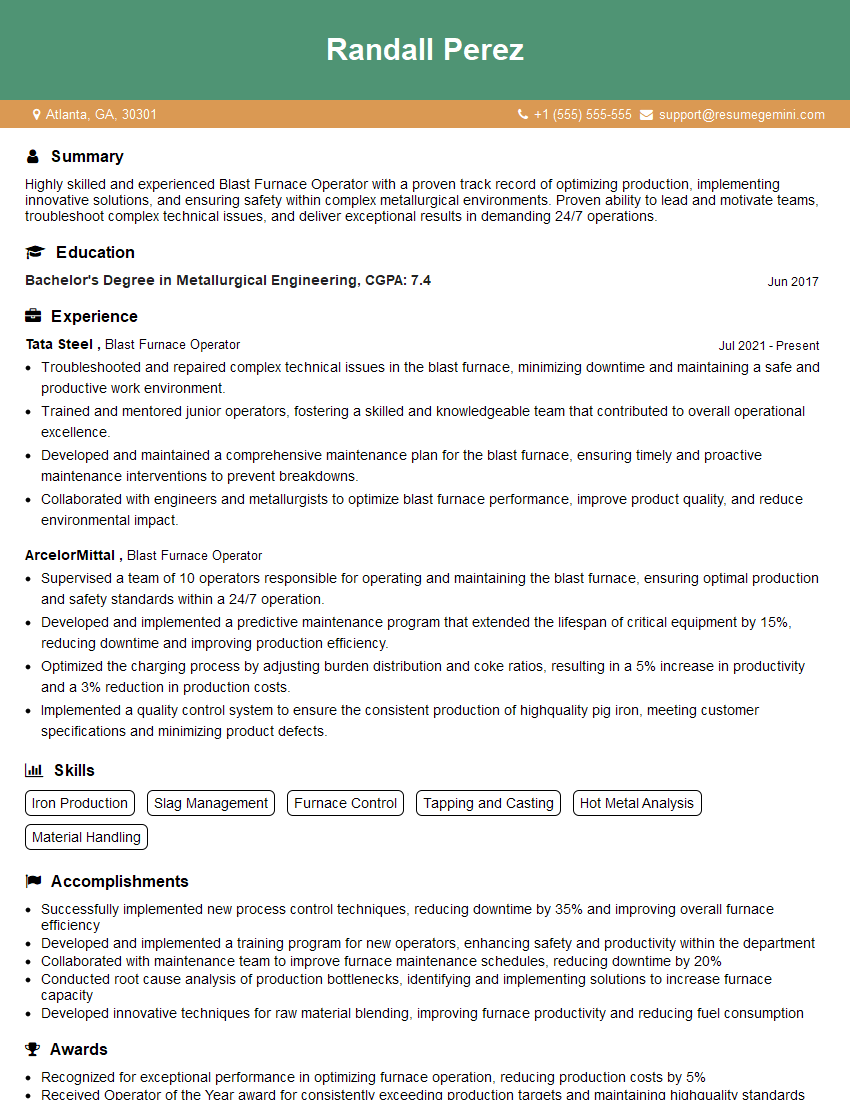
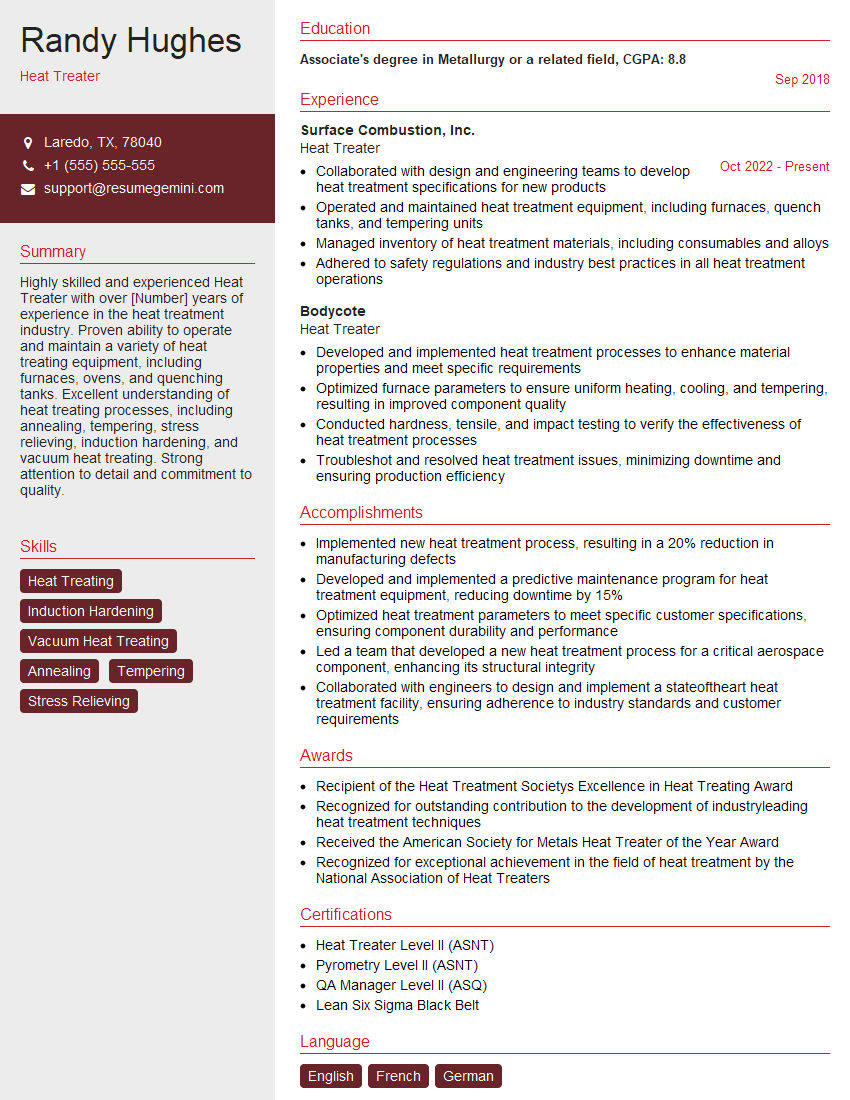
Mastering steel processing techniques is crucial for a successful and rewarding career in the materials science and manufacturing industries. It opens doors to exciting opportunities and positions you for significant professional growth. To maximize your job prospects, it’s essential to present your skills effectively. Creating an ATS-friendly resume is key to getting noticed by recruiters. ResumeGemini is a trusted resource to help you build a professional and impactful resume that highlights your expertise in steel processing techniques. Examples of resumes tailored to this field are available to further guide your preparation.


Explore more articles
Users Rating of Our Blogs
Share Your Experience
We value your feedback! Please rate our content and share your thoughts (optional).
What Readers Say About Our Blog
Very informative content, great job.
good