Interviews are more than just a Q&A session—they’re a chance to prove your worth. This blog dives into essential Fashion Illustration and Rendering interview questions and expert tips to help you align your answers with what hiring managers are looking for. Start preparing to shine!
Questions Asked in Fashion Illustration and Rendering Interview
Q 1. What software are you proficient in for fashion illustration and rendering?
My proficiency in fashion illustration and rendering software spans a range of tools, each chosen for its unique strengths. For digital rendering, I’m highly skilled in Adobe Photoshop, utilizing its powerful layering capabilities, brush customization, and extensive filter options for creating realistic textures and effects. I also leverage Adobe Illustrator for its vector-based capabilities, which are invaluable for clean lines, precise details, and scalability in creating technical flats and line art. Procreate on iPad Pro is a go-to for quick sketches and spontaneous designs, offering a more intuitive and immediate workflow. Finally, I’m also proficient in using Clip Studio Paint, known for its robust brush engine and powerful features for comic and illustration work, particularly effective for adding expressive detail and texture.
Q 2. Describe your process for creating a fashion illustration from concept to completion.
My process is iterative and involves several key stages. It begins with concept development, often starting with mood boards and sketching to establish the overall aesthetic, silhouette, and key design elements. Next, I create detailed sketches, refining the proportions and garment details. Then I move to the line art phase, cleaning up the sketch in Illustrator or Photoshop, ensuring clean lines and accurate garment construction. This is followed by rendering, where I apply color, shading, and texture using various techniques depending on the desired look and feel. I might use digital painting techniques in Photoshop for a photorealistic effect or utilize more stylized approaches in Illustrator for a more graphic look. The final stage involves reviewing and refining the illustration, ensuring the overall composition is balanced and visually appealing. For example, if designing a flowing evening gown, I’d pay extra attention to the rendering of the fabric’s drape and movement.
Q 3. How do you handle critiques and feedback on your illustrations?
I view critiques and feedback as essential to my growth as an illustrator. I actively seek feedback from peers and mentors, always approaching it with a positive and receptive attitude. I find it helpful to separate constructive criticism from personal opinions and focus on the aspects of the illustration that need improvement. For instance, if feedback points to a lack of realism in fabric folds, I will research references, practice rendering techniques, and incorporate the feedback into future work. I believe that constructive criticism is a valuable tool for honing my skills and achieving a higher level of quality in my work. Documenting feedback and its application helps track my progress and identify areas needing further development.
Q 4. Explain your understanding of different rendering techniques (e.g., watercolor, marker, digital).
My understanding of rendering techniques encompasses both traditional and digital methods. Watercolor rendering offers soft, translucent effects ideal for conveying delicate fabrics like silk or chiffon. I might utilize washes and layering to create depth and dimension. Marker rendering allows for bold, graphic effects, excellent for creating strong silhouettes and impactful illustrations, often with a more contemporary feel. Digital rendering, through software like Photoshop, offers the most versatility. I can blend techniques, emulate traditional media, or create unique textures not achievable through traditional methods, allowing for experimental approaches like using digital noise for specific textures or achieving hyperrealism by blending photo manipulation with digital painting. Each technique serves a different purpose and contributes to the unique style of the illustration.
Q 5. How do you ensure accuracy in depicting garment construction and draping?
Accuracy in depicting garment construction and draping is paramount. I achieve this by combining technical knowledge of pattern making and sewing with keen observational skills. Before starting an illustration, I often create or reference technical flats to understand the garment’s construction. Then, I study real-life examples of draping and fabric behavior, analyzing how fabric folds and drapes on different body types and under various movements. References from photographs, videos, and even physical fabric manipulation are used to inform my illustrations. For example, if I’m illustrating a tailored jacket, I would ensure the darts, seams, and button placement are anatomically correct and reflect the principles of garment construction. This attention to detail ensures that the illustrations are both aesthetically pleasing and technically accurate.
Q 6. Describe your experience working with color palettes and trends in fashion.
My experience with color palettes and fashion trends is extensive. I stay updated on current trends by researching fashion magazines, attending industry events, and closely following influential designers and brands. I understand the psychology of color and how different palettes can evoke specific moods and feelings. For example, a vibrant color palette could be used to illustrate a summer collection, whereas a muted, earthy palette might be suitable for an autumn collection. My process involves selecting colors that complement the overall design, consider the target audience, and reflect the specific brand aesthetic. I utilize color theory principles to create harmonious and visually appealing color schemes, often experimenting with different color combinations to find the most effective and impactful approach.
Q 7. How do you incorporate texture into your illustrations?
Incorporating texture is crucial for creating realistic and engaging illustrations. In digital rendering, I utilize a variety of techniques. This includes custom brushes to simulate the texture of different fabrics (e.g., a rough brush for tweed, a smooth brush for silk), using layer blending modes to create depth and visual interest, or adding noise and other filters to mimic the texture of materials. For example, to illustrate a knitted sweater, I might use a textured brush and add subtle variations in color and tone to emphasize the three-dimensionality of the knit. In traditional media, I would choose appropriate materials. A rough watercolour paper could help simulate the texture of a linen dress, while textured markers can add the visual impact of woven fabric.
Q 8. How do you balance artistic expression with technical accuracy in your work?
Balancing artistic expression with technical accuracy in fashion illustration is a delicate dance. It’s about finding the sweet spot where the artistic vision isn’t compromised by the need for precise representation of garment details, and vice versa. Think of it like baking a cake – you need the creative flair of the flavors and presentation, but also the precision of following the recipe to ensure a delicious and structurally sound outcome.
For example, a flowing, expressive line might capture the essence of a dress’s movement, but accurate proportions and the placement of seams are vital to ensuring the client understands the design’s technical details. I achieve this balance by sketching initial concepts freely to capture the overall mood and aesthetic. Then, I progressively refine the sketches, adding detail and correcting proportions to ensure accuracy. This iterative approach allows me to remain flexible and creative while maintaining a high level of precision.
- Initial Sketches: Focus on fluidity, movement, overall shape.
- Refined Sketches: Incorporate details like seams, darts, closures, and accurate proportions.
- Final Rendering: Emphasize both aesthetic and technical correctness, ensuring the illustration is both beautiful and informative.
Q 9. Describe your experience with different types of fashion illustration (e.g., flat sketches, croquis, mood boards).
My experience spans a variety of fashion illustration techniques. I’m proficient in creating flat sketches, which are detailed, two-dimensional representations of garments, ideal for technical specifications. I also utilize croquis, which are stylized figures used as templates for illustrating clothing. This provides a better understanding of how the garment drapes and fits on the body. Mood boards, crucial for establishing the overall design concept and aesthetic, are frequently incorporated into my workflow. These visual collages of colors, textures, and imagery inform the direction of the illustrations.
For instance, when working on a collection of summer dresses, I might start with mood boards showcasing tropical imagery, vibrant colors, and light fabrics. Then, I would use flat sketches to detail each dress’s construction, followed by croquis to show how each dress falls on a figure. This multi-faceted approach ensures a thorough and comprehensive presentation of the design ideas to clients.
Q 10. How do you manage your time effectively when working on multiple projects simultaneously?
Managing multiple projects requires a structured approach. I use project management tools, like Trello or Asana, to track deadlines, allocate time, and prioritize tasks. Breaking down large projects into smaller, manageable steps is key. I also employ time-blocking techniques, dedicating specific time slots to different projects, minimizing distractions during those periods.
For example, I might allocate two hours on Monday morning to work on a set of flat sketches, followed by an hour on the same project to create the color palette. This approach ensures that I’m consistently making progress on each project without feeling overwhelmed. Regular self-evaluation and adjustment of my schedule help me adapt to unforeseen delays or changes in priority.
Q 11. How familiar are you with industry standards and best practices in fashion illustration?
I’m very familiar with industry standards and best practices in fashion illustration. This includes understanding the importance of accurate proportions, precise rendering of textiles, and clear communication through sketches and annotations. I’m adept at using industry-standard software like Adobe Photoshop and Illustrator and am comfortable adhering to specific client requirements regarding file formats, resolutions, and delivery methods.
For example, I understand that client presentations often require specific color profiles (like Pantone) to ensure consistent color reproduction. My understanding of technical specifications helps avoid costly errors and delays in the design process, thus building strong professional relationships.
Q 12. Describe your experience with presenting your work to clients or stakeholders.
Presenting work to clients is a crucial part of my role. I prepare detailed presentations that include mood boards, initial sketches, final renderings, and technical specifications. Before the presentation, I thoroughly research the client’s preferences and brand identity to tailor my presentation accordingly. During the presentation, I explain my creative process and choices clearly, addressing any questions or concerns the client might have.
For a recent presentation, I prepared a digital presentation showcasing various design options with accompanying notes explaining the rationale behind each choice. This proactive approach helped my client make informed decisions, fostering a collaborative and positive relationship. I encourage active feedback, viewing each presentation as a collaborative dialogue, rather than a one-sided demonstration.
Q 13. How do you stay up-to-date with the latest trends and technologies in fashion illustration?
Staying current in fashion illustration requires continuous learning. I regularly follow fashion blogs, magazines, and social media accounts of renowned illustrators. Attending industry workshops and webinars, exploring online tutorials on new techniques and software, and engaging with online communities are integral to my professional development. I also actively seek out inspiration from diverse sources, beyond the fashion industry itself, to keep my creative vision fresh and dynamic.
For instance, I recently attended a workshop on digital painting techniques in fashion illustration, which helped refine my skills using Procreate. This constant learning allows me to adapt to evolving trends and explore new creative possibilities.
Q 14. How do you handle revisions and adjustments to your illustrations?
Handling revisions requires a collaborative approach. I view revisions as an opportunity to further refine the design and better meet the client’s expectations. I maintain clear and open communication with the client throughout the revision process, ensuring I understand the specific changes needed. I usually present multiple options for each revision, allowing the client to choose the most suitable one.
For example, if a client requests a change in the fabric texture, I would present a few options showcasing different rendering techniques that achieve that effect. This prevents misunderstandings and ensures the final design aligns perfectly with the client’s vision. Documentation of each revision, along with clear communication, is key to a smooth and efficient process.
Q 15. How do you approach illustrating various body types and sizes?
Illustrating diverse body types and sizes is crucial for creating inclusive and representative fashion illustrations. My approach involves moving beyond the traditional ‘sample size’ and actively researching and understanding a wide range of body proportions. This starts with studying anatomical structures to grasp the underlying skeletal and muscular variations across different body types. I then use a variety of tools and techniques to accurately depict these variations.
- Reference Images: I rely heavily on photographic reference, making sure to use images showcasing various body types in a respectful and dignified manner. This goes beyond simply finding images; I analyze how clothing drapes differently on different body shapes.
- Proportional Adjustments: Instead of simply stretching or shrinking a base figure, I adjust the proportions of the figure itself – the length of the torso, the width of the hips, the placement of the waist, etc. – to accurately reflect the desired body type. For example, I might adjust the shoulder-to-hip ratio to reflect a broader or narrower frame.
- Software Tools: Digital illustration software allows for precise adjustments. I might use tools to manipulate curves, adjust bone structures, and even create custom body templates for consistent sizing across different illustrations.
- Stylization vs. Realism: While striving for accuracy, I balance realism with the stylistic choices inherent in fashion illustration. The level of realism can vary depending on the client and the overall aesthetic of the project.
For example, when illustrating plus-size figures, I focus on accurately representing folds and drapes of fabric, showcasing the body’s natural curves gracefully, rather than relying on stereotypical representations.
Career Expert Tips:
- Ace those interviews! Prepare effectively by reviewing the Top 50 Most Common Interview Questions on ResumeGemini.
- Navigate your job search with confidence! Explore a wide range of Career Tips on ResumeGemini. Learn about common challenges and recommendations to overcome them.
- Craft the perfect resume! Master the Art of Resume Writing with ResumeGemini’s guide. Showcase your unique qualifications and achievements effectively.
- Don’t miss out on holiday savings! Build your dream resume with ResumeGemini’s ATS optimized templates.
Q 16. Explain your process for creating realistic fabric textures in digital rendering.
Creating realistic fabric textures in digital rendering is a multi-step process that combines technical skill with artistic intuition. It’s not just about applying a texture; it’s about understanding how light interacts with the fabric to create believable depth and dimension.
- Understanding Fabric Properties: Before I even begin, I research the specific fabric. Is it smooth like silk, rough like tweed, or somewhere in between? The drape, stiffness, and sheen are all crucial factors influencing how it will look in the rendering.
- Layering and Blending: I often use multiple layers. One layer might contain the base color and form of the garment. Subsequent layers add texture – maybe a subtle noise texture for a linen-like appearance, or a more defined pattern for a plaid. Blending modes are key here; experimenting with ‘multiply,’ ‘overlay,’ and ‘soft light’ can create depth and realism.
- Brush Settings: The right brushes are crucial. I use a variety of custom brushes, adjusting opacity, flow, and spacing to simulate different textures. A high-opacity brush might create sharp creases, while a low-opacity brush will create soft shadows.
- Lighting and Shadows: Realistic fabric textures are defined by how light reflects and shadows fall. Paying close attention to light sources and the way they illuminate the fabric folds is vital for achieving realism. I usually render multiple lighting scenarios to test this effectively.
- Reference Images and Photography: High-quality photographs of the actual fabric are invaluable. I use these references to analyze the subtle variations in color, texture, and light reflection.
For instance, rendering a silk scarf requires different techniques compared to a wool coat. Silk needs subtle highlights and flowing lines, while wool might require more textured brush strokes and visible fibers.
Q 17. Describe your experience with different types of fabrics and how they drape.
My experience with various fabrics and their draping characteristics is extensive. This knowledge is foundational to my illustration work. I’ve worked with everything from lightweight chiffons to heavy brocades, understanding how each fabric behaves differently based on its weight, weave, and composition.
- Weight and Drape: Heavier fabrics like wool or velvet tend to drape with more structure and less flow compared to lighter fabrics like silk or chiffon. I need to illustrate these differences in the way the garments fall and fold on the figure.
- Texture and Weave: The weave of the fabric affects how it drapes and reflects light. A tightly woven fabric will have less give than a loosely woven fabric. I need to show this in the details of my illustration, such as the way the fabric wrinkles or folds.
- Fabric Properties: Some fabrics are stiff, others are stretchy, some have a sheen. These characteristics influence the overall shape and appearance of the garment. I account for these differences in my rendering.
- Practical Experience: I supplement my knowledge with practical experience. Handling and observing real fabrics helps me understand their properties firsthand, enriching my illustrations.
For example, I’ve learned that a crisp cotton shirt will have sharp, defined creases, while a flowing silk gown will have softer, more fluid folds. These distinctions are essential to creating accurate and believable illustrations.
Q 18. How do you convey the movement and flow of garments in your illustrations?
Conveying movement and flow in fashion illustrations is crucial to showcase the garment’s dynamism and its impact on the wearer. It’s about more than just drawing a dress; it’s about suggesting the sensation of movement.
- Line of Action: A strong line of action, a curved line indicating the overall movement of the figure, guides the viewer’s eye and establishes the direction of movement. I often sketch this first before adding details.
- Flowing Lines and Curves: The lines and curves of the garment should follow the line of action, suggesting movement and flow. I use sweeping lines to create a sense of fluidity, particularly for fabrics like silk or chiffon.
- Fabric Drape and Folds: How the fabric drapes and folds reveals its movement. Sharp creases suggest a sudden motion, while softer folds imply a gentler movement. I strategically place these folds to enhance the sense of dynamism.
- Gestures and Poses: The pose of the figure itself can enhance the feeling of movement. A dynamic pose, maybe a figure walking or dancing, inherently suggests movement. I work closely with the pose to fully realize the effect of the garments in motion.
- Motion Blur (Digital): In digital illustrations, I sometimes add motion blur to selected parts of the garment to amplify the effect of movement. This is subtle but effective.
For example, illustrating a flowing skirt requires using soft, sweeping lines and carefully rendered folds to communicate the feeling of the skirt billowing in the wind.
Q 19. How do you utilize reference images and resources effectively in your work?
Reference images are integral to my process; they serve as a foundation for accuracy and inspiration. I approach resource gathering strategically to ensure the information is relevant and high-quality.
- Targeted Searches: My searches are highly specific. I don’t just search for ‘dress’; I search for ‘silk dress drape,’ ‘pleated skirt movement,’ or ‘wool coat texture.’ The more specific, the better the results.
- Variety of Sources: I utilize a variety of sources – high-fashion photography, street style photography, detailed fabric close-ups, even historical paintings and sculptures, depending on the project’s needs.
- Mood Boards: I often create mood boards to collect visual inspiration, helping me establish a consistent aesthetic and ensure cohesive style across a series of illustrations.
- Critical Analysis: I don’t simply copy; I analyze the reference images. I look at the lighting, the shadows, the folds, and the overall composition to understand the underlying principles.
- Attribution and Copyright: I always respect copyright laws and ensure proper attribution when using reference images, especially when using them for commercial projects.
For instance, when illustrating a historical costume, I might use historical paintings as reference for the silhouette and fabric details, while supplementing this with photographs of modern interpretations of similar fabrics for a more detailed texture analysis.
Q 20. Explain your understanding of proportion and perspective in fashion illustration.
Understanding proportion and perspective is fundamental to creating believable fashion illustrations. It’s about rendering the figure and garment in a way that’s visually accurate and aesthetically pleasing.
- Figure Proportion: The human figure has a specific set of proportions that are consistently used in fashion illustration. I apply these standards, yet allow flexibility depending on the style and the client’s requests. Slight variations can create a unique aesthetic.
- Perspective: While fashion illustrations often feature figures in a slightly stylized, non-realistic perspective, applying basic perspective principles ensures that the figure and the clothing appear three-dimensional and believable. I use vanishing points and foreshortening techniques to create a sense of depth.
- Garment Proportion: The proportions of the garment relative to the figure are equally important. An oversized sweater might swamp a smaller figure, while a tailored jacket might flatter a larger one. I ensure these relative proportions are realistic and visually balanced.
- Foreshortening: Mastering foreshortening— the technique used to depict objects that appear closer or further away—is essential for portraying depth and shape. This is especially crucial when illustrating garments with volume, like puffy sleeves or wide skirts.
If, for example, I’m illustrating a flowing maxi dress, accurate perspective ensures the skirt’s fullness isn’t distorted, and careful consideration of proportions ensures the dress looks appropriate on the figure.
Q 21. How do you handle limitations or challenges in illustrating specific designs?
Illustrating specific designs can present unique challenges. The key is a structured approach to problem-solving.
- Break Down the Design: I start by breaking down the complex design into simpler components. Instead of tackling the entire garment at once, I focus on individual elements—the sleeves, the collar, the pattern—and render them separately before combining them.
- Seek Additional Information: If the design is unclear, I seek clarification from the client. This might involve requesting additional sketches, photographs, or technical drawings.
- Experiment with Techniques: Sometimes, a specific design might require exploring new techniques. I might experiment with different brush strokes, blending modes, or color palettes to achieve the desired look.
- Simplify When Necessary: Occasionally, a design is too complex to be rendered realistically. In such cases, simplification is key. I maintain the essence of the design while streamlining details to maintain clarity and visual appeal.
- Embrace Imperfection: Sometimes, despite best efforts, achieving absolute perfection is impossible. Learning to embrace certain limitations and imperfections as part of the creative process is crucial.
For instance, a heavily embellished garment might be too time-consuming to render every single embellishment perfectly. I might selectively render key details, using clever simplification techniques to convey the overall effect without getting bogged down in excessive detail.
Q 22. Describe your experience with working collaboratively with designers and other professionals.
Collaboration is crucial in fashion illustration. My experience involves seamlessly integrating with designers, pattern makers, and marketing teams. I’ve worked on numerous projects where I’ve translated designers’ initial sketches and mood boards into polished illustrations for lookbooks, presentations, and marketing materials. This often involves multiple rounds of feedback and revisions, requiring excellent communication and a willingness to adapt my style to the project’s needs. For example, on a recent project for a sustainable clothing line, I collaborated closely with the designer to ensure the illustrations accurately represented the texture and drape of the eco-friendly fabrics. We used a series of iterative revisions, where I presented rough sketches, then refined linework and coloring based on her feedback, ultimately achieving a cohesive final product that resonated with the brand’s ethos.
Another example involved working with a marketing team to create a series of animated GIFs for social media. This required not just artistic skill but also an understanding of digital formats and animation principles. This collaborative process involved understanding their needs, proposing design solutions, and delivering the final assets on time and within budget. I thrive in collaborative environments and value diverse perspectives, which enriches the creative process.
Q 23. What are your strengths and weaknesses as a fashion illustrator?
My greatest strength lies in my ability to blend technical accuracy with artistic flair. I’m adept at capturing the nuances of fabric, drape, and form, ensuring illustrations are both visually appealing and realistically represent the garments. I’m proficient in various rendering techniques, from watercolor and gouache to digital painting, allowing me to adapt to any project’s requirements. I’m also highly organized and efficient, meeting deadlines consistently. A weakness I’m actively working to improve is letting perfectionism slow down the process. While attention to detail is important, I sometimes get caught up in refining details beyond what’s necessary. I’m implementing time management techniques and learning to prioritize to overcome this.
Q 24. What are your salary expectations for this role?
My salary expectations are in line with the industry standard for a fashion illustrator with my experience and skill set. Considering my portfolio, expertise in various mediums, and proven ability to meet deadlines, I’m seeking a salary range of [Insert Salary Range] annually. I’m open to discussing this further based on the specifics of the role and benefits package.
Q 25. How would you describe your artistic style?
My artistic style could be described as modern and elegant with a touch of whimsicality. I favor clean lines and sophisticated color palettes, often incorporating subtle textures to add depth and realism. I aim for a balance between accuracy and artistry, ensuring the illustrations are both visually striking and communicate the design effectively. My style is versatile enough to adapt to various aesthetics and brand identities, ranging from minimalist chic to more expressive and bold looks. Think of it as a sophisticated blend of classic illustration techniques with a contemporary sensibility.
Q 26. What inspires your fashion illustrations?
My inspiration comes from a multitude of sources. High fashion magazines, runway shows, and street style photography provide a constant stream of visual stimulation. I also find inspiration in art history, particularly the works of [mention specific artists or art movements that inspire you]. The textures and colors found in nature, architecture, and even vintage textiles influence my work. Furthermore, cultural trends, music, and even personal experiences all contribute to my creative process. For example, a recent trip to a bustling market in Marrakech heavily influenced a collection of illustrations that incorporated rich textures, vibrant colors, and intricate patterns. The creative process is a continuous journey of discovery and inspiration.
Q 27. What are your long-term career goals in fashion illustration?
My long-term goals include establishing myself as a leading fashion illustrator, potentially working with prestigious brands and contributing to significant publications. I envision expanding my skillset into animation and digital illustration to meet the evolving demands of the industry. Beyond commercial work, I aspire to create my own fashion illustration collections and potentially exhibit my work in galleries. I’m also passionate about mentoring aspiring artists and sharing my knowledge through workshops and teaching. Ultimately, I want to make a significant contribution to the world of fashion illustration while pursuing my artistic passions.
Q 28. Are you comfortable working under pressure and meeting deadlines?
Yes, absolutely. I’m highly organized and accustomed to working under pressure to meet tight deadlines. I’ve managed multiple projects simultaneously, prioritizing tasks effectively to ensure timely completion without compromising quality. I use project management tools to track progress, set milestones, and allocate time accordingly. My experience working on fast-paced projects in the fashion industry has honed my ability to remain calm and focused even under pressure. I proactively communicate any potential challenges and actively seek solutions to maintain project momentum.
Key Topics to Learn for Your Fashion Illustration & Rendering Interview
- Figure Drawing Fundamentals: Mastering proportions, gesture, and anatomy is crucial for creating believable and stylish figures. Consider exploring different figure drawing methods and styles.
- Fabric Rendering Techniques: Learn to convincingly depict various fabrics (silk, wool, leather, etc.) through texture, line weight, and shading. Practice rendering folds and drapes realistically.
- Color Theory and Application: Understand color harmonies, palettes, and how color impacts mood and perception in your illustrations. Experiment with different color mediums and techniques.
- Software Proficiency: Demonstrate your skills in industry-standard software like Adobe Photoshop, Illustrator, or Procreate. Highlight your proficiency in digital painting, vector illustration, and potentially 3D rendering techniques.
- Fashion Design Principles: A strong understanding of fashion design elements (silhouette, construction, detail) enhances your ability to create accurate and stylish illustrations.
- Style Development and Portfolio Presentation: Showcase a consistent and refined personal style through your portfolio. Present your work in a way that highlights your skills and artistic vision. Think about how to narrate your creative process.
- Understanding Client Briefs & Collaboration: Practice interpreting design briefs and translating client requests into compelling visual representations. Discuss your collaborative experiences and problem-solving approaches.
- Trend Analysis and Research: Demonstrate your ability to stay updated on current fashion trends and incorporate them into your work. Discuss your research methods and sources of inspiration.
Next Steps
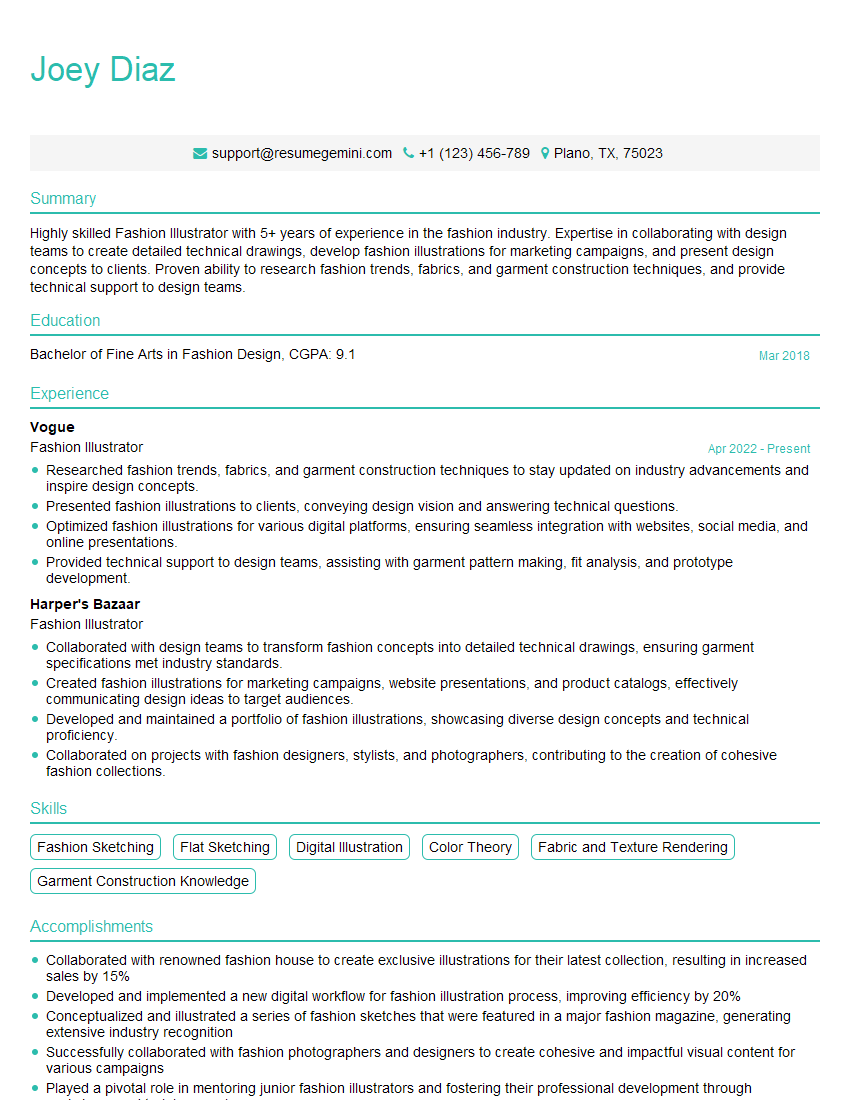
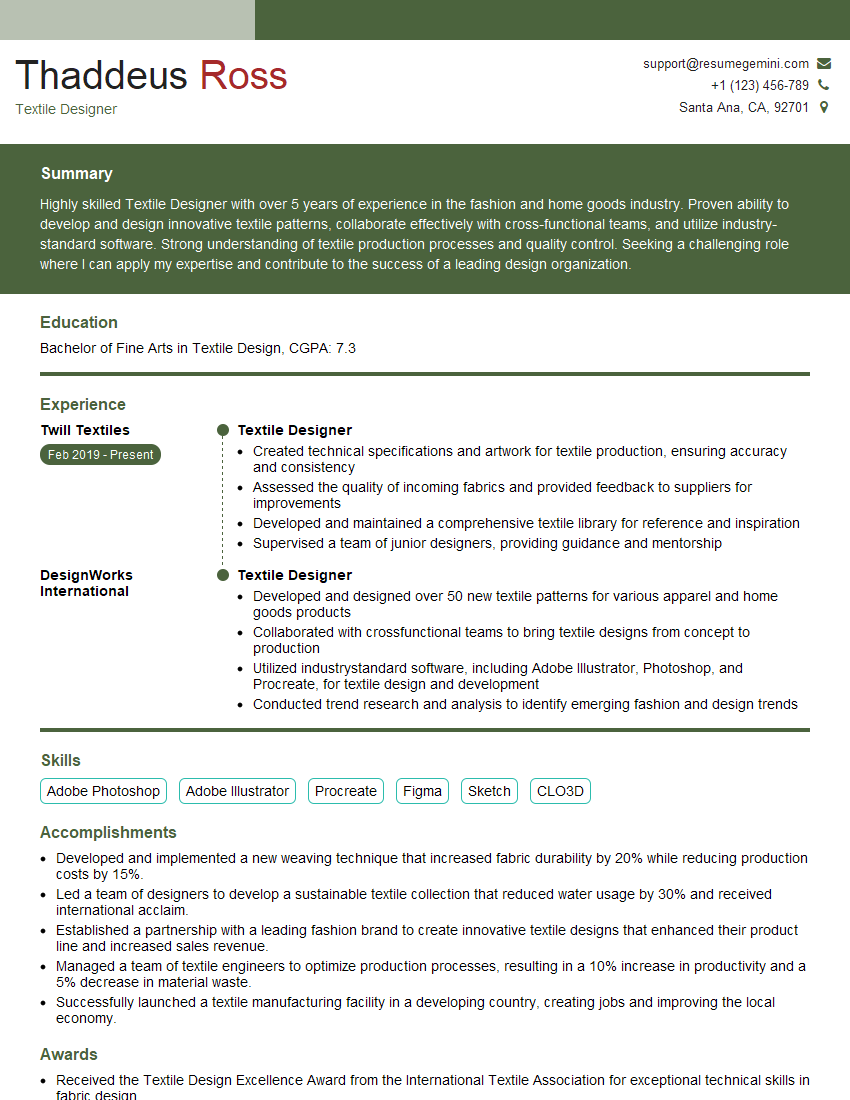
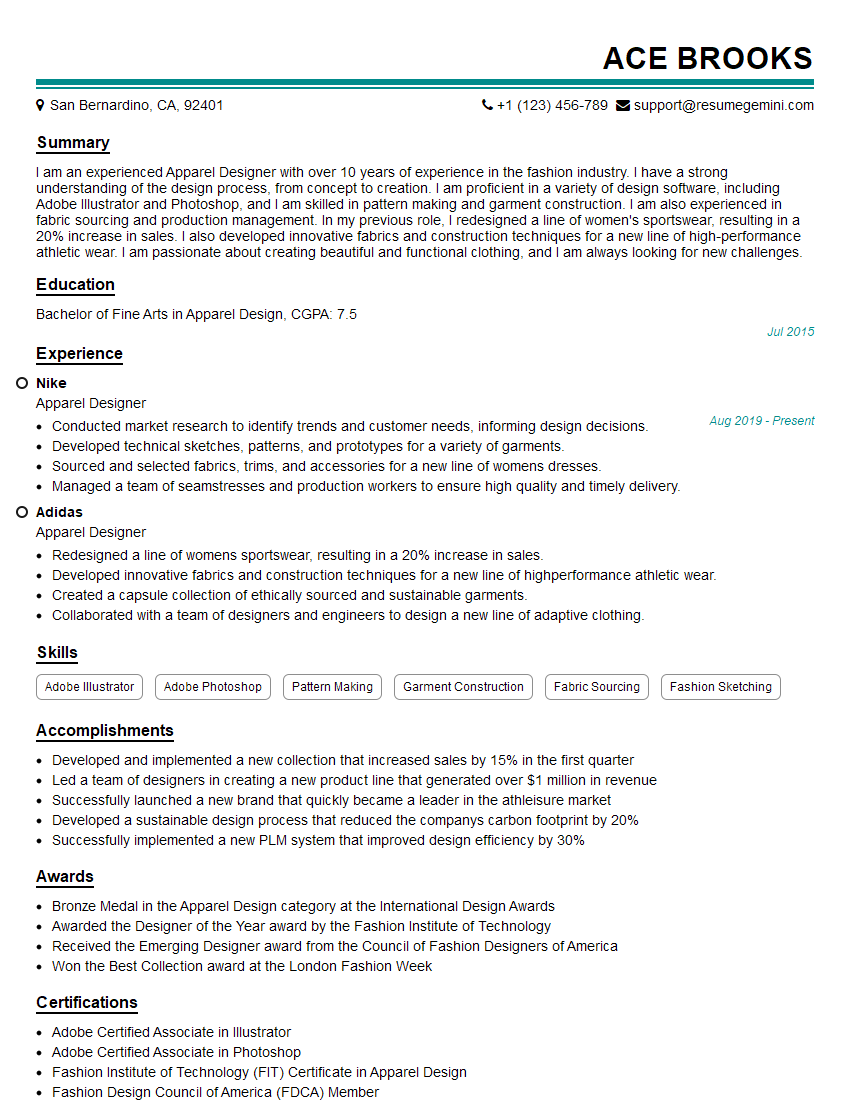
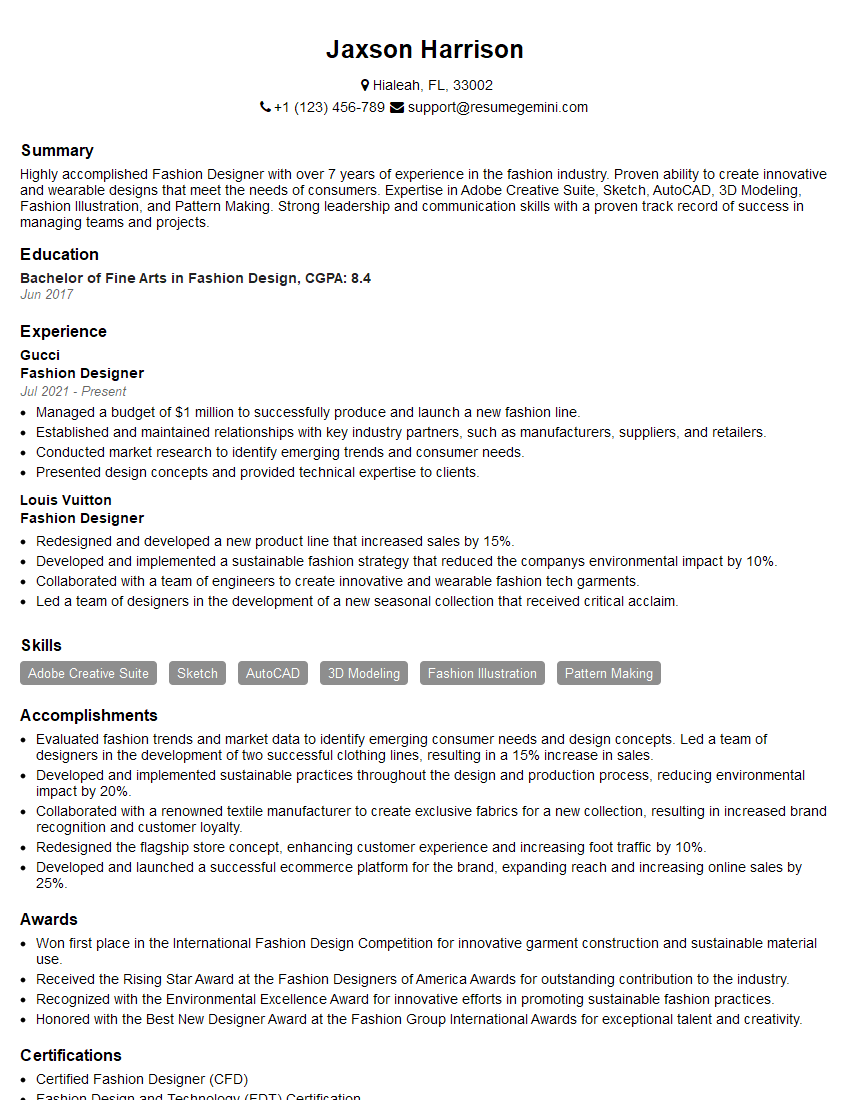
Mastering Fashion Illustration and Rendering is vital for a successful and fulfilling career in the fashion industry. It opens doors to exciting roles in design, editorial, and more. To maximize your job prospects, creating a strong, ATS-friendly resume is crucial. ResumeGemini is a trusted resource to help you build a professional and impactful resume that highlights your unique skills and experience. We provide examples of resumes tailored specifically to Fashion Illustration and Rendering to guide you through the process. Take the next step towards your dream career by crafting a compelling resume that showcases your talent.
Explore more articles
Users Rating of Our Blogs
Share Your Experience
We value your feedback! Please rate our content and share your thoughts (optional).
What Readers Say About Our Blog
Very informative content, great job.
good