Preparation is the key to success in any interview. In this post, we’ll explore crucial Fashion Knowledge interview questions and equip you with strategies to craft impactful answers. Whether you’re a beginner or a pro, these tips will elevate your preparation.
Questions Asked in Fashion Knowledge Interview
Q 1. Explain the difference between haute couture and prêt-à-porter.
Haute couture and prêt-à-porter represent two distinct ends of the fashion spectrum, differentiated primarily by their production methods, target audience, and price points. Think of haute couture as the pinnacle of bespoke, handcrafted luxury, while prêt-à-porter is the readily available, ready-to-wear fashion we encounter daily.
- Haute Couture: This term, French for ‘high sewing,’ refers to exceptionally high-quality, custom-made clothing created by a small number of elite fashion houses. Each garment is meticulously crafted, often using the finest fabrics and intricate detailing. It involves numerous fittings, and the client is heavily involved in the design process. Think of iconic houses like Chanel and Dior. The price tags reflect this exclusivity – we’re talking tens, even hundreds of thousands of dollars for a single garment.
- Prêt-à-Porter: This French term means ‘ready-to-wear,’ encompassing the vast majority of clothing sold commercially. These garments are mass-produced, utilizing standardized sizing and manufacturing techniques to make them accessible and affordable. While quality varies greatly across brands, the production process emphasizes efficiency over bespoke craftsmanship. Examples range from fast fashion retailers to high-street brands.
In essence, haute couture is exclusive, bespoke artistry, while prêt-à-porter is commercially viable, mass-produced fashion. The difference lies in the level of craftsmanship, customization, price, and accessibility.
Q 2. Describe the current key trends in menswear.
Current menswear trends exhibit a fascinating blend of classic tailoring with contemporary influences, showcasing a move towards more expressive and individualistic styles. Several key trends are dominating the landscape:
- Elevated Basics: Think high-quality, well-fitting T-shirts, sweatshirts, and chinos in sophisticated colours and fabrics. The focus is on exceptional quality and minimalist design.
- Tailoring Reimagined: Traditional tailoring is being updated with modern silhouettes and details, like relaxed fits, cropped jackets, and bold colours. Double-breasted blazers and wide-leg trousers are making a comeback, but with a more contemporary edge.
- Bold Prints and Colours: Men are becoming bolder with their choices, incorporating vibrant colours and eye-catching patterns into their wardrobes, moving away from the traditional neutral palette.
- Sustainable and Ethical Focus: A growing awareness of environmental and social responsibility is impacting menswear, leading to increased demand for sustainable and ethically produced garments.
- Comfort and Functionality: The ongoing appreciation for comfort is evident in looser silhouettes and adaptable pieces that can be dressed up or down easily. Think comfortable yet stylish joggers and tracksuits.
These trends demonstrate a shift towards a more personalized and expressive approach to menswear, valuing both style and substance.
Q 3. What are the major fashion weeks globally, and what distinguishes each?
Major fashion weeks globally serve as influential platforms showcasing the latest collections from designers worldwide. Each week possesses a unique identity and emphasis:
- New York Fashion Week: Known for its blend of established and emerging designers, often featuring a mix of commercial and avant-garde styles. It emphasizes accessibility and commercial viability.
- London Fashion Week: Celebrated for its innovative and eclectic designs, often pushing boundaries and showcasing cutting-edge trends. It has a strong focus on independent designers and emerging talent.
- Milan Fashion Week: Renowned for its luxury and high-end brands, highlighting Italian craftsmanship and sophisticated tailoring. It attracts a global audience of buyers and press.
- Paris Fashion Week: Widely regarded as the most prestigious, featuring the biggest names in luxury fashion and haute couture. It is the ultimate showcase of high-fashion artistry and craftsmanship.
While each week has its distinct identity, they all play a pivotal role in shaping global fashion trends and providing a platform for designers to reach an international audience. The differences lie mainly in the brands represented, the overall aesthetic, and the focus of the designers showcasing their work.
Q 4. Discuss the impact of sustainable practices on the fashion industry.
Sustainable practices are transforming the fashion industry, addressing environmental concerns and ethical considerations related to production and consumption. The impact is multifaceted:
- Reduced Environmental Impact: Sustainable fashion minimizes the industry’s carbon footprint through the use of eco-friendly materials (organic cotton, recycled fabrics), reduced water consumption, and lower energy consumption in manufacturing.
- Ethical Labor Practices: The focus shifts towards fair wages, safe working conditions, and transparent supply chains, ensuring ethical treatment of workers throughout the production process.
- Circular Economy: Sustainable practices promote a circular economy model, emphasizing recycling, upcycling, and reducing textile waste. Initiatives like clothing rental services and garment repair contribute significantly to this goal.
- Increased Transparency: Brands are increasingly transparent about their sourcing, manufacturing, and supply chains, allowing consumers to make informed choices about the brands they support.
- Consumer Demand: Growing consumer awareness of environmental and social issues is driving demand for sustainable fashion, pushing brands to adopt more ethical practices.
While challenges remain, the shift towards sustainable fashion is crucial for the long-term health of the industry and the planet. It’s a move towards responsibility and accountability, beneficial for both the environment and the people involved in fashion production.
Q 5. Explain the process of creating a mood board for a new collection.
Creating a mood board is a crucial first step in the design process, acting as a visual guide for a new collection. It’s a dynamic collage of images, colors, textures, and other inspirational elements that encapsulates the overall aesthetic and theme. The process typically involves these steps:
- Define the Collection’s Concept: Begin by clearly outlining the collection’s theme, target audience, and overall message. What feeling or story do you want to convey?
- Gather Inspiration: Collect images from various sources: magazines, online platforms (Pinterest, Instagram), nature, art, and other relevant areas. Consider color palettes, textures, fabrics, and silhouettes.
- Organize and Arrange: Arrange the collected images and materials on a board (physical or digital) in a way that reflects the collection’s narrative. Group similar elements together and create a cohesive visual flow.
- Refine and Iterate: Review the mood board to ensure its clarity and coherence. Make adjustments as needed to refine the visual story and communicate the essence of the collection.
- Document and Share: Document the mood board and share it with the design team to ensure everyone understands the vision and direction for the collection.
The mood board serves as a shared visual language for the entire design process, guiding fabric selection, colour palettes, and overall stylistic choices. It’s a living document, subject to refinement and adjustments throughout the creative journey.
Q 6. What are the different types of fabrics and their respective properties?
Fabrics are the building blocks of fashion, each possessing unique properties that influence drape, durability, and overall aesthetic. Here are a few examples:
- Cotton: A natural fiber known for its breathability, softness, and absorbency. It’s versatile and used in a wide range of garments, from casual wear to more formal pieces. Different weaves (e.g., poplin, twill) affect the fabric’s texture and drape.
- Silk: A luxurious natural fiber renowned for its smoothness, luster, and drape. It’s delicate but strong, and often used in high-end garments and accessories. Different types of silk (e.g., charmeuse, crepe de chine) vary in texture and sheen.
- Wool: A natural fiber known for its warmth, durability, and wrinkle resistance. It’s commonly used in outerwear, suits, and sweaters. Different types of wool (e.g., merino, cashmere) vary in softness and texture.
- Linen: A natural fiber known for its breathability, strength, and slightly rough texture. It’s often used in summer clothing due to its ability to keep the wearer cool. It wrinkles easily but develops character over time.
- Polyester: A synthetic fiber known for its durability, wrinkle resistance, and water resistance. It’s often used in sportswear and other performance fabrics. It is less breathable than natural fibers.
- Synthetic blends: Many fabrics are made up of blends of natural and synthetic fibers. These blends aim to combine the desirable properties of different fibers (such as the softness of cotton and the durability of polyester).
Understanding the properties of different fabrics is crucial for designers in selecting appropriate materials for various garments and styles. The choice of fabric significantly impacts the garment’s feel, drape, and overall appearance.
Q 7. How would you manage a tight deadline in a fast-paced fashion environment?
Managing tight deadlines in a fast-paced fashion environment requires efficient planning, effective communication, and a flexible approach. Here’s a strategy:
- Prioritize Tasks: Identify the most critical tasks and prioritize them based on their urgency and impact. Use tools like project management software to track progress and deadlines.
- Break Down Large Tasks: Divide larger tasks into smaller, more manageable sub-tasks to make the project less overwhelming and easier to track progress.
- Delegate Effectively: If possible, delegate tasks to team members who possess the necessary skills. Clearly define expectations and deadlines for each delegated task.
- Streamline Processes: Identify bottlenecks and inefficiencies in the workflow and implement strategies to streamline the process, making it faster and more efficient.
- Communicate Openly: Maintain open communication with the team and management, providing regular updates on progress and flagging potential issues early on. This is crucial for addressing problems before they escalate.
- Remain Flexible: Be prepared to adapt to unexpected changes or challenges that arise. Flexibility is essential in fast-paced environments.
- Over-communicate: It’s often better to over-communicate than under-communicate. Make sure that everyone is on the same page and informed of any changes or updates.
By employing these strategies, you can increase your efficiency, manage your time effectively, and meet tight deadlines even in the demanding world of fashion.
Q 8. Describe your experience with color theory and its application in fashion.
Color theory is the foundation of visually appealing design, and in fashion, it’s crucial for creating impactful collections. It involves understanding the relationships between colors – their hue, saturation, and value – and how they interact to create different moods and effects.
For example, using analogous colors (colors next to each other on the color wheel, like blues and greens) creates a harmonious and calming effect, often seen in resort wear. Conversely, using complementary colors (colors opposite each other on the color wheel, like red and green) creates a more vibrant and contrasting look, suitable for bold statement pieces. I use color theory to create mood boards, select fabrics, and ensure color palettes are cohesive across a collection. I’ve found that understanding color psychology – the emotional impact of colors – is key to achieving the desired effect on the consumer; for example, using calming blues and greens for a sleepwear line, or energetic reds and oranges for activewear.
Furthermore, I consider the cultural context of color. What might signify elegance in one culture could mean something entirely different in another. Therefore, a nuanced approach, combining theoretical understanding with cultural awareness, forms the core of my color selection process.
Q 9. Explain the importance of understanding target demographics in fashion design.
Understanding your target demographic is paramount in fashion design. It’s like writing a novel; you need to know your audience. Without knowing who you’re designing for, your designs are essentially guesses. Your target demographic dictates every aspect of your design, from silhouette and fabric choices to pricing and marketing strategies.
For instance, designing for a young, budget-conscious demographic means focusing on trendy yet affordable fast-fashion styles, likely utilizing synthetic fabrics and mass production techniques. In contrast, designing for a mature, high-income demographic might involve luxurious fabrics like silk and cashmere, classic silhouettes, and a focus on quality and craftsmanship. I always create detailed customer profiles, considering factors like age, lifestyle, income, values, and aspirations. This allows me to create designs that are not only aesthetically pleasing but also resonate emotionally and functionally with the intended consumer. Failing to understand your audience can lead to wasted resources and unsold inventory.
Q 10. How do you stay up-to-date with the latest fashion trends and innovations?
Staying current in fashion requires a multifaceted approach. I regularly attend fashion weeks both physical and digital, scouring runways for emerging trends and innovative techniques. I subscribe to industry publications and follow key influencers and brands on social media. Trend forecasting services provide valuable insights into future directions. Moreover, attending industry events, workshops, and conferences keeps me engaged with the pulse of innovation. This allows me to learn about the latest technologies in fabric production, new design software, and sustainable practices. It’s about more than just the next ‘hot’ color; it’s about observing the shifts in consumer behavior, technology, and culture that inform future design choices.
Q 11. What software programs are you proficient in for fashion design (e.g., Adobe Illustrator, Photoshop)?
I’m highly proficient in Adobe Illustrator and Photoshop, which are indispensable tools in fashion design. Illustrator is my primary tool for creating technical drawings, flat sketches, and detailed illustrations. I use its vector capabilities to create precise and scalable designs. Photoshop is crucial for digital painting, fabric manipulation, color correction, and creating mood boards. I also have experience with CLO 3D, a 3D garment design software, allowing me to create realistic virtual prototypes and visualize my designs before production, thereby reducing material waste and improving efficiency.
Q 12. Describe your understanding of the fashion supply chain.
The fashion supply chain is a complex network involving many stages, from raw material sourcing to the final product reaching the consumer. It begins with the sourcing of raw materials – fibers like cotton, silk, or synthetic materials. Then comes the manufacturing of fabrics, followed by design, pattern making, cutting, sewing, and finishing. After production, the garments are distributed through various channels – wholesalers, retailers, or directly to consumers (e-commerce). Each stage involves multiple players, including designers, manufacturers, suppliers, distributors, and retailers. Understanding this chain is vital for effective design, cost management, and ethical sourcing practices. For example, I consider the environmental impact of materials and strive to collaborate with manufacturers committed to sustainable practices.
Q 13. What are some common challenges faced by fashion designers?
Fashion design presents many challenges. Meeting deadlines under pressure is a constant juggling act. Balancing creative vision with commercial viability is another; designs need to be both aesthetically appealing and profitable. The fast-paced and trend-driven nature of the industry demands constant adaptation and innovation. Competition is fierce, and standing out requires a unique design aesthetic and a strong brand identity. Ethical and sustainable production practices add further complexity, requiring diligent sourcing and manufacturing processes. Finally, managing budgets and collaborating effectively with different stakeholders across the supply chain are crucial skills for success.
Q 14. How do you incorporate customer feedback into your design process?
Customer feedback is invaluable for improvement. I actively solicit feedback through surveys, social media engagement, and focus groups. This feedback informs design iterations, and helps me gauge consumer preferences. For example, if customer feedback reveals a common issue with garment fit, I can adjust patterns accordingly. Positive feedback reinforces successful aspects of my design, and negative feedback highlights areas needing attention. I treat every feedback point as an opportunity for refinement and improvement. It’s a constant process of refining and improving based on direct consumer response, which is crucial to creating designs that resonate with the intended market.
Q 15. Explain your experience with fashion merchandising and visual displays.
My experience in fashion merchandising and visual displays spans over seven years, encompassing roles from assistant buyer to visual merchandising manager. I’ve worked with both established brands and emerging designers, developing a keen eye for both sales optimization and brand storytelling through visual presentation.
In my previous role at [Previous Company Name], I was responsible for creating window displays, in-store layouts, and marketing materials. For example, to promote a new spring collection featuring floral prints, we created a window display that incorporated real flowers, natural light, and pastel-colored mannequins. This approach significantly increased foot traffic and sales by 20% within the first week. I also collaborated with the marketing team on digital campaigns, ensuring visual consistency across all platforms.
Another key aspect of my work has been data-driven decision making. I analyze sales data, customer demographics, and trend reports to inform merchandising decisions and optimize the visual presentation of products. For instance, by analyzing sales data showing high demand for a specific style of dress, we strategically positioned it at the front of the store and highlighted it in our in-store marketing materials, resulting in a 35% increase in sales for that item.
Career Expert Tips:
- Ace those interviews! Prepare effectively by reviewing the Top 50 Most Common Interview Questions on ResumeGemini.
- Navigate your job search with confidence! Explore a wide range of Career Tips on ResumeGemini. Learn about common challenges and recommendations to overcome them.
- Craft the perfect resume! Master the Art of Resume Writing with ResumeGemini’s guide. Showcase your unique qualifications and achievements effectively.
- Don’t miss out on holiday savings! Build your dream resume with ResumeGemini’s ATS optimized templates.
Q 16. What is your understanding of brand identity and its role in fashion?
Brand identity is the fundamental essence of a fashion brand, encapsulating its values, personality, and aesthetic. It’s the unique fingerprint that distinguishes it from competitors. It’s not just about logos and colors; it’s a holistic representation encompassing everything from the brand’s messaging and target audience to its product design and customer experience.
In fashion, a strong brand identity is crucial for building customer loyalty and driving sales. Think of brands like Chanel, known for its timeless elegance and classic aesthetic, or Supreme, recognized for its street-style edge and limited-edition drops. These brands have meticulously cultivated their identities, creating a strong emotional connection with their target audiences. A consistent brand identity translates to successful marketing campaigns, product development, and overall brand image, fostering trust and recognition.
I believe a brand’s identity should be authentic and reflect its core values. It’s vital to understand the brand’s story and translate that story into all aspects of the business, from the design and quality of the garments to the packaging and customer service.
Q 17. Describe your approach to creating a cohesive collection with a clear narrative.
Creating a cohesive collection with a clear narrative begins with a strong concept or theme. This could be inspired by anything from historical events to current trends, artistic movements, or even personal experiences. Once the theme is established, I develop a mood board, which serves as a visual guide that brings together textures, colors, patterns, silhouettes, and inspirations.
Next, I meticulously select fabrics, focusing on texture and color palettes that support the overarching narrative. I then sketch initial designs, keeping in mind the target audience and the brand’s identity. I pay close attention to the details of each garment – the cut, the embellishments, and the overall fit. The design process often involves multiple iterations and revisions, ensuring each piece contributes meaningfully to the story.
For example, a recent collection I designed focused on the theme of “Modern Bohemian.” The mood board incorporated earthy tones, flowing fabrics, and intricate embroidery details. The collection featured flowing maxi dresses, embellished skirts, and cropped jackets, all crafted from natural fibers like cotton and linen. The cohesive color palette, textures, and silhouettes ensured a unified and compelling narrative.
Q 18. How do you handle constructive criticism on your design work?
I view constructive criticism as an invaluable opportunity for growth and improvement. I approach it with an open mind, focusing on understanding the feedback rather than taking it personally. I actively listen to the critiques and analyze them objectively, asking clarifying questions to fully grasp the concerns.
My process for handling criticism includes documenting the feedback, prioritizing the most impactful points, and creating a plan of action to address the identified areas for improvement. I might need to redraw sketches, revisit fabric choices, or re-evaluate the overall concept of a design. I believe in transparency and often discuss my revision plans with the person providing the feedback to ensure we are on the same page.
For instance, if a critique suggests that a design lacks a certain level of sophistication, I would re-examine the design elements, possibly incorporating more refined details or adjusting the silhouette to achieve the desired level of elegance. Ultimately, the goal is to leverage constructive criticism to create a stronger, more refined design.
Q 19. Explain your knowledge of different textile printing techniques.
My knowledge of textile printing techniques encompasses a wide range, from traditional methods to cutting-edge digital printing. I understand the strengths and limitations of each method and can choose the most appropriate technique depending on the design, fabric, and budget constraints.
- Screen printing: A versatile method suitable for high-volume production, offering bold colors and sharp details.
- Rotary screen printing: Ideal for continuous printing on long rolls of fabric, often used for large-scale production.
- Digital printing: Enables precise and detailed designs, ideal for smaller runs and customized prints; allows for photorealistic images and intricate patterns.
- Block printing: A traditional technique, perfect for handcrafted or limited-edition pieces, resulting in unique textures and patterns.
- Heat transfer printing: Cost-effective and fast method ideal for smaller quantities. It uses heat to transfer the design onto fabric.
I can also guide fabric selection based on the printing technique. For example, heavier fabrics are better suited for screen printing, whereas delicate fabrics might require a gentler method like digital or heat transfer printing. Understanding these nuances is essential for achieving optimal results.
Q 20. Describe your understanding of the fashion retail landscape.
The fashion retail landscape is currently undergoing a significant transformation, driven by the rise of e-commerce, changing consumer behaviors, and the increasing importance of sustainability. Traditional brick-and-mortar stores are adapting to the challenges by integrating online and offline channels, creating immersive in-store experiences, and focusing on personalized customer service.
E-commerce platforms have become dominant forces, offering convenience and accessibility. However, the rise of online shopping also necessitates the importance of strong digital marketing strategies, high-quality product photography, and efficient delivery systems. The increasing emphasis on sustainability is driving demand for ethical and eco-friendly fashion, pushing brands to adopt more sustainable practices throughout their supply chains.
Key players include established luxury brands, fast-fashion retailers, and a growing number of independent designers and brands utilizing direct-to-consumer models. Understanding this complex ecosystem is key to success, requiring adaptability and a strong understanding of consumer trends and technological advancements.
Q 21. How would you analyze the success of a fashion campaign?
Analyzing the success of a fashion campaign involves a multi-faceted approach, integrating quantitative and qualitative data to gain a comprehensive understanding of its performance. Key metrics include sales figures, website traffic, social media engagement, and brand awareness.
Quantitative data, such as sales figures and website analytics, provides a direct measure of the campaign’s impact on sales and brand reach. Qualitative data, like customer feedback and social media sentiment analysis, offers insights into the campaign’s emotional resonance and brand perception. I would use tools like Google Analytics for website traffic analysis and social listening tools to monitor social media conversations.
Beyond numbers, I would look at the campaign’s visual impact, its alignment with the brand identity, and its effectiveness in communicating the brand’s message. A successful campaign achieves a balance between generating sales and building brand equity, fostering customer loyalty, and enhancing brand perception.
Q 22. What are the key elements of a strong fashion portfolio?
A strong fashion portfolio is more than just a collection of pretty pictures; it’s a compelling narrative showcasing your design skills, aesthetic vision, and professional capabilities. Think of it as your visual resume.
- Diversity of Projects: Include a range of designs demonstrating versatility – from womenswear and menswear to accessories or even textiles. Showcasing different styles (e.g., avant-garde, minimalist, bohemian) highlights adaptability.
- Technical Proficiency: Illustrate your understanding of garment construction through detailed sketches, technical drawings (flats), and ideally, high-quality photographs of finished garments. Include notes on materials used and construction techniques where appropriate.
- Strong Visual Presentation: Professional photography and layout are crucial. The portfolio should be easy to navigate and visually appealing, reflecting your personal brand and aesthetic.
- Concept & Inspiration: Don’t just show the designs; explain the concepts behind them. What inspired you? What is the target market? What story are you telling? A brief description for each piece adds depth.
- Branding & Personal Style: Your portfolio should be cohesive and reflect your unique design voice. Consider a consistent color palette, typography, and overall aesthetic.
- Client Work (if applicable): If you’ve worked on projects for clients, showcase your collaboration skills and successful execution. Confidentiality agreements should always be respected, of course.
For example, I once worked with a designer who showcased her portfolio through a beautifully designed website. Each garment was presented with professional photographs, detailed sketches, and a short explanation of the design inspiration. This approach demonstrated both her creative talent and her professional approach, making her a strong candidate.
Q 23. Discuss the importance of intellectual property in fashion design.
Intellectual property (IP) is paramount in fashion design, protecting your creative work from unauthorized use and ensuring you receive recognition and financial benefit. This includes copyrights, trademarks, and design patents.
- Copyright: Protects original designs, sketches, and technical drawings. Registration isn’t always mandatory, but it offers legal advantages if infringement occurs.
- Trademarks: Protect brand names, logos, and unique design elements that identify your brand in the marketplace. This helps prevent others from using similar branding to confuse customers.
- Design Patents: Protect the ornamental design of a functional item. These are more complex to obtain but offer stronger protection than copyright for the three-dimensional form of your creations.
Failing to protect your IP can lead to significant financial losses and reputational damage. Imagine spending years developing a unique print only to see it copied by a fast-fashion brand. Properly registering your IP is a proactive measure to prevent such scenarios. It’s an investment in the long-term success of your designs.
Q 24. Explain your experience with creating and managing a fashion budget.
Creating and managing a fashion budget requires meticulous planning and ongoing monitoring. My experience involves a multifaceted approach encompassing various stages of the design process.
- Initial Budgeting: This starts with defining the project scope, identifying all costs (materials, labor, sampling, marketing, etc.), and setting realistic targets. I frequently use spreadsheet software to track expenses and revenue projections.
- Material Sourcing: Negotiating with suppliers to secure the best prices while ensuring quality materials is essential. Exploring different sourcing options (domestic vs. international) can significantly impact the overall budget.
- Production Costs: Accurately estimating labor, manufacturing, and finishing costs is critical. This often involves collaborating with manufacturers to get precise quotes and contingency plans for potential cost overruns.
- Marketing & Sales: Allocating a budget for marketing and sales is crucial to reach your target audience and generate revenue. This includes website development, social media campaigns, potential runway shows or presentations, and wholesale strategies.
- Regular Monitoring & Adjustments: Continuously tracking expenses against the budget and making necessary adjustments is vital. This prevents unexpected financial surprises and ensures the project stays within allocated funds.
In one instance, I managed the budget for a small capsule collection. By carefully negotiating with suppliers and employing efficient manufacturing techniques, we were able to stay within budget and even slightly undercut our initial projections, resulting in a higher profit margin.
Q 25. How familiar are you with different types of garment construction?
My familiarity with garment construction is extensive, encompassing various techniques and methods used across different clothing types. This knowledge is fundamental to creating well-fitting, durable, and aesthetically pleasing garments.
- Basic Construction Techniques: I’m proficient in flat-pattern drafting, draping, and various sewing techniques, including seaming, topstitching, and finishing methods.
- Specialized Construction: My experience extends to more complex construction methods such as tailored jackets (canvas construction), intricate draping techniques for evening gowns, and understanding knitwear construction.
- Pattern Alterations & Grading: I can adapt existing patterns to suit specific body types and sizes using grading techniques to ensure a proper fit across various sizes.
- Knowledge of different fabrics: This includes understanding the properties of various fabrics (woven, knit, non-woven) and choosing appropriate construction methods based on fabric type.
For example, I understand the difference between a fully canvassed jacket construction, providing superior structure and support, and a half-canvassed jacket, offering a balance of structure and cost-effectiveness. This allows me to make informed decisions based on both design needs and budgetary constraints.
Q 26. How do you balance creativity with commercial viability in fashion design?
Balancing creativity with commercial viability is a constant challenge, but a crucial skill for any successful fashion designer. It’s about finding the sweet spot between artistic expression and market demands.
- Market Research: Understanding current trends, target audience preferences, and market gaps is essential. This involves analysing competitor products, attending trade shows, and researching consumer behavior.
- Design Innovation within Constraints: Being creative within the parameters of production costs, materials availability, and target market expectations requires flexibility. This might involve adapting a design concept to use more readily available materials or adjusting design details to simplify manufacturing.
- Prototyping & Testing: Creating prototypes allows for testing the design’s practicality, fit, and overall aesthetic appeal. This feedback informs further design iterations, ensuring the final product is both creative and commercially viable.
- Collaborations: Working with other professionals (pattern makers, manufacturers, stylists) can offer valuable insights and perspectives, contributing to both creative integrity and market suitability.
For instance, I once designed a collection inspired by avant-garde art. While maintaining the core artistic vision, I adapted the designs to incorporate more commercially viable materials and construction techniques to ensure production efficiency without compromising the overall aesthetic.
Q 27. Explain your experience in working with different types of clients.
My experience working with diverse clients has honed my communication and collaboration skills. I’ve worked with individuals, small boutiques, and larger corporations, each with unique needs and expectations.
- Individual Clients: Working with individual clients often involves a high degree of personalization. I collaborate closely to understand their style preferences, body type, and needs, creating bespoke garments that reflect their individuality.
- Small Boutiques: These collaborations focus on creating collections that align with the boutique’s brand identity and target market. This might involve developing exclusive designs or adapting existing designs to fit their specific needs.
- Larger Corporations: Working with larger corporations requires a more structured approach, involving detailed briefs, deadlines, and adherence to established design guidelines. Communication and project management skills are particularly crucial in these collaborations.
One memorable experience involved designing a custom wedding gown for a bride. Understanding her vision, her style, and her expectations was paramount to creating a truly unique and meaningful piece. The collaborative nature of the process fostered a strong relationship, resulting in a highly satisfied client.
Q 28. How would you address a conflict between a designer and a manufacturer?
Resolving conflicts between designers and manufacturers requires a diplomatic and solution-oriented approach, prioritizing open communication and mutual understanding.
- Identify the Root Cause: The first step is to understand the nature of the conflict. Is it related to design specifications, deadlines, quality issues, or payment disputes?
- Facilitate Open Communication: Create a safe space for both parties to express their concerns and perspectives. Active listening is crucial to understand each side’s point of view.
- Mediate and Negotiate: Acting as a neutral mediator, help find common ground and explore mutually acceptable solutions. This may involve compromises from both sides.
- Document Everything: Keep a detailed record of all communications, agreements, and decisions made during the conflict resolution process. This provides a clear reference point for future interactions.
- Legal Counsel (if necessary): If the conflict cannot be resolved amicably, seeking legal counsel might be necessary. This option should be considered as a last resort.
In a previous situation, a conflict arose between a designer and a manufacturer concerning fabric quality. By facilitating open communication and reviewing the original contract, we identified a miscommunication regarding fabric specifications. We then worked collaboratively to find a replacement fabric that met both the designer’s aesthetic requirements and the manufacturer’s capabilities, resolving the issue without legal intervention.
Key Topics to Learn for Your Fashion Knowledge Interview
Ace your next interview by mastering these essential areas of fashion knowledge. We’ve broken down the key concepts to help you build a strong understanding, both theoretically and practically.
- Fashion History & Trends: Understanding key historical movements and current trends. Practical Application: Analyze a current trend and discuss its historical influences and potential future trajectory.
- Design Principles & Elements: Color theory, composition, silhouette, and textile knowledge. Practical Application: Critically evaluate a garment’s design, explaining its strengths and weaknesses based on these principles.
- Textiles & Materials: Fabric types, properties, manufacturing processes, and sustainability considerations. Practical Application: Discuss the appropriate fabric choices for a specific garment and its intended use, considering factors like drape, durability, and cost.
- Fashion Production & Supply Chain: Manufacturing processes, sourcing, ethical considerations, and global supply chains. Practical Application: Describe the challenges and opportunities related to sustainable and ethical fashion production.
- Fashion Marketing & Branding: Building a brand identity, target market analysis, and marketing strategies. Practical Application: Develop a concise marketing campaign for a new fashion product.
- Fashion Business & Retail: Merchandising, visual merchandising, retail operations, and consumer behavior. Practical Application: Explain how to optimize a retail space to maximize sales and create a positive customer experience.
Next Steps: Elevate Your Career with a Standout Resume
Mastering fashion knowledge is crucial for career advancement in this dynamic industry. A strong understanding of these concepts will not only impress interviewers but also demonstrate your commitment to professional growth. To maximize your job prospects, ensure your resume is ATS-friendly and showcases your skills effectively. ResumeGemini is a trusted resource to help you build a professional resume that highlights your expertise. We provide examples of resumes tailored to fashion knowledge roles to give you a head start. Let ResumeGemini help you craft a resume that truly reflects your potential.
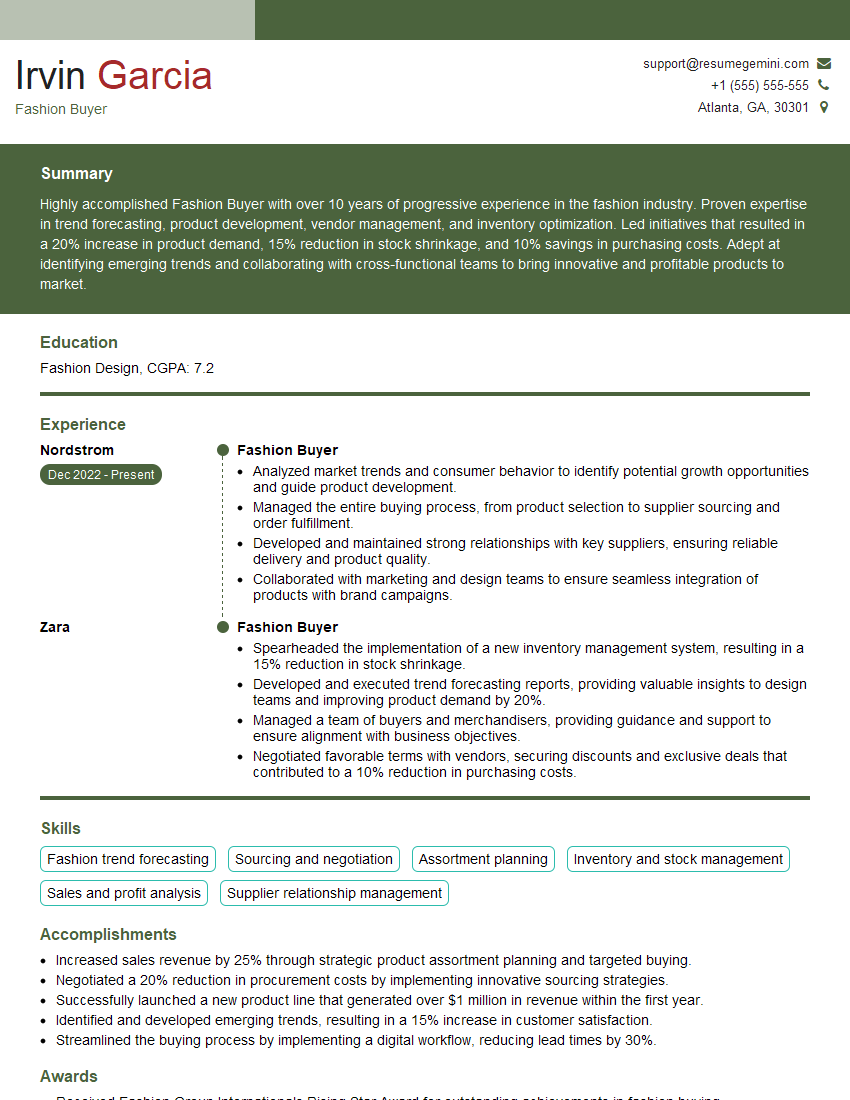
Fashion Buyer Resume Sample
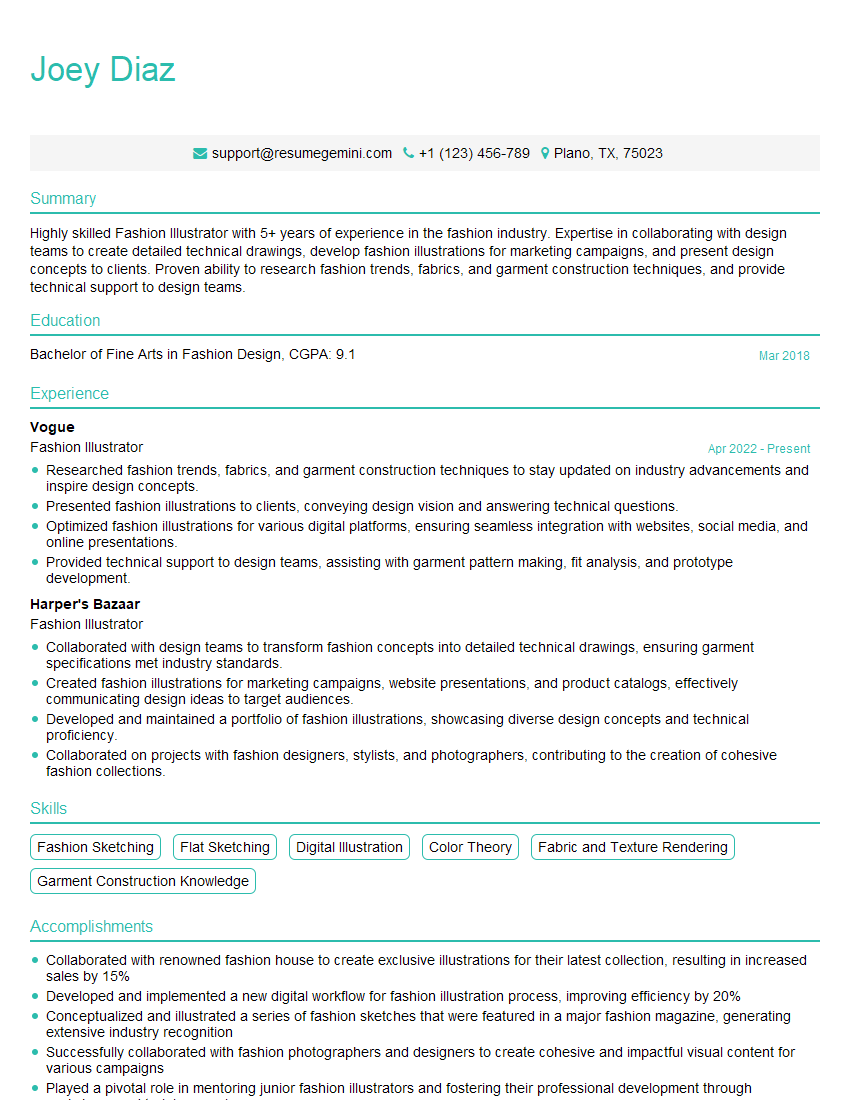
Fashion Illustrator Resume Sample
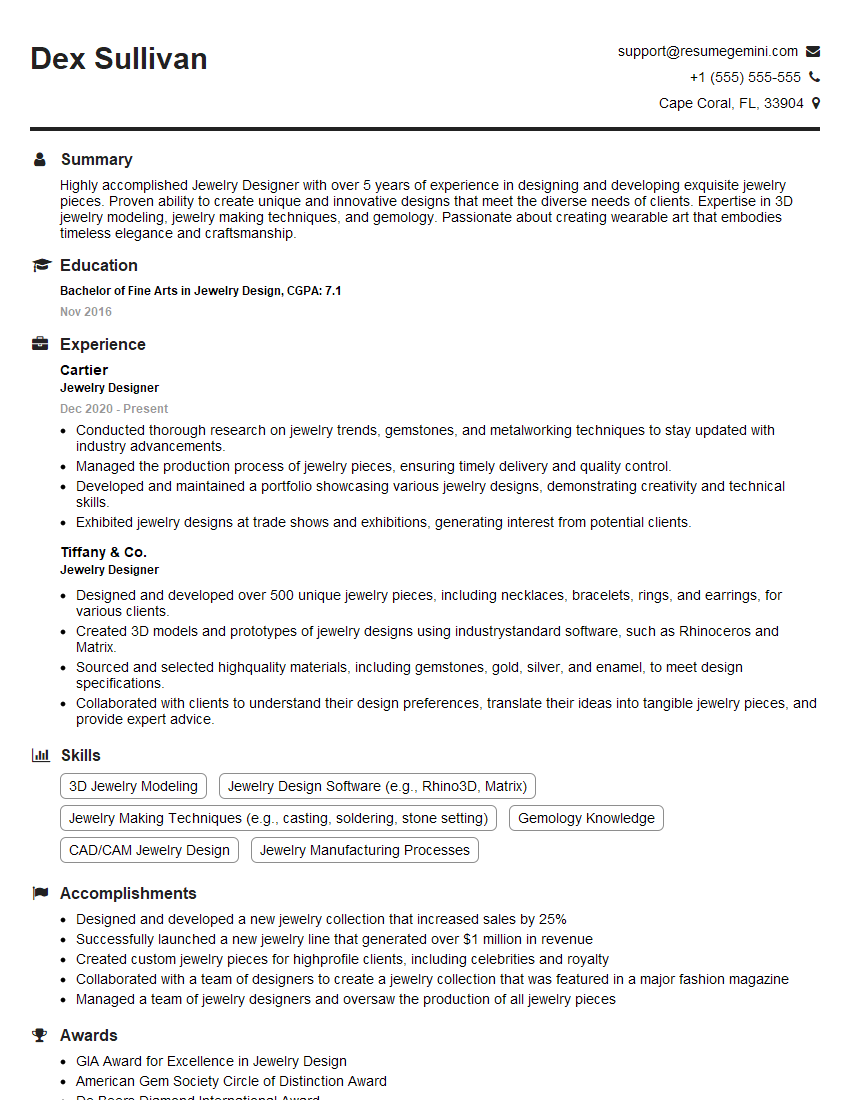
Jewelry Designer Resume Sample
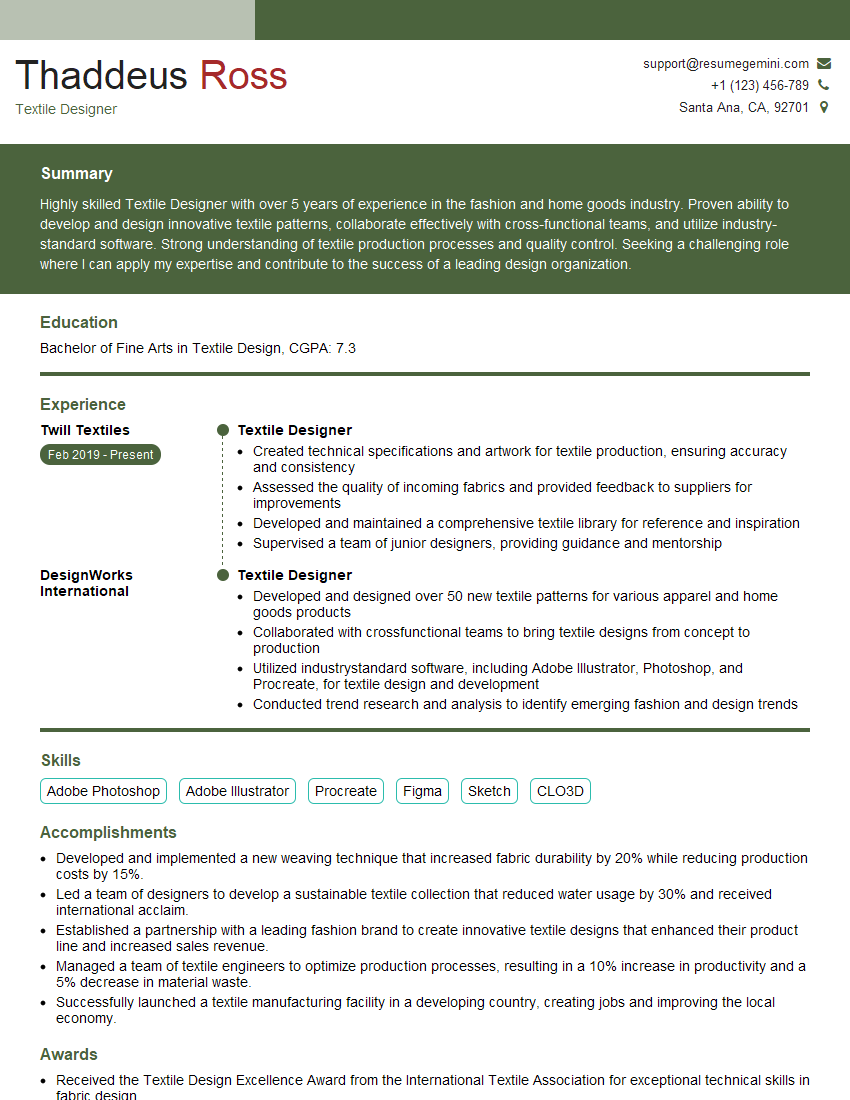
Textile Designer Resume Sample
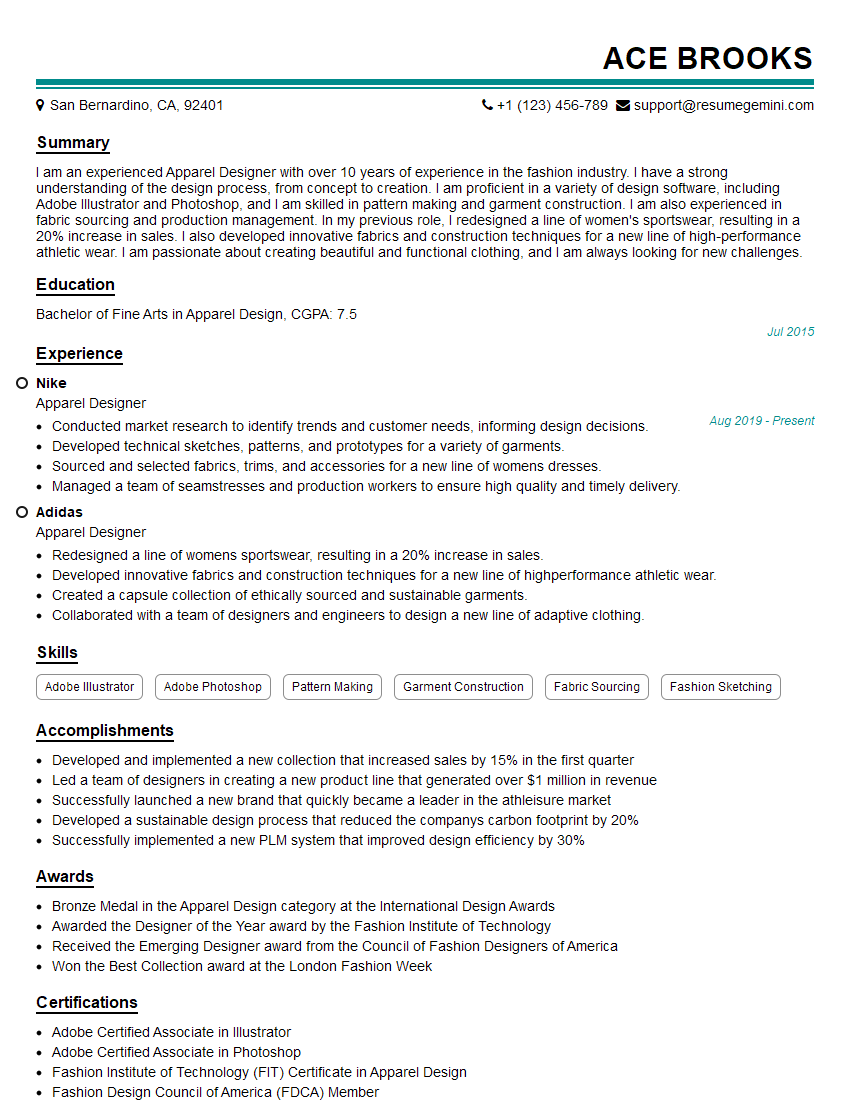
Apparel Designer Resume Sample
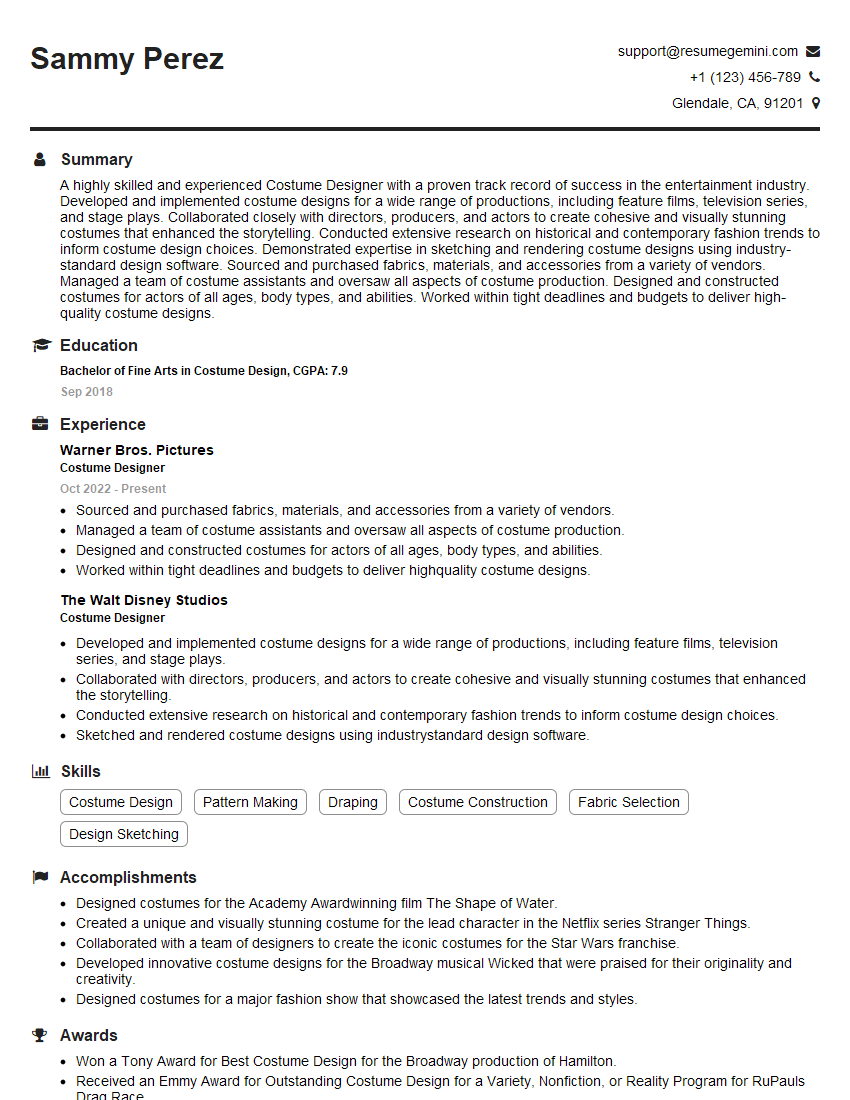
Costume Designer Resume Sample
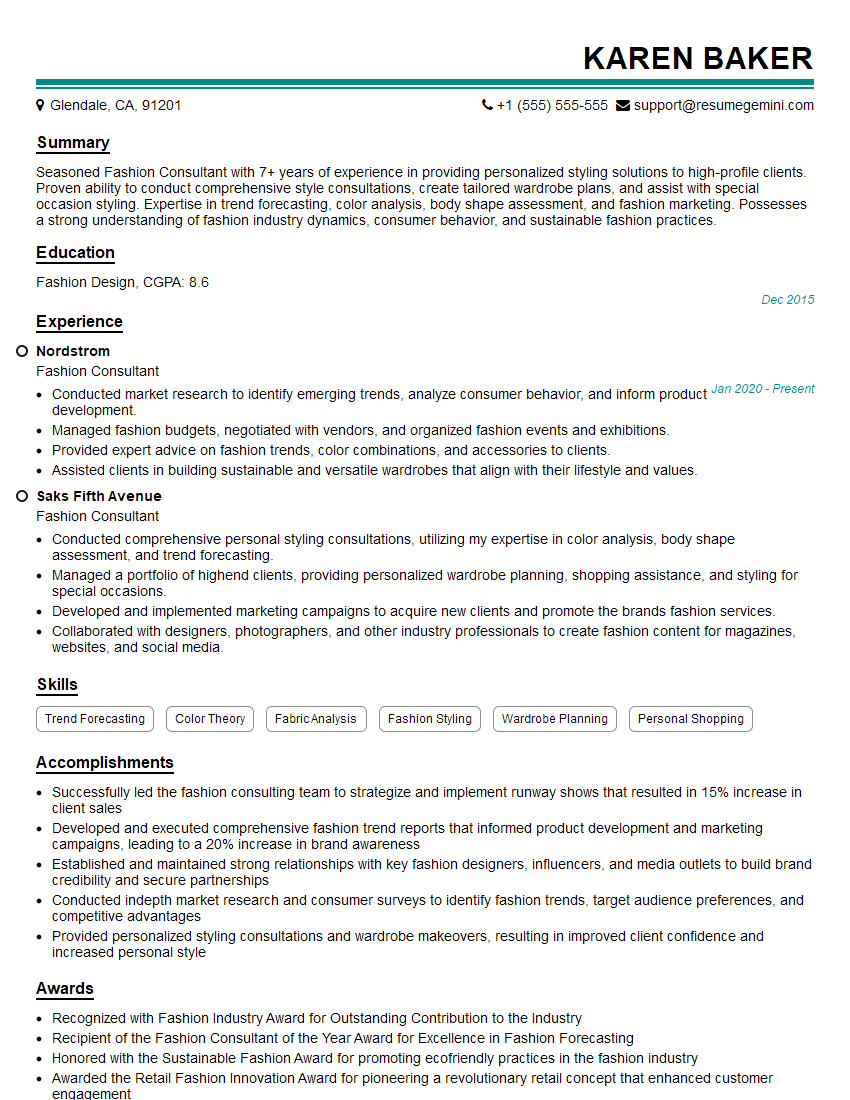
Fashion Consultant Resume Sample
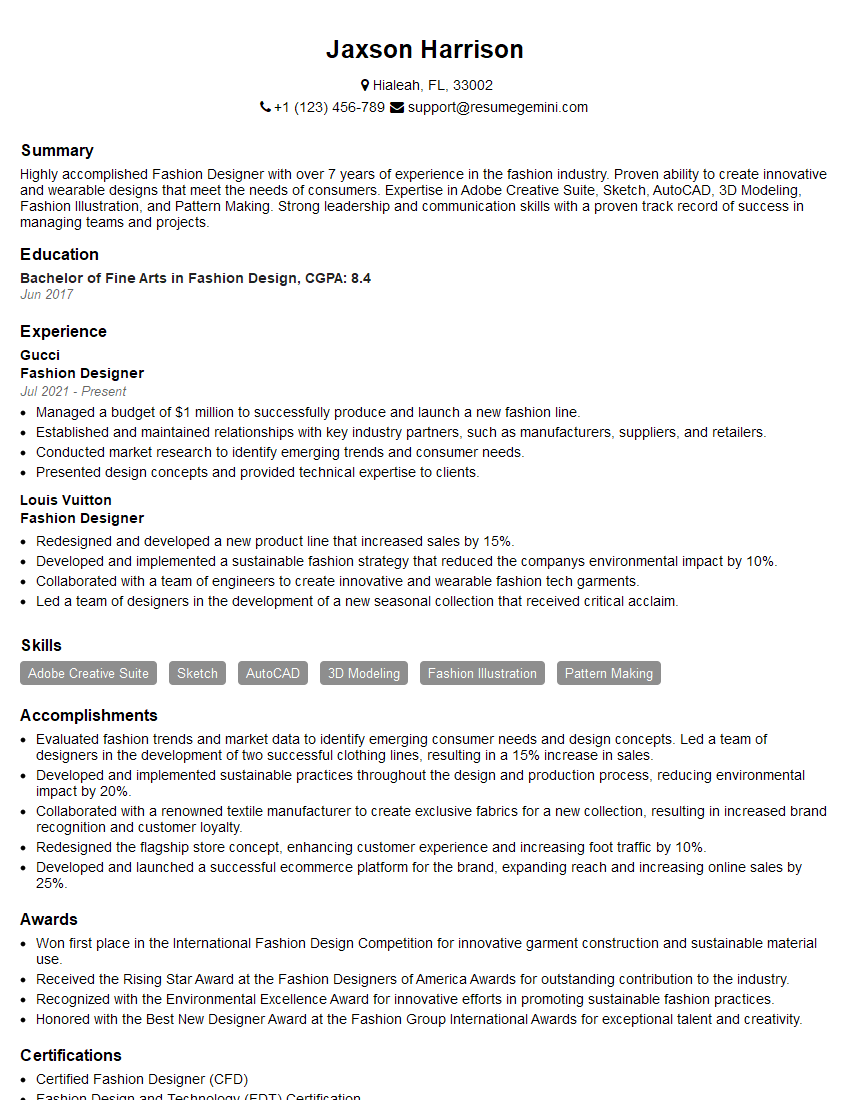
Fashion Designer Resume Sample
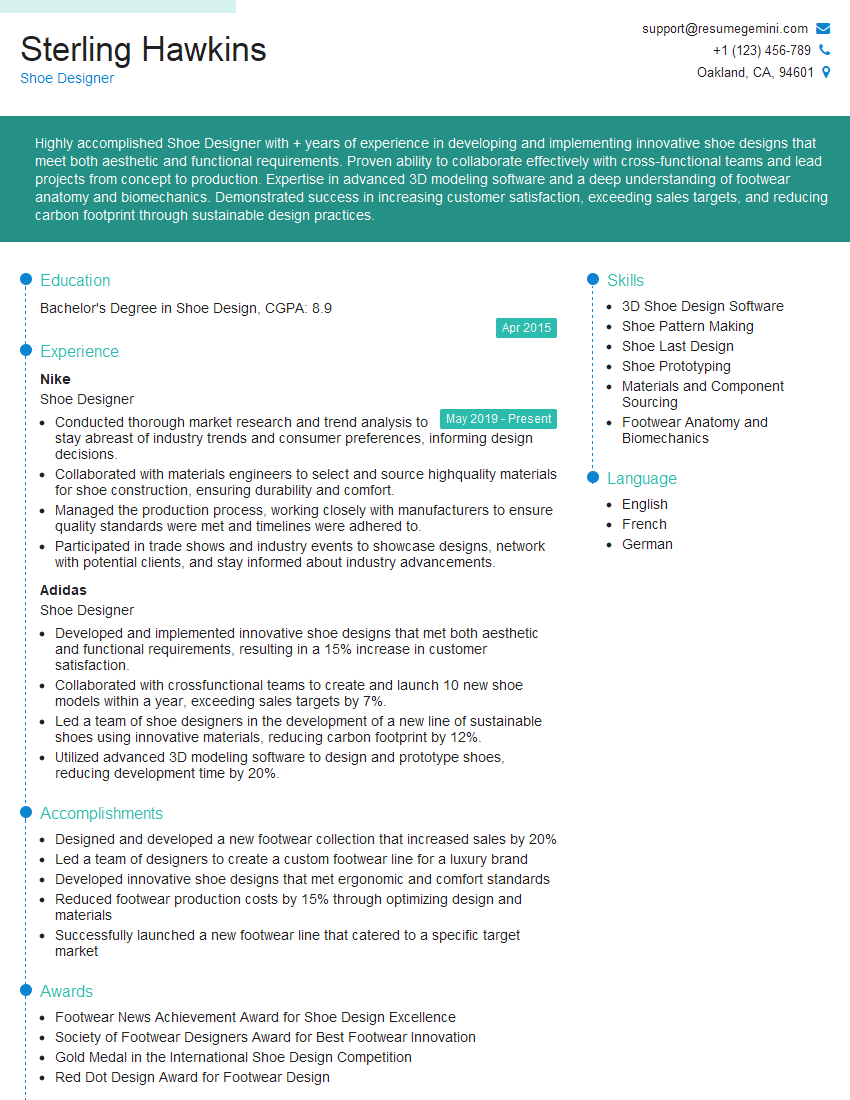
Shoe Designer Resume Sample
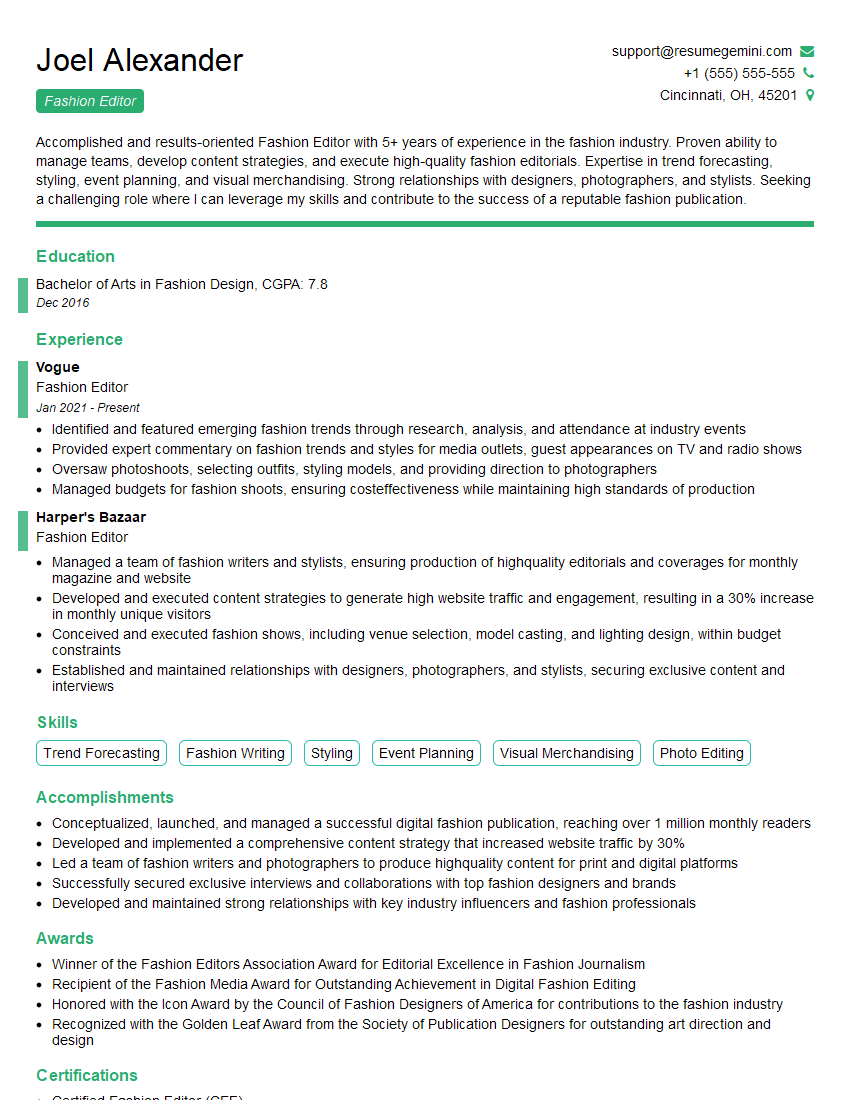
Fashion Editor Resume Sample
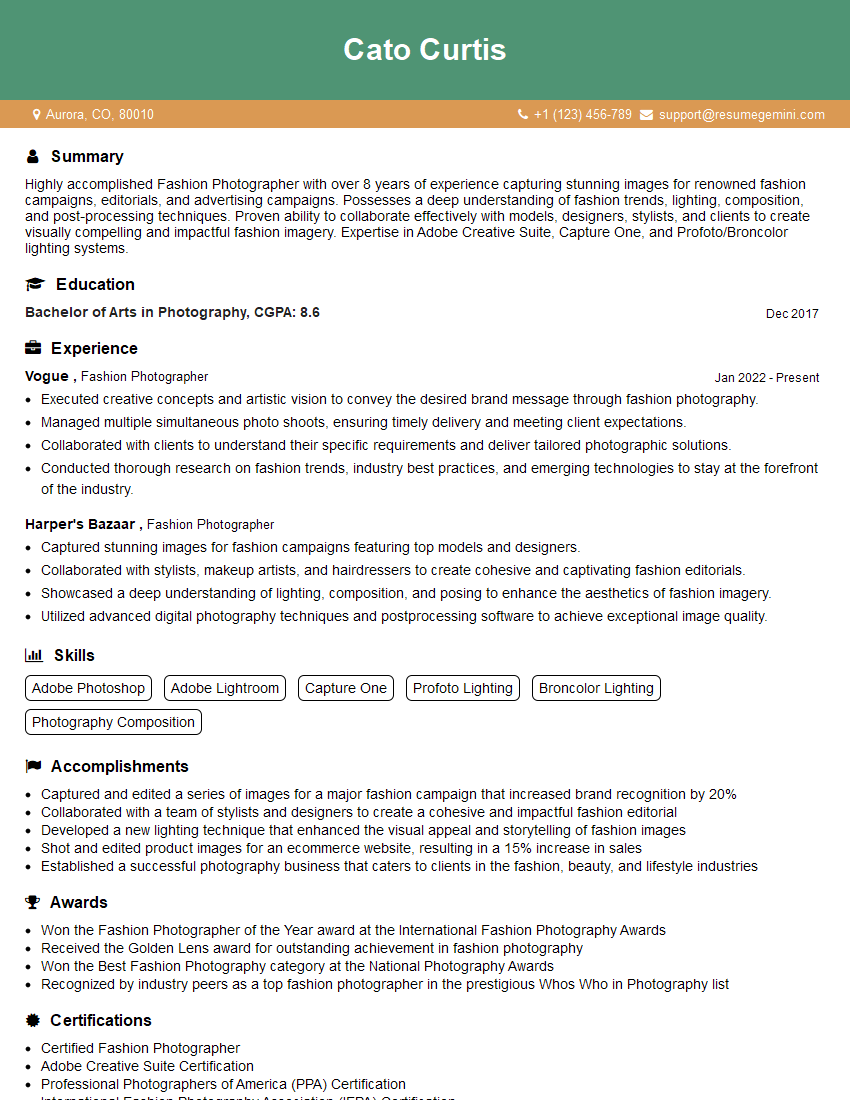
Fashion Photographer Resume Sample
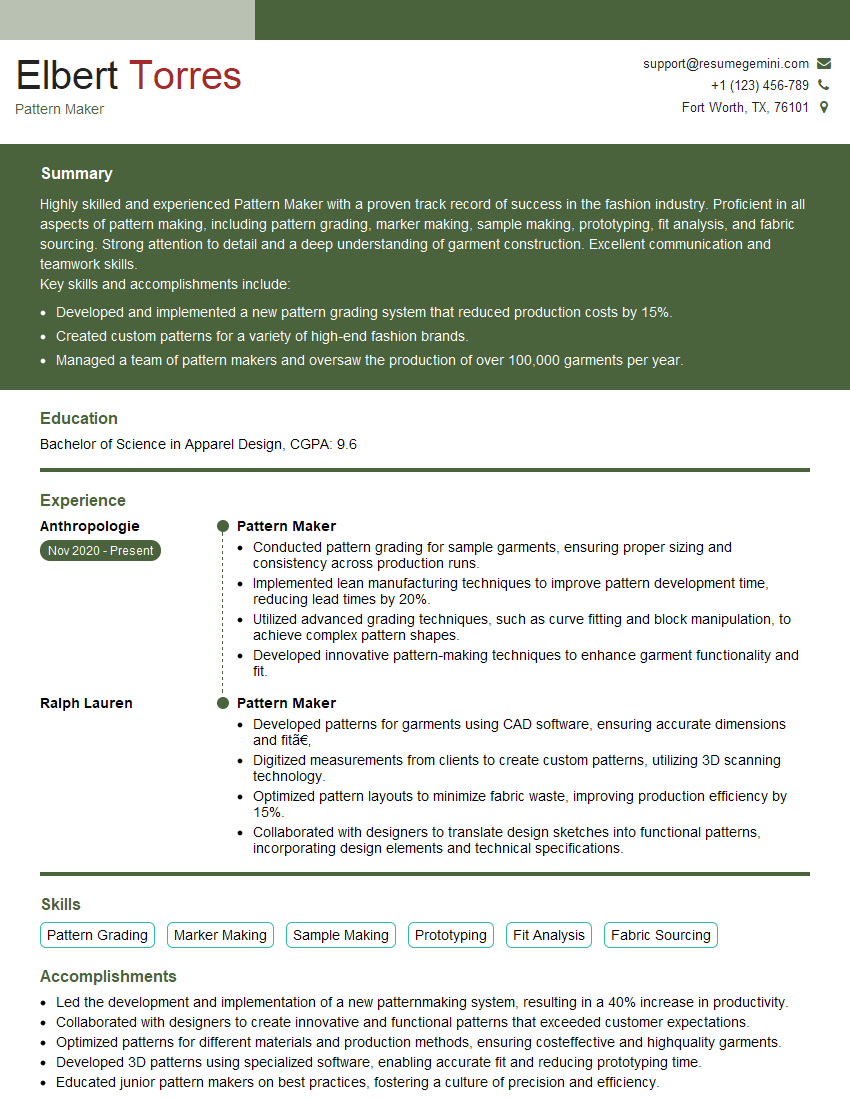
Pattern Maker Resume Sample
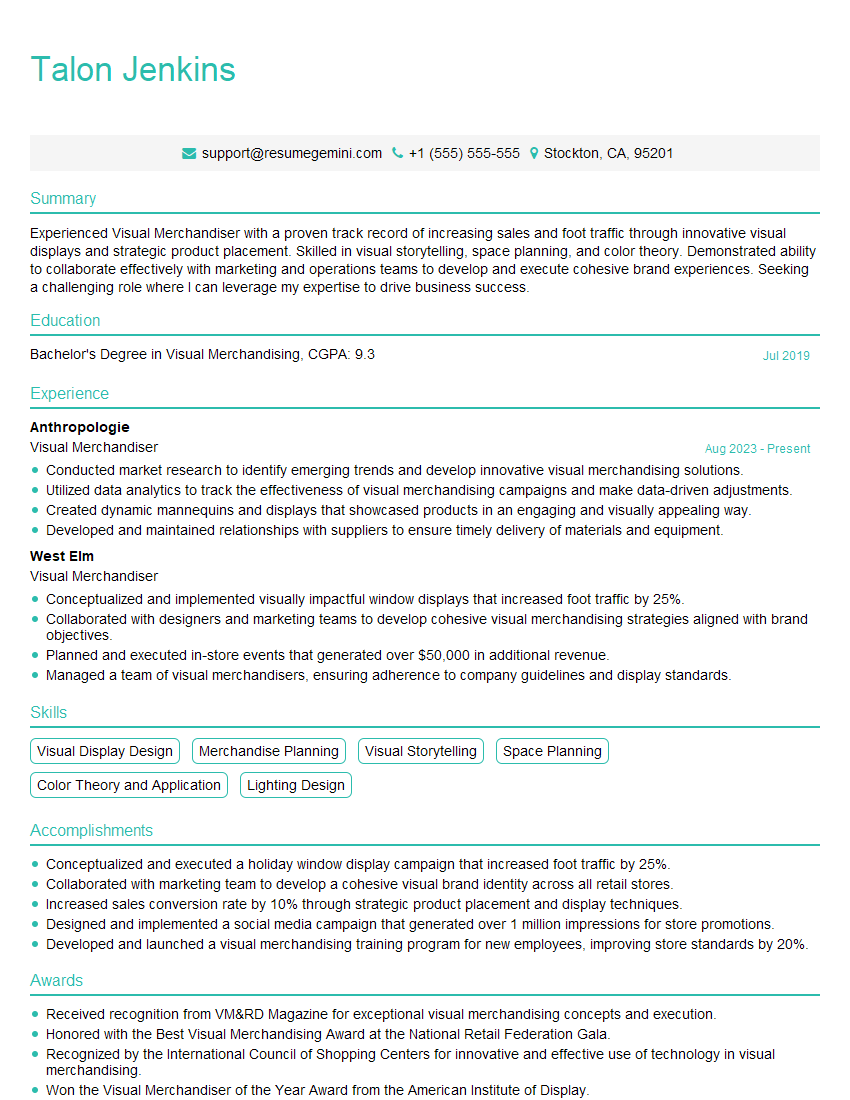
Visual Merchandiser Resume Sample
Explore more articles
Users Rating of Our Blogs
Share Your Experience
We value your feedback! Please rate our content and share your thoughts (optional).
What Readers Say About Our Blog
Very informative content, great job.
good