The right preparation can turn an interview into an opportunity to showcase your expertise. This guide to Fashion Supply Chain Management interview questions is your ultimate resource, providing key insights and tips to help you ace your responses and stand out as a top candidate.
Questions Asked in Fashion Supply Chain Management Interview
Q 1. Explain the key stages in a typical fashion supply chain.
The fashion supply chain is a complex network encompassing numerous stages, from raw material sourcing to the final product reaching the consumer. Think of it like a relay race where each stage needs to perform its part seamlessly for a successful finish.
- Raw Material Sourcing: This initial stage involves selecting and procuring raw materials like cotton, silk, wool, or synthetic fibers. Factors like quality, sustainability, and price are crucial considerations.
- Manufacturing: This stage involves the actual production of garments. It can be divided into several sub-processes, including spinning, weaving, dyeing, cutting, and sewing. This can be done in-house or outsourced to factories, often globally.
- Quality Control: Rigorous checks at each manufacturing stage are vital to ensure quality and consistency. Defects detected early can prevent significant losses later in the supply chain.
- Packaging and Warehousing: Once garments are manufactured, they are packaged appropriately and stored in warehouses before distribution. Effective warehousing optimizes space and minimizes storage costs.
- Distribution and Logistics: This critical phase involves moving the finished goods from warehouses to retailers or directly to consumers. Efficient logistics reduce shipping time and costs, which are significant factors in the fashion industry’s profitability.
- Retail and Sales: This final stage involves selling the garments to consumers through various channels such as physical stores, online platforms, or department stores. Understanding consumer trends and preferences is key here.
For example, a company might source cotton from India, manufacture garments in Bangladesh, conduct quality control in Vietnam, and then ship the final product to retailers in Europe and the US.
Q 2. Describe your experience with different sourcing strategies (e.g., domestic vs. overseas).
My experience spans both domestic and overseas sourcing. Domestic sourcing offers benefits such as shorter lead times, greater control over production, and better compliance monitoring, which is crucial for ethical and sustainable practices. However, costs can be higher compared to overseas options.
Overseas sourcing, particularly in countries like Bangladesh, Vietnam, or China, offers cost advantages due to lower labor costs and access to specialized manufacturing capabilities. However, this involves managing longer lead times, greater logistical complexities, and potential risks related to geopolitical instability or ethical concerns.
In practice, many companies employ a hybrid approach, leveraging both domestic and overseas sourcing to balance cost, quality, and ethical considerations. For instance, a company might produce high-value, complex items domestically while outsourcing simpler items to overseas factories.
Q 3. How do you manage lead times and ensure timely delivery in the fashion industry?
Managing lead times in the fashion industry is crucial for staying ahead of trends and meeting consumer demand. It requires meticulous planning and collaboration across the supply chain.
- Accurate Forecasting: Precise demand forecasting is paramount. This involves analyzing historical sales data, market trends, and consumer insights to predict future demand accurately.
- Strategic Inventory Management: Implementing efficient inventory management techniques helps optimize stock levels, preventing both stockouts and excess inventory. This might involve Just-In-Time (JIT) inventory systems or other advanced methods.
- Strong Supplier Relationships: Collaborative partnerships with reliable suppliers are essential for consistent production and timely delivery. Open communication and clear expectations are vital.
- Agile Production Processes: Implementing flexible and agile manufacturing processes allows quick response to changing consumer demand and market conditions.
- Real-Time Tracking and Visibility: Utilizing technology like RFID tracking or GPS monitoring enables real-time tracking of goods throughout the supply chain, facilitating proactive management of potential delays.
For example, using a collaborative planning, forecasting, and replenishment (CPFR) system enables better communication and coordinated forecasting with key suppliers, leading to more accurate delivery estimations and reduced lead times.
Q 4. What are the major challenges in managing global fashion supply chains?
Managing global fashion supply chains presents significant challenges. Think of it as navigating a complex, ever-changing world map.
- Geopolitical Instability: Political unrest, trade wars, and sanctions can disrupt supply chains, causing delays and increased costs. This can be particularly challenging in regions with unstable political climates.
- Ethical and Social Responsibility: Ensuring fair labor practices, safe working conditions, and environmental sustainability throughout the supply chain is a major challenge. Transparency and traceability are crucial aspects.
- Supply Chain Disruptions: Unexpected events like natural disasters, pandemics, or port congestion can significantly impact delivery schedules and product availability. Resilience and contingency planning are critical.
- Complexity and Visibility: Managing a complex network of suppliers, manufacturers, and logistics providers across multiple countries requires sophisticated technology and robust communication channels to ensure transparency and efficient coordination.
- Cost Fluctuations: Raw material prices, transportation costs, and currency exchange rates can fluctuate significantly, affecting profitability and price stability.
One example is the impact of the pandemic, which caused significant disruptions in global supply chains, highlighting the need for resilience and diversified sourcing strategies.
Q 5. Explain your understanding of ethical and sustainable sourcing practices.
Ethical and sustainable sourcing practices are no longer optional but essential for the long-term success and social responsibility of fashion brands. It’s about making conscious choices at every stage of the supply chain.
- Fair Labor Practices: Ensuring fair wages, safe working conditions, and reasonable working hours for all workers involved in the production process. This includes prohibiting child labor and forced labor.
- Environmental Sustainability: Minimizing the environmental impact of production by using eco-friendly materials, reducing water and energy consumption, and promoting responsible waste management. This includes exploring recycled fabrics and sustainable dyeing techniques.
- Traceability and Transparency: Implementing systems to track and trace materials and products throughout the supply chain, ensuring transparency about the origin and production processes. This enhances accountability and consumer trust.
- Certifications and Standards: Adhering to relevant certifications and standards such as Fairtrade, GOTS (Global Organic Textile Standard), or B Corp to ensure ethical and sustainable practices are met.
- Supplier Audits and Due Diligence: Regularly auditing suppliers to ensure compliance with ethical and environmental standards. This includes regular on-site visits and third-party assessments.
For example, using recycled polyester instead of virgin polyester reduces the environmental impact of production while supporting a circular economy. Similarly, working with suppliers certified by Fairtrade ensures fair wages and working conditions for farmers and workers.
Q 6. How do you handle supply chain disruptions (e.g., natural disasters, political instability)?
Handling supply chain disruptions requires a proactive and multi-faceted approach, essentially building a robust safety net.
- Risk Assessment and Mitigation: Identifying potential risks such as natural disasters, political instability, or pandemics and developing mitigation strategies to reduce their impact. This might involve diversifying sourcing locations or establishing backup suppliers.
- Contingency Planning: Developing detailed contingency plans for various scenarios, outlining alternative solutions and procedures for handling disruptions. This could involve securing alternative transportation routes or having reserve stockpiles.
- Real-time Monitoring and Early Warning Systems: Implementing systems to monitor events that could affect the supply chain and providing early warnings of potential disruptions. This might involve using predictive analytics or collaborating with logistics providers.
- Flexible and Agile Supply Chains: Designing supply chains that are flexible and adaptable to changes, enabling quick responses to unexpected events. This could involve using agile manufacturing processes or having flexible contracts with suppliers.
- Strong Supplier Relationships: Building strong, collaborative relationships with suppliers to ensure open communication and support during disruptions. This involves mutual trust and a shared commitment to navigating challenges.
For instance, during a pandemic, a company might leverage its strong supplier relationships to secure alternative production locations or expedite delivery of critical materials. Having diverse suppliers also helped minimize the overall impact of the crisis.
Q 7. Describe your experience with different inventory management techniques.
My experience encompasses various inventory management techniques tailored to the specific needs of the fashion industry, focusing on balancing costs and responsiveness to trends.
- Just-in-Time (JIT): This approach minimizes inventory holding costs by ordering materials and producing garments only when needed. It relies on accurate demand forecasting and close collaboration with suppliers.
- Vendor-Managed Inventory (VMI): In VMI, suppliers manage the inventory levels at the retailer’s warehouses, ensuring optimal stock levels and reducing the retailer’s workload. This requires significant trust and integration with suppliers.
- Economic Order Quantity (EOQ): This model helps determine the optimal order quantity to minimize total inventory costs, balancing ordering costs and holding costs. It’s a valuable tool for managing inventory levels effectively.
- ABC Analysis: This method classifies inventory items into three categories (A, B, C) based on their value and importance. This prioritizes management efforts on high-value items (A), ensuring they’re managed most effectively.
- Inventory Turnover Rate: Monitoring inventory turnover rate helps assess how efficiently inventory is managed, identifying slow-moving items that might require pricing adjustments or promotional strategies.
For a fast-fashion retailer, a JIT approach might be ideal for managing inventory of highly trend-sensitive items. For a luxury brand, a more conservative inventory management strategy might be more suitable, prioritizing quality control and minimizing stockouts.
Q 8. How do you utilize technology (e.g., ERP systems, PLM) to optimize the supply chain?
Optimizing a fashion supply chain with technology hinges on integrating robust systems that streamline operations and enhance visibility. I’ve extensively used Enterprise Resource Planning (ERP) systems like SAP and Oracle, and Product Lifecycle Management (PLM) software such as Centric PLM and Optitex. ERP systems are the backbone, integrating data across various departments – from design and production planning to inventory management and sales. They automate tasks like purchase order generation, inventory tracking, and financial reporting, greatly reducing manual errors and improving efficiency. PLM, on the other hand, manages the entire product lifecycle, from design conception and material sourcing to manufacturing and distribution. It facilitates collaboration between designers, manufacturers, and suppliers, ensuring everyone is on the same page regarding product specifications, timelines, and quality standards. For example, using PLM, we can track fabric swatches digitally, instantly sharing information across teams and reducing reliance on physical samples and their associated delays.
Specifically, I’ve leveraged these systems to:
- Improve demand forecasting accuracy: By integrating sales data with inventory levels, we can generate more precise forecasts, reducing overstocking and stockouts.
- Streamline production planning: PLM allows for efficient capacity planning and scheduling, minimizing production bottlenecks and delays.
- Enhance supply chain visibility: Real-time tracking of materials and finished goods allows for proactive identification and resolution of potential issues.
- Reduce lead times: Automation and improved communication drastically cut down on the time it takes to get products to market.
Q 9. What are your methods for tracking and managing key performance indicators (KPIs) in the supply chain?
Tracking and managing KPIs is crucial for continuous improvement in the fashion supply chain. My approach involves a multi-faceted system combining automated data collection, regular reporting, and strategic analysis. I rely heavily on the data provided by the ERP and PLM systems, supplemented by manual data entry where needed. Key KPIs I track include:
- On-time delivery rate: Measures the percentage of orders delivered as scheduled.
- Lead time: Tracks the time it takes for a product to go from design to delivery.
- Inventory turnover rate: Measures how efficiently inventory is managed.
- Production efficiency: Evaluates the rate of production relative to planned capacity.
- Defect rate: Tracks the number of defective products produced.
- Supplier performance: Assesses the on-time delivery and quality performance of suppliers.
I use dashboards and reporting tools to visualize these KPIs, enabling quick identification of trends and areas for improvement. Regular meetings with cross-functional teams allow for collaborative problem-solving and the development of corrective actions. For instance, a consistently low on-time delivery rate might signal the need to renegotiate contracts with underperforming logistics providers or optimize the production schedule.
Q 10. How do you ensure quality control throughout the fashion supply chain?
Quality control is paramount in the fashion industry, impacting brand reputation and customer satisfaction. My approach involves implementing a robust quality assurance (QA) system throughout the entire supply chain, starting from raw material inspection and extending to finished goods inspection. This includes:
- Raw Material Inspection: Thoroughly checking the quality of raw materials upon arrival, ensuring they meet predetermined specifications.
- In-Process Inspection: Monitoring the manufacturing process at various stages to identify and rectify defects early on.
- Finished Goods Inspection: Conducting rigorous checks on finished products before shipment, adhering to established quality standards.
- Supplier Audits: Regularly auditing suppliers’ facilities and processes to ensure compliance with quality standards and ethical practices.
- Quality Control Labs: Utilizing in-house or external labs for testing and analysis, including fabric strength, colorfastness, and dimensional stability tests.
Implementing a robust QA system requires clear quality standards, detailed documentation, and effective communication between all stakeholders. Investing in training for quality control personnel is also critical, ensuring they can effectively identify defects and apply corrective measures.
For example, I’ve implemented a system where digital images of fabric are recorded at each stage of production which helps to reduce quality inconsistencies across production batches.
Q 11. Explain your experience with different modes of transportation and their impact on cost and delivery time.
Choosing the right mode of transportation is a critical decision, impacting both cost and delivery time. My experience encompasses various modes, including air freight, sea freight, and trucking. Air freight is the fastest but most expensive option, ideal for time-sensitive, high-value goods like seasonal collections or last-minute orders. Sea freight, conversely, is the most cost-effective but significantly slower, suitable for large quantities of less urgent items. Trucking is used for shorter distances and provides a balance between cost and speed. The optimal choice depends on several factors, such as the urgency of the order, the quantity of goods, the distance, and the cost-benefit analysis. I’ve used a decision matrix to quantitatively assess these factors for various scenarios.
For instance, during peak season, I might prioritize air freight for key products to ensure timely delivery to meet demand. For bulk shipments of basic items, sea freight would be a more economically viable solution. For regional distribution within a country, trucking would be the most efficient option. Understanding the strengths and weaknesses of each mode and applying this knowledge strategically is critical to optimizing cost and delivery time.
Q 12. How do you manage relationships with suppliers and manufacturers?
Building and maintaining strong relationships with suppliers and manufacturers is essential for a successful fashion supply chain. My approach involves a collaborative partnership model, focusing on open communication, mutual trust, and shared goals. This includes:
- Strategic Supplier Selection: Carefully selecting suppliers based on factors like quality, capacity, ethical practices, and financial stability.
- Regular Communication: Maintaining open and transparent communication channels with suppliers, regularly exchanging information regarding production schedules, quality issues, and any potential challenges.
- Performance Monitoring: Tracking supplier performance on key metrics, such as on-time delivery, quality, and responsiveness.
- Fair Pricing and Payment Terms: Establishing fair pricing and payment terms that are mutually beneficial to both parties.
- Collaboration and Innovation: Working collaboratively with suppliers on product development, process improvement, and sustainable sourcing practices.
I believe in building long-term partnerships rather than focusing on short-term cost savings. A strong relationship can lead to greater efficiency, improved quality, and enhanced innovation.
Q 13. Describe your experience with forecasting demand and managing inventory levels.
Accurate demand forecasting and inventory management are crucial for minimizing costs and avoiding stockouts or overstocking. I employ a multi-pronged approach that combines quantitative and qualitative methods. For quantitative forecasting, I use statistical models, incorporating historical sales data, market trends, and seasonality. I utilize time series analysis and other forecasting techniques available in ERP systems. Qualitative methods involve incorporating expert opinions and market research data to refine the forecasts.
Inventory management involves selecting an appropriate inventory management system, such as Just-in-Time (JIT) or Economic Order Quantity (EOQ) based on the specific product and market demands. I continuously monitor inventory levels, adjusting production schedules and order quantities as needed based on sales trends and forecast updates. In addition, I utilize safety stock levels to account for unexpected fluctuations in demand. Using this integrated approach, we can minimize holding costs, reduce waste, and ensure that products are available to customers when and where they are needed.
Q 14. What is your experience with risk management in the fashion supply chain?
Risk management is crucial in the volatile fashion supply chain. My approach involves identifying potential risks, assessing their likelihood and impact, and developing mitigation strategies. Common risks include disruptions in the supply chain (political instability, natural disasters, pandemics), quality control issues, fluctuating exchange rates, and changes in consumer demand. I develop contingency plans to address potential disruptions and implement strategies to mitigate risk. This includes:
- Diversifying Suppliers: Reducing reliance on a single supplier to mitigate the risk of disruption.
- Developing Contingency Plans: Creating backup plans for potential disruptions, such as sourcing materials from alternative suppliers or using alternative transportation modes.
- Implementing Risk Monitoring Systems: Continuously monitoring potential risks, such as geopolitical events or weather patterns, to allow for proactive responses.
- Insurance: Utilizing insurance policies to cover potential losses.
- Building Strong Supplier Relationships: Fostering strong, collaborative relationships with suppliers to facilitate communication and problem-solving.
Regular risk assessments and scenario planning are essential for proactively identifying and mitigating potential disruptions.
Q 15. How do you handle returns and manage reverse logistics?
Effective returns management is crucial for minimizing losses and enhancing customer satisfaction. It’s not just about processing returns; it’s a strategic part of the overall supply chain. My approach involves a multi-pronged strategy focusing on prevention, process optimization, and data analysis.
- Prevention: This starts with accurate product descriptions, high-quality photos, and detailed sizing charts to reduce returns due to mismatched expectations. We also invest in robust quality control measures throughout the production process to minimize defects.
- Process Optimization: We utilize user-friendly online return portals with pre-paid shipping labels, making the process as seamless as possible for the customer. We also employ a reverse logistics network that efficiently routes returns to designated facilities for inspection, restocking, or disposal.
- Data Analysis: We meticulously track return reasons to identify trends and areas for improvement. This data informs product design, marketing strategies, and quality control protocols. For instance, if a high percentage of returns are due to sizing issues, we might invest in improved fit modeling or offer more precise sizing guides. We also analyze the cost of returns, identifying bottlenecks and inefficiencies within the reverse logistics process.
In my previous role, implementing a streamlined reverse logistics system using a dedicated third-party logistics (3PL) provider reduced our return processing time by 30% and lowered our overall return costs by 15%.
Career Expert Tips:
- Ace those interviews! Prepare effectively by reviewing the Top 50 Most Common Interview Questions on ResumeGemini.
- Navigate your job search with confidence! Explore a wide range of Career Tips on ResumeGemini. Learn about common challenges and recommendations to overcome them.
- Craft the perfect resume! Master the Art of Resume Writing with ResumeGemini’s guide. Showcase your unique qualifications and achievements effectively.
- Don’t miss out on holiday savings! Build your dream resume with ResumeGemini’s ATS optimized templates.
Q 16. How do you stay up-to-date with the latest trends and technologies in fashion supply chain management?
The fashion industry is incredibly dynamic, so staying current requires a multifaceted approach. I actively engage in several strategies to stay ahead of the curve:
- Industry Publications and Conferences: I regularly read industry-leading publications like Sourcing Journal, Supply Chain Dive, and attend major conferences like the Sourcing at Magic show, to stay abreast of the latest trends, technologies, and best practices.
- Networking and Collaboration: I actively network with peers, attending industry events and webinars to learn from others’ experiences and share insights. This allows me to access diverse perspectives and learn about innovative solutions.
- Technology Monitoring: I consistently monitor advancements in technologies like AI-powered demand forecasting, RFID tracking, blockchain for supply chain transparency, and automation in warehousing and distribution. I research pilot programs and case studies to evaluate potential applications in my organization.
- Continuing Education: I pursue professional development opportunities, such as online courses and certifications, to deepen my understanding of cutting-edge supply chain methodologies.
For example, I recently completed a course on implementing blockchain technology for enhanced traceability in the garment supply chain. This knowledge allows me to explore how we can enhance transparency and accountability in our sourcing practices.
Q 17. What are the key differences between managing supply chains for fast fashion versus luxury brands?
Managing supply chains for fast fashion and luxury brands requires vastly different approaches:
| Feature | Fast Fashion | Luxury Brands |
|---|---|---|
| Speed | Extremely fast lead times, frequent collections | Slower lead times, emphasis on craftsmanship and quality |
| Production Volume | High volume, mass production | Lower volume, often limited edition pieces |
| Supply Chain Complexity | Relatively simple supply chains, often relying on large-scale manufacturers | More complex supply chains, often involving smaller, specialized suppliers and artisans |
| Pricing Strategy | Low prices, high volume sales | High prices, emphasis on exclusivity and brand image |
| Sustainability Concerns | Higher environmental impact due to high volume and fast turnover | Growing focus on sustainable materials and ethical manufacturing practices |
| Demand Forecasting | Highly data-driven, relying on trend analysis and rapid response capabilities | More reliant on historical data and long-term planning |
Essentially, fast fashion prioritizes speed and volume, often at the expense of higher costs in sustainability and ethical considerations. Luxury brands, conversely, prioritize quality, craftsmanship, and brand exclusivity, resulting in longer lead times and higher prices but also a focus on more sustainable and ethical sourcing. My experience working in both sectors has taught me the importance of adapting strategies to the specific needs and priorities of each business model.
Q 18. Describe your experience with implementing lean manufacturing principles in a fashion context.
Lean manufacturing principles, focused on eliminating waste and maximizing efficiency, are highly applicable to the fashion industry. In my previous role, I implemented several lean initiatives:
- Value Stream Mapping: We mapped out the entire garment production process from raw material sourcing to final delivery, identifying bottlenecks and areas of inefficiency. This allowed us to pinpoint areas for process improvement and reduce lead times.
- 5S Methodology: We implemented a 5S (Sort, Set in Order, Shine, Standardize, Sustain) program in our warehouse to improve organization and reduce search times, leading to quicker order fulfillment.
- Kaizen Events: We held regular Kaizen events (continuous improvement workshops) involving cross-functional teams to brainstorm and implement small, incremental improvements to our processes. These events fostered a culture of continuous improvement.
- Just-in-Time (JIT) Inventory: We transitioned to a JIT inventory system, reducing storage costs and minimizing waste from obsolete inventory. This required closer collaboration with our suppliers and more accurate demand forecasting.
These initiatives resulted in a significant reduction in lead times, lower inventory costs, and improved overall productivity. For example, implementing 5S in the warehouse reduced order picking time by 15%.
Q 19. Explain your experience with different types of contracts with suppliers.
My experience encompasses a range of supplier contracts, each tailored to specific needs and circumstances:
- Cost-Plus Contracts: These are suitable for projects with significant uncertainty regarding material costs or labor. The supplier is reimbursed for their costs plus a pre-agreed markup. This offers the supplier greater protection against cost fluctuations.
- Fixed-Price Contracts: These are preferred for projects with well-defined specifications and predictable costs. The supplier agrees to a fixed price, reducing risk for the buyer but requiring the supplier to absorb any cost overruns.
- Time and Materials Contracts: These are appropriate for projects with evolving requirements or where the scope of work isn’t fully defined upfront. The supplier is paid for the time spent and materials used.
- Performance-Based Contracts: These tie supplier payments to achieving specific performance metrics, such as on-time delivery, quality standards, and sustainability targets. This incentivizes suppliers to improve their performance.
The choice of contract type depends on factors like project complexity, risk tolerance, and the nature of the supplier relationship. For example, we use fixed-price contracts for standardized items with reliable suppliers, while cost-plus contracts are used for more complex, customized items where cost predictability is challenging.
Q 20. How do you manage cost pressures and negotiate favorable terms with suppliers?
Managing cost pressures and negotiating favorable terms requires a strategic and collaborative approach. My strategies include:
- Strategic Sourcing: We carefully evaluate potential suppliers based on factors like price, quality, reliability, and ethical considerations. We diversify our supplier base to mitigate risk and leverage competitive pricing.
- Cost Analysis: We conduct thorough cost analysis to understand the cost structure of our suppliers and identify areas for potential savings. This includes analyzing material costs, labor costs, and overhead expenses.
- Negotiation Skills: I possess strong negotiation skills, capable of negotiating favorable terms with suppliers, including pricing, payment terms, and delivery schedules. This involves building strong relationships based on mutual trust and respect.
- Long-Term Relationships: We prioritize building long-term relationships with our key suppliers, fostering collaboration and mutual benefits. This leads to greater transparency, improved communication, and potential cost reductions over time.
- Value Engineering: We work collaboratively with suppliers to identify opportunities to reduce costs without compromising quality. This might involve exploring alternative materials, simplifying designs, or improving production processes.
For instance, by collaborating with a key supplier, we were able to implement a new production technique that reduced material waste by 10%, resulting in significant cost savings.
Q 21. How do you measure the efficiency and effectiveness of the fashion supply chain?
Measuring supply chain efficiency and effectiveness requires a balanced approach, combining quantitative and qualitative metrics:
- On-Time Delivery Rate: This measures the percentage of orders delivered on or before the scheduled delivery date. A high on-time delivery rate indicates strong operational efficiency.
- Inventory Turnover Rate: This measures how quickly inventory is sold and replenished. A high inventory turnover rate indicates efficient inventory management and reduces the risk of obsolescence.
- Lead Time: This measures the time it takes to fulfill an order, from order placement to delivery. Shorter lead times indicate greater agility and responsiveness.
- Defect Rate: This measures the percentage of defective products produced or received. A low defect rate reflects effective quality control measures.
- Customer Satisfaction: This measures customer satisfaction with order fulfillment, product quality, and overall service. High customer satisfaction reflects a successful and efficient supply chain.
- Sustainability Metrics: These measure the environmental and social impact of the supply chain, including carbon footprint, water usage, and ethical labor practices.
We use Key Performance Indicators (KPIs) to track these metrics and regularly analyze the data to identify areas for improvement. For example, by analyzing our lead time data, we were able to identify a bottleneck in our transportation process and implement changes to reduce lead times by 10%.
Q 22. What is your experience with compliance and regulatory requirements in the fashion industry?
Compliance and regulatory requirements in the fashion industry are multifaceted and crucial for ethical and legal operation. My experience encompasses navigating a wide range of regulations, including those related to labor practices (e.g., fair wages, safe working conditions, and adherence to local labor laws), environmental protection (e.g., restricted substances, water usage, and waste management), and product safety (e.g., ensuring materials meet safety standards and avoiding hazardous chemicals). I’ve worked directly with third-party auditors to ensure factories meet these standards, implemented robust internal compliance programs, and developed training materials for suppliers to enhance their understanding of relevant legislation. For instance, I was instrumental in successfully guiding a major supplier through a complex audit process related to the California Transparency in Supply Chains Act (SB 657), ensuring their compliance and preventing potential reputational damage to the brand.
Specifically, I have a deep understanding of regulations surrounding REACH (Registration, Evaluation, Authorisation and Restriction of Chemicals) in Europe and the various certifications like OEKO-TEX Standard 100, ensuring the materials used in our products are safe for consumers and the environment. I proactively monitor changes in legislation and adapt our compliance strategies accordingly.
Q 23. How do you handle situations involving production delays or quality issues?
Production delays and quality issues are inevitable in the fashion supply chain. My approach centers around proactive risk management and swift, decisive action. When delays occur, I immediately engage with the supplier to understand the root cause – whether it’s material shortages, equipment malfunctions, or unforeseen logistical challenges. We then collaboratively develop a mitigation plan, exploring options such as expedited shipping, alternative sourcing, or adjusting production schedules. Transparency is key; I ensure all stakeholders are kept informed of the situation and the mitigation efforts.
For quality issues, a thorough investigation is crucial to pinpoint the source of the problem – faulty materials, inadequate workmanship, or design flaws. Depending on the severity, solutions range from implementing corrective actions at the factory (e.g., retraining workers, improving quality control processes) to recalling affected products and engaging with consumers to address the issue professionally. I also leverage data analytics to identify recurring quality problems, implement preventative measures, and improve overall quality control.
For example, in one instance, a major fabric supplier faced a delay due to a natural disaster. By quickly identifying a secondary supplier with similar capabilities and expediting the shipping of the alternative fabric, we managed to minimize the overall impact on our production timeline, demonstrating problem-solving agility and risk mitigation capabilities.
Q 24. Describe your experience with capacity planning in the apparel industry.
Capacity planning in the apparel industry requires a thorough understanding of demand forecasting, production capabilities, and lead times. My approach involves using a combination of quantitative and qualitative methods. I analyze historical sales data, market trends, and planned marketing campaigns to forecast demand accurately. This forecast is then aligned with the production capacity of our manufacturing partners, taking into account factors such as machine capacity, labor availability, and factory lead times.
I utilize capacity planning software to model different scenarios and optimize production schedules, ensuring efficient resource allocation. This includes considering factors like seasonality, peak demand periods, and potential bottlenecks in the production process. Furthermore, I closely monitor capacity utilization rates and proactively identify potential capacity constraints, taking steps to address them before they impact production timelines. This might involve securing additional production capacity from alternative suppliers or investing in new machinery to increase overall output.
For instance, I successfully implemented a new capacity planning system that improved our forecasting accuracy by 15% and reduced production lead times by 10%, significantly improving our responsiveness to market demands and reducing inventory holding costs.
Q 25. How do you ensure transparency and traceability throughout the supply chain?
Ensuring transparency and traceability across the supply chain is paramount for ethical sourcing, brand protection, and consumer trust. I employ several strategies to achieve this. First, we utilize blockchain technology to create a secure and immutable record of our supply chain, from raw material sourcing to finished product delivery. This allows us to track each product’s journey, providing complete visibility into its origin and production process.
Second, we work closely with our suppliers to implement robust traceability systems, including QR codes or RFID tags attached to products and packaging. This enables us to pinpoint the origin of materials and monitor their movement throughout the supply chain. Third, we conduct regular audits of our suppliers to ensure they adhere to our ethical sourcing standards and maintain accurate records. Finally, we actively engage with consumers, providing them with information about the origin and production of our products through our website and product labels. This increased transparency builds trust with customers and strengthens our brand reputation.
For example, using blockchain technology, we recently tracked a batch of cotton from the farm to the final garment, giving consumers full transparency about the supply chain’s social and environmental impact. This transparency helped to build consumer trust and strengthened our commitment to sustainability.
Q 26. What is your experience working with different software systems used in supply chain management?
My experience encompasses a wide array of supply chain management software systems, including Enterprise Resource Planning (ERP) systems (like SAP and Oracle), Supply Chain Planning (SCP) solutions, Warehouse Management Systems (WMS), and Transportation Management Systems (TMS). I am proficient in utilizing these systems to manage inventory, plan production, track shipments, and analyze supply chain performance. I understand the importance of data integration across different systems to ensure seamless information flow and efficient decision-making. I’m also familiar with specialized software for specific tasks such as quality control management, demand forecasting, and supplier relationship management (SRM).
I have experience integrating data from diverse sources, including supplier portals and point-of-sale systems, to create a comprehensive view of the supply chain. I am comfortable working with APIs and data visualization tools to extract meaningful insights and optimize our processes. My experience also includes selecting, implementing, and customizing software systems to meet the specific needs of our organization. For example, I spearheaded the implementation of a new WMS that improved our warehouse efficiency by 20% and reduced order fulfillment times by 15%.
Q 27. How do you foster collaboration and communication across different teams and departments within the supply chain?
Fostering collaboration and communication across teams is essential for successful supply chain management. I believe in establishing clear communication channels, regular meetings, and shared goals. I actively encourage cross-functional collaboration between departments such as sourcing, production, logistics, and quality control to break down silos and enhance information sharing.
I utilize various communication tools, including project management software, video conferencing platforms, and regular email updates to ensure everyone is informed and aligned. I emphasize transparency in decision-making and encourage feedback from all stakeholders. I also implement collaborative platforms where teams can share documents, track progress, and communicate effectively. Building strong relationships with suppliers is also critical, involving regular communication and on-site visits to foster trust and mutual understanding.
For example, I introduced a weekly cross-functional meeting to discuss ongoing projects, challenges, and opportunities, leading to a significant improvement in problem-solving and overall team cohesion.
Q 28. Describe your understanding of different costing methods and how they are applied in the fashion supply chain.
Understanding different costing methods is vital for accurate pricing, profitability analysis, and efficient decision-making in the fashion supply chain. Common costing methods include:
- Full Costing: This method considers all costs associated with producing a product, including direct costs (raw materials, labor, and manufacturing overhead) and indirect costs (administration, marketing, and distribution). This provides a complete picture of the product’s cost but can be complex to implement.
- Variable Costing: This method only accounts for variable costs that directly fluctuate with production volume, excluding fixed overhead costs. It is simpler to use but may not fully reflect the true cost of the product.
- Activity-Based Costing (ABC): ABC assigns costs based on the activities involved in production. It offers more detailed cost allocation than traditional methods and can identify areas for cost reduction by analyzing activity costs.
- Target Costing: This method determines the desired selling price first, then works backward to calculate the target cost needed to achieve the desired profit margin. This is crucial for competitive pricing.
In the fashion industry, a combination of these methods is often employed. For example, full costing may be used for internal budgeting and financial reporting, while variable costing might be used for short-term decision-making related to pricing and production volume. Target costing is particularly important in the design phase, ensuring products are cost-effective while meeting market demands and achieving profitability goals.
Key Topics to Learn for Fashion Supply Chain Management Interview
- Sourcing & Procurement: Understanding global sourcing strategies, ethical sourcing practices, supplier relationship management, and negotiation techniques. Practical application: Analyzing supplier performance metrics and identifying opportunities for cost reduction or improved quality.
- Production Planning & Control: Mastering demand forecasting, production scheduling, capacity planning, and inventory management. Practical application: Developing and implementing strategies to minimize lead times and optimize production efficiency in response to fluctuating consumer demand.
- Logistics & Distribution: Knowledge of transportation modes, warehousing, order fulfillment, and risk management in global supply chains. Practical application: Designing efficient distribution networks to minimize costs and ensure timely delivery of products to consumers.
- Quality Control & Assurance: Implementing quality control measures throughout the supply chain to ensure product quality and compliance with industry standards. Practical application: Developing and executing quality control checks at various stages of the supply chain, from raw material sourcing to final product delivery.
- Sustainability & Ethical Practices: Understanding the environmental and social impact of the fashion industry and implementing sustainable and ethical practices throughout the supply chain. Practical application: Developing and implementing strategies to reduce the environmental footprint of the supply chain and ensure fair labor practices.
- Technology & Data Analytics: Leveraging technology and data analytics to optimize supply chain processes and improve decision-making. Practical application: Utilizing supply chain management software to track inventory, manage orders, and analyze supply chain performance.
- Risk Management & Mitigation: Identifying and mitigating potential risks throughout the fashion supply chain, including disruptions due to natural disasters, geopolitical instability, and pandemics. Practical application: Developing contingency plans to minimize the impact of supply chain disruptions.
Next Steps
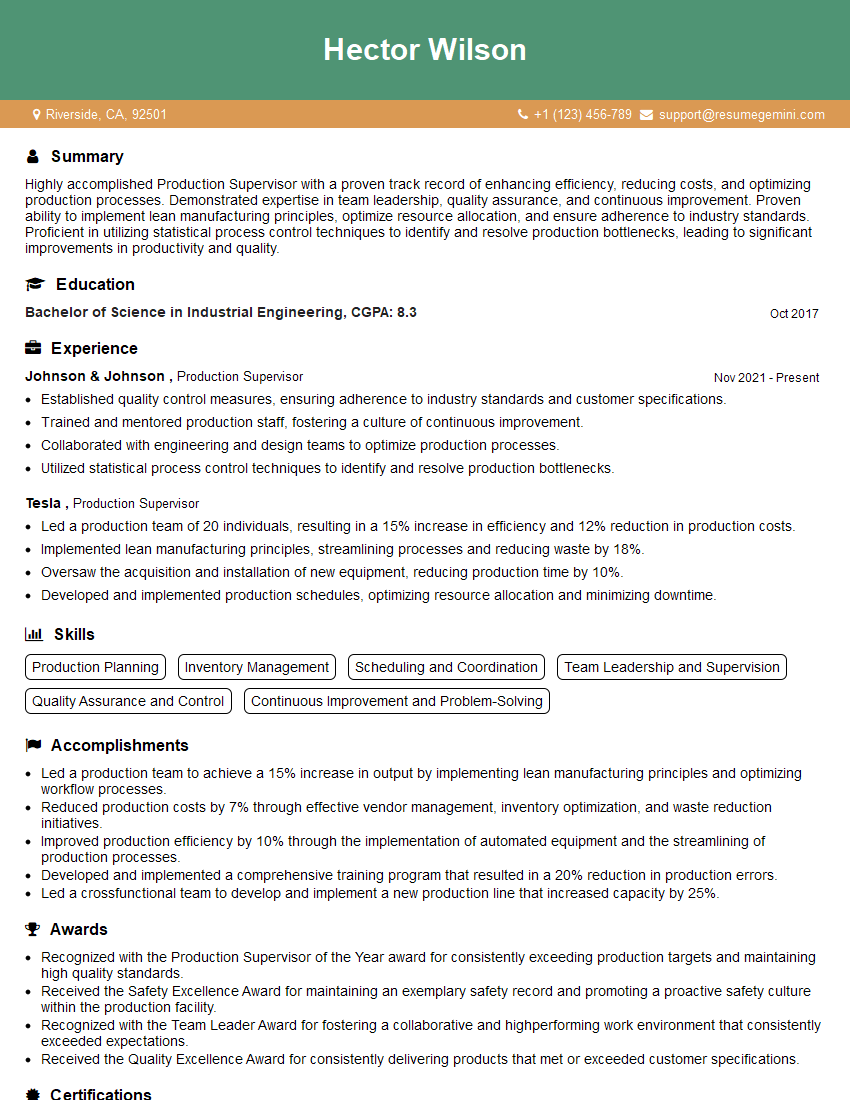
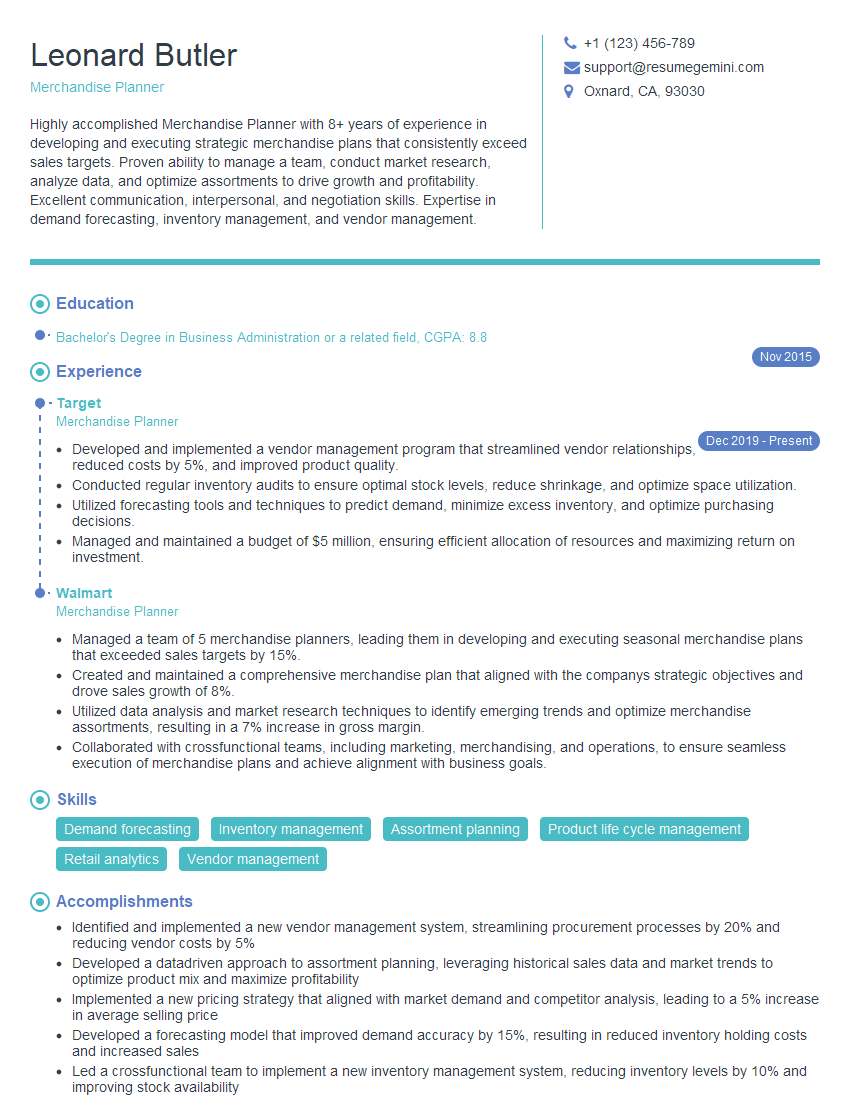
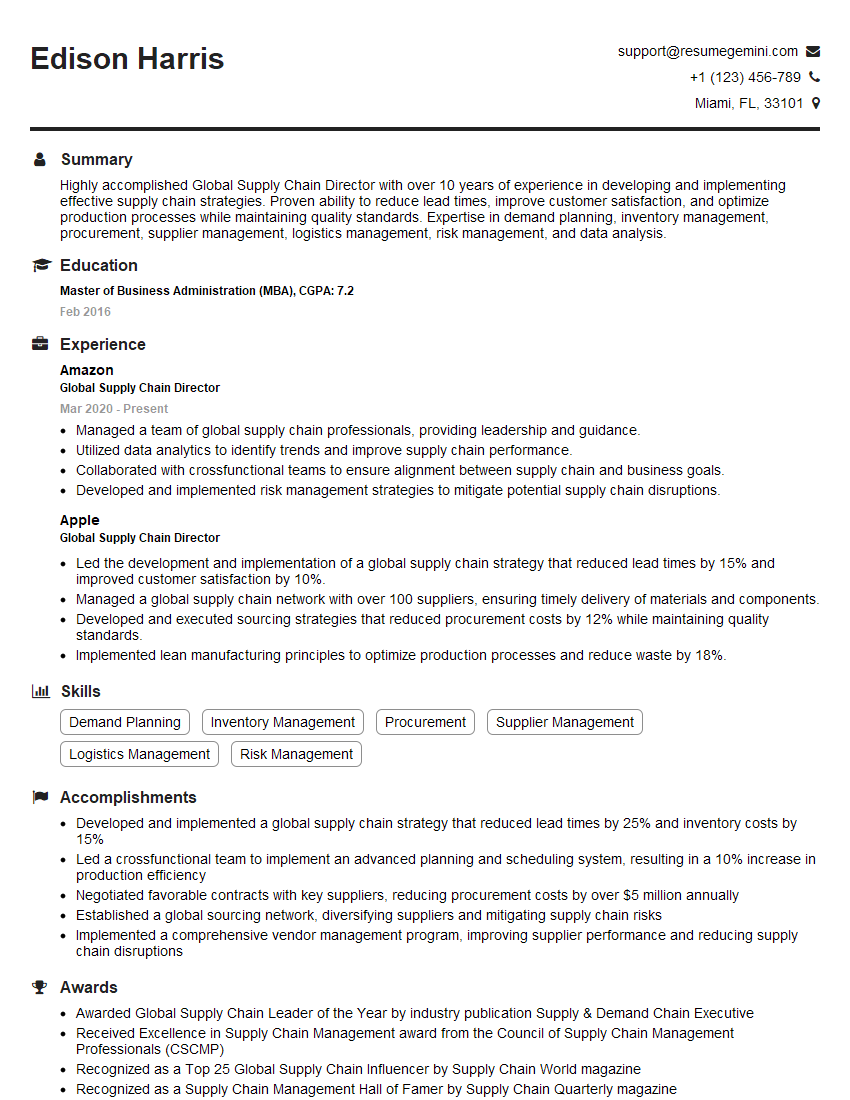
Mastering Fashion Supply Chain Management opens doors to exciting and impactful career opportunities, offering a blend of strategic thinking and operational expertise. To stand out in today’s competitive job market, it’s crucial to present your skills effectively. Creating an ATS-friendly resume is key to ensuring your application gets seen by recruiters. ResumeGemini is a trusted resource to help you build a professional and impactful resume that highlights your unique contributions and experience. Examples of resumes tailored specifically to Fashion Supply Chain Management are available to guide your creation process, providing you with a head-start in showcasing your expertise.
Explore more articles
Users Rating of Our Blogs
Share Your Experience
We value your feedback! Please rate our content and share your thoughts (optional).
What Readers Say About Our Blog
Very informative content, great job.
good