Preparation is the key to success in any interview. In this post, we’ll explore crucial Feeding whole trees and branches into chippers interview questions and equip you with strategies to craft impactful answers. Whether you’re a beginner or a pro, these tips will elevate your preparation.
Questions Asked in Feeding whole trees and branches into chippers Interview
Q 1. Describe the proper techniques for feeding branches into a chipper.
Feeding branches into a chipper requires a smooth, controlled process to ensure both efficiency and safety. Think of it like feeding a hungry animal – you wouldn’t just throw a whole carcass in at once! Instead, you want to introduce the material gradually and consistently.
- Start Small: Begin with smaller branches, allowing the chipper to get up to speed. This prevents overloading and jamming.
- Maintain a Steady Feed: Push the branches steadily into the infeed chute, avoiding sudden jerks or stops. Imagine you’re drawing a smooth, continuous line. Jerky movements can bind the material and cause problems.
- Proper Alignment: Ensure the branch is aligned correctly with the cutting mechanism, avoiding any angles that could create resistance or bind the blades. A straight feed is key.
- Avoid Overstuffing: Never force branches into the chute. If you encounter resistance, stop, clear the blockage, and resume feeding with smaller pieces.
- Use Both Hands: Use both hands to control the branches, maintaining a firm grip to prevent kickback. Two hands offer better control and reduce the risk of injury.
For example, if you’re feeding a large branch, consider cutting it into manageable sections first. This allows for easier, safer feeding and reduces the risk of equipment damage or operator injury.
Q 2. Explain the safety procedures for operating a tree chipper.
Safety is paramount when operating a tree chipper. Think of it like handling a powerful, hungry machine – respect is key.
- Personal Protective Equipment (PPE): Always wear appropriate safety gear, including eye protection, hearing protection, gloves, steel-toed boots, and high-visibility clothing.
- Clear the Area: Ensure the area around the chipper is clear of bystanders, obstructions, and loose debris. Establish a safe working zone.
- Machine Inspection: Before starting, inspect the chipper for any damage or loose parts. Make sure all guards are in place and functioning correctly.
- Proper Training: Never operate a chipper without proper training. Understand the machine’s controls, safety features, and emergency shut-off procedures.
- Emergency Shut-Off: Know the location of the emergency shut-off switch and how to use it. Practice using it in a safe environment.
- No Loose Clothing: Avoid wearing loose clothing, jewelry, or anything that could get caught in the machine.
- Never Reach into the Infeed/Outfeed Chutes While Running: This is a critical safety rule. Always turn off and disconnect the machine before attempting to clear a jam.
For instance, I once saw a worker fail to clear the area properly, resulting in a near-miss when a flying piece of wood narrowly missed a nearby co-worker. Always prioritize safety first.
Q 3. How do you identify and handle different types of wood when feeding a chipper?
Different types of wood present unique challenges when chipping. Hardwoods like oak and maple can be denser and more difficult to process than softer woods like pine or fir.
- Hardwoods: Hardwoods require a slower, more deliberate feed rate. They can dull blades faster and may require more frequent maintenance.
- Softwoods: Softwoods are generally easier to chip, but can still cause problems if fed too quickly or unevenly.
- Green vs. Dry Wood: Green (freshly cut) wood is more difficult to chip than dry wood, due to its higher moisture content. It’s advisable to cut green wood into smaller pieces.
- Knots and Embedded Metal: Be cautious of knots and embedded metal objects, which can damage the chipper blades. These should be avoided or removed before feeding into the chipper.
For example, when chipping a large oak branch, I would cut it into smaller pieces, feed it slowly, and monitor the blade sharpness to prevent damage and ensure consistent chip production. Adapting your technique to the wood type is crucial for efficiency and safety.
Q 4. What are the signs of a malfunctioning chipper, and what actions should be taken?
Recognizing the signs of a malfunctioning chipper is vital to prevent accidents and damage.
- Unusual Noises: Grinding, squealing, or other unusual noises indicate potential problems with the blades, bearings, or other components. Stop immediately and investigate.
- Reduced Chip Size or Quality: If the chips are becoming smaller or inconsistent in size, this might suggest blade dullness or a mechanical issue.
- Overheating: Excessive heat indicates potential problems with the machine’s cooling system or overloading.
- Vibrations: Strong vibrations are often a sign of an imbalance or mechanical problem within the chipper itself.
- Jamming: Frequent jamming suggests improper feeding techniques, dull blades, or a mechanical problem with the cutting mechanism.
If you notice any of these signs, shut down the chipper immediately. Do not attempt to operate it until the problem is diagnosed and repaired by a qualified technician. Ignoring these warning signs could lead to serious injury or equipment damage. Think of it like a car – if you hear strange noises, you take it to a mechanic, not keep driving it.
Q 5. Explain the importance of maintaining a safe working distance from the chipper.
Maintaining a safe working distance from the chipper is critical. The rotating blades and the high-velocity discharge of chips pose significant risks.
A safe working distance is typically at least 10 feet from the discharge chute and the infeed hopper. This distance should increase depending on the size and type of the chipper, and the material being processed. Never approach the machine until it has completely stopped, and always ensure that the power is disconnected before any maintenance or repairs. This prevents accidental contact with the blades or moving parts, reducing the risk of serious injury. It’s always better to err on the side of caution when dealing with dangerous machinery.
Q 6. How do you handle large branches or whole trees efficiently and safely?
Handling large branches and whole trees safely and efficiently requires a strategic approach.
- Pre-Cutting: Break down large branches and trees into manageable sections before feeding them into the chipper. This reduces strain on the machine and minimizes the risk of jamming.
- Use of Lifting Equipment: For very large pieces, use a crane or other lifting equipment to position the branches for easier feeding. This is safer and more efficient than manual handling.
- Strategic Placement: Position the material so that it is easily fed into the chipper without requiring excessive reaching or awkward movements. Avoid reaching over or around the chipper.
- Teamwork: If handling very large material, work as a team with one person feeding and another person monitoring and ensuring safety.
For instance, when dealing with a large tree trunk, I’d employ a crane to lift and position it, then direct the feeding process in stages. Safety is always prioritized by using the appropriate tools and equipment. Never attempt to handle large trees alone; it’s safer to have extra help.
Q 7. What are the best practices for preventing jams in a wood chipper?
Preventing jams is crucial for efficient and safe chipper operation.
- Proper Feeding Technique: Consistent and controlled feeding is key to avoid jams. Avoid sudden stops and starts, and maintain a steady pace.
- Regular Blade Maintenance: Sharp blades are essential for efficient chipping and reduce the likelihood of jamming. Dull blades cause more resistance, leading to jams.
- Material Preparation: Pre-cutting large branches and removing any debris before chipping helps prevent jams and reduces strain on the machine.
- Avoid Foreign Objects: Never feed material containing rocks, metal, or other foreign objects that can damage the blades or cause jams.
- Check Infeed Chute: Regularly check the infeed chute to ensure no material is getting caught or accumulating.
For example, a common cause of jamming is feeding material that is too large or unevenly shaped. Always ensure that branches are of a manageable size. The combination of sharp blades and a consistently controlled feed rate is the best preventative measure against jams.
Q 8. Describe your experience with different types of chippers (e.g., horizontal, vertical).
My experience encompasses both horizontal and vertical chippers, each with its own strengths and weaknesses. Horizontal chippers, often larger and more powerful, are ideal for high-volume processing of larger branches and whole trees. They use a rotating drum with blades that pull material in and chop it. I’ve worked extensively with these, particularly in land clearing operations. Think of them as a powerful wood-shredding conveyor belt. Vertical chippers, on the other hand, are generally smaller and more maneuverable, suitable for smaller jobs or situations with limited space. They feed material in from the top, and the cutting mechanism is often a single, rapidly rotating blade. I’ve found these particularly useful in smaller-scale landscaping and tree maintenance projects. The choice between the two depends entirely on the scale of the job and the size of the material being processed.
For instance, I once used a large horizontal chipper to process an entire fallen oak tree, efficiently managing the massive amount of branches and trunk. In contrast, I used a smaller vertical chipper to handle yard waste from a residential property, where its maneuverability was a significant advantage.
Q 9. How do you ensure the proper disposal or management of the chipped material?
Proper disposal or management of chipped material is crucial, both environmentally and legally. The first step involves understanding local regulations. Some areas may require specific permits or disposal methods for green waste. Once that’s established, the chipped material can be used in several ways. Many landowners use it as mulch in gardens and landscaping, enriching the soil and suppressing weeds. It can also be used as a soil amendment, improving drainage and aeration. In some cases, it can be composted, creating a valuable soil enhancer. If these options are unavailable, responsible disposal involves taking it to a designated landfill or green waste recycling facility.
I always prioritize the most sustainable option. For example, in one project, we used the chipped material to create a natural buffer zone along a creek bank, providing erosion control and habitat enhancement. This approach not only manages waste responsibly but also enhances the environment.
Q 10. What safety equipment is essential when operating a tree chipper?
Safety is paramount when operating a tree chipper. Essential equipment includes: a hard hat to protect against falling debris; safety glasses or a face shield to prevent eye injuries from flying chips; hearing protection, as chippers are extremely loud; work gloves to prevent cuts and abrasions; steel-toed boots to protect feet; and high-visibility clothing to increase visibility in the work area. Beyond personal protective equipment, I always ensure the chipper is properly maintained and the work area is clear of obstructions. I also emphasize clear communication with the crew members to avoid accidents.
For example, I once witnessed a near-miss where a colleague wasn’t wearing safety glasses. A small piece of wood ricocheted off the chipper and almost struck his eye. This reinforced the importance of adhering strictly to our safety protocols.
Q 11. What are the potential hazards associated with chipper operation?
Chipper operation presents several potential hazards. The most significant are: being struck by flying debris, which can cause serious injury; entanglement in the infeed mechanism, which can result in amputation or severe trauma; being caught between the chipper and another object, causing crushing injuries; and exposure to noise, which can lead to hearing loss over time.
Additionally, the possibility of equipment malfunction, such as blade breakage or hydraulic failure, presents added risks. To mitigate these, I always emphasize a methodical and cautious approach, ensuring the machine is correctly maintained and operated according to manufacturer instructions.
Q 12. How do you respond to a jam in the chipper?
A jam in the chipper requires a methodical response, prioritizing safety. First, shut off the machine completely and ensure it’s fully disengaged before approaching. Never attempt to clear a jam while the machine is running. After switching the machine off, I’ll visually inspect the jam to determine the cause and the safest way to clear it. If it’s a minor jam, I might use a long, sturdy pole or hook to carefully dislodge the obstruction. For larger jams, I may need to use a specialized tool or even partially dismantle the infeed chute. However, if I’m unsure about the safest approach, or if the jam is too complex, I’ll immediately contact a qualified technician for assistance.
I remember once encountering a serious jam caused by a large, twisted branch. Instead of risking injury, I opted to partially dismantle the infeed system, carefully extracting the blockage. Safety always takes precedence.
Q 13. Explain your understanding of lockout/tagout procedures for chipper maintenance.
Lockout/tagout (LOTO) procedures are critical for safe chipper maintenance. Before any maintenance, the power source must be completely isolated using a lockout device, typically a padlock, preventing accidental energization. A tag clearly identifying the person performing the maintenance and the reason for the lockout is affixed to the device. This ensures nobody can accidentally start the machine while work is in progress. This procedure is non-negotiable and followed meticulously to eliminate the risk of injury during maintenance.
For example, before changing blades, we always follow the LOTO procedure, ensuring the chipper is completely locked out and tagged, preventing any chance of accidental startup during the blade replacement process.
Q 14. How do you handle unexpected situations, such as broken branches or equipment failure?
Unexpected situations demand a calm and controlled response. If a branch breaks during processing, I’ll immediately shut down the machine to assess the situation and clear any obstructions before restarting. In case of equipment failure, I follow a systematic troubleshooting approach, checking for obvious problems like loose connections or hydraulic leaks. If the problem is beyond my immediate expertise, I contact qualified technicians to assess and repair the equipment. I always prioritize safety and ensuring the situation doesn’t escalate into a more significant problem. Downtime is inevitable sometimes, but safety and responsible problem-solving are paramount.
In one instance, a hydraulic line sprung a leak. I immediately shut down the machine, contacted the maintenance team, and followed lockout procedures while waiting for their arrival. This prevented further damage and ensured safety.
Q 15. What is your experience with different types of wood and their impact on chipper operation?
Different wood types significantly impact chipper operation. Hardwoods like oak and maple are denser and tougher than softwoods like pine and fir, requiring more power and potentially causing more wear on the blades. For example, oak can easily dull blades faster than pine. Green wood (recently cut) has higher moisture content, making it more difficult to chip and potentially leading to clogging. Dry, seasoned wood is generally easier to process. I’ve found that understanding the wood species allows me to adjust the chipper’s settings – feed rate, blade sharpness, and engine power – for optimal performance and to minimize the risk of damage. I always assess the wood type before beginning a chipping job, making adjustments as needed.
For instance, when chipping large quantities of oak, I might pre-cut larger pieces into smaller, more manageable sizes to reduce strain on the chipper. With softer woods, I can often feed at a faster rate. This knowledge minimizes downtime and maximizes efficiency.
Career Expert Tips:
- Ace those interviews! Prepare effectively by reviewing the Top 50 Most Common Interview Questions on ResumeGemini.
- Navigate your job search with confidence! Explore a wide range of Career Tips on ResumeGemini. Learn about common challenges and recommendations to overcome them.
- Craft the perfect resume! Master the Art of Resume Writing with ResumeGemini’s guide. Showcase your unique qualifications and achievements effectively.
- Don’t miss out on holiday savings! Build your dream resume with ResumeGemini’s ATS optimized templates.
Q 16. Describe your experience with pre-chipping preparation techniques.
Pre-chipping preparation is crucial for safety and efficiency. This includes removing any debris like rocks, nails, or wire from the branches to prevent damage to the chipper. Larger branches should be cut into smaller, more manageable lengths. The optimal length depends on the chipper’s in-feed size and the branch diameter. I generally try to avoid pieces that exceed the maximum recommended size for the specific machine. Removing loose bark can also improve the chipping process. It reduces clogging and prevents unnecessary wear and tear on the blades.
Think of it like preparing ingredients for a recipe. Chopping vegetables before cooking makes the process smoother and faster. Similarly, preparing wood appropriately before chipping ensures a more efficient and less risky operation. Improper preparation can lead to jams, blade damage, or even injuries.
Q 17. What are the different types of blades used in tree chippers and their applications?
Tree chippers use different types of blades depending on the application and the type of material being processed. Hammermill chippers utilize many smaller hammers that pulverize the wood, creating a fine mulch. These are ideal for large volumes of material and produce a consistent, smaller chip size. Disc chippers, on the other hand, use rotating discs with knives mounted on them, which cut the wood into larger, more uniform chips. These are generally better for larger branches and where a specific chip size is required. The knives are usually made of hardened steel, needing regular sharpening or replacement. Dull blades lead to inefficient chipping, increased engine strain, and the risk of damage.
Choosing the right blade type is crucial. For example, hammermill chippers are great for creating mulch for landscaping, while disc chippers are better for creating firewood chips or chips for biomass applications. Regular blade maintenance, including sharpening or replacement, is vital for optimal performance and safety.
Q 18. How do you recognize and respond to signs of operator fatigue?
Recognizing and responding to operator fatigue is paramount for safety. Signs of fatigue include decreased alertness, slower reaction times, and impaired judgment. Physical signs can include muscle aches, headaches, and general tiredness. I regularly take breaks throughout the day, especially in hot or humid conditions. It’s essential to stay hydrated and take short rest periods to avoid fatigue. If I notice any signs of fatigue in myself or others, I immediately stop the operation and take a break. Safety is the top priority, and fatigue significantly compromises safety.
I also advocate for a buddy system, where two operators work together, allowing them to monitor each other’s condition and take necessary breaks. This approach creates a safer and more productive working environment.
Q 19. How do you ensure the chipper is properly maintained and serviced?
Proper maintenance is key to a chipper’s longevity and safe operation. This includes regular inspections of the blades, checking for wear and tear. I regularly clean the chipper, removing any debris that may accumulate. The feed mechanism should be lubricated according to the manufacturer’s recommendations. I also inspect all belts, pulleys, and other moving parts for signs of wear or damage. The engine should be serviced as per the manufacturer’s guidelines, including oil changes and air filter replacements. Any maintenance is meticulously documented to ensure that issues are tracked and addressed promptly. This proactive maintenance minimizes downtime and maximizes the lifespan of the equipment.
Think of it like regular car maintenance – regular checks and servicing prevent larger problems later. Ignoring regular maintenance leads to premature wear and tear and can ultimately cause costly repairs or even accidents.
Q 20. What is your experience with different types of feed mechanisms in chippers?
Different chippers utilize various feed mechanisms. Some have a simple, gravity-fed chute where branches are manually fed into the cutting chamber. Others utilize a hydraulically powered feed system, which automatically pulls the wood into the chipper. The hydraulic system offers better control, especially when dealing with larger or denser material. I have experience with both manual and hydraulic feed systems. The choice of feed mechanism depends on the scale of the operation and the size of the materials being processed. For smaller jobs, a manual system may suffice, while larger operations greatly benefit from the efficiency and safety provided by a hydraulic system.
The hydraulic system, for example, offers a smoother and safer operation, especially when processing larger pieces of wood. It reduces the risk of kickback and allows for better control of the feed rate.
Q 21. How do you handle varying branch sizes and densities?
Handling varying branch sizes and densities requires careful adjustment of the chipper’s settings and feeding technique. For smaller branches, the feed rate can be increased. For larger, denser branches, the feed rate needs to be slower to avoid overloading the engine and damaging the blades. I always start with smaller branches and gradually increase the size as I assess the chipper’s performance. It’s crucial to avoid feeding material that exceeds the maximum capacity of the chipper. I often pre-cut larger branches into smaller, more manageable sections to prevent jams and ensure efficient operation. The feeding technique is crucial, feeding the wood smoothly and avoiding sudden jerks or jamming.
Think of it like cooking – you wouldn’t throw all the ingredients into the pan at once. Similar care and technique are required when feeding branches into a chipper, gradually introducing material and adapting to the changes in branch size and density.
Q 22. Describe your experience with different types of chipper discharge systems.
Chipper discharge systems are crucial for efficient and safe wood chipping. I’ve worked extensively with several types, each with its own advantages and disadvantages.
- Conveyer belt systems: These are common for larger operations, moving the chips away from the chipper and often into a collection vehicle or pile. The length and incline of the conveyor can be adjusted depending on the setup. I’ve found these are great for high-volume work but require more maintenance and space.
- Screw conveyors: These use a rotating screw to push chips, often ideal for shorter distances and tighter spaces. They’re less prone to clogging than some other systems, which is a significant benefit when dealing with wet or sticky wood.
- Gravity discharge: The simplest, relying on gravity to drop the chips into a collection area. This is suitable for smaller-scale operations or specific situations but can be less efficient for large volumes. I’ve used this system successfully in confined areas where other systems were impractical.
- Blower systems: These use powerful fans to propel chips a considerable distance. They’re very useful for delivering chips to distant piles or vehicles. However, they can be less efficient with certain materials, and potential dust issues need to be considered, especially with very dry material.
Choosing the right system depends greatly on factors like the volume of material to be chipped, terrain, environmental concerns, and budget. My experience allows me to assess these factors and select the most appropriate system for a given job.
Q 23. Explain your understanding of environmental regulations regarding chipped material disposal.
Environmental regulations surrounding chipped material disposal vary by location but generally focus on preventing soil erosion, water contamination, and minimizing air pollution. A critical aspect is ensuring the chipped material is properly stored and disposed of to avoid becoming a breeding ground for pests or disease.
In my experience, this involves understanding and complying with local ordinances regarding permits, appropriate disposal sites (landfills, composting facilities), and best practices for transporting the material to prevent spillage. For instance, I’ve had to obtain permits for certain projects involving large volumes of chipped material and ensure that transportation routes minimize potential environmental impact. Understanding local requirements for handling potentially contaminated wood (e.g., material from trees treated with pesticides) is also crucial to preventing soil or water pollution.
Proper documentation of disposal methods is paramount to demonstrate compliance with the regulations.
Q 24. How do you communicate effectively with other crew members during chipper operation?
Clear and concise communication is paramount for safety and efficiency during chipper operations. We use a combination of visual signals, hand signals, and verbal communication. Before starting any job, we have a pre-job briefing to establish roles, responsibilities, and any specific safety concerns regarding the terrain or the wood itself.
During operation, hand signals are essential for coordinating the feeding of branches. For example, a raised hand signals a stop, while a thumbs-up indicates that the feeder can proceed. Two-way radios allow for clear communication about potential hazards, equipment malfunctions, and changes in the operation plan. We also use standardized terminology and avoid any ambiguity to ensure everyone understands the instructions. I’ve found that open communication, where team members feel comfortable raising concerns, is essential for preventing accidents. Building trust and fostering a culture of safety are key to efficient teamwork.
Q 25. What is your experience with emergency shutdown procedures?
Emergency shutdown procedures are rigorously followed to prevent accidents. Every crew member knows the location of the emergency stop switches on the chipper and how to use them in case of a jam, malfunction, or any hazardous situation. We practice these procedures regularly during training sessions to ensure everyone is proficient.
Beyond the immediate shutdown, our procedures also include assessing the situation to understand the cause of the problem, ensuring everyone is safe, and then following a step-by-step process to address the issue. This might involve clearing a jam, shutting down the power, contacting maintenance if needed, or simply waiting for things to cool down if there’s been overheating. We emphasize that safety is the top priority; getting the job done quickly is secondary to avoiding injury.
Q 26. How do you handle difficult terrain or limited access when operating a chipper?
Difficult terrain and limited access require careful planning and execution. I’ve worked on sites with steep slopes, narrow pathways, and dense undergrowth. In such situations, we might need to use smaller, more maneuverable chippers or even adapt our feeding techniques.
We might employ smaller chainsaws to pre-cut larger branches into more manageable pieces before feeding them into the chipper, or we might use winches or other specialized equipment to carefully position the wood. Proper assessment of the terrain is crucial to ensure the safety of both the crew and the equipment. It’s also important to clearly communicate with team members about potential hazards, such as uneven ground or obstacles. We would frequently adjust our approach based on the conditions and always prioritize safety over speed.
Q 27. What are your strategies for maximizing efficiency while maintaining safety during chipping operations?
Maximizing efficiency while maintaining safety involves a multi-pronged approach. It begins with proper planning: pre-sorting the wood into manageable sizes, optimizing the chipper setup for the specific material, and having a well-defined workflow.
During operation, efficient feeding is critical. This includes maintaining a consistent feed rate to avoid overloading the chipper and ensuring that branches are properly aligned to prevent jams. Regular maintenance checks of the chipper are also crucial for optimal performance and to prevent breakdowns.
Teamwork is a cornerstone of efficient and safe operation. Clear communication, defined roles, and a shared commitment to safety are vital. By keeping a vigilant eye on the equipment and its surroundings, focusing on preventative measures, and fostering a culture where safety is prioritized above speed, we manage to achieve high efficiency while maintaining a safe working environment.
Key Topics to Learn for Feeding Whole Trees and Branches into Chippers Interview
- Chipper Types and Operation: Understanding the different types of chippers (e.g., drum, disc, horizontal), their operational principles, and safety features is crucial. This includes knowing the strengths and limitations of each type.
- Safe Operating Procedures: Mastering safe feeding techniques, including proper tree and branch handling, avoiding kickback, and maintaining a safe working distance from the chipper’s discharge chute. This also includes understanding emergency shutdown procedures.
- Material Handling and Preparation: Efficiently preparing material for chipping, including limbing, bucking, and clearing the work area of obstructions. This involves understanding different techniques for handling various sizes and types of wood.
- Troubleshooting and Maintenance: Recognizing common issues (e.g., jams, blade dullness), performing basic maintenance tasks, and understanding when to call for professional assistance. This includes understanding the importance of preventative maintenance.
- Environmental Considerations: Understanding the impact of chipping on the environment, including responsible disposal of chipped material and minimizing waste. This could include knowledge of different chipping techniques to optimize efficiency and minimize fuel consumption.
- Teamwork and Communication: Effective communication with colleagues during chipping operations, including clear signaling and coordination of tasks, is critical for safety and efficiency.
Next Steps
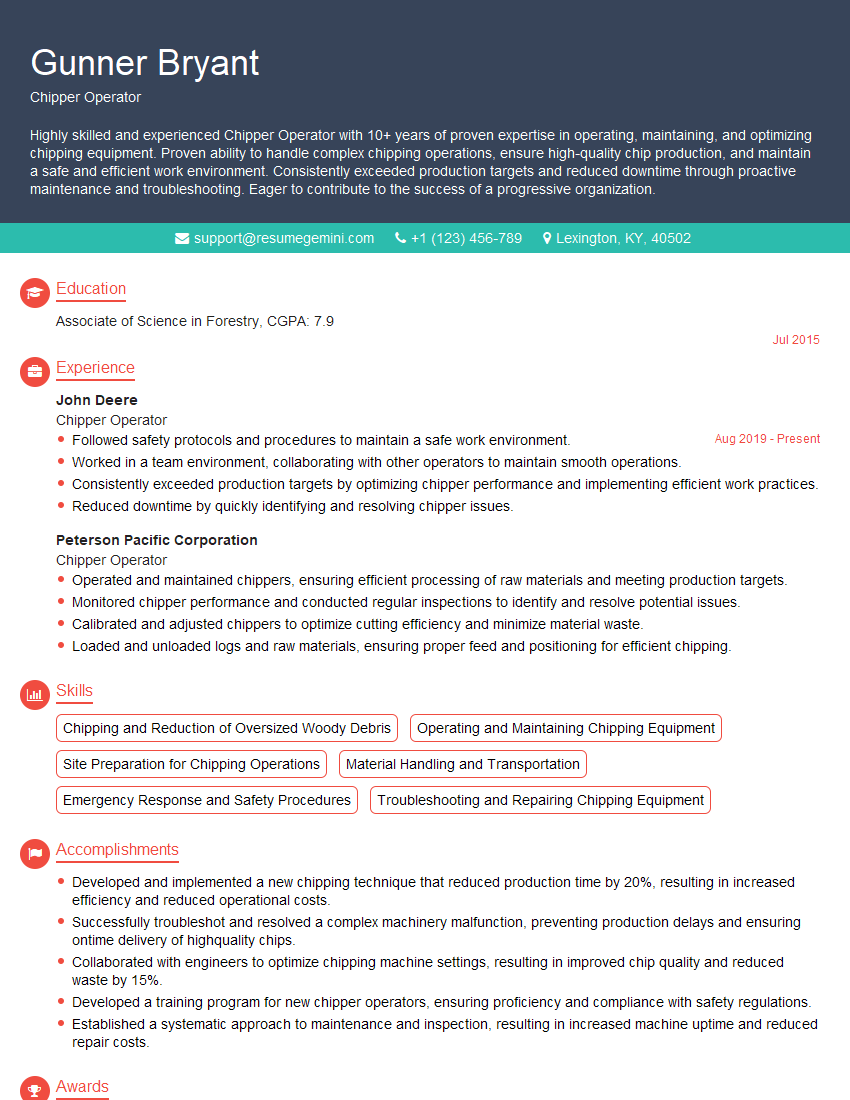
Mastering the skills involved in feeding whole trees and branches into chippers opens doors to rewarding careers in forestry, landscaping, and arboriculture. These roles offer a blend of physical work and technical expertise, contributing to environmental sustainability and community upkeep. To maximize your job prospects, creating a strong, ATS-friendly resume is essential. ResumeGemini can help you build a professional and impactful resume that highlights your skills and experience. We provide examples of resumes tailored to this specific field to give you a head start. Take the next step towards your dream career today!



Explore more articles
Users Rating of Our Blogs
Share Your Experience
We value your feedback! Please rate our content and share your thoughts (optional).
What Readers Say About Our Blog
Very informative content, great job.
good