Every successful interview starts with knowing what to expect. In this blog, we’ll take you through the top Fence Post Setting interview questions, breaking them down with expert tips to help you deliver impactful answers. Step into your next interview fully prepared and ready to succeed.
Questions Asked in Fence Post Setting Interview
Q 1. What types of fence posts are suitable for different soil conditions?
Choosing the right fence post material is crucial for longevity and depends heavily on your soil type. Think of it like choosing the right foundation for a house – the wrong choice leads to problems.
- Well-drained soil (sandy, loamy): Pressure-treated wood posts are a cost-effective and widely used option. Their durability is enhanced by the preservative treatment, protecting them from rot and insect damage. Metal posts (steel or aluminum) are also suitable but may require additional rust prevention in some climates.
- Clay soil: Clay soil retains moisture, increasing the risk of rot. Pressure-treated wood posts are still viable, but ensure they’re deeply set and well-drained. Concrete or metal posts are generally more durable choices for clay soils because they resist water damage better.
- Rocky soil: This presents unique challenges. Metal posts are often preferred due to their ability to be driven directly into the ground using a post driver. However, excessively rocky ground might require extensive excavation and possibly concrete setting for even metal posts.
- Wet or poorly-drained soil: Avoid untreated wood completely. Metal posts, especially galvanized steel, are the best option here. Ensure adequate drainage around the post base to prevent waterlogging.
For all soil types, consider the height and weight of your fence. Taller fences will require more robust posts, regardless of the soil condition.
Q 2. Describe the process of setting a fence post using a post hole digger.
Using a post hole digger simplifies the process significantly. Remember, a properly dug hole is half the battle for a strong fence.
- Digging the hole: Use the post hole digger to excavate a hole that’s deep enough to ensure at least one-third of the post is buried below ground. The depth also depends on the height of your fence and soil type. Generally, the hole should be about twice the width of the post.
- Adding gravel (optional but recommended): A layer of gravel at the bottom of the hole provides excellent drainage, preventing water buildup around the post base. This is especially vital in clay or poorly-drained soils.
- Setting the post: Carefully place the post in the hole, ensuring it’s plumb (perfectly vertical). Use a level to check. You can use temporary supports to hold it in place while you add the backfill.
- Backfilling: Gradually backfill the hole with soil, tamping it down firmly with a tamper or post pounder to compact the soil around the post. This will prevent settling and ensure the post remains stable.
- Checking for plumbness: Once the hole is almost full, recheck the post’s plumbness and adjust as needed. This ensures the fence line is straight.
- Final fill and compaction: Complete the filling and firmly tamp the soil to settle it completely. A slightly raised soil mound around the base can further aid drainage.
Q 3. What safety precautions should be taken when setting fence posts?
Safety is paramount when setting fence posts. One mishap can lead to serious injury. Always prioritize safety first.
- Wear appropriate safety gear: This includes work gloves, safety glasses, and sturdy work boots to protect against injuries from digging tools, sharp objects, and potential slips.
- Call 811 (or your local utility locating service): Before you begin digging, contact your local utility locating service to mark the location of underground utilities. Hitting a gas line or power cable can be catastrophic.
- Proper lifting techniques: Use proper lifting techniques to avoid back injuries when handling heavy posts and materials. Avoid twisting or lifting heavy loads alone. Get help if you need it.
- Be aware of your surroundings: Pay attention to your surroundings. Avoid working in unstable areas or where there’s a risk of falling.
- Use caution with power tools: If using power tools such as a post driver, follow all manufacturer’s safety instructions and wear appropriate safety gear.
Q 4. How do you determine the correct spacing between fence posts?
Post spacing depends on several factors, including the type of fence, the material used, and the local building codes. It’s not a one-size-fits-all scenario.
- Fence type: A lightweight fence, like a chain link fence, might require posts every 6 to 8 feet. Heavier fences, such as those made of wood or vinyl, may need posts every 8 to 10 feet or even closer, depending on the weight of the materials and expected stresses.
- Local codes: Always check your local building codes for regulations regarding fence spacing and post requirements. They might specify minimum standards for strength and stability.
- Terrain: Uneven or sloping terrain may require closer post spacing to ensure stability.
- Wind exposure: Areas prone to high winds necessitate closer spacing to prevent the fence from being blown over.
Consider using a string line to visually layout your fence and accurately determine post locations before digging.
Q 5. What tools and equipment are essential for efficient fence post setting?
The right tools make fence post setting easier, faster, and safer. Here are some essentials:
- Post hole digger: A manual or powered post hole digger is indispensable for efficiently creating the holes.
- Post level: Ensures your posts are perfectly plumb.
- Shovel: For digging, backfilling, and general cleanup.
- Tamper or post pounder: Compacts the soil around the post for stability.
- Measuring tape: For accurate spacing and hole depth measurements.
- String line: Helps establish a straight fence line.
- Safety gear: Gloves, safety glasses, sturdy work boots.
- Post driver (optional): Especially useful for metal posts in suitable soil.
- Gravel: Improves drainage.
Having the right tools saves time, effort, and prevents frustration.
Q 6. Explain the proper techniques for setting fence posts in rocky or hard soil.
Rocky soil requires a different approach. Brute force isn’t always the answer; strategy is key.
- Careful excavation: Manually remove rocks around the proposed post location to create a stable base. A pickaxe or rock bar can be helpful. This avoids damaging the post or post hole digger.
- Post setting methods: Metal posts are often easier to set in rocky soil. Use a post driver to carefully drive them into place. For wood posts, consider setting them in concrete. Dig a hole slightly larger than the post and fill it with quick-setting concrete, embedding the post firmly.
- Adjusting for rocks: If you encounter large, immovable rocks, adjust the position of the post to avoid them or carefully work around them to ensure stability.
- Specialized tools: Consider renting or purchasing specialized rock augers or drills designed for hard soil conditions. This can significantly reduce the effort involved in digging.
Be patient, take your time, and focus on creating a solid, stable base. A well-set post is worth the extra effort.
Q 7. How do you handle unexpected challenges, such as encountering underground utilities?
Encountering underground utilities is a serious issue that demands immediate action.
- Stop work immediately: Do not continue digging or driving posts if you suspect you’ve hit a utility.
- Call the utility company: Contact the utility company immediately to have the line inspected and marked. Provide them with the exact location.
- Assess the situation: Do not attempt to repair or move the line yourself. It is extremely dangerous and could lead to injury or damage.
- Adjust your plan: Once the utility line’s location is confirmed, adjust your fence plan to avoid it. This might involve changing the post location or relocating the entire section of the fence.
- Professional help: If you’re uncertain about how to proceed, seek help from a professional fencing contractor. They have experience working around underground utilities safely and can offer solutions.
Prevention is better than cure. Always call 811 (or your local utility locating service) *before* starting any digging project.
Q 8. What are the different methods for setting fence posts (e.g., in concrete, directly in the ground)?
There are several methods for setting fence posts, each with its own advantages and disadvantages. The choice depends on factors like soil type, fence type, and budget.
- Setting in Concrete: This is the most robust and durable method. A hole is dug, the post is positioned plumb (perfectly vertical), and then concrete is poured around it, filling the hole. This provides excellent stability and longevity, especially in unstable soil. It’s ideal for heavier fences or areas with high winds. Think of it like building a strong foundation for a house – the concrete acts as a solid base.
- Directly in the Ground: This method involves driving the post directly into the ground using a post-hole digger or a post driver (powered or manual). It’s faster and less labor-intensive than setting in concrete, but it’s less stable, particularly in loose or shifting soil. It’s suitable for lighter fences in stable soil conditions. Think of this as pushing a stake into the ground – simpler, but requires good soil consistency.
- Using Post Anchors: These metal brackets are driven into the ground and then the post is bolted to the anchor. This offers a compromise between the stability of concrete and the ease of direct setting. It’s a good option for applications where concrete is impractical or undesirable.
The best method always depends on the specific project requirements.
Q 9. Describe your experience with different types of fence post materials (e.g., wood, metal, vinyl).
My experience encompasses working with various fence post materials, each offering unique properties:
- Wood: I’ve extensively used pressure-treated lumber, typically cedar or pine. Wood offers an aesthetic appeal and is relatively inexpensive. However, it requires regular maintenance (staining, sealing) to protect it from rot and insect damage. The lifespan varies significantly depending on the type of wood and the environmental conditions. For instance, I once used a cedar post that lasted over 20 years with minimal maintenance in a dry climate.
- Metal: Metal posts, often steel or aluminum, are highly durable and resistant to rot and insects. They require less maintenance than wood but can be more expensive and are prone to rusting (steel) unless galvanized or powder-coated. The heavy-duty galvanized steel posts I use for commercial projects are extremely long-lasting.
- Vinyl: Vinyl posts are low-maintenance and resistant to rot, insects, and rust. They provide a clean, modern look but can be brittle in extremely cold climates and can be more expensive than wood.
The choice of material depends on factors like budget, desired lifespan, aesthetic preferences, and the level of maintenance one is willing to undertake.
Q 10. How do you ensure the fence posts are plumb and level?
Ensuring posts are plumb and level is crucial for a straight, stable fence. I use a combination of tools and techniques:
- Plumb Bob: This simple tool helps verify vertical alignment. I hang it from the top of the post and check if the bob aligns with the center of the post base.
- Level: I use a torpedo level to ensure the post is perfectly vertical. I check both axes – front-to-back and side-to-side.
- Post-Hole Digger: The initial hole needs to be the correct depth and diameter. Digging a hole that’s too narrow can make getting the post perfectly plumb and setting the concrete more challenging.
- Temporary Braces: Before the concrete sets, I use temporary braces (often wooden stakes and string) to hold the post securely in place while the concrete cures. This prevents it from shifting.
Through careful use of these tools and attention to detail, I can consistently ensure plumb and level fence posts which are essential for the integrity and look of the entire fence.
Q 11. What is your experience with using heavy equipment for fence post setting?
I have extensive experience operating and coordinating the use of heavy equipment for large-scale fencing projects. This typically includes:
- Skid Steer Loaders: These are invaluable for digging post holes, especially in challenging soil conditions. They can quickly and efficiently excavate even deep holes, saving significant time and labor.
- Post Hole Diggers (Augers): Attached to skid steers or tractors, these augers are highly effective at digging consistently sized and shaped holes. This ensures proper post fit and stability.
- Excavators: In extremely challenging terrain or for particularly large posts, I use excavators to prepare the ground and dig holes.
Safe operation of heavy equipment demands rigorous training and adherence to safety protocols. I always ensure the site is properly surveyed, all personnel are clear of the equipment’s operational area, and all safety precautions, including personal protective equipment (PPE), are observed.
Q 12. How do you maintain the safety of yourself and others during the post setting process?
Safety is paramount. I follow a strict safety protocol throughout the fence post setting process:
- Site Assessment: Before starting, I thoroughly assess the site for hazards such as underground utilities, uneven terrain, and obstacles.
- Personal Protective Equipment (PPE): I always wear appropriate PPE, including safety glasses, gloves, steel-toed boots, and hearing protection (when using power equipment).
- Equipment Safety: I regularly inspect all equipment before use, ensuring it’s in good working condition and properly maintained. I always follow the manufacturer’s safety guidelines.
- Communication: On larger projects, clear and constant communication with the team is essential. This ensures everyone knows the task at hand and is aware of potential hazards.
- Emergency Procedures: Everyone on the team knows the emergency procedures and the location of the first-aid kit. I make sure everyone understands the appropriate responses to any accidents or emergencies.
By consistently implementing these safety measures, I maintain a safe and productive work environment.
Q 13. What are the common causes of fence post failure, and how can they be prevented?
Fence post failure can stem from several factors. Prevention relies on addressing these issues proactively:
- Rot and Decay (Wood Posts): Using pressure-treated lumber and ensuring proper drainage around the post base minimizes rot. Applying sealant or stain is also beneficial.
- Insect Infestation: Pressure-treated lumber resists insects, but it’s important to choose a treatment appropriate for the local pests. Regular inspections can help detect and address infestations early on.
- Frost Heave: This occurs when freezing and thawing cycles push the post out of the ground. Setting the posts deep enough and using proper backfill material can mitigate this.
- Poor Installation: Incorrect depth, insufficient concrete (or improper mixing), and not ensuring the post is plumb and level all contribute to post failure. Careful attention to these details during installation is vital.
- Soil Conditions: In unstable or loose soil, consider using larger posts, more concrete, or alternative setting methods (e.g., post anchors).
Regular inspections and timely maintenance are key to extending the life of fence posts and preventing failures.
Q 14. How do you calculate the number of fence posts needed for a given project?
Calculating the number of fence posts needed is straightforward but requires attention to detail:
- Measure the total length of the fence: This is the overall distance the fence will cover.
- Determine the spacing between posts: This varies depending on the fence type and material. Common spacing ranges from 6 to 8 feet.
- Divide the total length by the spacing: This provides the approximate number of posts needed. For example, a 100-foot fence with 8-foot spacing requires approximately 100/8 = 12.5 posts. Always round up to the nearest whole number.
- Account for corner posts and end posts: You’ll need additional posts for corners and both ends of the fence line. Add these to the total.
For example, a 100-foot straight fence with 8-foot spacing would require approximately 13 posts (12.5 rounded up) plus 2 more for the ends, totaling 15 posts. Always add extra posts to account for potential errors or adjustments during installation.
Q 15. Explain your experience with different types of fence lines (e.g., straight, curved).
My experience encompasses a wide range of fence line configurations, from perfectly straight lines ideal for agricultural fields to elegantly curved lines that complement landscaping designs. Straight lines are generally easier to lay out and build, requiring precise measurements and consistent post spacing. However, curved lines demand more careful planning and potentially more intricate techniques for ensuring consistent arc radius and post placement. For example, I’ve worked on a large agricultural project requiring a mile-long straight fence line, where precise surveying and string lines were crucial. In contrast, I recently completed a residential project involving a curved fence to border a swimming pool, where flexible techniques and careful post angling were essential to achieve the desired aesthetic.
Working with curved lines involves using flexible measuring tools, often involving string lines and stakes set at regular intervals along the curve to guide post placement. Precisely calculating the angle and spacing of posts along the curve is key to avoiding uneven spacing and a visually unappealing fence.
Career Expert Tips:
- Ace those interviews! Prepare effectively by reviewing the Top 50 Most Common Interview Questions on ResumeGemini.
- Navigate your job search with confidence! Explore a wide range of Career Tips on ResumeGemini. Learn about common challenges and recommendations to overcome them.
- Craft the perfect resume! Master the Art of Resume Writing with ResumeGemini’s guide. Showcase your unique qualifications and achievements effectively.
- Don’t miss out on holiday savings! Build your dream resume with ResumeGemini’s ATS optimized templates.
Q 16. How do you prepare the ground before setting fence posts?
Ground preparation is paramount for a long-lasting fence. It involves clearing the area of any vegetation, rocks, or debris that could interfere with post setting. This often includes removing grass and weeds, as well as excavating any large rocks or roots that could compromise the post’s stability. I typically use a combination of hand tools and machinery, depending on the scale and terrain. The soil should be properly compacted after excavation to ensure the posts don’t settle unevenly over time. Imagine trying to build a house on unstable ground – the result is likely to be disasterous. The same applies to fences.
For larger projects, I might utilize a trencher to create a consistent trench for the posts, while smaller projects might require only manual digging. After digging, the hole should be inspected for loose soil or debris before post installation.
Q 17. What is your experience working with different fence types (e.g., privacy, chain link)?
I have extensive experience with various fence types, including privacy fences (wood, vinyl), chain link, and ornamental metal fencing. Each type presents unique challenges and requires different installation techniques. Privacy fences, for example, often require more precise post placement and careful alignment to ensure the panels fit correctly and provide the desired level of privacy. Chain link is simpler to install but requires tensioning to prevent sagging, and the posts must be correctly aligned to handle the tension. Ornamental metal fencing requires a keen eye for detail, paying particular attention to the correct spacing and alignment of the individual fence panels.
One memorable project involved constructing a tall cedar privacy fence around a large property. Ensuring consistent post spacing and verticality across the entire length of the fence line was a significant challenge.
Q 18. Describe your experience with post hole diggers and augers.
I’m proficient with both manual post hole diggers and powered augers. Manual diggers are suitable for smaller jobs or areas with difficult access, offering control and precision. However, they can be labor-intensive for larger projects. Powered augers, conversely, are ideal for large-scale projects, significantly speeding up the process. However, they require careful operation to avoid damaging underground utilities or causing unnecessary soil disturbance. The choice between the two depends entirely on the project size, soil conditions, and available resources.
For example, on a recent project involving many posts in rocky soil, we used a gas-powered auger with a suitable auger bit for efficient hole drilling, whereas a smaller project in a residential garden was easier to handle with a manual post hole digger.
Q 19. How do you deal with varying soil types and conditions?
Different soil types and conditions demand a tailored approach. Clay soil, for example, requires careful preparation to prevent post settling. Adding gravel to the bottom of the hole can improve drainage and create a more stable base. Rocky soil might require a rock auger or even hand-chiseling to create the necessary hole, while sandy soil might need more compaction to prevent shifting. Wet or unstable ground may need additional support, such as using larger posts or adding concrete footings. Adaptability is key; assessing the conditions on-site is always my first step.
I once encountered extremely rocky terrain where we had to use a combination of hand tools and a small jackhammer to create the holes for the posts. The additional time and effort were necessary to ensure a stable and durable fence.
Q 20. What is your approach to quality control during fence post installation?
Quality control is a continuous process. It begins with careful planning, precise measurements, and the use of high-quality materials. Throughout the installation, I regularly check for post plumbness (vertical alignment), consistent spacing, and proper depth. I use levels and measuring tapes to ensure accuracy. Before backfilling, I visually inspect each post to confirm its secure placement. After installation, a final inspection ensures all posts are firmly set, the fence is straight, and the gates operate correctly. Documentation of the process, including material choices and installation methods, is part of this overall quality-control strategy.
A checklist for each post, covering plumbness, depth, and correct setting, ensures all steps are systematically followed and any discrepancies are identified and rectified promptly.
Q 21. What are the signs of a poorly set fence post?
Several signs indicate a poorly set fence post. Leaning or tilting posts are the most obvious indicator of improper installation, often due to insufficient depth or inadequate soil compaction. Posts that settle significantly over time indicate a lack of proper ground preparation. Uneven spacing between posts suggests poor planning or careless execution, compromising the fence’s structural integrity and appearance. Finally, any signs of rotting or decay around the base of a post suggests poor drainage or inadequate protection against moisture, impacting the longevity of the structure.
Think of it like a house built on a weak foundation – small issues can snowball into significant problems, requiring costly repairs.
Q 22. How do you ensure proper drainage around fence posts?
Proper drainage around fence posts is crucial for extending the life of your fence and preventing rot. Think of it like this: you wouldn’t want your house’s foundation constantly sitting in water, right? The same principle applies to fence posts.
- Gravel Base: Before setting the post, dig a hole wider and slightly deeper than the post. Place a layer of gravel (about 4-6 inches) at the bottom. This creates a highly permeable base that allows water to drain away from the post.
- Proper Backfilling: After setting the post, backfill the hole with a mix of gravel and soil. Avoid compacting the soil too tightly around the post, as this can hinder drainage. Leave a slight depression around the base of the post to allow for water runoff.
- Slope Away from the Post: Ensure the surrounding ground slopes slightly away from the post. This helps direct water away and prevents it from pooling around the base. You might need to gently grade the soil to achieve this.
- Drainage Solutions for Wet Areas: In particularly wet areas, consider installing drainage tiles or perforated pipe around the post to further improve water drainage. This is especially important for areas with high water tables.
For example, on a recent job with heavy clay soil, I used a combination of gravel, a slight slope, and drainage tile to ensure excellent drainage around the posts, even during periods of heavy rainfall. This extra measure prevented any water damage to the fence posts and extended its lifespan significantly.
Q 23. How familiar are you with local building codes and regulations regarding fence installation?
I am very familiar with local building codes and regulations concerning fence installation. I regularly consult the relevant codes for each project and make sure all aspects of the work comply with them. These codes usually cover things like:
- Fence Height Restrictions: Regulations often specify maximum fence heights depending on the zoning and location of the property.
- Setback Requirements: Codes usually dictate how far a fence must be from property lines and other structures.
- Material Specifications: Certain materials might be restricted or require specific treatments (e.g., pressure-treated lumber).
- Permitting Requirements: Some jurisdictions require permits for fence installations, particularly those exceeding a certain height or length.
Ignoring these regulations can lead to fines and even require the removal of the fence, which is costly and time-consuming. I always prioritize adhering to the local codes and explain their implications to the clients beforehand, ensuring they understand the process and its importance.
Q 24. What is your experience with working in varied weather conditions?
I have extensive experience working in varied weather conditions. Fence post setting is an outdoor job, and I’ve worked through everything from scorching summers to freezing winters and torrential downpours.
- Heat: On hot days, we schedule work for the cooler parts of the day, use sunscreen, stay hydrated, and take frequent breaks. Extreme heat can affect the efficiency of concrete setting, too.
- Cold: During winter, we take precautions like using frost-resistant concrete and adjusting our digging techniques for frozen ground, sometimes using specialized equipment.
- Rain: Wet ground can make it harder to dig and set posts, and excessively wet conditions can delay the curing of concrete. We use weather forecasts to plan projects and reschedule if necessary.
Adaptability is key. I am adept at making adjustments to my work process based on weather conditions to maintain efficiency and safety while achieving high quality.
Q 25. How do you handle and dispose of waste materials during fence post installation?
Safe and responsible waste disposal is paramount. We adhere to all local regulations and guidelines regarding waste management.
- Sorting Waste: We carefully sort waste materials on-site, separating things like wood scraps, metal, concrete, and packaging.
- Recycling: We recycle as much material as possible, such as scrap metal and wood that is suitable for reuse.
- Disposal at Approved Sites: We transport the remaining waste to approved landfill sites or recycling centers, ensuring proper documentation and compliance with local ordinances.
- Minimizing Waste: We plan ahead to minimize waste generation by carefully measuring materials and using them efficiently.
For example, on a recent project, we were able to recycle nearly 75% of our wood waste through a local wood recycling facility, reducing our environmental impact.
Q 26. Describe your experience in working within a team environment.
I thrive in team environments. Effective fence installation relies heavily on teamwork and clear communication. My experience involves coordinating with different team members, each bringing their own expertise to the project.
- Collaboration: I collaborate effectively with diggers, concrete mixers, and other team members to ensure smooth and efficient workflow.
- Communication: I communicate clearly and effectively with my team, providing direction and ensuring everyone understands their roles and responsibilities.
- Problem Solving: We work as a team to solve unexpected challenges and adapt to changing circumstances on the job site.
For example, on one project where we encountered unexpectedly hard ground, our teamwork allowed us to quickly adapt our approach and solve the problem with minimal delays.
Q 27. What is your experience with using a level and measuring tape?
I’m highly proficient in using a level and measuring tape. Accuracy is crucial in fence post setting, ensuring straight lines and structurally sound fences.
- Level Use: I use a level to ensure posts are perfectly plumb (vertical) and that the fence line is perfectly level. This prevents sagging and ensures the fence looks its best and functions correctly.
- Measuring Tape: A measuring tape is essential for accurate spacing between posts and to get the correct lengths for fence rails and other components. Precise measurements prevent gaps and ensure a seamless fence.
- Combined Use: I frequently use the level and measuring tape together to ensure all posts are spaced correctly and perfectly aligned.
I’m meticulous in my measurements, ensuring the final fence meets the client’s expectations and stands the test of time. The slightest error in measurement can lead to problems down the line, so precision is paramount.
Key Topics to Learn for Fence Post Setting Interview
- Understanding Fence Post Setting Principles: Grasp the fundamental concepts behind fence post setting, including proper post depth, spacing, and alignment for various soil types and fence styles.
- Material Selection and Preparation: Learn about choosing appropriate post materials (wood, metal, composite), treating them for longevity, and preparing the posts for setting (e.g., sharpening, pre-drilling).
- Excavation Techniques: Understand different excavation methods for setting posts, including hand-digging, using augers, and employing post hole diggers. Consider the impact of soil conditions and terrain on your choice of method.
- Post Setting Methods: Become proficient in various post-setting techniques, such as setting posts in concrete, using gravel backfill, or employing specialized post drivers. Discuss the advantages and disadvantages of each method.
- Safety Procedures and Regulations: Familiarize yourself with relevant safety protocols and regulations concerning the use of power tools, handling of materials, and working at heights (if applicable).
- Troubleshooting Common Issues: Prepare to discuss common problems encountered during fence post setting, such as uneven ground, rocky soil, or post instability, and how to effectively address them.
- Project Planning and Estimation: Practice estimating material quantities, labor hours, and overall project costs for fence post setting projects of varying scales.
Next Steps
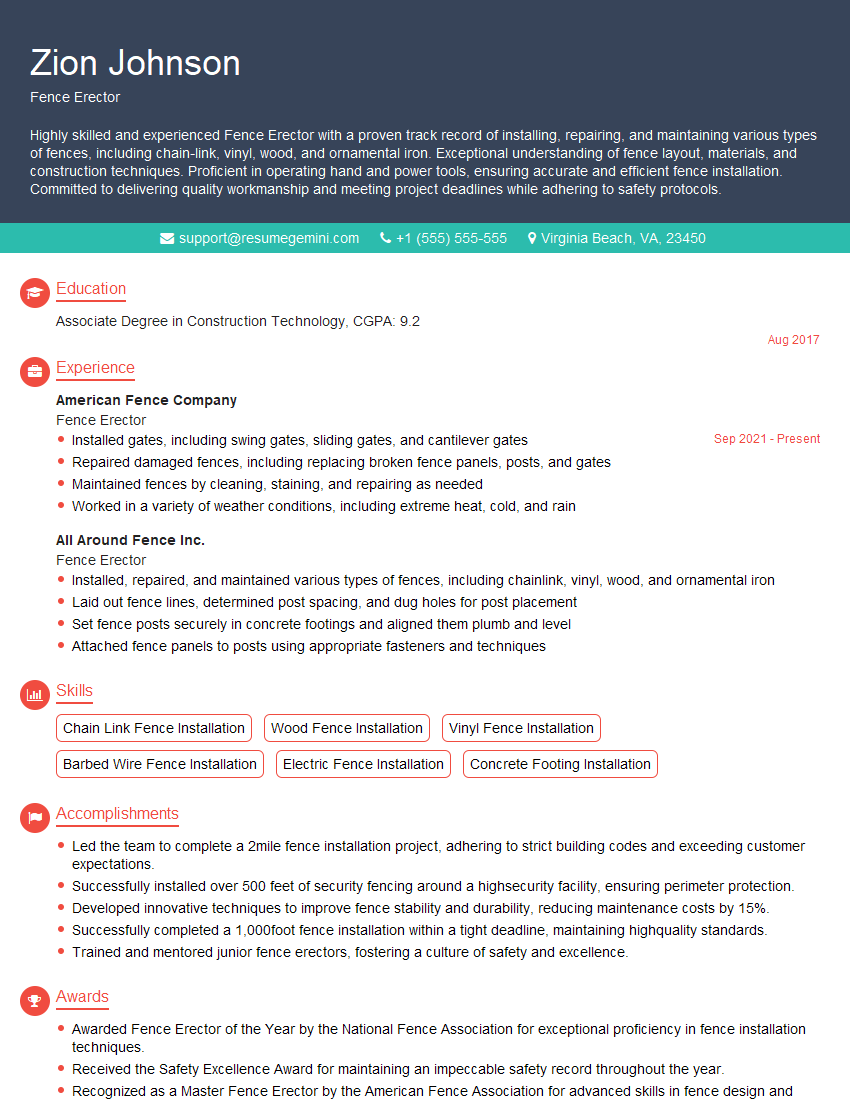
Mastering fence post setting techniques is crucial for career advancement in construction, landscaping, and related fields. A strong understanding of these principles demonstrates practical skills and problem-solving abilities highly valued by employers. To enhance your job prospects, create an ATS-friendly resume that clearly showcases your expertise. We strongly recommend using ResumeGemini to build a professional and impactful resume that highlights your skills and experience. ResumeGemini offers examples of resumes tailored to Fence Post Setting to help you create a compelling application.
Explore more articles
Users Rating of Our Blogs
Share Your Experience
We value your feedback! Please rate our content and share your thoughts (optional).
What Readers Say About Our Blog
Very informative content, great job.
good