Interviews are opportunities to demonstrate your expertise, and this guide is here to help you shine. Explore the essential Fence Repair and Installation interview questions that employers frequently ask, paired with strategies for crafting responses that set you apart from the competition.
Questions Asked in Fence Repair and Installation Interview
Q 1. What types of fences are you experienced in installing and repairing?
My experience encompasses a wide range of fence types, including wood, vinyl, chain link, ornamental metal, and composite materials. I’ve worked on various fence styles from traditional picket fences to modern privacy fences and even agricultural fencing. I’m comfortable with both residential and commercial projects, ranging from small repairs to large-scale installations.
Q 2. Describe your experience with different fence materials (wood, vinyl, chain link, etc.)
Each material presents unique challenges and advantages. Wood offers a classic look but requires regular maintenance to prevent rot and insect damage. Vinyl is low-maintenance and durable but can be brittle in extreme temperatures. Chain link is cost-effective and strong but less aesthetically pleasing. Ornamental metal is elegant but expensive and susceptible to rust if not properly maintained. Composite materials offer a good balance of durability and low maintenance. My experience allows me to select the best material based on a client’s budget, aesthetic preferences, and the specific site conditions.
Q 3. What are the common issues you encounter when repairing wooden fences?
The most common issues with wooden fences are rot in the posts and rails, damaged pickets due to weather or impact, loose fasteners, and sagging panels. Pest infestations, particularly termites, can also be significant problems. I often find that inadequate initial installation contributes significantly to these issues, such as improper post setting or insufficient treatment against rot.
Q 4. How do you address fence post rot or damage?
Addressing post rot or damage depends on the extent of the problem. Minor rot can sometimes be addressed by cleaning the affected area, applying a wood hardener, and then repairing the surrounding wood. For severe rot, replacement is usually necessary. I carefully assess the condition of the post, excavating the surrounding soil to check the extent of damage below ground. Replacement involves digging a new hole, setting a treated post with concrete, and then reattaching the existing fence panels. Sometimes, I use post extenders to add length to existing posts without complete replacement.
Q 5. Explain your process for setting fence posts.
Setting fence posts correctly is crucial for a long-lasting fence. My process begins with precise layout, using string lines and measuring tools to ensure accurate spacing and alignment. Then I dig holes deep enough—typically at least a third of the post’s length—and wide enough for proper setting. The hole should be wider at the bottom to allow for better settling. For stability, I add gravel to the bottom of the hole before setting the post. I use a post level to ensure the post is plumb (perfectly vertical) in all directions. Finally, I fill the hole with concrete, ensuring it completely surrounds the post. I carefully tamp down the concrete to prevent voids and allow it to cure completely before attaching the fence panels.
Q 6. What tools and equipment are essential for fence repair and installation?
Essential tools include post hole diggers (manual or power augers), shovels, levels, measuring tapes, string lines, hammers, saws (circular saws for wood and reciprocating saws for metal), post hole diggers, concrete mix, a post pounder, various fasteners (screws, nails, staples), safety glasses, work gloves, and potentially a jackhammer for removing concrete if required.
Q 7. How do you ensure the proper alignment and tension of fence panels?
Maintaining proper alignment and tension is critical. I use string lines as a guide during installation, ensuring that the posts are perfectly aligned before attaching the panels. For wood and vinyl fences, I pre-drill holes to prevent splitting and use appropriate fasteners. Tension is crucial, especially with chain link. I use tension bars and turnbuckles to adjust the tension evenly along the fence line, ensuring a taut and straight fence. If dealing with sagging panels, I might need to reinforce the posts or replace damaged components.
Q 8. What safety measures do you prioritize during fence work?
Safety is paramount in fence work. It’s not just about following regulations; it’s about protecting myself and my team from potential hazards. My safety protocols begin with a thorough site assessment before any work commences. This includes identifying potential hazards like underground utilities, uneven terrain, and nearby obstacles.
- Personal Protective Equipment (PPE): We always wear safety glasses, gloves, steel-toed boots, and hard hats. For tasks involving power tools, we add hearing protection.
- Proper Tool Use and Maintenance: All tools are regularly inspected and maintained to prevent accidents caused by malfunctioning equipment. We use the right tool for the job and follow manufacturer instructions meticulously.
- Safe Handling of Materials: Heavy materials are handled using appropriate lifting techniques and equipment to prevent back injuries. We use lifting straps and ensure proper placement before lifting.
- Awareness of Surroundings: We establish clear communication channels within the team to prevent accidents. We use caution around traffic and other potential hazards.
- Emergency Preparedness: A well-stocked first-aid kit is always on site. The team is trained in basic first aid and knows emergency procedures.
For example, during a recent project near a busy road, we implemented a traffic control plan using cones and warning signs to ensure both worker and public safety. Failing to prioritize safety could lead to serious injury and project delays.
Q 9. Describe your experience with using different types of post hole diggers.
My experience with post hole diggers spans various types, each suited for different soil conditions and project scales. I’m proficient with manual diggers, auger diggers (both gas-powered and electric), and even specialized hydraulic post hole diggers for large-scale projects.
- Manual Diggers: These are great for smaller jobs in softer soil and are cost-effective. They require more physical effort, and progress can be slower in rocky or compacted soil.
- Auger Diggers (Gas and Electric): These are ideal for larger projects or tougher soil conditions. Gas-powered augers provide more power but require regular maintenance and fuel, while electric augers are cleaner and quieter but might have limitations on power depending on the soil type. I’ve found that the electric augers are a great balance between power and convenience for the majority of projects.
- Hydraulic Post Hole Diggers: These are heavy-duty machines employed on large-scale projects with many posts. Their power and speed are unmatched, making them invaluable for large commercial fence installations, but they demand more specialized knowledge and a larger investment.
Choosing the right digger is critical. In one instance, using a manual digger on a large, rocky site would have been incredibly time-consuming and inefficient. We opted for a gas-powered auger, which significantly reduced the project timeline while still ensuring quality.
Q 10. How do you handle challenging terrain during fence installation?
Challenging terrain presents unique challenges, but with proper planning and techniques, we can successfully install fences even in difficult locations. My approach involves careful surveying and adapting techniques to the specific challenges.
- Site Assessment: This involves identifying slopes, rocky areas, and areas with existing vegetation that will need to be addressed. Precise measurements are crucial for accurate material estimation.
- Grading and Leveling: Uneven terrain might require grading to create a level base for the fence posts. This might involve removing excess soil or adding fill in low areas.
- Post Placement: For slopes, I might use different techniques such as offsetting posts or using steps to ensure stability and a consistent fence line.
- Anchoring and Stabilization: In rocky or unstable soil, specialized techniques such as rock anchors or larger concrete footings may be required to secure posts adequately.
For instance, I recently worked on a project with a steep incline. We used a combination of offset post placement, reinforced concrete footings, and specialized digging techniques to ensure a strong, safe, and aesthetically pleasing fence installation.
Q 11. What is your experience with working from blueprints or plans?
Working from blueprints and plans is fundamental to our process. It ensures precision, accuracy, and a smooth project execution. I’m comfortable interpreting various types of drawings and specifications to accurately lay out fence lines, determine post placement, and select appropriate materials.
- Blueprint Interpretation: I can read and understand scale drawings, material specifications, and other relevant information indicated in professional fence plans. I can identify key details like post spacing, gate locations, and property lines.
- Site Survey: Blueprints provide a starting point, but a site survey is essential to ensure accuracy. This involves comparing the blueprint layout to the actual site, accounting for any discrepancies.
- Adaptability: While plans are important, I am prepared to make minor adjustments on site as needed. The ability to adapt and solve unexpected problems is crucial.
In one project, the blueprint indicated a slightly different property line than the actual survey stakes. By carefully comparing the two, we identified and corrected the discrepancy before starting the excavation, preventing significant rework and maintaining project integrity.
Q 12. How do you determine the correct amount of materials needed for a fence project?
Accurate material estimation is vital for efficient project management and cost control. I utilize a combination of methods to determine the right quantities.
- Detailed Measurements: The project perimeter is carefully measured, accounting for gates, angles, and any other complexities in the fence line.
- Post Spacing Calculation: Post spacing is determined based on the fence type, material, and local regulations. This calculation ensures sufficient posts for structural integrity.
- Material Length Calculation: The total length of fencing materials (e.g., rails, panels) is calculated based on the perimeter and post spacing.
- Additional Materials: I always add a small percentage (typically 5-10%) to account for potential cuts, waste, and unexpected issues.
- Hardware and Supplies: The quantity of fasteners, concrete, and other necessary supplies is determined according to the materials used and the project scope.
For example, in a recent project, by meticulously calculating the fence length and accounting for gate openings, we were able to order the exact amount of materials needed, minimizing waste and saving costs. This accuracy reduces potential delays due to material shortages.
Q 13. How do you manage a team effectively during a fence installation project?
Effective team management is crucial for successful fence installation projects. My approach emphasizes clear communication, delegation, and fostering a positive work environment.
- Pre-Project Briefing: Before commencing any work, the team receives a clear briefing, outlining tasks, roles, and safety procedures.
- Task Delegation: Tasks are delegated according to individual skills and experience, optimizing efficiency and productivity.
- Open Communication: Maintaining open communication ensures everyone is aware of progress, challenges, and potential changes. Regular check-ins are conducted to address issues proactively.
- Problem-Solving Collaboration: The team works collaboratively to find solutions to any challenges that arise during the project.
- Positive and Safe Work Environment: A safe and supportive work environment helps foster morale, boosting efficiency and reducing risks.
During a recent large project, the efficient communication between the excavation team and the fence assembly team prevented bottlenecks, leading to a timely completion. Clear, concise instructions and constant team interaction led to a seamless operation.
Q 14. What is your experience with concrete work related to fence installation?
Concrete work is an integral part of most fence installations, particularly when it comes to setting fence posts. My experience includes various aspects of concrete work related to fence projects.
- Post Setting: I’m proficient in mixing and pouring concrete for setting fence posts, ensuring proper depth and support for long-term stability. This involves calculating the correct amount of concrete for each post and ensuring proper curing time.
- Footings and Foundations: For challenging soil conditions or heavier fences, I have experience creating reinforced concrete footings or foundations to provide added stability.
- Concrete Finishing: I ensure proper finishing of concrete around the posts, ensuring a neat and professional look. This involves techniques to prevent cracking and promote durability.
- Material Selection: I choose the appropriate type of concrete mix based on soil conditions and project requirements. For example, quick-setting concrete might be used in cold weather or time-sensitive projects.
In one instance, we used specialized concrete mixes with additives to improve its strength and resistance to frost damage in a particularly challenging climate. This ensured the long-term stability and durability of the fence, despite the harsh winter conditions.
Q 15. How do you deal with clients who have unexpected changes to the project?
Unexpected changes are a fact of life in any project, and fence work is no exception. My approach is built on clear communication and proactive problem-solving. First, I listen carefully to the client’s request, ensuring I fully understand their vision for the change. Then, I assess the feasibility – considering factors like material availability, project timeline, and budget implications. If the change is minor, like a slight alteration to gate placement, I’ll often incorporate it directly, providing a revised estimate if necessary. For more significant changes, I’ll prepare a detailed proposal outlining the new scope, cost, and timeline, allowing the client informed decision-making. Transparency is key; I ensure the client understands all aspects of the change, including potential delays or cost increases, before proceeding. For example, if a client initially requested a cedar fence but decides mid-project to switch to vinyl, we’ll discuss the price difference and any potential timeline shifts before moving forward. This prevents misunderstandings and fosters a positive working relationship.
Career Expert Tips:
- Ace those interviews! Prepare effectively by reviewing the Top 50 Most Common Interview Questions on ResumeGemini.
- Navigate your job search with confidence! Explore a wide range of Career Tips on ResumeGemini. Learn about common challenges and recommendations to overcome them.
- Craft the perfect resume! Master the Art of Resume Writing with ResumeGemini’s guide. Showcase your unique qualifications and achievements effectively.
- Don’t miss out on holiday savings! Build your dream resume with ResumeGemini’s ATS optimized templates.
Q 16. Describe your experience with repairing damaged fence gates.
Repairing damaged fence gates requires a systematic approach. I start by carefully assessing the extent of the damage. This involves checking for broken boards, damaged hinges, rotten posts, or any structural instability. For minor repairs like replacing a single broken board, I carefully measure, cut, and attach the replacement using appropriate fasteners (screws are generally preferred for their strength and holding power). For more extensive damage, I might need to replace hinges, reinforce the gate frame, or even rebuild sections of the gate. Safety is paramount – I ensure the gate operates smoothly and securely after repairs, eliminating potential hazards. I’ve had experience repairing gates damaged by strong winds, collisions with vehicles, or simply age and wear. One instance involved a gate with a completely rotted bottom rail. I carefully removed the old rail, prepared the posts for the new rail, and installed a pressure-treated replacement, ensuring proper alignment and sturdiness for a long-lasting repair.
Q 17. How familiar are you with local building codes and regulations regarding fences?
I am thoroughly familiar with local building codes and regulations regarding fence installation and repair. This includes understanding height restrictions, setback requirements from property lines, and regulations concerning materials and construction techniques. Staying updated on these codes is crucial to ensure compliance and avoid potential legal issues or project delays. I routinely consult the local building department’s website and publications for the latest updates, and I’m happy to provide clients with copies of relevant permits and approvals. For example, in one instance, a client wanted a fence exceeding the permitted height in their area. By explaining the relevant regulations and exploring alternative solutions – like a slightly shorter fence with added decorative features – we found a compliant and aesthetically pleasing solution. This collaborative approach ensures projects are both compliant and meet client expectations.
Q 18. How do you measure and cut fence materials accurately?
Accurate measurement and cutting of fence materials are essential for a professional-looking and structurally sound fence. I use a combination of tools for precise measurements – a measuring tape, a speed square, and a level. For cutting, I utilize a power miter saw for clean, accurate cuts, especially on pressure-treated lumber. Before making each cut, I double-check my measurements to avoid costly mistakes. For more intricate cuts, I might use a hand saw or jigsaw for greater control and precision. For example, when installing a curved fence section, I carefully measure and mark the curve on the lumber before making the cuts. This careful approach avoids waste and ensures the fence looks neat and professional. The extra care prevents gaps and ensures the fence looks professional. Consistent accurate cuts are essential for a high-quality fence.
Q 19. Explain your experience with using various types of fasteners (nails, screws, staples).
My experience encompasses the use of various fasteners, each with its own strengths and weaknesses. Nails are quick and easy for some applications, but screws offer superior holding power and resistance to pulling out, particularly in pressure-treated wood. Staples, typically used for attaching wire mesh fencing, offer speed and efficiency for that specific application but are not suitable for all fencing types. The choice of fastener depends heavily on the type of fence, the materials being used, and the desired level of strength and longevity. For instance, when constructing a sturdy wooden fence, I generally prefer screws for the fence posts and rails, ensuring excellent stability. For attaching the fence panels to the posts, screws or nails can be used depending on the design. For a chain-link fence, staples are the obvious choice, securing the wire mesh to the posts and rails.
Q 20. How do you ensure the longevity and durability of the fences you install?
Ensuring fence longevity and durability is a top priority. This begins with selecting high-quality materials that are suitable for the local climate and soil conditions. For example, pressure-treated lumber provides excellent rot resistance, while vinyl fencing is virtually maintenance-free. Proper installation techniques are equally important; this includes setting posts deep enough to ensure stability, using appropriate fasteners, and ensuring proper alignment and spacing of fence sections. Regular maintenance, such as inspecting for damage and applying sealant to wooden fences, helps extend their lifespan. Furthermore, understanding the local environmental factors, such as soil conditions, weather patterns, and potential pest infestations, allows for informed material choices and installation methods to maximize the lifespan of the fence. For instance, a client in an area with high winds may benefit from stronger posts and bracing for enhanced durability.
Q 21. What is your process for troubleshooting fence problems?
My troubleshooting process begins with a thorough visual inspection of the fence, identifying the specific problem areas. This may involve checking for loose posts, damaged boards, sagging sections, or gate malfunctions. I then assess the underlying cause of the problem; for example, loose posts may be due to improper installation or soil erosion, while sagging sections could indicate inadequate support or material degradation. I’ll use a combination of techniques to diagnose the issue, including checking for proper post depth, examining the condition of fasteners, and assessing the overall structural integrity of the fence. Once the cause is identified, I develop a repair plan addressing the root cause of the problem, not just the immediate symptom. For example, simply tightening loose screws might address a temporary issue, but if the posts are rotting, that needs to be addressed for a long-term solution. A systematic approach ensures that repairs are effective and lasting.
Q 22. What is your experience with fence repairs due to weather damage?
Weather damage is a significant factor in fence repair, and I have extensive experience addressing it. My experience encompasses various types of damage, from minor repairs to substantial reconstruction. For example, I’ve repaired fences damaged by strong winds, which often result in broken posts, loosened rails, and damaged panels. I’ve also dealt with water damage, including rotted wood caused by prolonged exposure to moisture, and damage from heavy snow loads, which can cause sagging and collapse. My approach involves a thorough assessment of the damage, determining the extent of the problem, and selecting the appropriate repair method. This might involve replacing individual components, reinforcing weak areas, or, in severe cases, replacing sections of the fence entirely. I always prioritize using high-quality materials and techniques to ensure longevity and weather resistance in the repairs.
For instance, I recently repaired a cedar fence that had suffered significant damage from a storm. The wind had uprooted several posts, causing gaps and leaning sections. I replaced the damaged posts, ensuring they were properly set in concrete, and reinstalled the rails and panels, securing them with galvanized screws to prevent future issues. I also treated the exposed wood with a high-quality weather sealant to protect it from future moisture damage.
Q 23. How do you handle difficult customers or situations?
Handling difficult customers or situations requires patience, active listening, and a commitment to finding mutually agreeable solutions. I begin by actively listening to the customer’s concerns, validating their feelings, and clarifying the issues. I strive to communicate clearly and professionally, explaining my assessment of the situation and the recommended course of action, along with the associated costs. If there are disagreements, I work to find common ground through negotiation and compromise. I’m always willing to offer alternative solutions or adjustments to accommodate the customer’s budget and preferences, while maintaining professional standards.
For example, I once had a client who was unhappy with the initial estimate for a fence repair. Instead of getting defensive, I patiently explained the reasons for the cost, highlighting the high-quality materials and the labor involved. I also offered an alternative solution using slightly less expensive materials, which still met the client’s needs. This approach satisfied the client, and the project was completed successfully.
Q 24. What is your experience with using power tools relevant to fence work?
My experience with power tools relevant to fence work is extensive and encompasses a wide range of equipment. I am proficient in the safe and efficient operation of post hole diggers, various types of saws (circular saws, reciprocating saws), drills, impact drivers, and grinders. I also have experience using specialized tools like chain link tensioners and wire stretchers for chain-link fences. Safety is my top priority, and I always adhere to strict safety protocols, ensuring proper use of safety gear, such as eye protection, hearing protection, and work gloves. Regular maintenance of my power tools is crucial for optimal performance and safety.
For example, when installing a new fence, I use a post hole digger to quickly and efficiently create holes for the fence posts. Then, I use a circular saw to cut the fence boards to the correct length. An impact driver is used to ensure the screws are securely fastened, while a grinder is helpful for shaping or smoothing any uneven areas. Understanding the specifics of each tool and its application is crucial for a successful and efficient fence installation or repair.
Q 25. Explain your experience with estimating the cost of fence repair or installation projects.
Estimating the cost of fence repair or installation projects involves a meticulous process. I start with a thorough on-site assessment to determine the scope of work. This includes measuring the perimeter, identifying the type of fence, assessing the condition of existing materials, and noting any site-specific challenges. Then, I factor in material costs based on current market prices and quantity needed, considering options that meet the client’s budget and desired quality. I add my labor costs, based on the estimated time required for the project, considering complexities like site access and terrain. I always provide a detailed written estimate outlining all costs clearly and transparently. I also highlight any potential additional costs that may arise due to unforeseen circumstances. My estimates are known for their accuracy and detailed nature.
For instance, when estimating a project involving a 100-foot vinyl fence, I would factor in the cost of the vinyl fencing panels, posts, hardware, concrete, and any additional materials like gates. I would then calculate the labor cost based on the time needed for digging holes, setting posts, assembling panels, and installing gates. I always include a contingency in my estimate for potential unforeseen issues that may arise during the project.
Q 26. How do you maintain a clean and organized worksite?
Maintaining a clean and organized worksite is crucial for safety and efficiency. I begin by clearly defining the work area and removing any unnecessary debris or obstacles. I use designated areas for storing materials and tools, preventing clutter and ensuring easy access. I ensure proper disposal of waste materials, following local regulations and recycling whenever possible. During the project, I regularly clean up sawdust, scraps, and other debris to prevent accidents and maintain a professional appearance. At the end of each workday, I leave the site in a neat and tidy condition. This commitment to cleanliness reflects professionalism and respect for the client’s property.
For example, before starting a fence installation, I thoroughly clear the area, removing any existing vegetation or debris that could interfere with the work. I use tarps to protect the client’s landscaping during the process and properly dispose of all construction waste at the end of the project, leaving the site cleaner than when I arrived.
Q 27. How do you manage your time efficiently to meet deadlines on fence projects?
Efficient time management is crucial for meeting deadlines. I begin by creating a detailed project schedule that breaks down the work into manageable tasks, assigning specific timelines for each. I prioritize tasks to ensure that critical activities are completed first. I use project management tools to track progress and identify potential delays. I communicate effectively with the client and any subcontractors to keep everyone informed and avoid unexpected issues. Flexible scheduling allows me to adapt to unforeseen circumstances without compromising quality or safety.
For instance, when working on multiple projects, I carefully schedule my day to maximize efficiency. I may allocate mornings to one project requiring heavy equipment and afternoons to another involving more detailed work. This strategic scheduling allows me to meet the deadlines for all projects without compromising the quality of work.
Q 28. What are some common mistakes to avoid when installing or repairing fences?
Several common mistakes can be avoided during fence installation and repair. One common mistake is inadequate post setting; posts must be set deeply enough and secured with concrete to withstand various weather conditions. Failure to properly level posts can lead to sagging or uneven fences. Another is using incorrect materials or fasteners, compromising the strength and longevity of the fence. Not considering proper drainage around the fence posts can lead to rot and premature failure. Inadequate planning, including improper measurements and neglecting local building codes, can cause significant problems. Finally, overlooking safety precautions can lead to accidents. By carefully planning, using the right tools and materials, and adhering to safety standards, many common mistakes can be avoided.
For example, neglecting to properly treat wood fence posts with a weather-resistant sealant before installation can lead to rapid rotting. Similarly, using nails instead of galvanized screws can cause the fence to become loose and unstable over time.
Key Topics to Learn for Fence Repair and Installation Interview
- Fence Materials & Properties: Understanding different fence materials (wood, vinyl, chain link, etc.), their strengths, weaknesses, and appropriate applications. This includes knowledge of common lumber grades and hardware.
- Fence Installation Techniques: Practical knowledge of post-hole digging, post setting (using concrete or other methods), proper level setting, and the installation process for various fence types. This also includes understanding of surveying and layout techniques for straight lines and corners.
- Fence Repair Methods: Diagnosing and repairing common fence issues such as damaged posts, broken rails, sagging sections, and gate malfunctions. This includes knowledge of different repair techniques and materials.
- Safety Procedures & Regulations: Understanding and adhering to all relevant safety regulations, including proper use of tools and personal protective equipment (PPE). Familiarity with local building codes and permit requirements is crucial.
- Tools & Equipment: Familiarity with common hand tools (hammers, saws, levels) and power tools (post-hole diggers, drills) used in fence repair and installation. Knowing their proper maintenance and operation is essential.
- Estimating & Project Management: Ability to estimate material costs, labor time, and provide accurate project timelines. Understanding basic project management principles for efficient and successful completion.
- Customer Service & Communication: Demonstrating strong communication skills to interact effectively with clients, understand their needs, and manage expectations throughout the project.
Next Steps
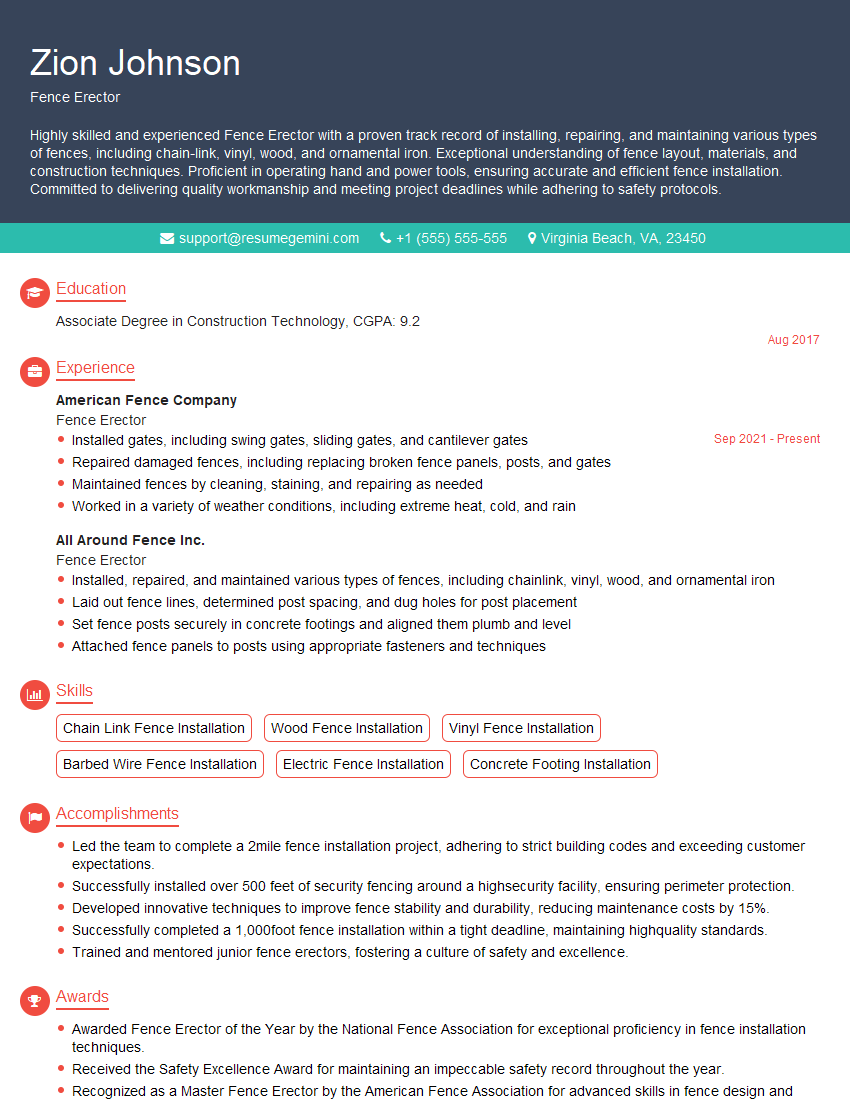
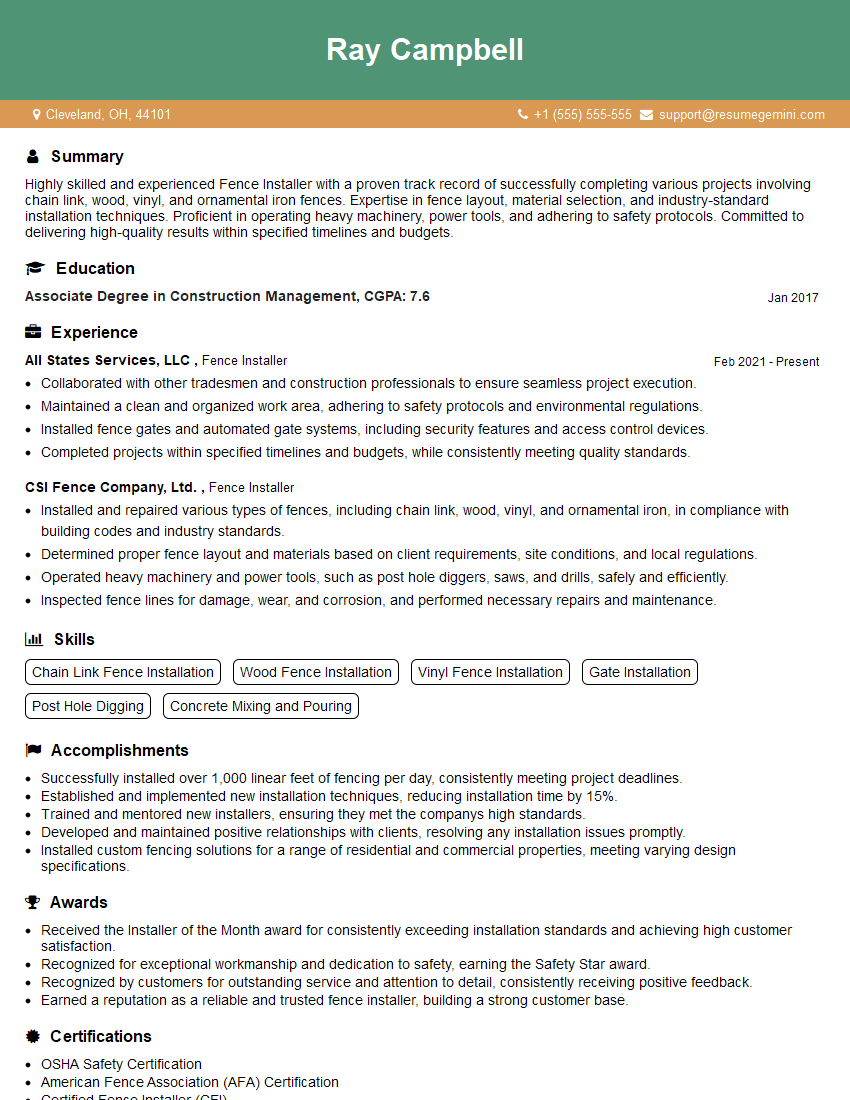
Mastering fence repair and installation opens doors to a rewarding career with opportunities for growth, from independent contractor to team leader and beyond. A strong understanding of these skills translates directly into higher earning potential and job security in a consistently in-demand trade. To maximize your job prospects, creating an ATS-friendly resume is key. ResumeGemini is a trusted resource that can help you build a professional resume that highlights your skills and experience effectively. Examples of resumes tailored to Fence Repair and Installation are available to help you get started. Invest in yourself and your future – craft a compelling resume that showcases your expertise.

Explore more articles
Users Rating of Our Blogs
Share Your Experience
We value your feedback! Please rate our content and share your thoughts (optional).
What Readers Say About Our Blog
Very informative content, great job.
good