Are you ready to stand out in your next interview? Understanding and preparing for Fence Repair and Maintenance interview questions is a game-changer. In this blog, we’ve compiled key questions and expert advice to help you showcase your skills with confidence and precision. Let’s get started on your journey to acing the interview.
Questions Asked in Fence Repair and Maintenance Interview
Q 1. Describe your experience with different types of fence materials (wood, vinyl, chain link).
My experience spans all three major fence materials: wood, vinyl, and chain link. Each presents unique challenges and rewards. Wood offers a classic, customizable look, but requires regular maintenance like staining and sealing to prevent rot and insect damage. I’m experienced in working with various wood types, from pressure-treated pine for durability to cedar for its natural resistance to decay. Vinyl fences are low-maintenance, weather-resistant, and come in a wide array of styles and colors. Repair typically involves replacing damaged sections, which is relatively straightforward. However, repairing cracks or severe damage can be challenging. Chain link is the most durable and economical option, ideal for high-traffic areas or properties needing strong security. Repairs usually involve tightening loose wires, replacing damaged sections, or fixing broken posts. I’m proficient in using various tools and techniques for each material to ensure a strong, long-lasting repair.
Q 2. How do you diagnose and repair common fence problems like sagging, broken posts, and damaged panels?
Diagnosing fence problems begins with a thorough visual inspection. Sagging often indicates loose or broken posts, insufficient bracing, or settling ground. Repair involves tightening connections, replacing damaged posts, and potentially adding additional bracing. Broken posts require excavation of the old post, installation of a new one set in concrete, and reattachment of the fence sections. The process requires careful measurement and alignment. Damaged panels might be due to weather damage, impact, or age. Wood panels might need repair or replacement; vinyl panels can often be spliced or replaced, while chain link sections require replacing the damaged mesh. I always analyze the root cause of the damage to prevent future problems.
Q 3. Explain your process for assessing the condition of an existing fence and providing a repair estimate.
My fence assessment process is comprehensive. First, I conduct a thorough inspection, noting the type of fence, its overall condition, areas of damage, and any potential safety hazards. I measure the length of the fence line and identify specific repairs needed. Then, I take detailed photos and create a list of materials required. My estimate includes labor costs, material costs, and a detailed breakdown of the work involved. For instance, if significant post replacement is necessary, the estimate will reflect the extra time and materials. I strive for transparency and provide clients with options, so they can choose the repair approach that best suits their budget and needs. I’ve found that clear communication is key to building trust.
Q 4. What safety precautions do you take when working with power tools and on heights?
Safety is my top priority. When working with power tools like post hole diggers, chainsaws, or circular saws, I always wear appropriate safety gear, including safety glasses, hearing protection, work gloves, and steel-toed boots. I regularly inspect tools for damage before use. When working at heights, I use appropriate fall protection equipment, such as harnesses and safety lines, following OSHA guidelines. I also ensure the work area is clear of obstacles and secure. For example, when using a ladder, I always have someone spot me. I am committed to creating a safe working environment for myself and others.
Q 5. Describe your experience with post hole digging and setting.
Post hole digging and setting is a crucial part of fence construction and repair. I use a combination of manual and power tools depending on the soil conditions and the number of posts needed. For smaller jobs, a manual post hole digger might suffice, but for larger projects, a power auger significantly speeds up the process. The depth and diameter of the hole are critical and depend on the post length and the soil type. I always ensure the posts are set plumb (perfectly vertical) and stable. Concrete is used to set the posts, providing a strong and long-lasting foundation. I use a level and post levelers to ensure accuracy. Proper post setting is critical to prevent fence sagging and instability.
Q 6. What are the common causes of fence damage and how can they be prevented?
Common causes of fence damage include weather (strong winds, heavy snow, ice), animal damage (rodents chewing on wood, deer rubbing against fences), accidental impact (vehicles, lawnmowers), and general wear and tear. Prevention involves using appropriate materials for the climate, regular inspection and maintenance (tightening loose connections, repairing damaged sections), installing proper bracing and supports, and landscaping to minimize impact. For instance, planting trees away from the fence helps prevent root damage. Regularly clearing debris from the fence line also reduces the risk of damage. Proactive maintenance is always more cost-effective than emergency repairs.
Q 7. How familiar are you with local building codes and regulations regarding fence construction?
I am very familiar with local building codes and regulations regarding fence construction. This includes height restrictions, setbacks from property lines, and material specifications. Before starting any project, I review the relevant codes and obtain any necessary permits. I understand the importance of adhering to these regulations to ensure the safety and legality of the fence installation. Ignoring building codes can lead to fines and require costly modifications or even demolition. Compliance with local regulations is a crucial aspect of my professional practice.
Q 8. Explain your experience with different types of fence gates and their repair.
My experience encompasses a wide range of fence gate types, from simple swing gates to complex sliding and cantilever gates. Repair strategies vary significantly depending on the gate’s material (wood, metal, vinyl), construction, and the nature of the damage.
- Wood Gates: Repairs often involve replacing rotted or damaged boards, reinforcing hinges and latches with stronger screws or bolts, and addressing issues with gate alignment. For example, a sagging gate might require adjusting the hinges or adding bracing.
- Metal Gates: These may require welding repairs for broken frames or hinges, replacing rusted or damaged components, and lubricating moving parts to ensure smooth operation. I’ve dealt with everything from minor weld repairs to complete gate overhauls.
- Vinyl Gates: Vinyl gates are relatively low-maintenance, but repairs might include patching cracks with specialized vinyl repair kits, replacing damaged sections, or realigning the gate. Proper cleaning and lubrication of moving parts is key to their longevity.
I always prioritize safety when working with gates, ensuring that all repairs are structurally sound and compliant with relevant safety codes.
Q 9. How do you handle difficult customers or unexpected challenges on a job site?
Handling difficult customers and unexpected challenges is a crucial aspect of this job. My approach is based on clear communication, active listening, and a problem-solving mindset.
- Difficult Customers: I start by actively listening to their concerns, acknowledging their frustrations, and explaining the situation clearly and professionally. Offering options and alternative solutions, while sticking to the facts and maintaining a calm and respectful demeanor, often helps de-escalate tension. Sometimes, a simple gesture like proactively addressing a minor issue can go a long way in improving customer satisfaction.
- Unexpected Challenges: On-site surprises, like unforeseen damage or material inconsistencies, are common. I address these by first assessing the situation, determining the impact on the project timeline and budget, and then discussing the options with the client transparently. Finding creative solutions and utilizing my experience to overcome obstacles is key. I always prioritize safety and ensuring the project meets the agreed-upon standards, even when faced with unexpected roadblocks.
For example, once, I discovered significant rot in a wooden fence post that wasn’t apparent during the initial assessment. I immediately contacted the client, explained the issue, presented different repair solutions with corresponding cost estimates and timelines, and only proceeded once we had agreed on a course of action. Transparency and clear communication are vital in these scenarios.
Q 10. What are your methods for maintaining the quality and longevity of a fence repair?
Maintaining the quality and longevity of fence repairs involves meticulous attention to detail and the use of high-quality materials and techniques.
- Proper Material Selection: Using weather-resistant materials appropriate for the local climate is crucial. For instance, pressure-treated lumber for wood fences and galvanized or powder-coated steel for metal fences significantly extend their lifespan.
- Thorough Preparation: Before any repair, I ensure the area is properly cleaned and prepared. This might involve removing damaged sections, treating the wood for rot and insects, or cleaning and priming metal surfaces to prevent rust.
- Correct Installation Techniques: Using the right fasteners, appropriate spacing, and proper alignment are essential. I always follow best practices for each fence type to ensure structural integrity and durability.
- Regular Maintenance: After the repairs are complete, I provide clients with advice on regular maintenance, such as inspecting the fence periodically, cleaning it, and treating it against pests and weathering.
For example, when replacing a section of a wooden fence, I would use pressure-treated lumber, apply a wood preservative, and ensure all boards are properly aligned and fastened with galvanized screws. This approach significantly improves the longevity of the repair compared to using untreated wood and regular screws.
Q 11. Describe your experience with concrete work related to fence installation.
My experience with concrete work related to fence installation primarily involves setting fence posts. This includes:
- Post Hole Digging: I use a variety of methods, including manual digging and post hole diggers, depending on the soil conditions and the number of posts.
- Concrete Mixing and Pouring: I mix concrete according to the manufacturer’s instructions, ensuring the correct water-to-cement ratio for optimal strength. I carefully pour the concrete around the base of the post, ensuring it’s level and properly compacted to prevent settling.
- Post Setting and Leveling: I use a level to ensure the post is plumb (perfectly vertical) before the concrete sets. Temporary bracing is often used to maintain the post’s position until the concrete cures.
Experience has taught me the importance of using the right type of concrete mix for the application, and the necessity of ensuring proper curing time to achieve maximum strength and stability. Incorrect concrete work can lead to fence instability and premature failure.
Q 12. How do you choose the appropriate fasteners and hardware for different fence materials?
Choosing the right fasteners and hardware is critical for a strong and long-lasting fence. The choice depends on the fence material, its construction, and environmental factors.
- Wood Fences: Hot-dipped galvanized or stainless steel screws are generally preferred for their resistance to rust and corrosion. The screw size and length should be appropriate for the thickness of the lumber. Using exterior-grade wood glue in conjunction with screws enhances strength and prevents wood splitting.
- Metal Fences: For metal fences, galvanized or stainless steel bolts, screws, and rivets are commonly used. Welding may be necessary for more substantial repairs or construction.
- Vinyl Fences: Special vinyl-compatible screws or fasteners are crucial to avoid cracking or damaging the vinyl. Using excessive force when fastening can easily cause damage.
It’s crucial to choose fasteners that are designed for outdoor use and are resistant to corrosion and weather damage. For example, in coastal areas, stainless steel fasteners are generally preferred over galvanized steel because of their superior corrosion resistance in salty air.
Q 13. What software or tools do you use for measuring, planning, and estimating fence projects?
While I don’t rely on highly specialized software, I utilize several tools for efficient project management and accurate estimations.
- Measuring Tools: Accurate measurements are fundamental. I use laser measures for long distances and precision, standard measuring tapes for detailed dimensions, and levels to ensure everything is plumb and level.
- Sketching and Drawings: I often create freehand sketches or simple diagrams to visualize the project and communicate effectively with clients. This is especially important for smaller repairs or modifications.
- Spreadsheet Software: I use spreadsheet software (like Microsoft Excel or Google Sheets) to create detailed material lists, calculate quantities, and track project expenses. This helps with accurate budgeting and cost estimation.
- Mobile Apps: I utilize mobile apps that assist in generating estimates based on material costs and labor hours, thereby offering clients quick and transparent pricing.
The combination of these tools allows me to plan and execute projects effectively, while maintaining transparency with clients regarding costs and timelines.
Q 14. What is your experience with working from blueprints or sketches?
I have significant experience working from blueprints and sketches, ranging from simple hand-drawn diagrams to detailed professional blueprints.
- Blueprint Interpretation: My experience allows me to accurately interpret the specifications and dimensions provided in the drawings, understanding the required materials, construction techniques, and desired outcome.
- Adaptability: I’m comfortable adapting to different drawing styles and levels of detail. I can identify potential inconsistencies or ambiguities in the drawings and communicate these to the client or designer for clarification.
- Accurate Execution: I ensure that the final product accurately reflects the design intentions of the blueprints or sketches. Careful planning and precise measurements are crucial for successful execution.
For example, I recently worked on a project based on detailed blueprints for a custom-designed wrought iron fence. The blueprints included intricate details of the gate design and post spacing. Precise execution of the blueprint resulted in a beautiful and functional fence matching the client’s vision exactly.
Q 15. How do you manage your time and prioritize tasks on a fence repair job?
Effective time management on a fence repair job is crucial for staying on schedule and within budget. My approach involves a three-step process: Assessment, Prioritization, and Execution.
Assessment: I begin by thoroughly inspecting the fence, documenting the damage, and creating a detailed list of necessary repairs. This includes identifying the type of fence, materials needed, and potential obstacles. Think of it like a doctor diagnosing a patient before treatment.
Prioritization: Once the assessment is complete, I prioritize tasks based on urgency and impact. For instance, repairing a section that poses a safety hazard (e.g., a broken post near a walkway) takes precedence over cosmetic repairs. I use a simple numbering system to prioritize tasks – 1 being highest priority.
Execution: I allocate specific time blocks for each task, factoring in potential delays. I regularly check my progress against the schedule and adjust as needed. For example, if a task takes longer than anticipated, I may need to re-prioritize or seek assistance.
This structured approach ensures I’m efficient and effective, minimizing downtime and exceeding client expectations.
Career Expert Tips:
- Ace those interviews! Prepare effectively by reviewing the Top 50 Most Common Interview Questions on ResumeGemini.
- Navigate your job search with confidence! Explore a wide range of Career Tips on ResumeGemini. Learn about common challenges and recommendations to overcome them.
- Craft the perfect resume! Master the Art of Resume Writing with ResumeGemini’s guide. Showcase your unique qualifications and achievements effectively.
- Don’t miss out on holiday savings! Build your dream resume with ResumeGemini’s ATS optimized templates.
Q 16. Describe a time you had to troubleshoot a complex fence repair issue.
I once encountered a situation where a section of a vinyl fence had completely collapsed due to unseen rot at the base of the posts. Initial inspection suggested simple post replacement, but upon closer examination, I discovered extensive water damage hidden beneath the soil. Simply replacing the posts wouldn’t solve the problem, it would just repeat itself later.
My troubleshooting involved several steps:
- Excavation: I carefully dug around the affected posts to assess the extent of the rot and identify the source of the water damage.
- Diagnosis: I determined that poor drainage was the root cause, allowing water to accumulate and weaken the posts’ foundation.
- Solution: I corrected the drainage issue by installing gravel and a perforated pipe to redirect water away from the fence base. Then I replaced the damaged posts and treated the surrounding soil with a water-repellent sealant.
This case highlighted the importance of thorough investigation before jumping to conclusions. A superficial fix would have been a temporary solution, potentially leading to further damage and costly repairs down the line.
Q 17. How do you ensure the safety of yourself and others while working on a fence repair project?
Safety is my top priority. I always adhere to strict safety protocols, which include:
- Personal Protective Equipment (PPE): I consistently wear safety glasses, gloves, steel-toed boots, and a hard hat, especially when using power tools.
- Proper Tool Usage: I ensure all tools are in good working order and used according to the manufacturer’s instructions. This includes regular maintenance and inspections.
- Site Safety: I clear the work area of debris and obstructions, ensuring a safe working environment for myself and others. If working near roads or traffic, I use appropriate safety measures like caution tape and warning signs.
- Emergency Preparedness: I carry a well-stocked first-aid kit and have a plan in place for emergency situations.
By prioritizing safety at each stage of the project, I minimize the risk of accidents and ensure a safe working environment for myself and others.
Q 18. What is your experience with working independently versus in a team setting?
I’m comfortable working both independently and as part of a team. Independent work allows me to focus intensely on specific tasks and maintain a high level of quality control. This is especially useful for smaller projects. For example, repairing a damaged gate is a task I can efficiently complete solo.
However, larger projects often benefit from teamwork. Collaboration allows for more efficient use of resources, faster completion times, and a wider range of expertise. I’ve worked on several large-scale fence installations where teamwork was essential for coordinating different tasks (e.g., digging post holes, setting posts, installing fencing) and ensuring a smooth workflow.
My adaptability to both environments makes me a versatile asset on any job.
Q 19. How do you handle difficult terrain or weather conditions during a fence repair job?
Dealing with challenging terrain and weather requires adaptability and careful planning.
Terrain: For uneven or difficult terrain, I may need to use specialized equipment, such as a mini excavator for digging post holes in rocky soil. I would also use leveling techniques to create a stable foundation for the fence. Sometimes this requires careful planning and possibly additional labor to move materials safely.
Weather: Extreme weather (rain, snow, extreme heat) can significantly impact progress. If it’s too dangerous to work, I’ll reschedule the job. For inclement but tolerable weather, I adjust my work schedule, taking more frequent breaks, and use appropriate protective gear. For instance, working in the rain might require extra caution to avoid slips and falls, as well as proper protection for the tools and materials.
Q 20. Explain your knowledge of different types of fence foundations.
Fence foundations are critical for stability and longevity. There are several common types:
- Post-Hole Setting: This is the most common method, involving digging holes and setting posts in concrete. The depth and type of concrete vary depending on factors like soil conditions and fence height.
- Surface Mounting: This method uses brackets or clamps to attach the fence to an existing structure, such as a wall or deck. It’s suitable for shorter fences and simpler designs, but isn’t as strong as post-hole settings.
- Sleeved Posts: Posts are set into sleeves made from materials like PVC or metal, providing added support and protection against rot. This is particularly useful in areas prone to water damage.
- Concrete Footings: For larger and heavier fences or unstable soil, concrete footings provide a more substantial base. This involves pouring a concrete pad beneath each post for added support.
My knowledge of these different foundations allows me to recommend the most appropriate solution based on site-specific conditions, such as soil type, fence height, and overall project requirements.
Q 21. What is your process for dealing with customer complaints or dissatisfaction?
Addressing customer complaints is vital for maintaining positive relationships. My approach involves:
- Active Listening: I listen attentively to the customer’s concerns without interruption, ensuring I fully understand their perspective.
- Empathy and Validation: I acknowledge their feelings and validate their concerns, demonstrating understanding and respect.
- Problem Solving: I work collaboratively with the customer to identify the root cause of the issue and develop a solution. This might involve additional repairs, adjustments, or even partial refunds.
- Follow-up: Once the issue is resolved, I follow up with the customer to ensure their satisfaction. This shows commitment to customer service and building long-term relationships.
My goal is not just to fix the immediate problem but to restore trust and ensure the customer feels valued. A dissatisfied customer is an opportunity to learn and improve my services.
Q 22. How do you stay up-to-date on the latest industry trends and technologies in fence repair and maintenance?
Staying current in the fence repair and maintenance industry requires a multifaceted approach. I regularly subscribe to industry publications like Fence & Deck Supply and attend trade shows such as the National Hardware Show to learn about new materials, techniques, and regulations. I also actively participate in online forums and professional organizations dedicated to fencing, exchanging knowledge and best practices with other experts. This continuous learning ensures I’m familiar with the latest innovations, from improved stain formulations to more efficient repair methods. For example, I recently learned about a new type of composite fence post that offers superior durability and resistance to rot, which I’m now incorporating into my project planning.
Q 23. Describe your experience with repairing fences damaged by weather or vandalism.
Weather and vandalism pose significant challenges to fence integrity. I’ve handled numerous cases involving wind damage, where sections of fencing have been blown down or posts severely weakened. My repair process involves assessing the damage, removing any broken or compromised components, and then rebuilding or repairing those sections using appropriate materials. For example, replacing rotted wood posts with pressure-treated lumber and securing them with concrete. Vandalism repairs can range from simple repairs, like replacing damaged pickets or boards, to more extensive work if the fence structure has been severely compromised. In such cases, I might need to reinforce the framework, using additional bracing or even replacing whole sections. I always document the damage extensively – with photos – both before and after repair for insurance purposes.
Q 24. How familiar are you with different types of stains and sealants for wood fences?
My familiarity with wood fence stains and sealants is extensive. I’m well-versed in various types, including oil-based, water-based, and solid-color stains. Oil-based stains offer deep penetration and rich color, but can take longer to dry. Water-based stains are easier to clean up and often have lower VOCs (Volatile Organic Compounds), making them environmentally friendlier. Solid-color stains provide the most thorough coverage, effectively hiding imperfections in the wood. Sealants, such as polyurethane, are essential for protecting wood from moisture damage and UV degradation. I always recommend choosing products that are specifically designed for outdoor use and appropriate for the type of wood being treated. The choice of stain or sealant depends heavily on client preference, budget, and the specific type of wood used in the fence.
Q 25. What is your experience with pressure treated lumber?
Pressure-treated lumber is a staple in fence construction due to its resistance to rot, decay, and insect infestation. My experience encompasses its various grades and applications. I understand the importance of selecting the appropriate treatment for the specific environmental conditions. For instance, in areas with high moisture content, I’d opt for a higher grade of pressure-treated lumber to ensure long-term durability. I’m also aware of the potential environmental concerns associated with certain chemicals used in pressure treatment and always strive to use environmentally responsible products whenever possible. This includes selecting lumber treated with less harmful chemicals or using alternative, naturally resistant wood species where appropriate. Proper handling and disposal of treated lumber is crucial as well, to minimize environmental impact.
Q 26. How do you dispose of waste materials properly and safely after a fence repair project?
Proper waste disposal is a crucial aspect of my work, reflecting both professionalism and environmental responsibility. I meticulously separate different types of waste materials – wood, metal, concrete, etc. – and dispose of them according to local regulations. Wood waste is often chipped and used for mulch or sent to designated recycling facilities, while metal scraps are taken to scrap yards. Concrete and other debris are disposed of at approved landfill sites. I always ensure I have the necessary permits and follow all safety protocols during waste disposal to prevent any potential environmental hazards. Maintaining detailed records of waste disposal helps in maintaining compliance and demonstrating responsible practices.
Q 27. What are the common signs of a failing fence post, and what is the best way to address it?
A failing fence post displays several telltale signs. Rotting at the base, evident by soft, crumbling wood, is a primary indicator. Leaning or tilting of the post, even slightly, signifies a loss of structural integrity. Cracks or splits in the post, especially near the ground line, indicate weakening and potential failure. Loose or missing concrete at the base is another clear warning sign. The best way to address a failing post is to replace it entirely. This involves carefully removing the old post, excavating the hole, setting a new pressure-treated post, and firmly securing it with concrete. Sometimes, additional bracing might be necessary to reinforce the surrounding fence structure.
Q 28. How would you handle a situation where a fence repair exceeds the initial estimate?
Transparency and clear communication are key when a fence repair exceeds the initial estimate. If I encounter unforeseen issues, such as significant hidden rot or damage not initially visible, I immediately contact the client to explain the situation. I’ll provide detailed photos and explanations of the additional work needed, along with a revised, itemized estimate. I strive to offer various options to accommodate the client’s budget, potentially phasing the repair or exploring cost-effective alternatives. My goal is to ensure the client understands the necessity of the additional work and feels comfortable with the revised plan. Maintaining open communication builds trust and ensures a positive working relationship.
Key Topics to Learn for Fence Repair and Maintenance Interview
- Fence Types and Materials: Understanding different fence materials (wood, vinyl, chain link, etc.), their properties, and common issues associated with each.
- Repair Techniques: Practical application of repair methods for various fence types, including post repair, panel replacement, wire tightening, and gate adjustments.
- Maintenance Procedures: Knowing preventative maintenance schedules, cleaning techniques, stain/sealant application, and the importance of regular inspections.
- Tools and Equipment: Familiarity with common hand and power tools used in fence repair and maintenance, including their safe and effective operation.
- Safety Procedures: Understanding and adhering to safety regulations, including proper use of PPE (Personal Protective Equipment) and hazard identification.
- Problem-solving and Troubleshooting: Diagnosing common fence problems (sagging, leaning posts, damaged panels), identifying root causes, and developing effective solutions.
- Estimating and Budgeting: Ability to accurately assess repair needs, provide cost estimates, and manage project budgets.
- Customer Service and Communication: Effective communication with clients, understanding their needs, addressing concerns, and providing exceptional service.
- Local Codes and Regulations: Awareness of relevant building codes and regulations pertaining to fence construction and maintenance in your area.
- Basic Carpentry and Construction Skills: Fundamental skills in measuring, cutting, drilling, and using fasteners are beneficial for many repair tasks.
Next Steps
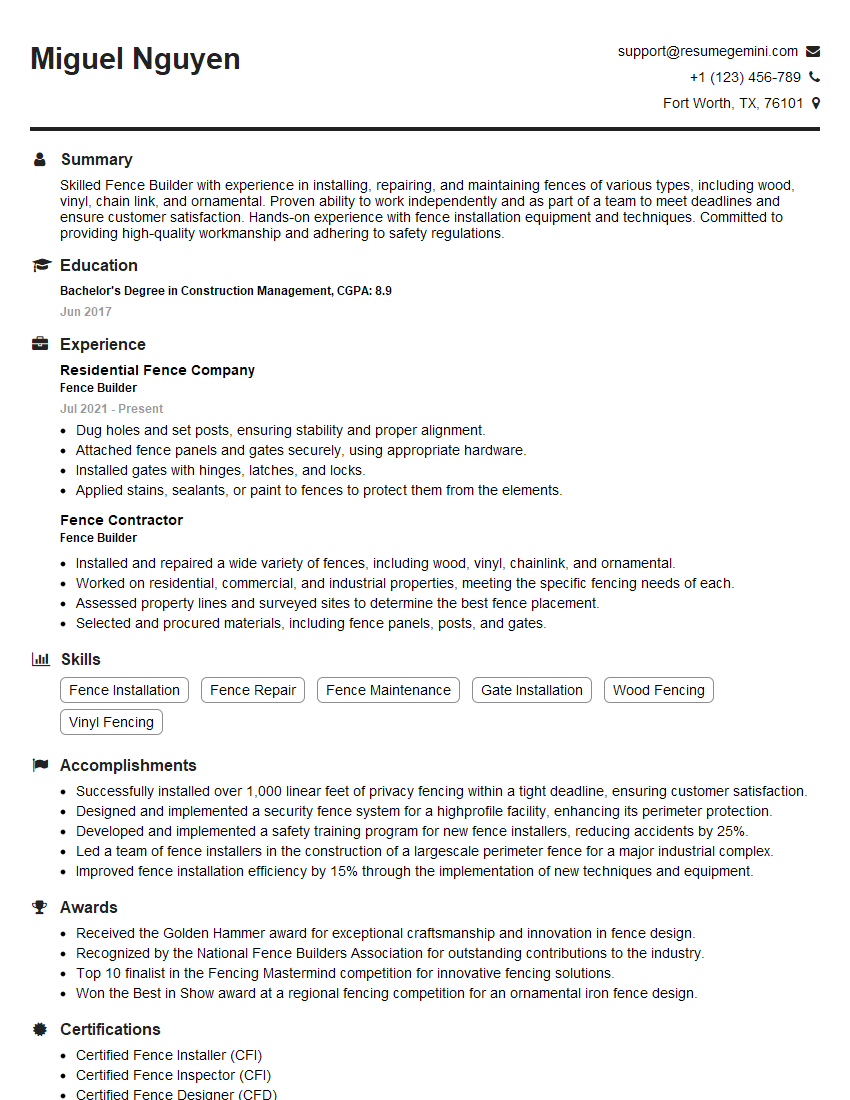
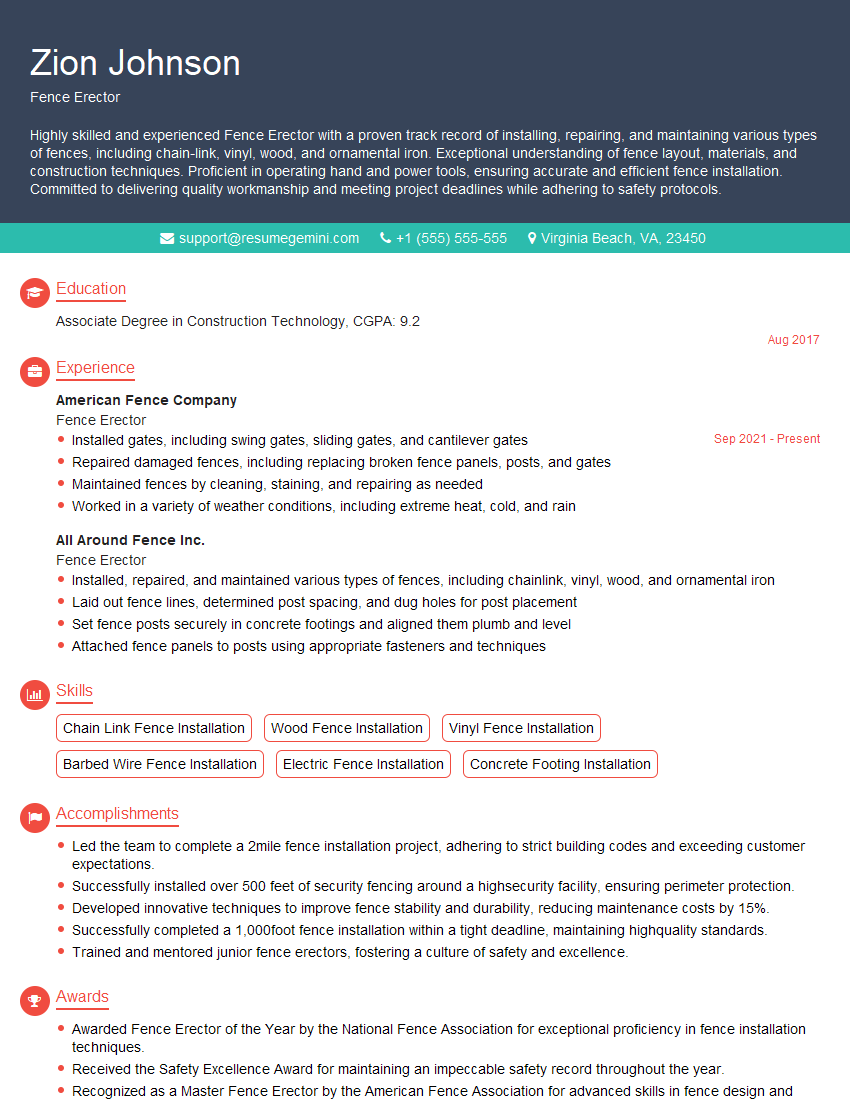
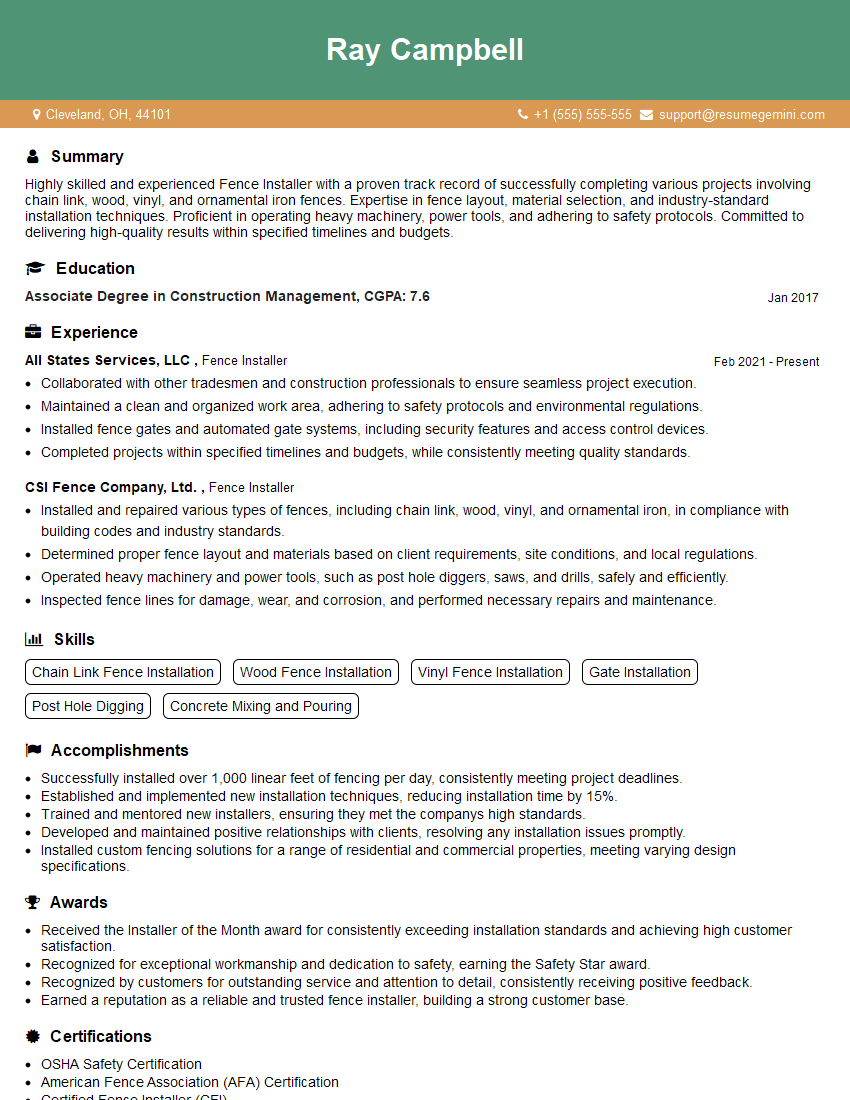
Mastering fence repair and maintenance opens doors to a rewarding career with diverse opportunities for growth, from independent contractor to team leader in a larger company. A strong resume is crucial for showcasing your skills and experience to potential employers. Creating an ATS-friendly resume is key to getting your application noticed. We highly recommend using ResumeGemini to build a professional and impactful resume that highlights your unique qualifications. ResumeGemini provides examples of resumes tailored to the Fence Repair and Maintenance industry to help you craft a compelling application.
Explore more articles
Users Rating of Our Blogs
Share Your Experience
We value your feedback! Please rate our content and share your thoughts (optional).
What Readers Say About Our Blog
Very informative content, great job.
good