Unlock your full potential by mastering the most common Fertilizer Application Techniques interview questions. This blog offers a deep dive into the critical topics, ensuring you’re not only prepared to answer but to excel. With these insights, you’ll approach your interview with clarity and confidence.
Questions Asked in Fertilizer Application Techniques Interview
Q 1. Explain the principles of nutrient management.
Nutrient management is the art and science of supplying crops with the right amount of essential nutrients at the right time and in the right form for optimal growth and yield, while minimizing environmental impact. It’s about achieving a balance – providing enough nutrients for healthy plants without over-fertilizing, which can lead to nutrient runoff and water pollution. This involves a holistic approach, considering soil properties, crop needs, and environmental factors.
- Soil Testing: Understanding your soil’s nutrient levels is crucial. A soil test reveals deficiencies or excesses of essential nutrients like nitrogen (N), phosphorus (P), and potassium (K).
- Crop Requirements: Different crops have varying nutrient demands depending on their growth stage and yield potential. A corn crop, for instance, will require more nitrogen than a legume like soybean which can fix its own nitrogen.
- Environmental Considerations: Nutrient management plans should account for potential environmental consequences. Over-application can lead to nutrient leaching into groundwater or runoff into waterways, causing eutrophication and harming aquatic ecosystems. Sustainable practices aim to minimize these risks.
- Manure and Organic Matter Integration: Incorporating organic amendments such as manure and compost improves soil health, nutrient availability, and water retention, thus reducing the need for synthetic fertilizers.
Q 2. Describe different fertilizer application methods (e.g., broadcast, banding, foliar).
Fertilizer application methods are chosen based on factors like crop type, soil conditions, and available equipment. The primary methods are:
- Broadcast Application: Fertilizer is spread uniformly over the entire field. This is suitable for crops with extensive root systems and is often done with spreaders or airplanes. However, it can lead to nutrient loss through volatilization or leaching.
- Banding Application: Fertilizer is placed in narrow bands near the seed or plant row. This method improves nutrient efficiency by placing the fertilizer close to the roots, reducing losses. It’s commonly used for crops like corn and soybeans.
- Foliar Application: Nutrients are sprayed directly onto the leaves. This technique is fast-acting and is useful for correcting micronutrient deficiencies or providing nutrients during critical growth stages. However, it’s generally more expensive and not suitable for all nutrient types.
- Injection Application: Fertilizer is applied directly into the irrigation water system. This method is efficient and reduces the risk of nutrient loss to the environment. It’s becoming increasingly popular, particularly in large-scale agriculture.
- In-furrow Application: Fertilizer is placed directly into the furrow during planting. This delivers nutrients close to the seed or seedling root zone.
Q 3. What factors influence fertilizer choice and application rate?
Choosing the right fertilizer and application rate is a crucial aspect of nutrient management. Several factors influence this decision:
- Soil Test Results: Provides information about the existing nutrient levels in the soil, guiding fertilizer choices and rates. For example, if a soil test reveals low phosphorus, a phosphorus-rich fertilizer is needed.
- Crop Needs: Different crops have unique nutrient requirements based on their growth stages and yield goals. A high-yielding corn crop will need significantly more nitrogen than a low-yielding one.
- Climate: High rainfall can increase nutrient leaching, requiring adjustments to fertilizer type and application rates. Conversely, dry conditions might limit nutrient uptake, necessitating a different approach.
- Fertilizer Type: Organic fertilizers release nutrients slowly, while synthetic fertilizers offer immediate availability. The choice depends on the crop’s needs and the grower’s management style.
- Cost: The economic feasibility of different fertilizers and application methods needs consideration. Balancing cost-effectiveness with nutrient efficiency is essential.
Q 4. How do you determine the optimal timing for fertilizer application?
Optimal timing for fertilizer application is critical for maximizing nutrient uptake and minimizing losses. The timing varies based on several factors:
- Crop Growth Stage: Different growth stages have different nutrient demands. For instance, nitrogen is critical during vegetative growth, while phosphorus is important during flowering and fruiting. Applying fertilizer at the right growth stage ensures efficient utilization.
- Nutrient Availability: Some nutrients are more readily available at certain times of the year. For instance, nitrogen can be lost due to volatilization in warm, dry conditions; hence, application timing needs to consider weather patterns.
- Soil Temperature and Moisture: Nutrient uptake is affected by soil temperature and moisture. Optimal temperatures and moisture levels are necessary for efficient nutrient absorption by the plant’s roots.
- Weather Conditions: Heavy rainfall can wash away fertilizer, while excessive heat can cause nitrogen volatilization. Planning fertilizer application around predicted weather patterns is essential.
- Specific Crop Needs: Each crop has specific nutrient timing windows. Researching best practices for each crop is key.
For example, applying nitrogen fertilizer before planting corn allows time for nutrient release into the root zone before the plants begin rapid growth, minimizing losses and maximizing uptake.
Q 5. Explain the importance of soil testing in fertilizer application.
Soil testing is fundamental to effective fertilizer application. It provides a baseline assessment of the soil’s nutrient content, guiding fertilizer choices and application rates. Without a soil test, fertilizer application becomes a guess, potentially leading to nutrient deficiencies, excess application, and environmental problems.
- Identifying Nutrient Deficiencies: Soil tests reveal whether the soil is lacking essential nutrients like N, P, K, or micronutrients. This knowledge directly informs the type and amount of fertilizer needed.
- Optimizing Fertilizer Use: By knowing existing nutrient levels, over-fertilization can be avoided, saving money and reducing environmental impact. This leads to precision nutrient management and enhanced efficiency.
- Improving Fertilizer Efficiency: Matching fertilizer type and rate to soil conditions improves nutrient uptake by plants. For instance, soil pH can influence nutrient availability; soil testing reveals the pH, guiding appropriate adjustments.
- Monitoring Fertilizer Program Effectiveness: Repeated soil testing allows assessment of the impact of the fertilizer program over time. This permits fine-tuning of the program for improved efficiency.
- Environmental Protection: Soil testing helps minimize nutrient runoff and leaching, protecting water quality and minimizing environmental impact.
Q 6. Describe different types of fertilizers (e.g., NPK, organic, slow-release).
Fertilizers are broadly classified into several types:
- NPK Fertilizers: These are synthetic fertilizers containing varying ratios of nitrogen (N), phosphorus (P), and potassium (K), the three primary macronutrients. For example, a 10-10-10 fertilizer contains 10% N, 10% P2O5, and 10% K2O by weight.
- Organic Fertilizers: Derived from natural sources, such as manure, compost, and bone meal, they release nutrients gradually, improving soil structure and microbial activity. They provide a broader range of nutrients than synthetic fertilizers and enhance soil health.
- Slow-Release Fertilizers: These fertilizers release nutrients over a longer period than conventional fertilizers, minimizing nutrient loss and providing a more consistent supply to the plants. They often incorporate coatings or other technologies to control nutrient release.
- Micronutrient Fertilizers: Contain essential micronutrients like iron, zinc, manganese, boron, and copper, often applied to correct deficiencies identified through soil testing.
- Specialty Fertilizers: Designed to meet specific crop requirements or address particular soil conditions. Examples include fertilizers for acidic soils or those that improve bloom.
Q 7. How do you calculate fertilizer requirements based on soil test results?
Calculating fertilizer requirements based on soil test results involves several steps and usually relies on recommendations provided by soil testing labs. Here’s a generalized approach:
- Obtain Soil Test Results: This will specify the levels of various nutrients in your soil and often include recommendations for fertilizer application.
- Understand Fertilizer Analysis: The fertilizer label shows the guaranteed analysis (e.g., 10-10-10) – the percentage of N, P2O5, and K2O by weight.
- Determine Nutrient Needs: The soil test report will indicate the amount of each nutrient your soil is lacking (in pounds per acre or other units). This information is usually stated explicitly.
- Calculate Fertilizer Amount: For each nutrient, you’ll use the following formula (assuming you want to add x pounds of nutrient per acre):
Amount of Fertilizer (pounds/acre) = (Pounds of nutrient needed per acre) / (% nutrient in the fertilizer / 100)
For instance, if you need 50 pounds of nitrogen per acre and you’re using a 10-10-10 fertilizer, the calculation is: (50 lbs N/acre) / (10/100) = 500 pounds of 10-10-10 fertilizer per acre. - Consider Soil Conditions: Adjust fertilizer calculations as advised by the lab, considering soil type, texture, and other factors.
- Always Follow Lab Recommendations: Soil testing labs usually provide customized recommendations, accounting for many factors. Always follow their guidance for the most accurate and effective fertilizer application.
Example: If your soil test indicates a need for 60 lbs of P2O5 per acre and you choose a 15-15-15 fertilizer, the calculation would be: (60 lbs P2O5/acre) / (15/100) = 400 pounds of 15-15-15 fertilizer per acre.
Q 8. What are the potential environmental impacts of improper fertilizer application?
Improper fertilizer application can have significant environmental consequences. Think of it like this: fertilizers are like giving plants a highly concentrated nutrient ‘meal’. If you overfeed or distribute it poorly, the excess nutrients can wreak havoc on the surrounding ecosystem.
- Water Pollution: Excess nitrogen and phosphorus from fertilizers can run off into waterways, causing eutrophication. This is where excessive nutrients fuel algal blooms, depleting oxygen levels and creating ‘dead zones’ where aquatic life cannot survive. Imagine a lake choked with algae, unable to support fish or other organisms.
- Soil Degradation: Over-application of fertilizers can lead to soil acidification, reducing its fertility and damaging the soil structure. This makes it difficult for plants to absorb nutrients and can lead to erosion. It’s like over-watering a plant; you’re harming it instead of helping it.
- Greenhouse Gas Emissions: Certain fertilizers, like nitrogen-based ones, can release nitrous oxide, a potent greenhouse gas contributing to climate change. This is an invisible threat, slowly contributing to global warming.
- Groundwater Contamination: Fertilizers can leach into groundwater, contaminating drinking water sources with nitrates, which are harmful to human health, especially infants. Think of it as polluting the underground ‘reservoir’ that provides our drinking water.
Q 9. How can you minimize fertilizer runoff and leaching?
Minimizing fertilizer runoff and leaching requires a multi-pronged approach focusing on responsible application and soil management practices.
- Timing and Application Method: Applying fertilizer at the right time and using methods like banding (placing fertilizer in a narrow strip near the plant rows) or injecting it into the soil minimizes surface runoff. Imagine precisely placing the fertilizer where the plant roots can directly access it.
- Soil Testing: Regular soil testing identifies nutrient deficiencies, allowing for precise fertilizer application based on actual plant needs, avoiding over-application. This is like getting a ‘blood test’ for your soil to understand its nutritional needs.
- Cover Crops: Planting cover crops helps absorb excess nutrients and prevent erosion, acting as a natural buffer. They’re like a ‘sponge’ that absorbs excess nutrients.
- Conservation Tillage: Minimizing soil disturbance through no-till or reduced-till farming protects soil structure and improves its ability to retain nutrients. It’s like protecting the soil’s delicate structure to hold onto the fertilizer.
- Buffer Strips: Planting vegetative buffer strips along waterways intercepts runoff, preventing fertilizers from reaching water bodies. These are like natural filters, cleaning the water before it reaches rivers and lakes.
Q 10. Explain the concept of precision agriculture in fertilizer application.
Precision agriculture in fertilizer application involves using technology and data to optimize fertilizer use, maximizing yields while minimizing environmental impacts. It’s about moving away from a ‘one-size-fits-all’ approach.
This involves:
- Variable Rate Technology (VRT): Applying different rates of fertilizer across a field based on site-specific soil conditions and crop needs. For example, areas with nutrient deficiencies receive a higher application rate than areas that are already nutrient-rich.
- GPS Mapping and Sensors: Using GPS and sensors to create maps of field variability, revealing areas requiring more or less fertilizer. This is like creating a detailed ‘nutritional map’ of the field.
- Data Analysis: Analyzing yield data, soil samples, and sensor readings to refine fertilizer application strategies over time, leading to continuous improvement and optimization.
Imagine a farmer using a sensor-equipped sprayer that adjusts the fertilizer application rate in real-time based on soil conditions detected by the sensor. This ensures that only the necessary amount of fertilizer is used in each area of the field, resulting in efficient nutrient use and reduced environmental impact.
Q 11. Describe the role of GPS technology in fertilizer application.
GPS technology plays a crucial role in precision agriculture, enabling accurate and efficient fertilizer application. It’s like giving the application equipment a precise ‘map’ to follow.
- Guidance Systems: GPS-guided equipment allows for precise application of fertilizers, minimizing overlaps and skips, ensuring uniform coverage. This eliminates guesswork and ensures every part of the field receives the correct amount.
- Variable Rate Control: GPS data integrated with sensors and VRT systems allows for precise variable rate fertilizer application based on the specific needs of different field zones. This is about tailoring the fertilizer application to each area’s needs.
- Data Logging and Mapping: GPS records the location and application rates of fertilizers, generating detailed maps and records for future analysis and optimization. This allows for long-term tracking of fertilization strategies and helps make informed decisions for the future.
Q 12. How do you calibrate fertilizer application equipment?
Calibrating fertilizer application equipment ensures that the correct amount of fertilizer is applied per unit area. This is crucial for accurate nutrient management and prevents both under- and over-application.
The calibration process generally involves these steps:
- Measure the output of the equipment: Collect the fertilizer dispensed over a known distance and time. For example, measure the amount of fertilizer delivered in a set time over a known ground speed.
- Calculate the application rate: Use the measured output and the calibration parameters (e.g., application width, speed) to calculate the application rate in units like pounds per acre or kilograms per hectare.
- Adjust the equipment settings: Fine-tune the equipment settings (e.g., spreader settings, flow rate) to match the desired application rate. This involves comparing the calculated rate with the intended rate and adjusting the settings accordingly.
- Verify the calibration: Repeat the measurement process to confirm the equipment is applying fertilizer at the desired rate. This iterative process refines the calibration until an accurate application rate is achieved.
Accurate calibration is essential for optimizing fertilizer use and minimizing environmental impacts and yield variability. A poorly calibrated spreader can result in uneven fertilizer distribution, leading to yield loss in some areas and excessive nutrient application in others, which can be detrimental to both crop production and the environment.
Q 13. What safety precautions should be taken during fertilizer application?
Fertilizer application involves handling potentially hazardous materials, so safety precautions are paramount. Imagine handling them like you would handle any hazardous chemical.
- Personal Protective Equipment (PPE): Always wear appropriate PPE, including gloves, eye protection, and respirators, depending on the type of fertilizer and application method. This protects you from direct contact with potentially harmful chemicals.
- Proper Storage: Store fertilizers in a cool, dry, well-ventilated area, away from ignition sources, and out of reach of children and animals. Secure storage helps prevent accidental exposure and contamination.
- Handling and Transportation: Follow the manufacturer’s instructions for handling and transportation, avoiding spills and leaks. Use appropriate equipment for lifting and moving bags of fertilizer to avoid injury.
- Emergency Preparedness: Have a plan in place for spills or accidents, including the appropriate spill response materials and emergency contact numbers. Be ready for what could happen.
- Environmental Awareness: Be mindful of environmental regulations and best practices to minimize the risk of water and soil contamination.
Q 14. How do you handle fertilizer spills or accidents?
Fertilizer spills or accidents can have serious environmental and health consequences. Immediate and effective response is crucial. Think of it like a fire; quick action prevents further damage.
- Contain the Spill: Immediately contain the spill to prevent further spread. Use absorbent materials like spill pads or sand to soak up the spilled fertilizer.
- Prevent Runoff: If the spill occurs near a water body, take steps to prevent runoff into the water source. Create a dam or diversion to prevent contamination.
- Clean Up: Carefully remove contaminated soil or other materials. Dispose of contaminated materials according to local regulations.
- Report the Incident: Report the incident to the relevant authorities (environmental protection agencies, etc.) as required by local regulations. Transparency ensures accountability and helps protect the environment.
- Post-Spill Monitoring: Monitor the area for any lingering effects of the spill, such as water quality changes or plant damage. Take corrective actions if needed.
Q 15. Describe your experience with variable rate technology (VRT).
Variable Rate Technology (VRT) is a precision farming technique that allows for the application of fertilizers, pesticides, and seeds at varying rates across a field. Instead of a uniform application, VRT uses data-driven maps to tailor input application based on the specific needs of different zones within the field. My experience with VRT spans over a decade, involving the implementation and management of VRT systems on various farms, ranging from small family operations to large-scale commercial farms. This includes everything from sensor data collection and soil sampling to map creation and equipment calibration. I’ve worked with numerous VRT platforms, integrating data from sources like yield monitors, soil sensors, and NDVI imagery to create prescription maps for optimal fertilizer application.
For instance, on one farm, we implemented VRT to address variable nitrogen needs across a field with varying soil types and topography. The results showed a significant reduction in fertilizer input while maintaining or even improving yields. The system accurately identified areas with higher nutrient needs and applied more fertilizer accordingly, avoiding unnecessary waste in areas with sufficient nutrients.
Career Expert Tips:
- Ace those interviews! Prepare effectively by reviewing the Top 50 Most Common Interview Questions on ResumeGemini.
- Navigate your job search with confidence! Explore a wide range of Career Tips on ResumeGemini. Learn about common challenges and recommendations to overcome them.
- Craft the perfect resume! Master the Art of Resume Writing with ResumeGemini’s guide. Showcase your unique qualifications and achievements effectively.
- Don’t miss out on holiday savings! Build your dream resume with ResumeGemini’s ATS optimized templates.
Q 16. What are the benefits and limitations of using drones for fertilizer application?
Drones offer several advantages for fertilizer application, primarily in their precision and accessibility to challenging terrains. They can apply fertilizers in smaller, more precise amounts, minimizing waste and environmental impact. Their maneuverability allows for application in areas inaccessible to traditional machinery, like steep slopes or wetlands. However, limitations include payload capacity – drones can only carry a limited amount of fertilizer per flight – and the dependence on favorable weather conditions for safe and effective operation. Battery life is also a constraint, necessitating multiple flights for larger fields. Regulations regarding drone operation and fertilizer application also need careful consideration.
For example, I’ve seen drones used effectively for spot-treating nutrient deficiencies in orchards or vineyards, where the precise application prevents damage to adjacent plants. However, the cost-effectiveness of drones versus traditional methods needs careful evaluation, especially for large-scale operations.
Q 17. How do you monitor the effectiveness of fertilizer application?
Monitoring the effectiveness of fertilizer application involves a multi-faceted approach combining pre- and post-application data analysis. Pre-application, soil tests and tissue sampling help establish baseline nutrient levels. Post-application, several techniques are employed. Yield monitoring during harvest provides direct evidence of fertilizer impact on crop productivity. Soil and tissue sampling after a growth period helps determine nutrient uptake and identify any persistent deficiencies. Remote sensing technologies, such as NDVI imagery, provide a visual assessment of plant health and vigor, indicating the effectiveness of the fertilizer program. We also use data analysis to correlate fertilizer application maps with yield maps to identify areas needing adjustment in future applications.
For instance, if post-harvest soil tests reveal low potassium levels despite a targeted potassium application, it might indicate a problem with the fertilizer’s solubility or its uptake by the crop. This would then inform future application strategies, such as adjusting the fertilizer type or applying it at a different growth stage.
Q 18. Explain the importance of record-keeping in fertilizer application.
Record-keeping is crucial for optimizing fertilizer application and complying with regulations. Detailed records provide valuable information for making informed decisions, tracking costs, and improving future fertilizer programs. These records should include application dates, fertilizer type and rate, field location (using GPS coordinates), equipment used, weather conditions during application, and pre- and post-application soil and tissue test results. Proper record-keeping also aids in complying with environmental regulations and demonstrating responsible nutrient management practices. A well-maintained database facilitates data analysis, which helps identify trends, optimize input use, and improve overall farm profitability. This data can also be essential for demonstrating compliance with environmental regulations and securing government subsidies.
For example, tracking fertilizer costs and correlating them with yield data allows for a thorough cost-benefit analysis, helping determine the return on investment for different fertilizer strategies.
Q 19. What are some common challenges faced in fertilizer application?
Fertilizer application faces several challenges. Inconsistent soil conditions across fields require site-specific application strategies. Weather variability can significantly affect application timing and effectiveness. Equipment malfunctions or calibration issues can lead to uneven distribution or inaccurate application rates. Regulatory compliance and environmental concerns regarding fertilizer runoff and nutrient leaching require careful planning and implementation. Also, the ever-fluctuating prices of fertilizers and the need to manage input costs are major factors to be taken into account.
For instance, in one case, a sudden downpour immediately after fertilizer application led to significant nutrient runoff, highlighting the criticality of weather forecasting in planning fertilizer application.
Q 20. How do you address nutrient deficiencies in crops?
Addressing nutrient deficiencies involves a diagnostic approach. Soil and tissue tests provide vital information about existing nutrient levels. Based on these tests, a tailored fertilizer program is developed, specifying the type and amount of fertilizer needed, and the best timing for application. This might involve applying a complete fertilizer with all major nutrients (N, P, K) or focusing on specific micronutrients identified as deficient. Foliar application, a method where nutrients are sprayed directly onto leaves, can provide a quick fix for acute deficiencies. Furthermore, understanding crop requirements and soil characteristics, along with proper soil management practices, such as cover cropping or crop rotation, can help prevent future deficiencies.
For example, if tissue analysis reveals a zinc deficiency in corn, a foliar spray of zinc sulfate can be promptly applied to address the deficiency and avoid yield losses.
Q 21. Describe your experience with different types of fertilizer application equipment.
My experience encompasses a wide range of fertilizer application equipment. I’ve worked with broadcast spreaders for uniform application across large fields, often used for granular fertilizers. I’ve also used banding spreaders, which apply fertilizer in narrow strips near the seed row, maximizing nutrient efficiency. For liquid fertilizers, I’ve utilized various types of sprayers and injectors, ranging from simple boom sprayers mounted on tractors to more advanced self-propelled units with GPS guidance. I have experience with precision application equipment, such as pneumatic spreaders for granular fertilizers and variable-rate sprayers for liquid fertilizers. Each equipment type has specific advantages and limitations depending on the fertilizer type, crop, and field conditions. Proper calibration and maintenance are crucial for ensuring the accurate and efficient application of fertilizers using any equipment.
For example, the choice between a broadcast spreader and a banding spreader depends on the specific nutrient requirements of the crop and the soil conditions. Banding is generally preferred for nutrients with high mobility, allowing the roots to access them efficiently, while broadcasting is more suitable for fertilizers that readily bind with soil particles.
Q 22. How do you ensure the accurate application of fertilizers?
Accurate fertilizer application hinges on a multi-faceted approach encompassing precise planning, calibrated equipment, and meticulous execution. It’s like baking a cake – you need the right ingredients in the right amounts at the right time.
Soil Testing: First, a thorough soil test is crucial to determine nutrient deficiencies. This dictates the type and amount of fertilizer needed, preventing over- or under-application.
Calibration: Fertilizer spreaders and applicators must be meticulously calibrated to ensure uniform distribution. Regular checks and adjustments are necessary to account for wear and tear.
GPS Technology: Utilizing GPS-guided application systems ensures precise placement, minimizing overlaps and gaps. Variable rate technology allows for adjustments based on soil variability within a field, optimizing nutrient use efficiency.
Application Method: Choosing the appropriate application method (broadcast, banding, fertigation) depends on factors like crop type, soil conditions, and fertilizer type. For example, banding is efficient for crops with shallow root systems, concentrating nutrients where they’re needed most.
Post-Application Monitoring: Regular monitoring of crop growth and visual assessment of nutrient uptake help gauge the effectiveness of the application strategy. This allows for course correction if needed.
Q 23. What are the economic considerations of different fertilizer application methods?
Economic considerations in fertilizer application revolve around balancing the cost of fertilizers with the potential increase in crop yield and quality. Different methods have varying cost structures.
Broadcast Application: This is generally the least expensive method but often leads to nutrient loss through runoff or leaching. It’s like scattering seeds randomly – some may grow, many may not.
Banding: Placing fertilizer in bands near the seed or crop rows is more efficient, reducing nutrient loss and thus saving money in the long run. It’s like targeted watering – only the roots receive the water.
Fertigation: Applying fertilizers through irrigation systems is highly efficient but requires specialized equipment and infrastructure, adding to the initial investment cost. Think of it as a precisely controlled drip system for nutrients.
Aerial Application: Suitable for large fields, aerial application can be cost-effective for certain circumstances but incurs costs related to aircraft rental and pilot fees. It’s the equivalent of large-scale spraying from a plane.
Ultimately, the most economical method depends on the specific farm’s resources, field characteristics, and crop type. A cost-benefit analysis is essential to guide decision-making.
Q 24. How do you adapt fertilizer application strategies to different soil types?
Soil type significantly influences fertilizer application strategies. Different soils have varying capacities to retain nutrients, impacting application rates and methods.
Sandy Soils: These soils have low water and nutrient retention capacity. Fertilizers should be applied in smaller, more frequent doses to minimize leaching. Think of it like a sieve – nutrients can easily escape.
Clay Soils: Clay soils have high water and nutrient retention capacity but can be prone to nutrient tie-up, making it harder for plants to access nutrients. Split applications and slow-release fertilizers might be preferable.
Organic Soils: These soils are rich in organic matter, improving nutrient retention but requiring careful management to avoid over-fertilization. Regular soil testing is crucial.
In practice, I adapt strategies by tailoring fertilizer type, application method, and timing to match the soil’s specific properties. This ensures efficient nutrient uptake and minimizes environmental impact.
Q 25. How do you address the issue of fertilizer burn in crops?
Fertilizer burn occurs when high concentrations of fertilizer salts damage plant roots and foliage. It’s akin to giving a plant too much salt.
Proper Calibration: Precise calibration of application equipment is fundamental in preventing burn. This ensures uniform distribution, avoiding concentrated areas of fertilizer.
Incorporation: Incorporating fertilizers into the soil reduces the risk of direct contact with plant roots. It’s like burying the fertilizer so it’s not directly touching the plant.
Appropriate Fertilizer Choice: Choosing slow-release fertilizers reduces the risk of sudden high concentrations of nutrients near the roots. It’s like providing a controlled release of nutrients over time.
Water Management: Adequate irrigation after application helps dilute the fertilizer salts, minimizing the risk of burn. It’s like washing away excess salt.
Foliar Application: When applying foliar fertilizers (directly to the leaves), use dilute solutions and avoid application during peak sun hours to prevent scorching.
Addressing fertilizer burn often involves immediate irrigation to dilute the salts, followed by close monitoring of plant health and any necessary remedial actions.
Q 26. What is your experience with organic fertilizer application?
My experience with organic fertilizer application is extensive. I’ve worked with various types including compost, manure, and cover crops. Organic fertilizers offer several advantages, but they require a different approach than synthetic fertilizers.
Nutrient Availability: Organic fertilizers release nutrients gradually, unlike synthetic ones. This requires careful planning and timing to ensure sufficient nutrient supply throughout the growing season.
Soil Health: Organic fertilizers improve soil structure, water retention, and microbial activity, enhancing long-term soil health. They’re like a multivitamin for the soil.
Application Methods: Application methods vary depending on the type of organic fertilizer. Compost and manure can be spread directly, while cover crops are incorporated through tillage or other methods.
Soil Testing: Soil testing is still crucial with organic fertilizers to assess nutrient levels and guide application strategies. It’s just as vital to understand the soil’s needs, whether you’re using synthetic or organic fertilizers.
I find that working with organic fertilizers requires a more holistic approach, focusing on sustainable practices and building soil health rather than solely on immediate nutrient delivery.
Q 27. Explain your understanding of the 4R Nutrient Stewardship principles.
The 4R Nutrient Stewardship principles – Right Source, Right Rate, Right Time, and Right Place – are crucial for optimizing fertilizer use. They’re a guide to efficient and environmentally responsible nutrient management.
Right Source: Choosing the appropriate fertilizer type based on crop needs and soil conditions. For example, selecting a fertilizer with a high potassium content for crops requiring significant potassium. It’s about choosing the right ingredient for the recipe.
Right Rate: Applying the precise amount of fertilizer needed to meet crop requirements without excess. This minimizes nutrient loss and environmental impacts. It’s about using the right amount of ingredients.
Right Time: Applying fertilizers at the optimal time for plant uptake, maximizing efficiency and minimizing nutrient loss. For example, applying nitrogen when the plant is actively growing. It’s about timing the application to match the plant’s needs.
Right Place: Applying fertilizers in a way that maximizes nutrient uptake and minimizes nutrient losses through runoff or leaching. This includes techniques like banding or fertigation. It’s about placing the ingredients where they will be most effective.
The 4R principles provide a framework for responsible nutrient management, reducing environmental risks while promoting sustainable agriculture.
Q 28. Describe a time you had to troubleshoot a problem with fertilizer application equipment.
During a large-scale corn planting, our GPS-guided fertilizer applicator malfunctioned mid-operation. The system was inexplicably applying fertilizer at inconsistent rates, resulting in patchy application across the field.
My troubleshooting approach involved a systematic investigation:
Visual Inspection: I started with a visual check of the applicator, inspecting for any obvious physical damage or blockages.
Calibration Check: I recalibrated the system using standardized procedures to rule out any calibration errors.
Sensor Diagnosis: The malfunction pointed towards a sensor issue, so I carefully checked the sensors for signal strength and any error codes displayed on the control unit.
Software Check: I examined the application software for any glitches or bugs that could be causing the erratic application rates.
Communication with Technical Support: When the issue persisted, I contacted the manufacturer’s technical support for assistance, utilizing remote diagnostic capabilities to further pinpoint the problem.
Ultimately, we discovered a faulty GPS antenna that was sending inaccurate location data, leading to the inconsistent application. Replacing the antenna resolved the issue, and we completed the application with the corrected system. The experience reinforced the importance of having a backup plan and being prepared for potential equipment failures.
Key Topics to Learn for Fertilizer Application Techniques Interview
- Types of Fertilizers: Understanding the characteristics, benefits, and limitations of various fertilizer types (e.g., granular, liquid, organic) and their suitability for different crops and soil conditions.
- Application Methods: Mastering the practical application of fertilizers using various methods such as broadcasting, banding, side-dressing, fertigation, and foliar application. Include understanding equipment calibration and operation.
- Soil Testing and Nutrient Management: Knowing how to interpret soil test results to determine fertilizer needs, developing a balanced fertilizer plan, and understanding principles of nutrient cycling and soil health.
- Calibration and Equipment Maintenance: Understanding the importance of accurate equipment calibration for efficient and precise fertilizer application. This includes preventative maintenance and troubleshooting common equipment issues.
- Environmental Considerations: Familiarity with environmental regulations and best management practices to minimize fertilizer runoff, leaching, and other potential negative environmental impacts.
- Safety Procedures: Understanding and adhering to all safety protocols related to handling, storing, and applying fertilizers, including personal protective equipment (PPE) requirements.
- Precision Agriculture Techniques: Explore the use of GPS, variable rate technology (VRT), and other precision agriculture tools to optimize fertilizer application and improve efficiency.
- Economic Considerations: Analyzing the cost-effectiveness of different fertilizer application methods and strategies, considering factors like fertilizer price, application costs, and yield response.
- Problem-Solving and Troubleshooting: Developing the ability to identify and address issues related to fertilizer application, such as uneven distribution, nutrient deficiencies, or equipment malfunctions.
Next Steps
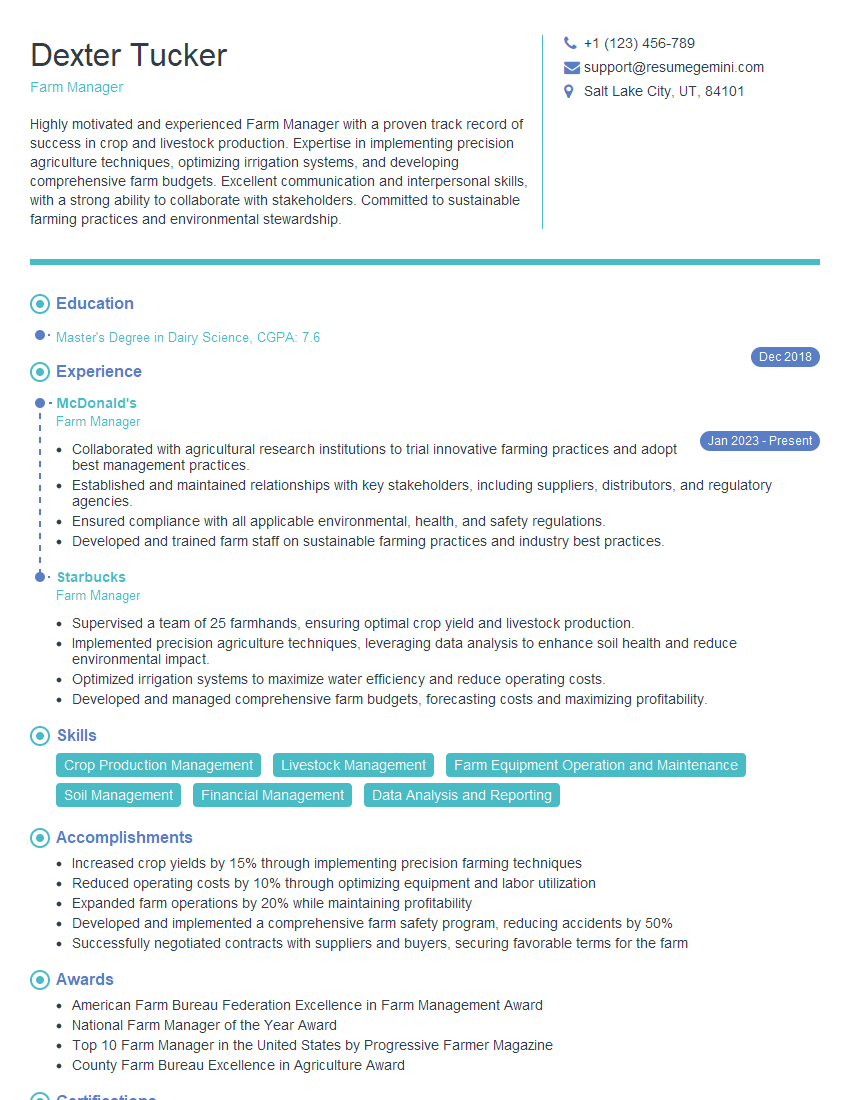
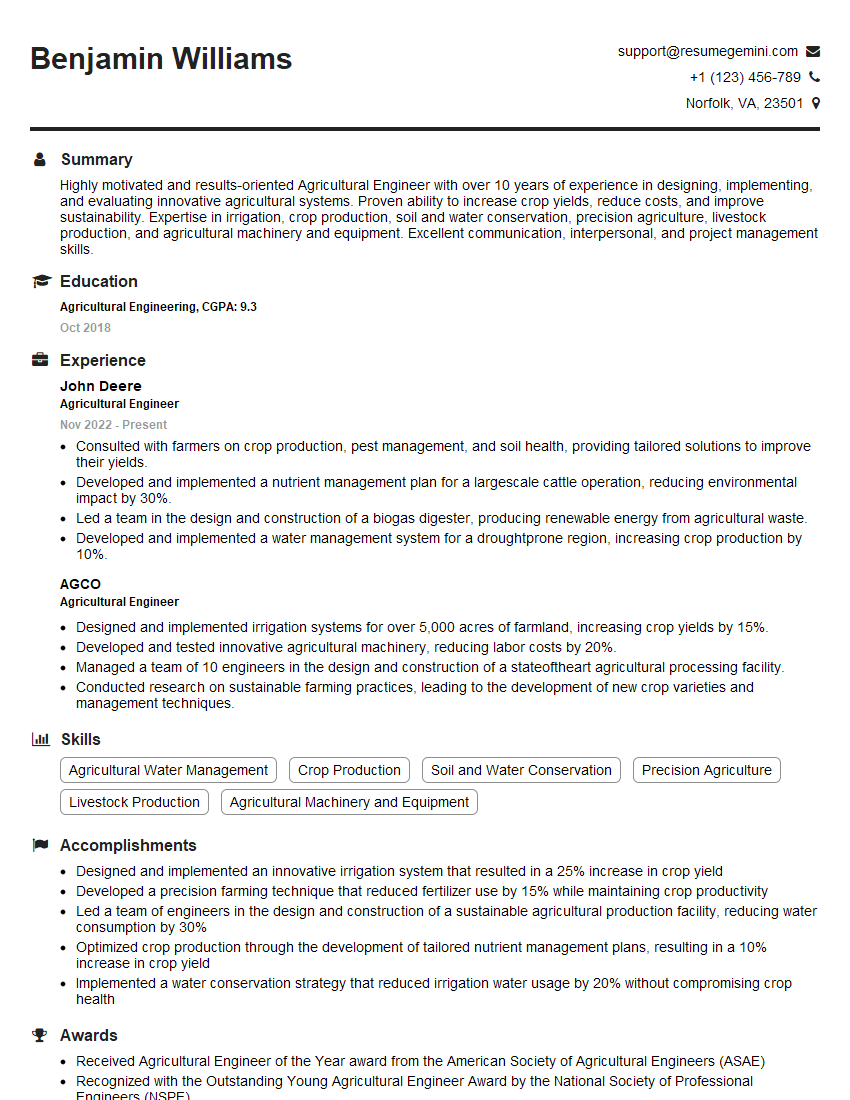
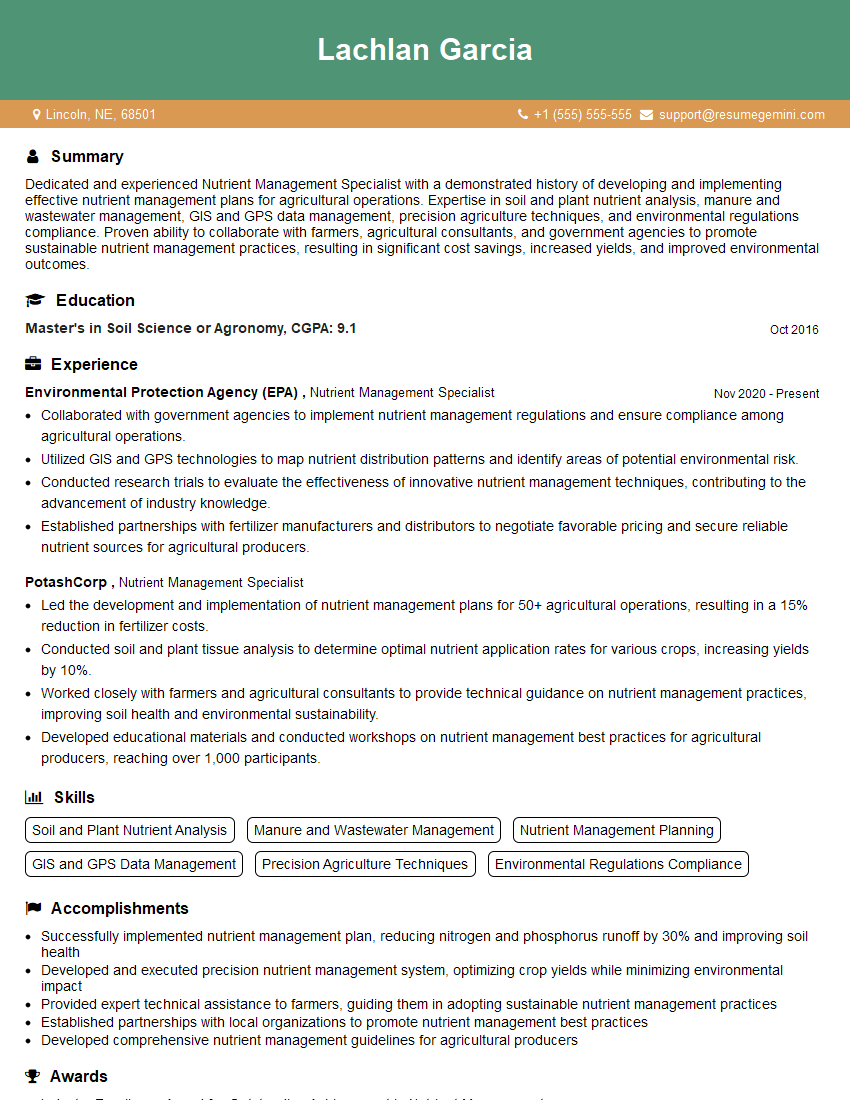
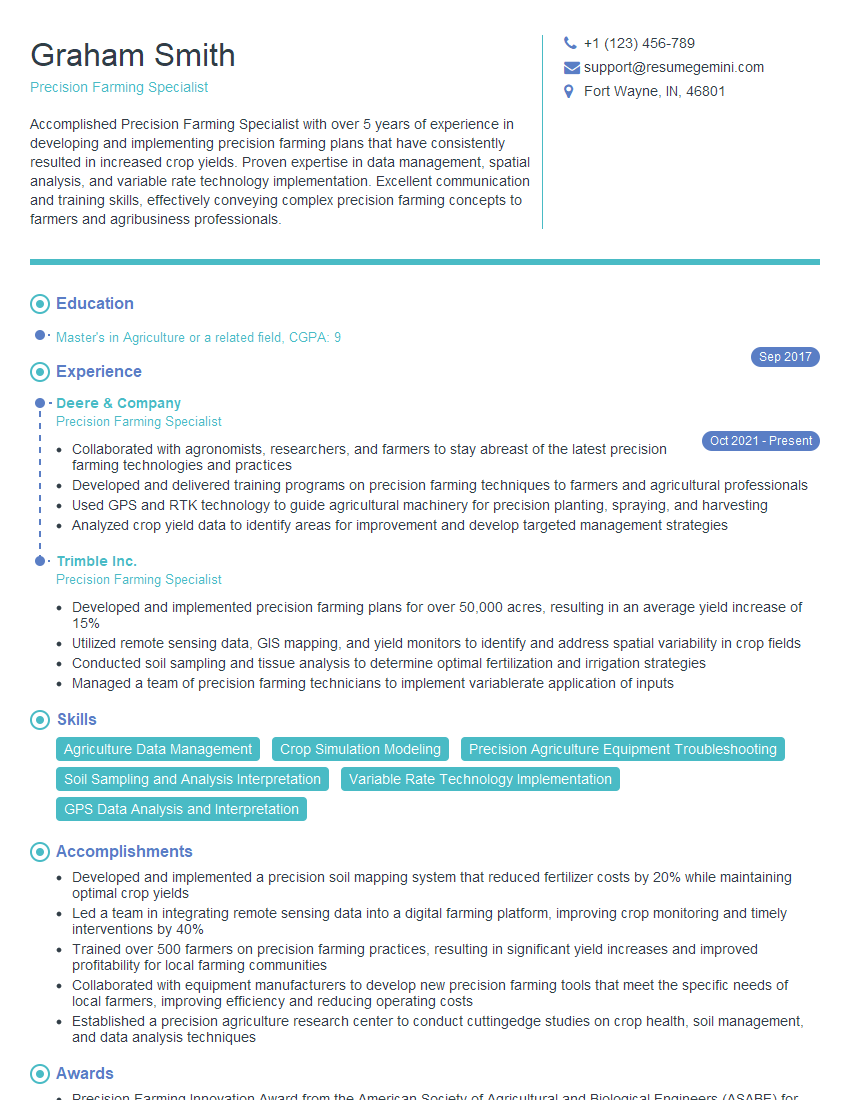
Mastering Fertilizer Application Techniques is crucial for career advancement in agriculture and related fields. A strong understanding of these principles will significantly enhance your job prospects and open doors to exciting opportunities. To maximize your chances of landing your dream role, it’s vital to create a resume that effectively showcases your skills and experience to Applicant Tracking Systems (ATS). ResumeGemini is a trusted resource to help you build a professional and ATS-friendly resume that highlights your expertise in Fertilizer Application Techniques. Examples of resumes tailored to this field are available to help guide you through the process.



Explore more articles
Users Rating of Our Blogs
Share Your Experience
We value your feedback! Please rate our content and share your thoughts (optional).
What Readers Say About Our Blog
Very informative content, great job.
good