Preparation is the key to success in any interview. In this post, we’ll explore crucial Field Exploration and Testing interview questions and equip you with strategies to craft impactful answers. Whether you’re a beginner or a pro, these tips will elevate your preparation.
Questions Asked in Field Exploration and Testing Interview
Q 1. Explain the different types of geophysical surveys used in field exploration.
Geophysical surveys are crucial in field exploration as they provide subsurface information without directly drilling. They employ various techniques to measure physical properties of rocks and fluids, helping us map geological structures and identify potential hydrocarbon reservoirs or mineral deposits. Common types include:
- Seismic Surveys: These use sound waves to image subsurface structures. Reflection seismic involves sending sound waves into the ground and measuring the reflections, creating a detailed image. Refraction seismic uses the speed of the waves to map subsurface layers. Think of it like an ultrasound for the Earth.
- Gravity Surveys: These measure variations in the Earth’s gravitational field caused by density differences in subsurface rocks. Denser formations will exert a stronger gravitational pull. This is useful for identifying dense ore bodies or geological structures like salt domes.
- Magnetic Surveys: These detect variations in the Earth’s magnetic field caused by magnetic minerals in the subsurface. This is commonly used to locate iron ore deposits or map volcanic features.
- Electromagnetic Surveys: These use electromagnetic fields to measure the electrical conductivity of subsurface materials. This is useful for detecting conductive minerals or hydrocarbons, which have different conductivity properties than surrounding rock. Imagine using a metal detector but on a much larger scale, to sense subsurface materials.
- Electrical Resistivity Surveys: These measure the resistance of subsurface materials to the flow of electrical current. This method is useful for mapping subsurface layers with differing water content or identifying areas of fracturing.
The choice of geophysical survey depends on the specific geological setting, target, and budget. Often, a combination of methods provides the most comprehensive subsurface image.
Q 2. Describe your experience with well logging techniques and interpretation.
My experience with well logging encompasses various techniques, from data acquisition to interpretation. I’ve worked extensively with wireline logging tools that measure various parameters within a borehole, including resistivity, porosity, density, and natural gamma radiation. I’m proficient in interpreting these logs to define lithology, porosity, permeability, fluid saturation, and reservoir quality.
For instance, in one project, we used a combination of gamma ray, neutron porosity, and density logs to differentiate between sandstone and shale layers in a potential gas reservoir. The gamma ray log helped identify shale (higher gamma ray counts), while the neutron and density logs provided estimates of porosity, which is crucial for determining reservoir potential. We used this data to build a detailed geological model and estimate the hydrocarbon reserves.
My interpretation process involves quality control checks, log editing (to remove noise or artifacts), correlation of logs between different wells, and integration with other data, such as core analysis and seismic data, to build a comprehensive geological model.
Q 3. How do you identify and mitigate geological risks during exploration?
Identifying and mitigating geological risks is crucial for successful exploration. These risks can range from unexpected geological formations to environmental hazards. My approach involves a multi-step process:
- Comprehensive Data Review: This includes analyzing existing geological, geophysical, and well data to understand the regional and local geology, identifying potential hazards like faults, unstable formations, or high-pressure zones.
- Geotechnical Investigations: This can involve subsurface sampling, laboratory testing, and specialized geotechnical studies to assess soil and rock properties, stability, and bearing capacity. This is particularly important for planning drilling and surface facilities.
- Risk Assessment and Mitigation Planning: Once potential risks are identified, we conduct a quantitative and qualitative risk assessment, prioritizing risks based on their likelihood and potential impact. Mitigation strategies can include adjusting drilling parameters, employing specialized drilling techniques, implementing advanced well control measures, and contingency planning.
- Real-time Monitoring: Throughout the exploration phase, real-time monitoring of drilling parameters, formation pressure, and other relevant data enables early detection of potential problems. This allows for prompt corrective actions to mitigate the risks before they escalate.
For example, in a project involving an area with known fault zones, we incorporated a detailed fault analysis using seismic data and employed advanced drilling techniques to safely navigate through the fault zones, minimizing the risk of wellbore instability.
Q 4. What are the key parameters you consider when designing a field testing program?
Designing a field testing program requires careful consideration of several parameters to ensure it’s effective and efficient. These include:
- Project Objectives: Clearly defined objectives dictate the types of tests needed. Are we testing for reservoir properties, wellbore stability, or environmental impact?
- Geological Setting: The geological context influences the choice of tests and sampling strategies. Different rock types require different testing methods.
- Budget and Time Constraints: Realistic budgeting and scheduling ensure the program is feasible.
- Data Requirements: The level of detail needed for accurate reservoir characterization or engineering design determines the extent and nature of testing.
- Safety and Environmental Regulations: All testing must adhere to strict safety and environmental regulations to minimize potential risks.
- Testing Methods: Selection of appropriate laboratory tests, field tests, and in-situ testing methods is crucial. Examples include core analysis, formation testing, well testing, and production testing.
A well-designed program uses a combination of techniques, balancing cost-effectiveness with the required level of accuracy. Prioritizing the most important tests given the available time and budget can be key to project success.
Q 5. Explain your experience with core analysis and its applications.
Core analysis is a crucial aspect of reservoir characterization. It involves detailed laboratory analysis of rock samples (cores) recovered during drilling. These analyses provide essential information on reservoir properties such as porosity, permeability, fluid saturation, and mineralogy.
My experience includes conducting and interpreting various core analysis procedures, including:
- Porosity determination: Measuring the pore space in the rock, which influences hydrocarbon storage capacity.
- Permeability measurement: Determining the ability of the rock to allow fluids (oil, gas, water) to flow, crucial for reservoir productivity.
- Fluid saturation analysis: Quantifying the amount of oil, gas, and water within the pore space.
- Capillary pressure measurements: Understanding the relationship between pressure and fluid saturation in the rock, crucial for predicting fluid movement.
- Petrographic analysis: Examining the rock’s mineralogical composition and texture under a microscope.
The results of core analysis are integrated with well log data to build a comprehensive reservoir model, allowing for accurate reservoir simulation and production forecasting. For example, in a recent project, core analysis data helped us identify low-permeability zones within a reservoir, which was crucial in optimizing well placement and completion strategies.
Q 6. Describe your experience with different types of drilling equipment and techniques.
My experience encompasses various drilling techniques and equipment, from conventional rotary drilling to more specialized methods like directional drilling and horizontal drilling. I’m familiar with different rig types, including land rigs, offshore platforms, and jack-up rigs. The choice of drilling equipment and technique depends on factors such as well depth, target formation properties, environmental conditions, and budgetary constraints.
Conventional rotary drilling utilizes a rotating drill bit to bore a hole into the ground. Directional drilling uses specialized tools to steer the wellbore away from the vertical, allowing access to otherwise unreachable reservoirs. Horizontal drilling involves creating a long horizontal section at the end of the wellbore to maximize contact with the reservoir.
I’ve worked with various drilling fluids (muds) designed to optimize wellbore stability, control formation pressure, and carry cuttings to the surface. The selection of drilling fluids is critical for preventing wellbore instability, preventing formation damage, and ensuring safety. My experience includes troubleshooting drilling problems, such as stuck pipe, lost circulation, and well control issues, and implementing corrective measures.
Q 7. How do you ensure data quality and accuracy during field exploration and testing?
Ensuring data quality and accuracy is paramount in field exploration and testing. My approach incorporates several key elements:
- Rigorous Quality Control (QC) and Quality Assurance (QA) Procedures: Implementing standardized procedures for data acquisition, processing, and interpretation helps minimize errors. Regular checks and audits ensure data integrity.
- Calibration and Maintenance of Equipment: Regular calibration of measuring instruments is essential to eliminate bias and inaccuracies. Proper maintenance of all equipment minimizes malfunctions and data loss.
- Data Validation and Verification: Independent verification and validation checks compare the collected data against known values or expectations. This involves cross-referencing different data sets and looking for inconsistencies.
- Data Management and Archiving: A well-organized system for storing and managing data is essential. A secure archive ensures data accessibility and prevents loss.
- Data Processing and Interpretation Expertise: Employing skilled personnel with expertise in data processing and interpretation techniques minimizes potential human errors and ensures accurate conclusions.
- Use of Industry Standards and Best Practices: Adherence to industry standards and best practices enhances data reliability and comparability across different projects.
For instance, in one project, we identified a systematic bias in our temperature measurements by comparing the data with independent measurements from different tools. This allowed us to correct the bias and ensure the accuracy of our results.
Q 8. How do you interpret seismic data to identify potential hydrocarbon reservoirs?
Interpreting seismic data to find hydrocarbon reservoirs involves analyzing reflections of sound waves to map subsurface structures. We look for specific geological features indicative of potential traps where hydrocarbons can accumulate.
- Amplitude anomalies: Strong reflections can indicate the presence of gas, as gas has a significantly different acoustic impedance compared to surrounding rock. We’d see this as a bright spot on the seismic section.
- Structural traps: Faults, folds, and unconformities can create traps. Seismic data helps us map these structures’ geometry and identify potential closures where hydrocarbons might be trapped.
- Stratigraphic traps: Changes in rock layers (e.g., pinch-outs, lenses) can also form traps. Seismic attributes like impedance and reflectivity help us identify these subtle changes in the subsurface.
For example, a strong amplitude anomaly associated with a dome-shaped structure (anticline) beneath a seal rock would be a high-priority target. We use seismic attributes like RMS amplitude, instantaneous frequency, and AVO (amplitude versus offset) analysis to refine our interpretation and better characterize the reservoir potential.
Q 9. What are the challenges you’ve faced in remote or harsh field environments?
Working in remote or harsh environments presents unique challenges. I’ve experienced working in the Sahara Desert, where extreme heat, limited infrastructure, and sandstorms presented significant logistical difficulties. We had to carefully plan operations, ensure adequate safety measures (including sun protection and emergency response plans), and manage supply chains effectively. Communication was also challenging due to limited or unreliable satellite connectivity.
In another project in the Arctic, we faced extremely cold temperatures, limited daylight hours, and the possibility of encountering polar bears. This necessitated specialized equipment, training in cold-weather survival, and collaboration with local experts for safe and efficient operations. Careful planning and risk assessment are paramount in these environments to ensure the safety and success of the exploration project.
Q 10. Explain your proficiency in using GIS software for exploration data analysis.
I’m proficient in using GIS software like ArcGIS and QGIS for various aspects of exploration data analysis. I use it to:
- Manage and visualize spatial data: Integrating geological maps, seismic data, well logs, and other spatial datasets into a unified GIS environment allows for a comprehensive view of the exploration area.
- Perform spatial analysis: I use GIS tools to perform proximity analysis (e.g., determining distances to faults), overlay analysis (e.g., combining geological formations with seismic interpretations), and spatial statistics to identify patterns and relationships within the data.
- Create maps and presentations: I produce high-quality maps, cross-sections, and other visualizations to communicate exploration findings effectively to stakeholders.
For example, I used GIS to create a detailed geological map showing the distribution of potential reservoir rocks, overlaying this information with seismic interpretation to identify promising exploration targets. This integrated approach significantly improved our ability to delineate prospective areas and optimize drilling locations.
Q 11. Describe your experience with subsurface modeling and interpretation.
My experience with subsurface modeling and interpretation involves building 3D geological models of the subsurface using various software packages. This involves integrating data from different sources, including seismic data, well logs, and geological information to build a detailed, realistic representation of the subsurface.
I use these models to:
- Interpret geological structures: This includes identifying and characterizing faults, folds, and stratigraphic features.
- Estimate reservoir properties: Using available data, I estimate properties such as porosity, permeability, and hydrocarbon saturation.
- Assess reservoir volume and hydrocarbon in-place: I use the model to calculate the volume of potential hydrocarbon reservoirs.
- Support drilling planning: The models are crucial for deciding well locations to maximize the chance of discovering hydrocarbons.
In a recent project, I built a 3D reservoir model that accurately predicted the hydrocarbon saturation and reservoir volume, resulting in a successful exploration well. This model was crucial in reducing uncertainty and optimizing drilling decisions.
Q 12. How do you manage and interpret geological data from various sources?
Managing and interpreting geological data from diverse sources requires a systematic approach. I typically follow these steps:
- Data acquisition and compilation: Gathering data from various sources like well logs, core samples, seismic surveys, geological maps, and publications.
- Data quality control: Checking for accuracy, consistency, and completeness of the data.
- Data integration and interpretation: Integrating data into a unified framework, using software and analytical techniques to interpret geological history and reservoir characteristics.
- Data visualization: Creating maps, cross-sections, and 3D models to visualize data and communicate findings clearly.
- Data validation and uncertainty assessment: Continuously validating the interpretations against new data and quantifying the uncertainty associated with the interpretations.
For instance, in a recent project, I integrated well log data with seismic data to build a detailed reservoir model. By comparing the results with core data, I was able to calibrate the model and reduce uncertainty in reservoir property estimates. This iterative process of data integration and validation is key to developing robust and reliable geological interpretations.
Q 13. How do you assess the economic viability of an exploration project?
Assessing the economic viability of an exploration project involves a detailed cost-benefit analysis. This considers:
- Estimated reserves: The amount of hydrocarbons that can be economically recovered.
- Production costs: Drilling, completion, production, and transportation costs.
- Hydrocarbon prices: Forecasting future oil and gas prices to determine potential revenues.
- Capital expenditure (CAPEX): Costs associated with exploration, appraisal, and development.
- Operating expenditure (OPEX): Costs of operating the field once production begins.
- Taxes and royalties: Government levies on production.
- Discount rate: Accounting for the time value of money.
By carefully evaluating these factors, we calculate key economic metrics like the Net Present Value (NPV) and Internal Rate of Return (IRR). A positive NPV and an IRR above the hurdle rate indicates economic viability. Sensitivity analysis is critical to assess the impact of uncertainties in key parameters like hydrocarbon prices and recovery rates.
Q 14. Describe your experience with environmental regulations and permitting in exploration.
Environmental regulations and permitting are crucial aspects of exploration projects. My experience includes:
- Environmental impact assessment (EIA): Conducting thorough EIAs to identify and mitigate potential environmental impacts of exploration activities.
- Permitting: Obtaining necessary permits from relevant authorities (e.g., environmental agencies, land management agencies). This often involves detailed applications outlining the proposed activities, mitigation measures, and environmental monitoring plans.
- Environmental monitoring: Implementing and managing environmental monitoring programs to ensure compliance with regulations and to track potential impacts.
- Stakeholder engagement: Engaging with local communities and other stakeholders to address their concerns and obtain their support for the project.
- Waste management: Developing and implementing plans for managing waste generated during exploration activities.
Navigating the permitting process requires detailed knowledge of applicable regulations, clear communication with regulatory agencies, and a proactive approach to environmental protection. A strong focus on environmental compliance not only minimizes risks but also fosters a positive relationship with the community and regulatory bodies.
Q 15. Explain the different types of rock formations and their implications for exploration.
Understanding rock formations is crucial in field exploration because they directly influence the potential for finding subsurface resources like hydrocarbons or minerals. Different rock types possess unique properties impacting porosity, permeability, and fracturing – all key factors determining resource accumulation and extraction feasibility.
Sedimentary Rocks: Formed from the accumulation and lithification (compaction and cementation) of sediments. These include sandstones (excellent reservoir rocks due to their porosity and permeability), shales (often act as source rocks or seals), and limestones (reservoir potential depends on fracturing and diagenesis).
Igneous Rocks: Formed from the cooling and solidification of molten magma or lava. Basalt (commonly found in volcanic regions), granite (can be a host rock for mineral deposits), and other igneous rocks generally have lower porosity and permeability compared to sedimentary rocks, impacting their reservoir potential.
Metamorphic Rocks: Formed from the transformation of existing rocks under high pressure and temperature. Examples include slate, marble, and schist. Their properties significantly depend on the parent rock and the degree of metamorphism, leading to variable reservoir characteristics.
For instance, identifying a sandstone formation with high porosity and good permeability is a positive indicator for hydrocarbon exploration. Conversely, encountering a thick shale layer might indicate a seal trapping hydrocarbons beneath, guiding drilling decisions.
Career Expert Tips:
- Ace those interviews! Prepare effectively by reviewing the Top 50 Most Common Interview Questions on ResumeGemini.
- Navigate your job search with confidence! Explore a wide range of Career Tips on ResumeGemini. Learn about common challenges and recommendations to overcome them.
- Craft the perfect resume! Master the Art of Resume Writing with ResumeGemini’s guide. Showcase your unique qualifications and achievements effectively.
- Don’t miss out on holiday savings! Build your dream resume with ResumeGemini’s ATS optimized templates.
Q 16. How do you collaborate effectively with a multidisciplinary team in exploration projects?
Effective collaboration in a multidisciplinary exploration team is paramount. It requires open communication, mutual respect, and a shared understanding of project goals. My approach involves:
Regular Meetings: Frequent and well-structured meetings (both in-person and virtual) are essential for updating progress, addressing challenges, and ensuring everyone is aligned.
Clear Roles and Responsibilities: Defining individual roles and establishing clear communication channels minimizes confusion and redundancy.
Data Sharing and Management: Employing a centralized data management system ensures that everyone has access to the same updated information, minimizing errors and promoting efficiency.
Constructive Feedback and Conflict Resolution: Fostering a collaborative environment where constructive criticism is welcome and conflicts are addressed promptly and professionally is critical.
Leveraging Diverse Expertise: Recognizing and utilizing the expertise of team members from different backgrounds (geologists, geophysicists, engineers, etc.) ensures a well-rounded perspective.
For example, in a recent project, I facilitated communication between geologists interpreting subsurface data and engineers designing the drilling plan, ensuring that the drilling program effectively targeted the geological structures identified.
Q 17. Describe your experience with different sampling methods and quality control procedures.
My experience encompasses various sampling methods, always prioritizing quality control.
Rock Core Sampling: Provides the most detailed information, allowing for visual inspection, lithological description, and laboratory analysis. Quality control involves meticulous logging and chain-of-custody procedures to maintain sample integrity.
Cuttings Sampling: Collected during drilling, offering less detailed information but valuable for continuous geological interpretation. Quality control here focuses on proper identification, preservation, and documentation to minimize contamination or mixing.
Sidewall Coring: Useful for obtaining samples from specific intervals in the borehole, particularly when core recovery is poor. Quality control emphasizes accurate depth recording and minimizing core damage during retrieval.
Fluid Sampling: Used to analyze reservoir fluids (oil, gas, water). Quality control emphasizes sterile sampling techniques, proper sample preservation, and immediate analysis to prevent alteration or contamination. This often involves using specialized sampling tools and strict protocols.
I’ve consistently incorporated standardized procedures, ensuring accurate sample labelling, detailed logging, and secure transportation to the laboratory, minimizing bias and ensuring data integrity. Blind duplicates and repeated analyses are used to assess analytical variability and accuracy.
Q 18. How do you troubleshoot problems encountered during field operations?
Troubleshooting in field operations requires a systematic approach. My strategy involves:
Identify the Problem: Clearly define the issue. Is it equipment malfunction, logistical challenge, or geological anomaly? Documenting observations and collecting data is critical.
Gather Information: Consult relevant data (logs, maps, previous reports), talk to the team, and analyze the situation from different perspectives.
Develop Hypotheses: Based on gathered information, formulate potential causes for the problem.
Test Hypotheses: Implement actions to test the potential causes and narrow down the possibilities. This might involve equipment checks, alternative procedures, or additional data acquisition.
Implement Solution: Once the root cause is identified, implement the most effective solution. This could involve equipment repair, procedural adjustments, or alternative methodologies.
Document and Learn: Document the problem, the troubleshooting process, and the implemented solution. This allows for learning from past experiences and improving future operations.
For example, encountering unexpected high-pressure zones during drilling required immediate action. We stopped drilling, analyzed the data, and adjusted the drilling parameters based on the revised geological model, preventing potential accidents and maximizing operational efficiency.
Q 19. What software and tools are you proficient in using for field exploration and data analysis?
I’m proficient in several software and tools relevant to field exploration and data analysis:
Petrel: For seismic interpretation, reservoir modeling, and well log analysis.
Kingdom: For seismic processing and interpretation.
Geosoft Oasis Montaj: For geophysical data processing and analysis.
ArcGIS: For GIS mapping and spatial data management.
Leapfrog Geo: For 3D geological modeling.
Microsoft Office Suite (Excel, Word, PowerPoint): For data reporting, documentation, and presentations.
In addition to software, I’m adept at using various field instruments including GPS units, total stations, and various sampling and testing equipment.
Q 20. Explain your understanding of reservoir characterization and fluid properties.
Reservoir characterization is the process of defining the geological and physical properties of a reservoir rock, while understanding fluid properties is vital for assessing its hydrocarbon potential.
Reservoir Characterization: This involves integrating geological data (lithology, stratigraphy, structure) with geophysical data (seismic, well logs) to create a 3D model of the reservoir. This model depicts porosity, permeability, saturation, and other key parameters influencing hydrocarbon flow.
Fluid Properties: Determining the type, quantity, and quality of fluids (oil, gas, water) within the reservoir is crucial. This involves analyzing fluid samples collected during drilling and testing. Key properties include oil gravity, gas composition, water salinity, and pressure and temperature gradients within the reservoir.
The interplay between reservoir and fluid properties dictates the recovery potential. High porosity and permeability, combined with favorable fluid properties, will suggest a productive reservoir, while the opposite suggests limited hydrocarbon resources.
For example, I’ve utilized seismic data to identify reservoir boundaries, incorporated well log data to define rock properties, and used fluid analysis to predict production rates, ultimately supporting effective development strategies.
Q 21. How do you ensure safety compliance during field exploration and testing activities?
Safety is my utmost priority during all field operations. My approach involves:
Risk Assessment: Conducting thorough risk assessments before undertaking any activity to identify and mitigate potential hazards. This involves considering environmental factors, equipment, personnel, and emergency procedures.
Safety Training and Procedures: Ensuring all personnel are adequately trained and equipped with proper safety procedures and emergency response plans.
Compliance with Regulations: Adhering to all relevant safety regulations and industry best practices. This includes ensuring all necessary permits and licenses are in place.
Equipment Inspections and Maintenance: Regular inspection and maintenance of all equipment to ensure it is functioning safely and effectively.
Emergency Response Plan: Having a detailed emergency response plan in place to handle various scenarios, including medical emergencies, equipment failures, and environmental incidents.
Continuous Monitoring: Regular monitoring of field operations to ensure that all safety protocols are being followed.
For instance, in a remote location, we implemented a robust communication system, established regular safety briefings, and ensured that all personnel carried emergency supplies, enabling efficient response to potential issues. We also conducted regular safety inspections for potential hazards such as unstable terrain or hazardous materials.
Q 22. Describe your experience with data management and reporting in field exploration.
Data management in field exploration is the backbone of successful projects. It involves meticulous collection, organization, validation, and interpretation of vast amounts of data from various sources – geological surveys, geophysical logs, well test results, core samples, etc. My experience spans the entire lifecycle, from initial data acquisition planning and quality control procedures to the creation of comprehensive reports and presentations. This includes using specialized software for data visualization, interpretation, and modeling. For instance, in a recent project, we used Petrel to integrate seismic data, well logs, and geological interpretations to build a 3D reservoir model, leading to a more accurate assessment of hydrocarbon reserves. Reporting involves translating complex technical information into easily understandable formats for both technical and non-technical audiences, ensuring clarity and transparency in project findings and recommendations.
We utilize database management systems (DBMS) to organize data efficiently, often utilizing relational databases with structured query language (SQL) for complex data retrieval and analysis. Regular data audits and quality checks are essential to ensure data integrity and accuracy. Finally, the process culminates in comprehensive reports, often including interactive dashboards and visualizations, tailored to the specific needs of stakeholders.
Q 23. How do you stay updated on the latest advancements in exploration techniques and technologies?
Staying abreast of advancements in exploration techniques and technologies is paramount. I achieve this through a multi-pronged approach. Firstly, I actively participate in industry conferences, workshops, and seminars, such as those organized by SPE (Society of Petroleum Engineers) and AAPG (American Association of Petroleum Geologists). These events provide invaluable opportunities to network with peers and experts, learn about the latest breakthroughs, and engage in discussions regarding emerging trends. Secondly, I subscribe to leading industry journals and publications, like the Journal of Petroleum Technology and The Leading Edge, to stay informed about cutting-edge research and technological advancements. Thirdly, I regularly utilize online resources, including reputable professional websites, e-learning platforms, and industry databases, to access the most up-to-date technical information. This constant learning process allows me to readily adopt new methods and technologies, increasing efficiency and effectiveness in my work.
Q 24. Explain your understanding of different types of well testing and their applications.
Well testing is a crucial aspect of field exploration and development, providing critical information about reservoir properties. Several types of tests cater to different objectives.
- Pressure Build-up Tests (PBU): These are performed after a well has been produced for a certain period. By shutting-in the well and monitoring the pressure increase, we can determine reservoir permeability, porosity, and the extent of the reservoir. Think of it like observing how quickly water fills a container – the speed reveals information about the container’s size and permeability.
- Drawdown Tests: These are conducted by producing the well at a constant rate and observing the pressure decline. They provide similar information to PBU tests but are performed during production. It’s like observing how quickly the water level drops when we drain the container.
- Drill Stem Tests (DST): These are conducted during drilling, allowing for early assessment of the reservoir’s potential. They are particularly valuable in remote or deepwater locations where bringing the well to the surface for testing may be extremely expensive or challenging. This is like taking a quick sample of the water before completely emptying the container.
- Multi-rate tests: These involve changing the production rate during a test to gain a more detailed understanding of the reservoir’s flow properties. This helps create a more detailed profile of the reservoir compared to single-rate testing.
The choice of well test depends heavily on the specific goals and the reservoir’s characteristics. For example, DSTs are often preferred during the exploration phase, while PBU and drawdown tests are more common during development.
Q 25. Describe a situation where you had to solve a complex problem during field operations.
During a seismic survey in a challenging terrain, unexpected heavy rains caused significant damage to the access roads, halting the operation. The initial plan relied heavily on those roads for equipment transport and personnel access. The problem was compounded by the limited time window for the survey due to weather conditions. We addressed this by employing a two-pronged approach. First, we immediately contacted local engineers to assess the road damage and develop a temporary repair strategy. Simultaneously, we explored alternative access routes using satellite imagery and local knowledge, identifying secondary paths that were less affected. We even arranged for the use of helicopters for transporting crucial equipment. By implementing this contingency plan, we minimized downtime, successfully completing the survey with minor delays. This experience highlighted the importance of thorough planning, rapid decision-making, and adaptable problem-solving skills in handling unpredictable field conditions.
Q 26. How do you handle unexpected challenges or delays during field exploration?
Unexpected challenges and delays are inevitable in field exploration. My approach to handling them is based on proactive risk assessment, contingency planning, and effective communication. We start by anticipating potential problems during the planning phase. This might involve considering weather conditions, equipment failures, permit issues, or logistical hurdles. We then create contingency plans – alternative solutions to address these potential disruptions. When an unforeseen issue arises, we implement the appropriate contingency plan, or if it’s a novel challenge, we assemble a team to brainstorm solutions, analyze the root cause, and implement corrective actions. Clear, open, and frequent communication with all stakeholders – clients, team members, and support personnel – is critical to keep everyone informed, mitigate confusion, and ensure that everyone works collaboratively towards the shared objective. The goal is to minimize the impact of the delay on the overall project schedule and budget, all while ensuring safety remains the top priority.
Q 27. Describe your experience with different types of geological maps and their interpretations.
Geological maps are essential tools for visualizing subsurface features and understanding geological structures. I have extensive experience interpreting various types, including:
- Topographic Maps: These show the surface elevations and landforms, providing crucial context for interpreting subsurface geology. They’re like a basic overview of the area’s surface.
- Geological Maps: These illustrate the distribution of different rock formations and geological structures at the surface. They provide a snapshot of what’s visible at the Earth’s surface and offer clues about what might lie beneath.
- Structural Maps: These depict the three-dimensional geometry of geological structures like faults and folds. They are crucial in understanding how rocks have deformed and moved over time, providing a picture of the subsurface’s architecture.
- Isopach Maps: These show the thickness of specific geological layers, essential for estimating reservoir volumes. They’re like a contour map of rock layer thickness.
- Geophysical Maps: These integrate data from geophysical surveys (seismic, gravity, magnetic) to reveal subsurface structures and features that are not directly observable at the surface. They use indirect measurements to infer subsurface geology.
Interpreting these maps involves analyzing patterns, structures, and anomalies to build a comprehensive understanding of the subsurface geology. This often requires integrating data from multiple sources and using specialized software for visualization and analysis.
Q 28. How do you evaluate the success or failure of an exploration project?
Evaluating the success or failure of an exploration project isn’t simply about finding hydrocarbons. It’s a multifaceted assessment encompassing several key factors.
- Geological Objectives: Did we achieve the primary geological objectives? Were our initial hypotheses supported by the data collected? Did we accurately map the reservoir and its characteristics?
- Economic Viability: Is the discovered resource economically viable? This involves assessing the size and quality of the reserves, production costs, transportation infrastructure, market conditions, and the overall profitability of the project.
- Safety and Environmental Performance: Were the operations carried out safely and with minimal environmental impact? Adherence to safety protocols and environmental regulations are critical factors in determining project success.
- Time and Budget Constraints: Was the project completed within the allocated time and budget? Timely project delivery and cost-effectiveness are important considerations for project success.
Success is measured against the pre-defined goals and objectives set at the outset of the project. A project might be deemed partially successful if it meets some but not all its objectives. Failure, on the other hand, may result from failure to meet key geological objectives, significant cost overruns, or safety/environmental incidents.
Key Topics to Learn for Field Exploration and Testing Interview
- Geological Surveying Techniques: Understanding various surveying methods (e.g., seismic, gravity, magnetic) and their applications in different geological settings. Consider the limitations and advantages of each method.
- Data Acquisition and Processing: Familiarize yourself with the process of collecting, cleaning, and interpreting field data. Practice analyzing datasets and identifying anomalies or patterns.
- Well Logging Interpretation: Learn to interpret well logs (e.g., gamma ray, resistivity, density) to understand subsurface formations, identify potential reservoirs, and assess hydrocarbon potential.
- Reservoir Characterization: Understand how to use field data to build a 3D model of a reservoir, including porosity, permeability, and fluid saturation. Practice interpreting core samples and their significance.
- Formation Evaluation: Master the principles and techniques used to evaluate the properties of subsurface formations, such as pressure testing and fluid sampling.
- Health and Safety Regulations: Demonstrate a strong understanding of field safety procedures and environmental regulations relevant to exploration and testing.
- Data Analysis and Reporting: Practice presenting your findings clearly and concisely, both verbally and in written reports. Develop strong data visualization skills.
- Problem-Solving in the Field: Be prepared to discuss your approach to troubleshooting equipment malfunctions, unexpected geological conditions, or logistical challenges encountered during fieldwork.
Next Steps
Mastering Field Exploration and Testing opens doors to exciting and impactful careers in the energy sector and beyond. A strong foundation in these areas is crucial for career advancement and securing your dream role. To maximize your job prospects, invest time in creating an ATS-friendly resume that highlights your skills and experience effectively. ResumeGemini is a trusted resource to help you build a professional and impactful resume that stands out from the competition. Examples of resumes tailored to Field Exploration and Testing are available through ResumeGemini to guide your process and ensure you present yourself in the best possible light.
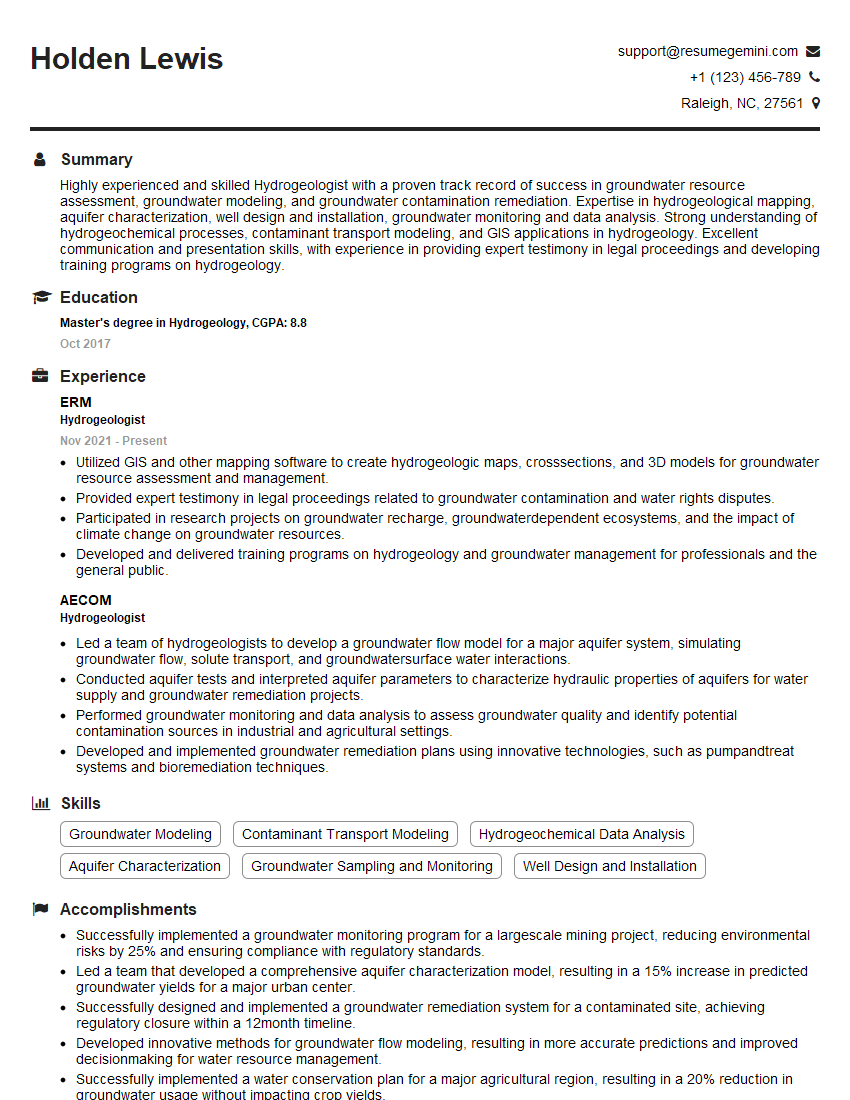
Hydrogeologist Resume Sample

Reservoir Engineer Resume Sample
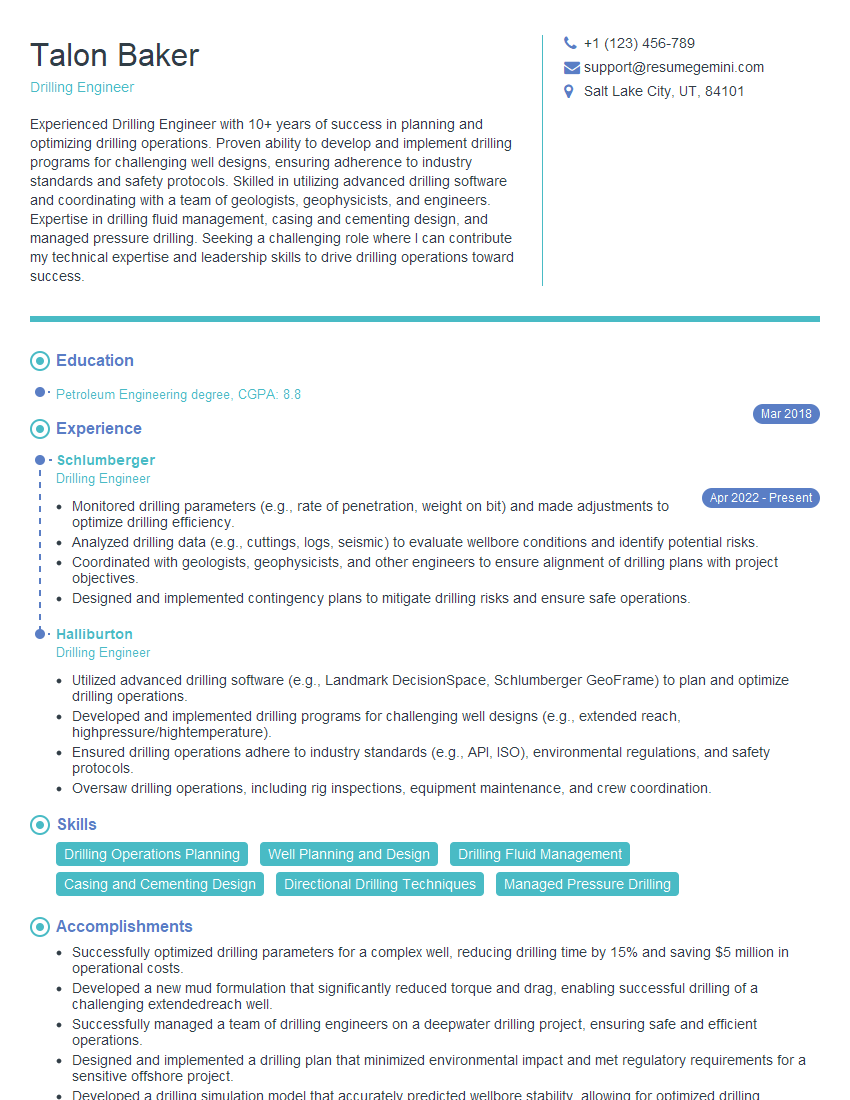
Drilling Engineer Resume Sample

Mud Engineer Resume Sample
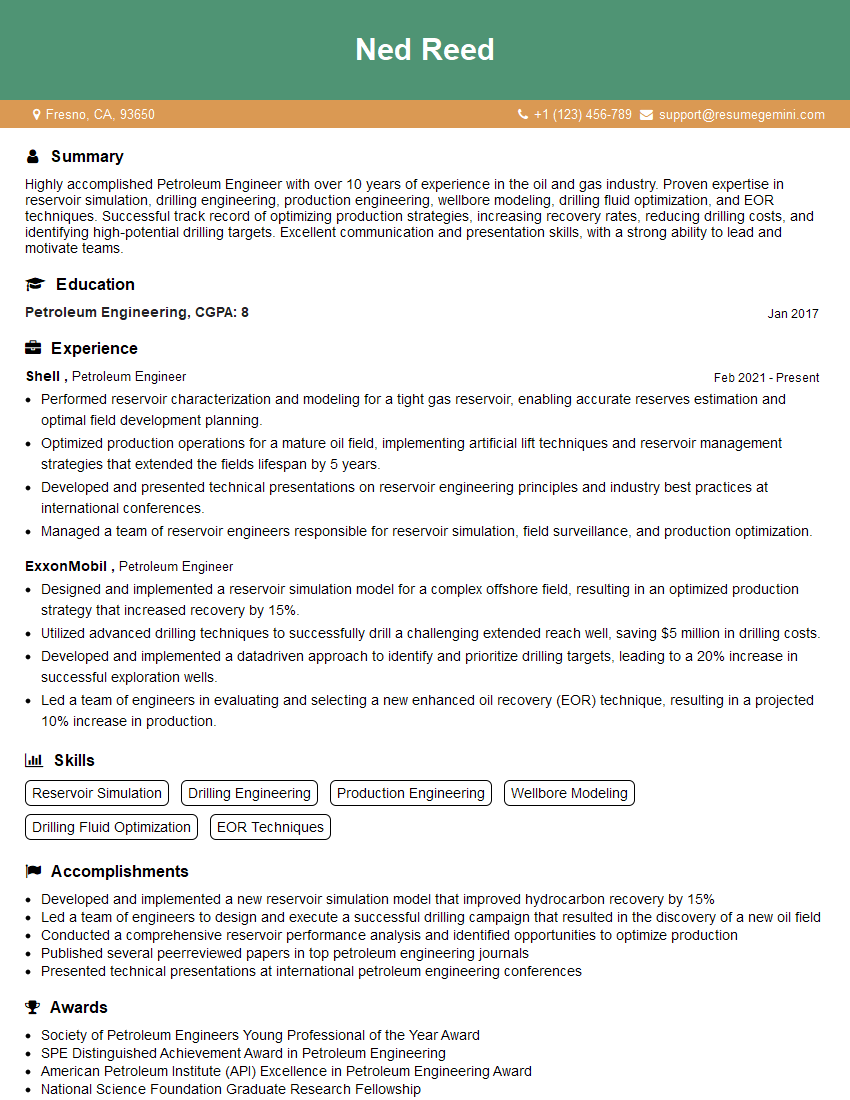
Petroleum Engineer Resume Sample
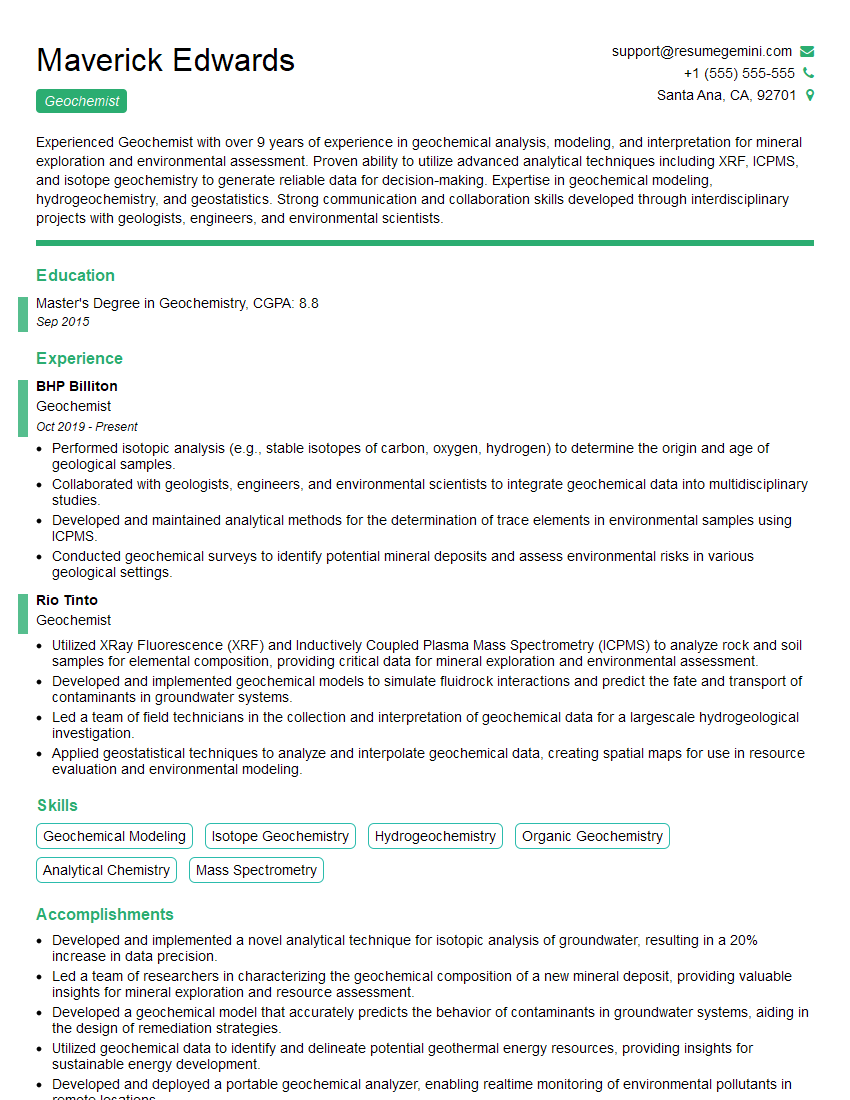
Geochemist Resume Sample
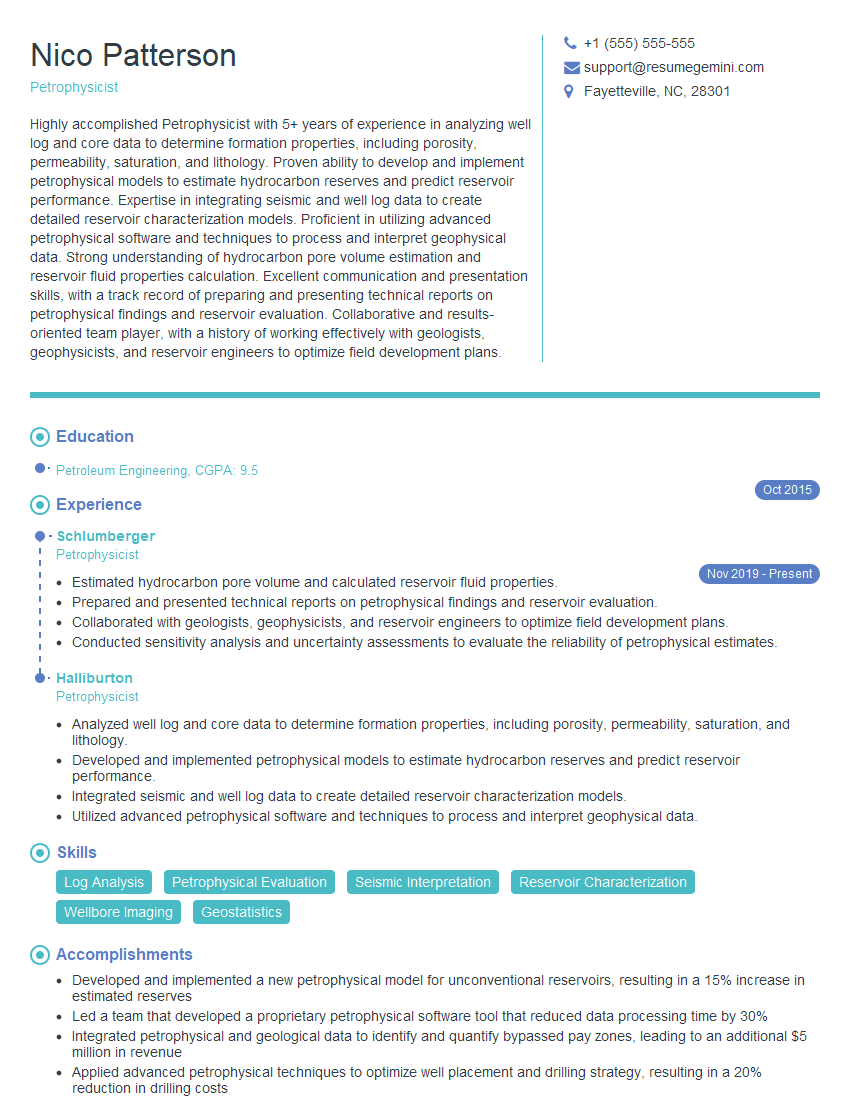
Petrophysicist Resume Sample

Project Geologist Resume Sample
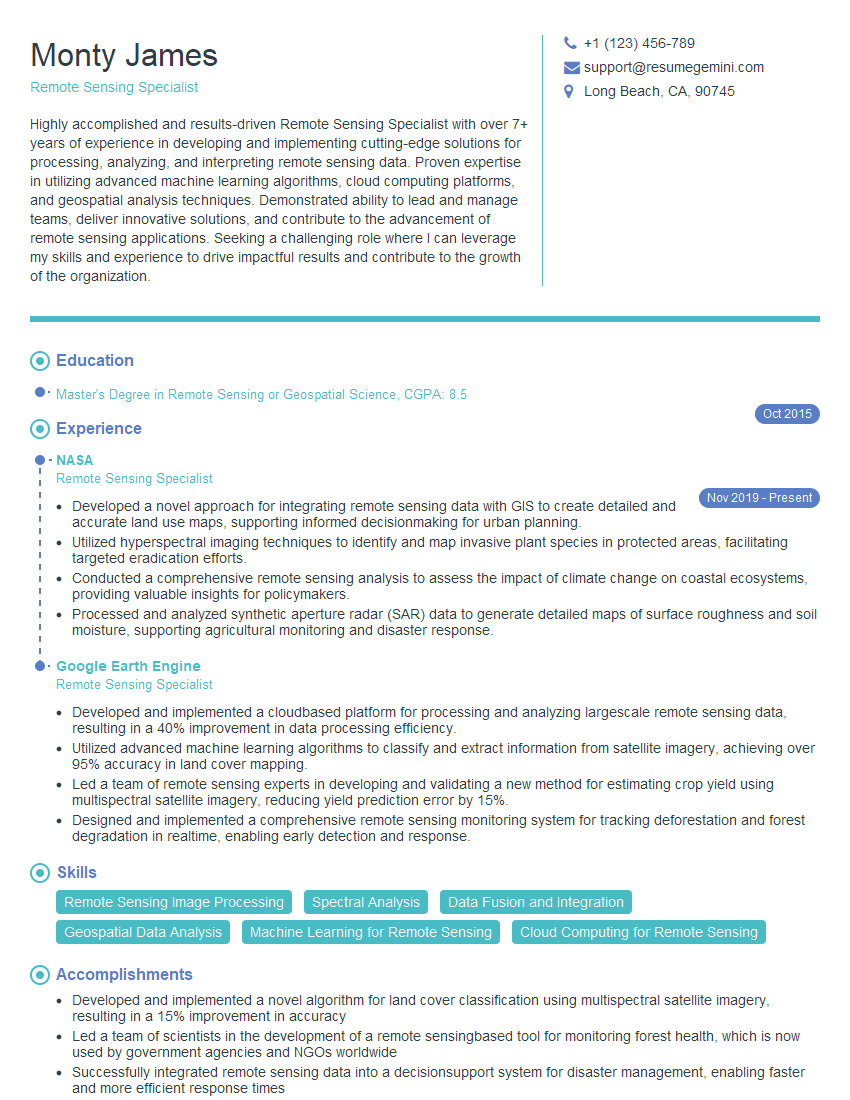
Remote Sensing Specialist Resume Sample
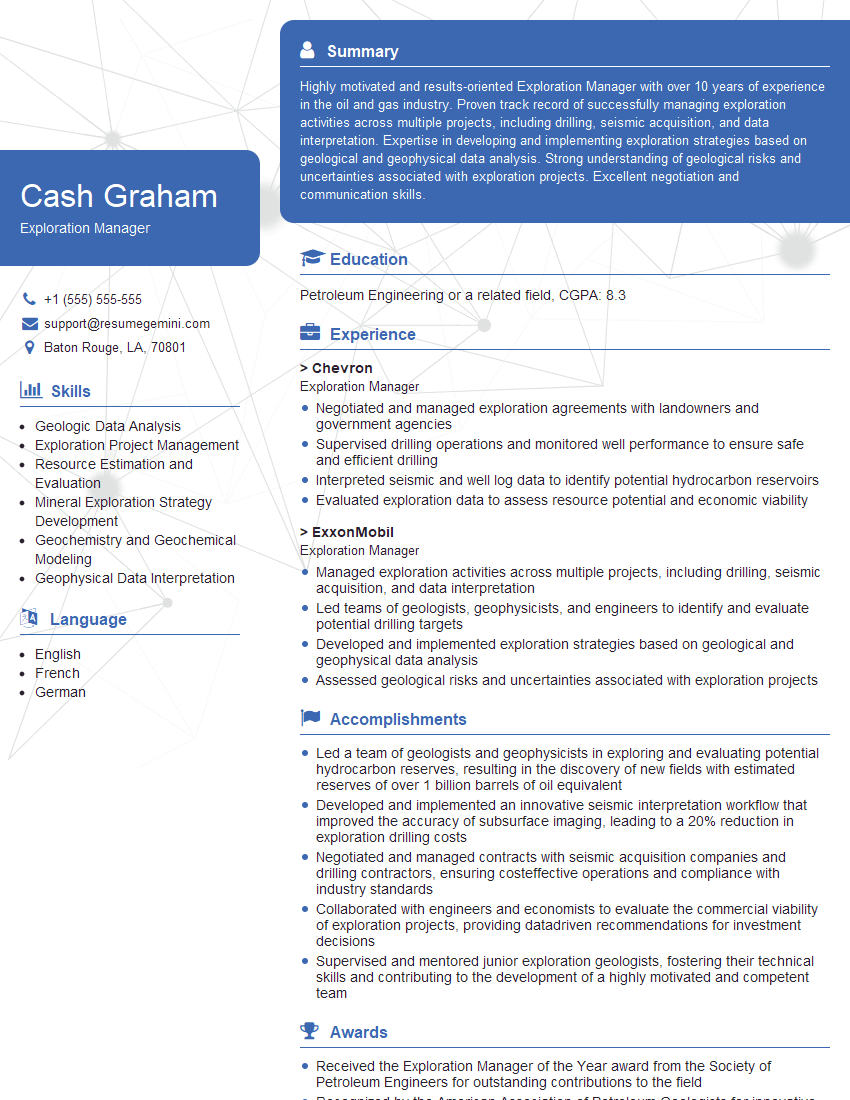
Exploration Manager Resume Sample
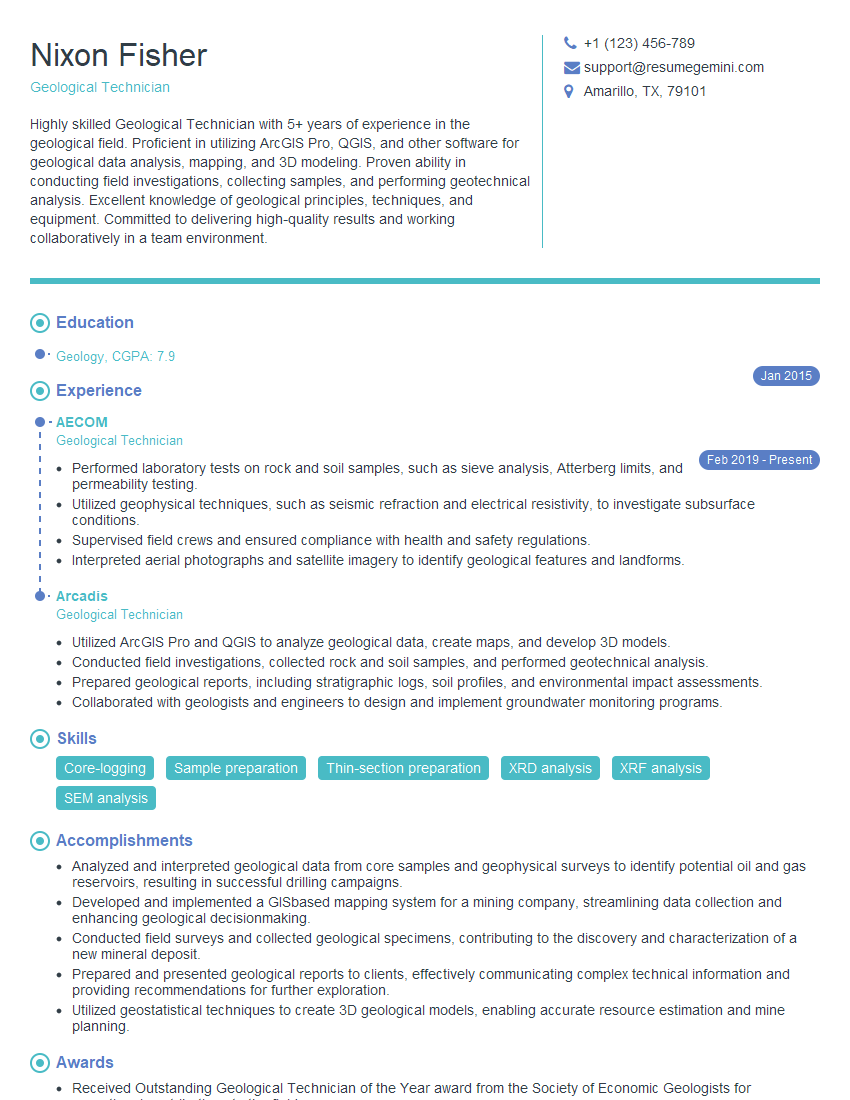
Geological Technician Resume Sample

Quality Control Inspector Resume Sample
Explore more articles
Users Rating of Our Blogs
Share Your Experience
We value your feedback! Please rate our content and share your thoughts (optional).