Cracking a skill-specific interview, like one for Film Acting, requires understanding the nuances of the role. In this blog, we present the questions you’re most likely to encounter, along with insights into how to answer them effectively. Let’s ensure you’re ready to make a strong impression.
Questions Asked in Film Acting Interview
Q 1. Describe your approach to analyzing a script for character development.
My approach to script analysis for character development is multifaceted and iterative. It begins with a thorough read-through, focusing not just on the character’s dialogue, but also on their actions, motivations, and relationships with other characters. I look for clues within the text—subtext is key—to understand the character’s unspoken desires, fears, and vulnerabilities. I then create a detailed character profile, encompassing their backstory, personality traits (both positive and negative), relationships, goals, and their arc throughout the story. This isn’t a static document; it evolves as my understanding deepens through rehearsals and collaboration with the director. For example, in analyzing a character struggling with addiction, I would look for details suggesting the root cause of their addiction, their coping mechanisms, and how their addiction impacts their relationships. I might research similar real-life struggles to add layers of authenticity.
- Backstory Exploration: What events shaped their past? What are their significant relationships?
- Motivation Analysis: What are their primary goals? What drives them? What obstacles do they face?
- Relationship Mapping: How do they interact with other characters? What are the dynamics?
- Arc Identification: How does the character change and grow throughout the story?
Q 2. Explain your method for memorizing lines efficiently.
Efficient line memorization isn’t about rote learning; it’s about understanding and internalizing the text. My method focuses on comprehension first. I begin by reading the script aloud multiple times, focusing on understanding the context and the emotional subtext of each line. I then break down the scenes into smaller, manageable chunks, focusing on one scene at a time. I use techniques like associating lines with physical actions or visual imagery to create strong memory hooks. Rehearsing with a partner or recording myself reading the lines aloud helps to solidify the memory. This isn’t about perfect recall immediately; it’s a process that takes time and repetition. For instance, if I’m playing a character delivering a powerful monologue, I might associate specific lines with corresponding movements or facial expressions to enhance memorization and performance.
- Understanding, not memorizing: Focus on the meaning before the words.
- Chunking: Break down scenes into smaller, manageable units.
- Active recall: Test yourself regularly without looking at the script.
- Sensory association: Link lines to images, sounds, or physical actions.
- Rehearsal with partner/recording: Get feedback and reinforce memory through active practice.
Q 3. How do you handle on-set improvisation?
On-set improvisation requires a blend of spontaneity and preparedness. While I always thoroughly prepare my lines and character, I also cultivate a mindset of openness and flexibility. I listen actively to my scene partners and respond organically to their actions and choices, maintaining a strong foundation in the character’s established motivations and objectives. Successful improvisation hinges on staying true to the character’s core traits and maintaining the overall narrative coherence. For example, if a scene calls for a confrontation, but my co-star unexpectedly delivers a line that suggests vulnerability, I would adjust my response to align with both the character’s established nature and the new dynamic.
- Strong character foundation: A deep understanding of your character is crucial.
- Active listening: Pay attention to your scene partners and the evolving dynamics.
- Adaptability: Be ready to adjust your performance based on unexpected developments.
- Narrative coherence: Ensure any improvisation aligns with the overall story.
Q 4. How do you collaborate effectively with a director?
Effective collaboration with a director is built on mutual respect, open communication, and a shared vision for the project. I believe in active listening and asking clarifying questions to ensure I thoroughly understand the director’s interpretation of the character and the scene. I value their insights and input, but I also feel empowered to offer my own perspectives and suggestions. This back-and-forth process, characterized by respectful dialogue, leads to a richer and more nuanced performance. For instance, if a director envisions a particular emotion in a scene that feels slightly different to my interpretation of the character’s motivations, we discuss the nuances, aiming to find a performance that balances both visions while upholding the integrity of the character.
- Open communication: Establish clear lines of communication and actively participate in discussions.
- Active listening: Pay close attention to the director’s feedback and guidance.
- Mutual respect: Value the director’s vision and expertise.
- Collaborative problem-solving: Work together to address challenges and find creative solutions.
Q 5. How do you incorporate physicality and movement into your acting?
Physicality and movement are integral aspects of believable acting; they convey unspoken emotions and motivations. I start by analyzing the character’s physical attributes—posture, gait, gestures—as described in the script or implied by their personality. I then work on integrating movement into my performance, using it to reflect the character’s emotional state. A slumped posture might indicate sadness or defeat, while a confident stride can showcase strength. I often work with movement coaches to refine my physical expressions and ensure they align seamlessly with the character’s emotional arc. This isn’t about mimicking; it’s about using physicality as a language to enhance the storytelling. For instance, a character experiencing anxiety might exhibit subtle nervous tics or fidgeting, while a character filled with rage might use sharp, forceful movements.
- Character analysis: Understand the physical characteristics implied by the character’s personality and circumstances.
- Emotional expression: Use movement to convey emotions and inner states.
- Movement coaching: Work with professionals to refine and enhance physical expression.
- Subtlety and authenticity: Avoid over-the-top movements; aim for natural and nuanced gestures.
Q 6. Explain your process for creating a believable character arc.
Creating a believable character arc involves understanding the character’s initial state, their journey, and their transformation. I start by identifying the character’s flaws, vulnerabilities, and desires at the beginning of the story. I then trace their growth or decline throughout the narrative, noting pivotal moments that shape their transformation. A strong arc isn’t just about external changes; it’s about internal growth, with the character facing challenges that force them to confront their flaws and evolve. For example, a character starting as cynical and distrustful might learn to trust and open up through experiences that challenge their beliefs, leading to a significant change in their perspective. It’s crucial to make these changes believable and consistent with the character’s established traits and motivations.
- Initial state: Define the character’s starting point, including their flaws, desires, and relationships.
- Pivotal moments: Identify key events or turning points that shape the character’s transformation.
- Internal growth: Focus on the character’s emotional and psychological development.
- Consistency: Ensure the character’s changes are believable and consistent with their personality.
Q 7. How do you manage stage fright or performance anxiety?
Stage fright or performance anxiety is a common experience for actors, even seasoned professionals. My strategy involves a combination of preparation, mindfulness, and positive self-talk. Thorough preparation is crucial; knowing my lines and the scene well significantly reduces anxiety. I practice mindfulness techniques, like deep breathing exercises, to calm my nerves before a performance. Most importantly, I focus on positive self-talk, reminding myself of my skills and past successes. I visualize a successful performance, focusing on the positive aspects of the experience rather than dwelling on potential mistakes. For example, before a big audition, I’ll practice my lines until they become second nature, then use deep breathing to center myself, and visualize myself confidently delivering my lines, receiving positive feedback from the casting directors.
- Preparation: Thoroughly rehearse your lines and the scene to build confidence.
- Mindfulness: Use relaxation techniques such as deep breathing or meditation to reduce anxiety.
- Positive self-talk: Remind yourself of your skills and past successes.
- Visualization: Imagine yourself delivering a successful performance.
Q 8. Describe a time you had to adapt your performance based on directorial feedback.
Adapting a performance based on directorial feedback is crucial for collaborative filmmaking. It’s a testament to the actor’s willingness to evolve and enhance their portrayal. In one instance, I was playing a hardened detective, initially portraying him with a cynical, almost detached demeanor. The director felt this was too cold, missing the underlying vulnerability that the script hinted at. He suggested I incorporate subtle micro-expressions – a slight twitch of the lip when faced with a particularly gruesome crime scene, a barely perceptible hesitation before delivering a line hinting at personal loss. These small adjustments, while seemingly minor, significantly impacted the character’s depth and resonated more authentically with the audience. The process involved actively listening to the director’s notes, understanding their vision, and then experimenting with different approaches until we found a portrayal that worked within the larger narrative arc.
Q 9. How do you prepare for emotionally challenging scenes?
Preparing for emotionally challenging scenes requires a multifaceted approach that blends technical skill with emotional safety. It’s vital to avoid simply ‘acting’ the emotion, aiming instead for genuine emotional resonance. I begin with thorough scene analysis, identifying the character’s emotional journey and motivations. This involves understanding the character’s backstory, their relationship with other characters, and the specific triggers of the scene. Then, I utilize various techniques. Sometimes, I employ sensory recall, bringing to mind past experiences (while ensuring my own well-being and avoiding unhealthy emotional states). Other times, I use physical exercises, like movement or vocalizations, to access the necessary energy. Finally, and perhaps most importantly, I cultivate a strong and trusting relationship with the director and fellow actors. This open communication allows for vulnerability, creativity and ensuring we collaborate on a safe and supportive environment that doesn’t compromise the integrity of the performance or the well-being of the actors.
Q 10. Describe your experience working with different acting techniques (e.g., Method, Meisner).
My training encompasses a blend of techniques, each offering unique strengths. The Method, with its focus on deep emotional connection and personal experience, has been invaluable for building realistic characterizations. However, I’ve found it essential to temper the Method’s intensity with other approaches. Meisner’s focus on ‘living truthfully under imaginary circumstances’ has helped me maintain spontaneity and reaction-based performance, preventing overly self-conscious or pre-planned emotional displays. Essentially, I see acting techniques not as mutually exclusive methods, but as a toolbox, drawing upon elements that best suit the demands of the role and the director’s vision. I’ve found a flexible approach allows for better adaptation and versatility, allowing me to switch between methods seamlessly based on the specific needs of each scene or character.
Q 11. How do you maintain professionalism and focus in a demanding film environment?
Maintaining professionalism and focus on set involves several key strategies. Firstly, thorough preparation is paramount. Knowing your lines, understanding your character’s motivations, and being well-rested are fundamental to minimizing stress and maximizing performance. Secondly, fostering strong working relationships with the crew and fellow actors creates a supportive environment. Respectful communication, active listening, and a willingness to collaborate contribute to a positive atmosphere. Thirdly, I practice mindfulness techniques – simple breathing exercises and meditation – to manage stress and stay grounded, even amidst long hours and demanding situations. Finally, maintaining a healthy lifestyle outside of work is equally vital. Proper sleep, nutrition, and exercise bolster resilience and mental clarity, ensuring I’m at my best when it matters most.
Q 12. How do you handle criticism constructively?
Constructive criticism is invaluable for growth. I approach it with a mindset of openness and self-reflection. The first step is to actively listen without interruption, ensuring complete understanding of the feedback. Then, I ask clarifying questions, seeking specific examples to understand the critic’s perspective. This process isn’t about defending my performance; it’s about identifying areas for improvement. I separate the criticism from personal attacks, focusing on the objective aspects of the performance. Finally, I integrate the feedback into future performances, viewing it as a learning opportunity rather than a judgment. This approach allows me to transform critiques into tools for continuous development and refinement of my craft.
Q 13. Describe your experience working with different camera angles and distances.
Working with diverse camera angles and distances significantly impacts the actor’s performance. A close-up, for instance, necessitates nuanced and subtle acting, as every facial expression and micro-movement is amplified. Wide shots, conversely, demand greater physicality and expressiveness, ensuring the performance is easily readable from a distance. The camera’s position also affects the character’s relationship with the space and other actors. A low angle shot can make a character seem powerful or intimidating, while a high angle can suggest vulnerability or weakness. My experience has taught me to be aware of the camera’s position and its impact on the emotional impact of the scene, adapting my performance accordingly. This awareness extends to the distance as well, understanding that close-up scenes may benefit from more intimate and emotionally charged moments, while scenes captured from a distance can benefit from broader physical movements and expressions to relay the information to the audience.
Q 14. How do you portray diverse characters and accents authentically?
Portraying diverse characters authentically demands rigorous research and a deep respect for different cultures. It’s not merely about mimicking an accent; it’s about understanding the cultural context that shapes the character’s behavior, beliefs, and mannerisms. I begin by immersing myself in the character’s background, studying their history, customs, and social dynamics. I consult with cultural advisors, community members, and relevant experts to avoid perpetuating stereotypes and ensure accurate representation. For accents, I work with dialect coaches, practicing pronunciation and intonation meticulously. The goal isn’t to perfectly replicate every nuance but to achieve a level of authenticity that resonates with the audience and honors the richness of diverse communities and characters. It’s about respecting the heritage that forms each individual and avoiding the pitfalls of stereotypical representation. This careful research and collaborative effort is crucial for creating characters that are both believable and respectful.
Q 15. Explain your understanding of scene analysis and subtext.
Scene analysis and subtext are fundamental to compelling acting. Scene analysis involves breaking down a script to understand the characters’ objectives, relationships, and the overall dramatic arc. This includes identifying the action, conflict, and stakes involved. Subtext, on the other hand, refers to the unspoken meaning or intention beneath the surface of the dialogue. It’s what the character is truly feeling or thinking, often contrasting with what they’re explicitly saying.
For example, a character might say, ‘I’m fine,’ while their body language and tone betray underlying stress or sadness. This discrepancy is the subtext. Analyzing this reveals a deeper layer of truth and allows for a more nuanced performance. My approach involves meticulously reading the script multiple times, annotating character arcs, and identifying key moments of conflict and emotional turning points. I then consider the subtext – what are the unspoken desires, fears, and motivations driving each character’s actions and dialogue?
In a scene where a character is ostensibly celebrating a promotion, the scene analysis might reveal hidden anxieties about whether they’re truly deserving, or the fear of losing their current relationships amidst the career advancement. The subtext would be conveyed through subtle cues like a forced smile, hesitant laughter, or a brief glance of uncertainty.
Career Expert Tips:
- Ace those interviews! Prepare effectively by reviewing the Top 50 Most Common Interview Questions on ResumeGemini.
- Navigate your job search with confidence! Explore a wide range of Career Tips on ResumeGemini. Learn about common challenges and recommendations to overcome them.
- Craft the perfect resume! Master the Art of Resume Writing with ResumeGemini’s guide. Showcase your unique qualifications and achievements effectively.
- Don’t miss out on holiday savings! Build your dream resume with ResumeGemini’s ATS optimized templates.
Q 16. How do you work within the confines of a specific genre?
Working within a specific genre requires understanding its conventions and tropes while simultaneously finding ways to inject originality and authenticity. Each genre has its own set of expectations regarding character archetypes, pacing, and storytelling techniques. For example, a romantic comedy necessitates a lighter tone and heightened emotional stakes, whereas a thriller demands suspense and a darker palette.
My approach involves researching the genre thoroughly, studying iconic films within that genre to understand its grammar, and then finding ways to subvert or twist expectations. I’d ask myself: How can I bring a unique perspective to this familiar landscape? What unexpected nuances can I bring to the character that still resonates with the genre’s conventions? In a Western, for example, I might play the stoic gunslinger with a surprising vulnerability, or in a Sci-Fi piece, infuse the cold, calculated android with unexpected empathy.
Ultimately, the goal is not merely to conform to the genre’s expectations but to leverage those expectations to create a character that feels both authentic and compelling within that specific framework.
Q 17. Describe your process for creating chemistry with other actors.
Creating believable chemistry on screen is a collaborative effort requiring trust, open communication, and a deep understanding of one’s own character and the characters of others in the scene. It’s not about romantic attraction alone; it encompasses all forms of relationships – platonic, adversarial, familial.
My process starts long before the cameras roll. It involves getting to know my fellow actors, discussing our characters’ backgrounds, motivations, and relationships. We explore the dynamic between our characters, improvising scenes to find a natural rhythm and rapport. On set, I focus on actively listening and reacting authentically to my scene partners. Genuine connection is key – if I am truthfully engaged with the other actor and reacting to their performance in the moment, the chemistry will naturally follow.
For instance, if I’m playing a character who’s suspicious of another, I wouldn’t simply deliver lines accusingly. Instead, I’d carefully observe the other actor’s performance, reacting to subtle cues in their expressions or body language to build a believable sense of mistrust.
Q 18. How do you manage your time effectively during long filming hours?
Long filming hours can be demanding, but effective time management is crucial for maintaining focus and energy. My strategy involves prioritizing rest, hydration, and mindful breaks. I make sure I get adequate sleep the night before and avoid excessive caffeine or sugar. During downtime, I engage in activities that help me relax and de-stress, like meditation, listening to music, or simply taking a walk in the fresh air.
I also utilize the time between takes to review the script, practice lines, and discuss the scene with the director or fellow actors. This ensures that I’m prepared and focused when the cameras start rolling. Efficient preparation minimizes wasted time on set. I treat each scene as if it’s my one and only shot – this helps avoid unnecessary retakes and increases efficiency.
Q 19. How do you handle technical challenges during filming?
Technical challenges are inevitable during filming. My approach is to remain calm, adaptable, and collaborative. I work closely with the director, cinematographer, and other crew members to find creative solutions to any technical obstacles. This involves understanding the technical aspects of filmmaking, such as lighting, camera angles, and sound recording, to anticipate potential problems and propose solutions proactively.
For example, if I encounter problems with a specific prop, I won’t just wait for someone to fix it; I’ll actively collaborate with the props department to find a workable alternative. If I have difficulty delivering a line because of a microphone issue, I’ll communicate the problem to the sound crew immediately to help find a resolution. The key is proactive communication and a willingness to adapt to unexpected circumstances.
Q 20. What are your strengths and weaknesses as an actor?
As an actor, my greatest strengths are my emotional range and ability to embody diverse characters. I can easily shift between different emotional states and convincingly portray characters who are very different from myself. I also excel at collaboration and am comfortable working within a team environment.
However, a weakness I’m actively working on is learning to detach emotionally after a particularly intense scene. It’s important to fully immerse oneself in the character, but it’s equally important to maintain a healthy boundary between my personal life and the role I’m playing. I am actively practicing mindfulness techniques and self-care strategies to enhance this skill.
Q 21. What is your approach to working with a dialect coach?
Working with a dialect coach is a crucial element in achieving authenticity when portraying a character who speaks a specific accent or dialect. My approach involves open communication and a willingness to be guided. I treat the dialect coach as a collaborator, not just an instructor.
The process usually begins with listening exercises to familiarize myself with the sounds and rhythms of the target dialect. Then, I work with the coach to break down the phonetic elements, practicing individual sounds and words before moving on to phrases and sentences. I record myself frequently to track my progress and identify areas needing improvement. Crucially, I work to understand the cultural context of the dialect, as the way people speak reflects their background and experiences. This is about more than just mimicking sounds, it’s about embodying the character’s identity through their speech patterns.
Q 22. How do you prepare for an audition involving a cold read?
Cold reads, the bane and sometimes the blessing of every actor’s existence! Preparing for a cold read isn’t about memorization; it’s about quick comprehension and instinctive character portrayal. My approach is threefold:
Understanding the Text: Before even looking at the script, I consider the context. Who is the casting director? What kind of project is this? Knowing this helps me anticipate the tone and style they’re looking for. Then, I quickly scan the entire piece to grasp the overall plot and my character’s role within it. I look for keywords, clues about relationships, and the character’s overall objective.
Character Analysis (on the fly): Next, I focus on the lines. I try to quickly understand my character’s motivations, their relationship to other characters, and their emotional state. I ask myself: What is my character’s goal in this scene? What are their obstacles? What is their internal conflict? Even a few seconds of analysis can make a world of difference.
Active Listening and Reaction: I pay close attention to the other actors reading with me. A cold read is a conversation, even if it’s a short one. Authentic reactions based on what I hear from my scene partner are key. This shows spontaneity and responsiveness, vital qualities for any actor.
For example, if I’m given a scene where my character is delivering bad news, I’d quickly identify the subtext: Am I apologetic? Angry? Relieved? This immediate analysis guides my vocal delivery and body language. Practice helps immensely; I regularly work on improvisation exercises to sharpen my ability to react and build a character instantly.
Q 23. How do you adapt your performance to different audiences?
Adapting to different audiences is crucial. The energy and style of a performance needs to resonate with the specific group watching. I consider several factors:
Audience Demographics: A performance for a group of teenagers will differ significantly from one for seasoned theatre critics. Teenagers might respond to more energetic, fast-paced delivery and contemporary references, while critics might appreciate a more nuanced and subtle performance.
Venue and Setting: A small, intimate theatre requires a more subtle performance than a large auditorium, where projection and larger gestures become necessary. The lighting and sound design also influence how the performance is received and how it should be adapted.
Objective and Context: The reason for the performance itself influences the style and approach. Is it a serious dramatic piece, a comedy sketch, or something more experimental? Each setting demands a unique performance style.
For instance, if I’m performing a comedic piece for a group of children, I might use more physical comedy, exaggerated facial expressions, and higher-energy delivery. Conversely, a dramatic piece for adults might benefit from a slower, more deliberate performance with focus on emotional depth.
Q 24. What are your career goals as a film actor?
My career goals extend beyond simply landing roles. I strive for longevity and meaningful contributions to the film industry. This encompasses:
Versatile Roles: I aim to showcase versatility by playing diverse and challenging characters across various genres – from independent dramas to high-budget action films.
Collaborations: I want to collaborate with talented directors, writers, and fellow actors who push creative boundaries and inspire me.
Impactful Storytelling: I’m passionate about being a part of films that tell compelling stories, leave a lasting impression, and spark important conversations.
Personal Growth: I aim to continually improve my craft through education, workshops, and continuous exploration of the human experience.
Ultimately, I want to be remembered as an actor who consistently delivered believable and compelling performances, leaving audiences moved and touched by the characters I portray.
Q 25. Describe your experience with different types of casting calls (self-tape, in-person).
My experience with different casting calls has highlighted the unique challenges and advantages of each approach.
Self-Tape Auditions: Self-tapes offer convenience and allow actors to perfect their performance repeatedly. However, they require technical proficiency (lighting, sound, framing) and the ability to perform authentically without the immediate feedback of a casting director. I invest in high-quality equipment and practice creating a professional-looking set at home.
In-Person Auditions: In-person auditions allow for direct interaction with the casting director and other actors. This immediate feedback is invaluable, and it allows for more dynamic performances. However, the pressure of a live audition can be daunting. I practice mindfulness techniques and focus on staying present and calm.
A key difference is the level of control. Self-tapes allow more control over the technical aspects but less in terms of the spontaneous exchange; in-person auditions provide less control over technicalities, but more control over how you react to the casting director and others.
Q 26. How do you stay up-to-date with industry trends and best practices?
Staying current in this dynamic industry is paramount. I utilize several methods:
Industry Publications: I regularly read trade publications like Variety and The Hollywood Reporter to understand current trends, box office successes, and emerging talents.
Film Festivals and Events: Attending film festivals and industry events allows me to network with professionals, discover new filmmakers, and experience diverse films.
Workshops and Masterclasses: Continuous learning is vital. I participate in acting workshops, masterclasses with prominent actors and coaches, to refine my technique and explore new styles.
Mentorship: Seeking guidance from experienced actors and industry professionals offers invaluable insights into navigating the industry’s complexities and challenges.
Staying updated isn’t just about trends; it’s about building relationships, expanding my knowledge, and consistently improving my craft.
Q 27. How do you handle rejection in the acting profession?
Rejection is an inevitable part of this profession. It’s not personal; it’s often a matter of fit, timing, or simply a director’s preference. My approach focuses on:
Self-Reflection: I analyze what happened, learning from any mistakes or areas for improvement. It’s crucial to avoid dwelling on what went wrong, but to see it as a lesson.
Positive Self-Talk: Maintaining a positive mindset is essential. I remind myself of my strengths and previous successes. Remember past successes, but don’t let them define you; every role is a new adventure.
Continued Improvement: I use rejection as motivation to continue improving my craft through practice, training, and pursuing new opportunities.
Support Network: Sharing my experiences with fellow actors or mentors provides a sense of community and perspective.
I’ve found that focusing on continuous improvement, rather than fixating on individual rejections, is the most effective way to navigate this aspect of the profession.
Q 28. Describe your understanding of screen acting versus stage acting.
Screen acting and stage acting, while both requiring strong acting skills, differ significantly in their approach and techniques:
Subtlety vs. Projection: Stage acting necessitates larger gestures, heightened vocal projection, and more pronounced expressions to reach the audience in a larger space. Screen acting prioritizes subtlety; smaller, more nuanced performances are often more effective on camera as the camera captures even the slightest expression.
Camera Awareness: Screen actors must be acutely aware of the camera’s position and its effect on their performance. They need to understand how their movements and expressions will translate on screen. Stage actors focus on connecting with the entire audience.
Rehearsals and Takes: Stage actors often have a limited number of performances, whereas screen actors may perform the same scene numerous times, refining it with each take. Stage acting often involves more collaborative improvisation during rehearsals, while screen acting relies more on precision during the takes themselves.
Editing: The final performance in screen acting is heavily influenced by the editing process. The actor’s performance is broken down into smaller pieces, and the final product is a collaborative effort between the actor and the editor.
Essentially, stage acting requires a broader, more outward performance, while screen acting requires a more intimate, internalized approach. Both, however, demand commitment, dedication, and a deep understanding of character.
Key Topics to Learn for Your Film Acting Interview
- Character Analysis & Development: Understanding script analysis, character backstory creation, and the application of Stanislavski’s system or other acting techniques to build a believable and compelling character.
- Scene Work & Interpretation: Preparing and presenting compelling scenes, demonstrating strong understanding of subtext, intention, and objective within the scene. Practice working with different acting partners and directors’ styles.
- On-Set Etiquette & Professionalism: Discussing your understanding of professional behavior on a film set, including communication with the director, crew, and fellow actors, adhering to schedules and demonstrating a collaborative spirit.
- Camera Awareness & Performance: Demonstrating a practical understanding of how performance translates on screen. Discuss techniques for adjusting performance based on camera angles, close-ups, and other technical aspects.
- Audition Techniques & Self-Marketing: Preparing for and navigating auditions effectively. Discuss your approach to creating strong audition reels, and building professional relationships within the industry.
- Adaptability & Collaboration: Highlight your ability to adapt to changing circumstances on set and collaborate effectively with diverse teams. Demonstrate your problem-solving skills in challenging situations.
- Specific Genre Experience (if applicable): If you have experience in a particular genre (e.g., comedy, drama, action), be prepared to discuss your strengths and approaches within that context.
Next Steps: Unlock Your Film Acting Career
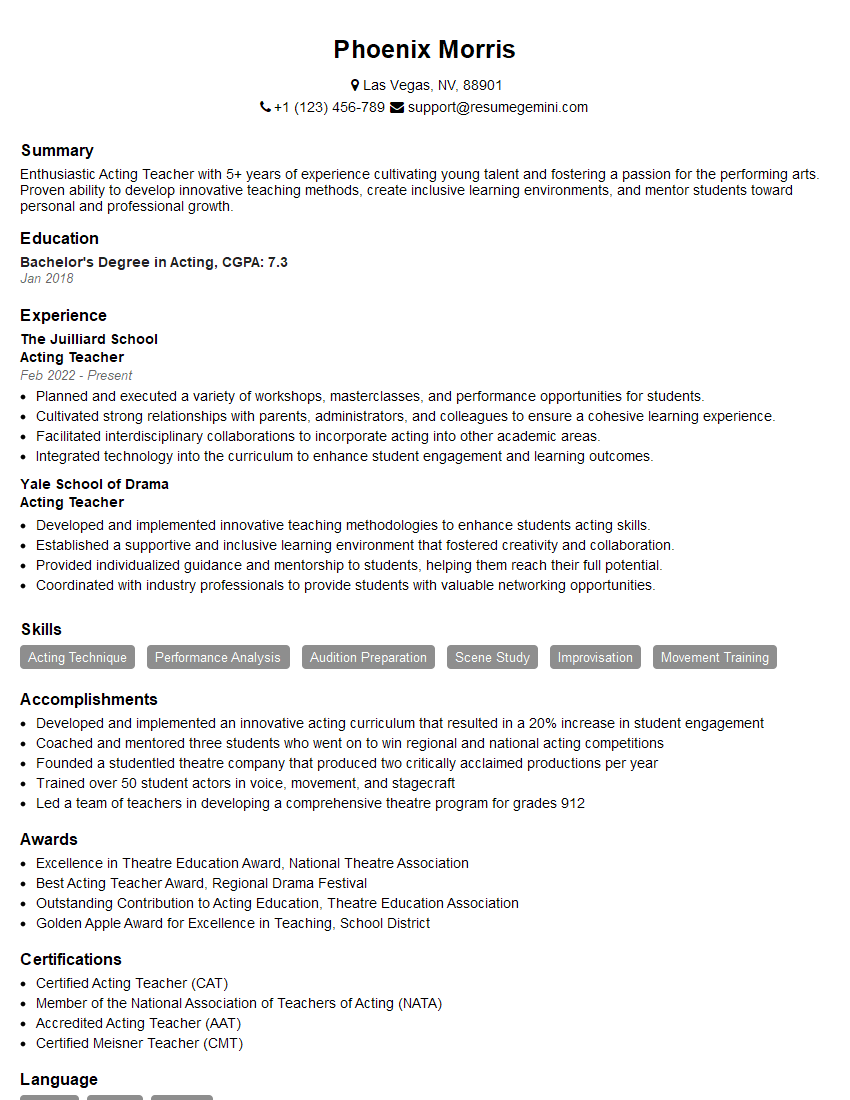
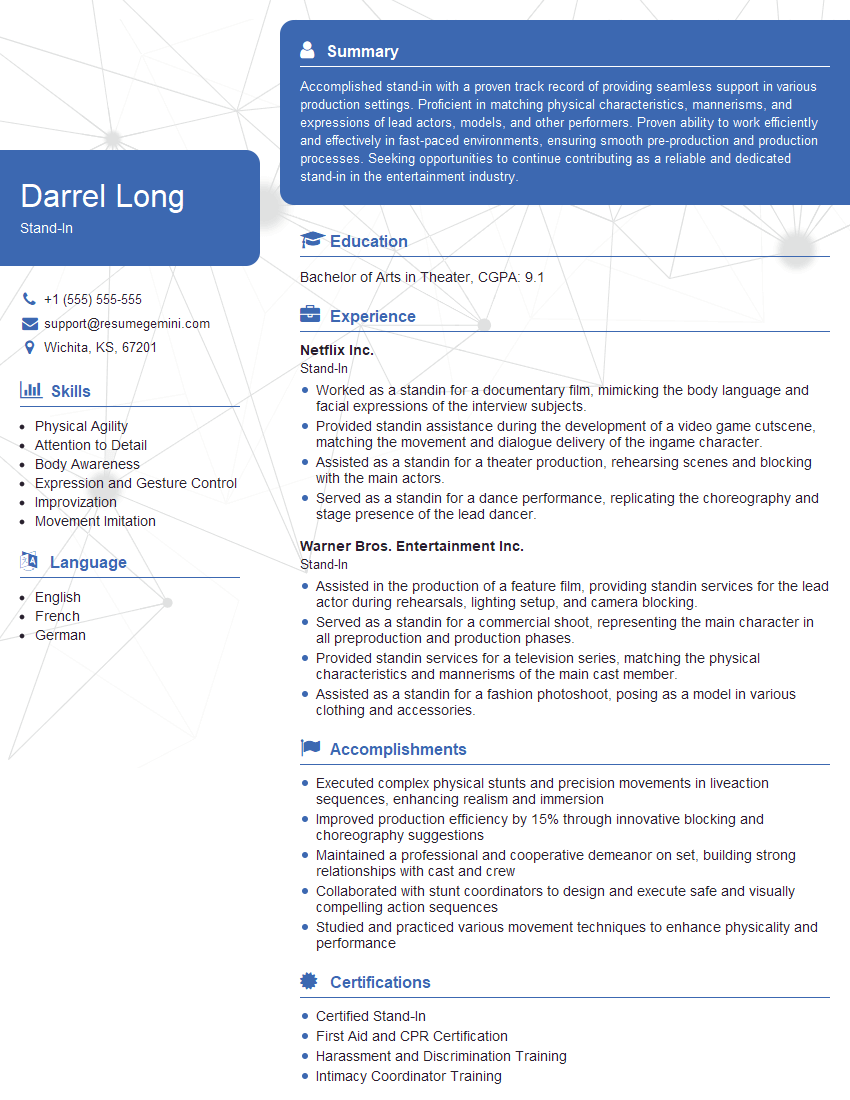
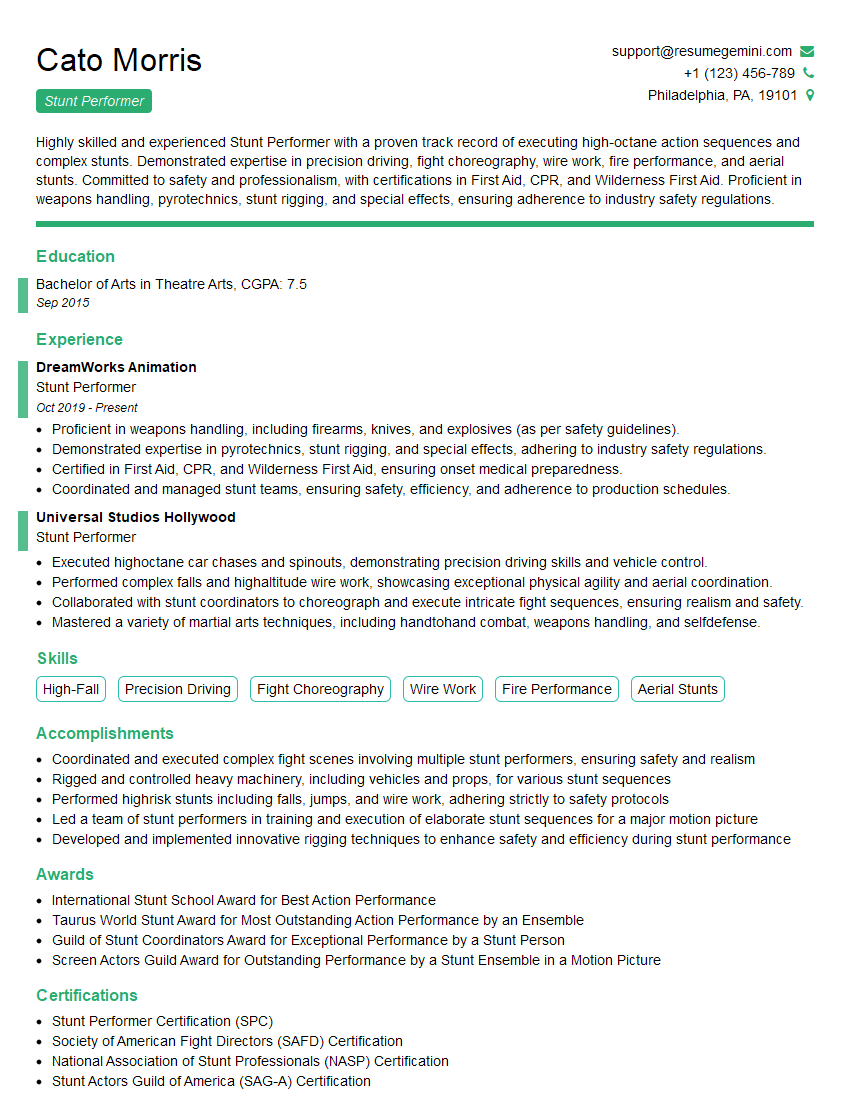
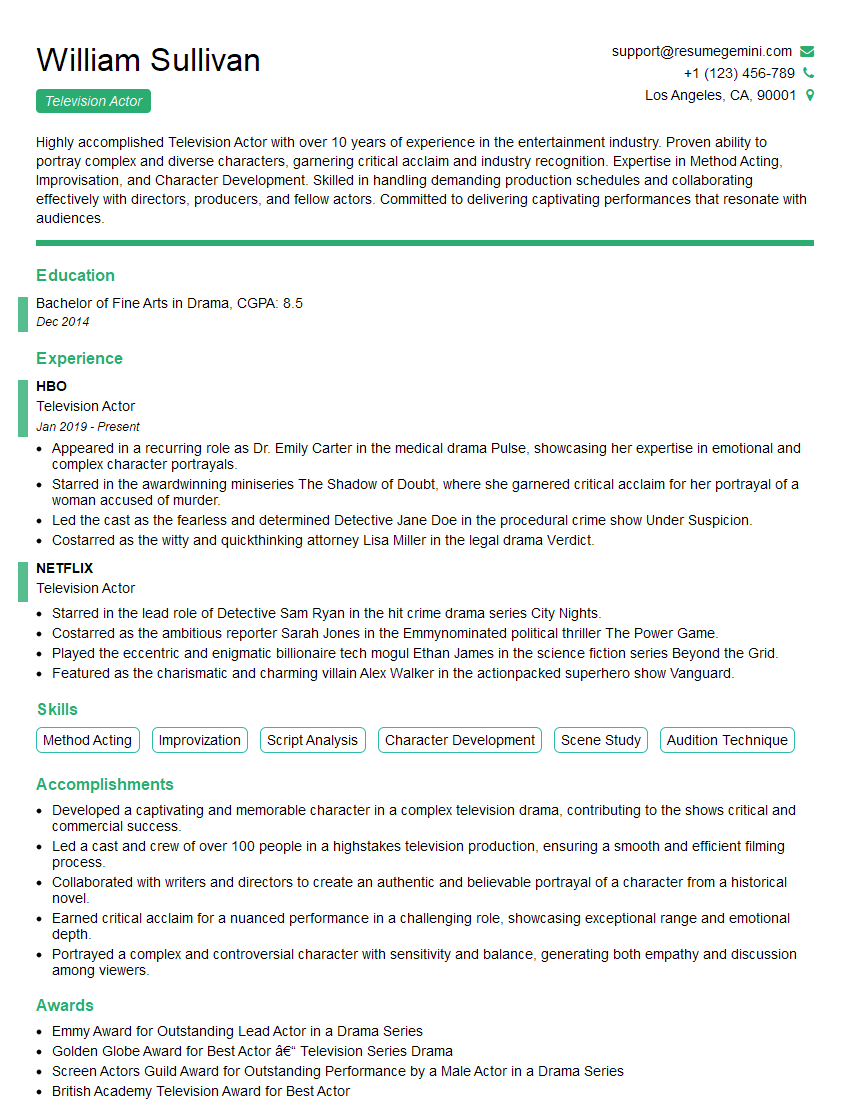
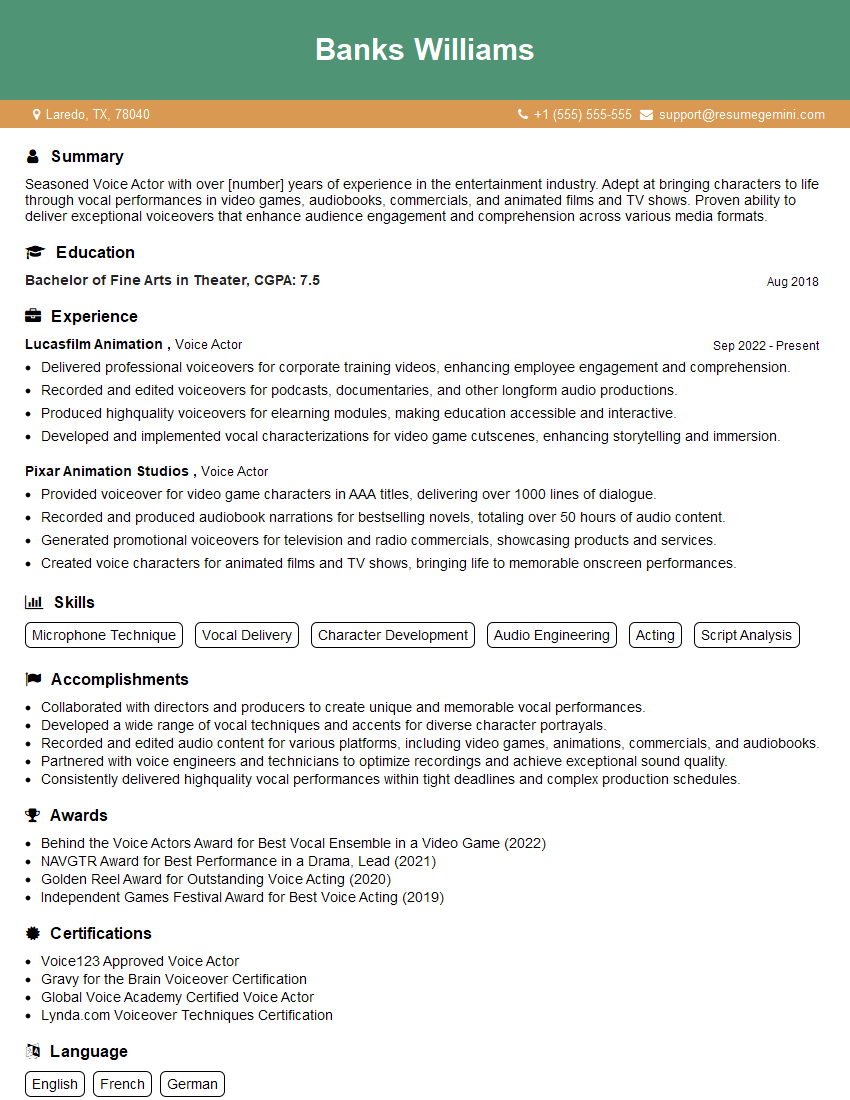
Mastering the art of film acting is key to a fulfilling and successful career. It’s a dynamic field that rewards dedication, skill, and the ability to connect deeply with your craft. To significantly increase your chances of landing your dream role, focus on creating a strong, ATS-friendly resume that highlights your unique skills and experience. This ensures your application gets noticed by casting directors and agents. ResumeGemini is a trusted resource that can help you build a professional and impactful resume tailored to the competitive landscape of film acting. We offer examples of resumes specifically crafted for film acting professionals to help you get started. Let us help you shine!

Explore more articles
Users Rating of Our Blogs
Share Your Experience
We value your feedback! Please rate our content and share your thoughts (optional).
What Readers Say About Our Blog
Very informative content, great job.
good