Interviews are opportunities to demonstrate your expertise, and this guide is here to help you shine. Explore the essential Film Creation interview questions that employers frequently ask, paired with strategies for crafting responses that set you apart from the competition.
Questions Asked in Film Creation Interview
Q 1. Explain your experience with different camera systems and their limitations.
My experience spans a range of camera systems, from Super 16mm film cameras like the Arriflex 16SR to modern digital cinema cameras such as the RED Komodo and ARRI ALEXA Mini. Each system presents unique challenges and advantages. Super 16mm offers a distinct filmic look with its shallow depth of field and inherent grain, but it’s limited in resolution and dynamic range compared to modern digital cameras. Digital cameras, on the other hand, offer greater flexibility in post-production, higher resolution, and wider dynamic range, enabling more creative freedom in grading and effects. However, they can be more expensive and require significant storage capacity.
For example, shooting a low-budget indie film on Super 16mm might necessitate careful planning due to limited footage capacity, demanding precise shot composition and framing. Conversely, working with an ALEXA Mini on a larger production allows for more latitude in exploring different shots and approaches, though managing the massive amounts of data generated becomes crucial.
- Super 16mm Limitations: Limited resolution, lower dynamic range, film stock costs, developing and processing costs.
- Digital Cinema Limitations: High initial investment in camera equipment, large storage needs, potential for data corruption, sensor limitations in low light.
Q 2. Describe your workflow for editing a short film.
My editing workflow for a short film is iterative and focuses on efficiency. It typically begins with a thorough review of all footage, selecting the best takes and organizing them into a rough cut. I use Adobe Premiere Pro, which allows for a streamlined non-linear editing process. This stage involves assembling the shots according to the screenplay, focusing on pacing, rhythm, and narrative flow. I often create multiple rough cuts, experimenting with different sequences and transitions. Once a satisfactory rough cut is established, I move into fine-cutting, meticulously adjusting transitions and timings to enhance emotional impact and clarity. This phase is accompanied by color correction and sound design, ensuring a cohesive audio-visual experience. Finally, I export the film in various formats suitable for different platforms, incorporating title cards and credits.
For instance, in a recent short film, I initially had difficulty achieving a particular emotional beat in a scene. By iterating through different edits – varying shot length, the order of shots, and incorporating close-ups – I was able to achieve a more powerful and effective moment.
Q 3. How do you manage a film’s budget effectively?
Effective budget management in filmmaking relies on meticulous pre-production planning and constant monitoring. It’s crucial to create a detailed budget breakdown encompassing all aspects of the project, from pre-production (scriptwriting, location scouting, casting) to production (crew, equipment rentals, permits) and post-production (editing, sound design, color grading, music). Negotiating favorable rates with vendors, securing sponsorships, and employing efficient production techniques, like shooting multiple scenes in the same location, are crucial for minimizing expenses. Utilizing free or readily available resources, such as public domain music or crowdfunding platforms, can also significantly help.
In one project, we drastically reduced catering costs by negotiating bulk discounts with a local restaurant and organizing potlucks amongst the crew. This small adjustment freed up funds for other essential aspects like higher-quality sound equipment.
Q 4. What’s your approach to storyboarding and pre-visualization?
Storyboarding and pre-visualization are indispensable for me. Storyboarding translates the screenplay’s visual elements into a series of sequential drawings, clarifying shot composition, camera angles, and character movement. This process ensures everyone on set, from the director of photography to the actors, understands the director’s vision. Pre-visualization, which can involve using software like Cinema 4D or even simple animated storyboards, allows for even greater refinement, simulating the final product’s look and feel. It assists in identifying potential logistical challenges early, saving time and resources during actual filming. For example, complex camera movements or special effects can be planned and tested virtually, avoiding unexpected issues on set.
During a recent project, pre-visualization helped us identify a potentially unsafe camera move. By simulating it digitally, we realized it would require specialized equipment and a larger crew, prompting a change in the shot’s composition, saving significant expense and risk.
Q 5. How do you handle conflicts on a film set?
Conflict resolution on a film set requires diplomacy, clear communication, and a focus on problem-solving. My approach is proactive; I emphasize open communication and clear roles and responsibilities from the beginning. When conflicts arise, I prioritize active listening to understand each party’s perspective. I encourage collaboration and seek solutions that address everyone’s concerns while maintaining the project’s timeline and budget. If necessary, I’ll mediate discussions, facilitating a constructive dialogue focused on the common goal: creating a successful film.
In one instance, a disagreement arose between the cinematographer and the art director concerning lighting choices. By calmly facilitating a discussion, I ensured both parties clearly articulated their concerns, ultimately finding a compromise that satisfied both artistic visions while enhancing the scene’s overall aesthetic.
Q 6. Describe your experience with color grading and post-production processes.
My experience with color grading is extensive. I leverage tools like DaVinci Resolve to refine the film’s visual aesthetic, creating the desired mood and tone. Color grading goes beyond mere color correction; it’s a powerful tool to enhance storytelling. Post-production processes, including sound design and visual effects (VFX), are equally critical. Sound design creates an immersive audio landscape that complements the visuals, while VFX can add elements not achievable during filming. A well-integrated post-production workflow is crucial for creating a high-quality final product.
In a recent project, I used color grading to create a specific nostalgic atmosphere for a period drama. By manipulating the color temperature and saturation, I evoked the warmth and muted tones characteristic of the era. The final look was far removed from the raw footage but crucial to establishing the film’s tone and style.
Q 7. Explain your understanding of different lighting techniques.
Understanding lighting techniques is fundamental to filmmaking. Different lighting styles create vastly different moods and effects. Key lighting, fill lighting, and backlighting are fundamental concepts. Key lighting establishes the primary light source, defining shadows and highlights. Fill lighting softens harsh shadows, balancing the contrast. Backlighting separates the subject from the background, adding depth and dimension. Beyond these basics, there are numerous techniques, such as Rembrandt lighting (characterized by a triangle of light on the cheek), butterfly lighting (creates a shadow under the nose), and high-key (bright, cheerful lighting), each serving a specific narrative and aesthetic purpose. Mastering these techniques is essential for creating visually compelling scenes.
For example, in a thriller scene, I might use chiaroscuro lighting – a dramatic contrast between light and dark – to create a sense of suspense and mystery. Conversely, a romantic scene might benefit from softer, warmer lighting to convey intimacy and tenderness.
Q 8. How do you collaborate with other departments on a film project?
Collaboration on a film set is a highly orchestrated dance. It’s all about effective communication and a shared understanding of the project’s vision. I approach it by fostering open dialogue and proactive information sharing across departments.
- Pre-Production: I work closely with the production designer to ensure the sets align with the story and the director’s vision. With the cinematographer, we discuss lighting schemes and camera angles. I’ll also collaborate with the costume designer to create a cohesive visual style.
- Production: Daily communication is crucial. I hold regular meetings with department heads (cinematography, sound, art department) to discuss the daily plan and address any challenges. This collaborative problem-solving ensures a smooth workflow.
- Post-Production: I work closely with the editors and VFX artists to ensure the final product meets the creative goals. This often involves reviewing cuts and providing feedback on visual effects shots. This collaboration is often iterative, involving multiple rounds of review and refinement.
For example, on my last project, a historical drama, a disagreement arose between the costume department and the art department about the authenticity of the period settings. By facilitating a meeting between them and the historical consultant, we resolved the issue and ensured a historically accurate visual presentation.
Q 9. What software are you proficient in for film creation?
Proficiency in film creation software is essential. My expertise spans a wide range of tools, each catering to different stages of the filmmaking process.
- Editing: Adobe Premiere Pro and Avid Media Composer are my go-to tools for assembling footage, adding transitions, and color correction. I’m also comfortable with DaVinci Resolve for more advanced color grading.
- Visual Effects: I have experience with Autodesk Maya and Blender for 3D modeling and animation. I’m familiar with compositing software like After Effects and Nuke for integrating VFX shots seamlessly into the film.
- Sound Design: Pro Tools is my primary DAW (Digital Audio Workstation) for sound editing, mixing, and mastering. I’m comfortable with sound effects design and Foley recording as well.
For instance, in one project, using After Effects, I was able to create a realistic rain effect overlaid onto existing footage, enhancing the mood and atmosphere of a particular scene.
Q 10. How do you ensure the quality of audio in your productions?
High-quality audio is paramount. It’s often said that bad audio ruins a film, while poor visuals can be forgiven. My approach involves a multifaceted strategy from pre-production to post-production.
- Pre-Production: Careful location scouting is vital. We identify spaces with minimal background noise and plan for microphone placement strategically. I collaborate closely with the sound recordist to determine the best equipment and techniques.
- Production: On set, we meticulously monitor audio levels to avoid clipping or distortion. Boom operators and sound recordists carefully capture clean dialogue and ambient sounds. We employ techniques like using lavalier microphones for close-up shots, and boom microphones for wider shots.
- Post-Production: In post-production, a dedicated sound editor works with the recorded audio, removing unwanted noise, and enhancing dialogue clarity. I work closely with them to ensure the final mix is clean, immersive, and complements the visuals.
In a recent project, we used ADR (Automated Dialogue Replacement) to rerecord certain lines in a controlled studio environment because of background noise present during filming. This ensured a clear and crisp audio experience for the audience despite the challenging location.
Q 11. Describe your experience with visual effects (VFX) pipelines.
My VFX pipeline experience is extensive, encompassing all aspects from pre-visualization to final compositing. I understand the need for efficient workflows and close collaboration.
- Pre-visualization: I use storyboards and animatics to plan complex VFX shots. This helps in identifying potential challenges early on.
- Asset Creation: I work closely with 3D modelers and animators to create high-quality assets, ensuring that they fit seamlessly into the live-action footage.
- Compositing: I use compositing software like After Effects and Nuke to integrate the VFX elements into the film. This requires precise attention to detail to maintain a believable and seamless result.
- Review and Iteration: The process is often iterative, with multiple rounds of review and refinements to get the perfect shot.
For example, in a science fiction film, I oversaw the creation of a spaceship model in Maya, its animation in After Effects, and its final integration into the scene using Nuke. The process required careful tracking and matching of lighting and shadows to create a photorealistic result.
Q 12. How do you approach casting actors for a specific role?
Casting is a crucial aspect. It’s about finding the right actor to embody the character’s essence and bring the script to life. My approach is multifaceted and depends on the specifics of the role.
- Understanding the Character: I start by thoroughly analyzing the character’s personality, motivations, and background, and I collaborate with the director to establish a clear vision for each character.
- Casting Calls and Auditions: We cast through a combination of open calls, agency submissions and direct approaches to actors known for similar roles. The audition process is crucial. Actors perform scenes from the script, allowing us to assess their talent and suitability.
- Chemistry Readings: When necessary, we conduct chemistry readings to assess the compatibility between actors who share scenes.
- Final Selection: The final decision involves the director, producers, and myself. We consider not just acting ability, but also the actor’s commitment and professionalism.
In one project, we needed an actor to portray a complex and emotionally vulnerable character. After extensive auditions, we cast an up-and-coming actor who was not immediately well-known but demonstrated the emotional depth and subtlety required for the role. The outcome was a stunning performance that received critical acclaim.
Q 13. What is your understanding of film narrative structure?
Film narrative structure is the backbone of storytelling. It’s the way a story is organized and presented to the audience to create a compelling and engaging experience. I’m familiar with various structures, but a common model is the three-act structure:
- Act I: Setup – This introduces the protagonist, the setting, and the initial conflict. It establishes the world and sets the stage for the story.
- Act II: Confrontation – The protagonist faces various obstacles and challenges related to the central conflict. This part builds tension and suspense.
- Act III: Resolution – The central conflict reaches its climax and is ultimately resolved. This section often leads to a cathartic release of tension, providing a sense of closure.
However, other structures exist, including the hero’s journey, the inciting incident structure, and even non-linear narratives. My approach involves analyzing the script carefully and choosing the structure that best serves the story’s emotional impact and thematic resonance. I make sure to create a compelling narrative arc that keeps the audience engaged from beginning to end.
Q 14. Explain your experience in location scouting and management.
Location scouting and management is a crucial part of pre-production. It involves identifying and securing locations that are visually appealing, logistically feasible, and legally compliant. My approach is methodical and collaborative.
- Research and Planning: Based on the script, I research potential locations based on factors like geography, architecture, and atmosphere. I collaborate with the production designer to find locations that visually reflect the story’s world.
- Site Visits: I conduct site visits, evaluating locations for their suitability, considering issues like accessibility, parking, permits, and potential disruptions. I photograph and document each location.
- Negotiations and Permits: I manage all aspects of securing locations, which includes negotiating with landowners, obtaining necessary permits, and ensuring the location is suitable for filming.
- On-Set Management: I manage the location during filming, ensuring the area remains clean and safe, coordinating with the location’s owners or managers, and addressing any issues that may arise.
In one project, we needed a dilapidated building for a pivotal scene. After extensive scouting, we found a suitable building, but it required extensive cleanup and safety measures. We worked closely with the property owner and a safety consultant to ensure the location was safe for filming without compromising its aesthetic integrity. The result was a visually stunning scene shot in a location we worked hard to prepare and manage.
Q 15. How do you handle unexpected technical issues during filming?
Handling unexpected technical issues on set requires a proactive and adaptable approach. It’s not a matter of *if* something will go wrong, but *when*. My strategy involves meticulous pre-production planning, including thorough equipment checks and backup solutions. Think of it like building a robust bridge – you plan for every foreseeable stress, but you also have contingency plans for unexpected events like floods or earthquakes.
Preventive Measures: Before filming, we conduct rigorous equipment tests, ensuring cameras, lighting, sound, and all other technical aspects are functioning optimally. We have backup equipment on standby for critical components. We also rehearse crucial scenes to identify potential technical bottlenecks early on.
Problem-Solving During Filming: If an issue arises (e.g., a camera malfunction), we have a designated technical team ready to address it swiftly. We’ve developed a clear communication protocol to ensure everyone knows their roles in troubleshooting. For instance, if the main camera fails, the second unit camera takes over immediately. Sometimes a quick workaround might be sufficient, such as adjusting lighting to compensate for a faulty fixture.
Adaptability: The key is flexibility. We might need to creatively adjust the shot, reschedule a scene, or even find a quick substitute prop if necessary. The goal is to minimize downtime and keep the momentum going. In one instance, a sudden power outage during a night shoot forced us to creatively use available car headlights and strategically placed candles to complete the scene – it surprisingly added a unique ambiance to the final product.
Career Expert Tips:
- Ace those interviews! Prepare effectively by reviewing the Top 50 Most Common Interview Questions on ResumeGemini.
- Navigate your job search with confidence! Explore a wide range of Career Tips on ResumeGemini. Learn about common challenges and recommendations to overcome them.
- Craft the perfect resume! Master the Art of Resume Writing with ResumeGemini’s guide. Showcase your unique qualifications and achievements effectively.
- Don’t miss out on holiday savings! Build your dream resume with ResumeGemini’s ATS optimized templates.
Q 16. How do you ensure adherence to deadlines and budgets?
Staying on schedule and within budget requires disciplined planning, meticulous tracking, and proactive communication. It’s like managing a complex construction project; every element needs to be carefully coordinated and monitored.
Detailed Pre-Production Planning: We create a comprehensive shooting schedule, breaking down each scene into manageable units. This schedule incorporates buffer time to account for unforeseen delays. A detailed budget is also essential, outlining every expense from crew salaries to equipment rentals. We track expenditures meticulously throughout the production process, using dedicated budget management software.
Efficient On-Set Management: We ensure clear communication among the crew, employing daily progress meetings and regular updates on budget and schedule. We use project management tools to monitor tasks, track deadlines, and flag potential issues proactively. Efficient workflow is crucial; for example, we carefully plan set changes to minimize downtime between takes.
Contingency Planning: We anticipate potential budget overruns or scheduling conflicts and prepare contingency plans. This might involve exploring alternative locations or adjusting the scope of certain scenes. Regular budget reviews help us stay alert to potential problems. For example, if a particular location proves to be more expensive than anticipated, we might consider using a readily-available location that still delivers on the artistic vision.
Q 17. Describe your understanding of different film genres and styles.
My understanding of film genres and styles is comprehensive, encompassing a wide range from classic Hollywood to contemporary independent cinema. Each genre has its conventions and tropes, but skilled filmmakers can subvert expectations and innovate within these established frameworks.
Genre Conventions: I’m familiar with the conventions of genres like thrillers (suspense, twists, high stakes), romantic comedies (witty dialogue, happy endings), documentaries (real-life stories, factual accuracy), and science fiction (futuristic settings, imaginative narratives). Understanding these conventions allows me to craft films that effectively resonate with audience expectations.
Stylistic Approaches: Different styles, such as neo-noir (dark visuals, cynical tone), surrealism (dreamlike imagery, illogical events), and realism (authentic portrayal of life), can be used to create distinct moods and perspectives. The choice of style greatly impacts cinematography, editing, and acting. For instance, a neo-noir thriller might use low-key lighting and deep shadows to create a sense of mystery, while a realistic drama might employ natural lighting and handheld camerawork.
Hybrid Approaches: Modern filmmaking often blends genres and styles, creating unique and unexpected results. For example, a film might blend elements of science fiction and romance, or combine documentary techniques with fictional storytelling. This flexibility allows for greater creative expression and audience engagement.
Q 18. What is your approach to working with actors and getting their best performance?
Working with actors involves building trust, fostering collaboration, and providing clear direction. It’s a delicate balance between guiding performance and allowing for improvisation and creative freedom.
Pre-Production Collaboration: I start by having thorough discussions with actors about their characters, their motivations, and their interpretation of the script. I encourage them to participate in the creative process and contribute their insights.
On-Set Direction: During filming, I provide clear and concise directions, focusing on achieving the emotional and physical aspects of the performance. I create a supportive and encouraging environment, ensuring actors feel comfortable experimenting and taking risks.
Building Rapport: I prioritize building a strong rapport with actors to encourage open communication and trust. I ensure they understand the overall story and the role their character plays in it. This collaborative approach enhances their understanding and allows them to deliver more nuanced and compelling performances. For example, during a recent project, I spent several sessions with an actor discussing the background of his character to fully flesh out his motivations and thus unlock a truly compelling and memorable portrayal.
Q 19. Explain your process for creating a compelling film script.
Creating a compelling script involves meticulous planning, character development, and narrative structure. It’s a multi-stage process that requires patience and persistence.
Idea Generation and Concept Development: I begin by brainstorming ideas, exploring different themes, and developing a compelling concept. This might involve extensive research, character sketches, and outlining potential plot points. A strong premise is paramount. For example, exploring a compelling “what if” scenario can trigger the creative process.
Character Development: I create well-developed and believable characters with unique motivations, conflicts, and arcs. I carefully consider their relationships and how they interact with each other. Creating a character profile and exploring their backstories are indispensable.
Plot Construction: I carefully construct the plot, ensuring a compelling narrative structure with a clear beginning, middle, and end. I pay close attention to pacing, suspense, and dramatic tension. I might use outlining tools or storyboarding to visualize the flow of the narrative.
Scriptwriting and Rewriting: I write the script, paying close attention to dialogue, scene descriptions, and overall tone. I then revise and rewrite the script multiple times, refining the story, and enhancing character development. Seeking feedback from trusted colleagues or beta readers is essential.
Q 20. How do you use feedback to improve your work?
Feedback is crucial for improvement. I actively solicit and incorporate feedback from various sources throughout the filmmaking process. It’s an iterative process, like sculpting a piece of clay; each critique refines the final product.
Seeking Diverse Perspectives: I seek feedback from colleagues, mentors, and potential audiences. Different perspectives provide valuable insights that I might miss on my own. For example, a technical director might point out flaws in the visual effects, while a screenwriter might offer suggestions for tightening the plot.
Constructive Criticism: I actively listen to and carefully consider all feedback, distinguishing between constructive criticism and subjective opinions. I focus on identifying patterns and recurring issues.
Iterative Improvement: Based on the feedback received, I revise and refine my work, incorporating suggestions where appropriate. I might experiment with different approaches to see what works best.
Self-Reflection: I also engage in self-reflection, evaluating my own work critically and identifying areas for improvement. After the completion of each project, I perform a post-mortem analysis, identifying what worked and what could be improved next time around.
Q 21. Describe your experience with motion graphics and animation.
I have extensive experience with motion graphics and animation, often integrating them into my film projects to enhance storytelling and visual appeal. These techniques add layers of creativity and impact to a production.
Motion Graphics Integration: I utilize motion graphics to create compelling title sequences, visual transitions, and informative infographics. The integration of 2D or 3D elements can enhance the visual narrative and amplify the emotional impact.
Animation Techniques: I am proficient in various animation techniques, including 2D animation (traditional and digital), 3D animation, stop-motion, and rotoscoping. The selection of animation style greatly depends on the storytelling needs and artistic vision.
Software Proficiency: I am skilled in using industry-standard software such as Adobe After Effects, Cinema 4D, and Blender. This software proficiency ensures efficient execution and high-quality results. For example, I’ve used After Effects extensively to create compelling visual effects and animated sequences, adding significant depth to film projects.
Collaboration: I also work effectively with specialized motion graphics and animation artists, ensuring seamless integration of their work into the overall film production. For example, I’ve successfully collaborated with dedicated animation teams to achieve complex CGI sequences that add realism and artistic value.
Q 22. Explain your understanding of film sound design principles.
Film sound design is the art of crafting the aural landscape of a film, encompassing everything the audience hears. It’s much more than just dialogue; it’s a powerful storytelling tool that shapes emotion, builds tension, and enhances realism. It involves a complex interplay of several key principles:
- Diegetic Sound: Sounds that originate from within the film’s world—dialogue, footsteps, objects – anything the characters would also hear. Think of the creaking of a door in a horror film.
- Non-Diegetic Sound: Sounds that exist outside the film’s world—the soundtrack, narration, sound effects added for dramatic effect. A soaring orchestral score during a romantic scene is a prime example.
- Sound Perspective: Mimicking how sound behaves in real life. A character whispering sounds different than a shout, and distant sounds are softer and less clear. This adds to the immersive quality.
- Sound Mixing: The process of balancing different sound elements to achieve a desired sonic effect. This involves adjusting levels of dialogue, music, and sound effects to ensure clarity and emotional impact.
- Sound Editing: This meticulously crafts individual sounds and sequences. For example, tightening up the timing of a footstep to create suspense, or adding subtle background hums to add realism to a scene.
Effective sound design is crucial for a film’s emotional impact. A well-designed soundscape can dramatically enhance the viewing experience, making a film both more engaging and believable.
Q 23. How do you ensure your film adheres to legal and ethical guidelines?
Legal and ethical considerations are paramount in filmmaking. We must always operate within the bounds of the law and act with integrity. This includes:
- Copyright and Intellectual Property: Using music, images, and other copyrighted material requires proper licensing. Failing to do so can lead to serious legal repercussions.
- Privacy Rights: Filming people requires their consent, especially in public spaces where reasonable expectation of privacy might apply. Blurring faces or using pseudonyms can often mitigate risks.
- Permits and Licenses: Many locations require permits for filming, ensuring that productions comply with local regulations and safety protocols. Obtaining these ahead of time avoids disruptions and legal issues.
- Portrayal of Minorities and Vulnerable Groups: We need to ensure respectful and accurate representation to avoid perpetuating harmful stereotypes. Consultations with relevant communities are often beneficial.
- Health and Safety Regulations: Maintaining a safe working environment is essential. This involves adhering to relevant industry safety guidelines and taking necessary precautions to prevent accidents and injuries.
Ethical guidelines are just as important. Creating a respectful and inclusive environment on set is crucial for a positive working experience for everyone involved. Open communication and mutual respect are key elements to successful and ethical filmmaking.
Q 24. What are your career goals in film creation?
My career goals center around creating impactful and engaging films that resonate with audiences. I strive to hone my skills in storytelling, cinematography, and sound design to produce high-quality work. Specifically, I aim to:
- Direct and produce my own feature film: This is a long-term goal that requires continuous learning and development. I want to tell stories that matter to me and hope they can connect with a wider audience.
- Collaborate with talented individuals: Building strong relationships with other creatives is key to success in the film industry. I want to work with diverse and passionate individuals who share my vision.
- Explore new technologies and filmmaking techniques: The film industry is constantly evolving, and I want to stay at the forefront of innovation by experimenting with new tools and techniques.
- Mentor aspiring filmmakers: Giving back to the community is a significant aspect of my long-term goals. I hope to share my experience and knowledge to help other creatives achieve their dreams.
Ultimately, I aim to build a sustainable career in filmmaking, contributing meaningful stories to the world of cinema.
Q 25. Describe a successful project you worked on and your role in its success.
My work on the short film “Echoes of the Past” was a particularly rewarding experience. As the sound designer, I played a pivotal role in establishing the film’s haunting atmosphere. The film centered on a solitary figure exploring an abandoned house, and sound was integral to conveying the character’s emotional state and building suspense.
My contribution included meticulously crafting the soundscape, balancing ambient sounds, like creaking floorboards and wind howling, with carefully chosen sound effects. I used subtle variations in sound levels and frequency to subtly shift the audience’s emotional connection to the protagonist’s journey. The film received positive feedback for its immersive soundscape, and I believe my sound design was instrumental in its success. The director specifically praised my ability to build suspense without relying on overtly dramatic score, using subtle sound to create an unnerving but captivating atmosphere.
Q 26. Explain a challenging situation on a film set and how you overcame it.
During the production of a music video, we encountered a significant challenge when our primary location became unexpectedly unavailable due to unforeseen circumstances. We were just days away from the shoot, and the alternative locations we considered were unsuitable.
To overcome this, I immediately assembled a small team to brainstorm alternative solutions. We evaluated available locations, considering factors like lighting, accessibility and overall aesthetic, and eventually found a suitable substitute. We worked with the art department to adapt the set design to complement the new location seamlessly. While this involved additional work and coordination, this problem-solving demonstrated agility and resourcefulness, ensuring the production stayed on track and delivered a high-quality final product. The final product did not suffer from the change of location, due to the creative problem-solving of the team.
Q 27. What is your preferred style of filmmaking and why?
My preferred style of filmmaking leans towards a realistic and character-driven approach. I am drawn to stories that explore complex human emotions and relationships, presenting them in an authentic and relatable manner. I appreciate the power of subtlety and nuance in storytelling, avoiding overly dramatic or sensationalized depictions.
This preference stems from my belief that the most compelling narratives arise from genuine emotional connections. I find that audiences respond more deeply to characters they can empathize with and stories that feel honest and grounded in reality. While stylistic flourishes have their place, I prioritize storytelling that focuses on character development and emotional resonance above flashy visuals or effects.
Q 28. Describe your experience with different shooting formats (e.g., digital, film)
My experience spans both digital and film formats, each offering unique benefits and challenges.
- Digital: Digital filmmaking offers immediate feedback, ease of editing, and cost-effectiveness. The flexibility and accessibility of digital cameras and post-production software have made it incredibly popular. I’ve worked extensively with various digital cinema cameras such as RED and Arri Alexa, appreciating their versatility and dynamic range.
- Film: Working with film stock offers a distinct aesthetic quality that is difficult to replicate digitally. The grain, color saturation, and unique image characteristics contribute to a classic and timeless feel. I’ve had the opportunity to shoot on several film stocks (e.g., Kodak Vision3), understanding the importance of careful planning and precise execution as you have limited takes. Film requires greater discipline but the results can be stunning.
While digital is more common now, I value the distinct qualities of both formats and believe that the best choice depends on the project’s specific aesthetic goals and budgetary constraints.
Key Topics to Learn for Film Creation Interview
- Storytelling & Narrative Structure: Understanding narrative arcs, character development, and the principles of compelling storytelling. Practical application: Analyze successful films and identify their narrative strategies.
- Cinematography & Visual Language: Mastering camera angles, shot composition, lighting techniques, and their impact on mood and storytelling. Practical application: Discuss your experience with different camera systems and lighting setups.
- Film Editing & Post-Production: Knowledge of editing software (e.g., Premiere Pro, Final Cut Pro), color correction, sound design, and visual effects. Practical application: Showcase your understanding of pacing, rhythm, and the role of editing in shaping the final product.
- Production Management & Budgeting: Understanding pre-production planning, scheduling, budgeting, and crew management. Practical application: Discuss your experience with project planning and resource allocation.
- Sound Design & Music: Understanding the importance of sound in filmmaking, including dialogue editing, sound effects, and music scoring. Practical application: Explain how sound contributes to the overall emotional impact of a film.
- Genre Conventions & Film History: Familiarity with different film genres and their conventions, as well as a broad understanding of film history and influential filmmakers. Practical application: Discuss how genre conventions inform your creative choices.
- Collaboration & Teamwork: Highlighting experience working effectively in team environments, communication skills, and problem-solving within a collaborative filmmaking process. Practical application: Describe your role in successful team projects.
- Technical Proficiency (Software & Equipment): Demonstrate familiarity with relevant software and equipment (cameras, editing software, lighting equipment). Practical application: Describe your experience with specific software or equipment used in past projects.
Next Steps
Mastering Film Creation opens doors to exciting and fulfilling careers in a dynamic industry. To significantly increase your job prospects, create an ATS-friendly resume that highlights your skills and experience effectively. ResumeGemini is a trusted resource that can help you build a professional resume tailored to your specific goals. Examples of resumes tailored to Film Creation are available to guide you through the process.
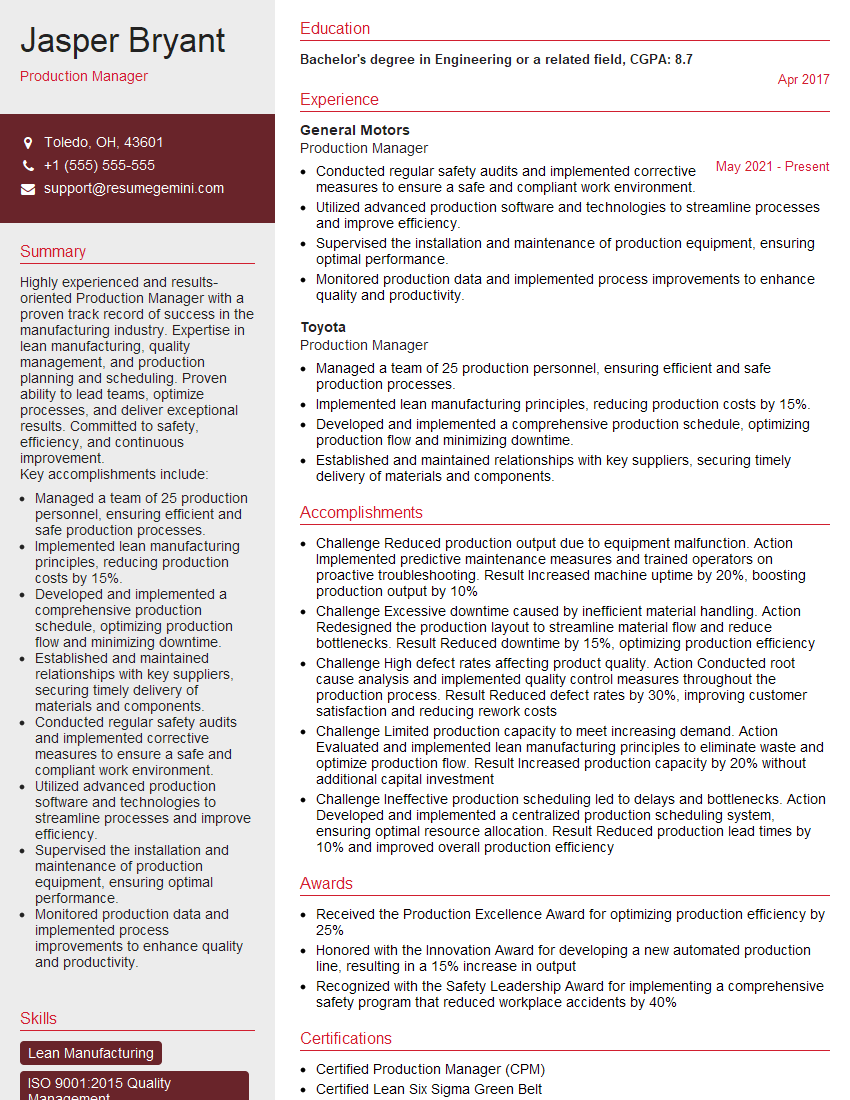
Production Manager Resume Sample
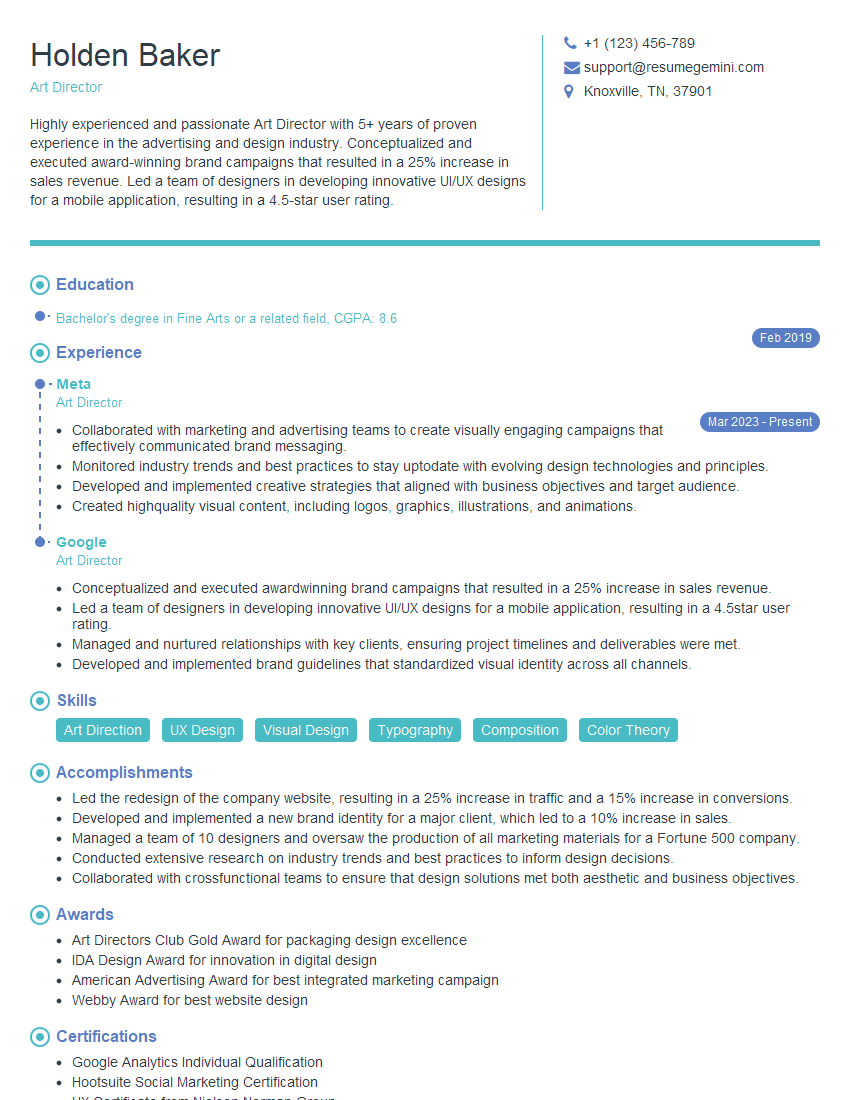
Art Director Resume Sample
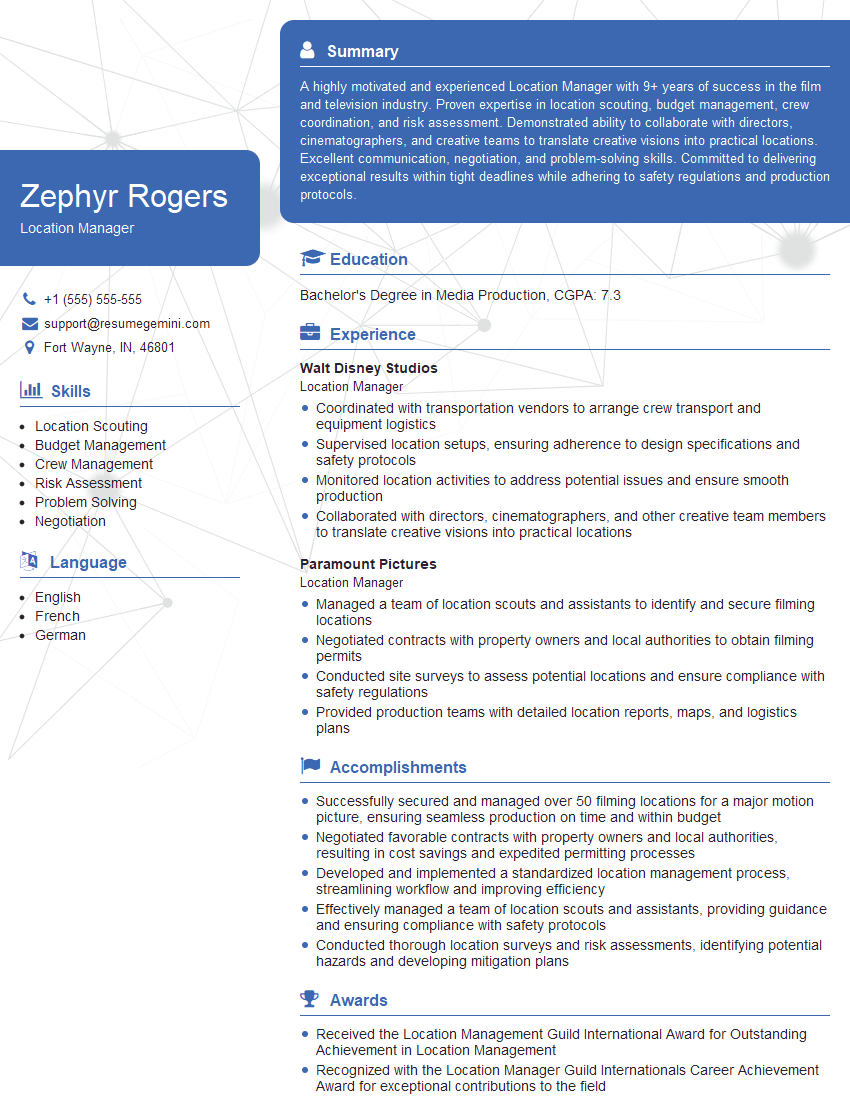
Location Manager Resume Sample
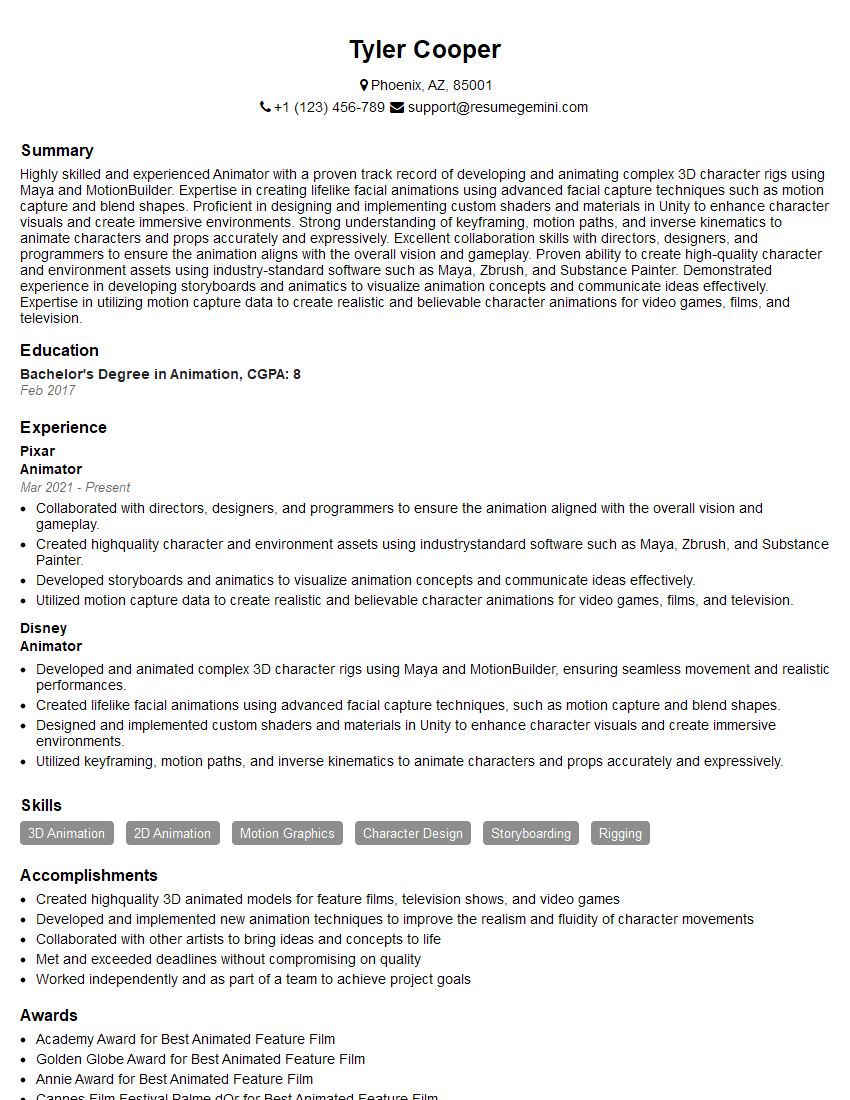
Animator Resume Sample
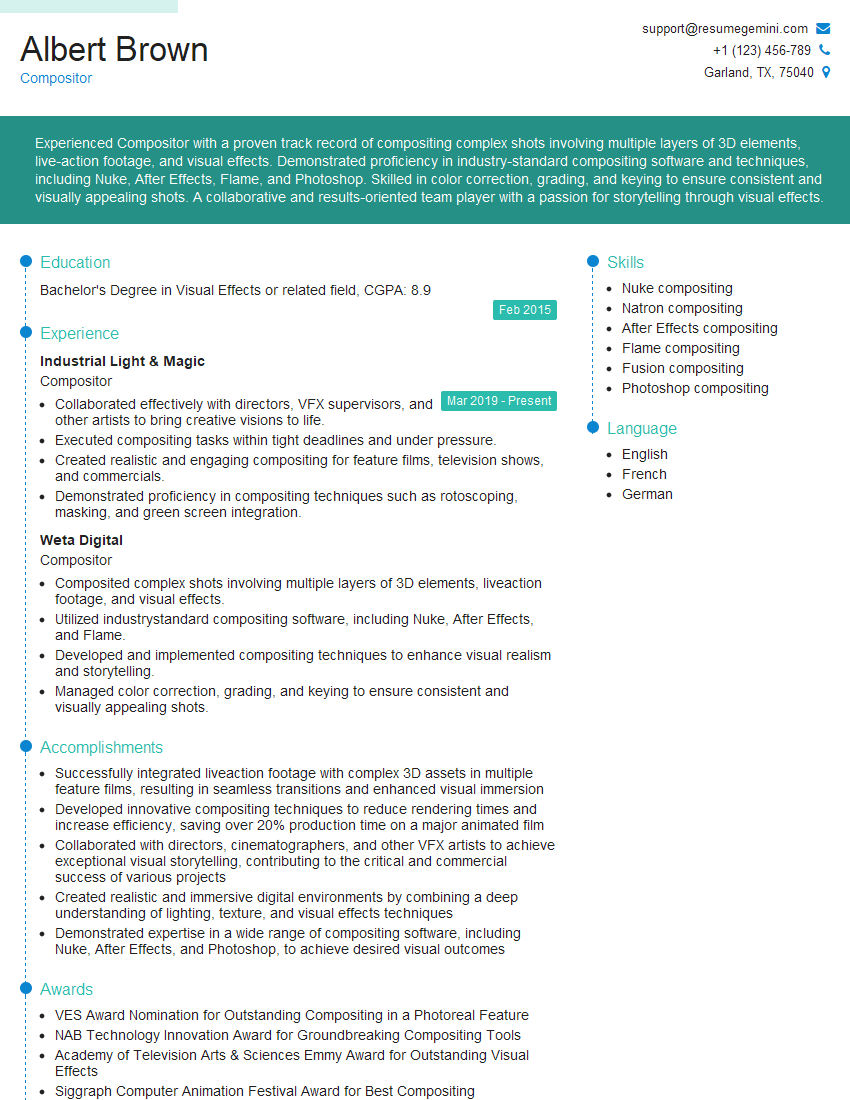
Compositor Resume Sample
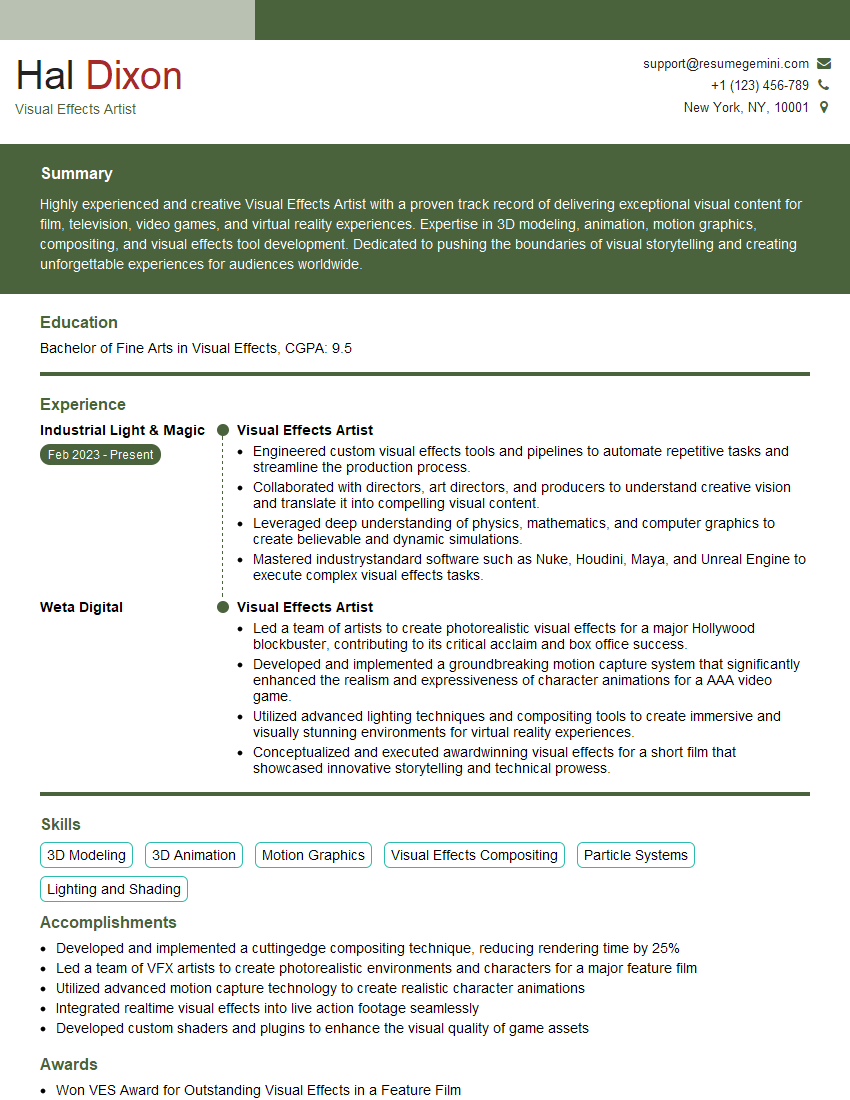
Visual Effects Artist Resume Sample
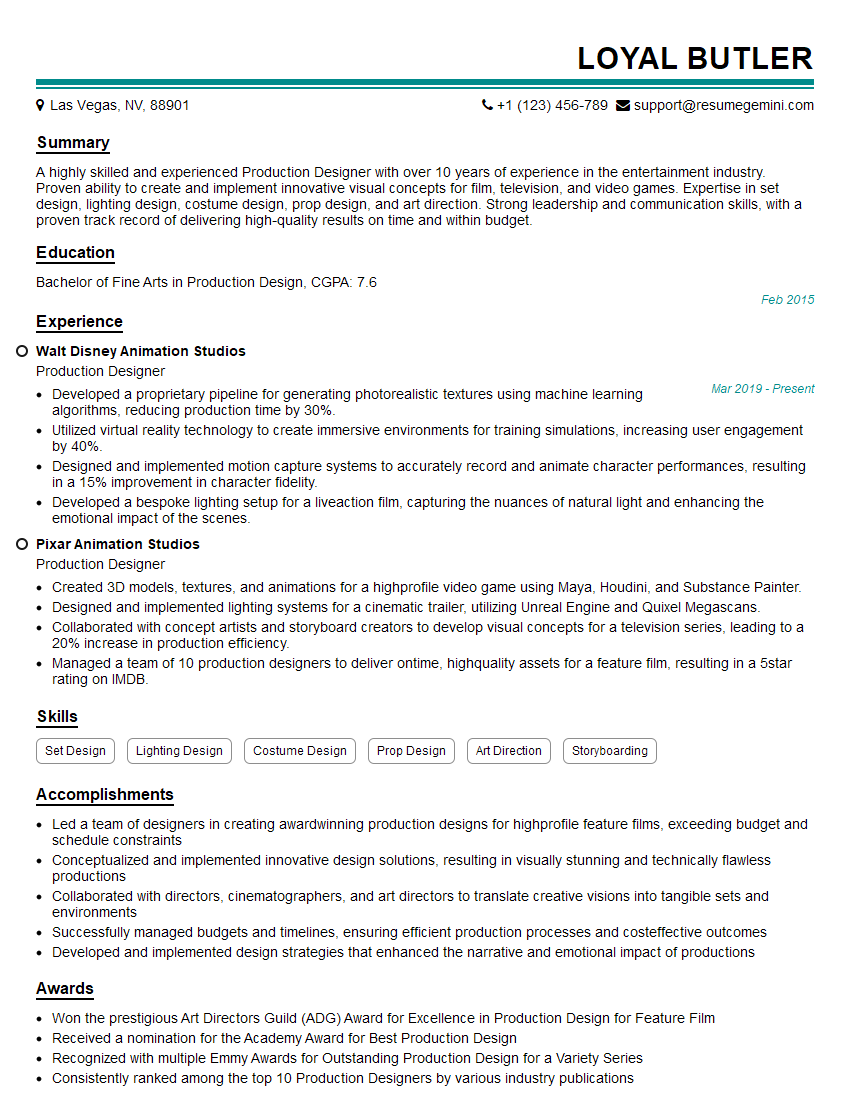
Production Designer Resume Sample
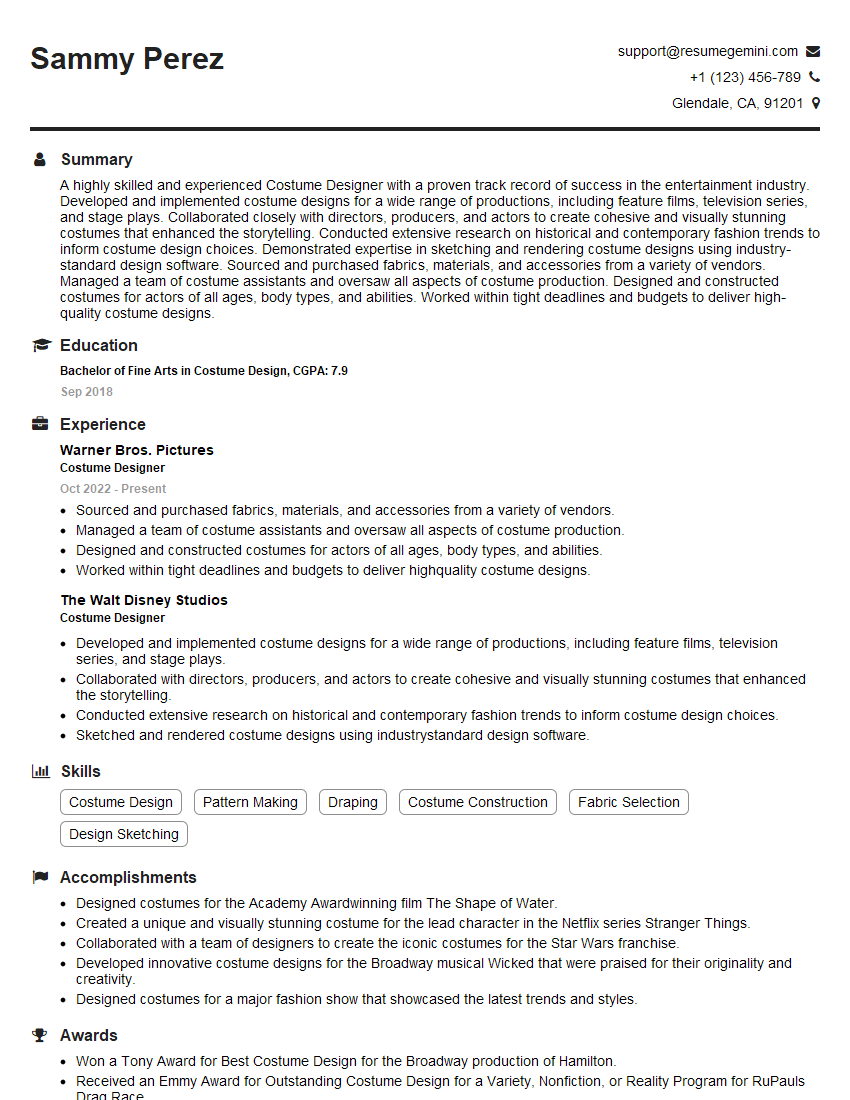
Costume Designer Resume Sample
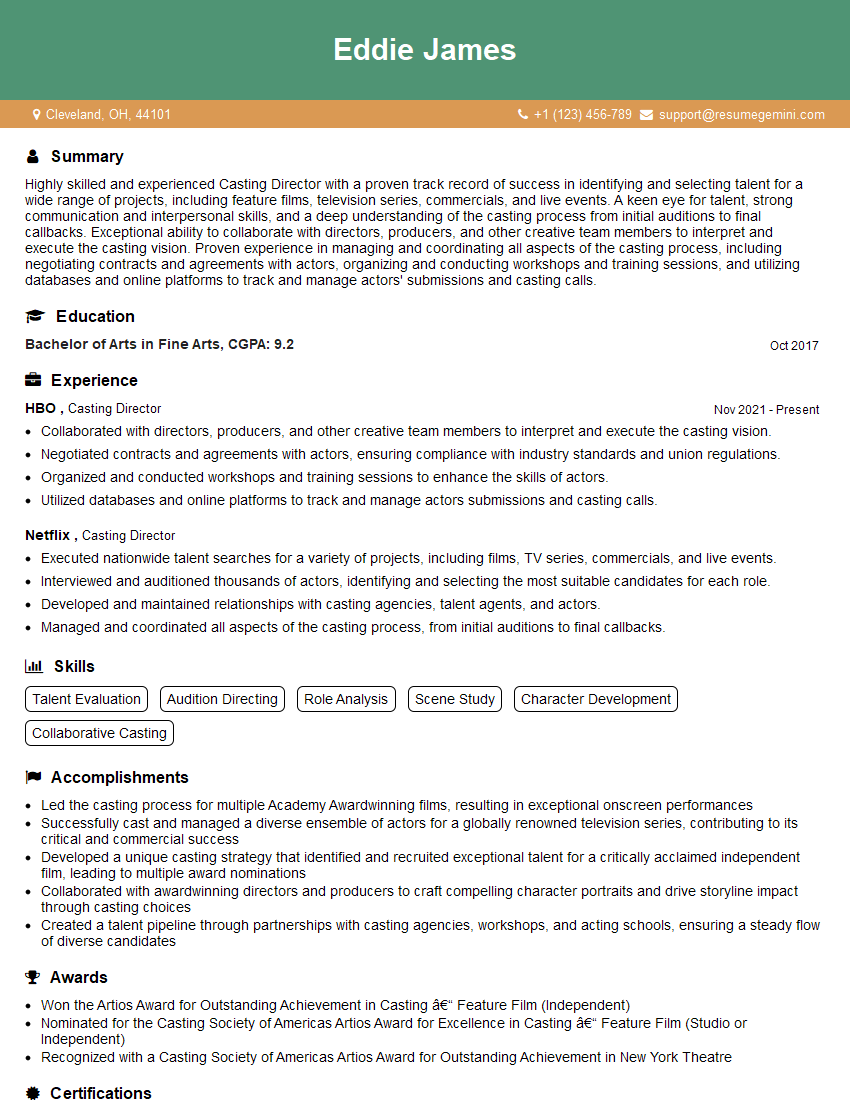
Casting Director Resume Sample
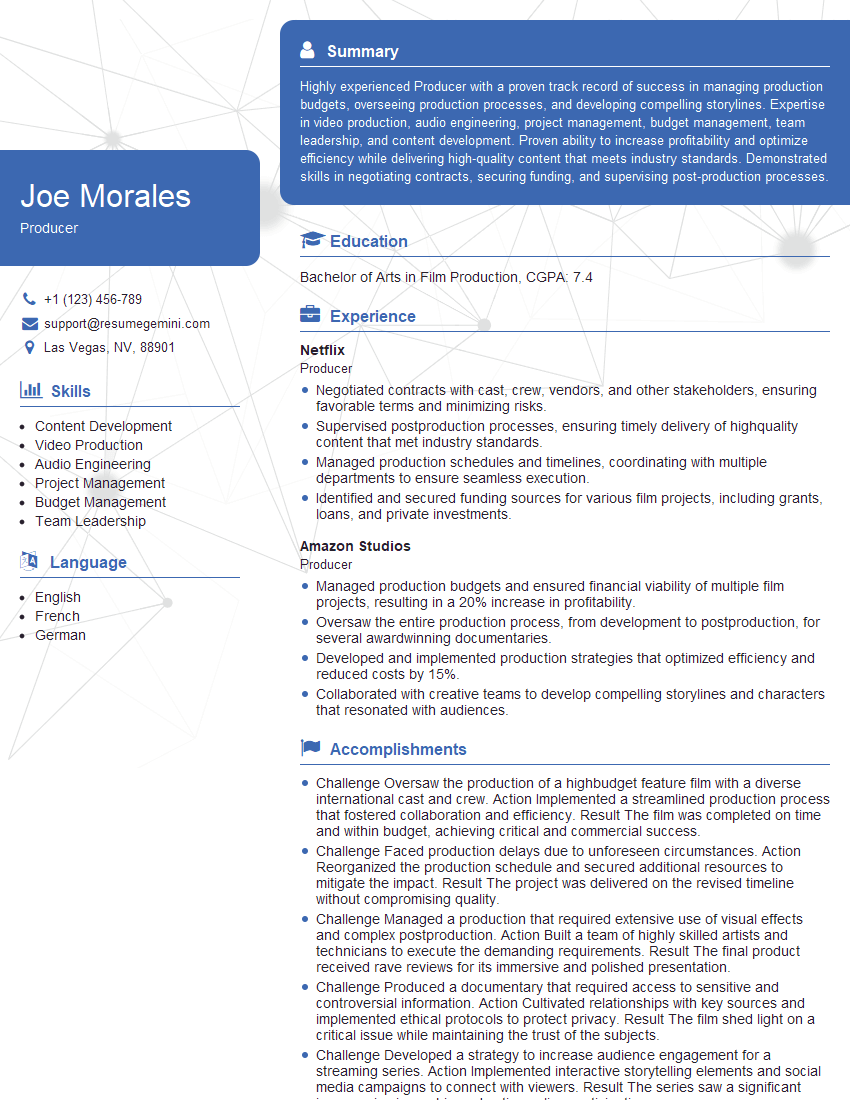
Producer Resume Sample
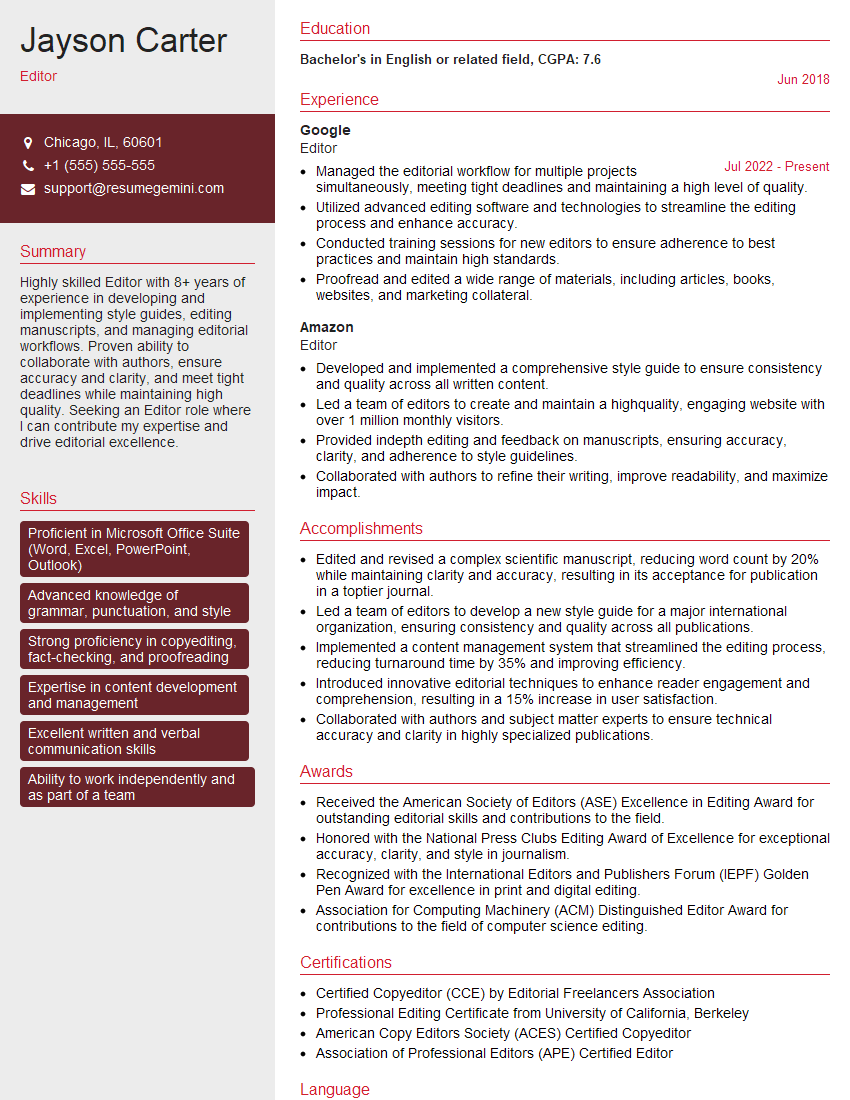
Editor Resume Sample
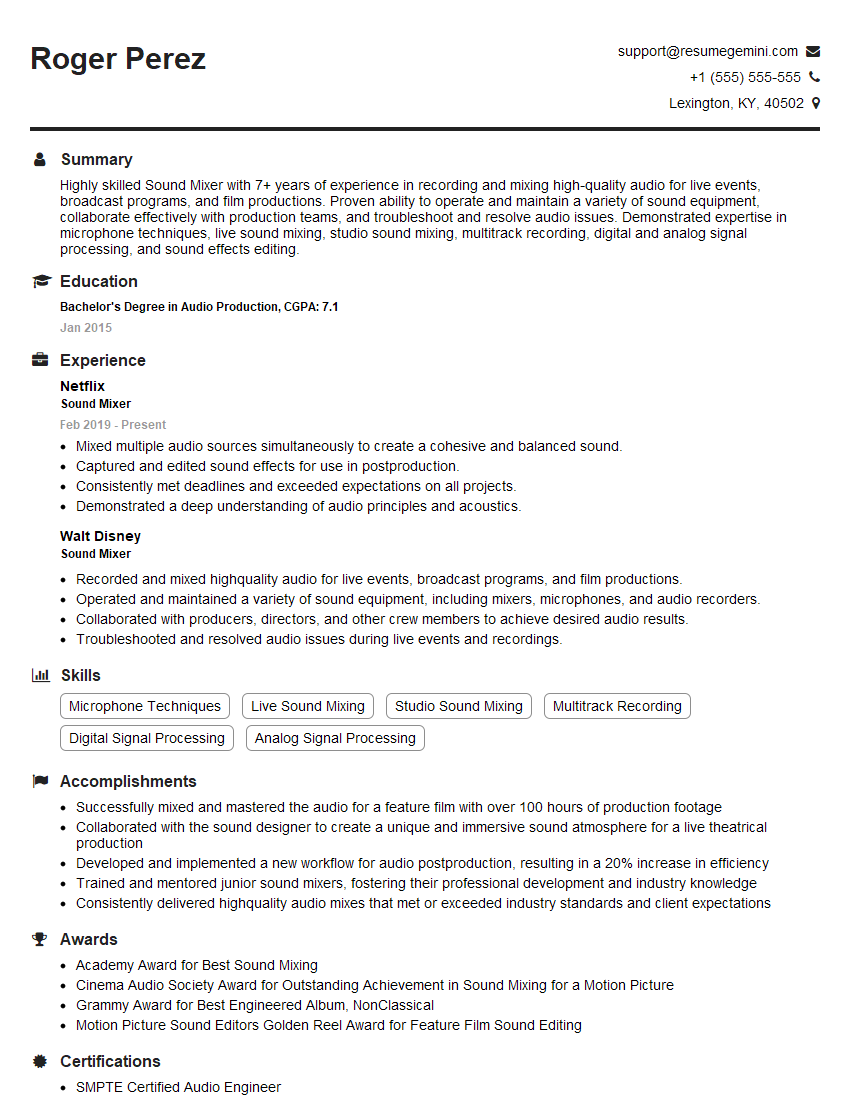
Sound Mixer Resume Sample
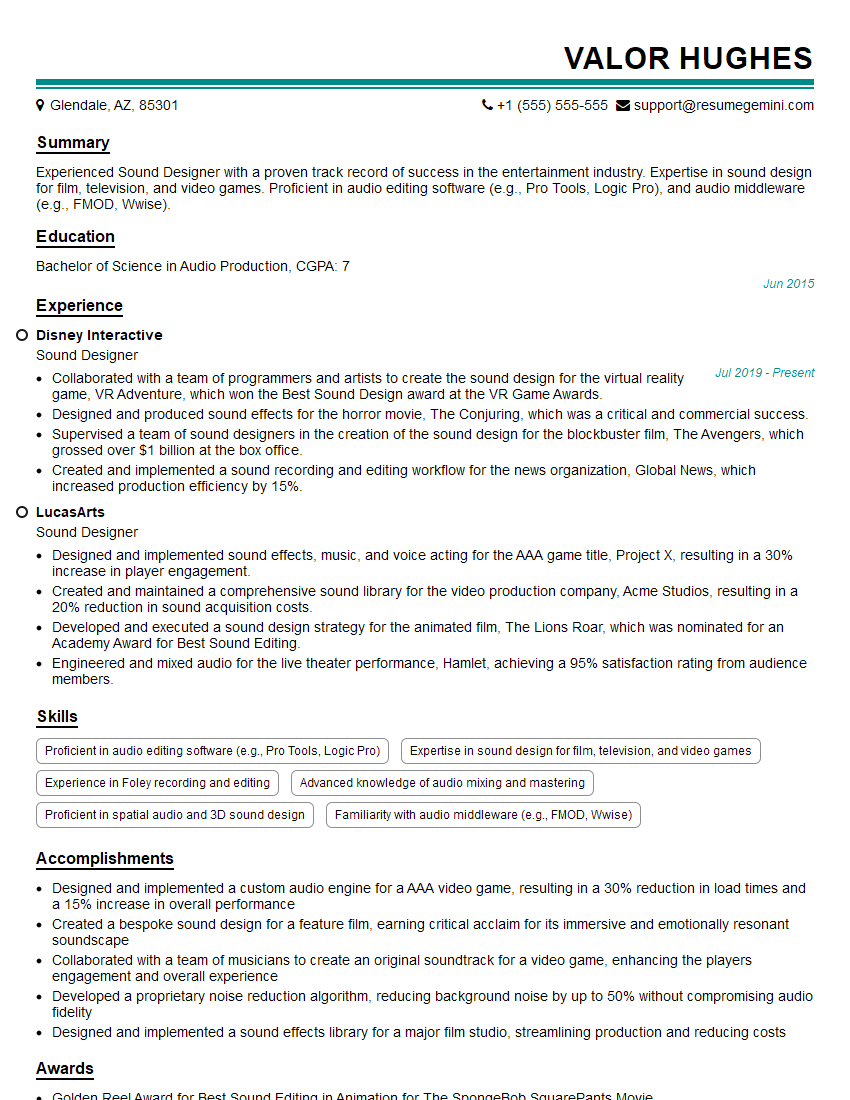
Sound Designer Resume Sample
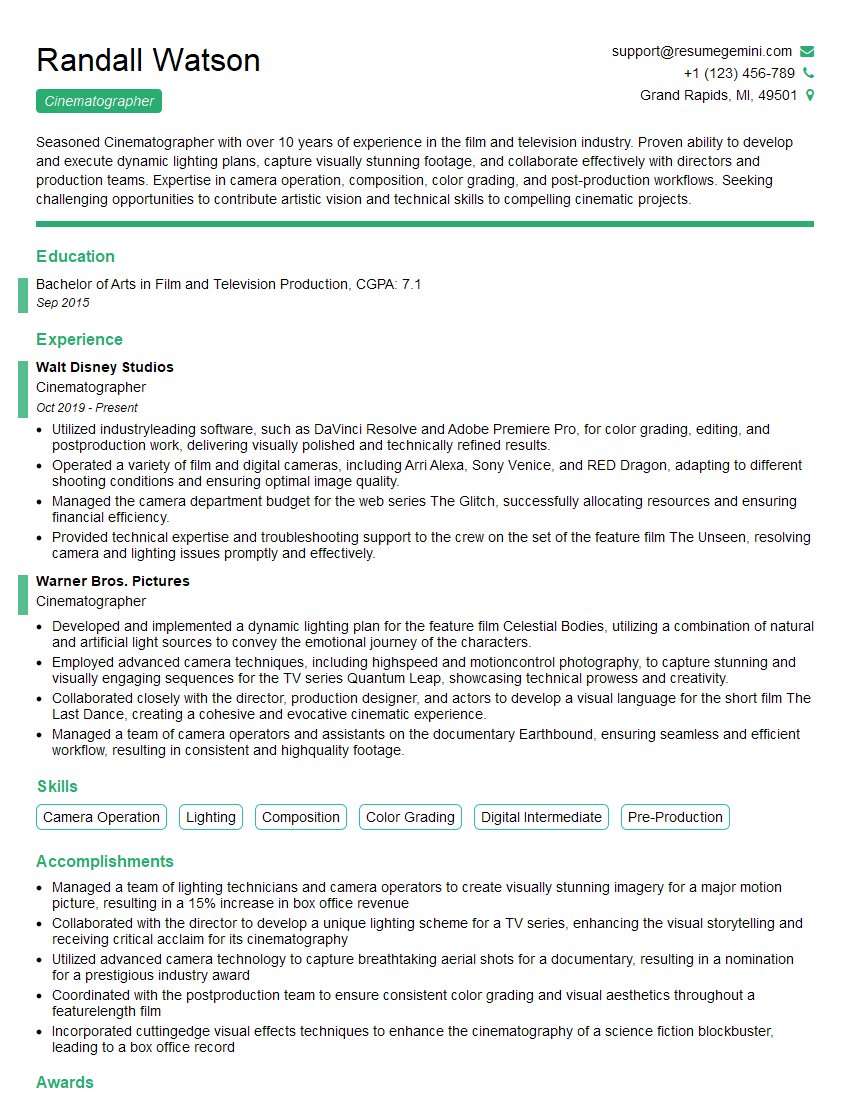
Cinematographer Resume Sample
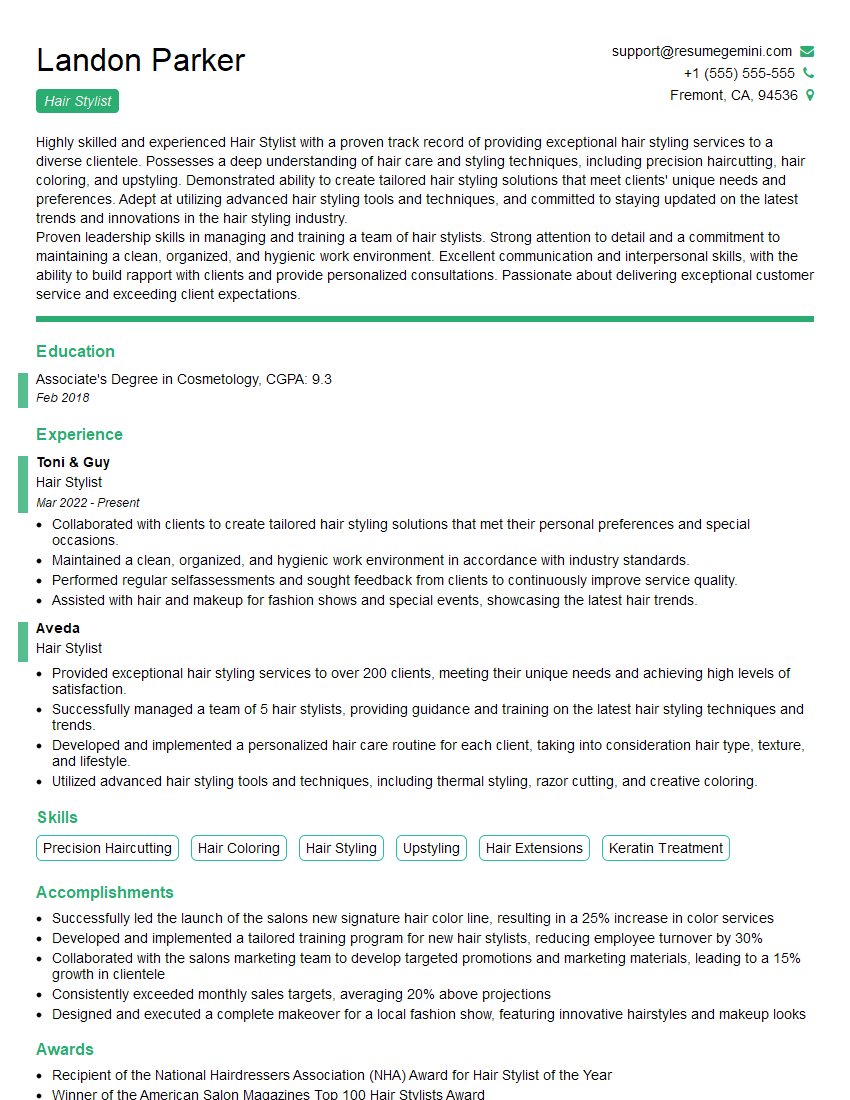
Hair Stylist Resume Sample
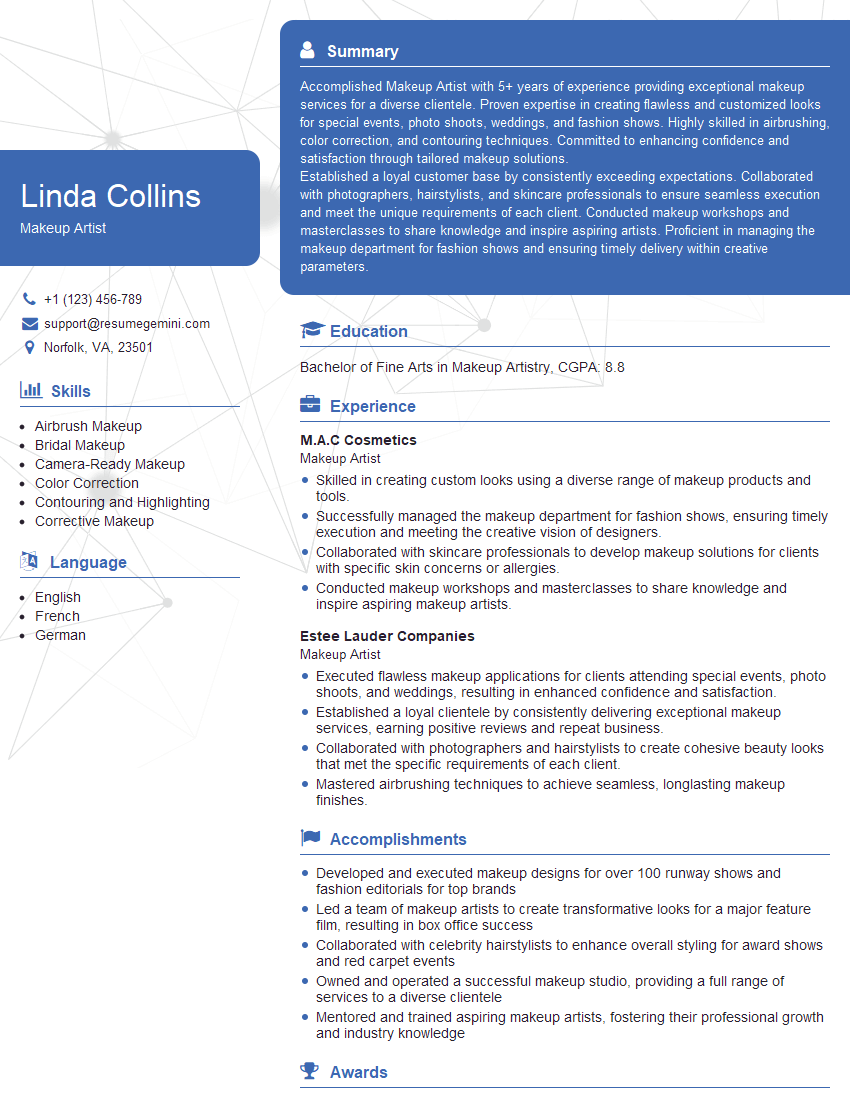
Makeup Artist Resume Sample
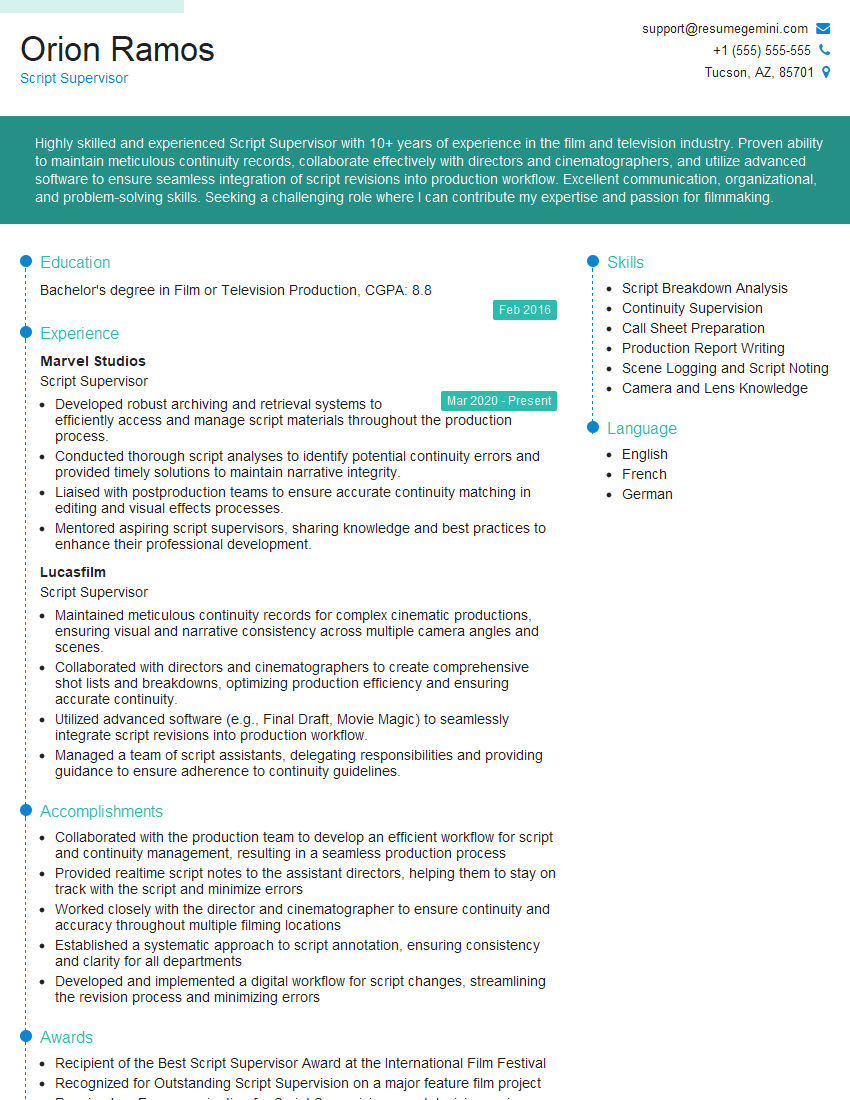
Script Supervisor Resume Sample
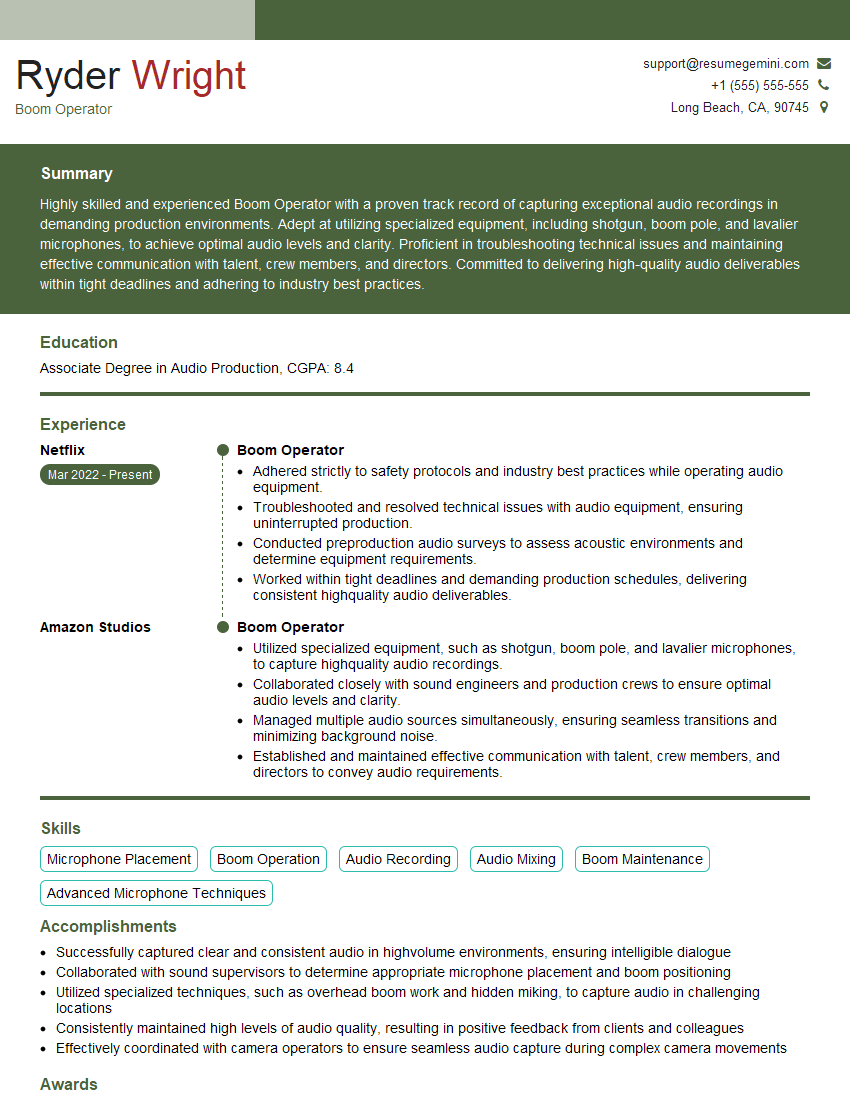
Boom Operator Resume Sample
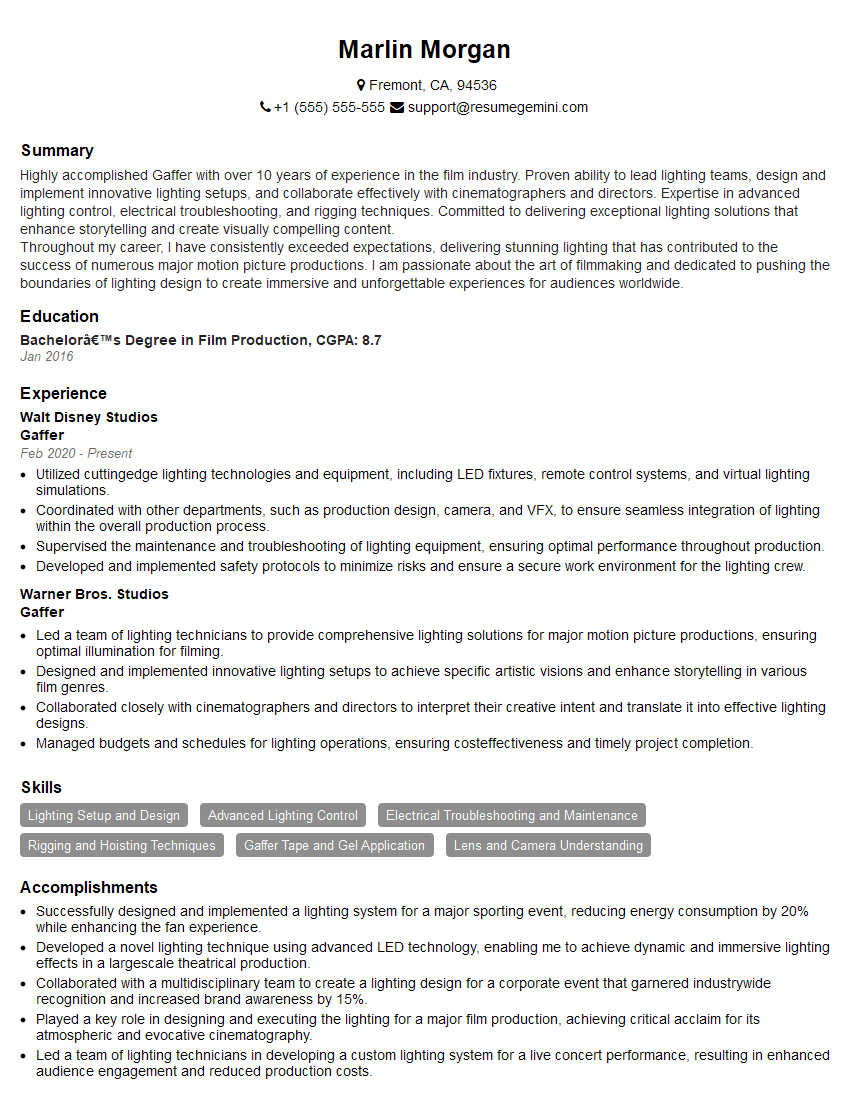
Gaffer Resume Sample
Explore more articles
Users Rating of Our Blogs
Share Your Experience
We value your feedback! Please rate our content and share your thoughts (optional).
What Readers Say About Our Blog
Very informative content, great job.
good