Interviews are opportunities to demonstrate your expertise, and this guide is here to help you shine. Explore the essential Film Output interview questions that employers frequently ask, paired with strategies for crafting responses that set you apart from the competition.
Questions Asked in Film Output Interview
Q 1. Explain the process of creating a Digital Cinema Package (DCP).
Creating a Digital Cinema Package (DCP) is the process of preparing a film for theatrical exhibition in digital cinemas. It involves consolidating audio, video, and metadata into a standardized format that’s playable on digital cinema servers. Think of it like creating a highly specialized, secure ‘movie file’ for the big screen.
The process typically involves several steps:
- Image Mastering: This is where the final color grading, image resolution, and aspect ratio are locked. It often involves specialized software like DaVinci Resolve or Baselight.
- Audio Mastering: The audio mix is finalized, and often multiple audio tracks (like different languages or descriptive audio) are incorporated.
- Metadata Creation: Essential information about the film (title, duration, aspect ratio, etc.) is encoded into XML files called ‘CPL’ (Cinema Package List) files, acting as a table of contents for the DCP.
- Packaging: Using dedicated software like EasyDCP or other DCP creation tools, the video, audio, and CPL files are packaged into the final DCP, a tightly structured and encrypted set of files. This encryption protects against piracy and ensures proper playback in cinemas.
- Quality Control: Rigorous testing on a cinema server simulator ensures proper playback, audio synchronization, and overall image quality.
For example, a typical DCP might include a high-resolution JPEG 2000 video file, several audio tracks encoded in MXF (Material Exchange Format) containers, and the essential XML metadata. The entire DCP is then delivered to cinemas on a hard drive or through a secure online platform.
Q 2. What are the different resolutions and aspect ratios used in film output?
Digital cinema uses various resolutions and aspect ratios, depending on the original film’s specifications and the theater’s projection system. Resolutions are typically expressed in pixels, while aspect ratios describe the relationship between the width and height of the image.
- Resolutions: Common resolutions include 2K (2048 x 1080 pixels) and 4K (4096 x 2160 pixels). Higher resolutions offer greater detail and clarity but require more storage space and processing power.
- Aspect Ratios: These describe the shape of the image. Common aspect ratios include 1.85:1 (common for widescreen films), 2.39:1 (very widescreen, often seen in action movies), and 1.78:1 (16:9, common for television). Sometimes, a film may be mastered with ‘letterboxing’ or ‘pillarboxing’ to fit a specific aspect ratio onto a different display format.
For instance, a movie originally shot in 4K with a 2.39:1 aspect ratio would be mastered and delivered as a 4K DCP with the same aspect ratio, ensuring the filmmaker’s artistic intent is maintained. However, for television broadcast, it might be cropped or letterboxed to fit a 16:9 aspect ratio.
Q 3. Describe your experience with color grading and color space transformations.
Color grading is a crucial aspect of post-production, where the overall look and feel of the film is refined. Color space transformations are the mathematical processes that translate colors between different color spaces (like Rec.709 for HDTV and DCI-P3 for digital cinema).
My experience encompasses extensive work with professional color grading software like DaVinci Resolve and Baselight. I’m proficient in managing various color spaces, ensuring accurate color reproduction across different display technologies and maintaining consistency throughout the film. I’ve worked on projects ranging from independent features with a stylized color palette to large-scale studio films needing to meet specific standards.
A memorable challenge was working on a film shot in various lighting conditions. To maintain visual consistency, I meticulously utilized color space transformations and created custom lookup tables (LUTs) to manage the subtle shifts in color temperature and saturation. The result was a film with a unified look, despite its diverse shooting environments.
Q 4. How do you ensure the quality control of a final film output?
Quality control is paramount in film output. It’s a multi-stage process that ensures the final DCP meets the highest standards.
- Technical Checks: This includes verifying the video and audio streams for any errors, artifacts, or dropouts. Specialized software and hardware are used to analyze the DCP’s bitrate, frame rate, and other technical parameters.
- Image and Sound Assessment: The DCP is screened on a reference monitor and sound system to ensure the image quality (sharpness, contrast, color accuracy) and audio quality (balance, clarity, dynamic range) are optimal.
- Metadata Verification: The DCP’s metadata (CPL) is meticulously examined to ensure all essential information is correct and complete. A missing or incorrect metadata entry can cause playback issues.
- Playback Testing: The DCP is tested on various cinema servers and projectors to ensure seamless playback and compatibility across different systems. This process includes checking for timing issues and other potential playback errors.
We often employ a multi-person review process, each person having their own specialty like audio, video, or metadata, before sending it for final approval and delivery. A structured checklist and detailed logs help keep this process consistent and efficient.
Q 5. What are the common file formats used in film output?
Several file formats are common in film output, each serving a specific purpose.
- JPEG 2000: This is the standard image codec for DCPs, offering excellent image compression and quality.
- MXF (Material Exchange Format): A container format for holding audio and video data. It’s frequently used for the audio tracks within a DCP.
- XML (Extensible Markup Language): Used for the CPL (Cinema Package List) file, which contains essential metadata about the film.
- WAV (Waveform Audio File Format): Sometimes used for audio in intermediate stages of post-production, though less common for the final DCP.
The choice of format depends on the stage of production and the intended use. For example, while WAV might be used during editing, JPEG 2000 and MXF are essential for the final DCP. The structure of a DCP relies on the specific arrangement and encryption of these file types.
Q 6. Explain your understanding of mastering and delivery workflows.
Mastering and delivery workflows describe the entire process of preparing and distributing the final film. Mastering involves creating the highest-quality version of the film, ensuring consistency across all outputs (cinema, streaming, home media). Delivery focuses on getting that master to its various distribution platforms.
Mastering involves:
- Color Grading and Finishing: Achieving the desired visual look and feel of the film.
- Audio Mixing and Mastering: Finalizing the sound design and mixing, ensuring optimal audio levels and clarity.
- DCP Creation: Generating the DCP for theatrical release.
- Encoding for other formats: Preparing versions for streaming platforms (e.g., Netflix, Amazon Prime), home video (Blu-ray, DVD), or television broadcast, adapting the resolution and aspect ratio accordingly.
Delivery involves:
- Quality Control: Rigorous testing of all outputs.
- File Transfer: Secure transmission of mastered files to distribution platforms.
- Compliance with standards: Ensuring all versions adhere to required technical specifications.
- Metadata Management: Providing distributors with all necessary metadata.
A seamless workflow is critical for efficient and error-free distribution to various platforms. A common error would be delivering an incorrectly formatted DCP, or having mismatched audio tracks.
Q 7. What are the key differences between film and digital workflows?
Film and digital workflows differ significantly, particularly in the capturing, processing, and distribution stages.
- Capture: Film uses physical film stock, requiring chemical processing in a lab to create negatives and prints. Digital uses cameras that record directly to digital media (solid-state drives, memory cards).
- Processing: Film post-production involves physical processes like developing, printing, and editing film reels. Digital post-production is entirely computer-based, utilizing specialized software for editing, color grading, audio mixing, and effects.
- Distribution: Film prints were physically shipped to cinemas for exhibition. Digital distribution involves delivering DCPs electronically via hard drives or online platforms.
- Cost and Accessibility: Film production has traditionally been significantly more expensive than digital. Digital workflows are significantly more accessible due to lower equipment and processing costs.
- Resolution and Longevity: Film has very high resolution (limited only by scanning technology), yet it can degrade over time. Digital resolution is limited by the camera’s sensor but offers better archival capabilities with proper storage.
Though digital offers increased efficiency and lower costs, the inherent characteristics of film (grain, texture) create a unique aesthetic that some filmmakers still prefer. Both have their own unique strengths and challenges.
Q 8. Describe your experience with different image compression codecs.
Image compression codecs are essential for reducing file sizes without significant quality loss, crucial for efficient storage and distribution of film output. My experience encompasses a wide range, from lossy codecs like H.264 and H.265 (HEVC) to lossless options such as ProRes and DNxHD.
- H.264/AVC: A widely used, efficient codec, excellent for internet streaming and distribution where file size is paramount. I’ve used it extensively for online releases and lower-budget projects where storage space is a consideration. However, it can introduce more noticeable artifacts at high compression ratios.
- H.265/HEVC: A newer codec offering better compression efficiency than H.264 at similar quality levels. This translates to smaller file sizes for the same visual quality, which is beneficial for high-resolution content. I’ve increasingly used this for UHD (4K and 8K) deliverables, significantly reducing storage and bandwidth demands.
- ProRes: A family of Apple-developed codecs known for their high quality and ease of editing. They’re lossless or near-lossless, making them ideal for intermediate workflows where preserving image quality is critical, especially during post-production and color grading. This is my go-to for editorial and intermediate masters.
- DNxHD: A codec from Avid, commonly used in professional workflows, especially within Avid Media Composer editing systems. Similar to ProRes, it offers high quality and is well-suited for collaborative editing environments. I’ve used it extensively on larger-scale projects for its compatibility and reliability.
Choosing the right codec depends heavily on the project’s requirements. For instance, a theatrical release might demand the higher quality of ProRes or DNxHD, while a web-based delivery might prioritize the smaller file sizes of H.265.
Q 9. How do you handle metadata in the film output process?
Metadata management is crucial for efficient workflow and asset tracking in film output. It ensures that all the relevant information about the footage—technical details, creative choices, and licensing—is preserved and readily accessible throughout the process. My approach involves a multi-faceted strategy:
- XML-based Metadata: I utilize XML-based metadata embedding within the image files themselves or within sidecar files (.xmp). This approach allows for rich and structured data storage including color space information, camera settings, and copyright details.
- Database Management: For larger projects, we leverage dedicated database systems to manage metadata centrally. This ensures consistency and allows for efficient searching and retrieval of assets.
- Strict QC Procedures: A robust quality control (QC) process verifies metadata integrity throughout the pipeline, ensuring that all necessary information remains accurate and complete. Missing or incorrect metadata can create significant problems downstream.
A practical example: Imagine a project using multiple cameras. Correctly embedded metadata ensures we can easily identify shots from each camera, match color and exposure between them, and maintain a clear history of modifications made to each segment. Without it, the post-production process would become an unwieldy and error-prone task.
Q 10. What is your experience with different types of projectors and playback devices?
My experience with projectors and playback devices spans various technologies and resolutions, from traditional film projectors to digital cinema projectors (DCP) and home theater systems.
- Digital Cinema Projectors (DCP): I have extensive experience with Christie, Barco, and NEC digital cinema projectors, understanding their intricacies, including color calibration, light output, and image alignment. For theatrical releases, these are crucial for accurate color reproduction and a consistent viewing experience.
- Home Theater Systems: I’m familiar with different home theater display technologies such as OLED, QLED, and projector-based systems, understanding the requirements for delivering high-quality content suitable for different display types, including HDR optimization for specific devices.
- Playback Devices: Experience extends to server-based playback devices, including those used in post-production houses and digital cinemas, ensuring content is played back correctly, frame-accurate, and without error. This involves deep understanding of media transport protocols and error handling.
Each projector or display device has unique characteristics, requiring individual calibration and optimization to achieve the intended creative vision. My role involves ensuring compatibility and optimal performance, ensuring the director’s artistic intent translates seamlessly onto any given screen.
Q 11. Explain your experience with HDR mastering and delivery.
High Dynamic Range (HDR) mastering and delivery is a critical aspect of modern film output, providing significantly enhanced contrast and color accuracy compared to Standard Dynamic Range (SDR). My expertise covers the entire process:
- HDR Grading: I’m proficient in HDR color grading using various tools and workflows, aiming for an optimal balance between detail in highlights and shadows, creating images that look strikingly realistic and vibrant.
- Metadata Creation: Accurate HDR metadata is essential for proper display of HDR content on different screens. My work includes generating and embedding appropriate metadata, like SMPTE ST 2084 (PQ) or Hybrid Log-Gamma (HLG), to signal the HDR capabilities of the content.
- Format Conversion: I handle conversion between various HDR formats (e.g., Dolby Vision, HDR10, HDR10+), ensuring that the final output is compatible with the target playback devices.
- QC and Validation: Rigorous quality control is critical to verify the final HDR output meets specified standards and appears correctly on reference monitors and various display devices. We use specialized tools and test patterns to ensure accuracy.
A key consideration in HDR mastering is the target display. HDR10, for instance, offers a wider color gamut and dynamic range than SDR, but HDR10+ allows for dynamic metadata, enabling scene-by-scene optimization for better image quality. I tailor the HDR mastering process accordingly based on the distribution platform and the capabilities of the target displays.
Q 12. How do you troubleshoot common issues during film output?
Troubleshooting during film output requires a systematic approach, combining technical expertise with problem-solving skills. Common issues range from codec incompatibility to metadata errors and display problems. My strategy involves:
- Identify the Error: First, pinpoint the exact nature of the problem: is it a visual artifact, a playback error, a metadata issue, or something else? This often involves analyzing logs and error messages.
- Isolate the Source: Determine where the issue originates—in the source material, the encoding process, the playback device, or the transmission pathway. This might involve comparing outputs at different stages of the pipeline.
- Test and Verify: Implement tests to isolate the problem. This could involve using test patterns, checking signal integrity, comparing outputs with reference files, or using diagnostic tools specific to the equipment.
- Iterative Problem Solving: The solution may not be immediately apparent, requiring a systematic process of elimination and testing. Keeping detailed notes helps track the troubleshooting steps and avoid repeating mistakes.
For example, a flickering image could stem from a faulty cable connection, an incorrect frame rate setting, or incompatibility between the codec and the playback device. My experience allows me to systematically address these potential causes, ensuring a prompt and efficient resolution.
Q 13. Describe your experience with IMF (Interoperable Master Format).
The Interoperable Master Format (IMF) is a powerful standard for packaging and delivering digital cinema content. It provides a flexible and robust way to manage various versions (e.g., different languages, resolutions, and HDR formats) of a single master. My experience includes:
- IMF Package Creation: I’m proficient in creating IMF packages using various tools and workflows, ensuring that all components are correctly structured and linked.
- Metadata Management within IMF: Managing metadata within the IMF package, including essential information like language tracks, subtitles, and different image resolutions. This ensures compatibility across different playback devices and regions.
- Compliance and Validation: Ensuring the created IMF package complies with the SMPTE specification and is functional on different playback platforms.
- Workflow Integration: Integrating IMF workflows into the broader post-production pipeline, collaborating with other departments to guarantee seamless transition of the content into the delivery phase.
The benefits of IMF are substantial. Imagine a film with multiple language versions. With IMF, we create a single master asset, and different versions are simply variations packaged within the same container, greatly simplifying management and distribution.
Q 14. What are your experiences with QC software and procedures?
Quality control (QC) is an integral part of the film output process, ensuring the final product meets the highest standards. My experience encompasses both software and procedures:
- QC Software: I’m familiar with various QC software packages, such as those from Digital Anarchy, Fraunhofer, and other leading vendors. This includes expertise in using these tools for frame-by-frame analysis, detecting various issues like dropped frames, color inconsistencies, and audio problems.
- Automated QC: Implementing automated QC processes wherever possible, utilizing software to identify potential issues early in the pipeline and streamline workflows. This saves time and improves efficiency.
- Manual QC: Although automation is valuable, manual QC remains essential, relying on the human eye for subjective evaluation of image quality, artistic intent, and overall consistency.
- QC Checklists and Procedures: Establishing standardized QC checklists and procedures to guarantee comprehensive and consistent quality assessment, ensuring that no critical issues are overlooked.
A detailed QC process can prevent costly mistakes and ensures viewer satisfaction. A simple example: catching a color grading error in QC avoids a potentially expensive and time-consuming fix later in the release.
Q 15. Explain your familiarity with various audio codecs and formats.
Audio codecs are methods of encoding and compressing audio data for storage and transmission. Different codecs offer varying levels of compression and audio quality. My familiarity spans a wide range, including lossy and lossless options. Lossy codecs, like AAC (Advanced Audio Coding) and MP3, discard some audio data to achieve smaller file sizes, suitable for streaming services where bandwidth is a concern. Lossless codecs, such as WAV (Waveform Audio File Format) and FLAC (Free Lossless Audio Codec), preserve all audio data, resulting in higher fidelity but larger file sizes, ideal for archiving or mastering. I’m also proficient with codecs used in professional audio workflows such as Dolby Digital (AC-3), DTS, and more recently, Dolby Atmos for immersive sound.
- AAC: Commonly used in iTunes and streaming platforms for its good balance of quality and compression.
- MP3: A widely adopted, but older, lossy codec known for its broad compatibility.
- WAV: An uncompressed format frequently used in studio environments for its pristine audio quality.
- FLAC: A lossless alternative to WAV, offering smaller file sizes while preserving all audio data.
Career Expert Tips:
- Ace those interviews! Prepare effectively by reviewing the Top 50 Most Common Interview Questions on ResumeGemini.
- Navigate your job search with confidence! Explore a wide range of Career Tips on ResumeGemini. Learn about common challenges and recommendations to overcome them.
- Craft the perfect resume! Master the Art of Resume Writing with ResumeGemini’s guide. Showcase your unique qualifications and achievements effectively.
- Don’t miss out on holiday savings! Build your dream resume with ResumeGemini’s ATS optimized templates.
Q 16. How do you manage large media files and their storage?
Managing large media files requires a robust strategy encompassing storage, organization, and efficient workflows. I utilize Network Attached Storage (NAS) systems with redundant drives for data security and scalability. This allows for easy access to files from multiple workstations. For even larger projects, cloud-based storage solutions like Amazon S3 or Azure Blob Storage become crucial, offering scalable storage and often integrated content delivery networks (CDNs) for faster content distribution. A meticulous file-naming convention is vital – adhering to a standardized structure prevents chaos and ensures quick retrieval. I often employ metadata tagging to catalog projects, including details like resolution, frame rate, and date. This allows for efficient searching and filtering, particularly important when dealing with hundreds of gigabytes of data. For example, I might use a naming convention like ProjectTitle_Date_Resolution_Codec.ext.
Q 17. What is your experience with subtitle and closed captioning integration?
My experience with subtitle and closed captioning integration is extensive. I’m proficient in working with various subtitle formats such as SRT (SubRip Subtitle), VTT (WebVTT), and XML-based formats. I understand the importance of accurate timing and synchronization, and I utilize specialized software to ensure subtitles align precisely with the audio and visuals. I’m familiar with different captioning standards like CEA-608 and CEA-708 (used in North America for broadcast television) and their respective embedding methods into video containers. Furthermore, I can handle the creation and integration of subtitles in multiple languages, a crucial element for global content distribution. In practice, this involves working closely with translation teams to ensure linguistic accuracy and cultural appropriateness.
Q 18. Describe your workflow for delivering content to different platforms (e.g., theaters, streaming services).
Delivering content to various platforms involves mastering different technical specifications and mastering processes. For theatrical releases, this means creating Digital Cinema Package (DCP) files adhering to DCI specifications. This involves encoding the video and audio to specific codecs and resolutions, creating XML-based metadata files, and verifying the final package for compliance with strict industry standards. Streaming services, on the other hand, require different encoding profiles based on platform requirements and target devices. I use encoding software to create various versions of the same content for different platforms, often targeting various resolutions (e.g., 1080p, 4K) and bitrates for optimal viewing experience and bandwidth efficiency. The process usually involves quality control checks at each stage of the workflow, utilizing both automated tools and manual reviews to ensure a consistent and high-quality final product. For example, encoding for Netflix might involve creating multiple H.264 or H.265 encoded versions, optimized for different bandwidth conditions.
Q 19. Explain your experience with different color spaces (e.g., Rec.709, DCI-P3, Rec.2020).
Color spaces define the range of colors that can be represented. Rec.709 is the standard for HDTV, offering a wide, but not exceptionally wide gamut. DCI-P3, used in digital cinema, provides a significantly larger color space than Rec.709, resulting in more vibrant and saturated colors. Rec.2020 is the even wider color space for Ultra High Definition Television (UHDTV) and high-dynamic-range (HDR) content, encompassing a much broader range of colors than the previous two. Understanding these differences is crucial. When working with a project originating in DCI-P3, for example, I need to perform color transformations to Rec.709 for broadcast television to prevent color clipping and inaccuracies. This often involves utilizing color management tools within editing and mastering software. Accurate color transformations are critical to maintaining the artistic intent of the filmmaker across all distribution channels.
Q 20. What are the key considerations for archiving film output masters?
Archiving film output masters demands a robust and long-term strategy prioritizing data integrity and accessibility. This begins with selecting the appropriate storage medium – LTO tape drives for archival purposes, alongside redundant hard drive arrays. The storage environment must be climate-controlled to mitigate the risk of degradation. Regular backups and data verification are crucial to ensure the continued health of the archives. Metadata is essential; it should include comprehensive information such as project details, file formats, codecs, and any relevant notes about the project’s production. This information becomes vital in the long run for identification, retrieval, and understanding the context of the material. Finally, a clear archival policy that outlines procedures for storage, maintenance, and retrieval is critical to ensuring the longevity and accessibility of the materials for future generations.
Q 21. How familiar are you with various image processing techniques in post-production?
My experience with image processing techniques is extensive. I’m adept at using various software packages to perform tasks such as color correction, color grading, noise reduction, sharpening, and stabilization. For color correction, I utilize tools to balance whites, blacks, and mid-tones, ensuring consistent color throughout a project. Color grading, on the other hand, is more creative, using tools to shape the overall look and mood of a film. Noise reduction techniques help reduce graininess and artifacts, improving image clarity. Sharpening enhances details, and stabilization fixes shaky camera footage. I also have experience with more advanced techniques like compositing, keying, and rotoscoping. The choice of techniques always depends on the project’s artistic goals and technical requirements. For example, a high-budget feature film might involve extensive color grading and visual effects, while a smaller project may focus on more fundamental corrections.
Q 22. Explain your understanding of the relationship between bit depth and image quality.
Bit depth, in the context of film output, refers to the number of bits used to represent each color channel (red, green, blue) in a digital image. A higher bit depth means more possible values for each color, resulting in a smoother gradation of tones and richer color accuracy. Think of it like this: a 8-bit image has 256 shades of gray (28), while a 16-bit image has 65,536 shades. This vastly increased range eliminates banding (noticeable steps between color tones) and allows for a far more nuanced and realistic representation of the image, especially in areas with subtle gradations like skies or skin tones.
For example, a low bit depth image might show a noticeable jump between two shades of blue in a sky, while a high bit depth image would smoothly transition between those shades. This directly impacts image quality, making high bit depth (10-bit or 12-bit) the preferred choice for professional film output to ensure exceptional fidelity and prevent artifacts.
Q 23. Describe your experience with working within a collaborative post-production environment.
I thrive in collaborative post-production environments. My experience includes working closely with colorists, editors, visual effects artists, and producers throughout the entire film output process. I’ve been part of teams utilizing cloud-based collaborative platforms to share assets and maintain version control, ensuring seamless communication and efficient workflow. One memorable project involved daily color grading sessions with the director and cinematographer, requiring rapid feedback incorporation and iterative refinement. This collaborative approach not only ensured the director’s vision was achieved but also fostered a shared understanding of the creative goals and technical limitations.
I’ve also implemented a structured feedback system in several projects where I would proactively circulate daily output reports to relevant stakeholders, which included metadata about the deliverables, quality checks, and upcoming tasks. This proactive communication helped to avoid confusion and delays.
Q 24. What are the challenges you have faced in a high-pressure film output environment?
High-pressure film output environments inevitably present challenges. The most common include tight deadlines, unexpected technical issues, and the need for flawless delivery. For instance, I once faced a critical situation where a crucial delivery was delayed due to a hard drive failure just hours before the final deadline. This required immediate problem-solving, including retrieving the backup files, restoring them quickly, and rigorously verifying the data integrity. We managed to overcome the challenge by using redundancy and a disaster recovery plan. Another challenge arises from managing different file formats and codecs, ensuring compatibility across various platforms and systems.
Additionally, the need to balance creative vision with technical feasibility can be stressful. It often requires clear and precise communication between the creative team and the technical team, and the need to navigate conflicting priorities demands strong organizational and problem-solving skills.
Q 25. How do you prioritize tasks effectively in a fast-paced post-production workflow?
Effective task prioritization in a fast-paced post-production workflow relies on a combination of techniques. I utilize a project management system that allows me to track tasks, deadlines, and dependencies clearly. This system, often a combination of a software application and a meticulously maintained spreadsheet, helps me visualize the entire workflow and identify critical paths. I prioritize tasks based on their deadline, impact on the overall project, and interdependencies. Urgent tasks with high impact naturally take precedence.
Moreover, I employ time-blocking and agile methodologies. This involves allocating specific time slots for tackling specific tasks, ensuring focused work and avoiding disruptions. Regular communication with the team, clarifying dependencies and potential roadblocks, is crucial for keeping the workflow optimized. Flexibility is also important – a well-laid plan needs to adapt to changing needs and unexpected issues.
Q 26. Describe your experience working with different digital intermediate (DI) software.
My experience encompasses a range of DI software, including industry-standard applications such as DaVinci Resolve, Baselight, and Autodesk Flame. I’m proficient in utilizing their color grading, compositing, and finishing capabilities. I find DaVinci Resolve particularly versatile, leveraging its powerful color science and collaborative features for various projects. My expertise extends to managing and optimizing workflows within these systems, including the effective use of nodes, layers, and timelines. For example, I’ve used DaVinci Resolve’s Fusion page extensively for intricate compositing tasks, creating seamless visual effects and enhancing the final image.
My familiarity with different software allows me to adapt seamlessly to the specific requirements of a project, choosing the most suitable tool for the job and efficiently integrating various tools to achieve the best possible outcome. I’m also familiar with the nuances and strengths of each system, allowing for informed decision-making during the workflow.
Q 27. What is your experience with automated quality control systems?
I have extensive experience working with automated quality control (QC) systems. These systems are crucial for ensuring the consistency and quality of the final deliverables. We typically use software solutions that automatically check for technical issues such as color imbalances, aspect ratio errors, and missing frames. These systems also help in identifying potential problems early in the process, preventing costly errors during the final stages. I’m proficient in configuring and interpreting QC reports, understanding their implications, and taking necessary corrective actions.
One example of a valuable QC system that I often employ involves running a pre-defined set of automated tests at each stage of the pipeline to detect and fix any anomalies. This proactive QC approach has saved countless hours of tedious manual reviews, while also ensuring a consistent quality of output.
Q 28. How do you stay updated with the latest technologies and best practices in film output?
Staying current in the ever-evolving field of film output requires continuous learning. I actively participate in industry events, conferences, and workshops to learn about new technologies and best practices. I also regularly subscribe to industry publications and online resources, keeping abreast of the latest developments in software, hardware, and workflows. Experimentation is also key – I dedicate time to exploring new tools and techniques in my personal projects to stay ahead of the curve.
Furthermore, I actively engage with online communities and forums, participating in discussions and sharing knowledge with other professionals. This collaborative learning environment helps me to stay updated on emerging trends and challenges. Staying informed isn’t simply a matter of keeping up; it’s about ensuring I can offer the best possible service and solutions to my clients.
Key Topics to Learn for Film Output Interview
- Digital Intermediate (DI): Understanding the process, color correction techniques, and common software (e.g., DaVinci Resolve, Baselight).
- File Formats and Compression: Knowledge of various codecs (ProRes, DNxHD, H.264), their pros and cons, and implications for storage and workflow efficiency. Practical application: Discussing choices based on project needs (e.g., broadcast, online streaming).
- Color Spaces and Gamuts: Theoretical understanding of different color spaces (Rec.709, P3, DCI-P3) and how they affect image appearance. Practical application: Troubleshooting color discrepancies between different platforms or displays.
- Output Specifications and Mastering: Understanding client requirements, delivery formats (e.g., DCP, MXF), and mastering for various platforms (theatrical, streaming, broadcast).
- Quality Control (QC): Procedures for ensuring the technical quality of the final output, including identifying and resolving potential issues (e.g., artifacts, color banding).
- Workflow and Pipeline: Understanding the overall process from editorial to final delivery, including collaboration with other departments (e.g., editorial, VFX).
- Troubleshooting and Problem-Solving: Ability to diagnose and resolve technical issues related to file handling, color management, and output specifications.
- Metadata Management: Understanding the importance of proper metadata embedding and its role in file organization and archival.
Next Steps
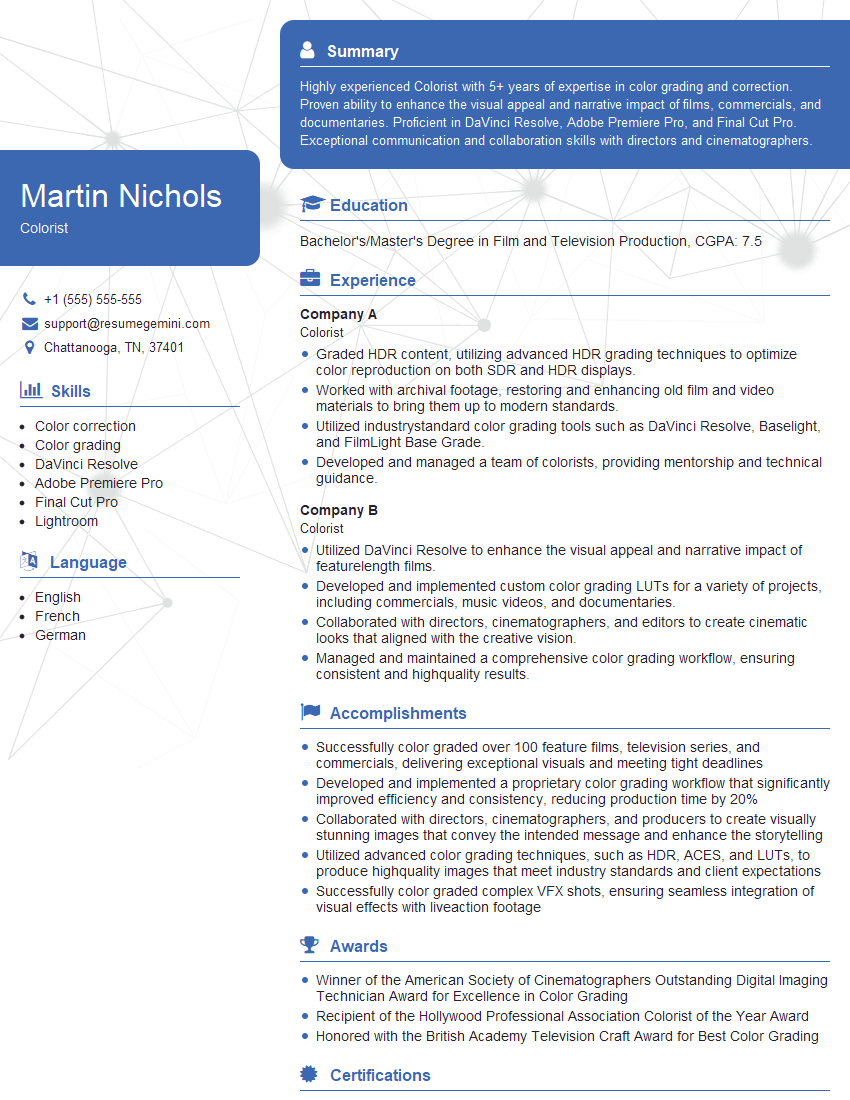
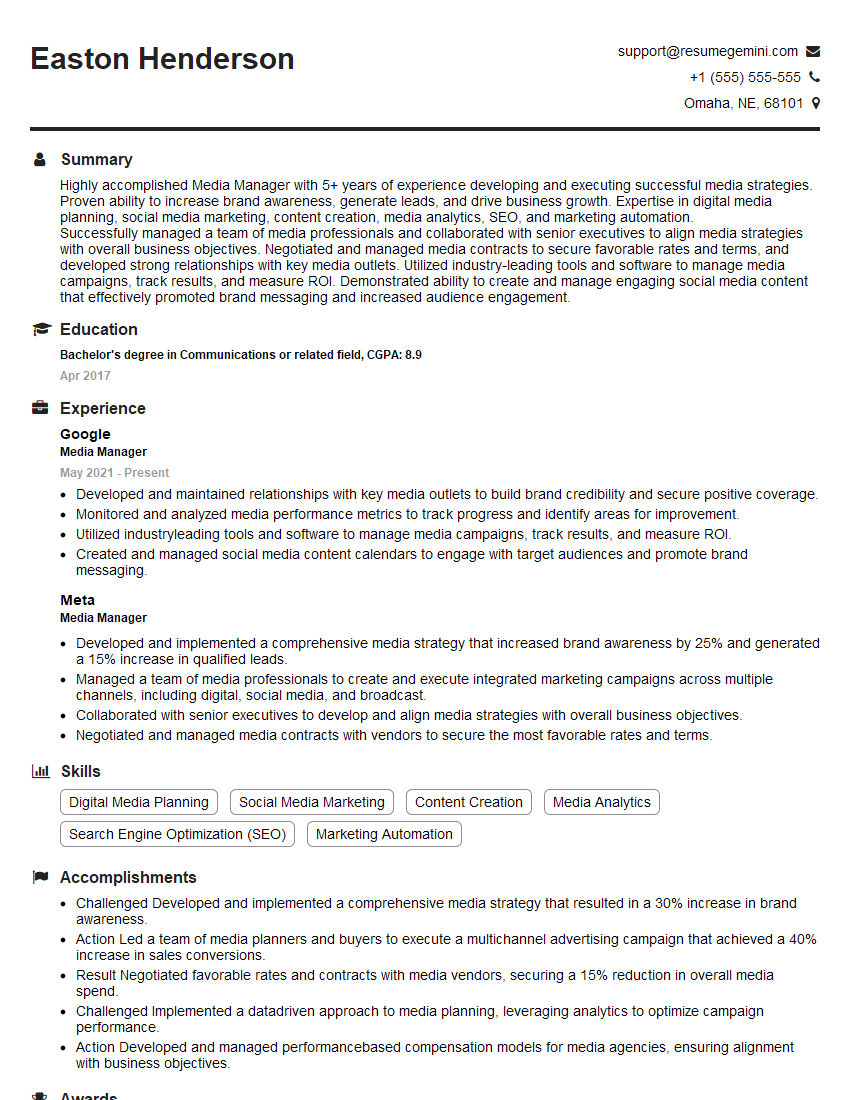
Mastering Film Output is crucial for career advancement in post-production, opening doors to exciting opportunities in various media formats. A strong understanding of these technical aspects demonstrates proficiency and professionalism, making you a highly sought-after candidate. To significantly boost your job prospects, create an ATS-friendly resume that highlights your skills and experience effectively. ResumeGemini is a trusted resource to help you build a professional resume that stands out. Examples of resumes tailored to Film Output are available to guide you.

Explore more articles
Users Rating of Our Blogs
Share Your Experience
We value your feedback! Please rate our content and share your thoughts (optional).
What Readers Say About Our Blog
good