Feeling uncertain about what to expect in your upcoming interview? We’ve got you covered! This blog highlights the most important Film Preparation interview questions and provides actionable advice to help you stand out as the ideal candidate. Let’s pave the way for your success.
Questions Asked in Film Preparation Interview
Q 1. Describe your experience with pre-production planning and scheduling.
Pre-production planning and scheduling are the backbone of a successful film. It’s essentially creating a detailed roadmap that guides the entire production process from script breakdown to the final wrap. My approach involves several key steps. First, I meticulously analyze the script, breaking it down into scenes and identifying all the necessary resources: locations, props, costumes, actors, and crew. This informs the creation of a comprehensive shooting schedule, which considers factors like location availability, actor schedules, and equipment logistics. I utilize scheduling software to create a visual representation of the schedule, optimizing for efficiency and minimizing conflicts. For instance, on a recent independent film, we used a complex schedule involving multiple locations and a tight timeline. By strategically scheduling scenes with similar location needs consecutively, we were able to significantly reduce travel time and increase efficiency. Secondly, I collaborate closely with the director and producer to create a realistic budget aligned with the schedule. This ensures we’re not overspending on resources or under-estimating the time required for certain tasks. I always build in contingency time for unexpected delays – a crucial element of proactive planning.
Q 2. How do you organize and manage film production paperwork?
Organizing and managing film production paperwork is crucial for maintaining order and avoiding costly mistakes. I employ a highly organized, digital-first system. I utilize cloud-based project management software such as Google Drive or Dropbox to store all documents, creating clearly labeled folders for each aspect of the production – from call sheets and permits to contracts and invoices. I assign specific individuals responsibility for certain documentation, implementing a clear system of checks and balances to ensure accuracy and prevent loss. Version control is essential – we use tracked changes and clearly marked versions for all contracts and script revisions. For example, on one project, a centralized online database allowed every department immediate access to the most updated versions of crucial documents, including daily call sheets, crew contact details, and insurance certificates. This prevented confusion and ensured every team member operated with the most current information.
Q 3. Explain your process for securing necessary permits and licenses.
Securing necessary permits and licenses is a critical yet often overlooked aspect of film preparation. My process begins with identifying all required permits based on the shooting locations and the nature of the film. This might include filming permits from local municipalities, location permits from private landowners, and potentially specialized permits for things like pyrotechnics or animal handling. I thoroughly research the legal requirements of each location and prepare a detailed permit application, ensuring all necessary documentation, including insurance certificates, is included. I always communicate proactively with the relevant authorities, submitting applications well in advance of the planned shoot to allow ample processing time. For example, during a recent shoot in a national park, securing the required filming permit took over six weeks of meticulous application preparation, collaboration with park officials and proof of insurance. Timely and accurate applications are crucial to avoid costly delays or cancellation of shooting plans.
Q 4. What software are you proficient in for film preparation (e.g., budgeting, scheduling)?
I’m proficient in several software applications commonly used in film preparation. For budgeting, I extensively use StudioBinder and Movie Magic Budgeting. These programs allow for detailed breakdown of costs, creating accurate estimates and controlling expenses. For scheduling, I rely on programs like ShotGrid and Celtx, which offer intuitive interfaces for creating, modifying, and sharing production schedules. I’m also adept at using spreadsheet software like Microsoft Excel and Google Sheets for detailed tracking of expenses and resource allocation. Furthermore, I’m skilled in using collaborative project management tools like Asana and Trello for effective team communication and task management. This multifaceted approach enables me to efficiently manage both large and small-scale productions.
Q 5. How do you handle unexpected issues or delays during film preparation?
Handling unexpected issues or delays during film preparation demands flexibility, resourcefulness, and a proactive approach. My strategy involves having contingency plans in place for various scenarios. This may include having backup locations, alternative crew members on standby, or additional funds allocated for unforeseen circumstances. When a problem arises, I immediately assess the situation, identify the impact, and gather a team to brainstorm solutions. Open communication with all stakeholders is key; keeping everyone informed and involved maintains transparency and builds collaboration. For example, on a project where a key actor fell ill, we used our prepared backup actor, along with a revised schedule to minimize disruption. Successful mitigation requires a combination of preemptive measures and agile reaction.
Q 6. Describe your experience with location scouting and securing locations.
Location scouting is a crucial part of pre-production. My process begins with an in-depth analysis of the script to identify the specific locations required. I then conduct thorough research, utilizing online resources, photographic databases, and local knowledge to compile a list of potential locations. I conduct on-site visits to each potential location, taking detailed photographs and videos to document their suitability. I assess factors like accessibility, parking, permits required, and potential logistical challenges. Negotiating with landowners to secure the necessary permits and permissions is crucial and includes clarifying usage fees and insurance requirements. On one occasion, we discovered a visually stunning location, but it required extensive negotiations with the city planning department. Persistence and professional communication were key in securing this location for the film.
Q 7. How familiar are you with film budgets and budget management?
I have extensive experience with film budgets and budget management. I understand the importance of creating a realistic and detailed budget that encompasses all aspects of production, including pre-production, production, and post-production costs. I use budgeting software to track expenses against the budget, alerting me to any potential overspending. I also implement cost-saving strategies without compromising quality. This includes negotiating favorable deals with vendors, optimizing shooting schedules to minimize expenses, and ensuring efficient resource allocation. Understanding the budget’s intricacies and effectively tracking expenses helps ensure that the project stays within financial constraints, preventing major budget overruns.
Q 8. How do you ensure all necessary equipment and personnel are secured for a shoot?
Securing the necessary equipment and personnel for a shoot is a crucial aspect of pre-production, demanding meticulous planning and proactive communication. It’s like assembling a highly specialized team for a complex mission – each member plays a vital role, and missing even one piece can compromise the entire operation.
My approach involves a multi-step process:
- Detailed Equipment List: I start by creating a comprehensive list of all equipment needed, specifying models and quantities. This list is cross-referenced with the script and shot list for accuracy. For example, if we’re filming a night scene, I ensure sufficient lighting equipment is included, along with the necessary power sources and generators.
- Vendor Contracts & Bookings: Once the equipment list is finalized, I contact reputable vendors to secure rentals and confirm availability. I negotiate contracts, ensuring clear terms regarding delivery, insurance, and potential technical support on-site.
- Crew Hiring & Scheduling: Simultaneously, I work with the casting director and production manager to hire and schedule the crew. This includes confirming their availability for the entire shoot, managing potential conflicts, and sending out contracts. A clear communication channel is essential here to prevent misunderstandings and delays.
- Confirmation & Contingency Plans: After all contracts are signed and schedules confirmed, I conduct a final check to ensure everything is in place. For unexpected issues, I develop contingency plans, such as backup equipment and personnel, to minimize disruptions during the shoot.
This organized and proactive approach minimizes risks and ensures a smooth production process, preventing costly delays and frustrating setbacks.
Q 9. What is your experience with risk assessment and mitigation in film preparation?
Risk assessment and mitigation are paramount in film preparation. I view it as proactively identifying potential hazards and devising strategies to prevent or minimize their impact. It’s about being prepared for the unexpected, whether it’s a sudden storm, equipment malfunction, or a cast member falling ill.
My experience involves conducting thorough risk assessments using a framework that considers various factors, including:
- Location Scouting & Safety Checks: Thorough location scouting identifies potential hazards like uneven terrain, wildlife, or proximity to dangerous structures. I implement safety measures accordingly – this might involve obtaining permits, hiring security personnel, or establishing safety zones.
- Equipment Check & Maintenance: Regular equipment checks and maintenance are crucial. This prevents malfunctions during the shoot, avoiding costly downtime. I make sure that all equipment is insured and in good working order before it arrives on set.
- Weather Monitoring & Contingency Planning: For outdoor shoots, I closely monitor weather forecasts and develop contingency plans for inclement weather. This may involve rescheduling shoots or having backup locations readily available.
- Safety Protocols & Training: Implementing and enforcing safety protocols, including proper handling of equipment and adherence to COVID-19 safety guidelines, ensures a safe working environment for the entire crew. This often includes providing relevant safety training to the team.
By proactively identifying and mitigating risks, I contribute to a smoother production process, minimizing disruptions and ensuring the safety and well-being of the entire film crew.
Q 10. How do you collaborate effectively with different departments during preparation?
Effective collaboration among different departments is the cornerstone of a successful film production. It’s like a well-orchestrated symphony, where each section plays its part in creating a harmonious whole. My approach to collaboration is built upon open communication, clear expectations, and a proactive attitude.
My strategy involves:
- Regular Meetings & Communication: Frequent meetings with department heads (e.g., director, cinematographer, production designer) are crucial to discuss progress, address challenges, and maintain alignment. I use various communication tools – emails, shared documents, and project management software – to ensure clear and timely updates.
- Shared Production Calendar & Documentation: Utilizing a shared production calendar keeps everyone informed about scheduling and key milestones. Centralized documentation ensures everyone has access to relevant information, minimizing confusion and misunderstandings.
- Conflict Resolution & Mediation: Inevitably, conflicts may arise. I strive to foster a collaborative environment where issues are addressed promptly and professionally, through open dialogue and finding mutually acceptable solutions.
- Feedback & Iterative Process: I encourage open feedback and embrace an iterative process, allowing for adjustments based on the collective input of various departments. This ensures that the final product meets everyone’s expectations.
This collaborative approach not only streamlines the pre-production process but also cultivates a positive and productive atmosphere on set.
Q 11. Explain your understanding of call sheets and daily production reports.
Call sheets and daily production reports are essential documents in film production, providing crucial information for the entire crew and facilitating smooth daily operations. They are the backbone of efficient communication and record-keeping.
Call Sheet: A call sheet is a document distributed to the cast and crew daily, outlining the schedule for the day’s filming. It includes vital information such as call times, locations, scenes to be shot, contact information for key personnel, and any necessary equipment or wardrobe details. Think of it as a detailed itinerary for the day’s filming activities. An example of a key element might be a note specifying ‘Quiet set needed during scene 7.’
Daily Production Report (DPR): The DPR is a comprehensive report summarizing the previous day’s filming activities. It includes details like footage shot, any unforeseen issues or delays, expenses incurred, and the overall progress against the production schedule. The DPR serves as a valuable record for accounting, scheduling, and future planning. For instance, a DPR might note ‘Scene 3 reshoot needed due to lighting issues.’
Both documents are essential tools for ensuring smooth and efficient film production, maintaining accurate records and facilitating clear communication.
Q 12. How do you create and manage a production schedule?
Creating and managing a production schedule is a complex but crucial aspect of film preparation. It’s essentially a roadmap that guides the entire production process, ensuring all tasks are completed efficiently and on time. This involves a systematic approach, balancing creative vision with logistical realities.
My process starts with a breakdown of the script, identifying scenes, locations, and required resources. Then I build a preliminary schedule based on the script breakdown. The schedule is refined through consultations with the director, cinematographer, production designer, and other key personnel to ensure it aligns with their needs and the available resources. Next, I allocate specific times for each scene based on estimated shooting times, considering factors such as scene complexity, lighting setups, and actor availability. Finally, the schedule is finalized, including buffer time for unforeseen events. The schedule is then distributed to the relevant parties. It also frequently involves the use of specialized scheduling software to manage complex timelines and resources effectively.
Throughout the production, I monitor the schedule closely, making necessary adjustments based on daily progress and unforeseen issues. Regular progress reports are essential to keep all stakeholders informed and maintain alignment. This iterative approach ensures that the schedule remains dynamic and responsive to the evolving needs of the production.
Q 13. How do you handle conflicts between different departments or crew members?
Conflicts between departments or crew members are inevitable in film production, given the high-pressure environment and diverse personalities involved. Handling these conflicts effectively is crucial to maintaining a positive and productive working atmosphere. I approach conflict resolution by prioritizing open communication, empathy, and a collaborative problem-solving approach.
My strategy involves:
- Identifying & Understanding the Issue: The first step is to identify the root cause of the conflict, listening carefully to all involved parties to understand their perspectives.
- Facilitating Open Communication: Creating a safe space for open and honest communication enables each party to express their concerns and feelings without judgment.
- Collaborative Problem Solving: Once the issues are understood, I facilitate a collaborative process to find mutually acceptable solutions that address the concerns of all parties. This could involve brainstorming solutions or compromising on certain aspects.
- Mediation & Negotiation: If necessary, I act as a mediator, helping the conflicting parties find common ground through negotiation and compromise. The goal is always a resolution that preserves working relationships.
- Documentation & Follow-up: The outcome of the conflict resolution is documented to ensure accountability and prevent future recurrences. Follow-up is essential to check if the agreed-upon solution is working effectively.
This approach ensures that conflicts are addressed promptly and professionally, minimizing disruptions and maintaining a productive and harmonious work environment.
Q 14. Describe your experience with creating and managing production databases.
Creating and managing production databases are essential for organizing and tracking vast amounts of information during film production. It’s like having a central command center, providing easy access to all the key details. It helps maintain consistency, avoid errors, and ensures everyone is working from the same information.
My experience spans using various database systems and software, including spreadsheet software and dedicated production management tools. These databases typically store information such as:
- Cast & Crew Contact Information: This includes contact details, schedules, and roles.
- Equipment Inventory: Details about equipment, its availability, rental agreements, and maintenance schedules.
- Budget Tracking: Recording expenses and revenue.
- Shot Lists & Scene Information: Organizing and tracking information relating to individual shots.
- Location Data: Information about shooting locations, permits, and logistical details.
The database is used to generate reports, track progress, and provide real-time updates to all stakeholders. Effective management of a production database improves efficiency, reduces errors, and contributes to the overall success of the project. Regular data backups and strict access control are essential for data security and integrity.
Q 15. How do you ensure the timely delivery of necessary materials to the set?
Timely delivery of materials is paramount to a smooth production. My approach is multifaceted, starting with meticulous pre-production planning. This involves creating detailed shot lists that specify every prop, set dressing item, and piece of equipment needed for each scene. I then collaborate closely with the production designer, art department, and location manager to identify all required materials and their sourcing.
Next, I develop a comprehensive schedule detailing when and where each item is needed. This schedule is integrated with the overall production schedule and becomes a key part of the daily call sheet. We utilize a robust inventory management system, often a dedicated software program, to track every item from its acquisition to its return. This system allows us to anticipate potential delays and proactively address shortages. For time-sensitive deliveries, I negotiate delivery windows with vendors and utilize a system of confirming deliveries with tracking numbers. Finally, a designated individual on set is responsible for receiving and logging all materials, ensuring everything arrives on time and is readily available.
For example, on a recent period drama, we needed a specific type of antique clock for a pivotal scene. By identifying the item weeks in advance, and employing a specialist prop supplier, we ensured its timely arrival, avoiding costly rescheduling.
Career Expert Tips:
- Ace those interviews! Prepare effectively by reviewing the Top 50 Most Common Interview Questions on ResumeGemini.
- Navigate your job search with confidence! Explore a wide range of Career Tips on ResumeGemini. Learn about common challenges and recommendations to overcome them.
- Craft the perfect resume! Master the Art of Resume Writing with ResumeGemini’s guide. Showcase your unique qualifications and achievements effectively.
- Don’t miss out on holiday savings! Build your dream resume with ResumeGemini’s ATS optimized templates.
Q 16. What is your experience with working with unions and guilds?
I possess extensive experience collaborating with various unions and guilds, including but not limited to IATSE, SAG-AFTRA, and Teamsters. My approach is built on strong communication, mutual respect, and a thorough understanding of the collective bargaining agreements. I’m adept at navigating the complexities of union regulations, ensuring all work practices adhere to contract stipulations.
I prioritize proactive communication with union representatives to anticipate potential issues before they arise. This often involves joint planning sessions to address logistical challenges and ensure that our production remains compliant with union rules. A positive working relationship fosters a collaborative environment that reduces conflicts and ensures the crew feels valued and respected. For example, I’ve successfully negotiated overtime agreements to accommodate unforeseen production demands while remaining within budget and in accordance with union guidelines.
Q 17. How familiar are you with different shooting formats and their requirements?
My familiarity with shooting formats is comprehensive, ranging from traditional 35mm film to modern digital formats like Red, Arri Alexa, and Blackmagic cameras. I understand the technical requirements of each format, including resolution, aspect ratio, color science, and data management. This understanding extends to various shooting styles, from handheld documentary-style filming to meticulously planned studio shoots.
I’m aware of the specific needs of each format, including the necessary equipment, workflow, and storage solutions. For instance, shooting on film requires a different logistical approach compared to digital, especially when considering film stock management, processing, and scanning. Digital formats require substantial storage solutions and efficient data management to avoid workflow bottlenecks. My experience allows me to seamlessly adapt to diverse project requirements and select the appropriate format based on budgetary constraints and creative vision.
Q 18. How do you manage communication between the production team and other stakeholders?
Maintaining seamless communication is crucial. My strategy involves employing a multi-pronged approach. Daily production meetings are essential to convey key information and address concerns. These meetings include representatives from each department to facilitate open dialogue and ensure everyone is on the same page. We utilize a combination of communication tools including email, dedicated production management software, and a centralized online platform where documents and schedules are easily accessible to all stakeholders.
Regular updates are provided to key stakeholders, such as producers, investors, and clients. These updates may be through formal reports, briefings, or informal check-ins, depending on the stakeholder’s needs and preferences. Transparency and consistent communication build trust and collaboration. For example, on a large-scale production, we used a dedicated communication platform that allowed instant messaging, file sharing, and task management, greatly enhancing team collaboration and responsiveness.
Q 19. Explain your understanding of legal and safety regulations on set.
A deep understanding of legal and safety regulations is vital. I’m proficient in adhering to all relevant laws and industry best practices concerning workplace safety, insurance requirements, permits, and licensing. This involves ensuring compliance with local, state, and federal regulations, including those concerning hazardous materials, fire safety, and equipment operation.
Before production commences, I conduct thorough risk assessments to identify potential hazards on set. This includes reviewing the location, equipment, and planned activities. We implement appropriate safety measures to mitigate risks, such as providing necessary safety gear (PPE), establishing emergency procedures, and ensuring that all crew members receive adequate safety training. Our production maintains comprehensive insurance coverage to protect all involved parties. Compliance with these regulations minimizes the potential for accidents and legal issues, fostering a safe and productive environment.
Q 20. How do you ensure the accuracy of information across different departments?
Accuracy of information is vital. My approach starts with establishing clear communication protocols across all departments. This often involves the use of centralized systems, such as shared online databases or production management software, to store and update key information. Version control is crucial; we utilize numbered revisions for critical documents to avoid confusion.
Regular cross-departmental check-ins ensure consistency and identify potential discrepancies. Detailed reports and confirmation procedures are used for key deliverables, like shot lists, schedules, and budget updates. For example, before a location shoot, we’ll hold a pre-production meeting with the location manager, camera team, and art department to verify all details concerning set design, access, and permits.
Q 21. Describe your experience with creating and maintaining a production binder.
A production binder is my essential organizational tool. I have extensive experience creating and maintaining detailed binders for various productions, ranging from independent films to large-scale features. These binders are meticulously organized and contain all essential production documents, including schedules, call sheets, shot lists, contact information, location permits, and budget breakdowns.
The binder is a constantly evolving document; I regularly update it throughout pre-production, principal photography, and post-production. The structure is standardized for ease of use. Separate sections are dedicated to different aspects of the production, using clear indexing and labeling. Digital versions are maintained and shared through secure cloud storage, ensuring accessibility for all key personnel. A well-maintained production binder minimizes confusion, ensures smooth workflow, and serves as a valuable record of the entire production process.
Q 22. How do you handle revisions and changes to the production plan?
Handling revisions in film preparation requires a proactive and organized approach. It’s not about resisting change, but about managing it effectively. My strategy involves several key steps:
Immediate Assessment: Upon receiving a revision request, I immediately assess its impact. Is it a minor tweak or a significant alteration affecting multiple departments? This determines the urgency and scope of the adjustments needed.
Communication is Key: I immediately communicate the change to all relevant parties – the director, production designer, department heads, etc. Transparency prevents misunderstandings and delays.
Impact Analysis: We then collaboratively analyze the impact of the revision on the schedule, budget, and resources. For example, a change in location might necessitate re-scouting, potentially impacting the shooting schedule and transportation costs.
Revised Schedule & Budget: Based on the impact analysis, we create a revised schedule and budget, outlining the necessary adjustments and potential cost implications. This document is crucial for maintaining transparency and accountability.
Documentation: All revisions, their impacts, and the solutions implemented are meticulously documented. This helps in tracking changes, preventing future conflicts, and learning from past experiences. I often use a centralized digital system for this.
For example, on a recent project, a late script revision required a significant redesign of a key set piece. By immediately communicating the change, assessing its impact, and collaboratively adjusting the schedule and budget, we managed to implement the revision without major delays or cost overruns.
Q 23. What are your strategies for staying organized during a fast-paced production?
Staying organized during fast-paced productions is paramount. My strategies revolve around leveraging technology and establishing clear organizational systems. This includes:
Project Management Software: I rely heavily on project management software like Asana or Monday.com to track tasks, deadlines, and progress. This allows for real-time updates and ensures everyone is on the same page.
Detailed Shot Lists & Schedules: Meticulously detailed shot lists and shooting schedules are essential. These documents are constantly updated and shared with the crew. This prevents confusion and ensures efficiency on set.
Daily Production Reports: We produce daily production reports that summarize the day’s accomplishments, challenges, and plans for the next day. This facilitates efficient communication and problem-solving.
Clear Communication Protocols: Establishing clear communication channels – through designated individuals or software – is crucial. This minimizes confusion and ensures information gets to the right people promptly.
Regular Meetings: Short, focused daily or weekly meetings are incredibly valuable for keeping everyone aligned, addressing concerns, and resolving issues proactively.
Think of it like conducting an orchestra – every instrument (crew member) needs to know their part and the conductor (me) needs to keep them all in sync.
Q 24. How familiar are you with different types of film stock and their properties?
My familiarity with film stock extends to both traditional and modern formats. I understand the nuances of various stocks, including their:
Sensitivity (ISO): Understanding ISO ratings is crucial. Higher ISO means greater sensitivity to light, beneficial in low-light situations but potentially leading to increased grain. Lower ISO means finer grain, better suited for bright environments.
Color Temperature: Different film stocks have different color temperatures (measured in Kelvin), affecting the overall color palette of the film. Matching color temperature is essential for consistency.
Grain Structure: The grain structure contributes to the film’s aesthetic. Some films have fine grain for a clean look, while others have coarse grain for a more textured, vintage feel.
Contrast and Latitude: These characteristics define the dynamic range of the film – its ability to capture detail in both highlights and shadows.
Film Format: I’m experienced with various film formats – 35mm, 16mm, Super 8 – each with its own unique characteristics and limitations.
For instance, I recently worked on a project that required a vintage aesthetic. We chose a specific film stock known for its coarse grain and slightly muted colors to perfectly achieve the director’s vision. Choosing the right film stock is as important as choosing the right lenses.
Q 25. What is your approach to problem-solving when unexpected issues arise?
Problem-solving on set requires a calm, methodical approach. My strategy involves:
Assessment: The first step is to accurately assess the nature and severity of the problem. Is it a technical issue, a logistical problem, or a personnel conflict?
Collaboration: I immediately involve the relevant individuals – the director, department heads, and crew members – to brainstorm solutions. This collaborative approach leverages the collective expertise of the team.
Prioritization: If multiple issues arise, we prioritize them based on their impact on the schedule and the overall production. We focus on addressing the most critical issues first.
Contingency Planning: Having backup plans is crucial. Unexpected issues are inevitable, so anticipating potential problems and developing contingency plans minimizes their impact.
Documentation: All problems, their solutions, and any resulting adjustments to the plan are documented for future reference.
For example, if we encountered equipment failure, we would immediately assess the severity, explore alternative equipment, and adjust the schedule accordingly. A well-prepared team can overcome unexpected challenges efficiently.
Q 26. How do you ensure the smooth flow of information and communication on set?
Ensuring smooth communication on set is vital for efficiency and morale. My approach incorporates:
Clear Communication Channels: Designated communication channels are crucial, using a combination of daily meetings, radio communication, and digital platforms like Slack or WhatsApp.
Regular Updates: Regular updates are given to all team members, keeping everyone informed about the schedule, changes, and potential issues.
Open Communication Policy: Fostering an open and transparent environment encourages crew members to voice concerns or suggestions without hesitation.
Designated Point Persons: Assigning specific individuals as points of contact for different departments ensures efficient communication and avoids bottlenecks.
Visual Communication Tools: Using visual aids such as whiteboards or digital dashboards to track progress and display key information can be very effective.
Think of it as a well-oiled machine – every part needs to communicate seamlessly for the whole system to function optimally. Clear communication is the lubricant that keeps everything running smoothly.
Q 27. Explain your experience with pre-visualization and storyboarding.
Pre-visualization and storyboarding are integral parts of my film preparation process. They help clarify the vision, solve potential problems early on, and ensure efficient shooting. My experience spans various techniques, from traditional hand-drawn storyboards to digital pre-visualization using software like Cinema 4D or Maya.
Storyboarding: I create detailed storyboards that visually map out each shot, including camera angles, character positions, and action. This serves as a blueprint for the cinematographer, actors, and crew.
Pre-visualization: For complex shots or sequences, I use 3D pre-visualization to create realistic simulations of the scenes. This allows us to identify potential problems, such as camera obstructions or lighting challenges, before stepping onto the set.
Collaboration: Both storyboarding and pre-visualization are collaborative processes. I work closely with the director, cinematographer, and production designer to refine the visuals and ensure they align with the overall artistic vision.
Communication Tool: These pre-production tools serve as powerful communication tools, allowing everyone to understand and visualize the scenes before shooting begins.
For example, on one project, using pre-visualization helped us identify a potential safety hazard during a complex stunt sequence, allowing us to adjust the plan and ensure the safety of the cast and crew.
Q 28. How do you maintain a positive and productive atmosphere on set during preparation?
Maintaining a positive and productive atmosphere during preparation hinges on fostering a collaborative and respectful environment. My approach involves:
Clear Expectations: Communicating clear expectations and roles from the outset prevents misunderstandings and keeps everyone focused.
Team Building: Creating opportunities for team bonding – casual lunches, informal meetings – helps build rapport and camaraderie among the crew.
Open Communication: Encouraging open communication and active listening ensures everyone feels heard and valued.
Conflict Resolution: Addressing conflicts promptly and fairly is essential for maintaining a harmonious work environment. This often involves mediation and finding mutually agreeable solutions.
Positive Reinforcement: Recognizing and rewarding excellent work fosters a sense of accomplishment and motivates the team to continue performing at their best.
A positive set atmosphere leads to better creativity, increased efficiency, and ultimately, a better final product. It’s about creating a space where everyone feels safe, respected, and empowered to contribute their best work.
Key Topics to Learn for Film Preparation Interview
- Pre-Production Planning: Understanding and articulating your approach to script breakdown, scheduling, budgeting, and location scouting. This includes demonstrating knowledge of various scheduling methods and budgeting software.
- Production Management: Practical application of your planning skills on set. This involves showcasing your experience in managing resources, crew communication, and problem-solving during unexpected challenges.
- Post-Production Workflow: Demonstrate familiarity with the post-production pipeline, including editing, visual effects, sound design, and color grading. Discuss your understanding of collaborative workflows and software proficiency.
- Technical Knowledge: Showcase your understanding of relevant film equipment, camera systems, lighting techniques, and sound recording principles. Be prepared to discuss specific gear and its practical application.
- Crew Management & Collaboration: Highlight your ability to work effectively within a team, manage diverse personalities, and communicate clearly and concisely. Discuss conflict resolution strategies and leadership styles.
- Risk Assessment & Mitigation: Demonstrate your ability to identify potential problems on set and proactively develop strategies to mitigate risks, ensuring smooth production workflow.
Next Steps
Mastering Film Preparation is crucial for career advancement in the dynamic film industry. A strong understanding of pre-production, production, and post-production processes significantly enhances your value to any production team. To increase your job prospects, crafting an ATS-friendly resume is essential. ResumeGemini can help you build a professional and effective resume that highlights your skills and experience. We provide examples of resumes tailored to Film Preparation to help you showcase your qualifications effectively.

Production Coordinator Resume Sample
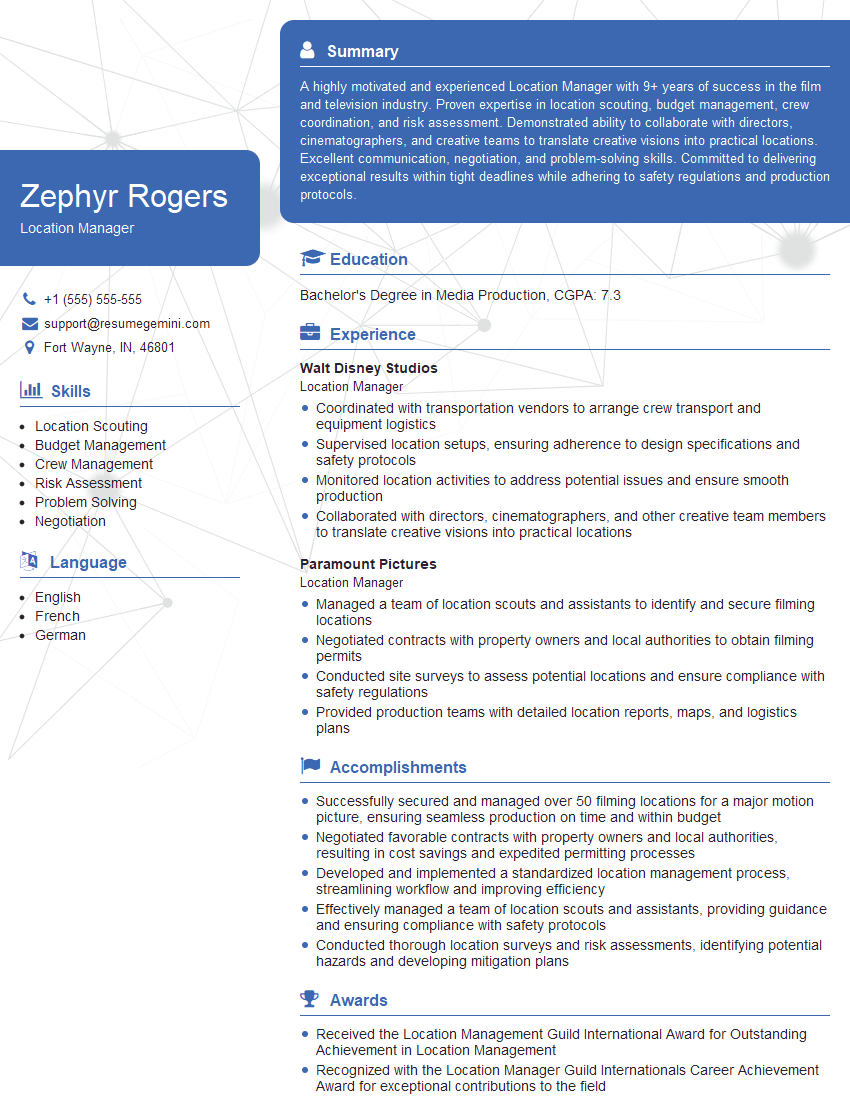
Location Manager Resume Sample
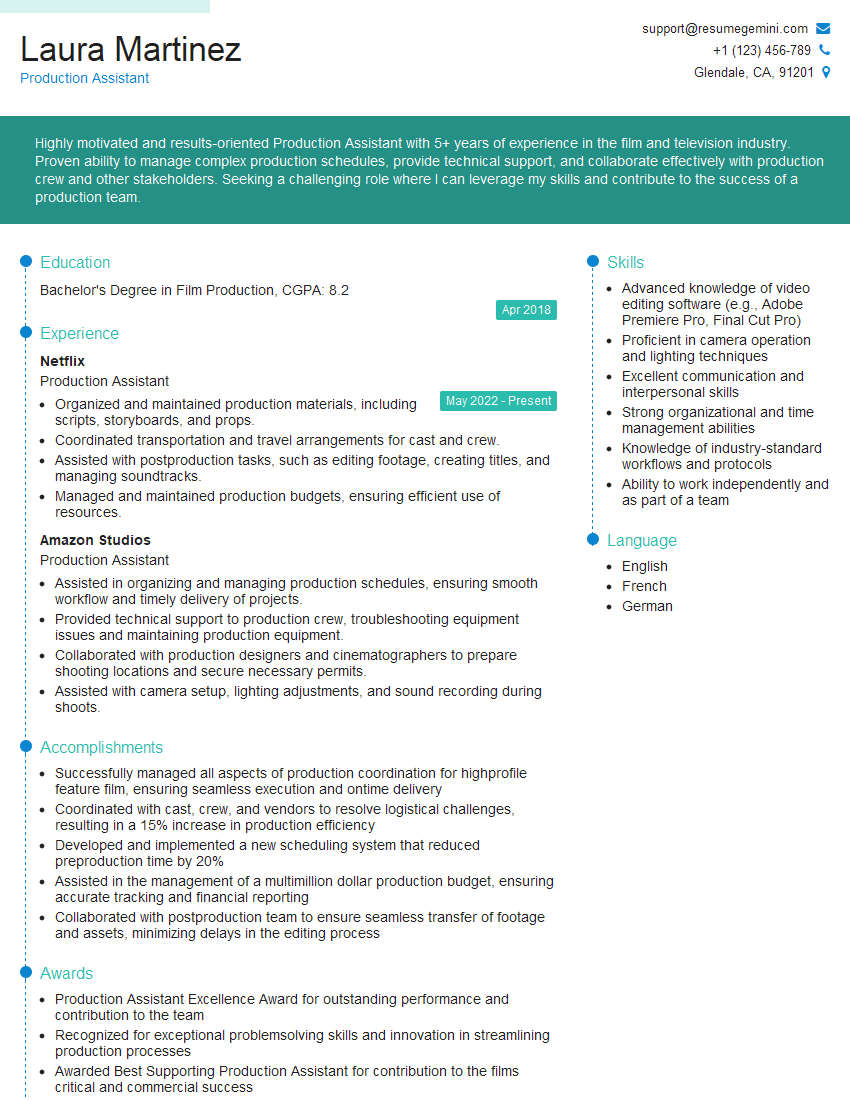
Production Assistant Resume Sample
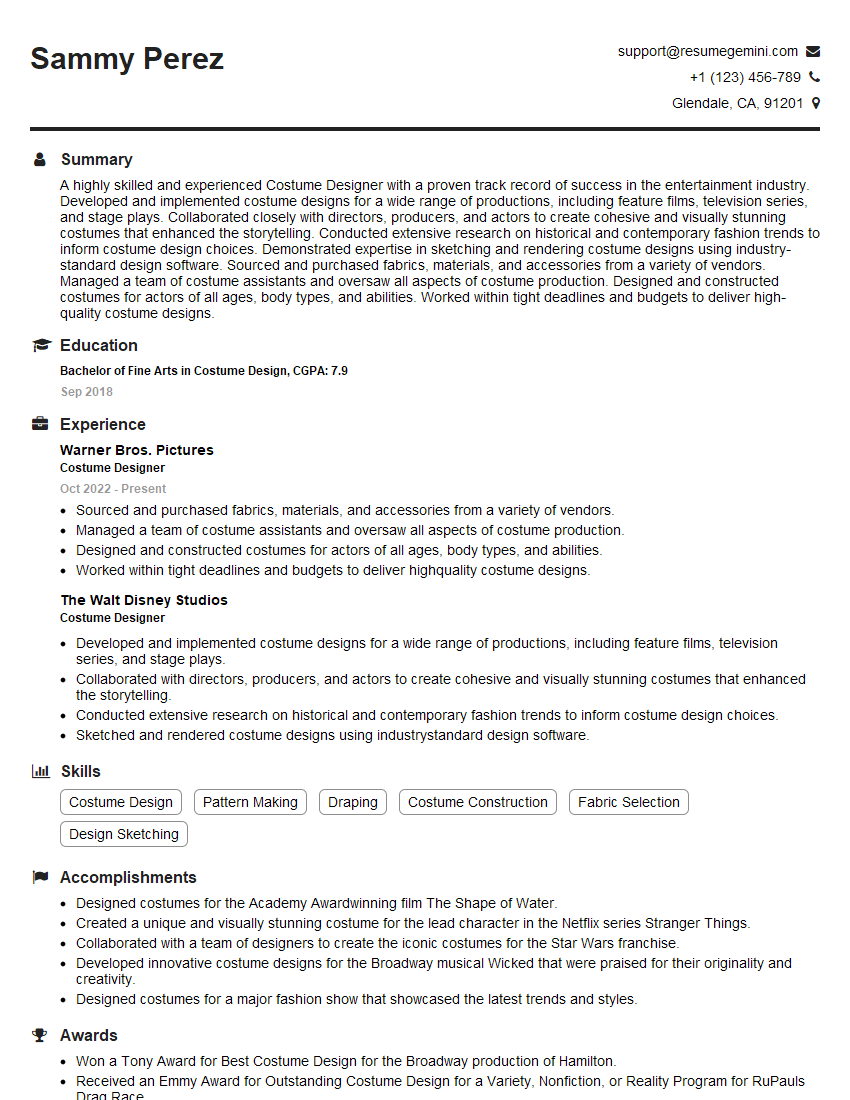
Costume Designer Resume Sample
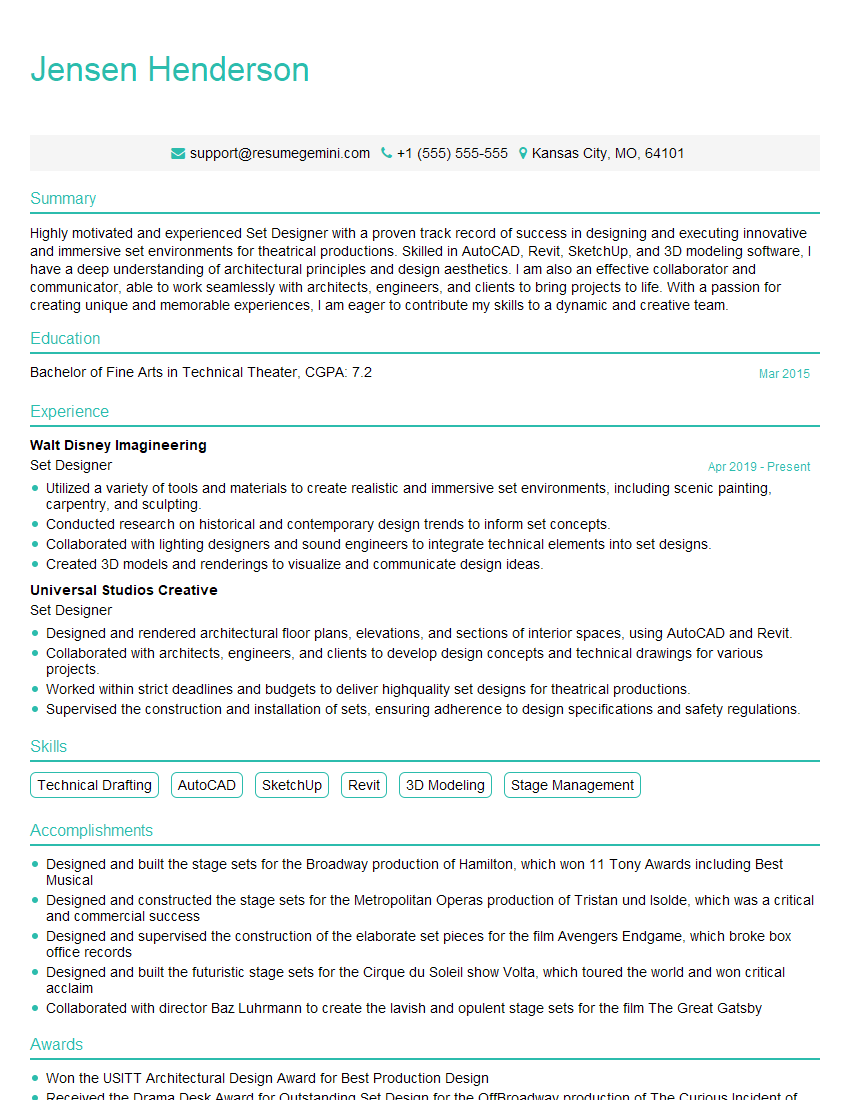
Set Designer Resume Sample
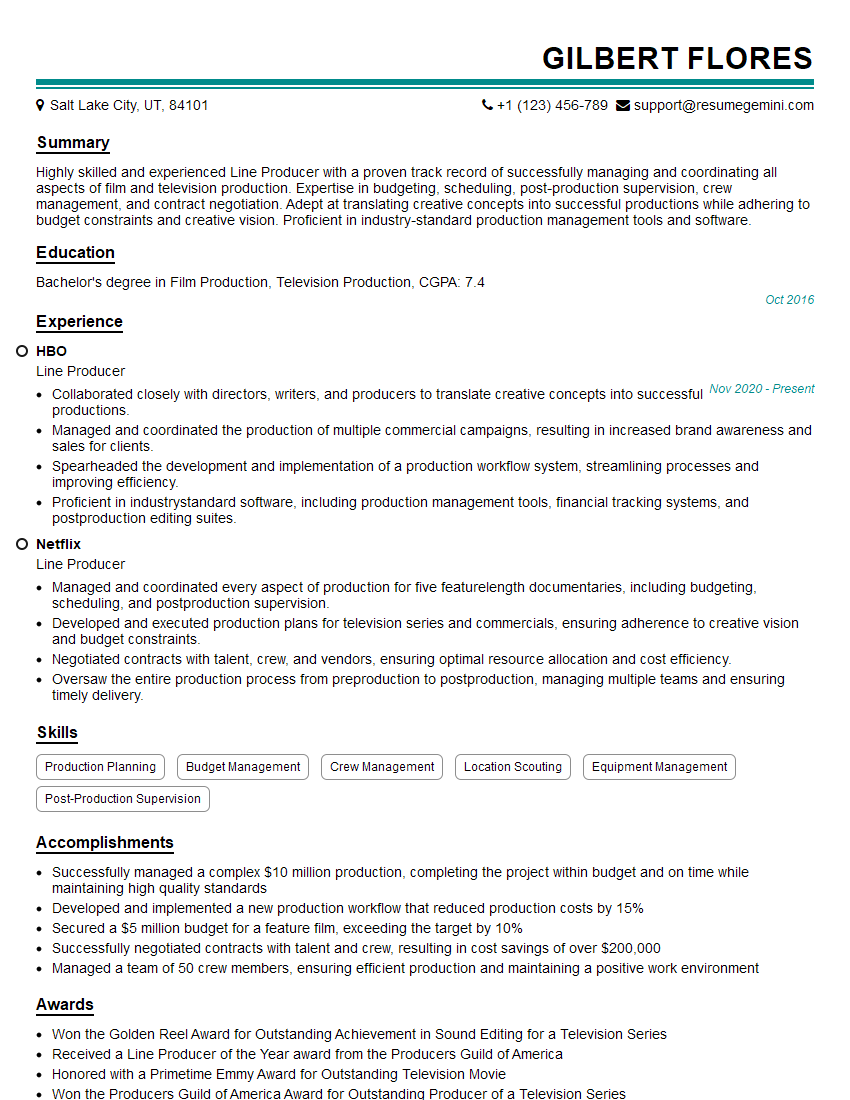
Line Producer Resume Sample
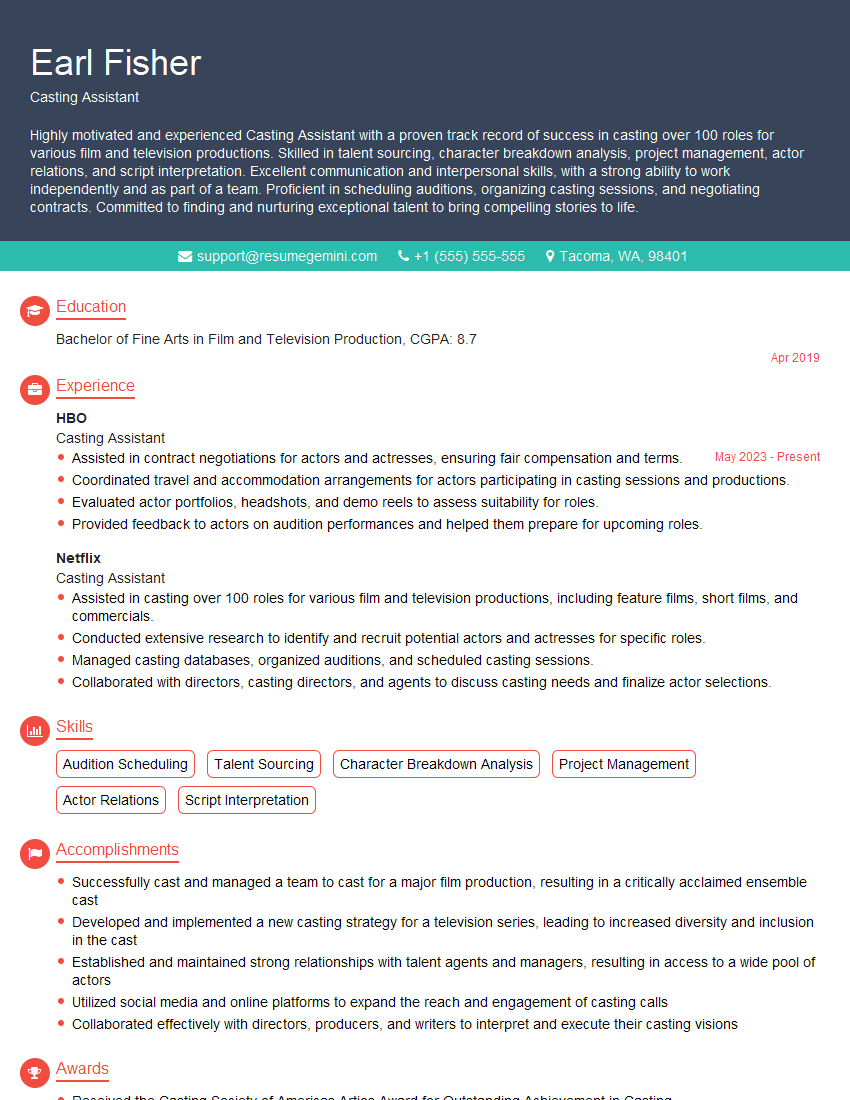
Casting Assistant Resume Sample
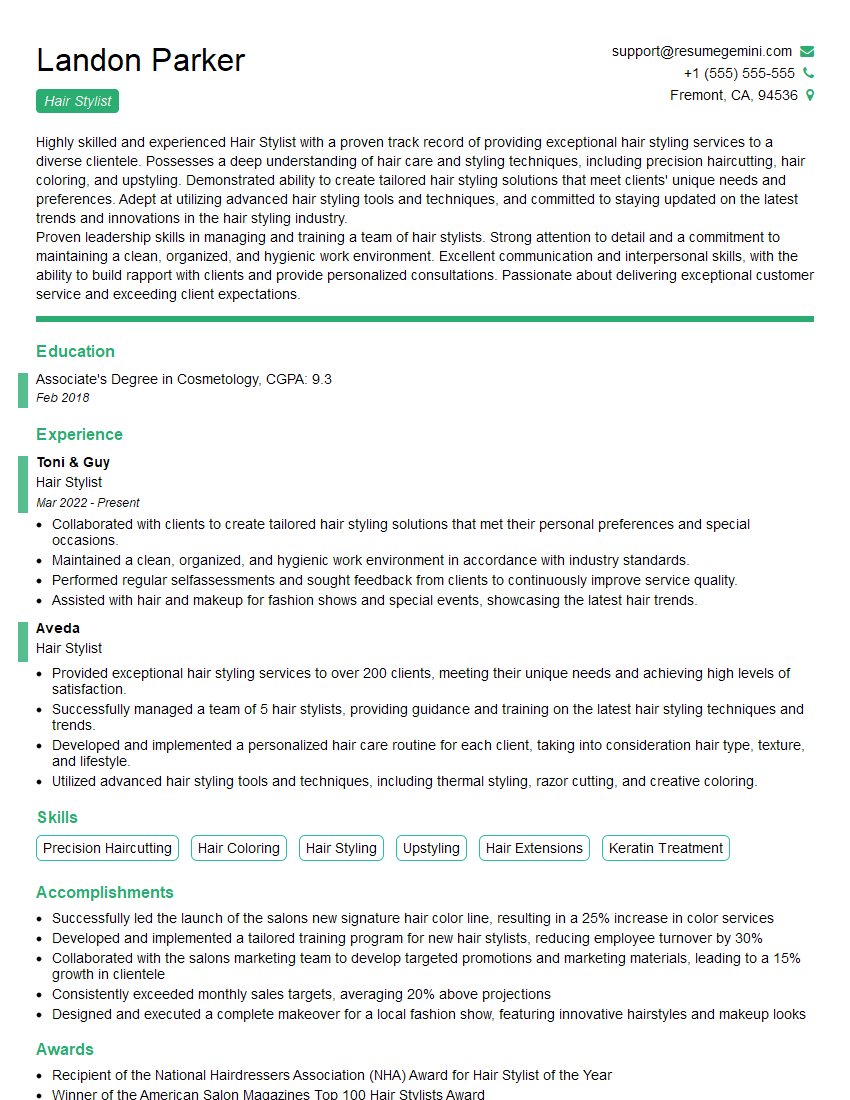
Hair Stylist Resume Sample
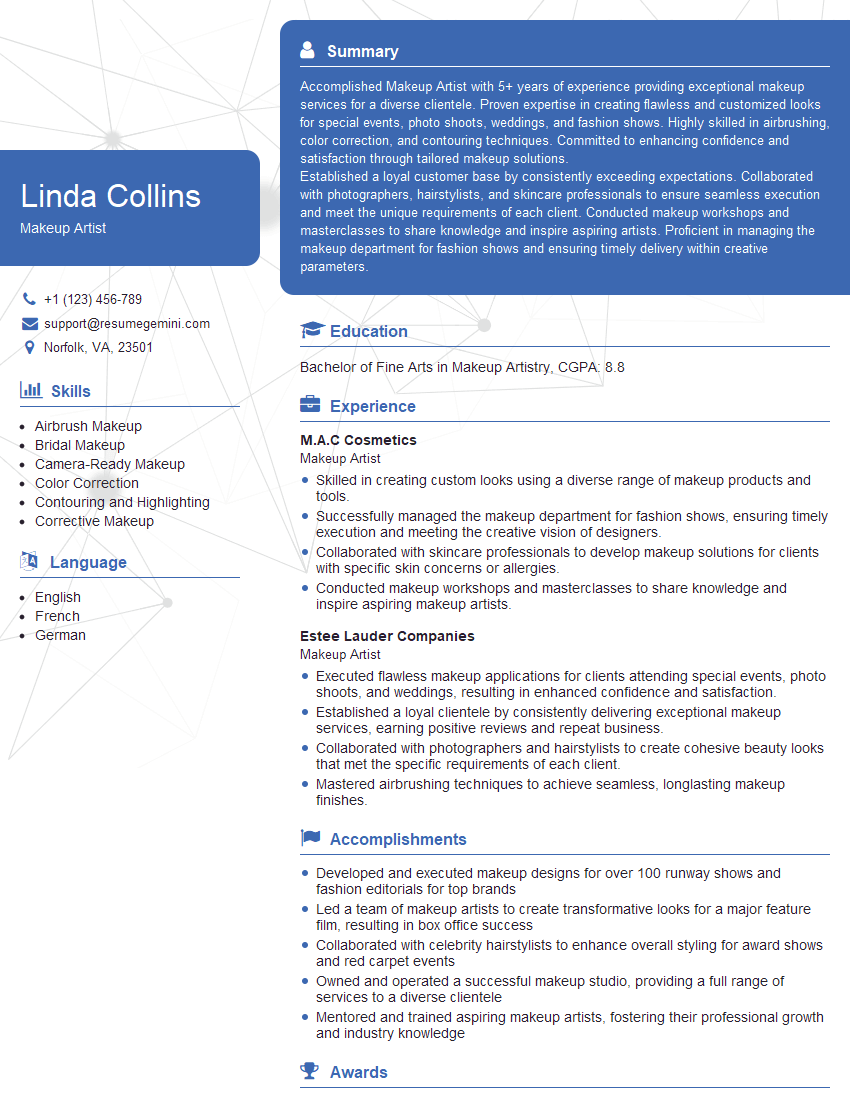
Makeup Artist Resume Sample
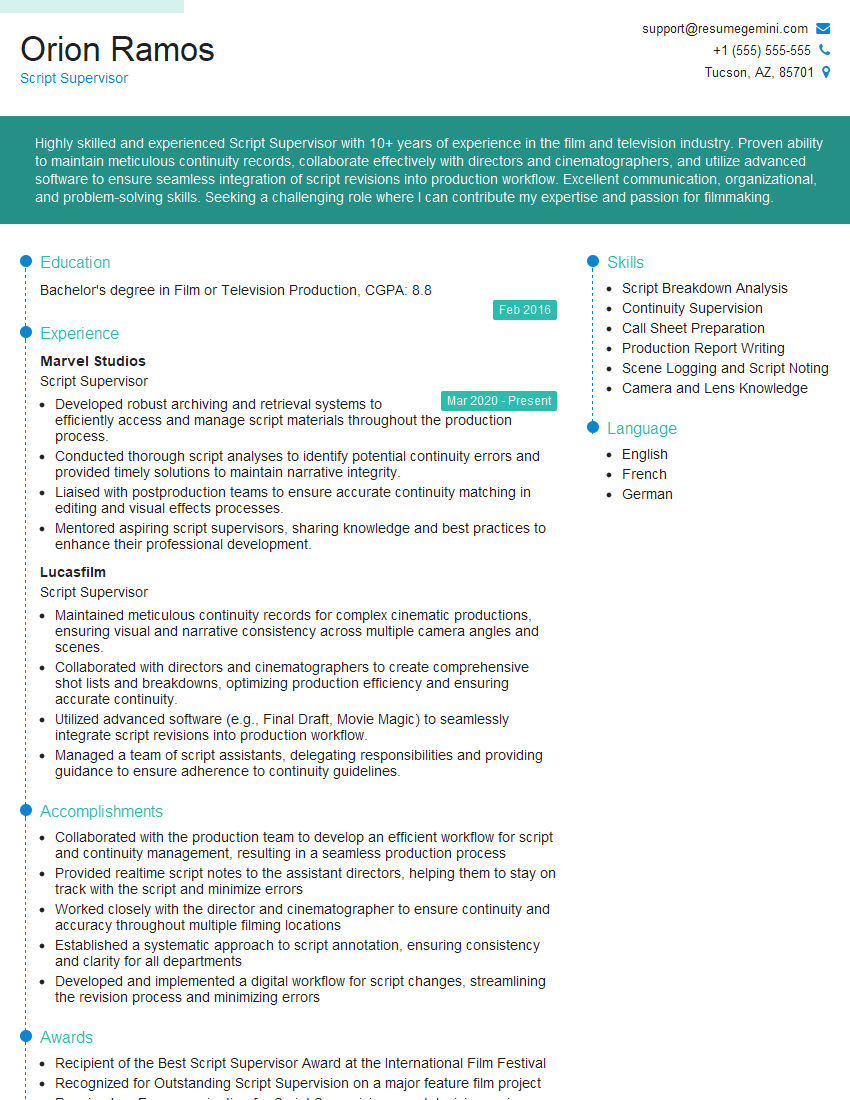
Script Supervisor Resume Sample
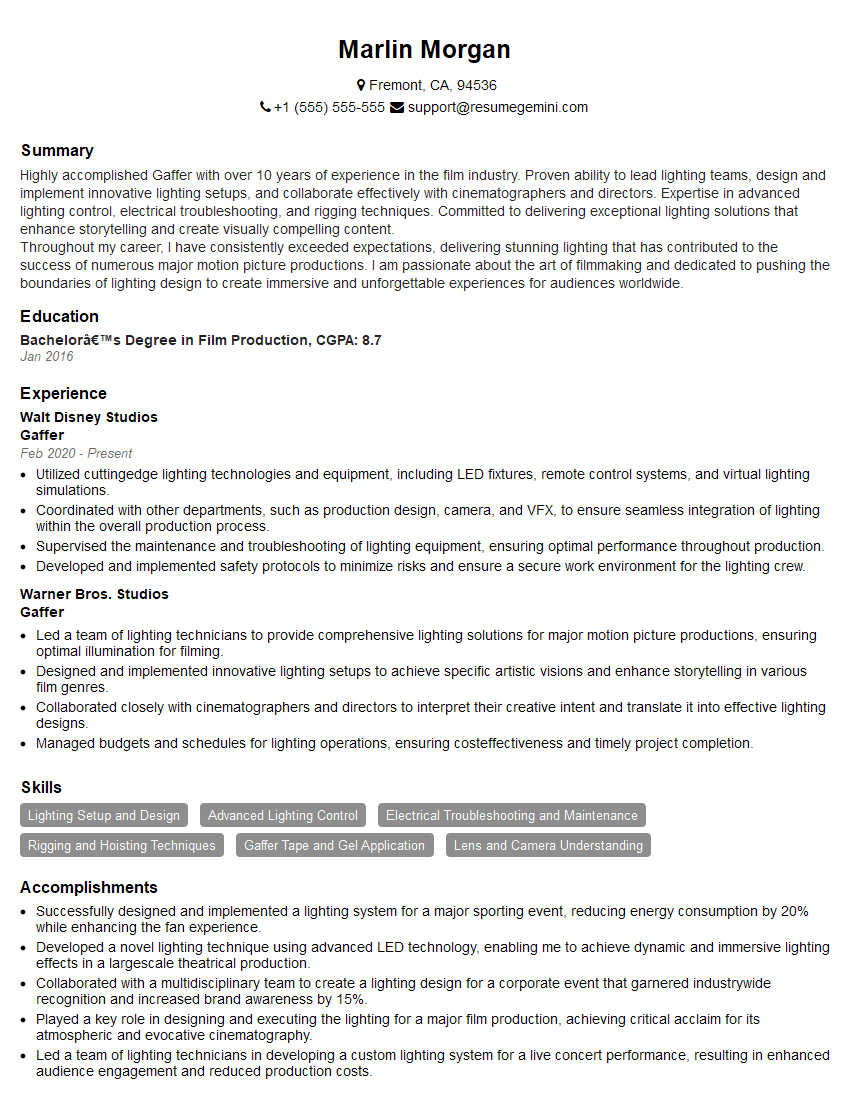
Gaffer Resume Sample
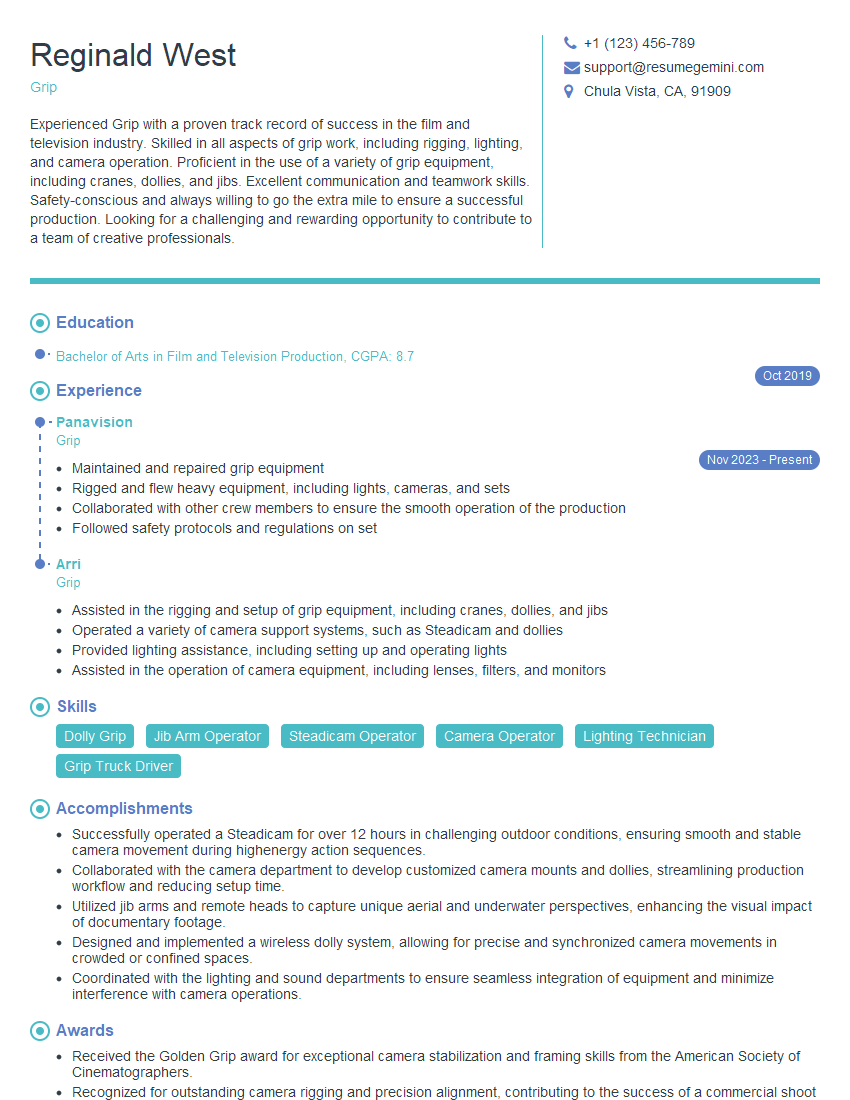
Grip Resume Sample
Explore more articles
Users Rating of Our Blogs
Share Your Experience
We value your feedback! Please rate our content and share your thoughts (optional).
What Readers Say About Our Blog
Very informative content, great job.
good