Interviews are more than just a Q&A session—they’re a chance to prove your worth. This blog dives into essential Fine Arts interview questions and expert tips to help you align your answers with what hiring managers are looking for. Start preparing to shine!
Questions Asked in Fine Arts Interview
Q 1. Describe your artistic process.
My artistic process is a cyclical journey, not a linear one. It begins with a spark – an idea, a feeling, an observation. This initial inspiration might come from anything: a dream, a conversation, a news story, or even the way light falls on a wall. I then embark on a phase of exploration, sketching, and experimenting with different compositions and approaches. This is a period of intense brainstorming, where I allow myself to freely generate ideas without judgment. Next comes the refinement process, where I meticulously select the best elements and develop them further. This involves countless revisions and adjustments, often involving multiple layers of paint or digital manipulation. Finally, I reach a stage of completion, yet even then, I may revisit the artwork later to make subtle changes or reflect on the process. Think of it like sculpting – chipping away at the excess to reveal the form that has always been there, waiting to be discovered.
Q 2. Explain your preferred medium and why.
My preferred medium is oil paint on canvas. I find the inherent richness and luminosity of oil paints unparalleled. They allow for a wide range of techniques, from delicate washes to bold impasto strokes, giving me incredible control over texture and color. The slow drying time is also advantageous, allowing for extensive blending and layering. The canvas itself provides a sturdy and flexible surface that interacts beautifully with the paint, resulting in a depth and vibrancy that other mediums struggle to achieve. For example, the way oil paints can be subtly blended to create a luminous glow is simply magical, something I’ve found less easy to achieve with acrylics or watercolors. The tactile quality of working with oils also contributes significantly to my creative process, deepening my connection to the artwork.
Q 3. Discuss your artistic influences and inspirations.
My artistic influences are diverse, spanning centuries and styles. The Old Masters, particularly the Dutch Golden Age painters like Rembrandt and Vermeer, have profoundly impacted my understanding of light, shadow, and composition. Their masterful use of realism and subtle emotional depth continues to inspire me. On the other hand, the Expressionist movement, with its bold use of color and emotional intensity, has shaped my approach to conveying feeling through abstract forms. Artists like Van Gogh and Munch have shown me the power of raw emotion in visual art. Beyond the historical canon, contemporary artists such as Gerhard Richter and Cecily Brown continue to challenge and inspire me with their innovative techniques and conceptual explorations.
Q 4. How do you approach creative problem-solving?
Creative problem-solving is a crucial aspect of my artistic practice. When faced with a creative block or challenge, I employ several strategies. Firstly, I step away from the artwork. A change of scenery or a break from the problem often allows for fresh perspective. Secondly, I engage in active research, studying the works of other artists, experimenting with new techniques, or exploring different theoretical approaches. I might also try a completely different medium or style, sometimes even something unrelated to painting, just to shake things up. Finally, I employ a process of iterative refinement. I break the problem down into smaller, manageable parts and address them sequentially. This approach allows for incremental progress and reduces the feeling of being overwhelmed. Think of it like solving a complex puzzle: focusing on one piece at a time helps to assemble the whole.
Q 5. Describe a time you overcame a creative block.
I once experienced a significant creative block while working on a large-scale portrait. I felt completely disconnected from the subject and frustrated by my inability to capture their essence. To overcome this, I decided to change my approach. Instead of focusing solely on the likeness, I began experimenting with texture and abstract elements. I started incorporating layers of impasto paint, allowing the brushstrokes themselves to become part of the expression. This shift in focus not only relieved my creative block but ultimately enriched the final piece. It transformed from a purely representational work into a more expressive and emotionally resonant one. The resulting portrait captured not just the physical likeness but also the subject’s inner world, something I initially struggled to achieve.
Q 6. Explain your understanding of art history’s impact on contemporary art.
Art history profoundly impacts contemporary art. It provides a rich tapestry of techniques, styles, and ideas that artists continually revisit, reinterpret, and challenge. Understanding historical contexts, movements, and artistic debates allows contemporary artists to engage in informed dialogue with the past. For example, the resurgence of figurative painting in recent decades can be understood in relation to a reaction against the dominance of abstract expressionism earlier in the 20th century. Similarly, many contemporary artists use historical techniques in new ways, for example, employing traditional printmaking methods but applying them to digitally created images. Art history also provides a critical framework for evaluating and understanding contemporary art’s significance and innovation. It allows us to discern originality and to see how an artwork fits within the broader history of art.
Q 7. How do you evaluate the success of an artwork?
Evaluating the success of an artwork is a complex and subjective process. There isn’t one single metric. However, several factors are crucial. Firstly, the artwork’s technical proficiency is important. Is the execution skillful and masterful? Does it demonstrate a strong command of the chosen medium? Secondly, its originality and innovation are key. Does it offer a fresh perspective or approach? Does it challenge conventions or push artistic boundaries? Thirdly, its emotional impact is crucial. Does the work evoke a response in the viewer? Does it communicate a compelling idea or feeling? Finally, the artwork’s resonance within its historical and cultural context is important. Does it contribute to broader artistic conversations or reflect significant social or cultural themes? Ultimately, a successful artwork demonstrates a compelling combination of technical skill, creative vision, and emotional depth – a work that both engages the viewer and endures over time.
Q 8. Discuss the ethical considerations involved in your art form.
Ethical considerations in art are multifaceted, encompassing issues of authorship, originality, appropriation, representation, and the impact of the art itself. For example, the use of AI in art raises questions about originality and the artist’s role. Is an artwork generated primarily by an algorithm truly ‘art,’ and who owns the copyright? Similarly, representing marginalized communities requires sensitivity and careful consideration to avoid perpetuating stereotypes. An artist depicting a culture different from their own must engage in thorough research and avoid appropriation, ensuring respectful representation. The creation of art itself can have ethical implications; for instance, the use of unsustainable materials or the environmental impact of the artistic process. Ethical art practices necessitate conscious decision-making at every stage of creation and dissemination.
In my own practice, I prioritize ethical sourcing of materials and actively seek to portray diversity inclusively and authentically. I am mindful of the potential impact of my work and strive to create art that is both aesthetically pleasing and ethically sound.
Q 9. Explain your approach to art conservation and preservation.
Art conservation and preservation are crucial for safeguarding our cultural heritage. My approach is multi-pronged and involves a thorough understanding of the artwork’s materials, its history, and the environmental conditions it’s exposed to. This begins with a meticulous examination of the piece, using appropriate non-invasive techniques to assess its condition and identify any areas of damage or deterioration. This might include visual inspection, using magnification tools, and sometimes employing sophisticated techniques like X-ray fluorescence spectroscopy to analyze pigment composition.
Next, I develop a tailored conservation plan. This plan outlines the necessary steps for stabilizing the artwork, preventing further deterioration, and, where possible, restoring it to its original state. It’s crucial to use only environmentally stable and reversible materials and methods. Documentation is paramount, keeping detailed records of every intervention for future reference. Regular monitoring of the artwork’s condition is also crucial to detect any changes or potential problems early on.
For instance, I recently worked on preserving a 19th-century oil painting that had suffered from cracking and varnish discoloration. After careful analysis, I meticulously cleaned the painting, consolidated flaking paint, and applied a new, archival-quality varnish. The entire process was thoroughly documented, including photographs and detailed notes, to ensure its long-term preservation.
Q 10. Describe your experience working collaboratively on art projects.
Collaborative projects are an integral part of the art world, fostering innovation and diverse perspectives. My experience working collaboratively has been invaluable. I’ve found success in collaborative projects hinges on effective communication, mutual respect, and a clear understanding of individual roles and responsibilities. Open and honest dialogue is crucial, allowing for the free exchange of ideas and the constructive resolution of conflicts. It’s also essential to establish a shared vision and goals from the outset to ensure the project remains cohesive. Clear division of labor, well-defined timelines, and regular progress meetings contribute to successful collaboration.
For example, in a recent mural project, I collaborated with a community art center and local residents. I was responsible for the design and execution of the artistic elements, while the art center managed logistics and community engagement. Our open communication ensured a smooth workflow and a final artwork that reflects both my vision and the community’s input.
Q 11. How do you manage deadlines and prioritize tasks in an artistic environment?
Managing deadlines and prioritizing tasks in the artistic environment requires a structured approach, despite the often fluid nature of creative work. I begin by breaking down large projects into smaller, manageable tasks, assigning realistic timelines to each. This allows for better tracking of progress and identification of potential delays early on. I utilize project management tools, like simple to-do lists or more sophisticated software, to keep track of deadlines and ensure efficient task allocation. Prioritization is crucial, focusing on tasks critical to the project’s completion while allocating time for less urgent but equally important aspects.
Time management is key. I allocate specific blocks of time for focused work on particular tasks, minimizing distractions. Regular self-evaluation is also important, allowing me to adjust my approach as needed. Learning to say ‘no’ to additional projects beyond capacity is crucial to avoid overwhelming oneself and compromising the quality of existing work.
Q 12. Discuss your knowledge of different art movements.
My knowledge of art movements spans various historical periods and styles. I’m familiar with the key characteristics and influential figures of movements like Impressionism, with its emphasis on capturing fleeting moments and light; Post-Impressionism, a reaction against Impressionism exploring more subjective expression; Cubism, characterized by fragmented perspectives and geometric forms; Surrealism, focusing on the subconscious and dream imagery; Abstract Expressionism, emphasizing spontaneous gesture and non-representational forms; Pop Art, employing imagery from popular culture; and Minimalism, emphasizing simplicity and essential forms. I understand the historical contexts, social influences, and artistic innovations that defined each movement.
Understanding these movements allows me to appreciate the evolution of artistic thought and technique, influencing my own creative practice. For instance, the bold colors and expressive brushstrokes of Impressionism can inspire my approach to landscape painting, while the geometric rigor of Cubism might inform my approach to abstract compositions.
Q 13. How do you market your artwork or design work?
Marketing artwork requires a multi-faceted strategy. Building an online presence is crucial, utilizing platforms like Instagram, ArtStation, Behance or a personal website to showcase my work. High-quality images and compelling descriptions are essential to attract viewers. Participating in online and physical art exhibitions and fairs provides opportunities to reach a wider audience and network with other artists and collectors. Engaging with collectors and potential clients directly, through personalized emails or social media interactions, is equally important.
Building relationships with galleries and art dealers can expand the reach of my work and provide opportunities for representation. Collaboration with other artists or businesses, particularly those within a complementary field, can also lead to new marketing opportunities. Finally, press releases and articles highlighting my work in relevant publications can enhance visibility and credibility. A consistent and well-planned marketing strategy ensures my artwork is visible to the target audience.
Q 14. Describe your experience using specific art software or techniques.
My experience with art software and techniques is extensive. I’m proficient in Adobe Photoshop for digital painting, image manipulation, and photo editing. My skills in Photoshop encompass everything from basic retouching to advanced compositing and manipulation techniques. I can create realistic textures, seamlessly blend images, and achieve a variety of artistic effects. I also use Adobe Illustrator for vector graphics, creating clean lines and scalable artwork, perfect for logos, illustrations, and print designs.
Beyond digital tools, I have strong skills in traditional media. I am adept at oil painting, watercolor, and drawing, using various techniques like glazing, impasto, and dry brushing to achieve specific textural and expressive effects. For instance, in one project I used Photoshop to digitally enhance a photograph of a landscape and then incorporated this enhanced image into a mixed-media painting using oil paint and collage techniques. The combined use of digital and traditional methods allows for a unique and versatile approach to my artwork.
Q 15. How do you adapt your artistic style to meet client needs?
Adapting my artistic style to meet client needs is a crucial aspect of my work. It’s a collaborative process that begins with a thorough understanding of the client’s vision, preferences, and the intended purpose of the artwork. This involves active listening and asking clarifying questions to ensure I capture their essence. For instance, a client commissioning a portrait might prefer a realistic style, while another might desire a more abstract or impressionistic representation. I use mood boards, sketches, and initial concept discussions to explore various stylistic approaches and present options to the client. The goal isn’t to compromise my artistic integrity but to find the creative intersection between my skills and their vision, resulting in a piece they truly cherish. A recent example involves a corporate commission where I shifted from my usual impasto technique to a smoother, cleaner style to better suit their brand’s modern aesthetic.
Career Expert Tips:
- Ace those interviews! Prepare effectively by reviewing the Top 50 Most Common Interview Questions on ResumeGemini.
- Navigate your job search with confidence! Explore a wide range of Career Tips on ResumeGemini. Learn about common challenges and recommendations to overcome them.
- Craft the perfect resume! Master the Art of Resume Writing with ResumeGemini’s guide. Showcase your unique qualifications and achievements effectively.
- Don’t miss out on holiday savings! Build your dream resume with ResumeGemini’s ATS optimized templates.
Q 16. Explain your understanding of color theory and its application.
Color theory is the backbone of my artistic practice. It’s the understanding of how colors mix, interact, and create different effects on the viewer. My understanding encompasses the color wheel, including primary, secondary, and tertiary colors, and how they relate through complementary, analogous, and triadic harmonies. I leverage this knowledge to achieve specific emotional responses or create visual balance. For example, warm colors like reds and oranges can evoke feelings of energy and excitement, while cool colors like blues and greens create a sense of calm and tranquility. I meticulously choose my palettes, considering the overall mood, subject matter, and the client’s preferences. I also consider the impact of color temperature and value, adjusting them for contrast and depth. The use of value, or the lightness and darkness of a color, is critical for creating form and three-dimensionality in my artwork. A classic example of color theory in action is Van Gogh’s ‘Starry Night,’ where the bold use of blues and yellows creates a dramatic and emotionally charged scene.
Q 17. How do you handle constructive criticism of your work?
Constructive criticism is invaluable for growth. I welcome it as an opportunity to refine my skills and improve my understanding. I approach feedback with an open mind, focusing on the specific points raised rather than taking it personally. I ask clarifying questions if something is unclear, seeking a better understanding of the critique’s intention. I consider the source of the criticism – is it from a peer, a client, or a curator? – as the perspective may differ. I reflect on the feedback, considering how it can enhance my technical abilities or the conceptual strength of my work. Sometimes, I might even revisit the piece to make adjustments, while other times, the feedback might inspire new directions for future projects. Ultimately, constructive criticism helps me deliver higher-quality artwork and refine my artistic voice.
Q 18. Discuss your understanding of copyright and intellectual property in art.
Copyright and intellectual property are fundamental in the art world. I understand that copyright protects the original expression of an idea in a tangible form, such as a painting or sculpture, automatically upon creation. This means that I own the copyright to my artwork unless I’ve explicitly assigned it to someone else, for example, through a commission agreement. Intellectual property rights encompass copyright but also include other aspects like trademarks and patents, relevant if I were to create art-related products. I’m meticulous about documenting the creation process and maintaining records of my work, including the date of creation and any revisions. I clearly define the terms of use in any commissioned work, ensuring I retain specific rights and understanding the client’s rights to use the finished artwork. If I’m using references or inspiration from other artists, I always ensure proper attribution and avoid direct copying. Ignoring copyright laws can lead to legal issues and damage one’s professional reputation.
Q 19. How do you stay current with trends in the art world?
Staying current with trends in the art world is essential for continuous professional development. I accomplish this through a multifaceted approach. I regularly visit museums and galleries, both physically and virtually, to observe new works and engage with diverse artistic expressions. I subscribe to art magazines and online publications, attend art fairs and exhibitions, and follow influential artists and curators on social media platforms. This keeps me abreast of emerging techniques, materials, styles, and contemporary discussions in the field. Furthermore, I actively participate in online forums, attend workshops and conferences, and engage in conversations with fellow artists. These interactions provide valuable insights and expose me to different perspectives. This continuous learning process ensures my work remains relevant and innovative.
Q 20. How do you determine the value of an artwork?
Determining the value of an artwork is complex and depends on several factors. Intrinsic value reflects the artistic merit, skill, and creativity involved in its creation; this is subjective and influenced by critical reception and historical context. Market value reflects what the artwork is likely to sell for in the current market, affected by the artist’s reputation, provenance (history of ownership), and the current demand. Several factors impact value, including the artist’s reputation, the artwork’s size and medium, its condition, its rarity, its exhibition history, and the presence of any awards or recognition it may have received. Appraisals from experienced art professionals are crucial when determining market value. Factors such as the economic climate and overall art market trends also significantly influence pricing. Therefore, assigning value often involves a combination of assessing intrinsic merit and considering the current market dynamics.
Q 21. Explain your experience working with different types of clients.
My experience spans various client types, each requiring a unique approach. I’ve worked with private collectors who are passionate about specific artists or movements; for them, building rapport and understanding their collections are crucial. I’ve also worked with corporate clients needing art for offices or marketing campaigns; these projects often require collaborating with marketing teams to achieve branding objectives. Public institutions, such as museums or galleries, have specific requirements regarding conservation and display considerations. Finally, I’ve worked with individual clients commissioning personalized artwork, such as portraits or commemorative pieces, where emotional connection and personal expression are paramount. Adapting my communication style, project management techniques, and artistic approach to suit each client’s needs is essential for successful collaboration and client satisfaction.
Q 22. Describe your approach to teaching or mentoring.
My approach to teaching and mentoring in the fine arts is deeply rooted in fostering individual expression while building a strong foundation in art historical context and technical skill. I believe in a student-centered approach, adapting my methods to suit diverse learning styles. This involves a blend of demonstrations, critiques, individual guidance, and collaborative projects. For example, I might begin a sculpting class with a demonstration of basic clay techniques, followed by individual consultations where students can address specific challenges they encounter. Then, we’d transition into group critiques, where students provide constructive feedback to one another, fostering a supportive learning community. Mentorship extends beyond technical skills; it involves nurturing creativity, critical thinking, and artistic self-discovery. I encourage experimentation, risk-taking, and a reflective practice, constantly guiding students to refine their artistic vision and voice.
Q 23. How do you use technology to enhance your artistic practice?
Technology plays a vital role in my artistic practice, significantly enhancing both creation and dissemination. For example, I use digital drawing tablets for sketching and initial concept development, offering a level of precision and flexibility unavailable with traditional methods. I can easily experiment with different compositions and brushstrokes, layering and adjusting elements with great ease. Furthermore, I utilize photo editing software to refine images for prints, and video editing software to document my artistic process and create engaging online content. This allows me to build a stronger online presence and interact more effectively with potential patrons. Finally, 3D modeling software has allowed me to experiment with sculpture in entirely new ways, developing intricate designs before committing to the physical material, thus saving on material costs and time. Technology truly democratizes art, making it accessible to a wider audience and empowering artists with new creative tools.
Q 24. Explain your knowledge of art materials and their properties.
My understanding of art materials and their properties is extensive. I’m intimately familiar with the nuances of various mediums, from the subtle differences between oil paints (like the slow drying time of linseed oil-based paints versus the faster drying time of poppy seed oil-based paints) to the characteristics of various papers and their suitability for different drawing techniques (e.g., the absorbency of watercolor paper versus the smoothness of Bristol board). I understand the importance of archival quality materials for longevity and proper storage techniques to prevent deterioration. For instance, using acid-free paper and archival-quality inks is crucial for preserving artworks. This knowledge extends to sculpting, where I am knowledgeable about clay types, their firing properties, and various casting techniques (bronze, resin etc.). Understanding the behavior of materials is vital to achieving the desired artistic effect and ensuring the artwork’s long-term preservation.
Q 25. Describe your experience with curating or exhibiting art.
I have extensive experience curating and exhibiting art, both independently and in collaboration with galleries and institutions. I curated a solo exhibition showcasing my work in mixed media, which involved not only selecting and arranging pieces but also designing the exhibition space and creating accompanying documentation (catalogs, artist statement). I also collaborated with a local gallery on a group exhibition, assisting with the selection of artists, theme development, and promotion. This experience gave me valuable insights into the logistics, marketing, and audience engagement involved in curating. The process of curating allows me to connect with artists, explore different perspectives, and ultimately, engage with the community.
Q 26. How do you ensure the accessibility of your artwork to a wider audience?
Making artwork accessible to a wider audience is a key concern. I employ several strategies to broaden my reach. Firstly, I create a strong online presence through a professional website and active social media accounts, sharing my work and process through high-quality images and videos. Secondly, I participate in community art events, workshops, and open studios, providing opportunities for direct interaction and engaging with diverse audiences. Thirdly, I am exploring accessible formats for my work, such as digital prints and creating alternative, tactile versions of my artwork for visually impaired people. Finally, I use descriptive language and alternative text for online images to support inclusion for people with visual impairments. Accessibility is not just about physical access but also about creating work that resonates with diverse experiences and perspectives.
Q 27. Discuss the role of art in society.
Art plays a multifaceted role in society. It acts as a mirror reflecting cultural values, beliefs, and social structures, often serving as a powerful vehicle for social commentary and critique. For example, political cartoons or protest art can act as a form of social protest. Furthermore, art provides a platform for self-expression, enabling artists to communicate their emotions, experiences, and perspectives, fostering empathy and understanding among diverse audiences. Art also contributes to economic activity, supporting artists, galleries, and related industries. It enriches our lives aesthetically, providing beauty, inspiration, and a means for contemplation. Finally, it serves as an important historical record, preserving cultural heritage and transmitting knowledge across generations. It is through such processes that the human experience is made more meaningful and richer.
Q 28. Explain your understanding of different art criticism methodologies.
My understanding of art criticism methodologies encompasses a range of approaches, from formalist analysis, which focuses on the elements and principles of design within a work, to contextual analysis, which considers the historical, social, and cultural factors influencing its creation and reception. I am also familiar with feminist, post-colonial, and psychoanalytic criticism, each offering unique lenses through which to interpret meaning. Formalist criticism might examine the use of line, color, and composition in a painting, while contextual analysis could investigate the social conditions that shaped the artist’s perspective. Applying these methodologies requires a critical and nuanced approach, acknowledging the subjective nature of interpretation while grounding it in evidence and rigorous analysis. A comprehensive understanding of various methodologies allows for a richer and more insightful engagement with the artwork.
Key Topics to Learn for Your Fine Arts Interview
- Art History & Theory: Understanding major movements, influential artists, and key theoretical concepts (e.g., aesthetics, semiotics) will demonstrate a strong foundation and critical thinking skills.
- Studio Practice & Technique: Be prepared to discuss your preferred mediums, techniques, and processes. Highlight your proficiency and problem-solving skills in overcoming technical challenges.
- Portfolio Development & Presentation: Articulate the creative process behind your work, emphasizing your artistic choices and the conceptual framework of your portfolio. Practice concise and compelling explanations.
- Artistic Innovation & Experimentation: Showcase your willingness to explore new ideas and techniques, demonstrating adaptability and a commitment to artistic growth.
- Professionalism & Collaboration: Discuss your experience working independently and collaboratively on projects, highlighting your communication and teamwork skills.
- Art Market & Industry Knowledge: Familiarize yourself with current trends, gallery representation, and the broader art world context. This shows your ambition and career awareness.
- Self-Reflection & Critical Analysis: Be ready to discuss your artistic journey, your strengths and weaknesses, and your future goals. Honest self-assessment demonstrates maturity and insight.
Next Steps
Mastering Fine Arts opens doors to a fulfilling and diverse range of careers, from independent artistry and curatorial roles to design, education, and more. To maximize your job prospects, it’s crucial to have a strong, ATS-friendly resume that highlights your unique skills and experience. ResumeGemini is a trusted resource that can help you craft a professional and impactful resume tailored to the specific demands of the Fine Arts field. We provide examples of resumes specifically designed for Fine Arts professionals to guide you in creating a compelling application.
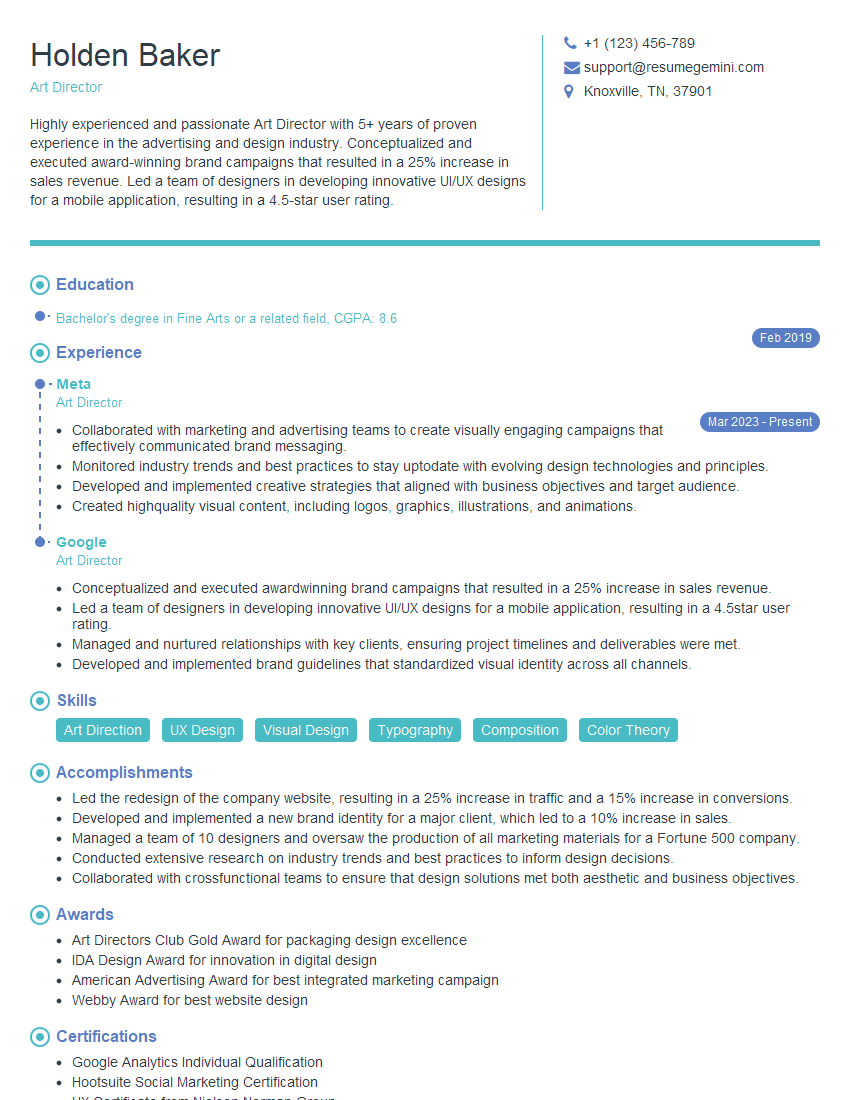
Art Director Resume Sample
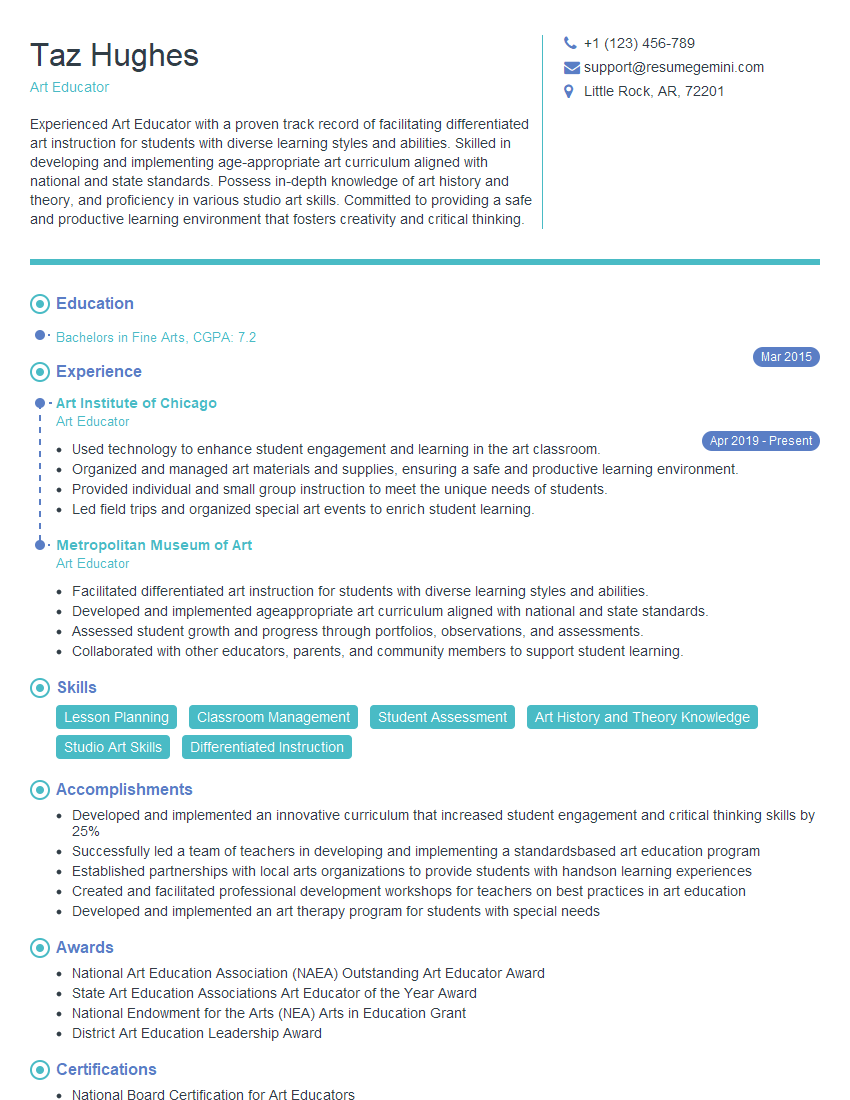
Art Educator Resume Sample
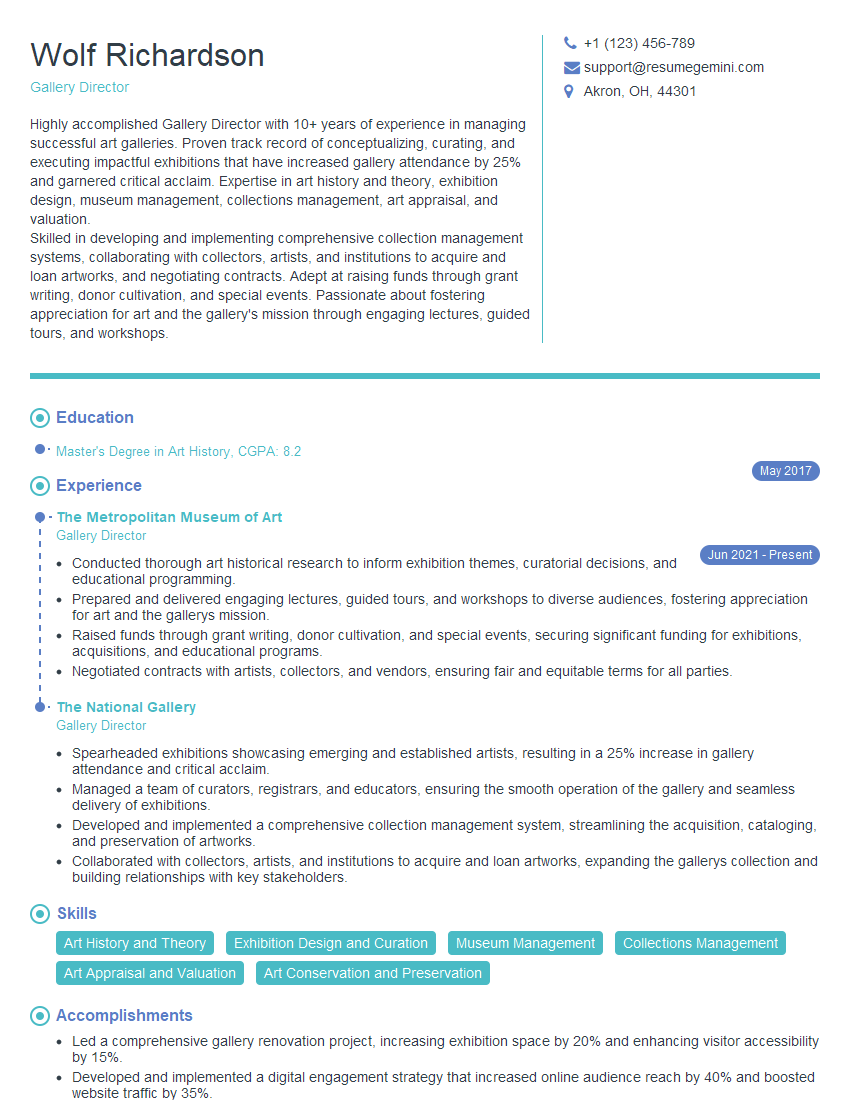
Gallery Director Resume Sample
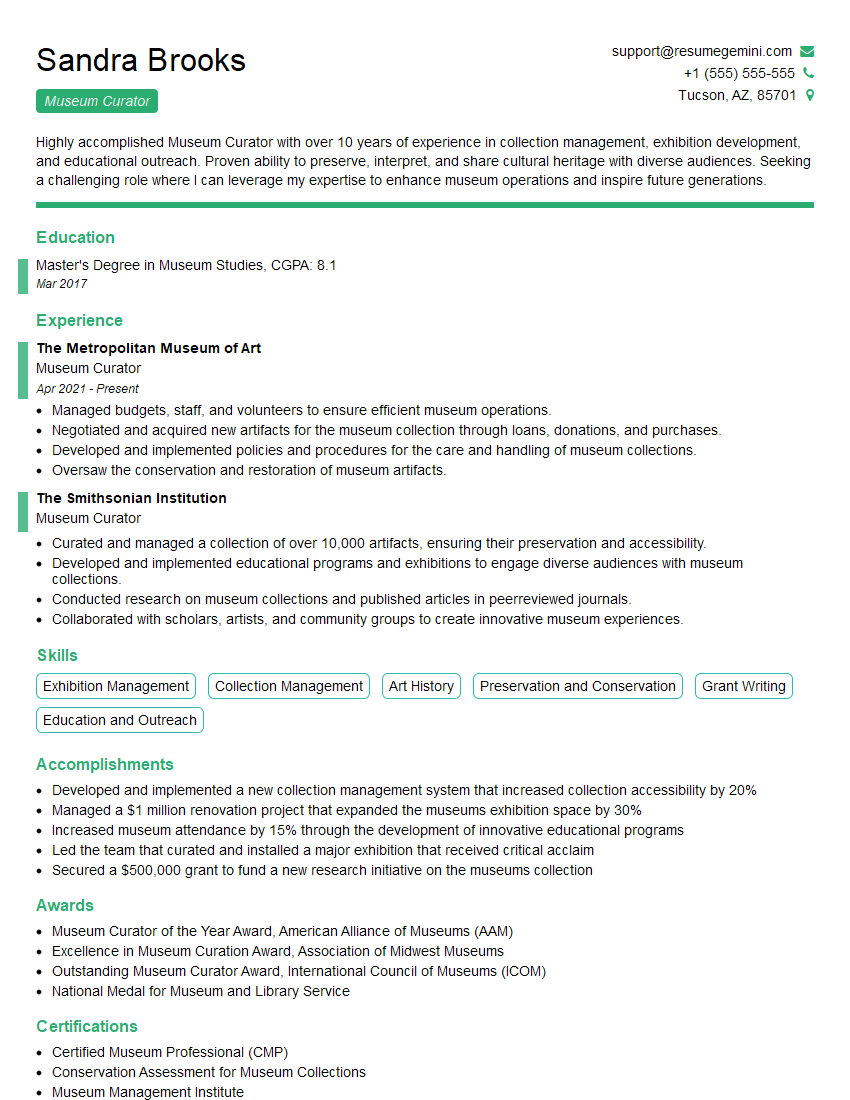
Museum Curator Resume Sample
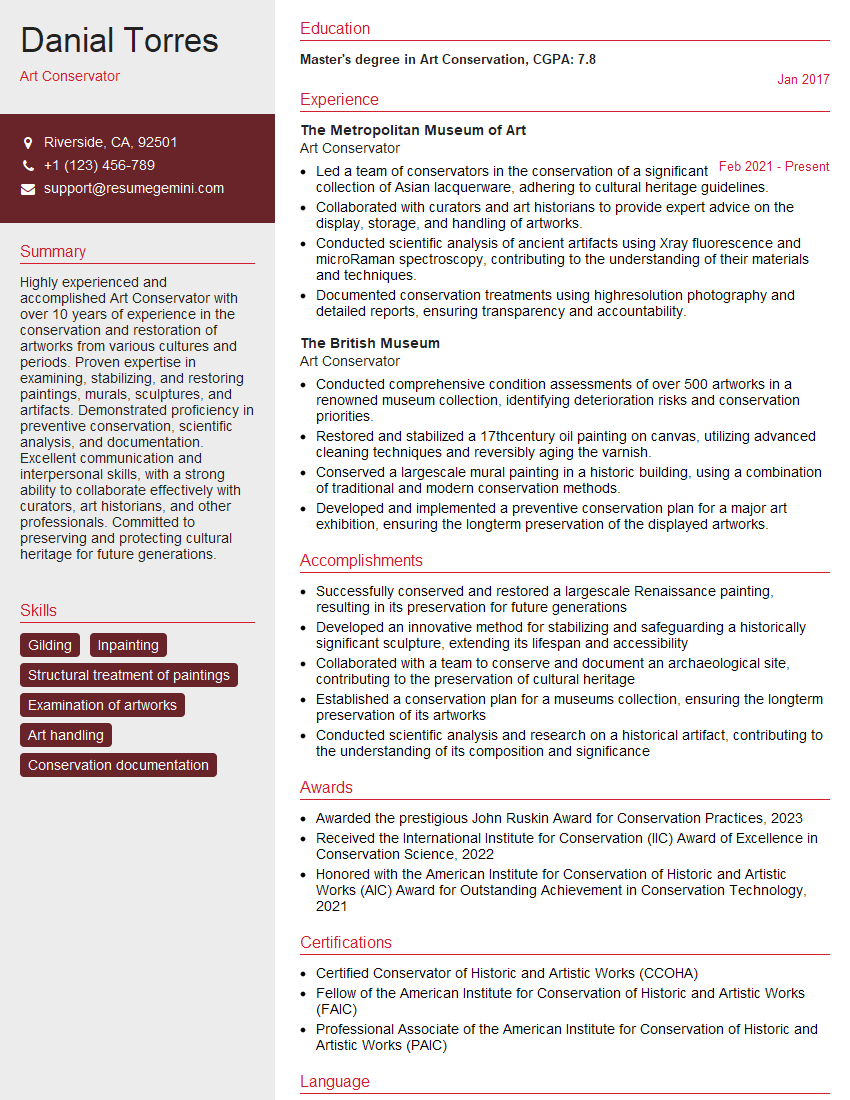
Art Conservator Resume Sample
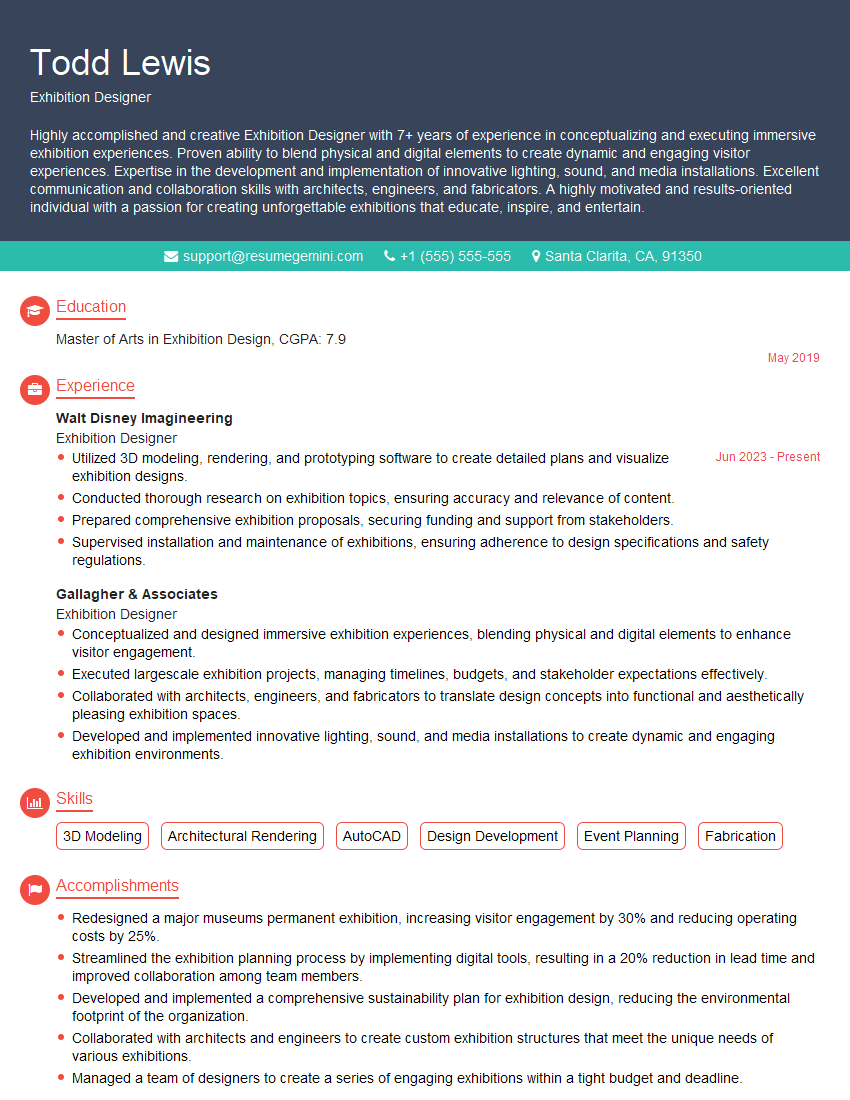
Exhibition Designer Resume Sample
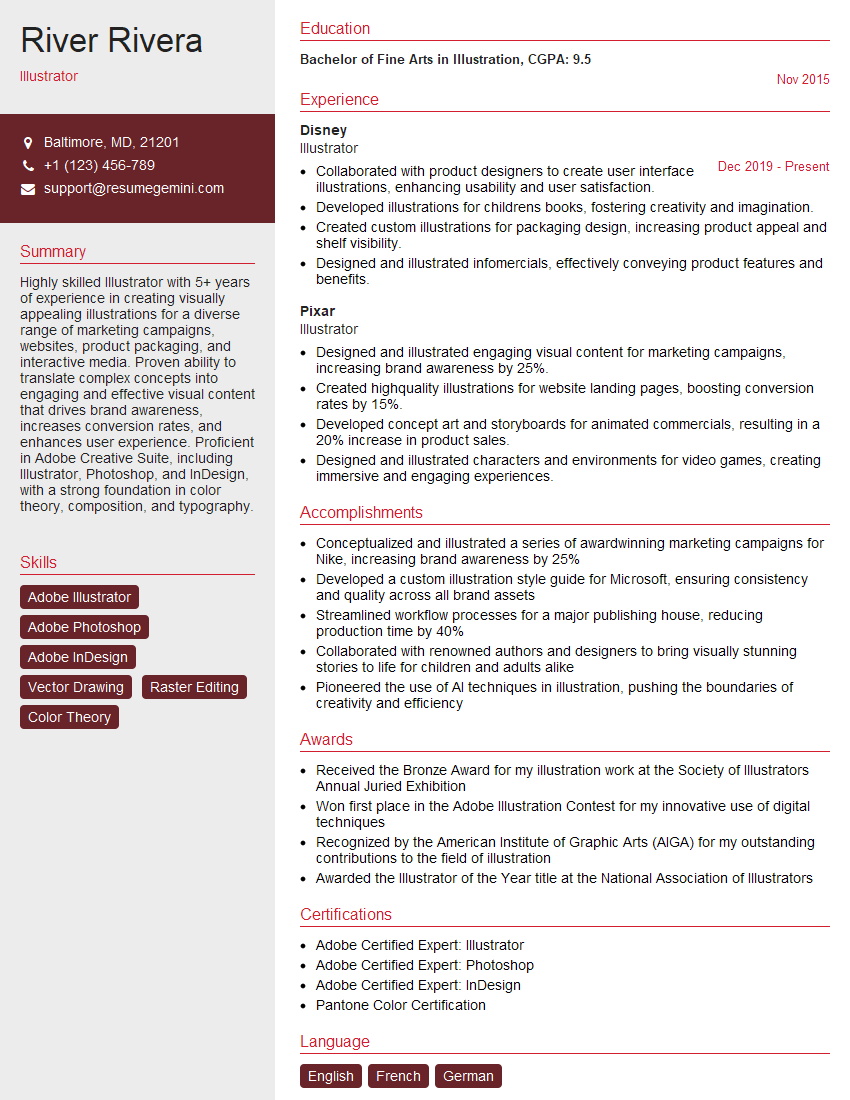
Illustrator Resume Sample
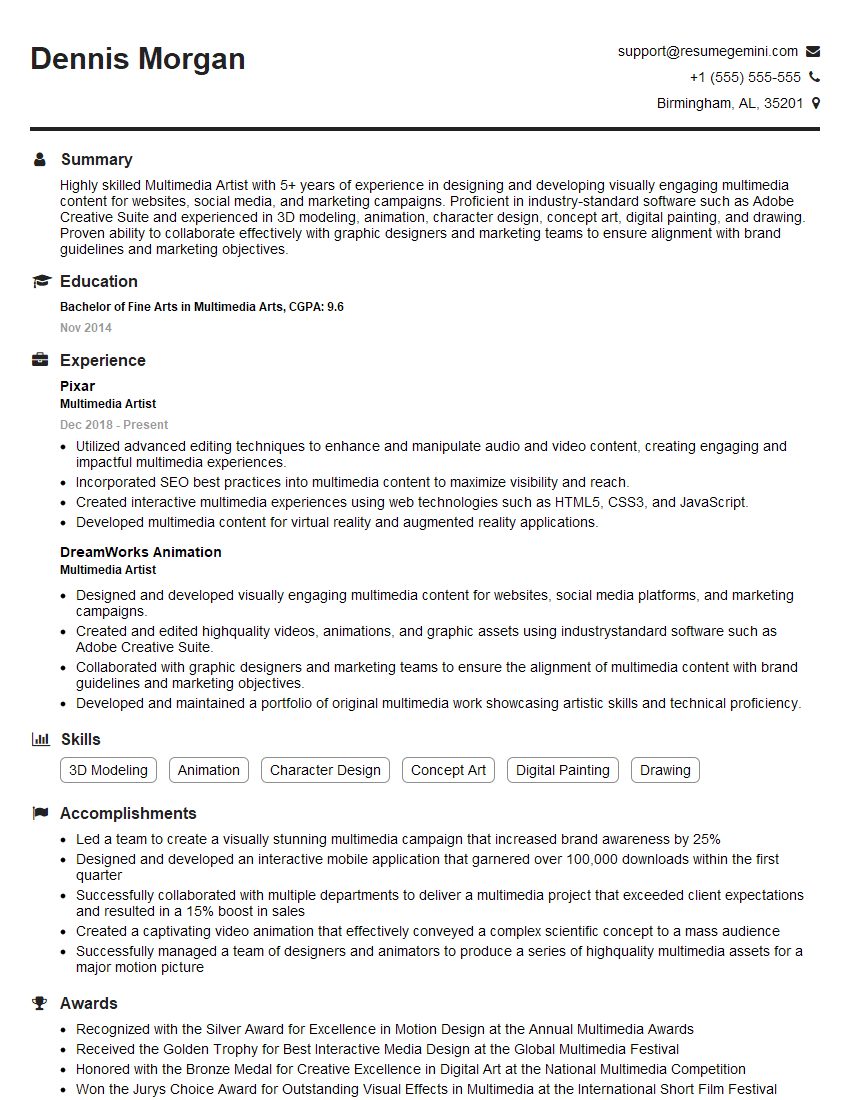
Multimedia Artist Resume Sample
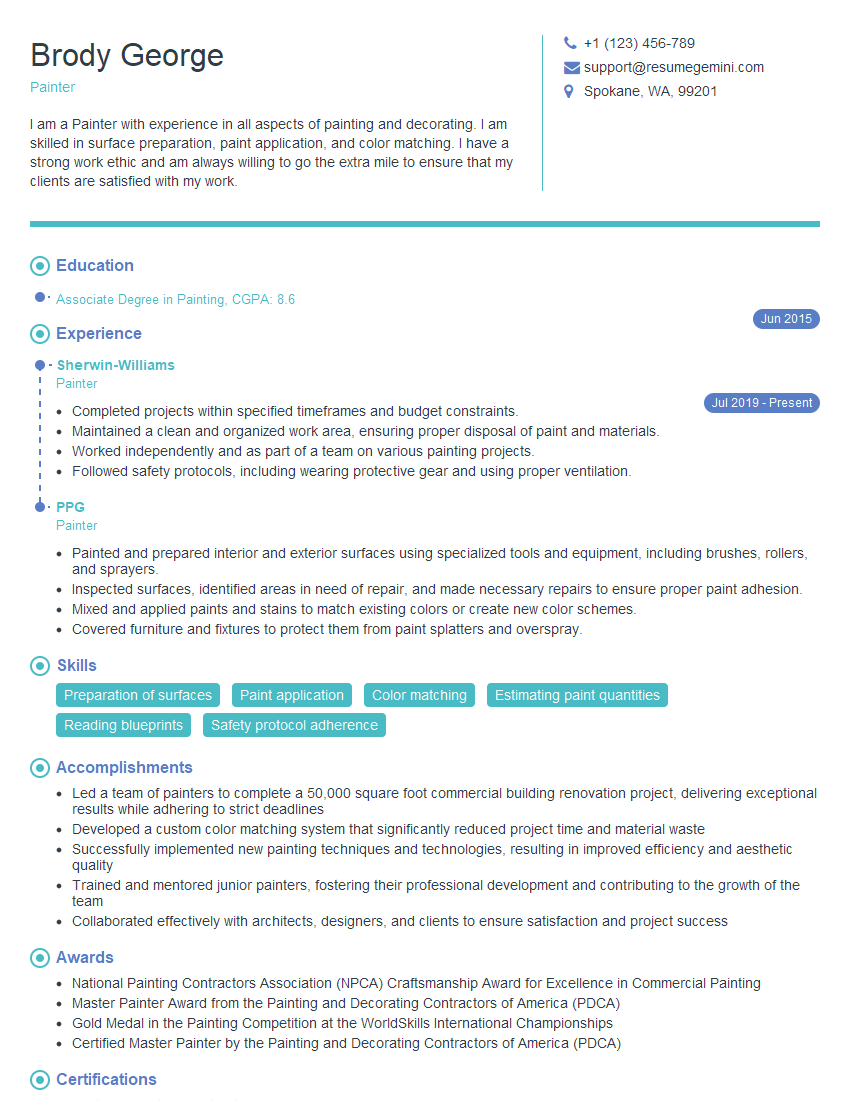
Painter Resume Sample
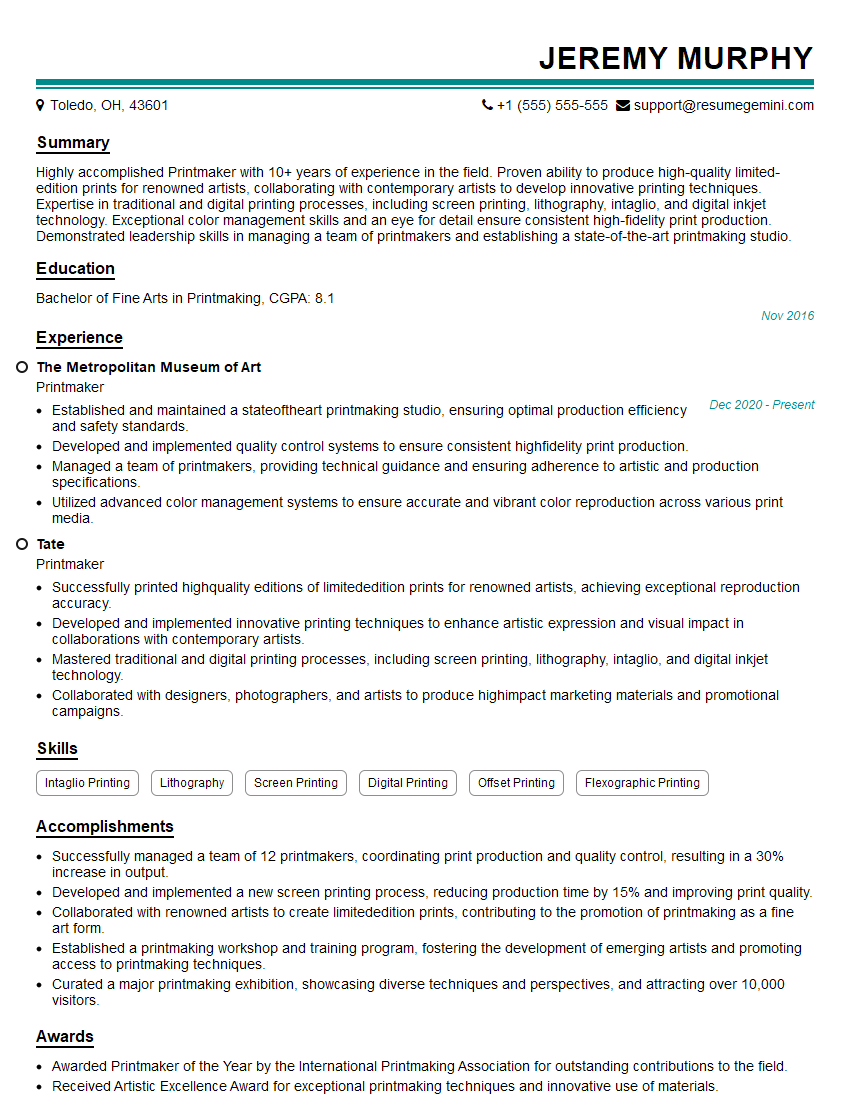
Printmaker Resume Sample
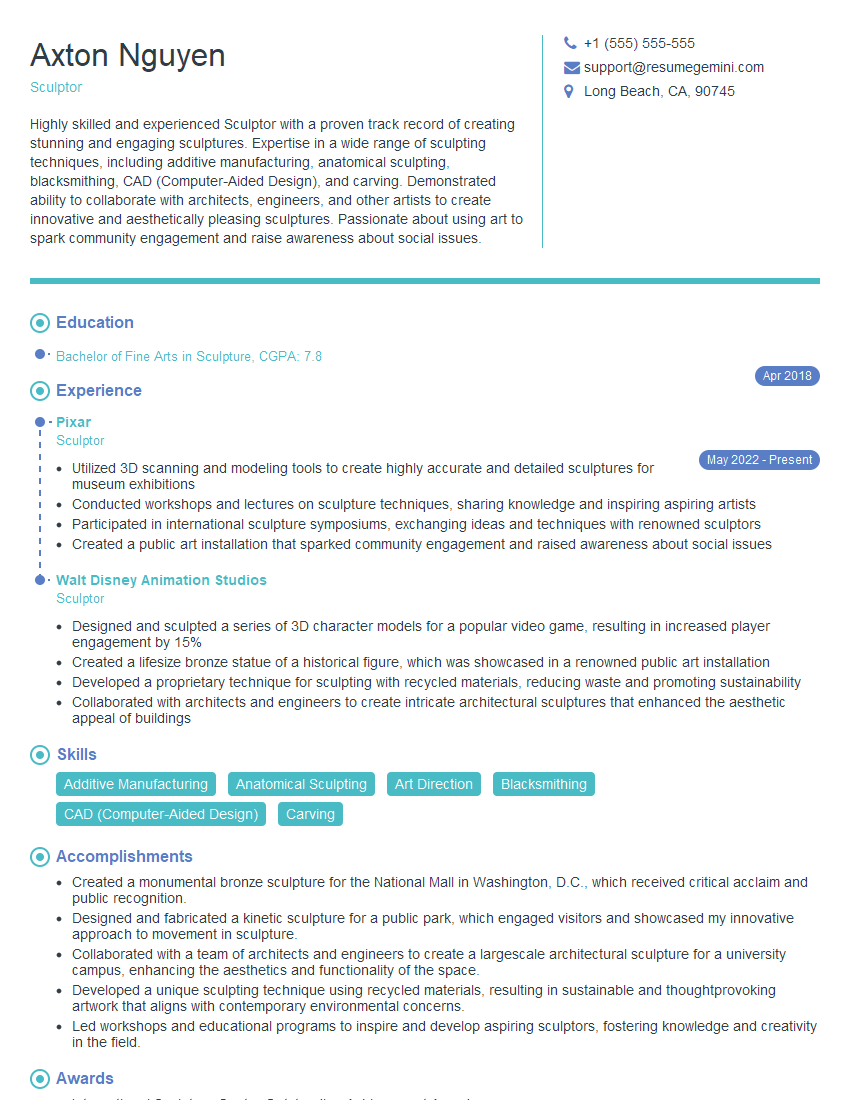
Sculptor Resume Sample
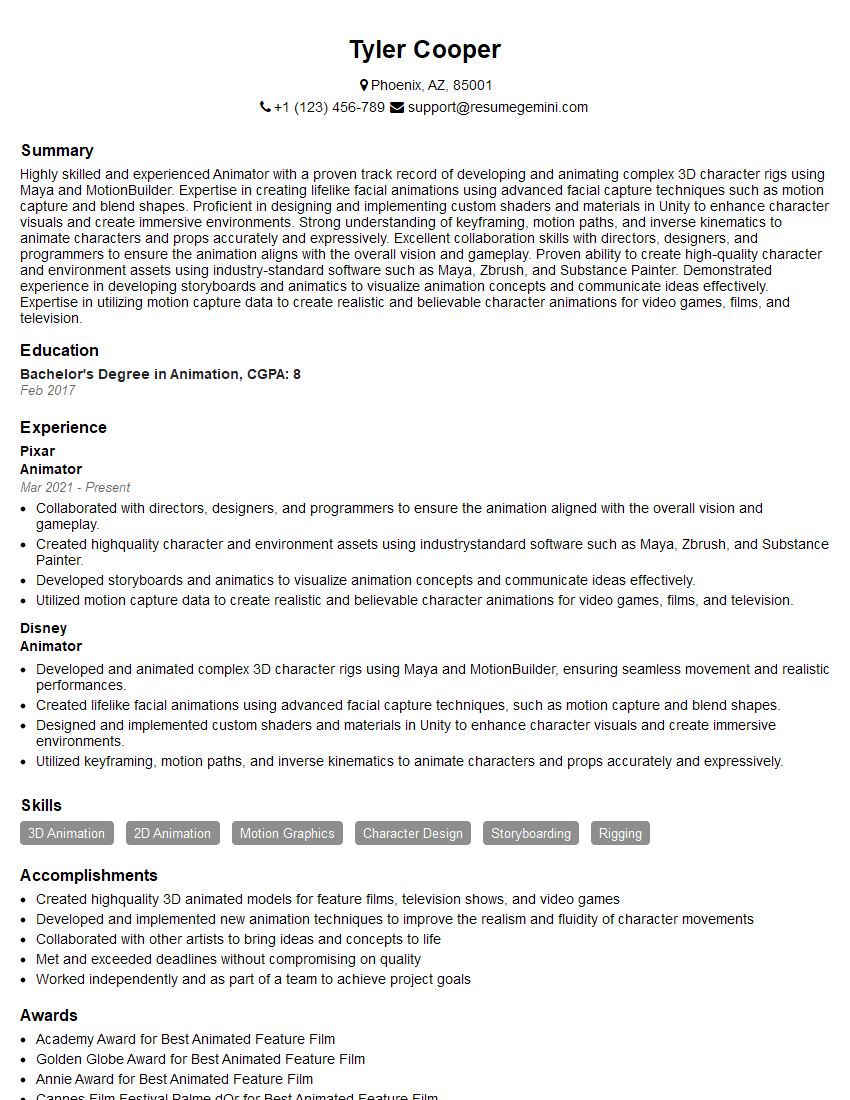
Animator Resume Sample
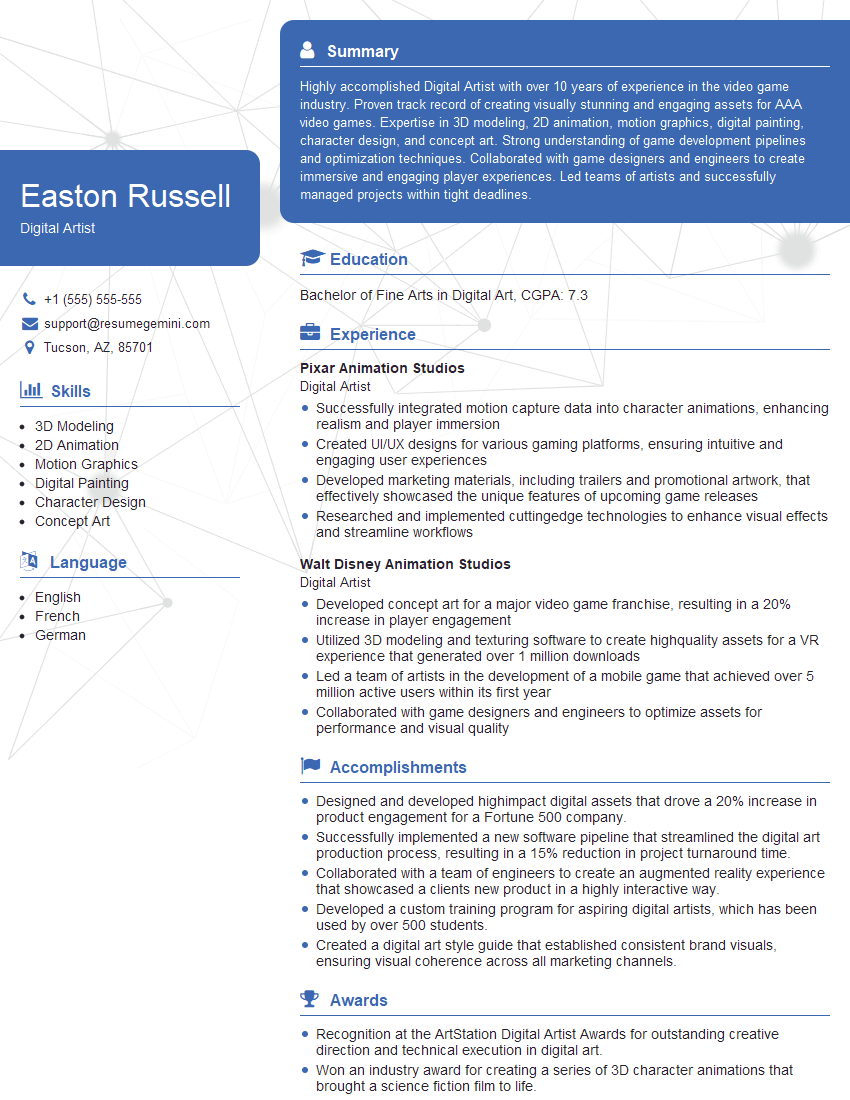
Digital Artist Resume Sample
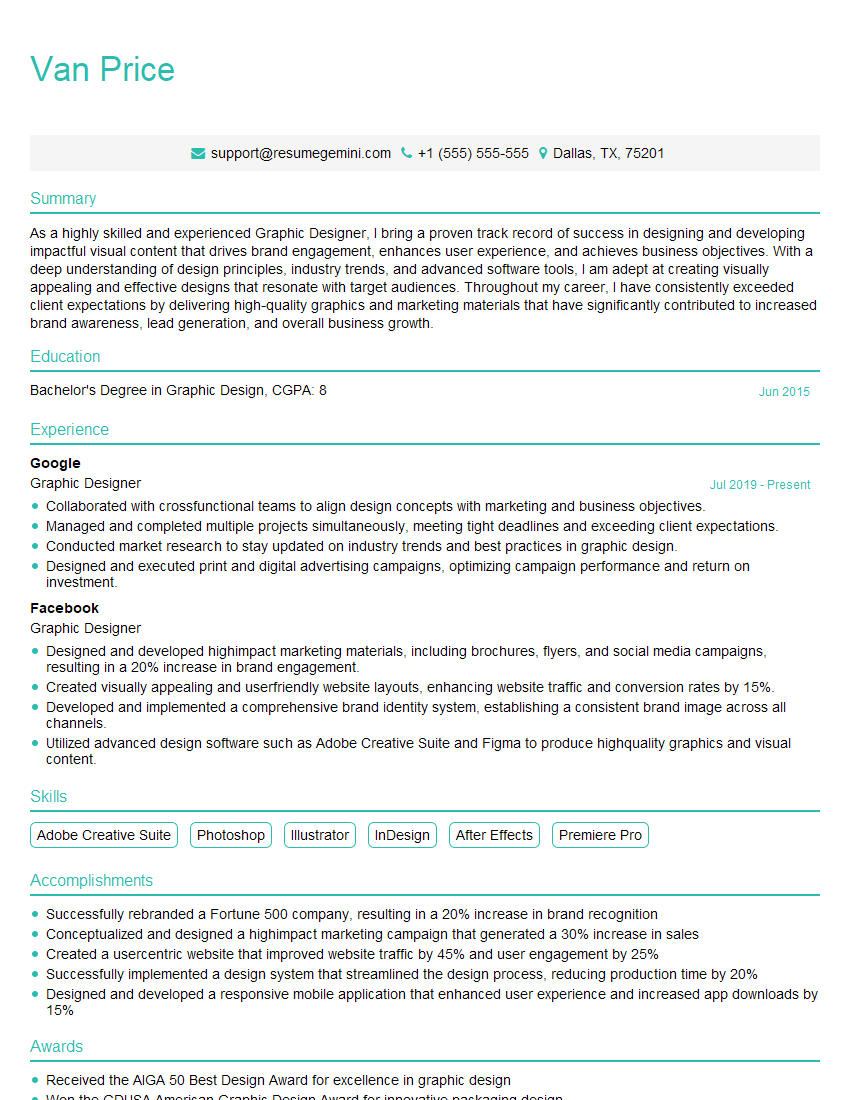
Graphic Designer Resume Sample
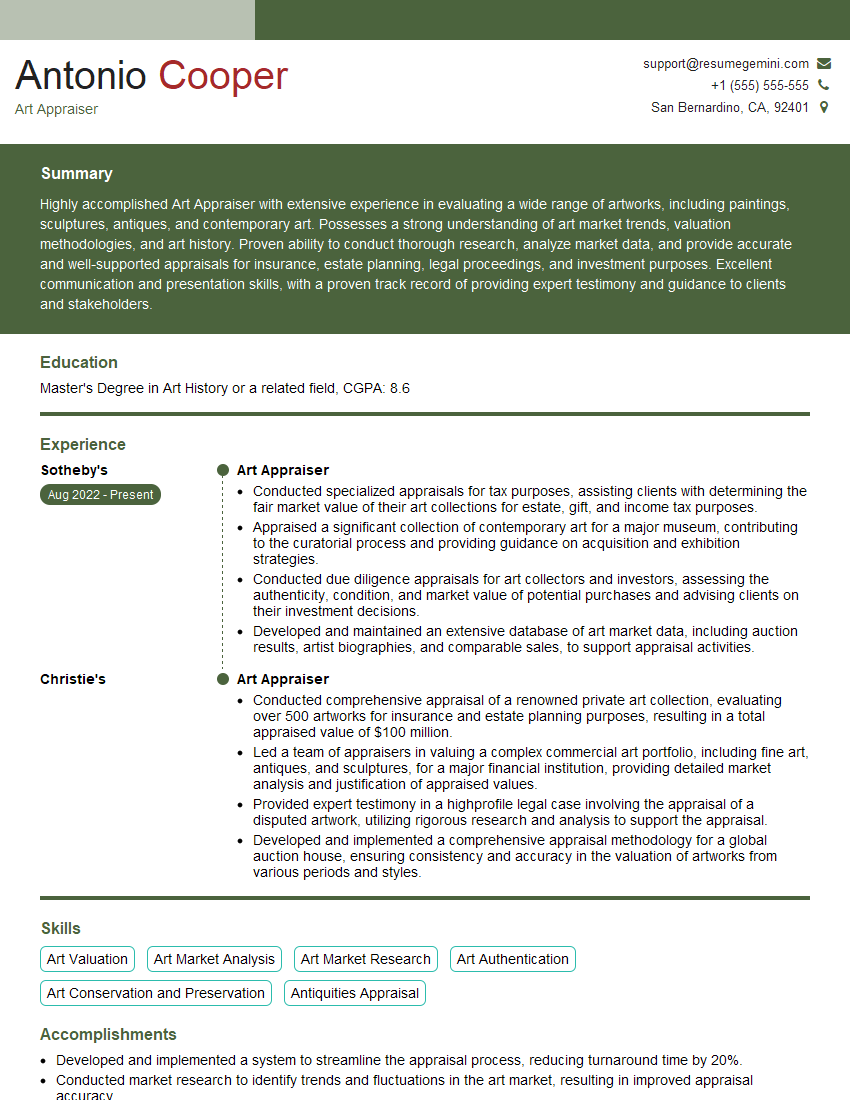
Art Appraiser Resume Sample
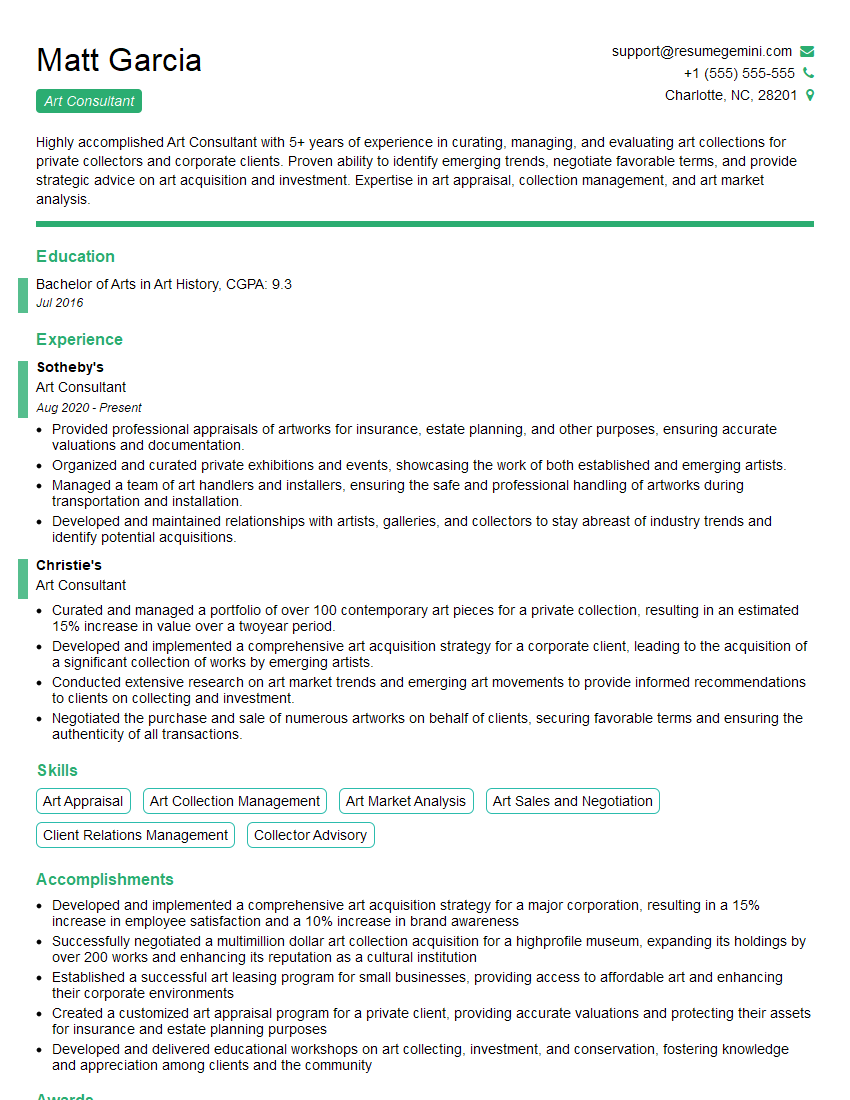
Art Consultant Resume Sample
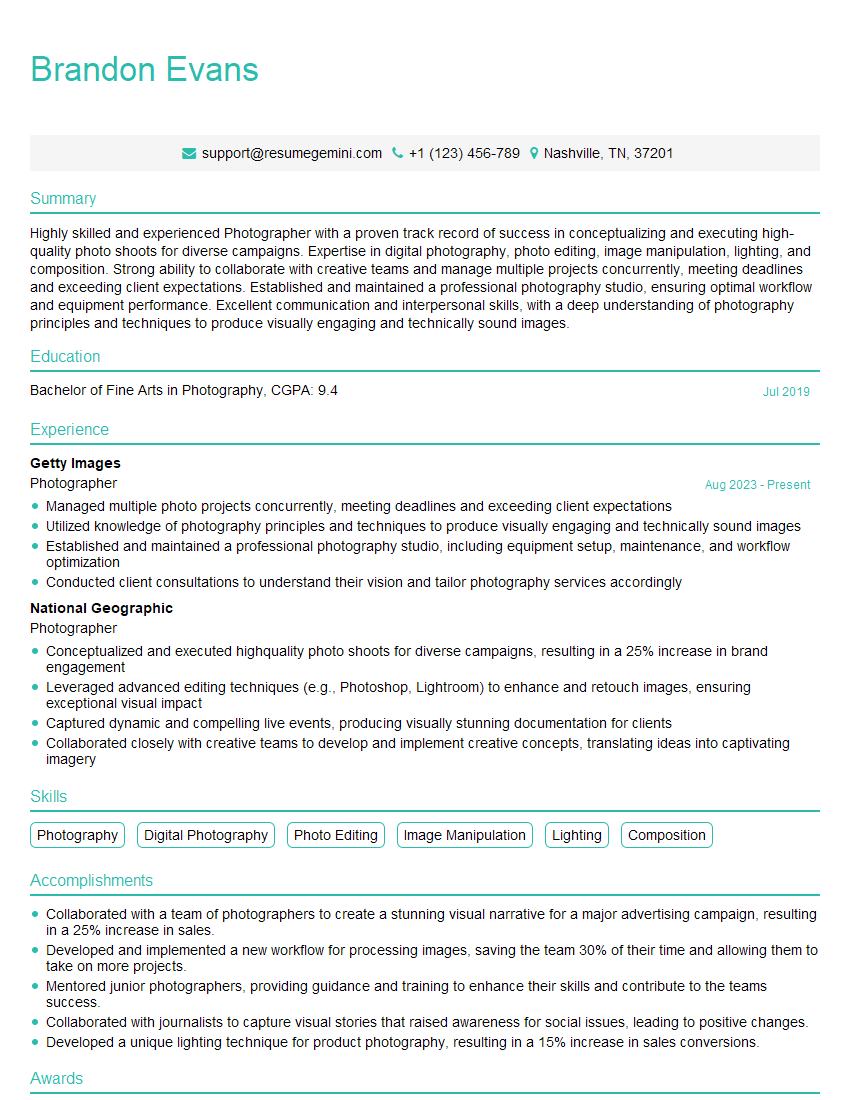
Photographer Resume Sample
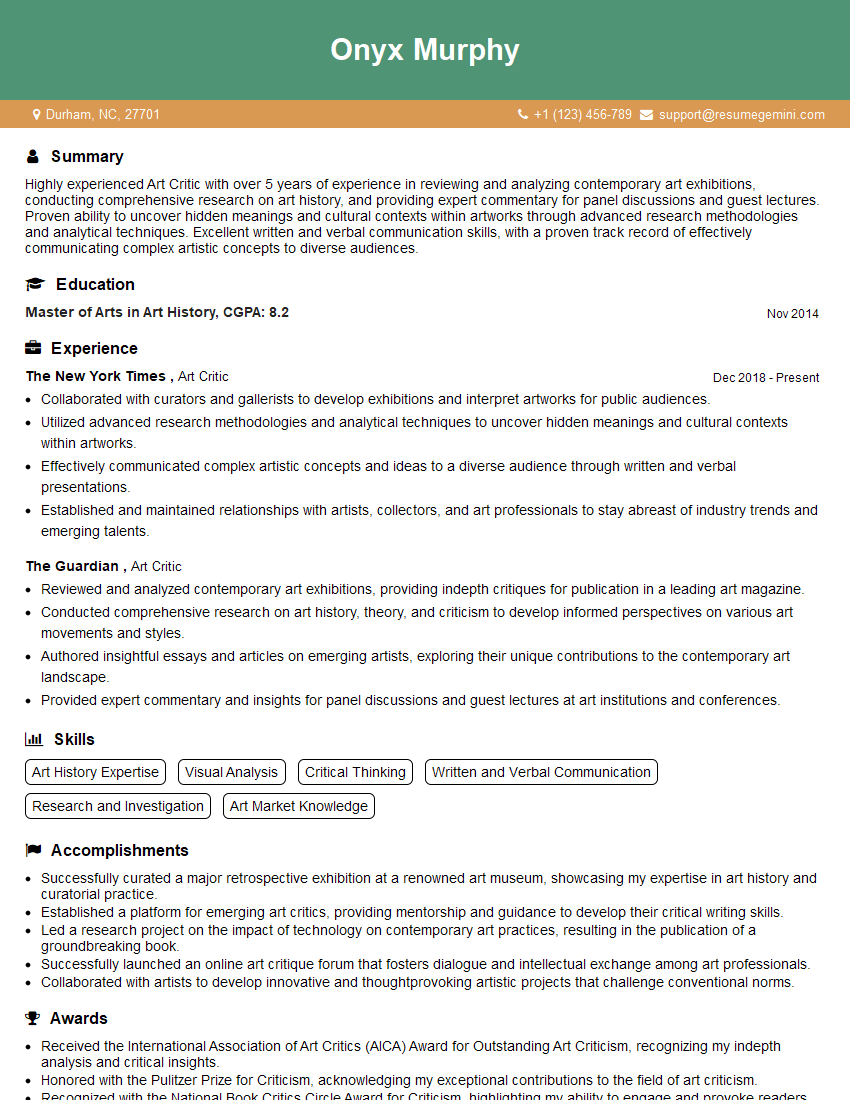
Art Critic Resume Sample
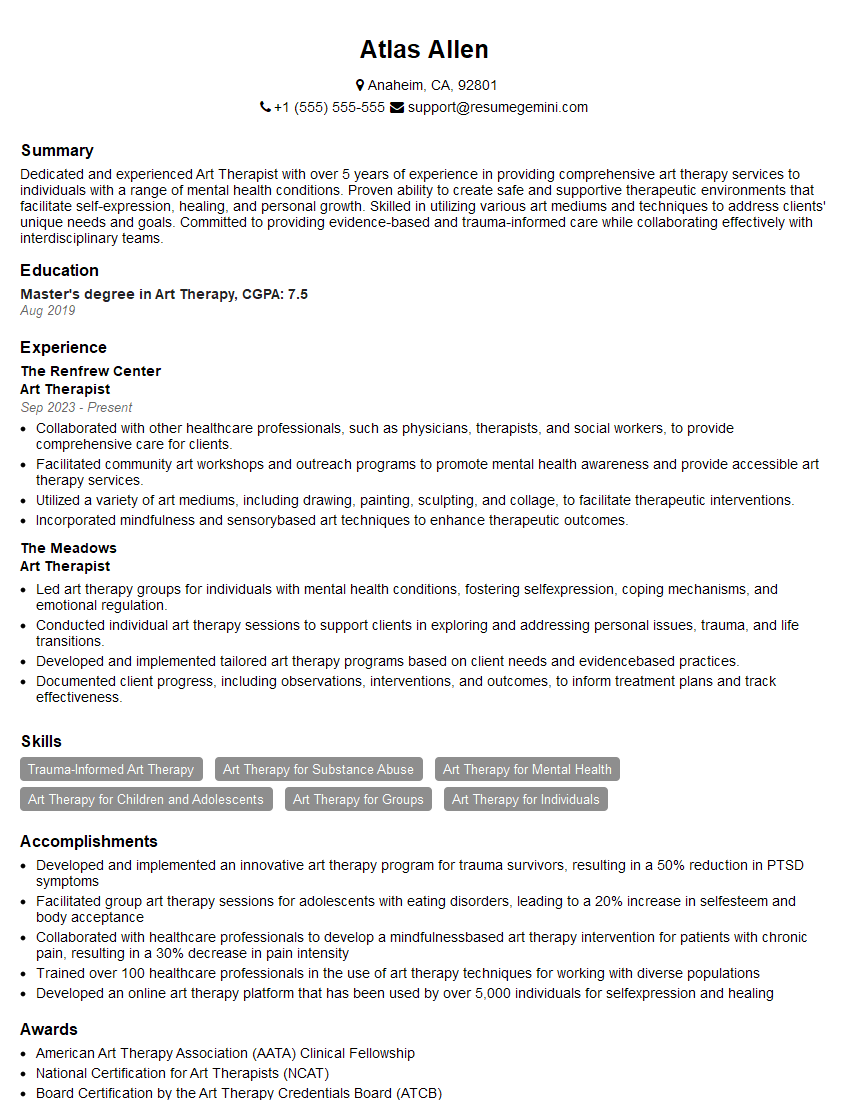
Art Therapist Resume Sample
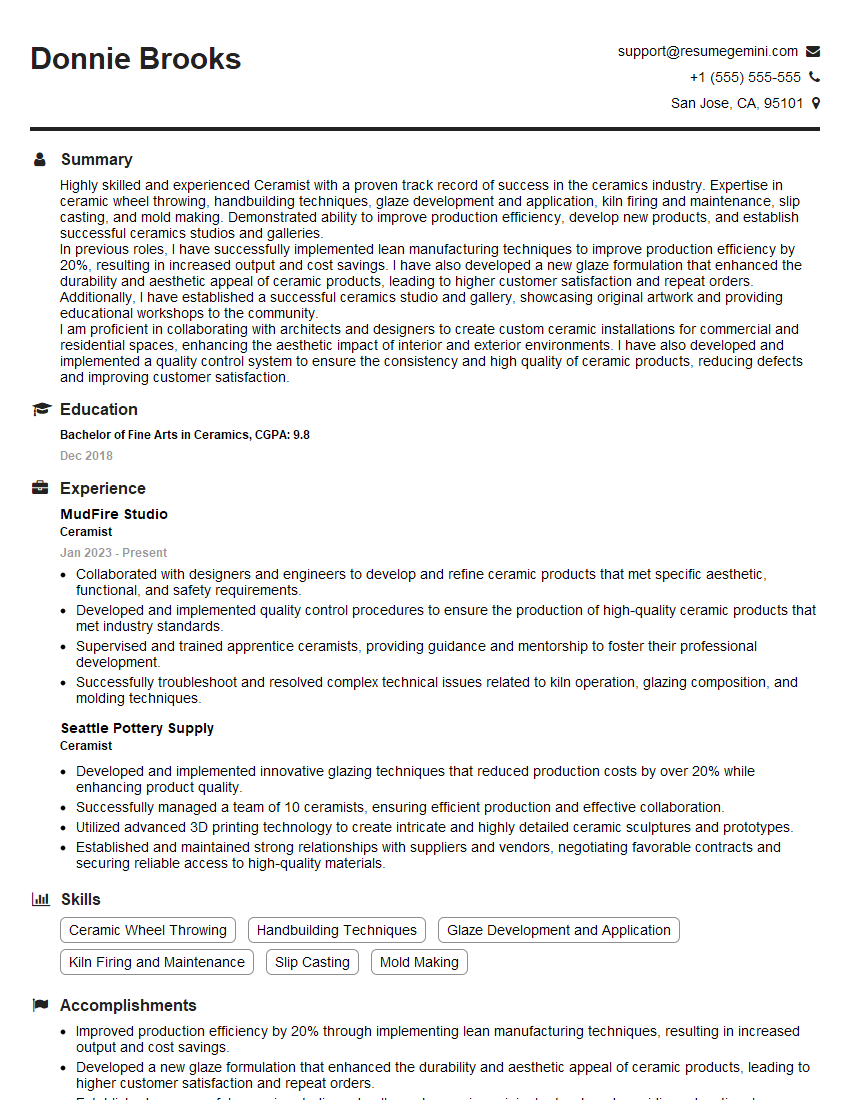
Ceramist Resume Sample
Explore more articles
Users Rating of Our Blogs
Share Your Experience
We value your feedback! Please rate our content and share your thoughts (optional).
What Readers Say About Our Blog
Very informative content, great job.
good