Are you ready to stand out in your next interview? Understanding and preparing for Fine Wire Wrapping interview questions is a game-changer. In this blog, we’ve compiled key questions and expert advice to help you showcase your skills with confidence and precision. Let’s get started on your journey to acing the interview.
Questions Asked in Fine Wire Wrapping Interview
Q 1. Explain the different types of fine wire used in wrapping and their applications.
Fine wire used in wrapping comes in various materials and gauges, each suited for specific applications. The choice depends on factors like the required strength, conductivity, flexibility, and resistance to corrosion or high temperatures.
- Copper: Highly conductive, commonly used in electronics for winding coils, transformers, and inductors. Its softness makes it relatively easy to work with, but it can be prone to work hardening.
- Silver: Offers even higher conductivity than copper, often used in high-frequency applications where minimal signal loss is crucial, or where corrosion resistance is paramount. However, it is considerably more expensive.
- Gold: Excellent corrosion resistance and conductivity, ideal for applications requiring long-term reliability and high performance, often seen in aerospace and specialized electronics. It’s also very expensive and softer than copper.
- Nickel: Known for its strength and corrosion resistance. It’s often used in situations requiring durability and resistance to harsh environments.
- Platinum: Used in demanding applications requiring exceptional resistance to high temperatures and corrosion. Its high cost limits its usage to specialized industries.
- Different Gauge Sizes: The gauge number indicates wire thickness; smaller numbers mean thicker wire. Selecting the correct gauge is critical – too thick can lead to inefficient windings, while too thin can be fragile and prone to breakage.
For instance, in crafting a small transformer, copper wire of a specific gauge would be chosen for its conductivity. In contrast, a high-reliability sensor might use gold wire for its corrosion resistance and consistent performance.
Q 2. Describe the process of preparing fine wire for wrapping.
Preparing fine wire for wrapping is crucial for achieving high-quality results. It involves several steps designed to optimize the wire’s properties and prevent issues during the wrapping process.
- Cleaning: Removing any dirt, oil, or coating from the wire is essential for ensuring good adhesion and preventing breaks. This can be done using solvents or specialized wire cleaning brushes.
- Measuring and Cutting: Accurate measurement is paramount; the correct length minimizes waste and simplifies the wrapping process. A sharp cutting tool is vital to prevent fraying.
- Annealing (Optional): For certain applications, particularly those involving hard wire materials, annealing can improve ductility and make the wire easier to wrap. Annealing involves heating the wire to a specific temperature to relieve internal stresses, followed by slow cooling.
- Pre-forming (Optional): Depending on the wrapping pattern, pre-forming loops or shapes can simplify and expedite the winding process.
- Preparing the End: A clean, smooth termination at the end of the wire is crucial for secure attachment to the mandrel or core component.
Imagine trying to wrap a wire that’s coated with grease—it would slip and slide, making a consistent wrap impossible. Proper preparation ensures a smooth and efficient process.
Q 3. What are the common methods of fine wire wrapping?
Several methods exist for fine wire wrapping, each offering advantages depending on the application and the desired outcome.
- Manual Wrapping: This involves using a simple hand-held tool to wrap the wire around a core. It’s versatile and cost-effective, but it can be time-consuming and prone to inconsistencies, especially for complex patterns.
- Machine Wrapping: Automated wrapping machines offer high speed, precision, and consistency, especially for mass production. They’re essential for creating uniform coils with complex designs.
- Coil Winding Machines: These are specialized machines designed to wind fine wire onto bobbins or form specific coil configurations with high precision. They are used extensively in the manufacturing of transformers, inductors, and other electromagnetic components.
Consider the scale of your project. Manual wrapping might be sufficient for a few prototype circuits, while an automated system would be needed for mass production of electronic components.
Q 4. Explain the importance of wire tension control during the wrapping process.
Maintaining consistent wire tension is absolutely critical for achieving reliable and high-quality wraps. Incorrect tension can lead to several issues.
- Loose Wraps: Insufficient tension results in loose, uneven windings that are unstable and prone to unraveling. This reduces the overall strength and may lead to electrical shorts or malfunction.
- Tight Wraps: Excessive tension can cause the wire to break, distort the shape of the core, or damage the insulation. It can also lead to inconsistencies in the coil’s structure.
- Uneven Wraps: Inconsistent tension produces irregular spacing between windings, affecting the performance characteristics of the component, especially in applications requiring precise inductance or capacitance.
Think of it like winding a spring: Too loose, and the spring is weak; too tight, and it breaks. Controlled tension is the key to creating a resilient and reliable coil.
Q 5. How do you ensure the quality and consistency of your fine wire wraps?
Ensuring quality and consistency in fine wire wraps involves careful attention to detail throughout the entire process.
- Wire Selection: Using high-quality wire from reputable suppliers is the foundation. Inspect the wire for any defects before use.
- Proper Preparation: Following the preparation steps meticulously eliminates many potential problems.
- Tension Control: Consistent wire tension control during wrapping ensures uniform spacing and strength.
- Regular Inspection: Periodically inspecting the wraps during the process identifies any issues early on.
- Testing: After completing the wrapping, testing the component’s performance verifies it meets the required specifications.
- Documentation: Maintaining detailed records of each step helps track results, troubleshoot issues, and improve future processes.
Imagine baking a cake: Using fresh ingredients, following the recipe carefully, and regularly checking on the cake ensure a perfect result. Similar attention to detail is vital for consistent wire wraps.
Q 6. What are the common problems encountered during fine wire wrapping, and how do you troubleshoot them?
Several problems can arise during fine wire wrapping. Early detection and proper troubleshooting are crucial.
- Wire Breakage: This usually results from excessive tension, poor wire quality, or sharp bends. Troubleshooting involves checking tension, wire condition, and the wrapping method.
- Uneven Winding: Inconsistent tension or incorrect machine settings can cause this. Addressing the tension control mechanisms and calibrating machines as needed are vital steps.
- Loose Winding: Insufficient tension leads to this problem, potentially causing instability and malfunction. Adjusting the tension to the proper setting is the solution.
- Wire Kinking or Snagging: Improper handling or wire defects can cause kinks. Careful handling and attention to wire quality will prevent this issue.
- Mandrel Damage: Excessive tension can damage the mandrel. Using a properly sized mandrel and careful tension control are key solutions.
Think of it as detective work: Observing the symptoms (e.g., broken wire, uneven windings), identifying the cause, and implementing the right corrective action.
Q 7. Describe your experience with different types of wire wrapping tools and equipment.
My experience encompasses a wide range of wire wrapping tools and equipment, from simple hand tools to sophisticated automated systems.
- Hand-held Wrapping Tools: I’m proficient with various hand tools, allowing for flexibility in handling different wire gauges and wrapping patterns. This offers cost-effectiveness for small-scale projects or prototype development.
- Automated Coil Winding Machines: I have extensive experience operating and maintaining automated coil winding machines capable of high-speed, high-precision winding, crucial for mass production environments. This includes programming and troubleshooting these sophisticated machines.
- Wire Dispensing Systems: I’m familiar with different wire dispensing systems, ensuring smooth and consistent wire feeding for automated processes. This contributes greatly to efficiency and quality control.
- Tension Controllers: I’ve worked with various types of tension controllers, from simple mechanical devices to sophisticated electronic systems with feedback loops. This proficiency allows for fine-tuned tension adjustments depending on the application and wire characteristics.
The selection of tools depends entirely on the scale and complexity of the project. For example, simple hand tools are suitable for small-scale prototyping, whereas automated machines become essential for large-volume production.
Q 8. How do you determine the appropriate wire gauge for a specific application?
Selecting the right wire gauge is crucial in fine wire wrapping. It’s a balancing act between strength, flexibility, and the space available. We consider several factors:
- Application requirements: The amount of current the wire needs to carry dictates the minimum gauge. Thicker wires (lower gauge numbers) handle more current. For example, a high-power application would need a much thicker wire than a low-power sensor.
- Space constraints: The available space for wrapping directly influences the maximum gauge. Tight spaces necessitate thinner wires (higher gauge numbers).
- Mechanical strength: The wire needs to withstand the stresses of winding and operational forces. Smaller gauge wires are more susceptible to breakage under stress, so we might choose a slightly thicker gauge for high-vibration or impact applications.
- Material properties: The choice of material (copper, silver, etc.) also plays a role. Silver, for example, offers superior conductivity but might be more fragile.
For instance, I recently worked on a project where we needed to wrap a miniature coil for a medical device. The limited space required a 36 AWG wire, but we opted for 34 AWG to ensure robustness despite the higher current requirements.
Q 9. Explain the importance of safety precautions when working with fine wire.
Safety is paramount in fine wire wrapping, especially due to the small size and potential for sharp edges. Our safety protocols are stringent and cover:
- Eye protection: Safety glasses are mandatory to prevent eye injuries from wire fragments or debris.
- Cut protection: Gloves are worn to protect hands from cuts and abrasions, particularly when handling sharp wire ends.
- Proper ventilation: Fine wire wrapping often involves soldering, which produces fumes. Adequate ventilation is crucial to prevent inhalation of hazardous gases.
- ESD precautions: Static electricity can damage sensitive components, so anti-static mats and grounding straps are utilized, especially when working with electronics.
- Ergonomics: Maintaining a proper posture and avoiding repetitive strain injuries through regular breaks and appropriate workstation setup is crucial.
A memorable incident involved a colleague accidentally getting a small piece of wire in their eye. It was a minor injury, but it served as a stark reminder that even a small oversight can lead to significant consequences. Since then, we’ve reinforced the importance of eye protection in our training.
Q 10. How do you ensure the durability and reliability of your wire wraps?
Durability and reliability are ensured through several key practices:
- Proper tension control: Consistent tension during winding is essential to prevent loose wraps that could lead to failure. We use specialized winding tools to maintain uniform tension.
- Secure terminations: Proper soldering and crimping techniques ensure robust connections and prevent the wires from coming loose.
- Strain relief: Implementing stress-relieving techniques, such as using heat-shrink tubing or protective sleeving, protects the wires from external forces.
- Quality materials: We only use high-quality wire materials from reputable suppliers to guarantee reliability and longevity.
- Thorough testing: We conduct rigorous testing, including vibration testing and electrical testing, to ensure the integrity of the wraps under various conditions.
In one project involving a satellite component, our robust wrapping techniques ensured the system performed flawlessly under extreme temperature fluctuations and high vibrations during launch.
Q 11. What are the key differences between manual and automated wire wrapping?
Manual and automated wire wrapping differ significantly in efficiency, precision, and cost.
- Manual wrapping: This method involves using hand tools to wrap the wire around terminals. It is suitable for low-volume production and prototyping, offers greater flexibility, and is less expensive upfront. However, it’s slower, less consistent, and prone to human error.
- Automated wrapping: This uses automated machines to perform the wrapping process. It is significantly faster and more precise than manual wrapping, resulting in higher consistency and better reliability. This method is ideal for high-volume production but necessitates a higher initial investment in equipment and specialized training.
Think of it like baking a cake: manual wrapping is like carefully icing a cake by hand – it allows for creativity and detail, but is time-consuming. Automated wrapping is like using a cake decorating machine – efficient and consistent, but less customizable.
Q 12. Describe your experience with different types of wire terminations.
I have extensive experience with a variety of wire terminations:
- Soldering: A common method for creating robust and reliable connections. The choice of solder and flux is crucial for optimal results, depending on the wire material and application.
- Crimping: This involves using a crimping tool to secure the wire to a terminal. It’s quick and efficient but requires careful selection of crimps to ensure a secure and reliable connection. Incorrect crimping leads to loose connections and potential failures.
- Welding: Used for high-current applications where soldering might not be sufficient, welding provides a very strong and secure connection.
- Mechanical connections: These involve using screws or other mechanical fasteners to secure the wire to terminals. They are useful in specific applications but might not be as reliable as soldering or crimping in high-vibration environments.
Choosing the right termination method is paramount. For example, for high-frequency circuits, soldering is preferred over crimping to minimize impedance mismatches.
Q 13. How do you inspect your finished fine wire wraps for defects?
Inspection of finished wire wraps is crucial for quality control. Our inspection process includes:
- Visual inspection: Checking for loose wraps, broken wires, incorrect routing, and any signs of damage.
- Continuity testing: Using a multimeter to verify that there are no breaks in the circuit.
- Insulation resistance testing: Ensuring sufficient insulation between wires to prevent short circuits.
- Pull testing: Testing the strength of the connections to ensure they can withstand external forces.
- Dimensional inspection: Verifying that the wrapped coils meet the required specifications.
We maintain detailed records of our inspection findings, enabling us to track defects, identify trends, and improve our processes continuously. A statistical process control (SPC) approach is also used to monitor and manage our quality.
Q 14. What are the industry standards and best practices for fine wire wrapping?
Industry standards and best practices for fine wire wrapping vary depending on the application (e.g., aerospace, automotive, medical). However, some key principles are universal:
- Compliance with relevant standards: Adhering to standards such as IPC-A-610 (for electronic assemblies) helps ensure quality and reliability.
- Use of appropriate tools and equipment: Investing in high-quality tools and equipment enhances efficiency and consistency.
- Proper documentation and traceability: Maintaining detailed documentation, including material specifications, process parameters, and inspection results, is crucial for accountability and troubleshooting.
- Continuous improvement: Regularly evaluating and refining processes through data analysis and feedback is essential for maximizing efficiency and minimizing defects.
- Employee training and certification: Skilled technicians are fundamental to ensure high-quality workmanship. Proper training and certifications validate the proficiency of the workforce.
Following these best practices not only ensures the quality of the finished product but also enhances the safety and efficiency of the entire process.
Q 15. Explain your experience with different types of bonding materials.
Choosing the right bonding material is crucial in fine wire wrapping, as it directly impacts the strength, durability, and overall reliability of the connection. My experience encompasses a wide range of materials, each with its own strengths and weaknesses.
- Epoxy resins: These are versatile and widely used, offering good strength and chemical resistance. I’ve used various epoxy types, from fast-curing for quick turnaround times to specialized low-viscosity epoxies for filling tiny gaps between wires and components. For instance, in a recent project involving micro-sensor assembly, a low-viscosity epoxy was critical to avoid damaging the delicate sensor structure.
- UV-curable adhesives: These are excellent for applications requiring rapid curing and precise control. The ability to cure with UV light allows for localized bonding, which is especially useful in densely packed assemblies. I find them particularly beneficial when working with temperature-sensitive components, as the curing process doesn’t generate significant heat.
- Soldering: While not strictly a bonding *material* in the same sense, soldering is essential for creating strong electrical connections in many fine wire applications. I’m proficient in various soldering techniques, including reflow soldering, for different wire gauges and materials. Proper flux selection is crucial here; I meticulously choose the right flux to avoid residue and ensure a clean connection.
- Specialized adhesives: I’ve also worked with specialized adhesives, such as conductive adhesives for electrically connecting components, or high-temperature adhesives for applications in harsh environments. The selection always depends on the specific requirements of the project, considering factors such as thermal cycling, chemical exposure, and required bond strength.
Career Expert Tips:
- Ace those interviews! Prepare effectively by reviewing the Top 50 Most Common Interview Questions on ResumeGemini.
- Navigate your job search with confidence! Explore a wide range of Career Tips on ResumeGemini. Learn about common challenges and recommendations to overcome them.
- Craft the perfect resume! Master the Art of Resume Writing with ResumeGemini’s guide. Showcase your unique qualifications and achievements effectively.
- Don’t miss out on holiday savings! Build your dream resume with ResumeGemini’s ATS optimized templates.
Q 16. Describe your experience using a microscope for fine wire work.
A microscope is indispensable in fine wire wrapping, especially when dealing with wires thinner than 0.001 inches. My experience involves using both stereo and metallurgical microscopes depending on the task at hand. Stereo microscopes provide excellent depth perception, crucial for maneuvering wires and inspecting the quality of wraps and joints. Metallurgical microscopes with higher magnification are useful for detailed inspection of the bond after completion to identify any defects like voids or cracks.
For instance, during the assembly of a miniature pressure sensor, I used a stereo microscope to precisely position a 0.0005-inch diameter wire onto a tiny contact pad. The magnification allowed me to see and control the wire with extreme precision, ensuring a clean and reliable connection. Post-assembly, a quick inspection under a metallurgical microscope confirmed the integrity of the solder joint.
Q 17. How do you handle variations in wire diameter or material properties?
Variations in wire diameter and material properties are common challenges. My approach involves a combination of meticulous planning, careful execution, and adaptive techniques.
- Precise measurements: I always begin by precisely measuring the wire diameter using a calibrated micrometer. This prevents errors stemming from inaccurate estimations.
- Adjusted techniques: Different wire materials (gold, platinum, copper) require different wrapping techniques and soldering parameters. Thinner wires necessitate gentler handling and may require specialized tools like micro-tweezers. I’ve developed techniques that accommodate these variations, ensuring consistent quality across a range of materials and sizes. For example, I adjust the tension on the wire based on its material to prevent breakage during wrapping.
- Tool selection: I employ a variety of tools matched to the wire gauge and material. This includes specialized wire strippers, micro-soldering irons, and magnifiers to facilitate precise work. The right tool dramatically reduces the risk of damaging the wire or causing inconsistent wrapping.
- Testing and adjustment: I regularly test connections and make adjustments as needed during the process. This allows for early detection of issues and prevents errors from accumulating.
Q 18. Explain your process for documenting and tracking your work.
Thorough documentation and tracking are critical in fine wire wrapping, ensuring repeatability and traceability. My process involves a multi-pronged approach:
- Detailed work orders: Every project begins with a comprehensive work order that includes detailed specifications, wire gauge and material, component placement, and any specific assembly requirements. This document acts as a roadmap and reduces ambiguity.
- Visual documentation: I meticulously photograph each stage of the process. This allows for review and troubleshooting if problems arise. In addition, I create detailed diagrams showing wire routing and component placement, especially for complex assemblies.
- Digital tracking: I use a digital database (typically a spreadsheet or a dedicated project management tool) to record all relevant information, including material used, assembly time, and any issues encountered. This information facilitates efficient retrieval of historical data and aids in process improvement.
- Quality control checklists: I employ comprehensive checklists to verify that each step has been completed correctly. This includes visual inspection under magnification and, where appropriate, electrical testing.
Q 19. How do you manage multiple simultaneous wire wrapping tasks?
Managing multiple simultaneous fine wire wrapping tasks requires strong organizational skills and a structured approach. I typically employ these strategies:
- Prioritization: I prioritize tasks based on urgency and complexity, focusing on those with tighter deadlines or higher risk of failure first. This ensures timely completion and avoids bottlenecks.
- Dedicated workspaces: I maintain separate, clearly defined workspaces for each project, to prevent accidental mixing of components and materials. This minimizes errors and streamlines the workflow.
- Task segmentation: I break down complex projects into smaller, more manageable tasks. This makes the overall process less daunting and allows for better progress monitoring.
- Time management: I utilize time-blocking techniques to allocate specific time slots for each project, ensuring dedicated focus. This prevents switching between tasks too frequently, which can lead to errors and reduced efficiency.
Q 20. Describe a time you had to troubleshoot a complex fine wire wrapping issue.
In one project involving the assembly of a high-frequency circuit, I encountered intermittent signal loss. Initial inspection revealed no obvious problems with the wire wrapping or soldering. After systematically checking each connection under high magnification, I discovered a hairline crack in a solder joint, almost invisible to the naked eye. The crack was causing intermittent contact, leading to the signal loss.
My troubleshooting steps involved:
- Systematic elimination: I tested the circuit section by section to isolate the faulty area.
- Microscopic inspection: I used a metallurgical microscope to thoroughly examine each solder joint.
- Rework: The faulty joint was carefully reworked using a finer soldering iron and fresh solder, ensuring a clean and crack-free connection.
- Retesting: After rework, the circuit functioned flawlessly, confirming the successful resolution of the issue.
This experience highlighted the importance of thorough inspection and methodical troubleshooting in fine wire wrapping, even when the problem isn’t immediately apparent.
Q 21. What are your strategies for maintaining a clean and organized workspace?
Maintaining a clean and organized workspace is paramount in fine wire wrapping, directly impacting the quality of the work and reducing the risk of errors. My strategies include:
- Designated storage: I use labeled containers and drawers to store components, wires, and tools, keeping everything neatly organized and easily accessible. This prevents loss of small parts and speeds up workflow.
- Regular cleaning: I regularly clean the workspace, removing any debris or stray wires. A clean surface minimizes the risk of contamination and accidental shorts.
- Proper grounding: To prevent electrostatic discharge (ESD), I use an anti-static mat and grounded tools. This is critical to avoid damaging delicate electronic components.
- Ergonomic setup: I arrange my workspace ergonomically to minimize strain and fatigue. Proper lighting, comfortable seating, and appropriate tool placement are essential for comfort and productivity.
Think of it like a surgeon’s operating room – precision, cleanliness, and order are essential for successful outcomes.
Q 22. How do you prioritize tasks and manage your time effectively during high-volume work?
Prioritizing tasks during high-volume fine wire wrapping work requires a structured approach. I utilize a combination of techniques including task prioritization matrices (like Eisenhower Matrix – Urgent/Important), and Kanban boards to visualize workflow. For example, I would prioritize urgent, high-impact tasks such as completing a critical component for a time-sensitive project before focusing on less urgent, though still important, tasks like organizing inventory. I also break down large tasks into smaller, manageable sub-tasks to improve focus and track progress more effectively. Time management involves setting realistic deadlines, utilizing time-blocking techniques, and regularly reviewing my schedule to identify and address any bottlenecks.
For instance, if I have multiple orders, I might group similar tasks together – such as all the components requiring a specific type of wire – to minimize switching between tools and materials, improving efficiency. This also helps minimize errors caused by task-switching.
Q 23. How familiar are you with different soldering techniques in conjunction with wire wrapping?
My familiarity with soldering techniques in conjunction with wire wrapping is extensive. I’m proficient in various methods, including but not limited to: soldering with different fluxes (rosin, water-soluble, no-clean), various soldering irons (including those with temperature control for precision work), and various soldering techniques (e.g., through-hole, surface mount, and reflow soldering).
In fine wire wrapping, soldering is often necessary for securing connections or attaching components. For instance, I might use a fine-tipped soldering iron and rosin flux to attach a delicate sensor to a pre-wrapped circuit, ensuring a robust and reliable connection. The choice of soldering technique depends heavily on the sensitivity of the components and the size of the wires. For exceptionally fine wires, I might use specialized techniques and equipment to avoid damaging the wires or creating cold solder joints.
Q 24. Describe your experience with quality control procedures and documentation related to fine wire wrapping.
Quality control and documentation are paramount in fine wire wrapping. My experience includes implementing and adhering to strict quality control procedures, including visual inspection using microscopes for detecting flaws like shorts, opens, or poor solder joints. I meticulously document each step of the process, including materials used, assembly procedures, and quality inspection results. This ensures traceability and helps in identifying potential issues during production and troubleshooting.
I use comprehensive documentation systems including checklists, work instructions, and detailed reports that are meticulously maintained. For example, I might use a checklist to ensure each step of a specific wrapping pattern is followed correctly and use photographic documentation to verify successful completion of critical steps. This rigorous approach minimizes errors and ensures consistent high-quality output.
Q 25. What is your understanding of ESD (Electrostatic Discharge) and its implications in fine wire wrapping?
ESD (Electrostatic Discharge) is a significant concern in fine wire wrapping because electrostatic charges can damage sensitive electronic components. Understanding ESD involves recognizing that even a small electrostatic discharge can destroy delicate components, causing intermittent failures or complete malfunctions. We mitigate ESD risks using appropriate grounding techniques, using anti-static mats, wrist straps, and ionization equipment.
For example, I always use an anti-static wrist strap connected to a properly grounded workstation before handling any components. The work surface is covered with an anti-static mat and I frequently use an ionizer to neutralize static charges in the air. Proper handling and storage of components, including the use of anti-static bags, are also crucial in preventing ESD events. Failure to address ESD can lead to costly repairs, rework, or even project failure.
Q 26. Explain the importance of using appropriate Personal Protective Equipment (PPE) when working with fine wire.
Appropriate PPE (Personal Protective Equipment) is critical for ensuring worker safety and preventing injuries when working with fine wires. Fine wires can be sharp and potentially cause eye injuries or skin irritations. The necessary PPE includes safety glasses to protect against flying debris or accidental punctures; gloves to protect hands from cuts and chemical exposure from fluxes and cleaning agents; and a well-ventilated workspace to minimize exposure to fumes.
I always ensure that I have the correct PPE for the task at hand. For example, I might use nitrile gloves when working with certain chemicals and magnifying glasses or a microscope for close inspection of my work to ensure high quality. The use of proper PPE reduces the risk of accidents, protects against potential hazards, and allows for safe and efficient working conditions.
Q 27. How would you approach training a new employee in fine wire wrapping techniques?
Training a new employee involves a structured, hands-on approach. I begin with a comprehensive overview of safety procedures, emphasizing ESD precautions and the proper use of PPE. Next, I introduce basic wire wrapping techniques, starting with simple patterns and gradually increasing complexity. I demonstrate each technique, allowing the trainee to practice under close supervision.
I provide continuous feedback and address any mistakes immediately. The training includes theoretical aspects like understanding different wire gauges, choosing the appropriate tools, and reading schematics. I also introduce quality control procedures and documentation methods. Throughout the training process, I emphasize the importance of precision, attention to detail, and adherence to safety regulations. Regular evaluations and practical tests are conducted to assess their proficiency and ensure their skills meet the required standards.
Q 28. How do you stay updated on the latest advancements and techniques in fine wire wrapping?
Staying updated on advancements in fine wire wrapping involves actively seeking out new information through various avenues. I regularly attend industry conferences and workshops to learn about new techniques, materials, and tools. I also subscribe to industry journals and online publications to stay informed about the latest research and best practices.
Furthermore, I actively participate in online forums and communities dedicated to fine wire wrapping to share experiences, learn from others, and discuss innovative solutions. I also explore and evaluate new tools and technologies that enhance efficiency and precision in my work. Continuous learning is critical in this field to remain at the forefront of advancements and maintain a high level of expertise.
Key Topics to Learn for Fine Wire Wrapping Interview
- Wire Gauge Selection: Understanding the relationship between wire gauge, material properties (tensile strength, conductivity), and application requirements. This includes knowing when to choose different types of wire for specific projects.
- Coil Winding Techniques: Mastering various winding methods (e.g., single-layer, multilayer, bifilar) and their suitability for different inductor designs. Practical application includes understanding the impact of winding tension and spacing on coil performance.
- Soldering and Termination Methods: Proficiency in different soldering techniques for fine wire, including the selection of appropriate solder, flux, and temperature control. This also includes knowledge of various termination methods for connecting the wrapped coil to other components.
- Troubleshooting and Quality Control: Identifying common issues like shorts, opens, and poor solder joints. Implementing quality control measures to ensure the reliability and performance of wrapped coils. Problem-solving approaches include using testing equipment like multimeters and oscilloscopes.
- Material Science & Properties: Understanding the properties of various wire materials (copper, silver, etc.) and their impact on the final product. This includes knowledge of insulation types and their resistance to temperature and chemicals.
- Safety Procedures and Best Practices: Adherence to safety protocols while handling fine wires and using soldering equipment. Understanding ergonomic considerations for minimizing hand fatigue and repetitive strain injuries.
- Industry Standards and Specifications: Familiarity with relevant industry standards and specifications related to coil winding and fine wire applications.
Next Steps
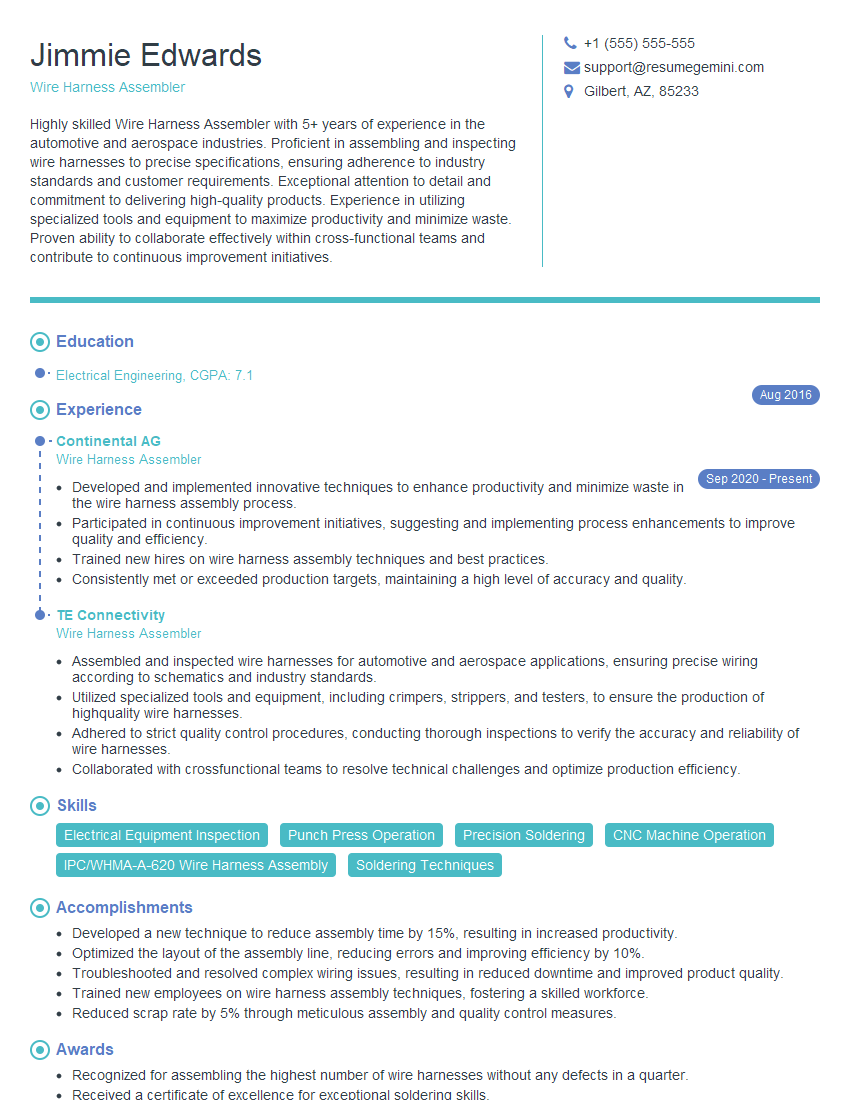
Mastering fine wire wrapping opens doors to exciting career opportunities in electronics manufacturing, precision engineering, and research and development. To maximize your job prospects, crafting an ATS-friendly resume is crucial. A well-structured resume, highlighting your skills and experience effectively, significantly increases your chances of landing an interview. We encourage you to leverage ResumeGemini, a trusted resource for building professional resumes. ResumeGemini offers tools and templates to help you create a compelling resume, and examples of resumes tailored to Fine Wire Wrapping are available to guide you. Invest time in presenting your skills in the best possible light – your future self will thank you!
Explore more articles
Users Rating of Our Blogs
Share Your Experience
We value your feedback! Please rate our content and share your thoughts (optional).
What Readers Say About Our Blog
Very informative content, great job.
good