Every successful interview starts with knowing what to expect. In this blog, we’ll take you through the top Finishing and Bindery Operations interview questions, breaking them down with expert tips to help you deliver impactful answers. Step into your next interview fully prepared and ready to succeed.
Questions Asked in Finishing and Bindery Operations Interview
Q 1. What are the different types of bookbinding methods?
Bookbinding methods are the various techniques used to assemble pages into a finished book. The choice of method depends on factors like the book’s size, page count, budget, and desired aesthetic. Some common methods include:
- Perfect Binding: Pages are glued together along the spine, creating a smooth, flat edge. Ideal for paperback books, magazines, and journals.
- Saddle Stitch Binding: Pages are folded in half and stapled along the spine. Suitable for brochures, booklets, and magazines with a relatively low page count.
- Case Binding: Pages are sewn together, then glued to cover boards to create a durable, high-quality book. Commonly used for hardback books and high-end publications.
- Spiral Binding (Coil Binding): Pages are punched with holes and bound with a plastic or metal coil. Often used for reports, notebooks, and calendars.
- Wire-O Binding: Similar to spiral binding, but uses double-loop wire for a more professional look. Popular for calendars and high-end notebooks.
- Concertina Binding (Accordion Binding): Pages are folded in a zig-zag pattern to create a booklet that stands upright. Used for invitations, brochures, and promotional materials.
Each method offers unique advantages and disadvantages in terms of cost, durability, and aesthetics.
Q 2. Explain the process of perfect binding.
Perfect binding is a popular method for creating paperback books and similar publications. It involves several key steps:
- Gathering and Collating: Individual pages are gathered and collated into the correct order, typically using automated gathering machines.
- Folding (if necessary): If the pages are printed on large sheets, they are folded to create sections (signatures).
- Roughening the Spine: The spine edges of the gathered pages are roughened using a sanding machine to improve glue adhesion.
- Applying Adhesive: A precise amount of hot melt adhesive is applied to the spine using a hot melt gluing machine.
- Pressing and Cooling: The glued spine is then pressed and cooled to ensure the adhesive sets properly and the book lays flat. This often involves automated presses.
- Trimming: Excess glue and paper are trimmed from the spine.
- Cover Attachment: The cover is wrapped around the block and attached using adhesive, often with added protection to improve cover adhesion and longevity.
Imagine it like building a small wall – you need to prepare the bricks (pages), put them in order, add mortar (glue), and press it together until it sets firm. The result is a neat, flat, and durable spine.
Q 3. Describe the operation and maintenance of a saddle stitcher.
A saddle stitcher is a machine that folds and staples pages together to create booklets. Its operation involves several key components:
- Feeding System: Sheets of paper are fed into the machine. Issues here often lead to misfeeds or jams.
- Folding Section: The sheets are folded in half or multiple times, depending on the design. Problems here result in poorly folded pages or creases.
- Stitching Section: The folded sheets are stitched together using wire staples. Maintenance of the stapling mechanism is crucial for consistent stitching. The stitcher will have a staple magazine that requires replenishing.
- Delivery System: The finished booklets are delivered from the machine. This area needs regular checks to ensure booklets don’t stack and are ejected efficiently.
Maintenance involves regular cleaning, lubrication, and replacement of worn parts like staples, belts, and rollers. It’s essential to follow the manufacturer’s guidelines for preventative maintenance to minimize downtime and ensure consistent quality. Daily checks on staple supply and cleaning the rollers is particularly crucial for uninterrupted production.
Q 4. How do you troubleshoot common issues on a folding machine?
Troubleshooting folding machine issues requires a systematic approach. Here’s a common troubleshooting framework:
- Identify the Problem: Determine the exact nature of the problem. Is it misfolding, jamming, creasing, or something else?
- Check the Paper: Incorrect paper weight, size, or moisture content can lead to various problems. Inspect the paper stock for defects, ensure it’s the correct size and weight specified for the machine.
- Inspect the Folding Section: Check the rollers, belts, and other components in the folding section for wear, damage, or misalignment. Dust and paper build-up in rollers can affect the folding mechanism.
- Examine the Adjustments: Folding machines have numerous adjustments to control the folding process. Consult the operating manual to review the correct settings for your paper stock and fold type. Incorrect adjustments, even slightly, are very common causes of folding issues.
- Check for Jams: Paper jams are a common occurrence. Carefully remove any jammed paper, ensuring no damage is inflicted upon the machine during removal.
- Clean and Lubricate: Regular cleaning and lubrication are crucial for maintaining the machine’s performance. Consult the service manual and perform scheduled maintenance.
Remember to always follow safety procedures when troubleshooting machinery. If you are unsure about a problem, contact a qualified technician.
Q 5. What are the key quality control checks for a finishing operation?
Quality control in finishing operations is vital for delivering high-quality products. Checks should be performed at various stages:
- Pre-Press Checks: Verify that the printed sheets are free from defects like smudging, misregistration, or color variations.
- Folding and Binding Checks: Inspect the folded sheets for accurate folding and proper alignment, and check the binding for secure attachment and evenness. Random samples are chosen for visual inspection, and any abnormalities are flagged.
- Cutting and Trimming Checks: Verify that the cuts are straight, clean, and precise and that the trimming is uniform. Measurements of trimmed edges are taken regularly.
- Post-Finishing Checks: Inspect the final product for any defects like scratches, creases, or damage. This often involves a visual inspection by a trained personnel followed by a thorough check on a random selection of finished products.
- Dimensional Accuracy Checks: Measurements of the finished product are taken to ensure they meet specified dimensions. This is critical to ensure that the product matches the specifications.
These checks can be performed visually, using measuring instruments, or through automated quality control systems. Documentation of these checks is essential for maintaining a high standard of quality.
Q 6. Explain the difference between die-cutting and embossing.
Both die-cutting and embossing are finishing techniques that use a die to shape or alter a material, but they achieve different results:
- Die-Cutting: This process uses a sharp die to cut shapes or designs out of a material, creating clean, precise cuts. Think of cookie cutters – they cut out shapes from cookie dough. Die-cutting is used to create custom shapes, perforations, and even intricate designs.
- Embossing: This technique uses a die to create a raised or indented design on a material without cutting through it. It adds texture and depth, creating a three-dimensional effect. Imagine pressing a coin into soft clay – it leaves an imprint without removing any material. Embossing adds a touch of elegance and sophistication to products.
In short, die-cutting removes material to create a shape, while embossing alters the surface texture without removing material.
Q 7. What safety precautions are essential in a bindery operation?
Bindery operations involve heavy machinery and sharp tools, making safety a paramount concern. Essential precautions include:
- Proper Training: All personnel must receive comprehensive training on the safe operation of all bindery equipment. This includes understanding how the machine works and all safety features.
- Personal Protective Equipment (PPE): Employees should wear appropriate PPE, including safety glasses, gloves, and hearing protection. The type of PPE required will depend on the specific task and machinery involved.
- Machine Guards and Safety Interlocks: All machinery should be equipped with proper safety guards and interlocks to prevent accidental injuries. Regular checks on the function of such safety features are paramount.
- Safe Work Practices: Establish and enforce safe work practices, including proper lifting techniques, machine lockout/tagout procedures, and clear walkways to prevent accidents and ensure the safety of others.
- Regular Maintenance: Regular maintenance of all equipment is crucial to prevent malfunction and minimize the risk of accidents.
- Emergency Procedures: Establish clear emergency procedures and ensure that all employees are familiar with them, and emergency response systems are in place.
A safe bindery operation requires a culture of safety, where everyone takes responsibility for their own safety and the safety of their colleagues.
Q 8. How do you calculate the cost of finishing a specific job?
Calculating the cost of finishing a specific job requires a detailed breakdown of all materials and labor involved. Think of it like building a house – you need to account for every brick and every hour of work.
Step 1: Material Costs: This includes the cost of all materials used, such as paper, laminates, adhesives, thread, etc. You’ll need to factor in quantity and pricing per unit. For example, the cost of 1000 sheets of 80lb cover stock at $50 per ream.
Step 2: Labor Costs: Determine the time each machine or operator spends on the job. This requires knowing the setup time, run time, and cleaning time for each process. Calculate the cost per hour for each employee or machine. A common method is using a rate per piece if that particular task can easily be standardized.
Step 3: Overhead Costs: Include indirect costs like utilities, rent, and maintenance of machinery. A common practice is to allocate a percentage of these costs to each job based on machine time or labor hours.
Step 4: Waste Factor: Account for material waste during cutting, folding, or binding. It’s crucial to add a buffer to account for spoilage. This is an important factor that is often overlooked.
Step 5: Profit Margin: Finally, add a profit margin to cover your business expenses and ensure profitability. This is often expressed as a percentage of the total cost.
Example: Let’s say the materials cost $100, labor cost $50, overhead cost $25, and waste adds another $10. With a 20% profit margin, the final cost would be $100 + $50 + $25 + $10 + ($185 * 0.20) = $215.
Q 9. What are the various types of paper finishes and their applications?
Paper finishes significantly impact the final product’s look and feel. They can range from simple to highly specialized treatments.
- Coated: These papers have a smooth, glossy surface created by applying a coating. This results in vibrant colors and sharp image reproduction, ideal for magazines and brochures. There are different types of coating, like matte, gloss, dull, and silk, each with its own unique look and feel.
- Uncoated: These papers have a natural, porous texture. They’re often used for stationery, letterheads, and high-quality books, offering a more sophisticated tactile experience.
- Textured: These papers offer a unique surface texture, such as linen or felt, giving a premium feel. Great for invitations or high-end packaging.
- Embossed: A raised design is pressed into the paper, adding visual and tactile interest. Think of wedding invitations or business cards.
- Metallic: Papers infused with metallic pigments for a luxurious look. Popular for packaging or specialty print materials.
The application of each finish depends on the desired aesthetic and functionality. For example, a glossy coated paper would be inappropriate for a notebook designed for writing, while uncoated paper wouldn’t be suitable for high-resolution images.
Q 10. How do you manage production schedules in a fast-paced bindery environment?
Managing production schedules in a fast-paced bindery environment demands meticulous planning and efficient execution. Think of it like conducting an orchestra – every instrument (machine) must play its part at the right time.
I utilize a combination of methods for optimal scheduling. First, I rely on a robust Job Management System (JMS). These systems allow for accurate job tracking, prioritizing based on deadlines and complexities. I then employ a Gantt chart to visually represent the schedule, highlighting dependencies between different tasks. We regularly use Kanban boards for visual tracking of jobs in progress, identifying potential bottlenecks.
Prioritization is key. Urgent jobs are scheduled first; often jobs are split and parts of the process are delegated to speed things up. Communication with the printing department is vital, as delays on their end impact our schedule. Regular team meetings allow for early identification and resolution of potential issues, preventing unexpected delays. Continuous monitoring of the production floor and machine utilization allows me to identify areas for improvement and optimize the workflow.
Having a well-trained team with cross-training capabilities is also vital. This minimizes downtime if one person is absent. Finally, proactive measures, such as machine maintenance scheduling, are essential to avoid unplanned downtime.
Q 11. Describe your experience with different types of laminating.
My experience encompasses various laminating techniques, each with its advantages and disadvantages:
- Film Laminating: This involves applying a thin plastic film to the printed material. This enhances durability and provides a glossy finish (glossy, matte, or even textured film options). I’ve worked with both dry-mount and wet-mount systems. Dry-mount requires specific equipment and is best for larger volume production runs. Wet-mount is more adaptable to smaller runs but has a longer setup and drying time.
- Liquid Laminating: This is a coating process that adds UV protection, giving a smoother, more even finish, and increased water resistance. Perfect for outdoor applications.
- Soft-Touch Laminating: This produces a soft, velvety texture, great for high-end packaging and certain marketing materials. It adds value and prestige to the product.
The selection of the appropriate laminating method depends on the product’s intended use, the budget, and desired finish. I’ve successfully managed projects involving all three types, optimizing the process for speed and quality depending on the client’s specific needs.
Q 12. What are the advantages and disadvantages of different binding methods?
Several binding methods exist, each with its own set of advantages and disadvantages:
- Saddle Stitch: Simple and cost-effective for documents with a low page count (typically under 64 pages). However, it’s not suitable for large or heavy documents.
- Perfect Binding: Ideal for books, magazines, and publications with higher page counts. The spine is prepared by applying adhesive. This provides a professional finish, and the pages lay flat. It can be more expensive than saddle stitch.
- Spiral Binding/Coil Binding: Cost-effective and allows for pages to lie flat. However, it is less aesthetically pleasing and prone to page damage. Ideal for calendars or notebooks.
- Wire-O Binding: Offers a high-end look and durable binding. Pages lie flat, and the binding is less likely to cause bulkiness. Typically used for high-quality documents or publications.
- Case Binding: Used for high-end books and publications requiring the highest level of durability. Pages are sewn together to form a text block which is then glued to the cover. It is the most robust but also the most expensive method.
The best binding method depends on the document’s length, desired aesthetic, budget, and intended use. In my experience, I’ve been involved in choosing the right binding method based on client needs and budget considerations.
Q 13. How do you ensure color consistency throughout the finishing process?
Maintaining color consistency throughout the finishing process requires attention to detail at every stage. Think of it as a relay race – every runner (process) must hand off the baton (the product) perfectly.
Color Calibration: Regular calibration of all printing and finishing equipment is vital. This involves using color targets and software to ensure all machines are producing colors according to the designated profiles.
Proofing and Quality Control: Color proofing at every step (pre-press, printing, and finishing) helps catch inconsistencies early. This includes visual checks and potentially using spectrophotometers for precise color measurement.
Material Consistency: The paper stock and any laminates used should have consistent color and properties. Using the same paper stock batch across a large project helps.
Environmental Control: Environmental factors like temperature and humidity can affect color perception and consistency. Maintaining a stable environment in the finishing area is essential.
Operator Training: Trained operators are adept at recognizing subtle color variations and making adjustments where necessary. It is important that the workers can understand and follow the calibration and proofing procedures.
Q 14. What software or systems are you familiar with in a bindery setting?
My experience includes working with a range of software and systems commonly used in bindery settings:
- Job Management Systems (JMS): These systems manage job tracking, scheduling, and cost accounting. Examples include MIS (Management Information Systems) solutions such as those by EFI, Kodak, and others.
- Prepress Software: I am proficient in using software like Adobe Acrobat and other pre-flight programs to prepare files for finishing, ensuring that the specifications are met.
- RIP Software (Raster Image Processor): Used for managing color profiles and outputting images to various finishing devices.
- Machine-Specific Software: My expertise extends to operating and troubleshooting the software that controls the individual machines in the bindery, such as cutting, folding, and binding equipment.
- Spreadsheets (Excel, Google Sheets): I use spreadsheets for production tracking, cost analysis, and report generation.
Proficiency in these systems allows me to manage projects efficiently, minimizing errors and maximizing productivity.
Q 15. How do you handle a production delay or equipment malfunction?
Production delays and equipment malfunctions are inevitable in a fast-paced bindery. My approach involves a structured problem-solving process. First, I assess the severity of the issue. Is it a minor jam requiring quick troubleshooting, or a major equipment failure needing repair? For minor issues, I utilize my knowledge of the machinery to quickly resolve the problem, often referring to manufacturer’s manuals or contacting technical support if needed. For example, a paper jam on a folder is usually easily rectified by clearing the obstruction and adjusting the feed rollers. However, a major breakdown, like a faulty motor on a perfect binder, necessitates a different strategy. I immediately notify my supervisor and initiate the process for repair, which may involve contacting the service provider, finding a temporary alternative, or re-prioritizing the production schedule to minimize downtime. I maintain detailed logs of all malfunctions, their causes, and the resolution steps to prevent future occurrences and improve overall efficiency.
For example, during a recent project involving large-format booklets, the stitching machine malfunctioned due to worn-out needles. My immediate action was to contact the maintenance team while simultaneously assessing whether critical deadlines were at risk. We opted for a temporary solution – utilizing manual stitching for a smaller portion of the order while the machine was repaired – which minimized delay.
Career Expert Tips:
- Ace those interviews! Prepare effectively by reviewing the Top 50 Most Common Interview Questions on ResumeGemini.
- Navigate your job search with confidence! Explore a wide range of Career Tips on ResumeGemini. Learn about common challenges and recommendations to overcome them.
- Craft the perfect resume! Master the Art of Resume Writing with ResumeGemini’s guide. Showcase your unique qualifications and achievements effectively.
- Don’t miss out on holiday savings! Build your dream resume with ResumeGemini’s ATS optimized templates.
Q 16. Describe your experience with different types of cutting and trimming techniques.
My experience encompasses a wide range of cutting and trimming techniques, crucial for achieving precise and aesthetically pleasing final products. I’m proficient in using both guillotine cutters for large-scale cutting and smaller, more specialized tools for intricate work. Guillotine cutters are perfect for high-volume jobs, ensuring consistent cuts and minimal waste. I am also experienced with three-knife trimmers, which are ideal for trimming three sides of a book simultaneously, increasing efficiency. For more specialized cuts, such as rounded corners or irregular shapes, I utilize die-cutting machines. I understand the importance of blade sharpness and proper machine settings to achieve clean cuts and prevent damaging the materials. My experience also includes using creasing machines, vital for ensuring sharp, clean folds in leaflets and brochures. I’m always careful to select the appropriate cutting method based on the material, the project’s specifications, and the required production volume.
For instance, in one project involving hardcover books, we used a guillotine cutter for the initial rough trim and then a three-knife trimmer for precise finishing to ensure perfect alignment. This combination allowed for quick, large-scale trimming while guaranteeing impeccable accuracy for the final product.
Q 17. What is your experience with different types of adhesives and their applications?
My knowledge of adhesives is extensive, covering various types suitable for different applications within bindery operations. I understand the properties of different adhesives, including hot melt, PUR (polyurethane reactive), and EVA (ethylene vinyl acetate). Hot melt is ideal for quick adhesion in high-volume applications, like case binding, but its flexibility might be a limitation. PUR offers superior strength and flexibility, often preferred for high-quality books, while EVA provides a good balance between cost and performance. The selection depends heavily on the material being bonded, the desired bond strength, the speed of setting time, and the required level of flexibility. I’m also familiar with the application methods, including automated gluing systems, manual application techniques, and spray adhesive applications, always ensuring safe handling and proper ventilation according to safety regulations.
For example, in producing a series of high-end photo albums, we used PUR adhesive due to its strong bond strength and ability to ensure the pages lay flat, preventing damage to the high-quality photographs.
Q 18. How do you prioritize tasks in a high-volume bindery environment?
Prioritizing tasks in a high-volume bindery demands a structured approach. I utilize a combination of methods, starting with a clear understanding of deadlines and job specifications. This often involves reviewing job tickets, noting due dates, and considering the required processes. I then prioritize jobs based on urgency, material availability, and machine capacity. Jobs with the tightest deadlines are given precedence, while considering the setup time for each machine. This often involves utilizing a Kanban or similar system for visual tracking of job flow and progress. Additionally, I consistently communicate with the team to maintain transparency and ensure efficient workflow. This collaborative approach allows for adjustments as unforeseen issues arise.
For instance, I might prioritize a rush order for a client’s presentation even if it necessitates temporarily suspending a longer, less urgent project. Transparent communication ensures the team understands and cooperates with this decision.
Q 19. Explain your understanding of waste reduction in finishing operations.
Waste reduction is a critical aspect of efficient and environmentally responsible bindery operations. I consistently look for opportunities to minimize waste in materials and resources. This starts with accurate job estimations and precise cutting, minimizing overruns. I carefully plan layouts to maximize material usage, reducing the amount of scrap. Furthermore, I regularly maintain equipment to ensure optimal performance and minimize material defects. This includes regular cleaning and adjustments to feeding mechanisms to prevent jams and unnecessary waste. Implementing quality control checks throughout the process helps identify and correct errors before they lead to significant waste. I am also familiar with different recycling programs and environmentally friendly materials to further reduce our environmental impact.
For example, by optimizing our cutting layouts using software, we were able to reduce paper waste by 15% in a recent project.
Q 20. How familiar are you with different types of finishing materials (e.g., covers, boards)?
My familiarity with finishing materials is extensive. I have experience with various cover stock options, including paperboard, linen, leatherette, and cloth-bound materials. I understand the characteristics of each material, considering factors such as durability, texture, weight, and printability. I am aware of different board types like chipboard, greyboard, and coated boards, understanding their applications in different binding styles, such as case binding or perfect binding. I also consider the cost and availability of these materials when making selections for a project. I’m adept at choosing appropriate materials based on project specifications, client preferences, and budgetary constraints. The selection process also considers aspects such as the overall aesthetic desired, the intended lifespan of the final product, and the compatibility with the chosen binding method.
For example, for a project requiring a high-end, luxurious feel, we opted for a linen cover stock. For a less expensive project, a sturdy paperboard was used instead.
Q 21. What is your experience with quality control checks throughout the finishing process?
Quality control is paramount throughout the entire finishing process. My approach involves multiple checkpoints to ensure consistent quality and prevent defects. This starts with incoming material inspection – checking for imperfections, color consistency, and the proper specifications. During each stage of the process, from cutting and folding to binding and trimming, regular spot checks are conducted to identify and address any deviations from standards. These checks are meticulously documented to maintain traceability and ensure accountability. I use a variety of tools, such as calibrated measuring instruments, to ensure accuracy and precision. Finally, a final inspection of the completed product is conducted before packaging to guarantee a consistently high-quality output for our clients. This multi-stage approach ensures we meet or exceed expectations.
For example, during the perfect binding process, I might take samples at regular intervals to check for proper glue application and spine alignment. If inconsistencies are identified, immediate corrective actions are taken.
Q 22. How do you ensure the final product meets client specifications?
Ensuring the final product meets client specifications is paramount. It’s a multi-step process that begins long before the finishing stage. First, meticulous pre-press communication is crucial. This involves clarifying all aspects of the project with the client, including paper stock, desired finishes (e.g., UV coating, lamination, embossing), binding type (e.g., perfect binding, saddle stitch, wire-o), and color accuracy. We use detailed proofs and comprehensive job tickets to document these specifications.
Next, throughout the printing and finishing processes, rigorous quality control checks are implemented at each stage. This involves visual inspections at each station to ensure adherence to the specifications. For example, we’d check for consistent color, proper alignment, accurate cuts, and the absence of defects. Any discrepancies are immediately flagged and corrected.
Finally, a final inspection of the entire lot is performed before packaging and shipment. This involves a random sampling of finished products to check for consistency and adherence to specifications. This final check serves as a crucial verification step before the project is deemed complete. Think of it like building a house – you wouldn’t skip the final walkthrough to ensure everything aligns with the blueprints.
Q 23. Describe your experience working with different types of printing substrates.
My experience encompasses a wide range of printing substrates, from standard offset papers to more specialized materials. I’ve worked extensively with various weights and finishes of coated and uncoated paper, including those with different textures and brightness levels. I’m also familiar with card stock, various types of board (such as chipboard and SBS board), and specialty papers like linen, metallic, and textured papers. Each substrate presents unique challenges and requires specific adjustments to the finishing processes.
For example, heavier stocks necessitate adjustments to the cutting and creasing processes to prevent cracking or damage. Coated papers often require different lamination or UV coating techniques to achieve the optimal finish. Working with specialty papers requires a deeper understanding of their properties to avoid issues during the bindery process.
Understanding substrate properties is crucial. Imagine trying to perfect bind a booklet printed on a very thin, flimsy paper – it would likely fall apart. Choosing the right substrate and understanding its limitations is half the battle in creating a quality finished product.
Q 24. How do you handle customer complaints regarding finished products?
Handling customer complaints is a key aspect of this role. My approach focuses on empathy, thorough investigation, and proactive solutions. First, I listen carefully to understand the nature of the complaint, ensuring the customer feels heard and valued. I then conduct a thorough investigation to identify the root cause of the issue. This may involve reviewing job tickets, inspecting samples, and examining the production process.
Once the cause is identified, I work collaboratively with the client to find a mutually acceptable solution. This might involve reprinting, re-finishing sections of the job, or offering a partial or full refund, depending on the severity of the issue and the terms of our contract. My goal is always to rectify the situation efficiently and professionally while maintaining a positive relationship with the client. Transparent communication throughout the process is vital to rebuilding trust.
For instance, if a client complains about misaligned images, I would review the printing and cutting stages, potentially identifying a problem with the press or die-cutting equipment. We’d analyze the problem, fix it, and offer a solution, perhaps offering a reprint or a discount on future projects to show our commitment to quality.
Q 25. What are your skills in troubleshooting and maintaining bindery equipment?
My troubleshooting skills are honed through years of hands-on experience. I’m proficient in diagnosing and resolving mechanical issues with a wide range of bindery equipment, including perfect binders, saddle stitchers, three-knife trimmers, and folding machines. My expertise spans both preventative maintenance and reactive troubleshooting. I’m familiar with the inner workings of these machines and can identify potential problems before they impact production.
For preventative maintenance, I follow manufacturer’s recommendations for regular cleaning, lubrication, and part replacements. For reactive troubleshooting, I use a systematic approach. I begin by observing the problem, identifying any error messages or unusual sounds, and then checking for obvious issues like jams or misaligned components. I use a combination of diagnostic tools, manuals, and my experience to pinpoint the source of the problem and implement the appropriate repair.
For example, if a perfect binder consistently produces poorly glued spines, I would systematically check the glue temperature, the glue roller pressure, and the book-feeding mechanism. Troubleshooting is a logical, step-by-step process. It’s like detective work to solve the mechanical puzzle.
Q 26. Explain your experience with different types of finishing and bindery software.
My experience with finishing and bindery software is extensive. I’m proficient in using various pre-flight and imposition software programs for efficient job planning and setup. This includes programs like imposition software (e.g., Esko ArtiosCAD, Clio) used to create efficient layouts for printing and cutting, and pre-flight software (e.g., PitStop Pro) to ensure files are ready for printing and avoid costly errors. I’m also familiar with different MIS (Management Information Systems) software programs used to track jobs, manage materials, and generate reports. These systems streamline workflows and improve overall efficiency.
Furthermore, I’m comfortable working with equipment control software used to program and operate automated bindery machinery. This includes software that controls the speed, pressure, and other parameters of the machinery to ensure consistent and high-quality results. Proficiency in these software programs is crucial for optimizing production and reducing downtime.
Think of these software programs as the control center of our operation – they allow us to optimize the entire finishing and binding process, from pre-flight checks to controlling the machines to improve speed and accuracy.
Q 27. Describe your leadership experience in a finishing and bindery environment.
In my previous role, I led a team of five finishing and bindery technicians. My leadership style focuses on collaboration, empowerment, and continuous improvement. I foster a positive and supportive work environment where team members feel valued and encouraged to contribute their ideas. I regularly conduct training sessions to update the team’s skills and knowledge, ensuring they are up-to-date with the latest technologies and best practices.
My approach to delegation involves clearly defining roles and responsibilities, setting realistic goals, and providing regular feedback and support. I use regular team meetings to discuss progress, address challenges, and foster open communication. This collaborative approach not only ensures that tasks are completed efficiently and effectively but also improves team morale and fosters a sense of shared accomplishment.
For example, when we faced a production bottleneck, I worked with the team to analyze the workflow and identify areas for improvement. Through collaborative problem-solving, we streamlined the process, resulting in increased efficiency and reduced production time. Leading a team requires clear communication, mutual respect, and a shared goal.
Q 28. How do you stay up-to-date with the latest trends in finishing and bindery technology?
Staying current in the rapidly evolving finishing and bindery industry is crucial. I actively engage in several methods to stay up-to-date. This includes attending industry trade shows and conferences such as PRINTING United, where I can see the latest equipment demonstrations and network with industry professionals. I also subscribe to industry publications and online resources, regularly reading articles and white papers on new technologies and techniques.
Furthermore, I participate in online forums and communities where I can engage in discussions with other professionals and learn from their experiences. I also actively seek out training opportunities, including vendor-specific training programs to stay abreast of advancements in specific equipment. Continuous learning is an integral part of this profession.
Think of it like a doctor staying updated with medical advancements – continuous learning is essential to providing the best possible service and utilizing the latest and greatest in finishing technologies.
Key Topics to Learn for Finishing and Bindery Operations Interview
- Pre-Press Preparation: Understanding the importance of accurate imposition and file preparation for efficient finishing processes. Practical application: Troubleshooting file issues that could delay or impact the quality of the final product.
- Cutting and Trimming: Mastering different cutting techniques (e.g., guillotine, die-cutting) and understanding the impact of blade sharpness and pressure on accuracy. Practical application: Calculating the most efficient cutting layout to minimize waste.
- Folding and Inserting: Familiarization with various folding techniques (e.g., parallel, half, gate) and the processes of inserting materials accurately and efficiently. Practical application: Troubleshooting jams or misfeeds in high-speed folding machinery.
- Binding Methods: Deep understanding of different binding methods (e.g., perfect binding, saddle stitch, wire-o, spiral) and their suitability for different types of projects. Practical application: Selecting the appropriate binding method based on project requirements and budget considerations.
- Finishing Techniques: Knowledge of various finishing techniques such as lamination, embossing, die-cutting, and UV coating and their impact on the final product’s aesthetics and durability. Practical application: Identifying the best finishing techniques to enhance the product’s visual appeal and functionality.
- Quality Control: Implementing quality control measures at each stage of the finishing and bindery process to ensure consistency and accuracy. Practical application: Identifying and resolving quality issues effectively and efficiently.
- Safety and Equipment Maintenance: Understanding safety protocols and procedures associated with operating bindery equipment, as well as performing basic equipment maintenance. Practical application: Proactive identification and reporting of potential safety hazards or equipment malfunctions.
- Production Scheduling and Efficiency: Understanding workflow optimization and job prioritization to maximize efficiency in a high-volume production environment. Practical application: Developing strategies to meet tight deadlines while maintaining quality standards.
Next Steps
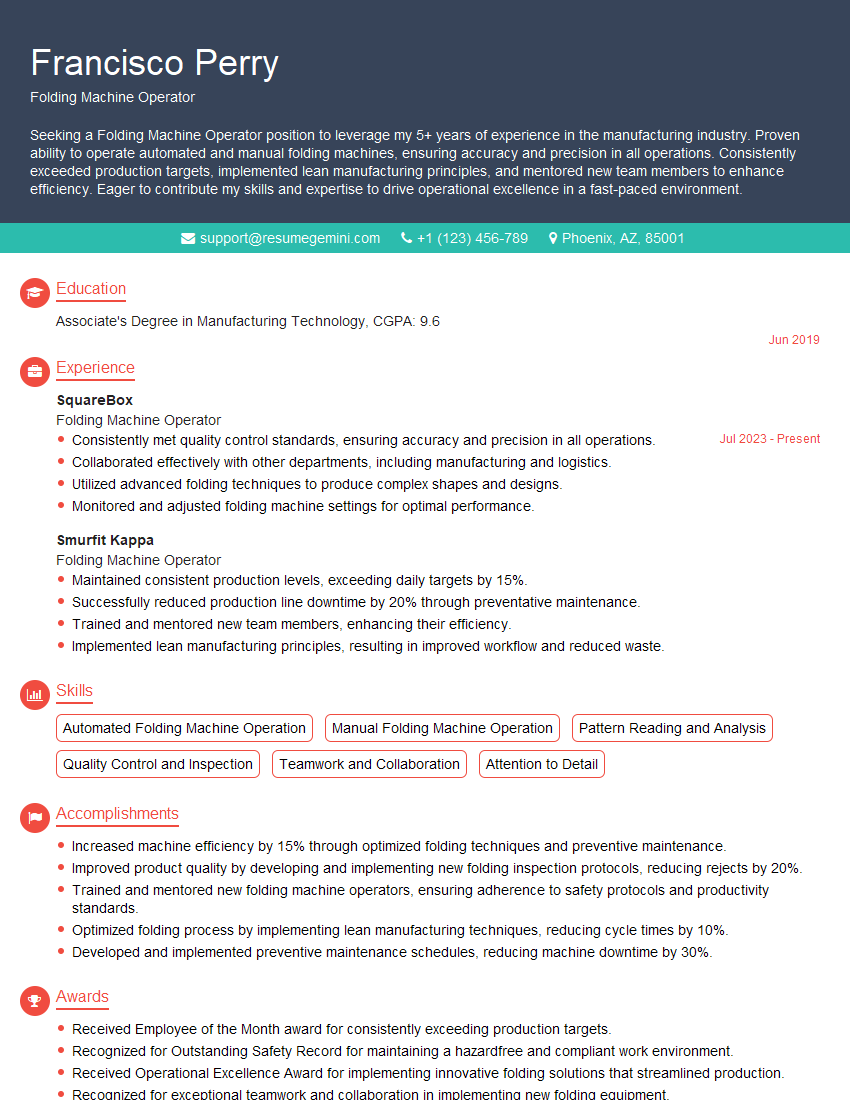
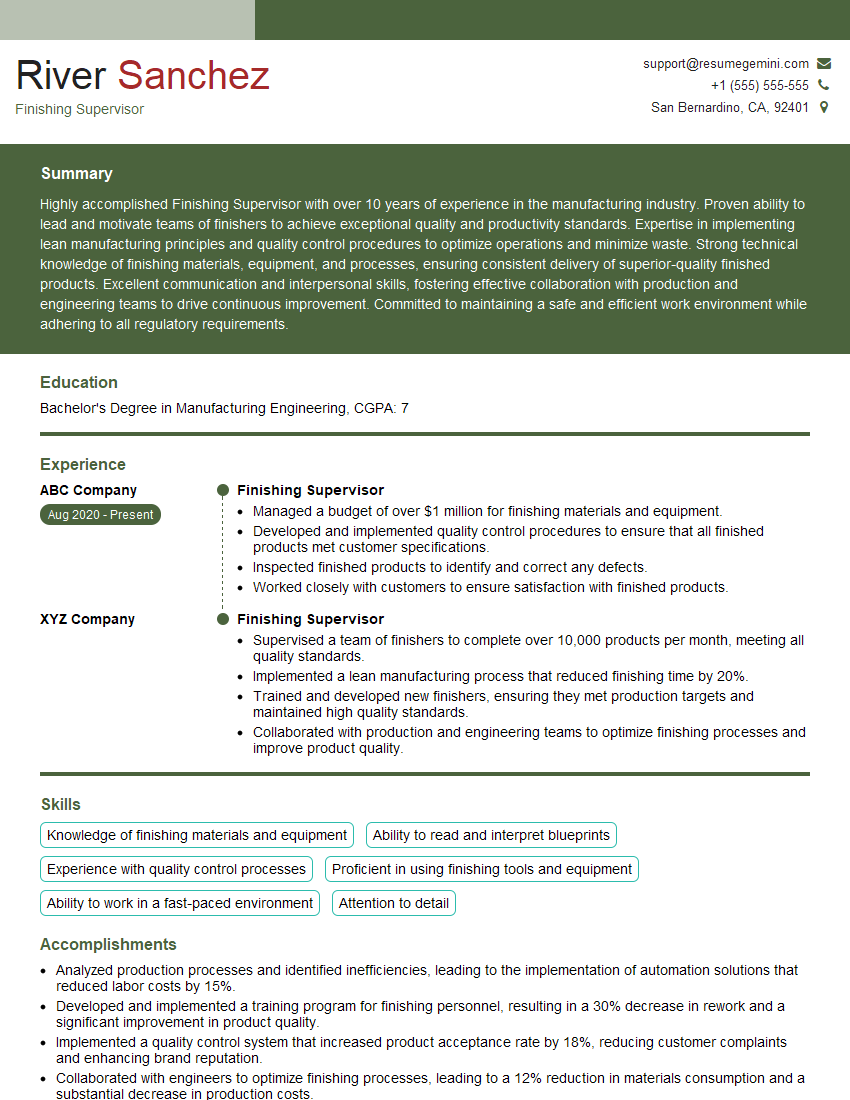
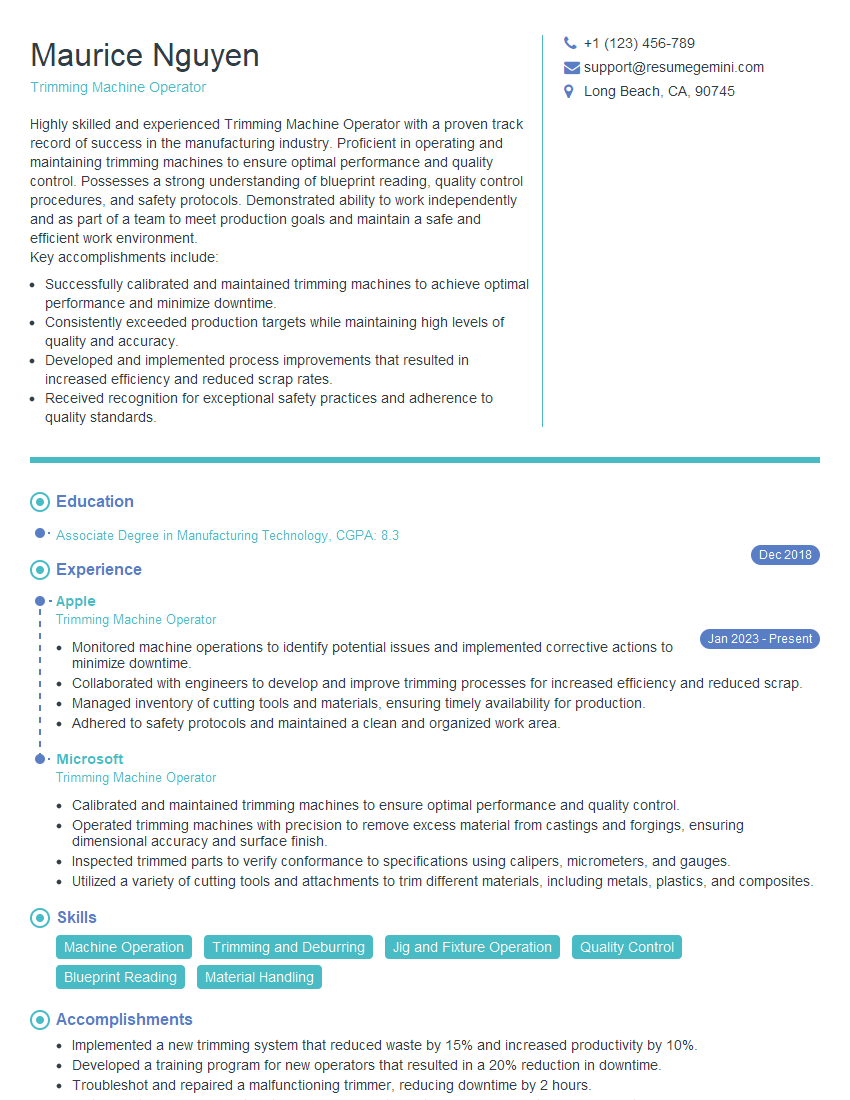
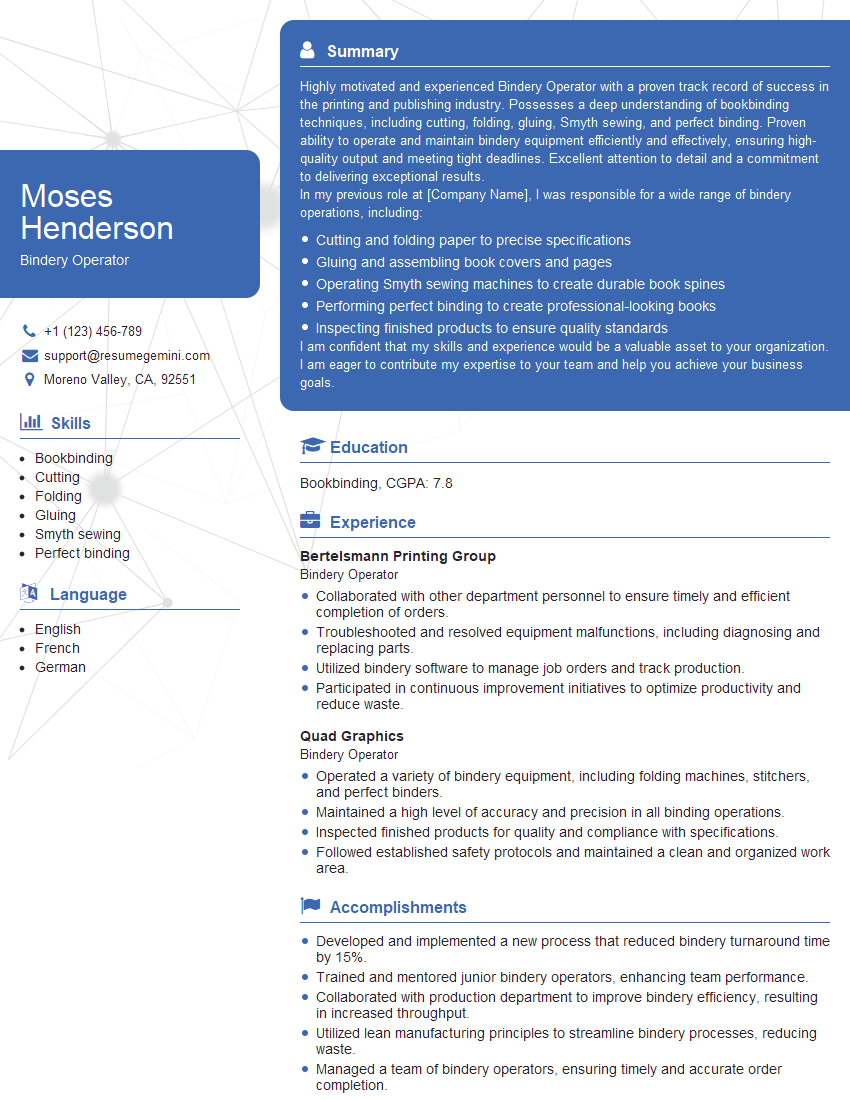
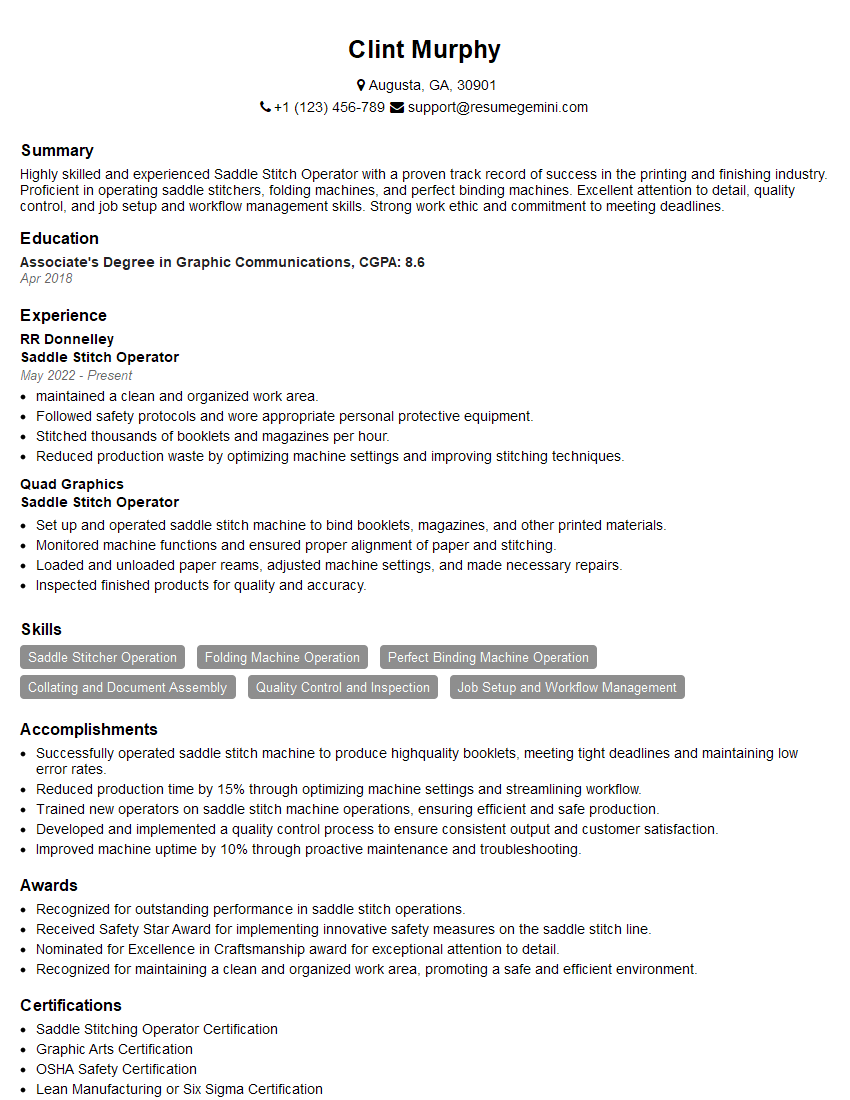
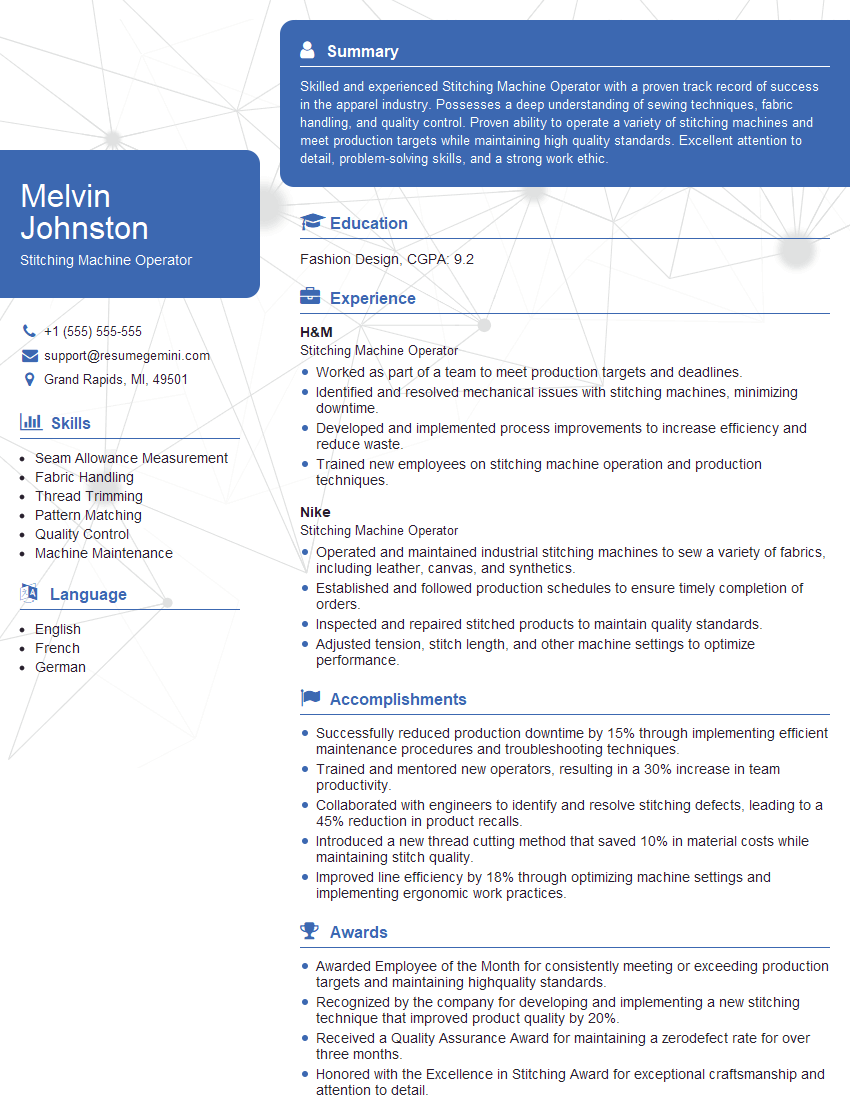
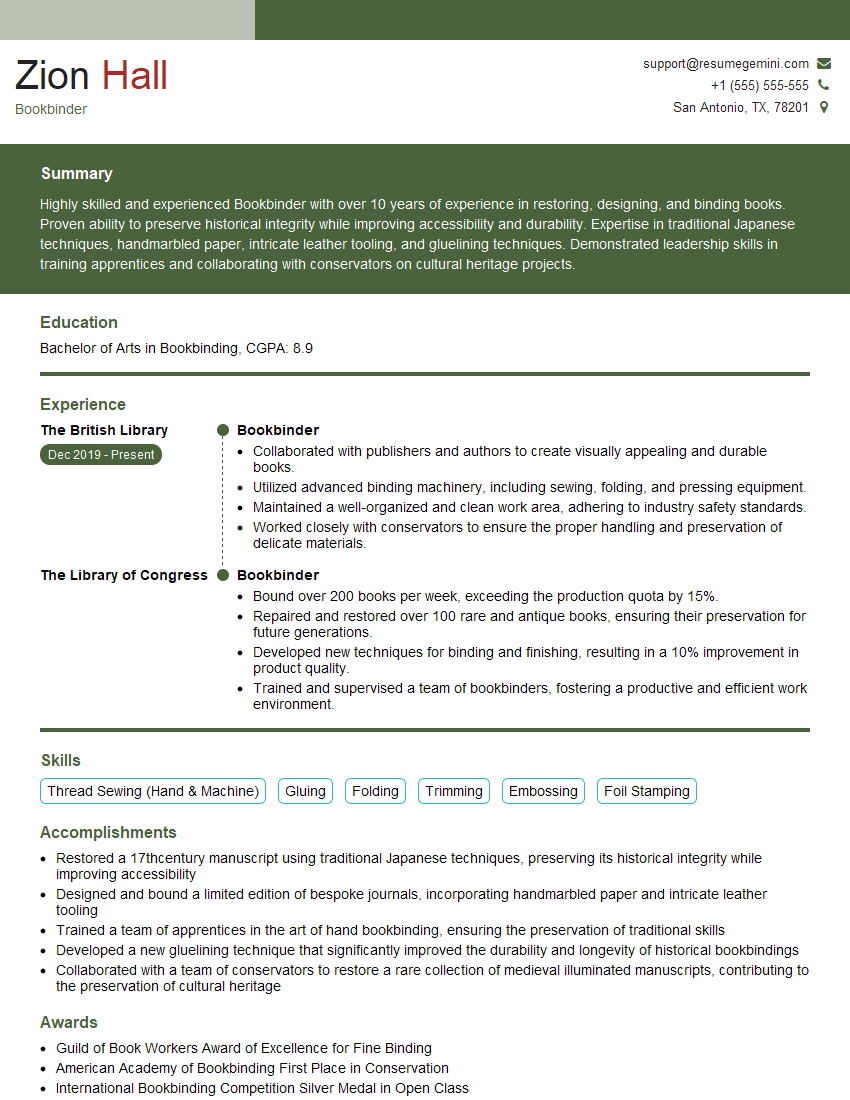
Mastering Finishing and Bindery Operations opens doors to exciting career opportunities with significant growth potential within the printing and publishing industries. A strong understanding of these processes is highly valued by employers. To maximize your job prospects, it’s crucial to create an ATS-friendly resume that highlights your skills and experience effectively. ResumeGemini is a trusted resource that can help you build a professional and impactful resume, showcasing your expertise in Finishing and Bindery Operations. Examples of resumes tailored to this field are available to guide you. Invest in your resume – it’s your first impression!
Explore more articles
Users Rating of Our Blogs
Share Your Experience
We value your feedback! Please rate our content and share your thoughts (optional).
What Readers Say About Our Blog
Very informative content, great job.
good