Interviews are opportunities to demonstrate your expertise, and this guide is here to help you shine. Explore the essential Finishing Defects Identification and Correction interview questions that employers frequently ask, paired with strategies for crafting responses that set you apart from the competition.
Questions Asked in Finishing Defects Identification and Correction Interview
Q 1. What are the common types of finishing defects found in automotive paint?
Common finishing defects in automotive paint are surprisingly diverse, stemming from various stages of the painting process. They can significantly impact the vehicle’s aesthetics and durability. Some of the most frequently encountered defects include:
- Orange peel: A textured surface resembling an orange peel.
- Fish eyes: Small crater-like imperfections.
- Pinholes: Tiny holes in the paint film.
- Runs and sags: Excess paint that flows unevenly down the surface.
- Blushing: A hazy, cloudy appearance on the paint.
- Dust nibs/inclusions: Small particles embedded in the paint film.
- Cratering: Small, deep craters in the surface.
- Solvent Pop: Small blisters or bumps caused by trapped solvents.
- Inconsistent gloss: Uneven shine across the surface.
Understanding the root causes of these defects is crucial for effective correction.
Q 2. Describe the difference between orange peel and fish eyes in a painted surface.
Both orange peel and fish eyes are surface imperfections in a painted finish, but they have distinct appearances and causes.
Orange peel is characterized by a textured, uneven surface resembling the skin of an orange. It’s often caused by an excessively high film build, improper atomization of the paint, or incorrect spraying techniques (e.g., spraying too close or too far from the surface). Think of it like trying to spread a thick layer of jam on toast – you’ll inevitably get bumps and unevenness.
Fish eyes, on the other hand, are small, crater-like defects that appear as individual, isolated imperfections. They are usually caused by contaminants, such as silicones or other foreign substances, on the surface prior to painting. These contaminants prevent the paint from properly adhering, leading to the formation of these small holes. Imagine dropping pebbles into a smooth surface of water – ripples and imperfections form around the intrusion.
Q 3. How do you identify and correct pinholes in a powder-coated finish?
Pinholes in a powder-coated finish are tiny holes that penetrate the coating. Identifying them is relatively straightforward: visually inspect the surface under good lighting. They usually appear as small, dark dots. Correction requires a multi-step approach:
- Preparation: Clean the affected area thoroughly to remove any loose particles or debris.
- Repair: Carefully fill the pinholes using a suitable touch-up paint or powder that matches the original coating. A tiny brush or airbrush might be necessary for precise application.
- Curing: Cure the repaired area according to the manufacturer’s instructions. This often involves baking the part in an oven to harden the touch-up material.
- Finishing: Once cured, lightly sand the repaired area to smooth it and blend it seamlessly with the surrounding surface. Re-coat if necessary.
Preventing pinholes involves ensuring proper surface preparation (cleaning and degreasing), consistent powder application, and correct curing parameters.
Q 4. Explain the process of identifying and rectifying runs and sags in liquid paint applications.
Runs and sags are common liquid paint defects that appear as uneven, excessive paint build-up. Identifying them is usually done through visual inspection, looking for areas where the paint has flowed downwards, creating an unsightly, uneven texture. Rectification depends on the severity:
For minor runs and sags:
- Allowing the paint to dry sufficiently (the exact drying time depends on the paint type and conditions).
- Careful sanding with progressively finer grit sandpaper (e.g., starting with 320-grit and moving up to 1500-grit). This step needs patience and precision. You need to remove the run/sag without damaging the surrounding paint.
- Apply touch-up paint (if necessary) and level the surface with additional sanding.
- Polishing and buffing to restore the original gloss.
For severe runs and sags:
The damaged area may require complete removal and repainting. This is often a more labor-intensive process.
Prevention is key! Maintaining the correct viscosity of the paint, using proper spraying techniques, and controlling the application environment (temperature and humidity) minimizes runs and sags.
Q 5. What are the causes of blushing in a clear coat finish?
Blushing in a clear coat finish is a hazy, cloudy appearance. It’s often caused by moisture in the air condensing on the surface of the wet clear coat during drying. The water droplets disrupt the curing process, resulting in this undesirable finish. Other factors may include:
- High humidity: A humid environment greatly increases the likelihood of blushing.
- Low air temperatures: Cold air holds less moisture, but if the temperature drops too low it hinders the evaporation of solvents and can encourage blushing.
- Poor ventilation: Insufficient airflow can trap moisture near the surface.
- Contaminants: In rare cases, other contaminants can contribute to a similar effect.
Prevention focuses on controlling the environment – spraying in a well-ventilated area with controlled humidity and temperature is key.
Q 6. How would you troubleshoot a problem with inconsistent gloss levels in a finish?
Inconsistent gloss levels indicate an uneven surface finish. Troubleshooting involves a systematic approach:
- Inspect the surface carefully: Look for areas of dullness or excessive shine, often correlated with other defects such as orange peel or dust nibs.
- Assess the application process: Review the spray technique, paint viscosity, air pressure, and drying conditions. Did any errors occur during application?
- Check the preparation: Examine the surface preparation before painting. Poor cleaning or insufficient sanding can lead to inconsistent gloss.
- Consider the curing process: Ensure the curing parameters (time and temperature) were within acceptable ranges. Insufficient curing could result in uneven gloss.
- Test the paint and materials: Check if there are issues with the quality of the paint or clear coat itself.
Corrective measures may involve sanding and buffing the surface, repainting the affected areas, or adjusting the spraying process.
Q 7. Describe different methods for measuring surface roughness.
Measuring surface roughness is critical in assessing the quality of a finish. Several methods exist:
- Profilometry: A stylus-based technique that measures the vertical variations in the surface. This method provides highly accurate quantitative data but can be slow and may damage delicate surfaces.
- Optical profilometry: Uses light interference or other optical methods to measure surface roughness without physical contact. It’s faster and non-destructive but may have limitations in resolution.
- Contactless optical techniques: Such as laser scanning confocal microscopy, provides high-resolution 3D surface topography mapping for detailed analysis.
- Surface roughness gauges: Portable instruments that provide a numerical measure of the surface roughness using a stylus or optical method. These are useful for quick assessments in the field.
The choice of method depends on the required accuracy, the type of surface, and the available resources. Results are typically expressed as Ra (average roughness) or Rz (maximum peak-to-valley height).
Q 8. What are the common causes of cracking in a finish?
Cracking in a finish, a frustratingly common defect, arises from several sources, often intertwined. Think of it like a delicate layer of skin – if it’s stretched too thin or subjected to sudden stress, it’ll crack.
- Insufficient Flexibility: Some finishes are inherently less flexible than others. If the substrate (the material being finished) expands or contracts due to temperature changes or moisture fluctuations, a rigid finish can’t accommodate this movement, leading to cracks. This is especially problematic with finishes applied thickly.
- Poor Adhesion: If the finish doesn’t bond well to the substrate, it’s more prone to cracking. It’s like trying to stick a sticker to a greasy surface – it won’t adhere properly, and any stress will cause it to peel or crack.
- Substrate Movement: Wood, for example, is a dynamic material that expands and contracts with changes in humidity. If a finish is applied to a piece of wood that hasn’t been properly acclimated, the movement of the wood can cause cracking in the finish.
- Stress from Underlying Layers: Problems in prior layers, like poor sanding or filler application, can create stress points that manifest as cracks in the topcoat. It’s like a foundation crack showing up in the walls of a house.
- Too Many Coats: Applying excessive coats can create a thick, brittle film, leaving the finish vulnerable to cracking. Each coat adds to the stress on the underlying layers.
Identifying the root cause is crucial for effective correction. For example, if poor adhesion is the issue, you’d need to properly prepare the surface before reapplying the finish. If it’s due to substrate movement, acclimation or a different finishing method might be necessary.
Q 9. What is the significance of surface preparation in preventing finishing defects?
Surface preparation is the cornerstone of preventing finishing defects. It’s like laying a solid foundation for a house; without it, the whole structure is compromised. A properly prepared surface ensures optimal adhesion, prevents future issues, and contributes to a smooth, even finish.
- Cleaning: Removing dust, grease, and other contaminants is paramount. A dirty surface provides poor adhesion, leading to peeling or cracking.
- Sanding: This creates a uniform surface profile and increases surface area, improving adhesion. The right grit is essential; too coarse can damage the substrate, too fine may not provide enough “tooth” for the finish to grip.
- Priming: A primer acts as an intermediary layer, enhancing adhesion between the substrate and the topcoat. It also seals pores and provides a uniform base for a more even finish.
- Filling: Filling imperfections like dents or scratches prevents them from showing through the finish and creating stress points.
For instance, imagine painting a wall without cleaning it first – the paint wouldn’t stick properly, and you’d see all the dirt and grime. Similarly, poor surface preparation leads to uneven finishes, cracking, and other defects.
Q 10. How do you assess the adhesion of a finish to the substrate?
Assessing adhesion is critical for ensuring finish durability. Several methods exist, ranging from simple visual checks to more rigorous testing.
- Visual Inspection: Look for peeling, blistering, or flaking. These are clear signs of poor adhesion.
- Cross-Cut Test: This involves making precise incisions in a grid pattern across the finish. Then, using adhesive tape, attempt to lift the finish. Poor adhesion is indicated if the finish comes off easily.
- Pull-Off Test: A specialized tool measures the force required to pull the finish away from the substrate. This provides a quantitative measure of adhesion.
- Solvent Rub Test: Gently rubbing a solvent (appropriate for the finish type) on the surface can reveal poor adhesion if the finish dissolves or lifts.
The choice of method depends on the context. A visual check is quick and useful for initial assessment, but more quantitative methods are needed for rigorous quality control or investigations into adhesion failures.
Q 11. Explain the role of environmental factors in influencing finishing defects.
Environmental factors play a significant role in finishing defects. Think of it as the finish’s exposure to the elements – it can impact its longevity and appearance.
- Temperature: Extreme temperature fluctuations can cause expansion and contraction in both the substrate and the finish, leading to cracking or stress.
- Humidity: High humidity can soften some finishes, causing them to sag or become sticky. Conversely, low humidity can make them brittle and prone to cracking. Wood is particularly sensitive to humidity changes.
- UV Radiation: Sunlight’s UV rays degrade many finishes over time, leading to fading, chalking, and loss of gloss.
- Moisture: Exposure to excessive moisture can cause blistering, peeling, and mildew formation.
Controlling the environment during application and the lifespan of the finished product is essential. For example, maintaining consistent temperature and humidity during the curing process is important for optimal finish performance. Protecting the finish from direct sunlight and moisture is also essential for longevity.
Q 12. What are the standard quality control procedures for finishing processes?
Standard quality control procedures are crucial for maintaining consistent finish quality. These procedures are implemented throughout the finishing process, from preparation to final inspection.
- Incoming Material Inspection: Verify the quality of materials like substrates, primers, and topcoats to ensure they meet specifications.
- Process Monitoring: Regularly monitor temperature, humidity, and other process parameters to maintain consistency and prevent defects.
- In-Process Inspection: Inspect at each stage of the finishing process, such as after sanding, priming, and each coat application, to identify and correct defects early.
- Final Inspection: A thorough inspection of the finished product to check for any defects, such as cracking, blistering, peeling, or poor gloss.
- Documentation: Maintain detailed records of all inspections, including date, time, inspector, and findings. This traceability is vital for root cause analysis in case of defects.
Think of it like a quality control system in any manufacturing plant – regular checkpoints help maintain standards and minimize waste.
Q 13. How do you document and report finishing defects?
Documenting and reporting finishing defects is vital for continuous improvement and addressing future issues. A systematic approach is key.
- Defect Identification: Clearly identify the type of defect (e.g., cracking, peeling, blistering) and its location.
- Photography: Take clear photographs of the defect. High-resolution images can provide critical detail.
- Data Recording: Record relevant data such as the date, time, location, substrate material, finish type, and environmental conditions.
- Root Cause Analysis: Attempt to determine the root cause of the defect using the available information.
- Corrective Actions: Detail the actions taken to correct the defect and prevent recurrence.
- Reporting: Compile the information into a formal report, including photographs and analysis.
A well-documented defect report assists in identifying recurring problems, implementing preventative measures, and ultimately improving the finishing process. It’s like a detective’s case file – providing all the evidence needed to solve the problem.
Q 14. What tools and equipment are used for inspecting finishes?
A range of tools and equipment are used for inspecting finishes. The choice depends on the nature of the inspection and the type of defect being investigated.
- Magnifying Glass: Helpful for detecting small defects that might be missed with the naked eye.
- Microscope: Provides higher magnification for detailed examination of surface imperfections.
- Thickness Gauge: Measures the thickness of the finish layer to ensure consistency and identify potential problems.
- Gloss Meter: Measures the gloss level of the finish to assess its quality and uniformity.
- Color Meter: Measures the color of the finish to ensure consistency and match specifications.
- Pull-off Adhesion Tester: A specialized instrument for measuring the adhesion strength of the finish to the substrate.
- Cross-Cut Test Tools: Specialized blades for performing cross-cut adhesion tests.
Having the right tools for the job ensures efficient and accurate inspection, leading to quicker identification and resolution of problems.
Q 15. What are your preferred methods for correcting surface imperfections?
Correcting surface imperfections depends heavily on the nature of the imperfection and the substrate material. My approach is always systematic, starting with identifying the root cause. For example, a small scratch on a painted surface might be addressed differently than a large dent in a metal component.
- Light Scratches/Imperfections: These might be addressed with fine sanding, followed by polishing and touch-up paint. For instance, on a wooden furniture piece, I’d use progressively finer grits of sandpaper, then apply a suitable wood filler, sand it smooth, and finish with a clear coat.
- Dents/Gouges: Deeper imperfections require more involved techniques. On metal, this could involve filling with a suitable metal filler, sanding, priming, and repainting. With wood, wood filler might be used, followed by careful sanding and refinishing.
- Orange Peel (Uneven Surface): This is common in spray-painted finishes. It’s often corrected by wet-sanding with progressively finer grits of sandpaper and then reapplying a clear coat. Careful control of spray application and environmental factors is crucial in preventing this in the first place.
- Runs/Sagging: This is usually due to excessive paint application. In this case, carefully scraping away the excess paint, followed by feathering the edges and re-applying a thin coat, would be necessary.
In every case, the goal is to achieve a smooth, uniform, and aesthetically pleasing finish that matches the surrounding area, requiring careful attention to color matching and blending techniques.
Career Expert Tips:
- Ace those interviews! Prepare effectively by reviewing the Top 50 Most Common Interview Questions on ResumeGemini.
- Navigate your job search with confidence! Explore a wide range of Career Tips on ResumeGemini. Learn about common challenges and recommendations to overcome them.
- Craft the perfect resume! Master the Art of Resume Writing with ResumeGemini’s guide. Showcase your unique qualifications and achievements effectively.
- Don’t miss out on holiday savings! Build your dream resume with ResumeGemini’s ATS optimized templates.
Q 16. Describe your experience with different types of surface coatings.
My experience encompasses a wide range of surface coatings, each with its unique properties and applications.
- Paints (Solvent-based, Water-based, Powder Coatings): I’m proficient in various paint types, understanding their drying times, application methods (spray, brush, roller), and durability characteristics. Solvent-based paints offer superior durability but have environmental concerns; water-based paints are more environmentally friendly but may require multiple coats. Powder coatings offer excellent durability and even finish, but require specialized equipment.
- Lacquers: These provide a fast-drying, hard finish but can be more challenging to apply smoothly. I have experience working with both nitrocellulose and acrylic lacquers and understand their differences in application techniques and finishing requirements.
- Varnishes: Used for protecting wood surfaces, I’m skilled in applying different varnish types (oil-based, polyurethane) and understanding their various sheen levels (gloss, semi-gloss, satin, matte). I’m aware of the importance of correct application to prevent yellowing or cracking.
- Electroplating and Anodizing: For metal substrates, my knowledge extends to electroplating (applying metallic coatings) and anodizing (creating a protective oxide layer on aluminum) processes. I understand the importance of careful surface preparation for optimal results.
The choice of coating depends on factors like the substrate, intended use of the finished product, desired aesthetics and the environmental impact. Selecting the right coating and applying it correctly is key to achieving a high-quality finish.
Q 17. How do you interpret technical specifications and standards related to finishing?
Interpreting technical specifications and standards is fundamental to my work. I approach them methodically, focusing on detail and understanding the implications of each requirement.
This involves:
- Identifying the relevant standards: This might involve ISO, ASTM, or other industry-specific standards related to the materials used and the finishing process.
- Understanding the specific requirements: This includes aspects like surface roughness (measured in Ra or Rz), film thickness, color tolerances (using a spectrophotometer for accurate measurement), adhesion strength (using a pull-off test), and chemical resistance.
- Verifying compliance: Using appropriate testing equipment and procedures to ensure the final product meets all specified requirements.
For instance, a specification might require a minimum film thickness of 50 microns for a specific paint coating. I’d use a film thickness gauge to verify this throughout the production run. Or, a standard might specify a certain level of corrosion resistance. This would be tested using salt spray testing methods.
Any deviation from these specifications needs to be addressed and documented, ensuring that the final product meets the required quality standards.
Q 18. What is your experience with different types of substrates (wood, metal, plastic)?
My experience covers a broad range of substrates, each presenting its unique challenges and requiring specialized techniques for finishing:
- Wood: I have extensive experience working with various types of wood (hardwoods, softwoods) and applying different finishes (lacquers, varnishes, stains). Understanding wood grain direction is crucial to achieve a smooth, even finish and avoid imperfections. Proper surface preparation, including sanding and sealing, is critical.
- Metal: Working with metals involves understanding surface preparation techniques like degreasing, etching, and polishing to ensure optimal adhesion of coatings. I am familiar with different metal finishing techniques including powder coating, electroplating and painting.
- Plastics: Plastics vary considerably in their surface properties. Some plastics require special primers to improve paint adhesion. Understanding the limitations of different plastics with regard to heat and chemical resistance is vital in choosing appropriate coatings.
The choice of finishing technique depends heavily on the substrate. For example, a delicate wood carving would require a different approach than a heavy-duty metal component.
Q 19. How do you handle discrepancies between visual inspection and other quality control methods?
Discrepancies between visual inspection and other quality control methods warrant careful investigation. Visual inspection provides a quick overview, but other methods, such as thickness measurements, adhesion tests, or gloss readings, provide objective data.
When such discrepancies occur, I take the following steps:
- Re-evaluate the visual inspection: Verify the visual assessment to eliminate any subjective error.
- Review the objective test data: Thoroughly examine the data from the other quality control methods to understand the nature and extent of the discrepancy.
- Identify the root cause: Investigate why the visual inspection and other methods yielded differing results. This might involve examining the process parameters, the testing equipment, or operator error.
- Implement corrective action: Based on the root cause, correct the issue and ensure that the final product meets the quality standards. This may involve adjusting the process, recalibrating equipment, or providing additional training to operators.
- Document the findings: Maintain detailed records of the discrepancies, root cause analysis, and corrective actions taken.
This systematic approach ensures that problems are resolved effectively and prevents recurrence. It is crucial to ensure that quality control methods are properly calibrated and operators are well-trained to minimise discrepancies.
Q 20. What are your experience with statistical process control (SPC)?
Statistical Process Control (SPC) is a crucial tool for maintaining consistent quality in finishing operations. My experience with SPC involves implementing and interpreting control charts (e.g., X-bar and R charts, p-charts) to monitor key process parameters such as film thickness, gloss, and color.
I understand how to establish control limits, identify trends and patterns, and take corrective action when processes deviate from established norms. For example, if a control chart for film thickness shows a consistent upward trend, this indicates a problem with the application process (e.g., too much paint being applied), which I would then address.
SPC helps to proactively identify potential issues before they lead to significant defects, minimizing waste and improving overall efficiency. It also provides data-driven insights to optimize the finishing process, leading to consistent product quality.
Q 21. How do you prioritize defect correction based on severity?
Prioritizing defect correction is essential for efficient and effective production. My approach involves a tiered system based on severity and impact:
- Critical Defects: These significantly compromise the functionality, safety, or aesthetics of the product, and require immediate correction. Examples include severe corrosion, structural damage or unacceptable safety hazards. These would be addressed first.
- Major Defects: These affect the appearance or performance of the product, but not to the point of rendering it unusable. Examples would include significant scratches, chipped paint, or noticeable imperfections in the finish. These would be addressed next.
- Minor Defects: These are slight imperfections that do not significantly impact functionality or appearance. These could include very minor blemishes barely noticeable to the naked eye. These may be addressed during the next production run, or even left uncorrected depending on the specifications.
A visual inspection checklist or grading system helps with consistent classification of defects. This tiered approach allows me to focus resources on the most critical issues first, while also addressing other defects in a timely manner to maintain consistent quality.
Q 22. Describe a situation where you identified and solved a challenging finishing defect.
One particularly challenging defect involved orange peel in a high-gloss automotive paint finish. Orange peel, a common defect, manifests as a bumpy, uneven surface resembling an orange peel. In this case, the severity was far beyond acceptable tolerances. Initial troubleshooting pointed towards several potential causes: incorrect spray gun settings, inadequate air pressure, or improper paint viscosity.
My approach involved a systematic elimination process. First, I meticulously checked the spray gun settings – air pressure, fluid flow, and atomization – comparing them to the manufacturer’s specifications and our established best practices. These were all within range, ruling out that factor. Next, I analyzed the paint itself, testing its viscosity with a Zahn cup. This revealed it was slightly thicker than ideal. We adjusted the thinner-to-paint ratio, which improved the surface significantly but did not eliminate the orange peel completely.
The key insight came from examining the environmental conditions. The humidity level in the paint booth was slightly higher than optimal on the day of the defect. Higher humidity affects paint evaporation rate, influencing the surface tension during the drying process, leading to increased surface tension and a more pronounced orange peel. By fine-tuning the humidity control within the paint booth and making minor viscosity adjustments, we achieved a high-gloss finish that met all quality standards.
Q 23. What are your skills in using digital measuring instruments such as profilometers?
I’m proficient in using various digital measuring instruments for surface finish analysis, most notably profilometers. I’m experienced with both contact and non-contact profilometers, capable of operating and interpreting data from instruments like stylus profilometers and optical profilometers. This includes understanding the different parameters measured such as Ra (average roughness), Rz (maximum peak-to-valley height), and Rq (root mean square roughness).
My skills extend beyond simple measurement to the interpretation of the data obtained. I can identify trends, correlate surface roughness with underlying causes, and use this information to inform process improvements. For example, I can use profilometer data to quantify the impact of different surface treatments or to diagnose the root cause of surface imperfections.
Q 24. What are your familiarity with different standards such as ISO, ASTM, etc., for surface finishes?
I am familiar with several key standards relevant to surface finishes, including ISO standards (like ISO 4287 for surface texture parameters) and ASTM standards (such as ASTM D4790 for surface roughness). Understanding these standards is crucial for ensuring consistent quality and effective communication within the industry.
My knowledge of these standards goes beyond simply knowing the numbers. I understand how to select the appropriate standard for a given application and how to correctly interpret the results obtained. For instance, different materials and applications require different standards and parameter sets, such as the surface finish requirements for a medical implant will be far stricter than those for a car body panel. I can translate the technical specifications from these standards into practical guidelines for production processes.
Q 25. How do you balance the need for quality with production speed?
Balancing quality and speed is a constant challenge in manufacturing. It’s not a simple trade-off; rather, it requires a well-defined strategy that optimizes both factors simultaneously. My approach involves prioritizing preventative measures over reactive corrections.
This includes meticulous process control – carefully monitoring critical parameters like temperature, humidity, and material properties; robust quality checks at various stages of the finishing process to catch defects early; and proactive training for our team to ensure they are equipped to maintain quality. By focusing on these preventive actions, we can minimize the need for costly rework, delays, and quality issues, maintaining high speed and quality levels.
Q 26. What are your experience with root cause analysis of finishing defects?
Root cause analysis (RCA) is fundamental to effective defect resolution. I typically employ the 5 Whys technique, combined with data analysis. This systematic approach helps to identify the underlying causes of defects and prevent their recurrence.
For example, if we find excessive pitting in an electroplated part, the initial observation might be poor plating. But using the 5 Whys we could progress:
- Why is the plating poor? – Insufficient pre-treatment.
- Why is the pre-treatment insufficient? – Contamination in the cleaning tank.
- Why was the cleaning tank contaminated? – Inadequate filtration.
- Why was the filtration inadequate? – Filter was not replaced according to the schedule.
- Why wasn’t the filter replaced on time? – Lack of training and clear maintenance procedures.
Q 27. How do you stay up-to-date on the latest techniques and technologies in finishing?
Staying current in the field of finishing requires a multi-pronged approach. I regularly attend industry conferences and workshops, subscribe to relevant trade journals, and actively participate in online communities where professionals share best practices and insights.
Furthermore, I actively seek out continuing education opportunities. This may involve vendor-specific training on new equipment or materials, or courses on advanced finishing techniques. I also maintain a network of contacts within the industry, facilitating the exchange of information and shared learning. Staying abreast of emerging technologies and best practices allows me to implement improvements and maintain a competitive edge.
Q 28. Describe your experience with different types of finishing processes (e.g., powder coating, liquid painting, electroplating).
My experience encompasses a broad range of finishing processes, including powder coating, liquid painting, and electroplating. In powder coating, I’m familiar with different powder types, application techniques (electrostatic, tribostatic), and curing processes. I understand the importance of surface preparation, ensuring the proper adhesion of the powder coating to the substrate.
With liquid painting, my expertise includes different paint types, application methods (e.g., airless spray, electrostatic spray), and drying techniques. This includes managing color matching, understanding the influence of factors such as viscosity, curing temperature, and environmental conditions on the final finish. In electroplating, I have worked with different plating solutions and processes, focusing on factors like surface preparation, plating bath parameters, and post-plating treatments to achieve the desired finish.
In all these processes, I focus on understanding and controlling parameters like temperature, humidity, and material composition to ensure high-quality, consistent results.
Key Topics to Learn for Finishing Defects Identification and Correction Interview
- Surface Finish Analysis: Understanding different surface finishes (e.g., matte, gloss, textured) and their associated defects. This includes theoretical knowledge of surface creation methods and their impact on quality.
- Defect Classification and Categorization: Learn to systematically classify defects based on their type (e.g., scratches, dents, discoloration, pitting), size, and location. Practical application involves using standardized defect reporting systems and documentation procedures.
- Root Cause Analysis: Develop skills in identifying the underlying causes of finishing defects. This involves analyzing the entire manufacturing process, from material selection to final inspection, to pinpoint the source of the problem. Consider using techniques like the 5 Whys.
- Corrective Actions and Repair Techniques: Familiarize yourself with various methods for correcting defects, ranging from simple sanding and polishing to more complex repair procedures. Practical knowledge of tools and materials is crucial.
- Quality Control and Inspection Procedures: Understand different inspection methods (visual, instrumental) and their application in ensuring consistent quality. This includes interpreting quality control data and identifying trends.
- Preventive Measures and Process Optimization: Explore strategies for preventing defects from occurring in the first place. This could involve process improvements, machine adjustments, or operator training. Practical applications include implementing statistical process control (SPC) techniques.
- Industry Standards and Regulations: Be aware of relevant industry standards and regulations concerning surface finishing and quality control. Understanding these regulations demonstrates a commitment to best practices.
Next Steps
Mastering Finishing Defects Identification and Correction is crucial for career advancement in manufacturing and related industries. It demonstrates a strong understanding of quality control, problem-solving, and attention to detail – highly valued skills in today’s competitive market. To significantly increase your job prospects, creating an ATS-friendly resume is essential. ResumeGemini is a trusted resource that can help you build a professional and impactful resume, optimized for applicant tracking systems. Examples of resumes tailored to Finishing Defects Identification and Correction are available to further assist you in showcasing your skills and experience effectively.

Quality Assurance Manager Resume Sample

Quality Control Supervisor Resume Sample

Production Supervisor Resume Sample
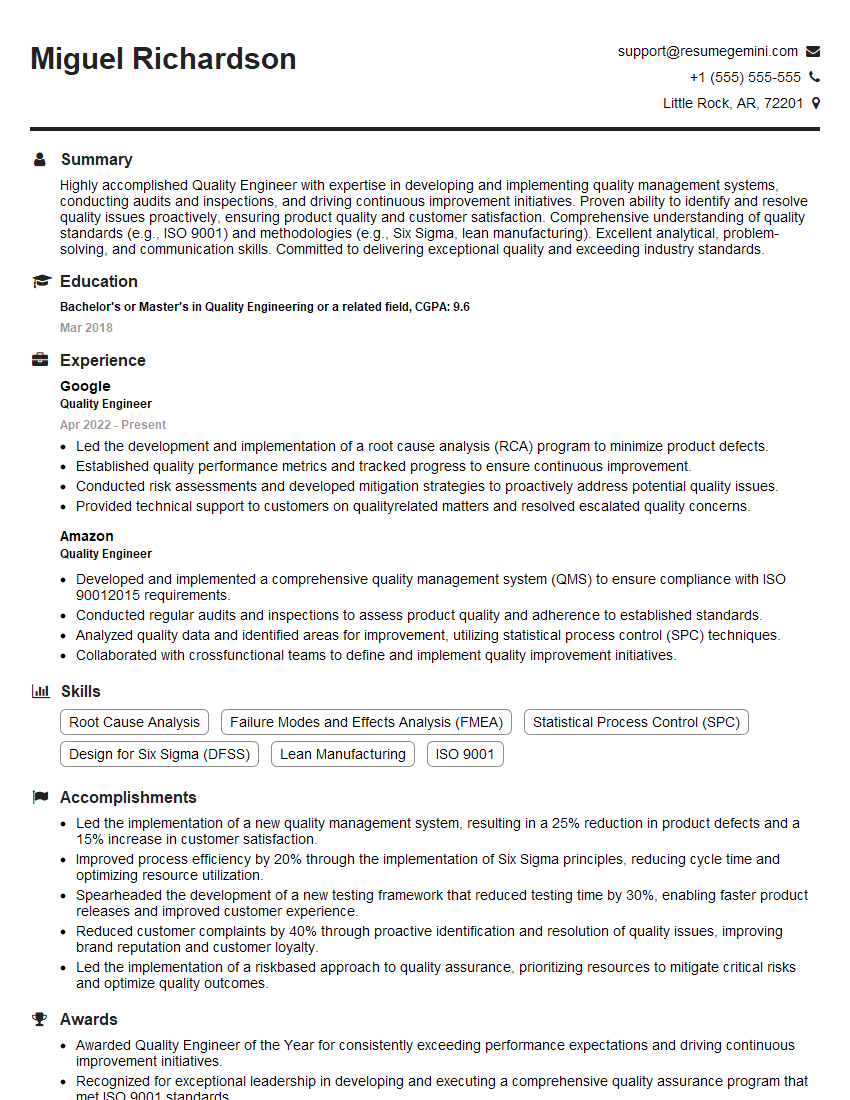
Quality Engineer Resume Sample

Manufacturing Engineer Resume Sample

Quality Assurance Technician Resume Sample

Finishing Technician Resume Sample

Finishing Inspector Resume Sample
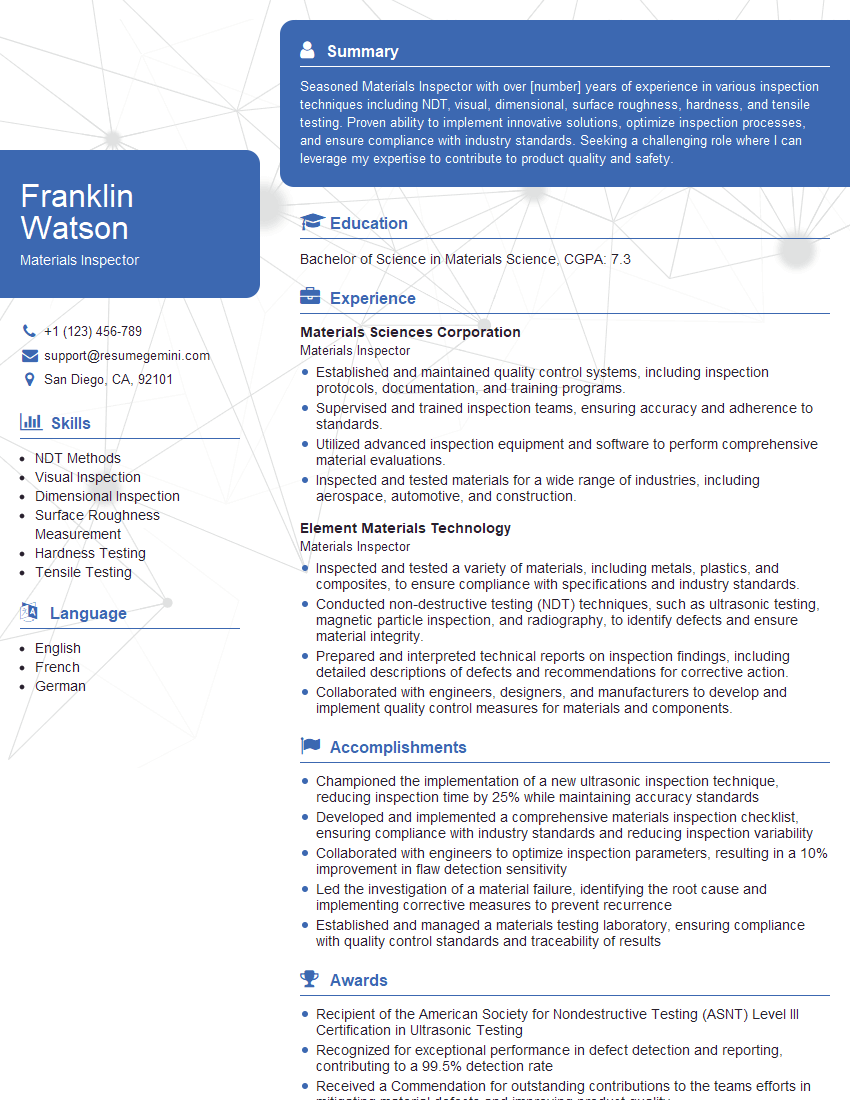
Materials Inspector Resume Sample

Production Inspector Resume Sample

Quality Control Inspector Resume Sample
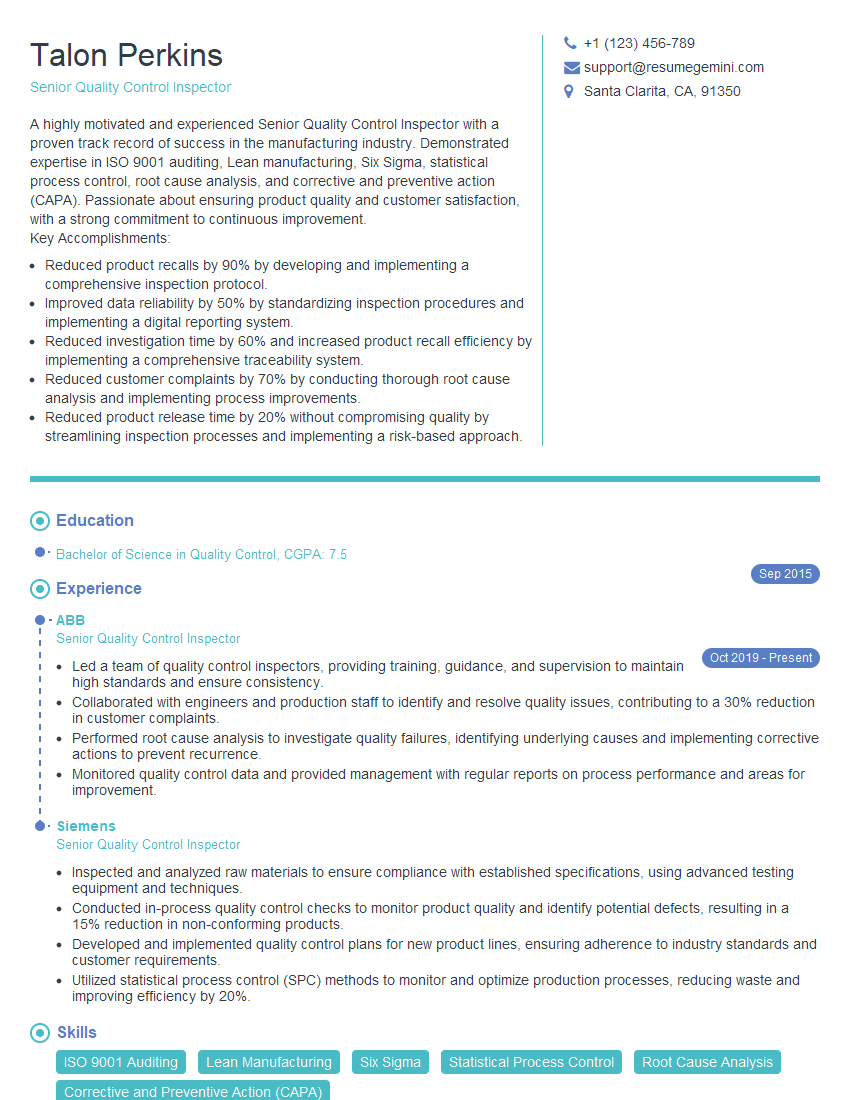
Senior Quality Control Inspector Resume Sample
Explore more articles
Users Rating of Our Blogs
Share Your Experience
We value your feedback! Please rate our content and share your thoughts (optional).
What Readers Say About Our Blog
Very informative content, great job.
good