Every successful interview starts with knowing what to expect. In this blog, we’ll take you through the top Fire Alarm System Testing interview questions, breaking them down with expert tips to help you deliver impactful answers. Step into your next interview fully prepared and ready to succeed.
Questions Asked in Fire Alarm System Testing Interview
Q 1. Explain the different types of fire alarm systems.
Fire alarm systems are categorized into several types based on their signaling methods and the technology used in their detection devices. The most common types are:
- Conventional Systems: These systems use simple, non-addressable devices. Each detector or device is wired to the control panel, and when triggered, the panel only indicates which zone is activated. Think of it like a simple light switch – you know the light is on, but not which switch turned it on. This is less expensive but offers limited diagnostic capabilities.
- Addressable Systems: These systems use intelligent devices with unique addresses. When a device is activated, the control panel displays the precise location of the alarm, providing a more targeted response. This is like a smart home system, precisely identifying which light triggered the alarm.
- Analog Addressable Systems: A step up from addressable, these systems provide not only the location of the alarm but also its level or intensity. For example, a smoke detector might report the level of smoke detected, helping to determine the severity of the situation.
- Wireless Systems: These systems use radio frequencies to communicate between detectors and the control panel. They offer greater flexibility in installation, especially in retrofit situations or where wiring is difficult.
The choice of system depends on factors like building size, complexity, budget, and the desired level of sophistication in alarm monitoring and response.
Q 2. Describe the process of testing a fire alarm system’s control panel.
Testing a fire alarm system’s control panel is crucial for ensuring its proper function. The process involves several steps, and the exact procedure may vary slightly depending on the system’s manufacturer and type. Generally, it involves:
- Visual Inspection: Checking for any visible damage, loose connections, or warning indicators.
- Power Supply Check: Confirming the panel is receiving the correct power supply and is functioning correctly.
- System Test: Initiating the system’s built-in test function. This simulates alarms from different zones and verifies that the panel correctly registers and displays these signals.
- Trouble Signal Check: Checking for any trouble signals which may indicate a fault in the system. Common troubles include low battery voltage or a faulty device.
- Manual Activation Test: Triggering a device such as a pull station to simulate a real fire alarm activation. This tests the signal pathway from the device to the panel and the activation of any associated alarms.
- Documentation: Recording the test results, including any issues detected, and the corrective actions taken. This creates a comprehensive record of the system’s performance.
After each test, ensure the system is reset to its normal operational mode. Proper documentation is critical, as this record helps trace past performance and aids in identifying issues during troubleshooting.
Q 3. How do you troubleshoot a malfunctioning smoke detector?
Troubleshooting a malfunctioning smoke detector requires a systematic approach. Start with the simplest checks first:
- Check the Power Supply: Verify that the detector is receiving power (battery or hardwired). Replace batteries if necessary, using the same type and voltage as the original ones.
- Test the Alarm: Use the built-in test button to ensure the alarm sounds. A failure here indicates a problem with the alarm itself.
- Check for Obstructions: Make sure there are no obstructions blocking the detector’s sensing chamber. Dust, cobwebs, or excessive kitchen grease can interfere with its operation.
- Check for Environmental Factors: Excessive humidity or temperature fluctuations can sometimes cause false alarms or malfunctions. Ensure it is installed according to the manufacturer’s specifications.
- Inspect for Damage: Examine the detector for any physical damage such as cracks or insect infestations.
- Test the Wiring (if hardwired): If it’s a hardwired detector and you have the appropriate expertise, test the wiring connections to ensure there are no loose or faulty wires.
- Replace the Detector: If none of the above solves the problem, the detector itself may be faulty. Replace it with a new detector of the same type.
Remember, safety is paramount. If you’re uncertain about any step of the troubleshooting process, consult a qualified fire alarm technician.
Q 4. What are the common causes of false alarms?
False alarms are a significant concern in fire alarm systems. Common causes include:
- Dust and Debris: Accumulation of dust, insects, or other debris in smoke detectors’ sensing chambers can trigger false alarms. Regular cleaning is crucial. This is especially common in areas with high dust levels.
- Cooking Smoke or Steam: Kitchen fumes and steam can sometimes be detected by smoke detectors as a fire, particularly those using ionization technology. Using exhaust fans effectively can help minimize this.
- Burning Food or Other Materials: Small amounts of burning food or other combustible materials that do not develop into a full-blown fire can sometimes trigger an alarm.
- Insects or Pests: Insects or rodents nesting inside detectors can cause malfunctions and false alarms.
- Poorly Installed Detectors: Incorrect installation can lead to sensitivity issues and false alarms.
- Malfunctioning Components: Faulty detectors or components within the fire alarm system itself can cause false activations. Regular maintenance and testing prevent this.
- Environmental Factors: Extreme temperatures or humidity can affect the detector’s sensitivity.
Addressing these issues through regular maintenance, appropriate detector placement, and proper system testing is key to minimizing false alarms and ensuring the system’s reliability.
Q 5. Explain the importance of regular fire alarm system maintenance.
Regular fire alarm system maintenance is not just recommended – it’s essential for ensuring life safety and preventing costly damage. Consistent upkeep:
- Ensures System Reliability: Regularly testing and inspecting the system guarantees that it functions as intended when needed.
- Reduces False Alarms: Maintenance prevents malfunctions caused by dust, debris, or faulty components, leading to fewer unnecessary alarms and disruptions.
- Extends System Lifespan: Regular cleaning and inspections can extend the lifespan of the system, reducing the need for premature replacements.
- Maintains Compliance: Many jurisdictions require regular testing and maintenance of fire alarm systems to comply with building codes and regulations. Failure to do so can result in fines and legal liabilities.
- Improves Response Time: A well-maintained system provides faster and more efficient response during an actual fire emergency, improving the safety of occupants.
Imagine a scenario where a fire occurs, and a crucial component of your fire alarm system malfunctions due to neglect. The consequences could be devastating. Regular maintenance is a small investment that can save lives and property.
Q 6. What are the key components of a fire alarm system?
A fire alarm system is comprised of several key components working in concert to detect and signal a fire:
- Detectors: These sense the presence of fire, either through smoke (photoelectric, ionization), heat (fixed temperature, rate-of-rise), or flame detection. They are the first line of defense.
- Control Panel: This is the ‘brain’ of the system, receiving signals from the detectors and initiating an alarm response. It monitors the entire system’s status.
- Notification Appliances: These alert building occupants to a fire, typically through audible alarms (bells, horns, strobes), visual signals (strobe lights), and potentially voice evacuation systems.
- Initiating Devices: These are devices used to manually activate the alarm, such as pull stations, manual call points, or even special sprinkler system interfaces.
- Power Supply: A reliable power source, often including a backup battery system, is essential for continuous operation.
- Wiring or Wireless Communication: This connects all components of the system, enabling communication between detectors, control panel, and notification appliances.
All these components need to function correctly for a system to work as intended. That’s why regular inspection and testing are so crucial.
Q 7. Describe your experience with different types of fire alarm devices (smoke detectors, heat detectors, pull stations).
Throughout my career, I’ve worked extensively with a variety of fire alarm devices. My experience includes:
- Smoke Detectors: I’ve installed and maintained both ionization and photoelectric smoke detectors, understanding their respective strengths and limitations. Ionization detectors are more sensitive to fast-flaming fires, while photoelectric detectors are better at detecting smoldering fires. Proper placement is critical, as is understanding their sensitivities to different types of smoke.
- Heat Detectors: I am proficient in working with fixed temperature and rate-of-rise heat detectors. Understanding the differences between these is critical, as fixed temperature detectors only activate at a specific temperature, while rate-of-rise detects a rapid increase in temperature.
- Pull Stations: I have experience installing and testing various types of manual pull stations, ensuring they’re easily accessible and clearly marked. These play a crucial role as they provide a direct way to manually activate the alarm.
My expertise extends to understanding the installation requirements, testing procedures, and troubleshooting techniques for each type of device, ensuring they are correctly integrated into the overall fire alarm system and function reliably.
Q 8. How do you conduct a visual inspection of a fire alarm system?
A visual inspection is the first and arguably most crucial step in fire alarm system testing. It’s like a thorough ‘once-over’ to identify any obvious problems before we delve into more technical testing. We’re looking for anything out of the ordinary that could compromise the system’s functionality.
- Physical Condition of Devices: We check for damage to fire alarm control panels, smoke detectors (looking for cracks, discoloration, or obstructions), heat detectors, manual pull stations (ensuring they’re not damaged or tampered with), and notification appliances (horns and strobes). For example, a cracked smoke detector cover could affect its sensitivity.
- Wiring and Cabling: We meticulously examine all visible wiring and cabling for any signs of damage, loose connections, improper routing, or unauthorized modifications. Loose wires, for instance, can lead to intermittent faults or complete system failure.
- Signs of Tampering: We look for any evidence of tampering or unauthorized access, such as forced entry to equipment enclosures or missing screws. This might indicate that someone intentionally disabled part of the system.
- Clearance and Obstructions: We ensure that all devices have adequate clearance and are free from obstructions that might impede their operation. For example, a shelf blocking a heat detector could prevent it from detecting a fire.
- Documentation Review: We cross-reference the physical system with existing drawings and documentation to ensure that everything matches up. This helps us spot any discrepancies between what’s documented and what’s installed.
A systematic approach is key. We typically move through the building zone by zone, methodically checking each component. Think of it as a comprehensive visual audit of the entire system.
Q 9. What are the relevant fire codes and standards you are familiar with (e.g., NFPA 72)?
My expertise encompasses several key fire codes and standards, most prominently NFPA 72, the National Fire Alarm and Signaling Code. This code is a bible for fire alarm system design, installation, testing, and maintenance. It provides comprehensive guidelines for ensuring the reliability and effectiveness of fire alarm systems. I am also familiar with other relevant codes and standards depending on the jurisdiction, including local building codes and potentially OSHA regulations related to workplace safety.
NFPA 72 dictates the frequency of testing (often annual), the specific tests required (like device testing and system functionality tests), and the documentation that needs to be maintained. Understanding these nuances is crucial to ensure compliance and the safety of the building’s occupants.
Furthermore, I stay updated on the latest revisions to these codes and standards through professional development courses and industry publications. The field is constantly evolving, so continuous learning is vital.
Q 10. How do you test the system’s notification appliances (horns, strobes)?
Testing notification appliances ensures they’re functioning correctly and will alert occupants in case of a fire. We generally use the fire alarm control panel to initiate a test signal, which activates all horns and strobes within the designated zones. We’ll listen carefully for audible signals and visually inspect the strobes to confirm their operation.
- Individual Appliance Checks: We don’t just rely on the system-wide test. We’ll often perform spot checks on individual horns and strobes, particularly those in hard-to-reach locations, to ensure they are functioning correctly.
- Volume and Intensity: We check that the audible signals are loud enough and the visual signals are bright enough to be easily perceived throughout their designated areas. NFPA 72 provides guidance on acceptable sound levels and strobe intensity.
- Documentation: We record the results of our testing, noting any malfunctioning appliances. For example, if a strobe is failing, we document its location and the nature of the fault (e.g., ‘strobe flashing intermittently’).
Think of it like checking all the lights and sirens in an emergency vehicle — we ensure every component is operational and ready for use.
Q 11. Explain the process of documenting testing procedures and findings.
Meticulous documentation is crucial for ensuring compliance, tracking maintenance history, and facilitating troubleshooting if problems arise. Our documentation typically includes the following:
- Date and Time of Test: This provides a clear audit trail.
- System Tested: Specific identification of the fire alarm system (e.g., building location, system identifier).
- Tests Performed: A detailed listing of all tests conducted (e.g., visual inspection, device testing, system functionality test).
- Test Results: Clear indication of whether each test passed or failed, along with specific details of any failures.
- Corrective Actions: Any repairs or corrective actions taken to address identified faults, along with dates of completion.
- Technician Signature and Identification: Ensuring accountability.
- Photographs (if applicable): Visual evidence of damage, repairs, or unique system configurations.
We generally use standardized forms or software to ensure consistency and efficiency in documentation. The goal is to create a comprehensive record that can be readily accessed and understood by anyone involved in the system’s maintenance and operation.
Q 12. Describe your experience with fire alarm system programming.
My experience with fire alarm system programming is extensive. I am proficient in using various programming software and hardware interfaces to configure and customize fire alarm systems. This includes programming addressable fire alarm panels, setting notification appliance schedules, defining zones, and configuring various system parameters such as sensitivity levels and alarm response times.
For example, I’ve programmed systems to integrate with other building management systems, allowing for centralized monitoring and control. I’ve also customized notification schedules to minimize disruptions during specific events, such as school hours or nighttime quiet periods. My experience also extends to troubleshooting programming errors and performing firmware updates.
I am familiar with a range of protocols used in fire alarm systems, ensuring compatibility and seamless integration with existing infrastructure. Programming is a precision task, and accuracy is paramount, as an incorrectly programmed system could have significant safety implications.
Q 13. How do you handle a situation where a critical component fails during testing?
Discovering a critical component failure during testing is serious. Our immediate response is prioritized around safety and ensuring the building’s occupants aren’t at risk. Our step-by-step approach includes:
- Isolate the Problem: The first step is to identify the faulty component and its impact on the overall system. We may need to use diagnostic tools to pinpoint the exact problem.
- Notify Relevant Personnel: We immediately inform building management and any other relevant parties, such as the fire department if the failure significantly compromises the system’s functionality.
- Implement Temporary Measures: Depending on the nature of the failure, we may implement temporary measures to ensure some level of fire safety, such as additional manual monitoring or temporary notification devices.
- Schedule Repairs: We promptly arrange for repairs with qualified technicians, focusing on the fastest possible restoration of full system functionality.
- Document Everything: We meticulously document the failure, our troubleshooting steps, the temporary measures, repairs, and any other relevant information.
Safety is always paramount. We will prioritize temporary solutions and communication with building management to mitigate risks while addressing the core issue.
Q 14. What are the safety precautions you take while testing a fire alarm system?
Safety is paramount throughout the entire fire alarm system testing process. We adhere to a strict set of safety precautions, including:
- Lockout/Tagout Procedures: Before beginning any work, we implement lockout/tagout procedures to de-energize the system and prevent accidental activation during testing. This ensures no one is accidentally exposed to the test signals.
- Personal Protective Equipment (PPE): We always wear appropriate PPE, such as safety glasses and gloves, to protect ourselves from potential hazards.
- Awareness of Surroundings: We remain aware of our surroundings and take necessary precautions to prevent accidents. This includes ensuring clear pathways and avoiding any potential hazards.
- Proper Training and Certification: All personnel involved in testing are properly trained and certified to handle fire alarm systems safely and effectively.
- Emergency Procedures: We are familiar with the building’s emergency procedures and know how to respond in case of an actual fire or other emergency.
We treat every testing situation as a potentially hazardous one and prioritize safety at every stage of the process.
Q 15. How familiar are you with different communication protocols used in fire alarm systems?
Fire alarm systems utilize various communication protocols to transmit signals between devices. Understanding these protocols is crucial for effective testing and troubleshooting. Common protocols include:
- Proprietary Protocols: Many manufacturers use their own unique communication protocols, often requiring specialized testing equipment and knowledge. This can make interoperability between different brands challenging. For example, a specific panel might use a unique addressing scheme or signaling format that’s not compatible with others.
- Addressable Protocols: These protocols, such as FireLink and Silca, assign unique addresses to each device on the system. This allows for precise identification of the location of a triggered alarm or a faulty component, greatly simplifying troubleshooting. Imagine it like each device having a unique postal code, making locating a specific piece of equipment very easy.
- Network Protocols: Modern systems are increasingly using network protocols like Ethernet and IP, enabling remote monitoring, diagnostics, and system management. This allows for advanced features like web-based interfaces and remote system access.
My experience encompasses working with all these protocol types, requiring a versatile approach to testing methodologies based on the specific system architecture.
Career Expert Tips:
- Ace those interviews! Prepare effectively by reviewing the Top 50 Most Common Interview Questions on ResumeGemini.
- Navigate your job search with confidence! Explore a wide range of Career Tips on ResumeGemini. Learn about common challenges and recommendations to overcome them.
- Craft the perfect resume! Master the Art of Resume Writing with ResumeGemini’s guide. Showcase your unique qualifications and achievements effectively.
- Don’t miss out on holiday savings! Build your dream resume with ResumeGemini’s ATS optimized templates.
Q 16. Explain your experience with different types of fire alarm system panels.
My experience spans a wide range of fire alarm system panels, from simple, non-addressable systems to sophisticated, networked addressable systems. I’ve worked with panels from leading manufacturers such as System Sensor, Edwards, and Honeywell. This experience includes:
- Conventional Panels: These panels offer simpler, less expensive solutions, typically using zones to identify alarm locations. Testing involves verifying proper zone operation and alarm signaling.
- Addressable Panels: These panels provide greater system intelligence, offering detailed information about each device’s status and location. Testing involves verifying device addresses, communication links, and fault detection capabilities. They are much more powerful and provide much more detail during testing and troubleshooting.
- Intelligent Panels: These are the most advanced systems, incorporating features like network connectivity, remote monitoring, and sophisticated analytics. Testing requires familiarity with network protocols and system software.
I am adept at configuring, programming, and troubleshooting different types of panels, ensuring they meet stringent safety codes and regulations.
Q 17. Describe your experience using testing equipment (e.g., multimeter, signal generator).
Accurate fire alarm system testing relies heavily on specialized equipment. My experience includes using a range of tools such as:
- Multimeters: Essential for checking voltage levels, continuity, and resistance in wiring and devices. I regularly use multimeters to verify proper power supply, check for shorts, and ensure proper grounding. A good example would be checking for 24V DC at the device level and verifying the integrity of the wiring.
- Signal Generators: These tools simulate various alarm signals to test the sensitivity and response of detectors and other system components. We use signal generators to simulate different alarm types (e.g., heat, smoke) to ensure that the system responds accurately.
- Loop Testers/Short Circuit Isolators: Addressable systems require dedicated testing equipment to isolate faults on the communication loop, identifying short circuits or open circuits along the system wiring.
- Specialized Software: Many modern panels are programmed and monitored through dedicated software packages. My experience includes using various manufacturers’ software to test and configure systems. This allows for detailed inspection of system parameters and device statuses.
My proficiency in using this equipment ensures comprehensive and accurate testing results.
Q 18. How do you ensure the accuracy of your testing results?
Ensuring accuracy in fire alarm system testing involves a multi-faceted approach:
- Calibration: Regular calibration of testing equipment is crucial. This ensures that readings are accurate and reliable. We have a scheduled calibration program for all testing devices.
- Documented Procedures: Following strict testing procedures and documenting each step ensures consistency and traceability. This includes detailed records of tests performed, results obtained, and any corrective actions taken.
- Multiple Tests: Repeating tests, especially on critical components, helps validate findings and identify any inconsistencies. If a test result seems questionable, I always repeat the test to confirm the result.
- Cross-Checking: Comparing results from different tests and equipment helps identify errors and inconsistencies. This approach offers another layer of verification. For example, I might check voltage with a multimeter and compare it to the readings from the panel.
- Reference Standards: Adhering to relevant standards and codes ensures compliance and minimizes the risk of errors. NFPA 72 is a critical standard for fire alarm system testing and maintenance.
This rigorous approach guarantees the reliability and accuracy of the testing results, offering peace of mind.
Q 19. What are the common issues you’ve encountered while testing fire alarm systems?
During my career, I’ve encountered various common issues while testing fire alarm systems. These issues include:
- Wiring Faults: Open circuits, short circuits, and loose connections are frequent culprits. These faults can prevent proper signal transmission and lead to false alarms or system failures. Systematic tracing of the wiring is necessary to identify these issues.
- Device Malfunctions: Faulty detectors, sounders, or other system components can cause intermittent problems. Regular inspections and preventative maintenance greatly reduce this risk.
- Software Glitches: In addressable and intelligent systems, software issues can lead to inaccurate readings or system malfunctions. Regular software updates and proper panel programming minimize these risks.
- Power Supply Problems: Insufficient or unreliable power supply can cause the system to malfunction. Testing includes verifying proper voltage levels and backup power functionality.
- Environmental Factors: Dust, moisture, or extreme temperatures can negatively impact sensor performance, leading to inaccuracies or false alarms. Regular cleaning and maintenance are crucial.
Experience allows me to diagnose and resolve these issues efficiently, ensuring a fully functional and reliable fire alarm system.
Q 20. Explain your experience with different types of fire alarm system sensors.
My experience with fire alarm system sensors covers a broad range of technologies:
- Smoke Detectors: These are crucial for detecting airborne particles from fires. I’ve worked with ionization, photoelectric, and dual-sensor detectors, each having unique characteristics and sensitivities. For instance, ionization detectors are highly sensitive to fast-flaming fires, while photoelectric detectors respond better to smoldering fires.
- Heat Detectors: These sensors detect increases in temperature. They come in fixed-temperature and rate-of-rise types, requiring different testing approaches. Rate-of-rise detectors require special testing equipment to mimic rapid temperature changes.
- Flame Detectors: These advanced detectors use infrared or ultraviolet sensors to detect the presence of flames, providing early detection in situations where smoke detectors might be less effective.
- Carbon Monoxide Detectors: These are included to detect the presence of toxic gas often associated with incomplete combustion, protecting occupants from carbon monoxide poisoning.
Understanding the strengths and limitations of each sensor type is essential for proper system design and testing.
Q 21. How do you interpret fire alarm system test reports?
Interpreting fire alarm system test reports requires careful attention to detail and a thorough understanding of the system’s architecture. The report should clearly document:
- System Details: Complete information on the system’s components, including panel type, detectors, notification appliances, and communication protocols. This is crucial for understanding the context of the test results.
- Test Procedures: A clear description of the methods used during testing, ensuring that the tests followed recognized standards and best practices. Adherence to procedures like NFPA 72 is vital.
- Test Results: A detailed account of the test results for each component, including pass/fail status and any identified faults. Clear identification of any problems is critical.
- Corrective Actions: A summary of any necessary corrective actions taken to address identified faults. This documents remediation efforts.
- Recommendations: Suggestions for preventative maintenance and improvements to the system based on test findings. Preventative maintenance ensures continued system integrity.
By analyzing these elements, I can identify areas of concern, prioritize repairs, and provide recommendations for enhancing system reliability and safety.
Q 22. Describe your problem-solving approach when faced with a complex fire alarm system issue.
My approach to solving complex fire alarm system issues is systematic and methodical. I begin by thoroughly understanding the problem. This involves gathering all relevant information, including alarm logs, system documentation, and witness accounts. I then move to a detailed analysis, breaking down the issue into smaller, manageable components. For instance, if the system is experiencing frequent false alarms, I might investigate each potential source individually: faulty sensors, wiring problems, or software glitches.
Next, I develop and test hypotheses. This might involve using specialized testing equipment to isolate faulty components or simulating different scenarios to pinpoint the root cause. For example, I might use a smoke generator to test the sensitivity of smoke detectors or a multimeter to check for shorts in the wiring. Once I’ve identified the problem’s root cause, I implement a solution, thoroughly documenting each step of the process. Finally, I rigorously test the system to ensure the issue is resolved and the system is functioning correctly. This includes performing functional testing, and sometimes, running a full system test. This multi-step process, from gathering information to final testing, ensures a comprehensive and reliable solution.
Q 23. How do you stay up-to-date with the latest fire alarm system technologies and regulations?
Staying current in the dynamic field of fire alarm systems requires a multi-pronged approach. I actively participate in professional development opportunities, including attending industry conferences and webinars. These events often feature the latest advancements in technology and best practices. I’m also a member of relevant professional organizations, which provide access to journals, newsletters, and online resources. These resources often publish articles on new regulations and updated standards. Further, I maintain a network of colleagues and mentors within the industry. Regular discussions and knowledge sharing keeps me informed about emerging trends and solutions to challenges. Finally, I make a point of regularly reviewing relevant codes and standards, such as NFPA 72 (National Fire Alarm Code) and local building codes, ensuring my work always aligns with the latest regulations.
Q 24. How do you prioritize tasks during multiple fire alarm system testing projects?
Prioritizing tasks across multiple fire alarm system testing projects requires a well-defined strategy. I utilize project management methodologies, such as the prioritization matrix, which helps me to categorize tasks based on urgency and importance. Tasks with critical deadlines and potential safety implications always take precedence. For example, repairing a malfunctioning alarm system in an occupied building will naturally take priority over routine maintenance at a vacant site. I also factor in client needs and contractual obligations. This ensures I meet deadlines and maintain client satisfaction. Effective time management and utilizing project management software further assists in efficiently juggling multiple projects. I use these tools to track progress, allocate resources effectively, and avoid scheduling conflicts. Regular communication with clients keeps them updated and allows for any necessary adjustments to project priorities.
Q 25. Explain your experience working with different types of building layouts and fire alarm system designs.
My experience encompasses a wide range of building layouts and fire alarm system designs. I’ve worked on everything from small, single-story buildings to large, complex high-rises, including hospitals, schools, and commercial complexes. Each building presents unique challenges. For instance, older buildings may have outdated systems requiring careful analysis and potential upgrades, while newer structures may incorporate advanced technologies like addressable systems and networked fire alarm panels. I am proficient in interpreting blueprints and understanding the intricacies of various alarm system designs, including conventional, addressable, and hybrid systems. I’m also experienced with different types of detection devices like smoke detectors (ionization, photoelectric, dual-sensor), heat detectors, and manual pull stations. This adaptability ensures I can effectively assess and test any system, regardless of its complexity or age.
Q 26. Describe your experience working with different clients or stakeholders.
I’ve had the opportunity to work with a diverse range of clients and stakeholders, from building owners and property managers to fire marshals and insurance inspectors. Each interaction requires a tailored approach. For example, when working with building owners, I focus on clear communication, explaining technical details in a way they can easily understand and highlighting the importance of system maintenance for safety and liability reasons. With fire marshals, I emphasize compliance with regulations and present detailed inspection reports. My communication style is always professional, respectful, and focused on collaboration. I believe in fostering strong relationships built on trust and mutual understanding. A successful project relies on clear communication and proactive collaboration with all parties involved. Successfully navigating these different dynamics has helped me hone my communication skills and tailor my approach for optimal outcomes.
Q 27. What are your salary expectations for this role?
My salary expectations are commensurate with my experience, skills, and the responsibilities of this role. I am confident that my extensive knowledge and proven track record justify a competitive compensation package. I am open to discussing this further and am happy to provide a specific range after learning more about the detailed requirements of the position.
Key Topics to Learn for Fire Alarm System Testing Interview
- Understanding Fire Alarm System Components: Familiarize yourself with the various components of a fire alarm system, including initiating devices (smoke detectors, heat detectors, pull stations), control panels, notification appliances (horns, strobes), and power supplies. Understand their functionalities and interconnections.
- Testing Procedures and Methodologies: Master the different testing procedures, such as visual inspections, functional testing, and system testing. Understand the importance of documenting test results accurately and completely. Learn about different testing standards and codes (e.g., NFPA 72).
- Troubleshooting and Problem Solving: Develop your skills in identifying and resolving common fire alarm system malfunctions. Practice diagnosing problems based on system behavior and alarm signals. Be prepared to discuss your approach to troubleshooting complex issues.
- Code Compliance and Regulations: Understand relevant fire codes and regulations pertaining to fire alarm system installation, testing, and maintenance. Be familiar with local building codes and their impact on your work.
- Types of Fire Alarm Systems: Gain a solid understanding of different fire alarm system types, including conventional, addressable, and analog addressable systems. Know their strengths and weaknesses and when each is appropriate.
- Safety Procedures and Protocols: Demonstrate knowledge of safety procedures related to fire alarm system testing, including lockout/tagout procedures and proper use of personal protective equipment (PPE).
- Documentation and Reporting: Practice creating clear and concise test reports that accurately reflect the findings of your inspections and tests. Understand the importance of accurate record-keeping.
Next Steps
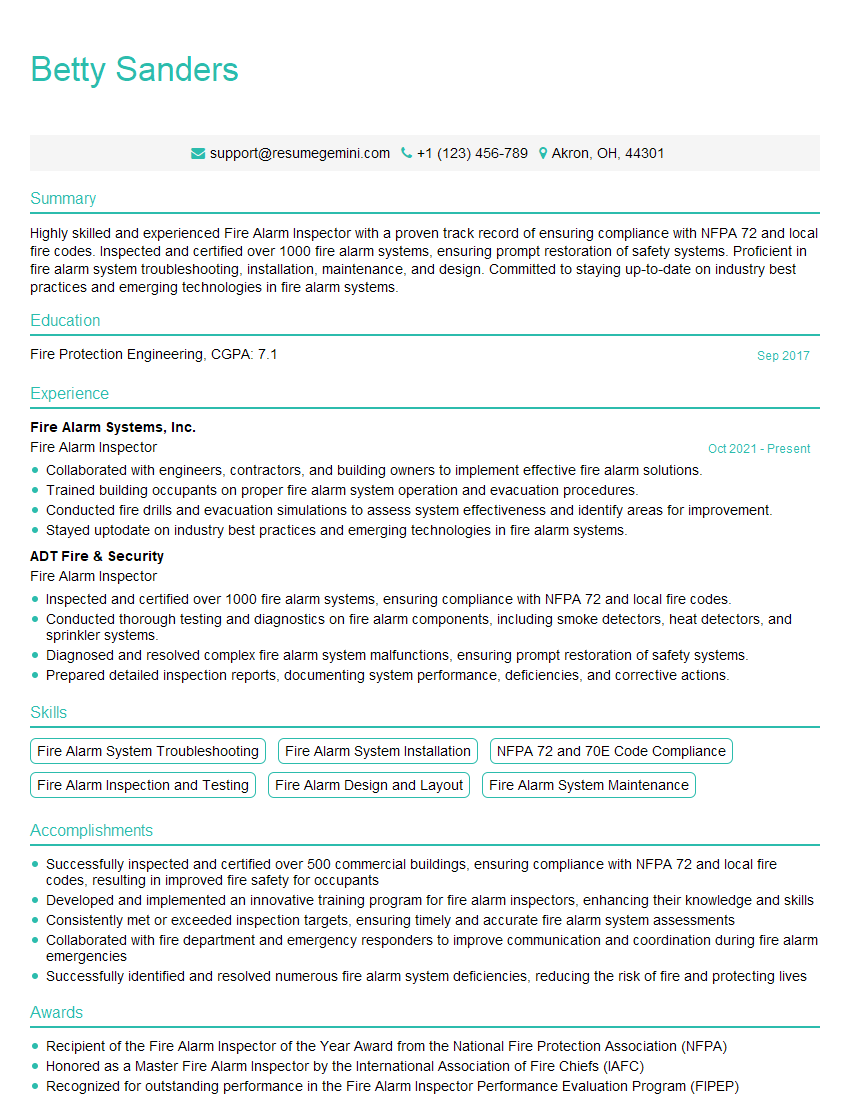
Mastering Fire Alarm System Testing is crucial for career advancement in this vital field. It demonstrates a commitment to safety and a deep understanding of critical building systems. To stand out to potential employers, create a strong, ATS-friendly resume that highlights your skills and experience effectively. ResumeGemini is a trusted resource for building professional resumes that get noticed. Take advantage of their tools and resources to craft a compelling resume, and remember that they provide examples specifically tailored to Fire Alarm System Testing professionals.
Explore more articles
Users Rating of Our Blogs
Share Your Experience
We value your feedback! Please rate our content and share your thoughts (optional).
What Readers Say About Our Blog
Very informative content, great job.
good