Cracking a skill-specific interview, like one for Fire Alarm Testing, requires understanding the nuances of the role. In this blog, we present the questions you’re most likely to encounter, along with insights into how to answer them effectively. Let’s ensure you’re ready to make a strong impression.
Questions Asked in Fire Alarm Testing Interview
Q 1. Explain the difference between a system trouble and a supervisory trouble in a fire alarm system.
In a fire alarm system, both system troubles and supervisory troubles signal problems, but they indicate different types of issues. Think of it like this: a system trouble is a critical failure directly impacting the alarm’s ability to function, while a supervisory trouble is more of a warning sign indicating a potential problem that might compromise the system’s effectiveness in the future.
System Trouble: This signifies a major malfunction that prevents the system from operating as intended. Examples include a power failure to the control panel, a short circuit in a wiring, or a failure of a crucial component like the main processor. A system trouble will typically trigger an audible alarm at the control panel, indicating immediate attention is required. Imagine a car’s engine seizing – the car won’t run.
Supervisory Trouble: This alerts you to a potential problem that *could* lead to system failure, but the system is still functioning. These often relate to non-critical system components. Examples include a low battery in a detector, a door being held open, or a fault in a less critical part of the system. A supervisory trouble might trigger a visual indicator on the control panel but not necessarily an audible alarm. It’s like a warning light on your car’s dashboard – indicating a potential issue that should be addressed soon.
The key difference lies in the immediacy of the threat. System troubles demand immediate action, while supervisory troubles allow for a more planned maintenance approach.
Q 2. Describe the process of testing a fire alarm control panel.
Testing a fire alarm control panel is a crucial aspect of ensuring its proper functionality. This typically involves a systematic approach, checking both the panel itself and its communication with other system components.
Visual Inspection: Begin with a thorough visual inspection, checking for any signs of damage, loose connections, or unusual indicators on the panel itself.
Panel Self-Test: Most modern panels have a built-in self-test function. This automatically checks the panel’s internal components and reports any faults. The procedure is usually initiated by pressing a specific button or navigating through the panel’s menu.
Testing Individual Zones: Each zone needs to be tested individually. This typically involves activating a test switch located in each zone’s circuit. This simulates a fire alarm signal from that area and allows you to confirm that the panel correctly identifies the activated zone and initiates the appropriate alarm signals.
Communication Testing: If the system utilizes remote monitoring or networking protocols like BACnet or Modbus, you’ll need to verify communication between the control panel and any remote devices or monitoring systems. This often involves checking network connections and communication logs.
Documentation: Meticulous record-keeping is essential. Note all test results, including any faults or issues identified. This documentation will be crucial for future maintenance and troubleshooting.
Remember, safety is paramount. Always follow the manufacturer’s instructions and, when necessary, engage a qualified professional.
Q 3. How do you troubleshoot a fire alarm system that is experiencing false alarms?
False alarms are a significant problem in fire alarm systems, causing disruption and potentially leading to complacency. Troubleshooting involves a systematic process of elimination.
Identify the Source: First, pinpoint the exact location of the false alarm. This helps narrow down the potential causes.
Environmental Factors: Check for environmental factors such as excessive dust, insects nesting in detectors, or high humidity, especially in heat detectors.
Detector Sensitivity: Incorrect detector sensitivity settings can lead to false alarms. Review the sensitivity settings and make necessary adjustments based on the environment. Too much sensitivity is a common culprit.
Wiring Issues: Check for any shorts or loose connections in the wiring that could be triggering false alarms.
Malfunctioning Detectors: A defective detector is a common cause. Test each detector individually to isolate any faulty units. You can use a test device to simulate alarm conditions.
Maintenance Issues: Lack of regular cleaning and maintenance of detectors can result in false alarms. Ensure detectors are cleaned and maintained according to manufacturer recommendations.
Sometimes, a more in-depth investigation might be required, possibly including the use of specialized testing equipment. If the issue persists after these steps, consider engaging a qualified fire alarm technician.
Q 4. What are the common causes of fire alarm system malfunctions?
Fire alarm system malfunctions have several common causes, often linked to neglect, environmental factors, or component failures.
Power Issues: Power outages or insufficient power supply can significantly impact the system’s performance.
Faulty Detectors: Defective detectors, due to age, environmental damage (dust, insects), or internal component failure, are among the most frequent causes.
Wiring Problems: Loose connections, short circuits, or damaged wiring can interrupt signals and cause malfunctions.
Control Panel Malfunctions: Failures in the control panel itself, including processor issues or software glitches, can severely disrupt the system.
Lack of Maintenance: Regular inspections, testing, and cleaning are vital. Neglecting these tasks can lead to accumulation of dust, corrosion, and eventual component failure.
Environmental Factors: Extreme temperatures, humidity, or presence of corrosive substances can damage components.
Software Issues: In networked systems, software glitches or incompatibility between components can cause disruptions.
It’s crucial to remember that proactive maintenance and regular testing are your best defense against malfunctions.
Q 5. Explain the importance of regular fire alarm system testing and maintenance.
Regular testing and maintenance of fire alarm systems are absolutely vital for ensuring the safety and protection of occupants in a building. It’s not simply about complying with regulations – it’s about saving lives and minimizing property damage.
Early Problem Detection: Regular testing identifies potential issues before they escalate into major malfunctions, preventing costly repairs and system downtime.
Improved Response Time: A well-maintained system responds promptly to actual fires, maximizing the chances of early detection and evacuation. A malfunctioning system could delay crucial response time.
Reduced False Alarms: Proper maintenance minimizes false alarms, reducing disruption and preventing complacency. Repeated false alarms can lead to people ignoring real alarms.
Compliance with Regulations: Regular testing demonstrates compliance with fire safety codes and regulations, avoiding penalties and legal issues.
Insurance Requirements: Many insurance companies mandate regular testing and maintenance as a condition of coverage.
Peace of Mind: Knowing that the fire alarm system is regularly tested and functioning correctly provides peace of mind to occupants and building management.
Think of it like a smoke detector in your home – you test it regularly to ensure it’s working when you need it most. A fire alarm system in a building functions the same way, only on a much larger scale.
Q 6. What are the different types of fire alarm detectors and their applications?
Fire alarm detectors come in various types, each suited to different fire scenarios. Choosing the right detector for a specific application is crucial for effective fire protection.
Ionization Smoke Detectors: These detectors are highly sensitive to fast-flaming fires that produce small smoke particles. They are commonly used in residential settings, but also find application in commercial buildings.
Photoelectric Smoke Detectors: These detectors are better at detecting slow-smoldering fires that produce larger smoke particles. They are often used in areas with a higher risk of smoldering fires, like kitchens or storage rooms.
Dual-Sensor Smoke Detectors: Combining both ionization and photoelectric sensors, these detectors offer the broadest range of fire detection capabilities, making them a popular choice for many applications.
Heat Detectors: These detectors respond to temperature increases. They come in various types, including fixed-temperature detectors (triggered at a specific temperature) and rate-of-rise detectors (triggered by a rapid temperature increase). Heat detectors are often used in areas where smoke detectors might be prone to false alarms, such as kitchens or industrial facilities.
Flame Detectors: These highly specialized detectors identify the presence of flames using infrared or ultraviolet sensors. They are frequently used in high-risk environments like industrial settings or petrochemical plants.
The selection of appropriate detectors depends on the specific environment, the types of potential fires, and local building codes. It’s crucial to understand the characteristics of each detector type to make informed decisions.
Q 7. Describe your experience with different types of fire alarm system protocols (e.g., BACnet, Modbus).
Throughout my career, I’ve worked extensively with various fire alarm system protocols, including BACnet and Modbus. Understanding these protocols is vital for integrating and managing modern fire alarm systems.
BACnet (Building Automation and Control Networks): BACnet is an open protocol widely used in building automation systems, allowing seamless integration of fire alarm systems with other building management systems (BMS). This integration enables centralized monitoring, control, and reporting of various building systems, including fire alarm, HVAC, lighting, and security. I have experience configuring and troubleshooting BACnet networks in large commercial buildings, verifying communication between fire alarm panels and other BMS components, ensuring data integrity and reliable system performance. For example, I’ve worked on projects where real-time fire alarm data is fed into a central monitoring platform, providing comprehensive building-wide situational awareness.
Modbus: Modbus is another widely adopted communication protocol, particularly prevalent in industrial settings and smaller-scale fire alarm systems. My experience with Modbus includes configuring fire alarm panels for communication with various devices such as remote annunciators, input/output modules, and supervisory systems. I have tackled troubleshooting issues related to Modbus communication, ensuring reliable data transmission and accurate reporting of alarm events. I have worked on projects requiring Modbus integration with other industrial control systems, enhancing the overall security and safety of the facility.
The choice of protocol depends on system requirements, scalability, budget, and the existing building infrastructure. My expertise encompasses both protocols, allowing me to effectively manage and troubleshoot fire alarm systems regardless of the communication protocol used.
Q 8. How do you interpret fire alarm system drawings and schematics?
Interpreting fire alarm system drawings and schematics is crucial for effective testing. Think of these drawings as a map of the system. They show the locations of all components – smoke detectors, heat detectors, pull stations, control panels, and the wiring connecting them. I start by identifying the main control panel, which acts as the brain of the system. From there, I trace the wiring pathways to understand how each device is connected and how signals flow. I look for things like device labels (e.g., ‘Smoke Detector – Zone 1’), zone designations, and any special notes or annotations. For example, a dashed line might indicate a future expansion of the system. Understanding the different symbols used is also vital; each represents a specific component or type of wiring. This careful review allows me to plan a systematic testing approach, ensuring all components are tested accurately and efficiently.
I often use a highlighter to mark specific areas or zones during my review to easily refer to them while physically testing the system. I also take detailed notes on any discrepancies or unusual configurations I find to be addressed before starting the test.
Q 9. What are the relevant fire codes and standards you adhere to during fire alarm testing?
Adhering to relevant fire codes and standards is paramount. The primary standard I follow is NFPA 72, National Fire Alarm and Signaling Code. This comprehensive document outlines requirements for design, installation, testing, and maintenance of fire alarm systems. Additionally, I consider any local or state fire codes, which may incorporate NFPA 72 or have specific supplementary rules. Other relevant standards might include those from the authority having jurisdiction (AHJ), such as the local fire marshal’s office or building codes. Understanding these regulations ensures the system is legally compliant, operates effectively, and protects building occupants.
For instance, depending on the occupancy type of the building (residential, commercial, industrial), certain testing frequencies and procedures are mandated. Understanding these differences is crucial in ensuring that I’m conducting the appropriate and required tests.
Q 10. Explain your understanding of NFPA 72.
NFPA 72 is the bible for fire alarm professionals. It’s a comprehensive document that dictates all aspects of fire alarm systems, from design and installation to testing and maintenance. It provides detailed guidelines on everything from the type of detectors needed for different occupancies to the frequency of testing and the documentation required. Imagine a recipe book for a complex dish: NFPA 72 lays out the exact ingredients, methods, and quality checks needed to create a safe and effective fire alarm system. It covers various system types, including conventional, addressable, and analog addressable systems. Within the standard, there are chapters on specific topics like system design, installation, testing, inspection, maintenance, and emergency services. It’s not just about testing; it covers the entire lifecycle of a fire alarm system, ensuring its reliable operation.
Understanding NFPA 72 is critical to ensuring that a fire alarm system meets the required standards for safety and regulatory compliance.
Q 11. How do you test smoke detectors, heat detectors, and pull stations?
Testing smoke detectors, heat detectors, and pull stations follows specific procedures, varying based on the system type (conventional or addressable). For smoke detectors, I use a calibrated smoke generator to produce a controlled amount of smoke, triggering the alarm. For heat detectors, I use a heat source (like a calibrated heat gun) to simulate a fire. Both require observing the detector’s response and verifying that it sends a signal to the control panel. Pull stations are tested manually by pulling the handle, ensuring the alarm activates and sends an appropriate signal. Always check the control panel to confirm the signal was correctly received and properly registered. After each test, reset the device according to the manufacturer’s instructions.
For example, during a test, if a smoke detector fails to activate, I would systematically investigate the cause – checking for dust accumulation, debris obstructing the sensor, wiring issues, or a faulty detector itself. These failures are then documented and addressed accordingly.
Q 12. Describe the process of documenting fire alarm system test results.
Thorough documentation is vital for compliance and future troubleshooting. My documentation typically includes a detailed test report, listing the date, time, location, and the technician performing the test. It includes a comprehensive list of all devices tested, their status (passed or failed), any corrective actions taken, and any outstanding issues. I use standardized forms or spreadsheets that capture all this information. The report also notes the system’s type (conventional, addressable, etc.) and the equipment used for testing. Photographs can be included as needed to provide visual evidence of testing or any deficiencies identified.
For example, I would note that ‘Smoke Detector SD-101 in Zone A failed to activate during testing; replacement recommended.’
This detailed record is crucial for tracking the system’s health and demonstrating compliance with regulations. It also helps streamline future maintenance and repairs.
Q 13. How do you handle emergency situations during fire alarm system testing?
Emergency situations are rare but possible during testing. Before any testing begins, I inform building occupants of the scheduled tests, specifying the times and expected interruptions. If an alarm unintentionally activates during testing (e.g., due to a malfunction), I immediately stop testing and follow the established emergency procedures. This might involve coordinating with building management, contacting the fire department if necessary (depending on the situation), and ensuring the safe evacuation of the building if required. My primary focus is always on the safety of building occupants.
A clear communication plan is crucial to avoid confusion and ensure a timely and effective response to any such emergency.
Q 14. What safety precautions do you take during fire alarm system testing?
Safety is my top priority. Before starting any testing, I inspect the testing equipment and ensure it’s calibrated and functioning correctly. I use appropriate personal protective equipment (PPE), such as safety glasses, when handling potentially hazardous materials. I also follow lockout/tagout procedures to prevent accidental activation of the system during maintenance or repairs. I am mindful of the location of exits and emergency assembly points. When using smoke generators, I ensure adequate ventilation to avoid creating hazardous conditions. I never perform testing alone; I always have a colleague present. The safety of myself and those around me is non-negotiable.
For instance, I would not use a heat gun near flammable materials without taking appropriate precautions, such as having a fire extinguisher nearby and ensuring adequate separation.
Q 15. Explain your experience with different types of fire alarm annunciators.
Annunciators are the visual and audible interfaces of a fire alarm system, displaying the location of alarms and system status. My experience encompasses a range of annunciator types, from simple, single-zone conventional indicators to sophisticated, graphic addressable panels showing the exact location of a device triggering an alarm and the status of each zone.
- Conventional Annunciators: These older systems use a single circuit for multiple detectors. A light or bell will indicate which zone (group of detectors) is triggered, not necessarily the precise location of the activation. For instance, a single light labeled ‘Zone 1’ might illuminate for any detector connected to that circuit. Troubleshooting is more challenging as pinpointing the exact faulty device requires methodical checking.
- Addressable Annunciators: In addressable systems, each device has a unique address, allowing the annunciator to display the specific location of the alarm. A graphic panel might display the floor plan with the exact detector location highlighted. This precision drastically improves response time and reduces investigation time. Imagine the difference between receiving a general alert for the ‘West Wing’ compared to an alert that specifically pinpoints ‘Office 307, West Wing.’
- Networked Annunciators: Large-scale systems often use networked annunciators which communicate with a central processing unit over a network. This allows for remote monitoring and control, simplifying management of expansive systems, like across a large campus or multi-building complex. This can include remote access via phone or computer interface, crucial for off-site management or during emergency situations.
I’ve worked with a variety of manufacturers, including Siemens, Edwards, and Honeywell, gaining familiarity with their different interfaces and programming protocols. Understanding this variety is critical for effective system design, installation, and maintenance.
Career Expert Tips:
- Ace those interviews! Prepare effectively by reviewing the Top 50 Most Common Interview Questions on ResumeGemini.
- Navigate your job search with confidence! Explore a wide range of Career Tips on ResumeGemini. Learn about common challenges and recommendations to overcome them.
- Craft the perfect resume! Master the Art of Resume Writing with ResumeGemini’s guide. Showcase your unique qualifications and achievements effectively.
- Don’t miss out on holiday savings! Build your dream resume with ResumeGemini’s ATS optimized templates.
Q 16. How do you troubleshoot communication issues within a fire alarm system?
Troubleshooting communication issues in a fire alarm system requires a systematic approach. It’s like diagnosing a problem in a network—you need to isolate the problem to find the solution. My process usually involves:
- Check for Obvious Problems: Start with the basics: power supply to the devices and the network infrastructure. Loose connections or blown fuses can be easy fixes. A simple visual inspection of cables and connections can often resolve the issue.
- Verify Network Connectivity: Use network testing tools to verify the system’s network communication. This involves checking cable integrity, network settings, and signal strength. For addressable systems, I use network analyzers to check the communication pathways between the fire alarm control panel and the various field devices.
- Examine System Logs: The fire alarm control panel keeps detailed logs of events, which can pinpoint the source and nature of a communication problem. This could point towards a specific device or a network segment.
- Isolate the Faulty Device: By using the system’s diagnostic tools and referring to the system’s wiring diagrams, I can identify which device is causing the communication failure. This might involve loop testing in addressable systems, using specialized equipment to test the signal strength along each communication loop.
- Replace Faulty Components: If a faulty device is identified, it will be replaced with a verified functional component. After replacement, verification tests must be performed to confirm functionality and successful communication restoration.
Understanding the system’s architecture, whether it is a conventional system, an addressable system, or a hybrid, is critical for effective troubleshooting.
Q 17. What software or tools do you use for fire alarm system testing and programming?
My experience includes utilizing a variety of software and tools for fire alarm system testing and programming. The specifics depend greatly on the manufacturer and system type. Here are a few examples:
- Manufacturer-Specific Programming Software: Most manufacturers, such as Siemens, Notifier, and Honeywell, provide their own proprietary software packages for programming and testing their systems. These typically allow for configuration of system parameters, device addresses, alarm points, and other critical settings. For example,
Notifier's System Sensor softwareallows for detailed point-by-point programming and diagnostics. - Network Analyzers: These tools are invaluable for addressing communication issues in addressable systems. They allow for monitoring network traffic, signal strength, and identifying any connectivity problems.
- Loop Testers: These specialized tools are used in addressable systems to test the integrity of the communication loops, identifying shorts, opens, or other faults. They will signal where within the loop a fault is located.
- Multimeters: Basic electrical testing tools, such as multimeters, are crucial for checking power supply, voltage levels, and cable continuity, which are important first steps in troubleshooting any electrical system.
Proficiency in these tools is vital for effective system maintenance and accurate fault detection.
Q 18. Describe your experience with fire alarm system upgrades or retrofits.
I’ve been involved in numerous fire alarm system upgrades and retrofits, ranging from minor enhancements to complete system overhauls. These projects often involve integrating new technologies with existing infrastructure, requiring meticulous planning and execution. For example:
- Upgrading from Conventional to Addressable: This typically involves replacing conventional detectors and notification appliances with addressable counterparts, updating the control panel, and rewiring to allow for addressable communication. The process includes careful planning to minimize disruption to the building’s occupants.
- Adding New Zones or Detectors: As buildings expand or change their layouts, adding new zones or detectors might be required. This involves modifying the existing system architecture to accommodate the new additions, ensuring proper integration and compliance with fire codes.
- Integrating New Technologies: Incorporating newer features like intelligent sensors, voice evacuation systems, or fire suppression system interfaces necessitates careful consideration of compatibility and system integration. This is where knowledge of various manufacturer’s systems and protocols is crucial.
Successful upgrades require thorough understanding of fire codes, careful planning, and precise execution to ensure the system’s continued reliability and safety. Thorough documentation of all changes and system modifications is necessary.
Q 19. How do you ensure the integrity of fire alarm system data during testing?
Maintaining data integrity during fire alarm system testing is paramount. Data loss or corruption can have serious consequences. Here’s how I ensure integrity:
- Backup Existing System Data: Before commencing any test, I always create a complete backup of the system’s configuration data. This acts as a safety net in case anything goes wrong. This backup process should be part of the testing methodology.
- Use Verified Test Procedures: I follow established and manufacturer-approved test procedures to minimize the risk of accidental data alteration. These procedures help maintain consistency.
- Document All Changes: Any modifications made to the system during testing must be meticulously documented. This documentation ensures traceability and the ability to revert to the previous configuration if required.
- Employ Version Control: If using software for configuration, version control helps to track all changes and allows for easy rollback in case of errors. This provides a clear audit trail of configuration changes.
- Thorough Post-Test Verification: After testing, I rigorously verify that the system is functioning correctly and that all data is intact. The process includes checking the alarms, notification devices, and the system logs to confirm the integrity of all operations.
By implementing these measures, I ensure the system’s data remains accurate and reliable, preventing costly mistakes and ensuring a safe and reliable fire protection system.
Q 20. How do you handle discrepancies between test results and system documentation?
Discrepancies between test results and system documentation require immediate investigation. These discrepancies can indicate errors in the documentation or issues within the system itself. My approach involves:
- Verify Test Results: First, I carefully re-examine the test results to ensure accuracy. This sometimes involves repeating tests to eliminate any potential errors in the testing procedure.
- Review System Documentation: Next, I thoroughly review the system’s documentation, including wiring diagrams, point lists, and system configuration. This process involves checking for any mismatches between the documentation and the actual system configuration.
- Compare Test Results to Documentation: I then compare the test results with the system documentation to identify the specific discrepancies. This process involves pinpointing any differences and noting the extent of any errors.
- Investigate Discrepancies: I investigate the identified discrepancies. This might involve physically inspecting devices, checking wiring, or using diagnostic tools to determine the source of the error. This often requires a very methodical approach, tracing wiring or checking points one-by-one.
- Update Documentation or Repair System: Based on the investigation, I either update the system documentation to match the actual system configuration, or I repair any defects in the system itself. The system will be brought into full compliance with documentation and code.
Addressing these discrepancies is critical for maintaining the accuracy of system documentation and ensuring the reliability and safety of the fire alarm system.
Q 21. Explain your experience with different types of addressable and conventional fire alarm systems.
My experience includes working with both addressable and conventional fire alarm systems, understanding their differences and applications.
- Conventional Systems: These systems use simple, non-addressable devices connected in zones. Each zone shares a single circuit, and an alarm on that circuit only indicates that something is activated within that zone, not the exact location. They are generally simpler and less expensive, making them suitable for smaller applications. Troubleshooting can be more time-consuming as pinpointing the exact faulty detector requires a more manual approach, testing each device within the affected zone.
- Addressable Systems: These systems provide specific location information by assigning a unique address to each device. The control panel identifies which device has triggered the alarm and its exact location on a floor plan. Addressable systems are more complex and costly but provide far more detailed information. They allow for targeted maintenance and reduced investigation times when an alarm activates. Think of it like the difference between searching for a book in a library by checking each shelf versus knowing exactly which location the book is held.
I’ve worked with various configurations, from simple single-loop addressable systems to complex, multi-loop systems incorporating various network technologies. The choice between conventional and addressable systems depends largely on the size and complexity of the building, the budget, and the desired level of sophistication.
Q 22. What are the key performance indicators (KPIs) you monitor during fire alarm system testing?
Key Performance Indicators (KPIs) during fire alarm system testing are crucial for ensuring the system’s functionality and compliance. We monitor several critical aspects, focusing on both the individual components and the overall system performance.
- Device Response Time: This measures how quickly each device (smoke detector, heat detector, pull station, etc.) responds to a simulated alarm signal. Slow response times indicate potential issues with wiring, device malfunction, or low battery levels. We typically aim for response times within the manufacturer’s specified tolerances.
- System Integrity: This KPI evaluates the overall health of the system, checking for any faults, errors, or missing components reported by the control panel. A healthy system should show no faults, though some warnings might indicate preventive maintenance is needed.
- Alarm Signal Transmission: This tests whether the alarm signals are accurately transmitted to the control panel and whether the panel correctly identifies the location of the triggered device. Any discrepancies indicate potential wiring problems or faulty components within the signalling system.
- Notification Appliance Functionality: This verifies that all notification appliances (bells, horns, strobes) are functioning correctly and at the required sound levels. Faulty or insufficient sound levels may not alert occupants effectively.
- Power Supply Status: We check the main power supply and battery backup to ensure they provide adequate power and that the automatic switchover function works correctly. Insufficient battery power during a power outage would severely compromise system reliability.
- Log File Review: A thorough review of the system’s log files provides invaluable insights into recent events, any errors, and system performance history. This is vital for identifying recurring issues and trends.
By continuously monitoring these KPIs, we can proactively identify and address potential problems, ensuring the system is always ready to provide reliable protection.
Q 23. Describe your experience with fire alarm system integration with other building systems (e.g., security, HVAC).
Integrating fire alarm systems with other building systems enhances safety and efficiency. My experience includes seamless integration with security systems, HVAC, and elevators.
Security System Integration: This is commonly achieved through digital communication protocols like BACnet or Modbus. The fire alarm system can trigger lockdowns, automatically activate CCTV cameras in the affected area, or integrate with access control systems to manage evacuations.
HVAC Integration: We can program the system to automatically shut down HVAC systems within affected zones during a fire alarm to prevent the spread of smoke and fire, potentially improving containment efforts. Smoke dampers can be automatically activated or controlled based on alarm signals.
Elevator Integration: Fire alarm systems can be designed to automatically recall elevators to the ground floor and prevent further use during a fire, ensuring clear evacuation routes are unobstructed and helping prevent occupants from getting trapped in an elevator shaft.
For example, in one project, we integrated a fire alarm system with an existing security system. During a simulated fire drill, the system not only sounded the alarm but also automatically locked down the building, initiated recording from relevant security cameras, and sent notification alerts to designated personnel. This efficient integration improved response times and facilitated a smooth and safe evacuation.
Q 24. How do you prioritize tasks during a fire alarm system maintenance or testing schedule?
Prioritizing tasks in fire alarm system maintenance and testing involves a systematic approach based on risk assessment and regulatory compliance. We utilize a combination of factors:
- Criticality: Life safety systems take precedence. This means regularly testing critical components like smoke detectors in high-risk areas (e.g., bedrooms, stairwells) and ensuring the proper function of notification appliances.
- Regulatory Compliance: Meeting all local fire codes and regulations is paramount. We prioritize tests mandated by inspections or required by law.
- System Age and Condition: Older systems or those with a history of problems receive more frequent attention and maintenance. This is a proactive measure to prevent failures.
- Manufacturer Recommendations: Following the manufacturer’s maintenance schedules is essential for prolonging the lifespan and performance of the system components.
- Incident History: If specific components or zones have experienced frequent issues or false alarms in the past, these become high priority for investigation and testing.
We use a computerized maintenance management system (CMMS) to track testing and maintenance schedules, helping us maintain a clear, comprehensive overview and ensuring timely completion of all necessary tasks.
Q 25. Explain your understanding of the different types of fire alarm system power supplies.
Fire alarm systems rely on different types of power supplies to ensure continuous operation. The most common types include:
- AC Power: This is the primary power source, typically from the building’s main electrical supply. It powers the system during normal operations.
- DC Power: This is the power source for most fire alarm devices. It’s usually supplied by a transformer that converts the AC power to a low voltage DC supply.
- Battery Backup: This is crucial for maintaining operation during power outages. Typically, lead-acid batteries provide backup power to the system for a specified duration (usually several hours), ensuring continued alarm functionality and notification.
- Centralized Power Supplies: These often consist of a dedicated power supply unit that feeds multiple devices. This setup is common for larger systems and offers better management of power distribution.
- Decentralized Power Supplies: In this approach, each fire alarm device has its own battery backup. It’s typically used in smaller systems, offering greater resilience to single points of failure but requiring more individual battery maintenance.
Properly designed and maintained power supply systems are the foundation of a reliable fire alarm system. Regular checks of battery voltage, charging currents, and automatic switchover capabilities are essential parts of a comprehensive maintenance program.
Q 26. What are some common mistakes to avoid during fire alarm system testing?
Several common mistakes can compromise the effectiveness of fire alarm system testing. It’s vital to avoid:
- Insufficient Testing: Not performing comprehensive testing of all components can leave vulnerabilities undetected. Thorough tests need to be conducted according to the system’s design and manufacturer’s specifications.
- Inadequate Documentation: Failing to properly document test results creates ambiguity and can hinder future troubleshooting efforts. Detailed records are needed to show compliance and aid in identifying recurrent issues.
- Ignoring Warning Signals: Disregarding any warning messages or error codes displayed by the control panel during testing can lead to the overlooking of critical problems.
- Rushing the Process: Hasty testing increases the likelihood of errors. A calm, deliberate approach is crucial to ensure the accuracy and reliability of the testing process.
- Lack of Proper Training: Personnel performing tests must be adequately trained to operate testing equipment and understand the procedures to ensure the effectiveness of the tests.
- Neglecting Battery Tests: Batteries are a critical part of the system. Regularly testing their capacity and ensuring proper charging and replacement when necessary are crucial to the system’s functionality during power outages.
By avoiding these common mistakes, we can ensure that fire alarm system testing is thorough, accurate, and effective in identifying potential hazards and ensuring the system’s readiness.
Q 27. How do you ensure compliance with local fire codes and regulations during testing?
Ensuring compliance with local fire codes and regulations is paramount during fire alarm system testing. We achieve this through several key actions:
- Thorough Knowledge of Codes: We maintain up-to-date knowledge of the relevant local, state, and national fire codes and standards that apply to the specific building and system type. This includes NFPA standards in the US or equivalent standards in other jurisdictions.
- Regular Inspections: We schedule and conduct regular inspections according to the requirements of the local authority having jurisdiction (AHJ). This ensures timely identification of issues that need attention.
- Accurate Documentation: We meticulously document all testing procedures, results, and any corrective actions undertaken. This documentation is used to demonstrate compliance to the AHJ during inspections.
- Utilizing Certified Equipment: We use only certified testing equipment that meets relevant standards and industry best practices, which ensures test results are reliable and accepted by the AHJ.
- Engaging with the AHJ: We proactively engage with the AHJ and maintain open communication to address any questions, clarifications, or concerns regarding the system and testing. This helps prevent misunderstandings and ensures that testing meets all relevant requirements.
Compliance is not merely a matter of fulfilling legal obligations. It’s about prioritizing safety and ensuring the system functions optimally to protect lives and property.
Q 28. Describe a time you had to troubleshoot a complex fire alarm system issue. What was your approach and the outcome?
During a routine inspection of a large office complex, we discovered a complex issue with the fire alarm system. The system kept intermittently triggering false alarms, particularly in one specific wing of the building.
My Approach:
- Systematic Investigation: Instead of jumping to conclusions, we started with a methodical approach. We first reviewed the system’s logs to identify patterns in the false alarms, noting the time of day, weather conditions, and other relevant factors.
- Component Testing: We systematically tested all detectors and notification devices within the affected wing. This helped narrow down the cause to a particular section of detectors.
- Environmental Factors: We investigated possible environmental causes, such as temperature fluctuations, humidity changes, or even nearby construction work. The issue correlated with the operation of large-scale air conditioning equipment.
- Wiring Analysis: Upon closer examination, we discovered faulty wiring near the air conditioning unit. The vibrations from the unit were causing intermittent short circuits in the detector wiring in that zone.
- Solution Implementation: The faulty wiring was carefully repaired and rerouted to eliminate vibration-induced short circuits. We also implemented additional shielding around the wiring to further prevent future issues.
Outcome: The systematic troubleshooting process led to the identification and successful resolution of the issue. The false alarms ceased, and the fire alarm system restored its reliable operation. The thorough approach not only fixed the immediate problem but also enhanced the system’s overall resilience. Documenting the solution and the lessons learned helped us avoid similar issues in other projects.
Key Topics to Learn for Fire Alarm Testing Interview
- Fire Alarm System Components: Understanding the intricacies of various system components, including initiating devices (smoke detectors, heat detectors, pull stations), control panels, notification appliances (bells, horns, strobes), and power supplies. This includes knowledge of different detector technologies and their applications.
- Testing Procedures and Standards: Mastering the practical application of NFPA 72 and other relevant standards in conducting thorough and compliant fire alarm system tests. This includes understanding the difference between functional and operational tests and their respective procedures.
- Troubleshooting and Diagnostics: Developing the skills to effectively identify, diagnose, and resolve common fire alarm system malfunctions. This includes understanding fault codes, interpreting system logs, and using diagnostic tools effectively.
- Documentation and Reporting: Knowing how to accurately document test procedures, findings, and any necessary repairs. This involves understanding the importance of clear and concise reporting for regulatory compliance.
- System Design and Layout: Familiarizing yourself with the basic principles of fire alarm system design, including zoning, addressing, and signal transmission. Understanding how different system designs impact testing procedures is crucial.
- Safety Regulations and Best Practices: Adhering to all relevant safety regulations and best practices during testing procedures. This includes understanding lockout/tagout procedures and personal protective equipment (PPE) requirements.
- Types of Fire Alarm Systems: Understanding the differences between various types of fire alarm systems, such as conventional, addressable, and analog addressable systems, and their implications for testing.
Next Steps
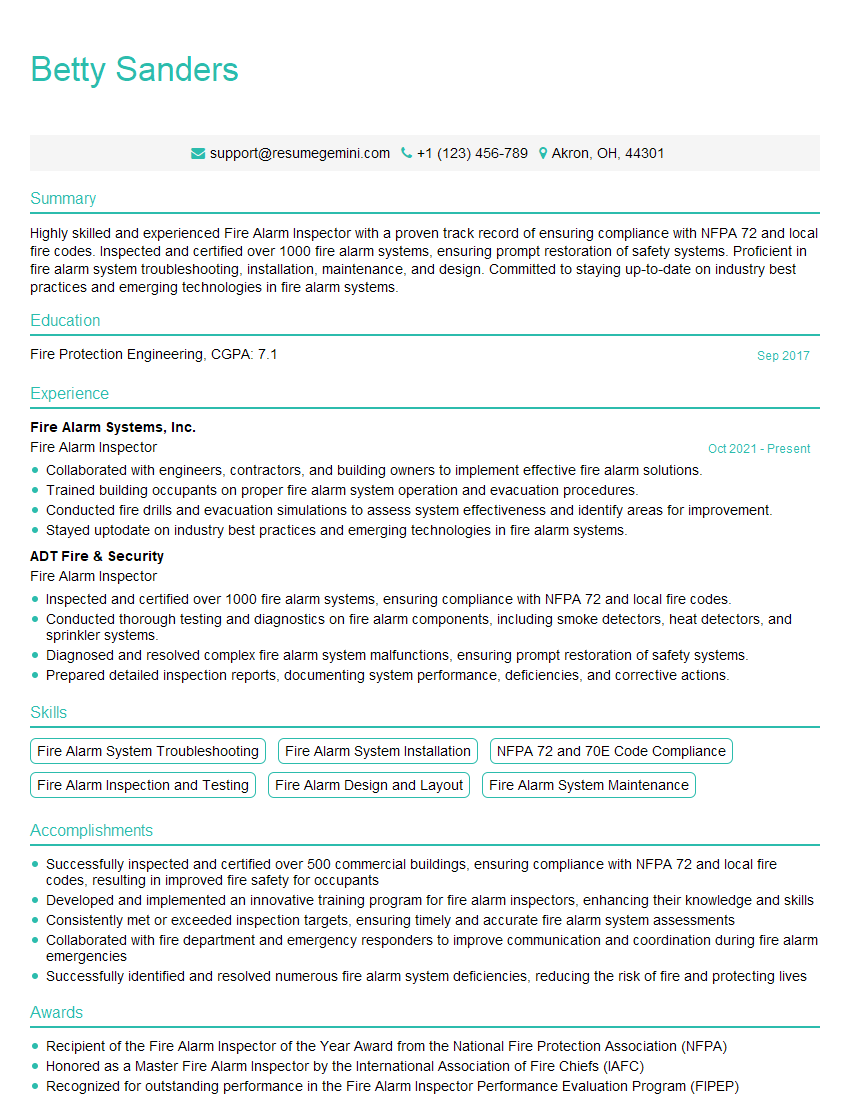
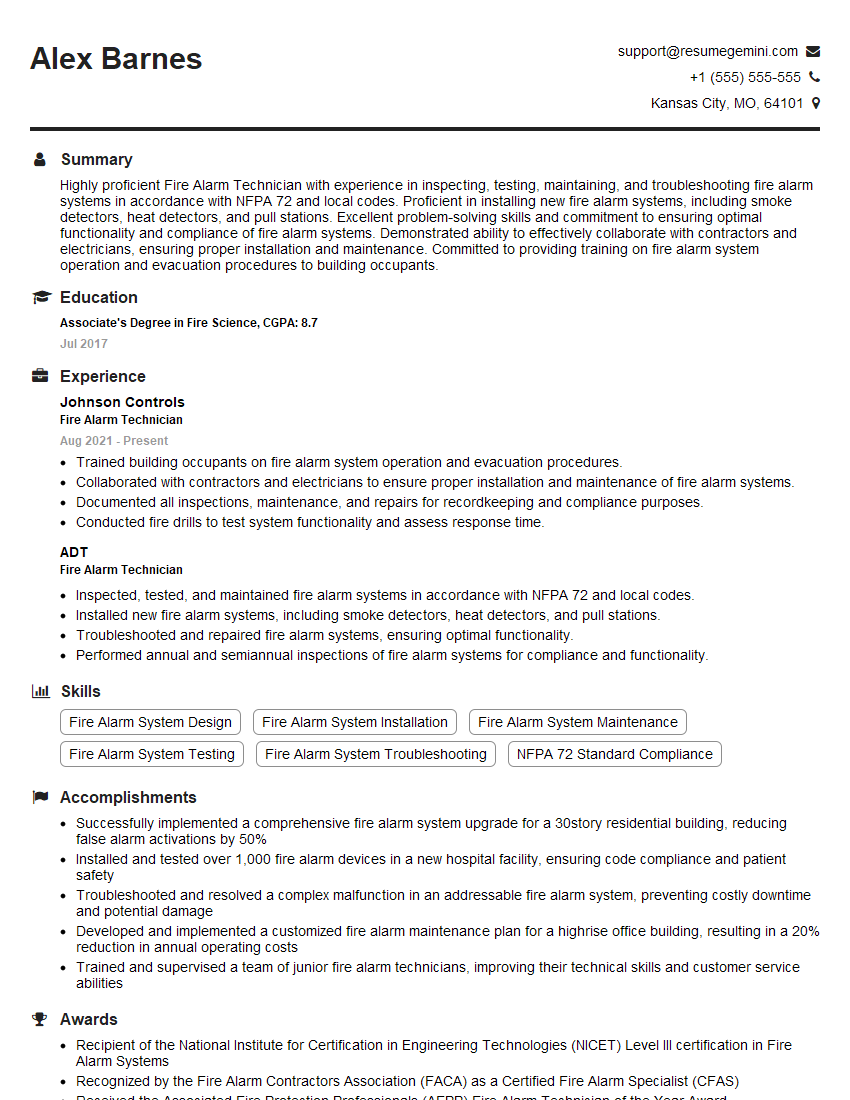
Mastering fire alarm testing is crucial for career advancement in this vital safety field. It opens doors to specialized roles with higher earning potential and increased responsibility. To maximize your job prospects, building a strong, ATS-friendly resume is essential. ResumeGemini is a trusted resource to help you create a professional and impactful resume that highlights your skills and experience. Examples of resumes tailored to Fire Alarm Testing are available on ResumeGemini to help guide you.
Explore more articles
Users Rating of Our Blogs
Share Your Experience
We value your feedback! Please rate our content and share your thoughts (optional).
What Readers Say About Our Blog
Very informative content, great job.
good