Every successful interview starts with knowing what to expect. In this blog, we’ll take you through the top Fire and Object Manipulation interview questions, breaking them down with expert tips to help you deliver impactful answers. Step into your next interview fully prepared and ready to succeed.
Questions Asked in Fire and Object Manipulation Interview
Q 1. Describe your experience with different types of fire suppression systems.
My experience encompasses a wide range of fire suppression systems, from the simplest water-based systems to sophisticated, agent-based solutions. I’ve worked extensively with:
- Water-based systems: These are common and cost-effective, utilizing sprinklers, hoses, and fire hydrants. I understand the different types of nozzles and their applications, as well as the limitations of water in certain fire scenarios (e.g., electrical fires).
- Foam systems: I’m familiar with various foam concentrates and their applications in controlling flammable liquid fires. This includes understanding the different expansion ratios and the importance of proper foam application techniques.
- Gas-based systems: I have experience with clean agent systems like CO2, inert gases (like Argonite), and halon replacements (FM-200, Novec 1230). I understand their advantages in protecting sensitive equipment and preventing water damage, along with their environmental impact and limitations.
- Dry chemical systems: These systems are effective on Class A, B, and C fires but can leave a residue that requires cleanup. My understanding includes their limitations and proper application techniques for different fire classes.
Beyond the systems themselves, I have experience in system design, installation, inspection, and maintenance, ensuring compliance with relevant safety codes and standards.
Q 2. Explain the fire triangle and its significance in fire prevention.
The fire triangle illustrates the three essential elements needed for a fire to exist: heat, fuel, and an oxidizing agent (usually oxygen). Each element is represented by a side of the triangle.
Significance in Fire Prevention: Understanding the fire triangle is fundamental to fire prevention. By removing or controlling even one of these elements, we can prevent a fire or stop its progression.
- Removing Heat: This can be achieved through cooling (e.g., using water or foam), isolating the heat source, or limiting the heat transfer rate.
- Removing Fuel: This involves limiting the availability of combustible materials, using fire-resistant materials, and implementing good housekeeping practices.
- Removing Oxidizing Agent: This is usually challenging but can be done in specific situations by using inert gases to displace oxygen or applying specialized fire suppression agents that interrupt the combustion process.
Imagine building a campfire. Without enough wood (fuel), a match (heat), and access to the surrounding air (oxygen), you can’t start the fire.
Q 3. What are the common hazards associated with fire manipulation?
Fire manipulation, while potentially beneficial in controlled environments, carries significant hazards. These include:
- Burns: Obvious and severe, ranging from minor burns to life-threatening injuries.
- Smoke inhalation: Inhaling toxic fumes can lead to respiratory problems and death.
- Explosions: Certain materials can react explosively when exposed to heat or flames.
- Equipment failure: Tools and equipment used for fire manipulation can malfunction, leading to accidents.
- Flash fires: Rapid, intense fires that can spread quickly and unpredictably.
- Uncontrolled fire spread: Even with careful planning, fire can spread beyond the intended area.
Proper safety precautions, including personal protective equipment (PPE), risk assessment, and strict adherence to safety protocols, are crucial to mitigate these hazards.
Q 4. How do you assess the risk associated with a specific fire scenario?
Assessing the risk of a fire scenario involves a systematic approach considering various factors:
- Identify potential fire hazards: This includes flammable materials, ignition sources, and potential pathways for fire spread.
- Evaluate the probability of ignition: This considers the likelihood of a hazard igniting based on factors like proximity to ignition sources, environmental conditions, and human activities.
- Assess the potential consequences: This involves evaluating the potential damage to property, injuries to personnel, environmental impact, and business interruption.
- Determine control measures: This step focuses on identifying and implementing mitigation strategies such as fire suppression systems, fire-resistant materials, emergency response plans, and worker training.
- Risk ranking: Based on the probability and consequences, the fire scenario is ranked according to its overall risk level. This informs prioritization for mitigation strategies.
For example, a chemical storage facility with significant quantities of flammable liquids presents a higher risk than a residential building with limited combustible materials. The risk assessment guides the implementation of appropriate safety measures to reduce the likelihood and impact of a fire.
Q 5. Detail your understanding of NFPA standards related to fire safety.
My understanding of NFPA (National Fire Protection Association) standards is comprehensive. I’m familiar with numerous standards, including:
- NFPA 10: Standard for Portable Fire Extinguishers
- NFPA 13: Standard for the Installation of Sprinkler Systems
- NFPA 70 (NEC): National Electrical Code
- NFPA 72: National Fire Alarm and Signaling Code
- NFPA 101: Life Safety Code
I utilize these standards to ensure the design, installation, testing, and maintenance of fire safety systems and procedures meet the highest levels of safety and compliance. These standards guide my professional decisions and ensure that projects are undertaken safely and meet all regulatory requirements.
Q 6. Describe your experience with different types of robotic manipulators.
My experience with robotic manipulators includes various types, each suited for different tasks:
- Articulated robots: These are highly versatile with multiple joints and a wide range of motion, often used in industrial settings for welding, painting, or material handling.
- SCARA robots: Selective Compliance Assembly Robot Arm – These are known for their speed and precision in assembly tasks, ideal for applications requiring high-speed pick-and-place operations.
- Cartesian robots: These robots move along three linear axes (X, Y, Z), suitable for tasks requiring precise movements in a defined workspace.
- Parallel robots: These robots have multiple arms connected to a single platform, ideal for applications requiring high speed and load capacity.
I am proficient in programming and operating these manipulators using various programming languages and interfaces. My experience also extends to selecting the appropriate robot for specific tasks, considering factors such as payload capacity, reach, speed, precision, and work environment.
Q 7. Explain the principles of object manipulation using robotic arms.
Object manipulation using robotic arms relies on a combination of mechanics, sensors, and control algorithms. Key principles include:
- Kinematics: Understanding the robot’s geometry and how its joints relate to the end-effector’s position and orientation is crucial for precise movement planning. This involves forward and inverse kinematics calculations.
- Dynamics: Considering the robot’s mass, inertia, and forces acting on it allows for more accurate and efficient control, preventing jerky movements and collisions.
- Sensors: Force/torque sensors provide feedback on interaction forces, allowing for delicate handling and preventing damage to objects. Vision systems provide visual input for object recognition, localization, and grasping.
- Control algorithms: Sophisticated algorithms such as PID control, impedance control, and force control enable precise manipulation, stable grasping, and adaptive responses to unexpected events.
Imagine a robotic arm picking up a delicate egg. Precise kinematics are essential to position the gripper accurately. Force/torque sensors would prevent crushing the egg, while vision systems would help locate and identify the egg in the first place. The control algorithms would ensure a smooth and delicate grasping action.
Q 8. How do you program a robotic arm for precise object placement?
Programming a robotic arm for precise object placement involves a multi-faceted approach combining sophisticated control algorithms, sensor integration, and meticulous calibration. Think of it like teaching a very precise, yet strong, hand how to perform delicate tasks.
Firstly, we need a robust kinematic model of the robotic arm. This model mathematically describes the arm’s physical structure and how each joint’s movement affects the end-effector (the gripper) position and orientation. This model is crucial for calculating the necessary joint angles to reach a desired target location. For instance, a 6-DOF (Degrees of Freedom) arm needs six independent values to fully define its pose in 3D space.
Secondly, precise control requires feedback mechanisms. We typically integrate sensors like cameras, laser rangefinders, or force/torque sensors to provide real-time information about the arm’s position, the object’s location, and any interaction forces. This feedback is used in closed-loop control systems, continuously adjusting the arm’s movements to minimize errors and achieve accurate placement. A common control strategy is using Proportional-Integral-Derivative (PID) controllers that adjust the motor commands based on the difference between the desired and actual position, velocity, and acceleration.
Finally, path planning algorithms are essential for generating smooth and collision-free trajectories for the robotic arm. These algorithms consider the arm’s physical limitations (e.g., joint limits, speed constraints) and the environment’s obstacles. Methods like A* search or Rapidly-exploring Random Trees (RRT) are often employed.
Consider a scenario involving placing microchips onto a circuit board: high accuracy is critical, requiring a highly calibrated system, precise force control, and advanced vision guidance to ensure the chip is perfectly aligned.
Q 9. What are the limitations of robotic object manipulation?
Robotic object manipulation, while increasingly advanced, still faces several limitations. These limitations stem from factors related to sensing, control, and the environment.
- Sensing limitations: Cameras and other sensors can struggle in situations with poor lighting, reflective surfaces, or occlusions. This can lead to inaccurate object detection and pose estimation.
- Control limitations: While PID controllers and advanced algorithms strive for precision, there will always be small errors in positioning and force control. This is especially problematic for delicate objects or tasks requiring extreme accuracy.
- Environmental uncertainties: Unforeseen obstacles, changing object properties (e.g., weight, shape), or unexpected forces can disrupt a robot’s actions. Robustness against these disturbances is an ongoing challenge.
- Computational constraints: Real-time manipulation often requires substantial computational power to process sensory data and generate control commands. This can limit the speed and complexity of tasks.
- Dexterity limitations: While robot dexterity is improving, manipulating objects with complex shapes or requiring fine motor skills remains a challenge. Humans have far greater dexterity.
For example, a robot might struggle to grasp a loosely-packed pile of objects due to unpredictable contact forces and the challenge of individually identifying and manipulating each object.
Q 10. How do you handle unexpected situations during a fire or object manipulation task?
Handling unexpected situations during fire or object manipulation demands a layered approach prioritizing safety and efficient problem-solving. Think of it like a firefighter’s response to a blaze – rapid assessment, controlled action, and effective communication are key.
1. Safety First: Immediate evacuation or securing a safe distance is paramount if the situation becomes hazardous. This might involve activating emergency shutdown procedures for robotic systems or retreating from a fire scene.
2. Situation Assessment: A swift but thorough assessment is needed to understand the nature of the unexpected event. Is it a fire spreading unexpectedly? Has an object dropped and blocked the robot’s path? Is there a sensor malfunction? This usually involves visual inspection and analyzing sensor data.
3. Contingency Planning: Well-designed systems have pre-programmed contingency plans for common issues. For instance, a robotic arm might automatically halt operations if its sensors detect an obstacle or excessive force. Fire suppression systems should include backup generators and fail-safes.
4. Adaptive Response: For situations not covered by pre-programmed routines, human intervention might be needed. This could involve reprogramming the robot’s actions in real-time or deploying alternative strategies.
5. Post-Incident Analysis: Following any incident, a comprehensive review is critical to identifying the root cause and preventing similar occurrences in the future. This analysis will inform improved safety protocols and system upgrades.
Imagine a scenario where a robotic arm is unexpectedly obstructed during a delicate object placement task within a manufacturing plant. The robot’s safety system would immediately stop operation, sending an alert to human operators. The operator would then assess the situation, remove the obstruction, and restart the operation.
Q 11. Explain your knowledge of different types of fire-resistant materials.
Fire-resistant materials are categorized based on their ability to withstand high temperatures and prevent or delay fire spread. Understanding these materials is crucial for designing fire-safe environments and equipment.
- Intumescent coatings: These coatings expand significantly when exposed to heat, creating an insulating char layer that protects the underlying material. Think of it like a protective shield growing over the surface.
- Mineral wools: These materials are made from inorganic fibers, such as basalt or rock wool, and exhibit excellent thermal insulation and fire resistance. They’re often used in building insulation and fire barriers.
- Concrete: Concrete possesses relatively good fire resistance, especially reinforced concrete structures, due to its high thermal mass. It can withstand significant heat for a considerable amount of time before structural damage occurs.
- Ceramics: High-temperature ceramics, like alumina or zirconia, can withstand very high temperatures and are used in specialized applications like furnace linings and high-temperature components in industrial processes.
- Fire retardant treated wood: Wood treated with fire retardants can increase its ignition resistance and reduce flammability. These treatments typically involve chemical impregnation to alter the wood’s chemical composition.
The choice of material depends heavily on the specific application and the required level of fire protection. For instance, intumescent coatings might be suitable for steel structures in a building, while mineral wool is often used in firewalls.
Q 12. Describe your experience with thermal imaging cameras.
Thermal imaging cameras are invaluable tools for detecting heat signatures, providing crucial information in fire-related incidents and object manipulation tasks where temperature is a factor. They’re like having a ‘heat-vision’ mode enabling observation beyond what the naked eye can see.
My experience involves utilizing thermal imaging cameras for various applications, including:
- Fire detection and monitoring: Identifying the location and intensity of fires, tracking the spread of flames, and assessing the effectiveness of fire suppression efforts. This allows for quicker and more accurate responses in emergency situations.
- Predictive maintenance: Detecting overheating components in machinery, preventing equipment failure and potential hazards. This type of early warning system significantly improves safety and reduces downtime.
- Object manipulation: Guiding robotic arms in operations that involve hot objects or processes. Ensuring proper handling and preventing accidents due to burns or thermal damage.
- Search and rescue: Locating trapped individuals in collapsed structures by detecting their body heat. This capability can be lifesaving in emergency situations.
For instance, during a fire incident, a thermal camera can help firefighters locate trapped people even through smoke-filled areas by detecting the heat signature of their bodies. In manufacturing, it helps ensure that robotic arms avoid touching dangerously hot equipment.
Q 13. How do you maintain fire safety equipment?
Maintaining fire safety equipment is crucial for ensuring its readiness and effectiveness. Neglect can lead to malfunctions during emergencies, putting lives and property at risk. It’s like regularly servicing your car – preventative maintenance keeps it functioning at its best.
My maintenance procedures typically include:
- Regular inspections: Visual checks for damage, corrosion, or wear and tear on all components, including hoses, nozzles, extinguishers, and detectors.
- Functional testing: Regular testing of all equipment to ensure it’s functioning correctly. This often involves discharging fire extinguishers and testing the responsiveness of smoke detectors and sprinkler systems.
- Calibration and certification: Regular calibration of equipment like thermal cameras and gas detectors, and ensuring necessary certifications and compliance with relevant regulations.
- Record keeping: Maintaining detailed records of inspections, tests, and maintenance procedures, including dates, findings, and any corrective actions taken.
- Training and familiarization: Ensuring that all personnel are properly trained on the use and maintenance of all fire safety equipment.
Consider a fire extinguisher: regular pressure checks and visual inspections are essential to ensure it’s charged and ready for use. Any damage or issues need to be addressed promptly to maintain the system’s effectiveness.
Q 14. What are your safety protocols when working with fire?
Working with fire demands strict adherence to safety protocols to minimize risks. These protocols are designed to safeguard both personnel and the environment. Think of it as following a rigorous flight plan for a pilot.
- Risk assessment: A thorough risk assessment is conducted before any operation involving fire to identify potential hazards and establish appropriate safety measures.
- Personal protective equipment (PPE): Appropriate PPE is mandatory, including fire-resistant clothing, gloves, eye protection, and respiratory equipment depending on the situation.
- Fire suppression systems: Ensure that appropriate fire suppression systems are in place and functioning correctly. This often involves using multiple methods and having backups.
- Emergency escape routes: Clear and accessible escape routes must be identified and communicated to all personnel. This is particularly important in high-risk situations.
- Fire watch: A designated fire watch is frequently necessary to monitor the situation and intervene if necessary. This may involve multiple personnel, particularly for larger-scale operations.
- Training and communication: Proper training for all personnel involved is paramount. This training should cover safety procedures, emergency response plans, and the use of fire safety equipment. Clear and consistent communication is crucial during operations.
For instance, when conducting a controlled burn, we might establish a safety perimeter, have fire extinguishers and water readily available, and maintain constant communication with a fire watch team. The location should also be carefully chosen to minimize the risk of fire spreading uncontrollably.
Q 15. Explain the different types of fire extinguishers and their applications.
Fire extinguishers are classified based on the type of fire they are designed to combat. Understanding these classifications is crucial for effective fire suppression. The most common classes are:
- Class A: These extinguishers are effective against ordinary combustibles like wood, paper, cloth, and some plastics. They typically use water or water-based agents to cool the burning material and suppress the fire. Think of it as depriving the fire of its heat source.
- Class B: Designed for flammable liquids such as gasoline, oil, and grease. These extinguishers generally utilize carbon dioxide (CO2), dry chemical powder, or foam to smother the fire, cutting off its access to oxygen.
- Class C: Used for electrical fires, involving energized electrical equipment. These extinguishers are usually CO2 or dry chemical agents, as water can conduct electricity and increase the risk of shock. Safety is paramount here!
- Class D: Specifically designed for combustible metals like magnesium, titanium, and sodium. These fires require specialized extinguishing agents to prevent explosive reactions. This is a niche area requiring specialized training.
- Class K: Intended for fires involving cooking oils and fats in commercial kitchens. These extinguishers often utilize a wet chemical agent that saponifies (turns into soap) the burning oil, suppressing the fire.
Choosing the right extinguisher is vital. Using an incorrect type can be ineffective or even dangerous. Always check the extinguisher label to ensure it’s appropriate for the type of fire you’re facing. Remember, PASS (Pull, Aim, Squeeze, Sweep) is the correct procedure for operating most extinguishers.
Career Expert Tips:
- Ace those interviews! Prepare effectively by reviewing the Top 50 Most Common Interview Questions on ResumeGemini.
- Navigate your job search with confidence! Explore a wide range of Career Tips on ResumeGemini. Learn about common challenges and recommendations to overcome them.
- Craft the perfect resume! Master the Art of Resume Writing with ResumeGemini’s guide. Showcase your unique qualifications and achievements effectively.
- Don’t miss out on holiday savings! Build your dream resume with ResumeGemini’s ATS optimized templates.
Q 16. Describe a time you had to troubleshoot a malfunctioning fire system.
During a routine inspection at a large warehouse, I discovered that the fire alarm system wasn’t activating during a test. My initial troubleshooting involved checking the power supply – a common problem. It was fine. Next, I examined the control panel for error codes, finding none. This suggested a problem within the system’s wiring or individual detectors. I systematically checked each detector, using a specialized testing device to simulate smoke or heat. I identified a faulty heat detector on the third floor near a recently installed HVAC unit. The close proximity to the unit’s heat output was likely causing false negatives. I replaced the faulty detector, and after retesting, the system functioned correctly. This highlighted the importance of regular inspections and a systematic approach to troubleshooting complex systems.
Q 17. Explain your experience with different types of sensors used in fire detection.
My experience encompasses various fire detection sensors, each with its strengths and weaknesses:
- Smoke Detectors: These are ubiquitous and come in two main types: ionization and photoelectric. Ionization detectors respond quicker to flaming fires producing small particles, while photoelectric detectors are better at detecting smoldering fires that produce larger smoke particles.
- Heat Detectors: These sensors activate when the ambient temperature reaches a predetermined threshold. They come in various types: fixed-temperature, rate-of-rise, and rate-compensated. Fixed temperature detectors trigger only when reaching a specified temperature, rate of rise detectors trigger when the temperature rises rapidly, and rate-compensated detectors combine both functionalities for increased sensitivity and reliability.
- Flame Detectors: These advanced sensors utilize ultraviolet (UV) or infrared (IR) technology to detect the characteristic radiation emitted by flames. They are particularly useful in areas where smoke detectors might be prone to false alarms, such as industrial settings with dust.
- Combination Sensors: Many modern systems utilize combination sensors integrating multiple detection technologies (e.g., smoke and heat) for enhanced reliability and reduced false alarms. This offers a more comprehensive safety net.
The choice of sensor depends heavily on the specific application and the type of fire risk being mitigated. For example, a kitchen might require heat detectors, while a server room would necessitate a combination of smoke and heat sensors. Understanding the strengths and limitations of different sensors is critical for a robust fire detection system.
Q 18. How do you ensure the safety of others while working with fire?
Safety is paramount in any fire-related operation. My approach involves strict adherence to established safety protocols and procedures. Before engaging with any fire situation, I ensure that:
- Proper PPE is used: This includes flame-resistant clothing, gloves, eye protection, and respiratory equipment as appropriate for the situation.
- Emergency exits are identified and clear: Knowing escape routes is essential in case of unexpected developments.
- A clear communication plan is in place: Effective communication with colleagues and emergency responders is crucial for a coordinated response.
- Risk assessment is conducted: Understanding potential hazards and developing mitigation strategies is a key step before any operation.
- Appropriate extinguishing agents are selected: Using the right extinguisher for the fire type is critical for safety and effectiveness.
Beyond these general safety measures, specific procedures will depend on the unique circumstances of each incident. Safety is not just a checklist; it’s a continuous mindset.
Q 19. Describe your knowledge of fire codes and regulations.
My knowledge of fire codes and regulations is extensive. I’m familiar with NFPA (National Fire Protection Association) standards, local building codes, and OSHA (Occupational Safety and Health Administration) regulations related to fire safety. These regulations cover various aspects, including:
- Fire prevention measures: Regulations dictate the proper storage of flammable materials, building construction requirements for fire resistance, and the installation of fire suppression systems.
- Fire detection and alarm systems: Regulations outline the requirements for the installation, testing, and maintenance of fire detection systems, including the type and placement of sensors.
- Emergency evacuation plans: Regulations mandate the development and regular practice of emergency evacuation plans for all buildings and facilities.
- Fire extinguisher maintenance: Regulations stipulate the frequency of inspection and maintenance of fire extinguishers to ensure their readiness in case of fire.
Staying updated on the latest codes and regulations is essential. Failing to comply can lead to significant legal and safety consequences. I regularly attend training sessions and seminars to maintain my knowledge and certifications.
Q 20. Explain your approach to problem-solving in a high-pressure fire situation.
In high-pressure fire situations, a calm and methodical approach is key. My strategy is based on the following principles:
- Rapid Assessment: Quickly assess the situation, identifying the fire’s size, location, type of fuel involved, and potential hazards to personnel.
- Prioritize Life Safety: Ensure the safety of all personnel in the immediate area before attempting to suppress the fire. Evacuate if necessary.
- Call for Assistance: Immediately contact emergency services and provide them with accurate details of the situation.
- Strategic Fire Suppression: Employ appropriate fire suppression techniques using the correct type of extinguisher or fire suppression system. Use the PASS method and maintain a safe distance.
- Post-Incident Procedures: After the fire is suppressed, secure the area, document the incident, and assist with any necessary investigations.
Clear communication, teamwork, and a disciplined approach are essential for effective and safe response during fire emergencies.
Q 21. How do you ensure the accuracy and precision of robotic object manipulation?
Ensuring accuracy and precision in robotic object manipulation involves a multi-faceted approach. It relies heavily on:
- Precise Calibration: Regular calibration of robotic arms, sensors, and vision systems is essential for accurate positioning and movement. This involves using specialized tools and procedures to ensure the robot’s movements are within acceptable tolerances.
- Advanced Sensor Technology: High-resolution cameras, force/torque sensors, and proximity sensors provide feedback to the robot’s control system, allowing for real-time adjustments and corrections in its movements.
- Sophisticated Control Algorithms: Advanced control algorithms, such as those based on inverse kinematics and path planning, are crucial for executing complex manipulation tasks smoothly and precisely. These algorithms account for various factors like object shape, weight, and friction.
- Error Correction Mechanisms: Implementing error detection and correction mechanisms is vital to handle unexpected disturbances or inaccuracies during manipulation. These mechanisms could involve using redundant sensors or incorporating adaptive control strategies.
- Simulation and Testing: Thorough simulation and testing of robotic systems are crucial to validate their performance and identify potential issues before deployment. This allows for optimization of control algorithms and sensor integration.
The level of accuracy and precision needed depends on the task. For instance, delicate surgical procedures require a higher level of precision than simple assembly operations. Appropriate sensor selection and sophisticated control strategies are critical to attaining the desired accuracy in robotic object manipulation.
Q 22. What are the ethical considerations related to fire and object manipulation?
Ethical considerations in fire and object manipulation are multifaceted and crucial for responsible application. They center around safety, privacy, and potential misuse. In firefighting, ethical dilemmas might arise when choosing between risking a firefighter’s life to save property or prioritizing the safety of bystanders during a risky maneuver. With robotic manipulators used in hazardous material handling, concerns include potential malfunctions leading to unintended consequences or the use of such technology for malicious purposes. Data privacy is also a factor, particularly with the use of sensors and AI in fire prevention and response systems, which collect vast amounts of potentially sensitive information. A robust ethical framework must be implemented to guide development, deployment, and use of such technologies, ensuring transparency and accountability.
- Safety First: Always prioritize human life and safety above all else, even if it means accepting some property damage.
- Transparency and Accountability: Ensure all actions are well-documented and reviewed, allowing for identification of areas needing improvement and preventing misuse of technology.
- Data Privacy: Implement stringent data security protocols to protect sensitive information collected through fire safety systems.
- Algorithmic Bias: Carefully evaluate AI systems for bias that may disproportionately affect certain communities.
Q 23. Describe your experience with remote operation of fire-fighting equipment.
I have extensive experience in the remote operation of firefighting equipment, particularly in scenarios involving high-risk environments or situations where direct human intervention is dangerous. My experience includes piloting remotely operated aerial firefighting drones capable of delivering water or fire retardant to inaccessible areas, operating robotic manipulators to handle hazardous materials, and controlling robotic platforms for search and rescue operations within burning structures. This experience involves using sophisticated control systems, understanding sensor data in real time, and adapting quickly to changing conditions. In one instance, I successfully used a remote-controlled drone to extinguish a fire in a dense forest where ground access was impossible, saving valuable time and resources.
My expertise also encompasses the use of virtual reality (VR) and augmented reality (AR) systems to simulate remote firefighting scenarios, allowing for realistic training in a safe and controlled environment. This virtual training helps enhance operator skills and minimize the risk of error during real-world deployments.
Q 24. Explain your experience with different types of hazardous materials related to fire.
My work has exposed me to a wide range of hazardous materials related to fire, including flammable liquids (such as gasoline, propane, and solvents), combustible solids (wood, paper, plastics), and toxic gases (carbon monoxide, hydrogen cyanide). I’m experienced in identifying and classifying these materials, understanding their combustion properties, and implementing appropriate safety protocols for handling and extinguishing fires involving them. For example, the response to a fire involving flammable liquids necessitates a different approach than one involving a chemical spill with potentially volatile reactions. Each material requires a specialized understanding of its behavior under fire conditions and the best methods for containment and extinguishment.
Furthermore, I am familiar with the procedures for identifying and mitigating the effects of toxic byproducts resulting from fires involving various materials. This includes utilizing appropriate personal protective equipment (PPE) and understanding the health implications of exposure to specific hazardous substances.
Q 25. How do you use data analysis to improve fire safety strategies?
Data analysis plays a critical role in improving fire safety strategies. By analyzing data from various sources – fire incident reports, building blueprints, weather patterns, sensor data from fire stations and smart buildings – we can identify high-risk areas, predict potential fire outbreaks, and optimize resource allocation. For instance, analyzing historical fire data can reveal patterns and trends, helping us understand the most common causes of fires in specific locations, allowing for targeted preventative measures. Predictive modeling, based on data analysis, can forecast the potential spread of fires based on weather conditions and fuel types, enabling proactive deployment of firefighting resources.
Example: Using statistical analysis on historical fire data, we identified a correlation between building age and fire frequency in a specific neighborhood. This prompted proactive inspections and fire safety upgrades in older buildings, leading to a significant reduction in fire incidents.
Q 26. Describe a time you had to adapt your approach to a changing fire situation.
During a large warehouse fire, initial assessments indicated a contained blaze. However, the fire rapidly escalated due to the presence of unexpectedly flammable materials within the building. My initial strategy, focused on a localized attack, became ineffective. I immediately adapted by: 1) requesting additional resources (more firefighters and equipment), 2) shifting the strategy to a defensive approach, focusing on preventing the spread of the fire to adjacent structures, and 3) coordinating with other emergency services (police and ambulance) to ensure public safety. Effective communication and swift decision-making were essential to manage the evolving situation and minimize damage and risk to life and property. This incident reinforced the importance of situational awareness, adaptability, and clear communication in dynamic firefighting environments.
Q 27. Explain your experience with preventative maintenance of robotic manipulators.
Preventative maintenance is paramount for the safe and efficient operation of robotic manipulators used in fire and hazardous material handling. My experience encompasses a comprehensive program including:
- Regular Inspections: Visual checks for wear and tear on mechanical components, sensors, and cabling.
- Functional Testing: Rigorous testing of all robotic movements and functionalities to ensure precision and accuracy.
- Software Updates: Regular software updates to address bugs, improve performance, and incorporate new features.
- Calibration: Precise calibration of sensors and actuators to maintain accurate readings and control.
- Lubrication: Regular lubrication of moving parts to minimize friction and prolong lifespan.
- Cleaning: Thorough cleaning to remove debris and contaminants.
These procedures, meticulously documented and followed, ensure optimal performance, prevent malfunctions, and safeguard against potential hazards during operations.
Q 28. How do you stay updated on the latest advancements in fire safety and robotics?
Staying updated in the rapidly evolving fields of fire safety and robotics requires a multi-pronged approach. I actively participate in professional organizations like the National Fire Protection Association (NFPA) and the Institute of Electrical and Electronics Engineers (IEEE), attending conferences and workshops to learn about the latest advancements. I regularly read peer-reviewed journals and industry publications, focusing on areas such as advanced firefighting techniques, AI-powered fire detection systems, and new developments in robotic manipulation. Online courses and webinars also provide valuable insights into emerging technologies and best practices. Furthermore, I actively collaborate with researchers and other professionals in the field, exchanging knowledge and experiences to stay abreast of the latest developments. This continuous learning ensures I can apply the most effective and innovative approaches to my work.
Key Topics to Learn for Fire and Object Manipulation Interview
- Fire Safety and Control: Understanding fire behavior, prevention techniques, and suppression methods. This includes knowledge of different fire classes and appropriate extinguishing agents.
- Object Handling and Manipulation Techniques: Safe and efficient handling of various objects in potentially hazardous fire environments, emphasizing dexterity and precision.
- Thermal Dynamics and Heat Transfer: Understanding the principles of heat transfer (conduction, convection, radiation) and their impact on fire behavior and object manipulation strategies.
- Risk Assessment and Mitigation: Identifying and evaluating potential hazards associated with fire and object manipulation, and implementing effective mitigation strategies.
- Emergency Response Procedures: Familiarity with standard operating procedures for emergency situations involving fire and compromised objects. This includes communication protocols and evacuation strategies.
- Specialized Equipment and Tools: Knowledge of the operation and maintenance of equipment commonly used in fire and object manipulation scenarios, including protective gear and specialized tools.
- Legal and Regulatory Compliance: Understanding relevant safety regulations and legal requirements related to fire safety and object handling practices.
- Problem-Solving and Decision-Making under Pressure: Developing effective problem-solving skills and the ability to make sound decisions in high-pressure, time-sensitive situations.
Next Steps
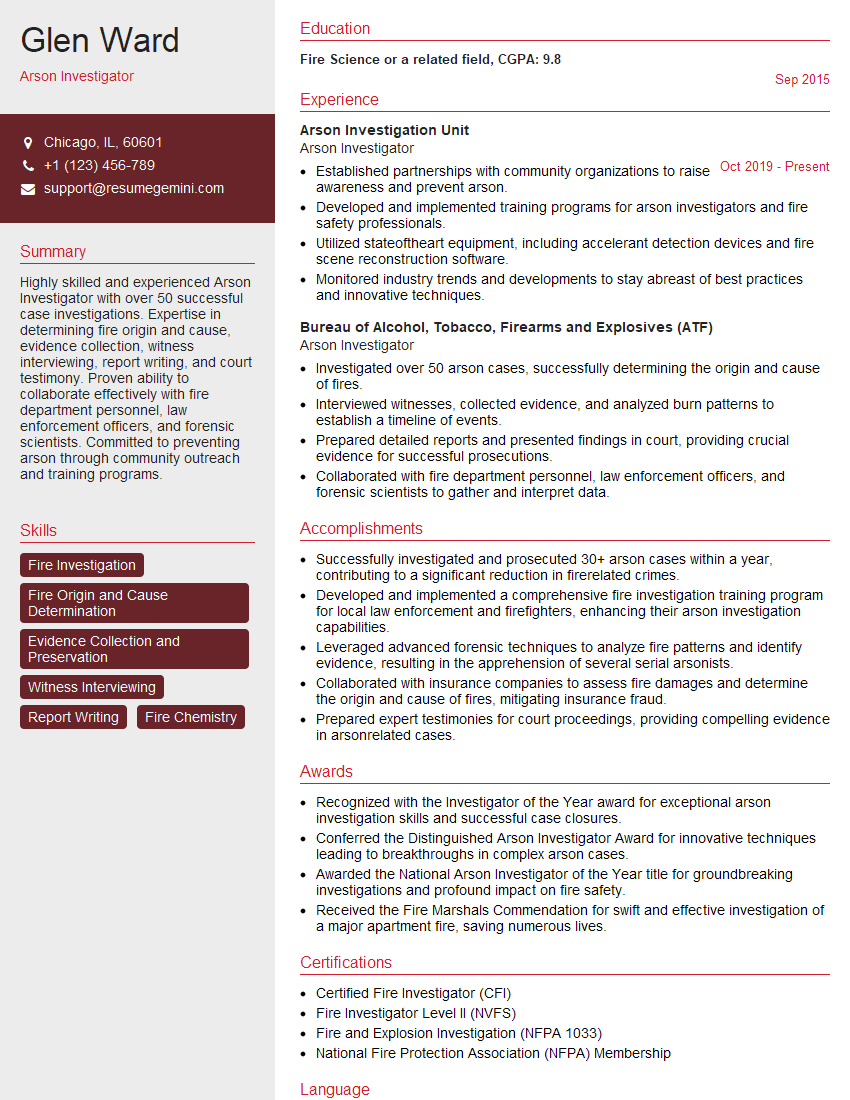
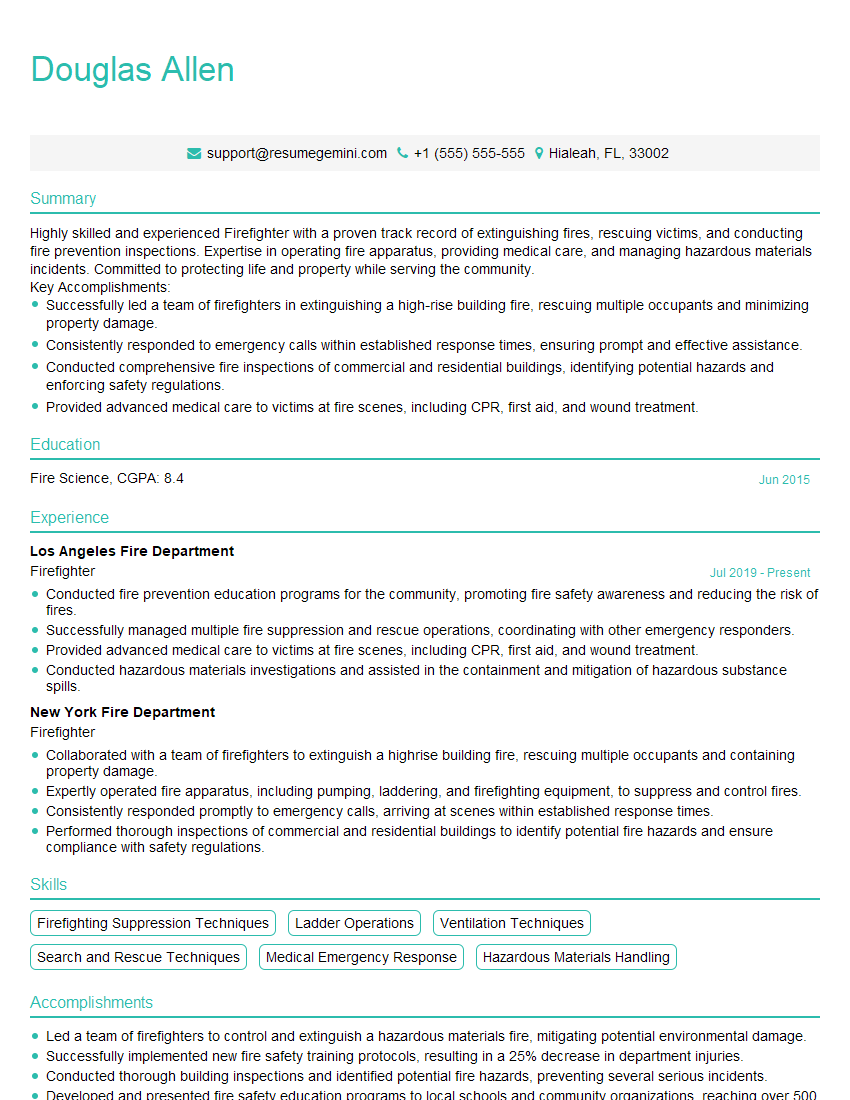
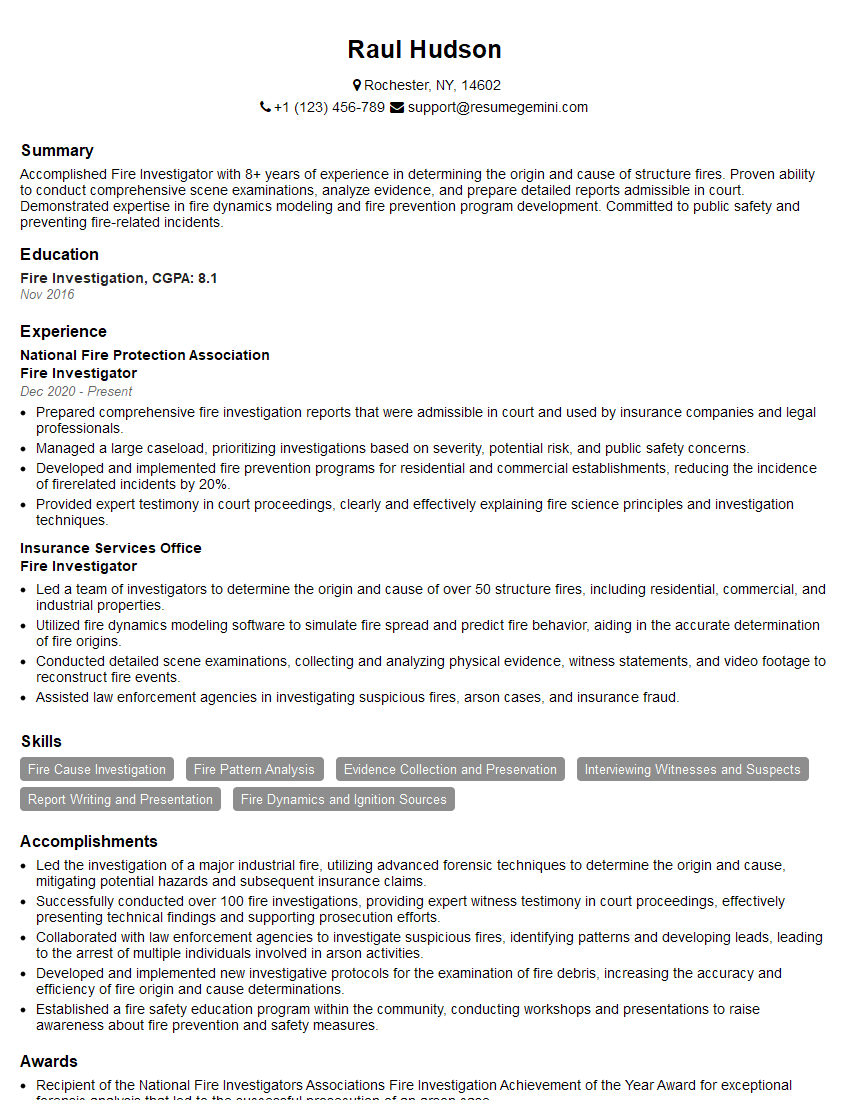
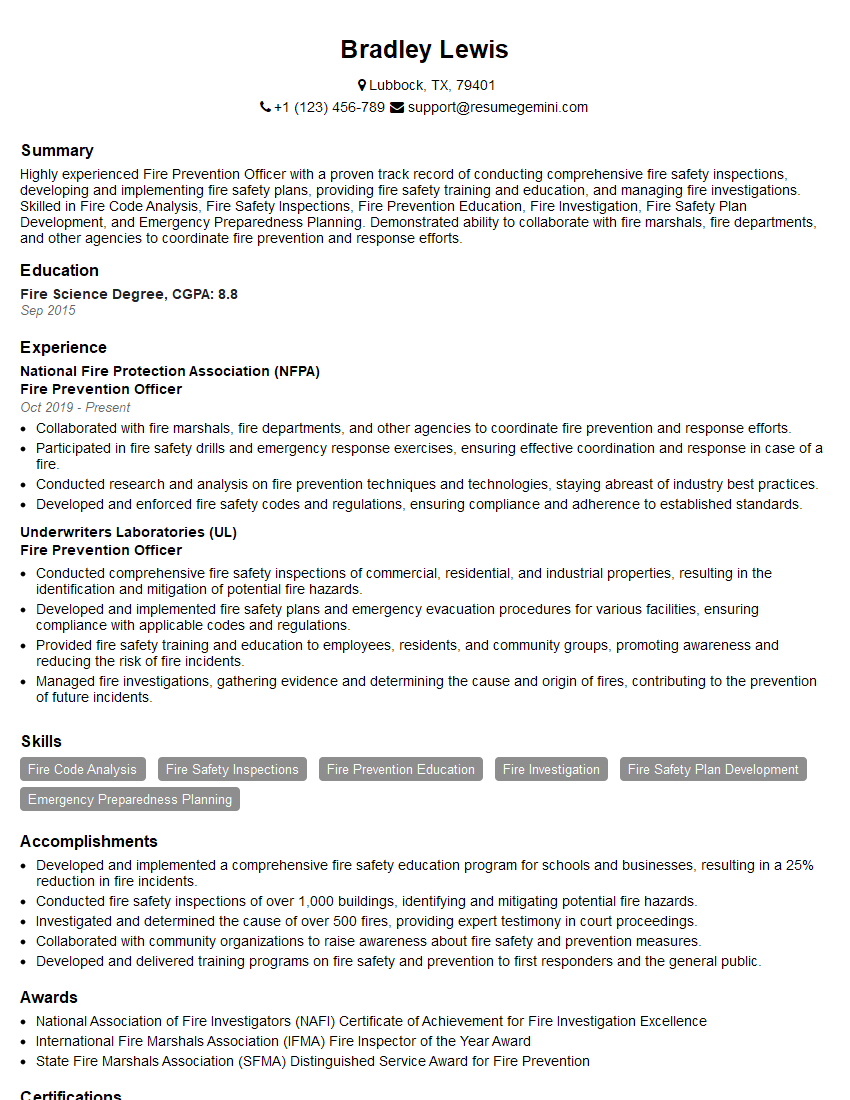
Mastering Fire and Object Manipulation opens doors to exciting and impactful careers in various fields requiring specialized safety expertise. A strong understanding of these critical skills significantly enhances your job prospects and allows you to contribute meaningfully to safety-critical environments. To maximize your chances of landing your dream role, creating an ATS-friendly resume is crucial. This ensures your application gets noticed by recruiters and hiring managers. We highly recommend using ResumeGemini to build a professional and effective resume that highlights your skills and experience in Fire and Object Manipulation. ResumeGemini offers valuable tools and resources, including examples of resumes tailored specifically to this field, to help you present yourself in the best possible light.

Explore more articles
Users Rating of Our Blogs
Share Your Experience
We value your feedback! Please rate our content and share your thoughts (optional).
What Readers Say About Our Blog
Very informative content, great job.
good