Interviews are opportunities to demonstrate your expertise, and this guide is here to help you shine. Explore the essential Fire burn interview questions that employers frequently ask, paired with strategies for crafting responses that set you apart from the competition.
Questions Asked in Fire burn Interview
Q 1. Explain the fire triangle and its significance in fire prevention.
The fire triangle is a fundamental concept in fire science illustrating the three elements necessary for combustion: heat, fuel, and an oxidizing agent (usually oxygen). Think of it like a three-legged stool – remove any one leg, and the stool (fire) collapses.
Significance in Fire Prevention: Understanding the fire triangle allows for targeted prevention strategies. By controlling or eliminating any one of these elements, we can prevent a fire from starting or stop it from spreading. For example, removing flammable materials (fuel), controlling ignition sources (heat), or using fire suppression systems that reduce oxygen concentration (oxidizing agent) all rely on this principle.
- Heat: This can be anything from a spark to an open flame, or even the heat generated by friction. Preventing heat sources from coming into contact with flammable materials is crucial.
- Fuel: This refers to any substance that can burn, including wood, paper, plastics, and even certain gases. Proper storage and removal of flammable materials are vital.
- Oxidizing Agent: Typically oxygen in the air. Inhaling inert gases (like those used in some fire suppression systems) reduces the oxygen concentration, inhibiting combustion.
Example: A carelessly discarded cigarette (heat source) igniting a pile of dry leaves (fuel) in the presence of air (oxygen) creates the conditions for a fire.
Q 2. Describe different types of fire extinguishers and their appropriate uses.
Fire extinguishers are portable devices designed to put out fires in their early stages. Different classes of fires require different types of extinguishers. The most common classes are A, B, C, D, and K.
- Class A: Ordinary combustibles like wood, paper, cloth. Water-based extinguishers are effective.
- Class B: Flammable liquids like gasoline, oil, grease. Carbon dioxide (CO2), dry chemical, or foam extinguishers are used.
- Class C: Electrical fires involving energized electrical equipment. CO2 or dry chemical extinguishers are suitable; never use water.
- Class D: Combustible metals like magnesium, titanium. Specialized dry powder extinguishers are required.
- Class K: Cooking oils and fats. Wet chemical extinguishers are designed for this specific type of fire.
Appropriate Uses: It’s crucial to choose the correct extinguisher for the type of fire. Using the wrong type can be ineffective and even dangerous. Always remember the acronym PASS: Pull the pin, Aim at the base of the fire, Squeeze the lever, Sweep from side to side.
Example: A grease fire in a kitchen requires a Class K extinguisher. Using a water extinguisher would likely spread the fire due to the splashing effect.
Q 3. What are the common causes of residential fires?
Residential fires are unfortunately common and often stem from preventable causes. Some of the most frequent culprits include:
- Cooking: Unattended cooking is a leading cause, often resulting from leaving food on the stove or oven unattended.
- Heating Equipment: Malfunctioning or improperly maintained heating systems, such as space heaters, furnaces, and chimneys, can ignite nearby materials.
- Electrical Issues: Faulty wiring, overloaded circuits, and damaged electrical appliances can generate sparks and heat, causing fires.
- Smoking Materials: Discarded cigarettes or other smoking materials are a significant ignition source, particularly when they land on flammable surfaces.
- Candles: Unattended candles are another common cause, especially those placed near flammable materials.
- Space Heaters: Improper placement or use can lead to fires.
Example: A family leaving a pot of oil unattended on the stove while they answered the door led to a major kitchen fire.
Q 4. How do you assess the fire risk in a building?
Assessing fire risk in a building involves a systematic evaluation of potential hazards and vulnerabilities. This process often involves a fire risk assessment, which considers several key factors.
- Building Structure: The building’s construction materials, layout, and fire-resistant features play a crucial role. Older buildings with combustible materials may have higher risk.
- Occupancy Type: The type of building (residential, commercial, industrial) and its occupants significantly influence the risk. High-occupancy buildings require more stringent safety measures.
- Fire Loads: This refers to the amount of combustible material present. High fire loads increase the intensity and potential spread of a fire.
- Fire Protection Systems: The presence, condition, and effectiveness of fire detection (smoke alarms, heat detectors) and suppression (sprinklers, fire extinguishers) systems are vital. Regular maintenance and testing are essential.
- Emergency Exits and Escape Routes: The number, location, and accessibility of emergency exits influence the safety of occupants during a fire.
- Employee Training: Training employees on fire safety procedures, including evacuation plans and the use of fire extinguishers, enhances safety and preparedness.
Example: A building with older wiring, combustible materials, and insufficient fire extinguishers would be considered higher risk than a newer building with modern fire protection systems.
Q 5. Explain the process of conducting a fire investigation.
Fire investigation is a complex process aiming to determine the origin, cause, and circumstances of a fire. It’s a methodical and systematic approach involving several steps.
- Securing the Scene: The first step is to secure the fire scene to prevent further damage or loss of evidence.
- Preliminary Survey: A walkthrough of the scene to identify the area of origin and potential causes.
- Origin Determination: This involves pinpointing the exact location where the fire started. This often involves looking for the lowest point of burning.
- Cause Determination: Once the origin is identified, investigators determine the cause – accidental, intentional (arson), or undetermined.
- Evidence Collection and Analysis: Physical evidence such as accelerants, ignition sources, and burn patterns are collected and analyzed in a laboratory.
- Witness Interviews: Gathering statements from witnesses can provide valuable insights into the events leading up to and during the fire.
- Report Preparation: A comprehensive report summarizing the findings of the investigation is prepared.
Example: Finding traces of accelerant at the point of origin of a fire would suggest arson, while discovering a faulty electrical appliance might indicate accidental causes.
Q 6. What are the key components of a fire alarm system?
A fire alarm system is designed to detect and alert occupants of a fire. Key components include:
- Smoke Detectors: These detect smoke particles in the air, indicating the presence of a fire. Ionization and photoelectric detectors are common types.
- Heat Detectors: These detect a significant rise in temperature, signifying a fire. Fixed temperature and rate-of-rise detectors are available.
- Control Panel: The central unit that receives signals from detectors and initiates the alarm.
- Alarm Notification Appliances: These provide audible and/or visual warnings to occupants, such as horns, bells, and flashing lights.
- Power Supply: A reliable power source, often including a backup battery, to ensure continuous operation.
- System Wiring: The cabling connecting all components of the system.
Example: A smoke detector in a bedroom detects smoke, triggering the control panel, which activates the building’s alarm system, alerting occupants to evacuate.
Q 7. Describe different fire suppression systems and their applications.
Fire suppression systems are designed to automatically extinguish or control fires. Several types exist:
- Sprinkler Systems: These are the most common, using water to extinguish fires. Different types exist, including wet-pipe, dry-pipe, and pre-action systems.
- Clean Agent Systems: These use environmentally friendly chemicals like inert gases (e.g., FM-200, Novec 1230) to suppress fires without leaving residue. Often used in sensitive environments like data centers or museums.
- Foam Systems: These apply foam to cover the surface of flammable liquids, suppressing the release of vapors and extinguishing the fire.
- Carbon Dioxide (CO2) Systems: These release carbon dioxide gas, which displaces oxygen, inhibiting combustion. Suitable for Class B and C fires.
- Dry Chemical Systems: These use dry chemical powders to interrupt the chemical chain reaction of combustion. Effective for Class B and C fires.
Applications: The choice of fire suppression system depends on the type of fire risk, the building’s characteristics, and the nature of the materials present. For instance, a data center might opt for a clean agent system to prevent water damage, while a warehouse storing flammable liquids might employ foam systems.
Example: A sprinkler system activated by a fire in an office quickly extinguished the flames, minimizing damage and ensuring the safety of occupants.
Q 8. How do you determine the origin and cause of a fire?
Determining the origin and cause of a fire is a meticulous process that requires a systematic approach. Fire investigators utilize a combination of scientific methods, observation, and experience to piece together the events leading to the fire. It’s like solving a puzzle, where each piece of evidence contributes to the overall picture.
The process typically begins with a thorough scene examination, identifying the area of origin by looking for indicators such as the lowest point of burning, the most intense burning, and the presence of fire patterns. We then examine the physical evidence, including the type of fuel involved, the ignition source (e.g., electrical malfunction, accidental ignition, arson), and the burn patterns on materials. For example, a ‘V’ shaped burn pattern on a wall can indicate the direction of fire spread. Gas chromatography-mass spectrometry (GC-MS) can analyze fire debris for accelerants, helping pinpoint the cause. Witness statements are also crucial, offering valuable contextual information.
We carefully document everything—taking photographs, creating sketches, and collecting samples—ensuring a comprehensive record of the fire scene. The combination of physical evidence analysis, scientific testing, and witness testimony helps us establish the most probable cause and origin of the fire, whether accidental, intentional, or undetermined.
Q 9. What are the legal responsibilities regarding fire safety in a workplace?
Legal responsibilities regarding fire safety in the workplace are paramount, designed to protect employees and prevent devastating fires. They vary depending on location and industry, but generally include compliance with relevant fire codes and regulations. This includes regular fire safety inspections, clear fire evacuation plans posted conspicuously, regular staff training on fire prevention and response procedures, and the maintenance of fire suppression equipment (e.g., fire extinguishers, sprinklers) in good working order. Employers have a legal duty of care to ensure the safety of their employees.
Failure to comply can lead to severe penalties including fines, legal action, and reputational damage. Imagine a scenario where a company neglects to provide adequate fire safety training, resulting in a workplace fire and injuries. They could face significant legal repercussions, including compensation claims from injured employees and potential criminal charges. Regular fire drills, maintenance records, and documentation of training are crucial in demonstrating compliance and mitigating risk.
Q 10. Explain the concept of flashover and its implications.
Flashover is a critical stage in fire development where all combustible materials in a room simultaneously ignite. Think of it as a sudden, explosive transition from a localized fire to a fully involved room fire. It occurs when the heat from the fire raises the temperature of the room to a point where the gases ignite spontaneously. Imagine a pressure cooker reaching its critical temperature—the accumulated energy releases explosively.
The implications of flashover are significant. It rapidly increases the intensity and spread of the fire, creating intense heat, thick smoke, and low visibility, making escape extremely difficult. It often presents the greatest threat to firefighters and occupants, requiring immediate and decisive action. The intense heat and rapidly changing conditions during flashover can lead to severe burns and fatalities. Understanding the conditions that lead to flashover is crucial for effective fire prevention and suppression strategies.
Q 11. What are the different stages of fire development?
Fire development progresses through several distinct stages. The first is Incipient Stage, where the fire is small and confined to the initial source, often characterized by limited smoke and heat. Then comes the Growth Stage, where the fire spreads and intensifies, fueled by available oxygen and combustible materials. The rate of growth depends on factors such as the fuel type, ventilation, and proximity of other flammable materials.
Next is the Flashover Stage, as described earlier. Following flashover is the Fully Developed Stage, where the fire has consumed the majority of available fuel and oxygen and reaches its peak intensity. Finally, the fire enters the Decay Stage, where the available fuel is depleted, and the fire gradually weakens until it eventually extinguishes.
Understanding these stages is crucial for firefighters and building designers alike. Knowing the typical progression allows for better prevention measures and more effective fire suppression strategies. For example, understanding the growth stage informs building design to allow for sufficient time for escape or effective firefighter intervention.
Q 12. How do you interpret fire patterns during an investigation?
Interpreting fire patterns is a key skill for fire investigators. Fire patterns are the physical manifestations of the fire’s behavior, providing clues to the fire’s origin, spread, and intensity. These patterns include things like burn depths, char patterns, smoke staining, and the presence or absence of spalling (where concrete or masonry breaks apart due to the heat).
For instance, a ‘V’ pattern in a burn area can indicate the direction of fire spread. A sharp ‘U’ shaped pattern suggests a fire possibly started by a liquid accelerant. The depth and intensity of charring can indicate the duration and intensity of burning in specific areas. Careful observation and documentation of these patterns, along with other evidence, help to recreate the fire’s progression and determine its cause.
Interpreting these patterns requires extensive training and experience. Investigators often use photography, measurements, and other scientific tools to analyze the fire patterns and build a timeline of the fire’s progression. It’s an intricate process of putting together the puzzle of the fire’s story.
Q 13. What are the common types of fire detectors and their limitations?
Several types of fire detectors exist, each with its own strengths and weaknesses. Ionization smoke detectors respond quickly to flaming fires that produce small, fast-moving smoke particles. However, they may be slower to respond to smoldering fires that produce larger, slower-moving particles. Photoelectric smoke detectors are better at detecting slow smoldering fires but can be less sensitive to fast flaming fires.
Heat detectors trigger when the surrounding temperature reaches a certain threshold. These are useful in areas where there’s less chance of smoke, but they might not detect a fire early enough if it’s not producing significant heat initially. Flame detectors use infrared or ultraviolet sensors to detect the presence of flames. They are very fast in reacting to flames but may miss smoldering fires entirely. Each detector has limitations; a combination of different detector types in a building usually provides better overall fire safety coverage. For instance, in a kitchen, a heat detector might be more prone to false alarms while a smoke detector might be more appropriate.
Q 14. Explain the role of smoke detectors in fire safety.
Smoke detectors play a crucial role in fire safety by providing early warning of a fire, significantly increasing the chances of survival. They detect smoke particles in the air, indicating the presence of a fire, even before visible flames or significant heat are present. This early warning allows occupants to evacuate the premises safely, giving them precious time to escape before the fire spreads and becomes more dangerous.
Imagine a scenario where a fire starts in the middle of the night. A smoke detector provides an immediate alert, allowing occupants to wake up and escape. Without a smoke detector, the fire could spread undetected, causing significantly greater damage and potentially endangering lives. Regular testing and maintenance are crucial to ensure smoke detectors are functioning correctly and promptly alert occupants in the event of a fire. The timely warning they provide is essential to saving lives and minimizing property damage.
Q 15. How do you handle a fire emergency effectively?
Handling a fire emergency effectively hinges on a swift, calm, and methodical approach. The acronym RACE is a helpful mnemonic: Rescue, Alarm, Confine, Extinguish/Evacuate.
- Rescue: Prioritize rescuing individuals in immediate danger, ensuring your own safety first. If the fire is too large or spreading rapidly, evacuate immediately.
- Alarm: Activate the nearest fire alarm and notify emergency services (911 or your local emergency number) immediately. Provide your location and a description of the fire.
- Confine: If possible and safe to do so, attempt to contain the fire by closing doors and windows to restrict its spread. This slows down the fire’s progression, giving you and others more time to escape.
- Extinguish/Evacuate: If the fire is small and contained, and you have been trained in fire extinguisher use, attempt to extinguish it. If the fire is beyond your capabilities, evacuate the building immediately following established escape routes.
Remember, your safety is paramount. If you’re unsure about anything, evacuate immediately. Don’t attempt heroic acts that could endanger your life.
Career Expert Tips:
- Ace those interviews! Prepare effectively by reviewing the Top 50 Most Common Interview Questions on ResumeGemini.
- Navigate your job search with confidence! Explore a wide range of Career Tips on ResumeGemini. Learn about common challenges and recommendations to overcome them.
- Craft the perfect resume! Master the Art of Resume Writing with ResumeGemini’s guide. Showcase your unique qualifications and achievements effectively.
- Don’t miss out on holiday savings! Build your dream resume with ResumeGemini’s ATS optimized templates.
Q 16. What are the safety precautions when using fire extinguishers?
Safety precautions when using fire extinguishers are crucial to prevent injury and maximize effectiveness. Before using an extinguisher, remember the PASS method:
- Pull the pin: Remove the safety pin to activate the extinguisher.
- Aim at the base of the fire: Direct the nozzle at the base of the flames, not the top. This ensures you target the fuel source, not just the visible flames.
- Squeeze the lever: Squeeze or press the lever to release the extinguishing agent.
- Sweep from side to side: Sweep the nozzle back and forth across the base of the fire to coat the burning material.
Important Considerations: Only attempt to use a fire extinguisher if the fire is small and contained, and you’ve received proper training. If in doubt, evacuate immediately. Always stand upwind of the fire to avoid inhaling smoke or toxic fumes. If the fire rapidly grows or gets out of control, leave the area immediately and call emergency services.
Q 17. Describe the different classes of fire and their extinguishing agents.
Fires are classified into different categories based on the type of fuel they involve, determining the most effective extinguishing agent. The common classes are:
- Class A: Ordinary combustibles such as wood, paper, cloth. Extinguished with water, which cools the burning material.
- Class B: Flammable liquids like gasoline, oil, grease. Extinguished by smothering the fire, preventing oxygen from reaching the fuel source. Carbon dioxide (CO2) or dry chemical extinguishers are effective.
- Class C: Energized electrical equipment. Requires non-conductive agents like CO2 or dry chemical extinguishers to prevent electrical shock. Never use water on electrical fires.
- Class D: Combustible metals like magnesium, titanium. Requires special extinguishing agents designed to react with the burning metal and prevent re-ignition.
- Class K: Cooking oils and fats. Requires special extinguishing agents like wet chemical extinguishers designed to cool and saponify (create soap) the burning oils.
Using the wrong extinguishing agent can be dangerous and ineffective. Always choose the appropriate extinguisher for the specific fire class.
Q 18. What is the importance of fire drills and training?
Fire drills and training are critical for building a culture of fire safety and ensuring everyone knows how to respond appropriately in a fire emergency. Regular drills familiarize individuals with evacuation routes, assembly points, and emergency procedures. Training equips people with the knowledge to recognize fire hazards, use fire extinguishers properly, and make informed decisions during a fire. This preparedness significantly reduces panic, improves response times, and ultimately saves lives and minimizes property damage.
For example, a well-rehearsed fire drill can reduce the time it takes for everyone to evacuate a building by several minutes, which can make all the difference in a real fire situation. The practical application of training ensures that if a small fire starts, people are confident enough to know when to utilize a fire extinguisher, when to evacuate, and who to call for emergency help.
Q 19. Explain the process of evacuating a building during a fire.
Building evacuation during a fire needs to be swift and orderly. Pre-planned evacuation routes and procedures are essential. Here’s a step-by-step process:
- Activate the alarm: Immediately sound the fire alarm.
- Announce the fire: Clearly and calmly announce the fire and the need for evacuation.
- Follow designated escape routes: Proceed calmly and quickly to the nearest designated exit, avoiding elevators.
- Assist others: Help those who may need assistance, such as elderly or disabled individuals.
- Account for everyone: Once outside, designated personnel should ensure all occupants have safely evacuated.
- Assemble at designated points: Proceed to the designated assembly point to confirm everyone’s safety and await further instructions from emergency services.
- Report to authorities: Inform emergency services or building management about any unaccounted-for individuals or unusual circumstances.
Regular fire drills help reinforce these steps and ensure a smooth evacuation process. Remember to never re-enter the building unless instructed to do so by emergency personnel.
Q 20. What are the different methods of fire prevention?
Fire prevention encompasses a range of measures designed to minimize the risk of fire ignition and limit its spread. Key methods include:
- Regular inspections: Identify and address potential hazards such as faulty wiring, overloaded electrical circuits, and flammable materials.
- Proper storage of flammable materials: Store flammable liquids in approved containers in designated areas, away from ignition sources.
- Maintenance of fire protection systems: Ensure that fire alarms, sprinklers, and other fire protection systems are regularly inspected and maintained.
- Safe handling of heating equipment: Maintain a safe distance between heating appliances and flammable materials, and never leave them unattended.
- Proper disposal of smoking materials: Ensure that cigarettes and other smoking materials are properly extinguished and disposed of in designated ashtrays or containers.
- Employee training: Train employees on fire safety procedures, including fire prevention, extinguisher use, and evacuation plans.
- Fire-resistant building materials: Utilize fire-resistant materials in construction to slow the spread of fire.
A proactive approach to fire prevention dramatically reduces the likelihood of fires and their devastating consequences.
Q 21. How do you manage a fire scene to ensure safety and evidence preservation?
Managing a fire scene efficiently requires a coordinated effort to ensure safety and preserve evidence. The priority is securing the scene and protecting people and property. This involves:
- Securing the perimeter: Establish a secure perimeter around the fire scene to prevent unauthorized access and maintain order.
- Addressing immediate dangers: Address immediate dangers like downed power lines or structural instability before entering the scene.
- Protecting evidence: Preserve potential evidence related to the cause of the fire, taking steps to prevent contamination or damage.
- Investigating the cause: A fire investigator will conduct a thorough investigation to determine the origin and cause of the fire. This may involve analyzing burn patterns, interviewing witnesses, and examining physical evidence.
- Documenting the scene: Thoroughly document the scene, including photographs, videos, and detailed written reports.
- Coordinating with emergency services: Work closely with firefighters, paramedics, and other emergency services to ensure a safe and efficient response.
Effective scene management ensures that the investigation is thorough and accurate, while upholding safety as the paramount concern. This coordination of resources and expertise is critical in accurately identifying and mitigating future risks.
Q 22. What are the ethical considerations in fire investigation?
Ethical considerations in fire investigation are paramount, ensuring objectivity, integrity, and fairness throughout the process. This involves maintaining impartiality, avoiding conflicts of interest, and adhering to professional standards. For example, investigators must avoid pre-judging the cause, meticulously documenting all findings, and resisting pressure to reach a predetermined conclusion, even under pressure from insurance companies or other parties.
- Impartiality: Investigators must treat all evidence equally, regardless of whether it supports or refutes initial suspicions. A strong bias can easily lead to overlooking crucial details.
- Transparency: The investigation process should be transparent, allowing for scrutiny and review. This includes clear documentation, chain of custody for evidence, and readily available reports.
- Confidentiality: Respect for privacy is crucial, especially when dealing with sensitive information about individuals or businesses affected by the fire.
A classic example of an ethical breach would be an investigator accepting a bribe to alter their report or conclusions. Maintaining professional integrity is critical for building public trust and ensuring the accuracy of fire investigations.
Q 23. What are the limitations of fire modeling software?
Fire modeling software, while incredibly useful, has inherent limitations. These limitations stem from the complexity of fire dynamics and the need to make simplifying assumptions for computational efficiency. The accuracy of the model is heavily reliant on the quality and completeness of the input data, which can be challenging to obtain accurately in real-world scenarios.
- Simplified Physics: Models often simplify complex physical phenomena like heat transfer, smoke movement, and material combustion behavior. This simplification can lead to inaccuracies, especially in scenarios involving unique materials or complex geometries.
- Data Dependency: The accuracy of the model is directly dependent on the accuracy and completeness of input data, including building geometry, material properties, and fire initiation conditions. Inaccurate data leads to unreliable results.
- Validation Challenges: Validating the results of fire models against real-world data can be difficult. Full-scale fire tests are expensive and not always feasible, making it difficult to assess the model’s accuracy.
- Computational Resources: Sophisticated models can demand substantial computing power and time, limiting their practical application in some situations.
For instance, a model might accurately predict temperature rise in a simple room but struggle with a complex structure involving multiple interconnected spaces and different ventilation patterns. It’s crucial to understand these limitations and interpret the results cautiously, always cross-referencing with physical evidence gathered during a site investigation.
Q 24. Explain the concept of compartmentalization in fire safety design.
Compartmentalization in fire safety design is a crucial strategy that aims to limit the spread of fire and smoke within a building. It involves dividing the building into smaller, self-contained compartments using fire-resistant walls, floors, doors, and other barriers. This slows the fire’s spread, allowing for safer evacuation and providing firefighters with more time to respond.
Think of it like a series of interconnected but isolated boxes. If a fire breaks out in one box (compartment), the fire-resistant barriers prevent it from rapidly spreading to the others, buying precious time. This is achieved through the use of fire-rated materials and construction techniques.
- Fire-rated walls and floors: These act as barriers, slowing the spread of heat and flames.
- Fire doors: Self-closing fire doors prevent the spread of fire and smoke through openings.
- Smoke dampers: These automatically close in response to heat or smoke, limiting the spread of smoke through ductwork.
- Sprinkler systems: These suppress the fire and reduce its intensity, making compartmentalization more effective.
Imagine a large apartment building. Each apartment acts as a compartment, and the fire-rated walls between them limit the fire’s spread. Effective compartmentalization is vital in high-rise buildings and other large structures to ensure occupant safety and firefighter access.
Q 25. What are some common mistakes made in fire investigations?
Common mistakes in fire investigations can lead to inaccurate conclusions and hinder effective prevention. These mistakes often stem from inadequate training, insufficient attention to detail, or bias.
- Premature conclusion: Jumping to conclusions before thoroughly examining all evidence is a critical error. Investigators must meticulously examine all aspects of the fire scene.
- Ignoring evidence: Overlooking crucial evidence, whether due to oversight or bias, can lead to misinterpretations of the fire’s origin and cause.
- Insufficient documentation: Poorly documented investigations can make it difficult to reconstruct the events and defend the findings.
- Lack of expertise: Investigating fires requires specialized knowledge and experience. A lack of proper training can lead to inaccurate conclusions.
- Bias: Preconceived notions or pressure from external sources can influence the investigator’s objectivity, leading to biased conclusions.
For example, failing to properly analyze electrical wiring can lead to an incorrect determination of the fire’s cause. Similarly, not accounting for accelerant residue could mask the true origin and cause. Rigorous adherence to protocols and a commitment to objective analysis are essential to avoid these pitfalls.
Q 26. How do you communicate findings from a fire investigation?
Communicating fire investigation findings effectively requires clarity, precision, and consideration of the audience. The report should be comprehensive, yet easily understandable by those with varying levels of technical knowledge.
- Clear and concise writing: Use simple language and avoid technical jargon unless necessary; when used, define it clearly.
- Visual aids: Diagrams, photographs, and videos can enhance understanding and help illustrate key findings.
- Well-structured report: The report should follow a logical structure, outlining the methodology, findings, and conclusions in a clear and organized manner.
- Consideration of the audience: Tailor the communication style and level of detail to the audience (e.g., insurance company, law enforcement, property owner).
- Presentation of evidence: Present the evidence objectively, supporting the conclusions with factual data and analysis.
A good fire investigation report might include a detailed narrative describing the sequence of events, accompanied by photographs of the fire scene, diagrams illustrating the fire’s progression, and laboratory results analyzing any collected samples. Using a combination of these methods ensures that the findings are clearly understood and readily accepted.
Q 27. What is the role of NFPA standards in fire safety?
The National Fire Protection Association (NFPA) standards play a crucial role in fire safety by establishing minimum requirements for building design, construction, fire protection systems, and emergency procedures. These standards are developed by experts and widely adopted across the United States and internationally.
They are essential for several reasons:
- Consistency: NFPA standards provide a consistent framework for fire safety, ensuring a minimum level of protection across various jurisdictions.
- Guidance: They offer guidance to building designers, contractors, fire protection engineers, and other stakeholders involved in fire safety.
- Safety: By following NFPA standards, buildings and facilities are designed and constructed to minimize the risk of fire and improve occupant safety during emergencies.
- Code Enforcement: Many jurisdictions use NFPA standards as the basis for their fire codes, ensuring legal compliance and accountability.
- Insurance: Meeting NFPA standards can also positively affect insurance premiums, reflecting reduced risk.
For example, NFPA 101 (Life Safety Code) outlines the requirements for building design and construction, including provisions for egress, fire suppression systems, and fire alarm systems. Adherence to these standards minimizes risk and protects lives and property.
Q 28. Describe your experience with fire code enforcement.
My experience with fire code enforcement encompasses a variety of tasks, from conducting inspections to investigating fire incidents and reviewing plans for new construction and renovations. I’ve worked extensively with building owners, contractors, and government agencies to ensure compliance with local fire codes, often based on NFPA standards.
My responsibilities include:
- Inspections: Regular inspections of buildings and facilities to identify fire code violations.
- Plan Review: Reviewing blueprints and specifications for new construction and renovations to ensure compliance with fire codes.
- Investigations: Investigating fire incidents to determine the cause and identify any code violations that may have contributed to the fire.
- Enforcement: Issuing citations and taking enforcement actions against those who violate fire codes.
- Education: Educating building owners, contractors, and other stakeholders about fire codes and best practices.
A recent project involved inspecting a newly renovated commercial building. I discovered several fire code violations, including inadequate fire alarm coverage and insufficient fire exits. By working collaboratively with the building owner, we were able to rectify the issues, ensuring the safety of occupants and staff.
Key Topics to Learn for Fire burn Interview
Successfully navigating a Fire burn interview requires a strong understanding of its core components. Focus your preparation on these key areas to showcase your expertise and problem-solving skills.
- Fundamental Concepts: Master the underlying theoretical principles of Fire burn. This includes understanding its architecture, data structures, and algorithms.
- Practical Application: Explore real-world scenarios where Fire burn is applied. Think about how you would use Fire burn to solve specific problems, focusing on efficiency and scalability.
- Optimization Techniques: Understand how to optimize Fire burn performance. This includes memory management, concurrency control, and efficient resource utilization.
- Troubleshooting and Debugging: Develop your ability to identify, diagnose, and resolve issues related to Fire burn. Practice debugging techniques and familiarize yourself with common error scenarios.
- Security Considerations: Explore security best practices related to Fire burn. Understand common vulnerabilities and how to mitigate them.
- Integration with other systems: Familiarize yourself with how Fire burn interacts with other systems and technologies within a larger ecosystem.
Next Steps
Mastering Fire burn significantly enhances your career prospects, opening doors to exciting opportunities in a rapidly evolving technological landscape. To maximize your chances of landing your dream role, creating a compelling and ATS-friendly resume is crucial. ResumeGemini is a trusted resource that can help you craft a professional and impactful resume tailored to the specific requirements of Fire burn roles. We provide examples of resumes tailored to Fire burn positions to help guide your resume creation process. Invest time in crafting a strong resume—it’s your first impression on potential employers.
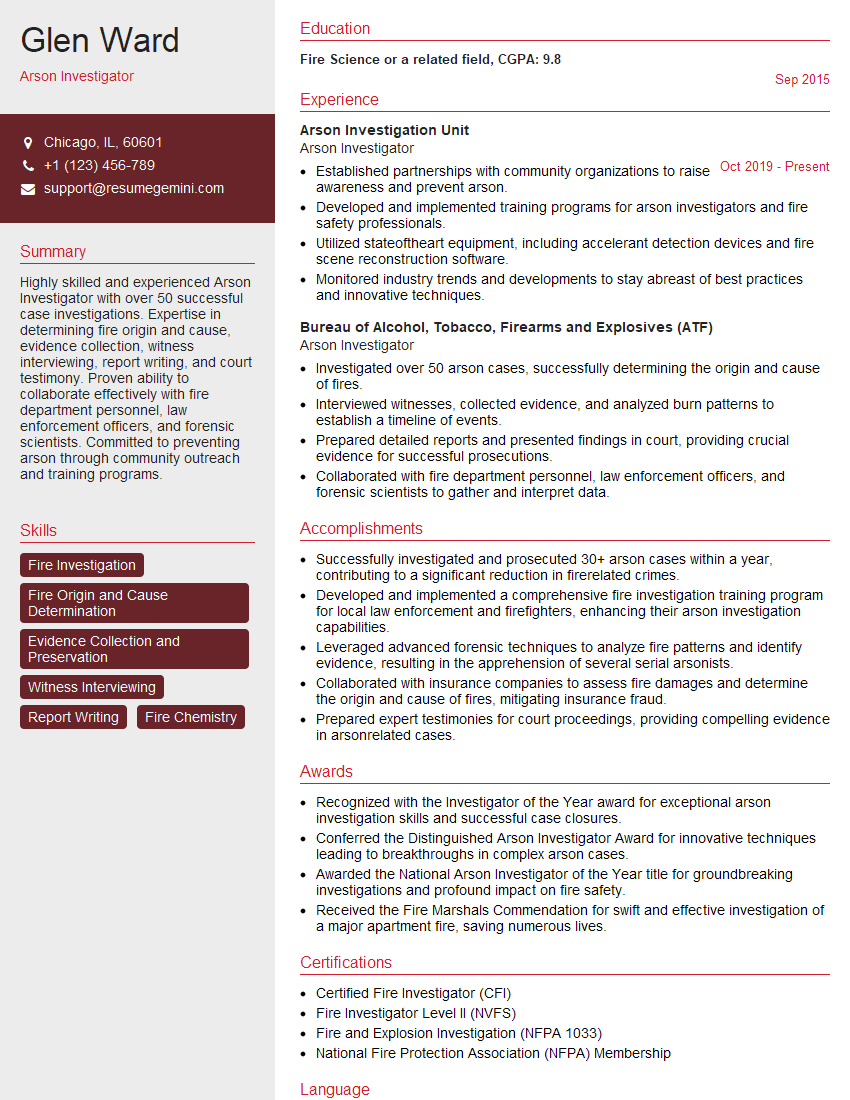
Arson Investigator Resume Sample

Fire Protection Engineer Resume Sample
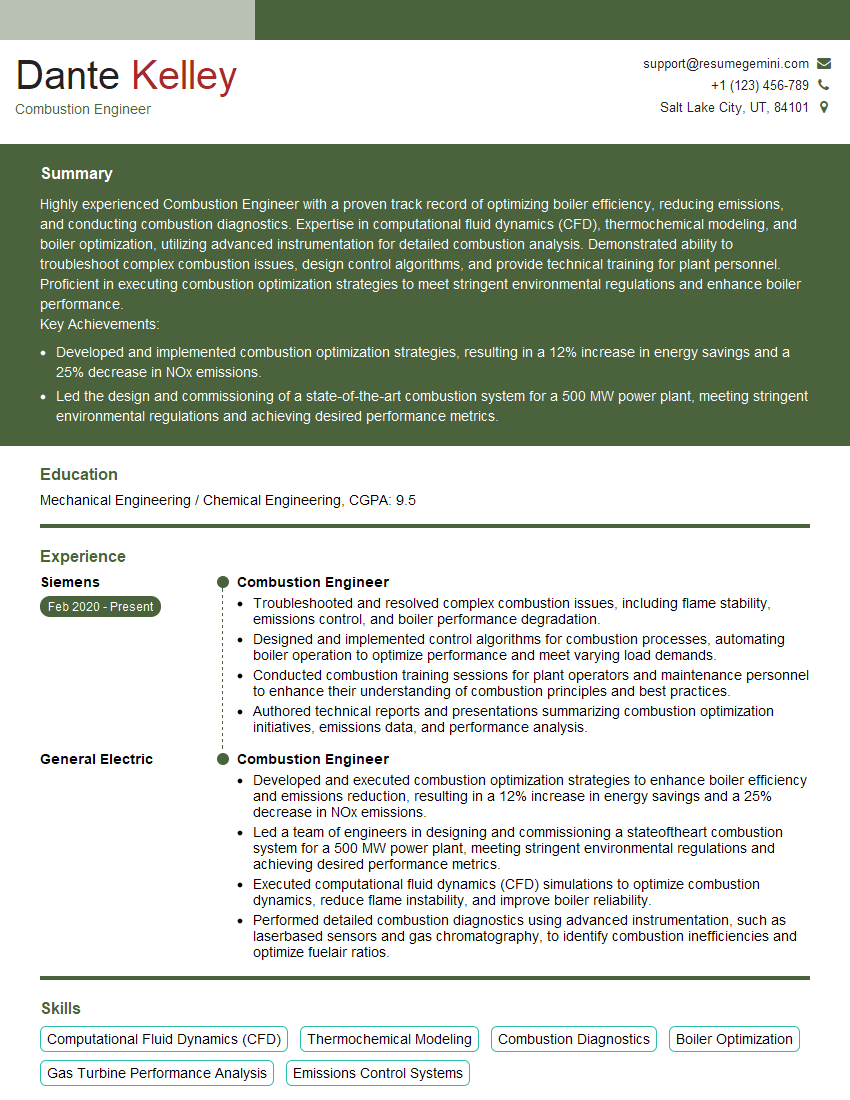
Combustion Engineer Resume Sample
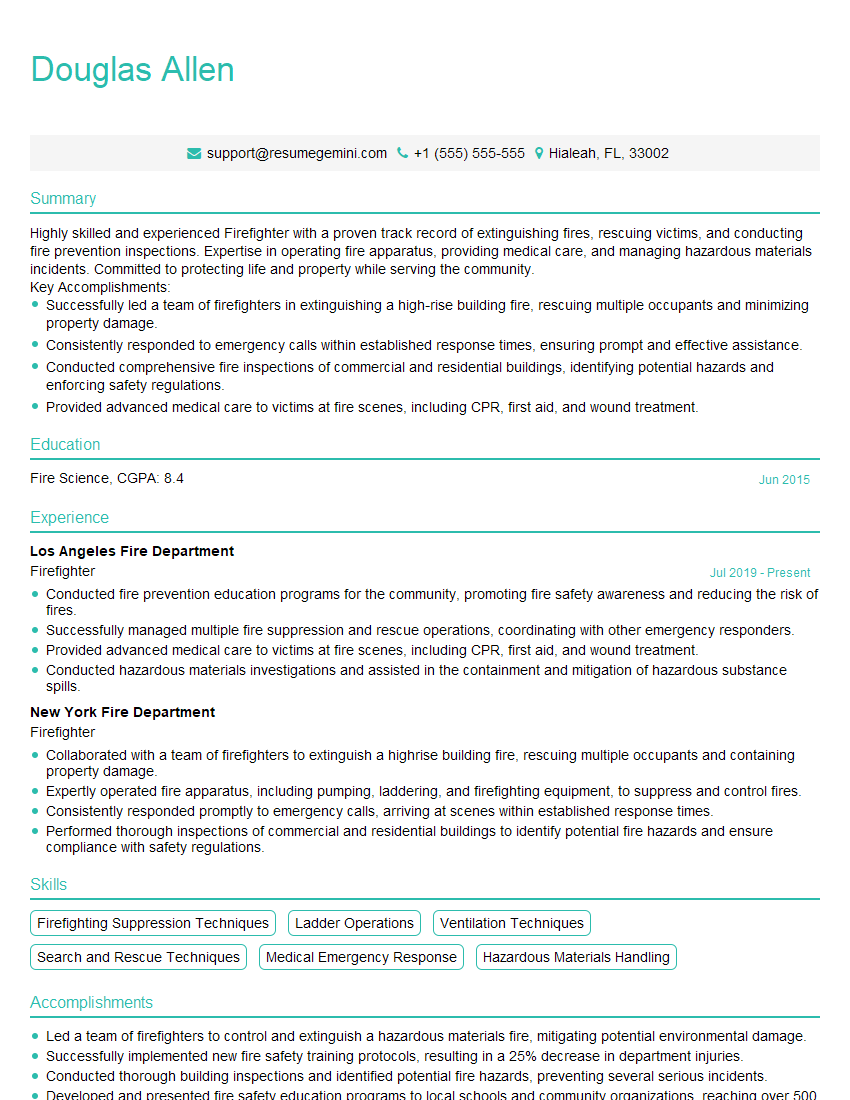
Firefighter Resume Sample
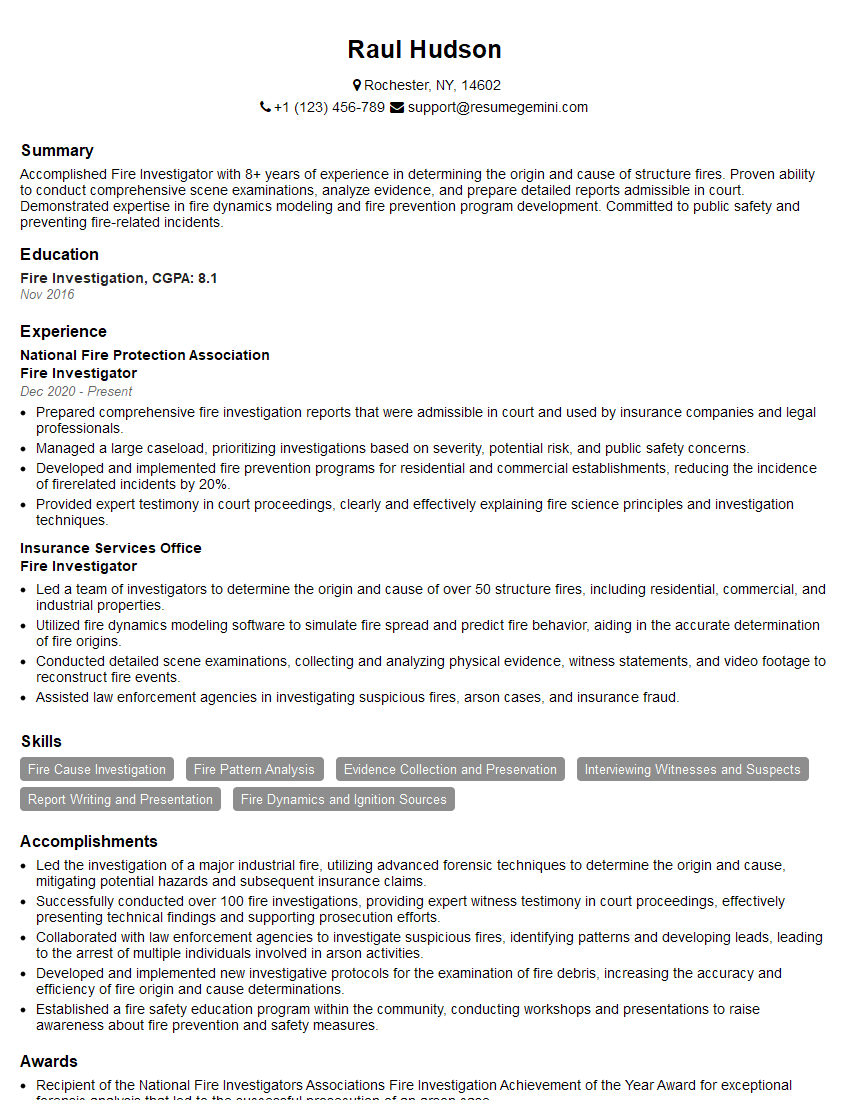
Fire Investigator Resume Sample
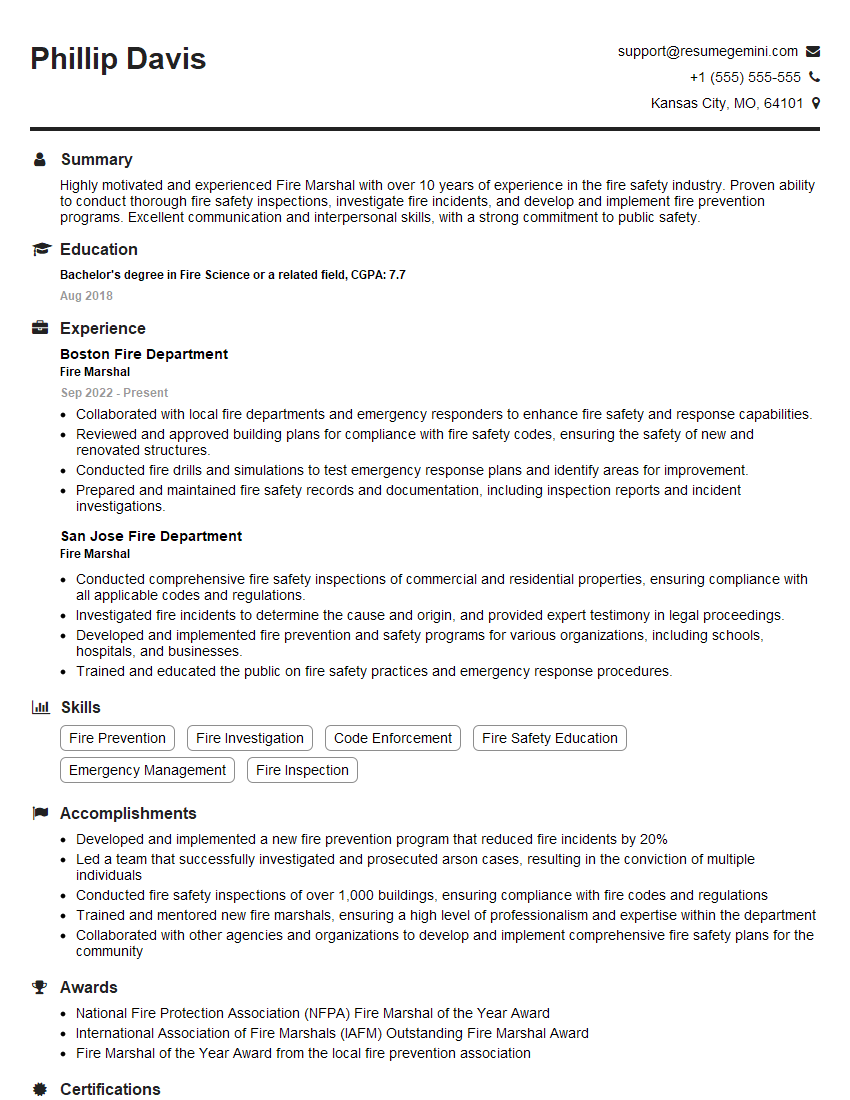
Fire Marshal Resume Sample

Fire Code Inspector Resume Sample
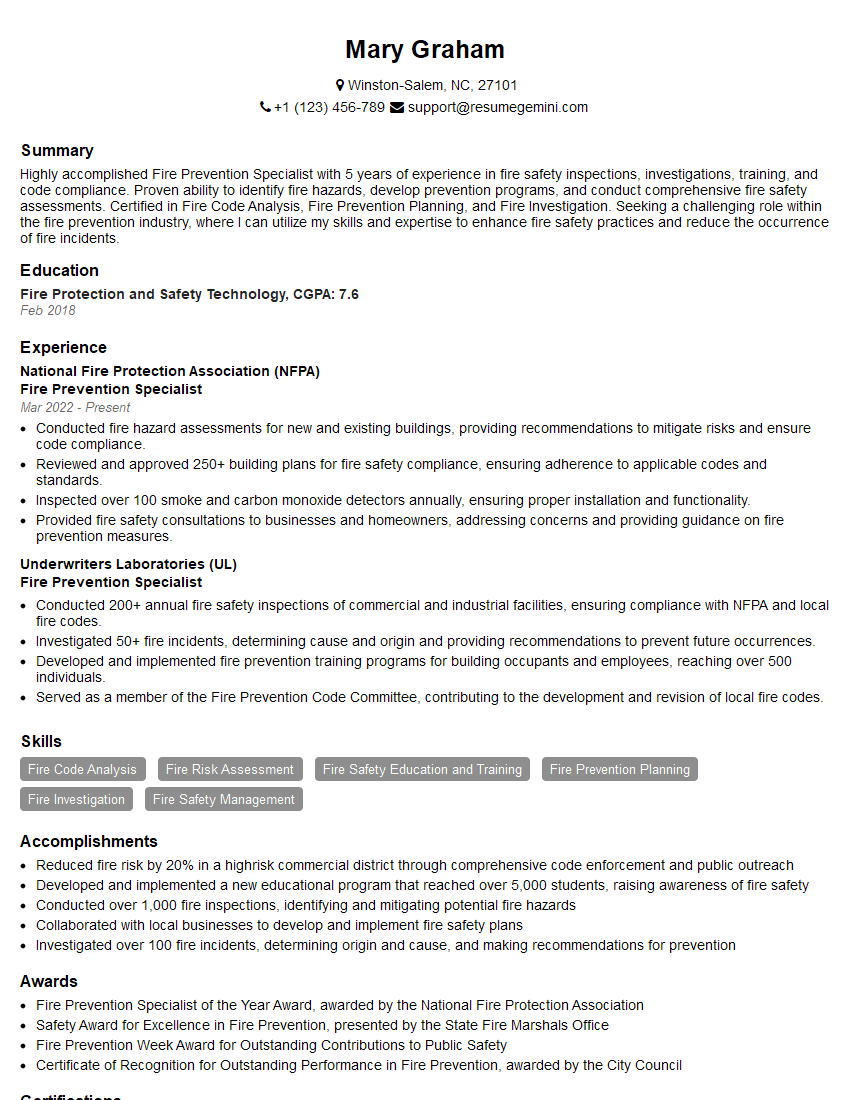
Fire Prevention Specialist Resume Sample
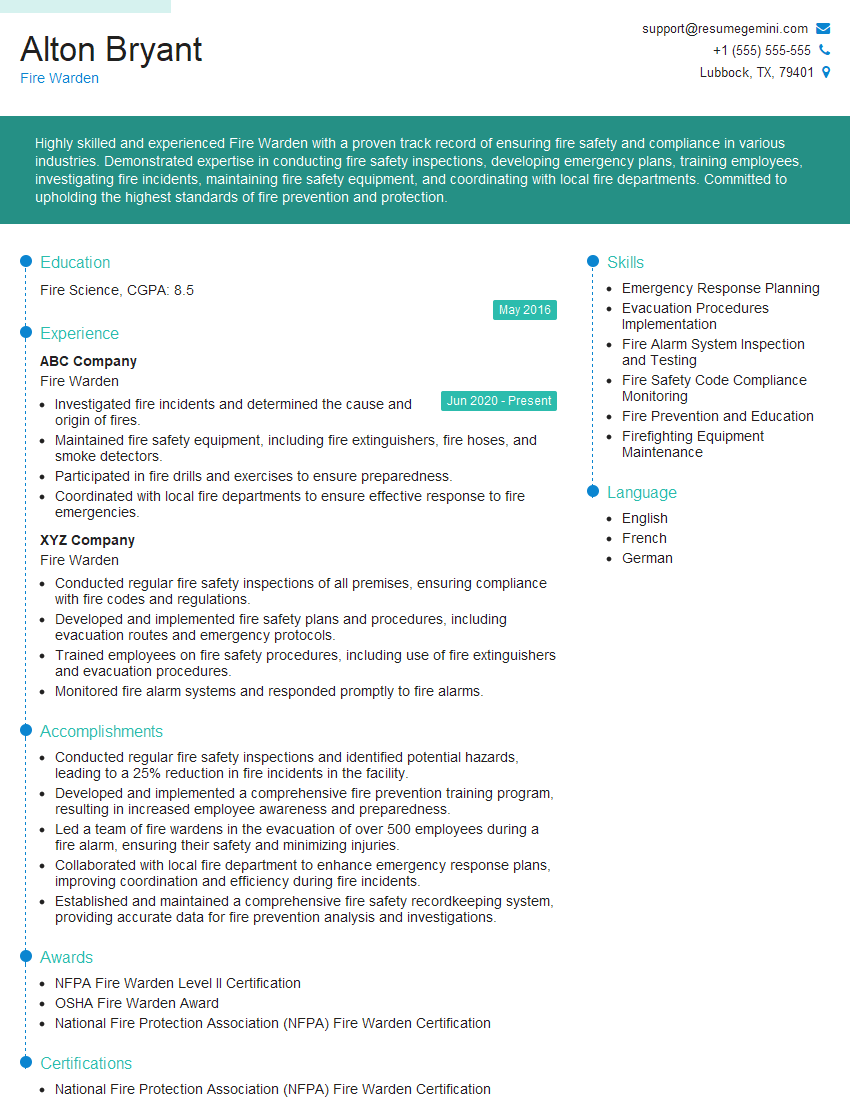
Fire Warden Resume Sample
Explore more articles
Users Rating of Our Blogs
Share Your Experience
We value your feedback! Please rate our content and share your thoughts (optional).
What Readers Say About Our Blog
Very informative content, great job.
good