Feeling uncertain about what to expect in your upcoming interview? We’ve got you covered! This blog highlights the most important Fire Inspection interview questions and provides actionable advice to help you stand out as the ideal candidate. Let’s pave the way for your success.
Questions Asked in Fire Inspection Interview
Q 1. Explain the NFPA (National Fire Protection Association) codes relevant to fire inspections.
The NFPA (National Fire Protection Association) develops and publishes a vast array of codes and standards related to fire prevention and protection. These codes are widely adopted across North America and often serve as the basis for local fire codes. Key codes relevant to fire inspections include:
- NFPA 101, Life Safety Code: This is arguably the most important code, covering a broad range of life safety issues in buildings, including means of egress, fire alarm systems, sprinkler systems, and fire protection features. Think of it as the overarching guide for building safety.
- NFPA 72, National Fire Alarm Code: This code details requirements for the design, installation, testing, and maintenance of fire alarm systems. It dictates everything from alarm signaling appliances to system notification appliances and central monitoring stations.
- NFPA 13, Standard for the Installation of Sprinkler Systems: This code provides comprehensive guidelines for the design, installation, inspection, and testing of sprinkler systems in various building occupancies. This is crucial for ensuring proper water distribution in case of fire.
- NFPA 25, Standard for the Inspection, Testing, and Maintenance of Water-Based Fire Protection Systems: This code outlines the procedures for regular inspection, testing, and maintenance of fire sprinkler and standpipe systems – vital for proactive prevention of system failures.
- NFPA 10, Standard for Portable Fire Extinguishers: This code addresses the requirements for portable fire extinguishers, including their location, type, and maintenance, ensuring readily available suppression in case of small fires.
During inspections, I meticulously cross-reference these codes with the building’s specific occupancy and construction type to ensure complete compliance. For example, a high-rise residential building will have significantly different requirements than a small commercial kitchen.
Q 2. Describe your experience with fire alarm system inspections and testing.
My experience with fire alarm system inspections and testing spans over [Number] years. I’m proficient in conducting both routine inspections and more thorough functional tests. A typical inspection includes verifying proper placement of detectors, testing the functionality of notification appliances (horns, strobes), checking the battery backup power supply, and reviewing the system’s maintenance records. During functional tests, I simulate fire conditions to ensure the system activates correctly and alerts the appropriate authorities. I’ve worked with diverse systems, including addressable systems (which pinpoint the exact location of an alarm) and conventional systems. I’m also skilled in identifying system deficiencies and recommending corrective actions, often drawing on my knowledge of NFPA 72.
For instance, I once identified a faulty smoke detector in a nursing home during a routine inspection that was missed in previous maintenance. This was crucial because a malfunctioning detector could have had life-threatening consequences. This emphasizes the importance of thorough inspections and regular testing, which I meticulously document and present to building management for immediate rectification.
Q 3. How do you identify and document fire code violations during an inspection?
Identifying and documenting fire code violations is a systematic process. I begin by carefully reviewing the building plans and comparing them to the existing conditions. Then I conduct a thorough walkthrough, paying attention to features specified in relevant NFPA codes. I use a standardized checklist tailored to the building’s occupancy type, and I utilize photography and video to document any violations visually. My documentation includes clear descriptions of the violations, their locations, the relevant NFPA code sections violated, and photographs.
For instance, if I find an exit door blocked by storage, I would photograph the obstruction, note its location, and reference the specific NFPA 101 sections regarding unobstructed egress paths. This detailed documentation provides irrefutable evidence of the violation and facilitates a clear understanding of the necessary corrective actions. This attention to detail is crucial to ensure compliance and minimize fire hazards.
Q 4. What are the key elements of a fire risk assessment?
A fire risk assessment is a systematic process of identifying potential fire hazards, evaluating their likelihood and potential impact, and establishing appropriate control measures. Key elements include:
- Hazard Identification: This involves systematically identifying all potential fire hazards within the building or facility, from flammable materials and faulty wiring to inadequate fire protection systems.
- Risk Analysis: This involves evaluating the likelihood of a fire occurring and the potential severity of its consequences (e.g., property damage, injuries, fatalities). A common method is using risk matrices to quantify both likelihood and impact.
- Risk Evaluation: This involves prioritizing the identified hazards based on their level of risk. Higher-risk hazards require more immediate attention.
- Risk Control: This involves developing and implementing control measures to mitigate identified risks. Examples include installing fire suppression systems, implementing fire safety training programs, and improving housekeeping practices.
- Monitoring and Review: This involves regularly monitoring the effectiveness of control measures and reviewing the risk assessment periodically to account for changes in occupancy, processes, or building conditions.
A well-executed fire risk assessment is a proactive approach to preventing fires, minimizing their impact, and protecting life and property.
Q 5. Explain the process of issuing a fire safety violation notice.
Issuing a fire safety violation notice is a formal process that typically involves the following steps:
- Formal Documentation: Compile all evidence related to the violation, including photographs, sketches, and detailed descriptions referencing the relevant NFPA codes.
- Notice Preparation: Draft a formal violation notice that clearly and concisely identifies the violation(s), the relevant code sections, and the required corrective actions. The notice should specify a deadline for compliance.
- Notice Delivery: Deliver the violation notice officially to the building owner or occupant, preferably through certified mail or in-person delivery with a documented receipt. This ensures official notification.
- Follow-up: Follow up to ensure the violation is corrected within the specified timeframe. This might involve scheduling a re-inspection.
- Enforcement: If the violations are not corrected, enforcement actions may be taken, potentially including fines or legal action.
The entire process is meticulously documented to maintain accountability and transparency.
Q 6. How do you handle disagreements with building owners or occupants regarding fire safety?
Disagreements with building owners or occupants are handled professionally and diplomatically. I begin by clearly explaining the violation, referencing the specific NFPA code sections and providing supporting evidence. I present the situation objectively, emphasizing the safety implications of non-compliance. I’m open to discussing potential solutions and exploring alternative approaches that address the safety concerns while considering the owner’s practicality and cost considerations. If a resolution cannot be reached through discussion, escalation procedures are followed, often involving superiors or legal counsel, while maintaining professional conduct throughout the process. In some instances, mediation might be used as an additional route to dispute resolution.
For example, I might encounter resistance to installing a new fire suppression system due to high costs. In such cases, I would present cost-benefit analyses, highlighting potential financial losses from a fire, and explore potentially less expensive solutions that meet the safety requirements.
Q 7. Describe your experience with sprinkler system inspections.
My experience with sprinkler system inspections is extensive, encompassing both visual inspections and more involved flow tests. A visual inspection assesses the physical condition of the system, checking for obstructions, corrosion, damage, and proper valve operation. Flow tests involve activating portions of the system to verify water pressure, flow rates, and overall system integrity. These tests are crucial to ensure the system functions correctly in an emergency. My inspections meticulously follow NFPA 25 guidelines. Regular inspections, testing and maintenance are vital, as a single compromised component can render the entire system ineffective. I carefully document all findings, highlighting any maintenance needs or necessary repairs.
I recall an inspection where a partially obstructed sprinkler head was detected during a visual check. This seemingly minor issue could have severely impacted the system’s effectiveness in a fire. Promptly addressing such issues, as I did in that case, highlights the value of meticulous inspections and the critical role sprinkler systems play in saving lives and property.
Q 8. What are the common causes of building fires?
Building fires are tragically common, stemming from a variety of causes. We can broadly categorize them into human factors and equipment malfunctions.
- Heating Equipment: Malfunctioning furnaces, space heaters, chimneys, and fireplaces are leading culprits. Think of a poorly maintained furnace igniting nearby combustible materials, or a chimney fire spreading to the attic.
- Cooking: Unattended cooking is a major cause, often resulting from grease fires or boiling liquids overflowing. Imagine leaving a pan of oil on the stove unattended while answering the phone.
- Electrical Issues: Faulty wiring, overloaded circuits, and damaged appliances can generate significant heat and ignite nearby materials. This could be an old frayed extension cord sparking and catching fire.
- Smoking Materials: Discarded cigarettes are a significant source of ignition, particularly in upholstered furniture. A carelessly tossed cigarette butt near a sofa could easily start a blaze.
- Arson: Deliberately set fires, unfortunately, account for a significant portion of building fires.
- Lightning Strikes: While less frequent, lightning strikes can cause significant damage and ignite flammable materials.
Understanding these common causes allows us to implement preventive measures during inspections, focusing on code compliance, proper maintenance, and occupant education.
Q 9. How do you ensure the safety of yourself and others during a fire inspection?
Safety is paramount during a fire inspection. My approach is multifaceted and follows established safety protocols.
- Personal Protective Equipment (PPE): I always wear appropriate PPE, including sturdy work boots, flame-resistant clothing, and safety glasses. In situations with potential asbestos or other hazardous materials, I’ll add respirators and other specialized equipment.
- Site Assessment: Before entering a building, I thoroughly assess the site for immediate hazards like downed power lines or unstable structures. I’ll coordinate with building management to ensure the area is safe.
- Teamwork: When possible, I work with a team. This allows for better situational awareness and mutual support. One person can focus on observation while another manages documentation.
- Communication: Clear and consistent communication with building occupants and colleagues is crucial. Everyone needs to be aware of the inspection plan and potential risks.
- Emergency Procedures: I’m always aware of the nearest exits and emergency procedures. A clear escape route is essential, especially in older buildings or those with complex layouts.
Safety isn’t just a checklist; it’s a mindset. Every action is guided by a commitment to minimizing risks for myself and everyone else on site.
Q 10. Explain your understanding of fire suppression systems.
Fire suppression systems are crucial for mitigating the spread and impact of fires. My understanding encompasses various types:
- Sprinkler Systems: These automatically discharge water when a fire is detected, effectively suppressing the flames. They are designed based on the occupancy classification and the specific fire risks within a building.
- Standpipes and Hose Systems: These provide a water supply for firefighters to use in battling a fire. Regular inspections ensure the system is fully functional and readily accessible.
- Fire Alarm Systems: These systems detect smoke or heat and alert building occupants and emergency services. I assess their functionality, ensuring proper placement of detectors and the integrity of the alarm circuits.
- Smoke Detectors and Heat Detectors: These are crucial components of early warning systems, alerting occupants of a developing fire.
- Clean Agent Systems: These use gaseous extinguishing agents that are environmentally friendly and effective for certain types of fires. These systems are often found in server rooms and other sensitive areas.
- Fire Extinguishers: Portable fire extinguishers provide a first line of defense against small fires. I inspect them for proper placement, functionality, and accessibility.
Beyond simply identifying the systems, my expertise includes understanding their limitations, maintenance schedules, and the codes governing their installation and inspection. I can diagnose malfunctions and recommend appropriate actions to maintain optimal performance.
Q 11. What is your experience with fire investigation techniques?
My experience in fire investigation involves applying scientific methods to determine the origin, cause, and development of fires. It’s a meticulous process that blends observation, documentation, and analysis.
- Scene Examination: This involves a systematic examination of the fire scene to identify the area of origin, the pattern of fire spread, and any potential ignition sources. Detailed notes and photographs are crucial.
- Evidence Collection: I carefully collect physical evidence, such as samples of burned materials, electrical components, and accelerants, adhering to strict chain-of-custody protocols.
- Interviewing Witnesses: Gathering information from witnesses who were present at the time of the fire can provide crucial insights into the sequence of events leading up to and following the ignition.
- Laboratory Analysis: Samples are sent to a laboratory for analysis to identify accelerants or other flammable materials. This helps determine the cause of ignition.
- Report Writing: The findings are compiled into a comprehensive report that details the origin, cause, and development of the fire. This report is often used by insurance companies, law enforcement, and building owners.
I’ve worked on various fire investigations, ranging from small residential fires to large-scale commercial incidents. This experience has sharpened my ability to accurately analyze the scene, interpret physical evidence, and arrive at well-supported conclusions.
Q 12. How do you prioritize fire hazards during an inspection?
Prioritizing fire hazards during an inspection requires a systematic approach. I use a risk-based assessment, considering factors like the probability of a fire occurring and the potential consequences if one does.
- Imminent Hazards: These are hazards that pose an immediate threat, such as a severely overloaded electrical circuit or a readily ignitable material near a heat source. These are addressed first.
- High-Probability Hazards: These are hazards with a high likelihood of causing a fire, such as improperly maintained heating equipment or improperly stored flammable materials. These are addressed next.
- High-Consequence Hazards: These hazards may not have a high probability of causing a fire, but the consequences of a fire would be severe. This could be inadequate fire separation between occupancies. These are also prioritized.
- Code Compliance: I evaluate the building’s adherence to fire codes and regulations. Violations of these codes are considered high-priority hazards.
I document all findings and prioritize my recommendations based on this risk assessment, focusing on the most critical hazards first. This ensures efficient resource allocation and effective mitigation of risks.
Q 13. Describe your proficiency in using fire inspection software or reporting tools.
Proficiency in fire inspection software and reporting tools is essential for efficient and accurate documentation. I’m adept at using various software packages to create detailed inspection reports, manage findings, and track corrective actions.
- Data Entry and Reporting: I’m proficient in using software to efficiently record inspection data, generate customized reports that include images, and track progress toward compliance.
- Plan Review and Integration: Many software packages allow me to integrate building plans and overlay findings, providing a clear visual representation of hazards.
- Database Management: I can use software to maintain a database of inspection results, facilitating trend analysis and identifying recurring issues.
- Data Analysis and Visualization: I can utilize software to analyze inspection data to identify patterns and trends and create visualizations to better communicate findings.
My experience extends to various software platforms, and I adapt quickly to new technologies. The software is simply a tool; my expertise lies in using it to effectively communicate the critical findings of the inspection.
Q 14. What is your experience working with different types of occupancy classifications?
Occupancy classifications significantly influence fire safety design and inspection protocols. My experience encompasses a wide range of occupancy types, each requiring specific attention to detail.
- Residential (R): This includes single-family homes, apartments, and dormitories. Inspections focus on smoke detectors, fire escapes, and the proper storage of flammable materials.
- Business (B): This category is very broad and includes offices, retail spaces, and restaurants. Inspections cover fire suppression systems, emergency lighting, and the management of hazardous materials.
- Industrial (I): These locations often involve significant fire hazards, demanding thorough inspections of machinery, processes, and storage facilities for flammable liquids and gases.
- Assembly (A): This encompasses theaters, stadiums, and auditoriums. Emphasis is placed on ensuring adequate means of egress, fire alarm systems, and fire-resistant materials.
- Educational (E): Schools and universities require attention to fire safety measures that protect students and staff, including fire drills, escape routes, and emergency communication systems.
- Healthcare (H): Hospitals and nursing homes have unique considerations related to patient evacuation procedures, specialized fire suppression systems, and the management of medical equipment and gases.
Understanding these occupancy classifications allows me to tailor my inspection approach, ensuring a thorough assessment of the specific risks associated with each type of building. I’m familiar with the relevant codes and standards for each classification, ensuring comprehensive and appropriate inspections.
Q 15. How do you stay current with changes in fire codes and regulations?
Staying current in the dynamic field of fire codes and regulations requires a multi-pronged approach. It’s not a one-time effort, but an ongoing commitment to professional development.
- Active Membership in Professional Organizations: I maintain active membership in organizations like the International Code Council (ICC) and the National Fire Protection Association (NFPA). These organizations provide regular updates, training materials, and access to the latest code changes through newsletters, webinars, and conferences.
- Regular Code Book Updates: I subscribe to the latest editions of relevant fire codes, such as the International Fire Code (IFC) and the National Electrical Code (NEC). I regularly review amendments and updates as they are released.
- Continuing Education Courses: I actively participate in continuing education courses and workshops focusing on code changes, new technologies in fire prevention and suppression, and evolving best practices in fire inspection. This keeps my knowledge fresh and ensures I’m applying the most current standards.
- Online Resources and Publications: I regularly consult reputable online resources and industry publications to stay informed about emerging trends, case studies, and interpretations of existing codes.
- Networking with Peers: Engaging with other fire inspectors and professionals through conferences and online forums allows for the exchange of knowledge and insights on real-world applications of the codes.
This combination of formal training and ongoing self-education ensures that my inspection practices always reflect the most up-to-date standards and best practices.
Career Expert Tips:
- Ace those interviews! Prepare effectively by reviewing the Top 50 Most Common Interview Questions on ResumeGemini.
- Navigate your job search with confidence! Explore a wide range of Career Tips on ResumeGemini. Learn about common challenges and recommendations to overcome them.
- Craft the perfect resume! Master the Art of Resume Writing with ResumeGemini’s guide. Showcase your unique qualifications and achievements effectively.
- Don’t miss out on holiday savings! Build your dream resume with ResumeGemini’s ATS optimized templates.
Q 16. Explain your understanding of fire escape routes and emergency exits.
Understanding fire escape routes and emergency exits is paramount for ensuring the safe evacuation of occupants during a fire. It’s not just about identifying exits; it’s about ensuring their accessibility, functionality, and clear signage.
- Adequate Number and Spacing: There must be a sufficient number of exits to accommodate the building’s occupancy load, and these exits must be strategically located to minimize travel distances. Overcrowding near exits during an emergency can be fatal.
- Clear and Unobstructed Pathways: Escape routes must be kept clear of obstructions at all times. This includes furniture, stored materials, and any other impediments that could hinder a quick and safe exit. Regular inspections are crucial to ensure pathways remain unobstructed.
- Proper Signage and Illumination: Exits must be clearly marked with easily visible signage, including illuminated exit signs in case of power outages. Signage should conform to relevant codes and standards for size, placement, and lighting.
- Proper Door Construction and Hardware: Exit doors must be constructed of fire-resistant materials and equipped with appropriate hardware, including panic bars or push bars, to ensure easy and rapid opening from the inside. They should swing in the direction of egress.
- Accessibility for People with Disabilities: Exit routes must be accessible to people with disabilities, with features like ramps, wider doorways, and appropriate signage conforming to ADA standards.
During inspections, I meticulously check each of these aspects, ensuring the building’s fire escape routes are compliant with all relevant safety codes and regulations. For example, I once identified a blocked fire exit in a high-occupancy building during a routine inspection, preventing a potential tragedy.
Q 17. How do you handle emergency situations during an inspection?
Handling emergency situations during an inspection requires quick thinking, decisive action, and a strong understanding of emergency response procedures. The priority is always the safety of myself and the building occupants.
- Immediate Evacuation: If I encounter a fire or other hazardous condition, I immediately initiate evacuation procedures, guiding occupants to safety using established escape routes. My training encompasses emergency response protocols, including proper use of fire extinguishers (only if conditions are safe and I’m trained to do so) and calling emergency services.
- Calling Emergency Services: I promptly call emergency services (911 or the local equivalent), providing them with accurate location information, the nature of the emergency, and the number of occupants, if known.
- Controlling the Scene: If it’s safe to do so, I would assist in directing traffic and ensuring emergency personnel have clear access to the building.
- Post-Emergency Reporting: Following the emergency, I thoroughly document the incident, including observations, actions taken, and any injuries or damages. This information is essential for investigation and future prevention efforts.
Preparation is key. I always carry a portable radio to maintain communication, and I am familiar with the building’s layout and emergency procedures. Thorough training in emergency response and first aid is critical for handling unforeseen circumstances effectively and safely.
Q 18. Describe your experience with conducting fire drills or training exercises.
I have extensive experience conducting and observing fire drills and training exercises in various settings, from small office buildings to large industrial complexes. These exercises are vital for ensuring occupants are familiar with evacuation procedures and emergency response protocols.
- Planning and Coordination: I’ve been involved in planning and coordinating fire drills, working with building management and staff to develop realistic scenarios and evacuation plans that take into account the building’s unique characteristics.
- Drill Execution and Observation: I’ve observed and evaluated the effectiveness of fire drills, noting areas for improvement, such as the speed of evacuation, the clarity of instructions, and the effectiveness of communication systems.
- Post-Drill Debriefing: I’ve participated in post-drill debriefing sessions, providing feedback to building staff and identifying areas for improvement in evacuation procedures and emergency response protocols. This collaborative approach helps refine and optimize the building’s emergency preparedness plan.
- Training Materials Development: I have contributed to the development of training materials, including evacuation maps, emergency procedures guides, and training videos, ensuring that information is easily understandable and accessible to all occupants.
One particular example involved a large manufacturing facility where I identified significant delays in evacuation during a drill. This led to revisions in their procedures and the installation of improved signage, ultimately enhancing their emergency preparedness.
Q 19. What is your experience with plan review processes related to fire protection?
My experience with plan review processes related to fire protection is extensive. I’m familiar with the detailed review of architectural and engineering plans to ensure compliance with fire codes and regulations before construction begins.
- Code Compliance Review: I meticulously review plans to ensure compliance with all relevant fire codes, including those related to building materials, fire suppression systems, means of egress, and fire alarm systems. This includes checking calculations for sprinkler systems and smoke control systems.
- Identifying Potential Hazards: I identify potential fire hazards in the design and propose solutions to mitigate those risks. This often involves communication with architects, engineers, and building owners to achieve a safe and compliant design.
- Collaboration with Designers: I collaborate with designers to incorporate fire safety features into the building’s design, ensuring that these features are seamlessly integrated into the overall aesthetic and functionality of the building.
- Technical Expertise: My technical expertise allows me to understand and interpret complex engineering drawings and specifications relating to fire protection systems. This includes evaluating the suitability of materials, the capacity of fire suppression systems, and the adequacy of fire-resistant barriers.
My work in plan review significantly contributes to the prevention of fire hazards in new construction projects and ensures that buildings are constructed to meet the highest safety standards from the outset. I once identified a critical flaw in a sprinkler system design during a plan review, preventing a potentially disastrous outcome.
Q 20. How do you document and report your findings after a fire inspection?
Documenting and reporting findings after a fire inspection is crucial for ensuring accountability and facilitating corrective actions. My reporting process is thorough, detailed, and objective.
- Detailed Inspection Checklist: I use a comprehensive checklist to ensure all aspects of the inspection are covered systematically. This checklist includes specific items to be inspected, criteria for compliance, and spaces for observations and findings.
- Photographic and Video Documentation: I utilize photographs and videos to document critical findings, particularly violations or areas needing attention. This visual evidence provides clarity and supports my written report.
- Clear and Concise Reporting: My inspection reports are clear, concise, and easy to understand. They include a description of the facility, the date of inspection, the areas inspected, identified violations, and recommended corrective actions. Severity levels are clearly indicated.
- Violation Categorization: I categorize violations based on their severity, ranging from minor deficiencies requiring minor corrections to critical violations posing significant safety risks and requiring immediate attention.
- Follow-up and Verification: I follow up on reported violations to verify that corrective actions have been implemented and that the facility is compliant with the safety codes.
My reports are designed to be actionable, providing clear instructions to building owners and management on the necessary steps to address safety deficiencies. This approach ensures continuous improvement in fire safety.
Q 21. What are the key differences between various types of fire extinguishers?
Fire extinguishers are categorized based on the type of fire they are designed to extinguish. Understanding these differences is vital for effective fire suppression.
- Class A: These extinguishers are designed for ordinary combustible materials such as wood, paper, cloth, and trash. They typically use water or a water-based agent.
- Class B: These extinguishers are designed for flammable liquids such as gasoline, oil, grease, and paints. They commonly use carbon dioxide (CO2), dry chemical, or foam agents.
- Class C: These extinguishers are designed for electrical fires involving energized electrical equipment. They use carbon dioxide (CO2) or dry chemical agents, as water could conduct electricity and increase the risk of shock.
- Class D: These extinguishers are designed for combustible metals such as magnesium, titanium, and sodium. They use special agents designed to suppress the combustion of these materials.
- Class K: These extinguishers are designed for cooking oils and fats in commercial kitchens. They use a wet chemical agent that saponifies the cooking oil, creating a soap-like substance to suppress the fire.
- Multi-Purpose ABC Extinguishers: Many extinguishers are multi-purpose, meaning they can be used on Class A, B, and C fires. They typically contain a dry chemical agent.
During inspections, I check for the correct type and sufficient number of fire extinguishers, ensuring their placement is accessible and that they are properly maintained and charged. Misuse of a fire extinguisher can be dangerous, so correct usage is also an important aspect of training I frequently include in my reports.
Q 22. Explain your understanding of passive fire protection systems.
Passive fire protection systems are designed to prevent or delay the spread of fire and smoke, primarily by creating barriers or slowing down the rate of heat transfer. They work without any active intervention or moving parts, unlike active systems like sprinklers or fire alarms. Think of them as the building’s ‘fire-resistant armor’.
- Fire-resistant materials: These include things like concrete, fire-rated drywall, and specialized insulation. They are designed to withstand high temperatures for a specific period, limiting the spread of fire through walls, floors, and ceilings. For instance, a two-hour rated wall will resist fire penetration for at least two hours.
- Fire compartmentation: This is about dividing a building into smaller, self-contained areas using fire-rated barriers. If a fire starts in one compartment, it’s less likely to quickly engulf the whole building. Imagine compartmentation like individual rooms in a fire-safe apartment building.
- Fire stopping: This involves sealing gaps and penetrations in fire-rated assemblies (like holes for pipes or cables) to prevent fire from spreading through those openings. It’s like patching up holes in the building’s fire-resistant armor.
Understanding passive fire protection is crucial for designing and maintaining buildings that can withstand and limit the damage caused by fire. The effectiveness depends on proper design, installation, and regular inspection.
Q 23. How do you interpret and apply fire safety regulations to different building types?
Interpreting and applying fire safety regulations requires a thorough understanding of the relevant codes and standards—like the International Building Code (IBC) or local variations—and how they apply to specific building types. Each building type presents unique challenges. For example, a high-rise building will have considerably different requirements than a single-family home.
- Occupancy Classification: The type of use significantly impacts regulations. A hospital will have stricter requirements than an office building due to the vulnerability of its occupants. This drives design, materials, and evacuation strategies.
- Building Size and Height: Larger and taller buildings typically need more stringent fire protection measures, including dedicated fire suppression systems and extensive compartmentation.
- Construction Type: The materials used affect the fire’s spread. A steel-framed building requires different approaches compared to a concrete-framed one.
My approach involves a detailed review of the building plans, verifying compliance with all relevant codes, and identifying any potential hazards. This often involves cross-referencing with manufacturer’s specifications for fire-rated materials to ensure the building is constructed to the required safety levels. For instance, I would check that the fire-rated doors are properly installed and maintained for a high occupancy building.
Q 24. Describe your experience with working with diverse stakeholders (contractors, owners, etc.).
I have extensive experience collaborating with various stakeholders, including general contractors, building owners, architects, and fire suppression system installers. Effective communication and clear expectations are paramount.
In one project, we encountered disagreements between the owner and contractor regarding the necessity of a specific fire-rated wall. By presenting clear evidence from the building codes and emphasizing the safety implications, I helped them reach a consensus that prioritized safety.
I approach stakeholder management by:
- Active listening: Understanding their perspectives and concerns.
- Clear communication: Explaining technical aspects in a clear, concise manner, avoiding jargon.
- Collaboration: Working together to find solutions that meet both safety and budget constraints.
- Documentation: Maintaining detailed records of all communications and agreements.
Building strong relationships based on trust and mutual respect is crucial for successful project completion and ensuring a safe building.
Q 25. What is your approach to resolving fire safety concerns effectively?
My approach to resolving fire safety concerns involves a systematic and proactive methodology.
- Identify the concern: Thoroughly investigate the issue through observation, documentation, and review of existing plans and records.
- Assess the risk: Determine the potential severity and likelihood of the hazard using established risk assessment tools and relevant codes. This includes factoring in potential consequences and human impact.
- Develop solutions: Explore various options, balancing cost-effectiveness with safety requirements. This involves considering both short-term and long-term solutions.
- Implement the solution: This may include recommending corrective actions, coordinating with contractors, and overseeing the implementation of remedial work.
- Verify effectiveness: Follow up and inspect the implemented solution to confirm its effectiveness in mitigating the risk. Re-inspections are crucial.
For example, discovering a missing fire damper in a ductwork system necessitates immediate action. I would document the issue, assess its impact on fire compartmentation, and recommend installation of a suitable damper. I would then verify its proper installation after the corrective action is completed.
Q 26. How do you ensure the accuracy and completeness of your inspection reports?
Ensuring accuracy and completeness in inspection reports is paramount. My process involves a rigorous approach:
- Detailed checklists: Using pre-defined checklists tailored to the building type and code requirements ensures consistency and minimizes oversight.
- Thorough documentation: I take detailed notes, photographs, and videos during inspections, providing visual evidence to support my findings.
- Clear and concise reporting: Reports are written in plain language, avoiding technical jargon where possible. Findings are presented clearly with specific locations and recommendations.
- Peer review: In complex cases, a peer review helps to validate findings and improve accuracy.
- Revision and verification: I always review the report for errors and omissions before finalizing and distributing it.
Accuracy is vital because these reports inform critical decisions related to building safety and compliance. A mistake could have serious consequences.
Q 27. Describe your experience in using specialized equipment for fire inspection.
My experience with specialized equipment encompasses a range of tools essential for thorough fire inspections. These tools help provide detailed data and visual assessments beyond visual observation.
- Thermal imaging cameras: These cameras detect temperature variations, revealing hidden heat sources or areas of compromised insulation that might indicate fire hazards. This allows for proactive identification of potential problems before they escalate.
- Smoke detectors and testing equipment: These devices are used to check the functionality and sensitivity of existing smoke detectors and ensure they are correctly installed and maintained. We often use a smoke pencil to check response.
- Draft gauges: They assess airflow, helping identify potential pathways for fire spread through building systems.
- Moisture meters: These meters assist in identifying moisture content in building materials, potentially pointing out conditions conducive to combustion.
Properly using and interpreting data from these tools significantly enhances inspection accuracy and aids in comprehensive risk assessment. Understanding the limitations of each tool and using them in conjunction with visual inspection is also very important.
Q 28. How do you maintain your professional development in the field of fire safety?
Maintaining professional development in the dynamic field of fire safety is crucial. I actively pursue continuous learning through various means:
- Professional certifications: I hold relevant certifications (mention specific certifications if applicable) that keep me updated on best practices and evolving codes.
- Industry conferences and workshops: Attending conferences and workshops provide opportunities to network and learn about the latest advancements in fire safety technologies and techniques.
- Continuing education courses: I regularly participate in continuing education programs to stay abreast of changes in building codes, regulations, and new fire safety innovations. Online courses and seminars are also utilized.
- Professional organizations: Membership in professional organizations like the NFPA (National Fire Protection Association) provides access to resources and ongoing training.
Staying current in this field is not just a professional obligation but also a responsibility to ensure the safety of buildings and the people who occupy them.
Key Topics to Learn for Fire Inspection Interview
- Building Codes and Regulations: Understanding local, state, and national fire codes, including their application and interpretation in various building types.
- Fire Prevention Strategies: Analyzing building designs and layouts to identify potential fire hazards and recommending preventative measures. This includes practical application of fire safety systems.
- Fire Investigation Techniques: Learning how to systematically investigate fire incidents, determine origin and cause, and prepare detailed reports.
- Fire Safety Systems: Comprehensive knowledge of various fire suppression systems (sprinklers, alarms, etc.), their maintenance, and inspection procedures. This includes practical troubleshooting scenarios.
- Hazard Identification and Risk Assessment: Applying established methodologies to identify fire hazards, assess risks, and develop appropriate mitigation strategies. This includes practical examples of risk matrix usage.
- Report Writing and Documentation: Mastering the art of clear, concise, and comprehensive report writing, including accurate documentation of findings and recommendations.
- Communication and Interpersonal Skills: Demonstrating effective communication skills to interact with building owners, occupants, and other stakeholders.
- Plan Review and Inspections: Understanding the process of reviewing construction plans for fire safety compliance and conducting thorough on-site inspections.
- Life Safety Systems: Knowledge of emergency exit routes, lighting, and signage requirements for different building occupancies.
- Legal and Ethical Considerations: Understanding your role and responsibilities within legal frameworks and maintaining ethical conduct during inspections and investigations.
Next Steps
Mastering Fire Inspection opens doors to a rewarding career with excellent growth potential. Advancement opportunities include specializing in areas like fire investigation, plan review, or code enforcement. To maximize your job prospects, a well-crafted, ATS-friendly resume is crucial. ResumeGemini is a trusted resource to help you build a professional resume that highlights your skills and experience effectively. Examples of resumes tailored to the Fire Inspection field are available to help you get started.
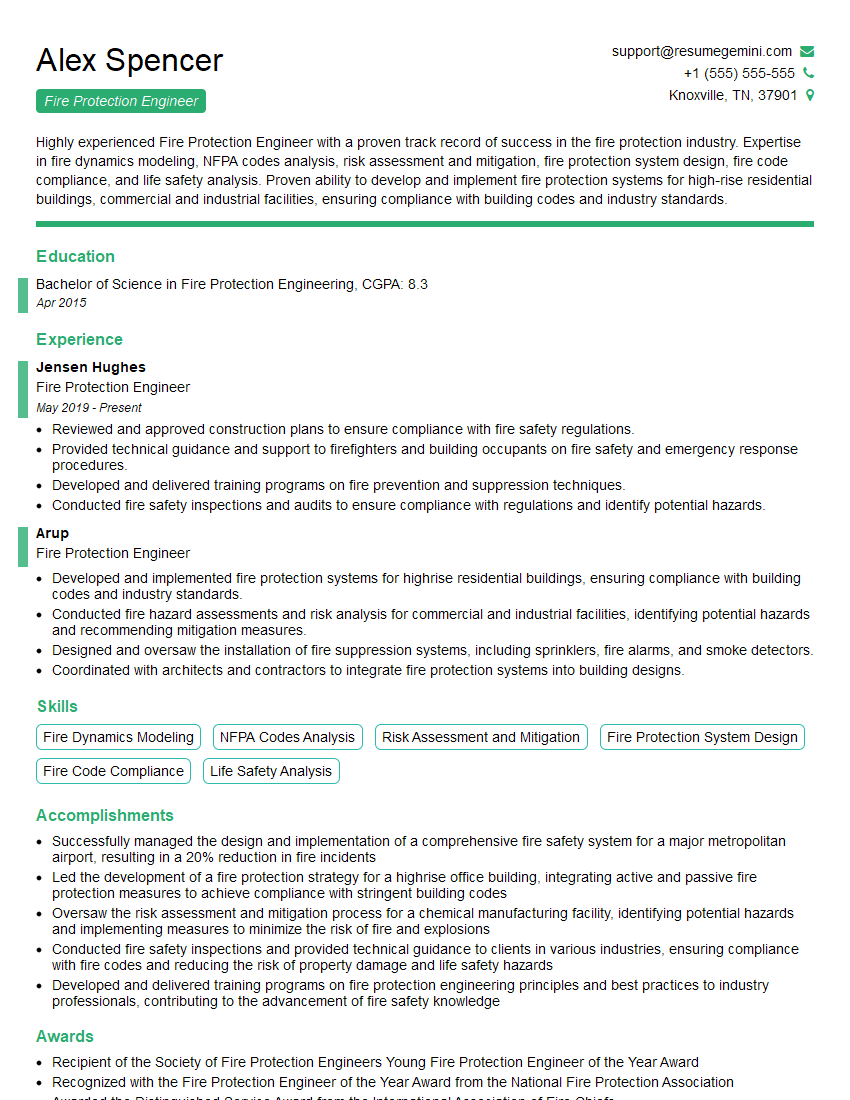
Fire Protection Engineer Resume Sample
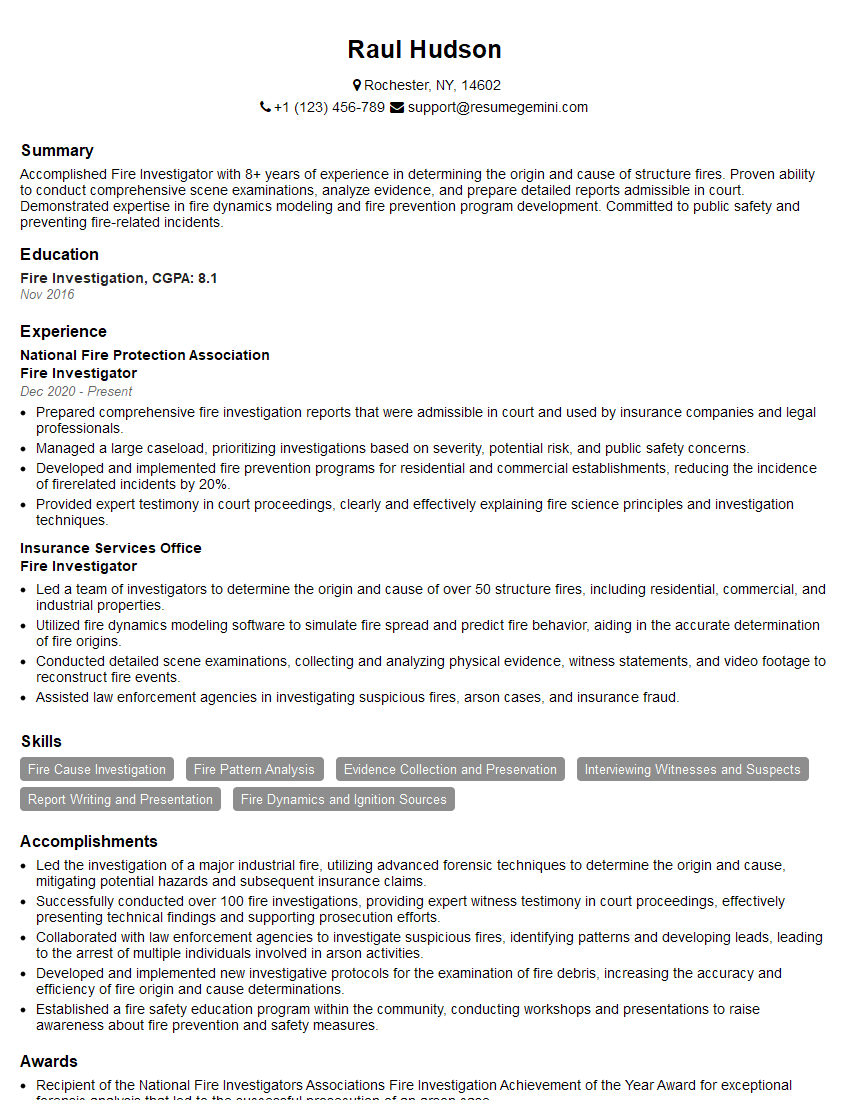
Fire Investigator Resume Sample
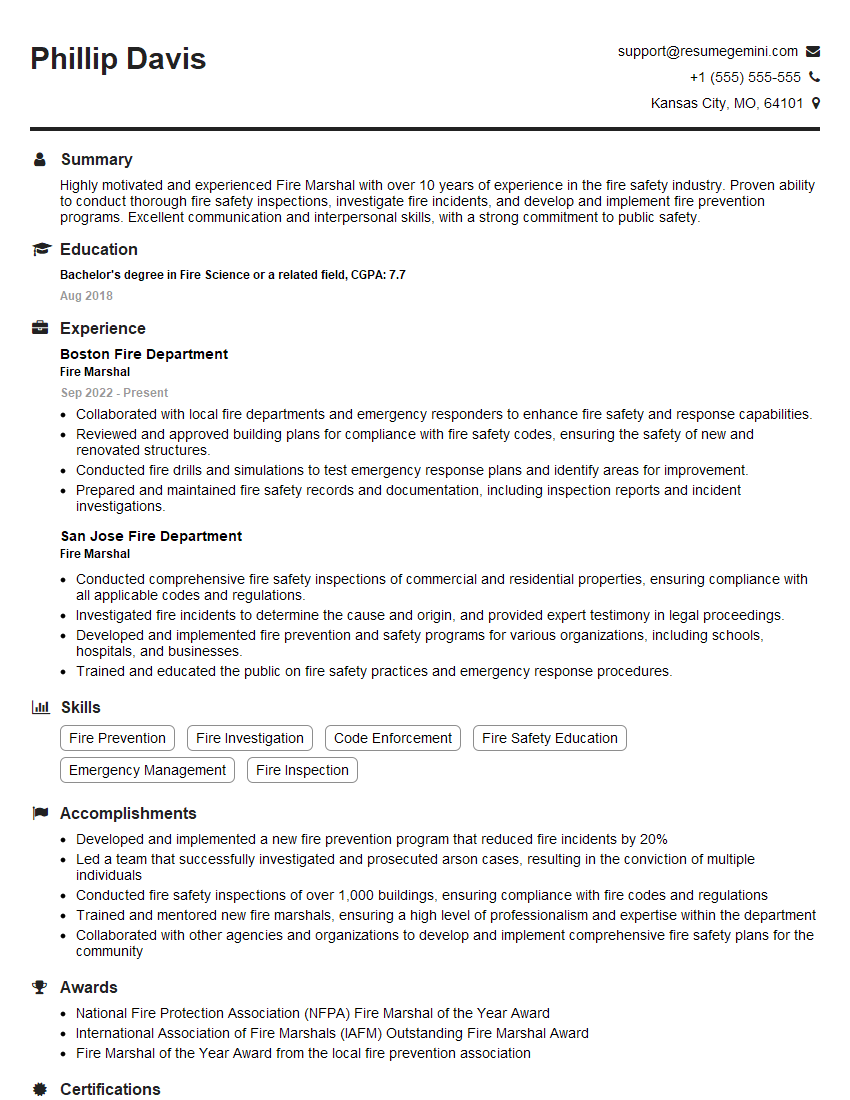
Fire Marshal Resume Sample
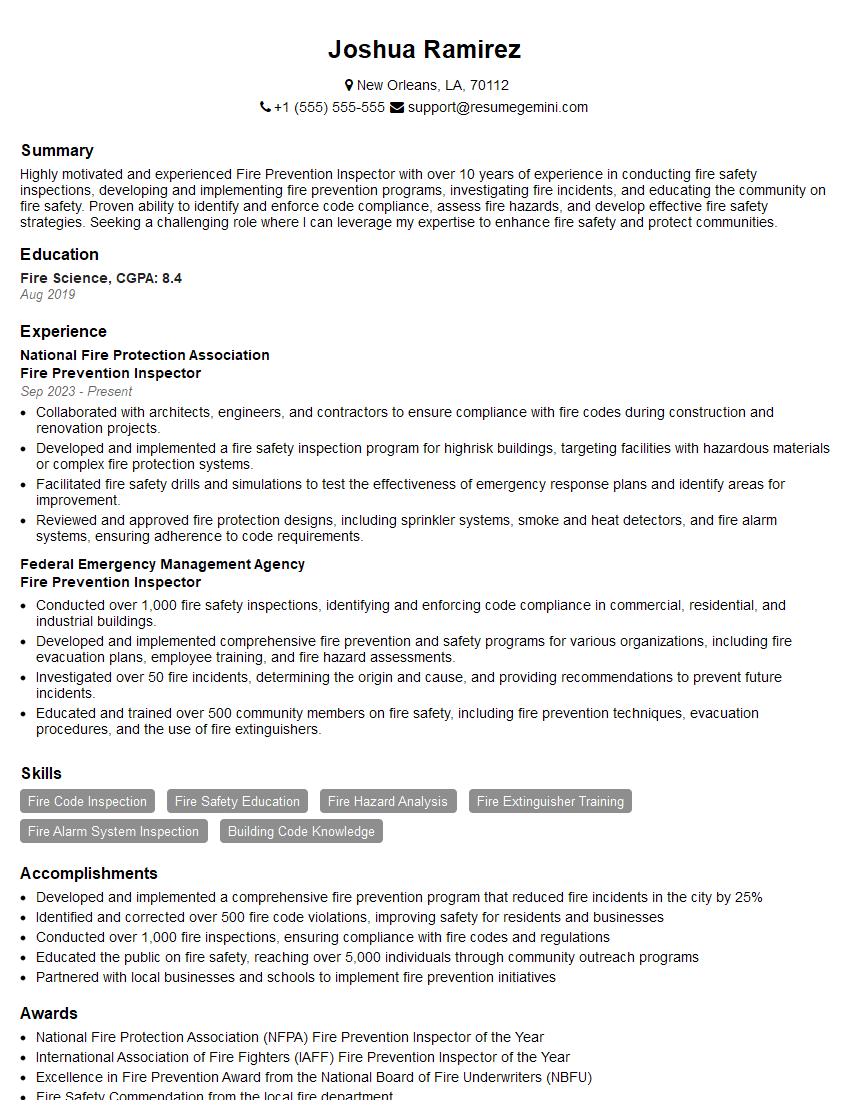
Fire Prevention Inspector Resume Sample
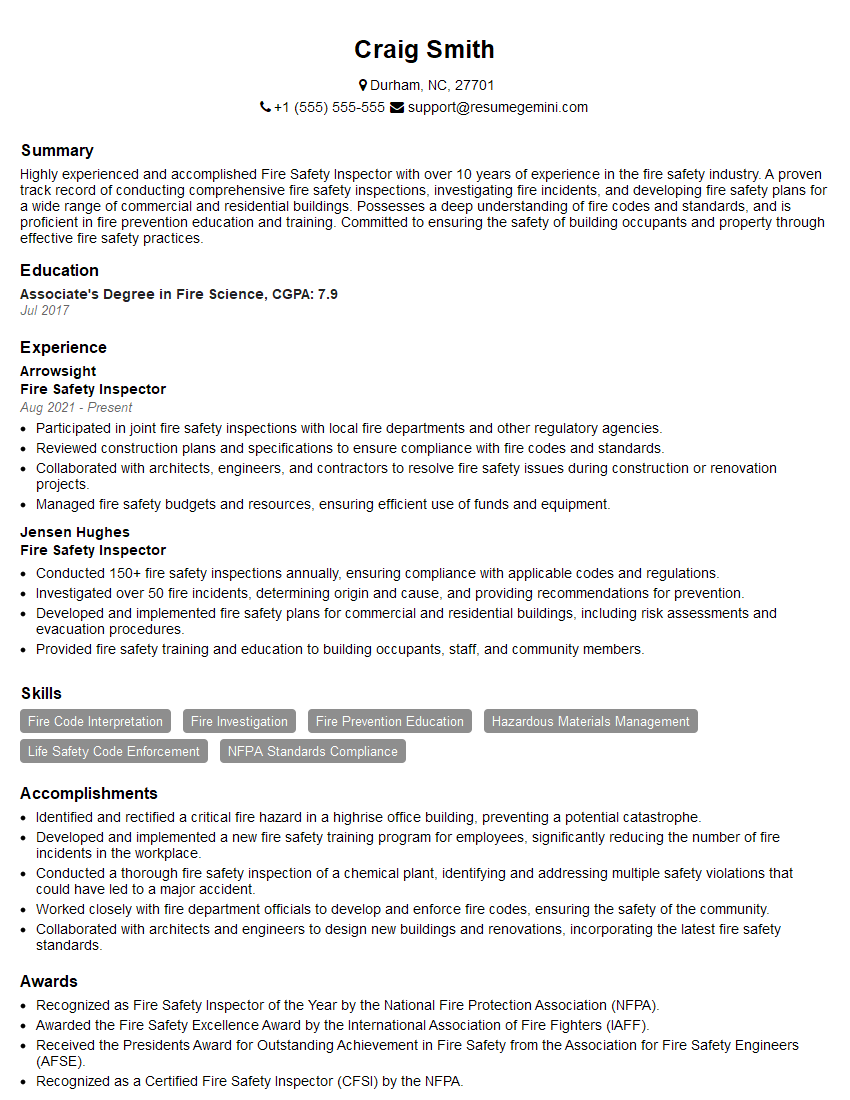
Fire Safety Inspector Resume Sample
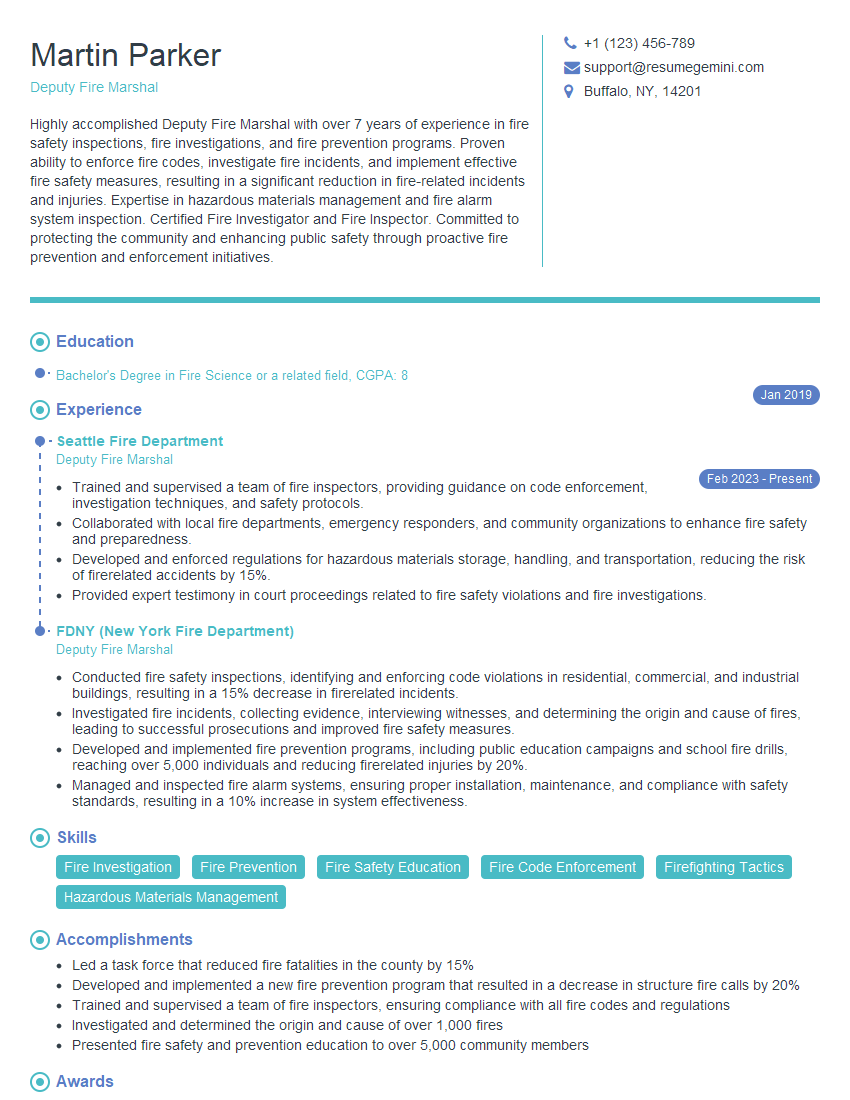
Deputy Fire Marshal Resume Sample

Fire Code Inspector Resume Sample
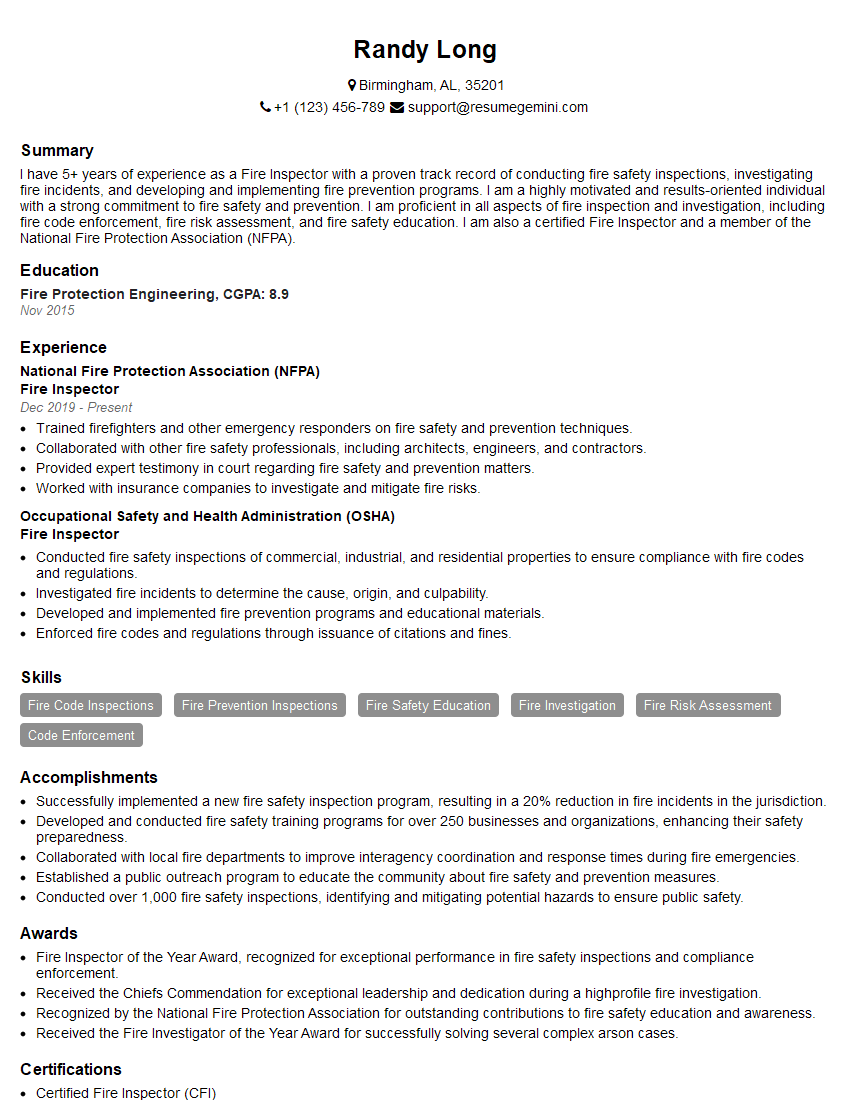
Fire Inspector Resume Sample
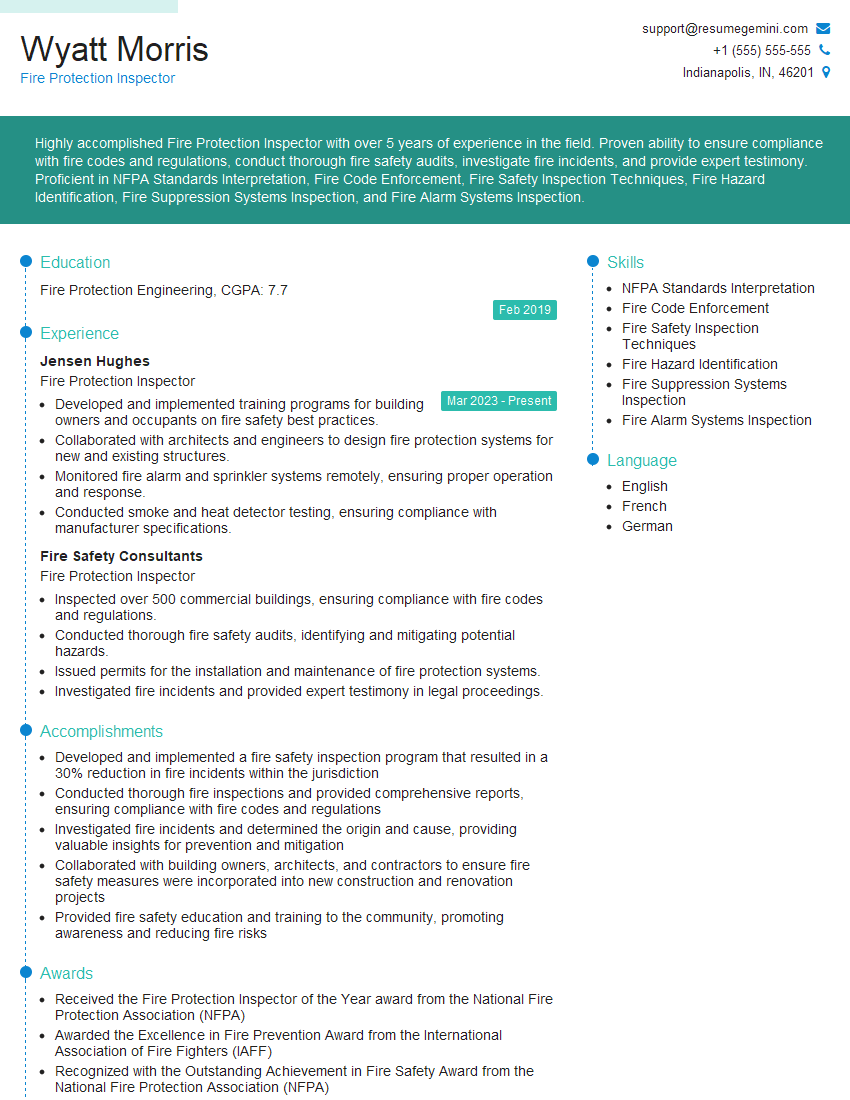
Fire Protection Inspector Resume Sample
Explore more articles
Users Rating of Our Blogs
Share Your Experience
We value your feedback! Please rate our content and share your thoughts (optional).
What Readers Say About Our Blog
Very informative content, great job.
good