Interviews are opportunities to demonstrate your expertise, and this guide is here to help you shine. Explore the essential Fire Protection Engineering Analysis interview questions that employers frequently ask, paired with strategies for crafting responses that set you apart from the competition.
Questions Asked in Fire Protection Engineering Analysis Interview
Q 1. Explain the difference between active and passive fire protection systems.
Active and passive fire protection systems work together to protect a building from fire. Think of it like this: passive systems are the building’s inherent defenses, while active systems are the response team.
Passive fire protection involves measures that prevent or slow the spread of fire without any external intervention. Examples include fire-resistant walls (compartmentalization), fire-rated doors, fire-resistant materials in construction (e.g., concrete, steel with fireproofing), and smoke barriers. These systems operate automatically once a fire starts and their effectiveness is primarily determined during the design and construction phases of a building.
Active fire protection consists of systems that actively combat fire or alert occupants. This includes fire sprinklers, fire alarms, smoke detectors, fire extinguishers, and emergency lighting. These require external power or activation and their efficacy relies on both their correct installation and proper maintenance.
For instance, a fire-rated wall (passive) would contain a fire, allowing more time for occupants to escape and firefighters to arrive. Simultaneously, fire sprinklers (active) would actively suppress the fire, limiting its growth and damage.
Q 2. Describe the process of conducting a fire risk assessment.
A fire risk assessment is a systematic process to identify hazards, assess risks, and determine appropriate control measures to minimize the likelihood and impact of a fire. It’s like a fire safety health check for your building.
Identify Fire Hazards: This involves a thorough inspection of the building, identifying potential ignition sources (e.g., electrical equipment, heating systems, flammable materials), fuel sources (e.g., wood, paper, fabrics), and potential pathways for fire spread (e.g., open spaces, ventilation shafts).
Assess Risk: This involves evaluating the likelihood and potential severity of a fire occurring in each identified hazard area. Consider factors such as occupancy type, building construction, and the presence of fire safety systems. This often involves a qualitative or quantitative risk matrix.
Determine Control Measures: Based on the risk assessment, appropriate fire safety measures are implemented. This could include engineering controls (e.g., installing fire sprinklers, improving compartmentation), administrative controls (e.g., fire safety training, emergency procedures), and personal protective equipment (PPE).
Implementation and Monitoring: The selected control measures are implemented and regularly monitored to ensure their effectiveness. Regular inspections, maintenance of fire safety equipment, and employee training are crucial.
Documentation: The entire process should be thoroughly documented, including hazard identification, risk assessment results, control measures implemented, and monitoring schedules.
A building with high occupancy and flammable materials would necessitate a more thorough assessment and robust fire safety measures compared to a low-occupancy building with fire-resistant materials.
Q 3. What are the key components of a fire safety plan?
A comprehensive fire safety plan is like a roadmap for dealing with a fire emergency. It outlines procedures and responsibilities to ensure the safety of occupants and limit property damage.
Emergency Procedures: Clear instructions on actions to be taken in case of a fire, including evacuation procedures, assembly points, and communication protocols.
Fire Prevention Measures: Details about fire prevention practices, such as regular inspections, maintenance of fire safety equipment, and proper storage of flammable materials.
Fire Response Procedures: Procedures for responding to a fire, including actions to be taken by building occupants and designated fire wardens, as well as coordination with emergency services.
Training and Drills: A plan for regular fire safety training and drills for building occupants to familiarize them with emergency procedures.
Fire Safety Equipment Locations: Clearly marked locations of fire extinguishers, fire alarm pull stations, and other fire safety equipment.
Designated Personnel: Identification of responsible individuals for implementing and monitoring the fire safety plan, including fire wardens and emergency contact information.
A well-defined fire safety plan enhances the safety and preparedness of building occupants, reduces the impact of fire incidents, and minimizes potential losses.
Q 4. How do you determine the required fire resistance rating for a structural element?
Determining the required fire resistance rating for a structural element depends on several factors including the building’s occupancy type, construction materials, and the potential impact of fire spread. It’s essentially about calculating how long a structural element needs to resist fire’s destructive forces.
This is governed by building codes and standards (like IBC in the US or BS in the UK). These codes outline required fire resistance ratings (often measured in hours) based on factors like:
Occupancy Classification: High-occupancy buildings like hospitals or schools generally require higher fire resistance ratings than low-occupancy buildings.
Building Type: The building’s construction type (e.g., Type I, II, III, etc.) significantly impacts required fire resistance ratings.
Structural Element Function: Columns, beams, and walls have different roles, and their required fire resistance ratings vary accordingly. Elements crucial for structural integrity demand higher ratings.
Building Separation and Compartmentalization: Fire-rated walls separating different areas influence the required ratings of the separating elements.
The process usually involves consulting building codes, performing fire engineering calculations, and potentially employing sophisticated fire modeling techniques to determine the appropriate fire resistance rating. The result is a specification for the material and construction of the structural element that ensures it meets the minimum fire safety requirements.
Q 5. Explain the concept of compartmentalization in fire protection.
Compartmentalization in fire protection is a strategy to limit the spread of fire and smoke within a building by dividing it into smaller, self-contained areas. Think of it as creating fire-resistant ‘rooms’ within a larger building.
This is achieved through the use of fire-resistant walls, floors, doors, and other barriers, each with a specified fire resistance rating (in hours). These barriers slow or prevent the spread of fire and smoke, giving occupants more time to evacuate and firefighters more time to respond. This also reduces the potential for the fire to spread rapidly, engulfing the entire building.
Effective compartmentalization is crucial for:
- Protecting occupants: providing safe escape routes and refuge areas.
- Limiting damage: preventing the fire from consuming the whole building.
- Facilitating firefighting operations: allowing firefighters to focus on localized areas.
Q 6. What are the limitations of using CFD modeling for fire analysis?
Computational Fluid Dynamics (CFD) modeling is a powerful tool for fire analysis, but it has limitations.
Model Simplifications and Assumptions: CFD models rely on simplifying assumptions about fire behavior, material properties, and boundary conditions. These simplifications can lead to inaccuracies if not carefully considered and validated.
Data Requirements and Uncertainty: Accurate CFD modeling requires comprehensive input data on building geometry, material properties, and fire characteristics. Uncertainty in this input data directly affects the accuracy of the model’s predictions.
Computational Resources and Cost: Sophisticated CFD models can be computationally expensive, requiring significant computing power and time, increasing costs.
Validation and Verification: CFD results need to be validated against experimental data or real-world observations to ensure accuracy and reliability. This validation process is crucial but can be time-consuming and expensive.
Human Error: The process of building and interpreting CFD models involves human judgment and expertise. Errors in model setup, input data, or interpretation of results can lead to inaccurate predictions.
Despite these limitations, CFD modeling provides valuable insights into fire behavior, enabling informed design and safety decisions when used appropriately and with proper validation.
Q 7. Describe different types of fire sprinklers and their applications.
Fire sprinklers are crucial components of active fire protection systems. Different types cater to various applications.
Standard Response Sprinklers: These are the most common type, designed to activate at a specific temperature (typically 135°F or 155°F). They’re widely used in a range of buildings.
Early Suppression Fast Response (ESFR) Sprinklers: These sprinklers activate at lower temperatures and discharge water more quickly, making them effective in suppressing fires in high-hazard areas such as warehouses storing large quantities of flammable materials. The faster response limits fire growth significantly.
Pendant Sprinklers: These hang from the ceiling, often used in areas with high ceilings where the sprinkler heads need to have a greater reach.
Upright Sprinklers: These are mounted on pipes that extend from the ceiling, often used in areas where there’s less ceiling clearance.
Sidewall Sprinklers: These are mounted on walls, often used in areas where ceiling-mounted sprinklers are not feasible.
Deluge Sprinklers: These are designed to provide complete sprinkler coverage immediately upon detection of fire, and they are commonly used in high-risk areas such as server rooms.
The selection of appropriate sprinkler types depends on the specific application, considering factors such as occupancy type, fire hazards, and building geometry. Each type has advantages and disadvantages based on its design and intended use. For example, ESFR sprinklers are more expensive but provide superior fire suppression in certain high-risk applications compared to standard sprinklers.
Q 8. What are the key factors considered in designing a fire alarm system?
Designing a fire alarm system involves a multifaceted approach, prioritizing the safety and efficient evacuation of building occupants. Key factors include understanding the building’s occupancy type, size, and layout; identifying potential fire hazards; and selecting appropriate detection and notification technologies.
- Occupancy Type and Load: A school requires different alarm strategies than a hospital or high-rise office building. Higher occupancy densities necessitate faster response times and more robust notification systems.
- Building Layout and Construction: Compartmentalization, the presence of hazardous materials, and the building’s structural features all influence alarm system design. For example, a sprinkler system’s presence may affect alarm placement and signaling requirements.
- Hazard Analysis: Identifying high-risk areas, like kitchens or server rooms, requires more sensitive detectors and potentially dedicated alarm zones. This allows for targeted responses and minimizes false alarms.
- Technology Selection: Various detection technologies exist (smoke, heat, flame) and choosing the right type for each area is crucial. Consider factors such as sensitivity, reliability, and potential for false alarms.
- Notification Appliances: Visual and audible alarms must be strategically placed to ensure that everyone can hear and see the alarm, regardless of hearing impairments or environmental noise. This includes considering evacuation pathways and potential barriers to sound transmission.
- System Integration: The fire alarm system should integrate with other building safety systems, such as elevators and sprinklers, for coordinated response during an emergency.
For example, a large hospital might employ a combination of ionization smoke detectors in patient rooms, heat detectors in kitchens, and addressable fire alarm panels for precise location identification, all linked to a central monitoring station and emergency response protocols.
Q 9. How do you evaluate the adequacy of existing fire protection systems?
Evaluating existing fire protection systems requires a systematic approach, combining visual inspections, testing, and analysis of system documentation. The goal is to identify deficiencies and ensure the system’s continued effectiveness.
- Visual Inspection: This involves a thorough examination of all components, including detectors, sprinklers, alarm panels, and control valves, checking for damage, corrosion, or obstruction. Documentation of findings is crucial.
- Testing and Functional Verification: This goes beyond visual inspection and involves testing the functionality of each component to ensure it operates as designed. This includes testing alarm activations, sprinkler flow, and the overall system’s response to simulated emergencies.
- Code Compliance Review: The system’s adherence to applicable building codes and standards is assessed. Changes in codes or updated standards might necessitate modifications or upgrades.
- Performance-Based Design Analysis: For complex systems, performance-based design may be employed. This approach involves using computer simulations and engineering analysis to evaluate the system’s ability to meet specific performance objectives under various fire scenarios.
- Maintenance Records Review: A history of maintenance and repairs provides insight into system reliability and the potential for future issues. Regular maintenance records are essential.
Imagine evaluating a high-rise building’s sprinkler system. The inspection would include checking for proper sprinkler spacing, verifying water pressure, inspecting for corrosion, and testing the integrity of the water supply lines. The alarm system would be tested, ensuring that alarms function correctly and activate in all areas. Any deficiencies noted during the evaluation process necessitate appropriate corrective actions or upgrades.
Q 10. Explain the role of building codes in fire safety design.
Building codes serve as the cornerstone of fire safety design, providing minimum requirements for fire protection systems and construction practices. They are based on extensive research, testing, and experience to ensure a reasonable level of safety for building occupants and firefighters.
- Prescriptive Requirements: Codes often specify precise requirements for materials, systems, and construction methods. For example, specifying the type and spacing of sprinklers, the required fire-resistance rating of walls, and the location of fire exits.
- Performance-Based Design: In certain cases, codes allow for performance-based design, which permits alternative approaches if they can demonstrate equivalent or superior performance to the prescriptive requirements through engineering analysis. This offers flexibility for unique building designs but requires substantial engineering expertise.
- Life Safety: Codes focus primarily on life safety, ensuring occupants can safely evacuate a building in the event of a fire. This involves provisions for adequate exits, emergency lighting, and clear evacuation routes.
- Property Protection: While primarily focused on life safety, codes also include provisions for property protection, aimed at minimizing the extent of fire damage.
- Code Enforcement: Compliance with building codes is enforced through inspections and approvals during the design and construction phases. Non-compliance can lead to delays, penalties, and even legal action.
For instance, a high-rise building’s design must adhere to numerous code provisions related to fire-resistant construction, sprinkler system requirements, smoke control strategies, and emergency evacuation plans. Failure to meet these requirements could result in significant penalties and delays in the project’s completion.
Q 11. What are the different types of fire detection systems and their suitability for different applications?
Fire detection systems are critical for early fire detection, enabling timely evacuation and emergency response. Various types cater to different environments and hazard profiles.
- Smoke Detectors: These are the most common type.
- Ionization: Sensitive to small particles produced in flaming fires.
- Photoelectric: Detect larger particles produced in smoldering fires.
- Dual-sensor: Combine ionization and photoelectric technologies for broader fire detection capabilities.
- Heat Detectors: These respond to temperature changes.
- Fixed-temperature: Activate at a predetermined temperature.
- Rate-of-rise: Detect rapid temperature increases.
- Flame Detectors: These sense the presence of flames through ultraviolet or infrared light detection. They are often used in high-risk industrial settings.
- Carbon Monoxide Detectors: Detect the presence of carbon monoxide, a common byproduct of incomplete combustion. Primarily used in residential and some commercial settings.
Suitable applications depend on several factors: Ionization detectors are better suited to fast-flaming fires, while photoelectric detectors are more effective for smoldering fires. Heat detectors are often used in areas where smoke detectors might be prone to false alarms, such as kitchens. Flame detectors are best suited for hazardous environments where rapid fire detection is crucial. Choosing the right detector for the application is paramount to ensure early and accurate fire detection.
Q 12. How do you calculate evacuation times for a building?
Calculating evacuation times is crucial for ensuring adequate time for safe evacuation in case of a fire. Methods range from simple estimations to complex computer simulations.
- Simplified Methods: These use readily available data such as building area, occupant density, and exit widths to estimate evacuation times. They offer quick estimations but are less accurate for complex buildings.
- Building Codes and Standards: Many building codes provide guidance on acceptable evacuation times based on building type and occupancy. These times act as benchmarks and influence design decisions.
- Computer Simulation: Sophisticated software packages simulate occupant movement using various algorithms and scenarios to provide more accurate evacuation time estimations. They consider factors like crowd dynamics, exit congestion, and the presence of obstructions.
- Field Measurements and Observations: Conducting evacuation drills can provide valuable data on actual evacuation times and identify bottlenecks in evacuation pathways.
For example, a simple method might involve dividing the total building area by the number of exits and occupant density, then applying a walking speed assumption to determine an approximate evacuation time. However, this approach ignores factors like exit congestion and variations in walking speeds. Computer simulations offer greater accuracy by incorporating these factors, yielding more realistic evacuation time estimations.
Q 13. What is the significance of smoke control systems in high-rise buildings?
Smoke control systems are critical in high-rise buildings to protect occupants from the lethal effects of smoke and toxic gases during a fire. They work by managing smoke movement and preventing its spread throughout the building.
- Smoke Compartmentation: Dividing the building into smaller, self-contained compartments using fire-rated walls and doors restricts smoke movement. This allows for localized smoke control and protects unaffected areas.
- Smoke Exhaust Systems: These systems remove smoke and hot gases from affected areas through strategically placed exhaust fans and vents. This reduces smoke concentration and improves visibility for evacuation.
- Smoke Pressurization Systems: These systems maintain positive pressure in stairwells and refuge areas, preventing smoke from entering and ensuring safe evacuation pathways.
- Stairwell Pressurization: By pressurizing stairwells, they are kept free of smoke, creating a safe path for occupants to escape even if the fire is widespread.
- Integration with Fire Alarms and Sprinklers: Smoke control systems are typically integrated with other fire protection systems, activating automatically or manually to provide a coordinated response.
In a high-rise building, a well-designed smoke control system might involve compartmentalizing each floor, exhausting smoke from the fire floor through dedicated exhaust fans, and pressurizing the stairwells to maintain a smoke-free evacuation route. This strategy significantly improves life safety and aids in efficient evacuation during a fire emergency.
Q 14. Describe the concept of fire spread modeling.
Fire spread modeling involves using computational tools and engineering principles to simulate the growth and spread of fire within a building or other environment. This helps predict fire behavior, estimate the potential for fire spread, and evaluate the effectiveness of various fire protection strategies.
- Zone Models: These models divide the building into several interconnected zones, tracking the temperature, pressure, and other properties within each zone. They’re relatively simple and efficient for large buildings.
- Field Models: These models provide greater detail by resolving the fire’s behavior in three dimensions. They provide more accurate predictions but require significant computational power.
- Computational Fluid Dynamics (CFD): CFD is a powerful tool that uses complex algorithms to simulate fluid flow, heat transfer, and combustion. It’s used for detailed modeling of fire behavior and spread.
- Input Data: Accurate input data, including building geometry, materials properties, fire sources, and ventilation conditions, is critical for accurate predictions. The reliability of the model relies heavily on data quality.
- Validation and Verification: Model results are validated using experimental data from laboratory-scale and full-scale fire tests. This ensures the model’s accuracy and reliability.
For instance, a CFD model might simulate the spread of a fire in an office building, considering the building’s layout, ventilation patterns, and the presence of fire protection systems. The model’s output would predict the temperature distribution, smoke movement, and the time it takes for the fire to reach different parts of the building, helping to optimize fire protection design and emergency response plans.
Q 15. How do you interpret fire test data?
Interpreting fire test data requires a thorough understanding of the test standards and methodologies employed. It’s not just about looking at the numbers; it’s about understanding what those numbers mean in the context of the specific material or system tested. For instance, a fire resistance test (e.g., ASTM E119) provides data on the time it takes for a wall assembly to breach certain criteria, like temperature rise on the unexposed side or the occurrence of flames through cracks.
My approach involves several steps: First, I meticulously review the test report, ensuring all parameters (temperature, heat flux, pressure, etc.) are documented correctly. Then, I analyze the data, focusing on key metrics – time to failure, heat transfer rates, and any qualitative observations like smoke development or flame spread. Finally, I contextualize the findings, relating the data back to the intended application and relevant building codes. For example, if a test shows a wall assembly fails at 1 hour, this indicates it’s not suitable for a 2-hour fire-rated wall. It’s crucial to understand the limitations of the test and how it relates to real-world scenarios – tests are idealized, and real fires are complex and unpredictable.
In addition to numerical data, visual inspection of the test specimens post-fire is vital. This often reveals weaknesses in the design or material properties that were not apparent from the numerical data alone. This combined approach—numerical analysis coupled with visual inspection—leads to a robust interpretation of the test results.
Career Expert Tips:
- Ace those interviews! Prepare effectively by reviewing the Top 50 Most Common Interview Questions on ResumeGemini.
- Navigate your job search with confidence! Explore a wide range of Career Tips on ResumeGemini. Learn about common challenges and recommendations to overcome them.
- Craft the perfect resume! Master the Art of Resume Writing with ResumeGemini’s guide. Showcase your unique qualifications and achievements effectively.
- Don’t miss out on holiday savings! Build your dream resume with ResumeGemini’s ATS optimized templates.
Q 16. Explain the process of validating CFD models for fire scenarios.
Validating CFD (Computational Fluid Dynamics) models for fire scenarios is crucial for ensuring accuracy and reliability. The process is iterative and involves comparing model predictions against experimental data. Think of it like this: you build a model car and then test it on a track; the CFD model is your car, and real-world fire tests are your track.
Here’s a breakdown of the process:
- Define the Validation Scope: Specify the aspects of the fire scenario to be validated (e.g., temperature distribution, smoke movement, heat flux).
- Select Experimental Data: Choose experimental data from relevant full-scale or reduced-scale fire tests. The data should ideally encompass a wide range of conditions to fully test the model’s capabilities.
- Model Calibration: Fine-tune model parameters (like material properties or boundary conditions) to improve the agreement between model predictions and experimental data. This iterative process often involves sensitivity analysis to determine which parameters have the largest impact on the results.
- Quantitative Comparison: Quantify the agreement between model predictions and experimental data using appropriate metrics such as RMS error (Root Mean Square Error) or correlation coefficients. Visual comparisons of temperature profiles or smoke patterns can also help.
- Uncertainty Analysis: Estimate and document the uncertainties associated with both the experimental data and the model predictions. This is crucial for understanding the reliability of the validation results.
- Documentation: Thoroughly document the validation process, including the model setup, experimental data used, validation metrics, and any limitations. This ensures the transparency and reproducibility of the validation exercise.
Without proper validation, CFD models can be unreliable, leading to potentially unsafe fire protection designs. The rigorous validation process helps to build confidence in the predictive capabilities of the model and its application in real-world fire safety assessments.
Q 17. What are the different types of fire extinguishers and their appropriate uses?
Fire extinguishers are classified according to the type of fire they are effective against. Understanding these classes is critical for selecting the appropriate extinguisher for a given situation. Using the wrong extinguisher can be ineffective or even dangerous.
- Class A: These extinguishers are designed for ordinary combustible materials like wood, paper, and cloth. They typically use water or water-based agents to cool the fire.
- Class B: These extinguishers are used on flammable liquids like gasoline, oil, and grease. They often employ carbon dioxide (CO2), dry chemical, or foam agents to smother the fire.
- Class C: These are designed for electrical fires. They utilize non-conductive agents like CO2 or dry chemical to avoid the risk of electrical shock.
- Class D: These extinguishers are for combustible metals like magnesium or titanium, requiring specialized agents to interrupt the chemical reaction of the fire.
- Class K: These are specifically designed for cooking oils and fats fires in commercial kitchens. They typically use a wet chemical agent to cool the fire and prevent reignition.
Imagine trying to put out a grease fire in your kitchen with a water extinguisher (Class A). This would likely spread the fire significantly, increasing the danger. Knowing the fire class is essential for proper extinguisher selection and safe fire suppression.
Q 18. What are the common methods for mitigating fire hazards in industrial facilities?
Mitigating fire hazards in industrial facilities requires a multi-faceted approach that addresses both the prevention and suppression of fires. Here are some common methods:
- Housekeeping: Regular cleaning to eliminate flammable debris and ensure proper storage of materials is critical. This reduces the fuel load and the potential for ignition sources.
- Fire Detection and Alarm Systems: Installing a comprehensive system of heat detectors, smoke detectors, and flame detectors, coupled with an effective alarm system, can provide early warning of a fire. This is vital for initiating a timely response.
- Passive Fire Protection: Employing fire-rated walls, doors, and other structural elements to compartmentalize the fire and slow its spread. This buys valuable time for evacuation and fire suppression efforts.
- Active Fire Protection: This includes implementing sprinkler systems, fire extinguishers, and other active suppression systems. Sprinklers, for example, can automatically suppress fires before they grow out of control.
- Process Hazard Analysis (PHA): Conducting a thorough PHA to identify and assess the potential for fires within specific processes. This helps to implement appropriate control measures, eliminating or minimizing hazards.
- Emergency Response Plan: Developing and regularly practicing a well-defined emergency response plan. This includes evacuation procedures, the role of emergency personnel, and the coordination with external agencies.
- Employee Training: Training employees on fire safety procedures, including the use of fire extinguishers and emergency evacuation protocols, is crucial. A well-trained workforce is the first line of defense in preventing and responding to fires.
A layered approach combining these measures will offer the most robust fire safety strategy for any industrial facility, minimizing risks and maximizing the chances of safe evacuation and effective fire suppression.
Q 19. Describe your experience with various fire protection software packages.
Throughout my career, I’ve gained extensive experience utilizing various fire protection software packages, encompassing both analytical and design tools. My proficiency extends to both commercially available software and some custom-developed applications. Specific examples include:
- ANSYS Fluent: I’ve used ANSYS Fluent extensively for conducting CFD simulations of fire scenarios in complex geometries, such as those found in large industrial facilities or high-rise buildings. I’m proficient in setting up boundary conditions, defining material properties, and post-processing results to visualize fire dynamics and evaluate the effectiveness of fire protection systems.
- FDS (Fire Dynamics Simulator): I am experienced in using FDS, an open-source CFD software, for large-scale fire simulations. FDS is particularly well-suited for modelling complex fire phenomena, such as large-scale fire spread and the interaction between fires and ventilation systems.
- Autodesk Revit: For building information modeling (BIM) applications, I have used Autodesk Revit to model and analyze the passive fire protection aspects of building designs, including the placement of fire-rated walls, doors, and other fire-resistant assemblies.
- CFAST (Consolidated Fire and Smoke Transport): I am familiar with the use of CFAST for zone modeling, a simpler approach compared to CFD that is suitable for quick assessments of building evacuation time and smoke spread.
My experience with these software packages allows me to choose the most appropriate tool for each specific problem, balancing the level of detail required with computational efficiency and the project’s time constraints.
Q 20. Explain the different types of fire suppression agents and their properties.
Fire suppression agents are crucial for extinguishing fires. Their effectiveness varies based on their chemical and physical properties, and they are chosen based on the class of fire being addressed. Here are some common examples:
- Water: A primary agent for Class A fires, water cools the fuel, reducing its temperature below the ignition point. It’s effective and relatively inexpensive but can damage electrical equipment and be ineffective on Class B fires.
- Foam: Used for Class B fires, foam creates a layer on the surface of the burning liquid, suppressing the release of flammable vapors and preventing re-ignition. Different foam types are tailored for specific fuels.
- Dry Chemical: A versatile agent effective against Class B and C fires. It disrupts the combustion chain reaction and is non-conductive, making it safe for electrical fires. The powder form can leave residue.
- Carbon Dioxide (CO2): Primarily for Class B and C fires, CO2 displaces oxygen, effectively suffocating the flame. It’s clean and leaves no residue, but it’s not effective on deep-seated fires or those involving flammable metals.
- Wet Chemical: Specifically designed for Class K fires, it saponifies (forms soap-like substances) the cooking oil or fat, creating a barrier and cooling the fire. This process is more effective than just cooling the oil.
- Halons (e.g., Halon 1301): Very effective agents but have been largely phased out due to their ozone-depleting properties. They are still used in some niche applications.
The selection of a fire suppression agent is crucial and depends heavily on the type of fire anticipated and any potential hazards associated with the agent itself. For example, while CO2 is clean, it can displace oxygen and become a hazard in confined spaces.
Q 21. How do you address code conflicts in fire protection design?
Addressing code conflicts in fire protection design requires a thorough understanding of the relevant codes and a systematic approach to resolving the discrepancies. Building codes (like the International Building Code or NFPA codes) often overlap or have conflicting requirements.
My strategy for navigating these conflicts typically involves:
- Identify the Conflict: Carefully review all applicable codes and standards to precisely identify the conflicting requirements. This often requires comparing specific sections and interpretations.
- Document the Conflict: Meticulously document the specific clauses from each code that are in conflict. This forms the basis for seeking clarification or proposing alternative solutions.
- Consult Relevant Authorities: Seek guidance from local authorities having jurisdiction (AHJ) for clarification on which code takes precedence. AHJ interpretation will be binding for your project.
- Engineer a Solution: Propose engineering solutions that meet the intent of the conflicting codes while ensuring the overall fire safety of the design. This may involve using advanced fire modeling or providing detailed calculations to justify a deviation.
- Document the Justification: Prepare detailed documentation that justifies any deviation from the strict letter of the codes. This must demonstrate that the proposed alternative approach provides an equivalent or higher level of fire safety. This might include referencing research, test data, or other credible resources.
- Obtain Approvals: Submit the proposed solution and justification to the AHJ for review and approval. This may involve multiple revisions and interactions before gaining final approval.
Addressing code conflicts proactively and diligently is essential for ensuring a compliant and safe fire protection system. Ignoring conflicts can lead to significant delays and potentially unsafe designs. A strong understanding of fire protection engineering principles combined with skillful negotiation and clear documentation is key to successful conflict resolution.
Q 22. Explain your understanding of NFPA standards and their application.
NFPA (National Fire Protection Association) standards are the bedrock of fire protection engineering. They represent a consensus of experts and provide a framework for designing, installing, and maintaining fire protection systems. These aren’t just suggestions; they’re often legally mandated, forming the basis of building codes and insurance requirements.
For example, NFPA 13 covers the installation of sprinkler systems, detailing everything from pipe sizing and sprinkler spacing to water supply requirements. A building’s compliance with NFPA 13 is crucial for obtaining an occupancy permit and demonstrating adherence to safety regulations. We use these standards to ensure our designs meet the minimum requirements and often exceed them to create superior levels of protection.
My application of NFPA standards goes beyond mere compliance. I analyze the specific risks of a project – the occupancy type, the building materials, and the potential hazards – to select the most appropriate NFPA standards and interpret them correctly for the unique circumstances. This includes carefully evaluating exceptions and alternative solutions allowed within the standards to develop optimized designs.
Q 23. How do you incorporate sustainability considerations in fire protection design?
Sustainability is increasingly important in fire protection design. We can’t simply prioritize safety at the expense of the environment. My approach integrates sustainable practices throughout the design process. This starts with material selection. Using recycled materials where possible, selecting low-VOC paints, and specifying energy-efficient pumps for sprinkler systems are all examples of minimizing the environmental impact.
Furthermore, water conservation is a key concern. We explore water-efficient sprinkler systems, such as high-efficiency nozzles and pressure-reducing devices, to reduce water consumption without compromising fire protection. We also consider the life cycle assessment of different fire protection systems, comparing their manufacturing, operation, and disposal impacts to select the most sustainable options. Finally, designing for longevity and easy maintenance reduces the overall environmental footprint of the system over its entire life.
Q 24. Describe a challenging fire protection project and how you overcame it.
One challenging project involved designing a fire protection system for a historic landmark – a large, multi-story building with intricate architectural details and complex interior spaces. The primary challenge was balancing the need to preserve historical features with the requirements of modern fire safety codes. We couldn’t simply install a standard sprinkler system; it would have caused unacceptable damage to the building’s aesthetic integrity.
Our solution involved a multi-faceted approach. We employed a combination of historical preservation techniques and advanced fire protection technologies. This included using smaller, less intrusive sprinkler heads, strategically placed to minimize impact on visible architectural features. We also implemented a sophisticated fire alarm system with early warning detectors, to provide ample time for evacuation and potentially limited fire growth before the sprinklers activated. Extensive modeling and simulation were crucial to optimizing system placement and demonstrating that adequate fire protection was achieved while preserving the building’s character. Through meticulous planning and close collaboration with preservation specialists, we successfully delivered a solution that met all safety standards without compromising the building’s historical significance.
Q 25. How do you stay up-to-date with the latest advancements in fire protection engineering?
Staying current in fire protection engineering is crucial. The field is constantly evolving with new materials, technologies, and research findings. I actively participate in professional organizations like the Society of Fire Protection Engineers (SFPE), attending conferences and webinars to learn about the latest advancements. I also subscribe to industry journals and publications, keeping abreast of the latest research and best practices.
Beyond formal learning, I maintain a network of colleagues and experts in the field, engaging in discussions and sharing knowledge. I also actively seek opportunities to work on challenging projects that push my boundaries and expose me to new techniques. Continuous learning is an integral part of my profession, ensuring that my designs are not only compliant but also innovative and effective.
Q 26. Explain the principles of fire dynamics and their impact on design decisions.
Fire dynamics encompasses the physical and chemical processes involved in the initiation, growth, and suppression of fire. Understanding these principles is fundamental to effective fire protection design. It involves analyzing factors such as fuel type, available oxygen, ignition sources, and heat transfer mechanisms. These factors determine how a fire will behave in a given space, influencing the selection and placement of fire protection systems.
For instance, the design of a sprinkler system relies heavily on an understanding of fire growth curves. By modeling the fire’s growth rate, we can calculate the required water discharge density and sprinkler spacing to effectively control and suppress the fire within a safe timeframe. Similarly, understanding heat transfer mechanisms (conduction, convection, radiation) allows us to predict fire spread patterns and design effective compartmentalization strategies to limit the fire’s progression. Ignoring these dynamics could lead to an inadequately designed system, leaving the building and its occupants at greater risk.
Q 27. What are the ethical considerations in fire protection engineering?
Ethical considerations are paramount in fire protection engineering. Our work directly impacts human life and safety, demanding the highest level of integrity. This includes a commitment to honesty and transparency in our analyses and designs, avoiding conflicts of interest and ensuring that all work is conducted with the utmost professionalism.
Specifically, ethical considerations involve prioritizing the safety of building occupants above other factors, even if it means increased costs or design complexities. We have a responsibility to clearly communicate risks and limitations of our designs to clients and stakeholders, ensuring informed decision-making. Furthermore, we must remain updated on relevant codes and regulations, using our expertise to design systems that meet or exceed these standards, always prioritizing life safety and property protection.
Q 28. How would you approach a fire investigation in a building with significant damage?
Investigating a fire in a significantly damaged building requires a systematic and methodical approach. It begins with securing the site and ensuring the safety of the investigators. Then, a thorough documentation process begins: photographing the scene, creating detailed sketches, and taking meticulous notes. This stage also includes collecting evidence, such as debris samples and structural components, for later laboratory analysis.
The next phase involves identifying the fire’s origin and cause. We look for patterns of burn damage, examining the fire’s progression based on the intensity of damage in different areas. This involves analyzing witness statements (if available) and reviewing any available security footage. We also collaborate with other professionals, including fire investigators and forensic experts, to gather comprehensive data. A detailed report is compiled which summarizes the findings, outlines the likely cause, and provides recommendations to prevent similar incidents in the future. The entire process adheres to rigorous scientific and investigative standards to ensure the accuracy and reliability of our conclusions.
Key Topics to Learn for Fire Protection Engineering Analysis Interview
- Fire Dynamics: Understanding fire behavior, including ignition, growth, and spread. This involves familiarity with heat transfer mechanisms and combustion processes. Practical application includes modeling fire scenarios to predict plume behavior and temperature profiles.
- Computational Fluid Dynamics (CFD) in Fire Modeling: Applying CFD software (e.g., FDS, CFAST) to simulate fire scenarios and analyze smoke movement, temperature distribution, and the effectiveness of fire protection systems. Practical application involves interpreting simulation results to inform design decisions and risk assessments.
- Fire Protection System Design: Knowledge of sprinkler systems, fire alarms, smoke control systems, and other fire suppression technologies. This includes understanding design codes and standards (e.g., NFPA).
- Risk Assessment and Probabilistic Modeling: Evaluating fire risks using quantitative methods and applying probabilistic models to assess the likelihood and consequences of fire events. Practical application includes developing evacuation plans and fire safety strategies based on risk assessment.
- Building Codes and Regulations: Familiarity with relevant building codes and regulations related to fire safety design. Practical application involves ensuring designs comply with all applicable standards.
- Fire Investigation and Analysis: Understanding methods used to investigate fire incidents, including origin and cause determination. Practical application involves analyzing fire data to prevent future incidents.
- Experimental Fire Testing: Knowledge of various fire testing methods and standards used to evaluate the performance of fire protection materials and systems. This includes understanding the interpretation of test results.
Next Steps
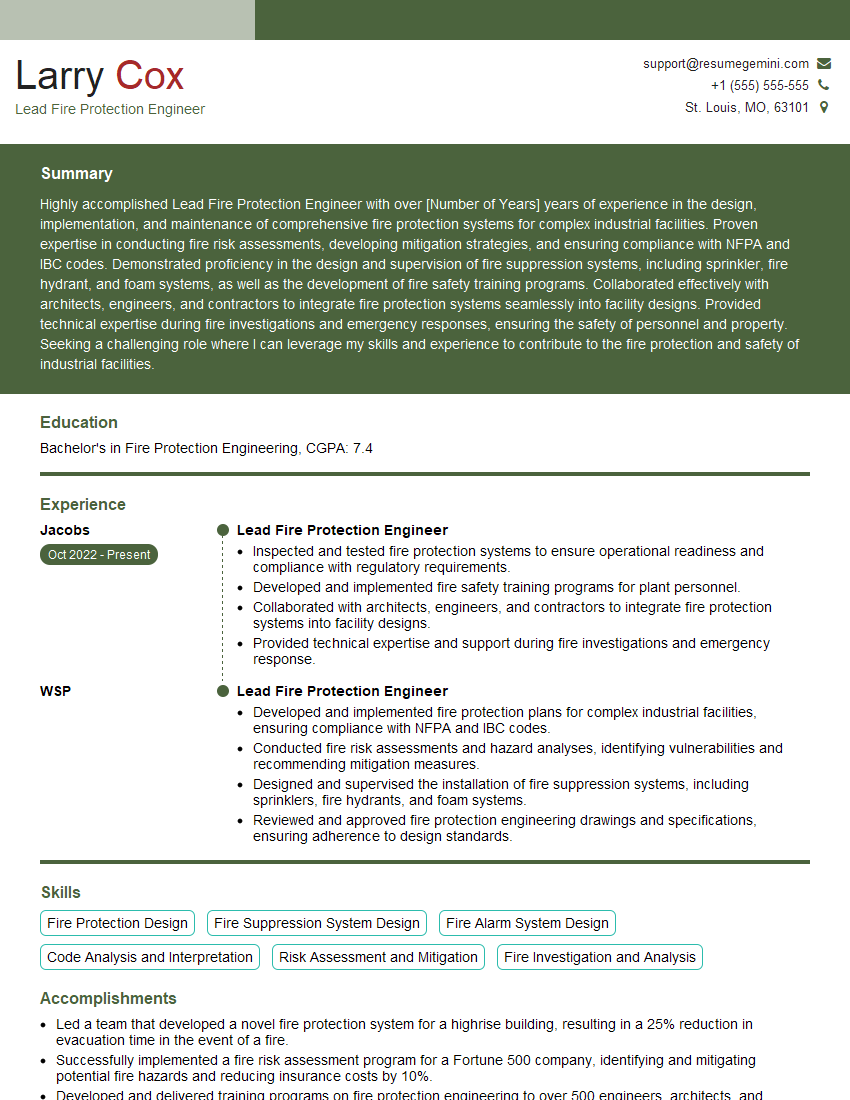
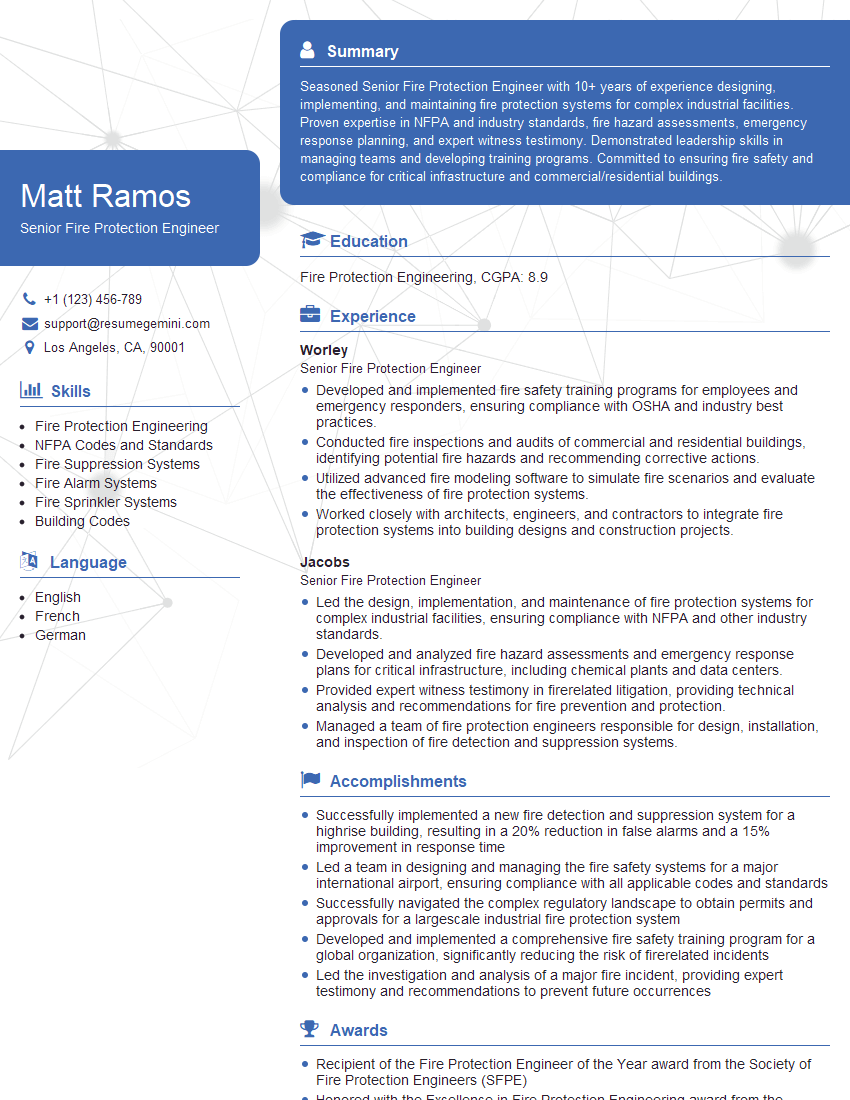
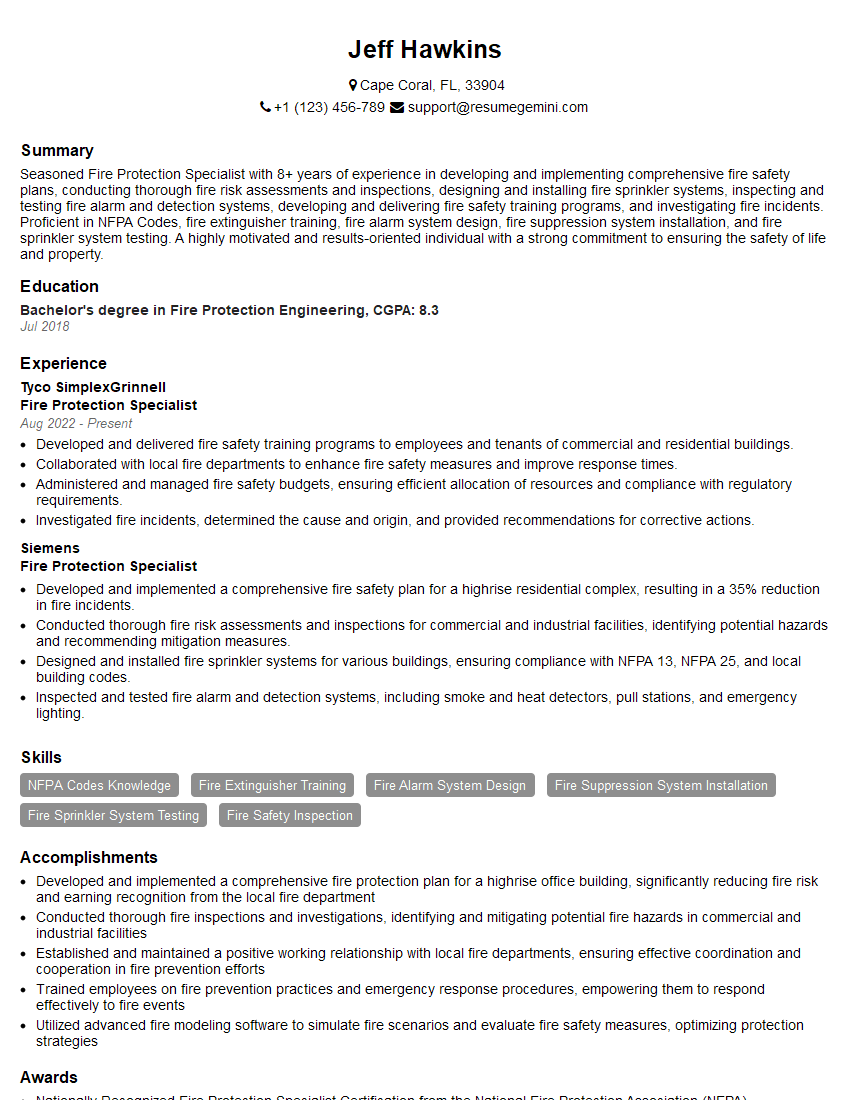
Mastering Fire Protection Engineering Analysis is crucial for career advancement in this demanding field. A strong understanding of these principles allows you to contribute meaningfully to fire safety design and risk management. To maximize your job prospects, it’s essential to present your skills effectively. An ATS-friendly resume is key to getting your application noticed by recruiters. We highly recommend using ResumeGemini to build a professional and impactful resume that showcases your expertise. ResumeGemini provides examples of resumes tailored to Fire Protection Engineering Analysis, ensuring your application stands out from the competition.


Explore more articles
Users Rating of Our Blogs
Share Your Experience
We value your feedback! Please rate our content and share your thoughts (optional).
What Readers Say About Our Blog
Very informative content, great job.
good