Are you ready to stand out in your next interview? Understanding and preparing for Fire Protection Equipment Selection interview questions is a game-changer. In this blog, we’ve compiled key questions and expert advice to help you showcase your skills with confidence and precision. Let’s get started on your journey to acing the interview.
Questions Asked in Fire Protection Equipment Selection Interview
Q 1. What are the key factors to consider when selecting fire suppression systems for different occupancy types?
Selecting the right fire suppression system hinges on understanding the specific hazards present in different occupancy types. A high-rise office building demands a vastly different approach than a chemical storage facility. Key factors include:
- Occupancy Type: A school will require systems prioritizing occupant safety and minimizing disruption, while a hospital needs systems that protect patients and sensitive medical equipment. Industrial facilities, like warehouses or factories, might necessitate robust systems capable of handling flammable materials or large fire loads.
- Fire Load: This refers to the amount of combustible materials present. A furniture store has a significantly higher fire load than a bank, influencing the system’s capacity and design.
- Construction Type: The building’s structure (e.g., wood-frame, steel, concrete) impacts fire spread and dictates the system’s design. Fire-resistant materials can buy valuable time, modifying system requirements.
- Height and Layout: Tall buildings necessitate more extensive systems with appropriate water pressure and strategically placed sprinkler heads. Complex layouts may require specialized zoning for effective suppression.
- Accessibility: Maintaining and inspecting the system is crucial. System location and ease of access influence equipment selection and maintenance schedules.
- Environmental Considerations: Certain systems are incompatible with specific environments. For example, water-based systems aren’t suitable for electrical equipment, while certain chemical agents might be harmful to the environment.
For instance, a data center might use clean agent systems to protect sensitive electronics, avoiding water damage, while a manufacturing plant with flammable liquids would benefit from a foam system.
Q 2. Explain the difference between wet pipe, dry pipe, and deluge sprinkler systems.
These are all types of sprinkler systems, differing primarily in how and when water is delivered:
- Wet Pipe Sprinkler Systems: These are the most common. Pipes are always filled with water, ready for immediate discharge when a sprinkler head activates due to heat. Think of it like a constantly filled water balloon ready to burst. Simple and reliable, but water damage is a potential downside in the event of a false alarm.
- Dry Pipe Sprinkler Systems: Used in unheated areas prone to freezing, these systems have compressed air in the pipes instead of water. When a head activates, the air pressure drops, triggering the water supply valve to open and fill the pipes. It’s like a water balloon that needs a trigger to fill up. The delay in water delivery is a trade-off for preventing freezing.
- Deluge Sprinkler Systems: These systems have open sprinkler heads. All heads discharge simultaneously when a fire alarm system activates. This is best suited for areas with extremely high fire hazards, like aircraft hangars or flammable liquid storage, providing rapid, widespread suppression. However, it results in complete water saturation of the protected area.
The choice depends heavily on the risk profile and environmental factors. Wet pipe is ideal for most applications, while dry pipe is necessary in cold climates, and deluge systems are reserved for high-risk scenarios.
Q 3. Describe the selection criteria for fire extinguishers based on fire classes.
Fire extinguishers are classified based on the types of fires they are effective against. Selecting the right one is critical. Fire classes are:
- Class A: Ordinary combustibles (wood, paper, cloth). Water-based extinguishers are commonly used.
- Class B: Flammable liquids (gasoline, oil). Carbon dioxide (CO2), dry chemical, and foam extinguishers are effective.
- Class C: Energized electrical equipment. CO2 and dry chemical extinguishers are suitable because they don’t conduct electricity.
- Class D: Combustible metals (magnesium, titanium). Specialized dry powder extinguishers are needed.
- Class K: Cooking oils and fats. Wet chemical extinguishers are specifically designed for kitchen fires.
For example, a Class A fire (wood) should not be tackled with a Class B extinguisher, and vice-versa. Multi-purpose extinguishers cover several classes, but specialized extinguishers are always preferable for the best results.
Q 4. How do you determine the appropriate number and placement of fire extinguishers in a building?
Determining the number and placement of fire extinguishers involves a thorough assessment. Factors include:
- Occupancy Type: High-traffic areas require more extinguishers than less frequented spaces.
- Fire Load: Areas with high combustible material need more extinguishers, and larger capacity ones.
- Travel Distance: Extinguishers should be readily accessible. NFPA standards specify maximum travel distances to reach an extinguisher, typically under 75 feet.
- Building Layout: Extinguishers should be strategically placed along escape routes and in areas of high risk.
- Occupant Training: The presence of trained personnel can influence placement; if staff is trained, fewer extinguishers might be necessary in less-critical areas.
Imagine a large office building. High-traffic hallways and areas with copiers (potential paper fire sources) require extinguishers every 50-75 feet, while smaller, less-used offices might only need one or two depending on the space and contents. Codes and standards, like NFPA 10, directly address this.
Q 5. What are the NFPA standards relevant to fire protection equipment selection?
The National Fire Protection Association (NFPA) publishes numerous standards relevant to fire protection equipment selection. Key ones include:
- NFPA 10: Standard for Portable Fire Extinguishers
- NFPA 13: Standard for the Installation of Sprinkler Systems
- NFPA 13R: Standard for the Installation of Sprinkler Systems in Residential Occupancies
- NFPA 20: Standard for the Installation of Stationary Fire Pumps
- NFPA 72: National Fire Alarm Code
- NFPA 101: Life Safety Code
These standards provide detailed guidance on design, installation, testing, and maintenance of various fire protection systems and equipment. Adhering to these standards is crucial for ensuring compliance and effective fire safety.
Q 6. Explain the process of conducting a fire risk assessment to inform equipment selection.
A fire risk assessment is the cornerstone of effective fire protection equipment selection. It’s a systematic process to identify potential fire hazards, analyze their likelihood, and determine the appropriate mitigation measures. The process typically involves:
- Hazard Identification: Identify all potential fire sources (equipment, materials, processes).
- Risk Analysis: Assess the likelihood and severity of a fire originating from each identified hazard. This often uses a risk matrix to categorize hazards as high, medium, or low risk.
- Risk Evaluation: Evaluate the overall fire risk to the building and its occupants. Consider potential consequences such as property damage, injuries, and business interruption.
- Mitigation Strategies: Based on the risk evaluation, determine the appropriate fire protection measures. This might include sprinklers, extinguishers, fire alarms, or a combination.
- Equipment Selection: Select specific fire protection equipment based on the identified risks and applicable standards.
- Implementation and Monitoring: Install and regularly inspect the equipment to ensure effectiveness. Maintain proper documentation and update the assessment periodically.
For example, a high-risk area identified through the assessment might necessitate a deluge sprinkler system along with specialized extinguishers, while a low-risk area could be adequately protected with a simple fire alarm and a limited number of standard extinguishers. This ensures that resources are deployed efficiently and effectively.
Q 7. What are the advantages and disadvantages of different types of fire alarm systems?
Several types of fire alarm systems exist, each with advantages and disadvantages:
- Conventional Systems: Relatively simple and cost-effective, these systems use a single circuit to monitor numerous detectors. If a detector activates, it triggers an alarm, but pinpointing the exact location can be challenging. They are easy to install and maintain. Suitable for smaller buildings with simpler layouts.
- Addressable Systems: These systems identify the precise location of an alarm activation. More complex and expensive, they offer greater accuracy and faster response times. They provide detailed information aiding in efficient emergency response and post-incident analysis, best for larger and more complex buildings.
- Wireless Systems: These offer flexibility in installation, especially in retrofit projects or buildings with difficult wiring configurations. They avoid complex wiring but require battery-powered components, potentially raising maintenance concerns. They are suitable for various applications.
The choice depends on factors such as budget, building size and complexity, and the need for precise location identification. A small office might opt for a simple conventional system, while a large factory might require a sophisticated addressable system, ensuring immediate and accurate response to emergencies.
Q 8. How do you ensure the compatibility of different fire protection components within a system?
Ensuring compatibility within a fire protection system is paramount for its effectiveness. It’s like building a complex machine – each part needs to work seamlessly with the others. This involves meticulous attention to several factors:
- Standards and Listings: All components must adhere to recognized industry standards like NFPA (National Fire Protection Association) and UL (Underwriters Laboratories). Look for certifications and listings to confirm compatibility. For instance, a fire sprinkler system’s piping, valves, and heads must all be compatible and listed for the same pressure and flow rate.
- Pressure and Flow Rates: Water-based systems rely on sufficient pressure and flow to reach all areas effectively. Incompatible components can create bottlenecks, reducing performance. This is critical in high-rise buildings where water pressure needs to be carefully managed.
- Materials and Chemical Compatibility: In systems involving chemicals (e.g., fire suppression systems using halon replacements), components must be chemically resistant to prevent corrosion or degradation. Using incompatible materials could lead to system failure during a fire.
- Interface Specifications: Components need to connect correctly – physically and functionally. This includes proper threads, fittings, and communication protocols for integrated systems, such as fire alarm panels and suppression systems. Improper interfaces could lead to leaks or communication failures.
- System Design: The overall design of the fire protection system must take into account all component interactions. This is often done using specialized software that simulates system behavior to ensure proper performance under various scenarios.
For example, attempting to use a sprinkler head designed for low-pressure domestic water lines in a high-pressure industrial fire suppression system will almost certainly lead to failure. The head could be damaged or simply not deploy effectively.
Q 9. What are the considerations for selecting fire-resistant materials in building construction?
Selecting fire-resistant materials for building construction is a crucial step in ensuring occupant safety and minimizing property damage. The choice depends on several key considerations:
- Fire Resistance Rating: Materials are rated based on their ability to withstand fire exposure for a specific duration (e.g., a 1-hour rating means the material will maintain structural integrity and prevent fire penetration for at least one hour). These ratings are determined through standardized fire tests and are crucial for specifying materials in building codes.
- Type of Construction: Different building types (residential, commercial, industrial) have varying fire safety requirements. High-rise buildings, for example, have much stricter regulations on fire-resistant materials than single-family homes.
- Specific Application: Different components of a building (walls, floors, ceilings, beams) may require different materials. For example, structural steel may require fireproofing materials like sprayed-on fire-resistive material (SFRM) to increase its fire resistance rating.
- Cost and Availability: Fire-resistant materials often come at a higher cost. Finding a balance between budget and safety requirements is important. Availability and lead times must also be considered.
- Environmental Impact: Increasingly, the environmental impact of building materials is a major consideration. Choosing sustainable and eco-friendly fire-resistant options is becoming a priority.
For example, choosing concrete for structural elements often provides a high degree of inherent fire resistance, whereas using unprotected steel requires the addition of fireproofing materials to meet code requirements.
Q 10. Describe the maintenance requirements for various fire protection equipment.
Maintenance requirements for fire protection equipment vary greatly depending on the type of equipment. Regular maintenance is essential to ensure optimal performance and prevent equipment failure during a fire emergency. Think of it as regular check-ups for your car – they prevent major issues down the line.
- Sprinkler Systems: Regular inspections of sprinkler heads, piping, and valves are necessary to detect leaks, corrosion, or obstructions. Flow tests should be conducted periodically to verify proper water pressure and flow rate.
- Fire Alarms: Monthly testing of alarm horns, strobes, and control panels is essential. Annual inspections should verify the entire system’s functionality and battery life.
- Fire Extinguishers: Monthly visual inspections should check for damage, pressure, and obstructions. Regular hydrostatic testing (pressure testing) is required based on extinguisher type and manufacturer recommendations.
- Fire Suppression Systems (e.g., CO2, Halon replacements): These systems require more specialized maintenance, including pressure checks, cylinder inspections, and agent concentration testing. These systems often need service from certified technicians.
- Smoke Detectors: These should be tested monthly by pressing the test button, with battery replacement occurring as needed, and cleaning of the sensor periodically.
Failure to maintain fire protection equipment properly can result in equipment malfunction during an emergency, rendering the system ineffective and potentially leading to increased property damage and risk of injury or even death.
Q 11. How do you interpret building codes and regulations related to fire protection?
Interpreting building codes and regulations related to fire protection is a critical aspect of my work. It requires a thorough understanding of the relevant codes (e.g., NFPA, IBC – International Building Code) and local ordinances. This involves:
- Code Research: Identifying the applicable codes and regulations based on the building’s occupancy, location, and size. This often involves looking up specific sections of a code based on building use and area.
- Code Application: Applying the code requirements to the specific building design and fire protection system. This means understanding the requirements for fire separations, egress paths, fire detection and suppression systems.
- Compliance Verification: Ensuring that the design and installation of the fire protection system meet all code requirements. This includes reviewing calculations, drawings, and inspection reports.
- Staying Updated: Building codes are frequently updated, so it’s crucial to stay informed about any changes or revisions that could affect existing or new projects. This might involve attending training sessions or reviewing updated code books.
For example, a high-rise building will have vastly different fire protection requirements (e.g., standpipe systems, more stringent fire-resistant materials) compared to a small retail store. Understanding these nuances is crucial for a compliant and effective design.
Q 12. What is your experience with fire protection system design software?
I have extensive experience using several fire protection system design software packages, including AutoCAD, Revit, and specialized fire modeling software such as PyroSim and FDS (Fire Dynamics Simulator). These tools are indispensable for:
- System Modeling: Creating detailed three-dimensional models of buildings and fire protection systems. This allows for visualization and analysis of system performance.
- Hydraulic Calculations: Analyzing water pressure and flow rates in sprinkler systems to ensure adequate coverage.
- Fire Simulation: Modeling the spread of fire and smoke to evaluate the effectiveness of different fire protection strategies.
- Report Generation: Producing detailed reports and drawings that document the design and compliance with building codes.
My proficiency in these software packages allows me to design efficient and compliant fire protection systems, optimizing performance and resource allocation. For example, using PyroSim, we can conduct simulations to determine the optimal placement of sprinklers and the needed density of the system to suppress a fire effectively within a given time frame.
Q 13. Explain the importance of regular inspections and testing of fire protection equipment.
Regular inspections and testing are absolutely critical for maintaining the reliability of fire protection equipment. It’s like a regular medical check-up – catching problems early prevents larger issues down the road. The importance stems from:
- Early Detection of Problems: Regular inspections allow for the early detection of minor issues before they escalate into major failures. A small leak in a sprinkler pipe, if ignored, could eventually lead to a larger, more costly repair or even a system failure.
- Ensuring Functionality: Testing verifies that the equipment is functioning as designed and is ready to perform its intended role during a fire. A malfunctioning smoke detector could cost precious time in a fire emergency.
- Meeting Codes and Regulations: Many jurisdictions require regular inspections and testing as a condition of building permits and fire safety compliance.
- Reducing Risk: Regular maintenance directly reduces the risk of fire-related injuries, property damage, and even loss of life. A well-maintained system significantly improves the chances of a successful fire response.
Imagine a scenario where a fire breaks out and a crucial component of the fire protection system fails because of a lack of maintenance – the consequences could be catastrophic.
Q 14. How do you handle a situation where fire protection equipment malfunctions?
Handling a situation where fire protection equipment malfunctions requires a systematic and decisive approach. The first priority is safety. It’s a bit like troubleshooting a complex technical issue, but with higher stakes.
- Immediate Response: The first step is to ensure the safety of occupants and to call emergency services (fire department). Evacuation may be necessary depending on the nature of the malfunction and the associated risk.
- Isolate and Secure the Area: If possible, isolate the malfunctioning equipment to prevent further damage or injury. This may involve shutting down parts of a system or restricting access to a specific area.
- Identify the Cause: A thorough investigation is crucial to determine the root cause of the malfunction. This might involve inspecting the equipment, reviewing maintenance logs, and checking system parameters.
- Implement Corrective Actions: Based on the identified cause, implement appropriate corrective actions. This may involve repair, replacement of components, or adjustments to system settings.
- Report and Document: All aspects of the malfunction, investigation, and corrective actions should be documented. This documentation is useful for preventative maintenance and regulatory compliance.
- Preventative Measures: Implement strategies to prevent similar malfunctions in the future. This may involve enhanced maintenance procedures, updated training for personnel, or upgrades to the system.
For example, if a sprinkler head is found to be leaking, it should be immediately isolated and replaced. A detailed investigation might reveal a problem with water pressure, which can then be addressed to prevent future leaks.
Q 15. What are the common causes of fire protection system failures?
Fire protection system failures stem from a variety of causes, broadly categorized into human error, equipment malfunction, and environmental factors. Human error, sadly, is a significant contributor. This includes inadequate maintenance, improper installation, incorrect operation, and insufficient training of personnel. Think of it like a car – if you don’t change the oil or check the tires, eventually it will break down. Similarly, neglecting regular inspections and maintenance on fire suppression systems invites failure.
- Equipment malfunction: This encompasses issues like faulty sensors, corroded pipes, depleted extinguishing agents, or worn-out components. A sprinkler head that’s clogged or a smoke detector with a dead battery won’t work when needed.
- Environmental factors: Extreme temperatures, humidity, or even physical damage can compromise system integrity. Imagine a fire suppression system in a constantly humid environment; corrosion could severely impact its functionality.
- Design flaws: Poor initial design or insufficient capacity can lead to inadequate protection. A system designed for a small office space wouldn’t be suitable for a large warehouse.
Addressing these issues requires a multi-pronged approach: rigorous testing and inspection, well-trained personnel, proactive maintenance schedules, and careful design consideration tailored to the specific environment and risks.
Career Expert Tips:
- Ace those interviews! Prepare effectively by reviewing the Top 50 Most Common Interview Questions on ResumeGemini.
- Navigate your job search with confidence! Explore a wide range of Career Tips on ResumeGemini. Learn about common challenges and recommendations to overcome them.
- Craft the perfect resume! Master the Art of Resume Writing with ResumeGemini’s guide. Showcase your unique qualifications and achievements effectively.
- Don’t miss out on holiday savings! Build your dream resume with ResumeGemini’s ATS optimized templates.
Q 16. How do you stay updated on the latest advancements in fire protection technology?
Staying abreast of advancements in fire protection technology is crucial for maintaining professional competence. I utilize several strategies: I actively participate in industry conferences and workshops, such as those hosted by NFPA (National Fire Protection Association) and other professional organizations. These events offer invaluable insights into the latest research, innovations, and best practices.
I subscribe to relevant industry publications and journals, both print and digital. Reading peer-reviewed articles and technical papers allows me to stay informed about new technologies and updated codes. Additionally, I regularly check the websites of leading manufacturers and suppliers of fire protection equipment to keep track of their latest product releases and technological advancements. Finally, I participate in ongoing professional development courses to gain certifications and ensure my knowledge is up-to-date with the latest standards and regulations.
Q 17. What are the ethical considerations in fire protection equipment selection and installation?
Ethical considerations are paramount in fire protection. The selection and installation of equipment must always prioritize life safety. This means using only certified and approved equipment that meets or exceeds all relevant codes and standards. We must avoid cutting corners to save costs, as this can compromise the safety and well-being of occupants.
Transparency and honesty with clients are also crucial. Clearly communicating the limitations and capabilities of different systems, and avoiding any conflicts of interest, ensures responsible practice. For example, recommending a less expensive but equally effective system over a more expensive one, if appropriate for the specific application, demonstrates ethical conduct. Ultimately, the ethical selection and installation process involves a commitment to protecting human life above all else, with a thorough understanding of the implications of design decisions and equipment choices.
Q 18. Describe your experience with different types of fire detection systems.
My experience encompasses a wide range of fire detection systems. I’ve worked extensively with:
- Smoke detectors: Including ionization, photoelectric, and dual-sensor types. Understanding the different types of smoke and their detection mechanisms is key. For instance, ionization detectors respond faster to flaming fires, while photoelectric detectors are better at detecting smoldering fires.
- Heat detectors: Fixed temperature, rate-of-rise, and rate-compensation types, each suited to different applications and fire scenarios. Rate-of-rise detectors, for example, are more sensitive to the rapid temperature increase characteristic of flash fires.
- Flame detectors: Utilizing ultraviolet, infrared, or multi-spectral technologies for rapid detection of flames in high-risk areas. These are often used in environments with limited visibility.
- Addressable systems: These intelligent systems provide precise location information of the fire event, aiding in faster response and evacuation.
I am experienced in selecting the most appropriate system for a given location based on factors such as occupancy type, fire hazards, and environmental conditions.
Q 19. How do you ensure the proper installation of fire protection equipment?
Ensuring proper installation is a critical part of my work. This involves meticulous adherence to manufacturers’ instructions, relevant codes (like NFPA standards), and local regulations. It’s not just about physically installing the equipment; it’s about ensuring its seamless integration into the building’s infrastructure and verifying its flawless functionality.
This process typically involves:
- Detailed site surveys: To assess the risks, identify specific needs, and determine the most appropriate placement of detection and suppression devices.
- Careful planning and design: Creating a detailed installation plan, including piping diagrams, sensor locations, and system layouts, which are then reviewed by authorities having jurisdiction (AHJ).
- Qualified installation personnel: Employing trained technicians and contractors who are knowledgeable and certified in the specific systems being installed.
- Thorough testing and commissioning: Conducting rigorous testing to verify the system’s functionality, responsiveness, and compliance with all requirements, including flow tests for sprinkler systems.
- Documentation: Maintaining comprehensive documentation throughout the process, including plans, testing results, and maintenance records.
Only through this rigorous approach can we guarantee the system’s reliability and effectiveness in case of an emergency.
Q 20. What is your experience with different types of fire suppression agents?
My experience with fire suppression agents spans various types, each with its own properties and applications:
- Water: The most common agent, effective for Class A fires (ordinary combustibles). However, it can cause water damage and is not suitable for all applications.
- Foam: Used for Class A and B fires (flammable liquids), foam agents create a barrier that prevents reignition.
- Dry chemical: Effective on Class A, B, and C fires (electrical equipment), dry chemicals disrupt the chemical chain reaction of combustion.
- CO2: Suitable for Class B and C fires, CO2 displaces oxygen, suppressing combustion. It leaves no residue but can cause asphyxiation in poorly ventilated spaces.
- Halon alternatives (e.g., FM-200, Novec 1230): Clean agents used for Class A, B, and C fires, particularly in sensitive environments where water or dry chemical damage is unacceptable. They have minimal environmental impact compared to Halon.
The selection of a suppression agent always depends on the specific hazards present in the protected area. Factors such as environmental impact, potential health risks, and the type of fire hazard are all carefully considered.
Q 21. Explain the concept of fire load and its impact on equipment selection.
Fire load refers to the total amount of combustible materials present in a given area, expressed in terms of heat energy released during combustion. It’s a critical factor in fire protection equipment selection because it directly impacts the intensity and duration of a fire. A higher fire load means a more intense and longer-lasting fire, requiring a more robust fire suppression system.
Imagine two rooms: one with just a few pieces of furniture and one packed with highly flammable materials. The second room has a significantly higher fire load. To adequately protect both, we’d need different systems; the room with the higher fire load would necessitate a system with a larger water supply or more powerful suppression agents to handle the greater intensity and duration of the fire. Therefore, accurately assessing the fire load is paramount in selecting the appropriate fire suppression system, detection system sensitivity, and evacuation strategy to ensure the safety of occupants and the building itself.
Q 22. How do you manage a fire protection project budget?
Managing a fire protection project budget requires a meticulous approach, starting with a comprehensive cost estimate. This estimate isn’t just a sum of individual equipment costs; it incorporates labor, permits, inspections, potential unforeseen issues, and contingency funds. I typically break down the budget into several key categories: equipment (sprinklers, alarms, detectors, etc.), installation, testing and commissioning, design fees, and project management. For example, in a recent high-rise project, we allocated 40% of the budget to sprinkler system installation alone, acknowledging its complexity and labor intensity. We use project management software to track expenses against the budget in real-time, flagging potential overruns early. Regular meetings with the client are crucial to discuss budget progress, address any changes, and ensure transparency.
My strategy involves employing value engineering techniques to identify cost savings without compromising safety or compliance. For instance, selecting a slightly less expensive but equally effective sprinkler head model can free up funds for other essential aspects of the project, while maintaining a high standard of fire safety. Ultimately, successful budget management is about careful planning, proactive monitoring, and open communication with all stakeholders.
Q 23. Describe your experience working with contractors and vendors.
I have extensive experience collaborating with contractors and vendors, recognizing that their expertise is crucial for successful project execution. My approach centers around clear communication and building strong, collaborative relationships. Before a project begins, I thoroughly vet contractors based on their experience, safety record, and licensing. I typically prepare detailed specifications and drawings that clearly outline the requirements for each component of the fire protection system. This minimizes misunderstandings and ensures the project adheres to our specifications.
Throughout the project lifecycle, I maintain regular communication with contractors and vendors, using progress meetings and detailed reporting to monitor progress and address any issues promptly. I’ve found that proactive problem-solving, coupled with fair and transparent communication, is key to maintaining positive working relationships. For example, on a recent project, a delay was caused by a supplier’s inability to deliver materials on time. Through clear communication, we were able to negotiate a revised timeline and find an alternative supplier without jeopardizing project completion. This collaborative approach ensured a satisfactory outcome for everyone involved.
Q 24. What are the key performance indicators (KPIs) for evaluating fire protection systems?
Key Performance Indicators (KPIs) for evaluating fire protection systems focus on effectiveness, reliability, and compliance. Critical KPIs include:
- System Uptime: The percentage of time the system is fully operational. A high uptime signifies reliability and a low risk of failure during an actual fire event.
- Response Time: The speed at which the system detects a fire and initiates its response. This is particularly important for systems like sprinkler systems and fire alarms.
- False Alarm Rate: The number of false alarms relative to the number of actual fire events. A high false alarm rate can lead to complacency and decreased responsiveness.
- Maintenance Compliance: Adherence to a regular maintenance schedule, crucial for ensuring long-term system performance and compliance with relevant codes and standards.
- Inspection and Testing Pass Rate: The percentage of inspections and tests that pass without needing corrective action, indicating effective system operation and proper installation.
These KPIs are tracked using a combination of automated monitoring systems, regular inspections, and maintenance records. Analyzing these metrics allows for continuous improvement and ensures the fire protection system remains effective and compliant.
Q 25. How do you communicate technical information to non-technical audiences?
Communicating technical information to non-technical audiences requires a shift in perspective and language. I avoid jargon and technical terms whenever possible, opting for plain language and relatable analogies. For example, instead of saying “the sprinkler system employs a wet pipe design,” I might explain that “the pipes always contain water, ready to immediately extinguish a fire.”
Visual aids, such as diagrams, charts, and simulations, are incredibly helpful. A simple diagram illustrating how a fire alarm system works, from detection to notification, can be much more effective than a detailed technical description. I also tailor my communication style to the audience. For instance, when presenting to building owners, I focus on the return on investment and risk mitigation aspects, while when discussing with building occupants, I highlight the safety features and emergency procedures. Ultimately, effective communication is about ensuring the audience understands the key information and feels confident in the safety measures in place.
Q 26. Explain your experience with fire protection system commissioning.
Commissioning fire protection systems is a critical step in ensuring their proper operation. It involves a thorough verification of all system components, ensuring they meet design specifications and functional requirements. My experience encompasses various commissioning phases, from pre-commissioning (reviewing design documents and equipment specifications) to final acceptance testing. This includes functional testing of all detection and suppression devices, inspecting installation quality, and verifying the integration of various system components.
For example, in a recent hospital project, commissioning included testing the sprinkler system’s flow rate and pressure, validating the fire alarm system’s connectivity and alarm response times, and confirming proper integration with the building’s management system. Detailed documentation, including test results, inspection reports, and any corrective actions taken, are meticulously maintained throughout the commissioning process. This ensures a comprehensive record of the system’s functionality and serves as a valuable reference for future maintenance and repairs. Successful commissioning ultimately delivers a system that meets all safety codes and provides reliable protection.
Q 27. How do you handle conflicts or disagreements regarding fire protection system design?
Conflicts regarding fire protection system design often arise from differing opinions on safety requirements, budgetary constraints, or aesthetic considerations. My approach is to facilitate open and respectful dialogue among all stakeholders, including clients, architects, engineers, and contractors. I strive to create a collaborative environment where everyone feels comfortable expressing their concerns and viewpoints.
I use a structured approach to conflict resolution, starting by clearly identifying the issue and the various perspectives involved. I then work to find common ground by exploring alternative solutions that address everyone’s concerns to the extent possible. Technical expertise is essential in this process; I provide clear and concise explanations, supported by relevant codes and standards, to guide discussions towards informed decisions. For example, a dispute over the location of a sprinkler riser was resolved by presenting data on optimal sprinkler coverage and demonstrating that a slightly adjusted placement would maintain fire safety without impacting the building’s design. Documentation of all decisions and agreements is crucial for transparency and avoids future misunderstandings.
Q 28. What are your salary expectations?
My salary expectations are commensurate with my experience and expertise in fire protection equipment selection and project management. Considering my extensive background, proven track record of successful projects, and commitment to delivering high-quality results, I am seeking a competitive salary within the range of [Insert Salary Range Here]. I am open to discussing this further based on the specific details of the role and responsibilities.
Key Topics to Learn for Fire Protection Equipment Selection Interview
- Understanding Fire Dynamics: Comprehending the behavior of fire, including its stages, spread patterns, and influencing factors (fuel, oxygen, heat). This forms the basis for effective equipment selection.
- Hazard Analysis and Risk Assessment: Learn how to conduct thorough risk assessments to identify potential fire hazards and determine the appropriate level of fire protection needed for different environments (residential, commercial, industrial).
- Types of Fire Suppression Systems: Gain a deep understanding of various systems like sprinkler systems (wet pipe, dry pipe, pre-action), fire extinguishers (classes A, B, C, D, K), foam systems, and clean agent systems. Know their applications, limitations, and maintenance requirements.
- Code Compliance and Regulations: Familiarize yourself with relevant building codes, fire codes (NFPA, etc.), and safety standards that guide the selection and installation of fire protection equipment. This demonstrates your understanding of legal responsibilities.
- Economic Considerations: Learn to evaluate the cost-effectiveness of different fire protection solutions, considering initial investment, maintenance costs, and potential life safety implications. This shows a practical, business-minded approach.
- System Design and Integration: Understand the principles of designing and integrating various fire protection systems to ensure they work together effectively. This might include water supply calculations or system layouts.
- Inspection, Testing, and Maintenance: Learn about the importance of regular inspections, testing, and maintenance of fire protection equipment to ensure its continued effectiveness and compliance with regulations.
- Problem-Solving and Decision-Making: Practice applying your knowledge to real-world scenarios. Consider how you would select equipment for a specific building type or hazard, justifying your choices based on technical knowledge and safety considerations.
Next Steps
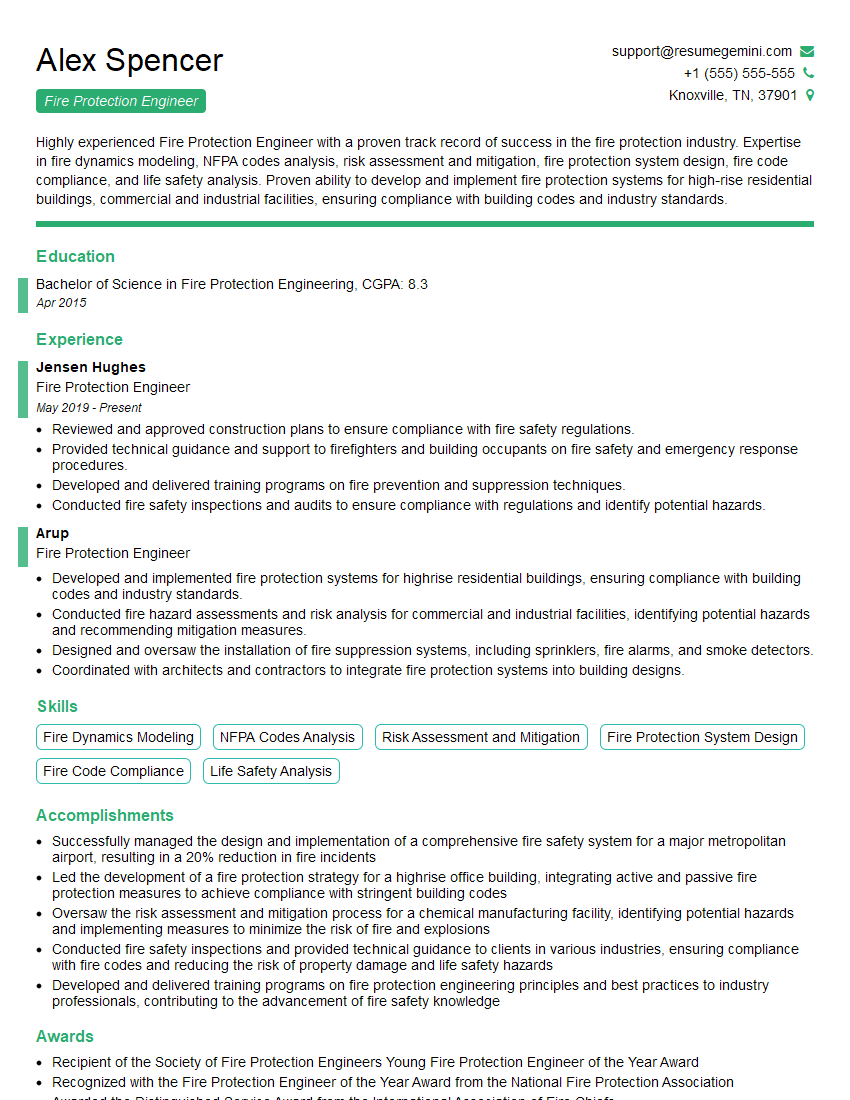
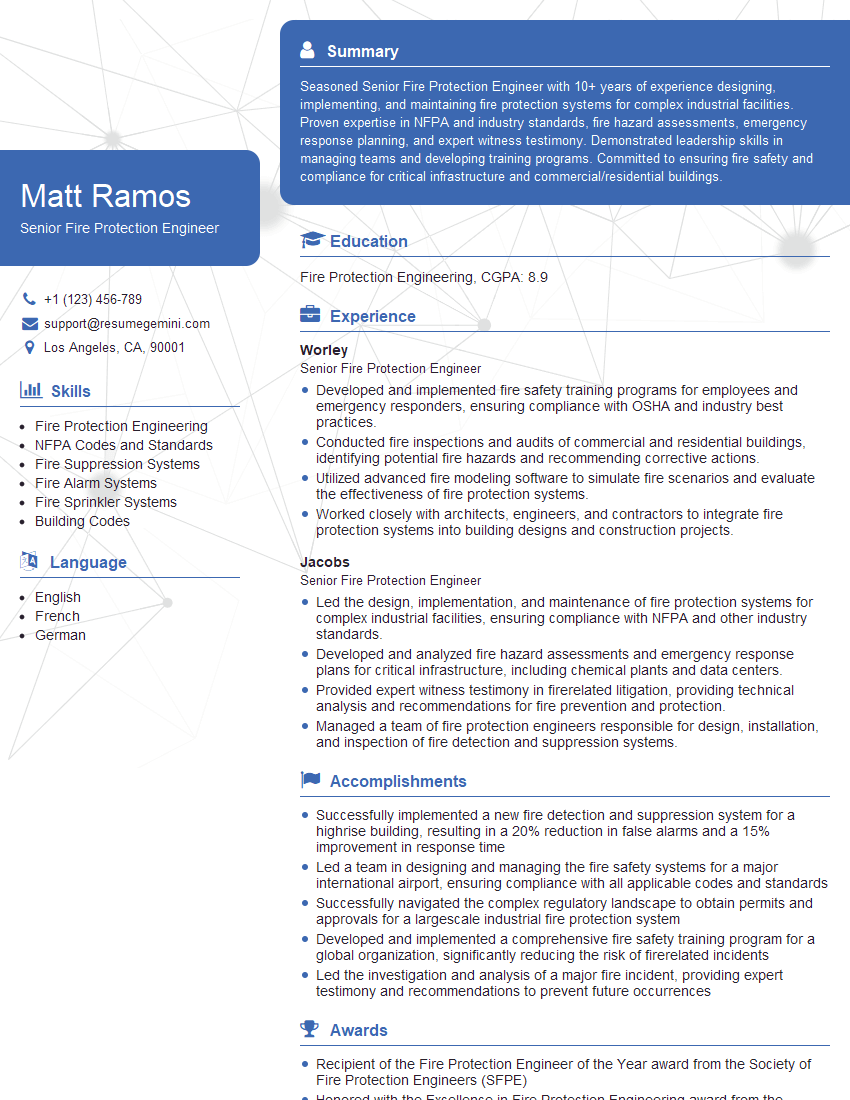
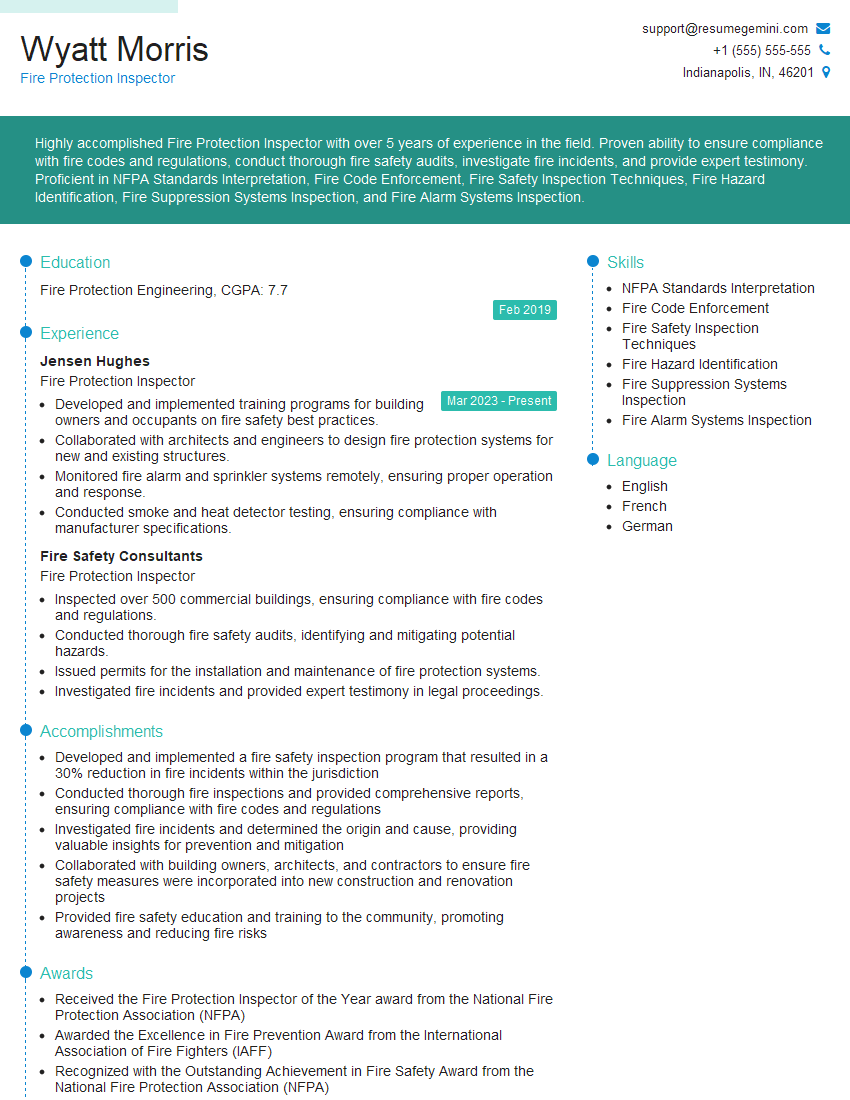
Mastering Fire Protection Equipment Selection is crucial for career advancement in this vital field. Demonstrating a comprehensive understanding of this area positions you as a valuable asset to any organization. To significantly enhance your job prospects, focus on creating an ATS-friendly resume that showcases your skills and experience effectively. ResumeGemini is a trusted resource that can help you build a professional and impactful resume. Examples of resumes tailored specifically to Fire Protection Equipment Selection are available to guide you. Investing time in crafting a strong resume will significantly increase your chances of landing your dream job.
Explore more articles
Users Rating of Our Blogs
Share Your Experience
We value your feedback! Please rate our content and share your thoughts (optional).
What Readers Say About Our Blog
Very informative content, great job.
good