Interviews are more than just a Q&A session—they’re a chance to prove your worth. This blog dives into essential Fire Risk Analysis interview questions and expert tips to help you align your answers with what hiring managers are looking for. Start preparing to shine!
Questions Asked in Fire Risk Analysis Interview
Q 1. Explain the process of conducting a fire risk assessment.
A fire risk assessment is a systematic process to identify potential fire hazards, analyze their risks, and develop strategies to mitigate those risks. It’s like a thorough health check for your building, identifying potential weaknesses before they become catastrophic.
- Identify Hazards: This involves a detailed walkthrough of the building, examining all areas for potential ignition sources (e.g., faulty wiring, flammable materials), fuel sources (e.g., paper, furniture), and potential pathways for fire spread (e.g., open stairwells).
- Evaluate Risks: This step assesses the likelihood of a fire occurring and the potential severity of its consequences (e.g., loss of life, property damage, business interruption). We use various methods, like risk matrices, to quantify this.
- Determine Necessary Controls: Based on the risk evaluation, we determine the appropriate fire safety measures. This could include installing fire alarms, sprinklers, fire extinguishers, improving building design to limit fire spread (compartmentation), implementing evacuation procedures, and staff training.
- Record and Review: All findings, risk assessments, and mitigation strategies are meticulously documented. Regular reviews are crucial to ensure the plan remains effective and up-to-date as the building’s use or occupancy changes.
For example, in a hospital, we’d pay particular attention to oxygen storage areas, operating theaters (due to anesthetic gases), and patient care areas. In a school, we’d focus on escape routes, the availability of fire extinguishers in easily accessible locations, and the evacuation plans.
Q 2. Describe different types of fire suppression systems and their applications.
Fire suppression systems are crucial for extinguishing or controlling fires. They are tailored to the specific risks and building type. Think of them as different tools in a firefighter’s toolbox.
- Water Sprinkler Systems: The most common type, releasing water automatically when activated by heat. They are effective in suppressing many types of fires but can cause water damage.
- Foam Systems: Used for flammable liquid fires, creating a layer that prevents oxygen from reaching the fire. Different foam types are suited to different fuels.
- Carbon Dioxide (CO2) Systems: Effective for extinguishing fires where water could cause damage (e.g., server rooms, electrical equipment). They displace oxygen, suppressing the fire but require good ventilation after use.
- Dry Chemical Systems: Used for class A, B, and C fires (ordinary combustibles, flammable liquids, and electrical fires), they disrupt the chemical chain reaction.
- Wet Chemical Systems: Specifically designed for grease and oil fires in kitchens, forming a saponification reaction that cools and smothers the flames.
The choice of system depends on factors like the fire risk, type of occupany, building structure, and potential damage from different agents. A shopping mall might employ a combination of sprinklers and dry chemical extinguishers, whereas a data center might rely on CO2 systems.
Q 3. What are the key components of a fire safety plan?
A comprehensive fire safety plan provides a structured approach to managing fire risks. It’s the playbook for handling emergencies.
- Fire Prevention Measures: This section details measures to prevent fires, such as regular maintenance of electrical systems, safe storage of flammable materials, and housekeeping practices to minimize fuel sources.
- Fire Detection and Alarm Systems: Specifies the types of detectors (heat, smoke, flame), their placement, and the alarm system’s functionality.
- Fire Suppression Systems: Describes the installed systems (sprinklers, extinguishers, etc.), their maintenance schedules, and inspection procedures.
- Emergency Procedures: This crucial section details evacuation routes, assembly points, communication protocols (alarms, PA system), and the role of designated fire wardens. It should include step-by-step instructions, diagrams, and training schedules for staff.
- Training and Drills: Outlines the training program for staff and occupants, including fire awareness, extinguisher use, and evacuation procedures. Regular fire drills are essential to ensure familiarity and effectiveness.
- Post-Incident Procedures: Explains actions to be taken following a fire incident, including emergency response procedures, damage assessment, and recovery planning.
A well-designed plan should be easily understandable, clearly marked, regularly practiced, and readily accessible to all occupants.
Q 4. How do you identify and evaluate potential fire hazards in a building?
Identifying fire hazards requires a systematic approach, combining visual inspection, review of building plans, and consideration of the building’s occupancy and processes.
- Walkthrough Inspection: A thorough visual inspection of the building, identifying potential ignition sources (e.g., faulty electrical wiring, exposed heating elements, smoking areas), fuel sources (e.g., flammable materials, furniture, paper), and pathways for fire spread (e.g., open stairwells, unprotected shafts).
- Review of Building Plans: Examination of architectural drawings to understand building construction, layout, and the location of fire-protection systems.
- Occupancy Analysis: Understanding how the building is used, its occupancy density, and the activities taking place. This helps identify potential hazards specific to the building’s function (e.g., cooking equipment in a restaurant, chemical storage in a laboratory).
- Risk Assessment Tools: Utilizing risk matrices and other analytical tools to quantify the likelihood and potential consequences of identified hazards. This helps prioritize mitigation efforts.
For instance, in an office building, we’d examine electrical panels, look for overloaded outlets, check for proper disposal of waste materials, and ensure fire exits are clear and properly marked. In a manufacturing facility, we’d scrutinize equipment, chemical storage areas, and the overall process for handling flammable or combustible materials.
Q 5. Explain the concept of fire load and its significance in risk assessment.
Fire load refers to the total amount of combustible material within a given area, expressed as the heat energy released if all the materials were completely burned. It’s a crucial factor in fire risk assessment. Think of it as the ‘fuel’ available for a fire.
A high fire load means a greater potential for a more intense and rapidly spreading fire, requiring more robust fire suppression systems and potentially more stringent evacuation strategies. A low fire load reduces the intensity and duration of a potential fire. The fire load is determined by the type and amount of combustible materials present (wood, plastics, fabrics, etc.) and their specific heat release rates.
For example, a warehouse filled with highly flammable materials has a much higher fire load than an office building with mostly fire-resistant furniture. This directly impacts the design of the fire protection system and emergency plans. Higher fire loads necessitate more robust sprinkler systems, faster response times from fire services, and potentially more comprehensive evacuation strategies.
Q 6. What are the common causes of fires in different building types?
Common fire causes vary depending on the building type and its use.
- Residential Buildings: Cooking, heating equipment (e.g., space heaters, faulty wiring), smoking materials, candles, electrical faults.
- Commercial Buildings: Cooking (restaurants), electrical faults, malfunctioning equipment, improper storage of flammable materials.
- Industrial Buildings: Equipment malfunctions, sparks from machinery, chemical reactions, flammable liquids/gases, welding accidents.
- Educational Buildings: Vandalism (arson), electrical faults, malfunctioning equipment.
- Healthcare Facilities: Electrical faults, medical equipment malfunction, use of flammable materials.
Identifying common causes within specific building types allows for targeted preventative measures. For example, regular inspections of cooking equipment in restaurants and strict adherence to safety procedures in industrial settings are critical in reducing fire risk.
Q 7. How do you determine the appropriate evacuation routes and procedures?
Determining appropriate evacuation routes and procedures requires careful planning and consideration of several factors.
- Identify Escape Routes: This involves mapping all available exits, ensuring they are clearly marked, adequately illuminated, and free from obstructions. Multiple escape routes are ideal, preferably offering alternative paths in case one becomes blocked.
- Assess Capacity and Flow: The width and design of corridors and stairwells must accommodate safe and efficient evacuation of all occupants. Simulations or modeling can be used to evaluate capacity under different scenarios.
- Establish Assembly Points: Designate safe assembly points outside the building, far enough away from the potential fire zone to allow for a complete accounting of occupants.
- Develop Evacuation Procedures: Create a step-by-step plan outlining procedures for activating alarms, communicating to occupants, guiding them to safety, and accounting for individuals with mobility limitations. The plan should include the roles of designated fire wardens and emergency response personnel.
- Conduct Drills: Regular fire drills are essential to familiarize occupants with the evacuation procedures and identify any shortcomings in the plan. Drills should simulate different scenarios, including unexpected events.
For high-rise buildings, a phased evacuation strategy might be necessary, prioritizing occupants on the floors closest to the fire first. Hospitals will require specialized procedures to ensure the safe evacuation of patients, especially those requiring medical assistance.
Q 8. Describe your experience with fire safety regulations and codes.
My experience with fire safety regulations and codes spans over 15 years, encompassing various jurisdictions and building types. I’m proficient in interpreting and applying codes like NFPA, IBC, and local building codes. I’ve worked extensively with regulations concerning fire detection, suppression systems, emergency egress, and means of escape. For example, I recently consulted on a project requiring adherence to stringent NFPA 101 Life Safety Code standards for a high-rise building, ensuring compliance with occupancy load calculations and evacuation plan design. This involved detailed review of drawings, specifications, and proposed fire protection systems to confirm their adequacy and alignment with the relevant codes.
Beyond simply understanding the codes, I focus on practical application. I translate the regulatory requirements into actionable steps for designers, builders, and building owners. This ensures not only compliance but also the creation of a truly safe environment. A recent challenge involved navigating conflicting interpretations of a specific code section regarding sprinkler system placement in a historical building. By collaborating with the authorities having jurisdiction (AHJs) and presenting a thorough risk assessment, we were able to obtain an approved variance while maintaining a high level of fire safety.
Q 9. Explain the importance of fire compartmentation in building design.
Fire compartmentation is crucial in building design because it limits the spread of fire and smoke, buying precious time for evacuation and enabling firefighters to effectively tackle the blaze. Imagine a building without compartmentation – a single fire could rapidly engulf the entire structure, resulting in catastrophic consequences. Compartmentation achieves this by dividing a building into smaller, fire-resistant sections using fire-rated walls, floors, doors, and other barriers. These barriers are designed to resist the passage of fire and smoke for a specified period, allowing occupants to escape and firefighters to contain the fire.
Effective compartmentation relies on several key factors: the fire resistance rating of the separating elements (expressed in hours of fire protection); the correct sealing of penetrations in these elements (e.g., pipes, ducts); and the provision of adequate smoke control measures (e.g., smoke dampers). I’ve witnessed firsthand the effectiveness of robust compartmentation during a fire in a multi-story office building. Although the fire was intense, its spread was limited to a single compartment, allowing for the safe evacuation of occupants in other areas.
Q 10. How do you assess the effectiveness of existing fire safety measures?
Assessing the effectiveness of existing fire safety measures requires a multi-faceted approach. It starts with a thorough review of the building’s fire safety documentation, including blueprints, inspection reports, and maintenance records. This helps identify the types of fire protection systems installed (sprinklers, fire alarms, etc.) and their design parameters. Next, a physical inspection is conducted to verify that systems are properly installed, maintained, and operational. This involves testing the functionality of fire alarms, sprinkler heads, and emergency lighting.
Furthermore, we conduct fire drills and simulations to evaluate the effectiveness of emergency procedures and evacuation plans. Observation of occupant behavior during drills helps pinpoint areas for improvement. Finally, we analyze historical fire incident data (if available) to identify recurring issues or weaknesses. For example, a high frequency of false alarms might point to issues with alarm sensitivity or maintenance practices. A systematic approach, combining documentation review, physical inspection, drills and data analysis, provides a comprehensive evaluation of the overall effectiveness of the fire safety measures in place.
Q 11. What are the different types of fire detectors and their limitations?
Several types of fire detectors exist, each with specific strengths and weaknesses.
- Heat detectors respond to temperature changes. They are reliable but can be slow to activate in fast-developing fires.
- Smoke detectors detect airborne particles produced by a fire. There are ionization detectors (sensitive to smaller particles) and photoelectric detectors (sensitive to larger particles). Ionization detectors respond faster to flaming fires, while photoelectric detectors are better at detecting smoldering fires.
- Flame detectors sense the infrared or ultraviolet radiation emitted by flames. They are fast and effective but can be susceptible to false alarms from other sources of heat or light.
- Multi-sensor detectors combine several sensing technologies to increase reliability and accuracy.
Limitations include false alarms triggered by dust, steam, or insects (especially with smoke detectors). Heat detectors might not be suitable for fast-spreading fires. The location and spacing of detectors are crucial for optimal coverage. Regular maintenance and testing are essential to ensure their continued effectiveness. For instance, I once encountered a situation where a kitchen’s high-heat levels triggered false alarms from heat detectors located too close to the cooking appliances. Relocating the detectors effectively solved the issue.
Q 12. Explain the concept of ‘reasonably practicable’ in relation to fire safety.
In fire safety, ‘reasonably practicable’ signifies that measures should be taken to reduce fire risks, balancing the level of risk with the cost and effort required to mitigate it. It’s not about achieving absolute zero risk, which is impossible, but about reaching a level of safety that’s proportionate to the potential hazards. A simple analogy would be crossing a busy road. While we can’t eliminate the risk of getting hit by a car entirely, we can make it reasonably practicable by using a pedestrian crossing, looking both ways, and being vigilant.
The assessment of what is ‘reasonably practicable’ involves considering several factors: the likelihood of a fire occurring, the potential severity of its consequences, the availability of suitable control measures, and the cost of implementing them. In a high-risk industrial setting, more stringent measures might be reasonably practicable compared to a low-risk residential building. This concept necessitates a nuanced approach, involving risk assessment and cost-benefit analysis to determine the appropriate level of fire safety interventions. This approach requires careful justification, especially when balancing budgetary constraints with safety requirements.
Q 13. How do you communicate fire safety risks and recommendations to stakeholders?
Communicating fire safety risks and recommendations effectively requires tailoring the message to the audience. For building owners, the focus might be on the financial implications of non-compliance or the potential impact on insurance premiums. For building occupants, the emphasis is on their safety, providing clear instructions on evacuation procedures and fire safety measures. For construction professionals, the communication centers on building codes, technical specifications, and compliance with regulations.
I use various communication tools, including visual aids (diagrams, plans, photographs), written reports, presentations, and interactive training sessions. Clear, concise language is key, avoiding technical jargon whenever possible. For example, instead of stating “The egress path lacks compliance with NFPA 101, section 7.2.1.1,” I might explain “The emergency exit is too narrow, making evacuation difficult in case of a fire.” Following up with face-to-face discussions to answer questions and address concerns is vital to ensuring proper understanding and buy-in. Open communication ensures stakeholder collaboration and a shared commitment to building a culture of fire safety.
Q 14. Describe your experience with fire investigation techniques.
My experience with fire investigation encompasses a wide range of techniques, from initial scene assessment to detailed analysis of physical evidence. The investigation starts with securing the scene and conducting a preliminary assessment to determine the extent of the damage and potential hazards. This is followed by a systematic documentation process, including photography, videography, and detailed sketches. Physical evidence is carefully collected and preserved for laboratory analysis, which might involve identifying the fire’s origin and cause through examination of burn patterns, debris analysis, and electrical component testing.
I’ve worked on numerous fire investigations, from small residential fires to large-scale industrial incidents. A memorable case involved a fire in a warehouse. By meticulously examining the burn patterns and interviewing witnesses, we were able to determine that the fire originated from a faulty electrical connection in a nearby forklift charging station. This detailed analysis helped to identify the root cause of the incident and contribute to implementing preventative measures to avoid similar incidents in the future. Proficiency in various investigative techniques, coupled with a deep understanding of fire dynamics and building construction, forms the bedrock of effective fire investigations.
Q 15. How do you prioritize fire safety risks based on likelihood and consequence?
Prioritizing fire safety risks involves a systematic approach combining the likelihood of a fire event occurring with the potential severity of its consequences. We use a risk matrix, often visualized as a table, to assess this. The likelihood is rated based on factors like the presence of flammable materials, occupancy type, and the effectiveness of existing fire safety measures. The consequence is assessed considering factors such as potential injuries, fatalities, property damage, and business interruption.
For instance, a high-likelihood, high-consequence risk might be a malfunctioning sprinkler system in a densely occupied building. This requires immediate attention. Conversely, a low-likelihood, low-consequence risk, such as a small fire-resistant storage area with minimal combustibles, would have lower priority.
We typically use a scoring system. Each likelihood and consequence is assigned a numerical score (e.g., 1-5, with 5 being the highest). These scores are multiplied to obtain a risk score. Higher scores indicate higher-priority risks requiring immediate action. This allows for resource allocation based on the most critical areas of concern.
- High Likelihood, High Consequence: Immediate action needed.
- High Likelihood, Low Consequence: Action needed, but perhaps with a less urgent timeline.
- Low Likelihood, High Consequence: Mitigation measures should be considered, even if less urgent.
- Low Likelihood, Low Consequence: Monitoring and regular checks are sufficient.
Career Expert Tips:
- Ace those interviews! Prepare effectively by reviewing the Top 50 Most Common Interview Questions on ResumeGemini.
- Navigate your job search with confidence! Explore a wide range of Career Tips on ResumeGemini. Learn about common challenges and recommendations to overcome them.
- Craft the perfect resume! Master the Art of Resume Writing with ResumeGemini’s guide. Showcase your unique qualifications and achievements effectively.
- Don’t miss out on holiday savings! Build your dream resume with ResumeGemini’s ATS optimized templates.
Q 16. What software or tools do you use for fire risk assessment?
Various software and tools are used in fire risk assessment, depending on the complexity of the project and client needs. Some popular choices include dedicated fire risk assessment software packages which offer features like automated calculations, report generation, and risk mapping. These packages help streamline the process and ensure consistency.
I also use spreadsheet software like Microsoft Excel or Google Sheets for simpler assessments, particularly for smaller projects or to maintain records. For larger or more complex scenarios involving building information modeling (BIM), we might integrate with BIM software to overlay fire safety information onto the building model. Finally, specialized software for analyzing smoke movement and evacuation simulations aids in understanding potential scenarios and informing mitigation strategies.
Q 17. How do you handle disagreements with building owners or managers regarding fire safety improvements?
Disagreements regarding fire safety improvements are handled professionally and collaboratively. It starts with clearly articulating the identified risks and the rationale behind the recommended improvements using clear, non-technical language. I present data from the assessment, highlighting the potential consequences of inaction, emphasizing compliance requirements, and potentially showing cost-benefit analyses to demonstrate the long-term value of the improvements.
Open communication is key. I listen to the building owner’s or manager’s concerns, addressing their questions and anxieties directly. If necessary, I involve other stakeholders, such as insurance providers or regulatory authorities, to help provide further support for the recommendations. Compromises can be reached by exploring alternative solutions that achieve the necessary level of safety while accommodating budget or operational constraints. In rare cases, if no agreement can be reached, it may become necessary to involve legal counsel.
Q 18. Explain the role of fire drills and training in enhancing fire safety.
Fire drills and training are critical for enhancing fire safety. Drills familiarize occupants with evacuation procedures, enabling them to react efficiently and calmly during a real emergency. They help identify any weaknesses in the plan and allow for improvements. Comprehensive training programs go beyond drills and educate staff and occupants on fire hazards, prevention measures, the proper use of fire suppression equipment (like fire extinguishers), and the importance of reporting fires promptly.
For example, a recent project involved conducting fire drills in a large office complex. By simulating different scenarios, we identified bottlenecks in evacuation routes and adjusted the emergency plan accordingly. This proactive approach ensures a faster, more orderly evacuation in case of a real fire. The training also covered the proper usage of fire extinguishers which significantly reduced the risk and potentially minimized damage in the early stages of a fire.
Q 19. Describe your understanding of passive and active fire protection systems.
Passive fire protection systems are designed to prevent or impede the spread of fire, while active systems are designed to actively fight fires.
- Passive systems include features like fire-resistant walls and floors, fire doors, and smoke dampers that limit fire spread and contain its effects. They’re the first line of defense, buying valuable time for evacuation and the arrival of emergency services.
- Active systems include fire sprinklers, fire alarms, smoke detectors, and fire suppression systems that automatically detect and suppress fires. These systems are deployed once a fire has started to control or extinguish it.
Think of it like this: passive systems are the building’s inherent strength, while active systems are the emergency response team. Both are vital for a comprehensive fire safety strategy. A building with robust passive systems might contain a fire longer, giving the active systems more time to be effective.
Q 20. How do you ensure compliance with relevant fire safety legislation?
Ensuring compliance with fire safety legislation requires diligent adherence to relevant regulations and standards. This involves staying updated on the latest legal requirements and incorporating them into our risk assessments and recommendations. We maintain detailed records of all assessments, inspections, and any corrective actions implemented. We use checklists and documentation systems to ensure all safety measures are in place and routinely check for compliance against relevant codes and standards.
Regular inspections and audits are conducted to verify that all fire safety equipment is functioning correctly, and we provide regular training to clients on their responsibilities and obligations. Moreover, we collaborate with relevant authorities to obtain any necessary approvals and permits for fire safety systems and practices. This proactive approach helps minimize risks and avoids potential penalties associated with non-compliance. We actively participate in professional development to remain up-to-date on the latest regulatory changes.
Q 21. What are the key elements of a fire risk assessment report?
A comprehensive fire risk assessment report typically includes the following key elements:
- Introduction and Scope: Defines the purpose of the assessment and the areas covered.
- Methodology: Describes the approach and standards followed in conducting the assessment.
- Findings and Risk Identification: Details on identified fire hazards, their likelihood and consequences.
- Risk Evaluation: Prioritization of identified risks based on a risk matrix.
- Recommendations: Detailed proposals for mitigating identified risks, including specific actions and timelines.
- Action Plan: Outlines responsibilities and deadlines for implementing the recommendations.
- Appendices: Supporting documentation, such as photographs, drawings, and compliance certificates.
The report should be clear, concise, and easy to understand, even for non-experts. The use of visuals, such as diagrams and tables, can significantly improve readability and comprehension.
Q 22. How do you manage the risks associated with flammable materials?
Managing risks associated with flammable materials involves a multi-faceted approach focusing on prevention, control, and mitigation. It starts with proper identification and classification of all flammable materials present. This includes everything from obvious hazards like solvents and fuels to less apparent ones like certain types of fabrics or dust accumulations.
- Storage and Handling: Flammable materials should be stored in designated areas, away from ignition sources, and in appropriately rated containers. Proper handling procedures, including the use of personal protective equipment (PPE), must be strictly followed. Think of it like organizing a toolbox – keeping sharp tools separate from flammable liquids prevents accidental sparks.
- Engineering Controls: Implementing engineering controls like ventilation systems to reduce the concentration of flammable vapors in the air is crucial. This is analogous to having a well-ventilated kitchen to prevent the build-up of combustible gases from a stove.
- Administrative Controls: This involves establishing clear procedures and training programs for employees handling flammable materials. Regular inspections and maintenance of storage areas and equipment are essential. A well-defined process, similar to a kitchen’s safety checklist, ensures safe handling practices.
- Fire Suppression Systems: Implementing appropriate fire suppression systems, such as sprinklers or fire extinguishers, is paramount. The type of system depends on the specific hazard and the occupancy type. It’s like having a fire extinguisher readily available in the kitchen – a crucial safety measure.
By combining these strategies, we create a layered defense against fire risks associated with flammable materials. A thorough risk assessment helps determine the most appropriate control measures for a given situation.
Q 23. How do you assess the fire risks in different occupancy types?
Assessing fire risks in different occupancy types requires a tailored approach, as each type presents unique hazards. For instance, a hospital will have different risks than a warehouse or a school.
- Residential: Focuses on cooking appliances, heating systems, electrical wiring, and smoking materials. Risk assessment considers building materials, escape routes, and occupant awareness.
- Commercial: Considers the type of business operations, presence of flammable materials, occupancy density, and the effectiveness of existing fire protection systems. A restaurant, for example, will have higher risks related to cooking equipment than an office building.
- Industrial: This is often the most complex, involving the presence of hazardous materials, machinery, and processes. Risk assessments focus on process safety, explosion hazards, and the effectiveness of emergency response plans. A chemical plant would demand a much more rigorous assessment than a retail store.
- Institutional (Hospitals, Schools): These settings necessitate careful consideration of occupant vulnerability, the presence of life support equipment, and the need for rapid evacuation procedures. A hospital’s fire safety plan needs to account for patient mobility limitations and the presence of oxygen.
Each assessment should identify potential ignition sources, fuel sources, and pathways for fire spread, leading to the development of appropriate preventative and protective measures. Understanding the specific characteristics of each occupancy type is fundamental to conducting a comprehensive and effective fire risk assessment.
Q 24. Explain your understanding of different fire hazard classifications.
Fire hazard classifications categorize materials based on their flammability and fire behavior. Different standards exist worldwide, but the general principles remain consistent. These classifications guide the selection of appropriate fire protection measures.
- Class A: Ordinary combustibles like wood, paper, and textiles. They require cooling agents to extinguish.
- Class B: Flammable liquids and gases. These require smothering or interrupting the oxygen supply to extinguish.
- Class C: Energized electrical equipment. These require non-conductive extinguishing agents to prevent electric shock.
- Class D: Combustible metals like magnesium, titanium, and sodium. These require special extinguishing agents to prevent further reactions.
- Class K: Cooking oils and fats. These require specialized extinguishing agents that cool and prevent reignition.
Understanding these classifications is crucial for selecting the correct type of fire extinguisher and developing effective fire prevention strategies. Using the wrong extinguisher on a specific fire hazard can be ineffective and even dangerous.
Q 25. Describe your experience with fire safety inspections and audits.
My experience with fire safety inspections and audits spans numerous projects across diverse occupancy types. These involve a systematic evaluation of fire safety systems and practices to identify deficiencies and ensure compliance with relevant codes and standards. The process typically includes:
- Visual Inspection: A thorough examination of fire detection and alarm systems, sprinkler systems, fire extinguishers, emergency lighting, and escape routes. This involves checking for damage, proper functioning, and correct placement.
- Documentation Review: Reviewing existing fire risk assessments, emergency plans, maintenance records, and training documentation. Ensuring that these documents are up-to-date and accurate.
- Testing and Verification: Testing fire alarm systems, sprinkler systems, and other fire protection equipment to ensure their proper operation. This often involves functionality checks and pressure tests.
- Interviewing Personnel: Talking to staff and occupants to assess their understanding of fire safety procedures, evacuation plans, and emergency response protocols.
- Reporting and Recommendations: Preparing a comprehensive report detailing findings, identifying deficiencies, and providing recommendations for corrective actions. This report typically includes prioritization of issues and timelines for remediation.
Through these steps, I identify areas of improvement and ensure that fire safety measures are adequate and effective. This ensures not only compliance but also enhances the overall fire safety culture of the organization.
Q 26. How do you stay updated on the latest fire safety standards and regulations?
Staying updated on the latest fire safety standards and regulations is critical for maintaining professional competence. I utilize a multi-pronged approach:
- Professional Organizations: Active membership in organizations such as the National Fire Protection Association (NFPA) provides access to the latest codes, standards, and research. Regular participation in conferences and workshops keeps me informed on emerging trends and best practices.
- Regulatory Websites: Regularly reviewing relevant government websites and publications for updates to building codes, fire safety regulations, and legal requirements ensures adherence to the latest mandates.
- Industry Publications and Journals: Reading technical journals and industry publications keeps me abreast of current research, technological advancements, and case studies in fire safety engineering and risk management.
- Continuing Education: Participating in continuing education courses and training programs helps maintain my expertise and ensures I’m proficient in the latest techniques and methodologies.
This multifaceted approach ensures that my knowledge base remains current and allows me to apply the most effective and up-to-date strategies in my work.
Q 27. Explain the process of reviewing and updating a fire risk assessment.
Reviewing and updating a fire risk assessment is an iterative process, not a one-time event. Regular review ensures that the assessment remains relevant and accurate, reflecting changes in the occupancy, operations, and regulations.
- Triggering Events: Changes to the building, processes, occupancy, or relevant legislation often necessitate a reassessment. This could include renovations, changes in materials used, or updates to fire safety codes.
- Regular Intervals: Even without triggering events, a fire risk assessment should be reviewed at least annually, or more frequently in high-risk environments. This ensures ongoing compliance and early detection of potential issues.
- Methodology: The review process involves re-evaluating hazards, identifying new or changed risks, reviewing existing control measures, and updating the overall risk assessment document. The process typically involves revisiting the initial steps of hazard identification, risk analysis, and control selection.
- Documentation: Any changes or updates should be meticulously documented, including the reasons for the changes and the date of the update. This provides a clear audit trail and ensures transparency.
By consistently reviewing and updating the fire risk assessment, we ensure the ongoing effectiveness of fire safety measures and maintain a safe working environment.
Q 28. Describe a challenging fire risk assessment scenario you have encountered and how you resolved it.
One challenging scenario involved a large historical building converted into a mixed-use development, housing apartments, retail spaces, and offices. The complex structure, with its numerous interconnected spaces and diverse occupancy types, presented significant challenges in determining accurate fire spread pathways and evacuation strategies.
The initial assessment highlighted inconsistencies in fire compartmentation, inadequate escape routes in certain areas, and limited accessibility for emergency services. To resolve this, I employed a multi-pronged approach:
- Detailed 3D Modeling: Used 3D modeling software to create a virtual representation of the building, allowing for a more precise analysis of fire spread pathways and visualization of evacuation routes.
- Computational Fluid Dynamics (CFD) Simulation: Employed CFD simulation to model smoke movement and temperature distribution within the building during a fire event. This provided critical data for optimizing the placement of smoke detectors and optimizing the evacuation plans.
- Collaboration with Stakeholders: Close collaboration with architects, engineers, building managers, and fire officials was crucial to develop solutions that satisfied all regulatory requirements while preserving the historical integrity of the building.
- Phased Implementation: Due to budget constraints, the remediation work was implemented in phases, prioritizing the most critical safety upgrades.
Through this systematic and collaborative approach, we successfully identified and mitigated the major fire risks in the building, creating a safer environment for occupants and emergency responders. This project underscored the value of integrating advanced analytical tools and collaborative problem-solving in complex fire risk assessments.
Key Topics to Learn for Fire Risk Analysis Interview
- Fire Hazard Identification: Understanding different fire sources, fuel types, and ignition mechanisms. Practical application: Conducting a thorough site survey to identify potential hazards.
- Risk Assessment Methodologies: Familiarize yourself with various risk assessment techniques (e.g., qualitative, quantitative, FTA). Practical application: Applying a chosen methodology to analyze a specific scenario and determine risk levels.
- Fire Safety Engineering Principles: Understanding fire spread, compartmentation, smoke control, and evacuation strategies. Practical application: Designing or evaluating fire safety systems for buildings.
- Fire Codes and Regulations: Knowledge of relevant building codes, fire safety standards, and legislation. Practical application: Ensuring compliance with regulations in a risk assessment report.
- Risk Mitigation Strategies: Developing and implementing effective strategies to reduce fire risks. Practical application: Recommending preventative measures and control measures based on the risk assessment.
- Fire Modeling and Simulation: Understanding the use of software and tools for fire modeling and prediction. Practical application: Interpreting simulation results to inform decision-making.
- Communication and Reporting: Effectively communicating risk assessments and recommendations to stakeholders. Practical application: Presenting findings in a clear and concise manner, tailoring the report to the audience.
- Life Safety Systems: Detailed understanding of fire detection, alarm, and suppression systems. Practical application: Evaluating the effectiveness of existing systems and suggesting improvements.
Next Steps
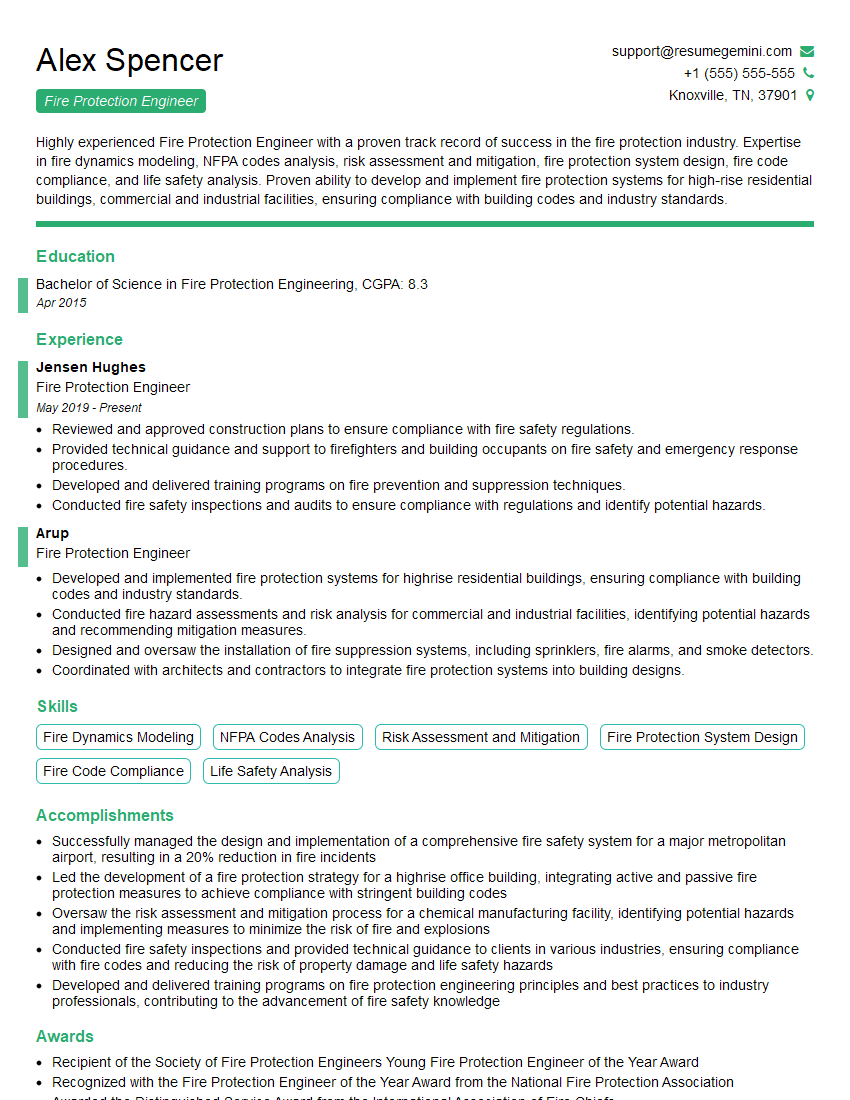
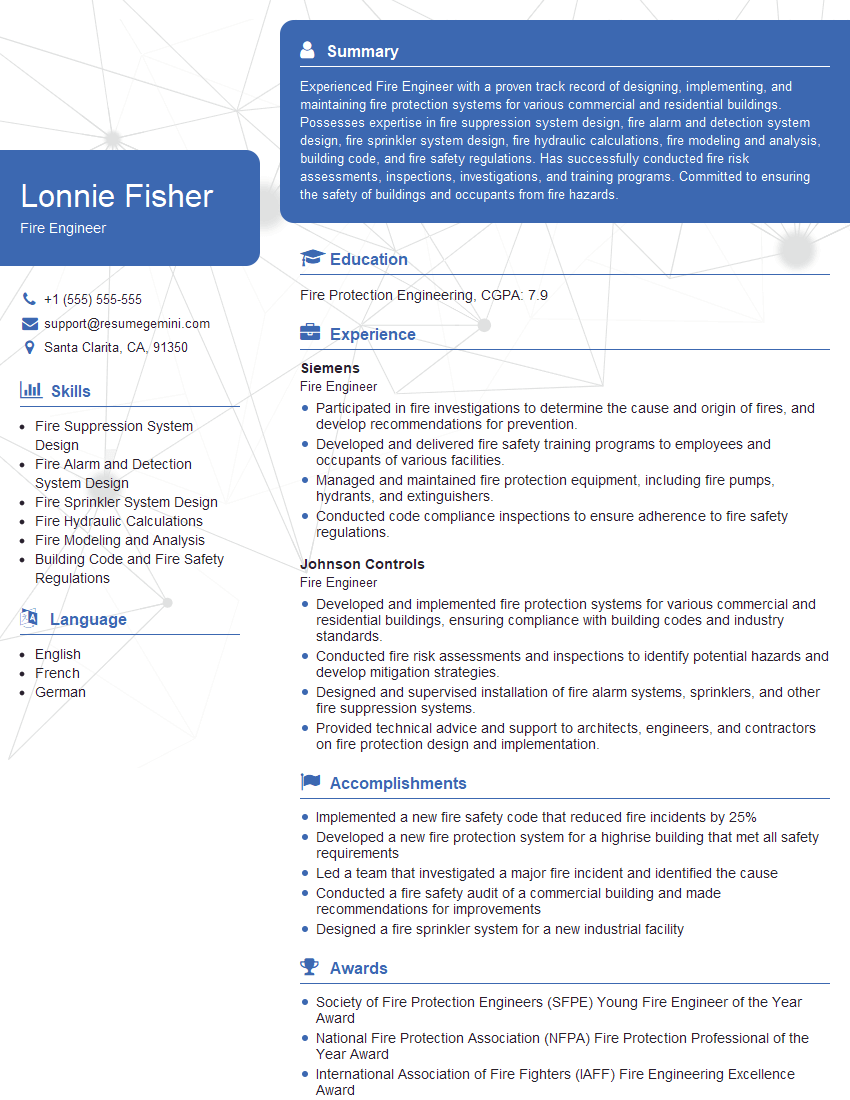
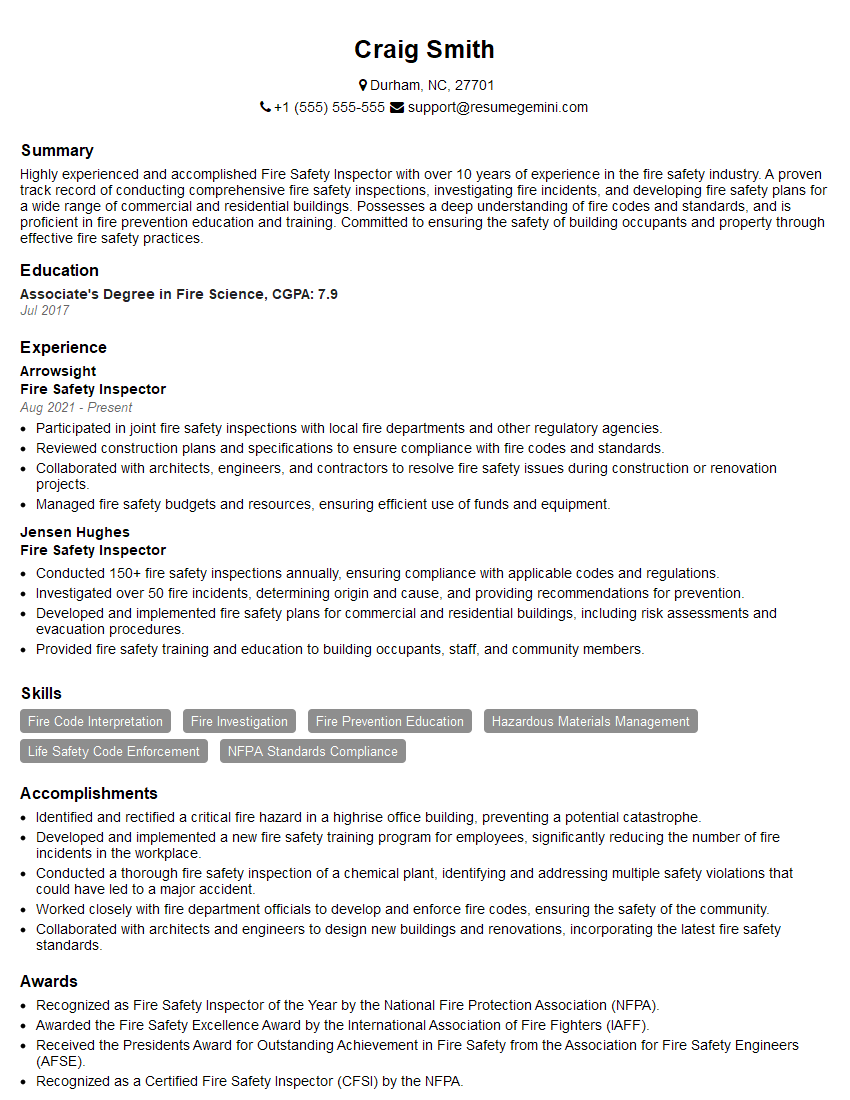
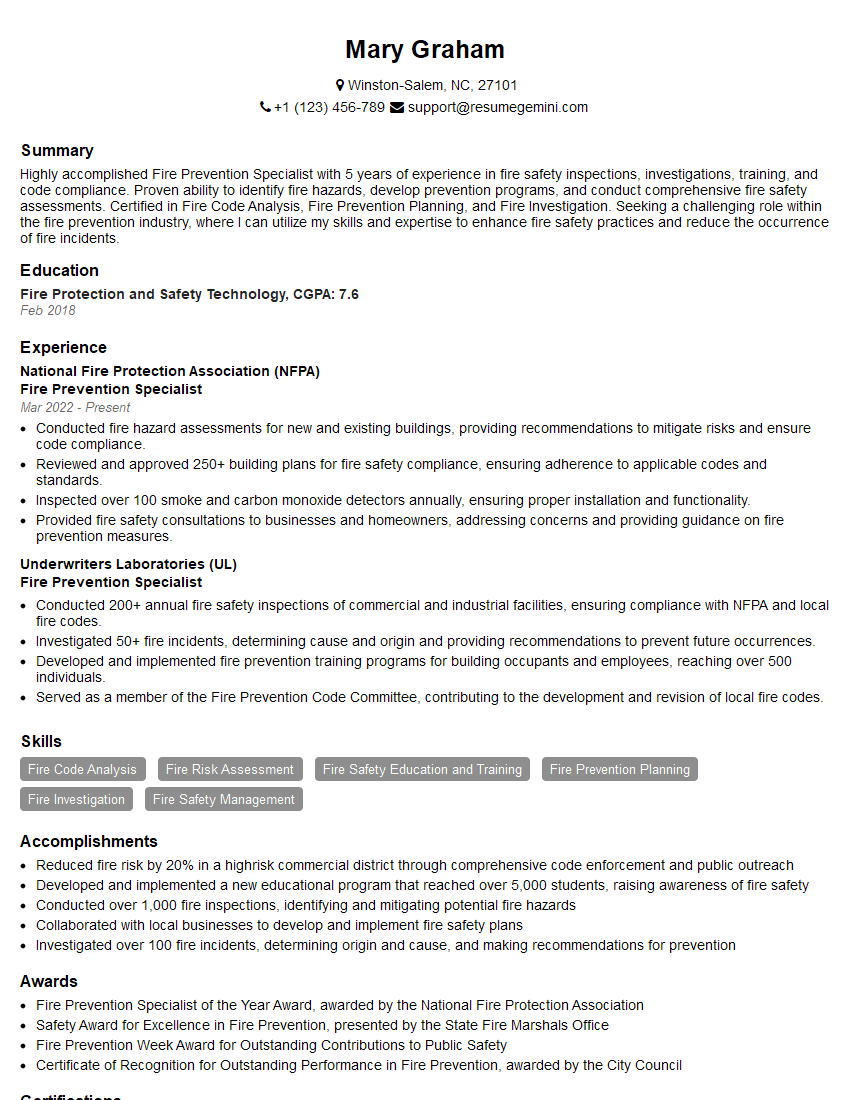
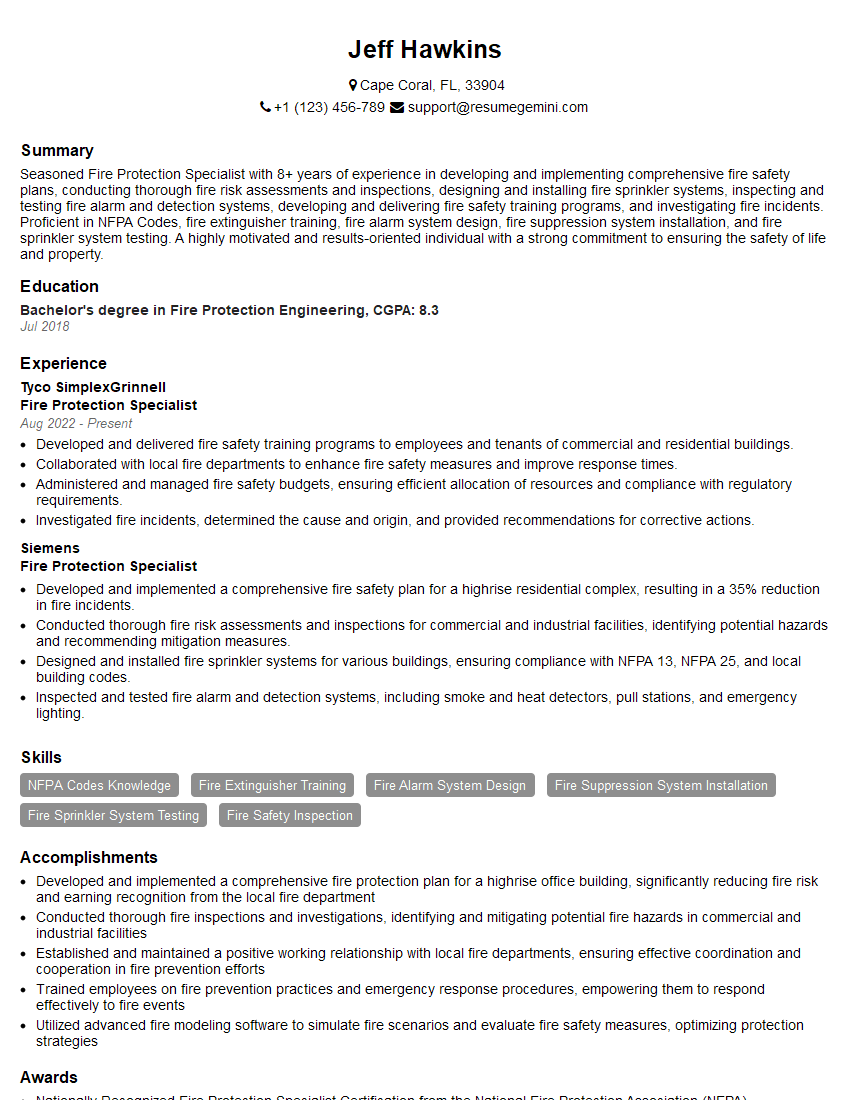
Mastering Fire Risk Analysis opens doors to exciting career opportunities and positions you as a valuable asset in the safety and security sector. To enhance your job prospects, it’s crucial to present your skills effectively. Crafting an ATS-friendly resume is paramount in getting your application noticed by recruiters. We highly recommend using ResumeGemini to build a professional and impactful resume that highlights your expertise in Fire Risk Analysis. ResumeGemini offers examples of resumes tailored to this specific field, providing you with valuable templates and guidance to create a winning application. Take the next step in advancing your career – build your best resume yet!
Explore more articles
Users Rating of Our Blogs
Share Your Experience
We value your feedback! Please rate our content and share your thoughts (optional).
What Readers Say About Our Blog
Very informative content, great job.
good