The thought of an interview can be nerve-wracking, but the right preparation can make all the difference. Explore this comprehensive guide to Fire Support Officer (FSO) Qualification interview questions and gain the confidence you need to showcase your abilities and secure the role.
Questions Asked in Fire Support Officer (FSO) Qualification Interview
Q 1. Explain the process of requesting and adjusting fire missions.
Requesting and adjusting fire missions is a critical process requiring precision and clear communication. It involves a series of steps, starting with the initial request from a maneuver unit, followed by careful consideration of the target, available fire support assets, and potential collateral damage.
The process typically begins with the maneuver unit identifying a target and transmitting a fire mission request to the FSO. This request includes essential information like target location (grid coordinates), target description, desired type of fire (e.g., suppression, destruction), and the desired effects. The FSO then verifies the information, coordinates with the appropriate fire support assets (artillery, mortars, close air support), and transmits the fire mission to the firing unit.
Once the fire mission is underway, the FSO continuously monitors the effects. Based on observer reports (spotters or drones) or feedback from the maneuver unit, adjustments might be necessary to improve accuracy or effectiveness. Adjustments involve transmitting correction data to the firing unit. This could involve shifting the aiming point, adjusting the type of ammunition, or changing the rate of fire. Constant communication and feedback loops are vital to ensure the fire mission achieves its objectives and avoids collateral damage.
For example, if the initial barrage doesn’t achieve the desired suppression, the FSO might request a shift of fire to a new grid coordinate closer to the enemy’s main position, or a change to a more effective type of munitions. This iterative process of requesting and adjusting continues until the fire mission’s objectives are met or the situation changes.
Q 2. Describe the different types of fire missions and their applications.
Fire missions are categorized into various types, each designed for specific tactical objectives. The selection of a particular fire mission depends on the situation, available resources, and desired effects.
- Suppression: This involves delivering fire to reduce enemy capabilities by reducing their effectiveness. Think of it as ‘keeping their heads down’. It’s often used to cover maneuver units’ movements or to disrupt enemy operations.
- Destruction: This aims to completely neutralize a target, often involving heavy concentrations of fire. The goal is to destroy enemy equipment, fortifications, or personnel.
- Interdiction: This involves disrupting enemy movement or supply lines. This is commonly achieved by placing fires along likely routes or near enemy supply depots.
- Neutralization: This is similar to suppression but aims to render a target incapable of acting. For example, disabling enemy artillery by targeting their firing positions.
- Illumination: This mission uses illuminating rounds to light up a target area, aiding in night operations or obscuring conditions. It assists in target acquisition for other fire missions.
The application of these fire missions is highly contextual. For instance, during an offensive operation, suppression fire might precede an assault, while destruction fire would be used to eliminate key enemy strongpoints. In a defensive posture, interdiction fires could disrupt enemy advances, and neutralization could be used to eliminate enemy artillery that is harassing friendly forces.
Q 3. How do you coordinate fire support with maneuver elements?
Coordinating fire support with maneuver elements is paramount for mission success and minimizing friendly casualties. It’s a continuous process that requires seamless communication and a shared understanding of the tactical situation.
The FSO acts as the crucial link between the maneuver commander and the fire support assets. Close coordination ensures the fire plan supports the maneuver commander’s intent. This is achieved through thorough planning, regular communication updates, and the establishment of clear procedures for target designation and fire mission requests.
Before any operation, the FSO and maneuver commander collaborate on the fire support plan. This plan incorporates the maneuver commander’s objectives, timelines, and anticipated enemy actions. During the operation, the FSO maintains constant communication with the maneuver commander, receiving updates on the situation and providing continuous updates on fire support availability and execution.
One effective method is the use of Forward Observers (FOs) embedded with the maneuver units. FOs provide real-time target information, ensuring accurate targeting and minimizing fratricide risks. They also directly communicate with the FSO, adjusting fire missions according to evolving circumstances. Effective use of digital communication tools further enhances this coordination, enabling rapid transmission of data and near real-time adjustments to fire plans.
Q 4. What are the key elements of a fire support plan?
A robust fire support plan is the cornerstone of successful fire support operations. It provides a framework for integrating fire support with the overall maneuver plan, ensuring the effective application of fire power while minimizing risks.
Key elements of a fire support plan include:
- Commander’s Intent: A clear statement outlining the overall objective and desired end state of the operation.
- Target List: A detailed list of priority targets, including their location, description, and priority for engagement.
- Fire Support Tasks: A breakdown of specific fire support missions that need to be executed to support maneuver elements’ objectives.
- Contingency Plans: Plans for adjusting the fire support plan in response to unexpected events or changes in the tactical situation.
- Risk Assessment: An evaluation of potential risks, including fratricide, collateral damage, and the availability of fire support assets.
- Communication Plan: Detailed procedures for communicating fire mission requests, updates, and adjustments.
- Integration with other combat support functions: Coordination with other support arms, such as engineers, medical services, to ensure all elements of the operation are integrated effectively.
A well-developed fire support plan acts as a dynamic document, frequently updated based on the ongoing situation. Its effectiveness hinges on careful planning, regular review, and adaptable execution.
Q 5. Explain the importance of target acquisition and confirmation in fire support.
Target acquisition and confirmation are the critical first steps in any fire support mission. Without accurate and confirmed targets, any fire mission risks being ineffective, wasted, or worse, causing friendly casualties.
Target acquisition involves locating and identifying enemy targets. This may involve using various intelligence sources, such as reconnaissance, surveillance, and human intelligence. The process is often iterative and requires a thorough analysis of information to ensure the target is correctly identified and located. Technologies like UAVs (Unmanned Aerial Vehicles) and sophisticated targeting systems have significantly improved target acquisition capabilities.
Target confirmation involves verifying the location and identity of the target before initiating fire. This critical step minimizes the risk of fratricide and collateral damage. Methods for target confirmation include using multiple sources of information, such as visual observation, radar, or other sensors. Positive identification of the target and the elimination of any doubt before initiating fire is crucial for safe and effective fire support.
For example, a suspected enemy position identified via a UAV requires confirmation before initiating fire. The FSO would typically use multiple sources to verify. This might involve a ground observer who confirms the presence of the enemy forces through binoculars, ensuring the information is accurate. This dual approach reduces the chance of friendly fire and increases mission effectiveness.
Q 6. How do you ensure the safety of friendly forces during fire missions?
Ensuring the safety of friendly forces during fire missions is the paramount concern of an FSO. This involves careful planning, strict adherence to procedures, and continuous monitoring of the fire support operation.
Several key measures are employed:
- Detailed Target Analysis: Thoroughly analyzing the target area to identify any potential for friendly forces to be in or near the impact zone.
- Clear Communication: Maintaining clear and concise communication with all involved parties, including the maneuver commander, firing units, and forward observers.
- Precise Targeting: Utilizing precise targeting techniques and technologies to minimize the risk of stray rounds or unintended collateral damage.
- Effective Spotting and Adjustment: Employing trained spotters to observe the effects of fire and provide immediate feedback to the firing units, adjusting the fire as needed to achieve precision.
- Safety Zones and Exclusion Areas: Establishing clear safety zones and exclusion areas to keep friendly forces out of harm’s way during fire missions.
- Pre-strike reconnaissance: using reconnaissance assets to verify information obtained through intelligence means. This may involve close-air support aircraft performing a pre-strike recon.
These safety measures, combined with the continuous monitoring of the fire mission, significantly reduce the likelihood of friendly fire incidents and ensure the success of the operation while safeguarding friendly forces.
Q 7. Describe your experience with different fire support systems (e.g., mortars, artillery, air support).
My experience encompasses a wide range of fire support systems, including mortars, artillery, and close air support (CAS). I’ve worked extensively with both conventional and precision-guided munitions.
Mortar systems: I’ve planned and executed numerous fire missions using 81mm and 120mm mortars. I’m familiar with their limitations in range and accuracy compared to artillery, and I understand the importance of close coordination with forward observers for effective fire support at the company and platoon levels. My experience emphasizes the precision required for smaller-scale operations and the importance of detailed target data for accuracy in close-quarters engagements.
Artillery systems: My experience includes working with various artillery calibers, from 105mm to 155mm howitzers. I understand the complexities of artillery fire planning, including ballistic calculations, the effects of weather conditions, and the integration of different types of ammunition to achieve various effects. I’m proficient in using fire support coordination cells and digital fire support systems, enabling faster and more accurate mission planning and execution.
Close Air Support (CAS): I’ve collaborated extensively with air assets, including fighter jets and attack helicopters. I have experience in requesting and coordinating CAS missions, ensuring accurate target designation and deconfliction with friendly forces. CAS adds a vital layer to the fire support matrix; its precision and rapid response capabilities are crucial in fast-paced and evolving situations, often acting as a critical force multiplier.
Throughout my career, I’ve consistently emphasized safety and effectiveness in fire support operations, always prioritizing the protection of friendly forces while maximizing mission success.
Q 8. How do you prioritize fire support requests in a high-demand environment?
Prioritizing fire support requests in a high-demand environment is crucial for mission success. It’s a dynamic process involving constant assessment and reassessment. My approach uses a tiered system based on the principles of urgency, impact, and feasibility.
- Urgency: Immediate threats to friendly forces, such as an enemy ambush or a breach in our defenses, take top priority. This is a ‘save lives’ situation.
- Impact: Requests that significantly impact mission success, such as disrupting a planned enemy maneuver or securing a critical objective, rank highly. Consider the potential consequences of delay.
- Feasibility: I assess the available resources (munitions, assets, time) and the likelihood of success. A request requiring resources we don’t have or that has a low probability of success might be deferred or revised.
I constantly communicate with the requesting units, providing updates and explaining any delays. I use a transparent system to track requests and their status, ensuring everyone understands the prioritization rationale. Imagine a battlefield scenario: a unit pinned down by heavy fire gets priority over a request to suppress a smaller, less immediate threat.
Q 9. What are the limitations of different fire support assets?
Different fire support assets have unique strengths and limitations. Understanding these is paramount for effective planning. For example:
- Mortars: High volume of fire, relatively short range, indirect fire, susceptible to counter-battery fire. They’re ideal for suppressing enemy positions at close range.
- Artillery: Long range, high accuracy (with appropriate adjustments), diverse munitions, but slower rate of fire and longer response time than mortars. They are best for targeting high-value enemy assets or disrupting enemy movements at longer distances.
- Close Air Support (CAS): Extremely accurate, destructive power, but limited availability, weather-dependent, and requires detailed coordination. CAS is reserved for high-impact targets where other means are insufficient.
- Naval Gunfire Support: Long range, high firepower, but limited availability and requires precise coordination and clearance.
I tailor the asset selection to the specific threat, considering range, accuracy, and available time. For example, if we need immediate suppression of a close-in enemy position, mortars are the optimal choice. For longer-range, higher-impact targets, artillery or CAS might be necessary.
Q 10. Explain the concept of suppressive fire and its tactical applications.
Suppressive fire is aimed at reducing the enemy’s ability to effectively engage friendly forces. It’s not necessarily about inflicting casualties, but rather disrupting their actions and hindering their effectiveness. This is achieved by creating a dense volume of fire, making the enemy seek cover, and limiting their freedom of movement.
Tactical applications include:
- Covering movement: Suppressive fire provides a screen for friendly forces during advances, retreats, or flanking maneuvers.
- Protecting vulnerable assets: It shields vehicles, troops in assembly areas, or other valuable targets from enemy attack.
- Disrupting enemy operations: By keeping the enemy heads down, suppressive fire can prevent them from effectively conducting attacks, reconnaissance, or setting up defenses.
Think of it like a ‘fog of war’ – creating enough chaos to make it difficult for the enemy to see, move, and shoot effectively. I select the appropriate munitions and assets for suppressive fire depending on the situation. For instance, a combination of machine gun fire and mortar bursts could be a very effective tactic.
Q 11. How do you integrate fire support with other combat support assets?
Integrating fire support with other combat support assets is fundamental for effective operations. It’s all about achieving synergy to maximize impact and efficiency. This involves close coordination with:
- Engineers: Their work on breaching obstacles or establishing defensive positions directly influences the fire support plan. We coordinate to ensure fires aren’t placed on friendly positions or assets.
- Intelligence assets: Accurate targeting relies on timely and reliable intelligence. I collaborate with intelligence officers to confirm target locations and types, verifying coordinates and ensuring the correct target is engaged.
- Medical personnel: Understanding the location of casualty collection points is crucial to avoid friendly fire. I always take this into account during target selection and fire planning.
- Air support: Close coordination with air support assets ensures proper coordination to avoid fratricide or friendly fire incidents. Integration of CAS with ground maneuver requires detailed briefing and close cooperation.
Effective integration requires meticulous planning, clear communication, and a shared understanding of the overall objectives. A coordinated effort ensures that all assets work together to achieve a common goal.
Q 12. Describe your experience with call for fire procedures.
I have extensive experience with call for fire procedures, having executed them in diverse scenarios, from live-fire exercises to complex simulated engagements. My proficiency spans various communication methods and asset types.
My experience encompasses:
- Accurate and concise communication: I’m adept at using standardized call-for-fire procedures to ensure clear and unambiguous transmission of information to the fire support coordination center.
- Effective target location and description: I can rapidly assess the situation, locate targets, and accurately describe their location using both grid coordinates and descriptive methods.
- Risk assessment and mitigation: Before calling for fire, I meticulously assess the risk to friendly forces and civilians, implementing appropriate safety measures.
- Post-strike assessment: I systematically evaluate the effectiveness of the fire mission, analyzing the results to inform subsequent actions.
I am familiar with various systems, from standard radio procedures to digital communication systems, adapting my approach based on the available technology and the urgency of the situation.
Q 13. How do you account for environmental factors (e.g., wind, terrain) in fire support calculations?
Environmental factors significantly impact fire support calculations. Ignoring them can lead to inaccurate strikes and missed targets. My process includes:
- Wind: Wind speed and direction affect projectile trajectory. I incorporate wind data from meteorological reports or observations into the fire control calculations. Strong winds can cause significant deviations, necessitating adjustments to aim point.
- Terrain: Elevation changes, obstacles, and the curvature of the earth must be considered. I use advanced tools and techniques, including digital elevation models, to account for terrain effects on projectile trajectory.
- Visibility: Reduced visibility due to fog, smoke, or darkness impacts observation and target acquisition. I adapt my methods, using alternative means such as forward observers, radar, or other sensors when needed.
Modern fire control systems incorporate these factors automatically. However, it’s crucial to understand the underlying principles and to conduct regular checks and verification, especially in challenging environmental conditions. For example, in a mountainous region, accounting for elevation differences is critical to ensuring the shells fall on the intended target and not short or over.
Q 14. What are the common challenges encountered during fire support operations?
Fire support operations present numerous challenges. Some of the most common include:
- Time constraints: Often, fire support is required urgently, demanding rapid decision-making under pressure. This requires swift and accurate assessments and efficient communication.
- Communication breakdowns: Poor communication can lead to misinterpretation of requests, errors in targeting, and delays in execution. Robust communication systems and clear procedures are vital.
- Accuracy limitations: Despite technological advances, achieving precise strikes is challenging, especially in complex terrain or adverse weather conditions. This necessitates redundancy in targeting plans and continuous evaluation of results.
- Collateral damage: Minimizing harm to civilians and friendly forces is paramount. Thorough risk assessments and careful target selection are crucial to mitigate this risk.
- Resource limitations: Ammunition, assets, and personnel are often limited, requiring careful prioritization of fire support requests and optimization of resource allocation.
Overcoming these challenges necessitates comprehensive training, robust procedures, effective communication, and a strong understanding of the operational environment.
Q 15. How do you manage communication during fire support missions?
Effective communication is the cornerstone of successful fire support missions. It’s a multi-layered process involving clear, concise, and timely information exchange between multiple parties, including the ground commander, the FSO, the fire support coordination center (FSCC), and the various fire support assets (artillery, mortars, close air support, etc.).
- Clear Communication Channels: We utilize established communication nets (e.g., radio frequencies, digital messaging systems) to ensure seamless transmission of requests for fire support, target data, and updates on mission progress. These channels must be secure and redundant to ensure resilience in case of failure.
- Standard Operating Procedures (SOPs): Strict adherence to SOPs for message formatting (e.g., using standardized terminology and abbreviations as defined in the current doctrine) prevents misunderstandings and delays. For example, using the standard 9-line call for fire ensures consistency across all units.
- Confirmation and Feedback Loops: Every fire support request requires a confirmation of reception and understanding, followed by regular feedback on the progress of the mission and the effects achieved. This closes the loop and allows for timely adjustments if needed.
- Situational Awareness: Maintaining constant situational awareness, through liaison officers and continuous intelligence updates, enables accurate communication and ensures that fire support requests are coordinated with other military operations.
For instance, during a recent exercise, a critical communication breakdown was averted by utilizing a secondary communication channel after the primary one experienced interference. This prevented a delay in providing critical fire support to our advancing troops.
Career Expert Tips:
- Ace those interviews! Prepare effectively by reviewing the Top 50 Most Common Interview Questions on ResumeGemini.
- Navigate your job search with confidence! Explore a wide range of Career Tips on ResumeGemini. Learn about common challenges and recommendations to overcome them.
- Craft the perfect resume! Master the Art of Resume Writing with ResumeGemini’s guide. Showcase your unique qualifications and achievements effectively.
- Don’t miss out on holiday savings! Build your dream resume with ResumeGemini’s ATS optimized templates.
Q 16. Describe your understanding of the rules of engagement (ROE) regarding fire support.
Rules of Engagement (ROE) governing fire support are critically important to minimize civilian casualties and collateral damage while achieving military objectives. They dictate the conditions under which fire support can be employed. These are usually established at higher command levels and are situation-specific. They outline:
- Target Identification and Confirmation: ROEs strictly define the methods and processes for identifying and verifying legitimate targets. This often includes positive identification to minimize risk of fratricide or civilian casualties. For example, using multiple sensors to confirm a target’s identity and location.
- Engagement Criteria: ROEs establish precise criteria that must be met before initiating fire support. This includes factors such as proximity to civilian populations, critical infrastructure, and other considerations that may prohibit engagement.
- De-confliction procedures: To prevent friendly fire incidents, we must employ strict deconfliction procedures to coordinate fire support with friendly air and ground maneuvers. This includes constant communication with other units and coordination through established channels.
- Authorization Levels: Different levels of authorization for different types of fire support are often defined in the ROE. This dictates who can authorize the use of particular weapons systems or engage in specific types of fire missions.
Violation of ROE can result in significant legal and ethical consequences, and therefore adherence to them is paramount.
Q 17. How do you assess the effectiveness of fire support operations?
Assessing the effectiveness of fire support operations requires a multi-faceted approach combining immediate observation with post-mission analysis. This includes:
- Immediate Assessment: During the mission itself, we observe the effects of fire through various means, including visual observation (if safe to do so), reports from ground troops, and sensor data (e.g., from drones or forward observers). This provides immediate feedback on the accuracy and effectiveness of the fire.
- Post-Mission Debriefing: Following the mission, a thorough debriefing session takes place with all involved parties. This includes analyzing sensor data, reviewing reports from ground troops on the impact of the fire, and assessing any casualties or collateral damage.
- Battlefield Damage Assessment (BDA): Post-mission BDA is crucial, often using imagery from drones or other surveillance platforms to assess the damage inflicted, verify target destruction, and quantify the effectiveness of the fire support. This can then be used to refine tactics and techniques for future missions.
- Comparison to Objectives: The effectiveness of fire support is measured against the initial objectives. Did the fire support mission contribute to the overall mission success? Was the target neutralized? Were objectives achieved with minimal collateral damage?
For example, in one operation, the initial assessment suggested only partial target neutralization. Post-mission BDA revealed complete destruction of the target, but also some unintended damage to nearby structures. This showed a need for better target location refinement for future operations.
Q 18. Explain the process of casualty estimation and reporting.
Casualty estimation and reporting are critical aspects of fire support operations. Accurate and timely reporting is crucial for medical support and for assessing the overall effectiveness of the operation. The process involves:
- Immediate Observation and Reporting: Forward observers and ground troops provide initial reports on casualties observed immediately following fire support missions. This is crucial for immediate medical response and resource allocation.
- Post-Mission Assessment: Following the mission, more detailed assessments are conducted using available intelligence, ground reports, and BDA. This often involves comparing pre- and post-strike imagery to analyze the casualty effect.
- Reporting Procedures: Formal reporting procedures (e.g., using standardized casualty reports) ensure consistent and reliable reporting of casualties, both friendly and enemy. This includes reporting both immediate and long-term casualties.
- Data Analysis: Casualty data is analyzed to assess the effectiveness of fire support and to identify areas for improvement in future operations. This also helps inform the selection of weapons and tactics for future missions.
Remember, casualty estimation is often an approximation based on available information. However, striving for accuracy is crucial to provide the necessary support to those affected.
Q 19. What is your experience with digital fire support systems?
I possess extensive experience with various digital fire support systems, including automated fire control systems, digital maps, and advanced communication networks. These systems have significantly improved the speed, accuracy, and effectiveness of fire support coordination.
- Automated Fire Control Systems: These systems improve the speed and accuracy of fire support by automating many of the calculations involved in fire missions. This reduces the workload on FSOs and reduces the time it takes to deliver fire support. For example, I have experience using systems like [Mention Specific System if applicable, e.g., Advanced Field Artillery Tactical Data System (AFATDS)] that automatically calculate firing solutions.
- Digital Maps and Targeting Systems: These provide real-time geospatial information, enhancing the precision of targeting and reducing the risk of collateral damage. Integration with other sensor systems allows for a more comprehensive understanding of the battlefield situation, which can greatly impact the accuracy of our targeting solutions.
- Advanced Communication Networks: Modern digital communication systems enhance the speed and reliability of communication among all involved parties. This includes secure data transmission for sensitive target data and real-time updates on mission progress.
My experience with these systems has dramatically enhanced my ability to coordinate and execute effective and precise fire support operations. The integration of all these systems significantly improves situational awareness, enhancing the speed, precision, and safety of fire support missions.
Q 20. How do you handle unexpected situations or equipment malfunctions during a fire mission?
Unexpected situations and equipment malfunctions are inevitable in fire support operations. Handling them effectively requires a combination of preparation, resourcefulness, and decision-making under pressure.
- Contingency Planning: Prior to any mission, we develop contingency plans addressing potential equipment failures or unexpected circumstances. This includes identifying backup communication systems, alternate fire support assets, and procedures for handling unexpected delays or changes in the situation.
- Troubleshooting and Repair: We have the skills and training to troubleshoot common equipment problems and carry out basic repairs when possible. For example, we must know how to troubleshoot radio communications and initiate corrective actions.
- Adaptability and Resourcefulness: In cases where equipment failure is unrecoverable, I can rapidly adapt to the situation. This might involve using alternative communication methods or seeking alternative fire support assets to complete the mission. This could include adjusting the fire support plan, using different weapons systems, or finding alternate solutions.
- Risk Assessment and Decision-Making: The FSO must constantly assess the risks and make critical decisions based on the available information, potentially choosing to delay, abort, or modify the fire support plan as needed. Prioritizing the safety of friendly forces and minimizing civilian casualties will always be paramount.
In one operation, a critical communication failure occurred during the execution of the mission. The team swiftly switched to a backup system, minimizing the delay in providing crucial fire support to our ground troops.
Q 21. Describe your understanding of collateral damage estimation and mitigation.
Collateral damage estimation and mitigation are fundamental aspects of responsible fire support operations. We must always strive to minimize the risk of harming non-combatants and damaging civilian infrastructure.
- Pre-strike Assessments: Before initiating fire support, a thorough assessment of the potential for collateral damage is conducted. This involves analyzing the target area’s proximity to civilian populations, critical infrastructure (hospitals, schools), and other sensitive locations. We utilize imagery analysis, intelligence reports, and other data sources.
- Weapon Selection and Tactics: The choice of weapon system and the tactics used are heavily influenced by the risk of collateral damage. We prioritize weapons that offer greater precision and reduce the risk of unintended harm, using tactics such as adjusting firing solutions or using smaller calibers when appropriate.
- Mitigation Measures: We employ various measures to mitigate collateral damage, including careful selection of firing solutions, target acquisition procedures, and the use of precision-guided munitions when available. We must also consider the use of spotters and other reconnaissance assets for real-time observation of fire effects.
- Post-strike Assessment: Following the mission, a thorough assessment is conducted to determine the extent of any collateral damage. This is used to inform future operations and improve our techniques in minimizing collateral damage.
Ethical considerations are paramount. Even a small risk of civilian casualties necessitates a careful evaluation of whether the military objective justifies the potential collateral damage.
Q 22. How do you integrate fire support into a larger military operation?
Integrating fire support into a larger military operation requires a deep understanding of the overall operational plan and a meticulous approach to coordinating with other elements. It’s not just about bombarding targets; it’s about achieving the commander’s objectives efficiently and effectively, minimizing collateral damage, and maximizing the impact on the enemy.
- Understanding the Operational Plan: The FSO must thoroughly grasp the commander’s intent, the overall strategy, and the assigned tasks of friendly forces. This involves analyzing the operational environment, identifying enemy vulnerabilities, and understanding the timelines and priorities of the operation.
- Target Prioritization: Not all targets are created equal. The FSO works with intelligence assets to identify high-value targets (HVTs) and high-payoff targets (HPTs), prioritizing those that will have the greatest impact on enemy capabilities or operations. This might involve considering factors like enemy troop concentrations, command and control nodes, or critical infrastructure.
- Coordination with Maneuver Units: Close coordination with maneuver units is paramount. The FSO needs to understand their movements, planned actions, and potential needs for fire support. This involves establishing clear communication channels and understanding the units’ timelines, so that fires are delivered when and where they are needed most effectively, supporting the maneuver element’s advance.
- Suppression vs. Destruction: The FSO must be able to differentiate between suppressing enemy fire (temporarily neutralizing a threat) and destroying enemy assets (permanently eliminating a threat). The selection depends on the overall mission and the commander’s intent, considering resource constraints and the desired outcome.
- Risk Assessment and Collateral Damage Estimation: Minimizing collateral damage (civilian casualties or damage to civilian structures) is a critical aspect. The FSO employs various tools and processes to assess risks and potential collateral damage before requesting fire support, making sure the potential benefits outweigh the risks involved.
For example, during a combined arms assault, the FSO might coordinate artillery strikes to suppress enemy fortifications before the infantry advances, followed by precision strikes on identified HVTs within the enemy defenses. This coordinated approach ensures the infantry advances with minimal casualties and achieves the objective effectively.
Q 23. What are the ethical considerations associated with fire support operations?
Ethical considerations in fire support operations are paramount. The potential for civilian casualties and unintended damage necessitates a rigorous ethical framework. The principle of proportionality dictates that the anticipated military advantage must outweigh the risks of civilian harm. This necessitates constant vigilance and a commitment to adhering to the Law of Armed Conflict (LOAC).
- Proportionality: The use of force must be proportionate to the military objective. Excessive force resulting in unacceptable civilian harm is unacceptable, regardless of the military advantage it might offer.
- Distinction: A clear distinction must be made between combatants and non-combatants. Targeting civilians is strictly prohibited. This necessitates careful target identification and analysis to ensure that actions conform to this crucial principle.
- Precaution: All feasible precautions must be taken to minimize civilian harm. This could involve using less destructive munitions, employing precision guidance systems, or adjusting fire missions based on new information about civilian presence.
- Accountability: All fire support missions must be meticulously documented and recorded, maintaining an audit trail. This enhances accountability and facilitates post-mission analysis and lessons learned for future operations.
Consider a scenario where a high-value target is located near a civilian village. The ethical FSO would carefully assess the risks of engaging the target, exploring alternative strategies, and perhaps opting for a less destructive approach or requesting intelligence to confirm the absence of civilians before authorizing the fire mission. The potential for harm to civilians dictates a careful ethical assessment outweighing the military gain.
Q 24. Explain your experience with post-mission analysis and lessons learned.
Post-mission analysis is crucial for continuous improvement in fire support operations. It allows us to identify successes, failures, and areas for improvement. This involves a systematic review of the entire process, from initial planning to execution and outcome assessment. I have consistently participated in these analyses, applying a structured approach to identify and document lessons learned.
- Data Collection: Gathering comprehensive data is essential. This includes mission plans, fire mission logs, after-action reports from participating units, and intelligence reports. This meticulous collection of information provides a detailed picture of the operation.
- Effectiveness Assessment: Determining the effectiveness of the fire support provided is a key aspect. We analyze the achievement of mission objectives, the impact on the enemy, and the attainment of collateral damage avoidance.
- Identification of Shortcomings: Identifying weaknesses or failures in planning, execution, or communication are a critical part of this process. This could involve areas such as target acquisition, coordination with maneuver units, or communication breakdowns.
- Recommendations for Improvement: Based on the analysis, recommendations are formulated to improve future operations. These may involve changes to standard operating procedures, training programs, or equipment requirements.
In one particular mission, post-mission analysis revealed a communication breakdown between the FSO and a maneuver unit, resulting in a delayed fire mission. This led to revised communication protocols to ensure real-time updates and greater clarity in future operations. This proactive approach to analysis and correction is critical for continuous improvement.
Q 25. How do you maintain situational awareness during fire support operations?
Maintaining situational awareness during fire support operations is paramount for success and safety. It involves a constant stream of information from various sources, carefully synthesized to create a comprehensive picture of the battlefield.
- Real-time Intelligence Feeds: Access to real-time intelligence updates on enemy movements, capabilities, and locations is essential. This includes information from aerial reconnaissance, ground observers, and electronic intelligence.
- Communication Networks: Maintaining robust communication links with maneuver units, artillery units, and higher headquarters ensures a continuous flow of information. This is crucial for coordinating fire missions and receiving updates on the impact of fire support.
- Use of Technology: Modern fire support systems utilize advanced technology, including digital maps, battlefield visualization tools, and communication systems, allowing for near real-time situational awareness.
- Human Intelligence: Maintaining awareness of the human element is just as critical. Understanding the battlefield culture, local terrain, and potential for civilian presence is vital for effective decision-making and risk mitigation.
Imagine a scenario where an unexpected enemy counterattack occurs. The FSO, relying on up-to-the-minute intelligence and robust communication, can quickly redirect fire support assets to aid the threatened maneuver unit, minimizing friendly casualties and maintaining operational momentum.
Q 26. Describe your leadership and teamwork skills in the context of fire support.
Leadership and teamwork are indispensable in fire support operations. The FSO must be a decisive leader who can effectively manage a team under pressure, making rapid decisions in dynamic environments. This requires effective communication, clear delegation of tasks, and fostering a collaborative team environment.
- Decision-Making Under Pressure: The FSO must make quick, informed decisions, often in high-stress situations with limited information. This requires a clear understanding of the mission, the capabilities of the fire support assets, and a willingness to accept calculated risks.
- Delegation and Coordination: The FSO delegates tasks effectively to their team members, ensuring that everyone understands their roles and responsibilities. This ensures efficiency and effectiveness in coordinating fire support missions.
- Communication and Collaboration: Maintaining open communication channels with all team members and other units is crucial. The FSO encourages open discussion, feedback, and collaborative problem-solving.
- Mentorship and Development: The FSO serves as a mentor and develops their team members’ skills and knowledge, fostering a culture of continuous learning and improvement.
During a complex fire support operation, I led my team through a series of challenges, effectively delegating tasks, providing clear instructions, and maintaining open communication. This resulted in the successful execution of the mission despite unforeseen circumstances. My leadership approach focuses on empowering the team, fostering trust, and promoting a sense of shared responsibility.
Q 27. How do you ensure effective communication and coordination between different fire support elements?
Effective communication and coordination between fire support elements are crucial for mission success. This involves a multi-layered approach employing various communication methods and protocols.
- Standardized Procedures: Utilizing standardized procedures and protocols for requesting, coordinating, and executing fire missions ensures clarity and reduces the risk of miscommunication.
- Communication Systems: Employing a range of communication systems, including radios, satellite communications, and digital messaging systems, guarantees redundancy and enhances reliability.
- Joint Fire Support Coordination Centers (JFSOC): When appropriate, leveraging JFSOCs facilitates effective coordination and integration between different fire support elements and maneuver units.
- Regular Briefings: Conducting regular briefings and debriefings ensures that all personnel are aware of the latest information and potential changes in the operational environment.
- Confirmation and Verification: A system of confirmations and verifications at every stage of the fire support process ensures that instructions are understood and correctly executed.
For example, using a common operating picture across all elements helps everyone understand the situation and coordinate their actions. Regular updates through digital communication systems helps address changes in the operational environment promptly. This collaborative approach to communication is critical for the precise and timely delivery of fires and minimizing potential errors.
Key Topics to Learn for Fire Support Officer (FSO) Qualification Interview
Preparing for your Fire Support Officer (FSO) interview requires a comprehensive understanding of both theory and practical application. Success hinges on demonstrating not just knowledge, but also your ability to apply that knowledge to solve real-world problems under pressure.
- Fire Support Planning & Coordination: Understand the entire process, from initial request to final effects assessment. Be prepared to discuss different planning methodologies and their application in various scenarios.
- Target Acquisition & Engagement: Demonstrate knowledge of various target acquisition methods, sensor integration, and the engagement process, including considerations for collateral damage and risk assessment.
- Fire Support Systems & Weapon Systems: Familiarize yourself with the capabilities and limitations of different weapon systems and fire support assets. Be ready to discuss their integration within a combined arms environment.
- Combat Estimation & Fire Control: Showcase your understanding of ballistic calculations, adjustments for weather and terrain, and the use of fire control systems to achieve desired effects.
- Communication & Coordination: Highlight your proficiency in clear and concise communication within the fire support chain, including effective use of radio procedures and reporting protocols.
- Legal & Ethical Considerations: Demonstrate awareness of the rules of engagement, the Law of Armed Conflict (LOAC), and ethical considerations related to the use of fire support assets.
- Problem-Solving & Decision-Making under Pressure: Be prepared to discuss challenging scenarios and your approach to problem-solving in high-stress situations. Practice using the appropriate decision-making framework.
Next Steps
Mastering the Fire Support Officer (FSO) Qualification opens doors to a rewarding and challenging career with significant opportunities for growth and advancement. A strong resume is crucial to showcasing your skills and experience effectively to potential employers. An ATS-friendly resume is vital in navigating Applicant Tracking Systems, ensuring your application is seen by recruiters.
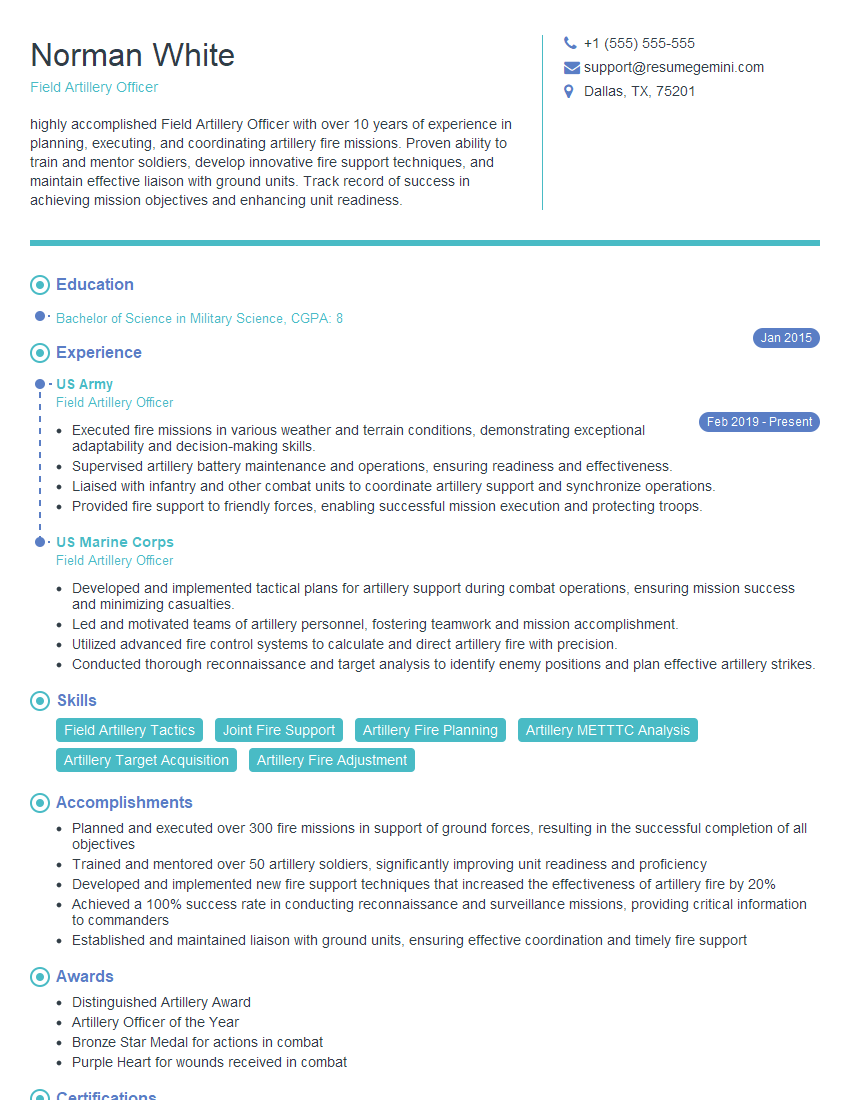
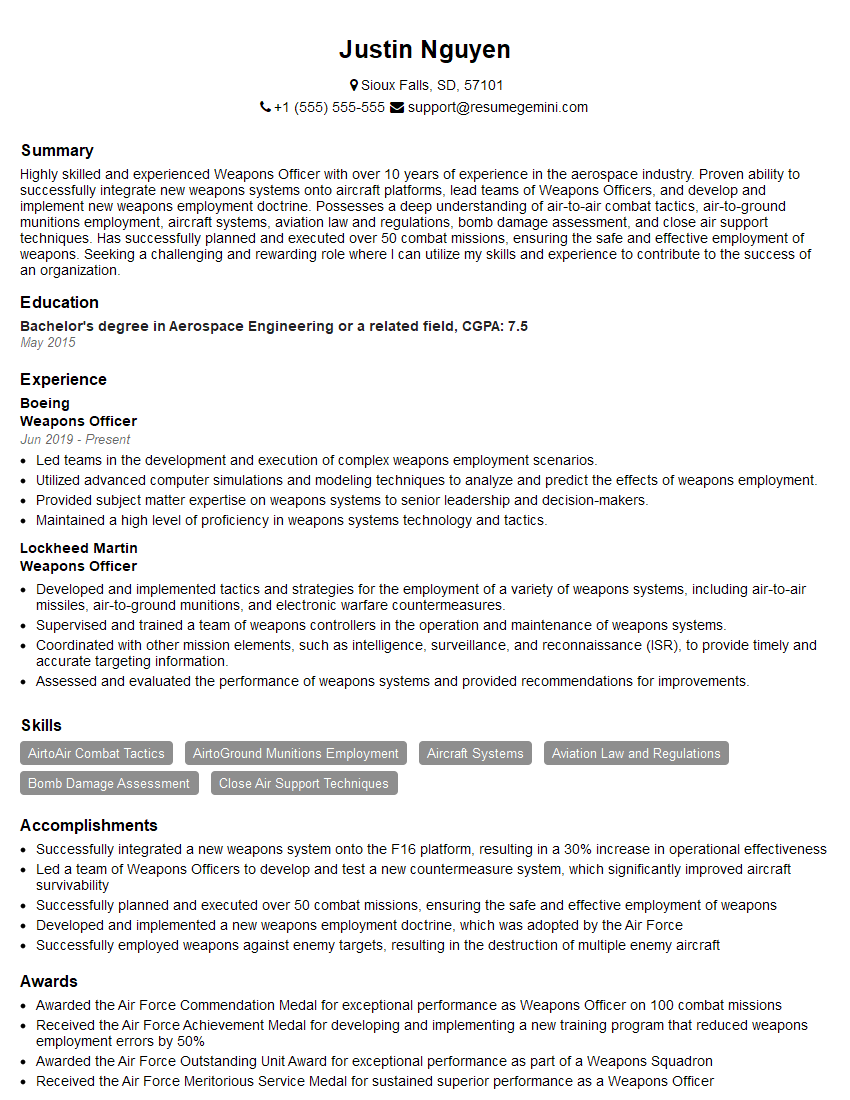
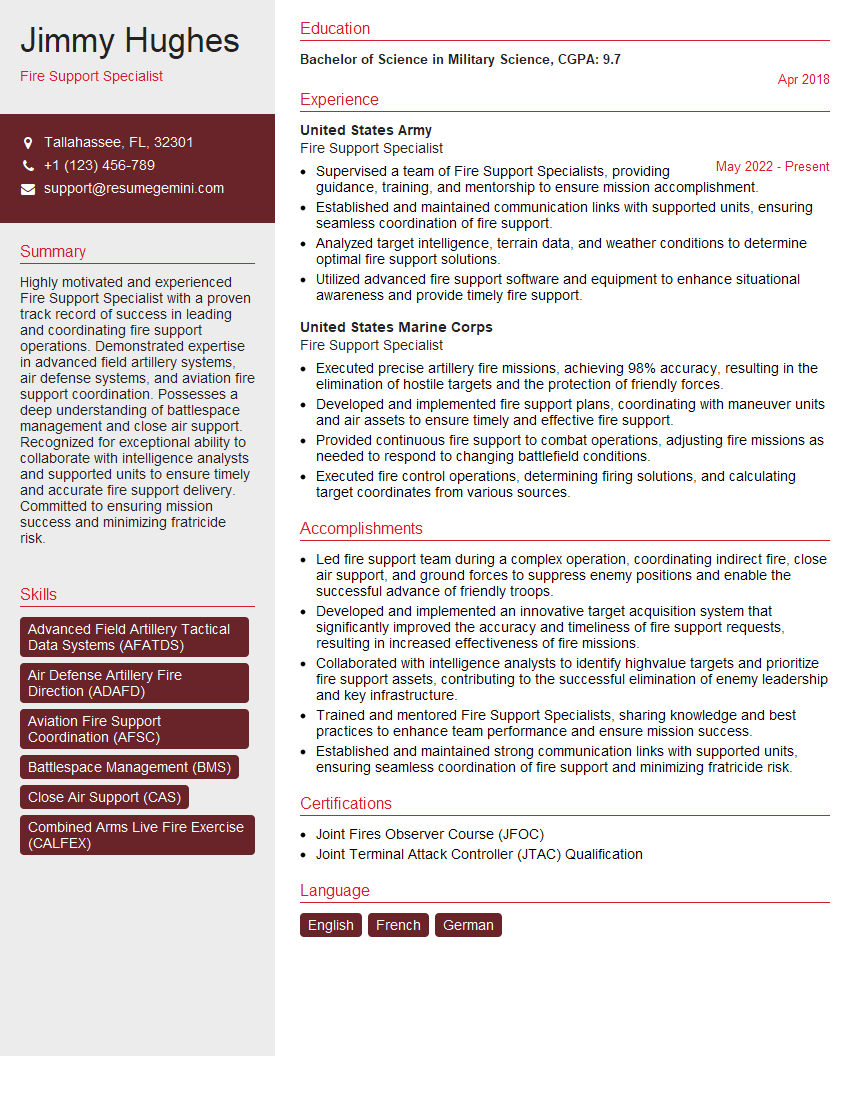
To help you craft a compelling and ATS-optimized resume, we recommend using ResumeGemini. ResumeGemini provides a user-friendly platform and helpful tools to build a professional resume that highlights your qualifications and achievements. Examples of resumes tailored specifically to the Fire Support Officer (FSO) Qualification are available to guide you.
Explore more articles
Users Rating of Our Blogs
Share Your Experience
We value your feedback! Please rate our content and share your thoughts (optional).
What Readers Say About Our Blog
Very informative content, great job.
good