Preparation is the key to success in any interview. In this post, we’ll explore crucial Fireworks Troubleshooting and Diagnostics interview questions and equip you with strategies to craft impactful answers. Whether you’re a beginner or a pro, these tips will elevate your preparation.
Questions Asked in Fireworks Troubleshooting and Diagnostics Interview
Q 1. Explain the common causes of fireworks malfunction.
Fireworks malfunctions stem from a variety of sources, often linked to electrical failures, mechanical issues, or environmental factors. Think of a firework like a complex machine; if any part fails, the whole show can be affected.
- Electrical Issues: Faulty wiring, corrupted firing systems, or low battery power can prevent the igniter from functioning correctly, leading to a misfire or premature detonation. For example, a damaged wire could create a break in the circuit, preventing the electrical signal from reaching the fuse.
- Mechanical Issues: This includes problems with the physical components, such as a broken lift charge in a shell, a clogged propellant grain, or a malfunctioning fuse. Imagine a car engine – if a vital part is broken, the engine won’t run. Similarly, a cracked shell can prevent proper combustion.
- Environmental Factors: Excessive moisture can damage the pyrotechnic composition, causing damp squibs or inconsistent burning. Extreme temperatures can also negatively impact the firework’s performance, causing delays or complete failures.
- Manufacturing Defects: Faulty construction or incorrect loading of pyrotechnic materials during manufacture can cause unpredictable behavior and malfunctions. This is why it’s crucial to source fireworks from reputable suppliers who adhere to strict safety standards.
Q 2. Describe your experience troubleshooting electrical issues in fireworks systems.
Troubleshooting electrical issues in fireworks systems requires a methodical approach and a deep understanding of electrical circuits. My experience includes extensive work with both simple and complex firing systems, ranging from hand-held devices to computer-controlled displays. I’ve encountered numerous problems, including:
- Short circuits: I’ve used multimeters to identify and isolate short circuits in wiring, often caused by damaged insulation or improper connections. This involves carefully checking each wire and connection for continuity and resistance.
- Open circuits: Open circuits, where the circuit is broken, usually result in a complete failure. I’ve traced these by systematically testing each component of the firing system, sometimes identifying a blown fuse or a loose connection.
- Low voltage: Insufficient power often leads to weak or delayed ignitions. My troubleshooting steps include checking the battery voltage and ensuring appropriate wiring gauge for the system’s power requirements.
I always prioritize safety and adhere to strict procedures during electrical diagnostics, ensuring the system is fully de-energized before any work begins. Documenting each step of my troubleshooting is vital for future reference and analysis.
Q 3. How do you identify and address potential safety hazards during a fireworks malfunction?
Identifying and addressing safety hazards during a fireworks malfunction is paramount. My approach is based on a risk assessment process, prioritizing the safety of personnel and the surrounding environment.
- Immediate Evacuation: If a malfunction presents an immediate danger – for instance, a shell exhibiting erratic behavior – immediate evacuation of the area is essential. A clear and established evacuation plan is crucial in such situations.
- Controlled Approach: If the malfunction is not immediately hazardous, a careful, controlled approach is taken, using appropriate personal protective equipment (PPE), such as safety glasses and hearing protection. Never approach a malfunctioning firework until it is considered safe.
- Isolation and Containment: If possible, isolate the affected firework from other potentially hazardous materials. This might involve creating a safe perimeter or using fire-resistant barriers.
- Professional Assistance: For complex or high-risk malfunctions, professional pyrotechnicians with specialized training and equipment are consulted. They possess the expertise and tools to safely disarm or dispose of dangerous devices.
A thorough post-incident analysis is conducted to determine the root cause of the malfunction and prevent similar incidents from occurring in the future.
Q 4. What are the different types of fireworks and their specific troubleshooting needs?
Fireworks are diverse, with troubleshooting needs varying significantly depending on their type and complexity.
- Consumer Fireworks: These include sparklers, fountains, and small aerial shells. Troubleshooting often involves checking for obvious defects such as a damp fuse or a poorly constructed casing. Replacing the faulty item is often the best solution.
- Display Fireworks: These range from large aerial shells and cakes to complex, computer-controlled displays. Troubleshooting requires a more in-depth understanding of pyrotechnic principles, electronics, and firing systems. This might involve electrical diagnostics, mechanical inspections, and the identification of faulty fuses or other components.
- Specialty Fireworks: This category includes items such as ground spinners, roman candles, and firecrackers, each with unique troubleshooting needs based on their design and mechanism of operation.
The complexity of the firework dictates the level of expertise needed for troubleshooting. For simple consumer fireworks, basic checks might suffice. However, larger display fireworks often require specialized knowledge and equipment.
Q 5. Explain the process of diagnosing a misfire in a fireworks shell.
Diagnosing a misfire in a fireworks shell involves a careful and methodical approach, always prioritizing safety.
- Visual Inspection: Begin by carefully examining the shell for any obvious signs of damage, such as cracks or deformities in the casing. Look for any evidence of prior attempts at ignition (e.g., burn marks on the fuse).
- Fuse Check: Inspect the fuse for signs of damage or moisture. A damp fuse will not ignite reliably. Replace if damaged.
- Internal Inspection (if safe): If safe to do so, carefully examine the internal components. Look for any obstructions, degradation of the pyrotechnic composition, or other defects that might prevent ignition.
- Testing (with extreme caution): If all else fails, a careful test, under strictly controlled conditions, and only by a qualified pyrotechnician, may be conducted. This might involve attempting to ignite the shell in a controlled setting with proper safety measures.
- Disposal: If the shell is determined to be unsafe, it should be disposed of according to local regulations. This often involves contacting the appropriate authorities for safe disposal.
Remember: Never attempt to repair a misfired firework shell. Always prioritize safety. If unsure, consult a professional.
Q 6. How do you handle a malfunctioning electronic firing system?
A malfunctioning electronic firing system requires a systematic approach to troubleshooting, focusing on safety first.
- Isolate the System: Immediately disconnect the firing system’s power source to prevent further issues. This is a crucial safety step.
- Visual Inspection: Carefully inspect the system for any obvious physical damage, such as loose connections, burnt components, or broken wires.
- Component Testing: Use a multimeter to test individual components (e.g., power supply, firing modules, igniters) for proper functionality. Look for short circuits, open circuits, or low voltage problems.
- Software Diagnostics (if applicable): For computer-controlled systems, utilize software diagnostics to identify any errors or malfunctions in the software program.
- Consult Documentation: Refer to the firing system’s documentation for troubleshooting guides, schematics, and other helpful information.
- Professional Assistance: If you are unable to resolve the problem, it’s advisable to seek the assistance of a qualified pyrotechnician.
Remember, electronic firing systems can be complex and potentially dangerous. If you’re not qualified to work with them, seek professional help.
Q 7. What safety precautions do you take when troubleshooting fireworks?
Safety is paramount when troubleshooting fireworks. My safety precautions include:
- Personal Protective Equipment (PPE): Always wear appropriate PPE, including safety glasses, hearing protection, and fire-resistant clothing.
- Controlled Environment: Conduct troubleshooting in a designated, safe area, away from flammable materials and people.
- Fire Suppression: Ensure access to a fire extinguisher and other fire suppression equipment.
- Emergency Plan: Have a clear emergency plan in place and communicate it to those involved in the troubleshooting process. This includes an evacuation plan.
- De-energize Systems: Always de-energize electrical systems before performing any repairs or checks.
- Wet-down Procedures: Consider dampening down the immediate area prior to any troubleshooting actions, to mitigate any potential fire hazards.
- Qualified Personnel: Only qualified and experienced pyrotechnicians should handle troubleshooting of complex fireworks or firing systems.
Treating every firework, regardless of its size or apparent simplicity, with utmost respect and caution is vital. The potential for serious injury or damage is high if safety is not a top priority.
Q 8. Describe your experience with different types of fireworks igniters.
Fireworks igniters are crucial for initiating the combustion sequence. My experience encompasses a wide range, from simple, electrically initiated fuses to complex electronic systems. Simple fuses, often black match or quickmatch, rely on a readily ignited material burning along its length to reach the firework’s main charge. These are relatively inexpensive but less precise. Electric igniters, on the other hand, offer much more control and timing precision. These utilize an electric current to heat a small bridgewire, igniting a pyrotechnic composition. We also see more sophisticated systems employing electronic firing systems with multiple channels allowing for complex, synchronized displays. These systems often incorporate safety features like redundancy and remote control capabilities, minimizing the risk of accidental ignition. I’ve worked extensively with both low-voltage and high-voltage electric igniters, understanding their individual strengths and limitations. For example, I’ve troubleshot instances where low-voltage systems failed due to poor connections, while high-voltage systems needed careful handling to prevent unintended firings.
- Simple Fuses: Black match, Quickmatch – Reliable but less precise timing.
- Electric Igniters: Bridgewire igniters, electronic firing systems – offer precise timing and complex sequencing capabilities.
Q 9. How do you determine the root cause of a fireworks display failure?
Determining the root cause of a fireworks display failure is a systematic process. It starts with a thorough examination of the scene, including any unexploded or malfunctioning fireworks. I always begin by assessing the firing system – was there a power failure? A faulty connection in the firing circuit? I systematically check each component, from the power source to the igniters, ensuring there are no loose wires or damaged connectors. Then, a detailed examination of the individual fireworks is crucial. Visual inspection of the shell’s exterior helps identify any signs of physical damage or defects. Sometimes, the failure might be traced back to the firework’s internal composition – improper mixing, insufficient charge, or poor quality materials. Documentation, including firing logs, diagrams, and witness statements, is crucial for effective analysis. A significant event requires post-mortem analysis to determine if there were any systemic issues or environmental factors that contributed to the malfunction.
For instance, in one case, a seemingly simple failure was traced to a faulty batch of fuses, where the composition had not burned efficiently. By meticulously comparing the affected fuses with those that performed correctly, I was able to identify and isolate the root cause.
Q 10. What are the common signs of a faulty fuse in a firework?
A faulty fuse exhibits several telltale signs. First, it might fail to ignite at all, indicating a problem with the fuse’s composition or its connection to the firework. A second common issue is a slow burn rate, leading to delayed or incomplete ignition. This could be due to moisture damage, age, or poor-quality material. Thirdly, incomplete burning or a noticeably uneven burn pattern can indicate a flaw in the manufacturing process or damage to the fuse. Finally, a fuse that fizzles or sputters instead of burning brightly is another sign of a problem. It’s essential to always inspect fuses before use; damaged fuses should be discarded and replaced. Visual inspection, using magnifying glass is advisable in some cases, and checking the fuse for physical imperfections like cracks, breaks, or uneven texture is a simple and vital precautionary step.
Q 11. How do you interpret fireworks malfunction codes?
Many modern fireworks systems incorporate malfunction codes. These codes, usually displayed on a firing system’s control panel or logged in its memory, provide valuable insight into the cause of a malfunction. The codes are usually manufacturer-specific and require referring to the system’s documentation. These codes might indicate a variety of issues, ranging from a simple open circuit or short circuit to more complex problems in the firing sequence or within the firing system itself. For example, a code might signify a failure in a particular channel, indicating a fault with the associated igniter or firework, or signal an overcurrent condition, suggesting a short circuit somewhere in the system. The precise meaning of each code needs to be understood within the context of the specific system, and the associated troubleshooting procedures may vary significantly.
Q 12. Describe your experience working with different types of firework compositions.
My experience with firework compositions is extensive, covering a broad range of chemical formulations. I am familiar with the properties and behaviours of various oxidizers, fuels, binders, and colorants used in creating different effects. Understanding these compositions is vital for troubleshooting because a malfunction can often be traced back to issues with the firework’s internal chemistry. For instance, improper mixing of ingredients can result in inconsistent burning or incomplete combustion, leading to a failure. I have worked with compositions creating a wide range of effects, from simple reports to complex, multi-stage effects, and I’m conversant with the safety precautions required for handling and working with these materials. This includes knowledge of their sensitivity to temperature, humidity, and friction, which is essential for safe handling and storage. I’m also knowledgeable about the potential hazards of specific chemicals and the procedures for preventing accidents and environmental pollution
Q 13. What are the regulatory requirements for troubleshooting fireworks malfunctions?
Troubleshooting fireworks malfunctions is subject to strict regulatory requirements. These vary depending on location but generally involve reporting the malfunction to the relevant authorities. This often includes documenting the event thoroughly, including details of the malfunction, the types of fireworks involved, any injuries or damage, and the steps taken to mitigate the situation. Depending on the nature and severity of the malfunction, an investigation might be initiated. Regulations dictate safe disposal procedures for malfunctioning fireworks, and adherence to these regulations is paramount. These procedures will prioritize safety and minimize the risks of further accidents. There might be specific safety protocols to follow, such as establishing exclusion zones around malfunctioning fireworks before any attempt to investigate or dispose of them, and the use of proper personal protective equipment is mandatory.
Q 14. How do you ensure the safety of spectators during a fireworks malfunction?
Spectator safety is always the top priority during a fireworks malfunction. The immediate response is to activate emergency procedures and initiate the evacuation plan. This often involves using public address systems or other means to communicate instructions clearly and calmly to spectators. If there is a risk of unexploded fireworks, establishing a safe perimeter and evacuation zone is paramount. Trained personnel should manage the evacuation and ensure the orderly movement of spectators to safe areas. Once the immediate danger has been mitigated, post-incident procedures will focus on assessing any injuries, damage, and gathering information to assist the investigation. Maintaining communication with the authorities and emergency services is also a critical part of ensuring spectator safety. Clear communication and a pre-planned emergency response are key to effectively managing situations.
Q 15. Explain your experience in maintaining and repairing fireworks equipment.
Maintaining and repairing fireworks equipment requires a meticulous approach, combining technical expertise with a deep understanding of safety regulations. My experience spans over [Number] years, encompassing work with various fireworks types, from small consumer items to large-scale professional displays. This includes regular inspections for damage, wear and tear, and potential malfunctions. I’m proficient in identifying and rectifying issues such as damaged fuses, faulty igniters, or compromised casings. For example, I once identified a hairline fracture in a mortar tube during a routine inspection, preventing a potential misfire and subsequent injury. Repair work involves careful handling and the use of appropriate tools and materials to ensure the equipment’s functionality and safety are restored to the highest standards. This often includes replacing faulty components with certified replacements and conducting thorough testing before re-commissioning the equipment.
I also have experience maintaining electronic firing systems, including troubleshooting problems with wiring, power supplies, and computer interfaces. My training includes proper handling of pyrotechnics and adhering to strict safety protocols throughout the entire process.
Career Expert Tips:
- Ace those interviews! Prepare effectively by reviewing the Top 50 Most Common Interview Questions on ResumeGemini.
- Navigate your job search with confidence! Explore a wide range of Career Tips on ResumeGemini. Learn about common challenges and recommendations to overcome them.
- Craft the perfect resume! Master the Art of Resume Writing with ResumeGemini’s guide. Showcase your unique qualifications and achievements effectively.
- Don’t miss out on holiday savings! Build your dream resume with ResumeGemini’s ATS optimized templates.
Q 16. What is your experience with pre-show inspections of fireworks?
Pre-show inspections are critical for ensuring a safe and successful fireworks display. My experience involves a systematic check of all equipment, including fireworks shells, mortars, igniters, firing systems, and the launch site itself. This involves verifying the correct fuse lengths, checking for any physical damage to the fireworks, and ensuring that the firing system is correctly wired and functioning optimally. I meticulously inspect each shell’s packaging for any signs of degradation or tampering. This is akin to a pilot’s pre-flight checklist, crucial to minimizing risks.
I also assess environmental conditions such as wind speed and direction, which directly impact the flight path and safety of the fireworks. Documentation of the inspection is paramount, ensuring a complete record of the pre-show checks and any identified issues. The inspection process follows a standardized checklist, ensuring consistency and thoroughness.
Q 17. How do you document and report fireworks malfunctions?
Documenting and reporting fireworks malfunctions is crucial for improving safety and identifying potential systemic issues. My process involves creating a detailed report, including the type of malfunction (e.g., hangfire, dud, premature ignition), the specific firework involved (including its serial number or batch information), the time of the malfunction, and a description of the circumstances surrounding the event. This information is meticulously recorded in a dedicated logbook.
Photographs and videos, where possible and safe to obtain, are incorporated into the report to provide visual evidence. The report also details any corrective actions taken, including any necessary repairs or the disposal of malfunctioning fireworks according to safety regulations. This report is then submitted to the relevant authorities and stakeholders, allowing for analysis and prevention of future incidents. We use a standardized reporting format to ensure clarity and consistency.
Q 18. Describe your process for testing and verifying the functionality of fireworks.
Testing and verifying fireworks functionality is a multi-stage process prioritizing safety. It starts with visual inspection for physical defects. We then test the igniters, ensuring they function correctly and consistently. This often involves using a specialized igniter tester which verifies electrical continuity and the necessary voltage for reliable ignition.
For larger displays, we conduct a test firing of a small sample of fireworks under controlled conditions, carefully monitoring their performance, trajectory, and effects. This verifies the functionality of the shells and the firing system. Every stage is documented, ensuring traceability and accountability. We use specialized software to simulate firing sequences before the actual event to minimize risks during the live show. This process helps ensure every firework functions as designed and minimizes the potential for misfires.
Q 19. What are the environmental factors that can affect fireworks performance?
Environmental factors significantly influence firework performance and safety. Wind speed and direction are critical; high winds can drastically alter the flight path, potentially causing fireworks to land in unintended areas. Humidity can affect the combustion process; high humidity can lead to inconsistent burning or misfires. Temperature extremes can also impact the performance, with excessively low temperatures potentially affecting the composition of the pyrotechnic mix.
Rainfall is a major concern; fireworks are highly sensitive to moisture, with dampness leading to unpredictable behavior. Precipitation can also damage the electrical firing systems. Therefore, careful monitoring of weather conditions is crucial during the pre-show inspection and throughout the event. Contingency plans, including display postponement, are essential when adverse weather conditions are anticipated.
Q 20. How do you handle different types of firework malfunctions (e.g., hangfires, duds)?
Handling firework malfunctions requires immediate and decisive action, prioritizing safety above all else. A hangfire (a delayed ignition) demands a strict waiting period, usually 15-20 minutes, to allow for potential ignition. The firework is then carefully removed and disposed of, following strict safety regulations. A dud (a complete failure to ignite) is removed and disposed of after a suitable waiting period.
Premature ignitions necessitate immediate evacuation of the surrounding area, if needed. In any malfunction scenario, we meticulously follow established safety protocols and emergency procedures. Clear communication between the firing crew and safety personnel is essential to coordinate response efforts effectively. We prioritize evacuating spectators from any danger zone, and a controlled detonation may be necessary for particularly stubborn situations (under strict supervision and in accordance with all applicable laws and regulations).
Q 21. What are the most common causes of fireworks related injuries?
The most common causes of fireworks-related injuries involve improper handling, inadequate supervision, and disregard for safety regulations. This often includes using fireworks that are not certified or using them in ways not intended by the manufacturer. Improper ignition techniques, such as using makeshift igniters, significantly increase the risk of injury. Alcohol and drug use exacerbates the risks, and neglecting to clear the launch area of flammable materials can easily lead to accidents.
Injuries range from minor burns to severe trauma, including blindness and amputations. Children are especially vulnerable. Strict adherence to safety guidelines, including never modifying consumer fireworks and always providing adequate supervision, is critical to minimize the risk of injury. Comprehensive training and awareness are essential for anyone handling or using fireworks.
Q 22. How do you prevent and mitigate the risk of fireworks-related accidents?
Preventing and mitigating fireworks-related accidents requires a multi-faceted approach focusing on safety regulations, proper handling, and thorough preparation. It’s like building a house – a strong foundation is crucial.
Pre-event planning: This includes securing the necessary permits, conducting a thorough site survey to identify hazards like power lines and dry vegetation, and establishing clear safety zones.
Proper training and supervision: Only trained and experienced individuals should handle fireworks. This ensures everyone understands the proper techniques for setup, ignition, and emergency procedures. Imagine a surgeon operating – precise skill and training are non-negotiable.
Using approved fireworks: Sticking to fireworks that meet safety standards and are appropriate for the environment is critical. Think of it like using the right tools for the job – using a hammer to screw in a screw is not efficient and may lead to damage.
Emergency preparedness: Having a readily accessible fire extinguisher, first-aid kit, and a communication plan in place is essential for swift response in case of an incident. This is your safety net – always be prepared for the unexpected.
Weather conditions: Windy or excessively dry conditions can significantly increase the risk of accidents. Postponing the show under such circumstances is a necessary precaution. Imagine attempting to build a sandcastle in a hurricane – it’s simply not possible.
Q 23. Describe your experience with using specialized tools for troubleshooting fireworks.
My experience with specialized tools for fireworks troubleshooting is extensive. I’m proficient in using multimeters to check the electrical continuity and voltage in firing systems, ensuring they’re functioning correctly. Imagine a car mechanic using a diagnostic tool – this is equally vital in ensuring firework safety.
I also utilize specialized cameras and high-speed photography to analyze firework malfunctions. This allows for a detailed examination of the failure point, aiding in identifying root causes and preventing future occurrences. It’s like having an X-ray for fireworks.
Furthermore, I’m experienced with various pyrotechnic analytical tools to examine the chemical composition of fireworks, assisting in determining why a particular firework didn’t perform as expected. This is crucial for understanding the chemical reactions and identifying potential issues with the composition.
Q 24. Explain your understanding of firework chemistry and its role in troubleshooting.
Understanding firework chemistry is fundamental to troubleshooting. Fireworks are essentially controlled explosions relying on precisely balanced chemical reactions to produce the desired visual effects. Each component plays a vital role – the oxidizer provides oxygen, the fuel burns, the binder holds everything together, and colorants produce the vibrant displays.
For example, if a firework fails to ignite, it could be due to a problem with the oxidizer’s efficacy or the fuel’s inability to sustain combustion. If the color is off, it might indicate an issue with the colorant concentration or purity. Troubleshooting involves analyzing these chemical interactions to pinpoint the root cause of the malfunction. Think of it like a recipe – each ingredient plays a crucial part, and any imbalance can ruin the result.
Q 25. How do you stay updated with the latest safety regulations and best practices for fireworks?
Staying current with safety regulations and best practices is paramount. I achieve this through active participation in industry conferences and workshops, attending training sessions organized by regulatory bodies like the Pyrotechnics Guild International, and continuously reviewing updated safety standards and guidelines published by relevant authorities. It’s an ongoing process of learning and adapting.
I also maintain subscriptions to relevant industry journals and online resources to ensure I’m abreast of the latest developments in fireworks technology and safety protocols. This proactive approach ensures my practices remain aligned with the most current and effective safety standards.
Q 26. Describe a situation where you had to troubleshoot a complex fireworks problem. What was your approach and outcome?
During a large-scale fireworks display, a complex issue arose with a series of aerial shells failing to reach their intended height. My approach involved a systematic investigation:
- Initial assessment: I examined the physical condition of the affected shells and their firing mechanisms.
- Data analysis: I reviewed launch data, including launch angles and firing times, to determine if there were any patterns or anomalies.
- Chemical analysis: Samples of the propellant from the malfunctioning shells were sent for analysis to check for any degradation or contamination.
- System check: The entire firing system was thoroughly checked for electrical faults or mechanical issues.
The investigation revealed a combination of factors: slightly damp propellant due to unexpected rain and a minor fault in the electrical firing system causing inconsistent ignition timings. We solved the problem by replacing the damp propellant and repairing the firing system. The show resumed without further incidents, highlighting the importance of rigorous investigation and a systematic approach to troubleshooting.
Q 27. What is your experience with different types of firework launching systems?
I have extensive experience with various firework launching systems, ranging from simple hand-held devices to sophisticated computer-controlled systems for large-scale displays. This includes experience with:
Mortar tubes: These are commonly used for launching aerial shells, and I’m adept at inspecting them for cracks or obstructions. Regular maintenance and careful inspection are key.
Electronic firing systems: I’m experienced in troubleshooting electrical faults within these systems and utilizing diagnostic tools for pinpointing issues.
Cakes and multi-shot devices: These pre-packaged displays require a different approach to troubleshooting, often involving examination of the internal mechanisms.
Remote firing systems: I understand the intricacies of these systems, which allow for safe and precise control from a distance.
My expertise encompasses the understanding and troubleshooting of different ignition systems, including electronic, electric matches, and fuse systems. A deep understanding of the mechanics of each system is essential for effective troubleshooting.
Q 28. How would you handle a situation where a firework malfunctions during a live show?
In a live show scenario with a firework malfunction, immediate and decisive action is paramount. Safety is the top priority. The key is to follow a structured emergency protocol.
Immediately cease the show: Halt the firing sequence and alert the audience via pre-established communication systems.
Assess the situation: Determine the nature and severity of the malfunction. Is it a hangfire (delay in ignition), a misfire, or a premature detonation?
Implement the emergency protocol: This includes activating the emergency response plan, which could involve evacuating the area or contacting emergency services.
Secure the area: Ensure the immediate area around the malfunctioning firework is clear and secure to prevent unauthorized access.
Investigate the cause: After securing the area and ensuring everyone’s safety, begin a thorough investigation to determine the cause of the malfunction.
Throughout this process, maintaining clear communication and adhering to safety regulations is crucial to ensuring a safe resolution and minimizing any further risks.
Key Topics to Learn for Fireworks Troubleshooting and Diagnostics Interview
- Safety Procedures and Regulations: Understanding and applying safety protocols during troubleshooting and diagnostics is paramount. This includes proper handling of potentially hazardous materials and equipment.
- Electrical Systems Diagnostics: Troubleshooting electrical faults in fireworks systems, including wiring, connectors, and power sources. Practical application involves using multimeters and other diagnostic tools to identify and rectify issues.
- Pyrotechnic Composition Understanding: A foundational knowledge of different pyrotechnic compositions, their properties, and potential failure modes is crucial for effective troubleshooting.
- Firing Systems Analysis: Diagnosing malfunctions in firing systems, including electronic firing systems, fuses, and igniters. This includes understanding timing mechanisms and sequencing.
- Troubleshooting Common Issues: Identifying and resolving issues such as misfires, premature ignitions, and malfunctions in various components of fireworks systems. This involves applying practical problem-solving skills and utilizing diagnostic tools.
- Preventative Maintenance Procedures: Understanding and performing preventative maintenance checks on fireworks equipment to minimize the risk of malfunctions and ensure safe operation. This includes inspection procedures and record-keeping.
- Data Analysis and Reporting: Documenting troubleshooting processes, findings, and preventative maintenance procedures. This involves accurately recording data and preparing comprehensive reports.
- Remote Diagnostics and Monitoring: Understanding how to remotely monitor and diagnose fireworks systems, utilizing telemetry and remote sensing technologies (where applicable).
Next Steps
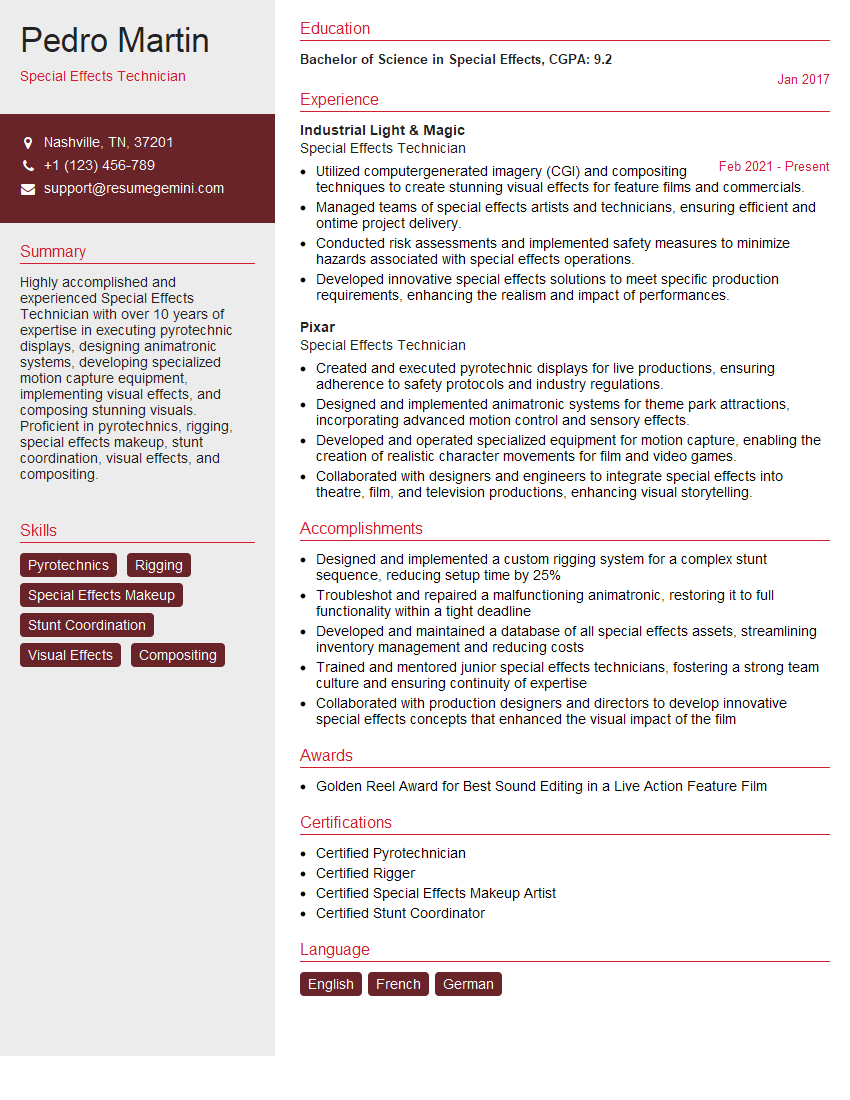
Mastering Fireworks Troubleshooting and Diagnostics is vital for career advancement in the pyrotechnics industry, opening doors to specialized roles and increased responsibility. A strong resume is crucial for showcasing your skills and expertise to potential employers. To maximize your job prospects, invest time in creating an ATS-friendly resume that highlights your abilities and experience effectively. ResumeGemini is a trusted resource that can help you build a professional and impactful resume. Examples of resumes tailored to Fireworks Troubleshooting and Diagnostics are provided to guide you through the process. Take the next step towards your career success today!

Explore more articles
Users Rating of Our Blogs
Share Your Experience
We value your feedback! Please rate our content and share your thoughts (optional).
What Readers Say About Our Blog
Very informative content, great job.
good