The right preparation can turn an interview into an opportunity to showcase your expertise. This guide to Fishery Policy and Regulations interview questions is your ultimate resource, providing key insights and tips to help you ace your responses and stand out as a top candidate.
Questions Asked in Fishery Policy and Regulations Interview
Q 1. Explain the difference between Maximum Sustainable Yield (MSY) and Optimum Sustainable Yield (OSY).
Both Maximum Sustainable Yield (MSY) and Optimum Sustainable Yield (OSY) aim to determine the level of fish catch that can be sustained over time without depleting the stock. However, they differ in their approach and considerations. MSY represents the largest average catch that can be taken from a stock over an indefinite period, assuming constant environmental conditions. It’s a purely biological concept focusing solely on maximizing yield. Think of it like harvesting the most fruit from an orchard without considering the health of the trees.
OSY, on the other hand, takes a more holistic approach. It considers not just the biological capacity of the fish stock but also economic and social factors. It aims to find the catch level that provides the greatest overall benefit, balancing factors such as economic returns, employment, and the health of the ecosystem. It’s like harvesting a good amount of fruit but also ensuring the orchard remains healthy and productive for future harvests. OSY often results in a lower catch than MSY to maintain stock health and ecosystem integrity.
Q 2. Describe the role of the precautionary approach in fisheries management.
The precautionary approach in fisheries management acknowledges that our understanding of fish stocks and their ecosystems is often incomplete and that uncertainty is inherent. This approach prioritizes the prevention of irreversible damage to fish stocks and their habitats, even in the face of scientific uncertainty. It emphasizes managing fisheries conservatively to avoid exceeding sustainable limits. Imagine you’re hiking a trail you’ve never been on before. The precautionary approach would suggest sticking to clearly marked paths, avoiding shortcuts or unexplored areas until you have a much better understanding of the terrain to avoid potential harm.
In practice, this means using conservative estimates of fish stock abundance, setting catch limits well below the estimated MSY, and implementing robust monitoring and management strategies to detect and respond to any signs of overfishing or ecosystem degradation. The approach promotes data collection and scientific research to reduce uncertainties over time.
Q 3. What are the key components of a successful fisheries management plan?
A successful fisheries management plan requires several key components:
- Stock assessment: Regular monitoring and assessment of fish stocks to estimate their abundance, size structure, and reproductive capacity.
- Catch limits: Setting total allowable catches (TACs) based on scientific advice and considering the precautionary approach.
- Effort control: Regulations that control fishing effort (e.g., limiting fishing days, gear restrictions) to prevent overfishing.
- Spatial management: Creating marine protected areas (MPAs) or implementing other spatial measures to protect sensitive habitats or spawning grounds.
- Enforcement: Effective monitoring and enforcement of regulations to ensure compliance.
- Stakeholder involvement: Engaging fishers, scientists, and other stakeholders in the development and implementation of the plan. This ensures buy-in and promotes effective management.
- Adaptive management: A framework for continuously monitoring, evaluating, and adapting the management plan in response to new information and changing conditions.
A successful plan needs to be adaptive and respond to change, as we learn more about the complexities of the ecosystem and fisheries dynamics.
Q 4. How does the concept of ecosystem-based management apply to fisheries?
Ecosystem-based management (EBM) in fisheries goes beyond focusing solely on the target fish species. It acknowledges the interconnectedness of species and habitats within the ecosystem. Instead of just managing a single stock, EBM aims to manage the entire ecosystem to ensure its health and productivity, recognizing that changes in one part of the ecosystem can have cascading effects on others.
For example, an EBM approach might consider the impact of fishing on other species (e.g., bycatch), the role of predators and prey, and the health of habitats like seagrass beds or coral reefs. It would involve setting aside marine reserves to protect spawning areas or nursery grounds for multiple species, implementing measures to protect habitat quality, and reducing the impact of pollution on the ecosystem. EBM is critical for long-term sustainability and resilience in the face of climate change and other environmental stressors.
Q 5. Discuss the challenges of enforcing fisheries regulations in international waters.
Enforcing fisheries regulations in international waters presents significant challenges. The lack of a single, universally enforced authority creates loopholes for illegal, unreported, and unregulated (IUU) fishing. Nations often have overlapping or conflicting jurisdictions, making it difficult to determine responsibility for enforcement. The vastness of international waters makes monitoring and surveillance incredibly difficult, and the cost of patrolling such areas is substantial.
International cooperation is crucial to address this issue. Regional fisheries management organizations (RFMOs) play a key role in establishing regulations and coordinating enforcement efforts, but their effectiveness depends on the political will and resources of member states. Furthermore, innovative technologies like satellite monitoring and vessel tracking systems are becoming increasingly important to enhance surveillance and deter IUU fishing.
Q 6. Explain the importance of bycatch reduction strategies in fisheries.
Bycatch – the unintentional capture of non-target species during fishing operations – is a significant problem in fisheries. It leads to the mortality of many marine animals, including seabirds, marine mammals, sea turtles, and other fish species, causing biodiversity loss and threatening the sustainability of marine ecosystems. Bycatch reduction strategies are therefore crucial for ensuring the responsible and sustainable management of fisheries.
Strategies include modifying fishing gear (e.g., using turtle excluder devices (TEDs) in shrimp trawls), implementing spatial management measures (e.g., closing areas to fishing), using alternative fishing methods that reduce bycatch, and implementing stricter regulations regarding bycatch limits and reporting requirements. Improving fishing practices and technologies is crucial for minimizing the impact of fishing on non-target species.
Q 7. What are some common methods used for assessing fish stocks?
Assessing fish stocks involves a range of methods to estimate their abundance, distribution, and other key characteristics. Some common methods include:
- Acoustic surveys: Using sonar to detect and estimate the abundance of fish schools.
- Bottom trawls: Dragging a net along the seabed to collect a sample of fish. While effective, this method can be disruptive to the seafloor ecosystem.
- Research vessel surveys: Direct observation and sampling of fish stocks from research vessels. This method is resource-intensive but provides valuable data.
- Catch per unit effort (CPUE): Comparing the catch rate of fishers to estimate changes in fish abundance. It’s often used as a relative index, not an absolute measure.
- Mark-recapture studies: Marking a sample of fish and then using the proportion of marked fish in subsequent catches to estimate the total population size. This method provides a robust estimate, but it is labor-intensive.
- Stock assessment models: Complex statistical models that use multiple data sources (e.g., catch data, survey data, biological information) to estimate fish stock parameters. These models provide crucial information for fisheries management.
The choice of method depends on factors such as the species being assessed, the available resources, and the specific management objectives. Often, a combination of methods is used to get a more comprehensive understanding of the fish stock.
Q 8. Describe the role of catch limits and quotas in fisheries management.
Catch limits and quotas are fundamental tools in fisheries management, designed to prevent overfishing and ensure the long-term sustainability of fish stocks. A catch limit is the maximum amount of a particular fish species that can be harvested in a given time period (e.g., a year). A quota is the allocation of that catch limit among different fishing entities, such as individual fishing vessels or companies. Think of it like dividing a pie fairly amongst different people. Both aim to keep the total harvest below the sustainable yield – the maximum amount that can be caught without depleting the population.
For example, if scientists determine that the sustainable yield of cod in a particular area is 10,000 tons per year, a catch limit of 10,000 tons would be set. This might then be divided into quotas of 2,000 tons each for five different fishing fleets. Effective implementation requires robust monitoring, control, and surveillance to ensure compliance.
Q 9. How do you determine the appropriate level of fishing effort?
Determining the appropriate level of fishing effort is a complex process that relies heavily on scientific data and assessment. It’s essentially about finding the balance between maximizing economic returns from fishing and preserving the health of the fish stock. We don’t want to fish so much that we deplete the resource, nor do we want to restrict fishing to such an extent that it impacts the livelihoods of those dependent on the industry.
Several factors are considered:
- Stock assessments: Scientists estimate the size and health of fish populations using various methods, including surveys, catch data, and acoustic surveys. This helps determine the maximum sustainable yield.
- Fishing mortality rates: The rate at which fish are being caught is compared to the natural mortality rate (fish dying of old age, disease, etc.). If fishing mortality is too high, the population will decline.
- Environmental factors: Changes in water temperature, salinity, and prey availability can affect fish populations and need to be accounted for.
- Socioeconomic considerations: The impact on fishing communities and the overall economy needs to be balanced against conservation goals. This is often a politically complex area.
These factors are usually integrated into stock assessment models which provide scientific advice to policymakers. This advice informs the setting of catch limits, quotas and gear restrictions (e.g., mesh size for nets) to manage fishing effort effectively.
Q 10. What are the main objectives of the Magnuson-Stevens Fishery Conservation and Management Act (MSA)?
The Magnuson-Stevens Fishery Conservation and Management Act (MSA) is the primary law governing marine fisheries management in the United States. Its main objectives are to:
- Prevent overfishing: This is paramount. The act aims to rebuild overfished stocks and ensure healthy fish populations for the future.
- Rebuild overfished stocks: The MSA mandates specific plans for rebuilding stocks that have been depleted below sustainable levels, setting timeframes for achieving this goal.
- Conserve and manage essential fish habitat (EFH): Recognizing the importance of the environment for fish, the MSA requires protection and management of habitats crucial for fish reproduction, growth, and survival.
- Ensure sustainable use of resources: This involves finding the right balance between economic benefits from fishing and the long-term health of fish populations. It needs to meet the needs of both current and future generations.
- Promote fishing industry efficiency and competitiveness: The act aims to support sustainable fishing practices and the competitiveness of the US fishing industry in global markets.
Essentially, the MSA seeks a holistic approach, balancing ecological sustainability, economic viability, and social equity in managing US fisheries.
Q 11. Explain the importance of fisheries data collection and analysis.
Fisheries data collection and analysis are crucial for effective fisheries management. Accurate and reliable data provide the foundation for informed decision-making. Without it, we’re essentially flying blind.
Data are collected from various sources:
- Commercial catch data: Information on the amount and species of fish caught by commercial fishing vessels.
- Recreational catch data: Data on fish caught by recreational anglers, often obtained through surveys or creel surveys (monitoring fishing activity at landing sites).
- Scientific surveys: Scientists conduct research surveys to estimate fish population size, distribution, and health.
- Acoustic surveys: Using sound waves to estimate fish abundance.
- Biological sampling: Collecting samples of fish to determine age, growth, and maturity.
This data is analyzed to assess the status of fish stocks, estimate sustainable yield, and evaluate the effectiveness of management measures. Advanced statistical modelling and data visualization techniques are used to extract meaningful insights. The quality and completeness of data are crucial for accurate assessments; gaps or inaccuracies can lead to poor management decisions, potentially harming the resource or the fishing industry itself.
Q 12. Discuss the impact of climate change on fisheries and their management.
Climate change poses significant challenges to fisheries and their management. Changes in ocean temperature, acidity, currents, and sea level are impacting fish distribution, abundance, and species composition. Warmer waters can cause species to migrate, impacting traditional fishing grounds and potentially leading to conflicts between different fisheries.
Some key impacts include:
- Range shifts: Fish species are shifting their distribution in response to changing ocean temperatures, affecting fishing patterns and potentially leading to new conflicts in areas not previously subject to heavy fishing.
- Changes in species composition: Some species may thrive in warmer waters, while others decline, altering the ecosystem’s balance and impacting fishing opportunities. This may shift the importance of particular species for local economies.
- Increased frequency of harmful algal blooms (HABs): Warmer waters can promote the growth of harmful algae, which can poison fish and contaminate seafood, threatening human health and fisheries.
- Ocean acidification: Increased carbon dioxide in the atmosphere is making the ocean more acidic, which can harm shellfish and other marine life that build calcium carbonate shells or skeletons.
Fisheries management needs to adapt to these changes through more flexible and adaptive management approaches. This includes incorporating climate projections into stock assessments, developing strategies to protect vulnerable habitats, and fostering collaboration among scientists, managers, and stakeholders to address the complex challenges posed by climate change.
Q 13. Describe the role of aquaculture in meeting global food security.
Aquaculture, or fish farming, plays an increasingly important role in meeting global food security. It is a significant source of protein, particularly in many developing countries. It supplements wild-caught fish, helping to reduce pressure on overexploited wild stocks.
Aquaculture contributes to food security in several ways:
- Increased food production: Aquaculture produces a significant and growing portion of the world’s seafood supply, addressing the increasing global demand for protein.
- Improved food access: Aquaculture can be a source of affordable protein, particularly in regions where access to wild-caught fish is limited.
- Job creation: The aquaculture industry provides employment opportunities, particularly in rural areas, contributing to economic development.
- Reduced pressure on wild stocks: By providing alternative sources of protein, aquaculture can help to reduce overfishing of wild stocks and contribute to their recovery.
However, it’s crucial to remember that sustainable aquaculture practices are essential to avoid negative environmental impacts. Uncontrolled expansion can lead to pollution, habitat destruction, and disease outbreaks.
Q 14. What are the environmental impacts of aquaculture, and how can they be mitigated?
While aquaculture offers significant benefits, it’s not without environmental impacts. Unsustainable practices can negatively affect water quality, biodiversity, and surrounding ecosystems. The key environmental impacts include:
- Water pollution: Uneaten feed, fish waste, and medications can pollute surrounding waters, harming aquatic life and potentially contaminating drinking water sources.
- Habitat destruction: Construction of aquaculture facilities can lead to mangrove deforestation and destruction of other vital coastal habitats.
- Disease outbreaks: High densities of fish in aquaculture farms can increase the risk of disease outbreaks, which can spread to wild fish populations.
- Escape of farmed fish: Farmed fish escaping into the wild can compete with native species, hybridize with them, and introduce diseases.
- Use of antibiotics and chemicals: Excessive use of chemicals and antibiotics in aquaculture can contaminate the environment and contribute to antibiotic resistance.
These impacts can be mitigated through sustainable aquaculture practices, including:
- Integrated multi-trophic aquaculture (IMTA): Combining different species in a single farm, using the waste products of one species as food for another, can reduce environmental impacts.
- Recirculating aquaculture systems (RAS): RAS utilize closed-loop systems that minimize water consumption and waste discharge.
- Improved feed management: Using efficient and environmentally friendly feed reduces waste and minimizes pollution.
- Careful site selection: Choosing suitable locations for farms can minimize habitat destruction and environmental damage.
- Stricter regulations and monitoring: Stronger regulations and better monitoring can help ensure compliance with environmental standards.
Sustainable aquaculture requires a holistic approach, balancing economic needs with environmental protection to ensure its long-term viability.
Q 15. What are the key challenges facing sustainable fisheries management?
Sustainable fisheries management faces numerous interconnected challenges. At the core is the conflict between the biological capacity of fish stocks to replenish themselves and the economic pressures to harvest them.
- Overfishing: This is arguably the biggest challenge, driven by high demand and often inefficient fishing practices. It depletes stocks, leading to ecosystem imbalances and economic losses in the long run. Imagine a farmer constantly harvesting crops without allowing them to regrow – eventually, the farm fails.
- Illegal, unreported, and unregulated (IUU) fishing: This undermines conservation efforts and creates unfair competition for legal fishers. It’s like a thief stealing from a legitimate business, crippling its growth.
- Habitat destruction: Coastal development, pollution, and climate change damage vital fish habitats, reducing breeding grounds and nurseries. It’s akin to destroying a farmer’s field, rendering it unproductive.
- Climate change: Shifting ocean temperatures, acidification, and changes in currents disrupt fish distribution and abundance, requiring adaptive management strategies. This is like a sudden, unpredictable drought severely impacting crop yields.
- Bycatch: Non-target species are often caught and discarded, leading to significant waste and harming marine ecosystems. This is like a farmer accidentally killing beneficial insects while trying to control pests.
- Data limitations: Accurate stock assessments are crucial, but data collection can be expensive and difficult, hindering effective management. It’s like a farmer making planting decisions without knowing the soil conditions.
Addressing these challenges requires a holistic approach involving robust scientific assessments, effective regulations, international cooperation, and sustainable fishing practices.
Career Expert Tips:
- Ace those interviews! Prepare effectively by reviewing the Top 50 Most Common Interview Questions on ResumeGemini.
- Navigate your job search with confidence! Explore a wide range of Career Tips on ResumeGemini. Learn about common challenges and recommendations to overcome them.
- Craft the perfect resume! Master the Art of Resume Writing with ResumeGemini’s guide. Showcase your unique qualifications and achievements effectively.
- Don’t miss out on holiday savings! Build your dream resume with ResumeGemini’s ATS optimized templates.
Q 16. Explain the concept of marine protected areas (MPAs) and their role in fisheries conservation.
Marine Protected Areas (MPAs) are designated ocean regions where human activities are restricted to protect the natural and cultural resources within them. Think of them as national parks, but for the ocean. They serve a vital role in fisheries conservation by:
- Protecting biodiversity: MPAs safeguard habitats and species, including commercially important fish stocks, enhancing their resilience and promoting population growth. A fully protected MPA allows fish stocks to reach their full potential, acting as a natural ‘seed bank’.
- Improving fisheries productivity: Spillover effects occur when fish from MPAs migrate into surrounding fishing grounds, boosting catches in adjacent areas. This is like a well-managed forest providing water and nutrients to surrounding lands.
- Building resilience to climate change: MPAs enhance the adaptability of marine ecosystems to climate change impacts, providing refuge for vulnerable species. They offer a safe haven during environmental stress.
- Supporting ecosystem services: MPAs maintain crucial ecosystem functions, like carbon sequestration and water purification, benefiting human society. These are the ‘supporting services’ that underpin overall ecosystem health.
Effective MPA design and management require careful consideration of factors like size, location, and enforcement to maximize their conservation benefits.
Q 17. What is the role of stakeholder engagement in fisheries management?
Stakeholder engagement is paramount in successful fisheries management. It involves actively involving all relevant groups – fishers, processors, scientists, managers, consumers, and indigenous communities – in decision-making processes. It’s not just about informing people; it’s about collaborating and ensuring everyone has a voice.
- Improved policy acceptance: When stakeholders participate in creating policies, they’re more likely to understand and accept them, leading to better compliance.
- Access to diverse knowledge: Fishers possess invaluable local ecological knowledge that complements scientific data, leading to more effective management strategies. They are the ‘eyes on the water’.
- Increased legitimacy and trust: Transparent and inclusive processes build trust between management authorities and stakeholders, strengthening the social license to operate.
- Enhanced collaboration and innovation: Collaboration fosters creativity and innovation in finding solutions to complex fishery challenges.
Effective engagement requires open communication, transparent processes, and opportunities for meaningful participation at all stages of the management cycle. Ignoring stakeholders inevitably leads to conflict and ultimately, ineffective policies.
Q 18. Describe the role of fisheries science in informing policy decisions.
Fisheries science plays a critical role in informing policy decisions by providing the necessary data and analyses to understand fish stock status, ecosystem dynamics, and the impacts of fishing activities. This scientific evidence forms the basis for evidence-based decision-making.
- Stock assessments: Scientists use various methods to estimate fish populations, their productivity, and their vulnerability to fishing. This informs catch limits and fishing effort regulations.
- Ecosystem modeling: Complex models are used to predict the impacts of various fishing scenarios on the entire marine ecosystem, not just the target species.
- Impact assessments: Scientists assess the environmental and socio-economic effects of fishing practices and management measures, providing insights into trade-offs and potential consequences.
- Monitoring and evaluation: Ongoing monitoring of fish stocks, fishing effort, and ecosystem health is critical to evaluate the effectiveness of management measures and adapt them as needed.
Effective communication between scientists and policymakers is crucial to ensure that scientific findings are translated into meaningful and actionable policies.
Q 19. How can you effectively communicate complex scientific information to non-scientists?
Communicating complex scientific information to non-scientists requires careful planning and the use of clear, concise language. Avoid jargon and technical terms whenever possible, using analogies and visual aids to illustrate concepts.
- Use plain language: Replace technical jargon with everyday words. For example, instead of ‘trophic level’, explain the concept of ‘who eats whom’ in the food chain.
- Visual aids: Graphs, charts, maps, and images can make complex data easier to understand.
- Storytelling: Engage the audience by relating the information to their lives and experiences. For instance, relate declining fish populations to the potential impact on food security or local economies.
- Interactive communication: Facilitate questions and discussions to ensure understanding and address concerns. Workshops and interactive presentations can be very effective.
- Tailor messages: Adapt the message to the specific audience’s background and interests. A message for fishers will differ significantly from one for policymakers.
Successful communication bridges the gap between science and society, ensuring that scientific findings inform public policy and public understanding of critical environmental issues.
Q 20. What are the economic impacts of fisheries management policies?
Fisheries management policies have significant economic impacts, both positive and negative. They affect the livelihoods of fishers, processors, and related industries, and influence the availability and price of seafood.
- Economic benefits: Sustainable fisheries management can lead to long-term economic stability by preventing stock collapses and ensuring a continued supply of seafood. Regulations that reduce overfishing can increase the long-term value of fisheries.
- Economic costs: Implementing management measures, such as catch limits and gear restrictions, can impose short-term costs on fishers. These might include reduced catches, investment in new technologies, or increased monitoring costs.
- Impacts on seafood prices: Management measures can affect the supply and price of seafood. Sustainable practices might initially lead to higher prices but could increase long-term stability.
- Job creation and economic diversification: Investments in sustainable fisheries, like aquaculture and ecotourism, can create new jobs and diversify local economies.
Careful economic impact assessments are essential when developing and implementing fisheries policies to ensure that the benefits outweigh the costs and that policies are equitable and socially acceptable.
Q 21. Discuss the social impacts of fisheries management decisions on fishing communities.
Fisheries management decisions profoundly impact fishing communities, often leading to both positive and negative social consequences. Decisions must consider the social fabric and well-being of communities reliant on fishing.
- Livelihood security: Regulations that restrict fishing effort or access can threaten the livelihoods of fishers and their families, potentially leading to poverty and displacement. This impact is especially severe in communities where fishing is the primary source of income.
- Community cohesion: Effective management that ensures long-term resource availability can strengthen community cohesion and social capital. Conversely, conflicts over resource access can fracture communities.
- Cultural heritage: Fisheries management should recognize the cultural significance of fishing in many communities and avoid undermining traditional practices or knowledge systems.
- Equity and fairness: Management decisions must strive for fairness and equity, ensuring that the benefits and costs of management are distributed equitably across different fishing groups.
- Community adaptation: Management should support communities in adapting to changes, perhaps through diversification of livelihoods or provision of skills training and alternative income opportunities.
Addressing the social impacts requires participatory approaches that ensure the voices of fishing communities are heard and considered in the decision-making process. Successful fisheries management considers the ecological, economic, and social dimensions in an integrated manner.
Q 22. What is the role of international cooperation in addressing global fisheries challenges?
International cooperation is absolutely crucial for addressing global fisheries challenges. Many fish stocks are migratory, crossing national boundaries, making single-nation management ineffective. Overfishing in one area impacts stocks in others, highlighting the need for collaborative efforts.
Consider the example of highly migratory species like tuna. These fish traverse vast ocean areas, requiring coordinated management across multiple countries. International organizations like the International Commission for the Conservation of Atlantic Tunas (ICCAT) play a vital role in setting catch limits, monitoring fishing activities, and promoting sustainable fishing practices. Without such cooperation, these valuable resources would be severely depleted.
Effective international cooperation requires several elements: shared scientific data, harmonized regulations, joint enforcement mechanisms, and a commitment from all participating nations. It’s like a shared garden – if one nation over-harvests, everyone suffers. Success depends on mutual respect, trust, and a shared vision of long-term sustainability.
Q 23. Describe your experience with fisheries data analysis and interpretation.
My experience in fisheries data analysis spans over 10 years, encompassing various techniques. I’ve worked extensively with catch data, stock assessments, and environmental data to understand fish population dynamics and the impact of fishing pressure.
For example, I recently used statistical modeling techniques to analyze catch per unit effort (CPUE) data from a specific region. This involved analyzing trends, seasonal variations, and the impact of different fishing gears. The results provided critical insights into the health of the fish stock and guided recommendations for adjusting catch limits. I’m proficient in software like R and specialized statistical packages for fisheries analysis, allowing me to perform complex analyses and visualize the results effectively. My analyses have frequently incorporated spatial data, allowing for a more nuanced understanding of stock distribution and habitat use.
Data interpretation involves not just numbers but also understanding the limitations of the data, including potential biases and uncertainties. For instance, reporting biases in catch data can significantly affect stock assessments, and I possess the expertise to account for these factors and use robust analytical methods to produce credible results.
Q 24. What is your understanding of different types of fishing gear and their selectivity?
Fishing gear selectivity refers to the tendency of a particular gear type to catch certain sizes or species of fish more efficiently than others. Understanding gear selectivity is critical for effective fisheries management.
- Trawls: These large nets drag along the seabed or through the water column, catching a wide range of species and sizes, often with low selectivity. They can be highly damaging to benthic habitats.
- Gillnets: These nets catch fish by entanglement in their gills, with selectivity primarily determined by mesh size. Larger mesh sizes target larger fish, while smaller mesh sizes may target juvenile fish, leading to potential overfishing.
- Longlines: These are long lines with multiple baited hooks, and their selectivity can be influenced by bait type and hook size. They typically have better species selectivity than trawls but can still catch non-target species.
- Pot/Trap: These are passive gears that attract and capture fish. They can be highly selective depending on design and bait used.
Consider the example of a shrimp trawl. While targeting shrimp, they often catch bycatch, including non-target fish and invertebrates. Using gear modifications like excluder devices can improve selectivity and reduce bycatch, ultimately contributing to sustainable fishing practices.
Q 25. How do you address conflicts among different stakeholders in fisheries management?
Addressing stakeholder conflicts in fisheries management requires a multi-faceted approach focusing on communication, collaboration, and fair allocation of resources.
Firstly, I employ participatory approaches, involving all stakeholders – fishers, processors, conservationists, and local communities – in the decision-making process. This often involves facilitating workshops and meetings where concerns are voiced, and solutions collaboratively developed. Transparency and open communication are paramount.
Secondly, I use conflict resolution techniques like mediation and negotiation to find common ground among parties with diverging interests. This may involve compromise, identifying shared objectives, and developing mutually acceptable solutions. Sometimes, this might involve creating quotas based on historical fishing patterns and considering social and economic factors alongside ecological ones.
Finally, establishing clear and transparent regulations, enforced consistently, is critical. This helps to prevent future conflicts and ensures fairness among stakeholders. The key is to create a collaborative environment where everyone feels heard, and solutions are equitable and sustainable.
Q 26. Describe your experience with developing or implementing fisheries management plans.
I have been directly involved in developing and implementing several fisheries management plans. One example involved creating a plan for a small-scale fishery focusing on a particular species. The process involved extensive data collection, stock assessments, stakeholder consultations, and the development of management measures.
The plan incorporated catch limits based on scientific assessments, gear restrictions to minimize bycatch, and measures to protect spawning grounds. We also implemented a monitoring program to track fishing effort, catch, and the effectiveness of management measures. We used a combination of quantitative data and qualitative information gathered through stakeholder interviews to create a comprehensive plan.
Implementation involved working closely with local communities, providing training on best practices, and ensuring compliance through regular monitoring and enforcement. The plan’s success was evaluated through regular stock assessments and feedback from stakeholders. It’s an ongoing process of monitoring, evaluation, and adaptation to changing conditions.
Q 27. What are some innovative approaches to sustainable fisheries management?
Sustainable fisheries management requires innovative approaches. Some promising ones include:
- Ecosystem-based management: This holistic approach considers the entire marine ecosystem, not just individual fish stocks. It incorporates interactions between species, habitats, and environmental factors into management decisions.
- Marine protected areas (MPAs): These are designated areas where fishing activities are restricted or prohibited, allowing fish stocks to recover and biodiversity to flourish. Effectively designed and managed MPAs can contribute significantly to overall stock health.
- Fisheries improvement projects (FIPs): These collaborative initiatives involve stakeholders from across the supply chain working together to improve sustainability in specific fisheries. This could involve better record keeping, improved gear selectivity, or certification schemes.
- Technological advancements: Using advanced technologies like remote sensing, acoustic surveys, and electronic monitoring can improve data collection, stock assessment, and enforcement efforts.
For example, using electronic monitoring systems on fishing vessels can provide real-time data on fishing activities, improving transparency and accountability. This technology can greatly enhance data collection while reducing the need for physical vessel inspections.
Q 28. How familiar are you with relevant international fisheries agreements and conventions?
I am very familiar with key international fisheries agreements and conventions, including the United Nations Convention on the Law of the Sea (UNCLOS), the Code of Conduct for Responsible Fisheries (CCRF), and various regional fisheries management organizations (RFMOs).
UNCLOS provides the legal framework for marine resource management, while the CCRF sets out principles for responsible fishing practices. RFMOs play a vital role in managing shared fish stocks in specific regions, setting catch limits, and cooperating on conservation measures. I understand the nuances of these agreements, including their strengths and limitations, and their practical implications for fisheries management. My work frequently involves interpreting and applying the provisions of these agreements in the context of specific fisheries and management challenges. I also understand the complexities of implementing these international obligations at a national level.
Key Topics to Learn for Fishery Policy and Regulations Interview
- Sustainable Fisheries Management: Understanding the principles of maximum sustainable yield (MSY), ecosystem-based management (EBM), and the precautionary approach. Practical application: Analyzing catch data to assess stock health and recommend management measures.
- Fisheries Governance and Policy Instruments: Exploring various regulatory tools such as catch limits, gear restrictions, spatial closures, and quota systems. Practical application: Evaluating the effectiveness of different policy instruments in achieving conservation and socioeconomic goals.
- International Fisheries Law and Agreements: Familiarity with key international conventions and treaties related to fisheries management, such as the UN Convention on the Law of the Sea (UNCLOS). Practical application: Analyzing the implications of international agreements on national fisheries policy.
- Fisheries Economics and Socioeconomics: Understanding the economic aspects of fisheries, including cost-benefit analysis of different management strategies and the socioeconomic impacts on fishing communities. Practical application: Evaluating the trade-offs between conservation and economic benefits.
- Data Analysis and Stock Assessment: Proficiency in using statistical methods for analyzing fisheries data and assessing fish stock status. Practical application: Interpreting stock assessment results to inform management decisions.
- Conflict Resolution and Stakeholder Engagement: Understanding the importance of collaborative approaches to fisheries management and strategies for resolving conflicts among different stakeholders. Practical application: Developing strategies for effective stakeholder engagement in fisheries policy development.
- Climate Change Impacts on Fisheries: Understanding the effects of climate change on fish stocks and ecosystems, and the implications for fisheries management. Practical application: Assessing the vulnerability of fisheries to climate change and developing adaptation strategies.
Next Steps
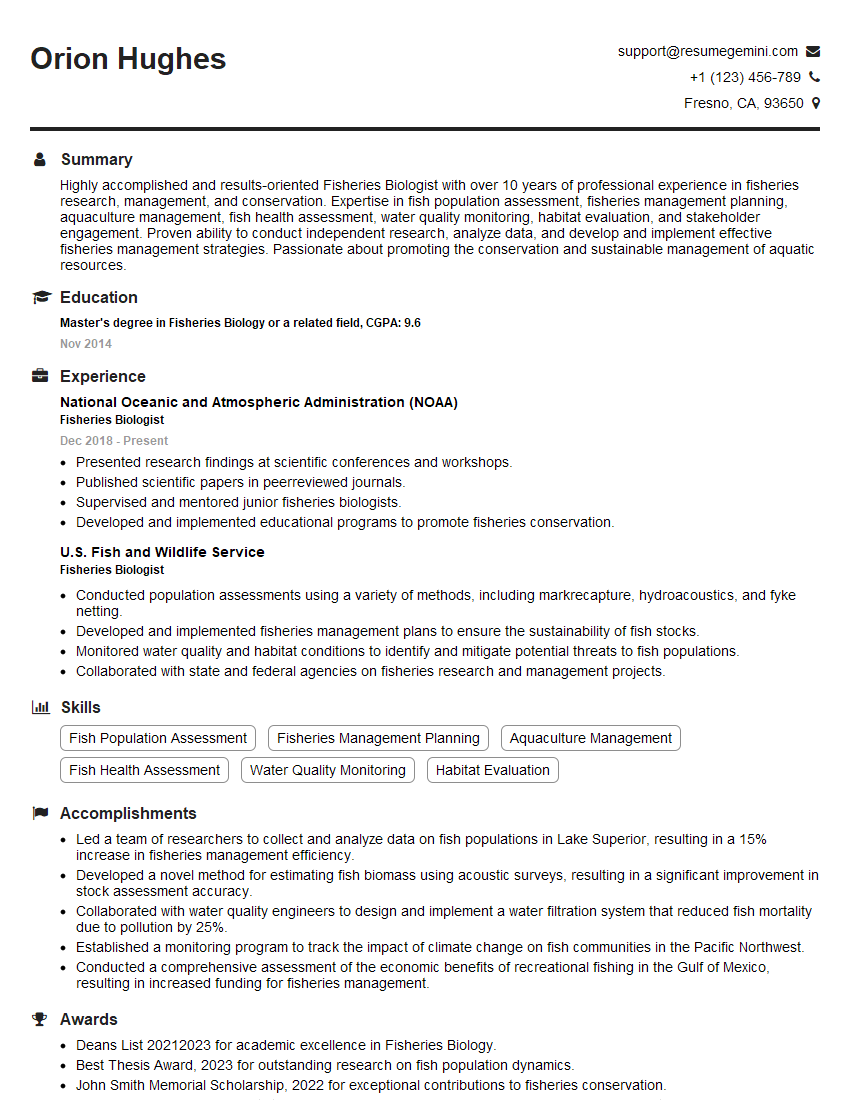
Mastering Fishery Policy and Regulations is crucial for career advancement in this vital field. A strong understanding of these complex issues will significantly enhance your job prospects and allow you to contribute meaningfully to sustainable fisheries management. To further strengthen your application, focus on creating an ATS-friendly resume that highlights your skills and experience effectively. ResumeGemini is a trusted resource to help you build a professional and impactful resume. They offer examples of resumes tailored to Fishery Policy and Regulations to help guide you in creating your own. Take advantage of these resources to make your application stand out from the competition.
Explore more articles
Users Rating of Our Blogs
Share Your Experience
We value your feedback! Please rate our content and share your thoughts (optional).
What Readers Say About Our Blog
Very informative content, great job.
good