Interviews are more than just a Q&A session—they’re a chance to prove your worth. This blog dives into essential Fishery Resource Management interview questions and expert tips to help you align your answers with what hiring managers are looking for. Start preparing to shine!
Questions Asked in Fishery Resource Management Interview
Q 1. Describe the process of stock assessment for a commercially important fish species.
Stock assessment is the process of estimating the size and health of a fish population. It’s crucial for sustainable fisheries management, allowing us to determine how many fish can be harvested without compromising future populations. The process typically involves several steps:
- Data Collection: This involves gathering data on fish abundance, size, age, and reproductive status. Methods include research surveys using sonar, trawls, and acoustic techniques, along with commercial catch data from fishing fleets. We might even use tagging studies to track fish movement and survival.
- Data Analysis: Collected data is analyzed using statistical models to estimate population parameters such as abundance, biomass, mortality rates, and recruitment (the number of new fish entering the population). These models can be complex, often incorporating factors like growth rates and environmental conditions.
- Stock Status Determination: The analysis provides an estimate of the stock’s current status relative to its capacity for sustainable production. Is it overfished? Is it undergoing overfishing (harvesting at a rate exceeding its capacity to replenish)? Are there threats from habitat degradation or pollution?
- Management Advice: Based on the assessment, scientists and managers provide recommendations for fishing quotas or other management measures aimed at maintaining the stock at healthy levels. This could include size limits, gear restrictions, or the creation of marine protected areas.
For example, assessing the Pacific Salmon stock requires examining data from multiple sources, including river spawning counts, ocean surveys using acoustic methods, and commercial catch records, integrating them into a sophisticated model to predict future population trends.
Q 2. Explain the difference between maximum sustainable yield (MSY) and optimum sustainable yield (OSY).
Both Maximum Sustainable Yield (MSY) and Optimum Sustainable Yield (OSY) are concepts aiming to determine the optimal level of fish harvesting. However, they differ in their considerations:
- MSY represents the largest average catch that can be taken from a stock year after year without causing its collapse. It focuses solely on maximizing yield, neglecting other important ecological and economic factors.
- OSY is a more holistic approach. It considers not only the maximum sustainable yield but also various social, economic, and environmental factors. This might include maintaining biodiversity, protecting essential habitats, and ensuring the long-term economic viability of the fishery. The OSY is often lower than the MSY because it incorporates these additional considerations.
Think of it like this: MSY is like maximizing the number of apples you can pick from an orchard each year, without considering the health of the trees or the long-term productivity of the orchard. OSY, on the other hand, considers the health of the trees, the environmental impact of picking apples, and the profitability of the orchard, ultimately leading to a slightly smaller, but more sustainable harvest.
Q 3. What are the key indicators of a healthy fish stock?
A healthy fish stock exhibits several key indicators:
- High Abundance and Biomass: A large population size and total weight of fish indicate a healthy stock.
- Stable Age Structure: A balanced distribution of fish across various age classes indicates successful reproduction and survival rates.
- High Recruitment: Strong recruitment of young fish into the population is vital for replenishing the stock.
- Low Fishing Mortality: Fishing mortality should be below the natural mortality rate, allowing the population to recover.
- Healthy Reproduction: Successful spawning and a high number of eggs contribute to maintaining the population.
- Resilience to Environmental Changes: The ability of the stock to withstand environmental disturbances suggests a robust and adaptable population.
For instance, a healthy cod population would have a large number of fish across different age groups, strong spawning success, and low fishing mortality rates, indicating a sustainable and thriving ecosystem.
Q 4. How do you assess the impact of bycatch on a target fish population?
Bycatch refers to the unintentional capture of non-target species during fishing operations. Assessing its impact on a target fish population is crucial for effective management. Several methods are employed:
- Bycatch Surveys: Direct observation of fishing activities and examination of catches to determine the species and quantity of bycatch.
- Statistical Modeling: Using catch data to estimate the mortality rates of bycatch species, factoring this mortality into population models for the target species to understand the overall impact.
- Ecosystem Modeling: Incorporating bycatch into larger ecosystem models to understand the cascading effects on food webs and other species.
- Population Dynamics Analysis: Examining trends in the target population in relation to bycatch rates to determine the extent of its impact.
For example, if shrimp trawling results in significant bycatch of juvenile snapper, models can estimate the impact of this mortality on the snapper population’s future reproductive potential, revealing the need for modified fishing gear or spatial closures to protect the snapper stock.
Q 5. Explain different methods used for fish population estimation.
Estimating fish population size is a complex process, requiring various methods depending on the species and the environment:
- Acoustic Surveys: Use sonar technology to detect fish schools, estimating their abundance and biomass based on sound reflections. This is particularly useful for pelagic (open-ocean) species.
- Trawl Surveys: Involve dragging a net through the water to collect a sample of fish. The catch is then used to estimate the population density in the surveyed area, which is extrapolated to the entire stock using statistical models.
- Mark-Recapture Methods: A known number of fish are captured, marked (e.g., tagged), and released. Later, a second sample is collected, and the proportion of marked fish is used to estimate the total population size.
- Catch Per Unit Effort (CPUE): This method involves analyzing the relationship between fishing effort (e.g., hours fished) and catch. A decline in CPUE can suggest a decline in stock size, although it’s influenced by many factors and needs careful interpretation.
- Visual Census Methods: Divers or underwater cameras are used to count fish in specific areas, useful for assessing populations of reef fish or other species in visually accessible habitats.
The choice of method often depends on the species’ behavior, habitat, and available resources. Many assessments rely on multiple methods for a more robust estimate.
Q 6. Discuss the challenges of managing shared fish stocks across international boundaries.
Managing shared fish stocks across international boundaries presents numerous challenges:
- Lack of Cooperation: International agreements are often difficult to negotiate and enforce, leading to disagreements on fishing quotas and management strategies. Countries might prioritize their own short-term economic gains over the long-term health of the shared resource.
- Data Sharing and Transparency: Accurate and reliable data are essential for effective management. However, inconsistencies in data collection methods and a lack of transparency can hinder the development of shared management plans.
- Enforcement Difficulties: Monitoring and enforcing agreements across vast ocean areas is extremely challenging, particularly when dealing with illegal, unreported, and unregulated (IUU) fishing.
- Conflicting Interests: Different countries may have different economic interests and priorities related to the shared stock. This might lead to disputes over fishing quotas or management measures.
The management of Atlantic salmon, for example, has been complicated by multiple countries’ involvement in both harvesting and conservation. International cooperation and robust monitoring systems are vital to ensuring the long-term sustainability of these resources.
Q 7. What are the main threats to marine biodiversity and how can fisheries management address them?
Marine biodiversity faces many threats:
- Overfishing: Unsustainable fishing practices deplete fish stocks and disrupt marine ecosystems.
- Habitat Destruction: Coastal development, pollution, and destructive fishing practices damage critical habitats like coral reefs and seagrass beds.
- Climate Change: Rising ocean temperatures, ocean acidification, and altered currents impact marine species and their habitats.
- Pollution: Plastic pollution, chemical runoff, and noise pollution degrade water quality and harm marine life.
- Invasive Species: Introduced species can outcompete native species and disrupt ecological balance.
Fisheries management can address these threats through:
- Sustainable Fishing Practices: Implementing science-based fishing quotas, reducing bycatch, and promoting selective fishing gear.
- Marine Protected Areas (MPAs): Establishing protected areas to conserve critical habitats and allow fish stocks to recover.
- Combating Climate Change: Reducing greenhouse gas emissions and supporting research on climate change adaptation strategies for marine ecosystems.
- Pollution Control: Implementing stricter regulations to reduce pollution from land-based sources and improve waste management practices.
- Invasive Species Management: Developing strategies to prevent the introduction and spread of invasive species.
Ultimately, integrated and holistic approaches are necessary. For example, establishing MPAs can benefit multiple species and habitats, while reducing greenhouse emissions addresses a multifaceted threat to marine ecosystems.
Q 8. Describe the role of marine protected areas (MPAs) in fisheries management.
Marine Protected Areas (MPAs) are crucial for fisheries management because they act like nurseries and sanctuaries for marine life. Imagine them as underwater national parks. By restricting or prohibiting fishing activities within designated zones, MPAs allow fish populations to recover and grow, spilling over into surrounding areas and boosting overall fish stocks. This is known as the ‘spillover effect’.
For example, a well-managed MPA might protect spawning grounds or critical habitats like coral reefs. This allows fish to reproduce and develop without constant fishing pressure. The healthier, larger populations within the MPA can then migrate outwards, increasing the catches in adjacent fishing grounds. MPAs also protect biodiversity, safeguarding not just target fish species but the entire ecosystem that supports them.
Different types of MPAs exist, ranging from fully no-take zones to areas with limited fishing activity. The effectiveness of an MPA depends heavily on factors like its size, location, enforcement, and the cooperation of local communities.
Q 9. Explain the concept of ecosystem-based fisheries management.
Ecosystem-based fisheries management (EBFM) takes a holistic approach, considering the entire marine ecosystem – not just the target fish species – when making management decisions. Instead of focusing solely on individual fish populations, EBFM examines the complex interactions between fish, their prey, their predators, and the physical environment (like water temperature and currents). Think of it like managing a garden, where you consider the entire ecosystem, not just the vegetables you want to harvest.
For instance, EBFM might take into account the impact of fishing on predator-prey relationships. Overfishing of a key predator could lead to an explosion in the population of its prey, which might then damage other parts of the ecosystem. EBFM uses various tools, including modeling, data analysis, and stakeholder engagement, to make informed decisions that balance the needs of the fishery with the health of the entire marine ecosystem. Successful EBFM requires a shift from a purely extractive approach to one of stewardship and long-term sustainability.
Q 10. What are the different types of fishing gear and their impact on fish stocks?
Fishing gear varies widely in its design and impact. Some gear, like trawls (large nets dragged along the seafloor), are highly efficient but can cause significant bycatch (unintentionally caught species) and damage to seabed habitats. Imagine a giant vacuum cleaner sucking up everything in its path. On the other hand, more selective gear, like hook and line fishing, has a lower impact on the environment and bycatch, but it’s less efficient in terms of the quantity of fish caught.
- Trawls: High bycatch, habitat destruction.
- Gillnets: Entangle many species, including non-target fish and marine mammals.
- Longlines: Relatively selective, but can still have bycatch issues depending on the bait and depth.
- Purse seines: Surround schools of fish, potentially leading to high catches but also bycatch.
- Hook and line: More selective, lower impact.
The choice of fishing gear significantly influences the sustainability of a fishery. Regulating gear types and promoting the use of more selective and less damaging gear is crucial for responsible fisheries management.
Q 11. How does climate change affect fish populations and fisheries management?
Climate change poses a major threat to fish populations and fisheries management. Rising sea temperatures, ocean acidification, and changes in ocean currents are altering fish distributions, abundance, and life cycles. Imagine shifting climate zones forcing fish to migrate to new areas, disrupting established fishing grounds.
For example, warmer waters can cause coral bleaching, damaging essential fish habitats. Ocean acidification makes it harder for shellfish to build their shells. Changes in currents can affect the distribution of plankton, the base of the marine food web. Fisheries managers need to adapt to these changes by adjusting fishing quotas, altering fishing seasons, and protecting critical habitats. They also need to incorporate climate change projections into long-term management plans to ensure the resilience of fisheries in a changing world. This might involve developing new strategies for stock assessment that consider climate impacts and promoting the resilience of fish populations through habitat protection.
Q 12. Describe the role of aquaculture in meeting global seafood demand.
Aquaculture, or fish farming, plays an increasingly important role in meeting the global seafood demand. Wild-caught fisheries are struggling to keep up with growing consumption, and aquaculture provides a significant portion of the seafood we eat. It’s like having a farm for fish, allowing us to cultivate specific species in a controlled environment.
Aquaculture provides a reliable source of protein, offering a potential solution to food security concerns. It can also reduce the pressure on wild fish stocks, allowing them to recover. However, it’s crucial to distinguish between sustainable and unsustainable aquaculture practices, as irresponsible farming can have severe environmental consequences.
Q 13. What are the environmental impacts of aquaculture and how can they be mitigated?
Unsustainable aquaculture practices can lead to several environmental problems. These include pollution from fish waste and uneaten feed, habitat destruction from the construction of fish farms, and the escape of farmed fish into the wild, where they can compete with or interbreed with native species. Imagine a crowded fish farm overflowing with waste affecting the surrounding water quality.
Mitigation strategies include implementing stricter regulations on waste management, using eco-friendly feeds, minimizing habitat destruction, and developing escape-proof enclosures. Promoting sustainable aquaculture practices like integrated multi-trophic aquaculture (IMTA), which combines the farming of different species to reduce waste and improve overall ecosystem health, is crucial.
Q 14. Explain the principles of sustainable aquaculture practices.
Sustainable aquaculture prioritizes the long-term health of the environment and the social and economic well-being of communities. It aims to produce seafood without compromising the ecosystem’s integrity or future productivity. Key principles include:
- Minimizing environmental impact: Reducing pollution, protecting habitats, and using sustainable feed sources.
- Responsible use of resources: Efficient water use, minimizing energy consumption, and responsible use of antibiotics and chemicals.
- Social responsibility: Fair labor practices, community involvement, and ensuring the equitable distribution of benefits.
- Economic viability: Ensuring profitability and long-term economic sustainability of the aquaculture operation.
Sustainable aquaculture practices require a holistic approach, integrating environmental, social, and economic considerations. Certifications and eco-labels can help consumers identify sustainably produced seafood, supporting responsible aquaculture practices and driving industry change.
Q 15. Discuss the challenges of balancing economic benefits with environmental sustainability in fisheries.
Balancing economic benefits with environmental sustainability in fisheries is a constant tightrope walk. The challenge lies in ensuring that fishing activities provide livelihoods and contribute to national economies without jeopardizing the long-term health of fish stocks and their ecosystems. Overfishing, driven by the demand for seafood, threatens biodiversity and the resilience of marine environments. This depletion affects not only the fish populations themselves but also dependent species and the overall health of the ocean.
For instance, imagine a small coastal community heavily reliant on a single fish species. Maximizing short-term economic gains by overfishing this species might bring immediate prosperity but could lead to its collapse, devastating the local economy in the long run and potentially harming other connected species. A sustainable approach requires careful management, including setting catch limits below the maximum sustainable yield (MSY), enforcing regulations to prevent illegal, unreported, and unregulated (IUU) fishing, and incorporating ecosystem-based management approaches which consider the interconnectedness of species and habitats.
Finding this balance requires a multi-faceted approach incorporating scientific data on stock assessments, economic analyses of fishing communities, and effective governance structures that foster compliance with regulations and support sustainable fishing practices. This often involves difficult decisions concerning trade-offs between economic short-term gains and environmental long-term preservation.
Career Expert Tips:
- Ace those interviews! Prepare effectively by reviewing the Top 50 Most Common Interview Questions on ResumeGemini.
- Navigate your job search with confidence! Explore a wide range of Career Tips on ResumeGemini. Learn about common challenges and recommendations to overcome them.
- Craft the perfect resume! Master the Art of Resume Writing with ResumeGemini’s guide. Showcase your unique qualifications and achievements effectively.
- Don’t miss out on holiday savings! Build your dream resume with ResumeGemini’s ATS optimized templates.
Q 16. How do you assess the socioeconomic impacts of fisheries management decisions?
Assessing the socioeconomic impacts of fisheries management decisions requires a holistic approach that goes beyond simply looking at fishing yields. We need to understand how decisions affect various stakeholders – fishers, processors, consumers, and coastal communities. This involves a combination of quantitative and qualitative methods.
- Quantitative methods involve analyzing data on employment levels in fishing and related industries, income levels of fishing communities, and the economic value of fisheries to the national economy. We might use statistical models to project the impact of management changes on these indicators. For example, a reduction in catch limits might lead to a decrease in employment in the short term but protect long-term sustainability and potential future yields.
- Qualitative methods are equally important and include interviews, focus groups, and surveys to understand how management decisions affect the lives of individuals and communities. This helps capture the social and cultural significance of fishing, addressing issues such as loss of traditional knowledge or social disruption.
The results of this assessment should guide the development of policies that minimize negative impacts and maximize positive outcomes, aiming for equitable and sustainable solutions for all affected parties. It is vital to consider the potential for displacement of fishers into other sectors, and to incorporate social safety nets if necessary.
Q 17. What are the key elements of a successful fisheries management plan?
A successful fisheries management plan needs several key elements working in concert. It’s not just about setting catch limits; it’s about a comprehensive and adaptive strategy.
- Stock assessments: Accurate scientific data on fish populations are crucial. This involves monitoring fish abundance, growth rates, and mortality rates to determine sustainable catch levels.
- Catch limits and fishing quotas: These are set based on stock assessments to prevent overfishing. Often incorporating mechanisms for allocation among different stakeholders or fishing gears.
- Spatial management tools: Marine protected areas (MPAs), closures of certain areas to fishing during spawning seasons, and gear restrictions are examples. This safeguards critical habitats and spawning grounds.
- Monitoring, control, and surveillance (MCS): Strong enforcement mechanisms are needed to detect and deter illegal fishing activities. This might include observer programs on fishing vessels, satellite monitoring, and effective penalties for violations.
- Stakeholder engagement: Collaboration with fishers, processors, consumers, and other relevant groups is crucial for ensuring that the plan is both effective and socially acceptable. Transparency and communication are key to building trust.
- Adaptive management: Regularly reviewing the plan’s effectiveness and adapting it based on new data and feedback. Fisheries are dynamic systems; management plans must be flexible enough to respond to changes in the environment and fishing practices.
Imagine a plan that ignores the local fishers’ knowledge of fish behavior. This plan is far less likely to be successful than one that actively involves them in the planning and implementation processes. Successful plans are adaptable, transparent, and science-based, but also socially responsible and equitable.
Q 18. How do you evaluate the effectiveness of fisheries management measures?
Evaluating the effectiveness of fisheries management measures requires a multi-faceted approach, focusing on both biological and socioeconomic indicators.
- Biological indicators: We track changes in fish stock abundance, size structure, and recruitment (number of new fish entering the population). Improvements in these indicators show the management plan is working.
- Socioeconomic indicators: We assess changes in employment, income levels in fishing communities, and economic contribution of the fishery to the national economy. Sustainability isn’t just about fish numbers; it is about the viability of fishing communities.
- Compliance rates: High compliance rates suggest that regulations are effective and accepted by fishers. Low compliance often indicates that regulations need revision, enforcement needs to be strengthened, or stakeholder engagement needs improvement.
- Ecosystem indicators: Beyond target species, monitoring changes in the broader ecosystem helps assess whether management actions have unintended consequences. For example, we might monitor changes in predator/prey interactions or the health of benthic habitats.
For example, a decline in illegal fishing activities, combined with an increase in the average size of fish caught and a stable or increasing fish population, would suggest a successful management strategy. Conversely, if fish stocks continue to decline despite management efforts, it indicates a need for a re-evaluation and possible adjustments to the plan.
Q 19. Describe the role of fisheries data collection and analysis in management decisions.
Fisheries data collection and analysis are the cornerstones of effective management. Without reliable data, management decisions are essentially guesswork. The data provides the scientific basis for setting catch limits, identifying overfished stocks, and evaluating the effectiveness of management measures.
Data collection involves various methods:
- Catch statistics: Data on the amount and type of fish caught, often collected through logbooks or landing records from fishing vessels.
- Scientific surveys: Research vessels use acoustic methods, trawling, and other techniques to assess fish abundance and distribution.
- Biological sampling: Measuring the length, weight, and age of fish to assess growth rates and mortality rates.
- Environmental data: Gathering information on water temperature, salinity, currents, and other environmental factors that influence fish populations.
Data analysis uses statistical methods (discussed in the next question) to estimate fish stock size, assess trends in abundance, and model the effects of fishing and environmental changes. This information is then used to inform stock assessments, which are crucial for developing sustainable fishing plans. Imagine trying to manage a fishery without knowing how many fish there are or how fast they are growing – it’s impossible to make informed decisions.
Q 20. What are some common statistical methods used in fisheries research?
Fisheries research employs a wide range of statistical methods tailored to the specific questions and data available. Some common methods include:
- Population dynamics models: These models simulate the growth, mortality, and recruitment of fish populations. They are used to project future population sizes under different fishing scenarios, helping to determine sustainable catch levels. A common example is the surplus production model.
- Stock assessment models: These combine data from different sources (e.g., catch statistics, survey data) to estimate the size and abundance of fish stocks. Examples include the Delay-Difference model and the assessment models used by the International Council for the Exploration of the Sea (ICES).
- Generalized linear models (GLMs): Used to analyze relationships between variables, such as catch rates and environmental factors. They can account for non-normal data distributions commonly found in fisheries data.
- Time series analysis: This is used to identify trends and patterns in time-dependent data, such as fish abundance over time. It helps predict future trends and assess the effectiveness of management measures.
- Spatial statistics: These methods, such as kriging, are used to analyze the spatial distribution of fish and their habitats, informing spatial management strategies such as MPAs.
The choice of statistical method depends on several factors, including the type of data available, the research question, and the assumptions underlying different models. Rigorous statistical analysis is essential for ensuring that management decisions are based on sound scientific evidence.
Q 21. Explain the importance of stakeholder engagement in fisheries management.
Stakeholder engagement is paramount in successful fisheries management. Fisheries are not just about fish; they’re about people – the fishers, processors, consumers, coastal communities, and other users of marine resources. Ignoring these stakeholders leads to poorly designed plans that fail to achieve their objectives and cause resentment and conflict.
Effective engagement involves:
- Early and ongoing consultation: Involving stakeholders from the initial planning stages and throughout the implementation process ensures their concerns and knowledge are considered.
- Transparent communication: Openly sharing information about stock assessments, management decisions, and the rationale behind them builds trust and promotes collaboration.
- Participatory decision-making: Developing mechanisms for stakeholders to contribute to the design and implementation of management plans, perhaps through co-management arrangements.
- Conflict resolution: Establishing procedures for addressing conflicts among stakeholders fairly and effectively. This might involve mediation or negotiation processes.
- Capacity building: Providing training and support to stakeholders to improve their understanding of fisheries management issues and to enhance their participation in the process.
A participatory approach fosters a sense of ownership and commitment, leading to greater compliance with regulations and a more sustainable fishery. Ignoring stakeholders can result in conflict, non-compliance, and ultimately, the failure of the management plan.
Q 22. How do you address conflicts between different stakeholders in fisheries management?
Addressing conflicts between stakeholders in fisheries management requires a multifaceted approach centered on communication, collaboration, and fair resource allocation. It’s like orchestrating a complex symphony where each instrument (stakeholder) plays a vital role, but needs to harmonize. I begin by identifying all key stakeholders – commercial fishers, recreational anglers, indigenous communities, environmental groups, and government agencies. Then I facilitate open dialogue using participatory methods like workshops and roundtable discussions to understand each group’s perspectives, concerns, and priorities. This involves active listening and a willingness to compromise.
Next, I work towards developing a shared understanding of the scientific data and management objectives. Transparency is crucial here. Data visualization techniques and clear communication can help bridge knowledge gaps between scientists and stakeholders. We develop management strategies that balance economic viability, ecological sustainability, and social equity. This might involve creating fishing quotas that distribute resources fairly, establishing marine protected areas to conserve biodiversity, or developing co-management structures that give local communities more decision-making power. Finally, we establish clear mechanisms for conflict resolution, potentially including mediation or arbitration, to address disagreements that may arise.
For example, in a coastal community facing declining fish stocks, I successfully mediated a conflict between commercial and recreational fishers by implementing a rotational fishing system that allowed both groups access to the resource while ensuring its sustainability.
Q 23. What are some emerging technologies being used in fisheries management?
Emerging technologies are revolutionizing fisheries management, offering powerful tools for monitoring, enforcement, and data analysis. Remote sensing via satellites provides real-time information on oceanographic conditions and fishing activity. Imagine being able to track fishing vessels in real-time, helping ensure compliance with regulations and combat illegal fishing. This is becoming a reality through the use of satellite tracking systems and automated identification systems (AIS).
Acoustic telemetry and underwater video monitoring allow us to study fish behavior, migration patterns, and habitat use. This data can inform effective stock assessments and help us design marine protected areas that optimize ecological outcomes. Additionally, genetic techniques such as DNA barcoding are being used to identify species accurately and combat illegal fishing practices, helping ensure accurate stock assessments and effective management. Finally, advanced data analysis techniques using machine learning and artificial intelligence are improving our ability to predict fish populations, forecast stock recruitment, and optimize resource allocation.
Q 24. Discuss the legal framework governing fisheries management in your region.
The legal framework governing fisheries management in my region ([Please insert your region here, e.g., the Pacific Northwest]) is a complex interplay of international, national, and regional laws and regulations. Internationally, conventions like the United Nations Convention on the Law of the Sea (UNCLOS) establish principles of jurisdiction and conservation. Nationally, legislation such as the [Please insert relevant national legislation, e.g., Magnuson-Stevens Fishery Conservation and Management Act] sets the overall framework for fisheries management, outlining requirements for stock assessments, conservation measures, and enforcement. At the regional level, fishery management councils or similar bodies develop specific management plans for individual fisheries, taking into account local ecological and socioeconomic factors. These plans typically include fishing quotas, gear restrictions, and spatial closures aimed at achieving sustainable yields while considering the economic and social needs of the stakeholders.
The legal framework also includes mechanisms for dispute resolution, enforcement, and compliance monitoring, including provisions for penalties and sanctions for violations. Enforcement often involves collaboration between government agencies, industry, and community groups. The interplay of these levels of legal authority requires considerable coordination and interagency cooperation. There are often legal challenges involving jurisdictional boundaries, conflicting interests, and the interpretation of regulations. The overall goal is to achieve sustainable fisheries management that balances environmental protection with economic and social needs.
Q 25. Describe your experience with fisheries data analysis software (e.g., R, MATLAB).
I have extensive experience using R and MATLAB for fisheries data analysis. R is particularly useful for statistical modeling and data visualization, as it offers a wide range of specialized packages for fisheries science. For example, I frequently use the ggplot2 package to create informative visualizations of stock assessments or catch data. [Insert a simple R code example illustrating a common task, e.g., plotting catch data].
MATLAB, with its powerful numerical computing capabilities, is excellent for simulating complex ecological models or analyzing large datasets. For example, I’ve used MATLAB to perform spatial analysis of fish distribution data, using geographic information systems (GIS) integration capabilities. I have used both programs for stock assessment modeling, applying methods like surplus production models or age-structured models. My proficiency extends to cleaning and manipulating large, complex datasets and performing statistical analyses, generating publication-quality graphics, and creating reports summarizing the results. This includes applying various statistical techniques, including regression analysis, time series analysis, and generalized linear models, to analyze different aspects of fisheries data.
Q 26. How do you interpret fisheries stock assessment models and their outputs?
Interpreting fisheries stock assessment models and their outputs requires a deep understanding of the underlying assumptions, limitations, and uncertainties involved. Stock assessment models are mathematical representations of fish populations. They use data on catch, abundance, and biological characteristics to estimate population size, growth rates, and mortality rates. Common outputs include estimates of stock biomass, fishing mortality, recruitment, and future projections. I always critically evaluate the model’s assumptions, ensuring they are appropriate for the specific species and fishery. For example, assumptions about natural mortality or recruitment variability can significantly influence the model’s predictions.
Uncertainty analysis is crucial. Models rarely provide single, precise estimates. Instead, they provide a range of possible values, reflecting uncertainties in the data and the model itself. I consider the uncertainty intervals when making management recommendations and avoid over-interpreting precise numbers. I also consider the model’s sensitivity to key parameters and assumptions. A robust model should not be overly sensitive to minor changes in the input data. Finally, I evaluate the model’s performance by comparing its predictions to independent data sources if available. The results are not simply numbers but inform management decisions on quotas, gear restrictions, or spatial closures, always considering the biological, economic, and social aspects of the fishery.
Q 27. What are the ethical considerations in fisheries management?
Ethical considerations in fisheries management are paramount. Sustainability is a core ethical principle, ensuring that we manage fisheries to maintain healthy fish populations for future generations. This involves balancing the needs of present stakeholders with the needs of future generations. Fairness and equity are also crucial, ensuring that the benefits and costs of fisheries management are distributed equitably among stakeholders. This includes considering the rights and needs of Indigenous communities who have traditionally relied on fisheries resources. Transparency and accountability are essential. Management decisions should be based on sound scientific data and communicated clearly to stakeholders. There must be mechanisms for participation and feedback from all affected parties.
Another crucial ethical concern is the impact of fishing on marine ecosystems and biodiversity. Bycatch – the unintentional capture of non-target species – is a significant ethical issue. Fishing practices should be designed to minimize bycatch and protect vulnerable species. Finally, the ethical implications of illegal, unreported, and unregulated (IUU) fishing must be addressed. IUU fishing undermines sustainable fisheries management, threatens livelihoods, and damages marine ecosystems. Addressing IUU fishing requires international collaboration and effective enforcement mechanisms.
Q 28. Describe a time you had to solve a complex problem in fisheries management.
One complex problem I encountered involved the collapse of a commercially important shellfish population. Initial assessments pointed to overfishing, but the situation was more nuanced. The decline was exacerbated by habitat degradation caused by pollution and coastal development. Solving this required a multi-pronged approach.
Firstly, I used advanced statistical techniques to analyze long-term data, disentangling the effects of fishing pressure from those of environmental factors. This required collaboration with experts in water quality and benthic habitat ecology. Secondly, we engaged with local communities to understand their perspectives and develop solutions. We worked collaboratively to implement habitat restoration programs, including removing pollutants and creating artificial reefs. Thirdly, we implemented stricter fishing regulations, including temporary closures and gear restrictions to protect the remaining population. Finally, we developed a comprehensive monitoring program to track the population’s recovery and the effectiveness of our management actions.
The success of this project demonstrates the importance of interdisciplinary collaboration, stakeholder engagement, and adaptive management. While the shellfish population is still recovering, we’ve seen significant improvement, showing that tackling complex problems requires a holistic and collaborative approach.
Key Topics to Learn for Fishery Resource Management Interview
- Fishery Stock Assessment: Understanding methods like virtual population analysis (VPA) and surplus production models, and their application in determining sustainable fishing levels.
- Fisheries Management Strategies: Exploring various approaches including catch limits, gear restrictions, spatial closures, and aquaculture development, and their effectiveness in different contexts.
- Ecosystem-Based Fisheries Management (EBFM): Grasping the principles of EBFM, considering the interactions between fish stocks, habitats, and other species within the ecosystem.
- Fisheries Data Collection and Analysis: Familiarity with common data sources (e.g., catch statistics, scientific surveys), data analysis techniques, and interpreting results for management decisions.
- Fisheries Legislation and Policy: Knowledge of relevant national and international regulations, policies, and agreements impacting fisheries management.
- Sustainable Fisheries Practices: Understanding and applying principles of sustainable fisheries management, including minimizing bycatch, promoting selective fishing gear, and implementing certification schemes.
- Conflict Resolution and Stakeholder Engagement: Recognizing the importance of effective communication and collaboration with diverse stakeholders (fishers, conservationists, policymakers) in developing and implementing management plans.
- Climate Change Impacts on Fisheries: Analyzing how climate change affects fish populations, habitats, and the overall ecosystem, and incorporating this knowledge into management strategies.
- Socioeconomic Aspects of Fisheries: Understanding the social and economic impacts of fisheries management decisions on fishing communities and coastal economies.
- Fisheries Monitoring, Control, and Surveillance (MCS): Knowledge of various MCS systems used to ensure compliance with regulations and prevent illegal, unreported, and unregulated (IUU) fishing.
Next Steps
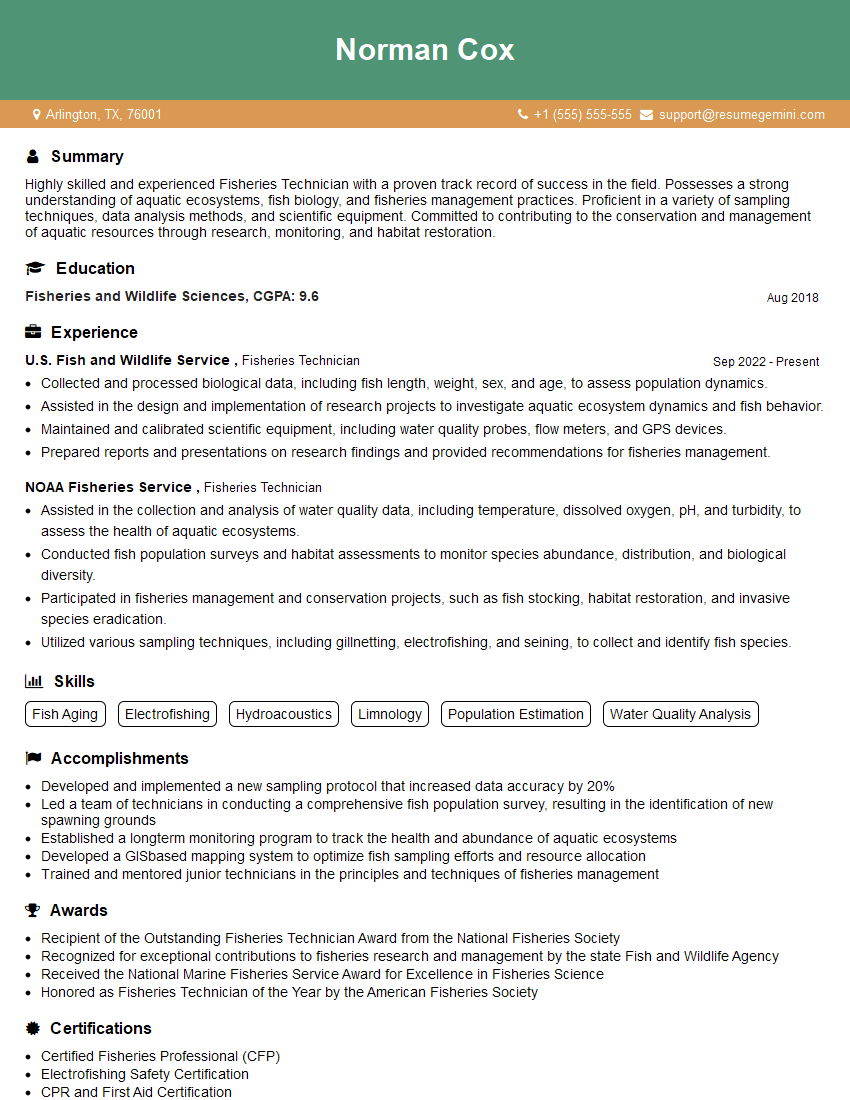
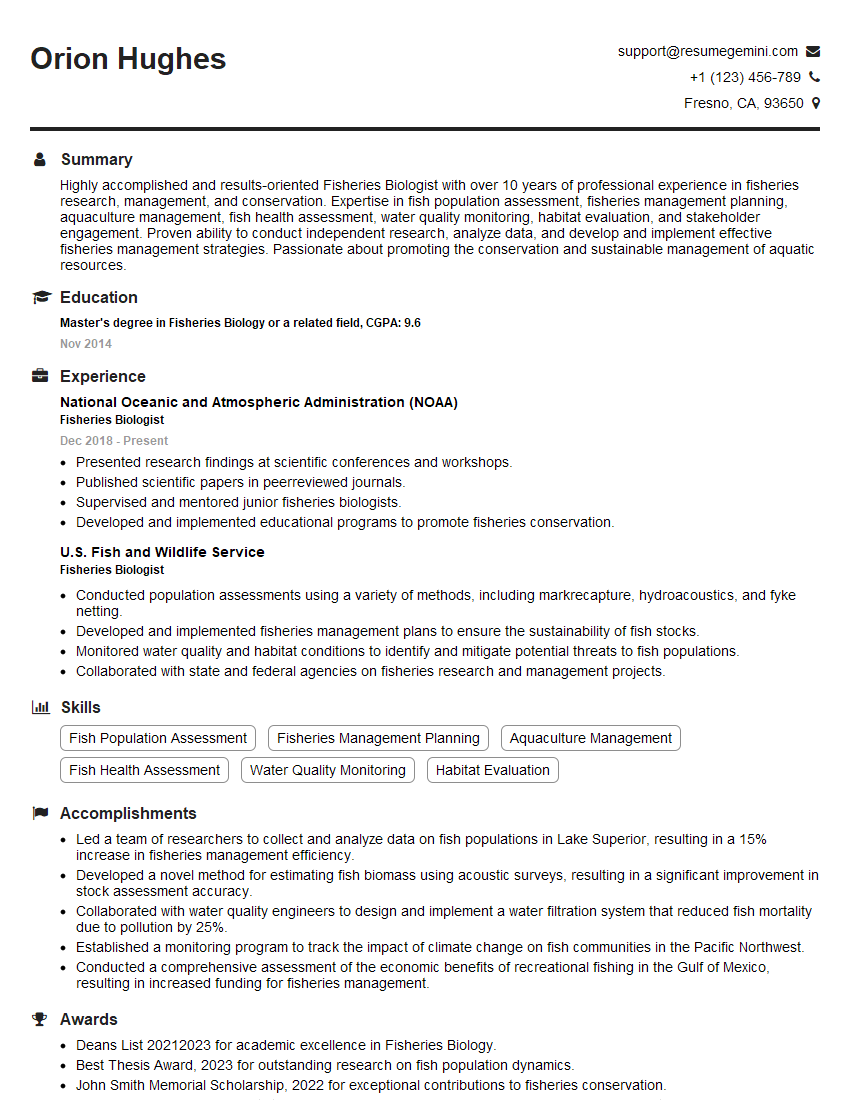
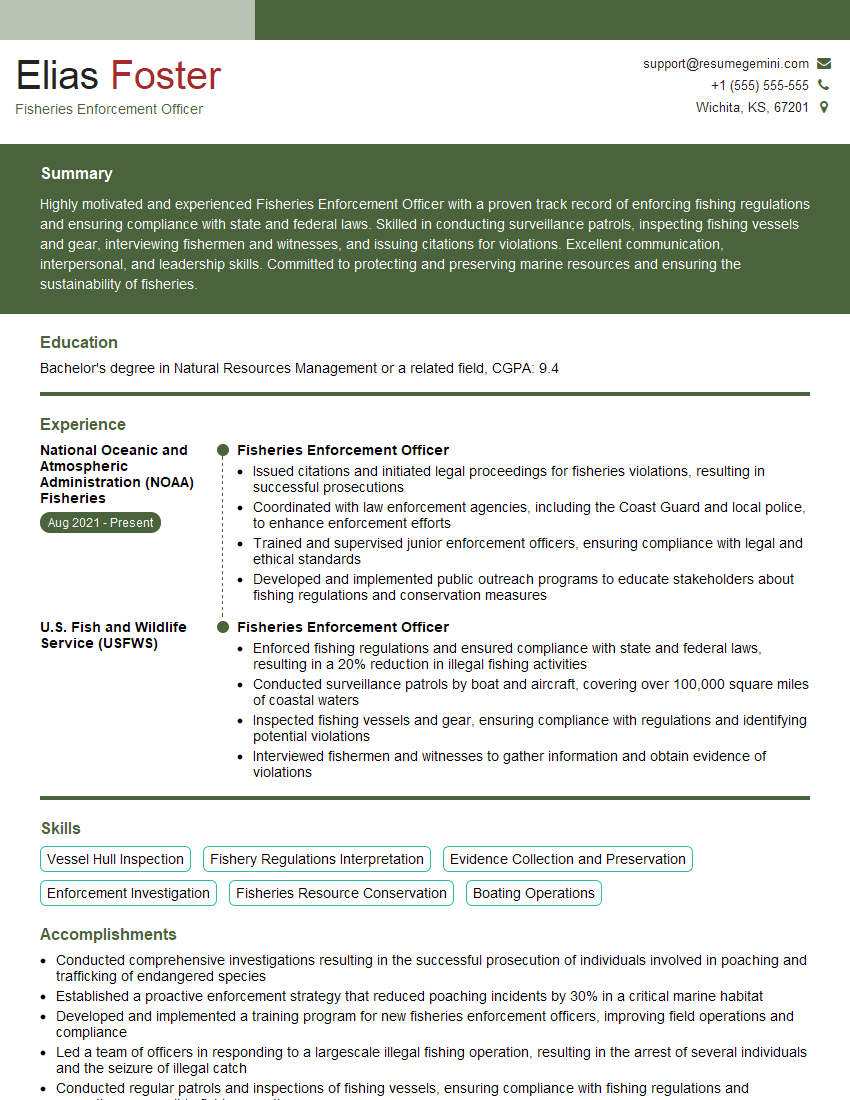
Mastering Fishery Resource Management is crucial for a successful and rewarding career, opening doors to exciting opportunities in research, policy, conservation, and industry. A well-crafted resume is your key to unlocking these opportunities. Creating an ATS-friendly resume increases your chances of getting your application noticed by potential employers. To enhance your resume-building experience and significantly improve your job prospects, we highly recommend using ResumeGemini. ResumeGemini provides a user-friendly platform and offers examples of resumes tailored specifically to Fishery Resource Management, helping you present your skills and experience in the best possible light. Take the next step toward your dream career in Fishery Resource Management – build a powerful resume today!
Explore more articles
Users Rating of Our Blogs
Share Your Experience
We value your feedback! Please rate our content and share your thoughts (optional).
What Readers Say About Our Blog
Very informative content, great job.
good