Interviews are opportunities to demonstrate your expertise, and this guide is here to help you shine. Explore the essential Flatbed Loading interview questions that employers frequently ask, paired with strategies for crafting responses that set you apart from the competition.
Questions Asked in Flatbed Loading Interview
Q 1. Describe your experience securing various cargo types on a flatbed.
Securing cargo on a flatbed involves understanding the unique challenges posed by the open nature of the trailer. My experience encompasses a wide range of cargo, from construction materials like steel beams and lumber to machinery, vehicles, and even oddly-shaped industrial equipment. The key is always adapting the securing methods to the specific characteristics of the load – its weight, dimensions, shape, and center of gravity. For example, securing a stack of lumber requires careful consideration of the shifting weight and potential for slippage, which differs vastly from securing a heavy piece of machinery that may require multiple points of contact and specialized equipment. I always prioritize safety and regulatory compliance in every load I secure.
- Steel Beams: These require strong chains or straps with appropriate tension to prevent movement during transit. I frequently use corner protectors to avoid damage to the beams and the trailer.
- Lumber: Properly stacked lumber is crucial, along with several tightly secured straps to prevent shifting and potential collapse. I often use load binders for extra security.
- Vehicles: Wheel chocks are essential, followed by sturdy chains and straps to secure the vehicle to the deck. I pay particular attention to the vehicle’s weight distribution to ensure balanced load.
Q 2. Explain the process of properly chaining and securing a load.
Proper chaining and securing a load is a systematic process critical for safety. It begins with a thorough assessment of the load’s characteristics and the trailer’s capacity. Here’s a step-by-step approach I follow:
- Planning: Determine the best placement for the load, considering weight distribution and access points.
- Placement of Chains/Straps: strategically position chains or straps to avoid damaging the cargo, focusing on securing the load’s center of gravity. Avoid sharp bends that can weaken the chains/straps.
- Securing: Use ratchet straps or chain binders to tighten the securing devices. Tension should be sufficient to prevent movement, but not so tight as to damage the load.
- Inspection: A final visual inspection is vital. Ensure all chains and straps are securely fastened, and the load remains stable.
- Documentation: I always document the securing process, including the number and type of devices used, and the specific points of attachment. This is crucial for compliance and in case of an incident.
I always ensure that chains are properly rated for the weight of the load and are free of any defects. Similarly, straps need to be in good condition and capable of handling the tension required.
Q 3. How do you determine the appropriate number of straps and chains for a load?
Determining the appropriate number of straps and chains is crucial for safety and compliance. There’s no one-size-fits-all answer; it depends heavily on several factors:
- Weight of the load: Heavier loads require more securing points and stronger equipment.
- Size and shape of the load: Larger and oddly-shaped loads need more securement points to prevent shifting or tipping.
- Center of gravity: Loads with a high center of gravity demand extra caution and more securement.
- Road conditions: Rougher roads may warrant more securement than smoother ones.
I use a combination of industry best practices, experience, and, in some cases, load securement calculations (depending on the load’s complexity) to determine the optimal number of chains and straps. For example, a small, lightweight load might only need two straps, while a large, heavy load could require multiple chains and straps, arranged strategically for optimal weight distribution.
Q 4. What are the legal requirements for securing oversized loads?
Securing oversized loads comes with stringent legal requirements that vary by jurisdiction, but commonalities include:
- Permits: Oversized loads often require special permits from state or local authorities, specifying the route and any necessary escorts.
- Lighting and Signage: Oversized loads must display appropriate lighting and signage to alert other drivers to their presence.
- Escort Vehicles: In many cases, escort vehicles are mandatory to guide the oversized load and ensure safety.
- Securement: The securement requirements for oversized loads are even more critical than standard loads. This often involves multiple securement points, specialized equipment, and adherence to specific regulations outlined in the permit.
Failure to comply with these requirements can lead to significant fines and legal repercussions. I always ensure I’m fully aware of the specific legal requirements for each oversized load before commencing transport.
Q 5. Explain your understanding of weight distribution on a flatbed trailer.
Weight distribution on a flatbed trailer is paramount. An unbalanced load can affect the trailer’s stability, causing swaying, braking issues, and even rollovers. The goal is to achieve a balanced distribution, ensuring weight is evenly dispersed across the trailer’s axles. This prevents excessive stress on any single point and maintains optimal handling characteristics for the towing vehicle. I consider the load’s weight, dimensions, and center of gravity when planning placement. The center of gravity should be low and as close to the trailer’s center as possible.
For example, a heavy load should be placed closer to the trailer’s axles to maintain balance. If a load is uneven, then the placement needs to be adjusted to ensure appropriate distribution of weight across the axles.
Q 6. How do you handle uneven weight distribution?
Handling uneven weight distribution requires careful planning and adjustment. The first step is to identify the cause of the imbalance. This might involve re-evaluating the load’s placement or adding additional securing points. If possible, I try to redistribute the load to achieve a more even distribution. If that’s not feasible, I might use additional blocks or shims to raise the lower side of the load or use additional securing equipment to compensate for the imbalance. If the uneven distribution is significant, it’s sometimes necessary to reject the load until proper adjustments can be made to ensure safe transport. Safety is always the priority, and an improperly balanced load is a significant safety hazard.
Q 7. Describe your experience with different types of load securing devices.
My experience encompasses a wide range of load securing devices, each with its own strengths and weaknesses. These include:
- Chains: Durable and strong, chains are suitable for heavy loads. I ensure they are appropriately rated and free from defects.
- Ratchet Straps: Versatile and easy to use, ratchet straps are excellent for a variety of loads. They provide a secure and consistent tension.
- Webbing Straps: Similar to ratchet straps but often used for lighter loads.
- Winches: Useful for positioning and securing heavy equipment. Requires proper training and careful usage.
- Load Binders: Provide extra security and are often used in conjunction with chains or straps.
- Corner Protectors: These protect both the cargo and the trailer bed from damage during transit.
The selection of devices depends heavily on the load’s characteristics, and I always choose the most appropriate equipment for the job, prioritizing safety and effectiveness. Regular inspection and maintenance of all securing devices are crucial for ensuring their continued effectiveness.
Q 8. How do you inspect a flatbed trailer before loading?
Before loading any flatbed trailer, a thorough inspection is crucial for safety and legal compliance. Think of it like a pre-flight check for an airplane – you wouldn’t take off without it! My inspection process involves several key steps:
- Visual Inspection: I carefully examine the trailer’s structure for any damage, including cracks in the deck, worn-out or missing tie-down points, and damage to the ramps or sides. I’m looking for anything that could compromise the load’s stability.
- Tire and Brake Check: I check the tire pressure and condition, making sure there’s sufficient tread and no visible damage. I’ll also verify the functionality of the trailer’s braking system.
- Tie-Down System Verification: This is paramount. I inspect all tie-down chains, straps, and binders, ensuring they are in good working condition, free from damage, and properly rated for the load’s weight and type.
- Documentation Check: I review the trailer’s documentation to ensure it’s properly licensed and insured, and that its weight capacity aligns with the planned load.
Any issues found during this inspection are documented and reported immediately. Safety is always the top priority.
Q 9. What are the common hazards associated with flatbed loading?
Flatbed loading presents several significant hazards. Understanding these is critical to preventing accidents. Common hazards include:
- Falling loads: Improperly secured cargo is a major risk, potentially causing injury or damage. Imagine a heavy piece of equipment shifting during transit; the consequences can be devastating.
- Crushing injuries: Workers can be crushed by shifting or falling cargo, especially during loading and unloading. This highlights the importance of proper planning and teamwork.
- Struck-by hazards: Being hit by moving equipment, like forklifts, is a significant risk, especially in busy loading areas. Maintaining clear communication and designated pathways is essential.
- Slip, trip, and fall hazards: Uneven surfaces, unsecured materials, and poor lighting increase the risk of slips, trips, and falls. Keeping the loading area clean and well-lit is crucial.
- Exposure to the elements: Flatbed drivers and loaders are exposed to the weather – extreme heat, cold, rain, and wind – which can lead to discomfort and even injury.
By proactively addressing these hazards through proper training, safety equipment, and procedures, we can significantly reduce the risks associated with flatbed loading.
Q 10. How do you ensure load stability during transit?
Load stability is paramount for a safe and successful delivery. It’s not just about securing the load; it’s about understanding how forces affect the cargo during transit. I ensure stability through these steps:
- Proper Weight Distribution: The load should be distributed evenly across the trailer’s deck to avoid overloading any single point. Think of it like balancing a seesaw – uneven weight leads to instability.
- Secure Tie-Downs: I use appropriate tie-down devices – chains, straps, or binders – strategically placed to secure the load against shifting, bouncing, or sliding. The number and placement of tie-downs depend on the cargo’s size, weight, and characteristics.
- Correct Tensioning: Tie-downs should be properly tensioned to secure the load without damaging it. Too loose, and it can shift; too tight, and it could cause damage.
- Blocking and Bracing: For especially large or irregularly shaped cargo, blocking and bracing can add extra support to prevent movement. This often involves using wood or other materials to create a rigid framework.
- Load Monitoring: Even with proper securing, regular checks during transit, especially after stops, can help detect any loosening or shifting of the load.
Remember, over-securing is better than under-securing, as long as the load itself isn’t being compromised by the securing process.
Q 11. Describe your experience with tarping and unwrapping loads.
Tarping and unwrapping loads are integral parts of flatbed operations, protecting cargo from the elements and ensuring a safe delivery. My experience includes working with various tarp types and securing methods.
Tarping: I’m proficient in using different tarp materials and securing techniques, depending on the weather and the load’s characteristics. This includes properly positioning the tarp, securing it with straps or bungee cords, and ensuring a watertight seal. I’ve worked with both manual and automated tarp systems.
Unwrapping: Safe unwrapping involves carefully removing the tarp or wrapping without damaging the cargo. I always prioritize safety, ensuring the area is clear and that the unwrapping process doesn’t create hazards.
For example, I once had to tarp a load of lumber in a heavy rainstorm. The proper technique involved ensuring proper overlap, tight securing, and consideration of wind direction to prevent the tarp from being blown away. The process was slower but ensured the lumber arrived dry.
Q 12. Explain your understanding of DOT regulations related to flatbed loading.
My understanding of DOT (Department of Transportation) regulations related to flatbed loading is extensive. These regulations cover various aspects, including:
- Load Securement: DOT regulations specify the requirements for securing loads, including the type and number of tie-downs required based on the load’s weight and characteristics. Improper load securement can lead to significant fines and safety issues.
- Weight Limits: The total weight of the load, including the trailer, cannot exceed the vehicle’s maximum gross vehicle weight rating (GVWR). Exceeding these limits is a serious violation.
- Overhang: There are restrictions on how much a load can overhang the trailer’s dimensions. Excessive overhang can create safety hazards.
- Lighting and Signals: Proper lighting and signaling are essential for safe operation, especially when loads extend beyond the vehicle’s dimensions.
- Documentation: Drivers must maintain proper documentation, including bills of lading, permits, and inspection reports.
Staying updated on these regulations is crucial. I regularly review the latest updates to ensure compliance and maintain a safe operating environment.
Q 13. How do you handle challenging weather conditions during loading and unloading?
Challenging weather conditions demand extra caution during loading and unloading. My strategies include:
- Delaying Operations: In severe weather, like thunderstorms or high winds, delaying operations until conditions improve is the safest option. Safety should never be compromised.
- Increased Caution: During rain or snow, I take extra precautions to prevent slips, trips, and falls. This includes using appropriate footwear and keeping the loading area clear of debris.
- Extra Securement: In windy conditions, extra tie-downs and bracing might be necessary to prevent the load from shifting or blowing away. I’ll use additional straps and possibly even weights to secure the load.
- Visibility: In low-visibility conditions, extra lighting and warning devices are used to ensure safety for both workers and other vehicles.
I always prioritize safety and make informed decisions based on the weather conditions, making sure to follow all safety guidelines and company policies.
Q 14. What are your strategies for efficient flatbed loading procedures?
Efficient flatbed loading involves careful planning and execution. My strategies include:
- Pre-Trip Planning: Reviewing the load details, including dimensions, weight, and destination, helps in planning efficient loading and securing techniques.
- Organized Workspace: Maintaining a clean and organized workspace improves efficiency and safety.
- Teamwork: Working collaboratively with other loaders and drivers ensures smooth and efficient loading procedures.
- Optimized Load Placement: Strategic placement of cargo helps to maximize space and improve stability.
- Efficient Tarping Techniques: Mastering various tarp techniques reduces the time spent securing the load.
For example, understanding the center of gravity of a load allows for efficient placement and securing, minimizing the risk of shifting during transit. By implementing these strategies, I aim for both efficiency and safety, ensuring on-time delivery without compromising safety.
Q 15. Describe your experience with different types of cargo, e.g., steel coils, lumber.
My experience encompasses a wide range of cargo types commonly hauled on flatbeds. I’ve extensively worked with steel coils, requiring careful consideration of weight distribution and securement to prevent shifting or damage. This includes understanding the coil’s diameter, weight, and center of gravity to properly position it on the trailer. I’ve also handled lumber, which presents different challenges. Proper stacking techniques are crucial to prevent shifting, and understanding the different types of lumber and their potential for breakage is vital for safe and efficient loading. Another example is machinery, requiring specialized knowledge of its weight distribution, tie-down points, and potential for damage during transit. Each cargo type demands a unique approach to securement and loading, requiring adaptability and a strong understanding of physics and load balancing.
For instance, securing steel coils often involves using chains or straps in a crisscross pattern to prevent slippage, and lumber requires proper stacking and banding to ensure stability during transit. Working with oversized or heavy machinery necessitates the use of specialized equipment and expertise in load planning, potentially involving multiple workers to ensure safe handling and securement.
Career Expert Tips:
- Ace those interviews! Prepare effectively by reviewing the Top 50 Most Common Interview Questions on ResumeGemini.
- Navigate your job search with confidence! Explore a wide range of Career Tips on ResumeGemini. Learn about common challenges and recommendations to overcome them.
- Craft the perfect resume! Master the Art of Resume Writing with ResumeGemini’s guide. Showcase your unique qualifications and achievements effectively.
- Don’t miss out on holiday savings! Build your dream resume with ResumeGemini’s ATS optimized templates.
Q 16. How do you prioritize safety while maintaining efficiency in flatbed loading?
Safety is always my top priority. I achieve this by meticulously following all safety protocols and regulations, including utilizing appropriate safety equipment such as gloves, steel-toed boots, and high-visibility clothing. Before every load, I conduct a thorough pre-trip inspection of the trailer, ensuring brakes, lights, and tie-down points are in perfect working order. Efficiency is paramount, but never at the expense of safety. I prioritize proper weight distribution to maintain stability and minimize the risk of rollovers or load shifting. Every item is carefully secured using appropriate methods, such as chains, straps, and blocking, depending on the cargo type. My approach involves a methodical process, ensuring every aspect of safety is meticulously checked before the trailer leaves the loading dock. This reduces the risk of accidents during transport and maintains a consistent level of high quality.
For example, I always double-check my tie-downs, ensuring they’re properly tensioned and secured to prevent slippage. This extra step might take a few extra minutes, but it drastically reduces the risk of an accident on the road. The same is true for ensuring the cargo is properly distributed to maintain balance; I’d rather spend extra time achieving this than risk an accident.
Q 17. What is your approach to problem-solving during a challenging load?
When faced with a challenging load, my approach is systematic and methodical. First, I assess the situation thoroughly, identifying the specific challenges presented by the cargo and the available equipment. Then, I consult available resources, including load securement manuals and experienced colleagues, to find potential solutions. If needed, I’ll contact the dispatcher to discuss alternative strategies, perhaps involving different equipment or a revised loading plan. My goal is to devise a safe and efficient solution that meets all regulatory requirements while minimizing delays. I find that breaking down the problem into smaller, manageable steps often leads to the most effective solution.
For example, if faced with a load that’s heavier than initially anticipated, I wouldn’t attempt to force it onto the trailer. Instead, I would immediately communicate this to the dispatcher and explore alternative solutions, such as using a different trailer or splitting the load between two trailers. This proactive approach avoids potentially dangerous situations and ensures the safe and efficient completion of the job.
Q 18. Describe your experience with load shifting and how to correct it.
Load shifting is a serious safety hazard that can lead to accidents. It occurs when the cargo moves during transit, often due to improper securing or uneven weight distribution. My experience includes identifying load shifting through regular visual inspections during transit and through using load-monitoring sensors when available. To correct load shifting, I immediately pull over to a safe location. Then, I assess the situation carefully to determine the cause of the shift and proceed to address it accordingly. This could involve re-tensioning straps, adding more securement points, or even re-loading the cargo entirely. Safety is always paramount; I will not continue driving until the shift is entirely corrected and the load is secure.
I recall a situation where a load of lumber shifted slightly during transit. Upon discovering this, I immediately pulled over, secured the load with additional straps and blocks, and then contacted the dispatcher to inform them of the situation and my plan to proceed. Following this protocol ensured the safe and timely delivery of the cargo.
Q 19. How do you communicate effectively with dispatchers and other team members?
Effective communication is crucial in this field. I use clear and concise language when speaking with dispatchers, providing regular updates on my progress and any potential issues. With team members, I foster a collaborative environment, ensuring everyone understands their roles and responsibilities, and works safely. I utilize radio communication, mobile phones, and load sheets to ensure information is exchanged accurately and efficiently. Active listening is key; I always ensure I fully understand the instructions given, and I always ask clarifying questions if anything is unclear. Clear and timely communication prevents misunderstandings and ensures a smooth workflow.
For example, I always confirm the delivery address, the type of cargo, and any special instructions with the dispatcher before beginning the loading process. Similarly, I actively communicate any loading challenges or delays to my team members, so we can work together to find solutions.
Q 20. Explain your understanding of different types of flatbed trailers.
Flatbed trailers come in various types, each designed for specific cargo types. Common types include standard flatbeds, offering a large, open platform for various loads. These are versatile but require careful securement. There are also step-deck trailers, with a lowered deck section facilitating the transport of tall or heavy machinery. Double-drop trailers feature two lowered decks, allowing for even taller loads. And finally, there are specialized flatbeds, tailored to specific cargo, like those with built-in ramps or specialized tie-down points. Understanding these differences is crucial for selecting the right trailer and ensuring the safe and efficient transport of the cargo.
For instance, transporting an oversized piece of construction equipment would likely require a step-deck or double-drop trailer, while standard lumber might be suitable for a standard flatbed trailer. Understanding these differences ensures that the correct type of trailer is utilized to efficiently and safely complete the job.
Q 21. How do you handle unexpected issues during a loading operation?
Unexpected issues can arise during loading operations, such as damaged cargo, mechanical failures, or weather-related challenges. My approach is always to prioritize safety. I assess the situation quickly and calmly, identify the problem, and immediately report it to the dispatcher. Then, I work to mitigate the risk, potentially using alternative equipment or methods to address the problem. Detailed documentation of the issue, including photos if necessary, is essential for insurance claims or reporting to management. The overall goal is to handle the situation professionally and ensure safety remains paramount, adapting quickly to find the best solution within the constraints of the situation.
For instance, if a piece of cargo arrives damaged, I would take pictures, document the damage, and notify the dispatcher immediately. Depending on the extent of the damage, I might need to devise a plan to safely secure the damaged cargo or refuse to transport it altogether until a repair is made.
Q 22. Describe your experience with using load bars and other securing equipment.
My experience with load bars and securing equipment is extensive. I’m proficient in using various types, including:
- Ratchet straps: I understand the importance of proper tensioning and securing points to prevent shifting during transit. I always ensure straps are crisscrossed for maximum stability and never overloaded.
- Winches: I’m skilled in operating winches safely and effectively, particularly for heavier or awkwardly shaped cargo. This involves understanding the winch’s capacity and using appropriate securing points.
- Load bars and beams: I know how to strategically position load bars to distribute weight evenly and prevent damage. This involves calculating weight distribution and ensuring sufficient support for the cargo.
- Edge protectors: I routinely use edge protectors to safeguard cargo and the vehicle from potential damage during transit. This includes understanding which type of protector is suitable for different types of cargo and surfaces.
For example, recently I secured a shipment of oversized machinery using a combination of load bars, ratchet straps, and winches. The careful placement of load bars ensured even weight distribution and prevented the machine from shifting, while the ratchet straps and winches provided additional security. This meticulous approach guaranteed the safe delivery of the cargo.
Q 23. How do you ensure compliance with company safety protocols?
Compliance with company safety protocols is paramount. I always prioritize safety and follow a strict regimen:
- Pre-trip inspections: Before every load, I thoroughly inspect the vehicle and equipment, checking brakes, tires, lights, and securing mechanisms. Any issues are reported and addressed immediately.
- Safe loading procedures: I meticulously follow all company procedures for safe loading practices, which include proper weight distribution, securement techniques, and using the appropriate equipment. I never compromise safety for speed.
- Personal Protective Equipment (PPE): I always wear appropriate PPE, including safety boots, gloves, and high-visibility vests, depending on the situation. My safety is a priority.
- Reporting and documentation: I diligently document all pre-trip, during-load, and post-trip inspections and any incidents or near misses. This is crucial for maintaining a safe working environment and allows for continual improvement.
I actively participate in safety training sessions and stay updated on the latest safety regulations. I view safety not just as a set of rules but as a personal responsibility.
Q 24. What is your experience with pre-trip and post-trip inspections?
Pre-trip and post-trip inspections are crucial for safety and legal compliance. My pre-trip inspection is thorough and includes:
- Checking vehicle tires, brakes, lights, and fluid levels.
- Inspecting securing equipment (ratchet straps, chains, etc.) for damage or wear.
- Verifying that the loading area is clear and safe.
- Ensuring that the vehicle’s documentation is complete and accurate.
My post-trip inspection focuses on:
- Checking for any damage to the vehicle or cargo during transit.
- Inspecting the securing equipment to verify it remains secure.
- Completing any necessary documentation.
I view these inspections not simply as routine tasks, but as essential safety checkpoints that prevent accidents and protect both the cargo and the vehicle. A thorough post-trip inspection can identify potential mechanical issues before they become major problems.
Q 25. Explain your familiarity with different types of cargo securing techniques.
My familiarity with various cargo securing techniques is extensive. I’m proficient in:
- Blocking and bracing: This involves using wooden blocks or other materials to stabilize cargo and prevent shifting. I understand the importance of proper placement and securing to prevent damage.
- Strapping: I’m highly skilled in using ratchet straps and other webbing systems to secure loads, ensuring correct tension and placement of straps to minimize movement.
- Chaining: I use chains for heavier or more challenging loads, understanding the need for proper chain placement, appropriate chain lengths, and the use of proper chain binders to secure the load.
- Dunnage: I use dunnage, such as wood, plastic, or inflatable material, to fill gaps and prevent shifting of the cargo. This can involve creating structural supports for unstable loads.
The choice of securing technique depends heavily on the type of cargo, its weight, dimensions, and the journey’s duration and conditions. I’m experienced in assessing the specific needs of each load and choosing the most appropriate and secure method.
Q 26. How do you maintain accurate load documentation?
Maintaining accurate load documentation is crucial for liability, compliance, and efficient tracking. I use a combination of:
- Pre-printed forms: These forms usually require details like cargo description, weight, dimensions, and securing methods. I carefully fill them out completely and accurately.
- Digital solutions: Many companies now utilize digital platforms to track loading and transport information. I can adapt to different digital systems and maintain accurate records electronically.
- Photographs and videos: Where applicable, I take pictures or videos of the loaded cargo to provide a visual record of the securement process. This provides additional proof of compliance and facilitates claims resolution.
Accuracy is paramount. I carefully cross-check all information and ensure it’s consistent across all documentation. This meticulous approach helps avoid costly errors and disputes.
Q 27. Describe a time you had to problem-solve a difficult loading situation.
Once, I was tasked with loading a very heavy and oddly shaped piece of machinery onto a flatbed. It was significantly taller than the standard height, and the center of gravity was high. The usual securing methods were insufficient. I addressed this by:
- Assessing the situation: I carefully examined the machinery, its weight distribution, and the flatbed’s capacity.
- Planning the strategy: I decided to use a combination of heavy-duty straps, extra load bars, and additional blocking and bracing to lower the center of gravity and stabilize the load.
- Implementing the plan: I worked with my team to carefully position the load bars and secure the machinery using the added supports. I regularly checked tension and stability.
- Verification: After the load was secured, I performed a thorough check, ensuring there was no instability or risk of movement during transport.
The load arrived safely, highlighting the importance of careful planning and adaptability when facing unusual challenges. This experience underscored the importance of thinking outside the box and prioritizing safety.
Q 28. How do you stay up-to-date on industry regulations and best practices?
Staying current on industry regulations and best practices is a continuous process. I utilize various resources to stay informed, including:
- Professional organizations: I follow relevant industry associations for updates and best-practice guidelines.
- Government websites: I regularly check government websites for updated regulations and safety mandates.
- Industry publications and journals: Reading industry publications keeps me abreast of technological advancements and new methods for securement and safety.
- Training courses and workshops: Attending training courses refreshes my knowledge and ensures I am using the most up-to-date and safe methods.
Continuous learning ensures my skills remain sharp and enables me to adapt to evolving industry standards and improve my techniques. Safety and compliance are my top priorities, and this commitment requires continual professional development.
Key Topics to Learn for Flatbed Loading Interview
- Weight Distribution and Load Securement: Understanding principles of weight distribution to prevent shifting during transit, and mastering various load securement techniques using chains, straps, and other equipment.
- Cargo Types and Handling: Practical experience with different cargo types (e.g., steel, lumber, machinery), their specific handling requirements, and potential challenges in loading and securing them.
- Safety Regulations and Procedures: Knowledge of relevant safety regulations (OSHA, DOT), proper use of personal protective equipment (PPE), and adherence to company safety protocols.
- Equipment Operation and Maintenance: Familiarity with flatbed trailers, forklifts, cranes, and other equipment used in loading, including basic maintenance and troubleshooting.
- Load Planning and Optimization: Skills in efficiently planning load placement to maximize space utilization, minimize weight imbalances, and ensure safe transportation.
- Problem-Solving and Adaptability: Demonstrating the ability to handle unexpected challenges, adapt to changing situations, and find creative solutions to loading problems.
- Communication and Teamwork: Effective communication with dispatchers, drivers, and other team members to coordinate loading processes efficiently and safely.
- Documentation and Record Keeping: Understanding the importance of accurate documentation, including load manifests, securing methods, and inspection reports.
Next Steps
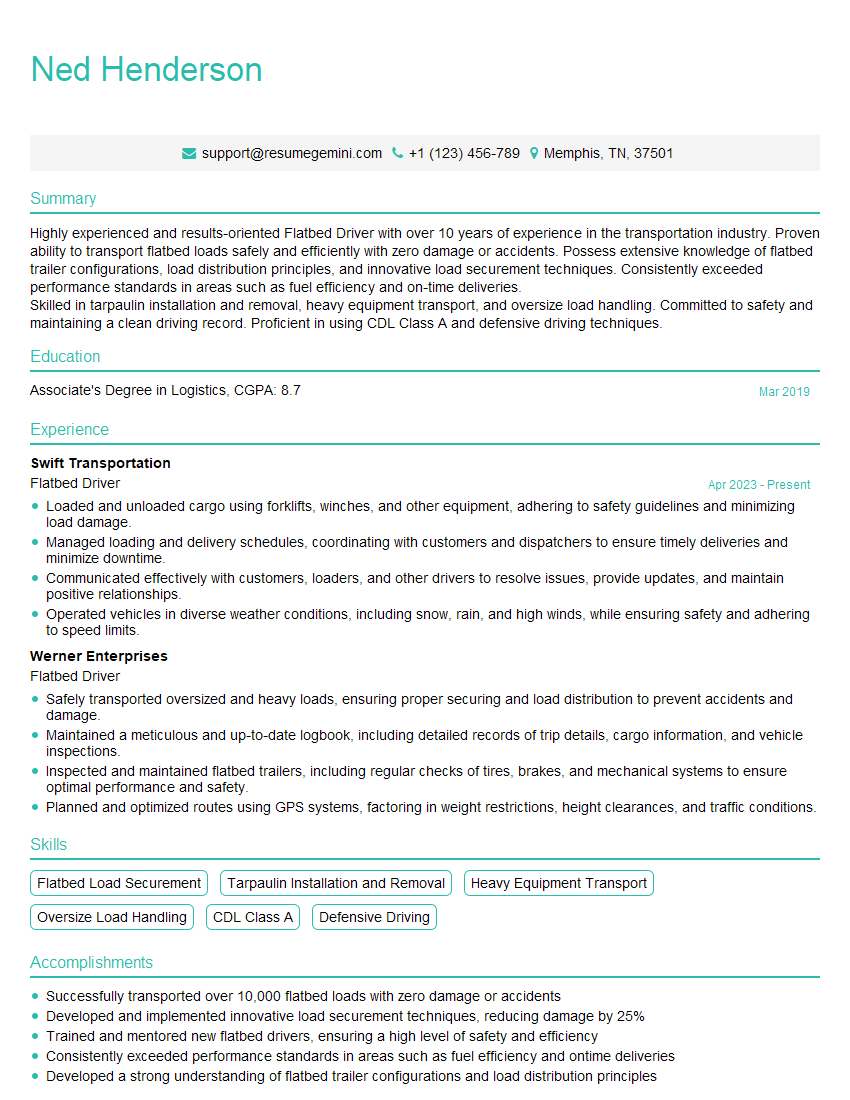
Mastering flatbed loading techniques opens doors to higher-paying roles with increased responsibility and career advancement opportunities within the transportation industry. A strong resume is crucial for showcasing your skills and experience to potential employers. Creating an ATS-friendly resume maximizes your chances of getting noticed by recruiters and hiring managers. To help you build a compelling and effective resume, we recommend using ResumeGemini, a trusted resource for creating professional resumes. Examples of resumes tailored to Flatbed Loading positions are available for your review, providing valuable guidance as you prepare your application materials.
Explore more articles
Users Rating of Our Blogs
Share Your Experience
We value your feedback! Please rate our content and share your thoughts (optional).
What Readers Say About Our Blog
Very informative content, great job.
good