Interviews are more than just a Q&A session—they’re a chance to prove your worth. This blog dives into essential Flight Safety and Risk Management interview questions and expert tips to help you align your answers with what hiring managers are looking for. Start preparing to shine!
Questions Asked in Flight Safety and Risk Management Interview
Q 1. Describe your understanding of the SHELL model in aviation safety.
The SHELL model is a widely used framework in aviation safety that helps understand and manage the complex interactions between various elements contributing to flight safety. It’s an acronym representing Software, Hardware, Environment, Liveware, and Liveware-Liveware interaction.
- Software: This includes all the software systems on the aircraft, from flight management systems to entertainment systems. Malfunctions or design flaws can introduce risks.
- Hardware: This encompasses the physical components of the aircraft, engines, instruments, and other equipment. Mechanical failures or aging components can lead to incidents.
- Environment: This refers to the external factors impacting flight, such as weather conditions (e.g., turbulence, low visibility), air traffic density, and terrain. Unfavorable conditions increase the risk of accidents.
- Liveware: This represents the human element, including pilots, air traffic controllers, maintenance personnel, and others. Human error is a significant contributor to aviation accidents, highlighting the importance of training, procedures and proper rest.
- Liveware-Liveware Interaction: This crucial aspect focuses on the communication and coordination between different individuals within the system. Poor communication between the flight crew and air traffic control can lead to near misses or accidents.
Think of it like a five-layered cake – if one layer is compromised, the stability of the entire system is at risk. The SHELL model helps systematically identify and mitigate hazards across all these interacting elements.
Q 2. Explain the importance of Human Factors in flight safety.
Human factors are paramount in flight safety because human error accounts for a significant portion of aviation accidents and incidents. It encompasses the psychological, physiological, and organizational aspects that influence human performance in the aviation environment.
- Physiological Factors: Fatigue, illness, and physical limitations can impair a pilot’s decision-making and ability to react to unexpected events. For example, sleep deprivation can significantly reduce cognitive function.
- Psychological Factors: Stress, workload, and emotional state directly impact performance. High workload in a critical situation can lead to errors.
- Organizational Factors: Inadequate training, poor communication, and insufficient resources within an airline can create a climate where errors are more likely. A safety culture that doesn’t prioritize reporting of errors creates a hidden problem that can’t be mitigated.
Understanding human factors allows us to design safer cockpits, improve training programs, and implement better operational procedures to minimize human error and enhance safety. For example, Crew Resource Management (CRM) training focuses on improving teamwork and communication, directly addressing the liveware-liveware interaction in the SHELL model.
Q 3. What are the key elements of a robust aviation safety management system (SMS)?
A robust Aviation Safety Management System (SMS) is a systematic approach to managing safety, aiming to proactively identify and mitigate risks. Its key elements include:
- Safety Policy: A formal statement of commitment from top management to prioritize safety.
- Safety Risk Management (SRM): A process of identifying hazards, assessing risks, and implementing controls to mitigate those risks. This often involves hazard identification reports and risk assessments.
- Safety Assurance: Monitoring the effectiveness of implemented safety measures through audits, inspections, and performance reviews.
- Safety Promotion: Creating a safety culture where reporting of hazards and near-misses is encouraged without fear of retribution. This often involves training, communication, and feedback mechanisms.
- Accountability: Clearly defined roles and responsibilities for safety management throughout the organization.
A well-functioning SMS is not a one-time implementation but a continuous cycle of improvement, driven by data analysis and a commitment to a proactive safety culture. It’s crucial for airlines, airports, and other aviation organizations to ensure the highest safety standards.
Q 4. How would you investigate a near-miss incident?
Investigating a near-miss incident requires a systematic and thorough approach to understand the contributing factors and prevent future occurrences. The process generally includes:
- Data Collection: Gathering all relevant information, including flight data recorder (FDR) and cockpit voice recorder (CVR) data, witness statements, weather reports, maintenance logs, and air traffic control communications.
- Fact Finding: Establishing a timeline of events and identifying the sequence of actions leading up to the near-miss.
- Analysis: Identifying the contributing factors. This often involves using tools such as human factors analysis and decision-making models to understand the root causes.
- Recommendations: Developing specific, actionable recommendations to mitigate similar risks in the future. This may include changes to procedures, training, equipment, or maintenance practices.
- Implementation and Follow-up: Ensuring that the recommendations are implemented and verifying their effectiveness through monitoring and auditing.
It’s crucial to maintain objectivity and avoid assigning blame during the investigation. The goal is to learn from the event and improve safety, not to punish individuals. A thorough near-miss investigation provides valuable insights that can significantly improve aviation safety.
Q 5. Explain the difference between proactive and reactive safety measures.
Proactive and reactive safety measures represent two distinct approaches to managing risk:
- Proactive Safety Measures: These measures aim to prevent accidents before they happen. They focus on identifying potential hazards and implementing controls to mitigate those risks *before* an incident occurs. Examples include regular aircraft maintenance, pilot training, and the implementation of SMS.
- Reactive Safety Measures: These measures are implemented *after* an accident or incident has occurred. They focus on investigating the event, identifying the root causes, and implementing corrective actions to prevent similar incidents in the future. Examples include post-accident investigations and regulatory changes based on accident findings.
Ideally, a strong safety program incorporates both proactive and reactive measures. Proactive measures minimize the likelihood of incidents occurring in the first place, while reactive measures address incidents that do occur, learning from them and preventing future similar occurrences. A strong emphasis on proactive measures is key to a robust safety culture.
Q 6. What are your experiences with flight data monitoring (FDM) and its application to risk mitigation?
Flight Data Monitoring (FDM) is a powerful tool for improving aviation safety. It involves the systematic collection, analysis, and feedback of objective flight data to identify trends, anomalies, and potential safety issues.
My experience with FDM includes working with large datasets of flight parameters, identifying unusual flight maneuvers or deviations from standard operating procedures. This can reveal latent safety issues, such as pilot technique, aircraft performance, or environmental factors that might not be evident through traditional safety reporting methods. For example, we might identify a pattern of consistently higher-than-normal landing speeds in a particular aircraft type, which could lead to an investigation into the possible root causes and implementation of corrective actions to mitigate the identified risk.
FDM’s application in risk mitigation is significant because it allows for the identification of potential problems *before* they lead to accidents. It shifts the focus from reacting to incidents to proactively addressing latent safety threats. It is a valuable tool for continuous improvement in flight safety.
Q 7. Describe your knowledge of ICAO safety standards and recommendations.
The International Civil Aviation Organization (ICAO) sets global standards and recommended practices for aviation safety. My understanding encompasses a range of their key documents and annexes, focusing on areas such as:
- Annex 6 – Operation of Aircraft: This annex covers various aspects of aircraft operation, including flight crew licensing, airworthiness, and operational procedures. Compliance with this annex is crucial for ensuring safe flight operations.
- Annex 17 – Airworthiness of Aircraft: This establishes criteria for the design and manufacture of safe and airworthy aircraft.
- Annex 19 – Safety Management: This outlines the framework for an effective SMS, including the key elements I discussed previously. It promotes a proactive approach to safety management in the aviation industry.
- SARPs (Standards and Recommended Practices): These documents provide detailed guidance on various aspects of aviation safety, covering everything from aircraft maintenance to air traffic management. Compliance with SARPs ensures a globally consistent level of aviation safety.
ICAO standards and recommendations form the backbone of the global aviation safety system. Staying current with these standards and their updates is vital for any professional in the field of flight safety and risk management. These guidelines ensure interoperability and a globally consistent approach to minimizing risks in the air transport system.
Q 8. How do you identify and assess safety risks in a flight operation?
Identifying and assessing safety risks in flight operations is a systematic process that involves proactively pinpointing potential hazards and evaluating their likelihood and severity. It’s like a detective story, where we gather clues to prevent a potential accident before it happens.
The process typically involves:
- Hazard Identification: This involves brainstorming sessions, reviewing historical data (accident reports, incident reports, near-misses), using checklists, and conducting operational risk assessments. For instance, we might analyze weather patterns at a particular airport to identify potential risks of low visibility landings.
- Risk Analysis: This stage uses qualitative or quantitative methods to assess the likelihood and severity of each identified hazard. Likelihood refers to the probability of the hazard occurring, and severity is the potential impact of the hazard if it occurs. A simple risk matrix can be used, assigning a numerical score to both likelihood and severity to arrive at an overall risk score. A high likelihood and high severity hazard naturally needs immediate attention.
- Risk Mitigation: This step involves developing strategies to reduce or eliminate identified risks. For example, if low visibility is a recurring problem, implementing a new instrument approach procedure might be a mitigation strategy. Other strategies could include improved training, changes in operating procedures, or technological upgrades.
- Risk Monitoring and Review: This is crucial because risks are dynamic. Regularly reviewing risk assessments ensures that the identified risks are still relevant and the mitigation strategies remain effective. The effectiveness of our actions is continuously measured and we adapt our strategies accordingly.
By employing this systematic approach, we can proactively mitigate safety risks, creating a safer environment for flight operations.
Q 9. Explain the process of conducting a safety audit.
A safety audit is a systematic and independent examination of an organization’s safety management system (SMS) to evaluate its effectiveness in preventing accidents and incidents. Think of it as a thorough health check for your aviation operation.
The process typically involves:
- Planning: Defining the scope, objectives, and methodology of the audit. This includes identifying the areas to be audited and the resources required.
- Data Collection: Gathering evidence through document reviews, interviews, observations, and checklists. This stage requires thoroughness and attention to detail.
- Analysis: Evaluating the collected data against established safety standards and best practices. This involves identifying gaps or deficiencies in the SMS.
- Reporting: Preparing a comprehensive report summarizing the findings, including identified deficiencies, root causes, and recommendations for improvement. This report should be clear, concise, and action-oriented.
- Follow-up: Monitoring the implementation of corrective actions to ensure that identified deficiencies are addressed and the SMS is continuously improved. This is the vital closing stage for implementing sustainable change.
A well-conducted safety audit helps organizations identify areas for improvement and enhance their safety performance. It’s a proactive tool to prevent accidents and incidents.
Q 10. What are some common safety hazards in aviation, and how can they be mitigated?
Aviation faces numerous safety hazards, many stemming from human factors, equipment failures, and environmental conditions. These can be categorized broadly, and addressing them requires a layered approach.
- Pilot Error: Human error is a major contributor to aviation accidents. This includes fatigue, poor decision-making, inadequate training, and complacency. Mitigation: Implementing robust training programs, fatigue management strategies, and standardizing operating procedures.
- Mechanical Failure: Malfunctions in aircraft systems (engines, flight controls, etc.) pose a significant threat. Mitigation: Strict maintenance schedules, regular inspections, and the use of reliable and well-maintained equipment.
- Weather Conditions: Adverse weather like storms, fog, and icing can severely impact flight safety. Mitigation: Using weather forecasting technology, choosing alternative routes or postponing flights, and investing in advanced weather avoidance systems.
- Air Traffic Control Errors: Communication breakdowns or errors in air traffic management can lead to near-misses or collisions. Mitigation: Implementing advanced air traffic management systems, investing in better communication technologies, and robust training for air traffic controllers.
- Bird Strikes: Collisions with birds can cause significant damage to aircraft. Mitigation: Implementing bird deterrent strategies at airports, including habitat management and bird scarers.
Effective safety management involves identifying these hazards, understanding their root causes, and implementing tailored mitigation strategies, often involving multiple layers of defense to account for failures in any single layer.
Q 11. How familiar are you with various risk assessment methodologies (e.g., HAZOP, FMEA)?
I am highly familiar with several risk assessment methodologies, including HAZOP (Hazard and Operability Study) and FMEA (Failure Mode and Effects Analysis). Each approach has its strengths and is suitable for different applications.
- HAZOP: This systematic technique identifies hazards by examining deviations from design or operating parameters. It involves a structured team review, using guide words (e.g., ‘no,’ ‘more,’ ‘less’) to probe potential deviations and their consequences. This methodology is very effective for complex systems.
- FMEA: This approach focuses on identifying potential failures of individual components or systems and assessing their impact on the overall system. It’s particularly useful for evaluating the reliability of equipment and systems. Each failure is examined for severity, likelihood, and detection potential, with a risk priority number (RPN) typically assigned.
The choice of methodology depends on the specific application and the level of detail required. For instance, HAZOP might be best suited for assessing the safety of a new airport design, while FMEA could be more suitable for evaluating the reliability of a particular aircraft system.
Q 12. Describe your experience with accident investigation techniques.
My experience with accident investigation techniques encompasses both the technical and human factors aspects. It follows a systematic approach, aiming to understand the sequence of events and underlying causes, not just to assign blame but to learn and prevent future occurrences.
The process usually follows these steps:
- Data Gathering: Collecting all available data, including flight data recorders (FDR), cockpit voice recorders (CVR), witness statements, weather reports, maintenance records, and any other relevant information. This stage often necessitates on-site inspections and forensic analysis.
- Fact Finding: Establishing a timeline of events, examining physical evidence, and verifying information from various sources. This is a critical phase to build an accurate understanding of the sequence of events.
- Cause Analysis: Investigating the root causes of the accident, going beyond the immediate causes to identify underlying systemic issues. Tools like fault tree analysis or causal chain analysis are often employed.
- Safety Recommendations: Based on the findings, developing specific, measurable, achievable, relevant, and time-bound (SMART) recommendations to prevent similar accidents in the future. This focuses on effective preventative measures.
- Reporting: Preparing a comprehensive accident report that details the findings, causal factors, and safety recommendations. This report is often made public to benefit the wider aviation community.
Accident investigation is a meticulous process that demands objectivity, analytical skills, and a commitment to learning from past mistakes to enhance overall safety.
Q 13. What are your strengths in communication and teamwork, particularly relevant in safety-critical environments?
In safety-critical environments, effective communication and teamwork are paramount. My strengths in these areas are crucial for fostering a culture of safety.
- Communication: I can communicate complex technical information clearly and concisely to diverse audiences, from pilots and engineers to senior management. I also excel at active listening, ensuring that everyone’s perspective is understood. Clear and concise communication is essential in conveying critical information to the cockpit, flight operations, or emergency responders.
- Teamwork: I am adept at working collaboratively in diverse teams, fostering a culture of open communication and mutual respect. I value diverse perspectives and believe that the best solutions emerge from collaborative efforts. In accident investigations, teamwork is key to piecing together complex scenarios objectively and constructively.
I believe in a collaborative, transparent approach to safety, where everyone feels empowered to speak up and contribute to a safer working environment. I have experience building consensus and ensuring that safety recommendations are implemented effectively.
Q 14. How would you communicate a safety issue to senior management?
Communicating a safety issue to senior management requires a structured and persuasive approach. My method focuses on providing a clear and concise presentation that facilitates informed decision-making.
The key elements of my approach include:
- Clear and Concise Summary: Begin by outlining the safety issue in a succinct and easily understandable manner. Use plain language, avoiding unnecessary jargon.
- Objective Assessment of Risk: Provide a clear picture of the potential impact of the issue. Quantify the risk where possible, using data and evidence to support your assessment.
- Proposed Mitigation Strategies: Present clear and specific mitigation strategies, along with cost-benefit analyses where relevant. Demonstrate that you’ve considered multiple solutions and chosen the most appropriate course of action.
- Timeline and Resources: Outline the necessary resources and a realistic timeline for implementing the proposed mitigation strategies.
- Recommendation for Action: Clearly state your recommendations for immediate and long-term action. This should highlight the priority of addressing the safety issue and its potential consequences if left unaddressed.
I would always tailor my approach based on the specific audience and their level of technical knowledge, ensuring the communication is effective and results in the necessary action.
Q 15. Explain the concept of Just Culture in aviation safety.
Just Culture in aviation safety is a philosophy that aims to balance accountability with a learning environment. It doesn’t tolerate reckless behavior, but it also recognizes that errors happen, even among highly skilled professionals. The focus shifts from blaming individuals to understanding the underlying systemic issues that contribute to errors. This encourages reporting of incidents without fear of retribution, fostering a culture of transparency and continuous improvement.
Instead of a punitive approach, a Just Culture promotes a learning approach where errors are investigated to identify root causes and implement corrective actions. For instance, if a pilot makes a mistake, the investigation will look at factors such as fatigue, inadequate training, equipment malfunctions, or poor communication. The goal is to prevent similar incidents from occurring, rather than simply punishing the pilot. This creates a positive feedback loop where individuals are more likely to report errors and near misses, leading to a safer operational environment.
- Accountable: Individuals are accountable for their actions, but the focus is on identifying and addressing unsafe acts and unsafe conditions.
- Learning: The primary goal is to learn from errors and prevent recurrence, not to assign blame.
- Transparent: Open communication and reporting are encouraged, removing the stigma associated with reporting errors.
Career Expert Tips:
- Ace those interviews! Prepare effectively by reviewing the Top 50 Most Common Interview Questions on ResumeGemini.
- Navigate your job search with confidence! Explore a wide range of Career Tips on ResumeGemini. Learn about common challenges and recommendations to overcome them.
- Craft the perfect resume! Master the Art of Resume Writing with ResumeGemini’s guide. Showcase your unique qualifications and achievements effectively.
- Don’t miss out on holiday savings! Build your dream resume with ResumeGemini’s ATS optimized templates.
Q 16. How do you prioritize safety issues based on risk levels?
Prioritizing safety issues based on risk levels involves a systematic approach using risk assessment methodologies. A common approach involves using a risk matrix that considers the likelihood of an event occurring and the severity of its consequences. This is often represented visually as a matrix with likelihood and severity axes, each with predefined levels (e.g., low, medium, high).
For example, a low likelihood, high severity event (like an engine failure) might get a high priority even though it’s unlikely because the consequences are catastrophic. Conversely, a high likelihood, low severity event (like a minor equipment malfunction) might receive a lower priority, although it happens frequently. The process typically involves:
- Identify Hazards: A systematic identification of potential hazards through methods like HAZOP (Hazard and Operability Study) or checklists.
- Assess Risk: Determining the likelihood and severity of each hazard using qualitative or quantitative methods. Risk = Likelihood x Severity.
- Prioritize: Rank hazards based on their risk level, focusing resources on the highest-risk items first. This could involve using a risk matrix or other ranking techniques.
- Implement Controls: Implement risk mitigation strategies like safety procedures, equipment upgrades, or training to reduce the likelihood or severity of identified hazards.
- Monitor and Review: Regularly monitor the effectiveness of implemented controls and reassess risks as needed.
Q 17. What are some effective strategies for promoting a safety-conscious culture?
Promoting a safety-conscious culture requires a multi-faceted approach that focuses on leadership commitment, proactive hazard identification, robust reporting systems, and continuous learning. Think of it as building a strong foundation of safety awareness from the ground up.
- Leadership Commitment: Visible and active support from senior management is paramount. This includes setting clear safety goals, providing adequate resources, and rewarding safe behavior.
- Proactive Hazard Identification: Regular safety audits, hazard reporting systems, and safety management systems (SMS) are crucial for proactively identifying and addressing potential hazards before they lead to incidents. This might include conducting safety inspections, using checklists, or implementing safety management tools.
- Robust Reporting Systems: Creating a culture where individuals feel comfortable reporting errors and near misses without fear of retribution is essential. This requires a confidential, non-punitive reporting system that focuses on learning from errors rather than assigning blame.
- Continuous Learning: Regular safety training, recurrent training for pilots and crew, and participation in industry best-practice sharing are critical for maintaining knowledge and updating safety procedures. This may include workshops, simulations and online training modules.
- Safety Communication: Regular safety briefings, newsletters, and meetings help to spread safety awareness and ensure everyone is informed about safety-related issues.
A great example of a successful safety-conscious culture is that of Scandinavian airlines, which has a reputation for prioritizing safety and proactively engaging staff in safety programs.
Q 18. Describe your understanding of regulatory compliance in aviation.
Regulatory compliance in aviation is critical for maintaining safety and ensuring the safe operation of aircraft. It involves adhering to all applicable national and international regulations and standards set by organizations such as the FAA (Federal Aviation Administration) in the US, EASA (European Union Aviation Safety Agency) in Europe, and ICAO (International Civil Aviation Organization) globally. Non-compliance can lead to serious consequences, including fines, grounding of aircraft, and even criminal charges.
Compliance involves various aspects, including:
- Aircraft Maintenance: Adherence to strict maintenance schedules and regulations to ensure airworthiness.
- Pilot Licensing and Training: Pilots must meet specific licensing requirements and undergo recurrent training to maintain proficiency.
- Operational Procedures: Airlines and other operators must follow established operational procedures and safety guidelines.
- Safety Management Systems (SMS): Implementation of a robust SMS to proactively manage safety risks and improve safety performance.
- Accident and Incident Reporting: Timely and accurate reporting of accidents and incidents to regulatory authorities.
Compliance is not merely about following rules; it’s about creating a safety culture that values adherence to regulations as a fundamental element of safe operations. Regular audits and inspections by regulatory authorities ensure compliance.
Q 19. How do you stay updated on the latest safety regulations and best practices?
Staying updated on the latest aviation safety regulations and best practices is an ongoing process that requires a proactive approach. This is crucial given the ever-evolving nature of aviation technology and safety concerns.
- Regulatory Websites: Regularly reviewing the websites of relevant regulatory bodies (e.g., FAA, EASA, ICAO) for updates, new regulations, and safety advisories.
- Industry Publications and Journals: Subscribing to aviation safety journals and publications that provide insights into new research, best practices, and emerging safety challenges.
- Conferences and Seminars: Attending industry conferences and seminars where leading experts discuss the latest trends and advances in aviation safety.
- Professional Organizations: Engaging with professional organizations like the AIAA (American Institute of Aeronautics and Astronautics) or similar groups which often provide access to updated information and resources.
- Safety Newsletters and Alerts: Subscribing to industry newsletters and alert services to receive updates on important safety-related news.
A continuous learning approach ensures professional knowledge remains current and allows for the adaptation of best practices within operational environments.
Q 20. What is your experience with safety reporting systems and data analysis?
My experience with safety reporting systems and data analysis involves working with various systems to collect, analyze, and interpret safety data to identify trends, patterns, and root causes of incidents. This helps to improve safety performance and prevent future occurrences.
This includes:
- Data Collection: Utilizing various safety reporting systems to collect data on incidents, near misses, and hazards. This might involve using specialized software or databases.
- Data Analysis: Employing statistical methods and data visualization techniques to identify trends, patterns, and correlations within the collected data. This could involve using tools like spreadsheets, statistical software, or specialized safety analysis software.
- Root Cause Analysis: Conducting thorough investigations to determine the underlying causes of incidents and near misses using methods like the “5 Whys” technique or fault tree analysis.
- Reporting and Recommendations: Preparing reports summarizing findings and providing recommendations for corrective actions and preventive measures.
- Implementing Recommendations: Working with stakeholders to implement the recommendations and monitor their effectiveness.
For example, I’ve been involved in analyzing data from flight data recorders (FDRs) and cockpit voice recorders (CVRs) to understand the circumstances surrounding incidents and to contribute to the development of safety recommendations.
Q 21. Explain the principles of Crew Resource Management (CRM).
Crew Resource Management (CRM) is a system-wide approach to managing human factors in aviation, emphasizing effective communication, teamwork, and leadership among flight crews. It recognizes that human error is a major contributor to aviation accidents and aims to mitigate this risk through improved human performance.
The core principles of CRM include:
- Communication: Clear, concise, and effective communication among crew members is essential for safe flight operations. This includes using standardized phraseology and actively listening to each other.
- Teamwork: Crew members must work together effectively as a team, sharing information, responsibilities, and workload appropriately. This involves delegation and collaboration in decision-making.
- Leadership: Effective leadership is essential for managing the flight crew and ensuring that decisions are made in a timely and safe manner. This is not just for the Captain, but also a shared responsibility.
- Situational Awareness: Maintaining a clear understanding of the current situation, including aircraft status, weather conditions, and traffic patterns, is crucial for making informed decisions.
- Decision-Making: A systematic approach to decision-making is essential, involving risk assessment, consideration of alternatives, and clear communication of decisions to the crew.
- Error Management: Recognizing that errors will occur, implementing strategies to detect and recover from errors effectively is critical. This includes using checklists and standardized procedures.
CRM training often uses simulations and role-playing to practice communication, teamwork, and decision-making skills in realistic scenarios, effectively building resilience to potential challenges during flight operations.
Q 22. How would you manage a safety critical situation with limited resources?
Managing a safety-critical situation with limited resources demands a swift, prioritized approach. Think of it like a triage in a hospital – you focus on the most critical issues first.
- Prioritization: Identify the immediate threats to life and aircraft. Is there an imminent fire? Is the aircraft experiencing a critical system failure? These take precedence over less urgent problems.
- Resource Allocation: With limited resources, you must allocate them strategically. If you only have one qualified mechanic, assign them to the most critical repair first. Communication is crucial here; let everyone know the plan and what their role is.
- Emergency Procedures: Rely on established emergency procedures. These procedures are designed to manage crises efficiently, even with limited resources. Proper training ensures everyone knows their roles and responsibilities.
- Risk Mitigation: Implement temporary fixes to mitigate the risk. This might involve reducing weight to compensate for a malfunctioning system or diverting to a closer airport.
- Post-Incident Analysis: Even in a time-sensitive situation, ensure that you gather necessary information for a thorough post-incident analysis. This will help prevent similar situations in the future.
For example, if a critical engine component fails mid-flight, the immediate priority would be to secure the aircraft and initiate a safe emergency landing. This might mean diverting to the nearest suitable airport, conserving fuel, and communicating effectively with air traffic control and maintenance personnel. Post-incident, a thorough review would analyze the cause of the failure and identify opportunities to improve maintenance procedures.
Q 23. Describe your understanding of fatigue management and its impact on safety.
Fatigue management is paramount in aviation safety. Pilot fatigue, in particular, significantly increases the risk of human error, leading to accidents. It’s not just about lack of sleep; it’s about the cumulative effect of sleep deprivation, irregular sleep schedules, and other stressors.
- Physiological Impact: Fatigue impairs cognitive functions like decision-making, attention, and reaction time. It also reduces situational awareness, increasing the risk of mistakes during critical phases of flight.
- Regulatory Frameworks: Regulations like Flight Time Limitations (FTLs) exist to prevent excessive fatigue. These regulations specify maximum flight and duty times, rest periods, and other factors to minimize fatigue risk.
- Company Policies: Airlines and operators have their internal policies that further refine the regulatory framework and often incorporate best practices for managing fatigue. These can include proactive measures such as fatigue risk management systems (FRMS) and crew scheduling tools.
- Individual Responsibility: Pilots also play a vital role. Maintaining a healthy sleep schedule, practicing good sleep hygiene, and communicating fatigue concerns to management are crucial.
Imagine a pilot starting a long-haul flight after several short nights. Their reaction time might be slower, their judgment impaired. This could lead to an incorrect response to an unexpected situation, with potentially catastrophic consequences.
Q 24. How would you use root cause analysis (RCA) to investigate an aviation accident?
Root Cause Analysis (RCA) is a systematic approach to investigating accidents and incidents. The goal is not simply to identify what happened, but *why* it happened, to prevent recurrence. I use a combination of methods, often the ‘5 Whys’ technique along with a more formal model like the ‘Swiss Cheese’ model.
- Data Collection: This involves gathering all relevant information – flight data recorders (FDR), cockpit voice recorders (CVR), witness statements, maintenance logs, weather reports.
- Timeline Development: Creating a timeline of events helps establish the sequence of events leading to the accident.
- 5 Whys Technique: This iterative technique involves asking ‘why’ five times to drill down to the root cause. For example, ‘Why did the engine fail? Because of oil starvation. Why was there oil starvation? Because the oil pump failed. Why did the oil pump fail? Because of inadequate maintenance…and so on.’
- Swiss Cheese Model: This model visualizes how multiple layers of safety defenses can fail, allowing an accident to occur. Each slice of cheese represents a safety barrier. Holes in the cheese represent failures in those barriers. An accident happens when the holes in multiple layers align.
- Recommendations: Once the root cause is identified, recommendations are made to prevent future occurrences. This might involve modifying procedures, improving training, or implementing new technologies.
In a recent investigation I participated in, the initial cause was a landing gear failure. Using the 5 Whys and Swiss Cheese, we discovered the root cause was inadequate pre-flight inspection procedures combined with insufficient training of maintenance personnel. This led to recommendations for improved training programs and a revised pre-flight checklist.
Q 25. What is your experience with safety training and education programs?
My experience encompasses developing and delivering safety training programs across various levels, from initial ground school for new pilots to recurrent training for experienced crews. I have a strong belief in using a mix of methods for effective learning.
- Classroom Instruction: I’ve led classroom sessions on topics like risk management, human factors, emergency procedures, and safety management systems (SMS).
- Simulation Training: I’ve designed and implemented realistic simulations to practice emergency scenarios and enhance situational awareness in a safe environment. This ranges from flight simulators to tabletop exercises involving various stakeholders.
- Interactive Workshops: I favor interactive workshops and group discussions to encourage participation and knowledge sharing. Case studies and real-world examples are pivotal in making the training relevant and engaging.
- E-Learning Modules: I have utilized e-learning platforms for delivery of less time-sensitive but important training modules. This allows for flexibility and better resource allocation.
For instance, I developed a new training module on CRM (Crew Resource Management) using a combination of interactive scenarios, case studies from real-world incidents, and group discussions. The feedback from participants was overwhelmingly positive, highlighting improved communication and teamwork skills.
Q 26. What are the challenges in implementing a robust SMS in a small airline?
Implementing a robust SMS in a small airline presents unique challenges. Resources, both financial and human, are often limited.
- Limited Resources: Small airlines may struggle to dedicate personnel and budget to a full-fledged SMS program.
- Lack of Expertise: Finding and retaining qualified safety professionals can be difficult, especially in smaller operations.
- Organizational Culture: Building a safety-conscious culture can be harder in smaller organizations where hierarchical structures might hinder open communication about safety concerns.
- Data Collection & Analysis: Gathering and analyzing safety data requires dedicated systems and expertise, which may not be readily available in smaller airlines.
- Integration with Existing Systems: A new SMS must integrate seamlessly with existing operational systems without disrupting workflows.
To overcome these, small airlines can leverage external expertise, utilize cost-effective technologies, and focus on simple, effective safety management practices. They should prioritize training and establish clear communication channels to foster a safety-conscious culture. A phased implementation approach, starting with the most critical aspects of safety, can also be very effective.
Q 27. Explain your experience with using safety performance indicators (SPIs).
Safety Performance Indicators (SPIs) are vital for tracking safety performance and identifying areas for improvement. They provide a quantifiable measure of safety, allowing for data-driven decision-making.
- Data Selection: Choosing the right SPIs is crucial. They should be relevant to the organization’s operations and provide a clear picture of its safety performance. Examples include accident rates, incident rates, near-miss reports, and maintenance discrepancies.
- Data Collection: Accurate and consistent data collection is essential for reliable SPIs. This may involve implementing new reporting systems, training personnel in proper reporting procedures, or integrating with existing data systems.
- Data Analysis: Regular analysis of SPI data is necessary to identify trends and patterns. Statistical methods might be used to understand the significance of any changes in SPI values.
- Reporting and Communication: SPI data should be communicated effectively to all relevant personnel, from management to frontline staff. Transparency is key to fostering a safety-conscious culture.
- Action Planning: Based on the SPI data, appropriate action plans should be developed and implemented to address any identified safety issues.
In my previous role, we used SPIs like accident rates and near-miss reports to track safety performance. When we noticed a spike in near-miss incidents related to runway incursions, we implemented new training programs and revised operating procedures, leading to a significant reduction in these incidents.
Q 28. How would you develop and implement a safety improvement plan?
Developing and implementing a safety improvement plan requires a structured approach. It’s not enough to just identify a problem; you need to create a plan to solve it and track progress.
- Hazard Identification: Start by identifying potential hazards. This can be done through various methods like hazard identification checklists, safety audits, incident reports, and feedback from personnel.
- Risk Assessment: Assess the likelihood and severity of each identified hazard. This helps prioritize the most critical issues.
- Control Measures: Develop control measures to mitigate the identified risks. These measures can range from simple procedural changes to implementing new technologies.
- Implementation: Implement the control measures, ensuring proper training and communication to all personnel involved.
- Monitoring and Evaluation: Monitor the effectiveness of the control measures by tracking relevant SPIs. Regular evaluation ensures that the plan is achieving its objectives.
- Review and Update: The safety improvement plan should be regularly reviewed and updated to reflect changes in the operating environment and emerging safety concerns.
For example, if a risk assessment reveals a high likelihood of ground collisions during taxiing, the improvement plan might involve implementing a surface detection system, enhancing training on taxiing procedures, and improving communication between ground control and pilots.
Key Topics to Learn for Flight Safety and Risk Management Interview
- Human Factors in Aviation: Understand the impact of human error on flight safety, including fatigue management, crew resource management (CRM), and the role of situational awareness.
- Accident Investigation and Reporting: Learn about various investigation methodologies, the importance of accurate reporting, and how lessons learned are implemented to prevent future occurrences. Practical application involves analyzing case studies and identifying contributing factors.
- Risk Assessment and Mitigation: Explore different risk assessment frameworks (e.g., HAZOP, bow-tie analysis) and develop strategies for mitigating identified risks. This includes understanding probabilistic risk assessment and the development of safety cases.
- Safety Management Systems (SMS): Familiarize yourself with the principles of SMS, including proactive safety culture, hazard identification, risk control, and safety performance monitoring. Understand how SMS contributes to continuous improvement in safety.
- Regulatory Compliance and Aviation Legislation: Demonstrate knowledge of relevant aviation regulations and their practical application in ensuring flight safety. This includes understanding the role of national and international aviation authorities.
- Emergency Response and Procedures: Understand emergency procedures and protocols, including crisis management and communication strategies during emergencies. Practical application would involve outlining steps in various emergency scenarios.
- Data Analysis and Safety Performance Indicators (SPIs): Develop skills in analyzing aviation safety data to identify trends, patterns, and areas for improvement. Understand how SPIs are used to monitor safety performance and drive decision-making.
Next Steps
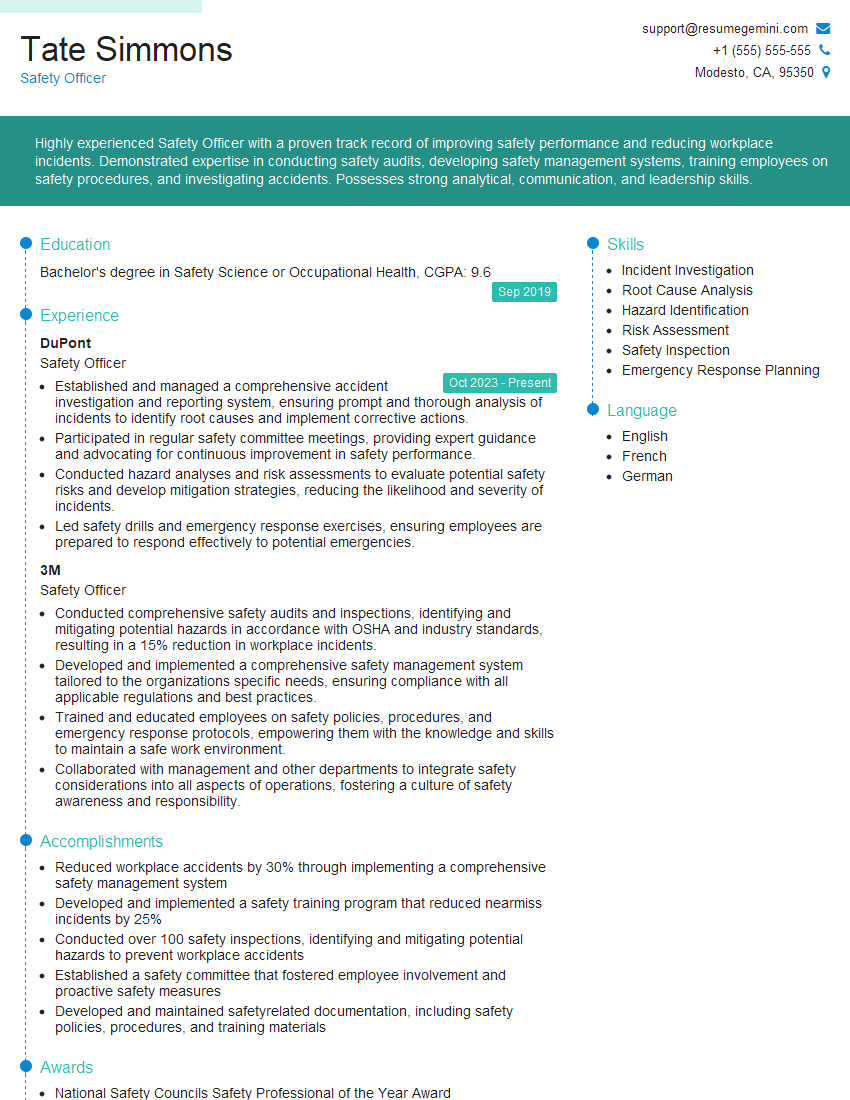
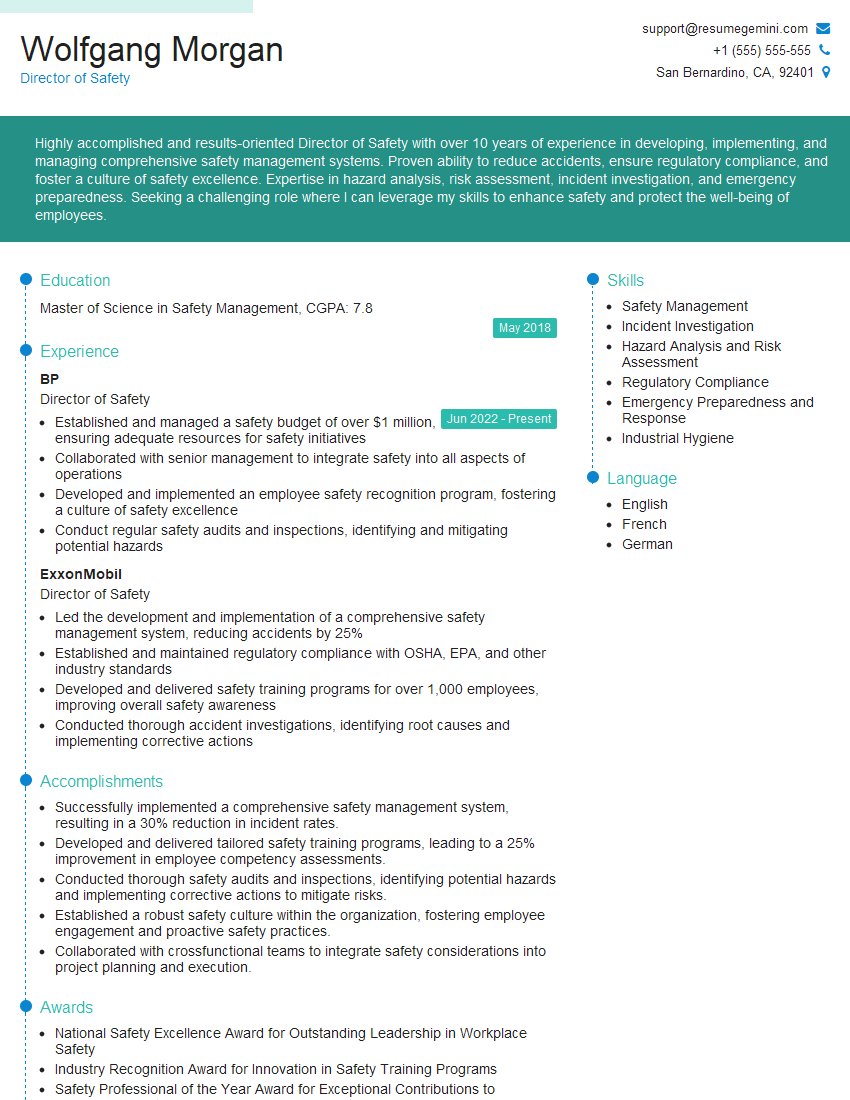
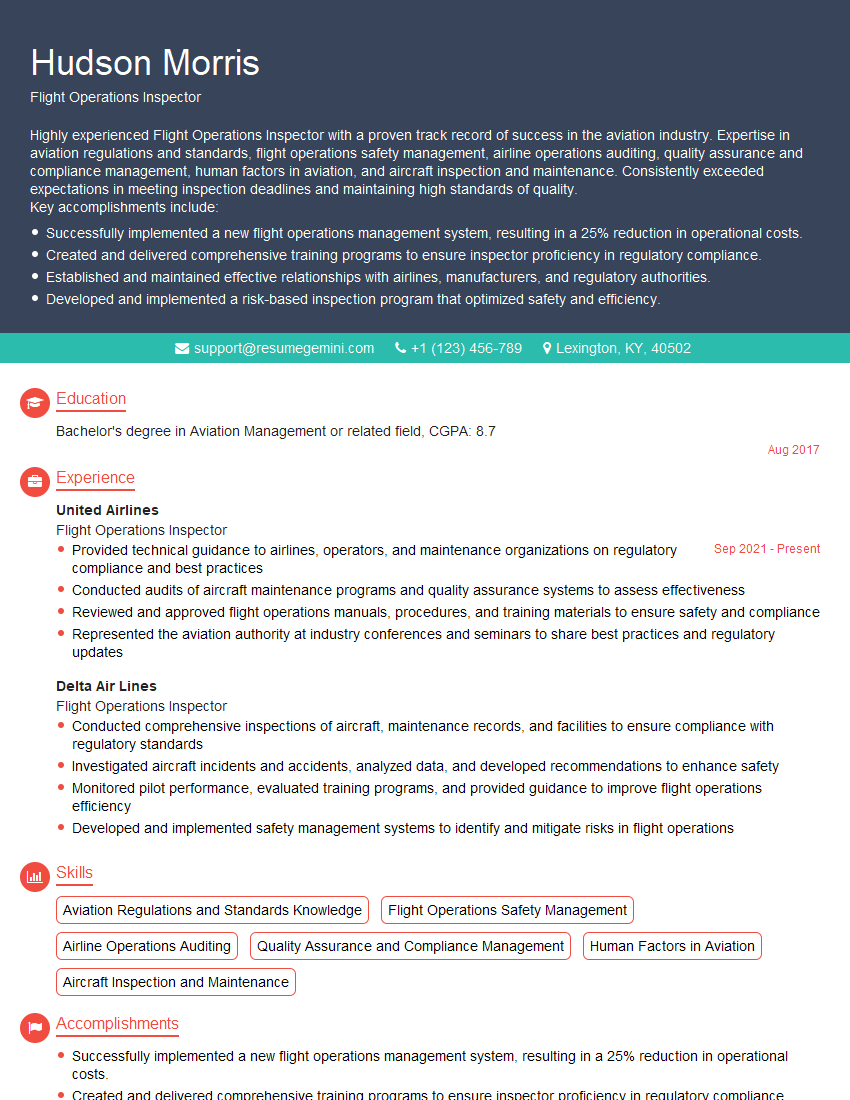
Mastering Flight Safety and Risk Management is crucial for career advancement in the aviation industry. It demonstrates a commitment to safety and a deep understanding of critical operational aspects. To significantly enhance your job prospects, create a compelling and ATS-friendly resume that showcases your skills and experience effectively. ResumeGemini is a trusted resource to help you build a professional and impactful resume. They offer examples of resumes tailored specifically to Flight Safety and Risk Management roles, giving you a head start in creating a document that stands out to potential employers. Invest the time to craft a strong resume – it’s your first impression and a crucial step towards a successful career.
Explore more articles
Users Rating of Our Blogs
Share Your Experience
We value your feedback! Please rate our content and share your thoughts (optional).
What Readers Say About Our Blog
Very informative content, great job.
good