Preparation is the key to success in any interview. In this post, we’ll explore crucial Flood Control Measures interview questions and equip you with strategies to craft impactful answers. Whether you’re a beginner or a pro, these tips will elevate your preparation.
Questions Asked in Flood Control Measures Interview
Q 1. Describe different types of flood control measures.
Flood control measures encompass a wide range of strategies aimed at mitigating the adverse effects of floods. These measures can be broadly categorized into structural and non-structural approaches.
- Structural Measures: These involve physical constructions to manage water flow. Examples include:
- Levees and Floodwalls: Earth embankments or concrete walls built along rivers or coastlines to contain floodwaters. Think of them as barriers protecting communities.
- Dams and Reservoirs: Structures that store excess water during periods of high rainfall, releasing it gradually to control downstream flow. They act like giant water storage tanks.
- Channelization: Modifying the shape and size of river channels to increase their capacity and speed up water flow. Imagine widening or deepening a river to accommodate more water.
- Floodgates and Weirs: Control structures that regulate the flow of water into and out of controlled areas. They’re like valves controlling water release.
- Non-Structural Measures: These involve policies, regulations, and community planning to reduce flood risk. Examples include:
- Floodplain Zoning and Land-Use Planning: Restricting development in high-risk flood zones to minimize potential damage. This means preventing construction in areas prone to flooding.
- Flood Forecasting and Warning Systems: Implementing systems to predict and communicate impending floods to allow for timely evacuation and preparedness. This provides crucial time for people to take action.
- Public Awareness and Education: Educating communities about flood risks and safety measures to increase preparedness. This equips people with the knowledge to protect themselves.
- Insurance and Financial Programs: Providing financial assistance to communities affected by floods for recovery and rebuilding.
Q 2. Explain the principles of hydraulic modeling in flood prediction.
Hydraulic modeling uses mathematical equations and computational tools to simulate the flow of water in rivers, channels, and other water bodies. It’s crucial for flood prediction because it allows us to analyze how water moves under various conditions.
The principle involves using software to create a digital representation of a river system, including its geometry, roughness, and rainfall inputs. The software then solves the equations governing water flow, predicting water levels and flow velocities at different points along the system under various rainfall scenarios. This helps predict potential flood extent and severity.
For instance, a model might incorporate data on rainfall intensity, river channel geometry, and soil infiltration rates to simulate a flood event. The output would show predicted water levels at different locations, enabling better flood forecasting and informed decision-making.
Q 3. What are the limitations of levees and floodwalls?
While levees and floodwalls offer a seemingly straightforward approach to flood protection, they have significant limitations:
- Failure risk: Levees and floodwalls can fail due to erosion, overtopping during exceptionally high floods, or structural weaknesses. The force of the water can overwhelm them, causing catastrophic breaches.
- False sense of security: They can encourage development in flood-prone areas, increasing the potential for damage and loss of life in the event of a levee failure. People might feel safer than they actually are.
- Environmental impacts: They can disrupt natural river processes, leading to habitat loss, altered sediment transport, and increased erosion downstream. The natural flow and ecosystem can be disrupted.
- High cost of maintenance: They require ongoing monitoring, inspection, and maintenance to ensure their structural integrity. Keeping them in good condition is expensive and vital.
- Increased flood risk downstream: When levees fail, the volume of water released can lead to more severe flooding downstream. The water has to go somewhere.
Q 4. How do you assess the risk of flooding in a given area?
Assessing flood risk involves a multi-step process, combining historical data, hydrological modeling, and risk analysis techniques. It’s similar to evaluating the risk of any other hazard—considering the likelihood and potential consequences.
- Data Collection: Gather historical flood data (water levels, rainfall, etc.), topographic maps, soil data, land use information, and information on existing infrastructure.
- Hydrological Modeling: Use hydraulic models to simulate flood events under different rainfall scenarios to estimate flood extent and depth.
- Vulnerability Assessment: Identify exposed assets (buildings, infrastructure, population) within the floodplains. Determine which areas are most likely to be impacted.
- Risk Calculation: Combine the likelihood of a flood occurring (probability) with the potential consequences (vulnerability) to calculate the flood risk. This often involves quantitative measures.
- Risk Mapping: Visualize the flood risk using maps that show the extent and severity of potential flooding. This helps visualize the areas at greatest risk.
Q 5. Explain the role of GIS in flood risk management.
Geographic Information Systems (GIS) are invaluable tools in flood risk management. They provide a powerful platform to manage and visualize spatial data related to floods.
GIS allows for integrating various datasets, such as elevation models, rainfall data, land use maps, and infrastructure locations, to create comprehensive flood risk maps. These maps can be used to:
- Identify high-risk areas: Pinpoint locations most susceptible to flooding based on topography, proximity to water bodies, and other factors.
- Assess vulnerability: Determine the potential impact of flooding on various elements like buildings, infrastructure, and population.
- Plan mitigation strategies: Design and implement flood control measures (levees, dams, etc.) based on the spatial distribution of risk.
- Support emergency response: Provide real-time information during floods to aid in evacuation efforts and resource allocation.
- Community outreach and education: Communicate flood risk information effectively to the public through maps and other visualizations.
Q 6. Discuss the importance of watershed management in flood control.
Watershed management plays a crucial role in flood control because it addresses the root causes of flooding at the source. A watershed is the land area that drains into a common outlet, such as a river or lake.
Effective watershed management practices focus on reducing runoff and increasing infiltration (absorption of water into the soil):
- Reforestation and Afforestation: Planting trees increases water absorption and reduces surface runoff.
- Improved Land-Use Practices: Implementing sustainable agricultural practices such as contour plowing and no-till farming minimizes soil erosion and increases infiltration.
- Wetland Restoration: Restoring and protecting wetlands enhances water storage and reduces peak flows.
- Construction of Retention Ponds and Swales: These structures capture and slowly release runoff, reducing the volume and velocity of water entering streams and rivers.
- Permeable Pavements: Using materials that allow water to infiltrate the ground instead of running off.
By managing the entire watershed, we can lessen the overall flood risk significantly by slowing down and absorbing rainfall before it reaches downstream areas.
Q 7. Describe different methods for managing stormwater runoff.
Stormwater runoff management aims to minimize the volume and velocity of water flowing off impervious surfaces (roads, roofs, etc.) during rainfall events. The goal is to mimic natural water cycles to prevent flooding and water pollution.
- Green Infrastructure: Employing nature-based solutions like rain gardens, bioswales, and green roofs to absorb and filter stormwater.
- Stormwater Detention Basins: Creating basins to temporarily store stormwater runoff, slowly releasing it afterward.
- Improved Drainage Systems: Upgrading existing drainage systems to increase their capacity to handle larger volumes of water.
- Permeable Pavements: Using porous pavement materials to allow water to infiltrate the ground.
- Disconnection of Downspouts: Directing roof runoff away from storm drains and towards areas that can absorb water.
- Water Harvesting: Collecting rainwater for reuse in irrigation or other purposes.
These methods work in conjunction to prevent overwhelming drainage systems and minimize the potential for flooding in urban areas. They are crucial aspects of sustainable urban planning.
Q 8. How do you design a flood control system for a specific site?
Designing a flood control system is a multifaceted process requiring a thorough understanding of the specific site’s hydrology, topography, and potential flood hazards. It’s akin to building a robust defense system, anticipating various attack vectors (flood events).
The design process typically involves these steps:
- Hydrological Analysis: This involves studying historical rainfall data, river flow patterns, and soil characteristics to determine the frequency and magnitude of potential floods. We use software to model different flood scenarios.
- Hydraulic Modeling: Sophisticated software simulates water flow under different conditions to predict water levels and velocities during floods. This helps determine the required capacity of flood control structures.
- Risk Assessment: We evaluate the potential consequences of flooding, considering property damage, loss of life, and economic disruption. This helps prioritize areas needing protection.
- Structural Design: Based on the analysis, we select appropriate flood control measures such as levees, dams, retention basins, or channel improvements. The design must account for factors like material strength, soil stability, and seismic activity.
- Non-Structural Measures: These include land-use planning, zoning regulations, building codes, public awareness campaigns, and early warning systems. These often complement structural solutions.
- Implementation and Monitoring: Construction is carefully managed, followed by ongoing monitoring and maintenance to ensure effectiveness and longevity.
For example, designing a flood control system for a coastal city would heavily involve seawalls and storm surge barriers, while a system for a riverine area might focus on levees and river channel modifications.
Q 9. What are the key considerations for designing a dam?
Dam design is a complex engineering undertaking with many critical considerations, demanding meticulous planning and execution. Imagine it as building a giant, controlled lake that requires precise management of water levels and structural integrity. Key factors include:
- Hydrological Studies: Accurate estimation of the maximum flood discharge the dam needs to withstand is crucial for determining its size and spillway capacity.
- Geological Investigations: The dam’s foundation must be stable. Extensive geological surveys are needed to ensure the site’s suitability and identify potential weaknesses.
- Structural Design: This considers the dam’s type (e.g., earth-fill, rock-fill, concrete gravity), material properties, and structural stability under various loading conditions. Sophisticated computer modeling is essential.
- Spillway Design: The spillway’s capacity must be sufficient to safely release excess water during extreme floods, preventing dam overtopping and failure. This design must consider the downstream river’s capacity to handle increased flow.
- Sediment Management: Dams trap sediment, reducing their lifespan and downstream river health. Strategies for sediment management, such as flushing or sediment bypass systems, are crucial.
- Environmental Impact Assessment: The dam’s impact on water quality, aquatic habitats, and downstream ecosystems must be carefully assessed and mitigated.
- Safety and Risk Assessment: Comprehensive risk assessments identify potential hazards and develop emergency plans to minimize consequences in case of failure.
A poorly designed dam can have catastrophic consequences, so rigorous adherence to engineering standards and best practices is paramount.
Q 10. What are the environmental impacts of flood control projects?
Flood control projects, while aimed at protecting human life and property, can have significant environmental consequences. It’s a delicate balance between protecting people and preserving the environment.
- Habitat Loss and Fragmentation: Dams and levees alter river flows and inundation patterns, disrupting aquatic and riparian ecosystems. This can lead to loss of biodiversity and habitat fragmentation.
- Changes in Water Quality: Dams can alter water temperature, dissolved oxygen levels, and sediment transport, impacting aquatic life. Reservoir creation can also lead to increased sedimentation and eutrophication (excessive nutrient buildup).
- Impact on Fish Migration: Dams can block fish migration routes, affecting fish populations and overall ecosystem health. Fish ladders or fish passage structures are often included to mitigate this.
- Increased Risk of Downstream Erosion: Changes in river flow patterns downstream of a dam can increase erosion rates and destabilize riverbanks.
- Greenhouse Gas Emissions: Reservoir creation can lead to increased methane emissions from decomposing organic matter in flooded areas.
For example, the construction of large dams can lead to significant changes in the downstream river ecosystem, including changes in water temperature and flow regime, potentially impacting fish populations and riparian vegetation.
Q 11. How do you incorporate sustainability in flood control planning?
Incorporating sustainability in flood control planning means minimizing negative environmental and social impacts while achieving flood risk reduction. It requires a holistic approach that considers long-term consequences.
- Nature-Based Solutions: These utilize natural processes to manage flood risks, such as restoring wetlands, creating floodplains, and reforesting riparian zones. These solutions are often more sustainable and less disruptive than purely structural approaches.
- Ecosystem-Based Adaptation: This integrates biodiversity conservation and ecosystem services into flood risk management. It focuses on maintaining and restoring natural ecosystems to enhance their resilience to floods.
- Green Infrastructure: This incorporates natural elements such as green roofs, permeable pavements, and urban forests into urban areas to manage stormwater runoff and reduce flooding.
- Community Engagement: Engaging local communities in the planning process ensures that solutions are culturally appropriate and socially acceptable. It also helps build community resilience.
- Lifecycle Assessment: Evaluating the environmental impacts throughout the entire lifecycle of a flood control project, from material production to disposal, helps make informed decisions.
For instance, instead of building a concrete levee, a sustainable approach might involve restoring a degraded floodplain to act as a natural flood buffer.
Q 12. Explain the concept of flood insurance and its role in mitigation.
Flood insurance is a vital component of flood risk mitigation. It acts as a financial safety net, providing compensation to homeowners and businesses affected by floods. It’s like an insurance policy for your home, but specifically designed to cover flood damage.
Its role in mitigation is two-fold:
- Financial Protection: It offers financial assistance to rebuild and recover after a flood, helping individuals and communities to bounce back more quickly.
- Incentive for Risk Reduction: By requiring flood insurance in high-risk areas, communities incentivize homeowners to take preventive measures such as elevating buildings or adopting flood-resistant building materials. This leads to reduced losses over the long term.
However, flood insurance alone isn’t a complete solution. It is most effective when combined with other flood risk management strategies.
Q 13. How do you evaluate the effectiveness of a flood control measure?
Evaluating the effectiveness of a flood control measure requires a comprehensive approach, combining quantitative data and qualitative assessments. It’s similar to evaluating the performance of a medical treatment – you need to assess its impact.
- Data Analysis: We examine hydrological data (e.g., water levels, flow rates) before and after the implementation of the measure to see if it reduced flood magnitudes or frequencies. Statistical analysis is crucial here.
- Hydraulic Modeling: Post-implementation hydraulic modeling helps validate the performance of the structure and identify areas needing improvement.
- Economic Evaluation: We assess the cost-effectiveness of the measure by comparing the cost of implementation with the avoided losses (property damage, business interruption, etc.).
- Social Impact Assessment: We gather feedback from affected communities to assess their satisfaction with the measure and its impact on their lives. Surveys and focus groups are helpful here.
- Environmental Monitoring: We assess the environmental impacts, including changes in water quality, habitat conditions, and biodiversity.
A thorough evaluation provides valuable insights for future flood risk management planning.
Q 14. What are the challenges of managing flood risks in urban areas?
Managing flood risks in urban areas presents unique challenges due to high population densities, extensive infrastructure, and limited space for traditional flood control measures. It’s like trying to build a defense system in a crowded city.
- High Population Density: Evacuation and rescue operations are more complex and time-consuming in densely populated areas, necessitating efficient warning systems and evacuation plans.
- Limited Space: Land availability for traditional flood control structures like retention basins or wetlands is often restricted, forcing consideration of innovative solutions.
- Complex Infrastructure: Protecting critical infrastructure such as transportation networks, power plants, and hospitals requires specialized flood protection measures.
- Combined Sewer Overflows: Urban areas often have combined sewer systems that discharge untreated sewage into waterways during heavy rainfall, posing a significant public health risk.
- Urban Heat Island Effect: Increased impervious surfaces in cities amplify rainfall intensity and increase flood risk.
Addressing these challenges requires a multi-pronged approach combining structural and non-structural measures, innovative technologies, and community engagement.
Q 15. Describe different types of flood sensors and monitoring systems.
Flood sensors and monitoring systems are crucial for early warning and effective flood management. They provide real-time data on water levels, rainfall intensity, and other relevant hydrological parameters. Different types exist, each with its strengths and weaknesses.
Water Level Sensors: These are deployed in rivers, streams, and other water bodies to measure water height. Common types include pressure sensors, ultrasonic sensors, and radar sensors. Pressure sensors measure the pressure exerted by the water column, which is directly proportional to water depth. Ultrasonic sensors measure the time it takes for a sound wave to travel from the sensor to the water surface and back, determining the distance. Radar sensors use radio waves to measure water level, often effective in harsh environments.
Rainfall Sensors: These measure the intensity and amount of rainfall. Tipping bucket rain gauges are a simple yet effective mechanical method. More sophisticated systems use optical or ultrasonic sensors to measure rainfall with higher accuracy and frequency.
Soil Moisture Sensors: These are important for understanding the saturation of the ground, which contributes significantly to runoff and flooding. They measure the volumetric water content of the soil.
Integrated Monitoring Systems: These combine data from multiple sensors, often integrating them with weather forecasts and hydrological models. This allows for more comprehensive and accurate flood prediction and warning.
For example, in a coastal city, a network of water level sensors in rivers and canals, combined with rainfall sensors and wave height sensors, can provide a detailed picture of flood risk. This data is then processed by a central system to issue timely warnings to residents and emergency services.
Career Expert Tips:
- Ace those interviews! Prepare effectively by reviewing the Top 50 Most Common Interview Questions on ResumeGemini.
- Navigate your job search with confidence! Explore a wide range of Career Tips on ResumeGemini. Learn about common challenges and recommendations to overcome them.
- Craft the perfect resume! Master the Art of Resume Writing with ResumeGemini’s guide. Showcase your unique qualifications and achievements effectively.
- Don’t miss out on holiday savings! Build your dream resume with ResumeGemini’s ATS optimized templates.
Q 16. How do you communicate flood risks to the public?
Communicating flood risks effectively is vital for minimizing loss of life and property. This involves using a multi-pronged approach tailored to different audiences.
Public Warning Systems: Sirens, mobile alerts (like SMS and apps), and broadcast media (radio and TV) are used to disseminate urgent warnings during imminent floods. Clear, concise messaging is crucial – avoiding jargon and providing actionable advice (e.g., ‘Evacuate immediately’).
Community Engagement: Regular community meetings, educational programs, and awareness campaigns can help educate the public about flood risks and preparedness. This involves sharing historical flood data, illustrating risk maps, and explaining evacuation routes.
Interactive Maps and Websites: Interactive online maps showing real-time water levels, flood forecasts, and evacuation zones provide accessible information to the public. This allows individuals to assess their own risk and plan accordingly.
Social Media: Social media platforms can be used to disseminate information quickly and reach a broad audience, especially during emergencies. However, it’s essential to verify information carefully and ensure consistent messaging across different channels.
For instance, a city might use a combination of public sirens, a dedicated mobile app providing flood alerts and personalized risk assessments, and social media updates to keep residents informed.
Q 17. What are the legal and regulatory aspects of flood control?
Legal and regulatory aspects of flood control are complex and vary by location. However, some common themes include:
Building Codes and Zoning Regulations: These regulations often restrict development in high-risk flood zones, requiring elevated foundations or flood-resistant construction techniques. They aim to minimize future flood damage and protect lives.
Environmental Regulations: Regulations regarding the alteration of rivers, wetlands, and other water bodies play a critical role in flood management. Projects like dam construction or channel modification often require permits and environmental impact assessments to ensure ecological sustainability.
Emergency Management Plans: Local, regional, and national governments usually have emergency management plans that outline procedures for flood response and recovery. These plans include protocols for evacuation, resource allocation, and damage assessment.
Insurance Regulations: Flood insurance is often mandatory or highly encouraged in high-risk areas. This helps individuals and communities recover financially from flood damage.
Liability and Responsibility: Legal frameworks often address liability issues concerning flood control infrastructure and potential negligence. This covers aspects such as who is responsible for maintaining flood defenses and what legal recourse is available if damage occurs due to flood control failures.
For example, the National Flood Insurance Program in the United States is a key regulatory tool that influences development in flood-prone areas.
Q 18. Explain the difference between structural and non-structural flood control measures.
Structural and non-structural flood control measures represent different approaches to managing flood risks.
Structural Measures: These involve physical constructions to control or redirect floodwaters. Examples include:
- Dams and Reservoirs: Store excess water during periods of high rainfall, releasing it gradually to prevent downstream flooding.
- Levees and Embankments: Raise the level of the riverbank, preventing water from overflowing onto the surrounding land.
- Floodwalls: Similar to levees but typically constructed of concrete or other strong materials.
- Channel Improvements: Widening or deepening river channels to increase their capacity to carry water.
Non-structural Measures: These focus on managing the land and the community’s response to flooding rather than physically altering the waterways. Examples include:
- Floodplain Management: Restricts or regulates development in floodplains to minimize potential damages.
- Early Warning Systems: Implement systems to provide timely alerts, allowing people to evacuate or take protective measures.
- Floodplain Acquisition and Relocation: Purchasing and relocating structures or people from flood-prone areas.
- Public Education and Awareness Campaigns: Educating the public about flood risks and emergency preparedness.
- Land-use Planning: Strategic planning to ensure development doesn’t exacerbate flooding issues.
Often, a combination of both structural and non-structural measures is most effective. For instance, a city might build levees (structural) while also implementing a robust flood warning system and zoning restrictions (non-structural).
Q 19. How do you manage flood risks in coastal areas?
Managing flood risks in coastal areas presents unique challenges due to the interaction between river systems, tides, storm surges, and wave action. Effective strategies require a multi-faceted approach:
Coastal Defenses: Structures like seawalls, breakwaters, and revetments protect coastal communities from wave erosion and storm surges. These act as barriers, reducing the impact of waves and high tides.
Dune Management: Preserving and restoring natural sand dunes can provide significant protection against storm surges and coastal erosion. Dunes act as natural buffers, absorbing wave energy.
Managed Retreat: In some cases, relocating vulnerable communities away from the coast might be the most cost-effective and sustainable solution. This acknowledges the inevitable impacts of sea-level rise and climate change.
Improved Drainage Systems: Efficient drainage systems can help manage runoff from rainfall, preventing waterlogging and exacerbating flooding during high tides.
Integrated Coastal Zone Management (ICZM): This holistic approach considers all aspects of the coastal environment, including ecological considerations, socio-economic factors, and climate change impacts. ICZM aims to create a sustainable balance between human activities and environmental protection.
For example, a coastal city might use a combination of seawalls to protect critical infrastructure, while restoring dunes and implementing managed retreat programs in less developed areas.
Q 20. Describe your experience with flood modeling software.
I have extensive experience using various flood modeling software packages, including HEC-RAS, MIKE FLOOD, and LISFLOOD-FP. These tools are invaluable for assessing flood risks and evaluating the effectiveness of different mitigation strategies.
HEC-RAS (Hydrologic Engineering Center's River Analysis System) is a widely used software for modeling one-dimensional unsteady flow in rivers. I’ve used it to simulate flood events, analyze the impact of levee breaches, and assess the performance of various flood control structures. It allows for detailed hydraulic analysis and visualization of flood inundation.
MIKE FLOOD is another powerful software, particularly suited for modeling complex coastal and estuarine systems. I’ve used it to simulate storm surges, tidal flooding, and the combined effects of riverine and coastal flooding. It provides advanced capabilities for simulating wave interactions and sediment transport.
My experience extends to using these tools in real-world projects, including assessing flood risks for urban areas, designing flood mitigation schemes, and supporting flood emergency response planning. I’m proficient in data input, model calibration, simulation, and result interpretation. The results from these models are crucial for informing decision-making, from project design to emergency response strategies.
Q 21. How do you prioritize flood control projects?
Prioritizing flood control projects requires a systematic approach that balances technical feasibility, economic considerations, and social impacts.
Risk Assessment: This involves identifying areas with the highest risk of flooding, considering factors like population density, economic assets, and historical flood data. This often involves quantitative analyses using flood modeling software.
Cost-Benefit Analysis: Evaluating the cost of implementing different flood control measures against the potential economic benefits of flood risk reduction is essential. This can be complex, considering both direct costs (construction, maintenance) and indirect costs (damage to property, lost productivity).
Stakeholder Engagement: Involving local communities, businesses, and government agencies in the decision-making process ensures that the chosen projects address local needs and concerns. This fosters collaboration and public acceptance.
Environmental Impact Assessment: The environmental impacts of proposed projects must be thoroughly assessed, considering potential effects on ecosystems, biodiversity, and water quality. Sustainable solutions are prioritized.
Multi-Criteria Decision Analysis (MCDA): This formal technique helps to weigh and compare projects based on various criteria, including risk reduction, cost, environmental impact, and social benefits.
For example, a city might prioritize projects based on a scoring system that considers risk, cost, and stakeholder input. Projects with high risk scores and low costs that benefit a large number of people would be prioritized.
Q 22. What are the economic impacts of flooding?
Flooding’s economic impacts are devastating and far-reaching. The immediate costs include damage to property, infrastructure (roads, bridges, utilities), and businesses. This can lead to significant losses in productivity and disruption of supply chains. For example, a major flood event might necessitate the closure of a factory for weeks, resulting in substantial lost revenue and potential job losses.
Beyond the immediate costs, there are long-term economic consequences. The rebuilding process is expensive, often requiring significant public funds and insurance payouts. Increased insurance premiums, reflecting the heightened risk, can burden individuals and businesses alike. Furthermore, the environmental damage caused by flooding, such as soil erosion and water contamination, can impact agricultural yields and tourism revenue, causing prolonged economic strain.
Consider the 2011 Thailand floods: the widespread inundation crippled the country’s manufacturing sector, particularly in the electronics industry, leading to global supply chain disruptions and billions of dollars in economic losses. The impact wasn’t just limited to immediate damage but also involved long-term recovery efforts and lingering economic instability.
Q 23. Explain the role of community engagement in flood risk reduction.
Community engagement is paramount to effective flood risk reduction. It’s not just about engineers and policymakers; it’s about empowering residents to be active participants in protecting their own communities. Successful flood risk management relies on a collaborative approach, leveraging local knowledge and ensuring that solutions are both effective and acceptable to those most directly impacted.
This engagement can take many forms: public forums and workshops to discuss risks and solutions; participatory mapping exercises where residents identify vulnerable areas; and volunteer programs for flood preparedness and cleanup efforts. For instance, a community might develop a flood warning system where residents use social media or a dedicated app to report water levels and share real-time information, enhancing the efficiency of the early warning system.
Building trust and fostering open communication are key. When communities feel heard and valued, they are more likely to adopt protective measures and participate in emergency response planning. Ignoring local knowledge can lead to ineffective or even harmful solutions, while involving the community creates a sense of ownership and increases the likelihood of long-term success.
Q 24. How do you deal with uncertainty in flood forecasting?
Uncertainty is inherent in flood forecasting due to the complex interplay of factors like rainfall intensity, soil saturation, and river dynamics. We address this by using probabilistic forecasting methods rather than deterministic predictions. Instead of saying, “The river will reach 10 meters,” we might say, “There’s a 70% chance the river will reach between 9 and 11 meters.”
This probabilistic approach involves using ensemble forecasting techniques. Multiple computer models, each with slightly different input parameters, are run to generate a range of possible outcomes. This range provides a much more realistic picture of the uncertainty involved. Furthermore, we incorporate real-time data from rain gauges, river level sensors, and other monitoring systems to refine our forecasts as the event unfolds.
Communicating this uncertainty effectively is crucial. Instead of focusing solely on the most likely scenario, we must explain the full range of possibilities to stakeholders. This allows for better informed decision-making regarding evacuations, infrastructure protection, and emergency resource allocation.
Q 25. What are the ethical considerations in flood control planning?
Ethical considerations in flood control are multifaceted and often involve balancing competing interests. One major ethical dilemma is the distribution of resources and the potential for inequitable outcomes. For example, expensive flood defenses might primarily protect wealthy areas while leaving vulnerable communities exposed, leading to social injustice.
Another key ethical aspect is transparency and public participation in decision-making. Projects should be clearly communicated to all affected parties, allowing for meaningful input and addressing any concerns. This ensures fairness and prevents the imposition of solutions without proper consultation.
The potential environmental impacts of flood control measures also require careful ethical scrutiny. For example, large-scale dam construction can have severe ecological consequences, affecting biodiversity and water quality. Ethical decision-making involves careful evaluation of these impacts and considering alternative, less environmentally damaging solutions. It’s crucial to evaluate the long-term sustainability and social implications of our projects alongside their immediate benefits.
Q 26. Describe your experience with flood emergency response planning.
My experience in flood emergency response planning encompasses various aspects, from developing evacuation plans and establishing emergency communication systems to coordinating resource allocation and post-flood recovery efforts. I’ve been involved in the development of comprehensive emergency response plans for several municipalities, incorporating elements such as pre-positioned supplies, designated shelters, and trained emergency response teams.
A crucial aspect of my work has been facilitating inter-agency coordination. Effective disaster response requires seamless collaboration between different government agencies, emergency services, and voluntary organizations. This necessitates clear communication protocols and a shared understanding of roles and responsibilities. During a recent flood event, I coordinated the deployment of emergency personnel and equipment from several jurisdictions, ensuring effective resource distribution and minimizing response time.
Post-flood recovery planning is equally critical. This includes damage assessment, debris removal, providing assistance to affected residents, and developing long-term recovery strategies to rebuild infrastructure and restore livelihoods. My role has also involved working with communities to understand their needs and implement measures to enhance their resilience to future flood events.
Q 27. How do you ensure the resilience of flood control infrastructure to climate change?
Ensuring the resilience of flood control infrastructure to climate change requires a proactive, adaptive approach that goes beyond traditional engineering solutions. Climate change intensifies the frequency and severity of extreme weather events, necessitating the design of infrastructure that can withstand more powerful floods and rising sea levels.
This involves incorporating climate projections into our design parameters. We must consider future rainfall patterns, sea-level rise scenarios, and increased storm surge intensity when planning and building new infrastructure or retrofitting existing structures. Examples include designing flood walls to account for projected sea-level rise or employing more robust materials capable of withstanding stronger flood forces.
Beyond structural resilience, we need to adopt nature-based solutions (NbS). These incorporate natural processes, such as restoring wetlands and enhancing riverbank vegetation, to improve flood attenuation and reduce flood risk. NbS are often more sustainable and cost-effective in the long run, offering greater resilience to climate change impacts compared to purely engineered solutions. For instance, restoring coastal wetlands can act as a natural buffer against storm surges, reducing the impact of flooding on coastal communities.
Q 28. What are the emerging technologies in flood control?
Emerging technologies are revolutionizing flood control. Advanced sensors and remote sensing techniques are enabling real-time monitoring of river levels, rainfall, and soil moisture, enhancing the accuracy of flood forecasts and early warning systems. For example, the use of drones for rapid flood mapping provides detailed information on the extent and severity of inundation.
Artificial intelligence (AI) and machine learning (ML) are being used to analyze vast datasets, improving flood prediction models and optimizing the management of water resources. AI can identify patterns and relationships in hydrological data that might be missed by traditional methods, leading to more accurate and timely flood warnings.
Furthermore, digital twins – virtual representations of physical systems – are being employed to simulate flood scenarios and test different mitigation strategies. This allows for more effective planning and optimization of flood management systems before they are implemented in the real world. The integration of these emerging technologies with existing flood management practices promises significant improvements in our ability to mitigate flood risk and protect communities.
Key Topics to Learn for Flood Control Measures Interview
- Hydrological Modeling: Understanding rainfall-runoff processes, flood forecasting techniques, and the application of hydrological models for predicting flood events. Consider exploring different model types and their limitations.
- Hydraulic Structures: Design principles and functionality of dams, levees, retention basins, and other hydraulic structures used in flood control. Be prepared to discuss their strengths, weaknesses, and maintenance requirements.
- Floodplain Management: Strategies for managing floodplains, including land-use planning, zoning regulations, and the implementation of natural flood management techniques (e.g., wetlands restoration).
- Non-Structural Measures: Exploring and analyzing various non-structural approaches such as early warning systems, flood insurance programs, and public awareness campaigns. Discuss their effectiveness and limitations.
- Risk Assessment and Mitigation: Understanding the process of flood risk assessment, identifying vulnerable areas, and developing mitigation strategies. This includes analyzing cost-benefit ratios of different approaches.
- Sustainable Flood Management: Integrating environmental considerations into flood control planning, considering the impact on ecosystems and biodiversity. Explore concepts like nature-based solutions.
- Case Studies: Review successful and unsuccessful examples of flood control projects. Analyze the factors contributing to their outcomes and be prepared to discuss lessons learned.
Next Steps
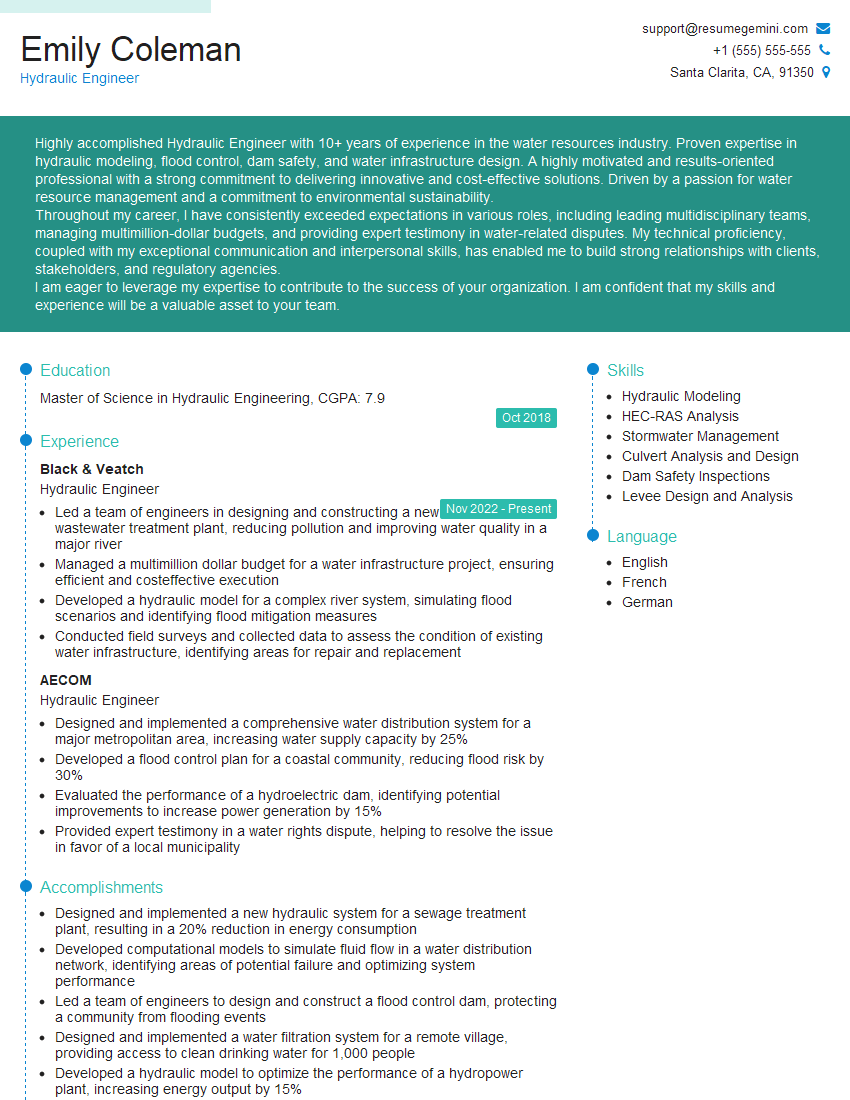
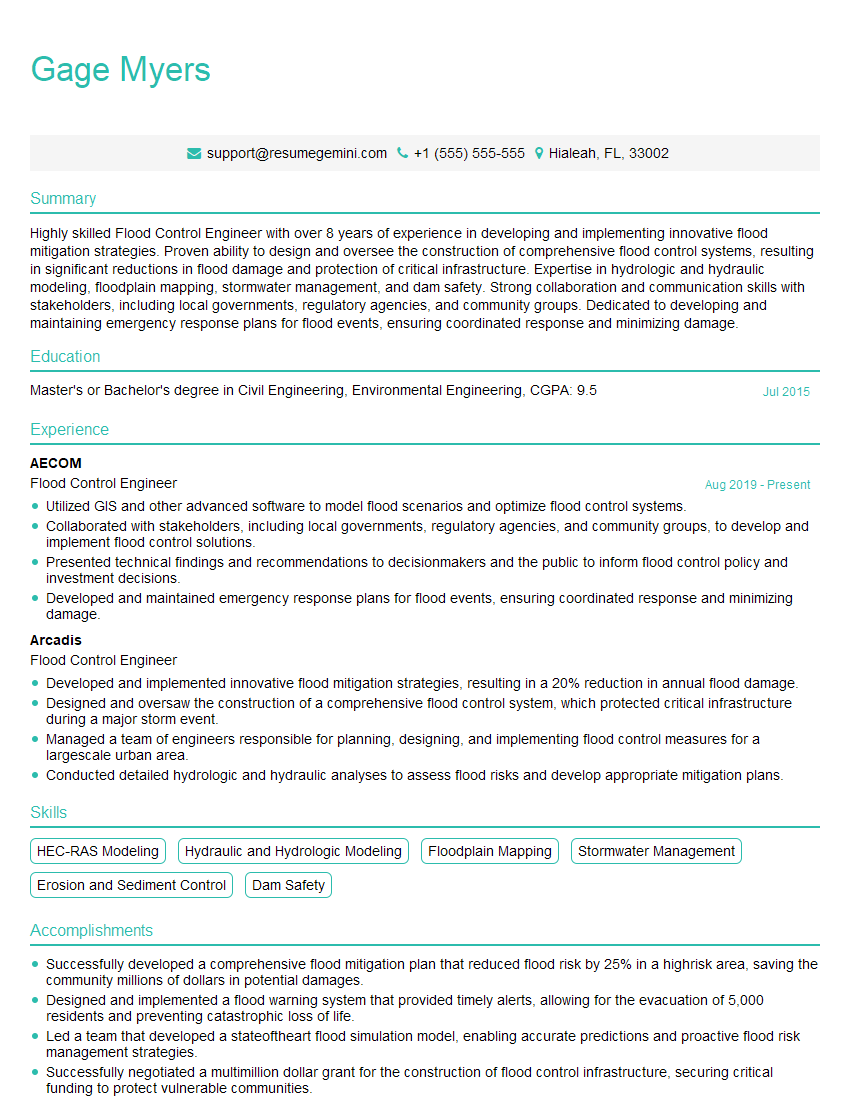
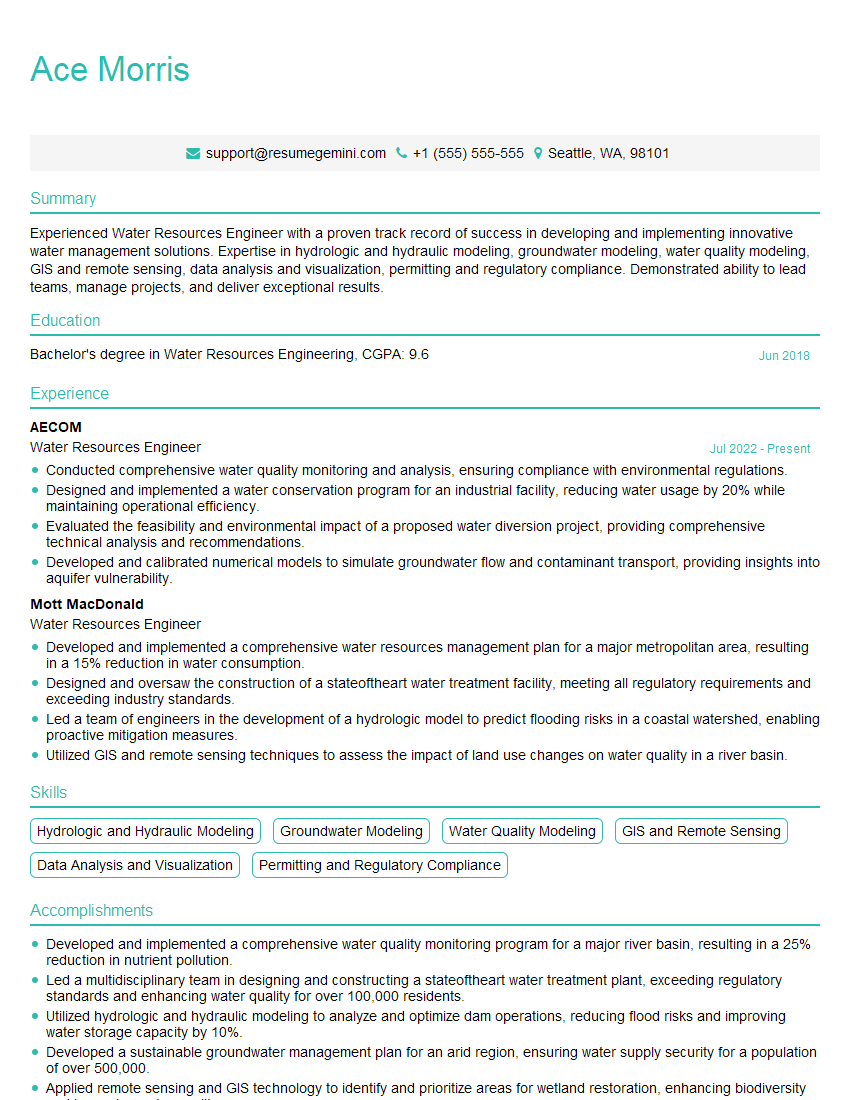
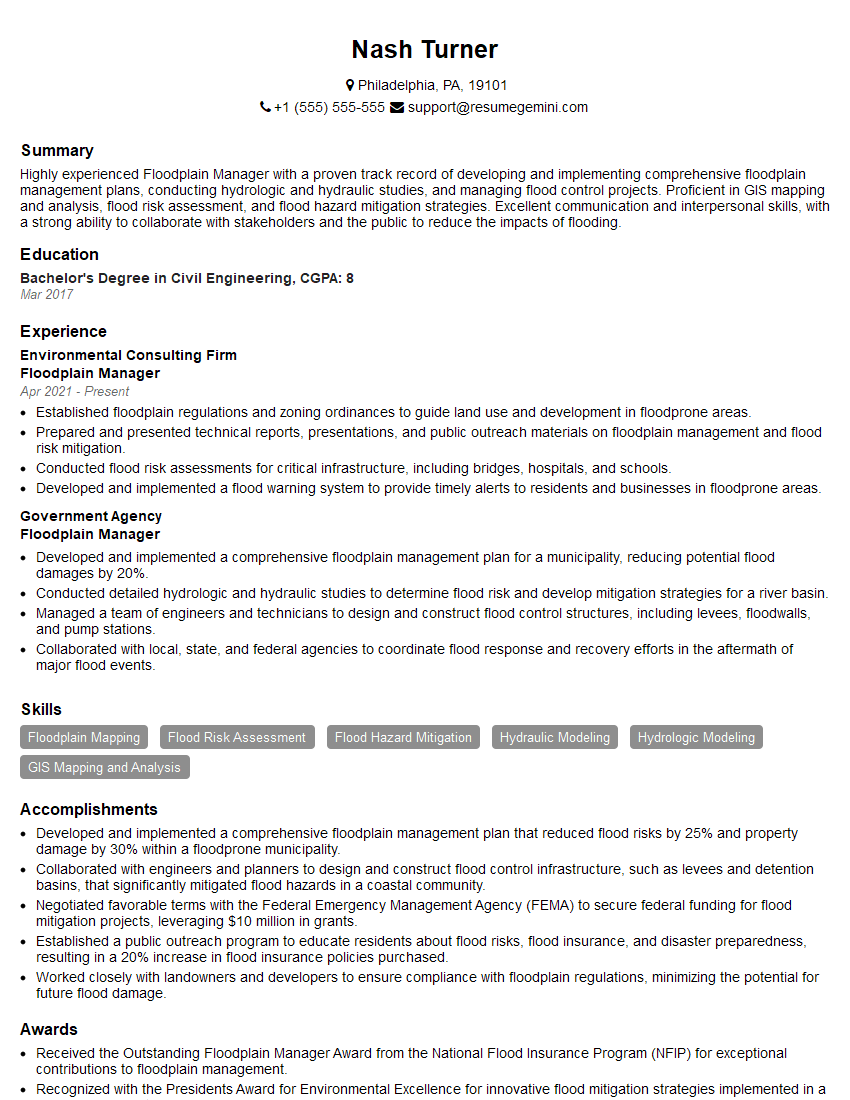
Mastering flood control measures is crucial for a successful and rewarding career in water resource management and environmental engineering. A strong understanding of these concepts demonstrates your expertise and commitment to protecting communities from the devastating effects of flooding. To significantly boost your job prospects, creating an ATS-friendly resume is vital. This ensures your qualifications are effectively highlighted to potential employers. We recommend using ResumeGemini, a trusted resource for crafting professional and impactful resumes. ResumeGemini offers examples of resumes tailored specifically to Flood Control Measures, providing a valuable framework for building your own compelling application.

Explore more articles
Users Rating of Our Blogs
Share Your Experience
We value your feedback! Please rate our content and share your thoughts (optional).
What Readers Say About Our Blog
Very informative content, great job.
good