Are you ready to stand out in your next interview? Understanding and preparing for Flood Control Policy Development interview questions is a game-changer. In this blog, we’ve compiled key questions and expert advice to help you showcase your skills with confidence and precision. Let’s get started on your journey to acing the interview.
Questions Asked in Flood Control Policy Development Interview
Q 1. Explain the difference between structural and non-structural flood control measures.
Flood control strategies are broadly categorized into structural and non-structural measures. Structural measures involve the physical construction of infrastructure to manage floodwaters, while non-structural measures focus on regulations, land-use planning, and public awareness to mitigate flood risk.
- Structural Measures: These are tangible, physical interventions like dams, levees, reservoirs, floodwalls, and improved drainage systems. Think of them as building barriers against floodwaters or creating storage space for excess water. For example, the Hoover Dam in Nevada is a massive structural flood control measure that also generates hydroelectric power. Another example is the construction of levees along major rivers to contain floodwaters and protect nearby communities.
- Non-structural Measures: These measures involve policy changes and community engagement rather than physical construction. Examples include floodplain zoning regulations that restrict development in high-risk areas, early warning systems using weather forecasting and hydrological modelling, public education campaigns to raise awareness about flood preparedness, and insurance programs incentivizing safer building practices. For instance, implementing stricter building codes in flood-prone areas or establishing a community-based flood warning system using local volunteers are excellent examples of non-structural approaches.
Choosing between structural and non-structural approaches often depends on the specific geographical context, available resources, and the community’s preferences and risk tolerance. A balanced approach, incorporating both types of measures, is often the most effective strategy.
Q 2. Describe your experience with flood risk assessment methodologies.
My experience encompasses a wide range of flood risk assessment methodologies, from traditional hydrological and hydraulic modeling to cutting-edge GIS-based approaches. I’m proficient in using software such as HEC-RAS (Hydrologic Engineering Center’s River Analysis System) for hydraulic modeling and ArcGIS for spatial analysis and risk mapping. My work has involved:
- Hydrological Modeling: Using rainfall-runoff models to predict the volume and timing of flood events, considering factors like rainfall intensity, soil type, and land use.
- Hydraulic Modeling: Simulating the flow of water through river channels and floodplains using software like HEC-RAS, to determine water depths and velocities during flood events.
- Statistical Analysis: Analyzing historical flood data to estimate flood frequencies and probabilities, using methods like frequency analysis and exceedance probability calculations. This helps determine the return periods for various flood magnitudes.
- GIS-based Risk Assessment: Integrating hydrological and hydraulic model outputs with GIS data (elevation, land use, population density) to create flood inundation maps and assess the potential impact of flooding on infrastructure, population, and the economy. This involves identifying areas at high risk and quantifying the potential losses.
In one project, I used HEC-RAS to model the impact of a proposed dam on downstream flood risk, comparing the modeled floodplains with existing land use to identify areas requiring relocation or mitigation. In another project, I integrated this data with GIS to create detailed maps showing the extent and depth of potential inundation, which were crucial for developing effective evacuation plans.
Q 3. What are the key components of a comprehensive flood control policy?
A comprehensive flood control policy requires a multifaceted approach incorporating various elements working together synergistically. Key components include:
- Flood Risk Assessment and Mapping: Regular and rigorous assessment of flood risks using advanced modeling techniques and GIS to identify vulnerable areas and populations.
- Land Use Planning and Zoning Regulations: Restricting development in high-risk floodplains and promoting appropriate land use practices in flood-prone areas. This includes implementing building codes that mandate flood-resistant construction techniques.
- Structural and Non-structural Measures: Implementing a balanced approach that combines physical flood control infrastructure (dams, levees, etc.) with non-structural measures like early warning systems, public education, and insurance programs.
- Emergency Preparedness and Response Planning: Developing robust plans for evacuations, rescue operations, and post-flood recovery, including clear communication strategies.
- Community Engagement and Education: Involving local communities in the planning and implementation process, promoting flood awareness, and ensuring access to relevant information.
- Funding and Resource Allocation: Securing adequate funding for the implementation of flood control projects and programs, prioritizing projects based on cost-effectiveness and risk reduction potential. This often requires demonstrating the long-term economic benefits of flood mitigation.
- Monitoring and Evaluation: Regularly monitoring the effectiveness of flood control measures and evaluating their performance against established targets. This includes post-flood damage assessments to refine future strategies.
A successful policy considers the interdependencies between these components. For example, effective land use planning can reduce the need for extensive and costly structural interventions in the future.
Q 4. How do you prioritize flood control projects considering budget constraints?
Prioritizing flood control projects under budget constraints requires a structured approach that balances cost-effectiveness with risk reduction. I utilize a multi-criteria decision analysis (MCDA) framework, combining qualitative and quantitative factors.
- Risk Assessment: First, we identify areas with the highest flood risk, considering factors such as population density, economic value of assets at risk, and the probability and magnitude of potential flood events.
- Cost-Benefit Analysis: We conduct thorough cost-benefit analyses for each potential project, comparing the cost of implementation with the expected reduction in flood damages and disruption. This includes considering both direct costs (construction, materials) and indirect costs (lost productivity, environmental impacts).
- Multi-Criteria Decision Analysis (MCDA): We assign weights to different criteria, such as risk reduction potential, cost-effectiveness, environmental impact, and social equity. Then we score each project based on these criteria and use a weighted scoring system to rank projects based on their overall value.
- Phasing and Prioritization: Based on the ranking and available budget, we develop a phased implementation plan, prioritizing projects with the highest benefit-to-cost ratio and the greatest potential for risk reduction. We may start with smaller, less expensive projects to demonstrate the impact before undertaking larger-scale initiatives.
For instance, a small-scale levee improvement project in a highly populated, low-lying area might rank higher than a large dam project in a sparsely populated area, even if the latter offers greater overall risk reduction, because of its higher cost and potentially smaller return on investment. Transparency in the decision-making process and community input are crucial for building trust and acceptance of the chosen priorities.
Q 5. Discuss the role of GIS in flood modeling and risk mapping.
Geographic Information Systems (GIS) are indispensable tools in flood modeling and risk mapping. They provide a framework for integrating various spatial data layers to create comprehensive and visually informative assessments.
- Data Integration: GIS allows the integration of diverse datasets like elevation data (DEMs), hydrological model outputs, land use maps, infrastructure data, and population density data. This facilitates a holistic understanding of flood risk.
- Flood Inundation Mapping: GIS is used to visualize the extent and depth of flooding from model outputs. Creating flood inundation maps helps identify areas at high risk, enabling targeted mitigation efforts and informing evacuation planning.
- Risk Assessment and Vulnerability Analysis: GIS facilitates the overlaying of flood inundation maps with other spatial data layers to assess the vulnerability of different populations and assets to flooding. This enables the identification of areas that require prioritization for mitigation and preparedness activities.
- Scenario Planning and Sensitivity Analysis: GIS enables the development of ‘what-if’ scenarios to assess the impacts of different flood events and mitigation strategies. This allows decision-makers to compare different options and optimize resource allocation.
- Communication and Visualization: GIS provides powerful tools for communicating flood risk information to the public and stakeholders, making complex data accessible through maps, charts, and reports.
For example, I used ArcGIS to create interactive flood inundation maps that allowed users to zoom in on specific areas, assess flood depths, and explore different flood scenarios. These maps were instrumental in informing public awareness campaigns and in shaping flood mitigation strategies at the local level.
Q 6. Explain the National Flood Insurance Program (NFIP) and its impact.
The National Flood Insurance Program (NFIP) is a federal program in the United States that provides affordable flood insurance to property owners in participating communities. It aims to reduce the economic impact of flooding by providing financial protection and incentivizing sound flood mitigation practices.
- Flood Insurance Coverage: The NFIP offers subsidized flood insurance policies to homeowners, renters, and business owners in communities that have adopted and enforce floodplain management ordinances. This protection helps individuals and businesses recover from flood losses.
- Floodplain Management Regulations: To participate in the NFIP, communities must adopt and enforce floodplain management regulations. These regulations aim to minimize future flood damages by restricting development in high-risk areas and promoting flood-resistant building practices.
- Impact: The NFIP has significantly impacted flood risk management in the US. It has provided financial protection to millions of property owners, reducing the burden of flood losses on individuals and the federal government. The program’s floodplain management regulations have also influenced land-use planning and reduced development in flood-prone areas.
- Challenges: Despite its importance, the NFIP faces challenges including increasing flood risk due to climate change, aging infrastructure, and the cost of payouts. These challenges require continuous program evaluation and reform.
The NFIP serves as a vital element in comprehensive flood risk management. It provides financial protection and promotes better building practices and land-use planning to mitigate the impact of future flood events.
Q 7. How do you evaluate the effectiveness of a flood control project?
Evaluating the effectiveness of a flood control project is a multi-faceted process that goes beyond simply assessing whether the project was completed on time and within budget. A robust evaluation requires a combination of quantitative and qualitative methods.
- Pre- and Post-Flood Comparisons: Analyzing flood data before and after the project implementation to assess the project’s impact on flood levels, flow velocities, and inundated areas. This often involves comparing historical flood data with modeled flood scenarios, taking into account the changes introduced by the project.
- Damage Assessments: Conducting thorough damage assessments after flood events to quantify the reduction in flood damages attributed to the project. This involves comparing the damages in areas protected by the project with those in unprotected areas.
- Economic Analysis: Conducting a cost-benefit analysis to evaluate the economic return on investment of the project, considering both direct and indirect costs and benefits. This may involve comparing projected losses with actual losses after implementation.
- Social Impact Assessment: Evaluating the social impacts of the project, including the effects on community well-being, access to services, and displacement or relocation of people. This often involves surveying communities to understand their perceptions and experiences.
- Environmental Impact Assessment: Assessing the environmental effects of the project, including potential impacts on water quality, aquatic ecosystems, and biodiversity. This may involve regular water quality monitoring and ecological surveys.
For example, in evaluating a levee improvement project, we would compare the extent of flooding before and after improvements, assess property damage, and analyze the community’s satisfaction with the project. A holistic approach ensures a comprehensive understanding of the project’s effectiveness and helps inform future flood management strategies.
Q 8. What are the common regulatory challenges in implementing flood control policies?
Implementing effective flood control policies often faces significant regulatory hurdles. These challenges stem from a complex interplay of legal frameworks, jurisdictional overlaps, and competing interests.
- Conflicting Land Use Regulations: Floodplains are often attractive locations for development, creating conflict between flood control measures and economic development goals. Zoning ordinances may need revision to better reflect flood risk, which can face political resistance from developers and property owners.
- Environmental Regulations: Flood control projects, like dam construction or levee building, can have significant environmental impacts. Obtaining necessary permits and approvals from environmental agencies (e.g., EPA, Army Corps of Engineers) can be time-consuming and complex, often involving extensive environmental impact assessments.
- Funding Limitations: Securing adequate funding for large-scale flood control projects is a perpetual challenge. Competition for public funds with other infrastructure needs and differing priorities among government agencies can create significant delays and limit the scope of projects. This often necessitates creative financing strategies involving public-private partnerships.
- Jurisdictional Issues: Floodplains frequently cross multiple jurisdictional boundaries (local, state, federal), making coordinated planning and implementation difficult. Reaching consensus among different agencies with varying mandates and priorities requires extensive negotiation and collaboration.
- Public Perception and Opposition: Public understanding of flood risk and the benefits of flood control measures can be limited. This can lead to community opposition to projects that might entail land acquisition, property restrictions, or aesthetic changes.
Successfully navigating these regulatory challenges requires proactive engagement with all stakeholders, a thorough understanding of relevant laws and regulations, and a well-articulated plan that addresses potential concerns and mitigates negative impacts.
Q 9. Describe your experience with stakeholder engagement in flood control planning.
Stakeholder engagement is crucial for successful flood control planning. My experience involves facilitating collaborative processes that include a diverse range of participants, from residents and businesses to government agencies and environmental groups.
For example, in a recent project in a coastal community, we employed a participatory GIS (Geographic Information System) approach. This allowed residents to directly input their concerns and local knowledge regarding flood vulnerability onto maps. This visual representation facilitated open dialogue and fostered a shared understanding of the risks. We also held public forums, workshops, and individual meetings to gather input and address specific concerns. By actively listening and incorporating feedback, we built trust and ensured that the final plan reflected the community’s needs and priorities. The result was a flood mitigation strategy that was widely accepted and supported, leading to greater community buy-in and effective implementation.
Transparency and clear communication are essential throughout the process. It’s vital to clearly explain technical aspects in accessible language and actively solicit feedback, acknowledging concerns and addressing them openly. This proactive approach minimizes potential conflicts and strengthens community resilience.
Q 10. How do climate change projections influence flood control strategies?
Climate change projections significantly influence flood control strategies by altering the frequency, intensity, and extent of flooding. Rising sea levels, more intense rainfall events, and changes in snowmelt patterns all increase flood risks.
Consequently, flood control strategies must adapt to these changing conditions. Traditional approaches, which often focus on structural measures like levees and dams, may become insufficient. We now need to integrate nature-based solutions like restoring wetlands and creating green infrastructure to enhance flood absorption and reduce runoff. This involves adopting a more holistic approach that considers the interconnectedness of different systems and anticipates future climate impacts.
Climate change projections inform the design and sizing of flood infrastructure. For example, instead of designing a levee to protect against a 100-year flood based on historical data, we might need to design it to withstand a 500-year flood based on climate models. This requires incorporating climate projections into hydraulic modelling and risk assessments. Furthermore, adaptation strategies need to be flexible and adaptable to account for uncertainties in future climate projections.
Q 11. Explain the concept of flood zoning and its implications.
Flood zoning is the practice of designating areas based on their susceptibility to flooding. It’s a critical tool for managing flood risk and guiding land use decisions. Areas are categorized into zones reflecting varying flood probabilities (e.g., 100-year floodplain, 500-year floodplain). These zones dictate allowable land uses and construction standards. For example, high-risk flood zones may restrict building heights or require elevated foundations.
The implications of flood zoning are significant. It influences property values, insurance premiums, and development regulations. Properties in high-risk zones generally face higher insurance costs and more stringent building codes. However, flood zoning also incentivizes responsible development by discouraging construction in the most vulnerable areas. Effective flood zoning requires accurate flood hazard mapping and consideration of various factors such as topography, soil type, and drainage patterns.
Lack of proper flood zoning or its ineffective enforcement can lead to increased flood damage and economic losses as development occurs in highly vulnerable areas. A well-designed and enforced flood zoning ordinance is a cornerstone of any robust flood control strategy.
Q 12. What are the different types of flood defenses and their applications?
Flood defenses employ a variety of structures and strategies to mitigate flood risks. The choice of defense depends on the specific flood hazard, the characteristics of the area, and the available resources.
- Levees and Embankments: These are earthen or concrete barriers built along rivers or coastlines to contain floodwaters. They are effective for protecting large areas but can be expensive and require ongoing maintenance.
- Floodwalls: Similar to levees, but usually constructed of concrete or other impervious materials. They are often used in urban areas where space is limited.
- Dams and Reservoirs: Dams regulate river flow, storing excess water during high rainfall events and releasing it gradually. Reservoirs offer flood control but can have environmental impacts on downstream ecosystems.
- Retention Ponds and Detention Basins: These engineered structures temporarily store runoff, reducing the peak flow rate during storms. They are often integrated into urban development plans.
- Channel Improvements: This involves modifying river channels to increase their capacity to carry water. This can include widening, deepening, or straightening channels.
- Nature-Based Solutions: These approaches utilize natural processes to mitigate flood risks. Examples include restoring wetlands, reforestation, and creating permeable pavements to increase water absorption.
Often, a combination of these defenses is most effective, creating a multi-layered approach to flood management. For instance, a coastal community might employ seawalls, dune restoration, and improved drainage systems to protect against storm surges and flooding.
Q 13. How do you incorporate community resilience into flood control planning?
Incorporating community resilience into flood control planning is paramount. Resilience goes beyond simply protecting against floods; it involves building the capacity of communities to withstand, adapt to, and recover from flood events.
This requires a shift from a purely engineering-focused approach to one that integrates social, economic, and environmental considerations. Key strategies include:
- Community Education and Awareness: Educating residents about flood risks, preparedness measures, and evacuation procedures is essential. This includes providing clear and accessible information on flood hazard maps and emergency response plans.
- Early Warning Systems: Implementing robust early warning systems, including flood forecasting models and real-time monitoring, allows communities to prepare and react quickly to impending floods.
- Emergency Response Planning: Developing detailed emergency response plans that outline evacuation routes, shelter locations, and resource allocation is critical for minimizing losses and casualties during flood events.
- Infrastructure Resilience: Designing and building resilient infrastructure that can withstand flood impacts reduces damage and accelerates recovery. This includes elevating critical facilities, using flood-resistant materials, and adopting robust design standards.
- Economic Diversification and Social Support Networks: Strengthening the social fabric and promoting economic diversity within the community enhances its capacity to absorb economic shocks associated with floods.
By fostering community engagement and empowering residents to participate in the planning process, we build a more resilient and prepared community. It is a collaborative process where the community’s knowledge, experience and resources are leveraged, alongside technical expertise to arrive at practical and sustainable solutions.
Q 14. Discuss your experience with hydraulic modeling software.
I have extensive experience using various hydraulic modeling software packages, including HEC-RAS (Hydrologic Engineering Center’s River Analysis System), MIKE FLOOD, and InfoWorks ICM. These tools are essential for analyzing flood flows, designing flood control measures, and assessing flood risks.
HEC-RAS, for example, is widely used for simulating one-dimensional and two-dimensional unsteady flow in rivers and channels. I’ve used it to model the impact of levee breaches, assess the effectiveness of different flood control measures, and predict flood inundation areas. This involves creating detailed digital elevation models (DEMs) of the study area, defining channel geometry, and inputting rainfall data or other hydrological inputs. The software then calculates water levels, velocities, and flow depths under different scenarios.
MIKE FLOOD is another powerful tool that excels in simulating complex hydrodynamic processes, particularly in coastal areas. I’ve employed it for storm surge modeling and assessing the effectiveness of coastal defenses against extreme weather events. These models require detailed bathymetry data (water depth information) and wind field data to accurately represent the hydrodynamic forces involved.
My experience includes not only running these models but also validating the results through field data collection and comparison with historical flood events. Accurate and reliable hydraulic modeling is crucial for informed decision-making in flood control planning. It allows us to evaluate different options, optimize design parameters, and ultimately develop cost-effective and effective flood management strategies.
Q 15. Explain the importance of dam safety inspections and maintenance.
Dam safety inspections and maintenance are paramount to preventing catastrophic failures that can lead to devastating floods and loss of life. Think of it like regular checkups for your car – you wouldn’t drive across the country without ensuring it’s in good working order. Similarly, dams require meticulous monitoring and upkeep to guarantee their structural integrity and operational efficiency.
- Regular Inspections: These involve visual assessments, instrument readings (strain gauges, piezometers), and potentially even underwater inspections to detect cracks, erosion, seepage, or any signs of weakening. The frequency depends on factors like dam age, type, and geological conditions, but typically ranges from annual to several times a year.
- Preventative Maintenance: This encompasses activities like repairing cracks, replacing worn-out components, clearing debris from spillways, and maintaining instrumentation. Proactive maintenance is far more cost-effective than emergency repairs after a failure.
- Emergency Action Plans: Beyond regular maintenance, robust emergency action plans are crucial. These plans detail procedures for dealing with potential emergencies, including evacuations, dam breaching scenarios, and communication protocols. Regular drills are essential to ensure preparedness.
For example, a failure to inspect and maintain the spillway gates of a dam could lead to uncontrolled water release during a heavy rainfall event, resulting in downstream flooding. A proactive inspection program would have identified and addressed such issues before they escalated into a disaster.
Career Expert Tips:
- Ace those interviews! Prepare effectively by reviewing the Top 50 Most Common Interview Questions on ResumeGemini.
- Navigate your job search with confidence! Explore a wide range of Career Tips on ResumeGemini. Learn about common challenges and recommendations to overcome them.
- Craft the perfect resume! Master the Art of Resume Writing with ResumeGemini’s guide. Showcase your unique qualifications and achievements effectively.
- Don’t miss out on holiday savings! Build your dream resume with ResumeGemini’s ATS optimized templates.
Q 16. Describe your understanding of floodplain management ordinances.
Floodplain management ordinances are local regulations designed to control development within flood-prone areas. They aim to minimize flood damage, protect human life, and reduce the economic burden of recurring flood events. These ordinances often incorporate a variety of measures that reflect a risk-based approach, acknowledging the varying levels of flood risk across different parts of a floodplain.
- Building Codes and Setbacks: These ordinances typically specify minimum elevations for building foundations, and require setbacks from the floodplain’s edge. The further the structure is from the river, the lower the flood risk.
- Drainage Requirements: Regulations may mandate specific drainage systems to ensure efficient runoff and prevent water from accumulating around buildings. This might include requirements for improved storm drains or retention ponds.
- Land Use Restrictions: Certain land uses, such as those with significant flood risk sensitivity (e.g., hospitals, schools) may be restricted or prohibited altogether in high-risk areas. Other uses like parks and green spaces may be encouraged.
- Permitting Processes: Development within floodplains usually requires detailed plans and permits, with rigorous review of proposed projects’ impact on flood risk.
Imagine a community without floodplain regulations. A developer might build homes in a low-lying area with no consideration of flood risk. This would lead to increased property damage and potentially loss of life during future floods, placing an enormous burden on taxpayers and emergency services.
Q 17. What are the ethical considerations in flood control policy development?
Ethical considerations in flood control policy development are multifaceted and require careful balancing of competing interests. It’s not just about building structures; it’s about making just and equitable decisions that impact numerous stakeholders.
- Environmental Justice: Flood control projects can disproportionately affect vulnerable communities, particularly those with lower socioeconomic status or minority populations who often live in flood-prone areas. Policies must prioritize equity and avoid exacerbating existing social inequalities.
- Transparency and Public Participation: Open and inclusive decision-making processes, where all affected parties have a voice, are crucial. This ensures the policies reflect the needs and concerns of the community and fosters trust.
- Intergenerational Equity: Decisions must consider the long-term impacts on future generations. A short-term cost-saving measure could lead to greater problems for generations to come.
- Ecosystem Impacts: Flood control projects can have significant effects on the environment, affecting water quality, aquatic habitats, and biodiversity. Policies must minimize negative environmental consequences while maintaining flood protection.
For instance, building a levee to protect a wealthy neighborhood might inadvertently increase flood risks for a less affluent community downstream. Ethical policy development requires careful consideration of these distributional effects.
Q 18. How do you balance economic development with flood risk mitigation?
Balancing economic development with flood risk mitigation is a constant challenge in flood control policy. It requires a pragmatic approach that recognizes the interconnectedness of these factors.
- Integrated Planning: Economic development plans should explicitly incorporate flood risk assessments. This means identifying areas unsuitable for development and guiding development in less vulnerable locations.
- Risk-Based Approach: Rather than a blanket ban on development in floodplains, a risk-based approach allows for development in areas with lower flood risk, provided appropriate mitigation measures are in place.
- Flood Insurance and Incentives: Flood insurance programs can incentivize responsible development practices by making flood insurance more affordable for structures built to higher standards in flood-prone areas. Conversely, higher premiums for structures built to lower standards can discourage risky development.
- Green Infrastructure: Investment in natural solutions, such as restoring wetlands and creating green spaces, can both mitigate flood risks and provide economic opportunities through ecosystem services like tourism and carbon sequestration.
For example, a city might create a tax incentive for businesses that relocate to higher ground while simultaneously investing in improved drainage systems in more vulnerable areas. This approach supports economic growth while enhancing community resilience to flooding.
Q 19. Explain your experience with cost-benefit analysis in flood control projects.
Cost-benefit analysis (CBA) is a critical tool in evaluating flood control projects. It systematically compares the costs of a project (construction, maintenance, etc.) with its benefits (avoided damages, increased property values, etc.). A well-conducted CBA helps decision-makers determine whether a project is economically justifiable.
- Quantifying Costs: This involves estimating the upfront construction costs, ongoing maintenance expenses, and potential disruption costs during construction.
- Quantifying Benefits: This is more complex, requiring the estimation of reduced flood damages to properties, infrastructure, and businesses, as well as the economic benefits of improved access and enhanced property values.
- Discounting: Future benefits are discounted to reflect their present value, as a dollar today is worth more than a dollar in the future.
- Uncertainty Analysis: CBAs should incorporate an assessment of the uncertainty associated with cost and benefit estimates, acknowledging the inherent variability in flood events and economic conditions.
For example, in evaluating a proposed levee project, a CBA would compare the cost of building and maintaining the levee against the expected reduction in flood damages over its lifespan. If the present value of the benefits exceeds the present value of the costs, the project might be deemed economically viable.
Q 20. Describe the role of public awareness in flood preparedness.
Public awareness is crucial for effective flood preparedness. Informed citizens are better equipped to protect themselves and their property, minimizing the impact of flood events. This involves a multi-pronged approach.
- Education Programs: Schools, community centers, and government agencies can conduct workshops and educational campaigns to inform the public about flood risks, warning systems, and preparedness measures.
- Public Awareness Campaigns: Using various media channels (print, radio, television, social media) to disseminate information about flood risks, safety procedures, and evacuation plans.
- Community Involvement: Involving community members in the development and implementation of flood preparedness plans ensures that the plans are practical and relevant to local needs.
- Early Warning Systems: Effective communication of early warnings through various channels (e.g., sirens, text alerts, social media) is critical for timely evacuation and response.
Imagine a community where residents are unaware of their flood risk. During a flood event, unprepared residents might be caught off guard, leading to greater loss of life and property damage. Effective public awareness campaigns empower individuals to take necessary precautions and improve their resilience.
Q 21. How do you integrate water quality considerations into flood control plans?
Integrating water quality considerations into flood control plans is essential for ensuring the long-term health and sustainability of both the water resources and the community. Flooding events can significantly impact water quality, leading to contamination and ecological damage.
- Stormwater Management: Flood control measures should also effectively manage stormwater runoff, minimizing pollutant transport into waterways. This might involve green infrastructure solutions like bioswales and permeable pavements to filter pollutants before they reach the river.
- Wastewater Treatment: Flood control projects should avoid compromising the integrity of wastewater treatment facilities, preventing sewage overflows during flood events.
- Sediment Control: Erosion control measures in construction areas and within the floodplain help prevent sediment from entering waterways, maintaining water quality and aquatic habitats.
- Monitoring and Assessment: Regular monitoring of water quality before, during, and after flood events helps to assess the impact of flood control measures and identify potential improvements.
For example, a flood control project might incorporate a constructed wetland to filter pollutants from runoff before it enters a river, improving water quality and providing an ecological benefit. This approach demonstrates that flood control and water quality protection are not mutually exclusive but can be integrated for improved outcomes.
Q 22. What is your experience with emergency response protocols during flooding?
My experience with emergency response protocols during flooding encompasses various roles, from on-the-ground coordination to strategic planning. I’ve been involved in several large-scale flood events, where my responsibilities included activating emergency response plans, coordinating with multiple agencies (e.g., FEMA, local emergency services, Red Cross), and managing resource allocation. This involved everything from deploying sandbags and establishing evacuation routes to ensuring the safety of vulnerable populations and managing the distribution of essential supplies. A key aspect of this work is effective communication – maintaining clear and constant communication channels across all involved parties is crucial to efficient and coordinated action during a crisis. One specific example involved a flash flood in a rural area where I played a key role in coordinating the evacuation of several hundred residents within a very short time frame, successfully minimizing loss of life and property damage.
Q 23. Discuss the use of early warning systems for flood events.
Early warning systems for flood events are crucial for mitigating the impact of floods. These systems integrate various data sources, such as rainfall forecasts, river level monitoring, and soil moisture data, to provide timely alerts to potentially affected communities. Effective systems rely on a network of sensors, weather satellites, and hydrological models that constantly monitor conditions and predict potential flood risks. This data is then processed and disseminated through various channels, including mobile apps, public alert systems, and local media. For instance, the National Weather Service’s Advanced Hydrologic Prediction Service (AHPS) uses sophisticated models to forecast river levels, providing valuable information to emergency managers and the public. The timeliness and accuracy of these alerts are vital, as they allow individuals and communities to prepare, evacuate if necessary, and protect their property, potentially saving lives and reducing economic losses. A successful system needs clear communication strategies and community engagement to ensure the warnings are understood and acted upon effectively.
Q 24. Explain your understanding of different flood forecasting methods.
Flood forecasting relies on a combination of methods, each with its own strengths and limitations. Hydrological models simulate the water flow in a catchment area, using data on rainfall, evaporation, and soil characteristics to predict river levels. These models can be deterministic (predicting a single most likely outcome) or probabilistic (providing a range of possible outcomes with associated probabilities). Statistical methods analyze historical flood data to identify patterns and probabilities of future flood events. These are particularly useful in areas with limited hydrological data. Rainfall-runoff models are simpler and faster than complex hydrological models, focusing on the relationship between rainfall and river flow, making them ideal for rapid assessments during ongoing events. Ensemble forecasting combines predictions from multiple models to improve accuracy and account for uncertainties. This approach often reduces the error in the forecast by taking a combined average of multiple models, much like having several weather forecasts and averaging them to produce a more accurate assessment. Each method’s effectiveness depends on data availability, the characteristics of the catchment area, and the desired level of detail in the forecast. For example, simpler models might be used for quick initial assessments, while more complex models are employed for longer-term or more detailed predictions.
Q 25. How do you ensure the sustainability of flood control infrastructure?
Ensuring the sustainability of flood control infrastructure requires a multi-faceted approach. First, it’s crucial to design and build infrastructure that is resilient to changing environmental conditions, including climate change impacts such as increased rainfall intensity. This involves using robust materials, incorporating innovative designs that can withstand extreme events, and considering the potential effects of sea level rise. Second, regular maintenance and inspection are essential to prevent degradation and extend the lifespan of infrastructure. This proactive approach helps to identify and address potential problems early on, preventing costly repairs or failures down the line. Third, integrating natural solutions, such as restoring wetlands and riparian zones, can enhance the overall resilience of the flood control system. These natural elements act as buffers, absorbing excess water and reducing flood risks. Finally, sustainable financing mechanisms are needed to secure long-term funding for maintenance and upgrades. This might involve leveraging public-private partnerships or exploring innovative funding models that ensure the long-term viability of flood control investments. For example, a well-maintained levee system supplemented by restored wetlands will provide more effective and longer-lasting flood protection compared to a neglected system that relies solely on artificial structures.
Q 26. Describe your experience with developing flood control budgets.
Developing flood control budgets requires a thorough understanding of project costs, funding sources, and prioritization strategies. The process begins with a comprehensive assessment of flood risks, identifying vulnerable areas and the types of infrastructure or measures needed for mitigation. Then, detailed cost estimates are developed for each proposed project, considering factors such as construction costs, land acquisition, maintenance, and ongoing operational expenses. Funding sources are then explored, which might include federal grants, state allocations, local bonds, or private investment. Prioritization is crucial, balancing the urgency of needs with available resources. Cost-benefit analysis is a valuable tool for comparing different projects and optimizing resource allocation. For example, a cost-benefit analysis might reveal that investing in a nature-based solution such as wetland restoration is more cost-effective in the long run compared to building a more expensive levee.
Q 27. What are your strategies for managing conflicts among stakeholders in flood control projects?
Managing conflicts among stakeholders in flood control projects often requires skillful negotiation and mediation. Stakeholders often have diverse interests and perspectives, which can lead to disagreements over project design, implementation, and funding. My strategies for managing these conflicts include: Open communication: establishing clear communication channels and creating a forum for all stakeholders to voice their concerns; Collaborative decision-making: involving all stakeholders in the decision-making process; Mediation and negotiation: using mediation techniques to facilitate compromise and find mutually acceptable solutions; Transparency: ensuring all stakeholders have access to relevant information; and Fairness and equity: striving to create solutions that are equitable to all concerned parties. A common example is a conflict between property owners whose land might be impacted by a flood control project and environmental groups advocating for natural solutions. Effective communication and collaborative decision-making can help find a compromise that balances the needs of all parties while achieving the overarching goal of flood risk reduction.
Q 28. Explain your familiarity with relevant federal, state, and local regulations on flood control.
My familiarity with federal, state, and local regulations on flood control is extensive. At the federal level, I am well-versed in the National Flood Insurance Program (NFIP), its requirements for community participation, and the regulations governing flood hazard mapping and floodplain management. I understand the requirements for building codes in floodplains and the roles of agencies like FEMA in disaster response and mitigation. At the state level, I am familiar with variations in regulations across different jurisdictions, including specific state requirements for floodplain management ordinances, permitting processes for flood control projects, and environmental regulations. At the local level, I understand the importance of zoning regulations, building codes, and local ordinances related to flood control, and how these can vary significantly depending on the community’s specific flood risks. Staying updated on these regulations is crucial for ensuring compliance and developing effective flood control strategies that meet all legal and regulatory requirements. This includes ongoing professional development and staying informed on any changes or updates to these regulations.
Key Topics to Learn for Flood Control Policy Development Interview
- Risk Assessment and Management: Understanding flood risk assessment methodologies, including hydrological modeling and vulnerability analysis. Practical application: Developing flood hazard maps and implementing mitigation strategies based on risk assessments.
- Policy Frameworks and Legislation: Familiarizing yourself with relevant national and international legislation and policy frameworks governing flood management. Practical application: Analyzing the effectiveness of existing policies and proposing improvements based on best practices.
- Stakeholder Engagement and Collaboration: Understanding the importance of involving diverse stakeholders (communities, businesses, government agencies) in policy development. Practical application: Facilitating workshops and public consultations to gather input and build consensus on flood management strategies.
- Sustainable Drainage Systems (SuDS): Knowledge of green infrastructure solutions and their role in reducing flood risk. Practical application: Evaluating the cost-effectiveness and environmental impact of SuDS implementation.
- Economic and Social Impacts of Flooding: Understanding the economic costs of flooding (damage to property, infrastructure, business interruption) and the social impacts (displacement, loss of life, mental health). Practical application: Cost-benefit analysis of different flood management options and strategies to minimize social disruption.
- Data Analysis and Modeling: Proficiency in using data analysis techniques and hydrological/hydraulic models to inform policy decisions. Practical application: Interpreting model outputs to predict flood events and evaluate the effectiveness of mitigation measures.
- Climate Change Adaptation: Understanding the implications of climate change on flood risk and the need for adaptive flood management strategies. Practical application: Incorporating climate change projections into long-term flood control planning.
Next Steps
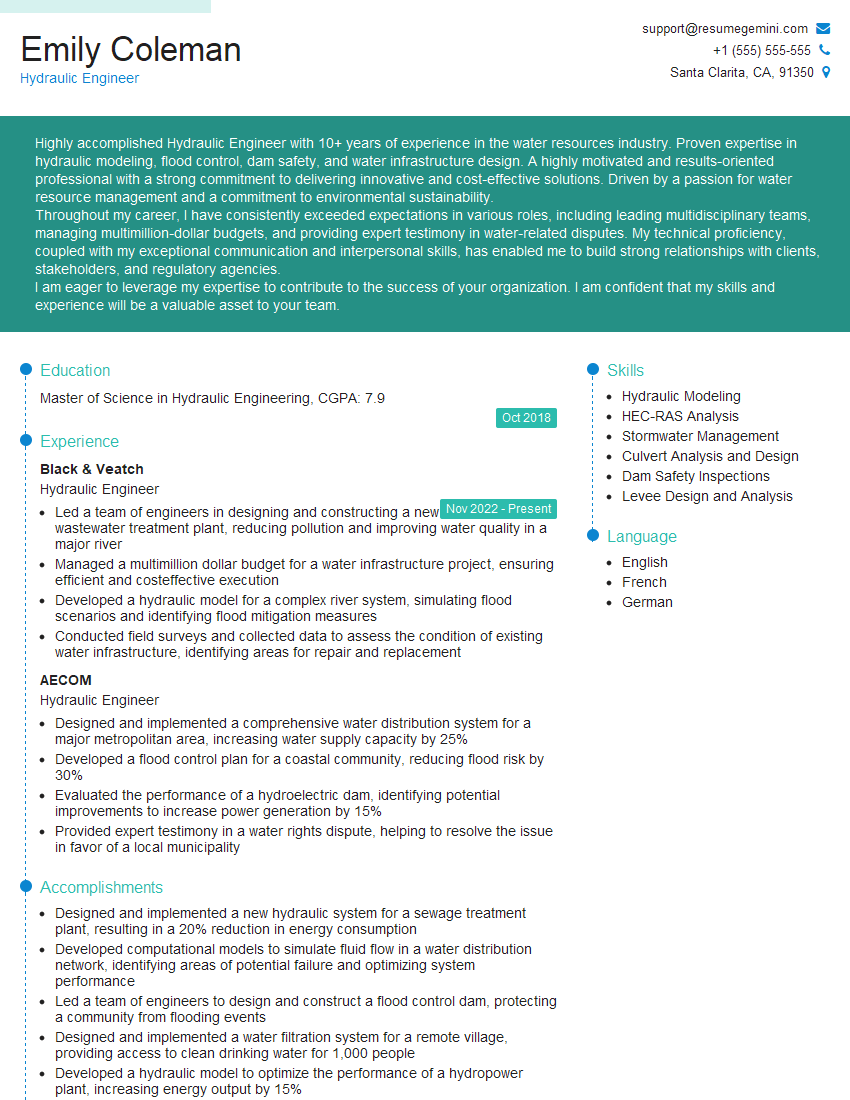
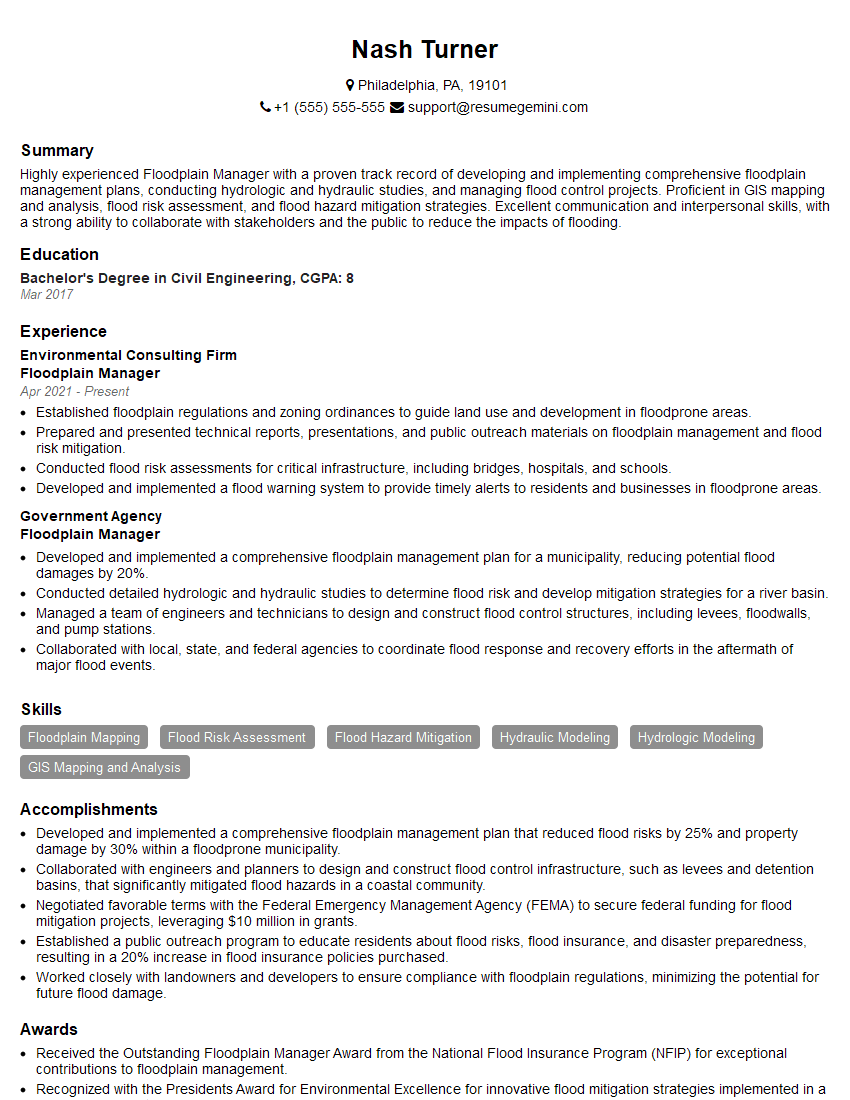
Mastering Flood Control Policy Development opens doors to a rewarding career contributing to community safety and environmental sustainability. To maximize your job prospects, a strong, ATS-friendly resume is crucial. ResumeGemini can help you craft a compelling resume that highlights your skills and experience effectively. ResumeGemini offers a user-friendly platform and provides examples of resumes tailored to Flood Control Policy Development, ensuring your application stands out from the competition. Invest time in building a professional resume—it’s a vital step in securing your desired role.
Explore more articles
Users Rating of Our Blogs
Share Your Experience
We value your feedback! Please rate our content and share your thoughts (optional).
What Readers Say About Our Blog
Very informative content, great job.
good