Interviews are opportunities to demonstrate your expertise, and this guide is here to help you shine. Explore the essential Floral Arranging Techniques interview questions that employers frequently ask, paired with strategies for crafting responses that set you apart from the competition.
Questions Asked in Floral Arranging Techniques Interview
Q 1. Describe your experience with various floral arrangement styles (e.g., European, American, etc.).
My experience spans a wide range of floral arrangement styles, encompassing both classic and contemporary approaches. European style, for instance, often emphasizes elegance and simplicity, using fewer, higher-quality blooms arranged in a more natural, less structured manner. Think of a simple yet stunning bouquet of tulips in a minimalist vase. American style, conversely, tends towards more abundant arrangements, incorporating a greater variety of flowers and foliage to create a fuller, more dramatic effect; picture a large, cascading bridal bouquet.
I’ve also worked extensively with other styles, including Japanese Ikebana (which prioritizes minimalism and natural forms), and modern styles that incorporate unconventional materials and textures. This broad experience allows me to tailor my designs to diverse preferences and events.
Q 2. Explain your process for selecting appropriate flowers and foliage for a specific event or occasion.
Selecting the right flowers and foliage is crucial. My process begins with understanding the event’s theme, color palette, and overall mood. For a formal wedding, I might choose classic roses, lilies, and hydrangeas in elegant shades of ivory and blush. For a rustic barn wedding, wildflowers, succulents, and greenery would be more appropriate. I always consider the seasonality of flowers; using in-season blooms ensures freshness, vibrancy, and often better value. I also factor in the client’s personal preferences and any symbolic meanings associated with particular flowers.
Beyond aesthetics, I consider the flowers’ durability and care requirements. Some flowers wilt quickly, so I carefully select varieties that will maintain their beauty throughout the event.
Q 3. How do you determine the appropriate vase or container for a particular floral arrangement?
The vase or container is an integral part of the design. It shouldn’t compete with the arrangement but should complement it. A large, flamboyant arrangement requires a substantial container to provide adequate support and balance. Conversely, a minimalist arrangement might be best showcased in a simple, understated vase. The material, shape, color, and texture of the container all play a role. For example, a sleek, modern glass vase might be perfect for a contemporary arrangement, while a rustic ceramic pot would be ideal for a more relaxed, country-style design. I always consider the overall scale and proportion – the vase should be appropriately sized for the arrangement, neither overwhelming nor dwarfed by it.
Q 4. Describe your techniques for creating visually appealing focal points in a floral arrangement.
Focal points draw the eye and add visual interest. They’re often created using a larger, more striking bloom or a cluster of similar flowers. The placement of the focal point is key; it should be strategically positioned to balance the arrangement. For example, in a triangular arrangement, the focal point might be located at the apex. I sometimes employ contrasting colors or textures to create a focal point. A vibrant red poppy in a predominantly pastel arrangement would serve as a striking focal point. Creating a sense of depth by layering flowers of different heights also contributes to a visually appealing focal point.
Q 5. What methods do you use to ensure the longevity of cut flowers in your arrangements?
Extending the life of cut flowers is paramount. Proper hydration is key: I always use clean, fresh water and a flower food solution designed to nourish the blooms and prevent bacterial growth. Removing lower leaves that would fall below the waterline is essential to prevent decay. The arrangement’s location also matters; avoid placing arrangements in direct sunlight or near heat sources, which can accelerate wilting. Regularly misting the arrangement with water can help maintain freshness. Finally, proper storage, such as placing the arrangement in a cool place overnight, can make a significant difference.
Q 6. How do you handle challenging requests or design limitations?
Handling challenging requests requires creativity and adaptability. Limited budgets might necessitate the use of more affordable seasonal flowers, creatively arranged to create a stunning effect. Unusual venue constraints, such as limited space or difficult access, require careful planning and possibly alternative design approaches, such as smaller tabletop arrangements rather than large floor arrangements. I view such challenges as opportunities to showcase my problem-solving skills and find innovative solutions that meet the client’s vision within the given parameters.
For example, I once had to create an arrangement for a client with severe allergies. It required careful selection of hypoallergenic flowers and a detailed understanding of the client’s sensitivities. The end result was a beautiful and safe arrangement that delighted the client.
Q 7. Explain your experience with different floral preservation techniques.
My experience with floral preservation techniques encompasses various methods. Air drying is a simple technique suitable for certain flowers and foliage, allowing them to retain their shape and color (although color may fade slightly). Pressing flowers is another option, ideal for creating keepsakes or incorporating into crafts. More advanced techniques involve using silica gel, which helps to preserve the flowers’ shape and color more effectively than air drying. I’ve also explored glycerining, a method that preserves flowers by replacing their water content with glycerine, resulting in a pliable, long-lasting preserved flower.
The choice of technique depends on the type of flower and the desired outcome. For instance, delicate flowers are best suited to pressing or silica gel preservation, while heartier flowers might be better preserved through glycerining.
Q 8. Describe your knowledge of various flower types, their characteristics, and care requirements.
Understanding flower types is fundamental to successful floral arranging. Different flowers have unique characteristics influencing their longevity, compatibility with other blooms, and overall aesthetic in an arrangement. For instance, roses, known for their romantic symbolism and wide variety of colors, require careful handling to prevent wilting. Their thorns necessitate careful pruning and handling. In contrast, lilies, with their striking shape and fragrance, are more resilient but need adequate spacing to prevent overcrowding and ensure proper air circulation. Hydrangeas, with their large, showy blooms, require consistent hydration and careful placement to prevent drooping.
- Roses: Thorny stems, require careful handling, prone to wilting if not properly hydrated.
- Lilies: Strong stems, fragrant, need ample space in arrangement.
- Hydrangeas: Large blooms, prone to drooping, require consistent hydration.
- Tulips: Delicate stems, sensitive to temperature changes, excellent for spring arrangements.
- Sunflowers: Robust stems, long vase life, ideal for bold and vibrant arrangements.
Proper care involves considering each flower’s specific needs. Roses benefit from a hydrating solution with floral preservative, while lilies may prefer a cooler environment. Understanding these nuances allows me to create arrangements that not only look stunning but also maintain their freshness and beauty for an extended period.
Q 9. What software or tools do you use for floral design planning and visualization?
While there isn’t specific floral design software I use in the traditional sense like CAD programs for architecture, I utilize several digital tools to plan and visualize floral arrangements. For instance, I use Pinterest and Instagram to gather inspiration and create mood boards, which help me visualize color palettes, styles, and overall design concepts. I also use design apps to play with different color combinations and textures before starting a project. Finally, a simple sketching pad helps me quickly map out the arrangement and placement of different flowers and foliage.
For example, when designing a wedding arrangement, I’ll create a detailed mood board on Pinterest, incorporating images reflecting the bride’s style and the overall wedding theme. This serves as a visual guide throughout the design process, ensuring that the final arrangement aligns perfectly with the client’s vision.
Q 10. How do you manage your time and workflow when creating multiple arrangements simultaneously?
Managing multiple arrangements simultaneously requires meticulous planning and a systematic workflow. I employ a time-blocking technique, allocating specific time slots for each stage of the process: sourcing materials, prepping flowers, constructing arrangements, and final touches. Prioritization is crucial; I tackle urgent orders first or those with the tightest deadlines. I often use a checklist and staging area. Prepping flowers like trimming stems and removing excess leaves is often done in bulk. This approach enhances efficiency and minimizes stress, ensuring all arrangements are completed on time and to the highest standard.
For instance, if I have three wedding arrangements and two smaller birthday arrangements, I’ll start by prepping all the flowers for each arrangement simultaneously. I’ll then work on the wedding arrangements first as these typically require more intricate design and time. This allows me to ensure the larger and more complex orders are completed first before moving to the smaller orders.
Q 11. Explain your experience with working with various budgets and timelines.
Adaptability to diverse budgets and timelines is essential in floral design. For high-end arrangements with extensive budgets, I can source rare and exotic flowers, incorporate custom containers, and invest more time in intricate detailing. Conversely, with tighter budgets, I focus on selecting seasonal flowers that are more cost-effective, utilize simpler design techniques, and employ readily available containers to maintain high quality while staying within budget. Similarly, tight deadlines necessitate prioritizing efficiency without compromising quality. I focus on pre-selected palettes and streamlined designs that still achieve visual impact.
For example, a client with a limited budget might opt for a bouquet of seasonal wildflowers, which provides beauty and freshness without compromising the overall aesthetic. In contrast, a high-budget client might desire a luxurious arrangement featuring orchids and roses in a custom crystal vase.
Q 12. Describe your experience with handling orders and client communication.
Handling orders and client communication is a crucial part of my business. I utilize a detailed order form to gather specific requirements, including event type, style preferences, color palettes, flower choices (if any), budget, and delivery details. I confirm orders promptly and maintain regular contact with clients, providing updates on progress and addressing any queries. I value clear and proactive communication, which allows me to manage expectations effectively and ensures client satisfaction. I utilize email, phone calls, and occasionally, video calls for more detailed discussions or larger orders.
For instance, if a client has special requests regarding the type of flowers or the arrangement style, I proactively engage with them to understand their vision in detail. I offer suggestions based on my expertise to help them achieve the desired look and feel while staying within their budget constraints.
Q 13. How do you maintain hygiene and safety standards while working with flowers?
Maintaining hygiene and safety standards is paramount in floral design. I practice thorough handwashing before and after handling flowers, using clean tools and containers, and ensuring proper sanitation of my workspace. Thorns and sharp tools require extra caution to prevent injuries. I use protective gloves when handling potentially irritating flowers or using sharp tools. I also keep my workspace organized to prevent accidents and maintain a safe environment. Furthermore, I properly dispose of waste to reduce environmental impact and prevent the spread of disease.
For example, I always use a clean, sharp knife or shears to cut flower stems to prevent the spread of bacteria. I also ensure that any used tools are thoroughly cleaned and disinfected before being put away. This meticulous approach prevents cross-contamination and reduces the risk of damaging delicate flower petals.
Q 14. What are your preferred floral design tools and techniques?
My preferred floral design tools include sharp floral shears, various floral knives, and a variety of tapes (floral tape, clear tape). I rely heavily on the ‘spiral technique’ for creating bouquets, which allows for a visually appealing, symmetrical arrangement. The ‘layering technique’ is also crucial for crafting depth and visual interest in larger arrangements, ensuring that each flower and foliage piece is placed strategically to enhance overall balance and beauty. Beyond tools, understanding color theory and plant biology is instrumental in creating impactful arrangements that are both visually stunning and ecologically responsible.
For instance, when creating a bouquet using the spiral technique, I start with the largest flower and then spiral progressively smaller flowers around it, ensuring an even distribution of color and texture.
Q 15. How do you incorporate color theory and design principles into your arrangements?
Color theory is fundamental to floral arranging. It’s about understanding how colors interact to create different moods and effects. Think of it like painting with flowers! I use the color wheel – a visual representation of color relationships – to guide my choices. For instance, analogous colors (those next to each other on the wheel, like blues and greens) create a harmonious and calming arrangement, perfect for a relaxing spa setting. Complementary colors (opposite each other, like red and green) offer a vibrant and exciting contrast, ideal for a bold centerpiece. I also consider the impact of color temperature; cool colors (blues, purples) feel tranquil, while warm colors (reds, oranges, yellows) evoke energy and enthusiasm. The overall color scheme is carefully planned to complement the event and the client’s preferences.
Design principles, such as balance, proportion, and rhythm, are equally crucial. Balance refers to the visual weight distribution – symmetrical arrangements feel formal, while asymmetrical ones are more dynamic. Proportion involves the relative size and scale of elements; a large focal flower needs smaller filler flowers to complement it. Rhythm refers to a visual flow or repetition; using similar shapes or colors repeatedly creates a sense of movement. For example, in a wedding arrangement, I might use a symmetrical design for a traditional feel, while a more modern, informal event might lend itself to an asymmetrical, flowing design using different textures and heights.
Career Expert Tips:
- Ace those interviews! Prepare effectively by reviewing the Top 50 Most Common Interview Questions on ResumeGemini.
- Navigate your job search with confidence! Explore a wide range of Career Tips on ResumeGemini. Learn about common challenges and recommendations to overcome them.
- Craft the perfect resume! Master the Art of Resume Writing with ResumeGemini’s guide. Showcase your unique qualifications and achievements effectively.
- Don’t miss out on holiday savings! Build your dream resume with ResumeGemini’s ATS optimized templates.
Q 16. Describe your understanding of different flower sizes and textures, and how these impact arrangement design.
Flower size and texture are key elements in achieving visual interest and depth within an arrangement. Large, bold flowers like sunflowers or dahlias often serve as focal points, drawing the eye. Smaller flowers, such as baby’s breath or statice, provide filler and texture, softening the overall look and adding airiness. Consider the texture – rough textures (like roses) contrast beautifully with smooth textures (like calla lilies). Combining various sizes and textures creates a visually captivating arrangement. For example, in a bridal bouquet, I might use large roses as the focal points, complemented by smaller blooms like lisianthus for texture and delicate sprigs of greenery for visual flow. The different sizes also help to create depth and dimension, preventing the arrangement from appearing flat.
I also carefully consider the flower’s shape and form. For example, flowers with long, elegant stems, such as delphiniums or gladioli, add verticality and height, creating a sense of drama. Rounder flowers, like hydrangeas or peonies, fill in gaps and create a sense of fullness. The interplay of these elements significantly impacts the overall aesthetic. Choosing the right combination allows me to craft arrangements that are both aesthetically pleasing and communicate a specific feeling or style.
Q 17. How do you address issues like flower wilting or damage during the creation process?
Dealing with wilting or damaged flowers is a crucial skill in floral arranging. Prevention is key; I always start with the freshest flowers possible, sourced from reputable suppliers. Upon arrival, I immediately rehydrate the flowers by properly cleaning and recutting the stems under water. This eliminates air bubbles that prevent water uptake. I also use flower food, a nutrient solution that helps prolong their lifespan.
During the arrangement process, I carefully handle each bloom, avoiding unnecessary bruising. If a flower does wilt, I might use techniques to revitalize it. For example, submerging the stems in cool water for a few minutes can help to rehydrate them, but sometimes, the best solution is simply to replace the wilted flower with a fresh one. If damage has occurred – perhaps a petal is slightly bruised – I might try to carefully trim or hide the imperfection behind other flowers. Knowing which flowers are more prone to wilting helps in choosing the right flowers for the event. For example, I avoid more delicate flowers for outdoor events where direct sun could be damaging. Careful planning and proactive measures are essential to maintain the arrangement’s beauty and longevity.
Q 18. Explain your experience with creating arrangements for different event types (weddings, funerals, etc.).
My experience spans various event types, each demanding a unique approach. Wedding arrangements, for example, typically involve a wider range of flowers and designs, reflecting the couple’s personality and the event’s style. Bridal bouquets, centerpieces, and ceremony decorations all require careful coordination to create a cohesive and beautiful theme. I collaborate closely with the wedding planner to understand the overall vision and ensure my floral designs complement the venue and the overall aesthetic.
Funerals, on the other hand, require a more subdued and respectful approach. Arrangements are often more traditional and use flowers symbolizing sympathy and remembrance, like lilies or white roses. The design should reflect a sense of peace and tranquility. Corporate events call for arrangements that are elegant yet professional, often incorporating clean lines and sophisticated color palettes. I adapt my style and technique to match each event’s unique needs and atmosphere, ensuring the floral arrangements enhance the overall experience.
Q 19. Describe your knowledge of different floral foam types and their applications.
Floral foam, also known as Oasis, is a crucial tool in floral arranging. Different types exist, each suited for specific purposes. Dry foam is the most common; it’s lightweight and absorbent, ideal for most arrangements. However, it needs to be soaked in water before use. Wet foam, already saturated, is convenient but can be heavier and more difficult to handle. There’s also green foam, less absorbent than dry foam, best suited for arrangements requiring a specific color or for holding foliage. I choose the foam type based on the size and style of the arrangement and the flowers being used; for example, a large wedding centerpiece might necessitate a larger block of dry foam, while smaller arrangements could use smaller pieces of wet or green foam.
The foam’s placement is carefully considered; I might use a container or a decorative vase to conceal it while ensuring adequate support for the flowers. Different shapes and sizes of floral foam exist to meet different arrangement requirements. The appropriate choice of foam significantly contributes to the arrangement’s success, providing the necessary support and allowing for a beautiful and long-lasting display.
Q 20. How do you maintain a fresh supply of flowers and other floral supplies?
Maintaining a fresh supply of flowers and supplies is essential. I work with a network of reliable wholesalers and local growers to ensure consistent access to high-quality blooms. I often place advance orders to secure specific varieties and quantities, especially for large events. I also develop strong relationships with my suppliers, ensuring timely deliveries and addressing any issues promptly.
For supplies such as floral foam, wire, tape, and vases, I maintain a well-organized inventory system to track stock levels and anticipate future needs. Regular checks help me identify low-stock items and prevent delays in projects. Proper storage of supplies is crucial; floral foam should be stored in a dry place, and vases should be cleaned and stored carefully to prevent breakage. Efficient inventory management ensures I have the right materials on hand to complete projects efficiently and to maintain the highest level of professionalism.
Q 21. Explain your experience with using various types of floral wire and tape.
Floral wire and tape are indispensable tools for securing stems, creating structures, and adding support within arrangements. Floral wire comes in various gauges and colors, with thinner gauges used for delicate flowers and thicker gauges for larger stems. I use different colors to blend in with the stems or to create a contrast. For instance, green wire blends well with greenery while brown wire can be used for woody stems. I use floral tape, usually green or clear, to secure the wires to the stems and to prevent them from showing. The tape is also used to create elegant bows and other decorative elements.
The techniques used involve wrapping the wire around the stem base to provide support, securing several stems together to create a structure for more complex designs. The choice of wire and tape depends on the individual flower and the desired aesthetic. Proper use of these materials ensures a secure and long-lasting arrangement, preventing flowers from falling out of place and maximizing the display’s beauty and durability.
Q 22. Describe your knowledge of flower symbolism and cultural significance.
Flower symbolism is a rich and fascinating field, varying significantly across cultures and historical periods. Understanding this is crucial for creating arrangements that resonate deeply with the recipient. For example, red roses universally symbolize passionate love, while lilies often represent purity and sympathy. However, the meaning can shift depending on the context and culture. In some Asian cultures, white lilies are associated with funerals, while in Western cultures they might symbolize rebirth or sympathy. Similarly, chrysanthemums are celebratory in some countries but represent death in others. My knowledge encompasses a wide range of floral symbolism, including common Western traditions, as well as significant variations in Asian and other cultural contexts. I use this knowledge to carefully select flowers and colors for specific occasions, ensuring the arrangement not only looks stunning but also conveys the intended emotional message.
For instance, designing a funeral arrangement requires a deep understanding of the symbolism associated with appropriate flowers like white lilies, gladioli, or orchids in the chosen culture. Conversely, a wedding arrangement might call for vibrant colors like roses, peonies, and hydrangeas, reflecting joy and celebration, keeping in mind the couple’s cultural background and personal preferences.
Q 23. How do you incorporate seasonal elements into your floral arrangements?
Seasonal elements are the cornerstone of my designs. Using in-season flowers not only ensures vibrancy and freshness but also reflects a sustainable approach to floral arranging. Spring might feature delicate tulips, daffodils, and hyacinths, reflecting the season’s renewal. Summer brings the bold colors of sunflowers, zinnias, and dahlias. Autumn offers the warm hues of marigolds, asters, and ornamental gourds, while winter focuses on the elegant simplicity of amaryllis, poinsettias, and evergreen branches. I actively source my materials from local farms and growers, ensuring the freshest and most sustainable options. This approach also ensures I support my local economy and reduces the environmental impact associated with long-distance transportation.
For instance, a summer wedding arrangement might cleverly integrate locally grown sunflowers, adding a vibrant pop of color, while subtly incorporating seasonal berries or herbs to complement the overall aesthetic and add a touch of local flair. A winter arrangement might highlight the elegant lines of preserved botanicals, complimented with natural textures from pine cones and winter berries.
Q 24. Describe your process for sourcing flowers and other materials.
Sourcing high-quality flowers and materials is paramount. My process begins with building strong relationships with local flower farms and wholesalers. This allows me access to the freshest blooms and a diverse selection. I regularly visit farms to personally assess the quality and variety available. For specialty items like unique vases or unusual botanicals, I explore online marketplaces and antique shops. This multi-pronged approach ensures I consistently deliver exceptional arrangements. I maintain meticulous records of my suppliers, noting their reliability, quality standards, and pricing. This helps me optimize my sourcing strategy and consistently meet the demands of my clientele.
For example, if a client requests a specific rare orchid variety, I’ll leverage my network of specialized suppliers and potentially pre-order the flowers to guarantee availability. This proactive approach is essential for fulfilling unusual requests without compromising quality or time constraints.
Q 25. How do you handle customer feedback and resolve complaints?
Customer feedback is invaluable; it helps me refine my craft and ensure client satisfaction. I actively solicit feedback through surveys, personal interactions, and online reviews. If a complaint arises, I listen attentively, acknowledging the client’s concerns without defensiveness. I then work collaboratively to find a solution that meets their expectations. This might involve a redesign, a partial refund, or simply an open dialogue to understand their perspective. My goal is always to convert dissatisfaction into a positive experience. I document all feedback and complaints, using this information to identify areas for improvement in my services or processes.
For example, if a client complains about the longevity of the flowers, I’ll investigate the cause (e.g., improper handling, unsuitable vase, inadequate care instructions) and address it directly. This could involve educating the client on proper flower care or adjusting my post-delivery procedures.
Q 26. What are your strengths and weaknesses as a floral arranger?
One of my greatest strengths is my creativity and ability to translate a client’s vision into a stunning reality. I excel at understanding the emotional context behind the arrangement and tailoring my design accordingly. My meticulous attention to detail ensures each arrangement is flawlessly executed. However, I recognize that time management can sometimes be a challenge, particularly during peak seasons. To mitigate this, I utilize project management tools to efficiently schedule my workload, ensuring timely completion of all projects. Another potential area for growth is expanding my knowledge of less common flower varieties and exploring unique design techniques from around the world. This ongoing learning process helps me maintain a fresh perspective and deliver increasingly innovative designs.
Q 27. How do you stay up-to-date with current floral design trends?
Staying current in the floral design world is crucial. I achieve this through various methods: attending industry workshops and conferences, subscribing to relevant magazines and online publications, following influential floral designers on social media, and actively participating in online forums and communities. This allows me to engage with new trends, techniques, and innovative approaches. I also make it a point to visit other floral studios and observe their work, allowing me to draw inspiration and learn from their methods. This continuous learning approach ensures my designs remain fresh, exciting, and aligned with the latest industry standards.
For example, I recently learned about a new floral foam alternative that is more sustainable and environmentally friendly. This knowledge has significantly altered my approach to arranging and helps me provide environmentally conscious floral services.
Q 28. Describe your long-term career goals within the floral industry.
My long-term career goals involve establishing myself as a leading floral designer in my region. I aspire to create a sustainable and thriving business that is known for its creativity, quality, and commitment to ethical sourcing. I envision expanding my services to include workshops and educational programs, sharing my passion and expertise with others. Ultimately, I aim to contribute to the art of floral arranging through innovation and artistic expression, fostering a culture of appreciation for the beauty and symbolism of flowers.
Key Topics to Learn for Your Floral Arranging Techniques Interview
- Floral Design Principles: Understanding balance, proportion, scale, rhythm, emphasis, and harmony in arrangement creation. Practical application: Analyzing existing arrangements and identifying the dominant design principles used.
- Flower Selection and Handling: Choosing appropriate flowers based on occasion, color palette, and client preferences. Practical application: Demonstrating proper techniques for handling delicate blooms and preventing wilting.
- Color Theory in Floral Design: Utilizing the color wheel to create harmonious or contrasting arrangements. Practical application: Explaining the impact of different color combinations on the overall mood and aesthetic.
- Floral Mechanics and Techniques: Mastering various wiring, taping, and arranging methods for different floral types and styles. Practical application: Describing the advantages and disadvantages of different floral foam types and their use in various arrangements.
- Arrangement Styles and Trends: Familiarity with classic and contemporary floral design styles (e.g., hand-tied bouquets, European style, modern minimalist). Practical application: Identifying and discussing the characteristics of different arrangement styles.
- Sustainability and Ethical Sourcing: Understanding the importance of using locally sourced flowers and eco-friendly practices. Practical application: Discussing strategies for minimizing waste and promoting environmentally responsible floral design.
- Troubleshooting and Problem-Solving: Identifying and addressing common challenges in floral arrangement, such as wilting, pest control, and maintaining freshness. Practical application: Developing solutions for common floral arrangement issues.
Next Steps
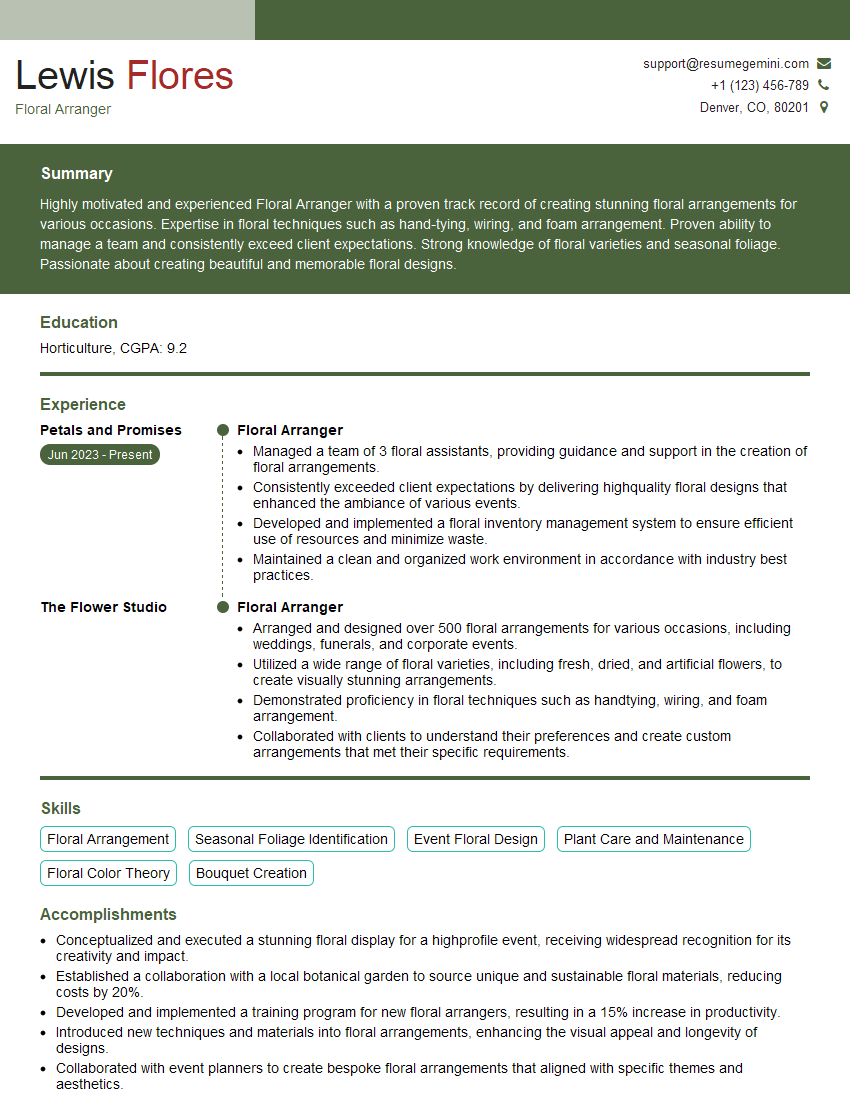
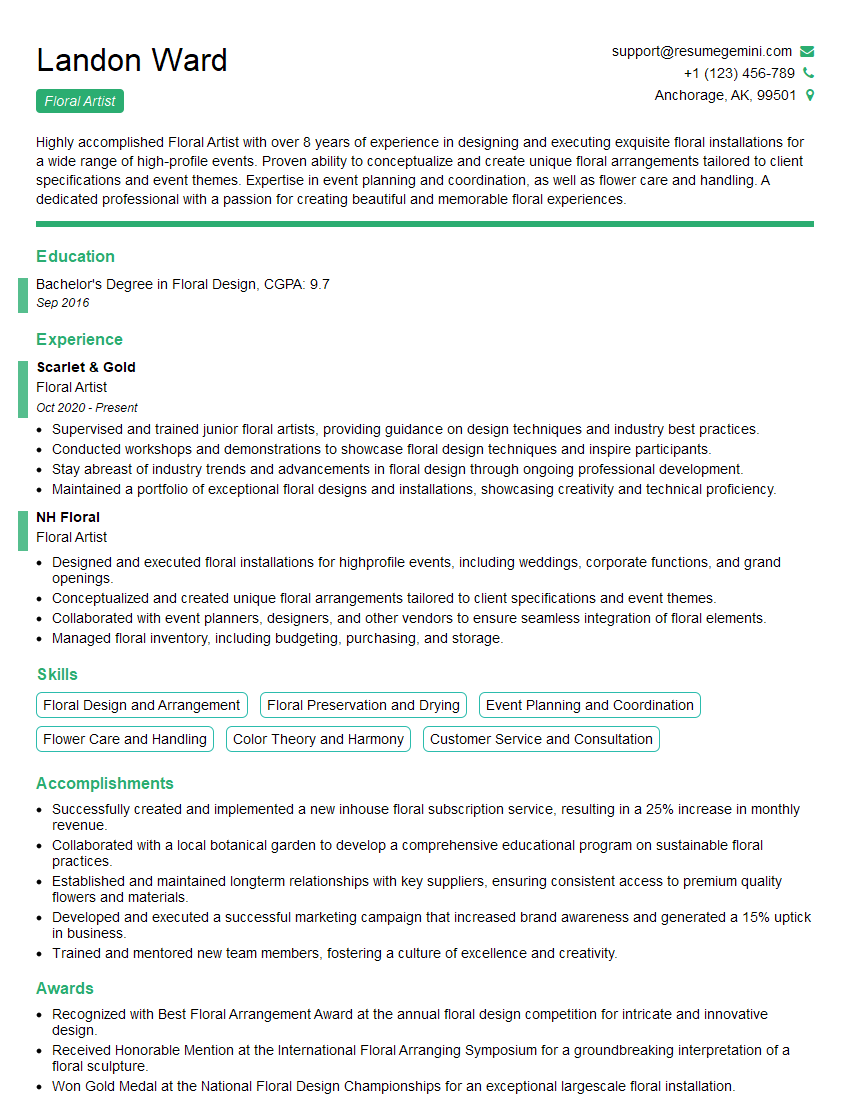
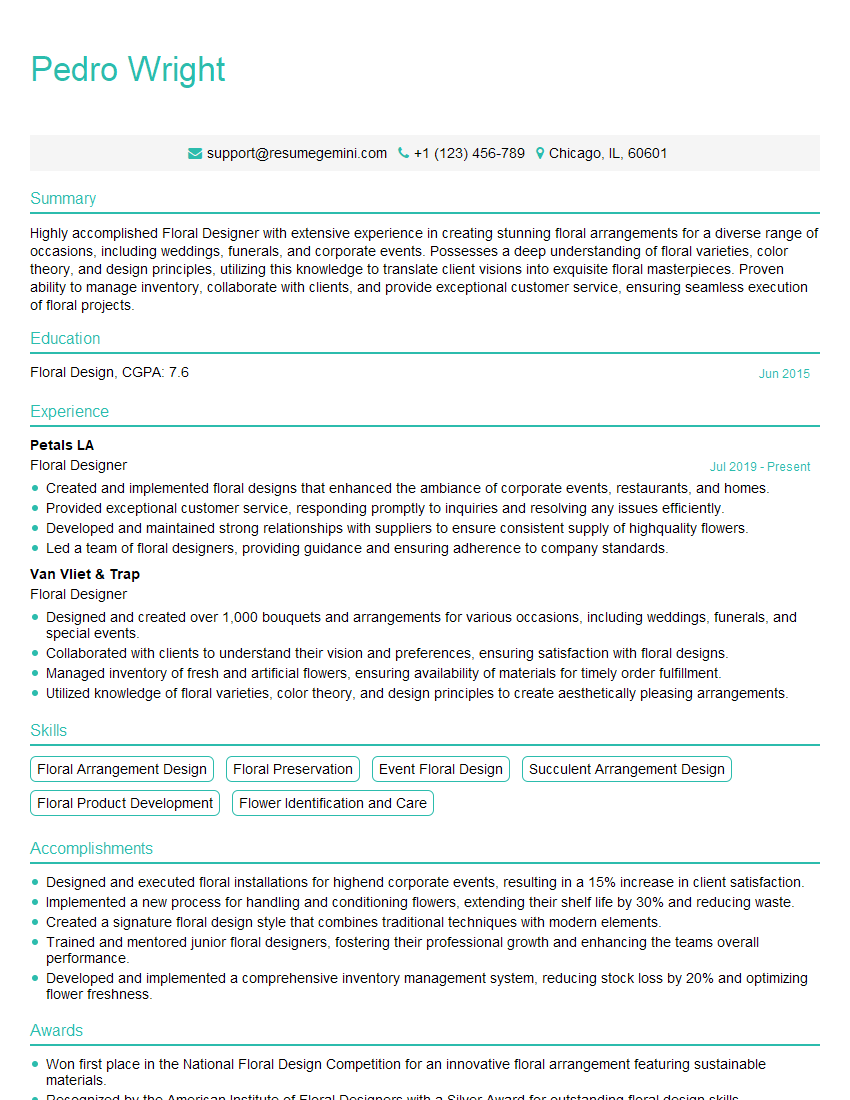
Mastering floral arranging techniques is crucial for career advancement in this creative and competitive field. A strong understanding of these principles allows you to showcase your expertise and secure your ideal role. To significantly enhance your job prospects, create a compelling and ATS-friendly resume that highlights your skills and experience effectively. ResumeGemini is a trusted resource that can help you build a professional resume tailored to your unique qualifications. Examples of resumes specifically designed for showcasing expertise in floral arranging techniques are available to guide you through the process.
Explore more articles
Users Rating of Our Blogs
Share Your Experience
We value your feedback! Please rate our content and share your thoughts (optional).
What Readers Say About Our Blog
Very informative content, great job.
good