The thought of an interview can be nerve-wracking, but the right preparation can make all the difference. Explore this comprehensive guide to Floral Design for Special Occasions interview questions and gain the confidence you need to showcase your abilities and secure the role.
Questions Asked in Floral Design for Special Occasions Interview
Q 1. Describe your experience with various floral arrangements (bouquets, centerpieces, arches).
My experience spans a wide range of floral arrangements, from classic bridal bouquets to elaborate wedding centerpieces and stunning floral arches. I’ve designed everything from intimate, rustic arrangements for smaller gatherings to large-scale installations for corporate events and galas. For example, I recently crafted a cascading bridal bouquet featuring garden roses, peonies, and lisianthus in shades of blush pink and ivory for a romantic garden wedding. This required meticulous attention to detail in both the selection and placement of each bloom to achieve the desired cascading effect. In contrast, for a modern corporate event, I created minimalist centerpieces using orchids and succulents in sleek geometric vases to complement the venue’s contemporary style. My work with floral arches has involved creating both traditional structures adorned with lush greenery and blooms, and more modern designs incorporating geometric frames and unusual flower choices like protea and birds of paradise.
I’m comfortable working with various styles including:
- Romantic: Soft colors, flowing lines, and delicate blooms.
- Modern: Clean lines, bold colors, and unusual textures.
- Bohemian: Wildflowers, flowing greenery, and a relaxed aesthetic.
- Rustic: Natural materials, earthy tones, and simple elegance.
Q 2. What software or tools do you utilize for floral design planning and design?
To effectively plan and design floral arrangements, I utilize a combination of software and tools. For initial design concepts and client presentations, I frequently use Adobe Photoshop and Illustrator. These programs allow me to create detailed visual representations of arrangements, experimenting with different color palettes, flower types, and container styles before ever touching a single stem. I can then share these designs with clients for feedback and approval, ensuring we’re on the same page before the design process begins. Beyond design, I rely on project management software like Asana or Trello to manage schedules, track orders, and maintain communication with suppliers and clients throughout the process. For estimating costs, I use spreadsheets to calculate flower costs, labor, and other expenses to provide accurate quotes.
Q 3. Explain your process for selecting appropriate flowers for different event styles and themes.
Selecting the right flowers is crucial for achieving the desired event style and theme. My process begins with a thorough consultation with the client to understand their vision, preferences, and the overall aesthetic of the event. For example, a beach wedding would naturally lend itself to lighter, airy blooms like hydrangeas and sea lavender, whereas a formal ballroom event might call for more luxurious options like orchids and calla lilies. I consider several key factors including:
- Event theme and style: A rustic wedding might use wildflowers and succulents, while a modern event might feature orchids and geometric arrangements.
- Color palette: I coordinate flower colors to complement the venue’s decor and the client’s chosen color scheme.
- Seasonal availability: Using in-season flowers helps control costs and ensures freshness. I might suggest alternative blooms if a desired flower is out of season.
- Client preferences: I always incorporate the client’s personal preferences and any requests for specific flowers.
- Venue and setting: The size and style of the venue dictate the scale and type of arrangement.
Once I’ve gathered this information, I create a mood board and then start sourcing the flowers and other materials needed to bring the vision to life.
Q 4. How do you manage a large floral order, including logistics and timelines?
Managing large floral orders requires meticulous planning and execution. I start by creating a detailed order breakdown listing each item, quantity, and delivery schedule. This is crucial for ensuring timely procurement of materials and avoiding last-minute surprises. I work closely with reliable suppliers who are known for quality and on-time delivery. To track everything, I utilize project management software to monitor order progress, track deliveries, and ensure that everything stays on schedule. A crucial step is creating a detailed timeline that includes:
- Flower ordering and delivery: Coordinating with suppliers and ensuring flowers arrive fresh.
- Design and assembly: Scheduling enough time for the design and creation of arrangements.
- Transportation and setup: Arranging transportation of arrangements to the venue and setting up on-site.
- On-site assistance: Providing on-site support for any last-minute adjustments or fixes.
For larger events, I often build a dedicated team to handle specific aspects of the process, improving efficiency and ensuring a smooth workflow.
Q 5. How do you handle unexpected issues or challenges during event setup?
Unexpected issues can arise, such as damaged flowers during transit or a last-minute change in venue layout. I approach these situations with a problem-solving mindset. For example, if a shipment of flowers arrives damaged, I have backup suppliers and pre-selected alternative flower options to quickly replace the damaged ones. My team is trained to handle such situations efficiently and creatively. If a venue layout changes, I work directly with the event planner and venue staff to swiftly adapt the floral arrangement plan, adjusting placements or quantities to maintain the overall aesthetic. Having a well-defined contingency plan is crucial – it allows for a swift response to unexpected issues, minimizing disruption to the event.
Q 6. Describe your experience with different floral preservation techniques.
My experience encompasses several floral preservation techniques, each suited to different applications. Pressing flowers is a classic method, ideal for creating keepsakes like cards or framed art. This is a simple method using heavy books or specialized flower presses. For longer-lasting preservation, I’m proficient in resin casting, which encases flowers beautifully in clear resin. This method is very versatile, allowing for creative designs in various forms. I’m also knowledgeable in freeze-drying, which retains the flowers’ color and shape remarkably well. This is a more advanced method typically used for very delicate or rare flowers. Finally, I understand the use of silica gel for drying flowers; a fast and effective method that helps maintain flower color and shape.
Q 7. How familiar are you with various flower types, their care, and seasonal availability?
My familiarity with various flower types, their care, and seasonal availability is extensive. I possess a deep understanding of a wide range of flowers from classic roses and lilies to more unique varieties such as orchids, succulents, and wildflowers. I know the optimal handling and care requirements for each type, including water requirements, temperature preferences, and storage conditions. My knowledge extends to seasonal availability, enabling me to suggest appropriate alternatives if a client requests a flower that’s out of season. For example, I know that peonies are primarily available in the spring, while sunflowers are abundant in the summer. This knowledge helps me to create stunning arrangements while maintaining cost-effectiveness and flower freshness.
Q 8. How do you incorporate client preferences and design briefs into your floral creations?
Understanding and incorporating client preferences is paramount in floral design. It’s about translating their vision into a stunning reality. I start by conducting a thorough consultation, delving into the event’s details – the occasion (wedding, corporate event, birthday, etc.), the venue, the overall theme or style, and, crucially, the client’s personal taste and preferences. I ask detailed questions about color palettes, favorite flowers, preferred styles (e.g., romantic, modern, rustic), and any specific requests or must-haves. I also analyze any design briefs provided, ensuring I capture every detail, from specific flower types to the desired arrangement sizes and quantities.
For example, if a client desires a rustic wedding with a focus on natural elements, I would incorporate wildflowers, greenery, and perhaps wooden accents into the designs. Conversely, a modern corporate event might call for sleek, minimalist arrangements with monochromatic color schemes and architectural lines. I always present mood boards and detailed proposals, incorporating the client’s feedback at each stage, guaranteeing a final product that perfectly reflects their vision and expectations.
Q 9. How do you stay updated with current floral design trends and styles?
Staying ahead of the curve in floral design requires a multifaceted approach. I regularly attend industry trade shows and conferences like the Society of American Florists convention, where I network with fellow designers and learn about the latest trends and techniques. I subscribe to influential floral design magazines and follow key floral designers on social media platforms like Instagram and Pinterest, drawing inspiration from their innovative work. I also immerse myself in other creative fields – fashion, interior design, and even art – as these can often spark fresh ideas and inform new approaches to floral artistry. This ongoing exploration keeps my designs contemporary and relevant, allowing me to offer clients the most up-to-date and exciting options.
Q 10. Explain your approach to budgeting and cost management for floral projects.
Budgeting and cost management are crucial for successful floral projects. I begin by providing a detailed breakdown of all costs involved, including flower costs, labor, delivery, rental fees (for vases or other materials), and any other applicable expenses. I work closely with clients to establish a realistic budget early on, clarifying what is achievable within their financial constraints. This often involves suggesting alternative options if a particular flower is out of budget, perhaps substituting a similar flower that achieves the same visual effect more economically. I also utilize efficient sourcing strategies (which I’ll elaborate on later) to ensure the best possible value for money. Transparency is key, and I always maintain open communication with clients, providing regular updates and explanations of any cost changes or adjustments.
Q 11. Describe your experience working with different types of budgets (high-end, mid-range, budget-friendly).
My experience spans various budget levels, allowing me to adapt my approach to suit different clients’ needs. High-end projects allow for greater creativity and access to luxury blooms like orchids or rare imported varieties. Here, the focus is often on elaborate designs, unique floral installations, and superior quality materials. Mid-range projects provide a good balance between quality and cost-effectiveness. I might choose a mix of high-impact flowers with more budget-friendly fillers to create visually stunning arrangements without exceeding the budget. Budget-friendly projects require a creative approach to maximize visual impact with economically sourced flowers and thoughtful design choices, focusing on seasonal blooms and arrangements that highlight their natural beauty. Regardless of budget, my commitment to quality and client satisfaction remains unwavering.
Q 12. How do you source your flowers (local growers, wholesalers, etc.)?
Sourcing flowers strategically is critical for both quality and cost-effectiveness. I primarily work with a network of trusted local growers, fostering strong relationships that ensure consistent access to fresh, high-quality blooms. Supporting local growers also helps to promote sustainable practices and reduce the environmental impact associated with long-distance transportation. For specialized or less readily available varieties, I collaborate with reputable wholesalers who can provide access to a wider range of flowers. The choice between local growers and wholesalers depends on the specific needs of each project – the type of flowers, their seasonality, and the overall budget.
Q 13. What are your preferred flower types and why?
My preferred flower types depend largely on the event’s theme and the client’s preferences, but I have a particular fondness for peonies, roses, and dahlias. Peonies offer a luxurious, romantic feel with their full, layered blooms, while roses provide an array of colors and styles to suit various aesthetics. Dahlias are remarkably versatile, offering a wide range of shapes, sizes, and colors, ideal for creating both dramatic and delicate designs. Beyond these favorites, I appreciate the unique qualities of other flowers – the delicate beauty of anemones, the textural interest of succulents, and the vibrant energy of sunflowers – constantly exploring and incorporating new varieties to expand my design vocabulary.
Q 14. How do you maintain the freshness and quality of flowers throughout the event?
Maintaining the freshness and quality of flowers throughout the event is essential. I carefully select flowers at their peak freshness, prioritizing those with firm stems and tightly closed buds where appropriate. Upon delivery, I immediately place them in cool water with floral preservative solution, ensuring adequate hydration and preventing wilting. I utilize appropriate hydration techniques depending on the flower type, which may include re-cutting stems at an angle and removing lower leaves. For longer events, I might incorporate ‘conditioning’ techniques, which may involve storing flowers in a cooler environment or using specialized hydration products. Thorough planning, including adequate timing for arrangements and proper storage, helps me ensure the flowers maintain their vibrancy and beauty throughout the event duration.
Q 15. Describe your experience with floral installation and design on various scales.
My experience in floral installation and design spans a wide range of scales, from intimate gatherings to large-scale events. I’ve designed floral arrangements for everything from small wedding ceremonies with under 50 guests to elaborate corporate galas with thousands of attendees. For smaller events, the focus is often on creating a cohesive and personalized atmosphere through carefully chosen blooms and thoughtful arrangement styles. Think delicate hand-tied bouquets or charming centerpieces. For larger events, logistical planning becomes crucial. This includes managing a team, sourcing sufficient quantities of high-quality flowers, and overseeing the efficient installation of arrangements across expansive venues. One memorable large-scale project involved designing and installing over 200 elaborate floral arrangements for a high-profile awards ceremony. The challenge was to maintain a consistent aesthetic throughout the vast space while catering to the unique requirements of different areas, like the main stage, reception halls, and VIP lounges.
In smaller installations, I’m often hands-on, crafting each piece myself. Larger projects require delegation and meticulous planning, employing CAD software to visualize the layouts and ensure efficient workflow for my team. This scale management is key to delivering a consistent and high-quality product, regardless of event size.
Career Expert Tips:
- Ace those interviews! Prepare effectively by reviewing the Top 50 Most Common Interview Questions on ResumeGemini.
- Navigate your job search with confidence! Explore a wide range of Career Tips on ResumeGemini. Learn about common challenges and recommendations to overcome them.
- Craft the perfect resume! Master the Art of Resume Writing with ResumeGemini’s guide. Showcase your unique qualifications and achievements effectively.
- Don’t miss out on holiday savings! Build your dream resume with ResumeGemini’s ATS optimized templates.
Q 16. How do you manage client communication and expectations throughout the process?
Client communication is paramount. I begin by holding a thorough consultation to understand their vision, budget, and aesthetic preferences. This involves discussing their event style, color palettes, flower choices, and any specific requests. I then create a detailed proposal outlining the design concepts, flower selections, estimated costs, and a timeline for the project. Throughout the process, I maintain open communication through regular emails, phone calls, or even video conferencing to address any questions or concerns. I provide regular updates on the project’s progress and welcome feedback at every stage, ensuring they feel fully involved and informed. For instance, I’ll send pictures of mock-ups and provide options for substitutions if certain flowers are unavailable.
Managing expectations involves being realistic and transparent. I carefully explain the limitations of certain design choices, such as availability of flowers during specific seasons, and discuss potential cost implications. My goal is to collaboratively create a design that is both beautiful and feasible within their budget and time constraints. Active listening and clear communication are essential to prevent misunderstandings and ensure client satisfaction.
Q 17. How do you resolve conflicts or disagreements with clients regarding design choices or budgets?
Conflicts are rarely insurmountable with open communication. If a disagreement arises concerning design choices, I approach it as an opportunity for collaboration. I present alternatives based on their feedback while explaining the rationale behind my initial recommendations. For instance, if a client wants a particular flower out of season, I’ll offer similar alternatives that achieve a similar aesthetic without compromising the budget or design’s integrity. We might discuss substituting a more affordable flower with a similar appearance or exploring options within a similar color family.
Budgetary conflicts are handled with transparency. I provide a detailed breakdown of costs, highlighting areas where potential savings can be made without sacrificing quality. We might explore alternatives, such as using fewer flowers of a more expensive variety or substituting fillers with more economical options. Ultimately, the goal is to find creative solutions that meet both their vision and budget limitations. The key is respectful dialogue and finding common ground.
Q 18. Describe your experience with different floral arrangement styles (e.g., cascade, hand-tied, modern).
My experience encompasses a broad range of floral arrangement styles. I’m proficient in classic styles like cascade bouquets, which are known for their elegant, flowing design, and hand-tied bouquets, appreciated for their natural, rustic charm. Modern styles are also a key part of my repertoire. These arrangements often utilize bold colors, unconventional materials, and geometric shapes, creating striking, contemporary designs. I’ve designed everything from traditional round bouquets to avant-garde sculptural pieces using unexpected elements like driftwood or metallic accents. For instance, I recently designed a modern arrangement using only white orchids and dark grey branches for a minimalist wedding, which contrasted beautifully with the venue’s industrial chic décor.
Beyond these, I’m adept at creating bespoke styles tailored to the client’s unique preferences. Understanding the occasion, venue, and client’s personal style informs the selection of both the style and the specific flowers. Adaptability is a key skill in floral design, allowing me to effortlessly transition between various styles to meet diverse demands.
Q 19. What are your strategies for creating unique and memorable floral designs?
Creating unique and memorable floral designs involves a blend of creativity, technical skill, and a deep understanding of current trends and design principles. I draw inspiration from various sources: nature, art, fashion, even architecture. I start by thoroughly understanding the client’s vision and the overall event theme, transforming their ideas into tangible floral expressions. For example, I once designed floral arrangements based on the client’s love for vintage maps, incorporating miniature replicas of antique maps into the centerpiece designs.
Utilizing unusual flower varieties or unexpected color combinations is another technique. I might incorporate lesser-known flowers to add a unique touch or blend unconventional colors to create a surprising visual effect. Experimentation is key – sometimes the most memorable designs emerge from stepping outside the box. I maintain an extensive network of growers and suppliers to access a diverse range of flowers and foliage, ensuring I always have access to inspiration and unique elements.
Q 20. How do you incorporate sustainable practices into your floral design work?
Sustainability is a core value in my floral design practice. I prioritize sourcing locally grown flowers whenever possible to reduce transportation costs and environmental impact. This also supports local farmers and businesses. I frequently use seasonal flowers, as they require less energy to cultivate and are at their peak beauty, reducing waste. I minimize the use of non-biodegradable materials like plastic wrapping, opting for eco-friendly alternatives such as natural twine or paper. Furthermore, I encourage clients to consider donating or composting floral arrangements after the event, helping to minimize waste and return nutrients to the earth.
I educate my clients about sustainable practices and discuss options such as using potted plants or flowers that can be transplanted after the event. My commitment to sustainability extends beyond material choices – it’s about creating awareness and fostering a more environmentally responsible approach to event planning.
Q 21. Explain your knowledge of color theory and its application in floral design.
Color theory is fundamental to creating harmonious and visually appealing floral arrangements. I apply principles of color wheel, including complementary, analogous, and triadic color schemes to guide my flower selection. Understanding color temperature (warm vs. cool) is also critical in setting the overall mood and atmosphere. Warm colors like oranges and reds create energy and excitement, while cool colors like blues and purples evoke calmness and serenity.
For example, I might use a complementary scheme (colors opposite each other on the color wheel, like blue and orange) for a bold and striking effect, or an analogous scheme (colors next to each other, like blues and greens) for a softer, more harmonious feel. I also consider the value and intensity of colors – a mix of light and dark shades within a color palette adds depth and visual interest. The goal is to create a balanced and aesthetically pleasing design, reflecting the event’s theme and client’s preferences. Color theory, when thoughtfully applied, transforms simple floral arrangements into works of art.
Q 22. How do you ensure the safety and hygiene standards are met when handling flowers?
Maintaining safety and hygiene is paramount in floral design. It’s not just about beautiful arrangements; it’s about preventing contamination and ensuring the health of both myself and my clients. My process involves several key steps:
- Thorough Handwashing: Before handling any flowers or materials, I always wash my hands thoroughly with soap and water for at least 20 seconds. I use hand sanitizer frequently throughout the day as well.
- Clean Workspaces: My work areas are regularly disinfected, especially after handling different types of flowers. This prevents cross-contamination and the spread of bacteria or fungi.
- Proper Flower Handling: I handle flowers gently to avoid bruising or damaging them, which can create entry points for bacteria. I use clean tools and avoid touching my face while working.
- Protective Gear: When necessary, I use gloves, especially when working with flowers known to cause skin irritations or allergies.
- Waste Disposal: All floral waste, including thorns and discarded foliage, is properly disposed of in sealed bags to maintain a clean environment and prevent pests.
Think of it like preparing food – the same principles of hygiene apply to ensure a safe and beautiful final product.
Q 23. What is your process for creating a design proposal for clients?
Creating a design proposal involves a collaborative process designed to perfectly capture a client’s vision. It begins with a thorough consultation to understand their preferences, the event’s theme, color palette, venue, and budget.
- Consultation & Concept Development: I ask detailed questions about the event and the client’s style. This allows me to develop initial concepts and mood boards that reflect their vision.
- Mood Board Creation: I often use a digital or physical mood board to visually represent the color schemes, flower types, and overall design aesthetic we’ve discussed. This helps the client visualize the final product.
- Detailed Proposal: The proposal itself includes the design concept, a detailed list of flowers and materials, the total cost, delivery and setup information, and a contract outlining the terms and conditions.
- Revisions & Feedback: I welcome client feedback and am happy to make revisions to the proposal until we both agree on the final design.
For instance, for a rustic wedding, the mood board might feature images of wildflowers, burlap, and muted colors, while a corporate event would require a more sophisticated and formal design with carefully chosen blooms.
Q 24. How do you handle flower allergies or sensitivities during events?
Flower allergies and sensitivities are a serious consideration. My approach involves proactive measures and thoughtful alternatives:
- Client Consultation: During the initial consultation, I always ask about any allergies or sensitivities among guests. This allows me to make informed decisions about the flowers used.
- Hypoallergenic Flower Selection: I’m well-versed in which flowers are generally considered hypoallergenic, such as roses, sunflowers, and gerberas. These are often less likely to trigger allergic reactions. I avoid flowers known for their high pollen content, such as lilies.
- Strategic Placement: If certain flowers must be included, I’ll place them strategically to minimize contact. For instance, I might place highly allergenic blooms higher up in arrangements, away from guest’s breathing zones.
- Alternative Design Elements: For clients with significant allergies, I can incorporate other design elements, such as greenery, decorative elements, or non-floral alternatives that still create a beautiful aesthetic.
For example, for a client with severe lily allergies, I might suggest a stunning arrangement featuring orchids and succulents, which offer different textures and colors, creating a similarly impactful display.
Q 25. How do you manage your time effectively, especially during busy event periods?
Managing time effectively during busy periods requires a combination of planning, organization, and delegation. My strategy involves:
- Detailed Scheduling: I use a digital calendar to schedule every aspect of my work, from client consultations and flower sourcing to design creation and event setup. This allows me to visualize my workload and allocate time efficiently.
- Prioritization: I prioritize tasks based on urgency and importance, ensuring that time-sensitive tasks get the attention they need.
- Efficient Sourcing: I build strong relationships with reliable flower suppliers to guarantee timely delivery of high-quality flowers. Pre-ordering and maintaining strong supplier relationships minimizes delays.
- Delegation: When possible, I delegate tasks to assistants or other team members, allowing me to focus on the more complex aspects of the projects.
- Teamwork: When working on large-scale events, effective teamwork is crucial. I communicate clearly with my team, ensuring that everyone understands their roles and responsibilities.
Think of it like conducting an orchestra – everyone needs to know their part, and the conductor (me) ensures everything runs smoothly and on time.
Q 26. What are your salary expectations for this role?
My salary expectations for this role are commensurate with my experience and expertise in floral design for special occasions. I’m confident that my skills and contributions would be a valuable asset to your team, and I’m open to discussing a competitive compensation package.
I am prepared to discuss my salary requirements further, taking into account the responsibilities of the role and the overall compensation and benefits offered.
Q 27. Describe a time you had to troubleshoot a floral design problem creatively.
During a high-profile wedding, a crucial delivery of orchids arrived significantly damaged. The wedding was just hours away, and panic set in. Instead of letting this derail the entire design, I quickly adapted.
My creative solution involved using the undamaged orchids strategically in the bridal bouquet and centerpieces. I then used the remaining stems, along with an abundance of other flowers and greenery I had on hand, to create filler arrangements, disguising the damaged orchids effectively. I also incorporated more greenery than originally planned to add lushness and compensate for the flower shortage. The final result was stunning and no one noticed the initial problem.
This experience highlights my ability to think on my feet, remain calm under pressure, and find creative solutions to unexpected challenges.
Q 28. How do you adapt your design style to suit various venue spaces and architectural elements?
Adapting my design style to different venue spaces and architectural elements is essential for creating harmonious and visually stunning arrangements. My process considers the following:
- Venue Assessment: I always visit the venue beforehand to assess its architecture, lighting, and existing décor. This informs my design choices and helps me envision how the floral arrangements will integrate into the overall space.
- Scale & Proportion: I pay close attention to the scale and proportions of the space. Large venues require grand, voluminous arrangements, while smaller spaces call for more delicate and refined designs. The height and width of ceilings also influences the arrangement’s form.
- Color Palette: The venue’s color palette and architectural style influence my flower selection. For instance, a modern, minimalist space might call for a monochromatic arrangement, while a rustic barn would suit wildflowers and natural tones.
- Architectural Integration: I often use the venue’s architectural features to inspire my design. I might incorporate flowers into existing niches, archways, or columns, creating a seamless flow between the floral design and the space itself.
For example, a grand ballroom might benefit from towering centerpieces that reach towards the high ceilings, while a charming garden would be best enhanced by smaller, organically shaped arrangements that complement the natural surroundings.
Key Topics to Learn for Floral Design for Special Occasions Interview
- Floral Design Principles: Understanding color theory, line, form, texture, and scale in floral arrangements. Practical application: Creating balanced and visually appealing arrangements for different occasions (weddings, funerals, corporate events).
- Flower Selection and Care: Identifying appropriate flowers for various occasions based on symbolism, seasonality, and client preferences. Practical application: Sourcing high-quality flowers, proper handling and storage to maintain freshness and longevity.
- Design Styles and Trends: Familiarity with various floral design styles (e.g., modern, romantic, rustic) and current trends. Practical application: Adapting design styles to meet client needs and event themes.
- Event Planning and Logistics: Understanding the logistical aspects of floral design for events, including timelines, budgeting, and vendor coordination. Practical application: Developing a detailed floral plan, managing delivery and setup, and addressing potential challenges on-site.
- Client Communication and Consultation: Effective communication with clients to understand their vision, preferences, and budget. Practical application: Conducting consultations, presenting design proposals, and managing client expectations.
- Sustainability and Ethical Sourcing: Awareness of sustainable practices in floral design, including responsible sourcing and waste reduction. Practical application: Incorporating eco-friendly materials and minimizing environmental impact.
- Floral Mechanics and Techniques: Mastering fundamental techniques like wiring, taping, and arranging flowers to create lasting and structurally sound designs. Practical application: Creating various arrangement types (bouquets, centerpieces, installations).
Next Steps
Mastering Floral Design for Special Occasions opens doors to exciting career opportunities, from freelance work to roles in prestigious event planning companies and floral studios. To significantly increase your chances of landing your dream job, crafting a strong, ATS-friendly resume is crucial. This ensures your qualifications are effectively highlighted and easily parsed by applicant tracking systems.
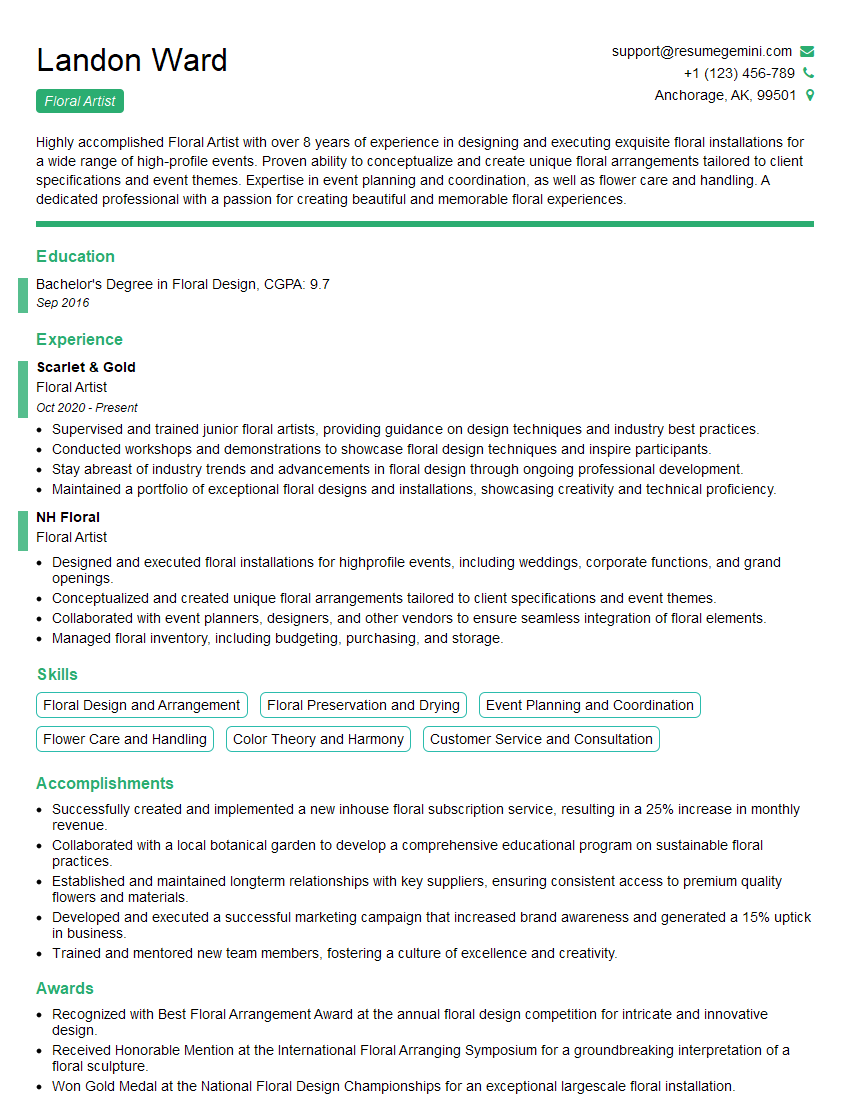
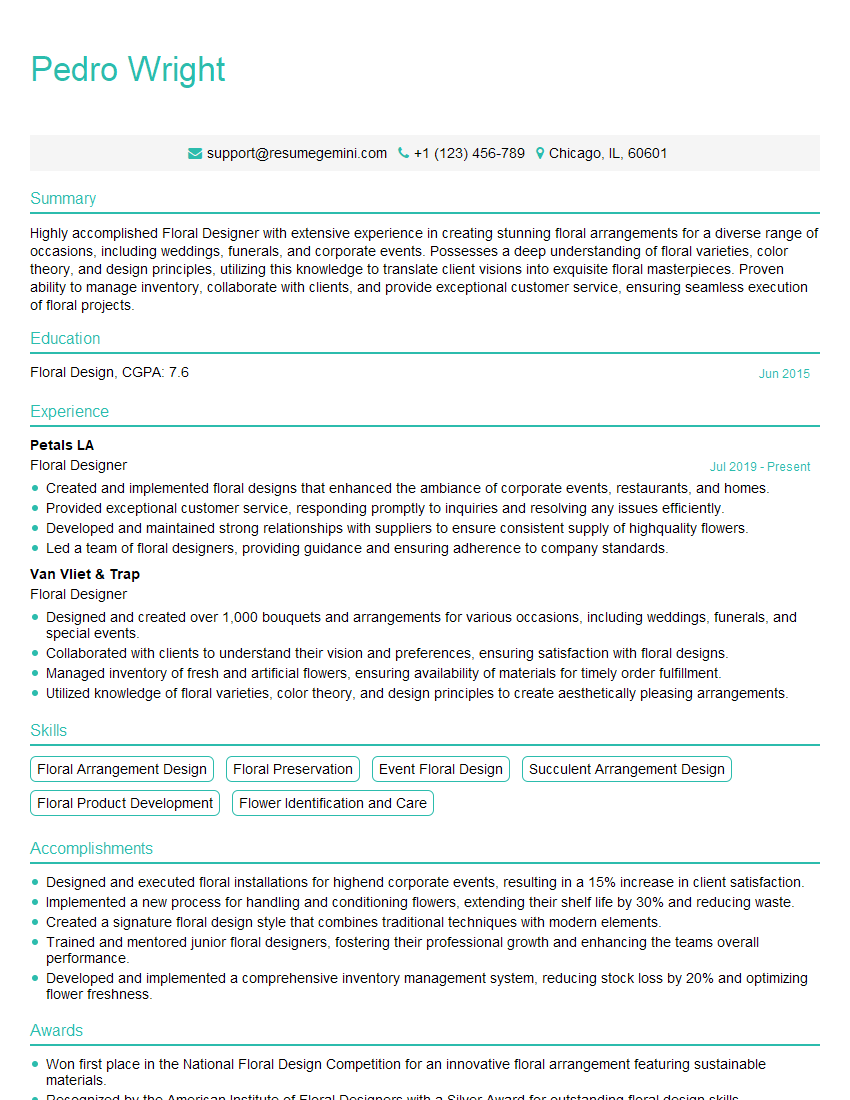
We highly recommend using ResumeGemini to build a professional and impactful resume. ResumeGemini provides a user-friendly platform to create a resume that showcases your skills and experience effectively. Examples of resumes tailored specifically to Floral Design for Special Occasions are available to help guide your creation process.
Explore more articles
Users Rating of Our Blogs
Share Your Experience
We value your feedback! Please rate our content and share your thoughts (optional).
What Readers Say About Our Blog
Very informative content, great job.
good