Cracking a skill-specific interview, like one for Floral Displays and Installations, requires understanding the nuances of the role. In this blog, we present the questions you’re most likely to encounter, along with insights into how to answer them effectively. Let’s ensure you’re ready to make a strong impression.
Questions Asked in Floral Displays and Installations Interview
Q 1. Describe your experience with various floral design styles (e.g., modern, traditional, rustic).
My experience spans a wide range of floral design styles, each demanding a unique approach. Traditional designs often feature symmetrical arrangements with classic blooms like roses and lilies, emphasizing elegance and formality. I’ve created numerous traditional arrangements for weddings and formal galas, focusing on rich color palettes and balanced compositions. In contrast, modern floral design embraces asymmetry and unexpected combinations. I’ve incorporated unconventional elements like succulents, air plants, and unusual vessels in modern installations, seeking a clean, minimalist aesthetic. Think bold pops of color, geometric shapes, and a focus on texture. Rustic designs, on the other hand, evoke a sense of natural, unrefined beauty. I’ve worked extensively with wildflowers, grasses, and locally sourced blooms, employing natural containers like wooden boxes or galvanized buckets to achieve a charming, countryside feel. For example, I recently designed a rustic wedding centerpiece featuring wildflowers collected from a nearby meadow, complemented by burlap and mason jars.
Q 2. Explain your process for creating a floral arrangement from concept to completion.
My process is methodical and client-centric. It starts with a thorough consultation, understanding the event’s theme, color scheme, budget, and the client’s vision. Then I develop a concept sketch, visualizing the arrangement’s overall shape, size, and floral elements. I carefully select the flowers and foliage based on availability, seasonality, and the design’s aesthetic. Next, I source the necessary materials, including flowers, containers, and any decorative elements. The actual creation involves meticulous preparation and arrangement, ensuring each stem is placed strategically to achieve the desired visual impact. Post-arrangement, I conduct a quality check for symmetry, balance, and overall appeal, making any necessary adjustments. Finally, I deliver and install the arrangement, providing care instructions to ensure longevity.
Q 3. How do you select the appropriate flowers and foliage for a specific event or occasion?
Flower and foliage selection is crucial. I consider several factors. The event type dictates the appropriate style and formality. A corporate event may call for sophisticated orchids, while a casual birthday party might suit sunflowers and daisies. The seasonality of flowers greatly impacts availability and cost; using in-season blooms keeps costs down and ensures freshness. The venue plays a role; vibrant blooms might be perfect for a bright ballroom, while softer tones might complement a rustic barn. The color scheme is vital, ensuring harmony with the event’s theme and existing decor. I always take the client’s preferences into account, aiming for a perfect balance between their desires and professional suggestions. For example, for a summer wedding, I might choose vibrant sunflowers, bright gerbera daisies, and lush greenery, while for a winter wedding, I might opt for elegant white roses, amaryllis, and pine branches.
Q 4. What techniques do you use to preserve the freshness of flowers during installation?
Preserving flower freshness during installation requires careful planning and execution. I always start by hydrating the flowers properly before arranging them. This means re-cutting the stems at an angle and placing them in a solution of floral preservative. During transportation, I use specialized containers to maintain humidity and prevent crushing. For larger installations, I often use floral foam, which provides a stable base and helps retain moisture. I minimize exposure to direct sunlight and heat during setup, and I always ensure the foam is properly hydrated before placing the flowers. After installation, I may use specialized sprays to maintain freshness, and provide post-installation care instructions to the client.
Q 5. Describe your experience with different floral arrangement techniques (e.g., hand-tied, foam, mechanics).
My expertise covers various arrangement techniques. Hand-tied bouquets are classic, requiring skill in creating a balanced, naturally flowing arrangement. Foam arrangements offer a stable base, ideal for larger installations or intricate designs. I frequently use this method for wedding centerpieces and large-scale event installations. Mechanical techniques utilize various tools and wires for intricate designs and supporting heavy blooms. I might use these techniques for architectural floral installations or creating long-lasting preserved arrangements. Each technique serves a unique purpose, and my selection depends on the desired aesthetic, the scale of the project, and the types of flowers used. For instance, a hand-tied bouquet might be perfect for a bride, while a foam arrangement would be more suitable for a large wedding centerpiece.
Q 6. How do you manage your time and resources effectively when working on multiple floral projects simultaneously?
Managing multiple projects simultaneously requires meticulous organization and planning. I use project management software to track deadlines, budgets, and client communication for each project. I create detailed schedules that break down each project into manageable tasks, ensuring I allocate sufficient time for each step. I prioritize tasks based on urgency and deadlines, ensuring that time-sensitive projects receive the necessary attention. I also delegate tasks where possible, collaborating with assistants or other professionals to share the workload. Maintaining clear communication with clients is essential, keeping them informed of progress and addressing any concerns promptly. This structured approach allows me to handle multiple projects efficiently without compromising quality.
Q 7. Explain your knowledge of different flower types, their care, and their seasonal availability.
My knowledge of flower types, care, and seasonal availability is extensive. I understand the specific needs of various flowers, from delicate orchids requiring high humidity to hardy sunflowers that tolerate full sun. I know how to properly hydrate and care for each type, ensuring their longevity. I’m deeply familiar with seasonal availability, understanding which blooms are at their peak at different times of the year. This knowledge informs my design choices, ensuring cost-effectiveness and access to the freshest flowers. For example, I know that tulips are in peak season in spring, while poinsettias are a winter staple. This understanding allows me to offer clients the best possible floral selections based on their event dates and budget.
Q 8. How do you handle challenging client requests or design conflicts?
Handling challenging client requests involves a collaborative approach. First, I actively listen to understand their vision, even if it seems initially incompatible with my design sensibilities. I ask clarifying questions to uncover the root of their request, identifying the underlying needs and preferences. For example, if a client insists on a color combination that clashes aesthetically, I might explore the symbolic meaning behind those colors for them, or suggest subtle alternatives that achieve a similar effect without compromising the overall design harmony. If a conflict arises, I present alternative designs, explaining the rationale behind each choice, using mood boards and sketches to visually communicate the options. The goal is always to find a compromise that satisfies both the client’s vision and maintains the professional integrity of the design.
A recent project involved a client who wanted a highly modern, minimalist design, clashing with the venue’s ornate, traditional architecture. Instead of simply rejecting their preference, I proposed a design incorporating modern lines and colors but using elements that complemented the building’s features, creating a balanced and harmonious aesthetic. This resulted in a successful collaboration and a very satisfied client.
Q 9. Describe your experience with large-scale floral installations for events.
I have extensive experience in large-scale floral installations for events ranging from corporate galas to weddings. This includes managing teams, coordinating logistics, and ensuring seamless execution within tight deadlines. A critical aspect is meticulous planning; this involves creating detailed scale drawings and specifying quantities of flowers and materials well in advance. For instance, a recent wedding installation required a dramatic floral archway as a focal point. My planning included detailed structural diagrams detailing the support system for the archway’s weight and the precise placement of individual flower bunches to ensure optimal visual impact. Successful large-scale projects also require strong communication with vendors, ensuring timely delivery and quality control of materials.
Beyond the design aspect, managing logistical challenges is crucial. This involves working closely with event planners, venue staff, and transportation companies to ensure smooth delivery, installation, and removal of the floral displays. For example, in a recent large outdoor event, we had to account for potential weather disruptions by pre-planning alternative locations and securing protective coverings.
Q 10. How do you ensure the safety and stability of floral arrangements and installations?
Safety and stability are paramount in floral design. We employ several techniques to ensure arrangements are secure and won’t pose a hazard. For tabletop arrangements, we use weighted bases or secure the arrangements to the table using floral adhesive or clips. For larger installations, we utilize strong structural supports, like metal frames or custom-built structures, depending on the design’s complexity and weight. We always consider the weight distribution within the arrangement and the structural integrity of the supporting elements.
For example, when constructing a large floral wall, we utilize a grid-like framework of sturdy materials, ensuring each floral element is properly attached to prevent accidents. We also account for potential environmental factors like wind or unexpected movement, adapting our support systems as needed. Regular inspections during the installation and event are conducted to ensure continued stability and address any potential issues proactively. Safety training is provided to the installation team to minimize risks.
Q 11. What software or tools do you use for floral design and planning?
I utilize a combination of software and tools for floral design and planning. This includes 2D and 3D design software such as AutoCAD and SketchUp for creating detailed design plans and visualizing complex installations. Spreadsheet software like Microsoft Excel is essential for managing budgets, tracking inventory, and creating detailed purchase orders. Project management tools, such as Asana or Trello, aid in task assignment, scheduling, and communication within the team. Additionally, I utilize specialized floral design software that allows me to create detailed designs including flower type, quantity, and color palettes. This ensures accurate costing and efficient procurement.
For example, when designing a complex wedding centerpiece, I use 3D modeling software to create a virtual representation, allowing clients to visualize the final product and making any necessary adjustments before production. This virtual walkthrough improves the client experience and reduces potential misunderstandings.
Q 12. How do you maintain a professional and organized workspace?
Maintaining a professional and organized workspace is critical for efficiency and safety. I employ a system of designated areas for different tasks: a design area for planning and sketching, a floral processing area for preparing flowers, and a storage area for materials and tools. Regular cleaning and sanitization are a priority to maintain hygiene and prevent flower damage. Tools and materials are organized using labeled containers and storage systems. This organized system prevents delays, minimizes waste, and ensures the safety of both the team and the materials.
A crucial aspect is implementing a system for managing inventory. This involves regular stocktaking and precise tracking of flower and material usage to minimize waste and optimize ordering. Digital inventory management systems are helpful for accurate record-keeping.
Q 13. Explain your experience with budgeting and cost estimation for floral projects.
Accurate budgeting and cost estimation are vital for successful floral projects. I develop detailed cost breakdowns, factoring in all expenses, including flowers, materials, labor, transportation, and any additional services. I typically create a spreadsheet outlining each cost element, allowing for flexibility and adjustments based on client preferences and market fluctuations. For example, a detailed breakdown would include the cost per stem for each flower type, the cost of supplementary materials like containers and ribbons, and labor costs based on the project’s complexity and time involved. This meticulous approach avoids budget overruns and ensures transparency with clients.
I always provide clients with multiple budget options, ranging from economical to luxurious, allowing them to make informed decisions that align with their budget and preferences. This proactive approach fosters strong client relationships built on trust and shared understanding.
Q 14. How do you manage inventory and order supplies effectively?
Efficient inventory management is crucial for preventing delays and cost overruns. I utilize a combination of physical and digital systems. Physical inventory involves regularly checking stock levels and organizing flowers according to type and freshness. Digital inventory management using spreadsheets or dedicated software helps in tracking orders, usage, and anticipating future needs. I regularly review sales data to anticipate demand and adjust ordering accordingly. Establishing strong relationships with reputable flower suppliers is essential for ensuring timely delivery and product quality. This also allows for negotiating favorable pricing and securing preferential treatment for urgent orders.
For example, I use a color-coded system to indicate flower freshness, allowing for efficient use of existing stock and minimizing waste. Furthermore, I create detailed purchase orders, specifying flower varieties, quantities, and desired delivery dates, ensuring everything arrives on time and as needed.
Q 15. Describe your experience with creating floral designs that meet specific color palettes or themes.
Creating floral designs that perfectly align with a specific color palette or theme requires a deep understanding of color theory and a keen eye for detail. I begin by thoroughly discussing the desired aesthetic with the client, clarifying every nuance of their vision. This involves not just color choices but also the overall mood and style they wish to evoke – romantic, modern, rustic, etc.
For instance, a client might request a ‘romantic blush pink’ theme. This isn’t just about using any pink flower; it’s about selecting varying shades of pink, incorporating complementary colors like dusty rose or soft peach, and choosing textures – perhaps delicate roses contrasted with fluffy hydrangeas – to create depth and visual interest. I then carefully source the flowers, considering their availability and condition, and create a mock-up design to ensure the color harmony and theme are achieved before full production.
Another example: A modern corporate event might require a design incorporating specific company branding colors. I’d carefully research the precise shades, then use a combination of flowers, foliage, and possibly even non-floral elements like modern vases or geometric structures to reflect the brand’s identity. I meticulously manage color ratios in each arrangement to maintain visual consistency throughout the event space.
Career Expert Tips:
- Ace those interviews! Prepare effectively by reviewing the Top 50 Most Common Interview Questions on ResumeGemini.
- Navigate your job search with confidence! Explore a wide range of Career Tips on ResumeGemini. Learn about common challenges and recommendations to overcome them.
- Craft the perfect resume! Master the Art of Resume Writing with ResumeGemini’s guide. Showcase your unique qualifications and achievements effectively.
- Don’t miss out on holiday savings! Build your dream resume with ResumeGemini’s ATS optimized templates.
Q 16. How do you work collaboratively with other event professionals (e.g., wedding planners, event coordinators)?
Collaboration is the cornerstone of successful event design. I thrive on working with wedding planners, event coordinators, and other professionals. My process always starts with open communication; I schedule detailed meetings to understand their vision, budget constraints, and the event’s logistics. This ensures I’m crafting designs that perfectly complement the overall event plan, not clash with it.
For example, I might work with a wedding planner to coordinate the floral arrangements with the venue’s architecture and the bride’s gown. I provide them with mood boards and detailed proposals, making sure to discuss flower types, quantity, and placement to avoid conflicts or surprises. I always maintain transparent communication regarding timelines, logistics, and potential challenges. Active listening and the ability to offer creative problem-solving are crucial to building successful collaborations. I view my role as being part of a larger team working towards a shared goal, where everyone’s expertise contributes to the event’s success.
Q 17. Describe your experience with troubleshooting issues that arise during floral installations.
Troubleshooting during floral installations is inevitable. Unforeseen challenges, such as damaged flowers en route or unexpected venue limitations, frequently occur. My experience has equipped me with a resourceful approach to these situations.
For example, if a significant portion of a delivery is damaged, my first step is to assess the extent of the damage and communicate the issue to the client promptly. I then work quickly to find suitable replacements, leveraging my network of suppliers to source similar flowers. If a venue lacks appropriate infrastructure (for example, insufficient water sources for hydration), I devise alternative solutions – perhaps by using longer-lasting flowers or pre-hydrating arrangements more thoroughly. Quick thinking, resourcefulness, and a calm, problem-solving approach are key. I’ve learned to always have backup plans and alternative designs ready to mitigate potential issues.
Q 18. How do you adapt your floral designs to different venues and spaces?
Adapting floral designs to different venues requires versatility and creativity. I consider several factors, including the venue’s size, architecture, lighting, and existing décor. A grand ballroom demands larger, more dramatic arrangements than an intimate garden setting.
Imagine designing for a modern art gallery versus a rustic barn. For the gallery, minimalist arrangements with sleek lines and monochromatic color palettes would be appropriate. For the barn, however, more organic, abundant arrangements using wildflowers and natural textures might be preferred. I always conduct a site visit to assess the space and take detailed measurements before finalizing the design. I use scale models and sketches to visualize how the arrangements will interact with the venue’s existing features.
Q 19. What are your preferred methods for transporting and handling delicate floral arrangements?
Proper transportation and handling are crucial for preserving the quality of delicate floral arrangements. I use specialized vehicles equipped with climate control to maintain optimal temperature and humidity levels during transit. Arrangements are secured using specialized techniques to prevent damage.
Delicate flowers are carefully placed in individual water tubes or containers to ensure they remain hydrated. Bulkier arrangements are cushioned with specialized foam padding to protect them from jarring movements. I frequently monitor the conditions of the flowers throughout transit to ensure their freshness. Prioritizing safety and proper handling minimizes potential damage and guarantees the flowers arrive at the event looking their best.
Q 20. How do you handle damaged or wilting flowers during an event?
Dealing with damaged or wilting flowers during an event requires immediate action and careful planning. I always carry backup flowers and supplies to handle minor issues. For more significant problems, I use a variety of techniques to revive flowers or subtly replace damaged blooms.
If a flower wilts, I might gently re-cut the stem underwater, removing any air pockets that block water uptake. Damaged blooms can be discreetly replaced with similar flowers from the backup supply. If a more significant problem arises, I collaborate with the event team to address the issue quickly and efficiently, ensuring the overall floral display maintains its aesthetic appeal. Having a well-stocked emergency kit and a resourceful approach are crucial.
Q 21. What are some common challenges you face in floral design and installation, and how do you overcome them?
Several challenges are common in floral design and installation. One major issue is the seasonality of flowers; certain varieties are only available during specific times of the year. This may require creative substitutions or adjustments to the original design to achieve the desired effect.
Another significant challenge is managing budgets effectively while maintaining high-quality design. This requires careful sourcing of flowers, negotiating with suppliers, and finding creative ways to use less expensive elements without sacrificing the overall aesthetic. Unforeseen logistical issues, such as weather delays or last-minute venue changes, can also create hurdles. However, my experience and planning allow me to anticipate many potential issues and respond effectively, making even the most demanding projects successful.
Q 22. Describe your knowledge of floral design principles (e.g., line, form, color, texture).
Floral design principles are the foundational elements that guide the creation of aesthetically pleasing and impactful arrangements. Think of them as the building blocks of a beautiful floral masterpiece. They include:
- Line: This refers to the direction and flow created by the stems and flowers within an arrangement. Using a variety of lines—vertical, horizontal, diagonal, curved—adds visual interest and dynamism. For instance, tall gladioli create strong vertical lines, while trailing ivy adds graceful horizontal movement.
- Form: This encompasses the overall shape and silhouette of the arrangement. Is it round, triangular, cascading, or linear? Form plays a crucial role in establishing the arrangement’s style and purpose. A round bouquet feels classic and elegant, whereas a cascading arrangement evokes a sense of romance and abundance.
- Color: This is arguably the most impactful element. Color theory guides the selection of hues, considering complementary, analogous, and contrasting colors to achieve the desired mood and aesthetic. A vibrant arrangement might feature contrasting colors like orange and blue, while a calming arrangement may employ analogous shades of blues and greens.
- Texture: This encompasses the surface quality of the floral elements. Mixing textures—smooth petals of roses contrasted with the fuzzy texture of lambs ear—creates visual depth and interest, adding complexity and richness to the overall design.
Mastering these principles allows me to create arrangements that are not just beautiful but also convey a specific message or evoke a particular emotion.
Q 23. How do you stay updated on the latest floral design trends and techniques?
Staying current in the ever-evolving world of floral design is crucial. I utilize a multifaceted approach:
- Industry Publications and Websites: I regularly read magazines like Floral Management and Celebrations, and follow influential floral designers and industry blogs online. This keeps me abreast of the latest trends, techniques, and new flower varieties.
- Workshops and Seminars: Attending workshops and seminars hosted by renowned floral designers and industry experts provides invaluable hands-on learning and networking opportunities. I recently participated in a workshop on sustainable floral design practices, which significantly expanded my knowledge.
- Trade Shows: Attending trade shows, like the SAF (Society of American Florists) convention, allows me to observe the latest innovations in floral products, technologies, and design techniques directly from suppliers and fellow designers.
- Social Media: Platforms like Instagram and Pinterest serve as incredible sources of inspiration, showcasing the work of international floral artists and emerging trends. This helps me stay connected to the global floral community and allows me to adapt new styles to my own creative process.
Continuous learning is essential to my success; it allows me to remain innovative and deliver exceptional floral experiences for my clients.
Q 24. What is your experience with creating proposals and presentations for clients?
I have extensive experience crafting proposals and presentations tailored to the specific needs of each client. My process typically involves:
- Consultation: I begin with a detailed consultation to understand the client’s vision, event theme, budget, and preferences. This includes discussing the style, color palette, flower types, and overall aesthetic they desire.
- Design Development: I then develop several design concepts, incorporating sketches, mood boards, and possibly even smaller scale mock-ups to visually represent my ideas. I often use digital design software to create compelling presentations.
- Proposal Creation: The proposal itself is a comprehensive document outlining the design concepts, a detailed flower list with pricing, timelines, delivery information, and payment terms. It clearly and concisely communicates everything the client needs to know.
- Presentation: The presentation is where I showcase the design concepts and walk the client through the proposal, answering any questions and addressing any concerns. I aim to make the presentation both informative and inspiring.
My goal is to create a transparent and collaborative process that empowers the client to make informed decisions and feel confident in their choice.
Q 25. How do you manage client expectations throughout the floral design process?
Managing client expectations is crucial for a successful floral design project. Open communication is key. I achieve this through:
- Clear Communication from the Start: Thorough consultations, realistic timelines, and well-defined contracts ensure everyone is on the same page from the beginning. I discuss any potential limitations or challenges early on.
- Regular Updates and Check-ins: Throughout the process, I provide regular updates to clients, keeping them informed of progress and addressing any questions or concerns promptly. This keeps them involved and avoids misunderstandings.
- Realistic Expectations: I’m upfront about what I can and cannot deliver, based on factors like budget, availability of specific flowers, and logistical challenges. This helps prevent disappointment and sets realistic expectations.
- Problem-Solving and Adaptability: If unforeseen issues arise (e.g., flower shortages), I actively work to find creative solutions and keep the client informed of any changes or adjustments needed. Flexibility and a proactive approach help maintain a positive client experience.
By focusing on transparent communication and proactive problem-solving, I strive to exceed client expectations and build lasting relationships.
Q 26. Explain your experience with working with different types of floral containers and vases.
My experience encompasses a wide range of floral containers and vases, each offering unique aesthetic and functional properties. I consider factors like:
- Material: I work with various materials including glass (clear, colored, textured), ceramic (various shapes and sizes), metal (modern and antique), wood (rustic and elegant), and even natural elements like baskets and gourds. The choice depends on the overall design style and event.
- Shape and Size: The shape and size of the container significantly impact the overall look and feel of the arrangement. A tall, slender vase lends itself to linear arrangements, while a wide bowl is perfect for a lush, cascading design.
- Style and Color: The style and color of the container should complement the flowers and the event theme. A rustic wooden box might suit a country wedding, while a sleek, modern glass vase is ideal for a contemporary event.
- Functionality: Consideration is given to the mechanics, such as water capacity, stability, and ease of arrangement.
For example, I once created a stunning centerpiece using antique silver teacups, which added a touch of vintage charm to a rustic chic wedding. The selection of the container is a crucial design element, often setting the stage for the arrangement itself.
Q 27. How do you assess the structural integrity of a floral arrangement or installation?
Assessing structural integrity is crucial, especially in large installations or arrangements. My approach includes:
- Stem Support: I ensure adequate stem support using floral foam (oasis), chicken wire, or other structural elements, preventing the arrangement from collapsing or becoming lopsided. The foam is carefully chosen to match the size and weight of the arrangement.
- Weight Distribution: I carefully distribute the weight of the flowers and foliage to maintain balance and stability. Heavier blooms are placed strategically to avoid top-heaviness.
- Material Selection: I select strong and durable stems that can support the weight of the blooms and foliage. For large installations, I might use stronger materials for frameworks.
- Tape and Wire: I judiciously utilize floral tape and wire to create secure connections and reinforce vulnerable points in the arrangement.
- Testing and Adjustment: Before final placement, I carefully test the arrangement to ensure its stability and make necessary adjustments to maintain structural integrity.
Ignoring structural integrity can lead to disastrous results, so this is a critical aspect of my design process. A well-supported arrangement will maintain its beauty and impact for the duration of the event.
Q 28. Describe your process for post-event cleanup and disposal of floral materials.
Post-event cleanup and disposal is a crucial aspect of my work, encompassing both environmental responsibility and logistical efficiency. My process involves:
- Careful Removal: Arrangements are carefully disassembled and removed to minimize damage to the surrounding environment.
- Flower and Foliage Sorting: Floral materials are sorted into categories (e.g., reusable vases, compostable materials, non-compostable waste).
- Recycling and Composting: Reusable vases and containers are cleaned and stored, while compostable materials (such as flowers and organic floral foam) are sent to a designated composting facility or composted on-site (when appropriate).
- Waste Disposal: Non-compostable materials are disposed of according to local regulations.
- Client Communication: I communicate with clients beforehand regarding the cleanup and disposal process to ensure they’re aware of any special requirements or preferences.
Sustainable practices are increasingly important. By implementing efficient and eco-conscious procedures, I aim to minimize waste and contribute to environmental responsibility.
Key Topics to Learn for Floral Displays and Installations Interview
- Design Principles: Understanding color theory, floral arrangement techniques (e.g., linear, mass, crescent), and visual balance to create aesthetically pleasing displays.
- Floral Material Selection & Care: Knowledge of various flower types, their lifespans, and appropriate handling techniques to ensure freshness and longevity of displays. Practical application includes sourcing flowers based on budget and event needs.
- Installation Techniques: Mastering different installation methods for various settings (e.g., weddings, corporate events, funerals). This includes working with different containers, vases, and structural elements.
- Event Planning & Logistics: Understanding event timelines, client communication, and managing resources (materials, time, personnel) efficiently to meet deadlines and expectations.
- Budgeting & Pricing: Accurately estimating costs for materials, labor, and transportation, and developing competitive pricing strategies.
- Health & Safety: Adherence to safety protocols when handling floral materials, tools, and equipment. Understanding proper sanitation and waste disposal practices.
- Troubleshooting & Problem Solving: Developing creative solutions for unexpected challenges during installation, such as damaged flowers, logistical issues, or client requests. Examples include finding substitute flowers and adapting designs.
- Sustainability & Ethical Sourcing: Demonstrating awareness of environmentally friendly practices and ethical sourcing of floral materials.
Next Steps
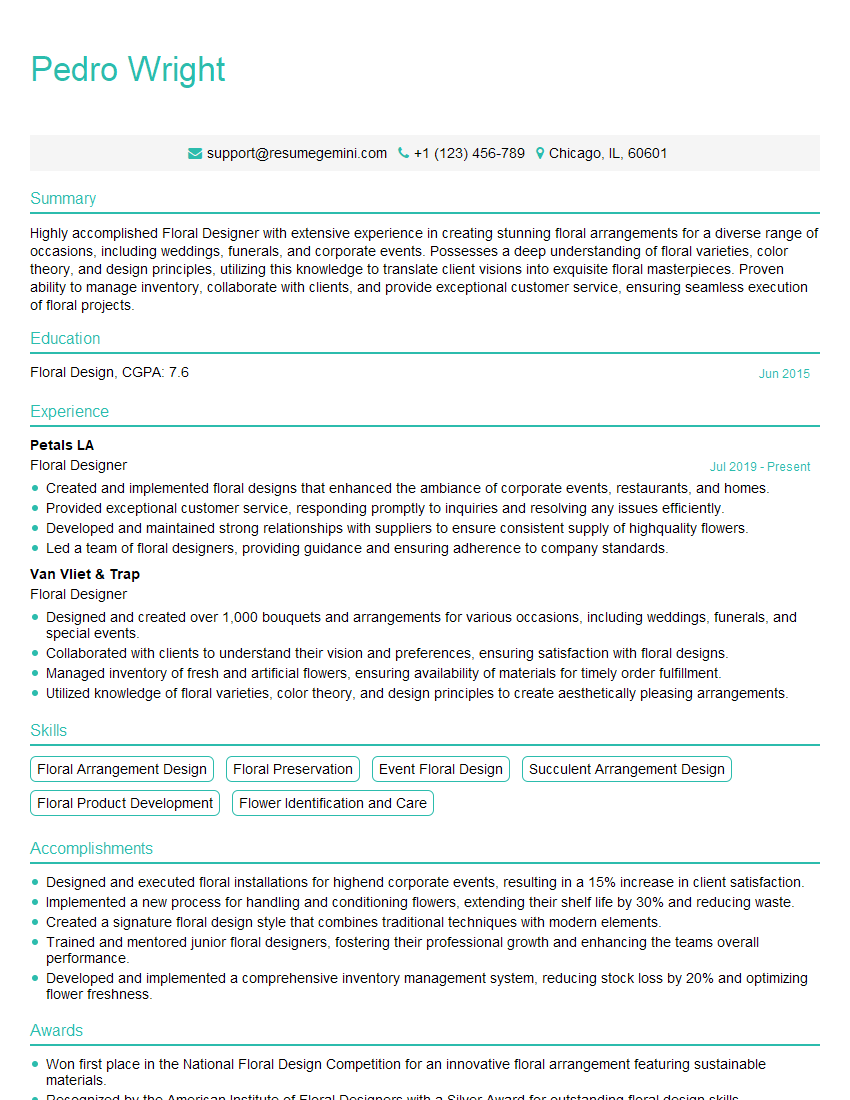
Mastering Floral Displays and Installations opens doors to exciting career opportunities with growth potential in event planning, floral design studios, and even high-end hospitality. A strong resume is crucial to showcasing your skills and experience to potential employers. Creating an ATS-friendly resume is key to getting your application noticed. To help you build a professional and impactful resume, we recommend using ResumeGemini. ResumeGemini provides tools and resources to craft a compelling resume, and we even offer examples of resumes tailored to the Floral Displays and Installations field to guide you.
Explore more articles
Users Rating of Our Blogs
Share Your Experience
We value your feedback! Please rate our content and share your thoughts (optional).
What Readers Say About Our Blog
Very informative content, great job.
good