Interviews are opportunities to demonstrate your expertise, and this guide is here to help you shine. Explore the essential Floral Gift Giving interview questions that employers frequently ask, paired with strategies for crafting responses that set you apart from the competition.
Questions Asked in Floral Gift Giving Interview
Q 1. What are the three most popular flower types for sympathy arrangements?
When selecting flowers for sympathy arrangements, the goal is to convey condolences and offer comfort. Three highly popular choices are lilies, roses, and chrysanthemums. Lilies, particularly white ones, symbolize purity and sympathy. Roses, depending on color, offer various meanings – white represents innocence and remembrance, while darker shades express sorrow. Chrysanthemums, especially white or yellow, are widely recognized as a symbol of sympathy and lasting respect in many cultures. The choice often depends on personal preference and the relationship with the deceased.
- Lilies: Their elegant shape and fragrance make them ideal for conveying gentle sympathy.
- Roses: Their timeless beauty and varied colors offer flexibility in expressing different levels of sorrow.
- Chrysanthemums: Their abundant petals and long-lasting nature make them a practical and meaningful choice.
Q 2. Describe your experience with different floral preservation techniques.
My experience encompasses several floral preservation techniques, each with its strengths and weaknesses. Pressing is a classic method, ideal for flat blooms like pansies or forget-me-nots, creating beautiful keepsakes. However, it alters the flower’s three-dimensional form. Air drying is simple, allowing flowers to retain some color, but it results in fragility and significant shrinkage. Freezing is good for preserving the flower’s initial form, but it requires specialized equipment and careful handling. Finally, I’m proficient in using silica gel, which allows for excellent color and form retention, making it a favorite for delicate blooms.
For example, I recently used silica gel to preserve a bride’s bouquet from her wedding. The resulting preserved bouquet is a stunning, almost lifelike reminder of her special day. The decision of which preservation method to use always depends on the type of flower, the desired final outcome, and the client’s budget.
Q 3. Explain the difference between a hand-tied bouquet and a cascade bouquet.
Hand-tied and cascade bouquets represent distinct styles. A hand-tied bouquet is created by bunching stems together, creating a naturally rounded, unstructured look. It’s informal and romantic, easy to hold and often asymmetrical. Think of it as a casually gathered posy of flowers.
In contrast, a cascade bouquet is more formal and dramatic. It’s designed with long, trailing stems that spill downwards, creating a waterfall effect. It’s often larger and more elaborate, requiring meticulous craftsmanship. Consider it as the elegant and elaborate counterpart to the hand-tied bouquet. The choice depends heavily on the overall event style and the bride’s personality or the occasion’s formality.
Q 4. How do you determine the appropriate size and style of arrangement for a specific event?
Determining the appropriate size and style of an arrangement involves careful consideration of several factors. The event type (wedding, birthday, corporate event) plays a huge role. A small, elegant arrangement may suffice for a birthday lunch, while a large-scale installation is typical for a wedding. The venue size is another crucial element; a large ballroom needs proportionally larger arrangements than an intimate setting. The color palette should complement the event’s theme and the existing decor. Finally, and perhaps most importantly, the client’s personal taste and budget influence the final choice. I always begin with a detailed consultation to understand these factors before proposing any design.
For example, a client celebrating a small, intimate anniversary dinner would likely appreciate a more understated design than for a corporate gala celebrating a major milestone. The same is true when comparing a home wedding to a grand hotel wedding.
Q 5. What are your preferred flower sources, and why?
I prioritize local and sustainable flower sources whenever possible. This reduces the environmental impact associated with long-distance transportation and supports local growers. I also work with reputable wholesalers who uphold ethical sourcing practices and prioritize flower quality. This commitment to sustainability ensures that the flowers are fresh, of high quality, and align with environmentally responsible business practices. Additionally, I cultivate relationships with local farms, allowing me access to seasonal blooms and unique varieties. Knowing where my flowers come from allows me to guarantee quality and ethical production practices.
Q 6. Describe your process for designing a wedding centerpiece.
Designing a wedding centerpiece is a multi-step process that starts with a deep dive into the client’s vision. I begin with a consultation, understanding the wedding theme, color palette, floral preferences, and budget. I then create a mood board, incorporating images and materials that reflect the client’s ideas. Next, I sketch out different designs, experimenting with various flower types, heights, and arrangements to achieve a cohesive look. The selection of containers is critical, as they should complement the overall aesthetic. Finally, I create a detailed floral arrangement plan, including a list of flowers, greenery, and other elements needed. Before the event, I review the plan one last time with the client, ensuring everything aligns perfectly with their vision.
For example, for a rustic-themed wedding, I might opt for wildflowers, wheat, and burlap to complement the overall feel. Conversely, for a modern, elegant wedding, I’d consider sleek lines and monochromatic colour schemes.
Q 7. How do you handle difficult or demanding clients?
Handling demanding clients requires patience, empathy, and strong communication skills. I start by actively listening to their concerns, validating their feelings even if I don’t necessarily agree with their perspective. I then try to understand the root of their dissatisfaction. Is it a misunderstanding about the design or perhaps a scheduling issue? Once the problem is identified, I offer solutions, providing clear and realistic alternatives. Transparency is key; I keep them informed every step of the way, managing expectations proactively. If necessary, I involve a manager or colleague to help mediate and find a mutually acceptable resolution. It’s essential to remember that maintaining a calm and professional demeanor throughout the process is crucial.
For example, if a client is upset about the delivery time, I’ll apologize for the inconvenience, explain the reason for the delay (perhaps an unexpected traffic jam), and offer a small complimentary item to make up for their inconvenience.
Q 8. What software or tools do you use for floral design?
For floral design, I utilize a suite of software and tools to enhance efficiency and creativity. This includes design software like Floral Design Pro (or similar programs) for creating digital mock-ups of arrangements before physically assembling them. This helps in visualizing the final product and allows for client feedback before committing to the design. I also use inventory management software (which I’ll detail further in the next answer) for tracking flower stock. Beyond software, my toolkit includes essential tools like floral shears, floral tape, wire, various vases and containers, and a variety of ribbons and decorative elements.
For example, when designing a wedding centerpiece, I’ll often create a digital mockup in Floral Design Pro, experimenting with different flower types and color palettes until we achieve the perfect vision. The client can then see a realistic preview and suggest adjustments. This collaborative approach ensures a higher level of client satisfaction.
Q 9. What is your experience with floral inventory management?
Floral inventory management is crucial for success. I use a combination of a dedicated software program and a physical inventory system. The software tracks flower purchases, stock levels, expiration dates, and even supplier information. This helps prevent wastage by allowing me to identify flowers nearing their expiration and prioritize their use. The physical system involves regularly checking and updating the cold storage areas, visually inspecting the flowers’ condition, and marking any damaged or wilting items for immediate use or disposal.
For example, if I notice a large quantity of roses approaching their end-of-life date, the inventory software alerts me. This enables me to proactively design arrangements featuring roses and offer discounted bundles, maximizing their usage before they spoil. I also track which flower types sell the best, allowing me to adjust my orders and reduce waste. This is a continuous process of tracking, analyzing, and adapting.
Q 10. How do you ensure the freshness and quality of your flowers?
Maintaining flower freshness and quality is paramount. My process starts with sourcing flowers from reputable suppliers known for their high-quality products. Upon arrival, flowers are immediately processed: stems are cut at an angle under running water to allow for better water uptake, leaves below the waterline are removed to prevent bacterial growth, and flowers are then placed in appropriate cold storage (with temperature and humidity controls) immediately. I also use flower food regularly to extend their lifespan and maintain vibrancy. Regular checks are performed throughout the day to identify and address any signs of wilting or damage.
For instance, I might notice a slight wilt in some lilies. I’d immediately recut their stems, remove any decaying leaves, and potentially move them to a cooler part of the cooler to slow down the wilting process. This proactive approach is essential for ensuring the highest quality for each arrangement.
Q 11. Describe your experience with different types of floral foam.
I have extensive experience working with various types of floral foam, each with unique characteristics. Oasis brand foam is a common choice due to its water-retention capabilities and ease of use. It’s ideal for many types of arrangements, especially those with dense floral populations. I also use brick foam which is great for larger arrangements or those requiring more structural support. For delicate flowers or smaller designs, I might opt for smaller pieces of foam or even forgo foam altogether, using a vase liner or other methods to create an arrangement.
For example, for a large wedding centerpiece, I would definitely choose brick foam for its durability and capacity to hold a significant number of stems without collapsing. Conversely, a small bridal bouquet might only need a small piece of Oasis foam, or no foam at all if the design allows for a more natural, hand-tied look.
Q 12. How do you maintain a clean and organized workspace?
Maintaining a clean and organized workspace is essential for efficiency and safety. My workflow is structured: areas for receiving flowers, processing flowers, arranging flowers, and packaging orders are clearly defined and kept separate. I regularly clean and sanitize my tools and surfaces to prevent cross-contamination and ensure hygiene. Regular trash removal and sweeping maintain a clear work area. I also implement a system for organizing supplies like ribbons, vases, and accessories, making them easy to locate. This avoids wasted time searching and promotes a safe working environment.
For example, after processing a batch of roses, I’ll immediately clean and disinfect my shears to prevent bacterial transfer to other flowers. My storage is color-coded – allowing me to quickly grab the right-colored ribbon for an order without hunting through a messy box.
Q 13. How do you price your floral arrangements?
Pricing floral arrangements involves several factors: the cost of flowers (which fluctuates seasonally), the time and skill involved in creation, the type and quality of containers, and additional materials used. I use a cost-plus pricing model, where I calculate the direct costs of the materials and labor, then add a markup percentage that covers my overhead costs and desired profit margin. I also take into account the complexity of the arrangement and the client’s specific requests. This ensures profitability while remaining competitive.
For instance, a simple bouquet of seasonal flowers might have a lower markup than an intricate wedding centerpiece that requires many hours of work and unique materials. I always provide detailed pricing breakdowns to clients, enhancing transparency and building trust.
Q 14. What is your knowledge of different flower meanings and symbolism?
Understanding flower symbolism and meanings is crucial for creating arrangements that convey the intended emotion or message. For example, roses are classic symbols of love and romance, lilies represent purity and sympathy, and sunflowers communicate happiness and adoration. I incorporate this knowledge into my designs. When a client expresses a specific message, I use this understanding to select appropriate flowers and colors that accurately communicate their feelings. This adds a deeper layer of meaning and personalization to the gift.
For a wedding, I might use white lilies to represent purity, incorporating a touch of red roses for the passion of the relationship. For a funeral arrangement, I would utilize lilies and other flowers traditionally associated with sympathy, adapting the palette based on the client’s preference and the deceased’s personality.
Q 15. Explain the importance of color theory in floral design.
Color theory is fundamental to floral design; it’s the art of using color to create aesthetically pleasing and emotionally resonant arrangements. Understanding color palettes, harmonies, and contrasts is crucial for achieving the desired mood and impact. Think of it like painting a picture with flowers.
For instance, vibrant reds and oranges evoke passion and energy, perfect for a celebratory occasion like a wedding. Conversely, soft pastels like lavender and light blue create a calm and serene atmosphere, ideal for a funeral or a spa-like setting. The color wheel is our guide, helping us understand complementary colors (opposite each other on the wheel, creating high contrast), analogous colors (next to each other, creating harmony), and triadic colors (equally spaced, creating vibrancy).
I frequently use the color wheel to create arrangements that are visually stunning and emotionally appropriate. For example, a recent wedding featured a vibrant palette of coral, peach, and fuchsia, creating a lively, summery feel, while a funeral arrangement utilized a subdued palette of white, ivory, and pale green to convey peace and respect.
Career Expert Tips:
- Ace those interviews! Prepare effectively by reviewing the Top 50 Most Common Interview Questions on ResumeGemini.
- Navigate your job search with confidence! Explore a wide range of Career Tips on ResumeGemini. Learn about common challenges and recommendations to overcome them.
- Craft the perfect resume! Master the Art of Resume Writing with ResumeGemini’s guide. Showcase your unique qualifications and achievements effectively.
- Don’t miss out on holiday savings! Build your dream resume with ResumeGemini’s ATS optimized templates.
Q 16. Describe your experience with creating boutonnieres and corsages.
Creating boutonnieres and corsages is a specialized skill requiring precision and attention to detail. I’ve crafted hundreds of these delicate floral pieces for weddings, proms, and other formal events. My approach involves carefully selecting flowers and foliage that complement the wearer’s attire and personality. For example, a classic red rose boutonniere works well for a formal tuxedo, while a more whimsical arrangement of wildflowers might suit a bohemian-style wedding dress.
The process itself is meticulous. I start by selecting fresh, high-quality blooms. Then, I carefully wire and tape the flowers to create a secure and aesthetically pleasing design. The finishing touch is often a touch of ribbon or decorative wire to add elegance and sophistication. I always prioritize comfort and wearability, ensuring the boutonniere or corsage isn’t too bulky or heavy.
One memorable experience involved crafting a series of uniquely designed corsages for a bridal party. Each bridesmaid’s corsage reflected her individual style and personality, using different flower types and color combinations. The result was a cohesive yet personalized look that perfectly complemented the overall wedding theme.
Q 17. How do you handle damaged or wilted flowers?
Dealing with damaged or wilted flowers requires immediate action to prevent further deterioration and salvage the arrangement where possible. My first step is to assess the damage: Is it just wilting, or is there physical damage?
For wilting flowers, I often recut the stems at an angle under running water to remove air bubbles that block water uptake. I also might rehydrate the flowers by placing them in a solution of floral preservative and water. Sometimes, carefully removing damaged petals or leaves can revive the overall look. If the damage is extensive, however, replacing the damaged flower with a similar one from my stock is necessary to maintain the integrity of the design. Prevention is also crucial. I always source flowers from reputable suppliers and handle them carefully to minimize damage during transport and arranging.
Q 18. What are some sustainable practices you employ in your work?
Sustainability is a core value in my floral design practice. I actively employ several eco-conscious practices to minimize my environmental impact. This includes sourcing flowers locally whenever possible, reducing transportation emissions and supporting local growers. I prioritize using seasonal flowers, which are naturally abundant and require less energy to produce.
Furthermore, I use biodegradable and compostable materials whenever possible, opting for recycled paper, natural fibers, and reusable containers. I also educate clients about sustainable options, encouraging them to choose arrangements that minimize waste and environmental impact. Many clients are happy to learn more and make sustainable choices.
I encourage the reuse and repurposing of flowers and containers after an event. I recently worked with a client who loved the idea of composting their wedding flowers after the reception; it allowed for a beautiful, natural conclusion to a wonderful event.
Q 19. How do you adapt your designs to meet different budgets?
Adapting designs to meet different budgets is a key skill in floral design. I accomplish this by offering a range of options that cater to various price points without compromising on quality or aesthetic appeal. For example, I might suggest using a mix of high-end and more affordable flowers, or adjusting the quantity and types of flowers and foliage used.
Simple, elegant designs can be incredibly effective without breaking the bank. Instead of extravagant, multi-layered arrangements, a single focal bloom, artfully presented, can be visually stunning. Another strategy is to substitute more expensive blooms with equally beautiful alternatives. For instance, instead of roses, I might use spray roses or carnations, which are often more budget-friendly yet equally beautiful. Open communication with the client is key to understanding their budget constraints and creating a design that meets their expectations while remaining within their financial limits.
Q 20. What are your strengths and weaknesses as a floral designer?
My greatest strength lies in my creativity and ability to translate clients’ visions into unique and breathtaking floral arrangements. I excel at understanding the emotional context of an event and using flowers to create a memorable and impactful atmosphere. My artistic eye for detail and color coordination helps me produce stunning arrangements.
A current area for development is time management, especially during peak seasons like weddings. I’m actively implementing project management tools and refining my workflow to ensure timely delivery of all projects. I am also continually seeking educational opportunities to expand my knowledge of new floral techniques and design styles.
Q 21. Describe your experience working with different types of flowers (e.g., roses, lilies, tulips).
My experience working with diverse flower types is extensive. Roses, lilies, and tulips are staples in my designs, each offering unique qualities. Roses, with their classic elegance and variety of colors, are perfect for formal occasions. Lilies, with their striking form and fragrance, add a touch of drama and sophistication. Tulips, with their vibrant colors and modern aesthetic, are versatile and suitable for a range of settings.
Beyond these popular choices, I have expertise with numerous other varieties, including hydrangeas, peonies, sunflowers, and orchids. Each flower has its own personality, requiring specific handling and care to maintain its freshness and beauty. My understanding of each flower’s characteristics informs my design choices, ensuring that each arrangement is both visually appealing and long-lasting.
For example, I know that hydrangeas require special care to prevent wilting, while orchids need precise hydration to thrive. This deep understanding of various flower types enables me to create truly unique and breathtaking arrangements tailored to the individual needs of each project.
Q 22. How do you ensure timely delivery of floral arrangements?
Timely delivery is paramount in the floral industry. A wilted arrangement defeats the purpose! We ensure timely delivery through a multi-pronged approach.
- Efficient Order Processing: Our system is designed for speed and accuracy. From the moment an order is placed, it’s immediately routed to our design and delivery teams. We use specialized software that optimizes routes and schedules based on real-time traffic and driver availability.
- Strategic Partnerships with Reliable Couriers: We collaborate with trusted delivery partners who have a proven track record of punctuality and handling delicate goods. We regularly monitor their performance and maintain open communication to address any potential delays proactively.
- Real-Time Tracking and Communication: Customers receive updates at every stage of the delivery process via SMS and email. This transparency builds trust and allows for immediate action if any issues arise. For instance, if a delivery is running behind schedule, we notify the customer and offer alternative solutions.
- Dedicated Delivery Team: We have a dedicated team of drivers trained in handling floral arrangements carefully. They are equipped with temperature-controlled vehicles to ensure the flowers arrive fresh and beautiful.
For example, during peak seasons like Valentine’s Day, we increase our delivery capacity by hiring additional drivers and optimizing our delivery routes to ensure that every bouquet reaches its destination on time.
Q 23. What is your experience with creating sympathy arrangements?
Creating sympathy arrangements requires a deep understanding of cultural nuances and a sensitive approach. It’s about conveying condolences through thoughtful design.
My experience includes designing arrangements for various faiths and cultural backgrounds, ensuring that the design aligns with the family’s preferences and traditions. I understand the importance of using colors and flowers that symbolize peace, remembrance, and sympathy. For example, white lilies often represent sympathy and purity, while darker hues can convey respect and solemnity. I often incorporate elements that reflect the deceased’s personality, such as their favorite flowers or colors, if known. I also take extra care in presenting the arrangement, ensuring it’s carefully packaged and delivered with utmost respect.
I’ve handled hundreds of sympathy arrangements, each one demanding a unique approach based on individual client needs and preferences. The focus is always on providing comfort and support during a difficult time.
Q 24. How do you maintain relationships with clients and vendors?
Strong relationships are crucial for success in this industry. I nurture relationships with both clients and vendors through consistent communication, mutual respect, and value-added services.
- Client Relationship Management (CRM): We utilize a CRM system to track client interactions, preferences, and order history. This allows for personalized service and tailored recommendations. For example, if a client frequently orders roses, we might offer a special discount on their next rose purchase or suggest new rose varieties.
- Regular Communication: I maintain regular contact with our clients via email newsletters, social media, and special offers. This keeps them updated on new products, seasonal specials, and company news. This consistent communication strengthens the relationship.
- Vendor Partnerships: I build strong relationships with our flower suppliers by ensuring fair pricing, timely payments, and open communication. We also provide feedback to ensure consistent quality. Strong relationships with vendors provide access to the freshest flowers and wider selection.
- Loyalty Programs: We offer loyalty programs to reward our repeat customers, showing our appreciation and encouraging further business. This builds long-term relationships.
Q 25. Describe your problem-solving skills in a high-pressure situation (e.g., last-minute order).
Problem-solving under pressure is second nature in this fast-paced environment. A last-minute order, for example, requires immediate action and a calm head. My approach is systematic:
- Assess the situation: Immediately determine the order specifics (type of arrangement, size, delivery time, and any special requests).
- Prioritize tasks: Determine if the order can be fulfilled with existing inventory. If not, quickly contact trusted vendors to secure the necessary flowers and materials.
- Delegate and coordinate: Assign the order to our most experienced designer and ensure a reliable courier is available.
- Communicate with the customer: Keep the customer informed about the order’s progress, managing their expectations and offering alternative solutions if needed.
- Monitor delivery: Track the order’s delivery to ensure it arrives on time and in perfect condition.
I recall one instance where a large corporate order was placed just hours before an important event. By effectively coordinating our team and communicating with the client, we delivered a flawless arrangement that exceeded expectations.
Q 26. Explain your knowledge of seasonal flowers and their availability.
Understanding seasonal flower availability is essential for cost-effectiveness and design creativity. Seasonal flowers are generally cheaper and fresher.
- Spring: Tulips, daffodils, hyacinths, lilies, and peonies are abundant. These flowers represent new beginnings and vibrant energy.
- Summer: Sunflowers, roses, hydrangeas, dahlias, and zinnias are in full bloom. These flowers reflect warmth and happiness.
- Autumn: Chrysanthemums, dahlias, asters, and sunflowers add rich colors and textures. These evoke feelings of harvest and coziness.
- Winter: Amaryllis, poinsettias, and paperwhites are popular choices. They represent hope, peace, and resilience.
Knowing what’s in season allows me to design beautiful arrangements that reflect the time of year while also managing costs effectively. For example, if a client wants a summer arrangement in winter, I can advise on suitable alternatives while ensuring the arrangement looks stunning and reflects the desired aesthetic.
Q 27. How do you handle customer complaints and feedback?
Customer feedback, both positive and negative, is invaluable for improvement. I handle complaints with empathy and professionalism.
- Listen actively: I listen carefully to the customer’s concerns without interrupting, showing genuine empathy and understanding.
- Apologize sincerely: Even if the complaint isn’t fully justified, a sincere apology can go a long way in diffusing a tense situation.
- Offer a solution: Depending on the issue, I offer a suitable solution, such as a replacement arrangement, a refund, or a discount on their next purchase.
- Follow up: I always follow up with the customer to ensure they are satisfied with the resolution. This demonstrates commitment to customer service.
- Learn from feedback: I analyze all feedback to identify areas for improvement and implement changes to prevent similar issues in the future.
For example, a complaint about a delayed delivery would lead me to investigate the cause, improve communication processes, and potentially adjust our delivery schedules or partnerships to minimize similar issues.
Q 28. What are your career goals in the floral industry?
My career goals in the floral industry are multifaceted. I aim to become a leading floral designer, renowned for innovative and creative arrangements that consistently exceed customer expectations.
- Creative Innovation: I want to continuously push creative boundaries and develop unique floral designs that set new trends in the industry.
- Business Growth: I aspire to lead and expand a successful floral business, building a strong team and establishing a positive brand reputation.
- Mentorship: I plan to mentor aspiring floral designers, sharing my knowledge and experience to help them succeed in this rewarding profession.
- Community Involvement: I want to be actively involved in the community through charitable events and collaborations, showcasing the beauty of flowers for a wider audience.
Ultimately, I strive to leave a lasting impact on the floral industry, combining artistic expression with business acumen to create something truly special.
Key Topics to Learn for Your Floral Gift Giving Interview
- Understanding Floral Design Principles: Explore the elements and principles of design as they apply to floral arrangements. Consider color theory, line, shape, form, and texture in creating aesthetically pleasing and meaningful gifts.
- Floral Types and Their Uses: Learn about different flower varieties, their symbolism, and suitability for various occasions (weddings, birthdays, condolences, etc.). This includes understanding flower longevity and care instructions.
- Customer Service and Communication: Practice effective communication skills to understand client needs and preferences. Develop strategies for handling difficult situations or addressing customer concerns with professionalism and empathy.
- Pricing and Profitability: Understand the cost of goods, overhead, and pricing strategies to ensure profitable floral arrangements while maintaining competitive pricing.
- Floral Arrangement Techniques: Master various arrangement techniques, including hand-tied bouquets, vase arrangements, and casket sprays. Understand different design styles and their applications.
- Inventory Management and Ordering: Learn the importance of efficient inventory management, including tracking stock, placing timely orders, and minimizing waste.
- Trends in Floral Design: Stay updated on current trends and styles in floral design to showcase your knowledge and adaptability.
- Sustainability and Ethical Sourcing: Demonstrate awareness of sustainable practices and ethical sourcing of flowers and materials.
Next Steps
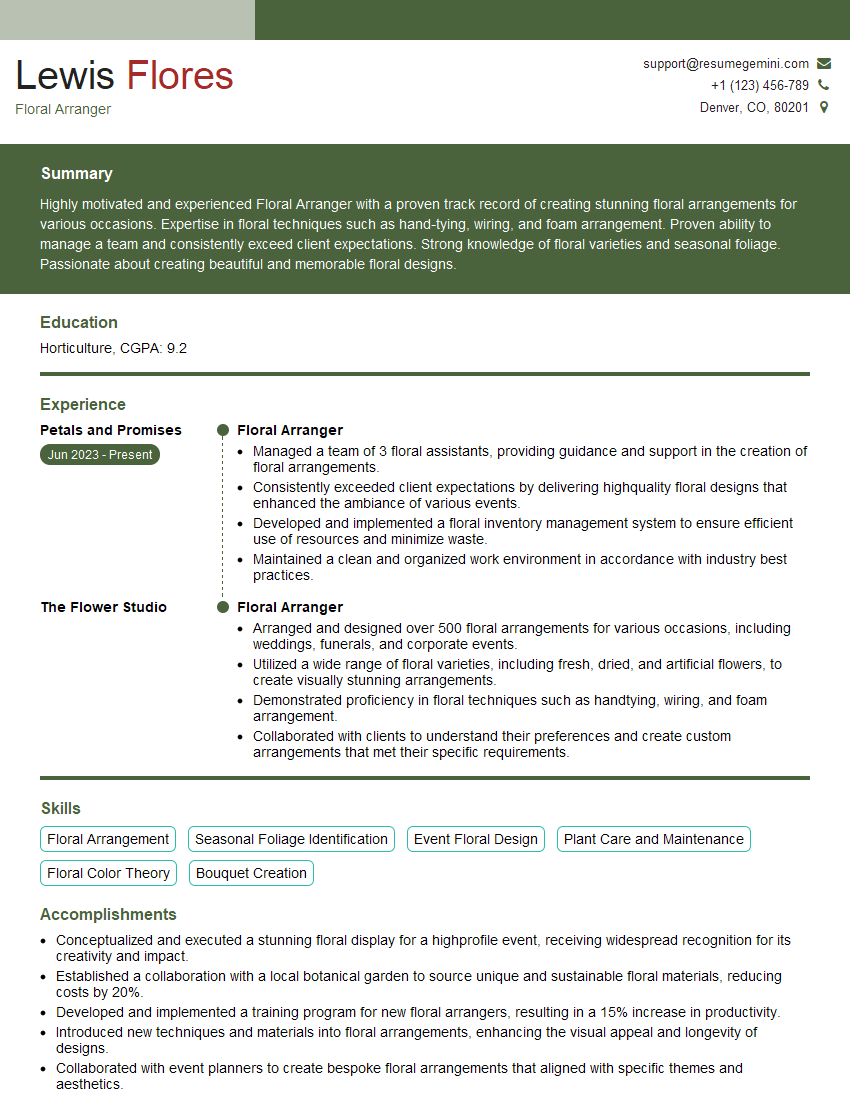
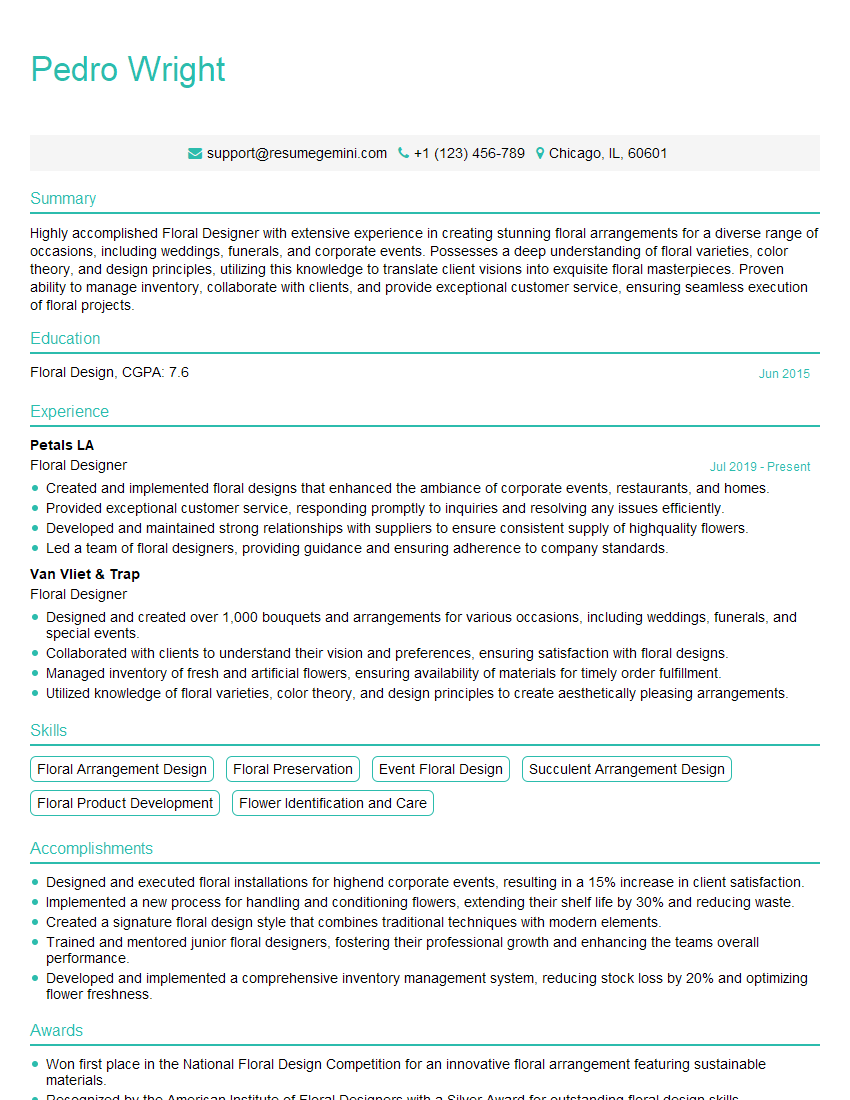
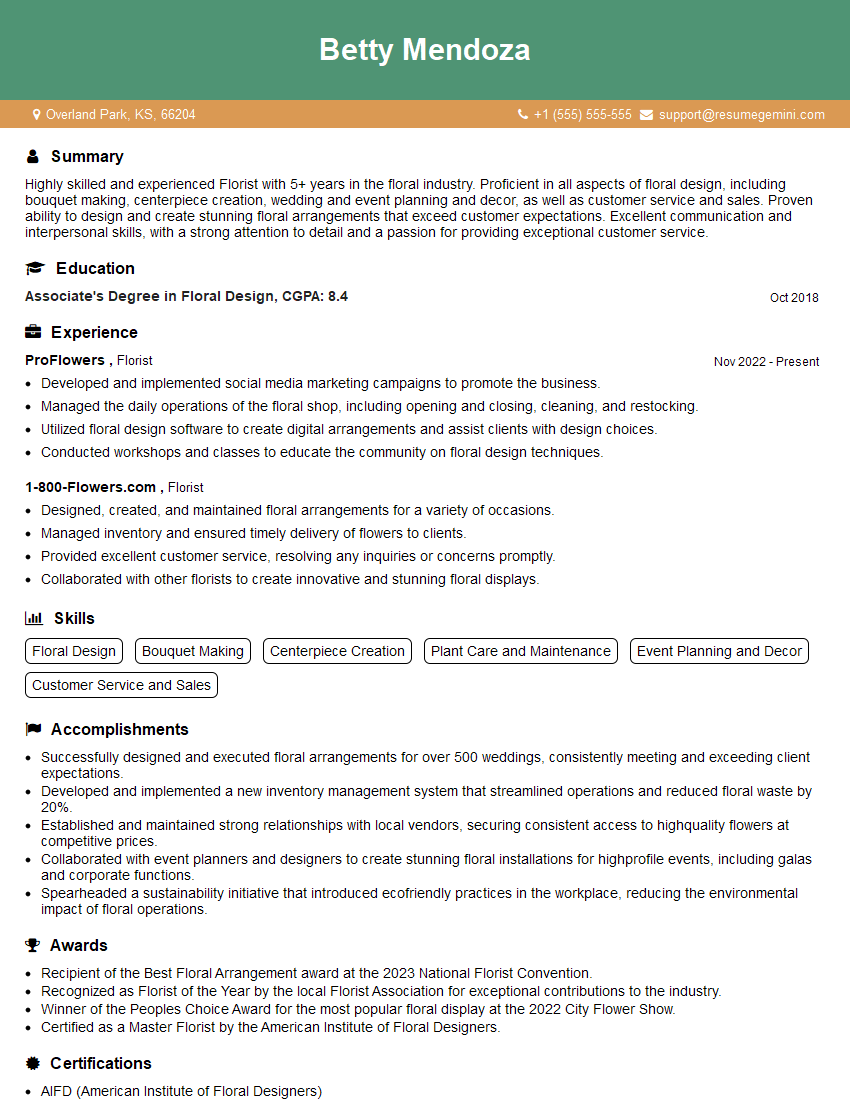
Mastering the art of floral gift giving opens doors to exciting career opportunities in a creative and rewarding industry. A strong understanding of these key topics will significantly improve your interview performance and increase your chances of landing your dream job. To further enhance your job prospects, crafting a compelling and ATS-friendly resume is crucial. ResumeGemini is a trusted resource that can help you build a professional resume tailored to the floral gift giving industry. Examples of resumes specifically designed for this field are available to help you showcase your skills and experience effectively.
Explore more articles
Users Rating of Our Blogs
Share Your Experience
We value your feedback! Please rate our content and share your thoughts (optional).
What Readers Say About Our Blog
Very informative content, great job.
good