The thought of an interview can be nerve-wracking, but the right preparation can make all the difference. Explore this comprehensive guide to Floral Industry Trends interview questions and gain the confidence you need to showcase your abilities and secure the role.
Questions Asked in Floral Industry Trends Interview
Q 1. What are the three most significant floral industry trends impacting businesses currently?
Three significant trends currently shaping the floral industry are the growing demand for sustainability and local sourcing, the transformative influence of e-commerce and technology, and the powerful impact of social media and influencer marketing on design trends. These factors are interwoven, creating a dynamic and ever-evolving landscape for floral businesses.
- Sustainability and Local Sourcing: Consumers are increasingly conscious of the environmental and social impact of their purchases, leading to a strong preference for flowers grown locally and sustainably. This impacts sourcing, transportation costs, and the overall business model.
- E-commerce and Technology: Online platforms and delivery services have revolutionized how flowers are bought and sold, providing new market access but also increasing competition and requiring businesses to adapt to digital marketing strategies.
- Social Media and Influencer Marketing: Platforms like Instagram and Pinterest showcase floral designs to a vast audience, influencing trends and consumer preferences. Successful businesses are leveraging these platforms to build brand awareness and reach new customers.
Q 2. Describe the current consumer demand for sustainable and locally sourced flowers.
Consumer demand for sustainable and locally sourced flowers is exploding. This isn’t just a fleeting trend; it reflects a fundamental shift in consumer values. People are more aware of the environmental impact of imported flowers, the use of pesticides, and the labor practices involved in their production. They are actively seeking out flowers grown locally, often using less water and fewer chemicals, supporting their community, and reducing their carbon footprint. This translates into a willingness to pay a premium for sustainably grown, locally sourced blooms, even if it means a smaller selection at times.
For example, we’re seeing a rise in popularity of flower farms that operate on a Community Supported Agriculture (CSA) model, similar to vegetable CSAs. Customers subscribe to receive a regular delivery of seasonal flowers directly from the farm, fostering a direct connection with the producer and ensuring fresher, more sustainable options.
Q 3. How have technological advancements, such as e-commerce, influenced the floral industry?
Technological advancements, particularly e-commerce, have profoundly reshaped the floral industry. Online floral retailers now compete directly with traditional brick-and-mortar shops, offering convenience and a wider selection to consumers. This has led to increased competition, but also opportunities for innovation.
- Expanded Reach: E-commerce allows florists to reach customers beyond their geographical limitations.
- Improved Inventory Management: Online platforms enable efficient inventory tracking and order fulfillment.
- Enhanced Customer Experience: Online stores provide detailed product information, customer reviews, and personalized options.
- Data-Driven Insights: E-commerce platforms offer valuable data on consumer preferences, which helps businesses tailor their offerings and marketing strategies.
However, the challenge lies in navigating the complexities of online order fulfillment, managing logistics, ensuring flower quality during delivery, and maintaining a strong online brand presence.
Q 4. What are the key challenges facing small floral businesses in today’s market?
Small floral businesses face numerous challenges in today’s competitive market. These include:
- Competition from Large Retailers: Big box stores and online giants offer competitive pricing and widespread availability.
- High Operating Costs: Rent, labor, and flower costs can be significant, squeezing profit margins.
- Marketing and Branding: Standing out in a crowded market requires effective marketing strategies, often requiring investment in online presence and social media.
- Supply Chain Challenges: Securing consistent and high-quality flower supplies can be difficult, particularly for those specializing in unique or seasonal varieties.
- Seasonal Fluctuations: Demand for flowers varies drastically throughout the year, impacting income and staffing needs.
Successful small businesses differentiate themselves through unique design styles, excellent customer service, specialized offerings (like workshops or subscription boxes), and a strong local community focus.
Q 5. Explain the impact of social media and influencer marketing on floral design trends.
Social media, particularly Instagram and Pinterest, has become a powerful driver of floral design trends. Influencers and professional floral designers showcase their work on these platforms, inspiring consumers and shaping popular styles. The visual nature of these platforms allows for immediate trend dissemination. What one designer posts today can inspire hundreds of others and influence consumer requests tomorrow.
For example, the popularity of certain color palettes, flower combinations, or arrangement styles can be directly attributed to the influence of key players on social media. Floral businesses that actively participate in these platforms, creating high-quality content and engaging with their audience, are better positioned to ride the wave of these trends.
Q 6. How do you stay updated on emerging trends in the floral industry?
Staying updated on emerging trends requires a multi-pronged approach. I regularly attend industry trade shows and conferences, network with other floral designers and professionals, subscribe to relevant industry publications and blogs, and actively follow key influencers and designers on social media. I also pay close attention to consumer trends through market research and customer interactions. This ensures I am abreast of the latest design styles, technological advancements, and changes in consumer preferences.
Q 7. Discuss the role of color palettes and design styles in shaping current floral trends.
Color palettes and design styles are intrinsically linked to current floral trends. They reflect broader societal influences, such as current fashion trends, interior design aesthetics, and even seasonal events. Bold and unexpected color combinations, like jewel tones or unexpected pairings of pastels and deep shades, are frequently seen in contemporary designs. Similarly, design styles move between romantic, lush arrangements to minimalist, modern presentations, depending on the current aesthetic. For example, the popularity of dried flowers reflects the current interest in sustainable practices and bohemian aesthetics.
Understanding these trends enables florists to anticipate customer preferences and create arrangements that resonate with the prevailing style. By carefully selecting colors and designs that are both on-trend and aligned with their unique brand identity, businesses can effectively capture consumer interest and stay competitive.
Q 8. Analyze the price fluctuations of popular floral varieties and their impact on businesses.
Price fluctuations in the floral industry are heavily influenced by seasonality, weather events, and global supply chains. Popular varieties like roses, tulips, and lilies experience dramatic price swings. For example, roses might be significantly cheaper in the summer months when they are in peak season, but become significantly more expensive around Valentine’s Day due to increased demand. This impacts businesses in several ways. High prices can reduce profit margins, forcing businesses to either absorb the cost or increase their selling prices, potentially impacting sales volume. Conversely, unexpectedly low prices can present opportunities for increased profits, but might also indicate oversupply and potential spoilage if not managed carefully. Businesses need to effectively forecast demand and strategically source flowers to mitigate these risks. Sophisticated inventory management systems and strong relationships with suppliers are key to navigating these fluctuations.
For instance, a florist might utilize forward contracts with growers for Valentine’s Day, locking in prices to avoid huge price spikes. Conversely, during off-peak seasons, they can leverage the lower costs to offer discounts or create special promotions.
Q 9. What are some innovative approaches to floral packaging and delivery?
Innovative approaches to floral packaging and delivery are revolutionizing the industry. Eco-friendly packaging is gaining traction, with biodegradable and compostable materials replacing traditional plastics. This caters to the growing consumer demand for sustainable practices. Beyond materials, innovative designs are enhancing the unboxing experience. For example, collapsible boxes or unique reusable containers add a special touch and reduce waste. Delivery services are also evolving. Temperature-controlled delivery options ensure flower freshness, while same-day or next-day delivery options enhance customer satisfaction. Some florists are even experimenting with drone delivery for special occasions, particularly in remote areas. The incorporation of technology such as QR codes on packaging to provide care instructions or information about the origin of the flowers further enhances the consumer experience.
Q 10. How do you manage inventory effectively considering the perishable nature of flowers?
Managing inventory effectively in the floral industry requires a delicate balance between meeting demand and minimizing waste. The perishable nature of flowers mandates meticulous planning. This includes accurate forecasting of demand based on historical data, seasonality, and upcoming events. Effective inventory management systems, often integrated with point-of-sale (POS) systems, track stock levels in real-time. These systems allow for quick identification of low-stock items and enable prompt reordering from suppliers. The ‘First-In, First-Out’ (FIFO) method is crucial for minimizing spoilage. Flowers received first are sold first to ensure freshness. Regular stock checks, identifying and discarding damaged or wilting flowers, are essential. Efficient cold storage and proper handling practices further extend the lifespan of inventory. Building strong relationships with reliable suppliers who can meet demand with consistent quality further reduces inventory-related risks.
Q 11. Describe your experience with floral sourcing and supply chain management.
My experience in floral sourcing and supply chain management spans over a decade. I have worked with various growers, both domestically and internationally, establishing and nurturing long-term relationships. These relationships ensure a reliable supply of high-quality flowers. I’ve been involved in the entire process, from selecting the right varieties and negotiating pricing to managing logistics and quality control. Understanding the growing conditions and transportation methods is paramount for guaranteeing the quality and longevity of the flowers upon arrival. For example, ensuring proper temperature and humidity control during transportation is crucial to prevent wilting. Moreover, effective traceability systems are implemented to monitor the flowers throughout the supply chain, identifying any potential issues promptly. This minimizes losses and ensures compliance with quality standards. Diversifying sourcing to mitigate risks associated with weather events or geopolitical instability is also a critical aspect of my approach.
Q 12. Explain your understanding of different floral preservation techniques.
Floral preservation techniques are vital for extending the life of cut flowers and creating lasting memories. Several methods exist, each with its advantages and disadvantages. Traditional methods include using floral preservatives in the water, which provide nutrients and inhibit bacterial growth. More advanced techniques involve silica gel drying, which absorbs moisture, resulting in preserved flowers that retain their shape and color. Freeze-drying is another option, though often more expensive, which removes moisture slowly, maintaining the flower’s structure. Finally, pressing and preserving flowers between layers of absorbent paper creates beautiful flat specimens. Each method has its own application depending on the desired outcome and the type of flower. For example, delicate flowers are better suited for pressing, while heartier blooms may fare better with silica gel drying. Understanding the optimal technique for different flower species is key to achieving successful preservation.
Q 13. What are some successful strategies for marketing floral products online?
Successful online marketing for floral products requires a multi-pronged approach. High-quality product photography and videography are crucial to showcase the beauty and vibrancy of the flowers. An easy-to-navigate website with seamless online ordering is essential for a positive customer experience. Leveraging social media platforms like Instagram and Pinterest, with visually appealing content, is particularly effective for reaching target audiences. Targeted advertising campaigns on these platforms, focusing on specific demographics and interests, further enhance reach and engagement. Collaborating with influencers or bloggers in the lifestyle or wedding industry can create brand awareness and drive sales. Offering exclusive online promotions or discounts and implementing email marketing strategies to engage customers and promote special offers can boost sales. A robust customer review system builds trust and social proof. Finally, search engine optimization (SEO) ensures higher visibility in search results.
Q 14. How do you measure the success of a floral marketing campaign?
Measuring the success of a floral marketing campaign involves tracking several key metrics. Website traffic and conversion rates indicate the effectiveness of online channels. Social media engagement metrics, including likes, shares, and comments, reflect brand awareness and audience reach. Sales data directly correlates marketing efforts with revenue generation. Customer acquisition cost (CAC) and customer lifetime value (CLTV) provide insights into campaign profitability. Tracking email open and click-through rates evaluates email marketing campaign effectiveness. Finally, customer feedback surveys provide invaluable insights into customer satisfaction and identify areas for improvement. Analyzing these metrics helps determine which marketing strategies are most effective and informs future campaign planning. For example, a high conversion rate combined with a low CAC signals a highly successful campaign.
Q 15. Discuss your experience with different floral design software programs.
My experience with floral design software spans several programs, each with its strengths and weaknesses. I’m proficient in Floral Design Pro, a comprehensive program ideal for complex arrangements and client consultations, allowing for visual presentations and accurate costing. I also utilize BloomThat, known for its intuitive interface and excellent inventory management capabilities, particularly helpful for streamlining orders and tracking stock. Finally, I’ve worked with smaller, more niche programs for specific tasks like creating 3D renderings or managing social media marketing content related to floral design. Choosing the right software depends heavily on the size and specific needs of the business; for example, a small florist might find BloomThat sufficient, while a large event planner would benefit greatly from the advanced features of Floral Design Pro.
Career Expert Tips:
- Ace those interviews! Prepare effectively by reviewing the Top 50 Most Common Interview Questions on ResumeGemini.
- Navigate your job search with confidence! Explore a wide range of Career Tips on ResumeGemini. Learn about common challenges and recommendations to overcome them.
- Craft the perfect resume! Master the Art of Resume Writing with ResumeGemini’s guide. Showcase your unique qualifications and achievements effectively.
- Don’t miss out on holiday savings! Build your dream resume with ResumeGemini’s ATS optimized templates.
Q 16. Explain your understanding of floral business financials and profitability.
Understanding floral business financials is crucial for profitability. It’s not just about the cost of flowers; it encompasses all aspects of running a business. Profitability hinges on accurate cost accounting – from flower sourcing and wholesale pricing to labor, rent, utilities, marketing, and delivery expenses. I utilize a detailed cost tracking system, breaking down expenses by category and comparing them to revenue generated. Key performance indicators (KPIs) like gross profit margin and net profit margin are constantly monitored to assess profitability. For example, if my gross profit margin is low, I analyze whether it’s due to high flower costs (requiring sourcing adjustments) or low pricing (demanding a pricing strategy overhaul). Regular financial analysis allows for proactive adjustments, ensuring sustainable profitability and business growth. I also utilize seasonal pricing strategies to account for fluctuations in demand and flower availability.
Q 17. How would you handle a customer complaint regarding flower quality or delivery?
Handling customer complaints is paramount. My approach is empathetic and solution-oriented. First, I actively listen to the customer’s concerns, acknowledging their frustration and validating their feelings. For example, if a customer complains about wilted flowers, I wouldn’t interrupt or become defensive but instead focus on understanding the specific problem – was it the delivery time, improper handling, or inherent flower quality issues? Next, I gather information, checking delivery records, reviewing the flower batch, and examining photos if provided. Depending on the issue, I might offer a replacement arrangement, a partial refund, or a discount on future orders. Transparency and a swift resolution are key. Documenting the complaint and resolution is crucial for improving future service and preventing similar issues. For example, if multiple complaints involve a specific supplier, it’s a clear signal to find an alternative.
Q 18. Describe your approach to creating unique and memorable floral arrangements.
Creating unique and memorable floral arrangements requires a blend of artistic vision, technical skill, and understanding of design principles. I begin by understanding the client’s vision, occasion, and preferences – a wedding, a corporate event, a funeral – each calls for a different aesthetic and emotional tone. Then, I explore color palettes, textures, and forms, drawing inspiration from nature, art, and fashion. I incorporate unexpected elements, such as unusual foliage or interesting containers, to add personality and visual interest. For instance, I might combine classic roses with succulents for a modern, textural contrast, or utilize a vintage teacup as a whimsical vase. I also consider the overall balance and proportion, ensuring the arrangement is visually harmonious. Continuous learning through workshops, attending floral design competitions, and staying updated on industry trends are integral to refining my skills and maintaining a unique design perspective.
Q 19. How do you incorporate seasonal flowers into your designs?
Seasonal flowers are fundamental to my designs, both for their beauty and their cost-effectiveness. I actively research seasonal availability, building relationships with local growers and wholesalers to secure high-quality blooms at optimal prices. My designs reflect the current season, using blooms at their peak freshness and incorporating their natural characteristics. For example, in spring, I might focus on light, airy arrangements with tulips, daffodils, and hyacinths, reflecting the season’s vibrancy. In autumn, richer color palettes dominate, employing dahlias, sunflowers, and chrysanthemums. This seasonal approach not only reduces costs but also creates arrangements that are genuinely reflective of the current time, adding an authentic touch. Additionally, using seasonal flowers helps reduce environmental impact by promoting local sourcing and reducing reliance on imported blooms.
Q 20. What are your strategies for managing seasonal fluctuations in demand?
Managing seasonal fluctuations requires proactive strategies. During peak seasons (like Valentine’s Day or Mother’s Day), I increase staffing, pre-order flowers well in advance to secure supply, and implement efficient order processing systems. Marketing campaigns are tailored to the season, highlighting relevant designs and offering pre-orders to manage demand. During slower seasons, I focus on building relationships with corporate clients, offering services like office flower arrangements or developing unique workshops and classes to generate revenue. I also explore alternative products or services like floral design consultations or plant sales to diversify income streams. Smart inventory management and flexible pricing are also key; for instance, offering discounts on less popular seasonal flowers can improve sales and reduce waste.
Q 21. Discuss your knowledge of different flower types, their care, and handling.
My knowledge of flower types extends to a wide variety of species, including their unique characteristics, care requirements, and handling procedures. I understand the proper hydration techniques for different flower types, such as re-cutting stems under water and using flower food to extend vase life. I’m familiar with the proper storage and handling to prevent damage and maintain freshness. For instance, roses require careful handling to prevent petal bruising, while more delicate blooms such as orchids need specific temperature and humidity control. I know which flowers are best suited for specific occasions and design styles. I also understand flower symbolism and cultural significance, which helps me tailor arrangements to specific client needs and preferences. Knowledge of flower biology informs my design choices and ensures the longevity and beauty of my creations.
Q 22. How would you address the rising costs of floral imports?
Rising import costs are a significant challenge in the floral industry. Addressing this requires a multi-pronged approach focusing on sourcing, logistics, and pricing strategies. Firstly, we need to explore domestic sourcing options more aggressively. This involves researching and partnering with local growers to cultivate a wider variety of flowers and reduce reliance on imports. This could involve collaborations with local farms, assisting them with modern cultivation techniques and guaranteeing purchase contracts to encourage growth.
Secondly, optimizing logistics is crucial. This includes exploring alternative shipping methods, negotiating better rates with freight companies, and consolidating orders to reduce per-unit shipping costs. Employing efficient inventory management systems can further minimize waste and storage expenses, ensuring only necessary amounts are imported.
Finally, adjusting pricing strategies is essential. This means carefully analyzing costs, identifying areas for savings, and transparently communicating price adjustments to customers. Transparency builds trust and allows customers to understand the impact of global market fluctuations on product pricing. Offering a mix of high-value, imported items alongside more cost-effective locally sourced options provides flexibility and caters to a wider range of customer budgets.
Q 23. What are some innovative approaches to reducing floral waste?
Floral waste is a major concern environmentally and economically. Innovative approaches are vital for sustainability. One key strategy is composting. Implementing composting systems allows for the recycling of organic waste, such as stems, leaves, and damaged flowers, into nutrient-rich soil amendments. This reduces landfill waste and provides a valuable resource for future growth.
Another effective method is upcycling. We can creatively repurpose discarded flowers. For example, petals can be used to make potpourri or infused oils, while stems might be used in artistic installations or incorporated into other crafts. This adds value to what would otherwise be considered waste.
Furthermore, accurate forecasting and inventory management are crucial. Using data analytics to predict demand helps prevent overstocking, minimizing the likelihood of having to discard unsold flowers. Developing strong relationships with clients, through effective communication and order management, allows for better forecasting and reduces the chances of surplus.
Finally, educating customers about flower care and longevity is key. Providing guidance on how to properly care for flowers can extend their lifespan, reduce waste at the consumer level, and improve customer satisfaction.
Q 24. Explain your experience with working in a team environment in a floral setting.
My experience in team environments within the floral industry has been profoundly positive. In my previous role at [Previous Company Name], I collaborated closely with a team of designers, florists, and logistics personnel. We worked on large-scale wedding and event designs, requiring seamless coordination and communication. I’ve consistently found that a collaborative approach yields the best results. Effective teamwork necessitates clear communication, mutual respect, and a shared understanding of goals. In a fast-paced environment, such as floral design for events, efficient teamwork is critical.
For example, during a large wedding, we encountered a last-minute change in the client’s vision. Instead of panicking, we held a quick team meeting, assessed the situation, divided tasks based on individual expertise (someone focused on redesigning the centerpiece layout, another on sourcing additional materials, and I managed client communication), and successfully implemented the changes within the deadline. This collaborative effort showcased the strengths of our team and resulted in a highly satisfied client.
Q 25. How do you adapt to changing trends and consumer preferences?
Adapting to evolving trends and consumer preferences is paramount in this dynamic industry. I continuously monitor industry publications, attend trade shows and workshops, and engage with social media platforms to understand emerging styles, color palettes, and flower choices. I also actively solicit customer feedback to gain direct insight into their preferences. This feedback loop allows me to tailor my designs and offerings to meet current demands.
For instance, the increasing popularity of sustainable and locally sourced flowers has led me to expand my partnerships with local growers and prioritize eco-friendly practices in my designs. Similarly, the growing trend towards minimalist and natural aesthetics has informed my design choices, incorporating more organic arrangements and using natural elements alongside flowers.
Ultimately, adaptability involves a combination of proactive research, customer engagement, and a willingness to experiment with new ideas while maintaining a high standard of quality and craftsmanship.
Q 26. Describe your experience with event floral design and planning.
My experience in event floral design and planning encompasses a wide range of projects, from intimate gatherings to large-scale weddings and corporate events. This involves a detailed understanding of event planning principles, including budgeting, logistics, and client management. It’s not just about creating beautiful arrangements; it’s about understanding the overall event vision and using floral design to enhance the aesthetic and atmosphere. I’m adept at working closely with event planners and clients to realize their vision.
For example, I recently coordinated the floral arrangements for a corporate gala. This included designing centerpieces that complemented the event theme, creating a striking floral backdrop for the stage, and providing smaller arrangements for various areas of the venue. The process involved multiple meetings with the client to finalize the design concept, meticulous sourcing of flowers, efficient logistics coordination to deliver and set up on time, and ensuring the flowers remained fresh throughout the event. This project demonstrated my ability to manage complex logistics, work within a budget, and consistently exceed client expectations.
Q 27. What are your strategies for ensuring customer satisfaction?
Ensuring customer satisfaction is my top priority. My strategies focus on proactive communication, exceptional service, and attention to detail. I begin by having detailed consultations with clients to understand their preferences, budget, and vision for the event or arrangement. I provide detailed quotes and timelines, keeping them informed throughout the process. This transparency builds trust and manages expectations.
Following the delivery or event, I always follow up with clients to solicit feedback and address any concerns. This feedback loop is invaluable for continuous improvement. If any issues arise, I work promptly and efficiently to find a resolution, ensuring the client feels valued and heard. My ultimate goal is to deliver not just beautiful flowers but an exceptional experience that creates lasting positive memories.
Q 28. How do you handle pressure and deadlines in a fast-paced floral environment?
The floral industry is often fast-paced, especially during peak seasons or when handling multiple events simultaneously. I handle pressure and deadlines effectively by prioritizing tasks, utilizing time management techniques, and working efficiently. I create detailed schedules and checklists to ensure all aspects of a project are accounted for and completed on time. This systematic approach minimizes stress and maximizes productivity.
Furthermore, I’m adept at delegating tasks when necessary and collaborating effectively with my team. By leveraging team strengths and ensuring clear communication, we can manage even the most demanding deadlines. Maintaining a calm and organized demeanor under pressure is crucial, and I’ve cultivated this through years of experience in high-pressure environments. Finally, I believe in proactive problem-solving; anticipating potential challenges and developing contingency plans helps mitigate disruptions and ensures smooth execution.
Key Topics to Learn for Floral Industry Trends Interview
- Sustainability and Ethical Sourcing: Understanding consumer demand for eco-friendly practices, fair trade, and locally sourced flowers. Practical application: Analyzing a flower supplier’s sustainability initiatives and their impact on profitability.
- Technological Advancements: Exploring the impact of automation, e-commerce, and data analytics on floral businesses. Practical application: Developing strategies to leverage technology for improved efficiency and customer experience.
- Consumer Preferences and Trends: Identifying shifts in popular flower varieties, color palettes, and event styles. Practical application: Forecasting demand and adapting product offerings accordingly.
- Supply Chain Management: Examining challenges and solutions related to global flower sourcing, transportation, and storage. Practical application: Developing strategies to mitigate risks associated with supply chain disruptions.
- Marketing and Branding: Understanding effective marketing strategies for floral businesses in a competitive market. Practical application: Designing a marketing campaign to target a specific niche market.
- Floral Design Innovation: Exploring current design trends and the role of creativity and artistry in the industry. Practical application: Analyzing the success of innovative floral arrangements and their impact on market perception.
- Pricing and Profitability: Understanding cost management, pricing strategies, and profitability analysis within the floral industry. Practical application: Developing a pricing model that balances profitability with customer value.
Next Steps
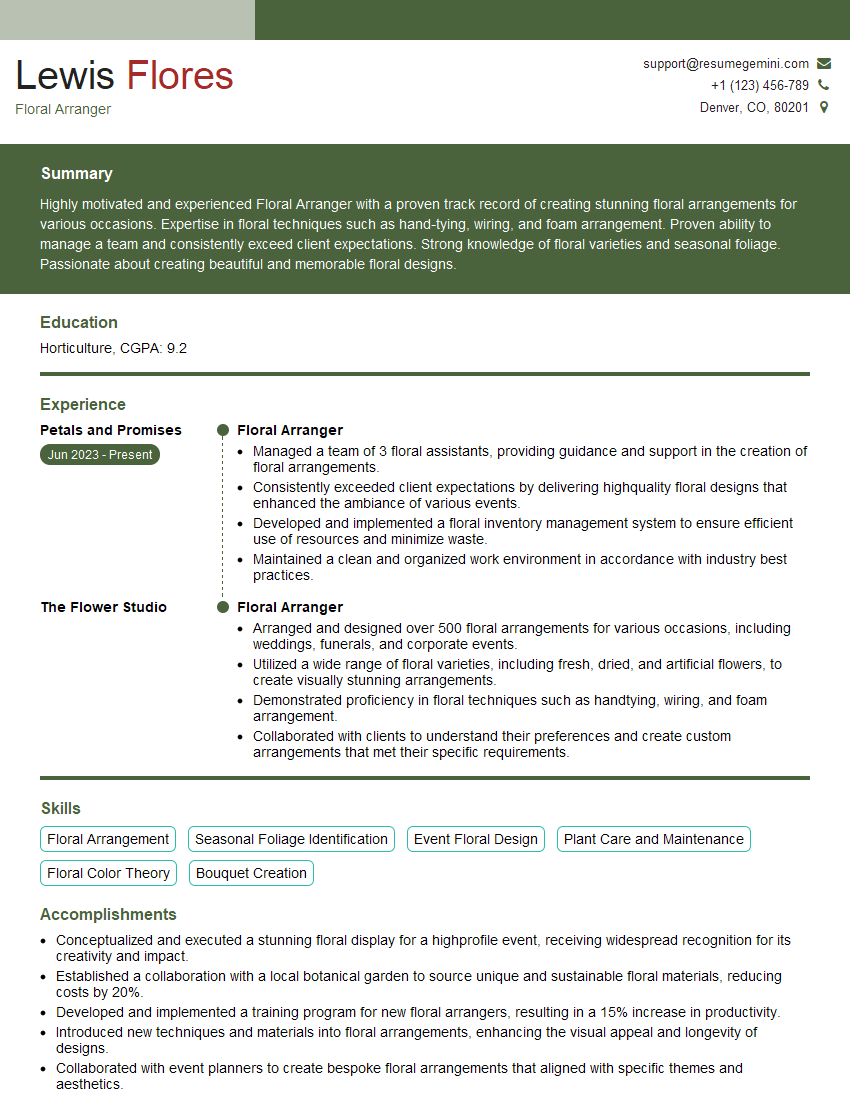
Mastering Floral Industry Trends is crucial for career advancement. A strong understanding of these trends demonstrates your knowledge, adaptability, and forward-thinking approach, making you a highly competitive candidate. To significantly improve your job prospects, creating an ATS-friendly resume is paramount. ResumeGemini is a trusted resource to help you build a professional resume that highlights your skills and experience effectively. We provide examples of resumes tailored to the Floral Industry Trends, showcasing the best practices for success. Take advantage of this valuable resource to elevate your job search and land your dream role.
Explore more articles
Users Rating of Our Blogs
Share Your Experience
We value your feedback! Please rate our content and share your thoughts (optional).
What Readers Say About Our Blog
Very informative content, great job.
good