Preparation is the key to success in any interview. In this post, we’ll explore crucial Forensic Psychiatry interview questions and equip you with strategies to craft impactful answers. Whether you’re a beginner or a pro, these tips will elevate your preparation.
Questions Asked in Forensic Psychiatry Interview
Q 1. Describe the process of conducting a competency to stand trial evaluation.
A competency to stand trial (CST) evaluation determines if a defendant has the mental capacity to understand the charges against them and participate meaningfully in their own defense. It’s not about whether they’re guilty or not, but whether they can understand and participate in the legal process.
The process typically involves a comprehensive interview, a review of relevant records (medical, psychological, legal), and potentially psychological testing. The interview explores the defendant’s understanding of the charges, their ability to communicate with their attorney, their awareness of the court proceedings, and their ability to assist in their defense. Testing might assess cognitive functions like memory and attention, as well as their understanding of legal concepts. For example, I might ask a defendant to explain the charges against them in their own words, or to describe the roles of different individuals in the courtroom (judge, jury, attorney). The final report details the findings and renders an opinion regarding the defendant’s competency.
Consider a case where a defendant, due to severe mental illness, is unable to understand the nature of the charges or assist in their defense. A CST evaluation would likely find them incompetent, leading to a postponement of the trial until their competency is restored through treatment. Conversely, a defendant who understands the charges and can communicate effectively with their attorney would be deemed competent.
Q 2. Explain the difference between malingering and factitious disorder in a forensic context.
Malingering and factitious disorder both involve the feigning or production of symptoms, but the motivations differ significantly in a forensic context. Malingering is intentional and motivated by external incentives – the defendant is consciously fabricating or exaggerating symptoms to gain a specific advantage, such as avoiding prosecution or obtaining financial compensation. Factitious disorder, on the other hand, involves the intentional production or feigning of physical or psychological symptoms, but the primary motivation is to assume the sick role and obtain attention or sympathy. This is a subconscious drive, unlike malingering.
In a forensic evaluation, distinguishing between the two is crucial. Malingering is often detected through inconsistencies in the individual’s presentation, discrepancies between reported symptoms and objective findings, and evidence of secondary gain. For example, a defendant might dramatically overstate their symptoms only when discussing their legal situation, or their symptom presentation might not align with known medical or psychological conditions. Identifying factitious disorder requires a careful consideration of the individual’s history, motivation, and symptom presentation. A thorough clinical interview, along with collateral information, plays a vital role. The difference often lies in conscious intent versus unconscious desire for attention. The former is focused on deception for external gain, while the latter is driven by an underlying psychological need.
Q 3. How do you assess the risk of violence in a forensic psychiatric patient?
Assessing violence risk is a complex process, requiring a multi-faceted approach. It’s not about predicting with certainty, but rather estimating the probability of future violence. We use structured professional judgment instruments, which incorporate clinical data (e.g., history of violence, substance abuse, mental state) and actuarial factors (e.g., age, prior convictions) to create a risk profile. These instruments guide our assessment and aid in risk management planning.
The process involves a thorough clinical interview, review of collateral information (police records, medical records, witness statements), and potentially psychological testing to assess relevant factors such as impulsivity, anger management, and psychotic symptoms. For example, the Historical, Clinical, Risk Management-20 (HCR-20) is a widely used risk assessment instrument. It considers historical factors (past violence), clinical factors (current mental state), and risk management factors (treatment response, social support). Crucially, we consider the specific context of the individual and their environment. Reducing the risk involves interventions such as medication management, therapy, and social support.
Q 4. What are the ethical considerations in conducting a forensic psychiatric evaluation?
Ethical considerations are paramount in forensic psychiatry. We must adhere to the highest standards of professional conduct, ensuring objectivity, impartiality, and respect for the individual’s rights. This includes:
- Confidentiality: Maintaining the confidentiality of information obtained during the evaluation, while adhering to legal requirements for disclosure.
- Competence: Conducting evaluations within the limits of our expertise, seeking consultation when necessary.
- Objectivity: Avoiding bias and basing our opinions solely on the evidence.
- Informed Consent: Ensuring that the individual understands the purpose of the evaluation and their rights before proceeding.
- Conflicts of Interest: Avoiding any conflicts of interest that might compromise the objectivity of the evaluation.
- Truthfulness and Accuracy: Ensuring the accuracy of our reports and testimony. Honesty in court is our duty.
For instance, if I’m evaluating a defendant and detect a conflict of interest—say, a close personal relationship with someone involved in the case—I have a professional and ethical obligation to withdraw from the evaluation. Maintaining integrity is essential in this field.
Q 5. Discuss the legal standards for insanity defense in your jurisdiction.
(Note: Legal standards for the insanity defense vary significantly by jurisdiction. The following is a general example, and specific legal standards should be researched for any particular jurisdiction.)
In many jurisdictions, the M’Naghten rule or a variation thereof is the legal standard for the insanity defense. This rule states that a defendant is not criminally responsible if, at the time of the crime, they were suffering from a severe mental disease or defect that rendered them incapable of understanding the wrongfulness of their actions. The focus is on the defendant’s cognitive understanding of right and wrong, not on their emotional state or ability to control their impulses. This can lead to challenges in application. Some jurisdictions incorporate a volitional prong as well which addresses the defendant’s ability to conform their conduct to the requirements of the law. Expert testimony from forensic psychiatrists is critical in determining whether the defendant met the legal criteria for insanity at the time of the offense.
A case might involve a defendant who, due to schizophrenia, had delusional beliefs that led them to commit a crime. If a forensic psychiatrist assesses that the defendant’s psychosis prevented them from understanding the wrongfulness of their actions, the insanity defense might be successful.
Q 6. Explain your understanding of the concept of diminished capacity.
Diminished capacity is a legal doctrine, not a psychiatric diagnosis, that acknowledges that while a defendant may not meet the criteria for the insanity defense, their mental state at the time of the crime might have impaired their capacity to form the required mental state (mens rea) for a particular crime. It doesn’t result in acquittal, but it can lead to a reduction in charges or a lesser sentence.
For instance, a defendant charged with murder might be found to have lacked the premeditation necessary for first-degree murder due to a significantly impaired cognitive or emotional state caused by a mental disorder, though not enough to qualify for an insanity defense. Evidence of diminished capacity might be presented to the court to argue for a conviction of a lesser charge, such as manslaughter. This defense aims to mitigate the severity of culpability, not erase it.
Q 7. How do you differentiate between schizophrenia and other psychotic disorders in a forensic setting?
Differentiating between schizophrenia and other psychotic disorders in a forensic setting requires a thorough clinical assessment that considers symptom presentation, course of illness, and response to treatment. While hallucinations and delusions are present in both schizophrenia and other psychotic disorders, the specific characteristics of these symptoms, their duration, and the overall clinical picture can help distinguish them.
Schizophrenia is typically characterized by positive symptoms (hallucinations, delusions, disorganized speech), negative symptoms (flat affect, avolition, alogia), and cognitive deficits. Other psychotic disorders, such as brief psychotic disorder or schizoaffective disorder, may present with similar symptoms, but their duration, presence of mood symptoms (in schizoaffective disorder), and overall clinical course differ. The diagnostic criteria from the Diagnostic and Statistical Manual of Mental Disorders (DSM-5) or the International Classification of Diseases (ICD-11) provide guidelines for differential diagnosis. A thorough review of the patient’s history, along with collateral information, is also important. The response to treatment can also provide valuable information. For example, a positive response to antipsychotic medications would support a diagnosis of schizophrenia or another psychotic disorder responsive to such treatment, while a lack of response may point towards other etiologies.
Q 8. Describe your approach to managing a patient with a history of substance abuse and a forensic history.
Managing a patient with a history of substance abuse and a forensic history requires a multifaceted approach emphasizing both treatment and legal considerations. It begins with a thorough biopsychosocial assessment, understanding not only their substance use patterns and history (including types of substances, frequency, duration, and methods of use) but also their criminal history, legal charges, and any previous forensic evaluations or treatments.
This assessment guides the development of a comprehensive treatment plan. This plan might incorporate medication-assisted treatment (MAT) for substance use disorders, cognitive behavioral therapy (CBT) to address underlying issues contributing to substance abuse and criminal behavior, and relapse prevention strategies. Regular monitoring of their progress is crucial, using both clinical measures and regular drug screenings.
Crucially, maintaining open communication with the legal team involved is essential. Transparency about the patient’s progress, challenges, and any potential risks is vital for the legal proceedings. This collaborative approach ensures the patient receives appropriate treatment while also fulfilling my ethical and legal obligations.
For instance, I recently worked with a patient with a history of methamphetamine abuse and a pending assault charge. We integrated CBT to manage anger and impulse control issues, and MAT to address the addiction. Regular communication with his lawyer helped navigate the legal process while focusing on his treatment needs.
Q 9. How would you handle a situation where a patient refuses medication?
A patient’s refusal of medication is a complex issue requiring careful consideration. First, I would explore the reasons behind the refusal. Is it due to side effects, mistrust, misunderstanding about the medication’s purpose, or other concerns? Open, empathetic communication is key here.
If the refusal stems from side effects, we explore alternative medications or strategies to manage those side effects. If mistrust is involved, building rapport and establishing trust are paramount. This may require addressing past negative experiences with treatment and explaining the potential benefits of the medication clearly and simply.
In forensic settings, the patient’s competence and decision-making capacity are crucial considerations. If the patient is deemed competent to refuse treatment, their decision must be respected. However, I would document the reasons for their refusal, my attempts to engage them in treatment, and the potential risks associated with their refusal. If the patient is deemed incompetent to make healthcare decisions, I would explore options for involuntary treatment in accordance with relevant legal frameworks and ethical guidelines.
Consider a case where a patient refused antipsychotic medication due to previous severe side effects. After thorough discussion, we explored alternative medications with a different side effect profile. We also engaged in motivational interviewing to help him understand the importance of medication in managing his symptoms.
Q 10. Explain your understanding of the Tarasoff duty and its implications.
The Tarasoff duty, stemming from the landmark Tarasoff v. Regents of the University of California case, mandates that a therapist has a duty to warn a potential victim if a patient poses a credible threat of violence. This duty extends to notifying law enforcement or taking other steps to protect the potential victim.
The implications are significant. It necessitates a careful assessment of the patient’s statements and behaviors to identify any potential threat of violence to a specific, identifiable person. This involves assessing the seriousness and imminence of the threat, the patient’s ability to carry out the threat, and the identifiability of the potential victim.
The duty is not a simple matter of reporting every threat. It necessitates a professional judgment based on clinical experience and careful evaluation of the risk. Improper disclosure can have serious legal and ethical consequences. Conversely, failure to warn when a credible threat exists has serious ethical and potential legal ramifications.
For example, I once assessed a patient who made explicit threats against a former partner. After a careful evaluation, I determined that the threat was credible and imminent and alerted the authorities and the potential victim, documenting the entire process meticulously.
Q 11. What is your experience with forensic report writing and court testimony?
I have extensive experience in forensic report writing and court testimony. My reports are thorough, objective, and clearly written, avoiding jargon and focusing on the relevant facts. I meticulously document my findings, the methods used for the evaluation, and the basis for my conclusions.
The structure of my reports adheres to accepted forensic standards, typically including background information, methods, results, and conclusions. I pay particular attention to the clarity and organization of my reports to ensure they’re easily understood by those without specialized training in psychiatry.
My court testimony is direct, clear, and confident. I am prepared to answer questions thoroughly and honestly, maintaining objectivity even under pressure. I am experienced in addressing challenging cross-examinations and ensuring my testimony accurately reflects my findings. I strive to present complex psychiatric information in a readily understandable manner for the judge and jury.
For instance, I have provided expert testimony in cases ranging from competency to stand trial evaluations to assessments of criminal responsibility. In each case, my focus was to provide clear, unbiased information to aid the court’s decision-making process.
Q 12. How would you address concerns about patient confidentiality in a forensic context?
Confidentiality in a forensic context presents unique challenges. While maintaining patient confidentiality remains a cornerstone of ethical practice, the legal requirements often override this principle. Forensic evaluations are typically conducted for legal purposes, meaning that the information gathered is typically discoverable by opposing counsel and admissible in court.
It’s crucial to clearly explain to the patient at the outset the limitations of confidentiality. I explicitly state that information shared during the evaluation may be disclosed to the court or other relevant parties. I also ensure they understand the potential implications of their participation.
I always handle confidential information with utmost care and adhere strictly to the legal and ethical mandates relevant to the specific case. This involves secure record-keeping, appropriate redaction of sensitive information when necessary, and avoiding unnecessary disclosure.
For example, when conducting an evaluation for a child custody case, I ensured the parents understood that the information shared during the child’s evaluation could be disclosed to the court and that it would be used to assess the child’s best interests.
Q 13. Describe the different types of forensic evaluations you have conducted.
Throughout my career, I have conducted a wide range of forensic evaluations. These include:
- Competency to stand trial evaluations: Assessing a defendant’s ability to understand the charges against them and assist in their defense.
- Criminal responsibility evaluations (NGRI/GBMI): Determining whether a defendant was legally insane at the time of the offense.
- Personal injury evaluations: Assessing the extent and nature of psychiatric damages following an accident or trauma.
- Custody evaluations: Evaluating the psychological well-being of children and their parents to inform custody decisions.
- Fitness for duty evaluations: Assessing whether an individual can perform their job duties due to a psychiatric condition.
- Risk assessments: Evaluating an individual’s risk of future violence or reoffending.
Each type of evaluation requires specific methods, measures, and a tailored approach based on the legal requirements and clinical presentation of the individual.
Q 14. Discuss the role of neuropsychological testing in forensic evaluations.
Neuropsychological testing plays a vital role in many forensic evaluations, particularly those involving claims of brain injury or cognitive impairment. These tests measure various cognitive functions, such as memory, attention, executive functions, and processing speed.
In forensic contexts, neuropsychological assessments can help to:
- Establish the presence and severity of cognitive deficits: This is particularly relevant in personal injury cases, where the claimant alleges cognitive impairment due to an accident.
- Differentiate between pre-existing conditions and those resulting from an event: Neuropsychological testing can help determine if cognitive problems predated the alleged injury.
- Assess malingering or symptom exaggeration: Certain tests can detect inconsistencies in performance that might suggest feigning or exaggerating symptoms.
- Support or refute claims of diminished capacity: In criminal cases, neuropsychological data can help evaluate the defendant’s cognitive abilities at the time of the offense.
It’s important to note that neuropsychological testing is just one component of a comprehensive forensic evaluation. The results must be interpreted within the broader clinical context, considering other factors, such as the patient’s history, behavior, and other assessment data.
For example, in a personal injury case, neuropsychological testing helped establish the extent of cognitive impairment resulting from a traumatic brain injury, supporting the claimant’s claim for damages.
Q 15. How do you navigate the complexities of working with patients with personality disorders in a forensic context?
Working with patients with personality disorders in a forensic setting presents unique challenges due to the inherent nature of these disorders—enduring patterns of inner experience and behavior that deviate markedly from cultural expectations. These individuals may exhibit difficulties with interpersonal relationships, impulsivity, and emotional regulation, all of which can significantly impact their legal involvement and the forensic evaluation process.
My approach involves a multi-faceted strategy. Firstly, I prioritize establishing a therapeutic rapport, even amidst the adversarial context. This isn’t about becoming their friend, but rather building a professional relationship based on respect and clear communication, which helps mitigate defensive reactions. Secondly, I utilize a comprehensive assessment, incorporating multiple data sources: interviews with the patient, collateral interviews with family or friends, review of relevant records (medical, legal, educational), and psychological testing (e.g., personality inventories like the MMPI-2-RF or projective techniques). This allows for a more nuanced understanding, moving beyond superficial presentations and identifying underlying motivations.
Thirdly, I carefully consider the impact of their personality traits on their behavior in the specific legal context. For instance, a patient with antisocial personality disorder might present a seemingly credible narrative, but careful scrutiny of their history and behavior may reveal patterns of deception and manipulation. Finally, I ensure my reports are clear, concise, and meticulously documented, emphasizing the evidence supporting my conclusions and acknowledging limitations. This is crucial in navigating the complexities of legal proceedings where my opinions might be challenged.
Career Expert Tips:
- Ace those interviews! Prepare effectively by reviewing the Top 50 Most Common Interview Questions on ResumeGemini.
- Navigate your job search with confidence! Explore a wide range of Career Tips on ResumeGemini. Learn about common challenges and recommendations to overcome them.
- Craft the perfect resume! Master the Art of Resume Writing with ResumeGemini’s guide. Showcase your unique qualifications and achievements effectively.
- Don’t miss out on holiday savings! Build your dream resume with ResumeGemini’s ATS optimized templates.
Q 16. What is your approach to dealing with manipulative or challenging patients?
Manipulative or challenging patients require a firm but empathetic approach. It’s essential to maintain professional boundaries while recognizing that their behavior often stems from underlying psychological distress or coping mechanisms. Setting clear expectations from the outset is crucial. This includes outlining the purpose of the evaluation, the confidentiality limitations imposed by legal mandates, and the consequences of disruptive behavior. For example, I might clearly state that interrupting or attempting to manipulate the process will result in termination of the session.
Documentation is paramount. I meticulously record all interactions, noting specific instances of manipulative behavior (e.g., attempts to elicit sympathy, withholding information, changing narratives). This detailed record serves as protection and provides clear evidence should my professional judgment be challenged. Furthermore, I might employ techniques like reflective statements to help the patient understand the impact of their behavior. For instance, if a patient is being evasive, I might say, “It seems like you’re having difficulty answering that question. Can you tell me why?” This approach encourages self-reflection and facilitates a more productive interaction.
Collaboration with other professionals, such as legal counsel or treatment providers, is frequently beneficial in managing challenging patients. Sharing information and strategies can lead to a more coordinated and effective approach.
Q 17. Describe a case where you had to make a difficult ethical decision.
One particularly challenging ethical dilemma involved a defendant charged with assault. During the evaluation, he confessed to additional, unrelated crimes, crimes he had not been charged with. My ethical obligation was to maintain confidentiality, but revealing this information could potentially lead to justice for other victims. After careful consideration and consultation with my supervisor and legal counsel, I decided to write a separate, sealed report detailing these uncharged offenses and gave it to the court. The judge could then decide whether or not to disclose this information based on legal considerations.
This decision involved balancing the competing ethical principles of confidentiality and the duty to protect the public. It underscored the importance of ethical decision-making frameworks, thorough documentation of my reasoning, and legal consultation to ensure that actions remain within ethical and legal boundaries. The case highlighted the crucial role forensic psychiatrists play, not just in evaluating individuals involved in legal proceedings, but also in upholding justice in a complex system.
Q 18. Explain your understanding of the legal implications of involuntary commitment.
Involuntary commitment is a legal process that allows individuals to be hospitalized against their will if they meet specific criteria. These criteria typically include a danger to themselves or others, or a severe inability to care for themselves. The legal implications are significant and vary by jurisdiction, but generally involve due process protections. This means the individual has the right to a hearing, legal representation, and the opportunity to challenge the commitment.
The standards for involuntary commitment are stringent, requiring evidence demonstrating the individual poses an imminent threat. This is often based on the forensic psychiatrist’s assessment, which must be thorough and well-documented to withstand legal scrutiny. A crucial aspect involves balancing the individual’s rights with the need to protect public safety. Incorrectly applying involuntary commitment can have severe legal repercussions, including lawsuits and professional sanctions. Therefore, a thorough understanding of the applicable laws and a cautious, evidence-based approach are vital.
Q 19. How do you approach working with attorneys and other legal professionals?
Effective collaboration with attorneys and legal professionals is essential in forensic psychiatry. My approach emphasizes clear and concise communication, ensuring that my findings and opinions are readily understandable in a legal context. I avoid overly technical jargon and strive to present information in a way that is both accurate and accessible. This involves tailoring my reports to address specific legal questions and providing clear explanations of the methodology used in my assessment.
Maintaining professional objectivity is critical. My role is to provide an impartial, evidence-based opinion, not to advocate for a particular party. This necessitates remaining neutral in the context of potentially adversarial proceedings. Open communication with attorneys regarding the scope of my assessment, timelines, and any anticipated challenges helps facilitate a smooth and productive working relationship. Transparency regarding potential limitations of my assessment is also crucial.
Q 20. Describe your understanding of the different types of forensic assessments for child custody cases.
Forensic assessments in child custody cases aim to determine the best interests of the child. These assessments are multifaceted and can encompass various aspects of the parents’ and child’s lives. Common types of evaluations include:
- Parenting capacity assessments: Evaluate each parent’s ability to provide a safe, stable, and nurturing environment. This often involves observing parent-child interactions, reviewing parenting history, and considering psychological factors that may influence parenting skills.
- Custody evaluations: Aim to recommend a custody arrangement (sole, joint, etc.) based on the child’s best interests. These evaluations may incorporate elements of parenting capacity assessments, but also involve considering the child’s wishes (depending on age and maturity), the family dynamics, and the potential impact of the custody arrangement on the child’s well-being.
- Risk assessments: Focus on identifying any potential risks to the child’s safety or well-being, such as domestic violence, substance abuse, or parental mental health issues. These evaluations often employ structured risk assessment tools to quantify the level of risk.
It’s crucial to remember that the focus is always on the child’s best interests, and the assessments should consider the child’s developmental needs, emotional well-being, and overall adjustment.
Q 21. Explain the differences between civil and criminal forensic evaluations.
Civil and criminal forensic evaluations differ significantly in their purpose, legal context, and the information sought. In criminal forensic evaluations, the focus is on the defendant’s mental state at the time of the offense (e.g., determining competency to stand trial, evaluating insanity defenses, assessing risk of future violence). The legal standards and evidentiary requirements are strictly defined, and the evaluation often plays a direct role in determining the legal outcome.
Civil forensic evaluations, on the other hand, encompass a broader range of issues, such as personal injury claims, child custody disputes, disability evaluations, and competency evaluations in civil matters. The legal standards may be less defined, and the evaluations primarily inform the court’s decision by providing information relevant to the case. While both types of evaluations rely on rigorous assessment methods, the specific questions addressed and the legal implications of the findings differ considerably.
For example, in a criminal case, the forensic psychiatrist might be asked to determine if the defendant understood the nature and wrongfulness of their actions (mens rea), while in a civil case, they might be asked to evaluate a plaintiff’s level of impairment following an accident to assess the extent of their damages.
Q 22. How do you use diagnostic criteria such as DSM-5 in your forensic evaluations?
The DSM-5 (Diagnostic and Statistical Manual of Mental Disorders, 5th Edition) provides a standardized classification system for mental disorders. In forensic evaluations, I use the DSM-5 not just to diagnose, but to understand how a mental disorder might have influenced an individual’s behavior at the time of a relevant event. I don’t simply check boxes; I carefully consider the clinical presentation, history, and collateral information to determine the presence and severity of any diagnosed condition. For example, if I’m evaluating someone charged with assault, a diagnosis of Intermittent Explosive Disorder from the DSM-5 might be relevant to explain their behavior, but I’d also need to assess the context of the event, including provocation and the individual’s capacity to control impulses at that moment. The DSM-5 is a tool, and its limitations must be acknowledged. It’s crucial to consider the legal context and understand that a DSM-5 diagnosis doesn’t directly equate to legal culpability.
Q 23. Describe your approach to collaborating with treatment teams and other disciplines.
Collaboration is central to effective forensic evaluations. I regularly communicate with treatment teams, including psychiatrists, psychologists, social workers, and case managers, to gain a comprehensive understanding of the individual’s history and current mental state. This often involves reviewing treatment records, attending case conferences, and directly discussing relevant clinical information. Collaboration with other disciplines, like law enforcement and attorneys, is also vital. For example, understanding the circumstances surrounding a crime, as relayed by law enforcement, is essential for providing a contextually relevant psychiatric assessment. With attorneys, open communication about the scope of my evaluation and the interpretation of findings is crucial to ensure a fair and legally sound process. I always strive for respectful communication and clarity to facilitate a shared understanding.
Q 24. What are the limitations of forensic psychiatric evaluations?
Forensic psychiatric evaluations, while valuable, have inherent limitations. One significant limitation is the retrospective nature of many assessments. We’re often trying to understand someone’s mental state at a point in the past, which relies on memories, records, and collateral reports, all of which can be incomplete or unreliable. Another limitation is the challenge of definitively determining causality. While a mental disorder might correlate with certain behaviors, it doesn’t automatically establish a direct causal link. For instance, someone with schizophrenia might commit a crime, but other factors like environmental stressors or substance abuse could also play significant roles. Furthermore, the evaluator’s own biases and theoretical perspectives can influence the assessment, underscoring the need for rigorous methodology and transparency. Finally, the legal standards themselves might not always align perfectly with clinical psychiatric diagnoses, leading to complexities in interpretation and application.
Q 25. How do you manage your time and prioritize your workload, considering the demands of court timelines?
Managing time and prioritizing workload in forensic psychiatry requires a structured approach. Court timelines are often demanding, so I utilize project management tools to track deadlines and allocate time efficiently. I break down complex evaluations into smaller, manageable tasks, scheduling specific times for each step – literature review, report writing, data analysis, and client interviews. Prioritization is guided by the urgency and legal implications of each case. Cases with impending court dates naturally take precedence. I also proactively communicate with attorneys and the court to manage expectations and ensure timely completion. Regular review of my schedule and flexibility to adjust based on unexpected developments are essential components of effective time management in this field.
Q 26. How do you ensure cultural competence in forensic psychiatric assessments?
Cultural competence is paramount in forensic psychiatry. It involves recognizing and respecting the diverse cultural backgrounds, beliefs, and values of individuals being evaluated. This begins with self-reflection on my own biases and assumptions. I utilize culturally sensitive interview techniques, adapting my approach to the individual’s communication style and preferred mode of interaction. I’m mindful of potential cultural misunderstandings that can affect symptom presentation or interpretation of behavior. For example, certain expressions of distress might be perceived differently across cultures. Furthermore, I ensure that the assessment tools and resources I use are appropriate and accessible to individuals from various cultural backgrounds. Consulting with cultural experts or interpreters when necessary is a crucial part of maintaining cultural sensitivity throughout the evaluation process.
Q 27. Describe your experience working with diverse populations.
Throughout my career, I’ve worked with a diverse range of populations, including individuals from different ethnic and racial backgrounds, socioeconomic statuses, sexual orientations, and religious beliefs. This experience has enriched my understanding of how culture and individual circumstances can interact with mental health conditions and influence behavior. I’ve worked with individuals facing various legal challenges, from violent crimes to civil commitment proceedings. This diverse experience has provided me with a nuanced perspective on the complexity of human behavior and the crucial role of context in psychiatric assessments. A specific example would be working with refugee populations, where trauma and cultural adjustment could significantly impact mental health and legal considerations. Understanding these factors is critical in conducting thorough and culturally sensitive evaluations.
Q 28. What are your strategies for maintaining your own well-being while working in a stressful forensic environment?
Forensic psychiatry can be emotionally demanding. Maintaining well-being requires proactive self-care strategies. I prioritize maintaining a healthy work-life balance, setting boundaries between work and personal life. This includes scheduling regular time for activities I enjoy, such as exercise, spending time with family and friends, and engaging in hobbies. Regular supervision with experienced colleagues provides a space to discuss challenging cases and process complex emotions. Mindfulness practices, like meditation, help me manage stress and stay grounded. It’s also crucial to recognize the signs of burnout and seek support from colleagues or mental health professionals when needed. Self-care is not a luxury, but a necessity for maintaining professional effectiveness and personal well-being in this demanding field.
Key Topics to Learn for Forensic Psychiatry Interview
- Forensic Assessment: Understanding the process of conducting comprehensive psychiatric evaluations in legal contexts, including competency to stand trial, sanity evaluations, and risk assessments.
- Criminal Responsibility and Insanity Defenses: Applying legal standards (e.g., M’Naghten rule, Durham rule) to case studies and understanding the nuances of different jurisdictions’ legal definitions.
- Violence Risk Assessment: Learning and applying various risk assessment tools and methods to evaluate the likelihood of future violent behavior. This includes understanding the limitations and biases inherent in these tools.
- Treatment of Offenders with Mental Illness: Exploring therapeutic approaches tailored to individuals within the correctional system, addressing specific challenges encountered in these settings.
- Ethical Considerations: Navigating complex ethical dilemmas arising from the intersection of psychiatry and the legal system, including confidentiality, dual relationships, and expert testimony.
- Child and Adolescent Forensic Psychiatry: Understanding the unique legal and developmental considerations relevant to children and adolescents involved in the legal system.
- Civil Forensic Psychiatry: Familiarizing yourself with topics such as personal injury claims, disability evaluations, and guardianship proceedings.
- Expert Testimony and Courtroom Demeanor: Preparing for presenting complex psychiatric information clearly and concisely in a legal setting. Practicing effective communication and handling cross-examination.
- Evidence-Based Practices: Understanding and applying research-supported interventions and assessments in forensic settings.
Next Steps
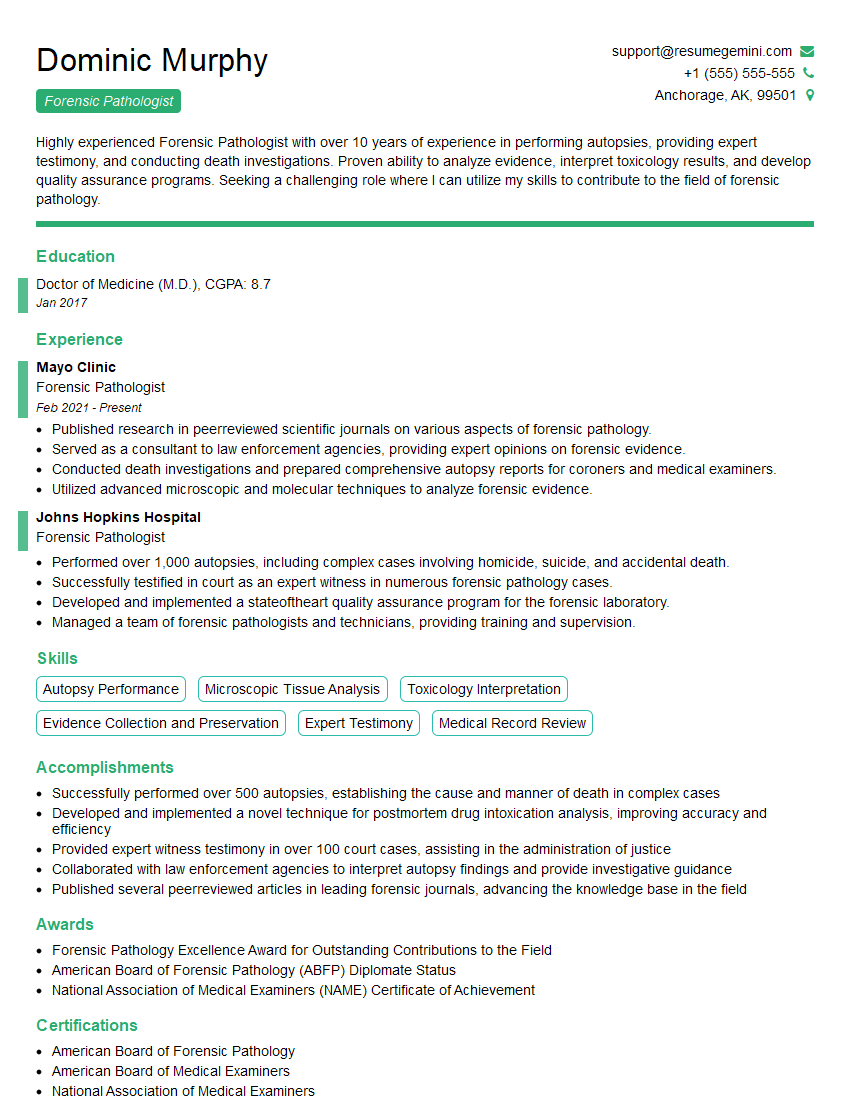
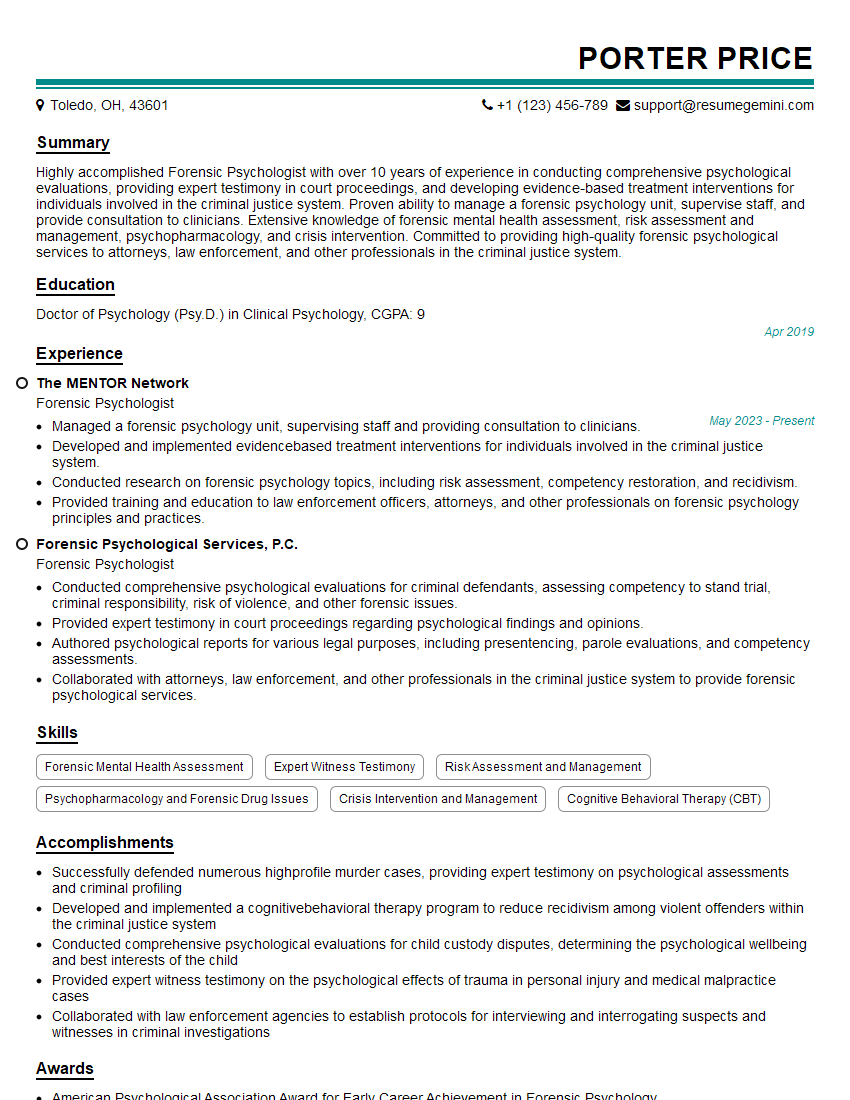
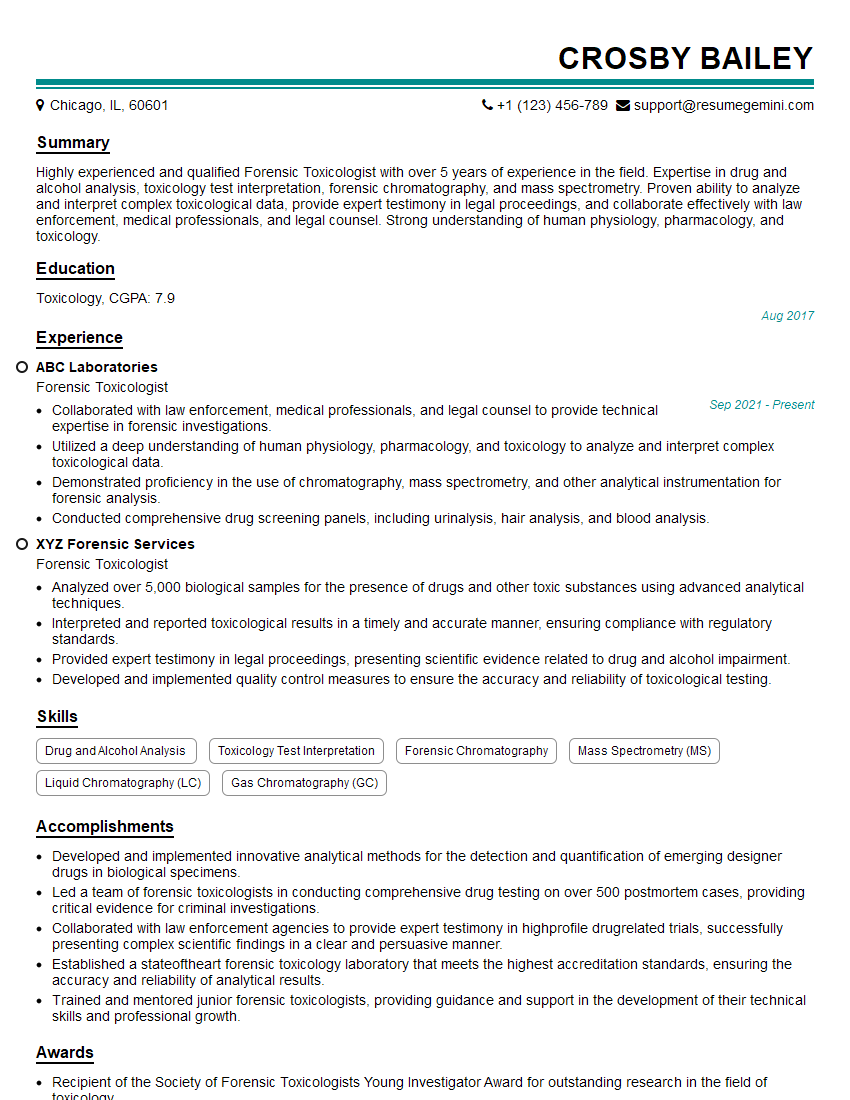
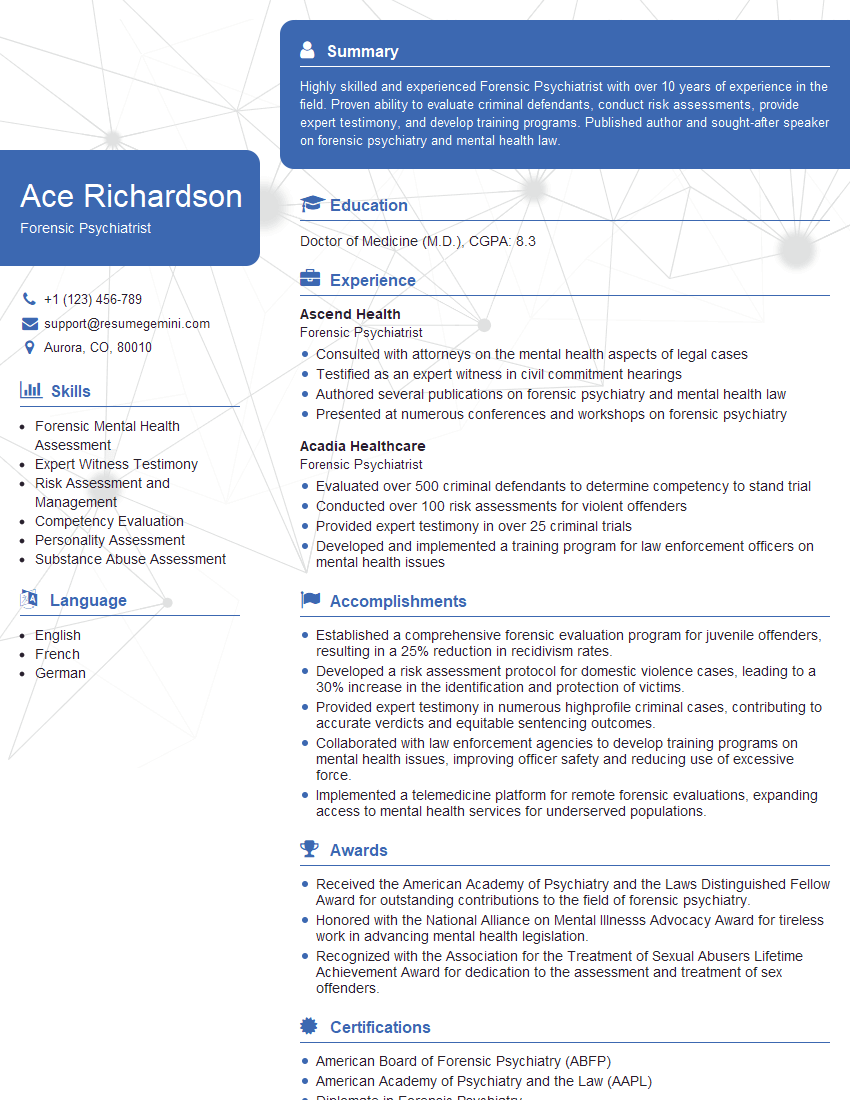
Mastering Forensic Psychiatry opens doors to a rewarding career with significant impact on the justice system and the lives of individuals involved. To maximize your job prospects, a well-crafted, ATS-friendly resume is crucial. ResumeGemini is a trusted resource that can help you build a professional and impactful resume designed to highlight your skills and experience effectively. ResumeGemini provides examples of resumes tailored specifically to Forensic Psychiatry, giving you a head start in crafting the perfect application materials. Invest time in building a compelling resume – it’s your first impression and a key factor in securing your dream position.
Explore more articles
Users Rating of Our Blogs
Share Your Experience
We value your feedback! Please rate our content and share your thoughts (optional).
What Readers Say About Our Blog
Very informative content, great job.
good