Preparation is the key to success in any interview. In this post, we’ll explore crucial Forest Products Knowledge interview questions and equip you with strategies to craft impactful answers. Whether you’re a beginner or a pro, these tips will elevate your preparation.
Questions Asked in Forest Products Knowledge Interview
Q 1. Explain the different types of wood and their properties.
Wood is broadly categorized into two main types: hardwoods and softwoods. This classification isn’t based on the wood’s actual hardness, but rather on the botanical characteristics of the trees they come from.
- Hardwoods: These come from deciduous trees (trees that lose their leaves annually), like oak, maple, cherry, and walnut. They generally have a denser structure, are more durable, and often have more intricate grain patterns. Hardwoods are typically used in high-end furniture, flooring, and cabinetry because of their beauty and strength. For example, oak’s durability makes it ideal for flooring, while cherry’s rich color is prized in furniture.
- Softwoods: These are from coniferous trees (cone-bearing trees that retain their leaves year-round), such as pine, fir, spruce, and cedar. They usually have a less dense structure than hardwoods, are easier to work with, and are often less expensive. Softwoods are frequently used in construction, paper production, and less expensive furniture due to their abundance and workability. Pine, for instance, is common in construction framing because of its strength-to-weight ratio, while spruce is often used for musical instruments due to its resonance.
Beyond these main categories, wood properties also vary widely based on factors like tree species, growth rate, climate, and soil conditions. These factors influence the wood’s density, strength, color, grain, and resistance to decay, all of which impact its suitability for different applications.
Q 2. Describe the process of pulp and paper manufacturing.
Pulp and paper manufacturing is a multi-stage process transforming wood fibers into paper. It begins with harvesting wood, typically softwoods like pine and spruce due to their fiber length and abundance.
- Wood Preparation: Logs are debarked and chipped into small pieces.
- Pulping: Chips are cooked in a digester with chemicals (in chemical pulping) or mechanically ground (in mechanical pulping) to separate the fibers. Chemical pulping produces higher-quality pulp, while mechanical pulping is less expensive but produces lower-quality paper.
- Screening and Cleaning: The pulp is screened to remove unwanted materials and cleaned to improve its consistency.
- Bleaching (Optional): Chemical pulp is often bleached to achieve a brighter, whiter paper. This step is environmentally scrutinized due to the chemicals used.
- Papermaking: The pulp is diluted with water and fed into a paper machine, where it is spread onto a moving wire mesh. Water is removed, leaving a thin sheet of fibers.
- Pressing and Drying: The sheet is pressed to remove more water and then dried using heated rollers.
- Finishing: The paper is then wound into rolls or cut into sheets and prepared for distribution.
Different paper types require variations in this process. For example, newsprint uses mainly mechanical pulp for cost-effectiveness, while high-quality printing paper typically uses bleached chemical pulp.
Q 3. What are the sustainable harvesting practices in forestry?
Sustainable harvesting practices aim to balance wood production with the long-term health of the forest ecosystem. Key elements include:
- Selective Logging: Only mature or less desirable trees are harvested, leaving younger trees to grow and maintain forest biodiversity. This contrasts with clear-cutting, which removes all trees in an area.
- Reforestation: Planting new trees to replace those harvested ensures continuous forest cover and carbon sequestration.
- Reduced Impact Logging (RIL): Techniques that minimize damage to the remaining forest, such as using specialized equipment and planning road networks carefully.
- Forest Certification: Organizations like the Forest Stewardship Council (FSC) set standards for sustainable forest management, providing independent verification of responsible practices. Products with FSC certification assure consumers that the wood comes from sustainably managed forests.
- Monitoring and Adaptive Management: Regular monitoring of forest health, biodiversity, and water resources allows for adjustments in harvesting practices to ensure long-term sustainability.
Sustainable forestry is crucial for preserving biodiversity, protecting water resources, mitigating climate change, and ensuring the long-term availability of forest products. A well-managed forest acts as a carbon sink and supports a diverse range of plant and animal life.
Q 4. How do you assess the quality of timber?
Assessing timber quality involves evaluating several characteristics to determine its suitability for specific applications. Factors considered include:
- Straightness of Grain: A straight grain indicates better strength and stability. Twisted or crooked grain weakens the timber.
- Knots: The presence, size, and type of knots affect strength and appearance. Large, loose knots weaken the wood.
- Moisture Content: Excessive moisture can lead to shrinkage, warping, and decay. Timber is often dried to a specific moisture content before use.
- Density: Denser wood is generally stronger and more durable. Density is often assessed through specific gravity measurements.
- Decay or Defects: Any signs of rot, insect infestation, or other defects reduce the quality and structural integrity of the wood.
- Appearance: The color, grain pattern, and overall aesthetic appeal are important for applications where appearance is a primary concern, such as furniture making.
Professional timber graders use visual inspection, specialized tools, and sometimes destructive testing to assess these qualities. They often assign grades based on a standardized system that indicates the wood’s fitness for various purposes.
Q 5. Explain different wood preservation techniques.
Wood preservation techniques protect wood from decay, insect attack, and other forms of degradation, extending its lifespan and usefulness. Common methods include:
- Pressure Treatment: Wood is placed in a pressure vessel and subjected to a preservative solution under pressure. This forces the preservative deep into the wood’s cellular structure, providing long-lasting protection. Common preservatives include chromated copper arsenate (CCA), though its use is declining due to environmental concerns, and alternatives like copper azole and copper quat are now prevalent.
- Surface Treatment: Preservatives are applied to the wood’s surface by brushing, spraying, or dipping. This provides less protection than pressure treatment but is suitable for less demanding applications.
- Heat Treatment: Heating the wood to high temperatures modifies its chemical structure, making it more resistant to decay and insects. This is an environmentally friendly method that requires no chemical additives.
- Incising: Cutting small slits into the surface of wood before treatment increases the surface area for preservative absorption, improving the effectiveness of pressure treatment, especially in denser woods.
The choice of preservation technique depends on factors like the type of wood, its intended use, and environmental concerns. For applications exposed to the elements, pressure treatment is generally preferred for maximum protection. However, heat treatment offers a chemical-free alternative for specific applications.
Q 6. What are the common pests and diseases affecting trees, and how are they managed?
Trees are susceptible to various pests and diseases that can significantly impact their health and productivity. Some common examples include:
- Insects: Bark beetles, termites, and wood borers can damage or kill trees by infesting the wood. Management strategies include preventative measures like maintaining tree health, using insecticides where appropriate, and removing infested trees.
- Diseases: Fungal diseases like root rot and Dutch elm disease can cause significant tree mortality. Management involves sanitation practices (removing infected trees), using fungicides (with caution due to environmental impact), and selecting disease-resistant tree species.
Integrated pest management (IPM) is a holistic approach that combines various techniques to manage pests and diseases effectively while minimizing environmental impact. IPM strategies often prioritize preventative measures and biological controls (introducing natural predators) before resorting to chemical interventions.
Early detection is crucial in managing tree pests and diseases. Regular monitoring of forests and prompt intervention can prevent widespread damage and maintain forest health.
Q 7. Describe the different types of sawmill operations.
Sawmill operations vary depending on scale, technology, and the type of lumber produced. However, common types include:
- Circular Sawmills: These use a large circular saw blade to cut logs into lumber. They are relatively simple and cost-effective but may not be as efficient or precise as other methods.
- Band Sawmills: These employ a continuous band saw blade, offering greater precision and efficiency than circular sawmills. They produce less waste and can handle larger logs.
- Gang Sawmills: These use multiple saw blades to cut multiple boards simultaneously from a single log, increasing production efficiency. They are particularly suitable for high-volume operations.
- Portable Sawmills: These smaller, mobile sawmills can be transported to logging sites, reducing transportation costs and allowing for on-site processing.
Many modern sawmills incorporate advanced technologies like computer-controlled cutting systems and automated sorting and stacking equipment to optimize efficiency and lumber quality. The choice of sawmill operation depends on factors such as log size, desired lumber dimensions, production volume, and capital investment.
Q 8. How do you ensure safety in logging operations?
Safety in logging is paramount. It’s not just about following regulations; it’s about creating a safety-first culture. This involves a multi-pronged approach.
- Pre-harvest planning: Thorough assessments of the terrain, tree conditions, and weather are crucial. We use advanced technology like LiDAR and GIS to map potential hazards and plan efficient, safe felling strategies.
- Training and competency: Every logger receives extensive training on safe operating procedures for chainsaws, heavy machinery, and faller safety techniques. Regular refresher courses and competency assessments are mandatory.
- Personal Protective Equipment (PPE): Providing and ensuring the proper use of high-quality PPE, including helmets, safety glasses, chainsaw chaps, and high-visibility clothing, is non-negotiable. We regularly inspect PPE to ensure it’s in top condition.
- Communication and teamwork: Clear communication protocols are essential during operations. Designated signal persons are used to guide machinery and ensure everyone is aware of their surroundings. Teamwork and mutual respect are crucial for a safe working environment.
- Emergency response plan: A well-defined emergency response plan, including first-aid training, access to emergency services, and evacuation procedures, is in place and regularly practiced. We conduct regular safety meetings and incident investigations to learn from near misses and improve our safety practices.
For example, we might use a pre-felling inspection to identify any potential hazards like dead limbs or leaning trees before cutting begins, significantly reducing risks.
Q 9. What are the environmental impacts of forest product manufacturing?
Forest product manufacturing has significant environmental impacts, both positive and negative. The positive side includes carbon sequestration (trees absorb CO2), but the negative impacts are substantial and require mitigation.
- Deforestation and Habitat Loss: Unsustainable logging practices can lead to deforestation, habitat fragmentation, and biodiversity loss. This is why responsible forestry practices are crucial.
- Water Pollution: Processing wood can generate wastewater containing chemicals and pollutants that can contaminate water sources if not properly managed. Proper treatment and effluent management systems are essential.
- Air Pollution: Emissions from machinery and manufacturing processes can contribute to air pollution, particularly in the absence of effective pollution control technologies. We utilize modern equipment that minimizes emissions.
- Waste Generation: Wood processing generates significant amounts of waste, including sawdust, bark, and other residues. Innovative approaches to waste management, such as using waste as biofuel or in composite materials, are vital.
- Climate Change: While wood is a renewable resource, the manufacturing process itself can contribute to greenhouse gas emissions. Using renewable energy sources in the manufacturing process can help reduce the carbon footprint.
We address these impacts through sustainable forest management, efficient processing techniques, and waste reduction strategies. Investing in cleaner technologies and implementing robust environmental monitoring programs are critical.
Q 10. Explain the concept of forest certification (e.g., FSC).
Forest certification, such as the Forest Stewardship Council (FSC) certification, is a voluntary process that assures consumers that the wood products they purchase come from responsibly managed forests. Think of it like an eco-label for wood.
The FSC sets standards for responsible forest management, covering aspects such as:
- Environmental protection: Maintaining biodiversity, protecting water resources, and preventing soil erosion.
- Social responsibility: Respecting the rights of indigenous peoples and local communities, ensuring fair labor practices, and promoting community development.
- Economic viability: Ensuring the long-term economic viability of forest management operations.
Companies that meet these standards can obtain FSC certification, allowing them to use the FSC logo on their products. This certification provides assurance to consumers and businesses that the wood products come from sustainably managed sources, contributing to environmentally and socially sound practices.
Q 11. What are the key factors influencing timber pricing?
Timber pricing is a complex issue influenced by numerous factors:
- Species: Rare and high-quality wood species command higher prices than common species. For example, teak or mahogany are significantly more expensive than pine.
- Grade and quality: The quality of the timber, including its size, straightness, and freedom from defects, influences price. High-grade timber with fewer knots fetches higher prices.
- Supply and demand: Basic economics plays a role. Shortages due to weather events, disease, or increased demand lead to higher prices.
- Location: Transportation costs affect price. Timber harvested in remote areas will be more expensive to transport to markets.
- Market conditions: Global economic trends, interest rates, and construction activity all influence demand and thus price.
- Certification: Sustainably sourced timber (like FSC-certified wood) often commands a premium price.
Understanding these factors is crucial for effective timber procurement and pricing strategies.
Q 12. How do you manage inventory in a forest products company?
Inventory management in a forest products company involves managing the flow of raw materials (logs) and finished goods (lumber, panels, etc.). It’s a delicate balance of ensuring sufficient supply to meet demand while minimizing storage costs and waste.
- Demand forecasting: Accurate sales forecasts are essential to anticipate future demand and plan timber harvesting and production accordingly.
- Raw material sourcing: Establishing reliable supply chains with forest owners and loggers is key. This includes negotiating contracts, ensuring sustainable harvesting practices, and managing transportation logistics.
- Inventory tracking: Utilizing inventory management systems (often software-based) to track the quantity, location, and quality of raw materials and finished goods in real-time is vital.
- Storage and handling: Proper storage facilities and handling practices are needed to prevent damage and degradation of materials. This includes climate control for certain products.
- Waste management: Minimizing waste through efficient processing and utilizing waste materials (e.g., sawdust for biomass energy) is crucial for cost optimization and environmental responsibility.
Effective inventory management minimizes storage costs, prevents stockouts, and reduces waste, contributing to profitability and sustainability.
Q 13. Describe the different types of wood-based panels (e.g., plywood, MDF).
Wood-based panels offer versatile alternatives to solid wood. Several types exist, each with unique properties:
- Plywood: Made from thin layers (plies) of wood veneer glued together with the grain of adjacent plies oriented at right angles. This creates a strong, stable panel resistant to warping. Different grades of plywood exist based on the quality of veneer used.
- Medium-Density Fiberboard (MDF): Made from wood fibers glued together under high pressure and temperature. MDF is a dense, smooth panel ideal for painting and finishing. It’s commonly used in furniture and cabinetry.
- Particleboard (Chipboard): Made from wood particles (chips) bonded with resin. Less dense and strong than MDF or plywood, it’s often used in less demanding applications and is frequently covered with a laminate.
- Oriented Strand Board (OSB): Made from wood strands oriented in layers and glued together. Strong and less expensive than plywood, OSB is commonly used in construction as sheathing.
The choice of wood-based panel depends on the specific application, required strength, and cost considerations.
Q 14. Explain the process of veneer production.
Veneer production involves slicing thin sheets of wood from logs. The process is crucial for producing plywood, veneer for furniture, and other products.
The primary methods are:
- Rotary slicing (peeled veneer): A log is rotated against a large knife, creating a continuous sheet of veneer. This method is efficient but can result in less uniform veneer quality.
- Sawn veneer: Logs are sawn into thin sheets using saws. This produces higher quality veneer but is less efficient.
- Half-round slicing: A log is mounted on a lathe and sliced in a way that minimizes waste.
- Quarter-sliced veneer: The log is cut into quarters before slicing, resulting in a distinctive figure and stability.
After slicing, the veneer is dried to reduce moisture content and prevent warping. The choice of slicing method depends on the desired veneer quality and intended use. Rotary slicing is used for large volumes, while other methods are preferred for high-quality veneer.
Q 15. What are the different types of adhesives used in wood manufacturing?
The choice of adhesive in wood manufacturing depends heavily on the application and desired properties of the final product. We use a range of adhesives, each with its own strengths and weaknesses.
- Polyurethane adhesives: These are incredibly strong, versatile, and exhibit good water resistance, making them ideal for exterior applications and high-stress situations like laminated beams or engineered wood products. For example, I’ve used them extensively in creating curved laminated components for furniture.
- Polyvinyl acetate (PVAc) adhesives: These are common ‘wood glue’ types, known for their ease of use, relatively low cost, and good strength for interior applications. They are less water-resistant than polyurethane, so they’re typically unsuitable for exterior use. Think of gluing together the pieces of a wooden toy or assembling cabinet components.
- Resorcinol adhesives: These are high-strength, waterproof adhesives often used in marine applications or where exceptional durability is critical, such as in boat building or exterior structural components. Their superior water resistance comes at a higher cost and with more stringent safety precautions.
- Epoxy adhesives: Epoxies offer superb strength and adhesion to a variety of substrates, including wood and metal. They are frequently used for repairing damaged wood or bonding dissimilar materials. I’ve used epoxy to repair antique furniture where traditional methods were too invasive.
The selection process involves careful consideration of factors like cost, required strength, environmental conditions, and the specific type of wood being used.
Career Expert Tips:
- Ace those interviews! Prepare effectively by reviewing the Top 50 Most Common Interview Questions on ResumeGemini.
- Navigate your job search with confidence! Explore a wide range of Career Tips on ResumeGemini. Learn about common challenges and recommendations to overcome them.
- Craft the perfect resume! Master the Art of Resume Writing with ResumeGemini’s guide. Showcase your unique qualifications and achievements effectively.
- Don’t miss out on holiday savings! Build your dream resume with ResumeGemini’s ATS optimized templates.
Q 16. How do you ensure quality control throughout the forest product supply chain?
Ensuring quality control across the entire forest product supply chain requires a multi-faceted approach, starting from sustainable forest management practices and extending to the final product delivery. It’s a process of continuous monitoring and improvement.
- Sustainable Forestry: We begin with responsible logging practices, ensuring selective harvesting and replanting to maintain forest health and biodiversity. This includes regular forest inventories to assess tree growth and health.
- Processing Quality Control: At the mill, we implement rigorous quality checks at each stage. This includes monitoring moisture content, checking for defects in lumber, and ensuring proper kiln drying to prevent warping or cracking. Sophisticated machinery assists in automated defect detection and grading.
- Traceability: We utilize chain-of-custody certification systems, such as the Forest Stewardship Council (FSC) standards, to track the origin and processing of wood products. This transparency allows for accountability and helps ensure environmentally responsible practices.
- Product Testing: Before shipping, finished products undergo rigorous testing to ensure they meet specified standards for strength, durability, and other relevant properties. This may involve mechanical testing or visual inspection, depending on the product.
- Customer Feedback: We actively solicit feedback from our customers to identify potential issues and areas for improvement. This feedback loop is crucial for continuous improvement and maintaining high quality.
Essentially, it’s about building trust and confidence in our products by ensuring every step of the process adheres to stringent quality standards and environmental responsibilities.
Q 17. Describe your experience with using GIS software in forestry.
GIS software has revolutionized forestry management. My experience includes using ArcGIS and QGIS for various tasks.
- Forest Inventory and Mapping: I’ve used GIS to create detailed maps of forest stands, identifying tree species, age, and volume. This data is crucial for forest management planning and sustainable harvesting.
- Road Network Planning: GIS helps optimize road networks for logging operations, minimizing environmental impact while maximizing efficiency. We can analyze terrain, slope, and proximity to water bodies to plan sustainable routes.
- Spatial Analysis: I’ve performed spatial analysis to assess habitat suitability for endangered species, predict wildfire risk, and identify areas prone to erosion or other environmental hazards.
- Data Integration and Visualization: GIS allows us to integrate diverse data sources – including satellite imagery, LiDAR data, and field measurements – to create comprehensive forest information systems. This allows for better decision-making and communication.
For example, in one project, we used GIS to model the impact of different harvesting scenarios on water quality in a watershed, allowing us to select the option with the least environmental disruption.
Q 18. What are the challenges associated with biomass energy production?
Biomass energy production, while promising as a renewable energy source, faces significant challenges.
- Sustainability Concerns: Unsustainable harvesting practices can lead to deforestation and biodiversity loss. Careful forest management is crucial to ensure the long-term sustainability of biomass resources.
- Energy Efficiency: Converting biomass to usable energy involves significant energy losses. The overall efficiency of the process needs improvement to make it economically competitive.
- Transportation Costs: Biomass is bulky and often requires transportation over long distances, increasing costs and potentially offsetting environmental benefits.
- Air Pollution: Incompletely burned biomass can release harmful pollutants into the atmosphere, including particulate matter and greenhouse gases. Efficient combustion technologies are essential to mitigate this.
- Competition for Land Use: Biomass production competes with other land uses, such as food production and conservation. Careful land-use planning is needed to avoid conflicts.
Addressing these challenges requires integrated approaches that combine sustainable forestry practices, efficient conversion technologies, and smart transportation strategies.
Q 19. How do you calculate timber volume using different measurement methods?
Timber volume calculation depends on the shape and accessibility of the tree or log. Several methods are employed:
- Huber’s Formula: This is commonly used for estimating the volume of standing trees using diameter at breast height (DBH) and tree height. The formula is:
Volume = 0.005454 * DBH² * Heightwhere DBH is in inches and height is in feet. However, it assumes a perfectly cylindrical shape, which isn’t always accurate. - Smalian’s Formula: This method is more accurate for logs of varying diameter. It uses the diameters at both ends of the log:
Volume = Length * (D1² + D2²) / 4where Length is the log length and D1 and D2 are the diameters at the two ends. - Newton’s Formula: This is another method used for logs with irregular shapes, using average diameter instead of just the two end diameters.
- Volume Tables: Pre-computed volume tables exist for different tree species and regions, providing estimates based on DBH and height measurements. These tables account for variations in tree shape and are widely used.
- 3D Scanning: Advanced techniques like terrestrial laser scanning provide very accurate volume measurements for logs or even entire standing trees.
The choice of method depends on the accuracy required, the resources available, and the specific characteristics of the trees or logs being measured.
Q 20. Explain the different types of forest fires and their suppression methods.
Forest fires are broadly classified into three types, each demanding different suppression strategies.
- Ground Fires: These fires burn slowly beneath the surface, often in the duff layer (organic matter on the forest floor). They are difficult to detect and extinguish, often requiring digging and flooding.
- Surface Fires: These fires burn across the surface, consuming grasses, shrubs, and underbrush. They spread relatively quickly, depending on wind and fuel conditions. Suppression techniques include controlled burning (to create firebreaks) and direct attack using water or fire retardants.
- Crown Fires: These are the most intense and dangerous fires, consuming the entire canopy of the trees. They are driven by strong winds and abundant dry fuel. Suppression is extremely challenging, often requiring aerial support (water drops and retardant drops) and the establishment of strategic firebreaks.
Suppression methods vary, incorporating direct attack (using water, fire retardants, and hand tools), indirect attack (establishing firebreaks to control the spread), and aerial support (for large or inaccessible fires). Effective fire management requires careful planning, quick response, and a comprehensive understanding of fire behavior.
Q 21. Describe your experience with forest management planning.
My experience with forest management planning spans various scales, from individual stands to entire landscapes. The process is iterative and involves several key steps.
- Inventory and Assessment: We begin with a detailed inventory of the forest, assessing tree species, age, density, health, and other relevant factors. Remote sensing techniques and field surveys play crucial roles.
- Goal Setting: We define clear objectives for the forest management plan, such as timber production, biodiversity conservation, water quality protection, or recreation opportunities. These objectives inform subsequent decision-making.
- Planning and Modeling: We develop various management scenarios using simulation models, considering factors like growth rates, harvesting strategies, and environmental impacts. This allows us to evaluate the potential outcomes of different options.
- Implementation and Monitoring: Once a plan is approved, we implement the chosen strategy, carefully monitoring progress and making adjustments as needed. Regular monitoring is vital to ensure the plan remains effective.
- Adaptive Management: Forest management is a dynamic process. We adapt the plan based on feedback from monitoring, new scientific knowledge, or changing environmental conditions. This adaptive approach ensures long-term sustainability.
For instance, I was involved in a project where we developed a forest management plan that balanced timber production with the conservation of an endangered bird species. We used GIS to identify suitable nesting habitats and tailor harvesting practices to minimize disturbance to these areas.
Q 22. How do you balance economic profitability with environmental sustainability in forestry?
Balancing economic profitability with environmental sustainability in forestry is a crucial aspect of responsible forest management. It’s not about choosing one over the other, but finding a synergistic relationship. This involves implementing practices that ensure long-term forest health while generating economic returns. Think of it like investing – you need to manage your resources wisely to ensure future yields.
- Sustainable Harvesting Techniques: Employing selective logging, reducing road construction impact, and avoiding clear-cutting in sensitive areas. For example, instead of clear-cutting a large area, we might harvest only mature trees, leaving younger trees to grow.
- Reforestation and Afforestation: Replanting harvested areas with suitable species and establishing new forests in deforested areas. This ensures continuous timber production and maintains biodiversity.
- Certification Schemes: Adhering to internationally recognized forest certification standards, like the Forest Stewardship Council (FSC), demonstrates commitment to sustainable practices and allows access to environmentally conscious markets.
- Carbon Accounting and Sequestration: Measuring and managing the carbon stored in forests, potentially generating carbon credits that can be sold, thus providing additional economic incentives for sustainable management.
- Ecosystem Services Valuation: Recognizing and quantifying the economic value of ecosystem services provided by forests, such as clean water, carbon sequestration, and biodiversity, to incorporate these values into forest management decisions. This means factoring in the value of a healthy forest beyond just the timber it produces.
A successful balance requires careful planning, monitoring, and adaptive management, constantly evaluating the ecological and economic impacts of decisions.
Q 23. What are the different types of forest ecosystems and their management requirements?
Forest ecosystems are incredibly diverse, each with unique characteristics and management needs. Broadly, we can categorize them based on factors like climate, dominant tree species, and geographical location.
- Boreal Forests (Taiga): Characterized by coniferous trees like spruce, fir, and pine. Management focuses on sustainable logging practices, fire prevention, and minimizing disturbance to wildlife habitats. The long growing season and cold temperatures mean careful consideration of regeneration.
- Temperate Deciduous Forests: Dominated by hardwood trees like oak, maple, and beech. Management often involves selective logging, promoting biodiversity, and controlling invasive species. These forests are more resilient to disturbances, but careful planning is still necessary to maintain the balance of species.
- Tropical Rainforests: Extremely biodiverse with a high density of trees and other plant life. Sustainable management is particularly challenging, focusing on minimizing deforestation, selective logging, and promoting ecotourism. The complexity of these ecosystems requires sophisticated monitoring and adaptive management.
- Mediterranean Forests: Characterized by drought-tolerant trees and shrubs adapted to hot, dry summers and mild, wet winters. Management often involves fire prevention and control, as well as managing water resources and grazing pressure. The fire risk requires particular attention and careful planning of forest operations.
Effective management requires understanding the specific ecological characteristics of each ecosystem, considering its resilience, and adopting tailored strategies to balance conservation and economic benefits.
Q 24. Explain your understanding of forest mensuration techniques.
Forest mensuration is the science and art of measuring and quantifying forests. It involves using various techniques to estimate the volume, growth, and other characteristics of trees and stands. Accurate mensuration is fundamental to sustainable forest management, allowing for informed decision-making regarding harvesting, reforestation, and overall resource allocation.
- Diameter at Breast Height (DBH): Measuring the diameter of a tree at 4.5 feet above the ground, a key measurement for estimating volume.
- Height Measurement: Using instruments like hypsometers to measure tree height, crucial for volume calculations and growth assessment.
- Volume Estimation: Employing formulas and tables based on DBH and height to estimate the volume of individual trees and stands. More advanced methods use allometric equations or 3D modeling for increased accuracy.
- Sampling Techniques: Using statistical sampling methods, such as plot sampling, to estimate forest characteristics across a larger area without measuring every single tree. This makes the process both efficient and accurate.
- Growth and Yield Models: Utilizing mathematical models that predict future growth and yield of trees and stands based on current measurements and environmental factors. This allows for better long-term planning.
Technology plays an increasing role in forest mensuration, with LiDAR and aerial photography providing high-resolution data for efficient and accurate assessment of vast forest areas.
Q 25. Describe your experience with using various forest products equipment.
My experience encompasses a wide range of forest products equipment, from harvesting machinery to processing equipment. This includes:
- Harvesters and Forwarders: Operating and maintaining these machines for felling, delimbing, and transporting logs. I’m proficient in their safety protocols and efficient use, maximizing productivity while minimizing environmental impact.
- Skidders and Tractors: Experience in utilizing these machines for extracting logs from challenging terrain. This includes understanding ground conditions and proper operating techniques to avoid soil compaction and damage.
- Processing Equipment: Familiar with sawmills, debarkers, and other equipment used in converting logs into lumber and other wood products. This involves understanding the operation, maintenance, and safety procedures of this machinery.
- Precision Forestry Equipment: I am familiar with GPS-guided harvesting systems and other technologies that increase efficiency and reduce waste. This is becoming increasingly crucial for sustainable and precise logging operations.
Safety is always paramount when operating this equipment. Regular maintenance and adherence to safety protocols are crucial to prevent accidents and ensure efficient operation.
Q 26. What are the key regulations and compliance requirements in the forest products industry?
The forest products industry is heavily regulated to ensure sustainable practices and protect environmental and social values. Key regulations and compliance requirements vary by jurisdiction but often include:
- Harvesting Regulations: Limits on the volume and type of timber that can be harvested, restrictions on clear-cutting, and requirements for reforestation.
- Environmental Impact Assessments (EIAs): Mandatory assessments to evaluate the potential environmental impacts of logging operations and other forestry activities. This ensures that activities are designed to minimize harm.
- Water Quality Regulations: Protecting water bodies from pollution caused by logging activities, such as sediment runoff and chemical contamination.
- Endangered Species Protection: Regulations aimed at protecting threatened and endangered species and their habitats. This requires careful consideration during all operations.
- Occupational Safety and Health Regulations: Ensuring a safe working environment for forestry workers, requiring adherence to strict safety protocols and the use of appropriate safety equipment.
- Forest Certification Standards (e.g., FSC): Meeting the requirements of independent certification bodies to ensure sustainable forestry practices and provide a credible guarantee to customers. This can provide a market advantage.
Compliance is critical for maintaining a license to operate and avoiding penalties. Staying informed about evolving regulations is essential for all involved.
Q 27. How would you address a conflict between environmental concerns and economic interests in forest management?
Addressing conflicts between environmental concerns and economic interests requires a collaborative and transparent approach. It’s about finding a balance that respects both values.
- Stakeholder Engagement: Involving all relevant stakeholders—environmental groups, local communities, industry representatives, and government agencies—in the decision-making process.
- Cost-Benefit Analysis: Conducting a comprehensive cost-benefit analysis to evaluate the economic and environmental consequences of different management options.
- Adaptive Management: Implementing management plans that are flexible and adaptable, allowing for adjustments based on monitoring and evaluation of outcomes.
- Negotiation and Compromise: Facilitating negotiations and compromise between different stakeholders to reach a mutually acceptable solution. This often requires creative solutions.
- Transparency and Accountability: Ensuring transparency in decision-making and accountability for the outcomes of forest management activities. This promotes trust and understanding.
It’s important to remember that these are often not mutually exclusive goals. Sustainable forest management can create long-term economic benefits while protecting valuable ecosystems and supporting local communities. The key is finding the best pathway.
Q 28. Describe your experience with project management in the context of forestry or forest products
My project management experience in forestry and forest products includes leading and coordinating various projects, from reforestation initiatives to sustainable harvesting plans and mill upgrades. This involved several key steps:
- Planning and Scoping: Defining project objectives, timelines, budgets, and resource requirements. This often involved extensive data analysis and risk assessment.
- Team Management: Building and leading high-performing teams comprising foresters, engineers, technicians, and other specialists. Effective communication and delegation were crucial.
- Resource Allocation: Efficiently allocating financial and human resources to ensure projects remain on track and within budget.
- Monitoring and Evaluation: Tracking project progress, identifying potential problems, and implementing corrective actions. Regular reporting is crucial for transparency and accountability.
- Risk Management: Identifying and mitigating potential risks, such as weather events, equipment failures, and regulatory changes. Having contingency plans is crucial.
Successfully managing projects in forestry often requires adaptability and the ability to work effectively under uncertainty. The interplay of natural processes and market demands necessitates robust planning and effective problem-solving.
Key Topics to Learn for Forest Products Knowledge Interview
- Sustainable Forestry Practices: Understanding sustainable harvesting techniques, reforestation methods, and the environmental impact of forest management. Practical application: Analyzing the efficiency and sustainability of different logging methods.
- Wood Science and Technology: Knowledge of wood anatomy, properties (strength, density, durability), and different wood species. Practical application: Selecting appropriate wood for specific applications (e.g., construction, furniture).
- Forest Product Manufacturing Processes: Understanding the processes involved in transforming raw timber into various products (e.g., lumber, plywood, paper). Practical application: Evaluating the efficiency and cost-effectiveness of different manufacturing processes.
- Forest Product Economics and Market Analysis: Knowledge of market trends, pricing strategies, and supply chain management within the forest products industry. Practical application: Analyzing market demand for specific forest products and predicting future trends.
- Forest Product Regulations and Compliance: Familiarity with relevant environmental regulations, safety standards, and industry best practices. Practical application: Ensuring compliance with all applicable regulations in a forest products operation.
- Health and Safety in Forest Products: Understanding and applying relevant safety protocols and risk management strategies within the forest products industry. Practical application: Identifying and mitigating potential hazards in different forest product operations.
- Data Analysis and Interpretation in Forest Management: Using data analysis techniques to inform decision-making related to sustainable forest management and optimizing production. Practical application: Interpreting yield data to inform harvesting strategies.
Next Steps
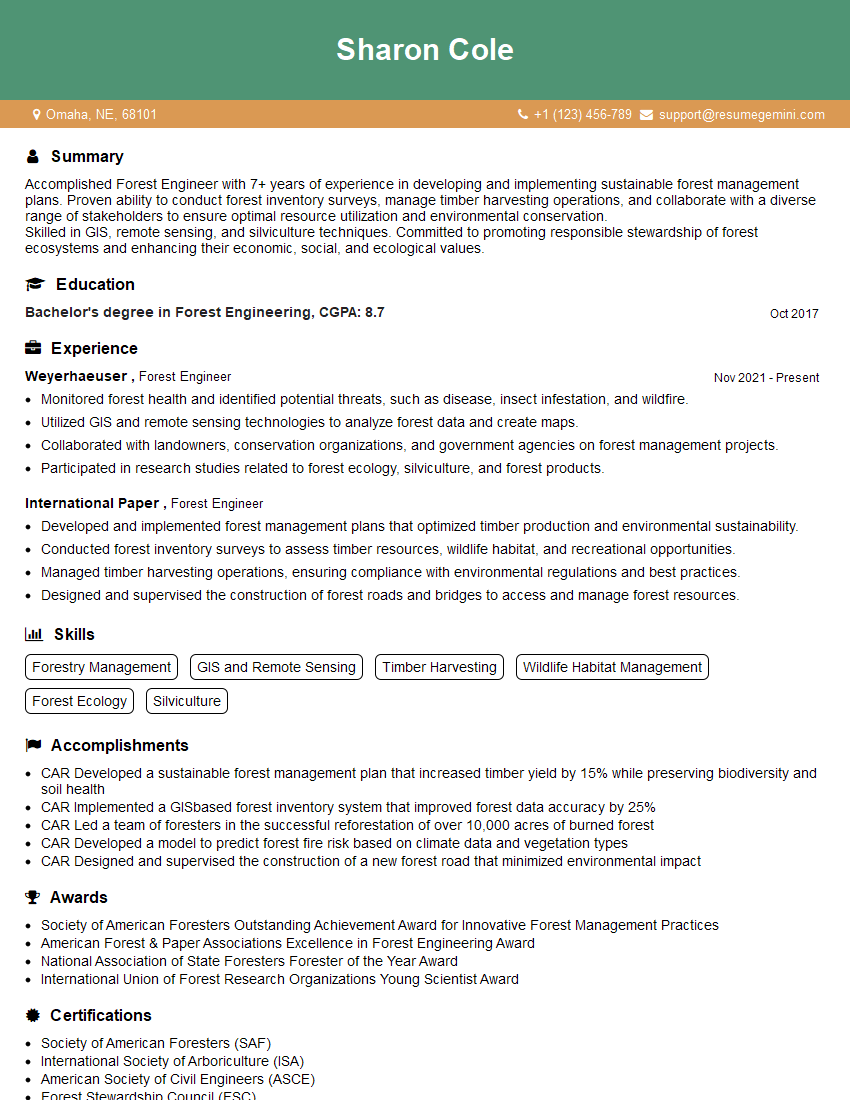
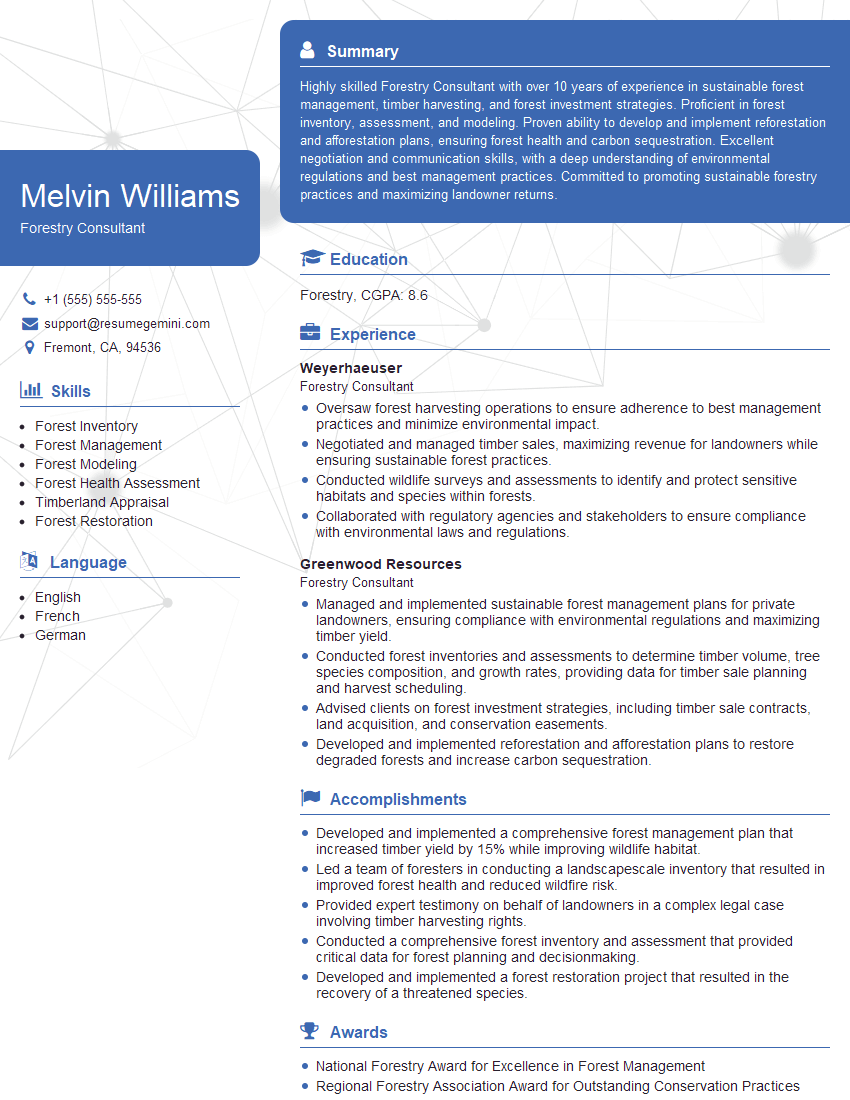
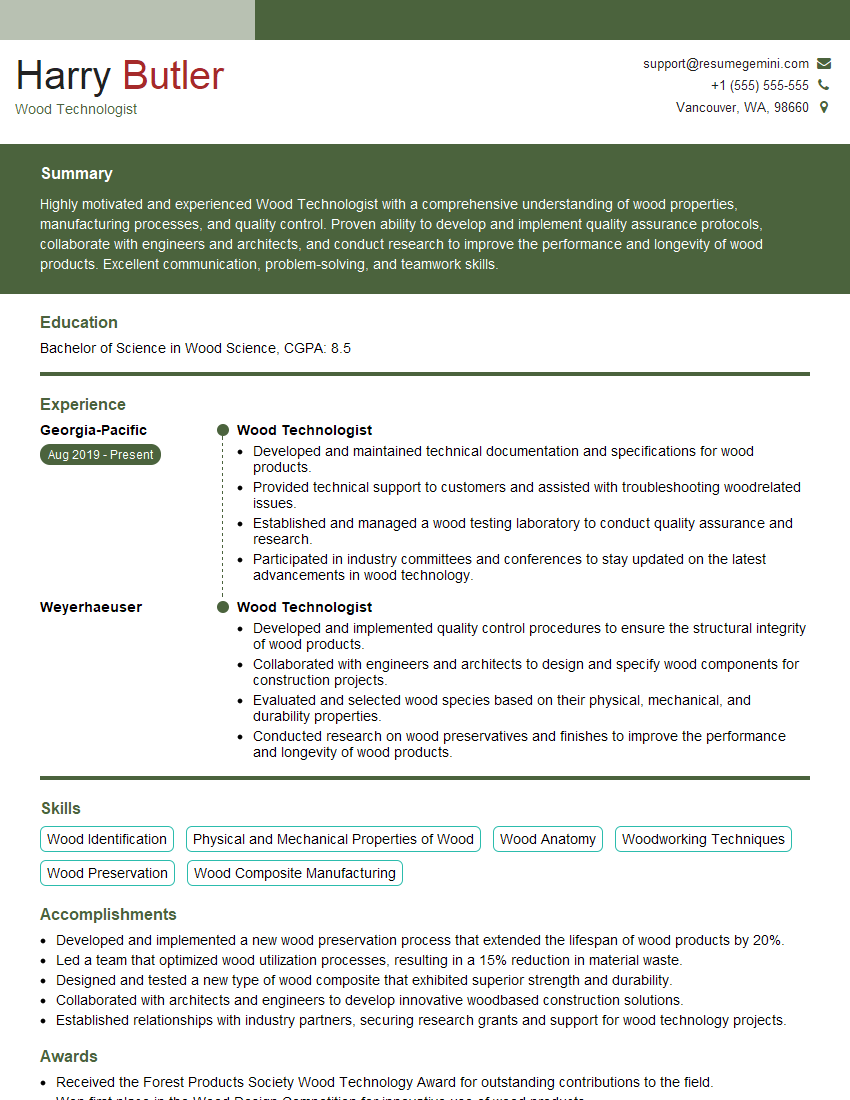
Mastering Forest Products Knowledge is crucial for career advancement in this dynamic and growing industry. A strong understanding of these topics will significantly enhance your interview performance and open doors to exciting opportunities. To further strengthen your job application, focus on creating an ATS-friendly resume that highlights your relevant skills and experience. ResumeGemini is a trusted resource for building professional, impactful resumes. They provide examples of resumes tailored to the Forest Products Knowledge field, helping you present your qualifications effectively and increase your chances of landing your dream job.
Explore more articles
Users Rating of Our Blogs
Share Your Experience
We value your feedback! Please rate our content and share your thoughts (optional).
What Readers Say About Our Blog
Very informative content, great job.
good