Every successful interview starts with knowing what to expect. In this blog, we’ll take you through the top Forest Resources Management interview questions, breaking them down with expert tips to help you deliver impactful answers. Step into your next interview fully prepared and ready to succeed.
Questions Asked in Forest Resources Management Interview
Q 1. Describe different sustainable forestry practices.
Sustainable forestry practices aim to balance the economic benefits of timber production with the ecological integrity of the forest ecosystem. This ensures that forests remain productive and healthy for future generations. Key practices include:
Selective logging: Instead of clear-cutting, only mature or less desirable trees are harvested, leaving the forest structure largely intact. This allows for natural regeneration and minimizes soil erosion.
Reduced-impact logging (RIL): Techniques like using directional felling, building temporary roads only where necessary, and minimizing damage to remaining trees reduce the environmental footprint of logging operations.
Silviculture: This involves actively managing forests through practices like planting, thinning, and pruning to promote healthy growth and desirable species composition. This might involve creating diverse age classes within a stand for resilience against pests and disease.
Forest certification: Organizations like the Forest Stewardship Council (FSC) set standards for sustainable forest management. Certification assures consumers that wood products come from responsibly managed forests.
Ecosystem-based management: This holistic approach considers the entire forest ecosystem, including biodiversity, water quality, and carbon sequestration, when making management decisions. For example, managing forests for multiple benefits, such as carbon storage and timber production.
For example, in a boreal forest, selective logging allows the remaining trees to provide shade and protect the seedlings, promoting natural regeneration and biodiversity. In contrast, clear-cutting can lead to soil erosion and loss of habitat.
Q 2. Explain the concept of forest ecosystem services.
Forest ecosystem services are the many benefits that humans derive from forests. These services are often categorized into four types:
Provisioning services: These are tangible products obtained from forests, such as timber, food (mushrooms, berries), fuelwood, and medicinal plants. Imagine the countless communities that depend on forests for their livelihoods.
Regulating services: These are benefits provided by the forest’s regulatory functions, such as carbon sequestration (absorbing CO2 from the atmosphere), climate regulation (influencing local and global climate), water purification, and soil erosion control. For instance, a healthy forest acts as a natural sponge, reducing the impact of floods.
Supporting services: These are the fundamental ecological processes that underpin all other services, including nutrient cycling, primary production (photosynthesis), and soil formation. These are the foundation upon which all other forest benefits depend.
Cultural services: These are non-material benefits that people obtain from forests, such as recreation, tourism, spiritual enrichment, and aesthetic appreciation. Think about the joy of hiking through a forest or the inspiration artists draw from its beauty.
Understanding and valuing these services is crucial for making informed decisions about forest management. For example, recognizing the carbon sequestration value of a forest might lead to decisions that favor its preservation rather than conversion to agricultural land.
Q 3. What are the common methods used for forest inventory?
Forest inventory is the process of systematically collecting data about forests to assess their condition, composition, and growth. Common methods include:
Sample plots: Establishing a network of small, representative plots throughout the forest. Trees within each plot are measured (diameter at breast height, height, species) to estimate the characteristics of the entire forest. This is like taking a small sample to understand the characteristics of a larger batch.
Remote sensing: Using aerial photography, satellite imagery, or LiDAR (Light Detection and Ranging) to obtain data over large areas. This allows for efficient monitoring of forest cover, changes over time, and identification of areas of concern. Analyzing multispectral satellite imagery can help to assess forest health and species composition.
Ground-based measurements: Directly measuring trees and forest characteristics on the ground, often combined with sample plots. This could include measuring tree height with a hypsometer or using diameter tapes.
Forest inventory software: Software packages process the collected data and generate reports on forest volume, biomass, basal area, and other important metrics. This software is essential for analyzing large datasets and creating accurate estimations.
The choice of method depends on factors like the size of the forest, the level of detail required, and available resources. For instance, a large national forest might rely heavily on remote sensing, complemented by ground-based measurements in key areas.
Q 4. Discuss various forest fire management strategies.
Forest fire management strategies aim to prevent, detect, and suppress wildfires, while also recognizing the ecological role of fire in some ecosystems. Key strategies include:
Prescribed burning: Carefully planned and controlled fires are used to reduce fuel loads, improve forest health, and promote the growth of fire-adapted species. This reduces the risk of catastrophic wildfires.
Fuel management: Reducing the amount of flammable material (fuel) in forests through practices like thinning, creating firebreaks, and removing dead wood. This helps slow or stop the spread of fire.
Early detection and rapid suppression: Establishing lookout towers, using aerial surveillance, and deploying firefighters quickly to control fires before they become large and uncontrollable. This includes utilizing technology like infrared cameras and weather prediction models.
Community involvement: Educating the public about fire safety and involving communities in fire prevention and suppression efforts. This can involve creating fire-smart communities, where homes and buildings are designed and maintained to reduce the risk of wildfire damage.
Wildfire simulation models: These sophisticated models predict fire behavior based on weather conditions and fuel characteristics, helping managers make informed decisions about fire suppression strategies. They can guide decisions about resource allocation and evacuation planning.
For example, prescribed burns in longleaf pine ecosystems help maintain the open, grassy understory that is characteristic of this habitat. In contrast, suppressing all fires in this ecosystem could lead to a buildup of fuel and increased risk of larger and more damaging fires.
Q 5. How do you assess forest health and identify potential threats?
Assessing forest health involves monitoring various factors to identify potential threats. Methods include:
Visual assessments: Regularly inspecting forests to identify signs of disease, insect infestation, or damage from other agents. This includes noting crown dieback, changes in foliage color, or the presence of dead trees.
Sampling and analysis: Collecting samples of trees, soil, and water for laboratory analysis to detect pathogens, nutrient deficiencies, or other problems. This often involves testing for specific diseases or pests.
Remote sensing: Analyzing satellite imagery and aerial photographs to identify areas experiencing stress or decline. Specific spectral bands can reveal subtle changes in vegetation health.
Tree-ring analysis: Examining tree rings can reveal past growth patterns and identify periods of stress or disturbance, such as drought or insect outbreaks.
Monitoring wildlife populations: Changes in wildlife populations can indicate broader ecosystem changes or impacts on forest health.
For instance, noticing an increase in the number of dead or dying trees in a particular area might indicate a pest infestation or disease outbreak requiring further investigation and management intervention. A decline in specific wildlife populations could signal habitat degradation.
Q 6. Explain the role of GIS in forest resource management.
Geographic Information Systems (GIS) are powerful tools for managing forest resources. They allow forest managers to:
Map forest cover and characteristics: Create detailed maps showing forest types, tree species, age classes, and other relevant information. This is essential for planning and implementing management activities.
Analyze spatial data: Assess relationships between different forest attributes and environmental factors. For example, GIS can be used to identify areas at high risk of wildfire or to model the impact of climate change on forest ecosystems.
Plan and manage timber harvesting: Design logging plans that minimize environmental impact and optimize timber yield. GIS can help design efficient road networks and plan for reforestation activities.
Monitor forest change: Detect changes in forest cover over time through analysis of multi-temporal imagery. This enables managers to track deforestation, forest degradation, and reforestation efforts.
Communicate information: Create maps and reports that clearly communicate forest information to stakeholders, including landowners, policymakers, and the public. This is essential for transparency and collaboration.
For example, GIS can be used to identify areas with high biodiversity values, which can then be prioritized for conservation. Or, GIS can help to optimize the location of roads to minimize environmental impacts while maximizing access for timber harvesting.
Q 7. Describe the process of reforestation and afforestation.
Reforestation and afforestation are both crucial for restoring and expanding forest cover, but they differ in their application.
Reforestation: The process of restoring forests on lands that previously had forest cover but were subsequently cleared or degraded. This could be due to deforestation, wildfires, or other disturbances. Reforestation aims to restore the original forest structure and function as closely as possible. For instance, planting trees on a previously forested area that has been clear-cut.
Afforestation: The process of establishing forests on lands that have not supported forests for a long time, or have never supported forests. This might involve converting agricultural land, grasslands, or other non-forested areas into forests. This could involve planting trees on a former pasture or a degraded area that has never been a forest.
Both processes involve selecting appropriate tree species, preparing the land, planting seedlings or seeds, and monitoring the survival and growth of the new trees. Successful reforestation and afforestation projects require careful planning, appropriate site selection, and ongoing management. The success of these activities is crucial for mitigating climate change, improving biodiversity, and maintaining ecosystem services.
Q 8. What are the key considerations in timber harvesting planning?
Timber harvesting planning is a complex process requiring careful consideration of ecological, economic, and social factors. The goal is to extract timber in a way that maximizes profitability while minimizing environmental damage and ensuring the long-term health of the forest. Key considerations include:
- Inventory and Assessment: A thorough assessment of the forest is crucial, determining species composition, tree size and quality, volume of merchantable timber, and the location of sensitive areas (e.g., wetlands, endangered species habitats).
- Harvesting Methods: Selecting the appropriate harvesting method (clearcutting, selection cutting, shelterwood cutting) depends on the forest type, desired regeneration pattern, and site-specific conditions. Each method has different impacts on soil, water, and biodiversity.
- Road Network Planning: Efficient road networks are vital for timber extraction, but road construction can cause soil erosion and habitat fragmentation. Careful planning minimizes these impacts.
- Silvicultural Treatments: Planning for post-harvest regeneration is crucial. This involves decisions about planting, natural regeneration, or a combination of both, to ensure future timber production.
- Environmental Protection: Minimizing impacts on water quality, soil stability, and wildlife habitats is paramount. Buffer zones around water bodies and sensitive areas are often implemented.
- Economic Analysis: A cost-benefit analysis is essential to ensure profitability, considering harvesting costs, transportation expenses, and timber prices.
- Legal and Regulatory Compliance: Harvesting plans must comply with all applicable local, regional, and national laws and regulations, including those related to endangered species protection and forest management standards.
For example, in a steep slope area prone to erosion, a careful selection cutting approach would be preferred over clearcutting to minimize soil disturbance. Conversely, in a flat area with a uniform stand, clearcutting might be a more economically viable and ecologically suitable option, provided appropriate reforestation measures are in place.
Q 9. How do you balance timber production with biodiversity conservation?
Balancing timber production with biodiversity conservation is a core challenge in sustainable forestry. It requires adopting a holistic approach that considers the ecological integrity of the forest ecosystem alongside its economic value. This can be achieved through:
- Protected Areas: Setting aside areas within the forest for strict conservation, allowing natural processes to continue undisturbed.
- Habitat Management: Creating and maintaining habitats for specific species through silvicultural practices, such as creating snags (dead trees) for cavity-nesting birds, and leaving patches of mature forest for species requiring large, old trees.
- Riparian Buffer Zones: Protecting stream banks and other water bodies through buffer zones to prevent erosion, improve water quality, and provide habitat for riparian species.
- Sustainable Harvesting Practices: Employing silvicultural systems that mimic natural disturbance patterns, such as selection cutting or shelterwood cutting, which maintain forest structure and diversity.
- Monitoring and Adaptive Management: Continuously monitoring the impact of management practices on biodiversity and adjusting strategies as needed based on scientific data.
- Certification Schemes: Participating in forest certification programs, such as the Forest Stewardship Council (FSC), which ensures that timber production meets rigorous environmental and social standards.
For instance, leaving behind specific tree species or age classes during harvesting can provide crucial habitat for certain species. A practical example is creating wildlife corridors to connect fragmented habitats within a managed forest.
Q 10. Explain different silvicultural systems and their applications.
Silvicultural systems are methods of managing forest regeneration and growth. They are designed to achieve specific objectives, such as timber production, biodiversity conservation, or ecosystem restoration. Different systems are suitable for different forest types and management goals.
- Clearcutting: Removing all trees in an area. Suitable for species that regenerate well in full sunlight (e.g., pines). Can lead to soil erosion and habitat loss if not managed carefully.
- Shelterwood Cutting: Removing trees in stages, leaving some trees for shade and seed production. Provides gradual transition for regeneration. Suitable for shade-tolerant species.
- Selection Cutting: Removing individual trees or small groups of trees at intervals. Maintains uneven-aged stands and high biodiversity. More complex and potentially less efficient than clearcutting.
- Coppice System: Cutting trees at the base, allowing them to regenerate from sprouts. Suitable for species that readily sprout (e.g., some hardwoods).
- Seed Tree System: Leaving a few seed-producing trees to regenerate the stand naturally.
The choice of silvicultural system depends on species, site conditions, and management objectives. For example, a shelterwood system might be preferred in a watershed to minimize erosion, while a selection system might be best in a biodiversity hotspot to maintain a complex forest structure.
Q 11. Discuss the impact of climate change on forest ecosystems.
Climate change is profoundly impacting forest ecosystems globally. Changes in temperature, precipitation patterns, and increased frequency of extreme weather events are altering forest composition, distribution, and productivity.
- Increased Temperatures: Higher temperatures can lead to increased tree mortality, changes in species distribution (with some species migrating to higher altitudes or latitudes), and increased susceptibility to pests and diseases.
- Altered Precipitation Patterns: Changes in rainfall patterns, including more frequent droughts and intense storms, can cause stress on trees, leading to reduced growth and increased mortality. This can also increase the risk of wildfires.
- Increased Frequency of Extreme Weather Events: More frequent and intense storms, wildfires, and droughts can cause widespread damage to forests, disrupting ecosystem processes and altering forest structure.
- Pest and Disease Outbreaks: Climate change can alter the distribution and abundance of pests and diseases, potentially leading to more severe outbreaks and widespread tree mortality.
For instance, mountain pine beetle outbreaks have been exacerbated by warmer temperatures, leading to significant mortality in pine forests across North America. Similarly, changes in rainfall patterns are impacting the distribution and abundance of many forest tree species.
Q 12. How do you manage pests and diseases in forests?
Pest and disease management in forests requires a multi-faceted approach that integrates prevention, monitoring, and control strategies. The goal is to minimize damage while protecting forest health and biodiversity. Strategies include:
- Monitoring: Regularly monitoring forests for signs of pest and disease outbreaks using visual inspections, traps, and remote sensing technologies.
- Prevention: Promoting forest health through silvicultural practices that enhance tree vigor and resistance to pests and diseases. This includes proper spacing, thinning, and fertilization.
- Biological Control: Utilizing natural enemies of pests, such as predators, parasites, or pathogens, to control pest populations.
- Chemical Control: Using pesticides judiciously, only when necessary and in accordance with regulations. This approach should be considered a last resort due to potential environmental impacts.
- Integrated Pest Management (IPM): A holistic approach that combines multiple control strategies to minimize pest and disease impacts while minimizing environmental risks.
For example, monitoring for early signs of bark beetle infestations allows for timely intervention, such as sanitation felling of infested trees, to prevent widespread damage. Integrated pest management strategies often involve using a combination of preventive measures, biological control, and chemical control as needed.
Q 13. What are the legal and regulatory frameworks governing forestry?
Legal and regulatory frameworks governing forestry vary widely depending on the jurisdiction, but generally aim to ensure sustainable forest management and protect forest resources. Key aspects include:
- Forest Ownership and Management Rights: Laws define who owns and manages forests (e.g., government, private landowners, indigenous communities).
- Sustainable Forest Management Plans: Requirements for developing and implementing forest management plans that address ecological, economic, and social considerations.
- Harvesting Regulations: Rules governing timber harvesting methods, allowable cut levels, and other practices to prevent overexploitation.
- Environmental Protection Laws: Regulations protecting water quality, air quality, endangered species, and other environmental values.
- Forest Certification Schemes: Voluntary programs (e.g., FSC) that set standards for sustainable forest management and provide certification to companies that meet these standards.
- Enforcement Mechanisms: Agencies responsible for enforcing forest regulations and imposing penalties for violations.
These regulations often involve complex interactions among different stakeholders, including government agencies, forest owners, industry, and environmental groups. For example, the National Forest Management Act in the United States sets forth guidelines for managing national forests, balancing multiple use objectives.
Q 14. How do you conduct a forest risk assessment?
Forest risk assessment is a systematic process to identify, analyze, and evaluate potential risks to forests. This includes both natural and human-induced threats.
- Hazard Identification: Identifying potential hazards such as wildfires, insect outbreaks, diseases, storms, and human activities (e.g., illegal logging, land clearing).
- Vulnerability Assessment: Determining the susceptibility of the forest to these hazards. Factors considered include forest composition, age, health, and site conditions.
- Risk Analysis: Combining hazard identification and vulnerability assessment to determine the likelihood and potential severity of different risks.
- Risk Mapping: Creating maps that show the spatial distribution of different risks within the forest.
- Risk Management Planning: Developing strategies to reduce or mitigate identified risks. This may involve preventative measures (e.g., fuel management for wildfire), preparedness measures (e.g., developing emergency response plans), and adaptive measures (e.g., diversifying tree species).
A risk assessment might reveal, for example, that a particular area is highly vulnerable to wildfire due to dense underbrush and a history of dry summers. This information can be used to prioritize fuel reduction treatments in that area and develop an appropriate wildfire response plan.
Q 15. Describe methods for measuring forest carbon sequestration.
Measuring forest carbon sequestration involves quantifying the amount of atmospheric carbon dioxide (CO2) absorbed and stored by trees and forest soils. This is crucial for understanding a forest’s role in mitigating climate change.
Inventory-based methods: These involve directly measuring tree biomass (weight of living organic matter) through allometric equations (predictive models relating tree dimensions to biomass) or destructive sampling (harvesting a small number of trees for precise biomass determination). Soil carbon is assessed through soil sampling and laboratory analysis. This approach is accurate but time-consuming and expensive.
Remote sensing: Techniques like LiDAR (Light Detection and Ranging) use laser pulses to create 3D models of the forest canopy, enabling estimation of aboveground biomass. Satellite imagery can provide information on forest cover type and density, useful for large-scale carbon stock estimations. These methods are cost-effective for larger areas but require specialized equipment and expertise for data processing and interpretation.
Eddy covariance: This method uses sensors to measure the net exchange of CO2 between the forest ecosystem and the atmosphere. It provides a direct measure of carbon fluxes but requires expensive and complex instrumentation and is limited to specific locations.
Example: In a project I worked on, we combined LiDAR data with ground-based measurements of tree biomass and soil carbon to create a high-resolution map of carbon stocks in a managed pine forest. This allowed us to evaluate the effectiveness of different silvicultural practices on carbon sequestration.
Career Expert Tips:
- Ace those interviews! Prepare effectively by reviewing the Top 50 Most Common Interview Questions on ResumeGemini.
- Navigate your job search with confidence! Explore a wide range of Career Tips on ResumeGemini. Learn about common challenges and recommendations to overcome them.
- Craft the perfect resume! Master the Art of Resume Writing with ResumeGemini’s guide. Showcase your unique qualifications and achievements effectively.
- Don’t miss out on holiday savings! Build your dream resume with ResumeGemini’s ATS optimized templates.
Q 16. Explain the importance of forest watershed management.
Forest watershed management is vital for maintaining the health of water resources within a forested area. Forests act as natural filters, regulating water flow, improving water quality, and preventing erosion. Effective management ensures the long-term sustainability of water resources for various uses.
Water yield: Forests influence the amount of water available downstream. Proper management prevents excessive runoff and promotes infiltration, reducing the risk of floods and ensuring consistent water supplies during dry periods. Think of a forest canopy as a giant sponge, slowing down and filtering rainfall.
Water quality: Forests filter pollutants from water before it reaches streams and rivers. Trees and forest soils absorb nutrients and sediments, improving water quality for drinking and other purposes. Poor forest management practices like clear-cutting can lead to increased sediment runoff and water pollution.
Erosion control: Forest vegetation protects soil from erosion. Tree roots bind the soil, reducing the risk of landslides and sedimentation in water bodies. This is particularly important in steep or unstable terrains.
Biodiversity: Healthy forest watersheds support diverse aquatic and riparian ecosystems, contributing to overall biodiversity. Protecting streamside buffers maintains habitat for fish and other aquatic life.
Example: In my experience, we implemented riparian buffer zones along streams to prevent erosion and improve water quality in a watershed heavily impacted by logging. The results showed significant improvements in water clarity and fish populations.
Q 17. What are the social and economic aspects of forest management?
Forest management encompasses a complex interplay of social and economic factors. Decisions must consider the needs of local communities, the economic viability of forest-based industries, and the long-term sustainability of the forest ecosystem.
Social aspects: Forests provide livelihoods for millions through activities like logging, tourism, and non-timber forest product (NTFP) harvesting. Management decisions must consider the impact on these communities, ensuring equitable access to resources and minimizing displacement or social disruption. For example, participatory forest management involves local communities in decision-making, promoting social equity and ownership.
Economic aspects: Forests generate economic benefits through timber production, recreation, and ecosystem services. Sustainable forest management aims to balance economic returns with environmental protection. This includes efficient timber harvesting techniques, development of value-added forest products, and diversification of forest-based industries to ensure economic stability.
Example: A project I worked on involved collaborating with local communities to develop ecotourism initiatives within a protected forest area. This generated income for the community while simultaneously preserving biodiversity and promoting sustainable forest management.
Q 18. How do you involve stakeholders in forest management decisions?
Stakeholder engagement is crucial for successful forest management. It involves actively involving all interested parties in the decision-making process, ensuring their perspectives are considered and addressed.
Identifying stakeholders: This initial step involves identifying all groups with an interest in the forest, including local communities, indigenous peoples, industry representatives, government agencies, and environmental organizations.
Communication and consultation: Regular communication and open dialogue are essential to building trust and understanding among stakeholders. This includes providing accessible information, holding public forums, and actively seeking feedback.
Participatory planning: Involving stakeholders in the development of forest management plans ensures that the plan addresses diverse needs and concerns. Techniques such as participatory mapping and scenario planning can facilitate this process.
Conflict resolution: Disagreements among stakeholders are inevitable. Effective conflict resolution mechanisms are necessary to find common ground and build consensus.
Example: In one project, we used participatory GIS (Geographic Information System) to map community land uses and resource needs within a forest. This process helped to identify areas of potential conflict and facilitated a collaborative planning process that incorporated community priorities into the forest management plan.
Q 19. Describe your experience with forest monitoring and evaluation.
Forest monitoring and evaluation are essential for ensuring that forest management plans are effective and achieving their objectives. This involves systematically collecting data on various aspects of the forest and analyzing it to assess progress and identify areas for improvement.
Indicators: Selecting appropriate indicators is crucial. These indicators measure key aspects of forest health, such as tree growth, biodiversity, water quality, and carbon sequestration. The specific indicators will depend on the management objectives.
Data collection: Data is collected through various methods, including ground-based surveys, remote sensing, and participatory monitoring by local communities. Data quality control is crucial for reliable results.
Data analysis: Data analysis involves comparing monitored values against established targets and baseline data. This helps assess progress, identify trends, and evaluate the effectiveness of management interventions. Statistical methods and GIS are commonly used.
Adaptive management: Monitoring and evaluation are not one-time exercises. They should be integrated into an adaptive management cycle, where results inform ongoing adjustments to the management plan.
Example: In a long-term forest monitoring program I managed, we used a combination of ground-based measurements and satellite imagery to track changes in forest cover, tree growth, and biodiversity over a 20-year period. This allowed us to evaluate the effectiveness of different forest management practices and to adjust our approach based on the monitoring results.
Q 20. How do you use remote sensing data in forest management?
Remote sensing plays a vital role in modern forest management, offering cost-effective and efficient ways to monitor large areas. Data acquired through satellites, airborne sensors, and drones can provide valuable insights into forest conditions.
Forest cover mapping: Satellite imagery allows for accurate mapping of forest cover types, extent, and changes over time. This is crucial for assessing deforestation, forest degradation, and the overall health of forest ecosystems.
Biomass estimation: Techniques like LiDAR provide detailed information on forest canopy structure, allowing for precise estimations of aboveground biomass and carbon stocks. This is particularly important for carbon accounting and climate change mitigation efforts.
Monitoring forest disturbances: Remote sensing can detect and map forest disturbances such as wildfires, insect infestations, and logging activities. Early detection allows for prompt response and mitigation efforts.
Change detection: Comparing imagery from different time periods enables the detection of changes in forest cover, allowing assessment of forest regeneration rates and the effectiveness of conservation efforts.
Example: In a project to assess wildfire risk, we used satellite imagery to identify areas with high fuel loads and dry vegetation. This information allowed us to prioritize areas for fuel reduction treatments and improve wildfire prevention efforts.
Q 21. Explain your understanding of forest certification schemes (e.g., FSC).
Forest certification schemes, such as the Forest Stewardship Council (FSC), provide independent third-party verification of sustainable forest management practices. They aim to promote responsible forestry and ensure that forest products come from well-managed sources.
FSC Principles and Criteria: FSC certification is based on a set of ten principles and associated criteria that address various aspects of sustainable forest management, including environmental protection, social responsibility, and economic viability. These criteria cover issues like biodiversity conservation, forest ecosystem health, and the rights of indigenous peoples and local communities.
Chain of Custody: FSC chain of custody certification ensures that products are tracked from the forest to the consumer, guaranteeing that they originate from sustainably managed forests. This ensures traceability and helps consumers make informed choices.
Benefits of certification: FSC certification provides several benefits, including enhanced market access for certified products, improved environmental performance, and improved social relations with stakeholders.
Other certification schemes: Besides FSC, other schemes like the Programme for the Endorsement of Forest Certification (PEFC) exist, each with its own standards and criteria. The choice of scheme depends on specific requirements and priorities.
Example: I have been involved in several projects supporting forest owners in obtaining FSC certification. This involved helping them to develop and implement sustainable forest management plans that meet FSC standards and assisting with the certification process. Obtaining certification helps improve their market access and demonstrates their commitment to sustainable forestry.
Q 22. Describe your experience with forest planning software.
My experience with forest planning software spans several platforms, including specialized Geographic Information Systems (GIS) software like ArcGIS and specialized forest management software such as ForestPro and FVS (Forest Vegetation Simulator). I’m proficient in using these tools to create and analyze forest inventory data, model growth and yield, develop sustainable harvesting plans, and assess the environmental impact of different management strategies. For example, I used ArcGIS to map the distribution of different tree species within a large forest tract, overlaying this data with soil type and slope information to identify optimal locations for selective logging. This allowed for a more efficient and environmentally sensitive harvest plan, maximizing timber yield while minimizing soil erosion and habitat disruption. Further, I utilize FVS to project future forest conditions under different management scenarios, allowing for informed decision-making regarding timber production and biodiversity conservation.
Q 23. How do you address conflicts related to forest resource use?
Addressing conflicts related to forest resource use requires a multi-faceted approach emphasizing collaboration, communication, and a deep understanding of stakeholder interests. This often involves mediating disagreements between different user groups such as loggers, conservationists, recreation enthusiasts, and local communities. For instance, in a scenario involving a proposed logging operation near a popular hiking trail, I would facilitate discussions to identify common ground. This might involve adjusting the logging plan to minimize disruption to the trail, establishing buffer zones, or implementing measures to enhance the trail’s aesthetics after logging is completed. A transparent and participatory process, incorporating conflict resolution techniques and potentially employing third-party mediation, is key to achieving consensus and sustainable forest management.
Q 24. What are the challenges in managing urban forests?
Managing urban forests presents unique challenges compared to managing large, remote forest tracts. These include limited space, competing land uses, high human impact (e.g., pollution, vandalism), and the need to integrate ecological functions with aesthetic and recreational values. For example, finding a balance between providing sufficient tree canopy cover for urban cooling effects while addressing concerns about root damage to infrastructure and potential allergic reactions to pollen requires careful planning and species selection. Effective urban forest management necessitates close collaboration between urban planners, arborists, and community members to prioritize tree health, species diversity, and the overall quality of urban living.
Q 25. Explain your understanding of forest genetics and tree improvement.
Forest genetics and tree improvement focus on enhancing the genetic makeup of forest trees to improve desirable traits such as growth rate, wood quality, disease resistance, and climate resilience. This involves selecting superior parent trees, conducting controlled breeding programs, and evaluating the performance of progeny in field trials. For example, selecting trees with superior resistance to a particular fungal disease and breeding them can lead to future generations that are more resistant to the disease. Tree improvement is vital for adapting forests to changing environmental conditions, including climate change, and for ensuring the long-term sustainability of forest resources. Genetic diversity remains a crucial consideration to avoid inbreeding depression and maintain the adaptability of forest populations.
Q 26. How do you develop a forest management plan?
Developing a forest management plan is a systematic process that involves several key steps: 1. Inventory and Assessment: This involves collecting data on forest resources (tree species, size, density, health) using field surveys and remote sensing techniques. 2. Goal Setting: Defining management objectives, which may include timber production, biodiversity conservation, water resource management, or recreational opportunities. 3. Planning and Design: Developing specific strategies and treatments (e.g., silvicultural practices, harvesting methods, prescribed burns) to achieve stated goals. 4. Implementation: Executing the plan through various operational activities. 5. Monitoring and Evaluation: Tracking progress, evaluating outcomes, and making adjustments as needed to ensure the plan remains effective and sustainable.
- Example: A plan might involve selective logging in one area to promote the growth of higher-value species, coupled with prescribed burns in another area to reduce wildfire risk and improve habitat for certain wildlife species.
Q 27. Describe your experience with forest road construction and maintenance.
My experience with forest road construction and maintenance includes design, layout, and overseeing the construction of roads tailored to minimize environmental impact. This involves understanding soil conditions, drainage patterns, and erosion control techniques. I am familiar with sustainable road building practices, like using locally sourced materials and minimizing the road network’s size to reduce habitat fragmentation. Maintenance includes regular inspections for damage, erosion control, and implementing preventative measures to extend road lifespan and minimize environmental impact. Proper road construction and maintenance are essential for efficient timber harvesting, fire suppression, and recreational access while minimizing damage to the forest ecosystem. For example, using water bars and culverts to manage water runoff effectively prevents erosion and protects water quality.
Q 28. What are your strategies for communicating complex forestry information to diverse audiences?
Communicating complex forestry information to diverse audiences requires adapting the message and delivery method to suit the audience’s background and understanding. I use a variety of techniques, including simple language, visual aids (maps, graphs, photos), and storytelling to make complex concepts more accessible. For technical audiences, I might present data-driven analyses. For the public, I would use easily understood analogies and focus on the broader societal benefits of forest management. For instance, explaining carbon sequestration using the analogy of a ‘forest sponge’ absorbing atmospheric carbon dioxide helps people grasp the ecological significance of forests in mitigating climate change. Active listening and feedback mechanisms are crucial to ensuring clear and effective communication, ensuring all stakeholders feel heard and understood.
Key Topics to Learn for Forest Resources Management Interview
- Sustainable Forest Management: Understanding principles of sustainable yield, ecosystem-based management, and certification schemes like FSC.
- Forest Ecology and Silviculture: Knowledge of forest ecosystems, tree species identification, silvicultural systems (e.g., clear-cutting, shelterwood), and their environmental impacts.
- Forest Mensuration and Inventory: Proficiency in measuring and assessing forest resources using various techniques, including remote sensing and GIS.
- Forest Protection: Understanding forest pests, diseases, and wildfire management strategies, including prevention and suppression techniques.
- Forest Economics and Policy: Familiarity with forest valuation, timber markets, and relevant environmental regulations and policies.
- Forest Planning and Management: Experience with developing and implementing forest management plans, considering ecological, economic, and social factors.
- Data Analysis and Interpretation: Ability to analyze forest inventory data, growth models, and other relevant datasets to inform management decisions.
- Communication and Collaboration: Demonstrating effective communication skills to work with stakeholders, including landowners, government agencies, and the public.
- Problem-solving and Critical Thinking: Applying knowledge and skills to address complex challenges in forest management, such as climate change adaptation and biodiversity conservation.
Next Steps
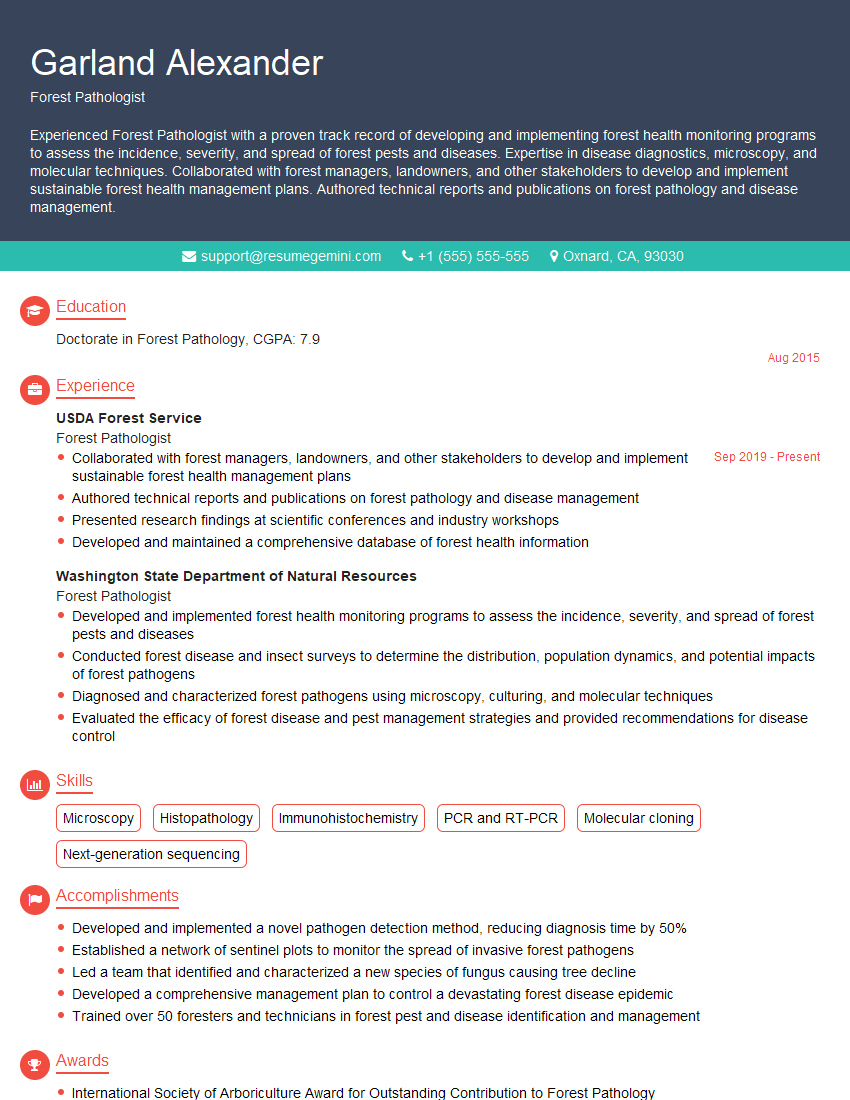
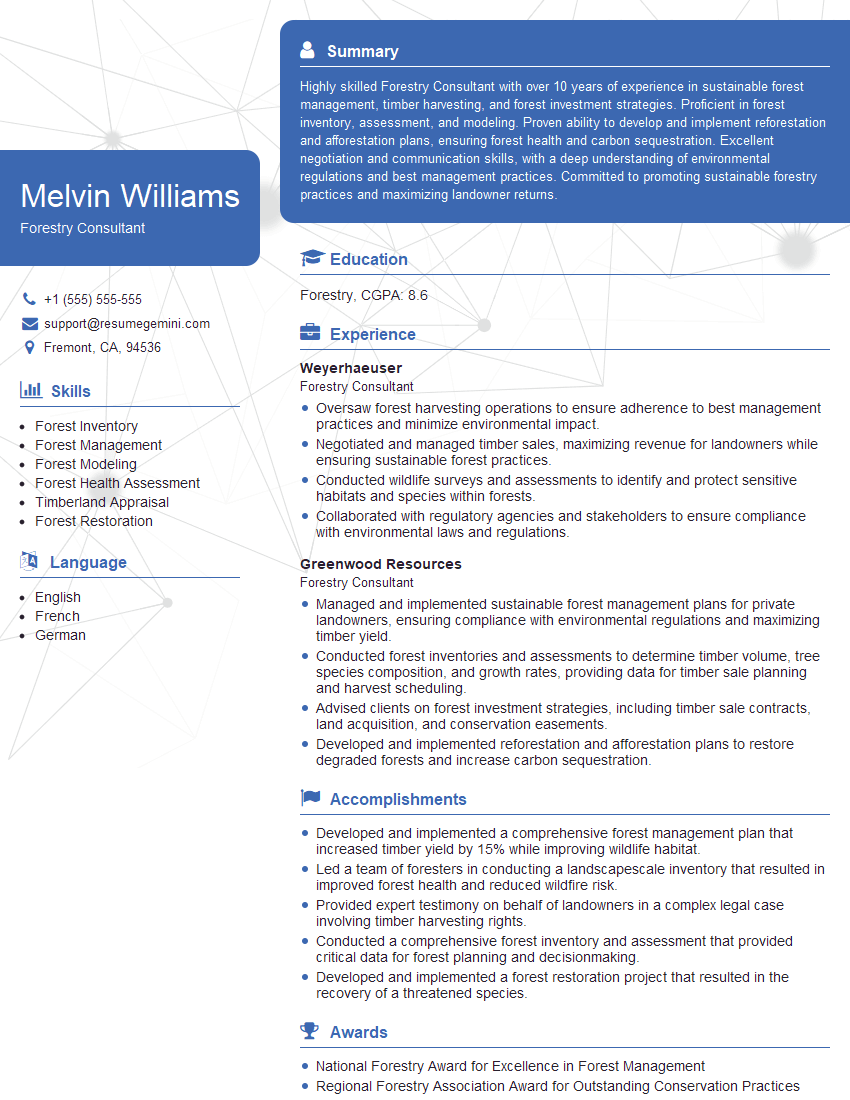
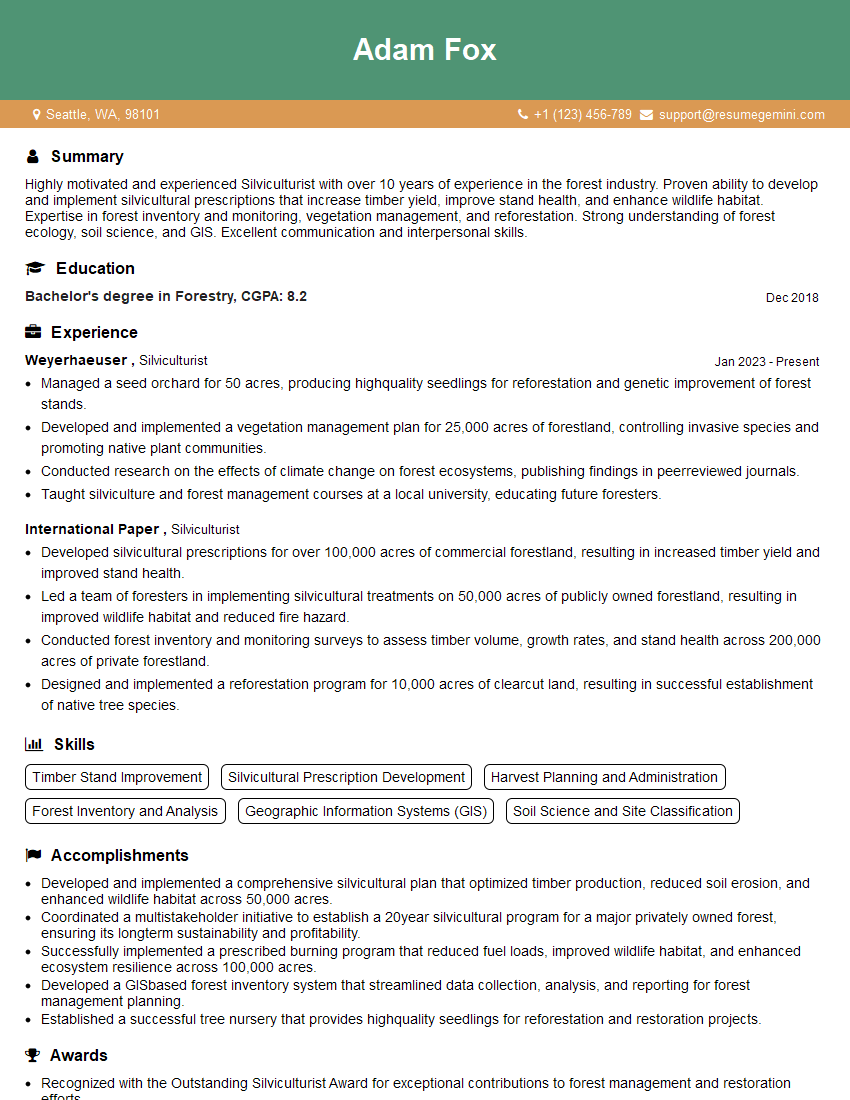
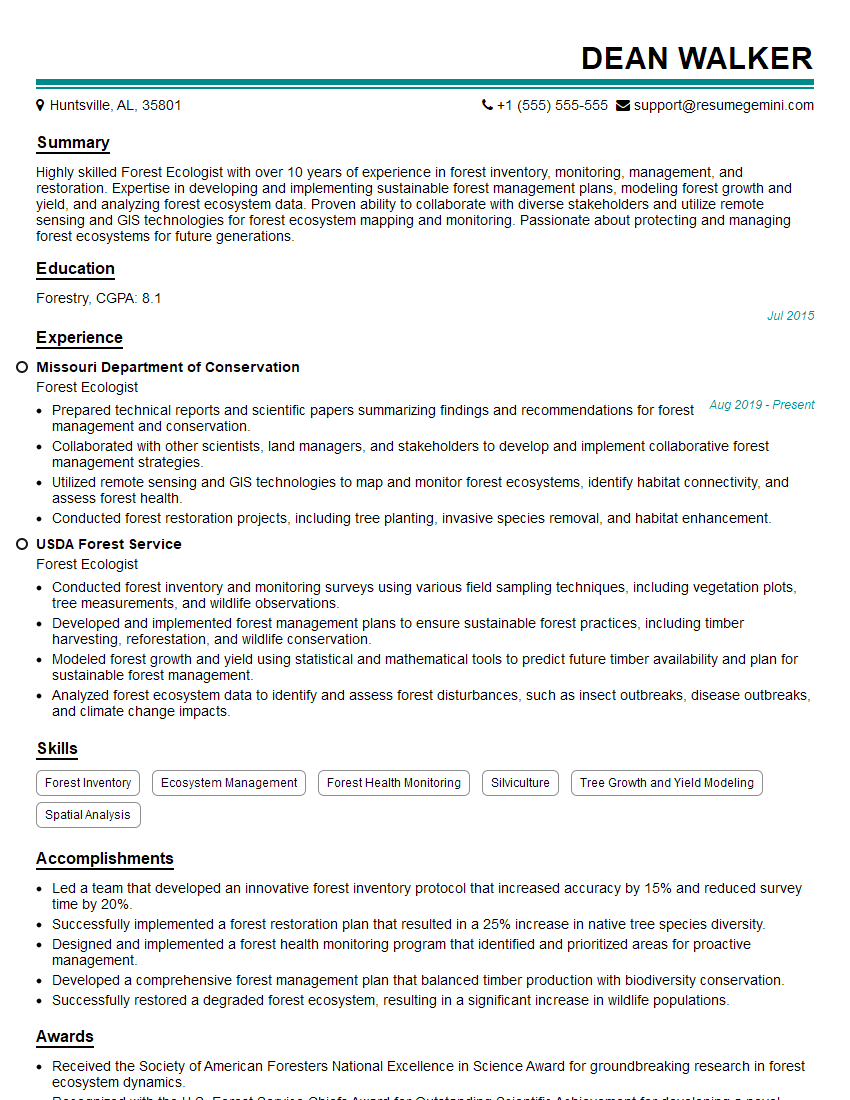
Mastering Forest Resources Management opens doors to a rewarding career with diverse opportunities in conservation, industry, and research. A strong foundation in these key areas significantly enhances your job prospects. To maximize your chances, creating an ATS-friendly resume is crucial. ResumeGemini is a trusted resource that can help you build a professional and impactful resume. Take advantage of their tools and explore examples of resumes tailored specifically to Forest Resources Management positions to showcase your skills and experience effectively.

Explore more articles
Users Rating of Our Blogs
Share Your Experience
We value your feedback! Please rate our content and share your thoughts (optional).
What Readers Say About Our Blog
Very informative content, great job.
good