Feeling uncertain about what to expect in your upcoming interview? We’ve got you covered! This blog highlights the most important Forklift Safety and Operation interview questions and provides actionable advice to help you stand out as the ideal candidate. Let’s pave the way for your success.
Questions Asked in Forklift Safety and Operation Interview
Q 1. What are the different types of forklifts and their applications?
Forklifts come in various types, each designed for specific tasks. The choice depends on the load capacity, type of material handled, and the environment. Here are a few examples:
- Counterbalance Forklifts: These are the most common type, using counterweights to balance the load. They are versatile and suitable for a wide range of applications in warehouses, loading docks, and construction sites.
- Reach Trucks: Reach trucks are ideal for narrow aisles, as their forks extend forward to access pallets. They’re frequently found in high-density storage facilities.
- Order Pickers: These are designed for picking orders from high shelves and are often used in warehouses where multiple items need to be collected.
- Sit-Down Rider Forklifts: These provide better stability and control than stand-up models, particularly for heavier loads and longer operating periods.
- Stand-Up Rider Forklifts: These are compact and maneuverable, making them suitable for smaller spaces and lighter loads. They are often preferred for short-distance tasks.
- Side Loaders: Side loaders are used for moving long loads, such as pipes or lumber. The forks move sideways, allowing for efficient handling in constrained areas.
For example, a construction site might use a heavy-duty counterbalance forklift to move building materials, while a grocery warehouse might employ reach trucks and order pickers for efficient stock management and order fulfillment.
Q 2. Explain the pre-operational inspection checklist for a forklift.
A thorough pre-operational inspection is crucial for forklift safety. Think of it as a critical health check for your machine before each shift. Here’s a typical checklist:
- Tires: Check tire pressure and condition for wear and tear. Under-inflated tires can cause instability.
- Brakes: Test the brakes thoroughly to ensure they respond effectively and smoothly.
- Steering: Verify the steering mechanism operates correctly without any binding or unusual play.
- Lights and Horn: Confirm all lights (headlights, brake lights, and indicators) and the horn are functioning.
- Fluid Levels: Inspect engine oil, hydraulic fluid, and coolant levels. Low levels can lead to mechanical failure.
- Fork Condition: Examine forks for damage, cracks, or bending. Bent forks can lead to load instability and accidents.
- Mast and Chains: Check the mast for any damage or wear. Inspect the chains for proper tension and lubrication.
- Safety Features: Ensure seatbelts are in good condition, and all safety devices, such as emergency stops and warning lights, are operational.
- Leaks: Inspect for any fluid leaks, which could indicate a problem requiring immediate attention.
Imagine a scenario where a driver skips the brake check; the consequences could be catastrophic. Regularly performing this checklist minimizes such risks.
Q 3. Describe the proper procedures for loading and unloading cargo.
Safe loading and unloading procedures are paramount for preventing accidents and damage. Remember, the load must be stable and secured at all times.
- Approach Carefully: Position the forklift facing the load squarely, maintaining a safe distance.
- Engage Forks Properly: Insert forks fully under the load’s center of gravity, ensuring the load is evenly balanced.
- Lift Slowly and Smoothly: Elevate the load gradually, checking for any imbalance or shifting.
- Secure the Load: Use appropriate straps, chains, or other securing devices to prevent shifting during transport.
- Transport Carefully: Drive slowly and smoothly, avoiding sudden movements or sharp turns.
- Unload Safely: Slowly lower the load to the designated area, ensuring a stable surface before removing the forks.
- Check Load Stability: Verify the load remains stable after placement; if not, reposition as needed.
For instance, think about loading a pallet of bricks. If the pallet is not properly centered on the forks, the load might shift, leading to an accident. Always prioritize proper load distribution.
Q 4. How do you ensure the stability of a load while operating a forklift?
Load stability is crucial for forklift safety. A tilting or falling load can cause serious accidents. Here’s how to ensure stability:
- Center of Gravity: Always ensure the load’s center of gravity is properly positioned and balanced on the forks. Uneven distribution can lead to tipping.
- Load Weight: Never exceed the forklift’s rated capacity. Overloading is a major cause of accidents.
- Fork Placement: Position the forks as close as possible to the load’s center of gravity for maximum stability.
- Travel Speed: Reduce speed when carrying heavy loads or traveling over uneven terrain.
- Avoid Sudden Movements: Avoid sharp turns, quick stops, and jerky movements that can disrupt the balance.
- Proper Securing: Secure loads using appropriate straps, chains, or other devices, especially when handling unstable or tall loads.
Imagine trying to carry a stack of books balanced precariously on your arm – it’s risky! Similarly, a forklift operator must maintain a balanced and secure load to prevent accidents.
Q 5. What are the common causes of forklift accidents and how can they be prevented?
Forklift accidents often stem from preventable causes. Understanding these is key to improving safety:
- Operator Error: Improper training, speeding, reckless driving, and failing to follow safety procedures are frequent causes. This is often addressed by comprehensive training and regular refresher courses.
- Mechanical Failure: Faulty brakes, steering issues, and hydraulic leaks are mechanical problems that need regular maintenance and inspection. A preventative maintenance schedule is crucial.
- Poor Workplace Conditions: Obstructed aisles, inadequate lighting, and uneven floors create hazardous conditions for operation. Improving workplace organization and infrastructure is key.
- Overloading: Exceeding the forklift’s weight capacity leads to instability and tipping. Clearly marked weight limits and enforcement are vital.
- Unsafe Loads: Improperly secured or unstable loads can shift and cause accidents. Proper load securing techniques and training are essential.
For example, improper training could lead to an operator hitting a rack, while a faulty brake system could cause a collision. Addressing these root causes proactively minimizes accidents.
Q 6. What are the safety regulations and procedures related to operating forklifts in a warehouse?
Warehouse forklift operation requires adherence to strict safety regulations and procedures. These vary by location and company but generally include:
- Operator Training and Certification: Operators must receive thorough training and certification to demonstrate competency.
- Pre-Operational Inspection: A daily checklist must be followed before each use to identify potential hazards.
- Speed Limits and Designated Routes: Designated walkways for pedestrians and speed limits for forklifts must be strictly followed.
- Load Capacity Limits: Forklifts must not be overloaded; weight limits should be clearly displayed and respected.
- Personal Protective Equipment (PPE): Operators must wear appropriate PPE, including safety shoes, high-visibility vests, and seatbelts.
- Pedestrian Safety: Procedures to ensure pedestrian safety, such as designated walkways and audible warnings, are necessary.
- Emergency Procedures: Clear emergency procedures and communication protocols must be established and practiced.
- Regular Maintenance: Routine maintenance of forklifts is vital to prevent mechanical failures.
Imagine a scenario where pedestrian walkways aren’t clearly marked; this could easily lead to a collision. Careful planning and adherence to regulations prevent such scenarios.
Q 7. Explain the different types of forklift attachments and their uses.
Various attachments enhance the versatility of forklifts, expanding their applications. Here are some examples:
- Side Shifters: Allow side-to-side movement of the forks, facilitating precise pallet placement in tight spaces.
- Clamp Attachments: Designed for handling materials like paper rolls, lumber, or other long items.
- Rotating Forks: Rotate the forks 90 degrees, allowing for easy handling of various material types and orientations.
- Push-Pull Attachments: Used to push or pull loads, particularly beneficial in situations where direct forklift access is challenging.
- Carriage Spreader Attachments: Provide the ability to handle long, wide loads that may not be easily managed with standard forks.
- Fork Positioners: Allow for precise positioning and adjustment of the forks, making it easier to handle various sized pallets and loads.
For example, a paper mill might use a clamp attachment to handle rolls of paper, while a lumberyard may use carriage spreader attachments to manage long lumber beams. These attachments significantly increase efficiency and handling capabilities.
Q 8. How do you handle emergency situations while operating a forklift?
Emergency situations on a forklift demand immediate, controlled responses. Your first priority is always safety – yours and others’.
- Sudden Stops: If you experience a sudden mechanical failure, smoothly apply the brakes, avoiding any sudden or jerky movements that could cause a load shift or tip-over. Signal your intentions clearly.
- Load Shift: If your load begins to shift, slowly reduce speed and carefully bring the forklift to a complete stop on level ground. Do not attempt to correct the shift while moving. Assess the situation and decide whether to secure the load, call for assistance, or re-plan your maneuver.
- Fire: If a fire starts, immediately exit the forklift, activate the nearest fire extinguisher, and call emergency services. Never attempt to extinguish a significant fire yourself.
- Collision Imminent: If a collision seems unavoidable, try to steer the forklift to minimize damage and injury. Steer to hit a less obstructive area, like a solid wall over a rack, if you have that option. Remember, protecting human life is paramount.
- Medical Emergency: If you or a bystander experiences a medical emergency, call for medical help immediately. Provide any necessary first aid according to your training.
Regular training, including emergency procedures, and a calm, decisive approach are key to handling these situations effectively. Imagine practicing these scenarios mentally – it improves your reaction time during a real event.
Q 9. Describe the proper techniques for navigating tight spaces with a forklift.
Navigating tight spaces requires precision, slow speeds, and a thorough understanding of your forklift’s dimensions and turning radius.
- Small Turns: Use smaller turning movements instead of wide sweeping ones. Break the maneuver into smaller segments. This maximizes your control and minimizes the risk of hitting obstacles.
- Counterbalance Awareness: Remember that the counterbalance extends beyond the forklift’s visible frame. Always account for it when estimating clearance.
- Spotter: In very tight spaces, a spotter can provide invaluable assistance by guiding you verbally. Their view of blind spots can prevent accidents.
- Load Visibility: Ensure you can clearly see the load and its surroundings. Avoid obstacles that might interfere with the load’s stability.
- Back up Carefully: Backing up is more challenging than going forward, so proceed very slowly, and utilize mirrors and spotters for optimal visibility.
Think of it like driving a large vehicle in a crowded city. Patience, anticipation, and a slower-than-normal speed are essential. Practice makes perfect – repeated maneuvers in a safe training area will build your confidence and skill.
Q 10. What are the load capacity limitations of different forklift types?
Load capacity varies significantly depending on the type of forklift. It’s crucial to always check the forklift’s data plate, which displays the maximum safe load capacity for that specific machine. Exceeding this limit can lead to catastrophic accidents.
- Counterbalance Forklifts: These are the most common type. Their capacity ranges from a few thousand pounds to over 30,000 pounds, depending on the model and configuration.
- Reach Trucks: Designed for high-stacking applications, they usually have a lower load capacity compared to counterbalance forklifts at their maximum reach, but a higher capacity when the forks are closer to the mast.
- Sit-Down Rider Forklifts: These have varying capacities based on their size and design, generally similar to counterbalance forklifts.
- Stand-Up Forklifts: These typically have lower load capacities than sit-down models due to their smaller size and structure.
Never estimate the load capacity. Always refer to the data plate and follow the manufacturer’s guidelines. Overloading a forklift puts immense stress on its structure, increasing the risk of mechanical failures and potentially fatal accidents.
Q 11. How do you perform a pre-shift inspection of a forklift?
A pre-shift inspection is critical for ensuring the forklift is safe to operate. Think of it as a health check for your machine. It prevents accidents and ensures you’re not operating faulty equipment.
- Tires: Check tire pressure and look for any damage like cuts or wear.
- Brakes: Test the brakes for responsiveness and ensure they engage effectively.
- Lights and Horns: Verify that all lights (headlights, taillights, brake lights) and the horn are functioning correctly.
- Fluid Levels: Check the levels of hydraulic fluid, engine oil, coolant, and battery charge (if applicable).
- Steering: Check for smooth and responsive steering.
- Mast and Forks: Inspect for any damage, leaks, or misalignment in the mast and forks. Ensure they move smoothly.
- Safety Features: Ensure the seatbelt works correctly, and any other safety features (like the horn, lights, and backup alarm) are operational.
Documenting your inspection is a best practice; many companies require this. A simple checklist can help you remember all the points to inspect. This simple routine can save you from a potentially dangerous situation.
Q 12. What are the signs of forklift malfunction and what actions should be taken?
Recognizing signs of forklift malfunction is crucial for preventing accidents. A well-maintained forklift is a safer forklift.
- Unusual Noises: Grinding, squealing, or unusual clicking sounds can indicate problems with the engine, transmission, or other mechanical components.
- Leaks: Fluid leaks (hydraulic fluid, engine oil, coolant) should be immediately addressed as they often indicate significant issues.
- Steering Difficulty: If steering becomes difficult or unresponsive, it could be a problem with the steering system, tires, or hydraulics.
- Brake Problems: Sluggish, spongy, or ineffective brakes require immediate attention. They are a major safety hazard.
- Malfunctioning Lights or Horn: Non-functioning safety components severely reduce your visibility and ability to warn others.
- Load Instability: If the load shifts unexpectedly during operation, stop immediately and determine the cause.
If you notice any of these signs, immediately report the problem to your supervisor and stop operating the forklift. Do not attempt to repair it yourself unless you have the proper training and qualifications. Remember, ignoring these problems can have serious repercussions.
Q 13. How do you maintain a safe distance from pedestrians and other equipment?
Maintaining a safe distance from pedestrians and other equipment is paramount for preventing accidents. It’s about creating a safe working environment. Think of it as creating a ‘buffer zone’.
- Pedestrian Traffic: Always sound your horn when approaching intersections or areas with pedestrian traffic, and slow down significantly or stop completely when necessary. Maintain ample clearance around pedestrians.
- Other Equipment: Keep a substantial distance from other equipment, especially when operating in narrow aisles. Be particularly careful when other vehicles are moving in close proximity.
- Blind Spots: Be aware of your forklift’s blind spots and rely on mirrors and spotters when navigating tight or complex areas.
- Speed Control: Always operate at a safe speed, especially in high-traffic areas, to allow yourself sufficient time to react to unforeseen circumstances.
- Communication: Effective communication with pedestrians and other equipment operators is crucial. Use hand signals or verbal communication whenever necessary.
Always prioritize safety. Err on the side of caution when maintaining distances. A few extra seconds of caution are far better than a serious accident.
Q 14. Explain the importance of using seatbelts while operating a forklift.
Wearing a seatbelt while operating a forklift is non-negotiable for safety. It’s your primary protection in case of a rollover or sudden stop. It’s crucial for preventing injuries and fatalities.
A sudden stop or a rollover can eject you from the forklift, leading to serious injury or death. The seatbelt keeps you securely in place, mitigating the risk of such injuries. Many jurisdictions also mandate seatbelt use. Think of it as your car seatbelt—essential for safety.
Always ensure your seatbelt is properly fastened before starting the forklift. Never operate the forklift without it. This is a simple yet highly effective safety measure that significantly reduces the risk of serious injury or death.
Q 15. Describe the procedures for refueling a forklift.
Refueling a forklift is a critical safety procedure that requires strict adherence to protocols to prevent fires and explosions. Always ensure the forklift is turned off and the ignition key is removed. Never refuel a forklift indoors or near open flames. Use only the correct type of fuel specified in the operator’s manual. Before refueling, clean any spilled fuel immediately to eliminate fire hazards. Carefully insert the nozzle into the fuel tank, avoiding spills, and refuel slowly to prevent pressure build-up. After refueling, securely replace the fuel cap and check for any leaks. Inspect the area for any spilled fuel and clean it up thoroughly before restarting the forklift. Think of it like refueling your car – but with even more caution, as forklifts work with heavier machinery and are more susceptible to fuel-related incidents.
Example: Imagine you’re refueling a propane forklift. You’d first ensure the propane tank is shut off and then carefully connect the hose, avoiding any sparks. After refueling, you’d check for leaks using soapy water before turning the tank back on.
Career Expert Tips:
- Ace those interviews! Prepare effectively by reviewing the Top 50 Most Common Interview Questions on ResumeGemini.
- Navigate your job search with confidence! Explore a wide range of Career Tips on ResumeGemini. Learn about common challenges and recommendations to overcome them.
- Craft the perfect resume! Master the Art of Resume Writing with ResumeGemini’s guide. Showcase your unique qualifications and achievements effectively.
- Don’t miss out on holiday savings! Build your dream resume with ResumeGemini’s ATS optimized templates.
Q 16. What are the regulations for operating a forklift on ramps or inclines?
Operating a forklift on ramps or inclines demands extra caution due to increased risk of tipping. Regulations generally stipulate a maximum incline angle, often around 10%, though this can vary based on the specific forklift model and load. Before traversing an incline, always ensure the load is properly secured and centered to maintain stability. Travel slowly and cautiously, avoiding sudden movements or sharp turns. Maintain a controlled speed and avoid sudden braking, which can cause the forklift to lose traction. Always proceed up inclines facing uphill and down inclines facing downhill. Never exceed the recommended incline angle stated in the operator’s manual. If the load shifts or you feel instability, stop immediately and reassess the situation. It’s essential to remember that the steeper the incline, the greater the risk – even small inclines require more attention.
Example: If you’re moving pallets uphill on a 5% incline, you’d proceed slowly and smoothly, ensuring your load is stable and well within the forklift’s capacity.
Q 17. How do you properly secure a load to prevent it from shifting or falling?
Securing a load is paramount for safety. Methods include using straps, chains, or nets appropriately rated for the load’s weight and size. The load should be evenly distributed, and the securing devices need to be properly tightened. Straps should be crisscrossed to prevent shifting, and chains should be secured using appropriate shackles or binders. Always ensure the load does not overhang the forks, and consider the center of gravity of both the load and the forklift to avoid tipping. Oversized or unusually shaped loads may require additional precautions, perhaps including using multiple securing points or additional equipment.
Example: Imagine transporting a stack of heavy boxes. You would use appropriate straps to secure the boxes, ensuring they’re firmly held down and not at risk of sliding or falling. You would use a cross-pattern for increased safety.
Q 18. What are the different types of forklift tires and their advantages?
Forklift tires come in various types, each with its own advantages and disadvantages.
- Cushion Tires: Made of solid rubber, they are best suited for indoor use on smooth surfaces. They offer good traction and are relatively inexpensive. However, they are not suitable for rough terrain.
- Pneumatic Tires: Filled with air, these tires are excellent for outdoor use and rough terrain. They provide a smoother ride and better shock absorption, reducing stress on the operator and the forklift. However, they are more prone to punctures and require regular maintenance.
- Solid Resilient Tires: A blend between cushion and pneumatic, these offer a degree of cushioning with reduced maintenance requirements compared to pneumatic tires. Their durability and resilience make them good for moderate terrain.
Example: A warehouse forklift might use cushion tires for smooth surfaces, while a forklift operating outdoors on a construction site would likely use pneumatic tires for better traction and shock absorption.
Q 19. Explain the concept of center of gravity and its impact on forklift operation.
The center of gravity (CG) is the point where the weight of an object is evenly distributed. In forklift operation, understanding the CG is crucial for preventing tip-overs. The higher the CG, the greater the risk of instability. If the load is improperly centered or too high, the forklift’s CG can shift outside its stable base, leading to a tip-over. To avoid this, keep loads as low as possible and always center them on the forks. Unevenly distributed loads also increase the risk; avoid stacking loads that are too tall or too wide for the forklift’s stability.
Example: Imagine carrying a load of bricks stacked high. If the bricks are unevenly stacked, the CG moves outward, increasing the risk of tipping over. Keeping the load low and centered maintains stability.
Q 20. What are the procedures for operating a forklift in different weather conditions?
Operating a forklift in different weather conditions necessitates adjusting operational procedures for safety.
- Rain: Reduce speed, increase following distance, and be mindful of reduced traction. Ensure visibility is adequate, using lights if needed.
- Snow/Ice: Operate only if absolutely necessary, and proceed with extreme caution. Use appropriate chains or tire traction aids if conditions permit. Consider whether the operation is actually safe.
- Extreme Heat: Take regular breaks to avoid heatstroke. Ensure adequate hydration. Regularly inspect the forklift’s hydraulic system for leaks.
- Strong Winds: Reduce speed and be aware that strong winds can impact stability. Avoid operating in extremely windy conditions if possible.
Example: If you’re operating a forklift in heavy rain, you’d drive much slower, increase the following distance, and keep extra care for visibility and traction.
Q 21. How do you identify and report hazardous conditions in the work area?
Identifying and reporting hazardous conditions is a crucial aspect of forklift safety. Regularly inspect your work area for potential hazards, including: spills, obstructions, uneven surfaces, poor lighting, damaged equipment, or unsafe practices by others. Report any issues immediately to your supervisor, using appropriate channels, whether it’s verbal notification, a written report, or using a dedicated safety reporting system. Ensure all hazards are clearly identified and that corrective actions are taken to prevent incidents. Remember, proactive hazard identification and reporting saves lives and prevents accidents.
Example: If you notice a pallet obstruction in an aisle, you would immediately report it to your supervisor to avoid potential accidents. If a spill is present you would take appropriate steps to mitigate the risk while reporting to ensure the appropriate cleanup occurs.
Q 22. Describe your experience with different types of forklift control systems.
My experience encompasses a wide range of forklift control systems, from the traditional lever-operated hydraulic systems to the more modern electronic controls with advanced features like load sensors and stability assist. I’ve worked with both sit-down rider and stand-up counterbalance forklifts, as well as reach trucks and order pickers. Each system presents unique operational characteristics.
- Lever-operated hydraulic systems: These require a good understanding of hydraulic pressure and lever manipulation for precise control. I’ve honed my skills in smoothly lifting, lowering, and tilting loads using these systems, particularly important when handling fragile goods or in tight spaces. For example, I’ve successfully maneuvered large pallets of glass in a limited-aisle warehouse using a sit-down counterbalance forklift with this type of control.
- Electronic control systems: Modern electronic systems offer features like proportional controls and programmable settings. I’m proficient in using these systems, adjusting parameters like lift speed and tilt angle to optimize efficiency and safety, depending on the load and environment. For instance, using a reach truck with electronic controls, I optimized the lift speed for a high-stacked warehouse setting, significantly improving productivity without compromising safety.
My adaptability extends to quickly learning new systems; I approach each type with a methodical training process, ensuring complete comprehension before operating. Safety remains my top priority regardless of the control system.
Q 23. What are your experience with forklift maintenance and repairs?
Forklift maintenance and repair are crucial for safety and efficiency. My experience includes both preventative maintenance and troubleshooting minor repairs. I’m familiar with pre-operational checks, including fluid levels, tire pressure, and mast alignment. I can perform basic maintenance tasks like changing filters and lubricating moving parts.
For example, I routinely inspect the forklift’s battery for corrosion, ensuring its proper connection, as well as checking hydraulic fluid levels and noting any leaks. If I identify a potential problem, I immediately report it to the maintenance team, rather than attempt a repair beyond my skillset.
I understand the importance of keeping detailed maintenance logs, a critical element in preventive maintenance programs and complying with safety regulations. My experience also includes working alongside mechanics to understand more complex repairs, enhancing my understanding of the forklift’s mechanical systems.
Q 24. How do you handle conflicts or disagreements with coworkers?
Conflicts are inevitable in any workplace, but I believe in addressing them professionally and respectfully. My approach prioritizes open communication and finding mutually agreeable solutions.
If a disagreement arises, I begin by actively listening to my coworker’s perspective, ensuring I fully understand their point of view before articulating my own. I focus on identifying the root cause of the conflict, rather than placing blame. For example, if there’s a scheduling conflict, I’d suggest working together to find an alternative schedule that benefits both of us. If the conflict persists despite our attempts to resolve it internally, I would escalate it to my supervisor for mediation.
My goal is always to maintain a positive and collaborative work environment. I believe that respecting others’ opinions and finding common ground is key to effective teamwork.
Q 25. Explain your understanding of OSHA regulations related to forklift safety.
My understanding of OSHA regulations regarding forklift safety is comprehensive. I’m familiar with the requirements for operator training and certification, pre-operational inspections, load capacity limits, and safe operating procedures. I know that OSHA mandates that operators must be trained and certified to operate forklifts and that employers are responsible for providing this training. This includes classroom instruction and hands-on practice.
I am well-versed in OSHA’s regulations concerning workplace safety in regards to forklift operations, including the need for proper signage, designated walkways, and the importance of maintaining a safe distance from pedestrian traffic. I understand the guidelines relating to load stability, load securing, and the need to maintain a clear view of the operational area. I’m also aware of the reporting procedures for accidents or near misses.
I understand the potential hazards associated with forklift operation and actively implement preventative measures to mitigate risks. I regularly review and refresh my knowledge of these regulations to ensure I’m always up-to-date on best practices.
Q 26. Describe your experience working in a fast-paced warehouse environment.
I thrive in fast-paced warehouse environments. My experience includes working in high-volume distribution centers where speed and accuracy are paramount. I’ve successfully managed demanding schedules, prioritizing tasks effectively, and consistently meeting deadlines without compromising safety.
For example, during peak season, I expertly navigated a busy warehouse floor, efficiently moving pallets and ensuring timely order fulfillment. My ability to remain calm and focused under pressure, combined with my strong organizational skills, has proven essential in these settings. I am comfortable adapting to rapidly changing priorities and effectively collaborating with other team members to ensure smooth operations.
I understand that efficiency in a fast-paced environment requires a blend of speed, precision, and meticulous attention to detail. This balance allows me to remain highly productive while upholding the highest safety standards.
Q 27. How do you prioritize safety and efficiency while operating a forklift?
Prioritizing both safety and efficiency while operating a forklift is a delicate balancing act, but it’s absolutely critical. Safety is always my primary concern; it’s non-negotiable. Efficiency follows, but only if it doesn’t compromise safety.
This means performing thorough pre-operational checks every time, ensuring the forklift is in optimal condition and complying with all safety regulations. Then, I focus on efficient route planning. Understanding the layout of the warehouse and anticipating potential obstacles enables me to minimize travel time and optimize the flow of goods. For example, I plan my routes to avoid congestion in high-traffic areas and choose the most efficient path to the loading dock.
Efficient loading and unloading techniques are also key. I prioritize secure load placement, utilizing proper techniques to prevent accidents. Ultimately, my goal is to move goods quickly and efficiently while maintaining a flawless safety record. This is achieved through a mindset of constant vigilance and situational awareness.
Q 28. What are your salary expectations for this position?
My salary expectations are in line with the industry standard for experienced forklift operators with my skillset and years of experience in this role. I’m confident that my contributions to your company will far outweigh my salary. I am open to discussing a specific figure based on a comprehensive understanding of the benefits and compensation package offered.
Key Topics to Learn for Your Forklift Safety and Operation Interview
- Forklift Types and Classifications: Understanding the different types of forklifts (e.g., counterbalance, reach truck, order picker) and their appropriate applications is crucial. Be prepared to discuss their operational differences and limitations.
- Pre-Operational Inspection Checklist: Mastering the pre-shift inspection procedure is paramount for safety. Practice describing a thorough inspection, highlighting critical components and potential hazards to look for.
- Safe Operating Procedures: Demonstrate your knowledge of safe operating practices, including load stability, maneuvering in confined spaces, and following traffic rules within a warehouse environment. Be ready to discuss specific scenarios and your response.
- Load Capacity and Stability: Explain how to determine the safe load capacity of a forklift and the factors affecting load stability. Be prepared to address practical examples of load imbalance and its consequences.
- Workplace Hazards and Mitigation: Identify common workplace hazards associated with forklift operation (e.g., pedestrian traffic, uneven surfaces, overhead obstructions) and explain strategies for mitigating these risks. Discuss your proactive safety approach.
- Emergency Procedures: Clearly articulate the proper emergency procedures to follow in case of equipment malfunction, accidents, or other unforeseen circumstances. Practice describing your actions in different emergency scenarios.
- Regulations and Compliance: Showcase your understanding of relevant safety regulations and compliance requirements for forklift operation. This demonstrates your commitment to a safe work environment.
- Forklift Maintenance and Reporting: Explain the importance of regular forklift maintenance and the procedures for reporting malfunctions or needed repairs. Highlight your attention to detail and proactive maintenance approach.
Next Steps: Unlock Your Career Potential
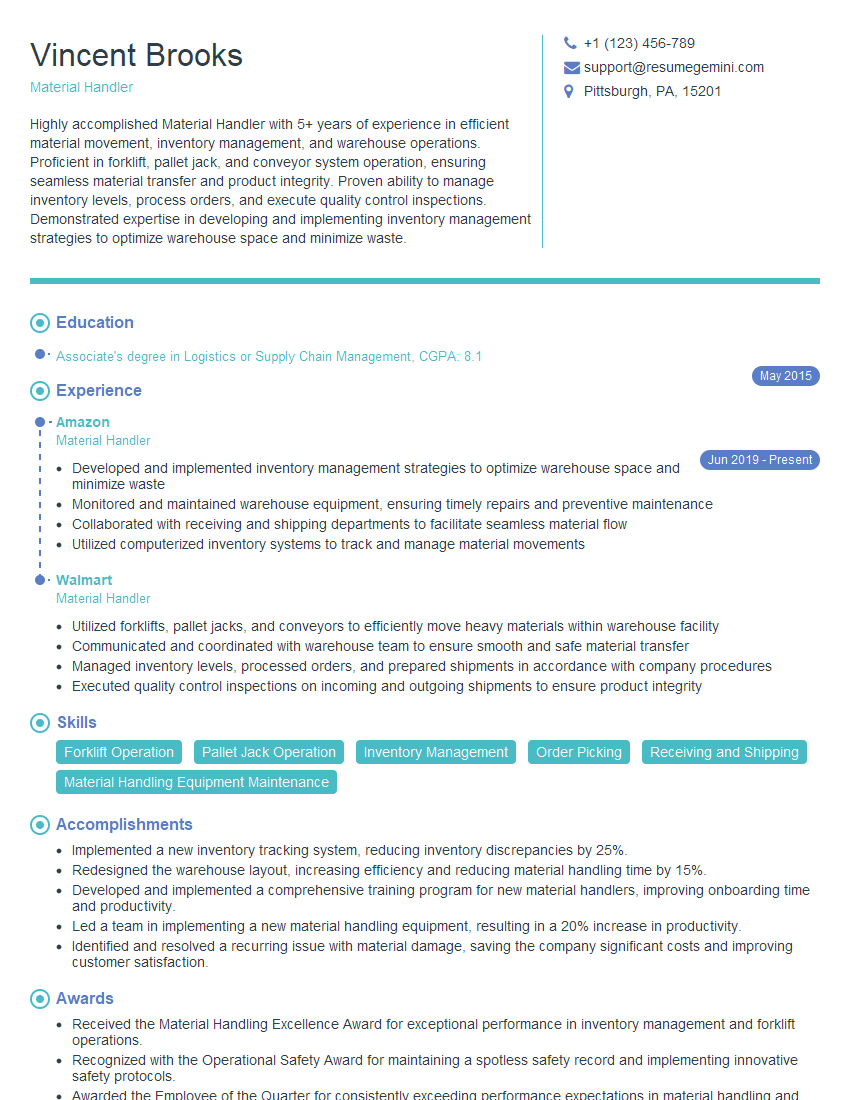
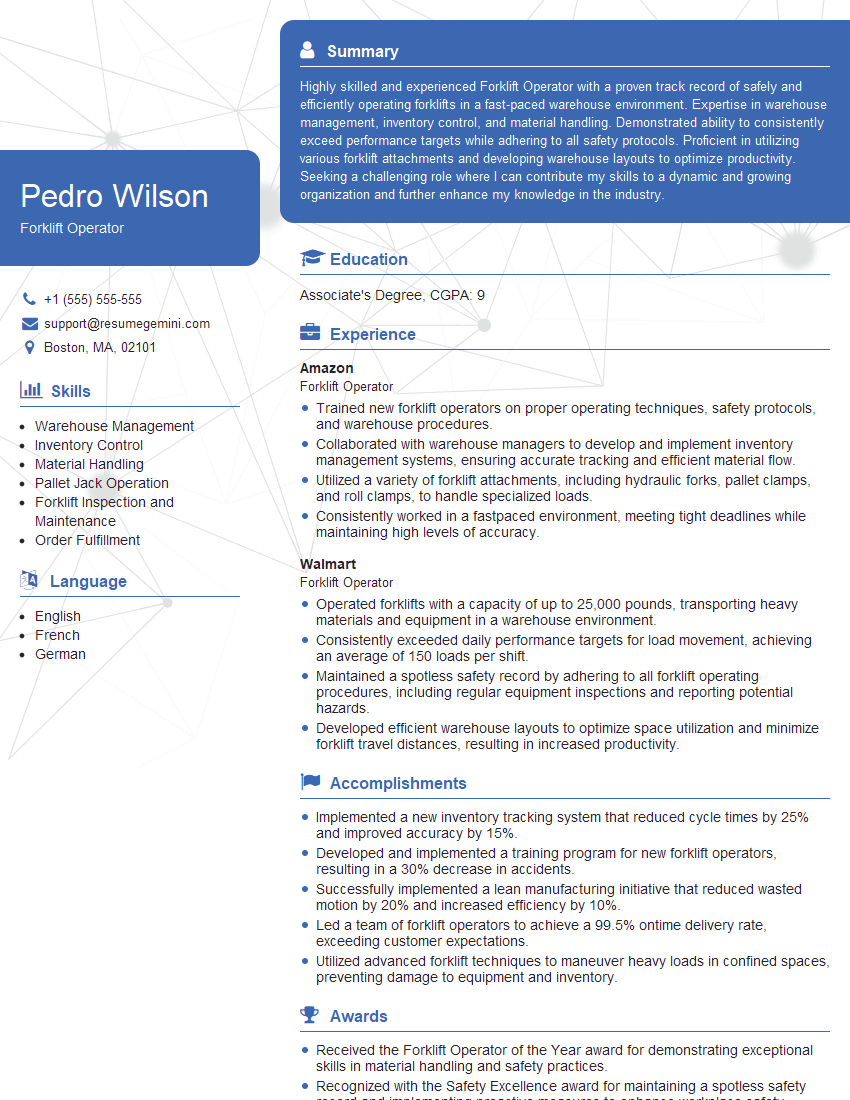
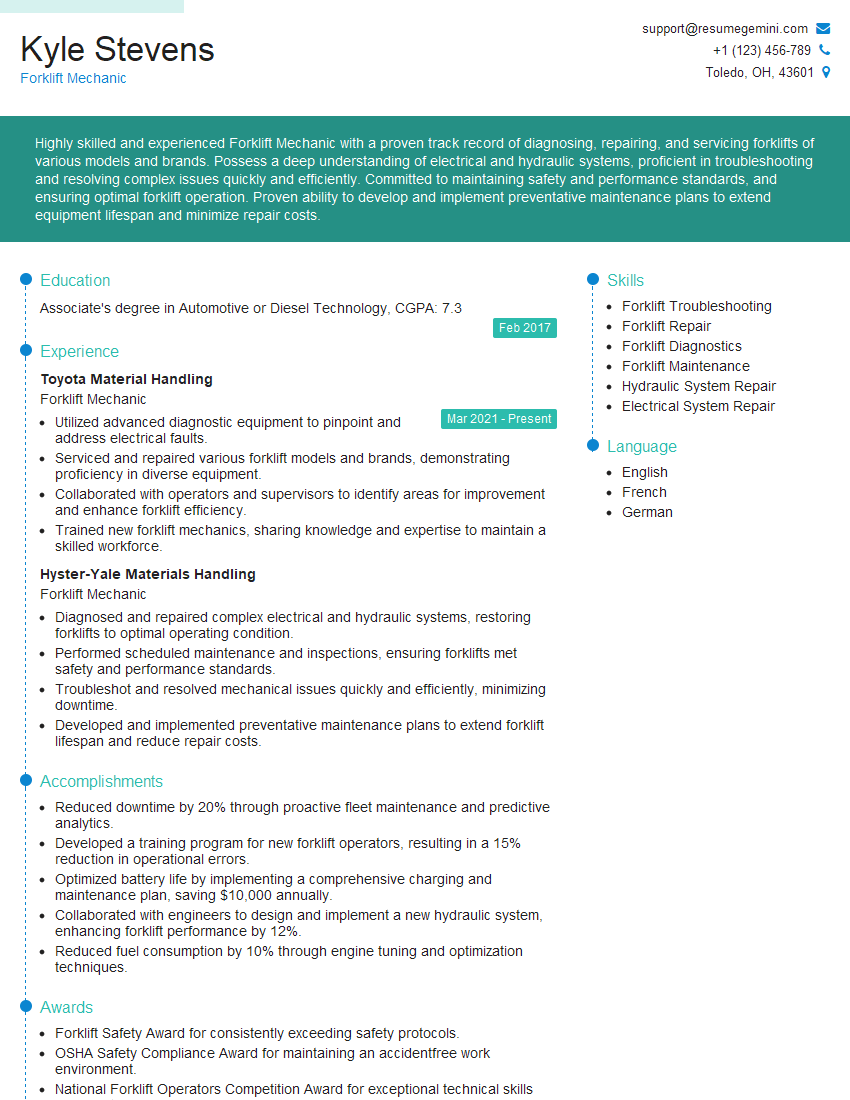
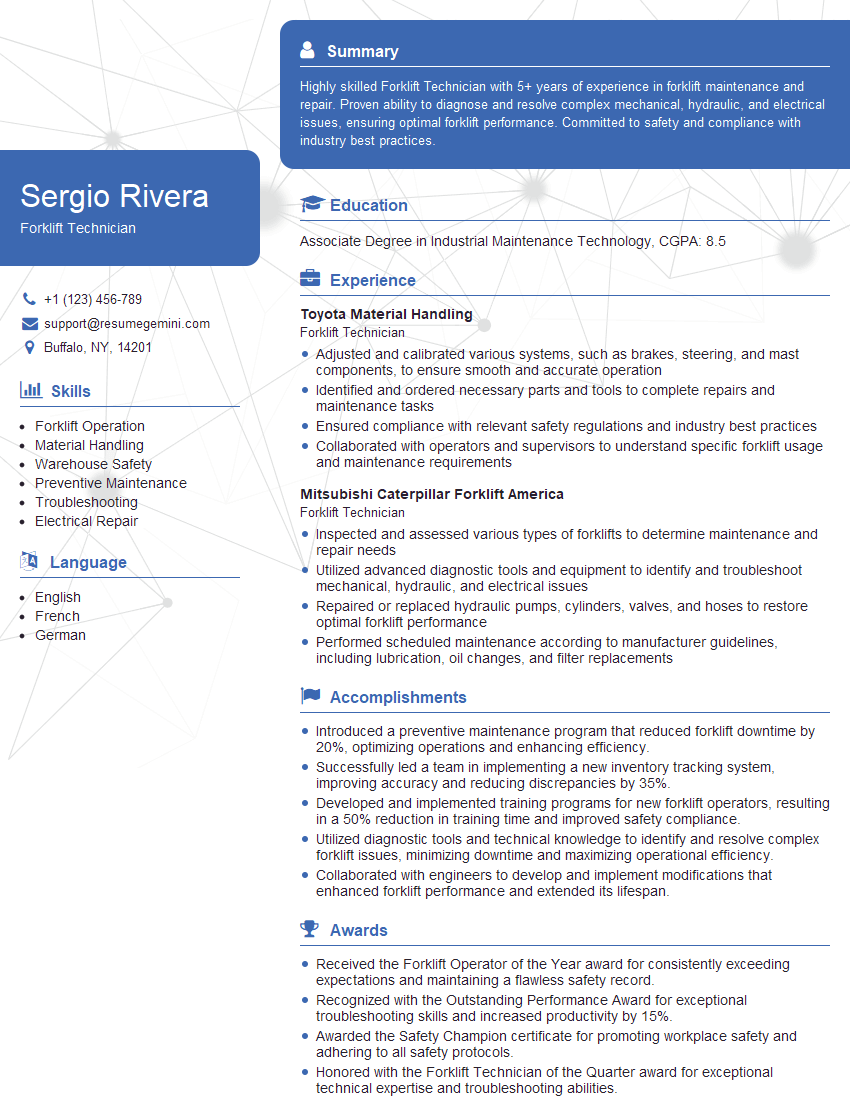
Mastering Forklift Safety and Operation opens doors to exciting career opportunities in logistics, warehousing, and manufacturing. To stand out from the competition, a strong, ATS-friendly resume is essential. ResumeGemini can help you create a professional resume that highlights your skills and experience effectively. ResumeGemini provides examples of resumes tailored to Forklift Safety and Operation, giving you a head start in crafting a compelling application that showcases your expertise and commitment to safety. Take the next step towards your dream job – build a winning resume with ResumeGemini today!
Explore more articles
Users Rating of Our Blogs
Share Your Experience
We value your feedback! Please rate our content and share your thoughts (optional).
What Readers Say About Our Blog
Very informative content, great job.
good