Preparation is the key to success in any interview. In this post, we’ll explore crucial Foundry Industry Best Practices interview questions and equip you with strategies to craft impactful answers. Whether you’re a beginner or a pro, these tips will elevate your preparation.
Questions Asked in Foundry Industry Best Practices Interview
Q 1. Explain the different types of casting processes and their applications.
Casting processes are broadly categorized based on the mold material and the method of metal pouring. Understanding these differences is crucial for selecting the right process for a specific application, considering factors like part complexity, required tolerances, and production volume.
- Sand Casting: This is the oldest and most versatile method. Molten metal is poured into a mold made of sand, typically a mixture of silica sand and bonding agents. It’s ideal for large, complex parts due to its flexibility and relatively low cost. Think of engine blocks or large housings – often made using sand casting.
- Investment Casting (Lost-Wax Casting): A pattern, typically made of wax, is created, coated in ceramic slurry, and then heated to melt out the wax. Molten metal is poured into the resulting cavity. Investment casting produces highly accurate castings with intricate details, suitable for things like turbine blades or jewelry.
- Die Casting: This high-speed process uses metal molds (dies) to create castings. Molten metal is injected under high pressure into the die. Die casting excels at producing high-volume, thin-walled components with excellent surface finish, like automotive parts or electronics housings.
- Permanent Mold Casting: Similar to die casting but uses reusable molds made of metal, typically steel or graphite. It offers a balance between the cost-effectiveness of sand casting and the precision of die casting. Suitable for medium-to-high volume production runs.
- Centrifugal Casting: Molten metal is poured into a spinning mold, forcing it outward against the mold walls. This is used to create cylindrical castings with uniform thickness and density, commonly used for pipes or tubes.
The choice of process depends on the specific application. For instance, if high precision and intricate details are needed, investment casting would be preferred. If high volume production of simpler parts is required, die casting is generally more suitable.
Q 2. Describe the role of gating and risering in casting design.
Gating and risering systems are critical for effectively filling the mold cavity and preventing defects. Think of them as the circulatory system of a casting process. They control the flow of molten metal into the mold, ensuring complete filling and minimizing turbulence and air entrapment.
The gating system guides molten metal from the pouring basin into the mold cavity. It typically includes a sprue (vertical channel), runners (horizontal channels), and ingates (small channels leading into the mold cavity). Proper design ensures a steady and controlled flow, preventing premature solidification or excessive turbulence.
The risering system compensates for shrinkage during solidification. Risers are reservoirs of molten metal connected to the casting. As the casting cools and shrinks, the metal in the riser feeds into the casting, preventing shrinkage porosity and ensuring complete filling of the mold. The riser design needs careful consideration to ensure sufficient metal supply without causing excessive cost or waste.
Imagine pouring water into a complex-shaped container. The gating system is like the spout and channels that direct the water smoothly. The riser is like an extra reservoir ensuring the entire container gets filled even as some water settles.
Q 3. What are the common defects found in castings and their causes?
Casting defects can significantly impact the quality and performance of the final product. Understanding their causes is crucial for implementing preventative measures.
- Shrinkage Porosity: Caused by volume contraction during solidification. This often presents as small voids or pores within the casting. Proper risering design and optimization of cooling rates help minimize this.
- Gas Porosity: Occurs when dissolved gases in the molten metal are released during solidification, forming pores. Careful degassing of the molten metal and proper mold venting are necessary to address this.
- Cold Shut: Occurs when two streams of molten metal fail to fuse properly, resulting in a weak seam. This can be due to insufficient fluidity or improper mold design.
- Misruns: Incomplete filling of the mold cavity, resulting in a short or incomplete casting. This is often due to insufficient molten metal or improper gating design.
- Mold Shift: Movement of the mold halves during pouring or solidification, resulting in a distorted casting. Proper mold clamping and careful handling are essential to avoid this.
- Surface Defects: These include scabs (surface irregularities), blisters (surface pockets), and inclusions (foreign material embedded in the surface). These often stem from mold problems, sand defects or improper metal preparation.
Identifying the root cause of a casting defect often involves a detailed analysis of the casting process, including metal chemistry, mold design, and pouring parameters.
Q 4. How do you control the chemical composition of molten metal?
Controlling the chemical composition of molten metal is paramount for achieving the desired mechanical properties in the final casting. This is usually accomplished through a combination of techniques:
- Careful Selection of Raw Materials: Using high-quality raw materials with known and consistent chemical compositions is fundamental. This minimizes variations and unexpected inclusions.
- Chemical Analysis: Regular chemical analysis of the molten metal using techniques like spectroscopy allows for precise measurement and adjustment of the chemical composition. This ensures consistency and meets specifications.
- Alloying Additions: Specific alloying elements are added to the molten metal to achieve the desired properties (e.g., increased strength, corrosion resistance, etc.). Precise addition is essential to avoid variations in composition.
- Fluxing: Fluxes are used to remove impurities and protect the molten metal from oxidation. Proper flux selection is critical for maintaining a clean and consistent melt.
- Degassing: Processes like vacuum degassing or inert gas purging remove dissolved gases in the molten metal, preventing gas porosity in the final casting.
Imagine baking a cake – you wouldn’t just throw ingredients together; you would carefully measure each component to achieve the desired texture and taste. Similarly, controlling the metal chemistry is critical to achieving the desired properties in a casting.
Q 5. Explain the importance of mold preparation in casting quality.
Mold preparation is a critical step that significantly influences the quality of the final casting. A well-prepared mold ensures accurate casting dimensions, good surface finish, and minimizes the occurrence of defects. It is like preparing a canvas for a masterpiece; without proper preparation, the final result will suffer.
- Careful Mold Making: Accurate pattern making and careful mold assembly are essential. Any imperfections in the pattern will be reflected in the casting.
- Proper Sand Preparation: Molding sand needs to be appropriately mixed and compacted to provide the required strength and permeability. The moisture content is crucial; too much can cause steam generation during pouring, and too little can lead to weak molds.
- Venting: Adequate venting of the mold is essential to allow the escape of gases during pouring, preventing gas porosity and defects. Vents are carefully planned and incorporated during mold making.
- Surface Treatment: Applying coatings (e.g., washes or parting agents) to the mold surface improves the surface finish of the casting and prevents sticking.
- Mold Drying: Proper drying of the mold helps to eliminate residual moisture which can create steam pockets during pouring.
Neglecting mold preparation can lead to a myriad of casting defects, rendering the entire process unproductive and costly.
Q 6. Describe different types of molding sands and their properties.
Molding sands are chosen based on their properties, which directly impact the casting quality. The sand’s characteristics must match the casting process and the metal being cast.
- Silica Sand: The most common type, characterized by its high refractoriness (resistance to high temperatures) and availability. However, it can be brittle and prone to breakage.
- Chromite Sand: Offers higher refractoriness and strength compared to silica sand, but is more expensive. It is used in high-temperature casting applications.
- Zircon Sand: Known for its high refractoriness and excellent thermal stability, making it ideal for precision casting and thin-walled castings.
- Olivine Sand: A good alternative to silica sand, offering improved thermal shock resistance and strength. It is particularly useful for applications where thermal stresses are significant.
Each sand type has specific properties like grain size, permeability, and bonding characteristics that need careful consideration when selecting the appropriate sand for a given casting application. For example, zircon sand would be preferred over silica sand for creating intricate castings with very fine details because it offers better dimensional accuracy.
Q 7. How do you ensure the dimensional accuracy of castings?
Ensuring dimensional accuracy of castings requires meticulous attention throughout the entire process, starting from pattern design to final inspection. This involves the interaction of several factors.
- Accurate Pattern Making: The pattern must precisely match the final casting dimensions, accounting for shrinkage during solidification. Machined patterns provide higher accuracy compared to hand-made ones.
- Precise Mold Making: Careful mold assembly and compaction are essential for maintaining the pattern’s dimensions during the pouring process. Minimizing variations during mold preparation is vital.
- Proper Gating and Risering Design: An optimally designed gating and risering system helps to ensure uniform filling of the mold and minimizes dimensional variations caused by uneven cooling.
- Controlled Cooling Rate: A controlled cooling rate minimizes shrinkage variations, contributing to dimensional stability. Proper mold design and potentially external cooling systems play a role here.
- Post-Casting Machining: In many cases, slight dimensional variations are corrected through machining operations, ensuring the final dimensions meet specifications. This is common in precision casting applications.
- Quality Control and Inspection: Dimensional inspection using tools like CMM (Coordinate Measuring Machine) or other metrology techniques is crucial to validate the casting’s dimensions and identify any deviations.
Dimensional accuracy is paramount, especially in applications where tight tolerances are required, such as aerospace or automotive industries. Implementing quality control processes helps ensure that produced castings meet specifications.
Q 8. What are the safety precautions in a foundry environment?
Foundry safety is paramount, involving a multifaceted approach to mitigate risks associated with molten metal, high temperatures, and hazardous materials. Think of it like building a fortress against potential dangers.
Personal Protective Equipment (PPE): This is the first line of defense. Mandatory PPE includes heat-resistant clothing, safety footwear, eye protection (goggles or face shields), hearing protection, and respiratory protection (depending on the task and potential airborne contaminants like silica dust). Imagine a firefighter’s gear – that level of protection is the goal.
Molten Metal Handling: Handling molten metal requires strict adherence to procedures. This includes using proper ladles and crucibles, maintaining safe distances, and understanding the behavior of the metal to prevent spills or splashes. Improper handling can lead to severe burns. We always train our staff extensively on safe pouring techniques and emergency response protocols.
Emergency Response: A comprehensive emergency response plan is crucial, including readily available fire suppression equipment (sand, CO2 extinguishers), emergency showers, and eye wash stations. Regular drills are vital to ensure everyone knows what to do in a crisis. We conduct these regularly, going beyond just theoretical exercises to practice real-life scenarios.
Housekeeping and Environmental Controls: A clean and organized work environment significantly reduces trip hazards and accidental exposure to hazardous materials. Proper ventilation is critical to remove harmful fumes and dust. We implement a strict 5S system in our foundry to maintain optimal workplace hygiene.
Lockout/Tagout Procedures: Equipment must be properly locked out and tagged out before any maintenance or repair work to prevent accidental start-ups. This is critical in minimizing the risk of injury. A clear system and documentation for this is crucial.
Q 9. Explain the importance of heat treatment in improving casting properties.
Heat treatment is a crucial post-casting process that significantly improves the mechanical properties of castings. Think of it as tempering steel – it makes it stronger and more durable. By carefully controlling the temperature and time, we can alter the microstructure of the casting, enhancing its strength, ductility, hardness, and wear resistance.
Stress Relief: High temperatures relieve internal stresses developed during solidification and cooling, minimizing distortion and cracking. This is especially critical for complex castings.
Hardening: Certain heat treatments, like quenching and tempering, increase the hardness and strength of the casting, improving its wear resistance. For example, a high-carbon steel casting would require this to increase its durability.
Annealing: This process softens the metal, making it easier to machine or further process. This is often done before machining operations to prevent tool damage and increase machining efficiency.
Solution Treatment and Aging: These processes are used for aluminum and other alloys to enhance their strength and corrosion resistance. They involve heating the metal to dissolve precipitates, followed by controlled cooling to precipitate strengthening phases.
The specific heat treatment process depends on the casting alloy, its intended application, and the desired properties.
Q 10. Describe the process of quality control in a foundry.
Quality control in a foundry is a continuous process, starting from raw material inspection and extending to the final product shipment. It’s like quality control in a bakery; you check every step to ensure a great end product. We employ a multi-stage approach:
Incoming Material Inspection: We verify the chemical composition and physical properties of the raw materials (alloys, fluxes, etc.) to ensure they meet specifications. This prevents defects originating from inferior raw materials.
Molding and Casting Inspection: Regular checks on mold preparation, pouring procedures, and casting solidification processes help to minimize defects like porosity, shrinkage, and cold shuts. We use techniques such as visual inspection, X-rays and ultrasonic testing.
Non-Destructive Testing (NDT): Techniques like radiography, ultrasonic testing, and liquid penetrant inspection are used to detect internal and surface defects without damaging the casting. This allows for early detection of flaws that may not be visible to the naked eye.
Dimensional Inspection: Precise measurements are taken to ensure the castings meet the specified dimensions and tolerances. Coordinate Measuring Machines (CMMs) are used for this purpose, helping to guarantee the final product fits the application perfectly.
Mechanical Testing: Tensile testing, hardness testing, and impact testing evaluate the mechanical properties of the castings to ensure they meet the required strength and toughness. We run statistical process control (SPC) charting to spot trends and areas for improvement.
Documentation and Traceability: Detailed records of all inspections and test results are maintained to ensure traceability throughout the entire production process. This is especially relevant for quality audits and customer requests.
Q 11. How do you manage and reduce scrap in a foundry operation?
Scrap reduction is a critical aspect of foundry efficiency and profitability. It’s about optimizing the process to minimize waste, much like optimizing a manufacturing process to minimize material waste. We tackle this through a multi-pronged approach:
Process Optimization: Identifying and addressing the root causes of scrap generation is vital. This may involve improvements to melting practices, molding techniques, or heat treatment processes. Data analysis plays a key role in pinpointing the problem areas.
Preventive Maintenance: Regularly maintaining foundry equipment reduces downtime and prevents production errors that lead to scrap. A well-maintained furnace will operate more efficiently and reduce defects.
Improved Quality Control: Stringent quality control procedures minimize defects and prevent the production of scrap castings. Regular monitoring ensures consistency and timely identification of emerging issues.
Operator Training: Well-trained operators are less likely to make mistakes that cause scrap. Continuous improvement initiatives and regular training are essential for our team’s development.
Scrap Recycling and Reclamation: Implementing effective scrap recycling programs minimizes waste and recovers valuable materials. We use our scrap metal in the next batch if suitable to reduce waste.
Lean Manufacturing Principles: Applying lean principles like 5S, Kaizen, and value stream mapping helps to streamline processes, reduce waste, and improve overall efficiency. This promotes a culture of continuous improvement throughout the organization.
Q 12. Explain your experience with different types of foundry furnaces.
My experience encompasses a variety of foundry furnaces, each with its own strengths and weaknesses. It’s like having different tools in a toolbox, each suited for a particular job.
Cupola Furnaces: These are traditionally used for melting ferrous metals, offering a relatively low capital cost, but they are less efficient and produce more emissions compared to modern alternatives. We used these extensively in earlier projects.
Electric Arc Furnaces (EAFs): EAFs are widely used for melting both ferrous and non-ferrous metals and provide greater control over the melting process, resulting in better quality and consistency. They are more energy-efficient than cupolas.
Induction Furnaces: These furnaces use electromagnetic induction to melt metals, providing precise temperature control and excellent melting efficiency. They are ideal for smaller-scale operations and specialty alloys. We use these in our current operation for higher precision work.
Coreless Induction Furnaces: These are a type of induction furnace widely used for melting non-ferrous metals. Their high melting rate and improved temperature control makes them highly efficient.
The choice of furnace depends on factors such as the type of metal being melted, production volume, desired quality, and environmental regulations.
Q 13. What is your experience with lean manufacturing principles in a foundry setting?
Lean manufacturing principles have been instrumental in improving our foundry’s efficiency and reducing waste. It’s about continuous improvement and waste elimination. We’ve implemented several key elements:
5S Methodology: We implemented a rigorous 5S system (Sort, Set in Order, Shine, Standardize, Sustain) to create a cleaner, more organized, and safer work environment, significantly improving efficiency and reducing errors.
Value Stream Mapping: We mapped our entire casting process to identify bottlenecks and areas for improvement. This visual representation allowed us to pinpoint areas of waste and develop targeted improvements.
Kaizen Events: We conduct regular Kaizen events, where teams focus on solving specific problems and implementing quick, incremental improvements. This fostered a culture of continuous improvement and employee engagement.
Just-in-Time (JIT) Inventory Management: We minimize inventory levels to reduce storage costs and improve workflow. This means we only produce what’s needed, when it’s needed.
The result of these lean initiatives has been a significant reduction in lead times, improved quality, and increased productivity.
Q 14. Describe your knowledge of different types of casting alloys.
My experience with casting alloys is extensive, covering a wide range of materials, each with its unique properties and applications. It’s like having a palette of colors, each with its own shade and purpose.
Gray Iron: A widely used ferrous alloy known for its excellent damping capacity and machinability. It’s economical and suitable for many applications.
Ductile Iron (Nodular Iron): A superior version of gray iron with enhanced strength and ductility due to the addition of magnesium or cerium. It offers a good balance of strength and toughness.
Steel Castings: High-strength steel castings are used in applications demanding high tensile strength and impact resistance. They can be alloyed to tailor specific properties.
Aluminum Alloys: Lightweight and corrosion-resistant, aluminum alloys are preferred for aerospace, automotive, and consumer goods applications. Their excellent castability makes them versatile.
Magnesium Alloys: Even lighter than aluminum, magnesium alloys are used where weight reduction is paramount, such as in aerospace components. They are highly flammable and require special handling.
Copper Alloys (Brass, Bronze): Copper-based alloys possess excellent corrosion resistance and are used in various applications, from plumbing fixtures to marine hardware. They have different characteristics depending on the alloying elements.
The selection of the appropriate casting alloy is based on factors such as the required mechanical properties, corrosion resistance, cost, and casting process capabilities.
Q 15. How do you troubleshoot casting defects?
Troubleshooting casting defects requires a systematic approach. It’s like being a detective, piecing together clues to find the root cause. We start by carefully examining the defect itself – its location, size, shape, and type. Then, we consider the entire casting process, from mold making to pouring.
- Visual Inspection: A thorough visual examination often reveals the first clues. For instance, a cold shut might indicate insufficient metal flow, while pinholes might suggest gas porosity.
- Metallographic Analysis: Microscopically examining a section of the casting can reveal internal defects like inclusions or microporosity, and help determine the grain structure and identify possible metallurgical issues.
- Chemical Analysis: Analyzing the chemical composition of the metal ensures it meets specifications. Deviations can cause brittleness, weakness, or other problems.
- Molding Process Review: We’d check the mold material, its preparation, and the gating and risering systems. A poorly designed gating system might lead to cold shuts or incomplete filling.
- Pouring Parameters: Metal temperature, pouring rate, and turbulence all affect casting quality. Improper pouring can cause defects like shrinkage or slag inclusions.
For example, I once solved a recurring case of shrinkage porosity by adjusting the gating system to improve metal flow and adding more risers to ensure adequate feeding during solidification. It’s a process of elimination, using our knowledge and experience to pinpoint the culprit and implement corrective actions.
Career Expert Tips:
- Ace those interviews! Prepare effectively by reviewing the Top 50 Most Common Interview Questions on ResumeGemini.
- Navigate your job search with confidence! Explore a wide range of Career Tips on ResumeGemini. Learn about common challenges and recommendations to overcome them.
- Craft the perfect resume! Master the Art of Resume Writing with ResumeGemini’s guide. Showcase your unique qualifications and achievements effectively.
- Don’t miss out on holiday savings! Build your dream resume with ResumeGemini’s ATS optimized templates.
Q 16. Explain the role of automation in modern foundries.
Automation has revolutionized modern foundries, significantly improving efficiency, quality, and safety. Think of it as upgrading from a hand-cranked machine to a sophisticated assembly line. Automation is applied across various stages:
- Mold Making: Automated molding machines offer precise control, consistency, and high output compared to manual molding. This ensures uniform mold quality, reducing defects.
- Melting and Pouring: Automated furnaces and pouring systems provide precise temperature control and consistent metal flow, minimizing variations and improving quality.
- Cleaning and Finishing: Automated shot blasting, tumbling, and robotic deburring systems increase speed and consistency, reducing labor costs and improving surface finish.
- Material Handling: Automated guided vehicles (AGVs) and robotic arms handle heavy castings and materials safely and efficiently, reducing risks and bottlenecks.
- Data Acquisition and Control: Automated data acquisition systems monitor crucial process parameters, providing real-time feedback for better control and optimization. This also enables the implementation of advanced process control strategies.
For instance, implementing an automated pouring system in a previous project reduced our cycle time by 20% and improved casting consistency, leading to fewer rejections. Automation isn’t just about speed; it’s about precision, repeatability, and safety.
Q 17. Describe your experience with statistical process control (SPC) in a foundry.
Statistical Process Control (SPC) is crucial for ensuring consistent casting quality. It’s a proactive approach, not reactive. Instead of just reacting to defects, we use SPC to prevent them. It’s like having a health check-up for our foundry processes.
In my experience, we’ve extensively used control charts (e.g., X-bar and R charts) to monitor key process parameters like metal temperature, pouring time, and casting dimensions. By plotting these parameters over time, we can quickly identify trends and deviations from the target values. This allows for timely intervention, preventing defects before they become widespread.
Example: If we notice a trend of increasing casting dimensions on a control chart, it could signal a problem with the mold dimensions or cooling rate. We can then investigate the root cause and implement corrective actions.
SPC also helps us identify sources of variation and minimize them through process improvements. It facilitates data-driven decision-making, moving away from guesswork and intuition towards a more scientific and reliable approach to quality control. This leads to reduced scrap rates, improved yields, and enhanced customer satisfaction.
Q 18. How do you maintain and improve foundry equipment?
Maintaining and improving foundry equipment is paramount to operational efficiency and product quality. It’s like regularly servicing your car – preventative maintenance is key.
- Preventative Maintenance: This involves scheduled inspections, lubrication, and cleaning of equipment to prevent breakdowns and extend its lifespan. We follow a strict schedule for each machine, with specific tasks for each interval (daily, weekly, monthly, etc.).
- Predictive Maintenance: Using sensors and data analytics to monitor equipment performance and predict potential failures before they occur. This allows for timely repairs, minimizing downtime.
- Corrective Maintenance: Repairing equipment failures as they occur. This often involves troubleshooting to identify the root cause of the failure, not just fixing the immediate symptom. Proper documentation of these repairs is essential for future reference.
- Operator Training: Proper operator training is essential to prevent misuse and damage to equipment. Regular training helps operators understand the equipment’s capabilities and limitations, improving efficiency and longevity.
- Upgrades and Modernization: Regularly evaluating equipment for upgrades or replacements to improve efficiency, reduce energy consumption, and enhance safety.
For instance, implementing a predictive maintenance system on our induction furnaces reduced unexpected downtime by 30%, significantly improving productivity.
Q 19. What are your experiences with different types of core making processes?
I have experience with various core-making processes, each with its own advantages and disadvantages.
- Shell Molding: This process produces lightweight, high-strength cores with excellent dimensional accuracy. It’s ideal for intricate designs, but can be more expensive than other methods.
- Sand Casting: Traditional sand casting is versatile and cost-effective for simpler cores. However, it’s more labor-intensive and can result in lower dimensional accuracy compared to other processes.
- No-Bake/Cold Box: These processes offer faster core production and better dimensional control than traditional sand casting. They use chemical binders, reducing the need for ovens.
- Investment Casting (Lost Wax): Investment casting allows for very intricate and complex core designs. It’s widely used for high-precision parts but can be expensive.
The choice of core-making process depends on factors such as the casting complexity, production volume, required accuracy, and budget. In one project, we switched from sand casting to shell molding for a complex part, resulting in a significant reduction in defects and improved dimensional accuracy.
Q 20. Explain the importance of environmental regulations in foundry operations.
Environmental regulations are paramount in foundry operations. Ignoring them can result in hefty fines, reputational damage, and even closure. It’s about responsible manufacturing.
Foundries generate various pollutants, including airborne particulate matter (dust), gases (like carbon monoxide and sulfur dioxide), and wastewater containing heavy metals. Adherence to environmental regulations involves:
- Air Pollution Control: Implementing effective dust collection systems (e.g., baghouses, scrubbers) to minimize airborne emissions. Regular monitoring of emissions is crucial to ensure compliance.
- Water Pollution Control: Treating wastewater to remove heavy metals and other contaminants before discharge. This may involve chemical precipitation, filtration, and other treatment methods.
- Waste Management: Proper disposal of hazardous waste, such as used molding sand, slag, and spent chemicals. This typically involves recycling or disposal at licensed facilities.
- Energy Efficiency: Implementing energy-efficient technologies to reduce energy consumption and carbon footprint.
- Noise Control: Minimizing noise pollution through the use of noise barriers, vibration dampeners, and other noise reduction techniques.
Compliance is achieved through regular environmental audits, permit applications, and ongoing monitoring. We’ve implemented a comprehensive environmental management system (EMS) that helped us reduce our environmental impact and ensure our operations are sustainable.
Q 21. Describe your experience with different types of cleaning and finishing processes for castings.
Cleaning and finishing processes are crucial for achieving the desired surface finish and dimensional accuracy of castings. It’s the final step in transforming raw castings into usable components.
- Shot Blasting: A high-velocity stream of abrasive media removes surface imperfections, improves surface finish, and increases fatigue strength. It’s widely used for cleaning and surface preparation.
- Tumbling: Castings are rotated in a container with abrasive media to remove burrs, sharp edges, and surface irregularities. This process is gentler than shot blasting and is suitable for delicate castings.
- Grinding and Machining: These are used to remove significant surface defects and achieve precise dimensions. They are more precise but also more expensive and time-consuming.
- Electroplating/Painting: Electroplating provides corrosion resistance, improved wear resistance, or an aesthetically pleasing finish. Painting provides a protective coating and can enhance appearance.
- Ultrasonic Cleaning: This method uses high-frequency sound waves to remove small particles and contaminants from intricate castings. It’s particularly useful for cleaning internal cavities.
The choice of cleaning and finishing process depends on the casting material, the desired surface finish, and the acceptable level of dimensional tolerance. In a past project, we optimized our cleaning process by using a combination of shot blasting and tumbling, reducing cleaning time and improving surface finish quality.
Q 22. What is your understanding of the different types of sand reclamation systems?
Sand reclamation is crucial for economic and environmental reasons in foundry operations. It involves recovering and reusing molding sand, reducing waste and material costs. Different systems cater to varying needs and scales of operation.
- Air-classification systems: These use air currents to separate sand particles by size, removing fines (small particles) and larger aggregates (like burned sand). They’re efficient for relatively clean sand and are common in smaller foundries. Think of it like a gentle wind separating light dust from heavier pebbles.
- Wet-classification systems (hydrocyclones): These employ water to separate sand based on density and particle size. They’re effective for handling dirtier sand and larger volumes, but require water management and disposal considerations. Imagine a swirling vortex in a water tank separating heavier sand from lighter impurities.
- Magnetic separation systems: Used to remove metallic contaminants from the reclaimed sand. This is essential for maintaining the quality and preventing defects in castings. It’s like using a magnet to pick up iron filings from a sandbox.
- Thermal reclamation systems: High-temperature processes to remove binders and other organic materials from the used sand. This is a more intensive method for heavily contaminated sand, but it guarantees high-quality reclaimed sand.
The choice of system depends on factors like sand type, contamination level, production volume, and environmental regulations. For instance, a large automotive foundry might use a combination of wet and magnetic separation systems for optimal efficiency and sand quality, while a smaller jobbing foundry might opt for a simpler air classification system.
Q 23. Explain your experience with different types of inspection equipment used in a foundry setting.
Foundry inspection relies heavily on a variety of equipment to ensure quality control. The tools employed depend on the casting’s complexity and the required accuracy.
- Visual Inspection: This fundamental method, often aided by magnification tools (loupes, microscopes), checks for surface defects like cracks, porosity, and dimensional accuracy. It’s the first line of defense and helps identify obvious issues.
- Dimensional Measurement: Calipers, micrometers, and coordinate measuring machines (CMMs) ensure that castings meet precise size specifications. CMMs are especially crucial for complex shapes.
- Ultrasonic Testing (UT): This non-destructive technique uses sound waves to detect internal flaws like voids and cracks. It’s excellent for examining the internal integrity of castings and is critical for safety-critical applications.
- Radiographic Testing (RT): X-rays or gamma rays reveal internal defects. This method provides a detailed image of the internal structure, allowing for precise flaw identification but requires specialized training and safety precautions.
- Liquid Penetrant Inspection (LPI): Used to detect surface-breaking flaws. A dye is applied, and excess is removed; the dye penetrates cracks, making them visible under UV light. Think of it like highlighting cracks with a special marker.
- Magnetic Particle Inspection (MPI): For ferromagnetic materials, this method applies magnetic fields and iron particles to detect surface and near-surface cracks. The particles cluster at discontinuities, making the flaws visible.
My experience includes utilizing all of these techniques, adapting the inspection strategy based on the casting type and customer requirements. For example, for high-pressure castings, we would rigorously use both UT and RT to ensure the absence of internal flaws, but a simple casting might only need visual inspection and dimensional checks.
Q 24. How do you ensure the proper storage and handling of foundry materials?
Proper storage and handling of foundry materials are essential for maintaining quality, preventing contamination, and ensuring worker safety. The principles are straightforward, but rigorous implementation is critical.
- Sand Storage: Sand should be stored in dry, covered areas to prevent moisture absorption, which affects its properties. Proper segregation of different sand types is crucial to avoid mixing. Think of it like organizing a pantry – keep similar items together and away from moisture.
- Metal Storage: Metals like aluminum and magnesium are highly reactive with air and moisture, and proper storage prevents oxidation and degradation. This often involves storing them in airtight containers or under inert gas.
- Material Handling: Equipment should be regularly inspected and maintained to prevent spills and material damage. Appropriate lifting equipment must be used to avoid injuries. Clear labeling and inventory management is crucial to ensure traceability and prevent mixing materials.
We implement a robust system of inventory management, using barcodes and software tracking for materials to maintain quality control. We conduct regular inspections of storage areas and follow strict safety procedures to prevent contamination and accidents. For example, we’ve seen improvements in productivity and reduced material waste since implementing a more organized storage system with better labeling.
Q 25. Describe your experience with different types of melting furnaces and their associated controls.
Foundries utilize various melting furnaces, each with its own advantages and control systems. The selection depends on the metal being melted, the scale of operation, and environmental considerations.
- Cupola Furnaces: These are used for melting ferrous metals, particularly iron. They are relatively inexpensive and suitable for large-scale operations. Control involves managing air and fuel flow to maintain consistent temperature.
- Induction Furnaces: These use electromagnetic induction to melt metals, offering precise temperature control and rapid heating. They are suitable for various metals and are highly efficient, although more expensive than cupolas. Control systems regulate power and frequency to precisely control the melt temperature.
- Electric Arc Furnaces: These are primarily used for steelmaking but can also melt other metals. They are extremely powerful and suitable for large-scale operations. Sophisticated control systems manage arc length, power input, and oxygen levels for optimal melting and alloying.
- Reverberatory Furnaces: These are used for non-ferrous metals and offer good temperature uniformity. Control focuses on fuel management and temperature monitoring.
My experience spans all of these types of furnaces. For instance, in a previous role, we migrated from a cupola to an induction furnace to enhance our casting quality and reduce environmental impact (emissions). Modern furnaces are often equipped with sophisticated computer control systems, providing real-time monitoring and automatic adjustments to maintain optimal melting parameters. This is far removed from the manual control of older furnaces.
Q 26. Explain your understanding of the different types of pouring methods and their impact on casting quality.
Pouring methods significantly influence casting quality, affecting the metal flow, surface finish, and potential for defects. Proper selection is essential.
- Gravity Pouring: The simplest method where molten metal flows due to gravity. It’s cost-effective but can be less precise, leading to variations in filling and potential for turbulence and defects. Think of it like pouring water from a jug.
- Bottom Pouring: Metal is poured from the bottom of the crucible, providing more controlled filling and better flow. This minimizes turbulence and leads to improved casting quality. Imagine gently releasing water from the bottom of a container.
- Top Pouring: Metal is poured directly into the mold from above. Simpler and less expensive than bottom pouring but can lead to more turbulence.
- Pressure Pouring: Molten metal is forced into the mold under pressure, enabling intricate designs and precise filling. It’s good for creating complex shapes but requires specialized equipment.
- Vacuum Pouring: Pouring under vacuum removes dissolved gases from the metal, resulting in higher quality castings with fewer defects.
The optimal pouring method depends on the casting design, material, and desired quality. For intricate designs, pressure pouring or vacuum pouring might be necessary to ensure complete filling and a good surface finish. Simpler castings might be perfectly adequate with gravity or top pouring.
Q 27. How do you manage and mitigate risks associated with molten metal handling?
Molten metal handling is inherently risky, requiring stringent safety measures and procedures. Risks include burns, splashes, and fires.
- Personal Protective Equipment (PPE): Foundry workers must always wear appropriate PPE, including heat-resistant clothing, safety goggles, and gloves. Training is vital to ensure proper use and maintenance.
- Emergency Procedures: Clear emergency procedures must be in place for spills and fires. This includes designated emergency exits, fire extinguishers, and trained personnel.
- Equipment Maintenance: Crucibles, ladles, and other handling equipment must be inspected regularly and maintained to prevent leaks and spills.
- Spill Response: Proper spill containment and cleanup protocols are crucial. This includes specialized materials to prevent splashing and heat transfer.
- Safety Training: Comprehensive safety training is non-negotiable for all personnel involved in molten metal handling. It must include practical demonstrations and regular refreshers.
In my experience, we’ve implemented a robust safety management system incorporating regular safety audits, incident reporting, and continuous improvement initiatives to minimize risks. This includes employing advanced safety features on handling equipment and conducting regular safety drills. A zero-tolerance policy towards safety violations is critical.
Q 28. What are your strategies for continuous improvement in a foundry environment?
Continuous improvement is vital in a foundry environment to enhance efficiency, quality, and safety. My strategies include:
- Data-Driven Decision Making: Collecting and analyzing data on production parameters, defect rates, and material usage is essential for identifying areas for improvement. This enables targeted interventions instead of relying on guesswork.
- Lean Manufacturing Principles: Implementing lean manufacturing principles like Kaizen (continuous improvement) and 5S (sort, set in order, shine, standardize, sustain) helps streamline processes, reduce waste, and enhance productivity. Think of it as constantly looking for ways to make things faster, better, and cheaper.
- Process Optimization: Regularly reviewing processes, identifying bottlenecks and inefficiencies, and implementing changes to enhance workflow is critical. For example, we might analyze the pouring process to see how to minimize turbulence and improve casting quality.
- Employee Engagement: Encouraging employee participation in identifying problems and suggesting solutions is crucial for effective improvement. Their insights and experience are invaluable.
- Technology Adoption: Exploring and implementing new technologies, such as advanced automation, improved sensors for quality control, and better simulation software, can lead to significant advancements.
For example, in a previous role, we implemented a new automated pouring system that reduced defects by 15% and increased throughput by 10%. This required careful planning, employee training, and continuous monitoring, but the results were substantial. Continuous improvement isn’t a one-off project; it’s an ongoing commitment to excellence.
Key Topics to Learn for Foundry Industry Best Practices Interview
- Melting and Pouring Techniques: Understanding various melting processes (e.g., induction, electric arc, cupola), their advantages and disadvantages, and best practices for ensuring consistent metal quality and minimizing defects during pouring.
- Mold Making and Core Making: Explore different mold and core making methods (e.g., sand casting, investment casting, die casting), their applications, and the importance of proper mold design for dimensional accuracy and surface finish. Consider troubleshooting common issues like gas porosity and shrinkage.
- Quality Control and Inspection: Familiarize yourself with quality control procedures, including dimensional inspection, metallurgical testing (e.g., tensile strength, hardness), and defect analysis. Understand the role of statistical process control (SPC) in maintaining consistent product quality.
- Safety and Environmental Regulations: Learn about safety protocols in foundry operations, including personal protective equipment (PPE) usage, hazard identification, and risk mitigation. Understand environmental regulations concerning emissions and waste disposal.
- Process Optimization and Efficiency: Explore lean manufacturing principles and their application in foundry operations. Consider techniques for improving yield, reducing cycle times, and minimizing material waste.
- Material Selection and Properties: Develop a strong understanding of different metal alloys used in foundry applications, their properties (e.g., strength, ductility, castability), and the factors influencing material selection.
- Automation and Robotics in Foundries: Learn about the increasing role of automation and robotics in modern foundries, including automated pouring systems, robotic handling, and automated inspection systems. Understand the benefits and challenges associated with automation.
- Troubleshooting and Problem Solving: Develop your skills in identifying, analyzing, and resolving common foundry problems, such as casting defects, equipment malfunctions, and process variations. Practice using root cause analysis techniques.
Next Steps
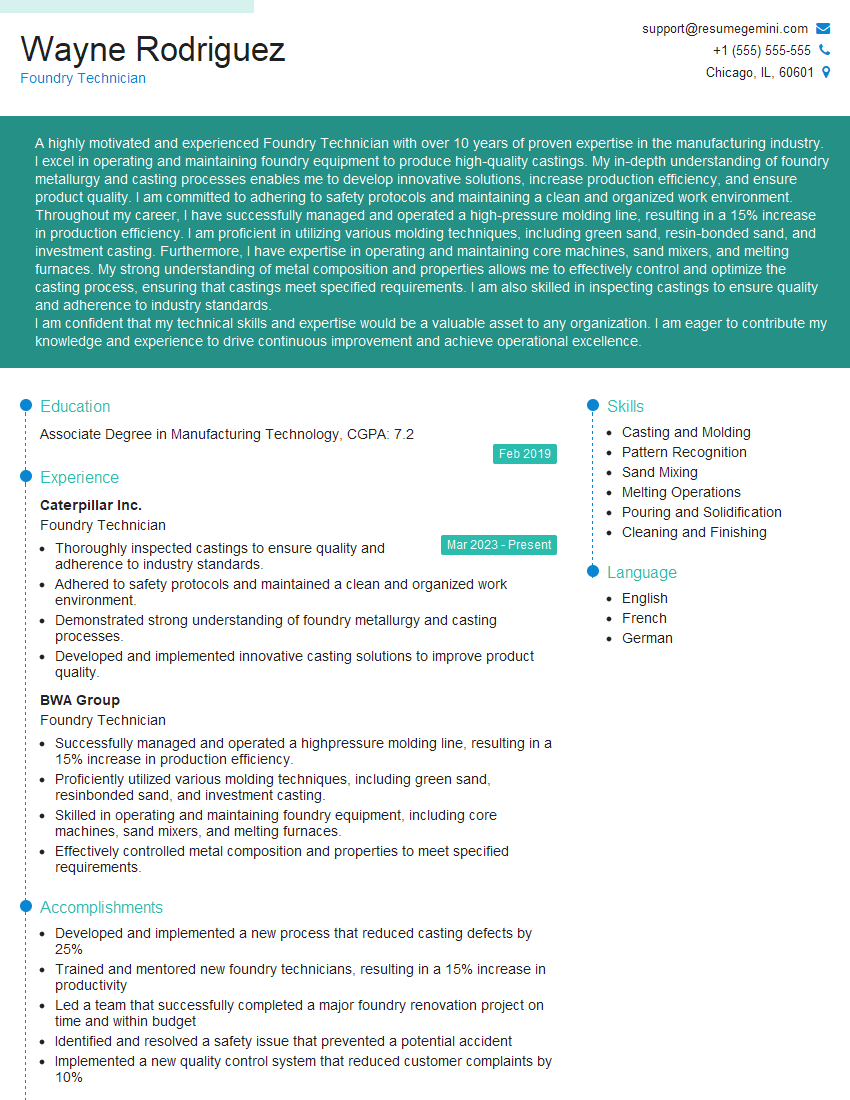
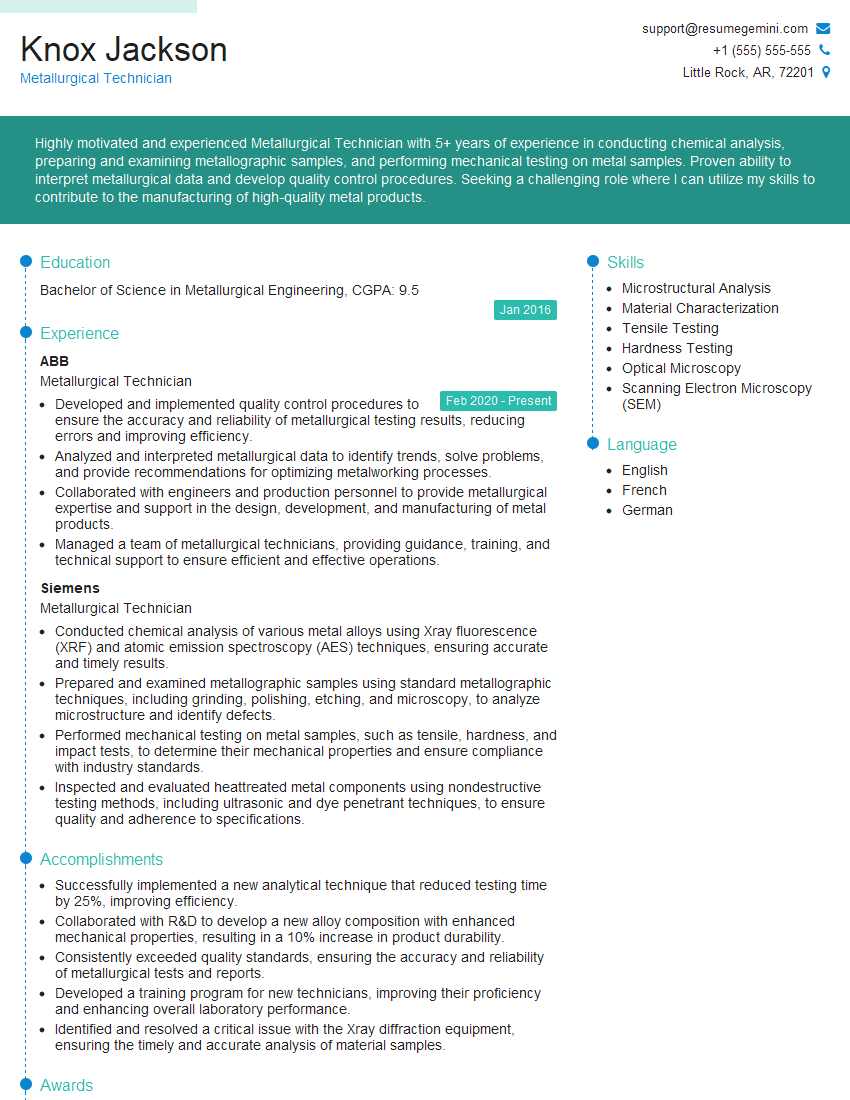
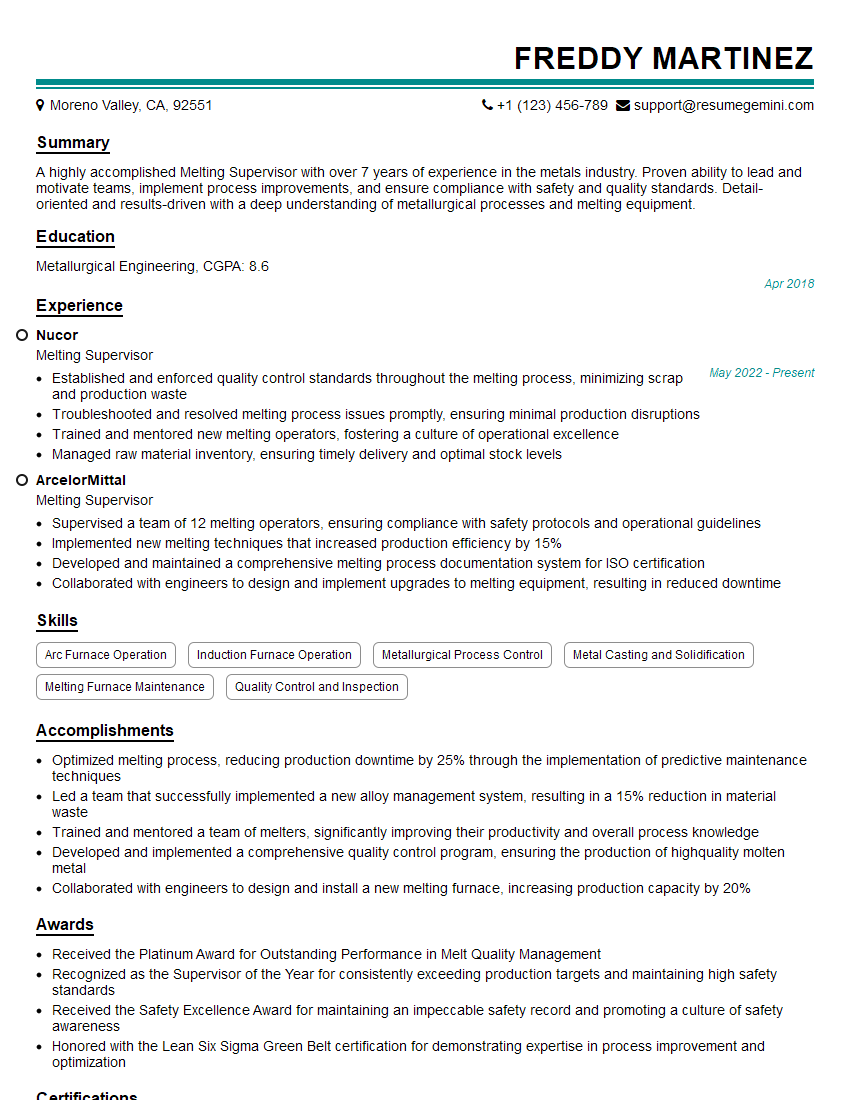
Mastering Foundry Industry Best Practices is crucial for career advancement, opening doors to more senior roles and higher earning potential. A well-crafted, ATS-friendly resume is your key to unlocking these opportunities. ResumeGemini is a trusted resource to help you build a professional resume that showcases your skills and experience effectively. We provide examples of resumes tailored to Foundry Industry Best Practices to help you get started. Invest time in crafting a strong resume; it’s your first impression on potential employers.

Explore more articles
Users Rating of Our Blogs
Share Your Experience
We value your feedback! Please rate our content and share your thoughts (optional).
What Readers Say About Our Blog
Very informative content, great job.
good